


Search results
Search for "EDC" in Full Text gives 56 result(s) in Beilstein Journal of Organic Chemistry.
New synthetic strategies for xanthene-dye-appended cyclodextrins
Beilstein J. Org. Chem. 2016, 12, 537–548, doi:10.3762/bjoc.12.53
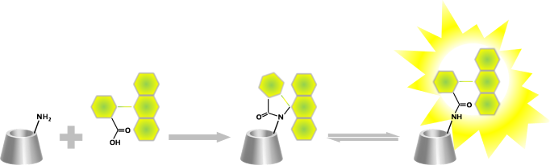
- agents for the carboxylic acid were HOBt and 1-ethyl-3-(3-dimethylaminopropyl)carbodiimide (EDC). Fang and co-workers designed a ratiometric sensor for detecting mercury ions in aqueous media, some biological fluids and living cells based on a rhodamine-modified β-CD [16]. The synthetic strategy was a
- experimental synthesis steps and the purification process are not described in enough detail. The characterization of the molecule is not exhaustive since a clear indication of the ester formation is missing. Rhodamine has been connected in organic solvents through an amide bond with DCC or EDC as coupling


Synthesis of cyclic N1-pentylinosine phosphate, a new structurally reduced cADPR analogue with calcium-mobilizing activity on PC12 cells
Beilstein J. Org. Chem. 2015, 11, 2689–2695, doi:10.3762/bjoc.11.289

- , the complete removal of both 2-cyanoethyl groups of 9 with concentrated aqueous ammonia gave the phosphomonoester 11. Unfortunately, neither linear precursors 10 nor 11 underwent the expected cyclization step, even when treated with the most common phosphate activating agents (EDC, DCC, MSNT) in very
- allowed the removal of both the OCE phosphate protecting groups together with the acetate function, thus obtaining the key intermediate 18 as triethylammonium salt after HPLC purification. The derivate 18, dissolved in DMF at the final concentration of 2 mM was treated with EDC (1.2 equiv) and the
- -tetrazole, THF, 2) t-BuOOH, 2 h, rt; iii) 1) (iPr)2NP(OCE)2, 1H-tetrazole, THF, 2 h, rt, 2) t-BuOOH, 2 h, rt; iv) TEA/pyridine, 1:1 v/v, 16 h, rt; v) activating agent (EDC in DMF or DCC in DMF or MSNT in pyridine) 16 h, rt; vi) conc. aq NH4OH, MeOH, 50 °C, 16 h. i) DNCB, K2CO3, DMF, 4 h, 80 °C; ii) 5


Peptide–polymer ligands for a tandem WW-domain, an adaptive multivalent protein–protein interaction: lessons on the thermodynamic fitness of flexible ligands
Beilstein J. Org. Chem. 2015, 11, 837–847, doi:10.3762/bjoc.11.93
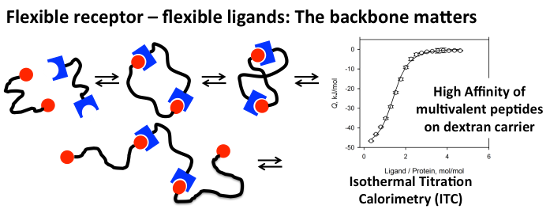
- ) was further converted by condensation with 2-N-maleimido-ethylamine and N-ethyl-N´-dimethylaminopropylcarbodiimide (EDC) [6]. The monovalent ligand peptide 2 was attached to the dextran carriers by nucleophilic addition of the thiols to the maleimide double bond furnishing peptide–polymer conjugates





Synthesis of tripodal catecholates and their immobilization on zinc oxide nanoparticles
Beilstein J. Org. Chem. 2015, 11, 678–686, doi:10.3762/bjoc.11.77
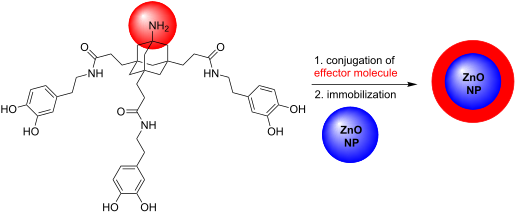
- as a cheap starting material [43]. Amine 1 was coupled to a commercially available PEG-carboxylate (5 kDa) with EDC/DMAP. The resulting PEG-conjugate was treated with KOTMS to remove the methyl esters to give tricarboxylic acid 2 in good 57% yield for the two-step procedure. In a last step, dopamine
- chloride to give acrylamide 4. Treatment of 4 with dimethylamine and excess KOH leads to the nucleophilic addition of the amine and saponification of the methyl esters in one step to give the free acid 5 after acidic work-up. Subsequent coupling of 5 to dopamine acetonide 6 with EDC and HOBt gave the
- times. Synthesis of tripodal catecholates for surface immobilization. PEG-triscatecholate 3 was synthesized from 1 according to literature [31]. Abbreviations: PEG = poly(ethylene glycol) (5 kDa); EDC = 1-ethyl-3-(3-dimethylaminopropyl)carbodiimide; DMAP = 4-(dimethylamino)pyridine; HOBt


Formation of nanoparticles by cooperative inclusion between (S)-camptothecin-modified dextrans and β-cyclodextrin polymers
Beilstein J. Org. Chem. 2015, 11, 147–154, doi:10.3762/bjoc.11.14
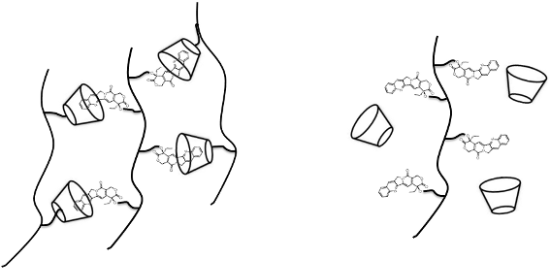
- the 100 nm range of potential biomedical interest. Results and Discussion CPT-dextrans Synthesis The synthesis of CPT-dextrans was achieved in two steps. First azide-modified CPT (N3CPT) was synthesized by esterification with 6-azidohexanoic acid mediated by EDC/DMAP (Scheme 1). TLC showed complete
- tris[(1-benzyl-1H-1,2,3-triazol-4-yl)methyl]amine (TBTA) [20] were prepared according to literature. (S)-Camptothecin >95.0% was obtained from TCI Japan. Ambersep GT74 resin, anhydrous dichloromethane (DCM) ≥99.8%, N-(3-dimethylaminopropyl)-N′-ethylcarbodiimide hydrochloride (EDC) ≥99.0%, 4
- EDC (982 mg, 5.02 mmol) were added and the solution was stirred at rt overnight. TLC showed complete conversion of the CPT and the solution was washed with water (3 × 100 mL), brine (100 mL) and dried over magnesium sulfate. The solution was filtered, concentrated to approx. 10 mL in vacuo and


Enantioselective synthesis of polyhydroxyindolizidinone and quinolizidinone derivatives from a common precursor
Beilstein J. Org. Chem. 2014, 10, 3104–3110, doi:10.3762/bjoc.10.327

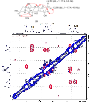
- unsaturated amide 9 in readiness for a subsequent RCM reaction. Ring closure of 9 proceeded better in the presence of Grubbs’ second generation catalyst [34] to provide the indolizidine derivative 10 in good yield. Similarly, treatment of amine 8 with vinylacetic acid in the presence of EDC/HOBt under
- ) for compound 15. 1H,1H COSY spectrum of compound 15. Selected nOe correlations and part NOESY spectrum of compound 23 in D2O (600 MHz). Reagents and conditions: (i) Zn/AcOH, rt, 1 h, 86%. (ii) TBSOTf, DIPEA, CH2Cl2, −5 °C, 1 h, 91%. (iii) Acrylic acid, EDC, HOBt, NMM, CH2Cl2, 0 °C to rt, 6 h, 96%. (iv
- ) G-II (8 mol %), benzene, reflux, 24 h, 75%. (v) Vinyl acetic acid, EDC, HOBt, NMM, CH2Cl2, 0 °C to rt, 10 h, 90%. (vi) G-II (3 mol %), benzene, 50 °C, 2 h, 95%. Reagents and conditions: (i) OsO4, NMO, acetone/water, rt, 12 h, 96%. (ii) NaH, THF, BnBr, Bu4NI, 0 °C to rt, 6 h, 70%. (iii) Ac2O


(2R,1'S,2'R)- and (2S,1'S,2'R)-3-[2-Mono(di,tri)fluoromethylcyclopropyl]alanines and their incorporation into hormaomycin analogues
Beilstein J. Org. Chem. 2014, 10, 2844–2857, doi:10.3762/bjoc.10.302

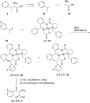
- '-nitrocyclopropyl)alanine and the 3-(2'-fluoromethylcyclopropyl)alanines, HATU as well as the combination of EDC and 7-aza-1-hydroxybenzotriazole (HOAt) [61] were used for each condensation step to ensure high yields. The most unusual fragment in hormaomycin (1) and its analogues is the ester bond between the
- '-fluoromethylcyclopropyl)alanine residues. a: trifluoromethyl-, b: difluoromethyl-, c: monofluoromethylcyclopropylalanine. Reagents and conditions: i) oxalyl chloride, pyridine/dicyclopropylmethanol, DMAP, CH2Cl2, 0→20 °C, 20 h; ii) ZOSu, NaHCO3, acetone/water, 2 h; iii) 50% Et2NH/THF, 20 °C, 1 h; iv) EDC, HOAt, 2,4,6
- -collidine, CH2Cl2, 4→20 °C, 14 h; v) FmocOSu, NaHCO3, acetone/water, 3 h; vi) H2, Pd/C, EtOAc, 20 °C, 2 h; vii) MeZOSu, NaHCO3, water/dioxane, 20 °C, 3 h; viii) All-Br, K2CO3, MeCN, 85 °C, 3 h, 60 °C, 16 h; ix) EDC, 4-pyrrolidinopyridine, CH2Cl2, 4→20 °C, 16 h; x) [Pd(PPh3)4], N-methylaniline, DME, 20 °C, 1




Detonation nanodiamonds biofunctionalization and immobilization to titanium alloy surfaces as first steps towards medical application
Beilstein J. Org. Chem. 2014, 10, 2765–2773, doi:10.3762/bjoc.10.293
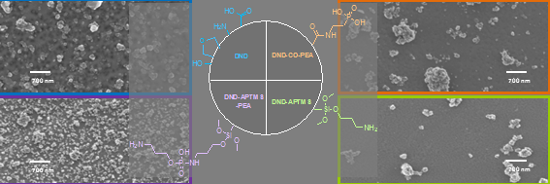
- of MES containg 6 mg of 1-ethyl-3-(3-dimethylaminopropyl)carbodiimide (EDC). The mixture was stirred for 20 min at room temperature. Afterwards, 25 mL of O-phosphorylethanolamine (8% aqueous) solution was added to the activated particles and the suspension was stirred for 2.5 h at room temperature
- centrifuged to prepare the washing step with 40 mL of acetone for 24 h at 40 °C. The sample 5 was then dried under vacuum. Silanized DND functionalized with O-phosphorylethanolamine 200 mg of silanized DND 5, 80 mg of O-phosphorylethanolamine, 35 mg of DMAP, 50 mg of EDC and 20 mL of dichloromethane (DCM
- -phosphorylethanolamine (O-PEA), 1-ethyl-3-(3-dimethylaminopropyl)carbodiimide (EDC), 2-(N-morpholinoethanesulfonic acid), room temperature, 2.5 h; (iii) Sodium borohydride, ethanol, 60 °C, 24 h, (iv) (3-aminopropyltrimethoxysilane (APTMS), acidic environment, room temperature, 48 h, (v) O-PEA, EDC, 4-(dimethylamino



Synthesis and biological evaluation of novel N-α-haloacylated homoserine lactones as quorum sensing modulators
Beilstein J. Org. Chem. 2014, 10, 2539–2549, doi:10.3762/bjoc.10.265
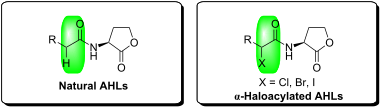
- thionyl chloride [27]. These reaction conditions allowed the synthesis of α-brominated fatty acids 5 in a highly selective and efficient manner. Brominated AHL analogues 6a–f (dr 1:1) were prepared in acceptable yields by 1-ethyl-3-(3-dimethylaminopropyl)carbodiimide (EDC)-mediated coupling of the



Clicked and long spaced galactosyl- and lactosylcalix[4]arenes: new multivalent galectin-3 ligands
Beilstein J. Org. Chem. 2014, 10, 1672–1680, doi:10.3762/bjoc.10.175
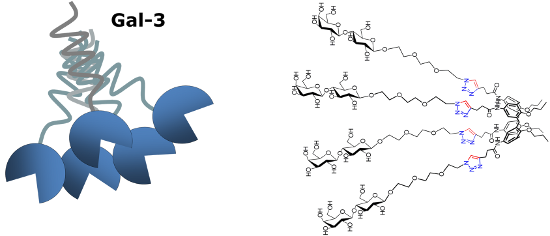
- to the concurrent formation of dicyclohexylurea (DCU), several purification steps were necessary to obtain pure calix[4]arene 8. The use of 1-ethyl-3-(3-dimethylaminopropyl)carbodiimide (EDC) as an alternative coupling agent allowed us to isolate pure compound 8 in a more straightforward way and
- substitution reaction of chloride with NaN3 (Scheme 3) led to the corresponding azido derivative 15, which was used to “click” both the cone (8) and 1,3-alternate (18) pentynoic amides. Compound 18 was obtained from the corresponding 1,3-alternate p-aminocalix[4]arene 17 [47] by a reaction with EDC in CH2Cl2
- the cone galactosylcalix[4]arenes 1. Reaction conditions: (i) DCC, DMAP, CH2Cl2, under reflux, 5 h, 44%; (ii) EDC, CH2Cl2/py (7:3), rt, 18 h, 66%; (iii) CuSO4·5H2O, Na-ascorbate, DMF/H2O, μW (150 W), 80 °C, 20 min, 83%; (iv) CH3ONa, CH3OH, rt, 1 h – IR120/H+, rt, 30 min, quantitative. Synthesis of the


Pyrene-modified PNAs: Stacking interactions and selective excimer emission in PNA2DNA triplexes
Beilstein J. Org. Chem. 2014, 10, 1495–1503, doi:10.3762/bjoc.10.154
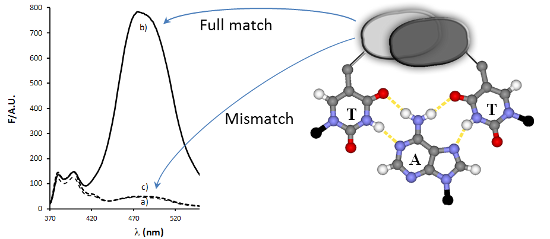
- acid 5, and linked to the Fmoc-protected PNA backbone using EDC/DhBtOH as activating mixture; the PNA monomer 1, was then obtained by ester hydrolysis of 6 under acidic conditions. The PNAs sequence was designed to be complementary to the W1282X mutated form of CFTR gene, and all PNAs were synthesized


Design, automated synthesis and immunological evaluation of NOD2-ligand–antigen conjugates
Beilstein J. Org. Chem. 2014, 10, 1445–1453, doi:10.3762/bjoc.10.148

- , quant.; c) CSA, PhCH(OMe)2, MeCN, DMF, 86%; d) (S)-2-chloropropionic acid, NaH, 1,4-dioxane, 93%; e) Boc2O, NH4HCO3, pyridine, 1,4-dioxane, 99%; f) 1) DBU, HOBt, DCM; 2) Fmoc-L-Ala-OH, EDC, DIPEA, DCM, 82%; g) 1) 13, DBU, HOBt, DCM; 2) 12, HATU, DIPEA, DCM, 70%; h) 1) Me3P (solution in THF), DMF, THF


Glycosystems in nanotechnology: Gold glyconanoparticles as carrier for anti-HIV prodrugs
Beilstein J. Org. Chem. 2014, 10, 1339–1346, doi:10.3762/bjoc.10.136
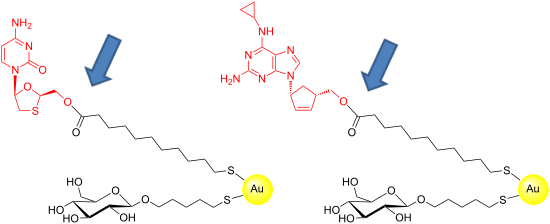
- thioacetate [31], was reacted with ABC and 3TC in DMF in the presence of 1-ethyl-3-(3-dimethylaminopropyl)carbodiimide (EDC) and 4-dimethylaminopyridine (DMAP) to obtain the ester derivative in ~75% yield. After purification, the protecting group of the thiol was removed with hydrazine acetate to give the


Amino acid motifs in natural products: synthesis of O-acylated derivatives of (2S,3S)-3-hydroxyleucine
Beilstein J. Org. Chem. 2014, 10, 1135–1142, doi:10.3762/bjoc.10.113
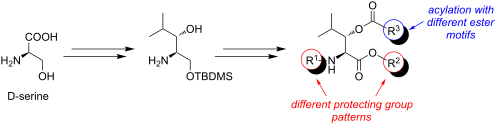
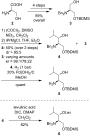
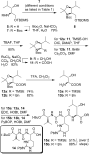
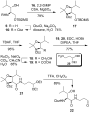
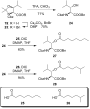
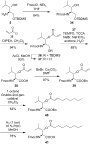
- 3 steps from 17). The potential of 19 to serve as a universal building block for C-terminal derivatization was demonstrated by the following transformations. Acid 19 was reacted with 1,1-diethoxy-3-aminopropane (20) under standard EDC/HOBt coupling conditions to afford amide 21 in 77% yield




Synthesis of complex intermediates for the study of a dehydratase from borrelidin biosynthesis
Beilstein J. Org. Chem. 2014, 10, 634–640, doi:10.3762/bjoc.10.55
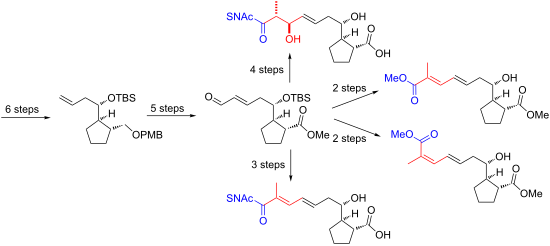
- , NaH, THF, 0 °C, 3 h (18% over two steps from 12) or 26, CH2Cl2, 50 °C, 21 h (64% over two steps from 12); e) 27, 18-crown-6, K2CO3, THF, −20 °C then 0 °C for 5 h (47% over two steps from 12); f) HSNAc, EDC, DMAP, CH2Cl2, rt, 16 h (78%); g) PPh3, H2O, 70 °C, 11 h, then NaOH, rt (64%). Supporting


Isocyanide-based multicomponent reactions towards cyclic constrained peptidomimetics
Beilstein J. Org. Chem. 2014, 10, 544–598, doi:10.3762/bjoc.10.50



A unified approach to the important protein kinase inhibitor balanol and a proposed analogue
Beilstein J. Org. Chem. 2013, 9, 2910–2915, doi:10.3762/bjoc.9.327

- group in the latter was executed under standard conditions to provide amine 28. This was then coupled with 4-benzyloxybenzoic acid using EDC as activating agent to obtain the corresponding amide derivative 29 in an overall yield of 20% over eleven steps from 17. The stereochemical identity of this


Charge-transfer interaction mediated organogels from 18β-glycyrrhetinic acid appended pyrene
Beilstein J. Org. Chem. 2013, 9, 2877–2885, doi:10.3762/bjoc.9.324
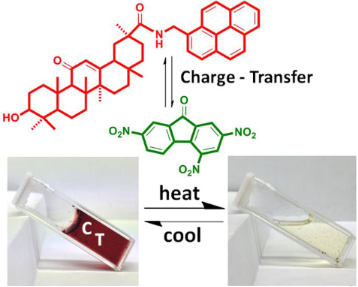
- method 1-Pyrenemethylamine hydrochloride (95%), 18β-glycyrrhetinic acid (GA, 97%), 4-dimethylaminopyridine (DMAP, 99%), 1-ethyl-3-(3-dimethylaminopropyl)carbodiimide (EDC, 99%), 9-fluorenone (98%) are purchased from Sigma-Aldrich, and used as received. All organic solvents were dried and distilled before
- pyrene 3 To a solution of 1-pyrenemethylamine hydrochloride (113 mg, 0.42 mmol), 4-dimethylaminopyridine (DMAP, 52 mg, 0.42 mmol) and 1-ethyl-3-(3-dimethylaminopropyl)carbodiimide (EDC, 135 mg, 0.42 mmol) in dry dichloromethane (DCM, 30 mL), 18β-glycyrrhetinic acid (GA, 200 mg, 0.42 mmol) was added
- -dimethylaminopropyl)carbodiimide (EDC), dichloromethane (DCM), room temperature, 72%; (b) HNO3, H2SO4, 70 °C, 93%. Gelation test results of GA-pyrene (3) with TNF (4, molar ratio =1:1). Thermodynamic parameters (ΔH°, ΔS°, and ΔG°) of CT gel (3 and 4, 1:1, molar ratio) in various solvents at 298 K. Supporting




Synthesis of the reported structure of piperazirum using a nitro-Mannich reaction as the key stereochemical determining step
Beilstein J. Org. Chem. 2013, 9, 1737–1744, doi:10.3762/bjoc.9.200
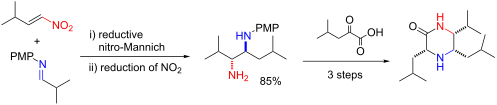
- contrast, the reaction of carboxylic acid 11 with diamine 21, in the presence of EDC (1.50 equiv) and 1-hydroxybenzotriazole (1.50 equiv) at rt, gave the desired product 23 in good yield (Scheme 6) [57]. The double bond geometry was assigned as Z by NOESY 1H NMR and probably results from steric inhibition
- , 264.2196; found, 264.2201. (5S*,6R*,Z)-5-Isobutyl-6-isopropyl-4-(4-methoxyphenyl)-3-(2-methylpropylidene)piperazin-2-one (23): To a solution of diamine 21 (61 mg, 0.23 mmol) in THF (5 mL) was added N-(3-dimethylaminopropyl)-N′-ethylcarbodiimide hydrochloride (EDC, 67 mg, 0.35 mmol) and 1
- , CF3CO2H, −78 °C, dr >95:5; (b) Zn, 6 M HCl, EtOAc/EtOH, rt, single diastereoisomer; (c) CSCl2, aq NaHCO3 CH2Cl2/ MeOH, rt. (a) (COCl)2, DMF, CH2Cl2, rt; (b) 21, Py, DMAP, CH2Cl2, rt; (c) EDC, HOBt, THF/CH2Cl2, rt; (d) H2 (1 atm), Pd/C, MeOH, rt; (e) CAN, MeCN/H2O, 0 °C; (f) 4 M HCl in dioxane, MeCN/Et2O


Design and synthesis of tag-free photoprobes for the identification of the molecular target for CCG-1423, a novel inhibitor of the Rho/MKL1/SRF signaling pathway
Beilstein J. Org. Chem. 2013, 9, 966–973, doi:10.3762/bjoc.9.111
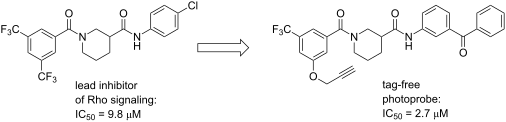
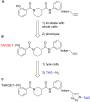
- acid (4) was reacted with substituted anilines 5 under standard EDC-mediated amidation conditions, followed by TFA-catalyzed deprotection to afford amides 6. A subsequent second amidation with benzoic acids 7 afforded final bis(amide) analogues 8. We also synthesized a model azide (Scheme 2). Synthesis




Thioester derivatives of the natural product psammaplin A as potent histone deacetylase inhibitors
Beilstein J. Org. Chem. 2013, 9, 81–88, doi:10.3762/bjoc.9.11
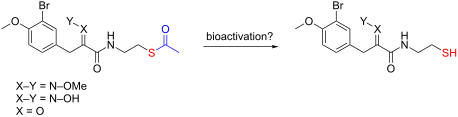
- functionalities in order to allow comparison of our data to our previously generated in vitro and in cell SAR data [20]. Condensation between acid 5 and O-methylhydroxylamine, followed by EDC coupling with S-2-aminoethyl ethanethioate 6 [26] afforded thioacetate analogue 7 (Scheme 2). Condensation of acid 5 with
- psammaplin A against zinc-dependant HDACs. Adapted from Baud et al. [20]. Synthesis of 7–9. Conditions: (i) HCl·H2NOMe, pyridine, rt, 12 h; (ii) EDC, NHS, dioxane, rt, 3 h; (iii) 6, Et3N, dioxane/MeOH, rt; (iv) HCl·H2NOH, pyridine, rt, 12 h; (v) DCC, NOHP, 6, Et3N, dioxane, rt, 24 h. Top: Generation of the



Partial thioamide scan on the lipopeptaibiotic trichogin GA IV. Effects on folding and bioactivity
Beilstein J. Org. Chem. 2012, 8, 1161–1171, doi:10.3762/bjoc.8.129
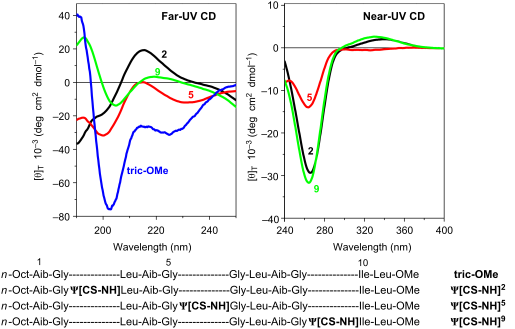
- of the 1–8 and the thionated 9–11 segments. For the difficult coupling steps, in particular those involving the segment condensations, the N-[3-(dimethylamino)-propyl]-N'-ethylcarbodiimide (EDC)/7-aza-1-hydroxy-1,2,3-benzotriazole (HOAt) [51] activating method was used, while the EDC/1-hydroxy-1,2,3
- highlighted in color. Ribbon representation of the lowest energy (138.7 kcal/mol) 3D structure obtained for ψ[CS-NH]9. All amino acid side chains are shown. The yellow atom on Gly9 refers to sulfur. Synthesis of ψ[CS-NH]2. 1: Coupling in the presence of EDC/HOBt. 2: Deprotection by using TFA/DCM. 3
- : Deprotection by catalytic hydrogenation with Pd/C. 4: Thionation with Lawesson's reagent in THF. 5: Coupling with n-Oct-OH in the presence of EDC/HOBt. 6: Saponification with NaOH/MeOH. 7: Coupling in the presence of EDC/HOAt. Synthesis of ψ[CS-NH]5. 1: Coupling in the presence of EDC/HOBt. 2: Deprotection by


Multistep organic synthesis of modular photosystems
Beilstein J. Org. Chem. 2012, 8, 897–904, doi:10.3762/bjoc.8.102
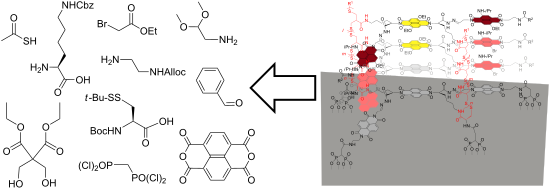
- diphosphonates in NDI 24 gave 18, which was reacted in situ with NDI 12 to yield initiator 2. Synthesis of propagators The synthesis of propagator 3 starts with NDA 13 as well (Scheme 2). Diimidation with Cbz-protected lysine 25 gave the diacid 26. Activation with EDC, HOBt and TEA was followed by the reaction
- . Reaction of EDC-activated diacid 35 with tert-butyl carbazate followed by deprotection of the obtained cNDI 36 and coupling with activated asparagusic acid 28 gave cNDI 37. Hydrazide deprotection quenched by benzaldehyde 30 gave the yellow cNDI propagator 4. The activated asparagusic acid 28 was prepared


Synthesis of szentiamide, a depsipeptide from entomopathogenic Xenorhabdus szentirmaii with activity against Plasmodium falciparum
Beilstein J. Org. Chem. 2012, 8, 528–533, doi:10.3762/bjoc.8.60
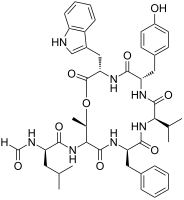
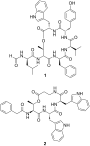
- -methylmorpholine (NMM) at 4 °C, affording the synthetic intermediate 4. The attempts to form the ester bond by using catalytic amounts of 4-dimethylaminopyridine (DMAP) with 1-ethyl-3-(3-dimethylaminopropyl)carbodiimide (EDC), DMAP together with N,N′-diisopropylcarbodiimide (DIC), or a mixture of the DMAP



Azobenzene dye-coupled quadruply hydrogen-bonding modules as colorimetric indicators for supramolecular interactions
Beilstein J. Org. Chem. 2012, 8, 486–495, doi:10.3762/bjoc.8.55
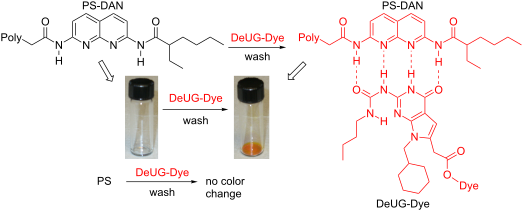
- (DeUG) is described. The coupling of azobenzene dye 2 to mono-amido DAN units 4, 7, and 9 was effected by classic 4-(dimethylamino)pyridine (DMAP)-catalyzed peptide synthesis with N-(3-dimethylaminopropyl)-N’-ethyl carbodiimide hydrochloride (EDC) as activating agent, affording the respective amide
- -ethylcarbodiimide hydrochloride (EDC) was used as an activating agent and 4-(dimethylamino)pyridine (DMAP) was used as a catalyst [49]. Azobenzene–DAN conjugate 5 was obtained in 71% yield as an orange–red solid following chromatography. Deprotection of azobenzene 2 under mildly basic conditions was also
- EDC and DMAP in methylene chloride, and the orange–yellow product 12 was isolated in a relatively low 35% yield (Scheme 3). No attempt was made to optimize the coupling conditions; instead, attention was turned to the possibility of coupling the partners by using the copper-catalyzed azide–alkyne





