


Search results
Search for "TEMPO" in Full Text gives 184 result(s) in Beilstein Journal of Organic Chemistry.
Synthesis of fluorinated acid-functionalized, electron-rich nickel porphyrins
Beilstein J. Org. Chem. 2024, 20, 2954–2958, doi:10.3762/bjoc.20.248
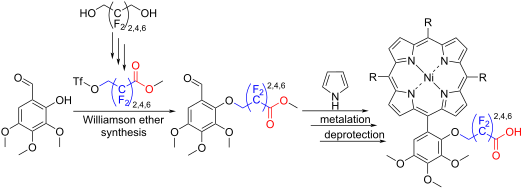
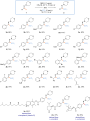
- 4 (65%), 5 (50%), and 6 (40%) by chromatography was straightforward. However, the subsequent oxidation of the alcohol with the usual oxidizing agents (Jones reagent, KMnO4, etc.) was not successful. A radical oxidation with TEMPO, potassium bromide (KBr), sodium hypochlorite (NaOCl), and sodium
- ether synthesis with 2-hydroxy-3,4,5-trimethoxybenzaldehyde (21). Conditions: a) K2CO3, benzyl bromide, abs. MeCN, N2, reflux, 18 h; b) TEMPO, KBr, NaOCl, NaHCO3, MeCN, rt, 76 h; c) MeOH, H2SO4, reflux, 18 h; d) Pd/C, H2, EtOH, rt, 24 h; e) Tf2O, pyridine, DCM, rt, 18 h. Synthesis of perfluoroalkyl


Recent advances in transition-metal-free arylation reactions involving hypervalent iodine salts
Beilstein J. Org. Chem. 2024, 20, 2891–2920, doi:10.3762/bjoc.20.243

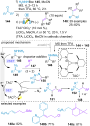
- mechanism by adding 2 equivalents of TEMPO to the reaction mixture. The absence of the desired product indicated the involvement of a radical pathway in the process. The proposed reaction mechanism begins with the activation of eosin Y by visible light from 5 W blue LEDs, transitioning it to its excited
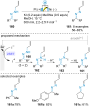
- products. The radical path was considered for the reaction mechanism as on adding TEMPO as radical scavenger the radical trapping adduct was detected by HRMS. Simultaneously with the above work, Murarka and co-workers also reported an organophotoredox-catalyzed stereoselective allylic arylation method for
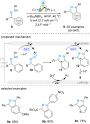
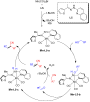
- homolytic fragmentation in solution, producing tetramethylpiperidinyl radical and the TEMPO radical. The tetramethylpiperidinyl radical interacts with 2-naphthol derivatives 58, leading to the generation of an oxygen-centered radical through hydrogen atom transfer, which resonates with its respective carbon




C–H Trifluoromethylthiolation of aldehyde hydrazones
Beilstein J. Org. Chem. 2024, 20, 2883–2890, doi:10.3762/bjoc.20.242
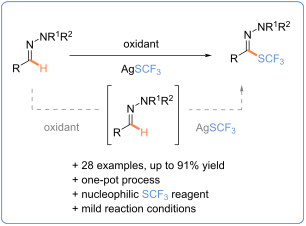
- insights into the transformation, additional experiments were conducted. First, the reaction was repeated in the presence of radical scavengers, namely 2,2,6,6-tetramethylpiperidin-1-yl)oxyl (TEMPO) or di-tert-butylhydroxytoluene (BHT), and no significant impact on the outcome of the reaction was noticed



Interaction of a pyrene derivative with cationic [60]fullerene in phospholipid membranes and its effects on photodynamic actions
Beilstein J. Org. Chem. 2024, 20, 2732–2738, doi:10.3762/bjoc.20.231
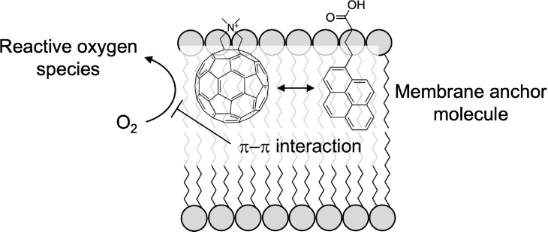
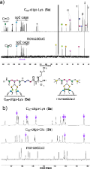
- the 1O2 adduct of 4-oxo-TEMP (4-oxo-TEMPO) were observed in the dispersion of catC60-lip ([catC60] = 5 µM) in PBS(–) showing an evidence of energy transfer reaction by the photoexcited catC60 (Figure 5a(ii)). In the presence of electron donor (NADH) under photoirradiation, •OH generation was observed
- (–) and DMSO under irradiation for 30 min by blue LED lamp. In the ESR spectra, signals corresponding to the adducts are indicated with red (4-oxo-TEMPO in a), blue (DMPO-OH in b), and green (DEPMPO-CH3 in c) arrows. Acknowledgements The authors thank Dr. Ebert from ETH Zurich for his support on ESR


Transition-metal-free decarbonylation–oxidation of 3-arylbenzofuran-2(3H)-ones: access to 2-hydroxybenzophenones
Beilstein J. Org. Chem. 2024, 20, 2655–2667, doi:10.3762/bjoc.20.223
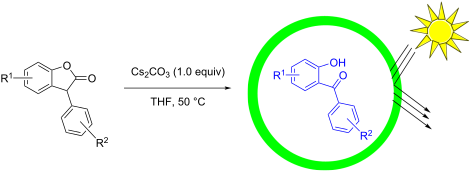
- of TEMPO, a known radical quencher [26]. To our expectations, the reaction did not proceed well in presence of TEMPO, giving a very poor yield of 4ba, confirming the role of radical in the reaction (Scheme 4). In addition, since it has been reported that the formation of hydroperoxides in THF is


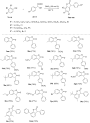


Transition-metal-free synthesis of arylboronates via thermal generation of aryl radicals from triarylbismuthines in air
Beilstein J. Org. Chem. 2024, 20, 2577–2584, doi:10.3762/bjoc.20.216
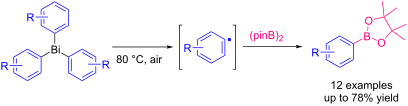
- radical (TEMPO) as a radical scavenger, strongly suggesting that a radical pathway is involved in the key step of the arylboronate synthesis (Scheme 4a). In addition, the reaction of triphenylbismuthine 1a (0.07 mmol) and TEMPO (0.4 mmol) under air resulted in the formation of 4 in 10% yield, which was
- the presence of TEMPO, the decomposition of 2 was sightly occurred, and almost all of 2 was recovered (see Supporting Information File 1). Based on the results, diboron 2 could also be activated via the thermal homolysis of the B–B bond in the presence of oxygen (air). Based on the results of the
- borylation under an argon atmosphere. Radical-trapping experiments using TEMPO as a radical scavenger. A proposed reaction pathway for the synthesis of arylboronates. Optimization of the reaction conditions for synthesis of 3a from BiPh3 (1a) and (pinB)2 (2). Supporting Information Supporting Information



Harnessing the versatility of hydrazones through electrosynthetic oxidative transformations
Beilstein J. Org. Chem. 2024, 20, 1988–2004, doi:10.3762/bjoc.20.175
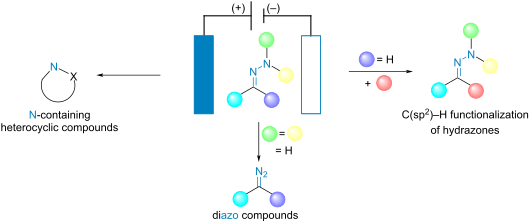
- substituents on the aromatic moiety regardless of their electronic properties. However, 4,5-disubstituted 1,2,3-thiadiazoles could not be accessed with this methodology. Mechanistically, control experiments with radical trapping agent such as TEMPO ((2,2,6,6-tetramethylpiperidin-1-yl)oxyl) or 1,1








Radical reactivity of antiaromatic Ni(II) norcorroles with azo radical initiators
Beilstein J. Org. Chem. 2024, 20, 1967–1972, doi:10.3762/bjoc.20.172
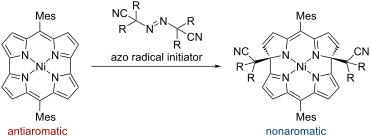
- benzoyl peroxide, TEMPO, and the combination of alkyl halides with BEt3, were not applicable to this reaction. Physical properties The electronic absorption spectra of norcorrole 1 and adduct 2a are shown in Figure 3. While norcorrole 1 exhibited a weak absorption band from 600 nm to the NIR region, due


Novel oxidative routes to N-arylpyridoindazolium salts
Beilstein J. Org. Chem. 2024, 20, 1906–1913, doi:10.3762/bjoc.20.166
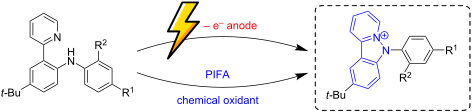
- replacement of NaOTs for more basic CF3CO2Na), addition of lutidine did not help. To solve the problem, the mediatory oxidation of A3 was also tried. Three possible mediators were tested: TEMPO, bis(4-tert-butylphenyl)nitroxide and tris(4-bromphenyl)amine. The voltammetry testing was performed in DMF using
- into the reaction mixture (Figure 4a,b). Notably, the effect was more pronounced in the presence of lutidine, especially in the case of TEMPO. The difference between the oxidation potential of A3 and the potential of the TEMPO/TEMPO+ redox couple is rather significant (ca. 0.35 V); the base additives
- was formed. When TEMPO was used as a mediator, S3 was isolated in 10% yield, along with the starting amine (18%) and the tetraarylhydrazine as the main product (50%). In the case of the diarylnitroxide, a complicated multicomponent reaction mixture was formed. Besides the products mentioned above, it


Tetrabutylammonium iodide-catalyzed oxidative α-azidation of β-ketocarbonyl compounds using sodium azide
Beilstein J. Org. Chem. 2024, 20, 1510–1517, doi:10.3762/bjoc.20.135
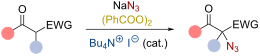
- insights we also carried out our standard reaction (Table 1, entry 14) in the presence of well-established radical traps like TEMPO, di-tert-butylhydroxytoluene (BHT), or 1,1-diphenylethene (DPE). In neither case any influence on the yield was observed, thus ruling out a mechanism involving radical species


Manganese-catalyzed C–C and C–N bond formation with alcohols via borrowing hydrogen or hydrogen auto-transfer
Beilstein J. Org. Chem. 2024, 20, 1111–1166, doi:10.3762/bjoc.20.98

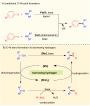
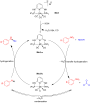
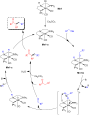
- control studies with Hg and TEMPO indicated that the reactions were homogeneous and did not proceed through a radical pathway. Synthesis of heterocycles via C–C and C–N bond formation In 2016, Beller and co-workers reported an intramolecular cyclization using 2-(2-aminophenyl)ethanol for the synthesis of



























Ortho-ester-substituted diaryliodonium salts enabled regioselective arylocyclization of naphthols toward 3,4-benzocoumarins
Beilstein J. Org. Chem. 2024, 20, 841–851, doi:10.3762/bjoc.20.76
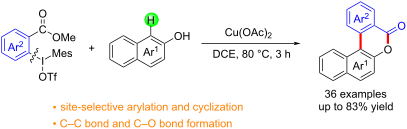
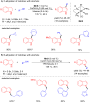
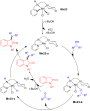
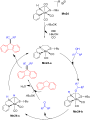
- -positions to the ester group were all well-tolerated (Table 3). To gain further insights into the reaction mechanism, we conducted control experiments. Given the utility of diaryliodonium salts in radical chemistry, we introduced 2 equivalents of 2,2,6,6-tetramethylpiperidine-1-oxyl (TEMPO) or 2 equivalents
- this approach. Arylation reactions of aromatic compounds and reaction patterns of ortho-functionalized diaryliodonium salts. Mechanism study. Standard conditions: 1 (0.3 mmol, 1 equiv), 2 (0.33 mmol, 1.1 equiv), Cu(OAc)2 (10 mol %), DCE (2 mL), 80 °C, 3 hours. TEMPO = 2,2,6,6-tetramethylpiperidine-1


Synthesis and characterization of water-soluble C60–peptide conjugates
Beilstein J. Org. Chem. 2024, 20, 777–786, doi:10.3762/bjoc.20.71
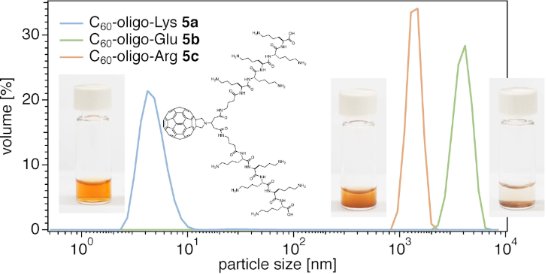
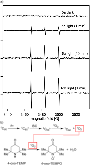
- measured by the ESR spin trapping method under irradiation of visible light (527 nm green LED). 4-Oxo-TEMP was used as a spin trapping reagent to form an adduct with 1O2, i.e., 4-oxo-TEMPO, which was observed by ESR (Figure 7b). As shown in Figure 7a, upon visible light irradiation, three peaks
- corresponding to 4-oxo-TEMPO were observed in the solution of C60–oligo-Lys (5a), similar to the results with rose bengal, a standard compound for 1O2 generation. By taking into account that the absorption intensity of 5a at 527 nm used for the photoirradiation was ≈10 times smaller than that of rose bengal, it
- s, number of scans: 1. b) Scheme for the photoinduced 1O2 generation by C60 and reaction with spin trapping reagent 4-oxo-TEMP to form 4-oxo-TEMPO. Supporting Information Supporting Information File 4: Details for the synthesis of 5a–c and intermediates as well as spectral data. Acknowledgements




Palladium-catalyzed three-component radical-polar crossover carboamination of 1,3-dienes or allenes with diazo esters and amines
Beilstein J. Org. Chem. 2024, 20, 661–671, doi:10.3762/bjoc.20.59
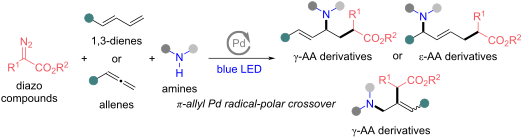
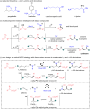
- (TEMPO) and the corresponding radical-trapping product A could be confirmed by HRMS of both reaction mixtures, unambiguously supporting radical mechanisms (Scheme 4a). The reaction with styrene was conducted under standard conditions, but no product X could be detected, indicating the cationic
- ) Radical trapping experiments with TEMPO. b) Exclusion of possible intermediate. c) Subjecting the product Z-6i to the standard conditions. d) The control reaction with HPd(PPh3)2Cl. e) UV–visible absorption analysis. Proposed mechanisms for the carboamination of 1,3-dienes or allenes with diazo esters and



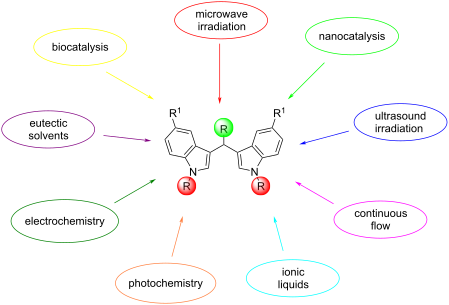
Green and sustainable approaches for the Friedel–Crafts reaction between aldehydes and indoles
Beilstein J. Org. Chem. 2024, 20, 379–426, doi:10.3762/bjoc.20.36




Copper-promoted C5-selective bromination of 8-aminoquinoline amides with alkyl bromides
Beilstein J. Org. Chem. 2024, 20, 155–161, doi:10.3762/bjoc.20.14
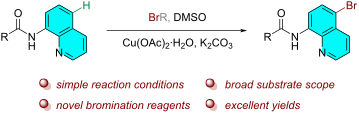
- indicated that both the acylamino and quinoline N motifs played a significant role. On the other hand, the stoichiometric amount of free radical inhibitors, including TEMPO and BHT, could not comprehensively suppress the reaction. Based on these experimental results and previous works [30][31][32], a



Visible-light-induced radical cascade cyclization: a catalyst-free synthetic approach to trifluoromethylated heterocycles
Beilstein J. Org. Chem. 2024, 20, 118–124, doi:10.3762/bjoc.20.12
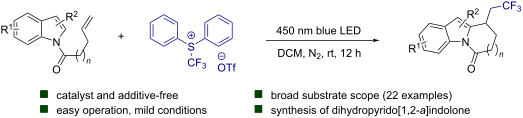
- . The addition of a typical radical scavenger – TEMPO (2,2,6,6-tetramethylpiperidin-1-yloxyl) significantly inhibited the reaction (as shown in Scheme 3), suggesting the involvement of radical species during the reaction process. Moreover, the radical trapping product was detected and confirmed via 19F




Photoinduced in situ generation of DNA-targeting ligands: DNA-binding and DNA-photodamaging properties of benzo[c]quinolizinium ions
Beilstein J. Org. Chem. 2024, 20, 101–117, doi:10.3762/bjoc.20.11
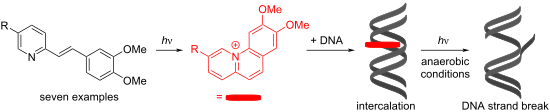
- -tetramethylpiperidine 1-oxyl (TEMPO), 2-mercaptoethanol and 2-mercaptoethylamine hydrochloride, respectively, showed that C-centered radicals contribute even more to the DNA damage than hydroxyl radicals (Supporting Information File 1, Figure S17B). It should be noted, however, that these scavengers may also intercept




Radical chemistry in polymer science: an overview and recent advances
Beilstein J. Org. Chem. 2023, 19, 1580–1603, doi:10.3762/bjoc.19.116

- successful nitroxide-mediated polymerization (NMP). In 1993, Georges et al. used benzoyl peroxide (BPO) as the initiator and 2,2,6,6-tetramethyl-1-piperidinyloxyl (TEMPO) as the control agent. It was called a bicomponent initiating system containing both stable free nitroxide and a conventional thermal
- can decompose to produce a stoichiometric pair of the primary initiating radical and a nitroxide radical, thus combining the roles of a conventional initiator and a control agent. The mechanism is shown in Scheme 4 [35]. Due to the steric effect of TEMPO, the dissociation rate constant, kd, of the
- corresponding alkoxyamine is very low and it tends to undergo β-elimination in acrylic systems. Thus, TEMPO is only suitable for the polymerization of styrenic monomers at a high temperature and for long time [36]. Functionalized TEMPO was therefore developed for the polymerization of other monomers, such as




Lewis acid-promoted direct synthesis of isoxazole derivatives
Beilstein J. Org. Chem. 2023, 19, 1562–1567, doi:10.3762/bjoc.19.113

- . It was found that the desired product could be obtained in 87% yield (Scheme 4). Next, some control experiments were carried out to study the reaction mechanism. We found that the reaction of compound 3a could not be inhibited by TEMPO and BHT under the standard conditions. Therefore, it is assumed


N-Sulfenylsuccinimide/phthalimide: an alternative sulfenylating reagent in organic transformations
Beilstein J. Org. Chem. 2023, 19, 1471–1502, doi:10.3762/bjoc.19.106
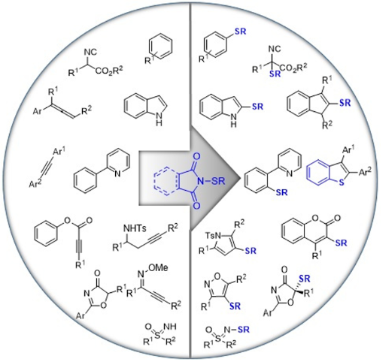
- ·H2O, FeSO4, and Fe(acac)3 resulted in inferior chemical yields. Employment of 2,2,6,6-tetramethylpiperidinyl-1-oxyl (TEMPO) as a radical trapper inhibited the reaction, which proved that a radical process was involved. The reaction was initiated by a single electron transfer (SET) process from the
- in the presence of TEMPO, followed by insertion of an isocyanide molecule 166 or other nucleophiles 161 (Scheme 72) [102]. By studying the spectroscopic evidence, the authors found that both sulfenyl halide 165 and N-sulfenylsuccinimide 1 intermediates were involved in the reaction. Removal of TEMPO
- as a radical initiator from the reaction mixture did not result in product formation so, it seems that the reaction moved through a radical route for the formation of sulfenyl halide I, and N-sulfenylsuccinimide II. The use of azobisisobutyronitrile (AIBN) instead of TEMPO also resulted in 85% yield




Enabling artificial photosynthesis systems with molecular recycling: A review of photo- and electrochemical methods for regenerating organic sacrificial electron donors
Beilstein J. Org. Chem. 2023, 19, 1198–1215, doi:10.3762/bjoc.19.88

- recyclable amine species for comparison [32]. The ferrocene, TEMPO, and viologen derivatives shown in Figure 4 are used in aqueous organic redox flow batteries [59][63]. The batteries store charge in concentrated aqueous solutions of small organic redox mediators that can be oxidized and re-reduced (or
- . TEMPO and ferrocene derivatives are used to store positive charge in RFB catholytes [59][63]. Both parent compounds undergo reversible one-electron oxidation and re-reduction but had to be modified to improve their solubility. TEMPTMA and both ferrocene derivatives have one or more ammonium groups added
- to the core TEMPO or ferrocene charge-carrying moiety. This both increases the solubility of the species and the oxidation potential in aqueous media. TEMPOL uses an alcohol group to the same effect. Redox couples for RFB catholytes are optimized for increasing the oxidation which decreases their


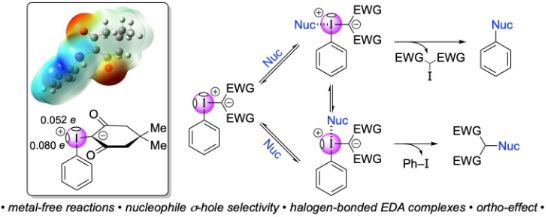
Exploring the role of halogen bonding in iodonium ylides: insights into unexpected reactivity and reaction control
Beilstein J. Org. Chem. 2023, 19, 1171–1190, doi:10.3762/bjoc.19.86
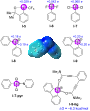
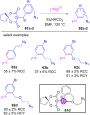
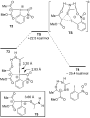
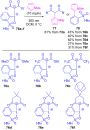
- that reacted 31 with secondary amines 34, which produced densely functionalized N-heterocycles 35 that incorporated two of the ylide’s β-dicarbonyl motifs (Scheme 6) [123]. Though these reactions were conducted at 70 °C, free carbenes were not involved. Both TEMPO and 1,4-dinitrobenzene inhibited the
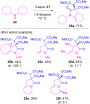
- ]. The authors discounted a free carbene-based C–H insertion because conducting the reaction in the presence of the radical trap phenyl N-tert-butyl nitrone (PBN) and the radical scavenger TEMPO resulted in decreased yields and isolation of their iodonium ylide adducts. Additional kinetic isotope effect








Photoredox catalysis harvesting multiple photon or electrochemical energies
Beilstein J. Org. Chem. 2023, 19, 1055–1145, doi:10.3762/bjoc.19.81
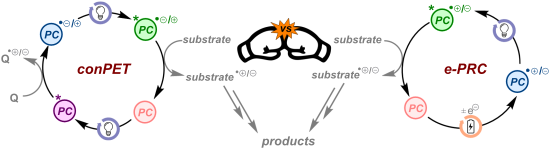
- donor were all essential for product formation. A diminished yield of 19% under aerobic conditions indicates the involvement of a triplet excited state. Addition of i) 2,2,6,6-tetramethylpiperidine-N-oxide (TEMPO) as a free-radical quencher or ii) 1,4-dinitrobenzene as an electron trap inhibited product

























Synthesis of aliphatic nitriles from cyclobutanone oxime mediated by sulfuryl fluoride (SO2F2)
Beilstein J. Org. Chem. 2023, 19, 901–908, doi:10.3762/bjoc.19.68
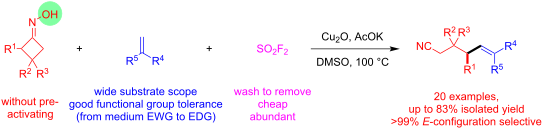
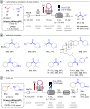
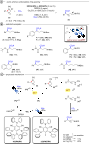
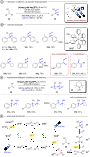
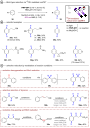
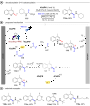
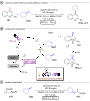
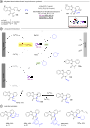
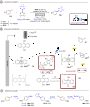
- successfully obtained in 45% yield, which indirectly proved the existence of an oxime sulfonyl ester intermediate (fluorosulfonate). As shown in Scheme 5b, in the presence of one equivalent of TEMPO, a commonly used radical scavenger, the yield of 3aa significantly decreased, in addition, the reaction was
- completely inhibited when the amount of added TEMPO was increased to 2 equivalents. Based upon the preliminary results and previous reports of this class of transformation [26][30][36][37][42][60][61], a plausible mechanism for the base-promoted, SO2F2-mediated ring-opening cross-coupling of cyclobutanone





