Search results
Search for "biaryls" in Full Text gives 66 result(s) in Beilstein Journal of Organic Chemistry.
Functionalization of 4-bromobenzo[c][2,7]naphthyridine via regioselective direct ring metalation. A novel approach to analogues of pyridoacridine alkaloids
Beilstein J. Org. Chem. 2019, 15, 2304–2310, doi:10.3762/bjoc.15.222
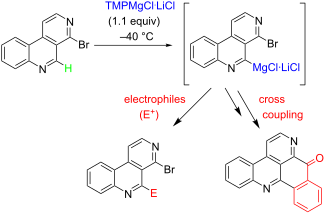
- )2 and P(2-furyl)3 with aryl iodides 19a and 19b led to the expected biaryls 20a and 20b in moderate yields (Scheme 3). All these reactions proceeded without byproducts being observed. In all cases unreacted substrate 9d was recovered in correspondent quantity. With the 5-(hetero)aryl-substituted 4
- -catalysed intramolecular tandem stannylation/biaryl coupling protocol gave the attempted pentacyclic products [32]. However, having the biaryls 20a and 20b prepared we intended to develop a new approach to pyrido[4,3,2-mn]acridines by an alternative intramolecular cyclization step. To reach that aim, the




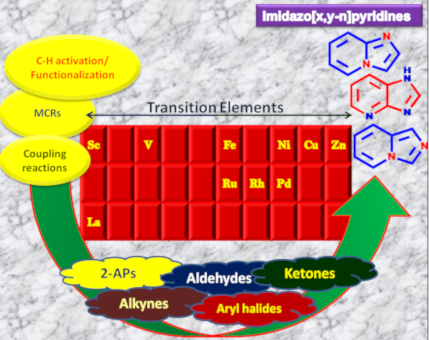
Recent advances on the transition-metal-catalyzed synthesis of imidazopyridines: an updated coverage
Beilstein J. Org. Chem. 2019, 15, 1612–1704, doi:10.3762/bjoc.15.165


Catalytic asymmetric oxo-Diels–Alder reactions with chiral atropisomeric biphenyl diols
Beilstein J. Org. Chem. 2019, 15, 955–962, doi:10.3762/bjoc.15.92
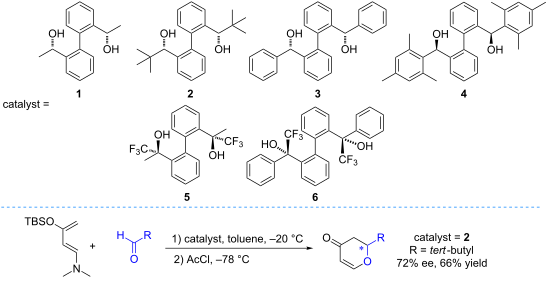
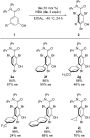
- : asymmetric organocatalysis; axial chirality; biaryls; hydrogen bond; oxo-Diels–Alder reaction; Introduction The Diels–Alder (DA) reaction is a useful and easy-to-perform method for the synthesis of six-membered rings through the direct formation of C–C bonds between a diene and a dienophile (a substituted


A diastereoselective approach to axially chiral biaryls via electrochemically enabled cyclization cascade
Beilstein J. Org. Chem. 2019, 15, 795–800, doi:10.3762/bjoc.15.76
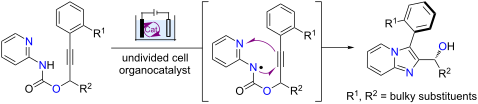
- Chemistry and Molecular Engineering, Zhengzhou University, Zhengzhou 450001, People’s Republic of China 10.3762/bjoc.15.76 Abstract A diastereoselective approach to axially chiral imidazopyridine-containing biaryls has been developed. The reactions proceed through a radical cyclization cascade to construct
- the biaryls with good to excellent central-to-axial chirality transfer. Keywords: axial chirality; biaryl; electrochemistry; oxidation; radical; Introduction Axially chiral biaryls are prevalent in natural products, bioactive molecules and organocatalysts [1][2]. Among the many methods that have
- been developed for the synthesis of chiral biaryls [3][4][5][6][7][8][9][10], reactions that take avantage of the central-to-axial chirality transfer have been less explored [11][12][13][14]. In addition, an antroposelective synthesis of imidazopyridine-based biaryls has not been reported. Nitrogen




Synthesis of C3-symmetric star-shaped molecules containing α-amino acids and dipeptides via Negishi coupling as a key step
Beilstein J. Org. Chem. 2019, 15, 371–377, doi:10.3762/bjoc.15.33
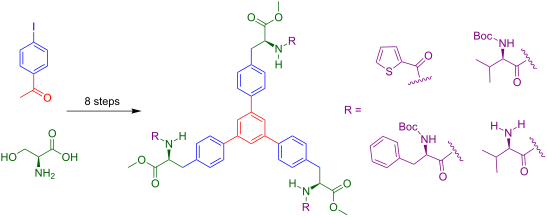
- reagents [39][40] with various halo derivatives (e.g., aryl, vinyl, benzyl, or allyl) and has a broad scope to assemble diverse targets. This reaction was first reported in 1977, and it is an elegant and versatile method that allows the preparation of biaryls and olefins in good yields. To the best of our


Synergistic approach to polycycles through Suzuki–Miyaura cross coupling and metathesis as key steps
Beilstein J. Org. Chem. 2018, 14, 2468–2481, doi:10.3762/bjoc.14.223
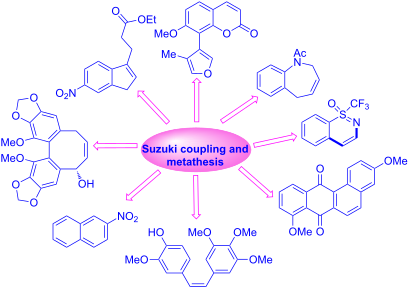
- with Suzuki–Miyaura cross coupling in combination with metathesis (or vice-versa). Several cyclophanes, polycycles, macrocycles, spirocycles, stilbenes, biaryls, and heterocycles have been synthesized by employing a combination of Suzuki cross-coupling and metathesis. Various popular reactions such as


Some mechanistic aspects regarding the Suzuki–Miyaura reaction between selected ortho-substituted phenylboronic acids and 3,4,5-tribromo-2,6-dimethylpyridine
Beilstein J. Org. Chem. 2018, 14, 2384–2393, doi:10.3762/bjoc.14.214
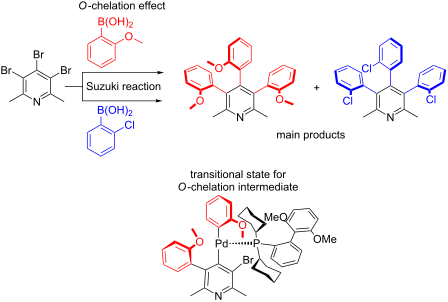
- selectivity using a differently ortho-substituted phenylbornic acid was observed. Keywords: arylpyridines; atropisomerism; cross-coupling; palladium; Suzuki–Miyaura reaction; Introduction Axially chiral biaryls not only subsist in many classes of natural and bioactive compounds [1][2] but also are an
- [10][11][12][13]. In recent years, many successful attempts to regioselective [14][15][16][17], chemoselective [18][19][20][21] or atropselective [1][22][23][24][25][26] synthesis of biaryls were presented, often taking advantage of the popular and useful Suzuki–Miyaura cross-coupling reaction
- ’-bromopyridinium N-(2’-pyrazinyl)aminides [17]. In 2014, a regiocontrolled polyarylation of pyridine was presented by Doebelin and co-workers [27]. Rotationally restricted biaryls are stereochemically and structurally important elements of a rapidly growing class of catalysts, natural products and chiral


Water-soluble SNS cationic palladium(II) complexes and their Suzuki–Miyaura cross-coupling reactions in aqueous medium
Beilstein J. Org. Chem. 2018, 14, 1859–1870, doi:10.3762/bjoc.14.160
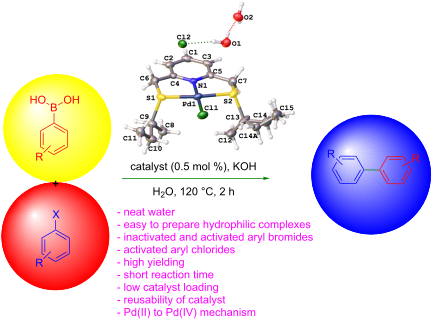
- coupling reaction is a powerful method for the synthesis of ubiquitous biaryls and has been extensively employed in the synthesis of natural products, pharmaceuticals, agrochemicals, and polymers. The reaction usually involves a palladium-catalysed coupling of aryl boronates with aryl halides in organic
- . While activated aryl chloride 21f reacted with boronic acids possessing either electron-donating or electron-withdrawing groups to provide the corresponding biaryls in reasonable yields, to our dismay the reaction of inactivated aryl chlorides led to the recovery of starting materials (Table 3, entries
- partners in aqueous medium. All the complexes could catalyse the Suzuki–Miyaura coupling reaction to provide the corresponding biaryls in excellent yields with only 0.5 mol % catalyst loading. Furthermore, unlike the previously reported SNS pincer Pd(II) complexes, the catalysts in the current study were


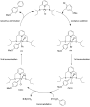


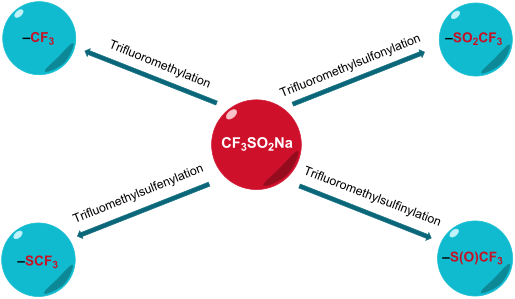
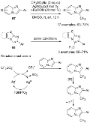
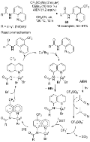
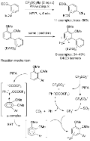
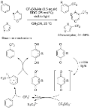
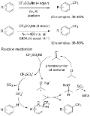
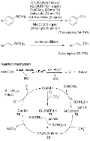
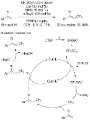
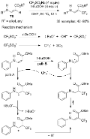
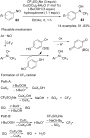
CF3SO2X (X = Na, Cl) as reagents for trifluoromethylation, trifluoromethylsulfenyl-, -sulfinyl- and -sulfonylation. Part 1: Use of CF3SO2Na
Beilstein J. Org. Chem. 2017, 13, 2764–2799, doi:10.3762/bjoc.13.272


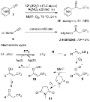


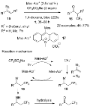















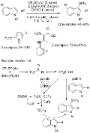

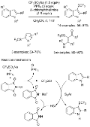


Reagent-controlled regiodivergent intermolecular cyclization of 2-aminobenzothiazoles with β-ketoesters and β-ketoamides
Beilstein J. Org. Chem. 2017, 13, 2739–2750, doi:10.3762/bjoc.13.270

- traditional Pd-catalyzed aryl–heteroaryl coupling to biaryls [57]. Since then, KOt-Bu has been used as a mediator for various reactions including aryl–aryl coupling [58][59][60][61][62][63], inter- and intramolecular cyclizations [64][65][66][67][68], amidation [69], alkenylation [70], oxidation [71] and


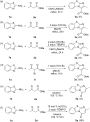


Ring-size-selective construction of fluorine-containing carbocycles via intramolecular iodoarylation of 1,1-difluoro-1-alkenes
Beilstein J. Org. Chem. 2017, 13, 2682–2689, doi:10.3762/bjoc.13.266
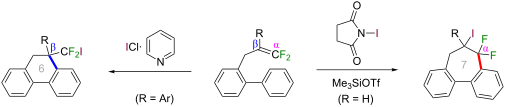
- site-selective intramolecular iodoarylation by the appropriate cationic iodine species. Iodoarylation of 2-(2-aryl-3,3-difluoroallyl)biaryls proceeded via regioselective carbon–carbon bond formation at the carbon atoms in β-position to the fluorine substituents, thereby constructing dibenzo-fused six
- -membered carbocycles bearing a difluoroiodomethyl group. In contrast, 2-(3,3-difluoroallyl)biaryls underwent a similar cyclization at the α-carbon atoms to afford ring-difluorinated seven-membered carbocycles. Keywords: alkenes; carbocycles; cyclization; electrophilic activation; fluorine; iodine
- . Among the 1,1-difluoro-1-alkenes examined, 2-(2-aryl-3,3-difluoroallyl)biaryls underwent cyclization at the carbon atoms in β-position to the fluorine substituents to construct six-membered carbocycles bearing a difluoroiodomethyl group (Scheme 1a). On the other hand the cyclization of 2-(3,3


Mechanochemical synthesis of small organic molecules
Beilstein J. Org. Chem. 2017, 13, 1907–1931, doi:10.3762/bjoc.13.186
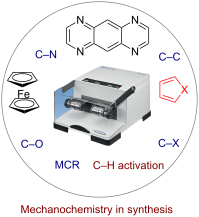
- of their low reactivity. Recently, Li and Su with co-workers have developed a liquid-assisted grinding (LAG) method for the Suzuki–Miyaura coupling between aryl chlorides and boronic acids to synthesize the biaryls in nearly quantitative yield. Under optimized conditions 2 mol % Pd(OAc)2 and 4 mol
- % of PCy3·HBF4 along with an excess K2CO3–MeOH led to biaryls within 99 min and with a yield up to 97% (Scheme 8) [57]. Heck reaction Frejd and co-workers reported the first mechanochemical Heck reaction [58]. Su and co-workers demonstrated that (E)-stilbene derivatives were synthesized by the coupling
- palladium-catalyzed site selective mechanochemical dehydrogenative C–H/C–H arylation between oxime and arene moiety for the construction of Csp2–Csp2 bond with high para-selectivity of arene component via LAG. Using 10 mol % of Pd(OAc)2, 2.0 equiv of Na2S2O8 and 1.0 equiv TfOH the biaryls were synthesized




Bifunctional organocatalysts for the asymmetric synthesis of axially chiral benzamides
Beilstein J. Org. Chem. 2017, 13, 1518–1523, doi:10.3762/bjoc.13.151

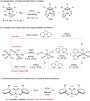
- have recently demonstrated that bifunctional organocatalysts can also be applied to the asymmetric synthesis of axially chiral compounds (biaryls bearing isoquinoline N-oxides or quinolines and phenolic moieties) by translating a specific conformation, recognized by bifunctional organocatalysts, into




Contribution of microreactor technology and flow chemistry to the development of green and sustainable synthesis
Beilstein J. Org. Chem. 2017, 13, 520–542, doi:10.3762/bjoc.13.51
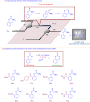
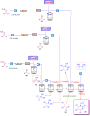
- polyfunctionalized biaryls, using a flow microreactor, has been recently reported by Yoshida [54]. Using the integrated microflow system reported in Scheme 8, arylboronic esters were prepared by a lithiation/borylation sequence, and used in a Suzuki–Miyaura coupling in a monolithic reactor. A remarkable aspect of
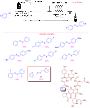
- . Trifluoromethylation by continuous-flow photoredox catalysis. Flow photochemical synthesis of 6(5H)-phenanthridiones from 2-chlorobenzamides. Synthesis of biaryls 14a–g under photochemical flow conditions. Flow oxidation of hydrazones to diazo compounds. Synthetic use of flow-generated diazo compounds. Ley’s flow








One-pot synthesis of 4′-alkyl-4-cyanobiaryls on the basis of the terephthalonitrile dianion and neutral aromatic nitrile cross-coupling
Beilstein J. Org. Chem. 2016, 12, 1577–1584, doi:10.3762/bjoc.12.153

- approach to a large number of functionalized biaryls with good or excellent yields. Nevertheless, the methodology has some disadvantages: the catalytic systems are quite expensive, the ligands are often hardly accessible and require special synthetic efforts, and preactivation of the substrates via


Stereodynamic tetrahydrobiisoindole “NU-BIPHEP(O)”s: functionalization, rotational barriers and non-covalent interactions
Beilstein J. Org. Chem. 2016, 12, 1453–1458, doi:10.3762/bjoc.12.141
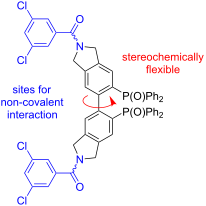
- preparation of “NU-BIPHEPs” [23] and related biaryls [24]. Doherty et al. reported the use of various diynes yielding for instance tetrahydrobiindene 1a and N-tosyl-protected tetrahydrobiisoindole 1b as the only N-heterocyclic compound (Figure 1A). Aiming at facile deprotection and enabling subsequent


Cationic Pd(II)-catalyzed C–H activation/cross-coupling reactions at room temperature: synthetic and mechanistic studies
Beilstein J. Org. Chem. 2016, 12, 1040–1064, doi:10.3762/bjoc.12.99
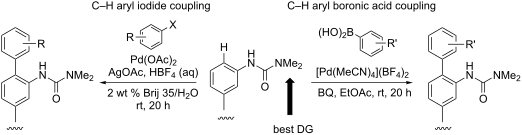
- C–H arylations of arylureas with aryl iodides and arylboronic acids Among the most conceptually attractive approaches to aromatic C–H activation is the efficient synthesis of biaryls through direct arylation reactions. The widespread availability of aryl iodides and arylboronic acids make them






A convenient route to symmetrically and unsymmetrically substituted 3,5-diaryl-2,4,6-trimethylpyridines via Suzuki–Miyaura cross-coupling reaction
Beilstein J. Org. Chem. 2016, 12, 835–845, doi:10.3762/bjoc.12.82
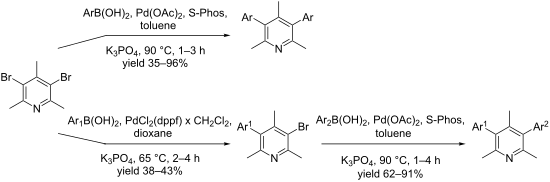
- antihistamines for allergy treatment [10][11][12][13]. Other examples of pharmaceuticals containing a simple pyridine ring are rabeprazole [14][15], pentoprazole [16][17] and lansoprazole [18], which represent the well-known class of proton pump inhibitors. Furthermore, atropisomeric biaryls with a pyridine ring
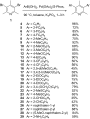
- with increased reaction time to complete the diarylation. The attachment of small substituents at ortho positions in arylboronic acids did not retard the reaction (products 5, 8, 10, 18, 22, 24, 25, 29). However, the GC–MS analysis revealed an increased formation of the corresponding biaryls, monoaryl




Recent advances in copper-catalyzed asymmetric coupling reactions
Beilstein J. Org. Chem. 2015, 11, 2600–2615, doi:10.3762/bjoc.11.280
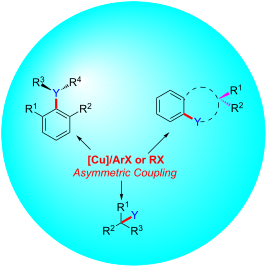
- coupling The biaryl motif is a key subunit in many natural products and axially chiral ligands. The classical Ullmann coupling is one of the most important methods for the practical synthesis of biaryls [14]. However, only few reports of an asymmetric version of the Ullmann coupling have been documented
- . The first attempt of an intermolecular asymmetric Ullmann coupling for the formation of biaryls was reported by Miyano and co-workers in 1980. The authors used a chiral ester group as auxiliary but only poor diastereoselectivity (13% de) was obtained [15]. A few years later, the same group took
- ] developed an efficient method for the synthesis of Isokotanin A (Scheme 9) and Tanaka et al. [29] also used this method for the synthesis of dimethylthiaheterohelicenes, which are highly hindered C2-symmetrical biaryls (Scheme 10). In 1994, an impressive progress was made by Lipshutz [30] in the


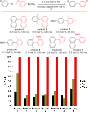
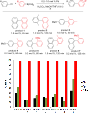
Comparison of the catalytic activity for the Suzuki–Miyaura reaction of (η5-Cp)Pd(IPr)Cl with (η3-cinnamyl)Pd(IPr)(Cl) and (η3-1-t-Bu-indenyl)Pd(IPr)(Cl)
Beilstein J. Org. Chem. 2015, 11, 2476–2486, doi:10.3762/bjoc.11.269
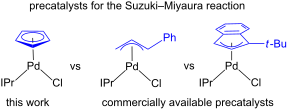
- biaryls (products 1 and 7), whereas in another case Cp gives only slightly better activity (product 3). However, in general, the relative catalytic performance of the different precatalysts does not vary when the base is changed. Understanding the relative activity of (η5-Cp)Pd(IPr)Cl (Cp) In order to




A novel 4-aminoantipyrine-Pd(II) complex catalyzes Suzuki–Miyaura cross-coupling reactions of aryl halides
Beilstein J. Org. Chem. 2014, 10, 2821–2826, doi:10.3762/bjoc.10.299

- are tolerated. Keywords: 4-aminoantipyrine; arylboronic acids; biaryls; cross-coupling; palladium(II) complex; Introduction The sp2–sp2 carbon–carbon bond formation through cross-coupling reactions catalyzed by metal complexes has emerged as a powerful tool in organic synthesis [1][2][3][4][5][6
- ]. The palladium-catalyzed cross-coupling of arylboronic acid and aryl halides in the Suzuki–Miyaura (SM) reaction is one of the most popular and important methods to obtain biaryls, which are essential structures of many important compounds such as natural products [7], agrochemicals [8
- . The biaryls are obtained in moderate to high yield. Results and Discussion The synthesis of the 4-APP–Pd(II) complex was carried out using a convenient one-pot procedure, as reported in the literature for other ligands [22], by combining Li2PdCl4, 4-AAP and NaOAc in methanol at room temperature


P(O)R2-directed Pd-catalyzed C–H functionalization of biaryl derivatives to synthesize chiral phosphorous ligands
Beilstein J. Org. Chem. 2014, 10, 2071–2076, doi:10.3762/bjoc.10.215
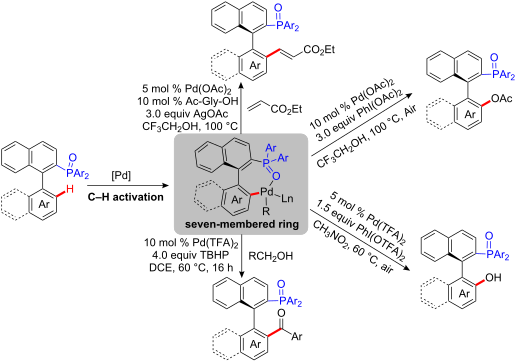
- . China 10.3762/bjoc.10.215 Abstract Chiral phosphorus ligands have been widely used in transition metal-catalyzed asymmetric reactions. Herein, we report a new synthesis approach of chiral biaryls containing a phosphorus moiety using P(O)R2-directed Pd-catalyzed C–H activation; the functionalized


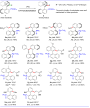
Palladium-catalysed cross-coupling reaction of ultra-stabilised 2-aryl-1,3-dihydro-1H-benzo[d]1,3,2-diazaborole compounds with aryl bromides: A direct protocol for the preparation of unsymmetrical biaryls
Beilstein J. Org. Chem. 2014, 10, 1107–1113, doi:10.3762/bjoc.10.109

- , electron-neutral and electron-donating substituents are reacted under the catalytic system furnishing unsymmetrical biaryl products in isolated yields of up to 96% in only 10 minutes. Keywords: aryl bromide; 2-aryl-1,3-dihydro-1H-benzo[d]1,3,2-diazaborole; asymmetrical biaryls; microwave; Suzuki–Miyaura


On the mechanism of photocatalytic reactions with eosin Y
Beilstein J. Org. Chem. 2014, 10, 981–989, doi:10.3762/bjoc.10.97
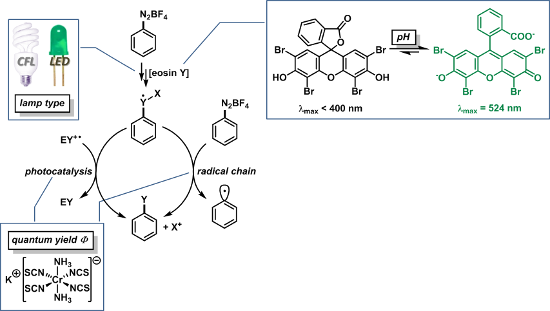
- various applications of eosin Y to visible light-driven syntheses of biaryls [15], stilbenes [16], benzothiophenes [17], α-phenylketones [18], phenanthrenes [19], arylsulfides [20] and arylboron pinacolates [21] (Scheme 1). Numerous mechanistic studies have been performed at reactions with organometallic


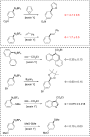
Clean and fast cross-coupling of aryl halides in one-pot
Beilstein J. Org. Chem. 2014, 10, 897–901, doi:10.3762/bjoc.10.87
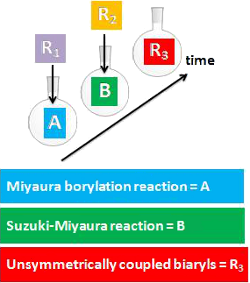
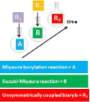
- Unsymmetrically coupled biaryls are synthesized in high yield starting from different aryl bromides and bis(pinacolato)diboron by carrying out the Miyaura borylation reaction followed by the Suzuki–Miyaura reaction in the same reaction pot over 1–2 mol % SiliaCat DPP-Pd. The SiliaCat DPP-Pd catalyst is air-stable
- Affording valued biaryls and heterobiaryls, namely ubiquitous chemical moieties in pharmaceuticals, natural products, photoactive species and many other functional molecules, the Suzuki–Miyaura cross-coupling reaction is widely employed by the fine chemicals and pharmaceutical industries [1]. The reaction
- shown elsewhere [10], wherein the issue of catalyst recycling is also addressed in detail. Now we report a new method that establishes a direct route, in one-pot, to unsymmetrically coupled biaryls starting from two different aryl bromides and bis(pinacolato)diboron without the need to isolate the