Search for "bidentate ligands" in Full Text gives 34 result(s) in Beilstein Journal of Organic Chemistry.
Beilstein J. Org. Chem. 2013, 9, 1352–1382, doi:10.3762/bjoc.9.153
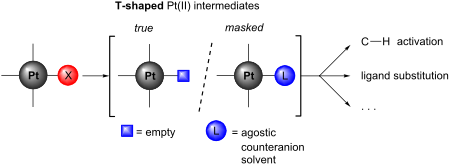
Graphical Abstract
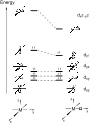
Figure 1: Qualitative orbital diagram for a d8 metal in ML4 square-planar and ML3 T-shaped complexes.
Figure 2: Walsh diagram for the d-block of a d8 ML3 complex upon bending of one L–M–L angle.
Figure 3: Neutral Y-shaped Pt complex Y1 [15]. Angles are given in degrees.
Figure 4: General classification of T-shaped Pt(II) structures according to the fourth coordination site.
Figure 5: Hydride, boryl and borylene true T-shaped Pt(II) complexes.
Figure 6: NHC-based true T-shaped Pt(II) complexes.
Figure 7: Phosphine-based agostic T-shaped Pt(II) complexes. Compounds in brackets correspond with hydrido–al...
Figure 8: Phenylpyridine and NHC-based agostic T-shaped Pt(II) complexes.
Figure 9: Counteranion coordination in T-shaped Pt(II) complexes.
Figure 10: Phosphine-based solvento Pt(II) complexes.
Figure 11: Nitrogen-based solvento Pt(II) complexes.
Figure 12: Pincer-based solvento Pt(II) complexes.
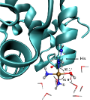
Figure 13: Structure of the QM/MM optimized cisplatin–protein adduct [94].
Figure 14: NMR coupling constants used for the characterization of three-coordinate Pt(II) species.
Figure 15: The chemical formula of the complexes discussed in Table 2.
Scheme 1: Halogen abstraction from 1.
Scheme 2: Halogen abstraction from 2 forming the dicationic complex T3 [22].
Scheme 3: Hydrogenation of complexes A5a and A5b [39].
Scheme 4: Hydrogenation of complexes 3 and A5c [40].
Scheme 5: Intermolecular C–H bond activation from T5a [28].
Scheme 6: Protonation of complexes 4 [35,36].
Scheme 7: Cyclometalation of 5 [43].
Scheme 8: Protonation of 6.
Scheme 9: Reductive elimination of ethane from 7.
Scheme 10: Reductive elimination of methane from six-coordinate Pt(IV) complexes.
Scheme 11: Proposed dissociative mechanism for the fluxional motion of dmphen in [Pt(Me)(dmphen)(PR3)]+ comple...
Figure 16: Feasible interactions for unsaturated intermediates 11b (left) and 12b (right) during fluxional mot...
Scheme 12: Halogen abstraction from 13a,b and subsequent cyclometalation to yield complexes A5a,b [39].
Scheme 13: Proposed mechanism for the acid-catalyzed cyclometalation of 14 via intermediate 15 [41].
Scheme 14: Proposed mechanism for the formation of 19 [102].
Scheme 15: Cyclometalation of 20 via thioether dissociation [117].
Figure 17: Gibbs energy profile (in chloroform solvent) for the cyclometalation of 23 [120].
Scheme 16: Coordination of tmtu to 29 and subsequent C–H bond activation via three-coordinate species 31 and 32...
Scheme 17: Cyclometalation process of NHC-based Pt(II) complexes [28,44].
Scheme 18: Cyclometalation process of complex A9 [43].
Scheme 19: “Rollover” reaction of 38 and subsequent oligomerization [123].
Scheme 20: Proposed mechanism for the formation of cyclometalated species 44 [124].
Scheme 21: Self-assembling process of 45 by “rollover” reaction [126].
Scheme 22: “Rollover” reaction of A9. Energies (solvent) in kcal mol−1 [127].
Scheme 23: Proposed mechanisms for the “rollover” cyclometalation of 52 in gas-phase ion-molecule reactions [128].
Scheme 24: β-H elimination and 1,2-insertion equilibrium involving A1d and the subsequent generation of 57 [35].
Scheme 25: Proposed mechanism for thermolysis of 7b and 7c in benzene-d6 and cyclohexane-d12 solvents [101].
Scheme 26: β-H elimination process of A11a [28].
Scheme 27: Intermolecular C–H bond activation from 62 [95].
Scheme 28: Reductive elimination of methane from 65 followed by CD3CN coordination or C–D bond-activation proc...
Figure 18: DFT-optimized structures describing the κ2 (69, left) and κ3 (69’, right) coordination modes of [Pt...
Scheme 29: Intermolecular arene C–H bond activation from NHC-based complexes [28].
Figure 19: Energy profiles (in benzene solvent) for the benzene C–H bond activation from A11a, A11b, T5a and T...
Scheme 30: Intermolecular arene C–H bond activation from PNP-based complex 71 [12].
Scheme 31: Intermolecular C–H bond-activation by gas-phase ion-molecule reactions of 74 [7,142].
Scheme 32: Dihydrogen activation through complexes A5a, A5b [39], A5c [40] and S1a [54].
Scheme 33: Dihydrogen activation through complexes A7 and 16 [41]. For a: see Scheme 13.
Scheme 34: Br2 and I2 bond activations through complexes A11a and T5a [143].
Scheme 35: Detection and isolation of the Pt(III) complex 81a [143].
Scheme 36: Cl2 bond activation through complexes 82 and 83 [144].
Scheme 37: cis–trans Isomerization mechanism of the solvento Pt(II) complexes S5 [2,61].
Figure 20: Energy profiles for the isomerization of complexes [Pt(R)(PMe3)2(NCMe)]+ where R means Me (85a, red...
Figure 21: DFT-optimized structure of intermediate 86 [62]. Bond distances in angstrom and angles in degrees.
Scheme 38: Proposed dissociative ligand-substitution mechanism of cis-[Pt(R)2S2] complexes (87) [117].
Scheme 39: Proposed mechanisms for the ligand substitution of the dinuclear species 91 [146].
Beilstein J. Org. Chem. 2013, 9, 1269–1277, doi:10.3762/bjoc.9.143

Graphical Abstract
Scheme 1: Representative C–P bond-forming reactions.
Scheme 2: General equation of homolytic substitution.
Scheme 3: Addition of diphenyl(triphenylstannyl)phosphine.
Scheme 4: Addition of diphenyl(trimethylstannyl)phosphine.
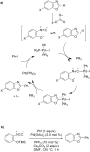
Scheme 5: Plausible mechanism of addition of R3Sn–PPh2.
Scheme 6: Addition of tetraorganodiphosphines to phenylacetylene.
Scheme 7: Plausible mechanism of anti-diphosphination.
Scheme 8: Radical diphosphination for synthesizing fluorescent material.
Scheme 9: Mechanism of thiophosphination with diphenyl(organosulfanyl)phosphine.
Scheme 10: Thiophosphination with S-thiophosphinyl O-ethyl dithiocarbonate.
Scheme 11: Photoinduced selenophosphination of allenes.
Scheme 12: Photoinduced tellurophosphination.
Scheme 13: Decarboxylative phosphorylation of carboxylic acid derivatives.
Scheme 14: Plausible mechanism of decarboxylative phosphorylation.
Scheme 15: Radical phosphination of PTOC esters with white phosphorus.
Scheme 16: Plausible mechanism of radical phosphination (Si = (Me3Si)3Si).
Scheme 17: Stereoselective phosphination leading to (S,S)-aminophosphine derivative.
Figure 1: Calculated reaction profile of homolytic substitution between Ph• and Me3Sn–PPh2 at the B2-PLYP-D/T...
Scheme 18: Phosphination with retention of axial chirality.
Scheme 19: Chemodivergent phosphination.
Scheme 20: Bis(phosphoryl)-bridged biphenyls by radical phosphination.
Scheme 21: Bis(phosphoryl)-bridged ladder triphenylene by radical phosphination.
Scheme 22: Photoinduced phosphination of perfluoroalkyl iodides with tetraphenyldiphosphine.
Scheme 23: Ti(III)-mediated radical phosphination of organic bromides with white phosphorus.
Beilstein J. Org. Chem. 2013, 9, 1202–1209, doi:10.3762/bjoc.9.136
Graphical Abstract
Figure 1: Representative examples of carbazoles with hole-transport, host or luminescent properties.
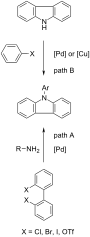
Scheme 1: Synthetic access to N-arylated carbazoles.
Scheme 2: Proposed mechanistic motivation towards the formation of 3a.
Figure 2: FID chromatogram of the reaction mixture. Only the most intense peaks were structurally assigned. x...
Figure 3: Substrate scope. All reactions were performed using iodonium salt 1 (0.35 mmol), 1.2 equiv of prima...
Scheme 3: Synthesis of dibenzo[b,d]bromolium trifluoromethanesulfonate (6).
Scheme 4: Dibenzo[b,d]bromolium trifluoromethanesulfonate (6) and p-fluoroaniline (2f) to construct carbazole ...
Beilstein J. Org. Chem. 2012, 8, 726–731, doi:10.3762/bjoc.8.81
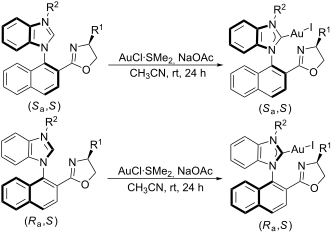
Graphical Abstract
Figure 1: Chiral NHC–Au(I) complexes.
Figure 2: Axially chiral oxazoline–carbene ligands and their palladium complexes.
Scheme 1: Synthesis of axially chiral benzimidazole derivatives.
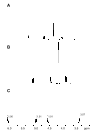
Figure 3: The coordination study of the NHC precursor (Sa,S)-7aa with metal salts by 1H NMR analysis of the c...
Figure 4: Solid-state molecular structure of (Sa,S)-16aa with thermal ellipsoids at the 30% probability level...
Beilstein J. Org. Chem. 2012, 8, 201–226, doi:10.3762/bjoc.8.22
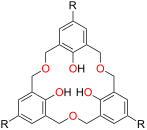
Graphical Abstract
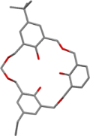
Figure 1: Calixarenes and expanded calixarenes: p-tert-Butylcalix[4]arene (1), p-tert-butyldihomooxacalix[4]a...
Figure 2: Conventional nomenclature for oxacalix[n]arenes.
Scheme 1: Synthesis of oxacalix[3]arenes: (i) Formaldehyde (37% aq), NaOH (aq), 1,4-dioxane; glacial acetic a...
Figure 3: p-tert-Butyloctahomotetraoxacalix[4]arene (4a) [16].
Figure 4: X-ray crystal structure of 3a showing phenolic hydrogen bonding (IUCr ID AS0508) [17].
Scheme 2: Stepwise synthesis of asymmetric oxacalix[3]arenes: (i) MOMCl, Adogen®464; (ii) 2,2-dimethoxypropan...
Figure 5: X-ray crystal structure of heptahomotetraoxacalix[3]arene 5 (CCDC ID 166088) [21].
Scheme 3: Oxacalix[3]arene synthesis by reductive coupling: (i) Me3SiOTf, Et3SiH, CH2Cl2; R1, R2 = I, Br, ben...
Scheme 4: Oxacalix[3]naphthalene: (i) HClO4 (aq), wet CHCl3 (R = tert-butyl, 6a, H, 6b) [20].
Figure 6: Conformers of 3a.
Scheme 5: Origin of the 25:75 cone:partial-cone statistical distribution of O-substituted oxacalix[3]arenes (p...
Scheme 6: Synthesis of alkyl ethers 7–10: (i) Alkyl halide, NaH, DMF [24].
Scheme 7: Synthesis of a pyridyl derivative 11a: (i) Picolyl chloride hydrochloride, NaH, DMF [26,27].
Figure 7: X-ray crystal structure of partial-cone 11a (CCDC ID 150580) [26].
Scheme 8: Lower-rim ethyl ester synthesis: (i) Ethyl bromoacetate, NaH, t-BuOK or alkali metal carbonate, THF...
Scheme 9: Forming chiral receptor 13: (i) Ethyl bromoacetate, NaH, THF; (ii) NaOH, H2O/1,4-dioxane; (iii) S-P...
Figure 8: X-ray crystal structure of 16 (IUCr ID PA1110) [32].
Scheme 10: Lower rim N,N-diethylamide 17a: (i) N,N-Diethylchloroacetamide, NaH, t-BuOK or alkali metal carbona...
Scheme 11: Capping the lower rim: (i) N,N-Diethylchloroacetamide, NaH, THF; (ii) NaOH, H2O/1,4-dioxane; (iii) ...
Figure 9: X-ray crystal structure of 18 (CCDC ID 142599) [33].
Scheme 12: Extending the lower rim: (i) Glycine methyl ester, HOBt, dicyclohexycarbodiimide (DCC), CH2Cl2; (ii...
Scheme 13: Synthesis of N-hydroxypyrazinone derivative 23: (i) 1-[3-(Dimethylamino)propyl]-3-ethylcarbodiimide...
Scheme 14: Synthesis of 24: (i) 1-Adamantyl bromomethyl ketone, NaH, THF [39].
Scheme 15: Synthesis of 25 and 26: (i) (Diphenylphosphino)methyl tosylate, NaH, toluene; (ii) phenylsilane, to...
Figure 10: X-ray crystal structure of 27 in the partial-cone conformer (CCDC ID SUP 90399) [41].
Scheme 16: Synthesis of strapped oxacalix[3]arene derivatives 28 and 29: (i) N,N’-Bis(chloroacetyl)-1,2-ethyle...
Figure 11: A chiral oxacalix[3]arene [45].
Figure 12: X-ray crystal structure of asymmetric oxacalix[3]arene 30 incorporating t-Bu, iPr and Et groups (CC...
Scheme 17: Reactions of an oxacalix[3]arene incorporating an upper-rim Br atom with (i) Pd(OAc)2, PPh3, HCO2H,...
Scheme 18: Synthesis of acid 39: (i) NaOH, EtOH/H2O, HCl (aq) [47].
Figure 13: Two forms of dimeric oxacalix[3]arene 40 [47].
Scheme 19: Capping the upper rim: (i) t-BuLi, THF, −78 °C; (ii) NaBH4, THF/EtOH; (iii) 1,3,5-tris(bromomethyl)...
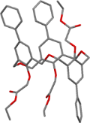
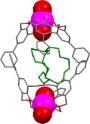
Figure 14: Oxacalix[3]arene capsules 46 and 47 formed through coordination chemistry [52,53].
Figure 15: X-ray crystal structure of the 3b-vanadyl complex (CCDC ID 240185) [57].
Scheme 20: Effect of Ti(IV)/SiO2 on 3a: (i) Ti(OiPr)4, toluene; (ii) triphenylsilanol, toluene; (iii) partiall...
Figure 16: X-ray crystal structures of oxacalix[3]arene complexes with rhenium: 3b∙Re(CO)3 (CCDC ID 620981, le...
Figure 17: X-ray crystal structure of the La2·3a2 complex (CSD ID TIXXUT) [60].
Figure 18: X-ray crystal structures of [3a∙UO2]− with a cavity-bound cation (CCDC ID 135575, left) and without...
Figure 19: X-ray crystal structure of a supramolecule comprising two [3g·UO2]− complexes that encapsulate a di...
Figure 20: X-ray crystal structure of oxacalix[3]arene 49 capable of chiral selectivity (CSD ID HIGMUF) [65].
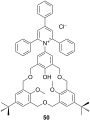
Figure 21: The structure of derivative 50 incorporating a Reichardt dye [66].
Figure 22: Phosphorylated oxacalix[3]arene complexes with transition metals: (Left to right) 26∙Au, 26∙Mo(CO)3...
Figure 23: X-ray crystal structure of [17a·HgCl2]2 (CCDC ID 168653) [69].
Figure 24: X-ray crystal structures of 3f with C60 (CCDC ID 182801, left) [76] and a 1,4-bis(9-fluorenyl) C60 deri...
Figure 25: X-Ray crystal structure of 3i and 6a encapsulating C60 (CCDC ID 102473 and 166077) [23,79].
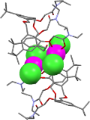
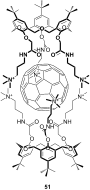
Figure 26: A C60 complexing cationic oxacalix[3]arene 51 [81].
Figure 27: An oxacalix[3]arene-C60 self-associating system 53 [87].
Scheme 21: Synthesis of fluorescent pyrene derivative 55: (i) Propargyl bromide, acetone; (ii) CuI, 1-azidomet...
Scheme 22: Synthesis of responsive rhodamine derivative 57: (i) DCC, CH2Cl2 [91].
Scheme 23: Synthesis of nitrobenzyl derivative 58: (i) 1-Bromo-4-nitrobenzyl acetate, K2CO3, refluxing acetone...
Figure 28: X-ray crystal structure of [Na2∙17a](PF6)2 (CCDC ID 116656) [97].
Beilstein J. Org. Chem. 2011, 7, 1584–1601, doi:10.3762/bjoc.7.187
Graphical Abstract
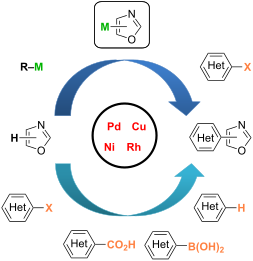
Scheme 1: Stoichiometric and catalytic direct (hetero)arylation of arenes.
Scheme 2: Stille and Negishi cross-coupling methodologies in oxazole series [28,30,31,33,34].
Scheme 3: Stoichiometric direct (hetero)arylation of (benz)oxazole with magnesate bases [35].
Scheme 4: Ohta's pioneering catalytic direct C5-selective pyrazinylation of oxazole [36,37].
Scheme 5: Preparation of pharmaceutical compounds by following the pioneering Ohta protocol [38,39].
Scheme 6: Miura’s pioneering catalytic direct arylations of (benz)oxazoles [40]. aIsolated yield.
Scheme 7: Pd(0)- and Cu(I)-catalyzed direct C2-selective arylation of (benz)oxazoles [41-44].
Scheme 8: Cu(I)-catalyzed direct C2-selective arylations of (benz)oxazoles [40,45-47].
Scheme 9: Copper-free Pd(0)-catalyzed direct C5- and C2-selective arylation of oxazole-4-carboxylate esters [48-50,52].
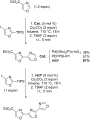
Scheme 10: Iterative synthesis of bis- and trioxazoles [51].
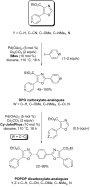
Scheme 11: Preparation of DPO- and POPOP-analogues [53].
Scheme 12: Pd(0)-catalyzed direct arylation of benzoxazole with aryl chlorides [54].
Scheme 13: Pd(0)-catalyzed direct C2-selective arylation of (benz)oxazoles with bromides and chlorides using b...
Scheme 14: Palladium-catalyzed direct arylation of oxazoles under green conditions; (a) Zhuralev direct arylat...
Scheme 15: Pd(0)-catalyzed C2- and C5-selective (hetero)arylation of oxazole [63].
Scheme 16: Pd(0)-catalyzed C2- and C5-selective (hetero)arylation of ethyl oxazole-4-carboxylate [64].
Scheme 17: Pd(0)-catalyzed direct C4-phenylation of oxazoles; (a) Miura’s procedure [65]; (b) Fagnou’s procedure [66].
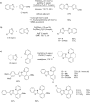
Scheme 18: Catalytic cycles for Cu(I)-catalyzed (routeA) and Pd(0)/Cu(I)-catalyzed (route B) direct arylation ...
Scheme 19: Base-assisted, Pd(0)-catalyzed, C2-selective, direct arylation of benzoxazole proposed by Zhuralev [58]...
Scheme 20: Electrophilic substitution-type mechanism proposed by Hoarau [64].
Scheme 21: CMD-proceeding C5-selective direct arylation of oxazole proposed by Strotman and Chobabian [63].
Scheme 22: DFT calculations on methyl oxazole-4-carboxylate and consequently developed methodologies for the P...
Scheme 23: Pd(0)-catalyzed direct arylation of (benz)oxazoles with tosylates and mesylates [71].
Scheme 24: Pd(0)-catalyzed direct arylation of oxazoles with sulfamates [72].
Scheme 25: Pd(II)- and Cu(II)-catalyzed decarboxylative direct C–H coupling of oxazoles with 4- and 5-carboxyo...
Scheme 26: Pd(II)- and Ag(II)-catalyzed decarboxylative direct arylation of (benzo)oxazoles [74]; (a) procedure; (...
Scheme 27: Pd(II)- and Cu(II)-catalyzed direct arylation of benzoxazole with arylboronic acids [76]; (a) procedure...
Scheme 28: Ni(II)-catalyzed direct arylation of benzoxazoles with arylboronic acids under O2 [76]; (a) procedure; ...
Scheme 29: Rhodium-catalyzed direct arylation of benzoxazole [78,79].
Scheme 30: Ni(II)-catalyzed direct arylation of (benz)oxazoles with aryl halides; (a) Itami's procedure [80]; (b) ...
Scheme 31: Dehydrogenative cross-coupling of (benz)oxazoles; (a) Pd(II)- and Cu(II)-catalyzed cross-coupling o...
Beilstein J. Org. Chem. 2011, 7, 668–677, doi:10.3762/bjoc.7.79
Graphical Abstract
Figure 1: Isomeric forms of triazole.
Scheme 1: Copper catalyzed azide–alkyne cycloaddition.
Scheme 2: Ruthenium catalyzed azide–alkyne cycloaddition.
Scheme 3: Copper-sulfate catalyzed azide–alkyne cycloaddition.
Scheme 4: Azide–dimethylbut-2-yne-dioate cycloaddition.
Figure 2: Triazole compound 3 with most potent antifugal activity against various strains [20].
Figure 3: Triazole compounds 4 and 5 showing antifungal activity against Candida albicans [31].
Figure 4: Triazole compound 6 with the highest activity against Aspergillus flavus, Aspergillus versicolor, A...
Figure 5: Triazole compound 7 exhibiting an MIC of 25 µg/mL against Aspergillus niger [33].
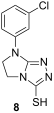
Figure 6: Triazole compound 8 showing the most significant activity against Aspergillus niger and Fusarium ox...
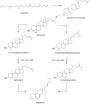
Figure 7: Ergosterol biosynthesis inhibitor pathway.
Figure 8: Fluconazole (9).
Figure 9: Itraconazole (10).
Figure 10: Voriconazole (11).
Figure 11: Posaconazole (12).
Figure 12: Ravuconazole (13).
Beilstein J. Org. Chem. 2011, 7, 496–502, doi:10.3762/bjoc.7.58
Graphical Abstract
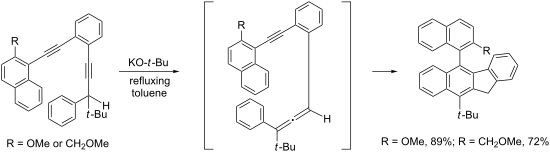
Scheme 1: Synthesis of 5-aryl-11H-benzo[b]fluorenes via benzannulated enyne–allenes.
Scheme 2: Synthesis of 1,1'-binaphthyl-substituted 11H-benzo[b]fluorene 3c.
Scheme 3: Synthesis of 5-(2-methoxyphenyl)- and 5-[2-(methoxymethyl)phenyl]-11H-benzo[b]fluorene 13a and 13b.
Scheme 4: Synthesis of 5-(1-naphthyl)- and 5-(2-methoxy-1-naphthyl)-11H-benzo[b]fluorene 20a and 20b.
Scheme 5: Synthesis of 5-[2-(methoxymethyl)-1-naphthyl]-11H-benzo[b]fluorene 20c.
Scheme 6: Demethylation of 22b to form 5-(2-hydroxy-1-naphthyl)-11H-benzo[b]fluorene 24.
Beilstein J. Org. Chem. 2007, 3, No. 18, doi:10.1186/1860-5397-3-18
Graphical Abstract
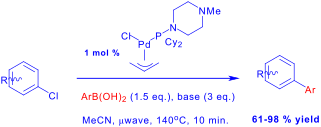
Scheme 1: Catalysts used in this study and microwave accelerated cross-coupling of functionalised boronic aci...
Scheme 2: Microwave accelerated cross-coupling of a range of boronic acids with 4-chloroacetophenone.
Scheme 3: Competition experiment demonstrating the inhibitory effect of 2,3,6-trifluorophenyl boronic acid on...
Scheme 4: Stoichiometric reactions between fluorinated boronic acids and [Pd(dppf)Cl2].