Search for "bioavailability" in Full Text gives 132 result(s) in Beilstein Journal of Organic Chemistry.
Beilstein J. Org. Chem. 2021, 17, 2553–2569, doi:10.3762/bjoc.17.171
Graphical Abstract
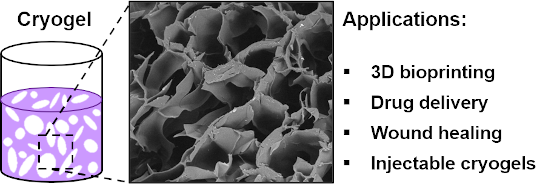
Figure 1: Schematic representation of the process of aqueous cryogel formation, using (a) monomers/small mole...
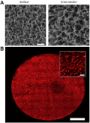
Figure 2: Microarchitecture of gelatin cryogels. (A) Surface and cross-sectional SEM micrographs of highly po...
Figure 3: Principle of 3D-cryogel printing. A) Illustration of 3D-printing of cryogels. B) Illustration of th...
Figure 4: Illustration of the production of the injectable multifunctional composite, comprised of alginate c...
Figure 5: Digital and SEM photographs of PETEGA cryogel at 20 °C (top) and 50 °C (bottom), synthesised via UV...
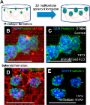
Figure 6: Cell morphology of T47D breast cancer cells cultured in HA cryogels. (A) Schematic representation o...
Figure 7: Preparation of PDMA/β-CD cryogel via cryogenic treatment and photochemical crosslinking in frozen s...
Figure 8: (A) Healing rate of wounds treated with autoclaved CG11 cryogels and those treated with 70% ethanol...
Figure 9: In vivo haemostatic capacity evaluation of the cryogels. Blood loss (a) and haemostatic time (b) in...
Beilstein J. Org. Chem. 2021, 17, 1641–1688, doi:10.3762/bjoc.17.116
Graphical Abstract
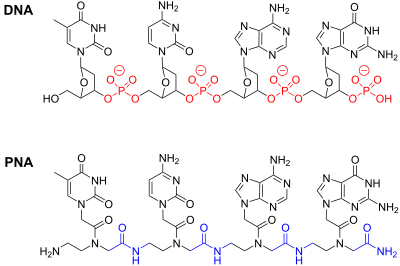
Figure 1: Structure of DNA and PNA.
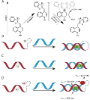
Figure 2: PNA binding modes: (A) PNA–dsDNA 1:1 triplex; (B) PNA–DNA–PNA strand-invasion triplex; (C) the Hoog...
Figure 3: Structure of P-form PNA–DNA–PNA triplex from reference [41]. (A) view in the major groove and (B) view ...
Figure 4: Structures of backbone-modified PNA.
Figure 5: Structures of PNA having α- and γ-substituted backbones.
Figure 6: Structures of modified nucleobases in PNA to improve Hoogsteen hydrogen bonding to guanine and aden...
Figure 7: Proposed hydrogen bonding schemes for modified PNA nucleobases designed to recognize pyrimidines or...
Figure 8: Modified nucleobases to modulate Watson–Crick base pairing and chemically reactive crosslinking PNA...
Figure 9: Examples of triplets formed by Janus-wedge PNA nucleobases (blue). R1 denotes DNA, RNA, or PNA back...
Figure 10: Examples of fluorescent PNA nucleobases. R1 denotes DNA, RNA, or PNA backbones.
Figure 11: Endosomal entrapment and escape pathways of PNA and PNA conjugates.
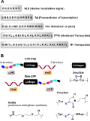
Figure 12: (A) representative cell-penetrating peptides (CPPs), (B) conjugation designs and linker chemistries....
Figure 13: Proposed delivery mode by pHLIP-PNA conjugates (A) the transmembrane section of pHLIP interacting w...
Figure 14: Structures of modified penetratin CPP conjugates with PNA linked through either disulfide (for stud...
Figure 15: Chemical structure of C9–PNA, a stable amphipathic (cyclic-peptide)–PNA conjugate.
Figure 16: Structures of PNA conjugates with a lipophilic triphenylphosphonium cation (TPP–PNA) through (A) th...
Figure 17: Structures of (A) chloesteryl–PNA, (B) cholate–PNA and (C) cholate–PNA(cholate)3.
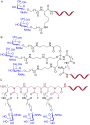
Figure 18: Structures of PNA–GalNAc conjugates (A) (GalNAc)2K, (B) triantennary (GalNAc)3, and (C) trivalent (...
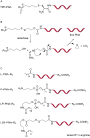
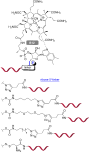
Figure 19: Vitamin B12–PNA conjugates with different linkages.
Figure 20: Structures of (A) neomycin B, (B) PNA–neamine conjugate, and (C) PNA–neosamine conjugate.
Figure 21: PNA clamp (red) binding to target DNA containing a mixture of sequences (A) PNA binds with higher a...
Figure 22: Rolling circle amplification using PNA openers (red) to invade a dsDNA target forming a P-loop. A p...
Figure 23: Molecular beacons containing generic fluorophores (Fl) and quenchers (Q) recognizing a complementar...
Figure 24: (A) Light-up fluorophores such as thiazole orange display fluorescence enhancement upon binding to ...
Figure 25: Templated fluorogenic detection of oligonucleotides using two PNAs. (A) Templated FRET depends on h...
Figure 26: Lateral flow devices use a streptavidin labeled strip on nitrocellulose paper to anchor a capture P...
Beilstein J. Org. Chem. 2021, 17, 1464–1475, doi:10.3762/bjoc.17.102
Graphical Abstract
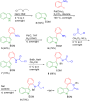
Figure 1: Diindolylmethanes and reported biological activities.
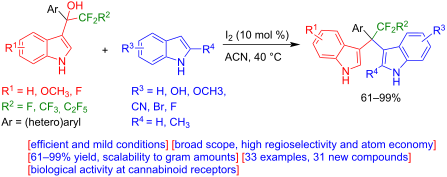
Figure 2: Synthetic strategies toward trifluoromethylated unsymmetrical quaternary DIMs.
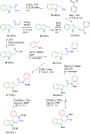
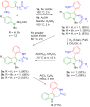
Figure 3: Reactions performed to study the scope of the method.
Figure 4: Gram-scale synthesis of unsymmetrical DIMs 3a and 3ad.
Figure 5: Plausible reaction mechanism for the synthesis of fluoromethylated unsymmetrical DIMs, shown for co...
Beilstein J. Org. Chem. 2021, 17, 991–1000, doi:10.3762/bjoc.17.81
Graphical Abstract
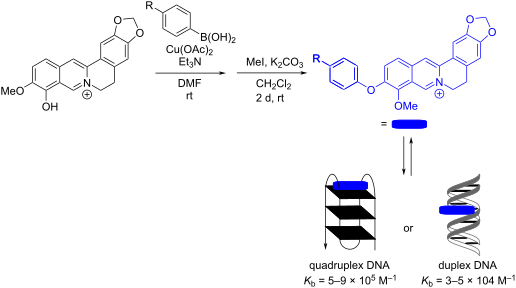
Figure 1: Structures and numbering of berberine (1a), berberrubine (1b) and 9-O-aryl-substituted berberine de...
Scheme 1: Synthesis of 10-O-arylated berberine derivatives 5a–e.
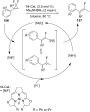
Scheme 2: Cu2+-catalyzed demethylation of berberrubine (1b).
Figure 2: Temperature dependent emission spectra of derivatives 5a and 5d (c = 10 µM, with 0.25% v/v DMSO) in...
Figure 3: Photometric titration of 5a (A) and 5d (B) (cLigand = 20 μM) with ct DNA (1) in BPE buffer (cNa+ = ...
Figure 4: Fluorimetric titration of 5a (A) and 5d (B, cLigand = 20 μM) with ct DNA (1) in BPE buffer (cNa+ = ...
Figure 5: CD and LD spectra of ct DNA (1 and 2, cDNA = 20 μM; in BPE buffer: 10 mM, pH 7.0; with 5% v/v DMSO)...
Beilstein J. Org. Chem. 2021, 17, 977–982, doi:10.3762/bjoc.17.79
Graphical Abstract
Figure 1: Biologically relevant 2-oxydibenzofuran-containing structures 1–6.
Figure 2: Representative bioactive structures containing benzofuro-fused pyridine analogues 7–9.
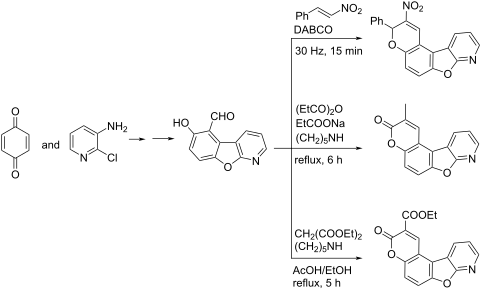
Scheme 1: Strategy for metal-free access to benzofuropyridine 13.
Scheme 2: Electrophilic aromatic substitution of 6-hydroxybenzofuro[2,3-b]pyridine (13).
Scheme 3: Synthesis of isomeric oxazole-fused derivatives.
Scheme 4: Fused derivatives from 16.
Beilstein J. Org. Chem. 2021, 17, 431–438, doi:10.3762/bjoc.17.39
Graphical Abstract
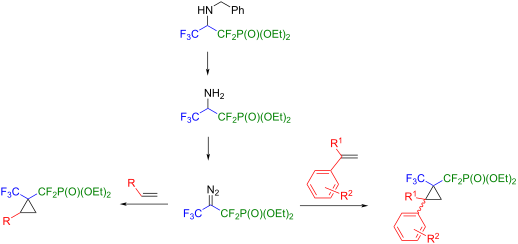
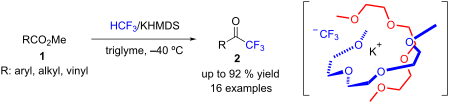
Scheme 1: Chemistry of the CF3 anion generated from HCF3. a) Decomposition of the trifluoromethyl anion to di...
Figure 1: Trifluoromethyl ketones. a) Hydrolysis of trifluoromethyl ketones. b) Selected examples of biologic...
Scheme 2: Trifluoromethylation of esters by HCF3 by a) Russell and Roques (1998), b) Prakash and co-workers (...
Scheme 3: Substrate scope of esters 1 for trifluoromethylation by HCF3 under the optimized conditions. aDeter...
Beilstein J. Org. Chem. 2021, 17, 293–318, doi:10.3762/bjoc.17.28
Graphical Abstract
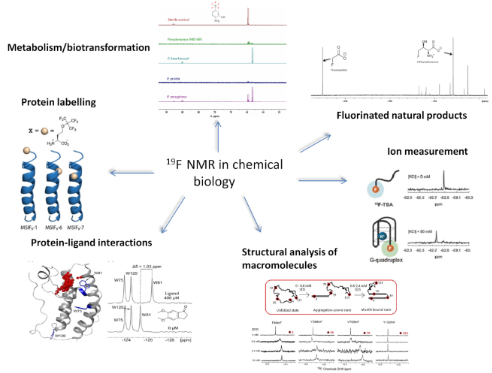
Figure 1: Selected examples of 19F-labelled amino acid analogues used as probes in chemical biology.
Figure 2: (a) Sequences of the antimicrobial peptide MSI-78 and pFtBSer-containing analogs and cartoon repres...
Figure 3: (a) Chemical structures of a selection of trifluoromethyl tags. (b) Comparative analysis showing th...
Figure 4: (a) First bromodomain of Brd4 with all three tryptophan residues displayed in blue and labelled by ...
Figure 5: (a) Enzymatic hydroxylation of GBBNF in the presence of hBBOX (b) 19F NMR spectra showing the conve...
Figure 6: (a) In-cell enzymatic hydrolysis of the fluorinated anandamide analogue ARN1203 catalyzed by hFAAH....
Figure 7: (a) X-ray crystal structure of CAM highlighting the location the phenylalanine residues replaced by...
Figure 8: 19F PREs of 4-F, 5-F, 6-F, 7-FTrp49 containing MTSL-modified S52CCV-N. The 19F NMR resonances of ox...
Figure 9: 19F NMR as a direct probe of Ud NS1A ED homodimerization. Schematic representation showing the loca...
Figure 10: (a) Representative spectrum of a 182 μM sample of Aβ1-40-tfM35 at varying times indicating the majo...
Figure 11: Illustration of the conformational switch induced by SDS in 4-tfmF-labelled α-Syn. Also shown are t...
Figure 12: (a) Structural models of the Myc‐Max (left), Myc‐Max‐DNA (middle) and Myc‐Max‐BRCA1 complexes (righ...
Figure 13: (a) Side (left) and bottom (right) views of the pentameric apo ELIC X-ray structure (PDB ID: 3RQU) ...
Figure 14: (a) General structure of a selection of recently developed 19F-labelled nucleotides for their use a...
Figure 15: Monitoring biotransformation of the fluorinated pesticide cyhalothrin by the fungus C. elegans. The...
Figure 16: Following the biodegradation of emerging fluorinated pollutants by 19F NMR. The spectra are from cu...
Figure 17: Discovery of new fluorinated natural products by 19F NMR. The spectrum is of the culture supernatan...
Figure 18: Application of 19F NMR to investigate the biosynthesis of nucleocidin. The spectra are from culture...
Figure 19: Detection of new fluorofengycins (indicated by arrows) in culture supernatants of Bacillus sp. CS93...
Figure 20: Measurement of β-galactosidase activity in MCF7 cancer cells expressing lacZ using 19F NMR. The deg...
Figure 21: Detection of ions using 19F NMR. (a) Structure of TF-BAPTA and its 19F iCEST spectra in the presenc...
Figure 22: (a) The ONOO−-mediated decarbonylation of 5-fluoroisatin and 6-fluoroisatin. The selectivity of (b)...
Beilstein J. Org. Chem. 2021, 17, 245–272, doi:10.3762/bjoc.17.25
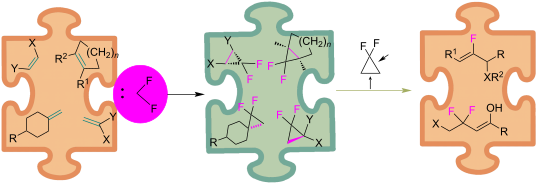
Graphical Abstract
Scheme 1: Synthesis of 1,1-difluoro-2,3-dimethylcyclopropane (2).
Scheme 2: Cyclopropanation via dehydrohalogenation of chlorodifluoromethane.
Scheme 3: Difluorocyclopropanation of methylstyrene 7 using dibromodifluoromethane and zinc.
Scheme 4: Synthesis of difluorocyclopropanes from the reaction of dibromodifluoromethane and triphenylphosphi...
Scheme 5: Generation of difluorocarbene in a catalytic two-phase system and its addition to tetramethylethyle...
Scheme 6: The reaction of methylstyrene 7 with chlorodifluoromethane (11) in the presence of a tetraarylarson...
Scheme 7: Pyrolysis of sodium chlorodifluoroacetate (12) in refluxing diglyme in the presence of alkene 13.
Scheme 8: Synthesis of boron-substituted gem-difluorocyclopropanes 16.
Scheme 9: Addition of sodium bromodifluoroacetate (17) to alkenes.
Scheme 10: Addition of sodium bromodifluoroacetate (17) to silyloxy-substituted cyclopropanes 20.
Scheme 11: Synthesis of difluorinated nucleosides.
Scheme 12: Addition of butyl acrylate (26) to difluorocarbene generated from TFDA (25).
Scheme 13: Addition of difluorocarbene to propargyl esters 27 and conversion of the difluorocyclopropenes 28 t...
Scheme 14: The generation of difluorocyclopropanes using MDFA 30.
Scheme 15: gem-Difluorocyclopropanation of styrene (32) using difluorocarbene generated from TMSCF3 (31) under...
Scheme 16: Synthesis of a gem-difluorocyclopropane derivative using HFPO (41) as a source of difluorocarbene.
Scheme 17: Cyclopropanation of (Z)-2-butene in the presence of difluorodiazirine (44).
Scheme 18: The cyclopropanation of 1-octene (46) using Seyferth's reagent (45) as a source of difluorocarbene.
Scheme 19: Alternative approaches for the difluorocarbene synthesis from trimethyl(trifluoromethyl)tin (48).
Scheme 20: Difluorocyclopropanation of cyclohexene (49).
Scheme 21: Synthesis of difluorocyclopropane derivative 53 using bis(trifluoromethyl)cadmium (51) as the diflu...
Scheme 22: Addition of difluorocarbene generated from tris(trifluoromethyl)bismuth (54).
Scheme 23: Addition of a stable (trifluoromethyl)zinc reagent to styrenes.
Scheme 24: The preparation of 2,2-difluorocyclopropanecarboxylic acids of type 58.
Scheme 25: Difluorocyclopropanation via Michael cyclization.
Scheme 26: Difluorocyclopropanation using N-acylimidazolidinone 60.
Scheme 27: Difluorocyclopropanation through the cyclization of phenylacetonitrile (61) and 1,2-dibromo-1,1-dif...
Scheme 28: gem-Difluoroolefins 64 for the synthesis of functionalized cyclopropanes 65.
Scheme 29: Preparation of aminocyclopropanes 70.
Scheme 30: Synthesis of fluorinated methylenecyclopropane 74 via selenoxide elimination.
Scheme 31: Reductive dehalogenation of (1R,3R)-75.
Scheme 32: Synthesis of chiral monoacetates by lipase catalysis.
Scheme 33: Transformation of (±)-trans-81 using Rhodococcus sp. AJ270.
Scheme 34: Transformation of (±)-trans-83 using Rhodococcus sp. AJ270.
Scheme 35: Hydrogenation of difluorocyclopropenes through enantioselective hydrocupration.
Scheme 36: Enantioselective transfer hydrogenation of difluorocyclopropenes with a Ru-based catalyst.
Scheme 37: The thermal transformation of trans-1,2-dichloro-3,3-difluorocyclopropane (84).
Scheme 38: cis–trans-Epimerization of 1,1-difluoro-2,3-dimethylcyclopropane.
Scheme 39: 2,2-Difluorotrimethylene diradical intermediate.
Scheme 40: Ring opening of stereoisomers 88 and 89.
Scheme 41: [1,3]-Rearrangement of alkenylcyclopropanes 90–92.
Scheme 42: Thermolytic rearrangement of 2,2-difluoro-1-vinylcyclopropane (90).
Scheme 43: Thermal rearrangement for ethyl 3-(2,2-difluoro)-3-phenylcyclopropyl)acrylates 93 and 95.
Scheme 44: Possible pathways of the ring opening of 1,1-difluoro-2-vinylcyclopropane.
Scheme 45: Equilibrium between 1,1-difluoro-2-methylenecyclopropane (96) and (difluoromethylene)cyclopropane 97...
Scheme 46: Ring opening of substituted 1,1-difluoro-2,2-dimethyl-3-methylenecyclopropane 98.
Scheme 47: 1,1-Difluorospiropentane rearrangement.
Scheme 48: Acetolysis of (2,2-difluorocyclopropyl)methyl tosylate (104) and (1,1-difluoro-2-methylcyclopropyl)...
Scheme 49: Ring opening of gem-difluorocyclopropyl ketones 106 and 108 by thiolate nucleophiles.
Scheme 50: Hydrolysis of gem-difluorocyclopropyl acetals 110.
Scheme 51: Ring-opening reaction of 2,2-difluorocyclopropyl ketones 113 in the presence of ionic liquid as a s...
Scheme 52: Ring opening of gem-difluorocyclopropyl ketones 113a by MgI2-initiated reaction with diarylimines 1...
Scheme 53: Ring-opening reaction of gem-difluorocyclopropylstannanes 117.
Scheme 54: Preparation of 1-fluorovinyl vinyl ketone 123 and the synthesis of 2-fluorocyclopentenone 124. TBAT...
Scheme 55: Iodine atom-transfer ring opening of 1,1-difluoro-2-(1-iodoalkyl)cyclopropanes 125a–c.
Scheme 56: Ring opening of bromomethyl gem-difluorocyclopropanes 130 and formation of gem-difluoromethylene-co...
Scheme 57: Ring-opening aerobic oxidation reaction of gem-difluorocyclopropanes 132.
Scheme 58: Dibrominative ring-opening functionalization of gem-difluorocyclopropanes 134.
Scheme 59: The selective formation of (E,E)- and (E,Z)-fluorodienals 136 and 137 from difluorocyclopropyl acet...
Scheme 60: Proposed mechanism for the reaction of difluoro(methylene)cyclopropane 139 with Br2.
Scheme 61: Thermal rearrangement of F2MCP 139 and iodine by CuI catalysis.
Scheme 62: Synthesis of 2-fluoropyrroles 142.
Scheme 63: Ring opening of gem-difluorocyclopropyl ketones 143 mediated by BX3.
Scheme 64: Lewis acid-promoted ring-opening reaction of 2,2-difluorocyclopropanecarbonyl chloride (148).
Scheme 65: Ring-opening reaction of the gem-difluorocyclopropyl ketone 106 by methanolic KOH.
Scheme 66: Hydrogenolysis of 1,1-difluoro-3-methyl-2-phenylcyclopropane (151).
Scheme 67: Synthesis of monofluoroalkenes 157.
Scheme 68: The stereoselective Ag-catalyzed defluorinative ring-opening diarylation of 1-trimethylsiloxy-2,2-d...
Scheme 69: Synthesis of 2-fluorinated allylic compounds 162.
Scheme 70: Pd-catalyzed cross-coupling reactions of gem-difluorinated cyclopropanes 161.
Scheme 71: The (Z)-selective Pd-catalyzed ring-opening sulfonylation of 2-(2,2-difluorocyclopropyl)naphthalene...
Figure 1: Structures of zosuquidar hydrochloride and PF-06700841.
Scheme 72: Synthesis of methylene-gem-difluorocyclopropane analogs of nucleosides.
Figure 2: Anthracene-difluorocyclopropane hybrid derivatives.
Figure 3: Further examples of difluorcyclopropanes in modern drug discovery.
Beilstein J. Org. Chem. 2020, 16, 2598–2606, doi:10.3762/bjoc.16.211
Graphical Abstract
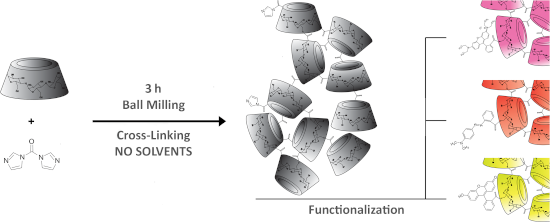
Scheme 1: The mechanically assisted synthesis of mono- and poly-β-CD mesitylene sulfonate (β-CDMts).
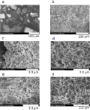
Figure 1: SEM images of β-CD particles a) before grinding and ground for b) 5 min, c) 10 min, d) 29 min, e) 8...
Figure 2: Granulometric composition of β-CD particles against time after grinding at 30 Hz.
Figure 3: XRD patterns of β-CD powders obtained after different grinding times.
Figure 4: Compared conversions of β-CD in the synthesis of β-CDMts.
Figure 5: Variation of the mono/poly-substituted β-CDMts ratio with time. Reactions were done using untreated...
Figure 6: Compared conversions of β-CD in the synthesis of β-CDMts in the presence of KOH (stoichiometric pro...
Figure 7: Variation of the mono/poly-substituted β-CDMts ratio with time in the presence of KOH (stoichiometr...
Beilstein J. Org. Chem. 2020, 16, 2562–2575, doi:10.3762/bjoc.16.208
Graphical Abstract
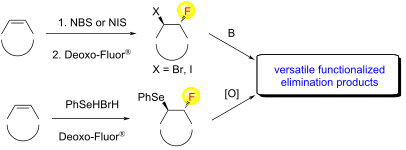
Scheme 1: Proposed outcome of the halofluorination of (rac)-1. Only the main conformers of (rac)-1 and (rac)-...
Scheme 2: Halofluorination reactions of the trans-diester (rac)-1.
Scheme 3: Probable outcomes of the halofluorination of 4. Both conformers of the compounds 4, (rac)-T2a,b, an...
Scheme 4: Halofluorination reactions of the cis-diester 4. Important NOESY interactions are indicated by two-...
Scheme 5: Halofluorination reactions of the cis-tetrahydrophthalic imide derivative 7.
Scheme 6: Synthesis and halofluorination of the trans-imide (rac)-10.
Figure 1: Crystal structure of (rac)-11b.
Scheme 7: Synthesis of the cyclic carbamide (rac)-13.
Scheme 8: Halofluorination reactions of the γ-lactam (rac)-14. Relevant NOESY interactions are indicated by t...
Figure 2: Crystal structure of the product (rac)-15a.
Figure 3: Crystal structure of the product (rac)-15b.
Scheme 9: Reactions of the diester 16 with NBS or NIS in the presence or absence of Deoxo-Fluor®.
Scheme 10: Formation of the halolactons (rac)-17a,b. The initial attack of the halogen cation occurs at the st...
Scheme 11: Unsuccessful halofluorination of the bicyclic diester 18.
Scheme 12: Halofluorination reactions of the rigid tricyclic imine 19. The relevant NOESY interactions are mar...
Scheme 13: Mechanism of the halofluorination reactions of the substrate 19. X = Br (compounds a), I (compounds...
Scheme 14: Synthesis and halofluorination of the imide 24.
Scheme 15: Cyclizations of halofluorinated diesters with potassium tert-butoxide. Relevant NOESY interactions ...
Scheme 16: Mechanism of the reaction of the cyclopropanation of the compounds (rac)-2a,b and (rac)-5a with t-B...
Scheme 17: Presumed mechanism of the reaction of the compound (rac)-6b with t-BuOK.
Scheme 18: Cyclizations of halofluorinated tetrahydrophthalimides with DBU. Relevant NOESY interactions are ma...
Scheme 19: Mechanism for the formation of (rac)-28 from (rac)-11a,b. Although the formation of the compound (r...
Scheme 20: Fluoroselenations of the cyclohexenedicarboxylates (rac)-1 and 4.
Scheme 21: PhSe+-induced lactonization of the diester 16. Relevant NOESY interactions are marked with two-head...
Scheme 22: Oxidation of the fluoroselenide (rac)-30 under acidic and basic conditions.
Scheme 23: Oxidation of the fluoroselenide mixture (rac)-31 under acidic and basic conditions.
Beilstein J. Org. Chem. 2020, 16, 2477–2483, doi:10.3762/bjoc.16.201
Graphical Abstract
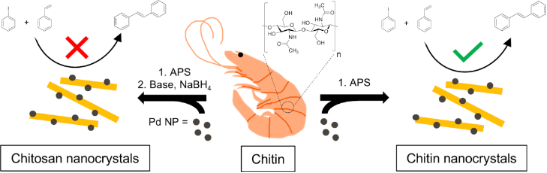
Scheme 1: Pathway for the formation of ChNC and subsequently ChsNCs from bulk chitin.
Figure 1: TEM micrographs of (a) ChNCs and (b) ChsNCs. Both samples were stained and prepared on glow-dischar...
Scheme 2: Catalyst fabrication method for the deposition of Pd NPs onto chitin (PdNP@ChNC) and chitosan (PdNP...
Figure 2: TEM micrographs of (a) PdNP@ChNCs and (b) PdNP@ChsNCs. The samples were placed on glow discharged T...
Figure 3: High-resolution X-ray photoelectron spectroscopy of the Pd 3d region of (a) PdNP@ChNC and (b) PdNP@...
Beilstein J. Org. Chem. 2020, 16, 2332–2337, doi:10.3762/bjoc.16.194
Graphical Abstract
Figure 1: The molecular structure of OA (A) and Q[8] (B).
Figure 2: 1H NMR titration of OA with Q[8] were performed in D2O containing 10% DMSO by volume, OA (500 μmol·L...
Figure 3: (A) The UV–vis absorption spectra recorded for OA in the presence of Q[8] (c(Q[8]), labeled a–k: 0,...
Figure 4: IR spectra recorded for (a) Q[8], (b) OA, (c) a physical mixture of Q[8] and OA, and (d) the OA@Q[8...
Figure 5: The possible interaction mode for OA@Q[8].
Figure 6: The phase-solubility graph obtained for OA in a Q[8] aqueous solution at λ = 275 nm.
Figure 7: The clearance rate curve of ABTS+• upon increasing the concentration of OA and the OA@Q[8] inclusio...
Figure 8: The release curves of OA and OA@Q[8].
Beilstein J. Org. Chem. 2020, 16, 2151–2192, doi:10.3762/bjoc.16.183
Graphical Abstract
Figure 1: Fluorine-containing drugs.
Figure 2: Fluorinated agrochemicals.
Scheme 1: Selectivity of fluorination reactions.
Scheme 2: Different mechanisms of photocatalytic activation. Sub = substrate.
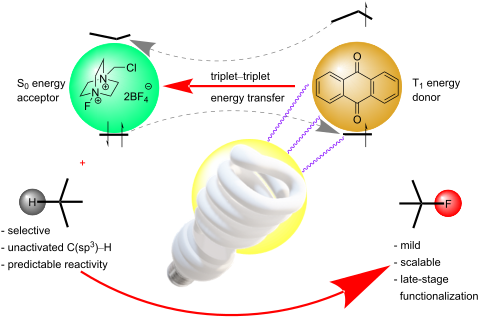
Figure 3: Jablonski diagram showing visible-light-induced energy transfer pathways: a) absorption, b) IC, c) ...
Figure 4: Schematic illustration of TTET.
Figure 5: Organic triplet PSCats.
Figure 6: Additional organic triplet PSCats.
Figure 7: A) Further organic triplet PSCats and B) transition metal triplet PSCats.
Figure 8: Different fluorination reagents grouped by generation.
Scheme 3: Synthesis of Selectfluor®.
Scheme 4: General mechanism of PS TTET C(sp3)–H fluorination.
Scheme 5: Selective benzylic mono- and difluorination using 9-fluorenone and xanthone PSCats, respectively.
Scheme 6: Chen’s photosensitized monofluorination: reaction scope.
Scheme 7: Chen’s photosensitized benzylic difluorination reaction scope.
Scheme 8: Photosensitized monofluorination of ethylbenzene on a gram scale.
Scheme 9: Substrate scope of Tan’s AQN-photosensitized C(sp3)–H fluorination.
Scheme 10: AQN-photosensitized C–H fluorination reaction on a gram scale.
Scheme 11: Reaction mechanism of the AQN-assisted fluorination.
Figure 9: 3D structures of the singlet ground and triplet excited states of Selectfluor®.
Scheme 12: Associated transitions for the activation of acetophenone by violet light.
Scheme 13: Ethylbenzene C–H fluorination with various PSCats and conditions.
Scheme 14: Effect of different PSCats on the C(sp3)–H fluorination of cyclohexane (39).
Scheme 15: Reaction scope of Chen’s acetophenone-photosensitized C(sp3)–H fluorination reaction.
Figure 10: a) Site-selectivity of Chen’s acetophenone-photosensitized C–H fluorination reaction [201]. b) Site-sele...
Scheme 16: Formation of the AQN–Selectfluor® exciplex Int1.
Scheme 17: Generation of the C3 2° pentane radical and the Selectfluor® N-radical cation from the exciplex.
Scheme 18: Hydrogen atom abstraction by the Selectfluor® N-radical cation from pentane to give the C3 2° penta...
Scheme 19: Fluorine atom transfer from Selectfluor® to the C3 2° pentane radical to yield 3-fluoropentane and ...
Scheme 20: Barrierless fluorine atom transfer from Int1 to the C3 2° pentane radical to yield 3-fluoropentane,...
Scheme 21: Ketone-directed C(sp3)–H fluorination.
Scheme 22: Ketone-directed fluorination through a 5- and a 6-membered transition state, respectively.
Scheme 23: Effect of different PSCats on the photosensitized C(sp3)–H fluorination of 47.
Scheme 24: Substrate scope of benzil-photoassisted C(sp3)–H fluorinations.
Scheme 25: A) Benzil-photoassisted enone-directed C(sp3)–H fluorination. B) Classification of the reaction mod...
Scheme 26: A) Xanthone-photoassisted ketal-directed C(sp3)–H fluorination. B) Substrate scope. C) C–H fluorina...
Scheme 27: Rationale for the selective HAT at the C2 C–H bond of galactose acetonide.
Scheme 28: Photosensitized C(sp3)–H benzylic fluorination of a peptide using different PSCats.
Scheme 29: Peptide scope of 5-benzosuberenone-photoassisted C(sp3)–H fluorinations.
Scheme 30: Continuous flow PS TTET monofluorination of 72.
Scheme 31: Photosensitized C–H fluorination of N-butylphthalimide as a PSX.
Scheme 32: Substrate scope and limitations of the PSX C(sp3)–H monofluorination.
Scheme 33: Substrate crossover monofluorination experiment.
Scheme 34: PS TTET mechanism proposed by Hamashima and co-workers.
Scheme 35: Photosensitized TFM of 78 to afford α-trifluoromethylated ketone 80.
Scheme 36: Substrate scope for photosensitized styrene TFM to give α-trifluoromethylated ketones.
Scheme 37: Control reactions for photosensitized TFM of styrenes.
Scheme 38: Reaction mechanism for photosensitized TFM of styrenes to afford α-trifluoromethylated ketones.
Scheme 39: Reaction conditions for TFMs to yield the cis- and the trans-product, respectively.
Scheme 40: Substrate scope of trifluoromethylated (E)-styrenes.
Scheme 41: Strategies toward trifluoromethylated (Z)-styrenes.
Scheme 42: Substrate scope of trifluoromethylated (Z)-styrenes.
Scheme 43: Reaction mechanism for photosensitized TFM of styrenes to afford E- or Z-products.
Beilstein J. Org. Chem. 2020, 16, 1606–1616, doi:10.3762/bjoc.16.133
Graphical Abstract
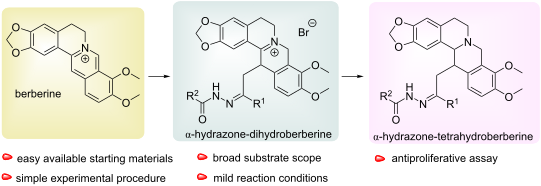
Scheme 1: Preparation of functionalized-BER, -DHBER and -THBER derivatives.
Scheme 2: Substrate scope of hydrazono-DHBER. Reaction conditions: DHBER (1.0 mmol), 1 (1.0 mmol), DCM 3.0 mL...
Figure 1: 1H,1H-COSY spectrum of DHBER 2a [65].
Scheme 3: Synthesis of hydrazono-THBERs 3a–n. Reaction conditions: DHBER (0.5 mmol), NaBH4 (2.0 mmol), MeOH, ...
Figure 2: Detail of the hydrazone signal in the HMBC spectrum of THBER 3a.
Figure 3: Comparison between 1H NMR spectra of DHBER 2a and of THBER 3a.
Figure 4: NOE correlation between C13−H and C13a−H of THBER 3a.
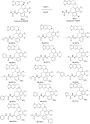
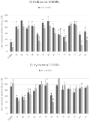
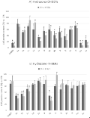
Figure 5: Effects of 25 µM hydrazono-DHBERs 2a–n (A) and hydrazono-THBERs 3a–g,i–n [70] (B) on NCI-H1975 cell pro...
Figure 6: Effects of 25 µM hydrazono-DHBERs 2a–n and hydrazono-THBERs 3a–g,i–n [70] on NCI-H1975 cell proliferati...
Beilstein J. Org. Chem. 2020, 16, 1554–1563, doi:10.3762/bjoc.16.127
Graphical Abstract
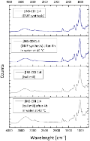
Figure 1: FTIR analysis of βNS-CDI 1:4, before and after treatment for 4 h in H2O at 40 °C, synthesized with ...
Figure 2: Thermogravimetric analysis of β-CD-based carbonate nanosponges, obtained through solution (DMF) and...
Figure 3: Thermogravimetric analysis of α, β and γ-CD-based carbonate nanosponges, obtained through ball-mill...
Figure 4: Adsorption of organic dyes by ball-mill synthesized β-CD-based carbonate nanosponges. Conditions: a...
Figure 5: ζ-Potential of bm cyclodextrin nanosponges with relative STDev (mV).
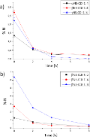
Figure 6: Hydrolysis of the imidazoyl carbonyl group in water at 40 °C.
Figure 7: Nitrogen content in weight % in cyclodextrins NS-CDI from ball mill synthesis. a) comparison betwee...
Figure 8: Simplified schematic reaction and procedure for obtaining the dye-functionalized βNS-CDI. Surface z...
Beilstein J. Org. Chem. 2020, 16, 1203–1224, doi:10.3762/bjoc.16.105
Graphical Abstract
Figure 1: Structures of some current front-line anthelmintics discussed in this review. *Denotes the stereoge...
Figure 2: Structures of new anthelmintics drugs developed through repurposing, and new drugs or drug candidat...
Figure 3: Compounds with anthelmintic activity identified by a combination of screening against Ancylostoma c...
Figure 4: Inhibitors of S. mansoni thioredoxin glutathione reductase with anthelmintic activity [140].
Figure 5: Active compounds from anthelmintic screens using the MMV Pathogen Box. NTS: newly transformed schis...
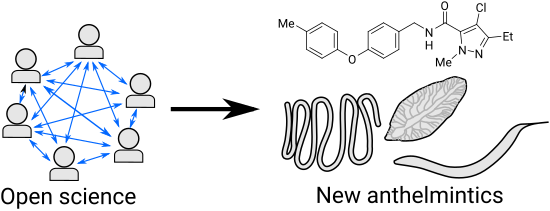
Figure 6: Two resolution approaches to enantiopure PZQ (R)-5 discovered through A) open science and B) contra...
Beilstein J. Org. Chem. 2020, 16, 1022–1050, doi:10.3762/bjoc.16.91
Graphical Abstract
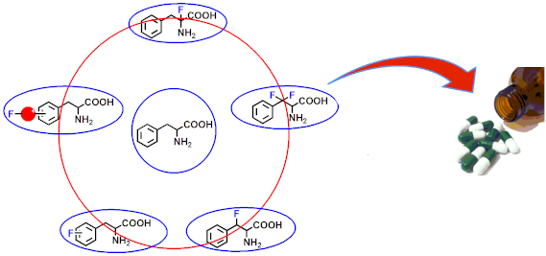
Figure 1: Categories I–V of fluorinated phenylalanines.
Scheme 1: Synthesis of fluorinated phenylalanines via Jackson’s method.
Scheme 2: Synthesis of all-cis-tetrafluorocyclohexylphenylalanines.
Scheme 3: Synthesis of ʟ-4-[sulfono(difluoromethyl)]phenylalanine (nPt: neopentyl, TCE: trichloroethyl).
Scheme 4: Synthesis of ʟ-4-[sulfono(difluoromethyl)]phenylalanine derivatives 17.
Scheme 5: Synthesis of fluorinated Phe analogues from Cbz-protected aminomalonates.
Scheme 6: Synthesis of tetrafluorophenylalanine analogues via the 3-methyl-4-imidazolidinone auxiliary 25.
Scheme 7: Synthesis of tetrafluoro-Phe derivatives via chiral auxiliary 31.
Scheme 8: Synthesis of 2,5-difluoro-Phe and 2,4,5-trifluoro-Phe via Schöllkopf reagent 34.
Scheme 9: Synthesis of 2-fluoro- and 2,6-difluoro Fmoc-Phe derivatives starting from chiral auxiliary 39.
Scheme 10: Synthesis of 2-[18F]FPhe via chiral auxiliary 43.
Scheme 11: Synthesis of FPhe 49a via photooxidative cyanation.
Scheme 12: Synthesis of FPhe derivatives via Erlenmeyer azalactone synthesis.
Scheme 13: Synthesis of (R)- and (S)-2,5-difluoro Phe via the azalactone method.
Scheme 14: Synthesis of 3-bromo-4-fluoro-(S)-Phe (65).
Scheme 15: Synthesis of [18F]FPhe via radiofluorination of phenylalanine with [18F]F2 or [18F]AcOF.
Scheme 16: Synthesis of 4-borono-2-[18F]FPhe.
Scheme 17: Synthesis of protected 4-[18F]FPhe via arylstannane derivatives.
Scheme 18: Synthesis of FPhe derivatives via intermediate imine formation.
Scheme 19: Synthesis of FPhe derivatives via Knoevenagel condensation.
Scheme 20: Synthesis of FPhe derivatives 88a,b from aspartic acid derivatives.
Scheme 21: Synthesis of 2-(2-fluoroethyl)phenylalanine derivatives 93 and 95.
Scheme 22: Synthesis of FPhe derivatives via Zn2+ complexes.
Scheme 23: Synthesis of FPhe derivatives via Ni2+ complexes.
Scheme 24: Synthesis of 3,4,5-trifluorophenylalanine hydrochloride (109).
Scheme 25: Synthesis of FPhe derivatives via phenylalanine aminomutase (PAM).
Scheme 26: Synthesis of (R)-2,5-difluorophenylalanine 115.
Scheme 27: Synthesis of β-fluorophenylalanine via 2-amino-1,3-diol derivatives.
Scheme 28: Synthesis of β-fluorophenylalanine derivatives via the oxazolidinone chiral auxiliary 122.
Scheme 29: Synthesis of β-fluorophenylalanine from pyruvate hemiketal 130.
Scheme 30: Synthesis of β-fluorophenylalanine (136) via fluorination of β-hydroxyphenylalanine (137).
Scheme 31: Synthesis of β-fluorophenylalanine from aziridine derivatives.
Scheme 32: Synthesis of β-fluorophenylalanine 136 via direct fluorination of pyruvate esters.
Scheme 33: Synthesis of β-fluorophenylalanine via fluorination of ethyl 3-phenylpyruvate enol using DAST.
Scheme 34: Synthesis of β-fluorophenylalanine derivatives using photosensitizer TCB.
Scheme 35: Synthesis of β-fluorophenylalanine derivatives using Selectflour and dibenzosuberenone.
Scheme 36: Synthesis of protected β-fluorophenylalanine via aziridinium intermediate 150.
Scheme 37: Synthesis of β-fluorophenylalanine derivatives via fluorination of α-hydroxy-β-aminophenylalanine d...
Scheme 38: Synthesis of β-fluorophenylalanine derivatives from α- or β-hydroxy esters 152a and 155.
Scheme 39: Synthesis of a series of β-fluoro-Phe derivatives via Pd-catalyzed direct fluorination of β-methyle...
Scheme 40: Synthesis of series of β-fluorinated Phe derivatives using quinoline-based ligand 162 in the Pd-cat...
Scheme 41: Synthesis of β,β-difluorophenylalanine derivatives from 2,2-difluoroacetaldehyde derivatives 164a,b....
Scheme 42: Synthesis of β,β-difluorophenylalanine derivatives via an imine chiral auxiliary.
Scheme 43: Synthesis of α-fluorophenylalanine derivatives via direct fluorination of protected Phe 174.
Figure 2: Structures of PET radiotracers of 18FPhe derivatives.
Figure 3: Structures of melfufen (179) and melphalan (180) anticancer drugs.
Figure 4: Structure of gastrazole (JB95008, 181), a CCK2 receptor antagonist.
Figure 5: Dual CCK1/CCK2 antagonist 182.
Figure 6: Structure of sitagliptin (183), an antidiabetic drug.
Figure 7: Structure of retaglpitin (184) and antidiabetic drug.
Figure 8: Structure of evogliptin (185), an antidiabetic drug.
Figure 9: Structure of LY2497282 (186) a DPP-4 inhibitor for the treatment of type II diabetes.
Figure 10: Structure of ulimorelin (187).
Figure 11: Structure of GLP1R (188).
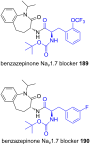
Figure 12: Structures of Nav1.7 blockers 189 and 190.
Beilstein J. Org. Chem. 2020, 16, 628–637, doi:10.3762/bjoc.16.59
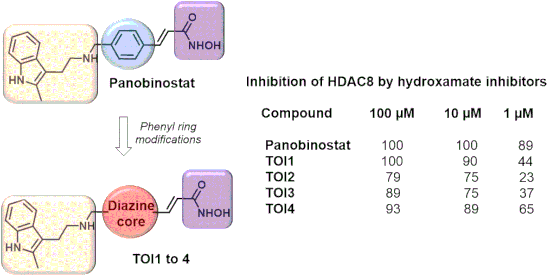
Graphical Abstract
Figure 1: Chemical structures of the target diazine-based surrogates for the central core of panobinostat.
Figure 2: Docking pose for panobinostat and panobinostat derivatives in the HDAC8 receptor. (a) Overlay of al...
Figure 3: General building blocks for the visualized targets.
Scheme 1: Reaction conditions: a) MeOH, H2SO4 (5 drops), MS 4 Å (2 pieces), 68 °C, 8 h, 81%; b) DIBAL-H (1.2 ...
Scheme 2: Reaction conditions: a) boronic acid 15 (1.3 equiv), PdCl2(PPh3)2 (0.1 equiv), dioxane/H2O (3:1), Na...
Scheme 3: Reaction conditions: a) 5-bromo-2-chloropyrimidine (1 equiv), ethyl formate (1.5 equiv), THF (20 mL...
Scheme 4: Reaction conditions: a) boronic acid 15 (1.3 equiv), PdCl2(PPh3)2 (0.1 equiv), dioxane/H2O (8:2, Na2...
Beilstein J. Org. Chem. 2020, 16, 305–316, doi:10.3762/bjoc.16.30
Graphical Abstract
Scheme 1: Process for the formation of C(sp3)–SeCF3 bonds with [(bpy)CuSeCF3]2 developed by the group of Weng....
Scheme 2: Trifluoromethylselenolation of vinyl and (hetero)aryl halides with [(bpy)CuSeCF3]2 by the group of ...
Scheme 3: Trifluoromethylselenolation of terminal alkynes using [(bpy)CuSeCF3]2 by the group of You and Weng.
Scheme 4: Trifluoromethylselenolation of carbonyl compounds with [(bpy)CuSeCF3]2 by the group of Weng.
Scheme 5: Trifluoromethylselenolation of α,β-unsaturated ketones with [(bpy)CuSeCF3]2 by the group of Weng.
Scheme 6: Trifluoromethylselenolation of acid chlorides with [(bpy)CuSeCF3]2 by the group of Weng.
Scheme 7: Synthesis of 2-trifluoromethylselenylated benzofused heterocycles with [(bpy)CuSeCF3]2 by the group...
Scheme 8: Difunctionalization of terminal alkenes and alkynes with [(bpy)CuSeCF3]2 by the group of Liang.
Scheme 9: Synthesis of Me4NSeCF3.
Scheme 10: Oxidative trifluoromethylselenolation of terminal alkynes and boronic acid derivatives with Me4NSeCF...
Scheme 11: Trifluoromethylselenolation of diazoacetates and diazonium salts with Me4NSeCF3 by the group of Goo...
Scheme 12: Trifluoromethylselenolation with ClSeCF3 by the group of Tlili and Billard.
Scheme 13: Trifluoromethylselenolation with TsSeCF3 by the group of Tlili and Billard.
Scheme 14: Copper-catalyzed synthesis of a selenylated analog 30 of Pretomanid developed by the group of Tlili...
Scheme 15: One-pot procedures for C–SeCF3 bond formations developed by Hor and Weng, Deng and Xiao, and Ruepin...
Beilstein J. Org. Chem. 2020, 16, 135–139, doi:10.3762/bjoc.16.15
Graphical Abstract
Figure 1: Aza-goniothalamin 1, (R)-(+)-goniothalamin 2 and acylated aza-goniothalamin analogue 3 [14-18].
Scheme 1: One pot synthesis of benzyl carbamate 4 reported by Veenstra and co-workers [19].
Scheme 2: Formation of diene 5 in 66% through a one pot, three component coupling.
Scheme 3: Optimized conditions for the synthesis of diene 5.
Scheme 4: Ring-closing metathesis reaction of diene 5 to yield dihydropyridone 7 [20-23].
Figure 2: Extension of the two-pot methodology to include a variety of different aldehyde starting materials.
Scheme 5: Total synthesis of aza-goniothalamin 1.
Beilstein J. Org. Chem. 2020, 16, 71–77, doi:10.3762/bjoc.16.9
Graphical Abstract
Figure 1: Chemical structures of baicalein (left), cucurbit[8]uril (right).
Figure 2: The possible interaction model for Q[8] and baicalein.
Figure 3: 1H NMR spectra (400 MHz) of Q[8] (a), baicalein (b) and BALE–Q[8] (1:1) (c) recorded in DCl.
Figure 4: The absorption spectra of BALE upon the addition of Q[8] under different conditions [10 mol·L−1 HCl...
Figure 5: IR spectra of Q[8] (a), BALE (b), a physical mixture of Q[8]-BALE (NQ[8]/NBALE = 1:1) (c) and the B...
Figure 6: DTA spectra of BALE (a), Q[8] (b), a physical mixture Q[8]-BALE (NQ[8]/NBALE = 1:1) (c) and the BAL...
Figure 7: The stability curve of UV–vis absorption obtained for an isoconcentration of BALE and the BALE–Q[8]...
Figure 8: The phase solubility graph obtained for BALE in Q[8] at λ = 270 nm.
Figure 9: The clearance rate curve (A) and clearance time curve (B) of ABTS+· upon increasing the concentrati...
Figure 10: The release curves of BALE and BALE–Q[8].
Beilstein J. Org. Chem. 2020, 16, 39–49, doi:10.3762/bjoc.16.6
Graphical Abstract
Figure 1: DAE photoswitch and photoswitchable peptides explored in this study. (A) The reversible photoisomer...
Figure 2: Two versions of the D. rerio embryotoxicity assay for DAE-modified peptides: timelines, peptide pho...
Figure 3: The in vivo toxicity against D. rerio embryos appears to be correlated with the empirical hydrophob...
Figure 4: D. rerio embryotoxicity of GS 1 and the photoswitchable analogues 2–20 correlated with their in vit...
Figure 5: Phototherapeutic cytotoxic action against HeLa cells of GS 1 and its photoswitchable analogues 2–20...
Beilstein J. Org. Chem. 2019, 15, 2213–2270, doi:10.3762/bjoc.15.218
Graphical Abstract
Scheme 1: The main three strategies of fluorination: nucleophilic, electrophilic and radical fluorination.
Scheme 2: Doyle’s Pd-catalyzed fluorination of allylic chlorides.
Scheme 3: Allylic fluorination of 2- and 3-substituted propenyl esters.
Scheme 4: Regioselective allylic fluorination of cinnamyl phosphorothioate esters.
Scheme 5: Palladium-catalyzed aliphatic C–H fluorination reported by Doyle.
Scheme 6: Pd-catalyzed enantioselective fluorination of α-ketoesters followed by stereoselective reduction to...
Scheme 7: Pd-catalyzed C(sp3)–H fluorination of oxindoles.
Scheme 8: C–H fluorination of 8-methylquinoline derivatives with F− reagents.
Scheme 9: Fluorination of α-cyano acetates reported by van Leeuwen.
Scheme 10: The catalytic enantioselective electrophilic C–H fluorination of α-chloro-β-keto phosphonates.
Scheme 11: Fluorination of unactivated C(sp3)–H bonds directed by the bidentate PIP auxiliary.
Scheme 12: Fluorination of C(sp3)–H bonds at the β-position of carboxylic acids.
Scheme 13: Enantioselective benzylic C–H fluorination with a chiral transient directing group.
Scheme 14: Microwave-heated Pd-catalyzed fluorination of aryl alcohols.
Scheme 15: Fluorination of aryl potassium trifluoroborates.
Scheme 16: C(sp2)–F bond formation using precatalyst [L·Pd]2(cod).
Scheme 17: Pd-catalyzed fluorination of (hetero)aryl triflates and bromides.
Scheme 18: The Pd-catalyzed C–H fluorination of arenes with Selectfluor/NFSI.
Scheme 19: Pd(II)-catalyzed ortho-monofluorination protocol for benzoic acids.
Scheme 20: Pd-catalyzed C(sp2)–H bond fluorination of 2-arylbenzothiazoles.
Scheme 21: Nitrate-promoted fluorination of aromatic and olefinic C(sp2)–H bonds and proposed mechanism.
Scheme 22: Fluorination of oxalyl amide-protected benzylamine derivatives.
Scheme 23: C–H fluorination of benzaldehydes with orthanilic acids as transient directing group.
Scheme 24: Pd(II)-catalyzed aryl C–H fluorination with various directing groups.
Scheme 25: Cu-catalyzed aliphatic, allylic, and benzylic fluorination.
Scheme 26: Cu-catalyzed SN2 fluorination of primary and secondary alkyl bromides.
Scheme 27: Copper-catalyzed fluorination of alkyl triflates.
Scheme 28: Cu-catalyzed fluorination of allylic bromides and chlorides.
Scheme 29: Synthetic strategy for the fluorination of active methylene compounds.
Scheme 30: Fluorination of β-ketoesters using a tartrate-derived bidentate bisoxazoline-Cu(II) complex.
Scheme 31: Highly enantioselective fluorination of β-ketoesters and N-Boc-oxindoles.
Scheme 32: Amide group-assisted site-selective fluorination of α-bromocarbonyl compounds.
Scheme 33: Cu-mediated aryl fluorination reported by Sanford [77].
Scheme 34: Mono- or difluorination reactions of benzoic acid derivatives.
Scheme 35: Cu-catalyzed fluorination of diaryliodonium salts with KF.
Scheme 36: Copper(I)-catalyzed cross-coupling of 2-pyridylaryl bromides.
Scheme 37: AgNO3-catalyzed decarboxylative fluorination of aliphatic carboxylic acids.
Scheme 38: The Mn-catalyzed aliphatic and benzylic C–H fluorination.
Scheme 39: Iron(II)-promoted C–H fluorination of benzylic substrates.
Scheme 40: Ag-catalyzed fluorodecarboxylation of carboxylic acids.
Scheme 41: Vanadium-catalyzed C(sp3)–H fluorination.
Scheme 42: AgNO3-catalyzed radical deboronofluorination of alkylboronates and boronic acids.
Scheme 43: Selective heterobenzylic C–H fluorination with Selectfluor reported by Van Humbeck.
Scheme 44: Fe(II)-catalyzed site-selective fluorination guided by an alkoxyl radical.
Scheme 45: Fluorination of allylic trichloroacetimidates reported by Nguyen et al.
Scheme 46: Iridium-catalyzed fluorination of allylic carbonates with TBAF(t-BuOH)4.
Scheme 47: Iridium-catalyzed asymmetric fluorination of allylic trichloroacetimidates.
Scheme 48: Cobalt-catalyzed α-fluorination of β-ketoesters.
Scheme 49: Nickel-catalyzed α-fluorination of various α-chloro-β-ketoesters.
Scheme 50: Ni(II)-catalyzed enantioselective fluorination of oxindoles and β-ketoesters.
Scheme 51: Scandium(III)-catalyzed asymmetric C–H fluorination of unprotected 3-substituted oxindoles.
Scheme 52: Iron-catalyzed directed C–H fluorination.
Scheme 53: Electrophilic silver-catalyzed Ar–F bond-forming reaction from arylstannanes.
Figure 1: Nucleophilic, electrophilic and radical CF3 sources.
Scheme 54: Cu(I)-catalyzed allylic trifluoromethylation of unactivated terminal olefins.
Scheme 55: Direct copper-catalyzed trifluoromethylation of allylsilanes.
Scheme 56: Cupper-catalyzed enantioselective trifluoromethylation of five and six-membered ring β-ketoesters.
Scheme 57: Cu-catalyzed highly stereoselective trifluoromethylation of secondary propargyl sulfonates.
Scheme 58: Remote C(sp3)–H trifluoromethylation of carboxamides and sulfonamides.
Scheme 59: Trifluoromethylation of allylsilanes with photoredox catalysis.
Scheme 60: Ag-catalyzed decarboxylative trifluoromethylation of aliphatic carboxylic acids in aqueous CH3CN.
Scheme 61: Decarboxylative trifluoromethylation of aliphatic carboxylic acids via combined photoredox and copp...
Scheme 62: Palladium-catalyzed Ar–CF3 bond-forming reaction.
Scheme 63: Palladium-catalyzed trifluoromethylation of arenes with diverse heterocyclic directing groups.
Scheme 64: Pd-catalyzed trifluoromethylation of indoles as reported by Liu.
Scheme 65: Pd-catalyzed trifluoromethylation of vinyl triflates and vinyl nonaflates.
Scheme 66: Pd(II)-catalyzed ortho-trifluoromethylation of aromatic C–H bonds.
Scheme 67: Visible-light-induced Pd(OAc)2-catalyzed ortho-trifluoromethylation of acetanilides with CF3SO2Na.
Scheme 68: CuI-catalyzed trifluoromethylation of aryl- and alkenylboronic acids.
Scheme 69: Cu-catalyzed trifluoromethylation of aryl- and vinylboronic acids.
Scheme 70: Copper-catalyzed trifluoromethylation of α,β-unsaturated carboxylic acids.
Scheme 71: Formation of C(sp2)–CF3 bond catalyzed by copper(I) complex.
Scheme 72: Loh’s Cu(I)-catalyzed trifluoromethylation of enamides and electron-deficient alkenes.
Scheme 73: Copper and iron-catalyzed decarboxylative tri- and difluoromethylation.
Scheme 74: Cu-catalyzed trifluoromethylation of hydrazones developed by Bouyssi.
Scheme 75: Cu(I)-catalyzed trifluoromethylation of terminal alkenes.
Scheme 76: Cu/Ag-catalyzed decarboxylative trifluoromethylation of cinnamic acids.
Scheme 77: Copper-catalyzed direct alkenyl C–H trifluoromethylation.
Scheme 78: Copper(I/II)-catalyzed direct trifluoromethylation of styrene derivatives.
Scheme 79: Regioselective trifluoromethylation of pivalamido arenes and heteroarenes.
Scheme 80: Synthesis of trifluoromethylquinones in the presence of copper(I).
Scheme 81: Oxidative trifluoromethylation of imidazoheterocycles in ionic liquid/water.
Scheme 82: A mild and fast continuous-flow trifluoromethylation of coumarins using a CuI/CF3SO2Na/TBHP system.
Scheme 83: Copper-catalyzed oxidative trifluoromethylation of various 8-aminoquinolines.
Scheme 84: PA-directed copper-catalyzed trifluoromethylation of anilines.
Scheme 85: Trifluoromethylation of potassium vinyltrifluoroborates catalyzed by Fe(II).
Scheme 86: Alkenyl trifluoromethylation catalyzed by Ru(phen)3Cl2 as photocatalyst.
Scheme 87: Ru-catalyzed trifluoromethylation of alkenes by Akita’s group.
Scheme 88: Ir-catalyzed Cvinyl–CF3 bond formation of α,β-unsaturated carboxylic acids.
Scheme 89: Ag(I)-catalyzed denitrative trifluoromethylation of β-nitrostyrenes.
Scheme 90: Photocatalyzed direct trifluoromethylation of aryl and heteroaryl C–H bonds.
Scheme 91: Rhenium (MTO)-catalyzed direct trifluoromethylation of aromatic substrates.
Scheme 92: Trifluoromethylation of unprotected anilines under [Ir(ppy)3] catalyst.
Scheme 93: Oxidative trifluoromethylation of imidazopyridines and imidazoheterocycles.
Scheme 94: Ruthenium-catalyzed trifluoromethylation of (hetero)arenes with trifluoroacetic anhydride.
Scheme 95: Phosphovanadomolybdic acid-catalyzed direct C–H trifluoromethylation.
Scheme 96: Picolinamide-assisted ortho-trifluoromethylation of arylamines.
Scheme 97: A nickel-catalyzed C–H trifluoromethylation of free anilines.
Scheme 98: Cu-mediated trifluoromethylation of terminal alkynes reported by Qing.
Scheme 99: Huang’s C(sp)–H trifluoromethylation using Togni’s reagent.
Scheme 100: Cu-catalyzed methods for trifluoromethylation with Umemoto’s reagent.
Scheme 101: The synthesis of alkynyl-CF3 compounds in the presence of fac-[Ir(ppy)3] under visible-light irradi...
Scheme 102: Pd-catalyzed Heck reaction reported by Reutrakul.
Scheme 103: Difluoromethylation of enamides and ene-carbamates.
Scheme 104: Difluoromethylation of α,β-unsaturated carboxylic acids.
Scheme 105: Copper-catalyzed direct C(sp2)–H difluoroacetylation reported by Pannecoucke and co-workers.
Scheme 106: Difluoroalkylation of aldehyde-derived hydrazones with functionalized difluoromethyl bromides.
Scheme 107: Photoredox-catalyzed C–H difluoroalkylation of aldehyde-derived hydrazones.
Scheme 108: Synergistic ruthenium(II)-catalyzed C–H difluoromethylation reported by Ackermann.
Scheme 109: Visible-light photocatalytic decarboxylation of α,β-unsaturated carboxylic acids.
Scheme 110: Synthesis of difluorinated ketones via S-alkyl dithiocarbamates obtained from acyl chlorides and po...
Scheme 111: Synthesis of aryl and heteroaryl difluoromethylated phosphonates.
Scheme 112: Difluoroalkylation of secondary propargyl sulfonates using Cu as the catalyst.
Scheme 113: Ru(II)-mediated para-selective difluoromethylation of anilides and their derivatives.
Scheme 114: Bulky diamine ligand promoted cross-coupling of difluoroalkyl bromides.
Scheme 115: Copper-catalyzed C3–H difluoroacetylation of quinoxalinones.
Scheme 116: Copper(I) chloride-catalyzed trifluoromethylthiolation of enamines, indoles and β-ketoesters.
Scheme 117: Copper-boxmi-catalyzed asymmetric trifluoromethylthiolation of β-ketoesters.
Scheme 118: Direct Cu-catalyzed trifluoromethylthiolation of boronic acids and alkynes.
Scheme 119: Cu-catalyzed synthesis of α-trifluoromethylthio-substituted ketones.
Scheme 120: Trifluoromethylthiolation reactions promoted by diazotriflone and copper.
Scheme 121: Halide activation of N-(trifluoromethylthio)phthalimide.
Scheme 122: The visible light-promoted trifluoromethylthiolation reported by Glorius.
Scheme 123: Synthesis of α-trifluoromethylthioesters via Goossen’s approach.
Scheme 124: Photoinduced trifluoromethylthiolation of diazonium salts.
Scheme 125: Ag-mediated trifluoromethoxylation of aryl stannanes and arylboronic acids.
Scheme 126: Catalytic (hetero)aryl C–H trifluoromethoxylation under visible light.
Scheme 127: Photoinduced C–H-bond trifluromethoxylation of (hetero)arenes.
Beilstein J. Org. Chem. 2019, 15, 1575–1580, doi:10.3762/bjoc.15.161
Graphical Abstract
Scheme 1: Synthetic pathway of 9-O-R BBR.
Scheme 2: Resonance of berberrubine leading to the failure of direct BBRB cross coupling.
Scheme 3: 9-O-Aryl berberine scope via cross-coupling reaction.
Scheme 4: 9-O-Ph-linked berberine dimer through double cross-coupling reaction.
Beilstein J. Org. Chem. 2019, 15, 971–975, doi:10.3762/bjoc.15.94
Graphical Abstract
Figure 1: Thapsigargin- and hydroquinone-based SERCA inhibitors.
Scheme 1: Friedel–Crafts alkylation of 4.
Scheme 2: Heck cross-coupling reactions.
Scheme 3: Suzuki approach to a tethered hydroquinone.