


Search results
Search for "carbon nanotubes" in Full Text gives 45 result(s) in Beilstein Journal of Organic Chemistry.
One hundred years of benzotropone chemistry
- Arif Dastan,
- Haydar Kilic and
- Nurullah Saracoglu
Beilstein J. Org. Chem. 2018, 14, 1120–1180, doi:10.3762/bjoc.14.98

Graphical Abstract

Scheme 1: Tropone (1), tropolone (2) and their resonance structures.

Figure 1: Natural products containing a tropone nucleus.

Figure 2: Possible isomers 11–13 of benzotropone.

Scheme 2: Synthesis of benzotropones 11 and 12.

Scheme 3: Oxidation products of benzotropylium fluoroborate (16).

Scheme 4: Oxidation of 7-bromo-5H-benzo[7]annulene (22).

Scheme 5: Synthesis of 4,5-benzotropone (11) using o-phthalaldehyde (27).

Scheme 6: Synthesis of 4,5-benzotropone (11) starting from oxobenzonorbornadiene 31.

Scheme 7: Acid-catalyzed cleavage of oxo-bridge of 34.

Scheme 8: Synthesis of 4,5-benzotropone (11) from o-xylylene dibromide (38).

Scheme 9: Synthesis of 4,5-benzotropone (11) via the carbene adduct 41.

Scheme 10: Heck coupling strategy for the synthesis of 11.

Scheme 11: Synthesis of benzofulvalenes via carbonyl group of 4,5-benzotropone (11).

Figure 3: Some cycloheptatrienylium cations.

Scheme 12: Synthesis of condensation product 63 and its subsequent oxidative cyclization products.

Figure 4: A novel series of benzo[7]annulenes prepared from 4,5-benzotropone (11).

Scheme 13: Preparation of substituted benzo[7]annulene 72 using the Mukaiyama-Michael reaction.

Figure 5: Possible benzo[7]annulenylidenes 73–75.

Scheme 14: Thermal and photochemical decomposition of 7-diazo-7H-benzo[7]annulene (76) and the trapping of int...

Scheme 15: Synthesis of benzoheptafulvalene 86.

Scheme 16: Synthesis of 7-(diphenylmethylene)-7H-benzo[7]annulene (89).

Scheme 17: Reaction of 4,5-benzotropone (11) with dimethyl diazomethane.

Scheme 18: Synthesis of dihydrobenzomethoxyazocine 103.

Scheme 19: Synthesis and reducibility of benzo-homo-2-methoxyazocines.

Scheme 20: Synthesis of 4,5-benzohomotropones 104 and 115 from 4,5-benzotropones 11 and 113.

Scheme 21: A catalytic deuterogenation of 4,5-benzotropone (11) and synthesis of 5-monosubstituted benzo[7]ann...

Scheme 22: Synthesis of methyl benzo[7]annulenes 131 and 132.

Scheme 23: Ambident reactivity of halobenzo[7]annulenylium cations 133a/b.

Scheme 24: Preparation of benzo[7]annulenylidene–iron complexes 147.

Scheme 25: Synthesis of 1-ethynylbenzotropone (150) and the etheric compound 152 from 4,5-benzotropone (11) wi...

Scheme 26: Thermal decomposition of 4,5-benzotropone (11).

Scheme 27: Reaction of 4,5-benzotropone (11) with 1,2-ethanediol and 1,2-ethanedithiol.

Scheme 28: Conversions of 1-benzosuberone (162) to 2,3-benzotropone (12).

Scheme 29: Synthesis strategies for 2,3-bezotropone (12) using 1-benzosuberones.

Scheme 30: Oxidation-based synthesis of 2,3-benzotropone (12) via 1-benzosuberone (162).

Scheme 31: Synthesis of 2,3-benzotropone (12) from α-tetralone (171) via ring-expansion.

Scheme 32: Preparation of 2,3-benzotropone (12) by using of benzotropolone 174.

Figure 6: Benzoheptafulvenes as condensation products of 2,3-benzotropone (12).

Scheme 33: Conversion of 2,3-benzotropone (12) to tosylhydrazone salt 182 and gem-dichloride 187.

Figure 7: Benzohomoazocines 191–193 and benzoazocines 194–197.

Scheme 34: From 2,3-benzotropone (12) to carbonium ions 198–201.

Scheme 35: Cycloaddition reactions of 2,3-benzotropone (12).
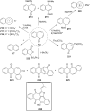
Scheme 36: Reaction of 2,3-benzotropone (12) with various reagents and compounds.

Figure 8: 3,4-Benzotropone (13) and its resonance structure.

Scheme 37: Synthesis of 6,7-benzobicyclo[3.2.0]hepta-3,6-dien-2-one (230).

Figure 9: Photolysis and thermolysis products of 230.

Figure 10: Benzotropolones and their tautomeric structures.

Scheme 38: Synthesis strategies of 4,5-benzotropolone (238).

Scheme 39: Synthesis protocol for 2-hydroxy-4,5-benzotropone (238) using oxazole-benzo[7]annulene 247.

Figure 11: Some quinoxaline and pyrazine derivatives 254–256 prepared from 4,5-benzotropolone (238).

Scheme 40: Nitration product of 4,5-benzotropolone (238) and its isomerization to 1-nitro-naphthoic acid (259)....

Scheme 41: Synthesis protocol for 6-hydroxy-2,3-benzotropone (239) from benzosuberone (162).
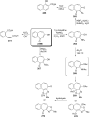
Scheme 42: Various reactions via 6-hydroxy-2,3-benzotropone (239).

Scheme 43: Photoreaction of 6-hydroxy-2,3-benzotropone (239).

Scheme 44: Synthesis of 7-hydroxy-2,3-benzotropone (241) from benzosuberone (162).

Scheme 45: Synthesis strategy for 7-hydroxy-2,3-benzotropone (241) from ketone 276.

Scheme 46: Synthesis of 7-hydroxy-2,3-benzotropone (241) from β-naphthoquinone (280).

Scheme 47: Synthesis of 7-hydroxy-2,3-benzotropone (241) from bicyclic endoperoxide 213.

Scheme 48: Synthesis of 7-hydroxy-2,3-benzotropone (241) by ring-closing metathesis.

Figure 12: Various monosubstitution products 289–291 of 7-hydroxy-2,3-benzotropone (241).

Scheme 49: Reaction of 7-hydroxy-2,3-benzotropone (241) with various reagents.

Scheme 50: Synthesis of 4-hydroxy-2,3-benzotropones 174 and 304 from diketones 300/301.

Scheme 51: Catalytic hydrogenation of diketones 300 and 174.

Scheme 52: Synthesis of halo-benzotropones from alkoxy-naphthalenes 306, 307 and 310.

Figure 13: Unexpected byproducts 313–315 during synthesis of chlorobenzotropone 309.

Figure 14: Some halobenzotropones and their cycloadducts.

Scheme 53: Multisep synthesis of 2-chlorobenzotropone 309.

Scheme 54: A multistep synthesis of 2-bromo-benzotropone 26.

Scheme 55: A multistep synthesis of bromo-2,3-benzotropones 311 and 316.

Scheme 56: Oxidation reactions of 8-bromo-5H-benzo[7]annulene (329) with some oxidants.

Scheme 57: Synthesis of 2-bromo-4,5-benzotropone (26).

Scheme 58: Synthesis of 6-chloro-2,3-benzotropone (335) using LiCl and proposed intermediate 336.

Scheme 59: Reaction of 7-bromo-2,3-benzotropone (316) with methylamine.

Scheme 60: Reactions of bromo-2,3-benzotropones 26 and 311 with dimethylamine.

Scheme 61: Reactions of bromobenzotropones 311 and 26 with NaOMe.

Scheme 62: Reactions of bromobenzotropones 26 and 312 with t-BuOK in the presence of DPIBF.

Scheme 63: Cobalt-catalyzed reductive cross-couplings of 7-bromo-2,3-benzotropone (316) with cyclic α-bromo en...

Figure 15: Cycloadduct 357 and its di-π-methane rearrangement product 358.

Scheme 64: Catalytic hydrogenation of 2-chloro-4,5-benzotropone (311).

Scheme 65: Synthesis of dibromo-benzotropones from benzotropones.

Scheme 66: Bromination/dehydrobromination of benzosuberone (162).

Scheme 67: Some transformations of isomeric dibromo-benzotropones 261A/B.

Scheme 68: Transformations of benzotropolone 239B to halobenzotropolones 369–371.

Figure 16: Bromobenzotropolones 372–376 and 290 prepared via bromination/dehydrobromination strategy.

Scheme 69: Synthesis of some halobenzotropolones 289, 377 and 378.

Figure 17: Bromo-chloro-derivatives 379–381 prepared via chlorination.

Scheme 70: Synthesis of 7-iodo-3,4-benzotropolone (382).

Scheme 71: Hydrogenation of bromobenzotropolones 369 and 370.

Scheme 72: Debromination reactions of mono- and dibromides 290 and 375.

Figure 18: Nitratation and oxidation products of some halobenzotropolenes.
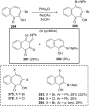
Scheme 73: Azo-coupling reactions of some halobenzotropolones 294, 375 and 378.

Figure 19: Four possible isomers of dibenzotropones 396–399.

Figure 20: Resonance structures of tribenzotropone (400).

Scheme 74: Two synthetic pathways for tribenzotropone (400).

Scheme 75: Synthesis of tribenzotropone (400) from dibenzotropone 399.

Scheme 76: Synthesis of tribenzotropone (400) from 9,10-phenanthraquinone (406).

Scheme 77: Synthesis of tribenzotropone (400) from trifluoromethyl-substituted arene 411.

Figure 21: Dibenzosuberone (414).

Figure 22: Reduction products 415 and 416 of tribenzotropone (400).

Figure 23: Structures of tribenzotropone dimethyl ketal 417 and 4-phenylfluorenone (412) and proposed intermed...

Figure 24: Structures of benzylidene- and methylene-9H-tribenzo[a,c,e][7]annulenes 419 and 420 and chiral phos...

Figure 25: Structures of tetracyclic alcohol 422, p-quinone methide 423 and cation 424.

Figure 26: Structures of host molecules 425–427.

Scheme 78: Synthesis of non-helical overcrowded derivatives syn/anti-431.

Figure 27: Hexabenzooctalene 432.

Figure 28: Structures of possible eight isomers 433–440 of naphthotropone.

Scheme 79: Synthesis of naphthotropone 437 starting from 1-phenylcycloheptene (441).

Scheme 80: Synthesis of 10-hydroxy-11H-cyclohepta[a]naphthalen-11-one (448) from diester 445.

Scheme 81: Synthesis of naphthotropone 433.

Scheme 82: Synthesis of naphthotropones 433 and 434 via cycloaddition reaction.

Scheme 83: Synthesis of naphthotropone 434 starting from 452.

Figure 29: Structures of tricarbonyl(tropone)irons 458, and possible cycloadducts 459.

Scheme 84: Synthesis of naphthotropone 436.

Scheme 85: Synthesis of precursor 465 for naphthotropone 435.

Scheme 86: Generation of naphthotropone 435 from 465.

Figure 30: Structures of tropylium cations 469 and 470.

Figure 31: Structures of tropylium ions 471+.BF4−, 472+.BF4−, and 473+.BF4−.

Scheme 87: Synthesis of tropylium ions 471+.BF4− and 479+.ClO4−.

Scheme 88: Synthesis of 1- and 2-methylanthracene (481 and 482) via carbene–carbene rearrangement.

Figure 32: Trapping products 488–490.

Scheme 89: Generation and chemistry of a naphthoannelated cycloheptatrienylidene-cycloheptatetraene intermedia...

Scheme 90: Proposed intermediates and reaction pathways for adduct 498.

Scheme 91: Exited-state intramolecular proton transfer of 505.

Figure 33: Benzoditropones 506 and 507.

Scheme 92: Synthesis of benzoditropone 506e.

Scheme 93: Synthetic approaches for dibenzotropone 507 via tropone (1).

Scheme 94: Formation mechanisms of benzoditropone 507 and 516 via 515.

Scheme 95: Synthesis of benzoditropones 525 and 526 from pyromellitic dianhydride (527).

Figure 34: Possible three benzocyclobutatropones 534–536.

Scheme 96: Synthesis of benzocyclobutatropones 534 and 539.

Scheme 97: Synthesis attempts for benzocyclobutatropone 545.

Scheme 98: Generation and trapping of symmetric benzocyclobutatropone 536.

Scheme 99: Synthesis of chloro-benzocyclobutatropone 552 and proposed mechanism of fluorenone derivatives.

Scheme 100: Synthesis of tropolone analogue 559.

Scheme 101: Synthesis of tropolones 561 and 562.

Figure 35: o/p-Tropoquinone rings (563 and 564) and benzotropoquinones (565–567).

Scheme 102: Synthesis of benzotropoquinone 566.

Scheme 103: Synthesis of benzotropoquinone 567 via a Diels–Alder reaction.

Figure 36: Products 575–577 through 1,2,3-benzotropoquinone hydrate 569.

Scheme 104: Structures 578–582 prepared from tropoquinone 567.

Figure 37: Two possible structures 583 and 584 for dibenzotropoquinone, and precursor compound 585 for 583.
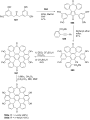
Scheme 105: Synthesis of saddle-shaped ketone 592 using dibenzotropoquinone 584.
Mechanochemistry of nucleosides, nucleotides and related materials
- Olga Eguaogie,
- Joseph S. Vyle,
- Patrick F. Conlon,
- Manuela A. Gîlea and
- Yipei Liang
Beilstein J. Org. Chem. 2018, 14, 955–970, doi:10.3762/bjoc.14.81
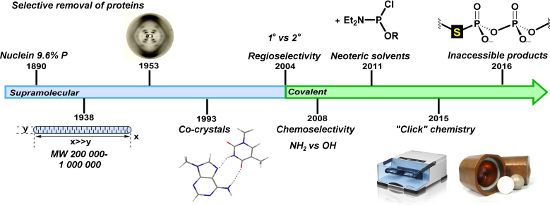
- carbon nanotubes (CNTs) by grinding these materials in a mixer ball mill using agate components (Scheme 17) [92]. In the absence of CNTs, DNA cleavage to a uniform size was found. Ball milling in the presence of monoribonucleotides has also been investigated as a method for solubilising single-walled
- carbon nanotubes [93]. In the presence of guanosine-5′-monophosphate, 78% of the SWNT (0.78 mg mL−1) was dissolved but attempted removal of iron contamination from this material by treatment with acid gave a "viscous precipitate". Formation of cyclodextrin–drug inclusion complexes can be accelerated

Graphical Abstract

Figure 1: Examples of equipment used to perform mechanochemistry on nucleoside and nucleotide substrates (not...

Figure 2: Ganciclovir.

Scheme 1: Nucleoside tritylation effected by hand grinding in a heated mortar and pestle.

Scheme 2: Persilylation of ribonucleoside hydroxy groups (and in situ acylation of cytidine) in a MBM.

Scheme 3: Nucleoside amine and carboxylic acid Boc protection using an improvised attritor-type mill.

Scheme 4: Nucleobase Boc protection via transient silylation using an improvised attritor-type mill.

Scheme 5: Chemoselective N-acylation of an aminonucleoside using LAG in a MBM.

Scheme 6: Azide–alkyne cycloaddition reactions performed in a copper vessel in a MBM.

Figure 3: a) Custom-machined copper vessel and zirconia balls used to perform CuAAC reactions (showing: upper...

Scheme 7: Thiolate displacement reactions of nucleoside derivatives in a MBM.

Scheme 8: Selenocyanate displacement reactions of nucleoside derivatives in a MBM.

Scheme 9: Nucleobase glycosidation reactions and subsequent deacetylation performed in a MBM.

Scheme 10: Regioselective phosphorylation of nicotinamide riboside in a MBM.

Scheme 11: Preparation of nucleoside phosphoramidites in a MBM using ionic liquid-stabilised chlorophosphorami...

Scheme 12: Preparation of a nucleoside phosphite triester using LAG in a MBM.

Scheme 13: Internucleoside phosphate coupling linkages in a MBM.

Scheme 14: Preparation of ADPR analogues using in a MBM.

Scheme 15: Synthesis of pyrophosphorothiolate-linked dinucleoside cap analogues in a MBM to effect hydrolytic ...

Figure 4: Early low temperature mechanised ball mill as described by Mudd et al. – adapted from reference [78].

Scheme 16: Co-crystal grinding of alkylated nucleobases in an amalgam mill (N.B. no frequency was recorded in ...

Figure 5: Materials used to prepare a smectic phase.

Figure 6: Structures of 5-fluorouracil (5FU) and nucleoside analogue prodrugs subject to mechanochemical co-c...

Scheme 17: Preparation of DNA-SWNT complex in a MBM.
Recent applications of click chemistry for the functionalization of gold nanoparticles and their conversion to glyco-gold nanoparticles
- Vivek Poonthiyil,
- Thisbe K. Lindhorst,
- Vladimir B. Golovko and
- Antony J. Fairbanks
Beilstein J. Org. Chem. 2018, 14, 11–24, doi:10.3762/bjoc.14.2
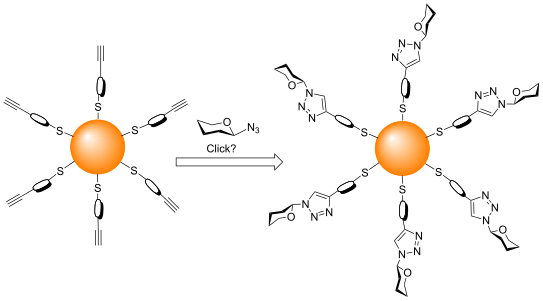
- synthesize peptide-decorated AuNPs [59] and nanomaterial hybrids containing single walled carbon nanotubes and AuNPs [60]. AuNP surface modification by CuAAC The distinct advantages of CuAAC over NCAAC, such as improved regioselectivity and rates of the reaction, motivated several groups to use CuAAC for the

Graphical Abstract
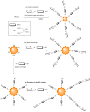
Figure 1: The three major methods for the synthesis of GAuNPs. (a) Direct reduction of an Au3+ salt in the pr...

Scheme 1: The non-catalysed azide–alkyne Huisgen cycloaddition (NCAAC) between an organic azide (1,3-dipole) ...

Scheme 2: Ligand exchange and NCAAC on an AuNP surface. Reagents and conditions: (a) Br(CH2)11SH in DCM, 60 h...

Scheme 3: Azide functionalization and NCAAC on an AuNP surface using electron deficient alkynes. Reagents and...

Scheme 4: NCAAC performed under hyperbaric conditions. Reagents and conditions: (a) Br(CH2)11SH in C6H6, 48 h...

Scheme 5: The synthesis of AuNPs functionalized with strained alkyne derivatives. HBTU = O-benzotriazole-N,N,N...

Scheme 6: A schematic representation of the SPAAC between azide-functionalized polymersomes and strained alky...

Scheme 7: Functionalization of AuNPs with an azide containing thiol ligand, and subsequent attachment to an a...

Scheme 8: Surface modification of AuNPs using microwave-assisted CuAAC. Reagents and conditions: (a) HS(CH2)11...

Scheme 9: AuNP functionalization and efficient CuAAC with a range of alkynes reported by Boisselier et al. [62]. ...

Scheme 10: Schematic illustration of: (a) AuNP deposition on a carbon electrode; (b) formation of alkyne-termi...

Scheme 11: (a) Synthesis of the alkyne-terminated thiol (ATT) ligand 33; (b) synthesis of 12 nm sized ATT-AuNP...

Scheme 12: Synthesis of (a) cyclooctyne-functionalized AuNPs and (b) GAuNPs using SPAAC [82].
Encaging palladium(0) in layered double hydroxide: A sustainable catalyst for solvent-free and ligand-free Heck reaction in a ball mill
- Wei Shi,
- Jingbo Yu,
- Zhijiang Jiang,
- Qiaoling Shao and
- Weike Su
Beilstein J. Org. Chem. 2017, 13, 1661–1668, doi:10.3762/bjoc.13.160
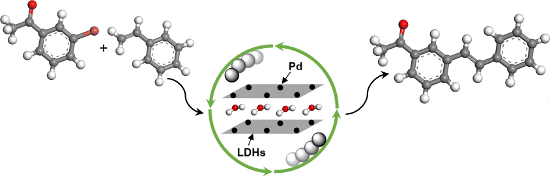
- . Thus, Pd catalysts anchored on heterogeneous solid support materials such as MCM-41 [29], alumina [30], silica [31], carbon nanotubes [32], microporous polymers [33], SBA-15 [34], or some dendrimers [35] were preferred to develop a ligandless and recyclable catalyst system. However, to the best of our

Graphical Abstract

Scheme 1: Supported catalysts in cross-coupling reactions. MM represents mixer mill; PM represents planetary ...

Figure 1: The XRD patterns for the samples of MgAl-LDHs, MgAl-LDHs-PdCl42− and Pd/MgAl-LDHs.

Scheme 2: Selected model reaction.

Figure 2: Examination of the milling-ball filling degree (ΦMB) and milling-ball sizes on the yield of 3aa. Re...

Figure 3: Examination of ball-milling time and rotation speed on the yield of 3aa. Reaction conditions: 1a (1...

Figure 4: Substrate scope of Pd/MgAl-LDHs catalyzed Heck reactions. Reaction conditions unless otherwise note...

Scheme 3: Pd/MgAl-LDHs catalyzed Heck reactions of heteroaryl bromides. Reaction conditions unless otherwise ...

Figure 5: Recycling studies of the Pd/MgAl-LDH catalyst for Heck reactions. Reaction conditions: 1i or 1m (1....
Synthesis and metal binding properties of N-alkylcarboxyspiropyrans
- Alexis Perry and
- Christina J. Kousseff
Beilstein J. Org. Chem. 2017, 13, 1542–1550, doi:10.3762/bjoc.13.154
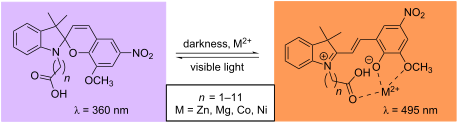
- , N-alkylcarboxyspiropyrans have been tagged (via ester or amide linkage) to carbon nanotubes (e.g., for photocontrolled Zn2+ delivery in biological media [8]) and gold electrodes (for photoswitching the bioelectrocatalytic cascade of cytochrome c/cytochrome oxidase [9]), and attachment to

Graphical Abstract

Figure 1: General uses of N-alkylcarboxyspiropyrans.

Scheme 1: C4SP–C4MC spiropyran-merocyanine equilibrium and M2+ binding.

Scheme 2: General synthesis of N-alkylcarboxyspiropyrans.

Scheme 3: Decarboxylation of N-ethanoic acid indolium salt 3a.

Scheme 4: Lactonisation of 4-bromobutyric acid 2c.

Figure 2: N-methyl spiropyran 9.
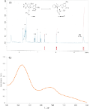
Figure 3: Example spectra illustrating binding studies of spiropyrans with M2+. (a) 1H NMR spectrum of C10SP ...

Figure 4: ε for MC–M2+ complexes of C2SP–C12SP and 9: (left) with Zn2+; (right) with Mg2+. Values for ε were ...

Figure 5: [MC] for compounds C2SP–C12SP and 9 in the presence of various metal cations. Solutions of spiropyr...

Figure 6: [MC] for spiropyrans C2SP–C12SP, 9 and 10 (0.1 mM) in CH3CN–H2O (99.9% v/v). Samples were kept in d...

Figure 7: C6 ester derivative 10.
Fluorescent carbon dots from mono- and polysaccharides: synthesis, properties and applications
- Stephen Hill and
- M. Carmen Galan
Beilstein J. Org. Chem. 2017, 13, 675–693, doi:10.3762/bjoc.13.67
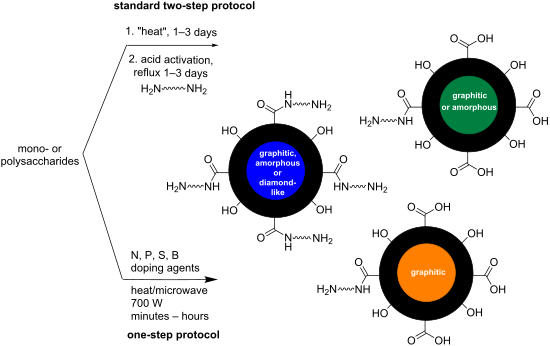
- wide range of in vivo applications, which has been the topic of several recent reviews [13][14][15]. Following the serendipitous discovery by Xu et al. during the separation and purification of single-walled carbon nanotubes (SWCNTs) [16], the development of synthetic methodologies to access these
- can be obtained. Typical substrates used are single/multi-walled carbon nanotubes, graphite, graphene or candle soot, amongst many others [15][17]. The crystalline make-up of top-down derived CDs is usually highly sp2 in character, which is transferred from the sp2-enriched starting materials, e.g

Graphical Abstract

Scheme 1: Microwave-driven reaction of glucose in the presence of PEG-200 to afford blue-emissive CDs.

Scheme 2: Two-step synthesis of TTDDA-coated CDs generated from acid-refluxed glucose.

Scheme 3: Glucose-derived CDs using KH2PO4 as a dehydrating agent to both form and tune CD’s properties.

Scheme 4: Ultrasonic-mediated synthesis of glucose-derived CDs in the presence of ammonia.

Scheme 5: Tryptophan-derived CDs used for the sensing of peroxynitrite in serum-fortified cell media.

Scheme 6: Glucose-derived CDs conjugated with methotrexate for the treatment of H157 lung cancer cells.

Scheme 7: Boron-doped blue-emissive CDs used for sensing of Fe3+ ion in solution.

Scheme 8: N/S-doped CDs with aggregation-induced fluorescence turn-off to temperature and pH stimuli.

Scheme 9: N/P-doped hollow CDs for efficient drug delivery of doxorubicin.

Scheme 10: N/P-doped CDs applied to the sensing of Fe3+ ions in mammalian T24 cells.

Scheme 11: Comparative study of CDs formed from glucose and N-doped with TTDDA and dopamine.

Scheme 12: Formation of blue-emissive CDs from the microwave irradiation of glycerol, TTDDA and phosphate.

Scheme 13: Xylitol-derived N-doped CDs with excellent photostability demonstrating the importance of Cl incorp...

Scheme 14: Base-mediated synthesis of CDs with nanocrystalline cores, from fructose and maltose, without forci...

Scheme 15: N/P-doped green-emissive CDs working in tandem with hyaluronic acid-coated AuNPs to monitor hyaluro...

Scheme 16: Three-minute microwave synthesis of Cl/N-doped CDs from glucosamine hydrochloride and TTDDA to affo...

Scheme 17: Mechanism for the formation of N/Cl-doped CDs via key aldehyde and iminium intermediates, monitored...

Scheme 18: Phosphoric acid-mediated synthesis of orange-red emissive CDs from sucrose.

Scheme 19: Proposed HMF dimer, and its formation mechanism, that upon aggregations bestows orange-red emissive...

Scheme 20: Different polysaccharide-derived CDs in the presence of PEG-200 and how the starting material compo...

Scheme 21: Tetracycline release profiles for differentially-decorated CDs.

Scheme 22: Hyaluronic acid (HA) and glycine-derived CDs, suspected to be decorated in unreacted HA, allowing r...

Scheme 23: Cyclodextrin-derived CDs used for detection of Ag+ ions in solution, based on the formal reduction ...

Scheme 24: Cyclodextrin and OEI-derived CDs, coated with hyaluronic acid and DOX, to produce an effective lung...

Scheme 25: Cellulose and urea-derived N-doped CDs with green-emissive fluorescence.
Enabling technologies and green processes in cyclodextrin chemistry
- Giancarlo Cravotto,
- Marina Caporaso,
- Laszlo Jicsinszky and
- Katia Martina
Beilstein J. Org. Chem. 2016, 12, 278–294, doi:10.3762/bjoc.12.30
- solubility and toxicity, while they can also be used as carriers for inhalation and oral administration treatments [38]. New hybrid materials have been created from a combination of carbon nanotubes (CNTs) and β-CD [39] affording a peculiar cost-effective fibre. Functionalized β-CD was covalently linked to
- drug delivery systems and toxic compounds scavengers, and have been obtained by grafting CDs into polymeric matrices. A multi-carrier for combined diagnostic and theranostic applications was obtained via the functionalization of carbon nanotubes with CD using a MW-assisted 1,3-dipolar cycloaddition. As

Graphical Abstract

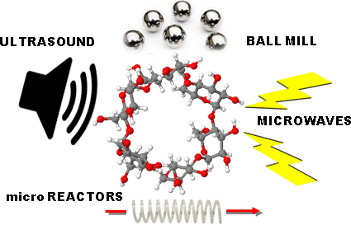
Figure 1: (a) Multihorn-flow US reactor, (b) Cavitational turbine, (c) Pilot-scale BM, (d) High-pressure MW r...

Figure 2: Trends in CD papers and CD use in green chemical processes.

Figure 3: Distribution of energy efficient methods in CD publications.

Figure 4: Document type dealing with CD chemistry under non-conventional techniques (conference proceedings a...

Figure 5: Document type dealing with sustainable technologies in CD publications.

Scheme 1: Synthesis of 6I-(p-toluenesulfonyl)-β-CD.

Scheme 2: Example of CuAAC with 6I-azido-6I-deoxy-β-CD and phenylacetylene.

Scheme 3: Synthesis of 6I-benzylureido-6I-deoxy-per-O-acetyl-β-CD.

Scheme 4: Synthesis of 3I-azido-3I-deoxy-altro-α, β- and γ-CD.

Scheme 5: Synthesis of 2-2’ bridged bis(β-CDs). Reaction conditions: 1) TBDMSCl, imidazole, dry pyridine, sti...

Scheme 6: Insoluble reticulated CD polymer.

Scheme 7: CD-HDI cross linked polymers.
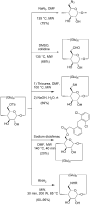
Scheme 8: Derivatization of 6I-(p-toluenesulfonyl)-β-CD by tosyl displacement.
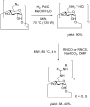
Scheme 9: Synthetic scheme for the preparation of heptakis(6-amino-6-deoxy)-β-CD, heptakis(6-deoxy-6-ureido)-...
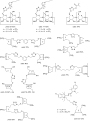
Scheme 10: Structure of CD derivatives obtained via MW-assisted CuAAC.

Scheme 11: Preparation of SWCN CD-DOTA carrier.
Synthesis of racemic and chiral BEDT-TTF derivatives possessing hydroxy groups and their achiral and chiral charge transfer complexes
- Sara J. Krivickas,
- Chiho Hashimoto,
- Junya Yoshida,
- Akira Ueda,
- Kazuyuki Takahashi,
- John D. Wallis and
- Hatsumi Mori
Beilstein J. Org. Chem. 2015, 11, 1561–1569, doi:10.3762/bjoc.11.172
- magneto-electrical phenomena such as piezoelectricity, pyroelectricity, ferroelectricity and electrical magnetochiral anisotropy. Rikken et al. observed magneto-chiral dichroism in a europium complex [2][3] and also electrical magneto-chiral anisotropy in carbon nanotubes where small changes in the
- resistance of the chiral carbon nanotubes in a magnetic field were observed between enantiomers [4][5][6]. One method of constructing chiral crystals is through the use of chiral molecules as building blocks. Tetrathiafulvalene derivatives such as TTF (3) and BEDT-TTF (4) have been investigated considerably

Graphical Abstract

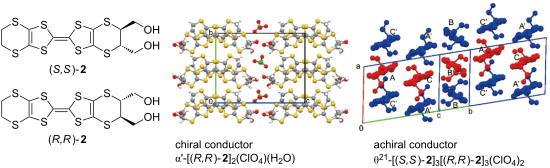
Figure 1: Molecular structures of trans-vic-(hydroxymethyl)(methyl)-BEDT-TTF (1), trans-vic-bis(hydroxymethyl...

Scheme 1: Synthesis of donor trans-1.

Scheme 2: Synthesis of enantiopure donor (S,S)-2.

Figure 2: (a) Crystal structure, (b) θ21-type donor arrangement of molecules A and A’ [(S,S) and (R,R)-2 indi...

Figure 3: Crystal structure (a) viewed along the a-axis, (b) donor arrangement, (c) viewed along the b-axis, ...

Figure 4: Temperature dependences of electrical resistivities for (a) achiral charge transfer salt θ21-[(S,S)-...
Regioselective synthesis of chiral dimethyl-bis(ethylenedithio)tetrathiafulvalene sulfones
- Flavia Pop and
- Narcis Avarvari
Beilstein J. Org. Chem. 2015, 11, 1105–1111, doi:10.3762/bjoc.11.124

- previously observed only in bismuth wires and carbon nanotubes [13]. Another interesting research area is the redox modulation of the chiroptical properties described in derivatives such as TTF-allenes [14], TTF-helicenes [15], or TTF-paracyclophanes [16]. Thus, to address the different opportunities offered

Graphical Abstract

Scheme 1: BEDT-TTF and chiral derivatives.

Scheme 2: Synthesis of the chiral sulfones (S,S)-1 and (R,R)-1.

Figure 1: Molecular structure of (R,R)-1 (left) and (S,S)-1 (right) together with atom numbering scheme (H at...

Figure 2: Packing of (R,R)-1 in the bc plane (left) and detailed S···S interactions (only S3···S7 (−1+x, y, z...

Figure 3: Packing of (S,S)-1 in the ab plane (left) and detailed S···S intermolecular interactions within (hi...
Electrochemical oxidation of cholesterol
- Jacek W. Morzycki and
- Andrzej Sobkowiak
Beilstein J. Org. Chem. 2015, 11, 392–402, doi:10.3762/bjoc.11.45
- immobilization of an enzyme on the electrode covered with different conducting polymers often embedded with carbon nanotubes and/or metal nanoparticles [52][53][54][55][56]. Chitosan, a naturally occurring biopolymer, has also been utilized for sensor fabrication [57][58]. Cholesterol oxidase has been
- immobilized on carbon nanotubes [59], metal nanoparticles [60] or graphene [61], and additionally decorated with metal nanoparticles [62] or modified with ionic liquids [63]. The application of composite electrodes, including silica sol–gel matrix with Prussian Blue [64], carbon nanotubes with zinc oxide

Graphical Abstract

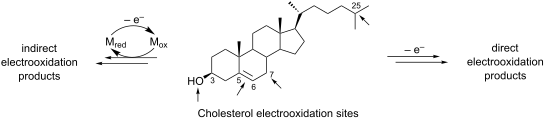
Figure 1: Preferential sites of cholesterol electrooxidation.

Scheme 1: Functionalization of the cholesterol side chain.

Scheme 2: Oxidation of cholestane-3β,5α,6β-triol triacetate (3) with the Gif system.

Scheme 3: Electrochemical oxidation of cholesteryl acetate (1a) with dioxygen and iron–picolinate complexes.

Scheme 4: Electrochemical chlorination of cholesterol catalyzed by FeCl3.

Scheme 5: Electrochemical chlorination of Δ5-steroids.

Scheme 6: Electrochemical bromination of Δ5-steroids in different solvents.

Scheme 7: Direct electrochemical acetoxylation of cholesterol at the allylic position.

Scheme 8: Direct anodic oxidation of cholesterol in dichloromethane.

Scheme 9: A plausible mechanism of the electrochemical oxidation of cholesterol in dichloromethane.

Scheme 10: The electrochemical formation of glycosides and glycoconjugates.

Scheme 11: Efficient electrochemical oxidation of cholesterol to cholesta-4,6-dien-3-one (24).
Cross-dehydrogenative coupling for the intermolecular C–O bond formation
- Igor B. Krylov,
- Vera A. Vil’ and
- Alexander O. Terent’ev
Beilstein J. Org. Chem. 2015, 11, 92–146, doi:10.3762/bjoc.11.13
- ]. The coupling of aldehydes and formamides with 2-substituted phenols was carried out in the presence of heterogeneous catalysts, such as CuO on α-Fe2O3-modified carbon nanotubes (a magnetically separable catalyst) [158] and the metal-organic framework Cu2(4,4’-biphenyldicarboxylate)2(4,4’-bipyridine

Graphical Abstract

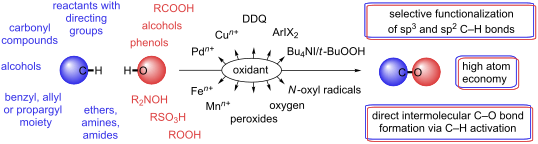
Scheme 1: Cross-dehydrogenative coupling.

Scheme 2: Cross-dehydrogenative C–O coupling.

Scheme 3: Regioselective ortho-acetoxylation of meta-substituted arylpyridines and N-arylamides.
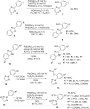
Scheme 4: ortho-Acyloxylation and alkoxylation of arenes directed by pyrimidine, benzoxazole, benzimidazole a...

Scheme 5: Cu(OAc)2/AgOTf/O2 oxidative system in the ortho-alkoxylation of arenes.
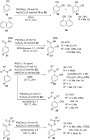
Scheme 6: Pd(OAc)2/persulfate oxidative system in the ortho-alkoxylation and acetoxylation of arenes with nit...
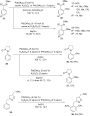
Scheme 7: ortho-Acetoxylation and methoxylation of O-methyl aryl oximes, N-phenylpyrrolidin-2-one, and (3-ben...

Scheme 8: Ruthenium-catalyzed ortho-acyloxylation of acetanilides.

Scheme 9: Acetoxylation and alkoxylation of arenes with amide directing group using Pd(OAc)2/PhI(OAc)2 oxidat...

Scheme 10: Alkoxylation of azoarenes, 2-aryloxypyridines, picolinamides, and N-(1-methyl-1-(pyridin-2-yl)ethyl...

Scheme 11: Acetoxylation of compounds containing picolinamide and quinoline-8-amine moieties using the Pd(OAc)2...

Scheme 12: (CuOH)2CO3 catalyzed oxidative ortho-etherification using air as oxidant.

Scheme 13: Copper-catalyzed aerobic alkoxylation and aryloxylation of arenes containing pyridine-N-oxide moiet...

Scheme 14: Cobalt-catalyzed aerobic alkoxylation of arenes and alkenes containing pyridine N-oxide moiety.

Scheme 15: Non-symmetric double-fold C–H ortho-acyloxylation.

Scheme 16: N-nitroso directed ortho-alkoxylation of arenes.

Scheme 17: Selective alkoxylation and acetoxylation of alkyl groups.

Scheme 18: Acetoxylation of 2-alkylpyridines and related compounds.
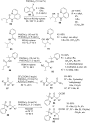
Scheme 19: Acyloxylation and alkoxylation of alkyl fragments of substrates containing amide or sulfoximine dir...

Scheme 20: Palladium-catalyzed double sp3 C–H alkoxylation of N-(quinolin-8-yl)amides for the synthesis of sym...

Scheme 21: Copper-catalyzed acyloxylation of methyl groups of N-(quinolin-8-yl)amides.

Scheme 22: One-pot acylation and sp3 C–H acetoxylation of oximes.

Scheme 23: Possible mechanism of oxidative esterification catalyzed by N-heterocyclic nucleophilic carbene.

Scheme 24: Oxidative esterification employing stoichiometric amounts of aldehydes and alcohols.

Scheme 25: Selective oxidative coupling of aldehydes with alcohols in the presence of amines.

Scheme 26: Iodine mediated oxidative esterification.

Scheme 27: Oxidative C–O coupling of benzyl alcohols with methylarenes under the action of Bu4NI/t-BuOOH syste...

Scheme 28: Oxidative coupling of methyl- and ethylarenes with aromatic aldehydes under the action of Bu4NI/t-B...

Scheme 29: Cross-dehydrogenative C–O coupling of aldehydes with t-BuOOH in the presence of Bu4NI.

Scheme 30: Bu4NI-catalyzed α-acyloxylation reaction of ethers and ketones with aldehydes and t-BuOOH.

Scheme 31: Oxidative coupling of aldehydes with N-hydroxyimides and hexafluoroisopropanol.

Scheme 32: Oxidative coupling of alcohols with N-hydroxyimides.

Scheme 33: Oxidative coupling of aldehydes and primary alcohols with N-hydroxyimides using (diacetoxyiodo)benz...

Scheme 34: Proposed mechanism of the oxidative coupling of aldehydes and N-hydroxysuccinimide under action of ...

Scheme 35: Oxidative coupling of aldehydes with pivalic acid (172).

Scheme 36: Oxidative C–O coupling of aldehydes with alkylarenes using the Cu(OAc)2/t-BuOOH system.

Scheme 37: Copper-catalyzed acyloxylation of C(sp3)-H bond adjacent to oxygen in ethers using benzyl alcohols.

Scheme 38: Oxidative C–O coupling of aromatic aldehydes with cycloalkanes.

Scheme 39: Ruthenium catalyzed cross-dehydrogenative coupling of primary and secondary alcohols.

Scheme 40: Cross-dehydrogenative C–O coupling reactions of β-dicarbonyl compounds with sulfonic acids, acetic ...

Scheme 41: Acyloxylation of ketones, aldehydes and β-dicarbonyl compounds using carboxylic acids and Bu4NI/t-B...

Scheme 42: Acyloxylation of ketones using Bu4NI/t-BuOOH system.

Scheme 43: Cross-dehydrogenative C–O coupling of β-dicarbonyl compounds and their heteroanalogues with N-hydro...

Scheme 44: Cross-dehydrogenative C–O coupling of β-dicarbonyl compounds and their heteroanalogues with t-BuOOH....

Scheme 45: Oxidative C–O coupling of 2,6-dialkylphenyl-β-keto esters and thioesters with tert-butyl hydroxycar...

Scheme 46: α’-Acyloxylation of α,β-unsaturated ketones using KMnO4.

Scheme 47: Possible mechanisms of the acetoxylation at the allylic position of alkenes by Pd(OAc)2.

Scheme 48: Products of the oxidation of terminal alkenes by Pd(II)/AcOH/oxidant system.

Scheme 49: Acyloxylation of terminal alkenes with carboxylic acids.

Scheme 50: Synthesis of linear E-allyl esters by cross-dehydrogenative coupling of terminal alkenes wih carbox...

Scheme 51: Pd(OAc)2-catalyzed acetoxylation of Z-vinyl(triethylsilanes).

Scheme 52: α’-Acetoxylation of α-acetoxyalkenes with copper(II) chloride in acetic acid.

Scheme 53: Oxidative acyloxylation at the allylic position of alkenes and at the benzylic position of alkylare...

Scheme 54: Copper-catalyzed alkoxylation of methylheterocyclic compounds using di-tert-butylperoxide as oxidan...

Scheme 55: Oxidative C–O coupling of methylarenes with β-dicarbonyl compounds or phenols.

Scheme 56: Copper-catalyzed esterification of methylbenzenes with cyclic ethers and cycloalkanes.

Scheme 57: Oxidative C–O coupling of carboxylic acids with toluene catalyzed by Pd(OAc)2.

Scheme 58: Oxidative acyloxylation at the allylic position of alkenes with carboxylic acids using the Bu4NI/t-...

Scheme 59: Cross-dehydrogenative C–O coupling of carboxylic acids with alkylarenes using the Bu4NI/t-BuOOH sys...

Scheme 60: Oxidative C–O cross-coupling of methylarenes with ethyl or isopropylarenes.

Scheme 61: Phosphorylation of benzyl C–H bonds using the Bu4NI/t-BuOOH oxidative system.

Scheme 62: Selective C–H acetoxylation of 2,3-disubstituted indoles.

Scheme 63: Acetoxylation of benzylic position of alkylarenes using DDQ as oxidant.

Scheme 64: C–H acyloxylation of diarylmethanes, 3-phenyl-2-propen-1-yl acetate and dimethoxyarene using DDQ.

Scheme 65: Cross-dehydrogenative C–O coupling of 1,3-diarylpropylenes and 1,3-diarylpropynes with alcohols.

Scheme 66: One-pot azidation and C–H acyloxylation of 3-chloro-1-arylpropynes.

Scheme 67: Cross-dehydrogenative C–O coupling of 1,3-diarylpropylenes, (E)-1-phenyl-2-isopropylethylene and is...

Scheme 68: Cross-dehydrogenative C–O coupling of alkylarenes and related compounds with N-hydroxyphthalimide.

Scheme 69: Acetoxylation at the benzylic position of alkylarenes mediated by N-hydroxyphthalimide.

Scheme 70: C–O coupling of methylarenes with aromatic carboxylic acids employing the NaBrO3/NaHSO3 system.

Scheme 71: tert-Butyl peroxidation of allyl, propargyl and benzyl ethers catalyzed by Fe(acac)3.

Scheme 72: Cross-dehydrogenative C–O coupling of ethers with carboxylic acids mediated by Bu4NI/t-BuOOH system....

Scheme 73: Oxidative acyloxylation of dimethylamides and dioxane with 2-aryl-2-oxoacetic acids accompanied by ...

Scheme 74: tert-Butyl peroxidation of N-benzylamides and N-allylbenzamide using the Bu4NI/t-BuOOH system.

Scheme 75: Cross-dehydrogenative C–O coupling of aromatic carboxylic acids with ethers using Fe(acac)3 as cata...

Scheme 76: Cross-dehydrogenative C–O coupling of cyclic ethers with 2-hydroxybenzaldehydes using iron carbonyl...
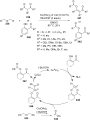
Scheme 77: Cross-dehydrogenative C–O coupling of ethers with β-dicarbonyl compounds and phenols using copper c...

Scheme 78: Cross-dehydrogenative C–O coupling of 2-hydroxybenzaldehyde with dioxane catalyzed by Cu2(BPDC)2(BP...

Scheme 79: Ruthenium chloride-catalyzed acyloxylation of β-lactams.

Scheme 80: Ruthenium-catalyzed tert-butyl peroxydation amides and acetoxylation of β-lactams.

Scheme 81: PhI(OAc)2-mediated α,β-diacetoxylation of tertiary amines.

Scheme 82: Electrochemical oxidative methoxylation of tertiary amines.

Scheme 83: Cross-dehydrogenative C–O coupling of ketene dithioacetals with carboxylic acids in the presence of...

Scheme 84: Cross-dehydrogenative C–O coupling of enamides with carboxylic acids using iodosobenzene as oxidant....

Scheme 85: Oxidative alkoxylation, acetoxylation, and tosyloxylation of acylanilides using PhI(O(O)CCF3)2 in t...

Scheme 86: Proposed mechanism of the oxidative C–O coupling of actetanilide with O-nucleophiles in the presenc...

Scheme 87: Three-component coupling of aldehydes, anilines and alcohols involving oxidative intermolecular C–O...

Scheme 88: Oxidative coupling of phenols with alcohols.

Scheme 89: 2-Acyloxylation of quinoline N-oxides with arylaldehydes in the presence of the CuOTf/t-BuOOH syste...

Scheme 90: Cross-dehydrogenative C–O coupling of azoles with primary alcohols.

Scheme 91: Oxidation of dipyrroles to dipyrrins and subsequent oxidative alkoxylation in the presence of Na3Co...

Scheme 92: Oxidative dehydrogenative carboxylation of alkanes and cycloalkanes to allylic esters.

Scheme 93: Pd-catalyzed acetoxylation of benzene.
Encapsulation of biocides by cyclodextrins: toward synergistic effects against pathogens
- Véronique Nardello-Rataj and
- Loïc Leclercq
Beilstein J. Org. Chem. 2014, 10, 2603–2622, doi:10.3762/bjoc.10.273
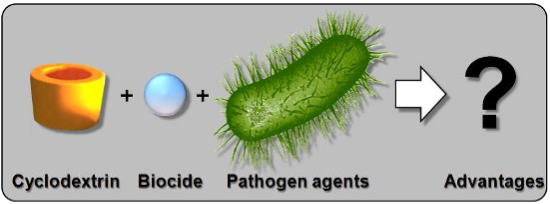
- as medical devices and antimicrobial systems [92]. In this context, Lukhele et al. explored the use of copper nanoparticles impregnated on CD polyurethanes for possible use in water disinfection [93]. Carbon nanotubes embedded in water-insoluble CD polyurethane polymers are used to immobilize copper
- bacteria and adsorbed up to 55% of p-nitrophenol pollutant. It is worth mentioning that single-walled carbon nanotubes already exhibit a strong antimicrobial activity because of the piercing of the bacterial cell membranes (Scheme 10) [94]. Therefore, their combination with biocidal nanoparticles allows a
- synergism behavior: the carbon nanotubes promote the nanoparticles penetration into the cytoplasm by piercing of the bacterial cells. Indeed, the combined action of carbon nanotubes and biocidal nanoparticles is higher than the sum of the activities of any actives on their own. Based on this ascertainment

Graphical Abstract

Scheme 1: Principle of resistance mechanisms through selection of the most resistant micro-organism.

Figure 1: Chemical structure of carbendazim.

Scheme 2: Chemical structure of benomyl and its decomposition in aqueous solution.

Figure 2: Chemical structure of enilconazole.

Figure 3: Chemical structure of chloramidophos.

Scheme 3: The complex problem of pentachlorophenol (PCP) degradation.

Figure 4: Chemical structure of DCPE.

Figure 5: Chemical structures of some biocides used in [59].

Figure 6: Chemical structure of miconazole nitrate.

Figure 7: Chemical structures of triclosan and butylparaben.

Figure 8: Chemical structure of ciprofloxacin hydrochloride.

Figure 9: Chemical structure of benzethonium chloride.

Figure 10: Chemical structure of benzalkonium chlorides.

Scheme 4: Multiple equilibria of CD with benzalkonium chloride (BZK) and fluorometholone.

Scheme 5: Competition between co-micellization and biocidal activity observed for didecyldimethylammonium chl...

Scheme 6: Proposed antimicrobial mechanism of encapsulated didecyldimethylammonium chloride by CDs: (1) diffu...

Scheme 7: Inhibition of co-micellization process observed for didecyldimethylammonium chloride, octaethyleneg...

Scheme 8: Schematic representation of biocide release from a chemically cross-linked CD network.

Scheme 9: Proposed Trojan horse mechanism of silver nanoparticles capped by β-CD.

Scheme 10: Proposed mechanism of copper nanoparticles immobilized on carbon nanotube and embedded in water-ins...

Scheme 11: Advantages and drawback of the physicochemical and biopharmaceutical properties of CDs/biocides inc...
Chiral phosphines in nucleophilic organocatalysis
- Yumei Xiao,
- Zhanhu Sun,
- Hongchao Guo and
- Ohyun Kwon
Beilstein J. Org. Chem. 2014, 10, 2089–2121, doi:10.3762/bjoc.10.218
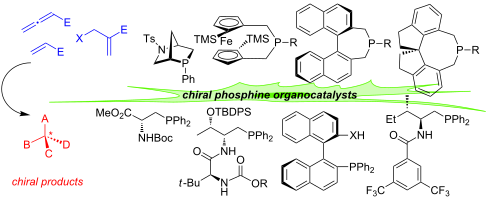
- provided a versatile and promising strategy for tailoring carbon materials (e.g., fullerenes, carbon nanotubes), imparting them with desired properties for applications in materials chemistry [42][43]. To further develop nucleophilic phosphine-catalyzed asymmetric reactions, Marinetti and co-workers

Graphical Abstract

Figure 1: Cyclic chiral phosphines based on bridged-ring skeletons.

Figure 2: Cyclic chiral phosphines based on binaphthyl skeletons.

Figure 3: Cyclic chiral phosphines based on ferrocene skeletons.

Figure 4: Cyclic chiral phosphines based on spirocyclic skeletons.

Figure 5: Cyclic chiral phosphines based on phospholane ring skeletons.

Figure 6: Acyclic chiral phosphines.

Figure 7: Multifunctional chiral phosphines based on binaphthyl skeletons.

Figure 8: Multifunctional chiral phosphines based on amino acid skeletons.

Scheme 1: Asymmetric [3 + 2] annulations of allenoates with electron-deficient olefins, catalyzed by the chir...

Scheme 2: Asymmetric [3 + 2] annulations of allenoate and enones, catalyzed by the chiral binaphthyl-based ph...

Scheme 3: Asymmetric [3 + 2] annulations of N-substituted olefins and allenoates, catalyzed by the chiral bin...

Scheme 4: Asymmetric [3 + 2] annulations of 2-aryl-1,1-dicyanoethylenes with ethyl allenoate, catalyzed by th...

Scheme 5: Asymmetric [3 + 2] annulations of 3-alkylideneindolin-2-ones with ethyl allenoate, catalyzed by the...

Scheme 6: Asymmetric [3 + 2] annulations of 2,6-diarylidenecyclohexanones with allenoates, catalyzed by the c...

Scheme 7: Asymmetric [3 + 2] annulations of allenoate with alkylidene azlactones, catalyzed by the chiral bin...

Scheme 8: Asymmetric [3 + 2] annulations of C60 with allenoates, catalyzed by the chiral phosphine B6.

Scheme 9: Asymmetric [3 + 2] annulations of α,β-unsaturated esters and ketones with an allenoate, catalyzed b...

Scheme 10: Asymmetric [3 + 2] annulations of exocyclic enones with allenoates, catalyzed by the ferrocene-modi...

Scheme 11: Asymmetric [3 + 2] annulations of enones with an allenylphosphonate, catalyzed by the ferrocene-mod...

Scheme 12: Asymmetric [3 + 2] annulations of 3-alkylidene-oxindoles with ethyl allenoate, catalyzed by the fer...

Scheme 13: Asymmetric [3 + 2] annulations of dibenzylideneacetones with ethyl allenoate, catalyzed by the ferr...

Scheme 14: Asymmetric [3 + 2] annulations of trisubstituted alkenes with ethyl allenoate, catalyzed by the fer...

Scheme 15: Asymmetric [3 + 2] annulations of 2,6-diarylidenecyclohexanones with allenoates, catalyzed by the f...

Scheme 16: Asymmetric [3 + 2] annulations of α,β-unsaturated ketones with ethyl allenoates, catalyzed by the f...

Scheme 17: Asymmetric [3 + 2] annulations of α,β-unsaturated esters with allenoates, catalyzed by the ferrocen...

Scheme 18: Asymmetric [3 + 2] annulations of alkylidene azlactones with allenoates, catalyzed by the chiral sp...

Scheme 19: Asymmetric [3 + 2] annulations of α-trimethylsilyl allenones and electron-deficient olefins, cataly...

Scheme 20: Asymmetric [3 + 2] annulations of α,β-unsaturated ketones with an allenone, catalyzed by the chiral...

Scheme 21: Asymmetric [3 + 2] annulations of cyclic enones with allenoates, catalyzed by the chiral α-amino ac...

Scheme 22: Asymmetric [3 + 2] annulations of arylidenemalononitriles and analogues with an allenoate, catalyze...

Scheme 23: Asymmetric [3 + 2] annulations of α,β-unsaturated esters with an allenoate, catalyzed by the chiral...

Scheme 24: Asymmetric [3 + 2] annulations of 3,5-dimethyl-1H-pyrazole-derived acrylamides with an allenoate, c...

Scheme 25: Asymmetric [3 + 2] annulations of maleimides with allenoates, catalyzed by the chiral phosphine H10....

Scheme 26: Asymmetric [3 + 2] annulations of α-substituted acrylates with allenoate, catalyzed by the chiral p...

Scheme 27: Asymmetric [3 + 2] annulation of an N-tosylimine with an allenoate, catalyzed by the chiral phosphi...

Scheme 28: Asymmetric [3 + 2] annulations of N-tosylimines with an allenoate, catalyzed by the chiral phosphin...

Scheme 29: Asymmetric [3 + 2] annulations of N-tosylimines with an allenoate, catalyzed by the chiral phosphin...

Scheme 30: Asymmetric [3 + 2] annulations of N-diphenylphosphinoyl aromatic imines with butynoates, catalyzed ...

Scheme 31: Asymmetric [3 + 2] annulations of N-tosylimines with allenylphosphonates, catalyzed by the chiral p...

Scheme 32: Asymmetric [3 + 2] annulation of an N-tosylimine with an allenoate, catalyzed by the chiral phosphi...

Scheme 33: Asymmetric [3 + 2] annulations of N-diphenylphosphinoyl aromatic imines with allenoates (top), cata...

Scheme 34: Asymmetric [3 + 2] annulation of N-diphenylphosphinoylimines with allenoates, catalyzed by the chir...

Scheme 35: Asymmetric [3 + 2] annulation of an azomethine imine with an allenoate, catalyzed by the chiral pho...

Scheme 36: Asymmetric [3 + 2] annulations between α,β-unsaturated esters/ketones and 3-butynoates, catalyzed b...

Scheme 37: Asymmetric intramolecular [3 + 2] annulations of electron-deficient alkenes and MBH carbonates, cat...

Scheme 38: Asymmetric [3 + 2] annulations of methyleneindolinone and methylenebenzofuranone derivatives with M...

Scheme 39: Asymmetric [3 + 2] annulations of activated isatin-based alkenes with MBH carbonates, catalyzed by ...

Scheme 40: Asymmetric [3 + 2] annulations of maleimides with MBH carbonates, catalyzed by the chiral phosphine ...

Scheme 41: A series of [3 + 2] annulations of various activated alkenes with MBH carbonates, catalyzed by the ...

Scheme 42: Asymmetric [3 + 2] annulations of an alkyne with isatins, catalyzed by the chiral phosphine F1.

Scheme 43: Asymmetric [4 + 2] annulations catalyzed by the chiral phosphine B1.

Scheme 44: Asymmetric [4 + 2] annulations catalyzed by the chiral phosphine H5.

Scheme 45: Asymmetric [4 + 2] annulations catalyzed by the chiral phosphines H13 and H12.

Scheme 46: Asymmetric [4 + 2] annulations catalyzed by the chiral phosphine H6.

Scheme 47: Kerrigan’s [2 + 2] annulations of ketenes with imines, catalyzed by the chiral phosphine B7.

Scheme 48: Asymmetric [4 + 1] annulations, catalyzed by the chiral phosphine G6.

Scheme 49: Asymmetric homodimerization of ketenes, catalyzed by the chiral phosphine F5 and F6.

Scheme 50: Aza-MBH/Michael reactions, catalyzed by the chiral phosphine G1.

Scheme 51: Tandem RC/Michael additions, catalyzed by the chiral phosphine H14.

Scheme 52: Intramolecular tandem RC/Michael addition, catalyzed by the chiral phosphine H15.

Scheme 53: Double-Michael addition, catalyzed by the chiral aminophosphine G9.

Scheme 54: Tandem Michael addition/Wittig olefinations, mediated by the chiral phosphine BIPHEP.

Scheme 55: Asymmetric Michael additions, catalyzed by the chiral phosphines H7, H8, and H9.

Scheme 56: Asymmetric γ-umpolung additions, catalyzed by the chiral phosphine A1.

Scheme 57: Asymmetric γ-umpolung additions, catalyzed by the chiral phosphines E2 and E3.

Scheme 58: Intramolecular γ-additions of hydroxy-2-alkynoates, catalyzed by the chiral phosphine D2.

Scheme 59: Intra-/intermolecular γ-additions, catalyzed by the chiral phosphine D2.

Scheme 60: Intermolecular γ-additions, catalyzed by the chiral phosphines B5 and B3.

Scheme 61: Intermolecular γ-additions, catalyzed by the chiral phosphines E6 and B4.

Scheme 62: Asymmetric allylic substitution of MBH acetates, catalyzed by the chiral phosphine G2.

Scheme 63: Allylic substitutions between MBH acetates or carbonates and an array of nucleophiles, catalyzed by...

Scheme 64: Asymmetric acylation of diols, catalyzed by the chiral phosphines E4 and E5.

Scheme 65: Kinetic resolution of secondary alcohols, catalyzed by the chiral phosphine E8 and E9.
Carbon nanomaterials
- Anke Krueger
Beilstein J. Org. Chem. 2014, 10, 1785–1786, doi:10.3762/bjoc.10.186
- carbon materials have entered the scene such as carbon nanotubes, carbon onions, nanoscale diamond and diamondoids. A major turning point was the appearance of graphene as a material available for in-depth investigations – spurred by the development of reliable production methods. The progress in terms
Tuning the interactions between electron spins in fullerene-based triad systems
- Maria A. Lebedeva,
- Thomas W. Chamberlain,
- E. Stephen Davies,
- Bradley E. Thomas,
- Martin Schröder and
- Andrei N. Khlobystov
Beilstein J. Org. Chem. 2014, 10, 332–343, doi:10.3762/bjoc.10.31
- and 2D ordering is a critical factor in the design of molecular electronics. For example, linear molecules can be ordered readily into 1D arrays using carbon nanotubes as templates [18] and are therefore advantageous compared to non-linear or branched molecules for which 1D packing arrangements are

Graphical Abstract

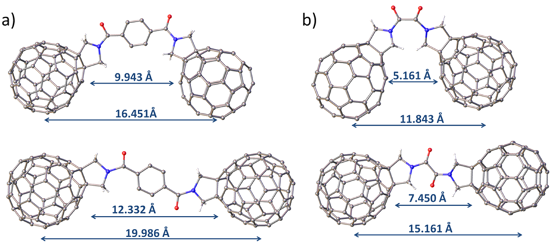
Figure 1: Structures of triads 1–6 and precursor molecules 7–8 used for the synthesis of the asymmetric syste...

Scheme 1: The one-step synthetic procedure towards the oxalate-bridged fullerene triads 4 and 6.

Scheme 2: Attempted synthetic pathway towards the formation of the C60–C70 oxalate bridged fullerene triad al...

Scheme 3: Synthetic pathway to the asymmetric fullerene triad 5 allowing introduction of the fullerene cages ...

Figure 2: Cyclic voltammograms of the terephthalate bridged triads 1–3 (left) and oxalate bridged triads 4–6 ...
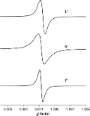
Figure 3: Fluid solution EPR spectra recorded at 297 K for the two electron reduced species of compounds 1 an...

Figure 4: Frozen solution EPR spectra of triads 42− (a) and 12− (c), prepared by two electron reduction of 4 ...
Thermotropic and lyotropic behaviour of new liquid-crystalline materials with different hydrophilic groups: synthesis and mesomorphic properties
- Alexej Bubnov,
- Miroslav Kašpar,
- Věra Hamplová,
- Ute Dawin and
- Frank Giesselmann
Beilstein J. Org. Chem. 2013, 9, 425–436, doi:10.3762/bjoc.9.45

- behaviour. Such materials are of high potential interest for challenging issues such as the self-organization of carbon nanotubes or various nanoparticles. Thermotropic mesomorphic properties have been studied by using polarizing optical microscopy, differential scanning calorimetry and X-ray scattering
- such as the organization of carbon nanotubes [17] or various nanoparticles [18] in a liquid-crystalline matrix. To reach the goal, several new multifunctional liquid-crystalline materials possessing either ethylene glycol units (denoted as TL1 and TL2) or a different number of hydroxy groups (denoted

Graphical Abstract

Figure 1: Microphotographs of the textures obtained in the polarized optical microscope on planar samples (PS...

Figure 2: DSC plot on heating/cooling runs (indicated by horizontal arrows) for indicated nonchiral compounds...

Figure 3: DSC plot on heating/cooling runs (indicated by horizontal arrows) for indicated chiral compounds: T...
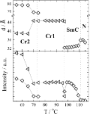
Figure 4: Temperature dependence of the layer spacing d, and intensity of the scattered X-ray beam measured a...

Figure 5: Schematic contact preparation used for detection and study of lyotropic behaviour.

Figure 6: Microphotographs of the contact preparation of TL4 with diethylene glycol (DG): (a) texture of the ...
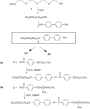
Scheme 1: General procedure for the synthesis of (a) nonchiral 4'-(2,5,8,11-tetraoxatridecan-13-yloxy)bipheny...

Scheme 2: General procedure for synthesis of 2-(1-(6-(4'-(6-(3-hydroxy-2-(hydroxymethyl)-2-methylpropoxy)hexy...

Scheme 3: General procedure for the synthesis of chiral (E)-2-methyl-2-((2-(2-(2-(4-((4-((4-(2-methylbutoxy)p...
Continuous preparation of carbon-nanotube-supported platinum catalysts in a flow reactor directly heated by electric current
- Alicja Schlange,
- Antonio Rodolfo dos Santos,
- Ulrich Kunz and
- Thomas Turek
Beilstein J. Org. Chem. 2011, 7, 1412–1420, doi:10.3762/bjoc.7.165
- process for the production of highly active Pt catalysts supported by carbon nanotubes by use of an electrically heated tubular reactor. The synthesized catalysts show a high degree of dispersion and narrow distributions of cluster sizes. In comparison to catalysts synthesized by the conventional oil-bath
- preparation in a flow reactor which could be used at a large scale. Keywords: carbon nanotubes; continuous catalyst synthesis; direct electrical heating; flow reactors; fuel cell platinum catalyst; Introduction Batch processes represent the state of the art in catalyst preparation. One reason for employing
- results. Most of the work is concerned with the precipitation of hydroxides, oxides or other hardly soluble metal compounds [12]. Platinum nanoparticles supported on conductive carbon materials such as carbon black or carbon nanotubes (CNTs) are commonly used as oxygen reduction reaction (ORR) catalysts

Graphical Abstract

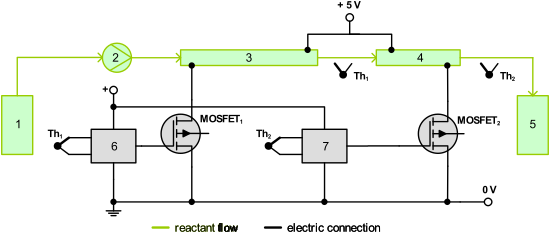
Figure 1: Experimental setup for catalyst synthesis in the tubular flow reactor; 1: Reaction mixture reservoi...

Figure 2: Measured temperature profile along the tubular reactor.

Figure 3: TGA weight loss curves for pristine CNT, HNO3 oxidized CNT, Pt/CNT-oil bath and Pt/CNT-tubular reac...

Figure 4: TEM micrographs of catalyst samples: a) Pt/CNT tubular reactor and b) Pt/CNT oil bath.

Figure 5: X-ray diffraction patterns for the as-received CNT and the three Pt/CNT samples taken at intervals ...

Figure 6: Comparison of performance in DMFC with Pt/CNT oil bath and Pt/CNT tubular reactor samples as cathod...
Michael-type addition of azoles of broad-scale acidity to methyl acrylate
- Sławomir Boncel,
- Kinga Saletra,
- Barbara Hefczyc and
- Krzysztof Z. Walczak
Beilstein J. Org. Chem. 2011, 7, 173–178, doi:10.3762/bjoc.7.24
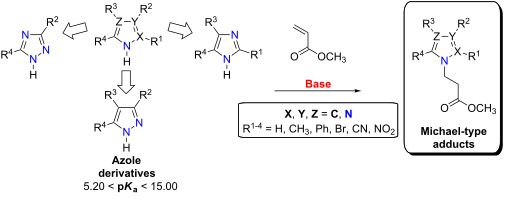
- and which, after acidic hydrolysis [43], can be anchored to drug delivery systems, including, e.g., chemically modified carbon nanotubes, via amide bonds. Examples of azole derivatives as important therapeutic agents. Michael-type addition of azoles of broad-scale acidity 1a–h to methyl acrylate (2

Graphical Abstract

Figure 1: Examples of azole derivatives as important therapeutic agents.

Scheme 1: Michael-type addition of azoles of broad-scale acidity 1a–h to methyl acrylate (2) under basic cond...

Scheme 2: Chemical evidence for a regioselective Michael-type addition of 4(5)-nitroimidazole (1c) to methyl ...
Miniemulsion polymerization as a versatile tool for the synthesis of functionalized polymers
- Daniel Crespy and
- Katharina Landfester
Beilstein J. Org. Chem. 2010, 6, 1132–1148, doi:10.3762/bjoc.6.130
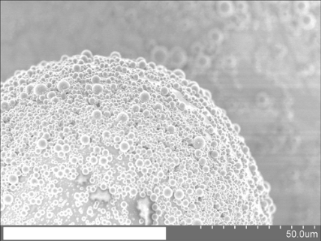
- the polystyrene core in THF. Ham et al. dispersed single-wall carbon nanotubes and pyrrole before oxidative polymerization of the monomer [97]. The electric properties of the composite were investigated for application as electrode material for a supercapacitor. Ethylene dioxythiophene (EDOT) has also

Graphical Abstract

Figure 1: Copolymerization of 2 monomers A and B with different polarities in direct miniemlusions with the d...

Figure 2: Interfacial alternating radical copolymerization between dibutyl maleate and vinyl gluconamide for ...

Figure 3: Chemical structures of the surfmers for radical polymerization in miniemulsions: a: sodium vinylben...

Scheme 1: Synthesis of the macroinitiator for ROMP in direct miniemulsion [71].

Figure 4: Monomers used in ionic miniemulsion polymerization. a: octamethylcyclotetrasiloxane [9,74], b: 1,3,5-tris...
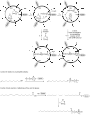
Figure 5: Enzymatic reactions in miniemulsion droplets (reproduced with permission from [91]. Copyright (2003) Wi...

Figure 6: Chemical structure of a: polyaniline (leucoemeraldine), b: polypyrrole, c: poly(ethylene dioxythiop...
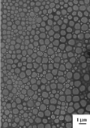
Figure 7: Transmission electron micrograph of polyurethane capsules synthesized by interfacial polyaddition i...

Figure 8: Schematics for the polycondensation reaction between hydrophobic alcohols and carboxylic acids surr...

Scheme 2: Polyimide from the reaction performed in the ionic liquid 1-ethyl-3-methylimidazolium bis(trifluoro...

Figure 9: a: TEM micrograph of the cubic structures, b: proposed mechanism for the production of the nanocube...
Novel loop-like aromatic compounds: a further step on the road to nanobelts and nanotubes
- Venkataramana Rajuri,
- Dariush Ajami,
- Gaston R. Schaller,
- Christian Näther and
- Rainer Herges
Beilstein J. Org. Chem. 2010, 6, No. 30, doi:10.3762/bjoc.6.30
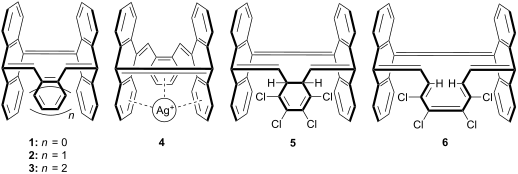
- carbon nanotubes which could eventually be extended in length by chemical vapor deposition [9][10]. This strategy could eventually open a way to prepare monodisperse nanotubes with well defined physical properties. Our approach to synthesize loop-like aromatic compounds is based on the Diels–Alder

Graphical Abstract

Scheme 1: Synthesis of 1 and 3. (a) Pyridazine, toluene, reflux, 20 h; (b) NaI, DMF, 65 °C, 15 h.

Scheme 2: Synthesis of 2 and 4. (a) NaI, DMF, 65 °C, 24 h; (b) AgSbF6, THF.

Figure 1: ORTEP drawing of the crystal structures: a) 2 and b) 3. For additional perspective representations ...

Figure 2: a) ORTEP drawing of the crystal structure of 4. Ag+ and Ag+, describe the two disordered positions ...

Scheme 3: Synthesis of 5 and 6. (a) Toluene, 90 °C, 15 h.

Figure 3: ORTEP drawing of the crystal structures: a) 5b and b) 6. For additional perspective representations...



