Search results
Search for "chromophores" in Full Text gives 143 result(s) in Beilstein Journal of Organic Chemistry.
Multi-redox indenofluorene chromophores incorporating dithiafulvene donor and ene/enediyne acceptor units
Beilstein J. Org. Chem. 2024, 20, 59–73, doi:10.3762/bjoc.20.8
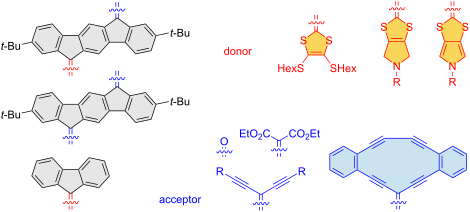
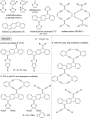
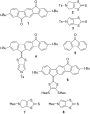
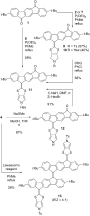
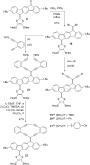
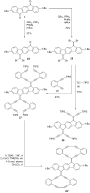
- a subsequent Glaser–Hay coupling reaction, a RA acceptor unit was introduced to provide a DTF-IF-RA donor–acceptor scaffold with a low-energy charge-transfer absorption and multi-redox behavior. Keywords: alkynes; chromophores; fused-ring systems; heterocycles; redox chemistry; Introduction
- pyrrole unit to one of the dithiole rings of an IF-TTF, allowing for dimerization of extended TTFs via the nitrogen atom by different linkers [14]. Donor–acceptor chromophores can be obtained by replacing one of the dithiafulvene (DTF) rings of the IF-TTF by an electron acceptor. Cyclic and acyclic
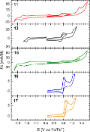
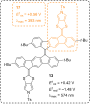
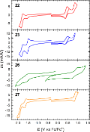
- ) expanding to ca. 680 nm. UV–vis absorption spectra of compounds 22, 23, 26, and 27 are depicted in Figure 5. By comparing donor–acceptor chromophores 22 and 23, it is observed that the RA moiety of DTF-IF-RA scaffold 23 induces a significant redshift, presumably due to the stronger electron-accepting







Quinoxaline derivatives as attractive electron-transporting materials
Beilstein J. Org. Chem. 2023, 19, 1694–1712, doi:10.3762/bjoc.19.124
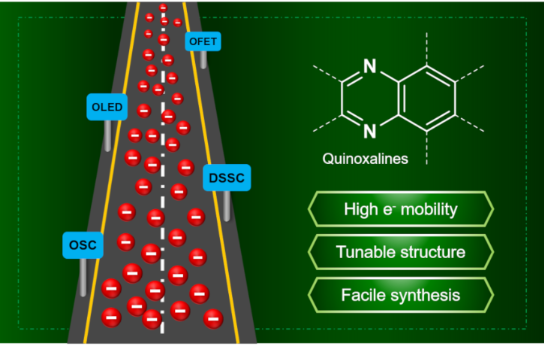
- devices is discussed in detail. Additionally, their significance as thermally activated delayed fluorescence emitters and chromophores for OLEDs, sensors and electrochromic devices is explored. The review emphasizes the remarkable characteristics and versatility of quinoxaline derivatives in electron
- chromophores in the development of organic light-emitting diodes (OLEDs), sensors, and electrochromic devices [8][13][14]. In this review, we have comprehensively examined the recent advancements of Qx-derived ETMs in various applications within the organic semiconductor device field over the past five to six
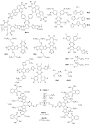
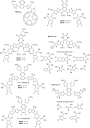
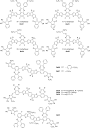
- shows the prominent examples of recently reported Qx based dyes and TDAF emitters. Table 5 lists device properties and relevant information of devices employing Qx derivatives. Quinoxalines as chromophores Qx derivatives have emerged as promising chromophores due to their distinctive optical and




A deep-red fluorophore based on naphthothiadiazole as emitter with hybridized local and charge transfer and ambipolar transporting properties for electroluminescent devices
Beilstein J. Org. Chem. 2023, 19, 1664–1676, doi:10.3762/bjoc.19.122
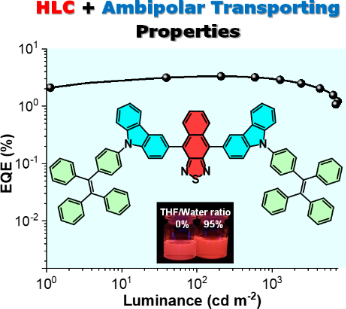
- [11], laser dyes [12], and DR/NIR electroluminescent devices [13][14][15][16][17][18]. However, DR/NIR chromophores typically suffer from low photoluminescent quantum yields (PLQY) because of their intrinsic small band-gap energy causing larger vibronic coupling between the ground and excited states


Tying a knot between crown ethers and porphyrins
Beilstein J. Org. Chem. 2023, 19, 1630–1650, doi:10.3762/bjoc.19.120
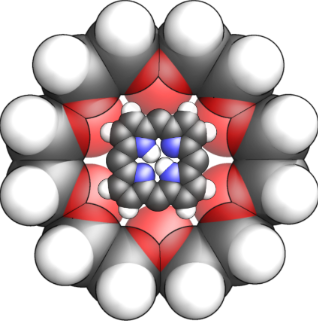
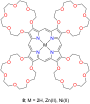
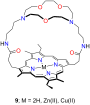
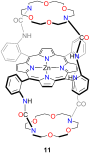
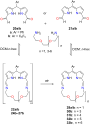
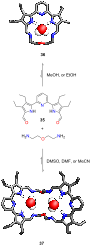
- incorporated four pyrrole rings functionalised at their β positions with 18-crown-6 pockets. The research sparked interest in crown ether-annulated porphyrins to be used as potential multitopic chromophores, with the conjoined porphyrin and crown ether frameworks for electron transfer systems [51]. Regardless









The effect of dark states on the intersystem crossing and thermally activated delayed fluorescence of naphthalimide-phenothiazine dyads
Beilstein J. Org. Chem. 2023, 19, 1028–1046, doi:10.3762/bjoc.19.79
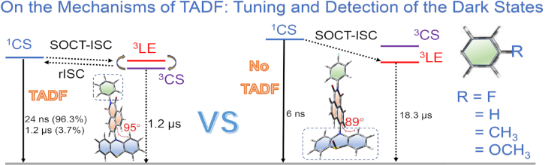
- chromophores, which are coupled through a Buchwald–Hartwig coupling reaction (another NI-PTZ paper) [39]. The oxidation of the PTZ unit was readily performed by treatment with H2O2 as oxidant (Scheme 1). All compounds were obtained with satisfactory yields and the molecular structures were fully characterized


Synthesis, structure, and properties of switchable cross-conjugated 1,4-diaryl-1,3-butadiynes based on 1,8-bis(dimethylamino)naphthalene
Beilstein J. Org. Chem. 2023, 19, 674–686, doi:10.3762/bjoc.19.49
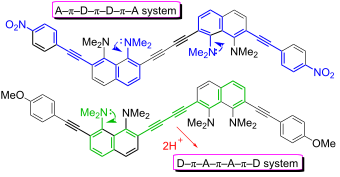
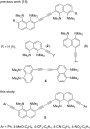
- us to undertake the current study. X-ray crystallography, UV–vis spectroscopy and cyclic voltammetry were applied to analyze the extent of π-electron conjugation and the efficiency of the particular donor–acceptor conjugation path in chromophores 5. Results and Discussion Synthesis The target



Phenanthridine–pyrene conjugates as fluorescent probes for DNA/RNA and an inactive mutant of dipeptidyl peptidase enzyme
Beilstein J. Org. Chem. 2023, 19, 550–565, doi:10.3762/bjoc.19.40
- RNA, single or double-stranded polynucleotides, particular base composition…) and signalize binding by specific spectroscopic response is of great importance [1][2]. Pyrene derivatives are among the earliest known fluorescent probes for biomolecules. These chromophores are often used due to their high
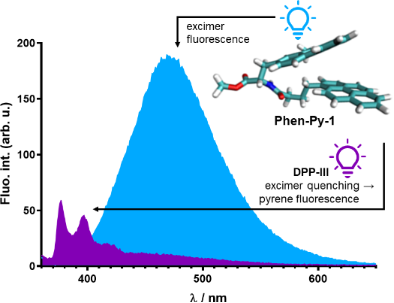
- emission change upon binding to proteins, and a cyanine fluorescence that was selective for polynucleotides. Moreover, the FRET pair of chromophores was activated upon binding to biomolecules [18]. Continuing our previous work, two phenanthridine–pyrene conjugates Phen-Py-1 and Phen-Py-2 (Scheme 1
- chromophores enabled intramolecular contacts between the phenanthridine and pyrene chromophore. This stacking interaction minimized the surface area that was exposed to water. As a result, mutual shielding of chromophores and coulombic interaction between induced dipoles could cause hypochromism and consequent




CuAAC-inspired synthesis of 1,2,3-triazole-bridged porphyrin conjugates: an overview
Beilstein J. Org. Chem. 2023, 19, 349–379, doi:10.3762/bjoc.19.29
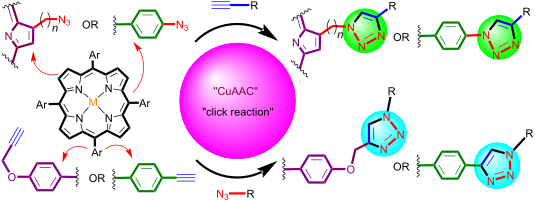
- -dipolar cycloaddition reaction between an azide and a terminal alkyne, also popular as "click reaction" or CuAAC reaction. Moreover, the 1,2,3-triazole ring also serves as a spacer and an electron transfer bridge between the porphyrin and the attached chromophores. In order to provide a critical overview
- relatively inefficient quenching of the ZnP singlet excited state, slow charge separation, and fast charge recombination processes on the visible excitation of ZnP and UV excitation of NDI chromophores. On the other hand, excitation of the NDI chromophore leads to the charge separation via both singlet and
- . The CuAAC click reaction has been shown to bind a variety of chromophores bearing azide or alkyne groups to the porphyrin periphery, including coumarin, xanthone, DNA, ferrocene, corrole, fluorescein, carborane, BODIPY, graphene, carboline, fullerene, NDI, β-cyclodextrin, cholic acid, quinolone, etc




Naphthalimide-phenothiazine dyads: effect of conformational flexibility and matching of the energy of the charge-transfer state and the localized triplet excited state on the thermally activated delayed fluorescence
Beilstein J. Org. Chem. 2022, 18, 1435–1453, doi:10.3762/bjoc.18.149
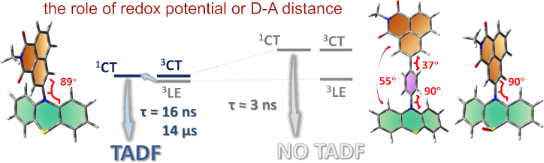
- originating from the peri-H atoms on the two chromophores. We also tuned the redox potentials by oxidation of the electron donor PTZ (NI-PTZ-O). Thus, the energy of CT states and the matching with their 3LE counterpart can be altered. We underline that the approach of oxidation of the PTZ unit, which has
- . The synthesis of the dyads is based on the ordinary derivatization of the NI and PTZ chromophores [20]. The molecular structures were confirmed by 1H NMR, 13C NMR, and HRMS methods (Experimental section). UV–vis absorption and fluorescence emission spectra The UV–vis absorption spectra of the
Thermally activated delayed fluorescence (TADF) emitters: sensing and boosting spin-flipping by aggregation
Beilstein J. Org. Chem. 2022, 18, 1177–1187, doi:10.3762/bjoc.18.122
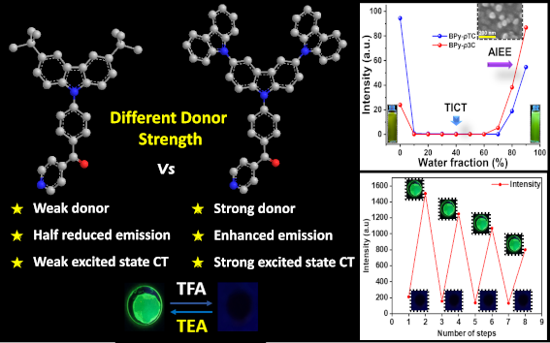
- in designing heteroatom-containing (N, O, S, etc.) chromophores [26]. The lone-pair electrons of heteroatoms can possess a certain degree of basicity, which results in sensitivity to acid. Consequently, the lone pair may be protonated and deprotonated by consecutively adding acid and base. The


Substituent effect on TADF properties of 2-modified 4,6-bis(3,6-di-tert-butyl-9-carbazolyl)-5-methylpyrimidines
Beilstein J. Org. Chem. 2022, 18, 497–507, doi:10.3762/bjoc.18.52
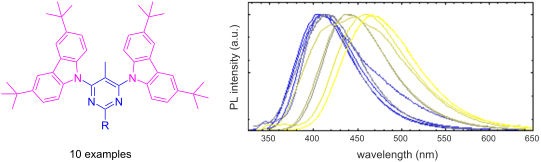
- confirm the structures of the synthesized compounds (see Figures S1–S27 in Supporting Information File 1). DFT analysis To assess the structural and electronic properties of the chromophores tCbz-mPYR and 1–6, quantum chemical calculations were performed. DFT analysis revealed that all studied compounds
- the similar molecular structures, the studied chromophores showed somewhat different electronic properties, mainly due to the variation of the acceptor structure. The DFT computed spatial distribution of frontier molecular orbitals (FMOs) of compounds tCbz-mPYR and 1–6 is presented in Figure 2. A




Synthesis of a novel aminobenzene-containing hemicucurbituril and its fluorescence spectral properties with ions
Beilstein J. Org. Chem. 2021, 17, 2840–2847, doi:10.3762/bjoc.17.195
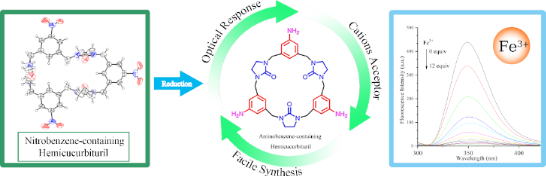
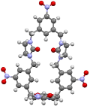
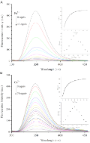
- domains, such as chemosensors [21], drug delivery [22], and nano materials preparation [23]. Although cucurbiturils with their rigid hydrophobic cavities have found broad application in host–guest chemistry, they suffer from insolubility, difficulty in derivatization, and lack of chromophores






Insight into functionalized-macrocycles-guided supramolecular photocatalysis
Beilstein J. Org. Chem. 2021, 17, 139–155, doi:10.3762/bjoc.17.15
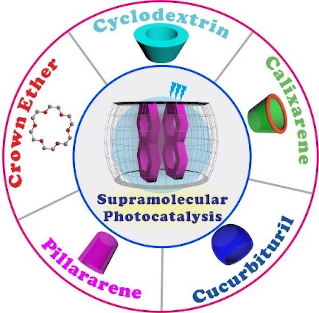
- velocity, and the quantum yield. Therefore, a new criterion needs to be investigated for the physical parameters of these specific reactions. 2) We also need to develop novel macrocycles with chromophores. Most of the current macrocycles only provide the suitable cavities for the reactions, however, if a
- macrocycle has inherent chromophores that can function as photosensitizers, the efficiency of the energy transfer will be higher and the systems will be simplified. 3) Other kinds of macrocycle-based catalysis need to be explored, such as esterification, polymerization, redox reaction, etc. 4) Hyperbranched






Selective recognition of ATP by multivalent nano-assemblies of bisimidazolium amphiphiles through “turn-on” fluorescence response
Beilstein J. Org. Chem. 2020, 16, 2728–2738, doi:10.3762/bjoc.16.223
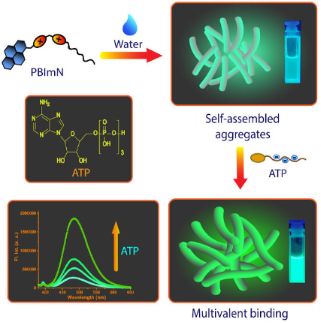
- to an n-alkyl chain at the other, underwent self-assembly in aqueous media depending on the length of the alkyl segment. The amphiphilic derivatives having n-decyl or longer chains, formed nano-assemblies with cyanic–green emission resulting from the stacked pyrene chromophores in the aggregates. The
- vibronic bands at 343–345 nm and 327–329 nm, respectively) generally indicates a possible mode of organization of the pyrene chromophores upon self-assembly [63]. It was found that in the concentration range of 5–50 µM [65], although a decrease in this ratio was observed for PBIm4; much more pronounced
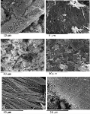
- and in the aggregates, the pyrene chromophores had ground state interactions and were possibly stacked in co-facial manner as found in H-aggregates [63]. The aggregate formation was further supported by FESEM images (Figure 3a and Supporting Information File 1, Figure S7) which revealed the formation


Formation of an exceptionally stable ketene during phototransformations of bicyclo[2.2.2]oct-5-en-2-ones having mixed chromophores
Beilstein J. Org. Chem. 2020, 16, 2297–2303, doi:10.3762/bjoc.16.190

- Asitanga Ghosh Deptartment of Chemistry, Hooghly Mohsin College, Chinsurah, Hooghly, West Bengal, 712101, India 10.3762/bjoc.16.190 Abstract Photochemical reactions of bicyclo[2.2.2]oct-5-en-2-ones having mixed chromophores like a 5,6 dibenzoyl moiety and bulky electron-deficient substituents
- position; ketene; mixed chromophores; Introduction Enones exhibit a rich and diverse photochemistry. The deep-seated photochemical rearrangements found in these systems have attracted numerous mechanistic studies. In this context, the photochemistry of α,β-enones A and β,γ-enones B (Figure 1) has become
- near 350 nm (log ε ≈ 2.0). Probably this is due to interactions of these two chromophores [7]. In many cases probable unselective populations of the excited states owing to the presence of these two individual chromophores are expected to give rise to different photoproduct(s) and in some cases


Styryl-based new organic chromophores bearing free amino and azomethine groups: synthesis, photophysical, NLO, and thermal properties
Beilstein J. Org. Chem. 2020, 16, 2282–2296, doi:10.3762/bjoc.16.189

- series of new styryl-based organic chromophores containing a free amino group and the corresponding Schiff base derivatives. The photophysical, pH sensitivity, NLO properties, and thermal stabilities of all synthesized dyes were investigated. Density Functional Theory (DFT) calculations were also
- employed to gain insight into the experimental data. Results and Discussion Synthesis As depicted in Scheme 1, dye 2 was obtained in good yield by reacting malononitrile and 4-aminoacetophenone (compound 1) according to our previous published procedure [31][32]. The styryl-based organic chromophores 3–7
- substantial delocalization of charges in this direction (Tables S2 and S3, Supporting Information File 1). Thermal properties The thermal stability is quite important for NLO chromophores when using them in electro-optic materials. Therefore, we conducted a thermogravimetric analysis to understand whether the


Naphthalene diimide bis-guanidinio-carbonyl-pyrrole as a pH-switchable threading DNA intercalator
Beilstein J. Org. Chem. 2020, 16, 2201–2211, doi:10.3762/bjoc.16.185
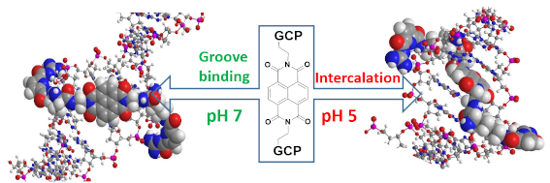
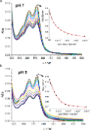
- molecules in water. The absorption maxima and corresponding molar extinction coefficients (ε) are given in Table S1 (Supporting Information File 1). Heating of the aqueous solution of 4 up to 90 °C did not yield any significant changes in its UV–vis spectrum, suggesting that the chromophores are not
- for reaching thermodynamic equilibrium. It should be stressed that all changes in the 330–400 nm range could be attributed dominantly to the NDI chromophore, since absorbance of GCPs in this range is negligible. Absorbance changes of large aromatic chromophores upon DNA or RNA addition can happen for
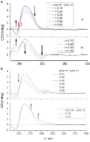
- chromophores, the intrinsic CD spectrum of compound 4 at the 220–400 nm range is negligible. Further, for the analysis of the CD results we compared our data with those published for a close NDI-monomer analogue [26][27], whereby the strong positive ICD band at 270–280 nm was attributed to the intercalation of





Naphthalene diimide–amino acid conjugates as novel fluorimetric and CD probes for differentiation between ds-DNA and ds-RNA
Beilstein J. Org. Chem. 2020, 16, 2032–2045, doi:10.3762/bjoc.16.170
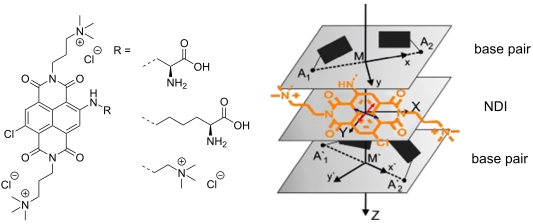
- [9]). One of the approaches relies on amino acids conjugated with various DNA/RNA-binding chromophores, thereby yielding effective spectrometric sensing systems due to their interactions with DNA. In this approach, chromophores can be combined with peptide sequences in various ways, thus giving
- access to large libraries of close analogues. Further, in such peptide-based chromophore systems, a multitude of different chromophores/fluorophores [10] could allow fine tuning of spectroscopic responses to various DNA/RNA sequences. With this concept in mind, Piantanida and co-workers recently
- predominantly a parallel orientation for all dyes as shown in Figure 8 for the DNA–3b complex. The absence of any measurable ICD signal for poly(A)-poly(U) (ds-RNA) (Supporting Information File 1, Figure S26) supports the intercalation of all NDI chromophores at approximately 45° with respect to the base pair


pH- and concentration-dependent supramolecular self-assembly of a naturally occurring octapeptide
Beilstein J. Org. Chem. 2020, 16, 2017–2025, doi:10.3762/bjoc.16.168
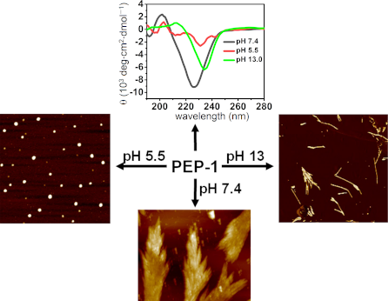
- bind specifically to multistranded β-sheets [62][63]. PEP-1 is nonemissive due to the absence of chromophores in its molecular structure, whereas ThT shows a low fluorescence in PBS (pH 7.4) upon excitation at 440 nm. Interestingly, the fluorescence intensity of ThT significantly increases upon mixing


Et3N/DMSO-supported one-pot synthesis of highly fluorescent β-carboline-linked benzothiophenones via sulfur insertion and estimation of the photophysical properties
Beilstein J. Org. Chem. 2020, 16, 1740–1753, doi:10.3762/bjoc.16.146

- . The quantum yields were calculated based on Equation 1. where R means reference and S sample, respectively. Generally weak fluorescence emissions were observed for the thiophene-based chromophores due to a remarkable spin–orbit coupling which is originating from the heavy atom effect of sulfur [73][74


Bipyrrole boomerangs via Pd-mediated tandem cyclization–oxygenation. Controlling reaction selectivity and electronic properties
Beilstein J. Org. Chem. 2020, 16, 895–903, doi:10.3762/bjoc.16.81
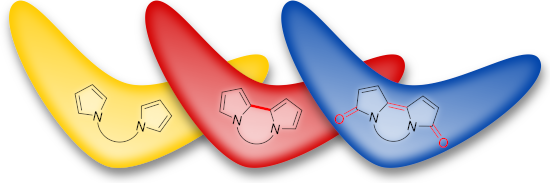
- up to 67%, while their bandgaps and chiroptical responses could be tuned by twisting the bipyrrole chromophore. The solvatochromism and apparent superradiance of these chromophores indicated a potential involvement of solvent-induced symmetry-breaking charge transfer in the excited state [34]. Here




Towards triptycene functionalization and triptycene-linked porphyrin arrays
Beilstein J. Org. Chem. 2020, 16, 763–777, doi:10.3762/bjoc.16.70

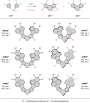
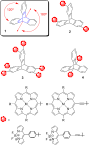
- directly to the periphery of triptycene or via various linkers; arrays with six chromophores 3 have thus far eluded us [26][27]. While much work has been done on the functionalization of the aromatic rings of triptycene as in 2 or 3 [24][25][26][27][28][29][30], the attachment of chromophores at the
- Information File 1 for full experimental data). Instead we focused on the synthesis of systems with ethynyl spacers between the triptycene bridgehead positions and chromophores. To allow for the generation of symmetric and unsymmetric dyads 9,10-diethynyltriptycene 5 and its anthracene precursor were
- bridgehead positions of triptycenes in 5 (Scheme 1) and 12 (Scheme 2), efforts were made to attach various chromophores in order to investigate the effects of triptycene as a linker for electron transfer properties. With the goal of synthesizing various new triptycene-linked porphyrin and BODIPY dimers





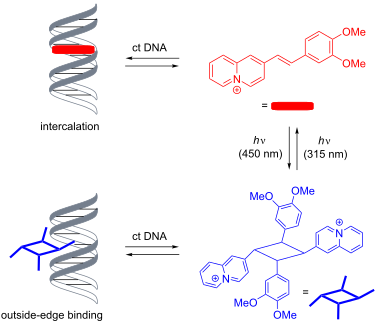
Reversible photoswitching of the DNA-binding properties of styrylquinolizinium derivatives through photochromic [2 + 2] cycloaddition and cycloreversion
Beilstein J. Org. Chem. 2020, 16, 111–124, doi:10.3762/bjoc.16.13
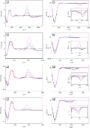
- the differential absorption of linearly polarized light, which was polarized parallel and perpendicular to a reference axis, respectively, thus indicating the orientation of the transition moment of the chromophores relative to the electric field vector of the light [75]. The LD spectrum of DNA-bound




Photocontrolled DNA minor groove interactions of imidazole/pyrrole polyamides
Beilstein J. Org. Chem. 2020, 16, 60–70, doi:10.3762/bjoc.16.8
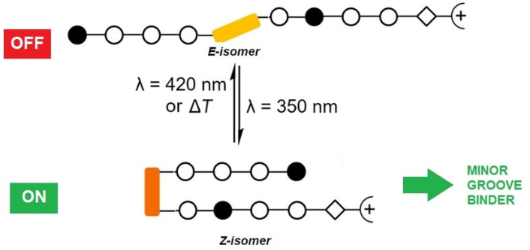
- did not induce ICD assigned to the polyamide chromophores, possibly because of the formation of small soluble aggregates. Z-P3, with a higher number of heterocyclic units, displayed some sequence specificity, albeit not in a range that was reported for other nonphotoswitchable polyamides. The (Z



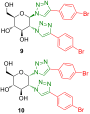
Influence of the cis/trans configuration on the supramolecular aggregation of aryltriazoles
Beilstein J. Org. Chem. 2019, 15, 2881–2888, doi:10.3762/bjoc.15.282
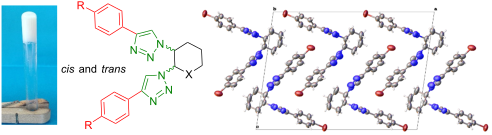
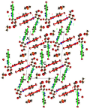
- ). The striking absence of exciton Cotton effects is in complete agreement with the high degree of parallelism between the chromophores, as observed in the crystal packing (Figure 5). Two chromophores can only be coupled under an exciton interaction if the angle between the 1La transitions is different
- from 0° or 180°, since this interaction is governed by an equation with a vectorial product. The lack of exciton pairwise interactions between the two chromophores in positions 1 and 2 of each molecule could be due to the intercalation of a third chromophore between the two former in a parallel