Search results
Search for "epoxide ring opening" in Full Text gives 45 result(s) in Beilstein Journal of Organic Chemistry.
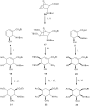
cis-Diastereoselective synthesis of chroman-fused tetralins as B-ring-modified analogues of brazilin
Beilstein J. Org. Chem. 2016, 12, 2816–2822, doi:10.3762/bjoc.12.280

- literature reports on bioactivities of brazilin, haematoxylin and their analogues and our fruitful experience [22][23][25][26] in intramolecular epoxide ring-opening chemistry including IFCEA cyclization, we became interested in the possibility of extending the IFCEA cyclization protocol to the
- that the [6,5]-ring system in brazilin and related natural products 1–4 remains cis-fused, its corresponding [6,6]-ring system in 5 can have cis or trans stereochemistry at the ring junction. In our previous work, we observed a cis relationship (both in concerted or/and stepwise-epoxide ring opening
- ) between the 4-aryl group and H atom at the C-3 position of 4-arylchroman-3-ols (thus giving rise to trans-4-arylchroman-3-ols) [22][23]. But it was not obvious how the planned IFCEA cyclization onto the pre-existing 6-membered ring, in case of stepwise-epoxide ring opening, would influence the product


Synthesis of the C8’-epimeric thymine pyranosyl amino acid core of amipurimycin
Beilstein J. Org. Chem. 2016, 12, 1765–1771, doi:10.3762/bjoc.12.165
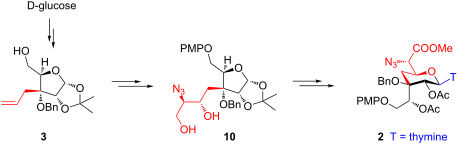
- oxocarbenium ion at C1 to which concomitant addition of a hydroxy group (present in the side chain at C3) will give the requisite pyranose ring skeleton. Intermediate B could be derived from the allyl alcohol C by using the Sharpless asymmetric epoxidation followed by regioselective epoxide ring opening with
- the ratio of 18:82 in 83% yield. With the understanding of SAE mnemonic, we assigned the absolute configuration in epoxide 8 as 7S,8S and in epoxide 9 as 7R,8R. Subsequently, major isomers of epoxy alcohols 8 and 9 were individually subjected to regioselective epoxide ring opening using trimethyl






Efficient syntheses of climate relevant isoprene nitrates and (1R,5S)-(−)-myrtenol nitrate
Beilstein J. Org. Chem. 2016, 12, 1081–1095, doi:10.3762/bjoc.12.103

- ] (Scheme 2, path B); Cohen et al. reported the application of bismuth(III) nitrate for isoprene epoxide ring-opening/trapping with nitrate [19] (Scheme 2, path C). The 2010 report by Shepson et al. (path A) exploited chemistry originally described by Nichols et al. who, employing nitric acid as a


A carbohydrate approach for the formal total synthesis of (−)-aspergillide C
Beilstein J. Org. Chem. 2014, 10, 3122–3126, doi:10.3762/bjoc.10.329

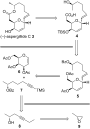
- on aspergillides, Achmatowicz adducts were utilized as the key source for the construction of the dihydropyran moiety and the side arm was synthesized using a Zipper rearrangement as a key reaction after an epoxide ring opening reaction of (R)-propylene oxide/(S)-propylene oxide with n-BuLi. In the




Regio- and stereoselective synthesis of new diaminocyclopentanols
Beilstein J. Org. Chem. 2014, 10, 2513–2520, doi:10.3762/bjoc.10.262

- .10.262 Abstract The optimal conditions for regio- and stereoselective epoxide ring opening of N,N-disubstituted 1,2-epoxy-3-aminocyclopentanes by different nucleophilic reagents have been developed. The substituents on the nitrogen atom in the epoxide precursor and the orientation of the oxirane ring are
- -purin-6-amine (7d) were used as nucleophiles (Figure 1). Starting amines were selected based on the fact that these motifs are common structural features in drug molecules. Optimization of the epoxide ring opening reaction of 3a The opening of epoxides with nucleophiles in the presence of Lewis acid or
- base promoters is well documented [30][31][32][33][34]. We conducted a number of experiments to optimize the ring opening in 3a (Table 1). The initial catalytic epoxide ring-opening experiments of 3a in MeCN at 80 °C [35] were unsuccessful, since only starting material was recovered. A series of


An economical and safe procedure to synthesize 2-hydroxy-4-pentynoic acid: A precursor towards ‘clickable’ biodegradable polylactide
Beilstein J. Org. Chem. 2014, 10, 1365–1371, doi:10.3762/bjoc.10.139

- sublimated under vacuum to give 24.1 g of acid 1 in 49.0% yield [17]. 1H NMR (500 MHz, CDCl3) δ 4.35 (t, J = 4.5 Hz, 1H), 2.68 (m, 2H), 2.08 (t, J = 2.5 Hz, 1H); 13C NMR (125 MHz, CDCl3) δ 177.5, 77.7, 71.9, 68.5, 24.4. Synthesis of 2-hydroxy-4-pentynoic acid (1). Synthesis of 1 via epoxide ring opening with


Molecular recognition of surface-immobilized carbohydrates by a synthetic lectin
Beilstein J. Org. Chem. 2014, 10, 1354–1364, doi:10.3762/bjoc.10.138
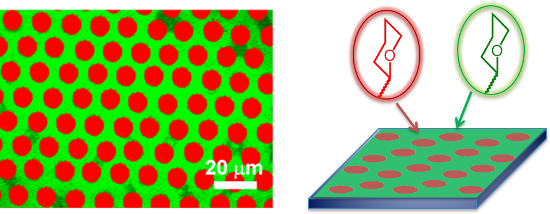
- HisHis towards immobilized NANA in comparison with the glycosides of glucose (Glc), galactose (Gal) and mannose (Man) (Figure 1). In this study, we exploit the epoxide ring opening reaction of amine-tethered carbohydrates on epoxide-terminated SAMs [42] to print carbohydrate microarrays on silicon and
- epoxide ring opening reaction with amines is much faster at elevated temperatures, the surface of oxidized, patterned PDMS stamps was coated with 2-[methoxy(polyethyleneoxy)propyl]trimethylsilane (PEG silane) [51]. The PEG coated stamps provided optimal wetting of the stamp by the carbohydrate ink


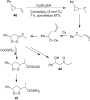
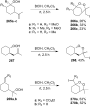
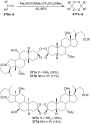
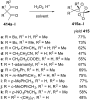
Synthesis of five- and six-membered cyclic organic peroxides: Key transformations into peroxide ring-retaining products
Beilstein J. Org. Chem. 2014, 10, 34–114, doi:10.3762/bjoc.10.6












N,N'-(Hexane-1,6-diyl)bis(4-methyl-N-(oxiran-2-ylmethyl)benzenesulfonamide): Synthesis via cyclodextrin mediated N-alkylation in aqueous solution and further Prilezhaev epoxidation
Beilstein J. Org. Chem. 2013, 9, 2834–2840, doi:10.3762/bjoc.9.318
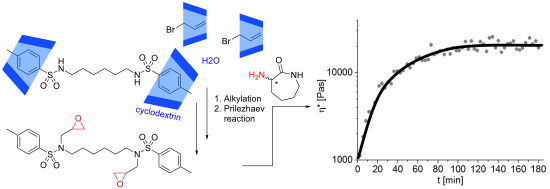
- bonded hydroxy stretching vibrations originating from epoxide ring opening. The epoxide bands seem to vanish after curing, which is a sign for high conversion. However, due to overlaps of broader bands in adjacent areas, no clear statement can be made in this regard (Figure S5, Supporting Information


A protecting group-free synthesis of the Colorado potato beetle pheromone
Beilstein J. Org. Chem. 2013, 9, 2374–2377, doi:10.3762/bjoc.9.273
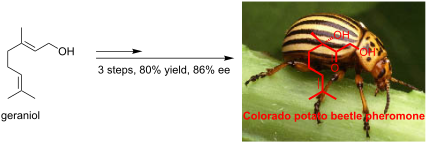
- efficient synthesis of the aggregation pheromone of the Colorado potato beetle (S)-1,3-dihydroxy-3,7-dimethyl-6-octen-2-one (1). Combining Sharpless asymmetric epoxidation, stereoselective epoxide ring-opening and catalytic chemoselective alcohol oxidation with [(neocuproine)PdOAc]2OTf2 (2), (S)-1 was


Synthesis of the calcilytic ligand NPS 2143
Beilstein J. Org. Chem. 2013, 9, 1383–1387, doi:10.3762/bjoc.9.154

- . Similar to a previously reported synthesis of (R)-3 [13], we decided to activate epoxide 5 as the m-nosyl derivative that has been shown to minimise racemisation during epoxide ring opening [15]. The synthesis of amine 6 was accomplished from commercially available 2-cyanonaphthalene (7) in four steps


Chemoenzymatic synthesis and biological evaluation of enantiomerically enriched 1-(β-hydroxypropyl)imidazolium- and triazolium-based ionic liquids
Beilstein J. Org. Chem. 2013, 9, 516–525, doi:10.3762/bjoc.9.56

- oxide (1) under solvent-free conditions. The epoxide ring-opening reactions were carried for 24 h at elevated temperature (32 °C) and resulted in the formation of the appropriate alcohols (±)-3a and (±)-3b in high yields (Scheme 1). In the next step, the influence of crucial parameters in enzyme


Synthetic applications of gold-catalyzed ring expansions
Beilstein J. Org. Chem. 2011, 7, 767–780, doi:10.3762/bjoc.7.87
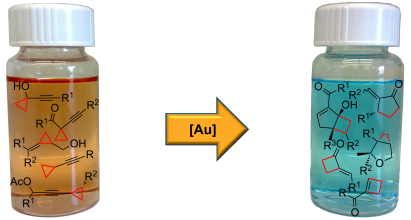
- in the presence of catalytic amounts of gold and an external nucleophile such as water or an alcohol (Scheme 11) [32]. The reaction seems to commence with the epoxide ring opening in the presence of the nucleophile to give intermediate 33 (as already proposed in Scheme 9) followed by activation of


Asymmetric synthesis of tertiary thiols and thioethers
Beilstein J. Org. Chem. 2011, 7, 582–595, doi:10.3762/bjoc.7.68

- products 16 with complete inversion of configuration [16][17]. Acid catalysed cleavage of a thioether or thioacetate yields tert-thiols 17 in good yield. 1.1.2 Epoxide ring opening SN2 displacements from quaternary electrophiles require specific structural features to avoid competing racemisation
- epoxide ring opening of 18 with potassium hydrogen sulfide (Scheme 7) [18]. Epoxide ring opening by a sulfur nucleophile was also employed as the key step in the synthesis of (+)-BE-52440A (22) [22] (Scheme 8). Dimerisation of nanaomycin derivative 21 through a bridging sulfide involves a double








Carbasugar analogues of galactofuranosides: α-O-linked derivatives
Beilstein J. Org. Chem. 2010, 6, 1127–1131, doi:10.3762/bjoc.6.129

- isolated in a pure state. The pseudodisaccharide ketone 16 was also then reduced with L-selectride, again very good diastereoselectivity for the α-galacto configured carbasugar 18 was observed. Conclusion Complementing our approach to β-configured O-linked galactofuranosides by epoxide ring opening, the
- ; the difference in efficiency of the “up” (β-manno) and “down” (α-gluco) carbapyranose 1,2-epoxides in coupling reactions was not observed in the carbafuranose series. It is possible that this strategy for pseudodisaccharide formation by epoxide ring opening in the (α and β) carbagalactofuranose series


Synthesis and crystallographic analysis of meso-2,3-difluoro-1,4-butanediol and meso-1,4-dibenzyloxy-2,3-difluorobutane
Beilstein J. Org. Chem. 2010, 6, No. 62, doi:10.3762/bjoc.6.62

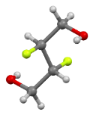
- (Table 1, entry 1), however, the product was isolated as a mixture of isomers, which were not further characterised. Reaction with potassium hydrogen difluoride in ethylene glycol [36][37] gave the fluorohydrin in only modest yield (entry 2). Interestingly, the product arising from epoxide ring opening





Prins fluorination cyclisations: Preparation of 4-fluoro-pyran and -piperidine heterocycles
Beilstein J. Org. Chem. 2010, 6, No. 41, doi:10.3762/bjoc.6.41
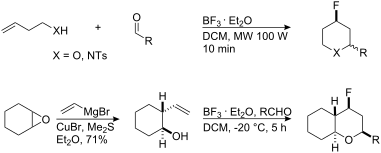
- incorporated into the product generating a C–F bond and a new stereogenic centre. Liberation of fluoride ion from BF3·OEt2 has, for example, been observed in epoxide ring opening reactions [8][9]. This was first recognised in a Prins reaction as an unexpected side reaction by Al-Mutairi et al. [10][11] and was


Three step synthesis of single diastereoisomers of the vicinal trifluoro motif
Beilstein J. Org. Chem. 2009, 5, No. 61, doi:10.3762/bjoc.5.61

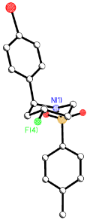
- manner. Conversion of the free hydroxyl group to fluorine would generate α-fluoro-epoxides B. Epoxide ring opening with an HF source could then provide difluoroalcohols C. Insertion of the third fluorine would reasonably be achieved by fluorination of the free hydroxyl group of C to generate D. Such a
- the anti-isomers 6b and 7b was attempted using Deoxo-Fluor® [17]. α,β-Epoxy-alcohol 7b reacted smoothly with Deoxo-Fluor® at 40 °C (Scheme 4) to give fluoroepoxide (2S,3S,4R)-8b in 83% yield and with a 97:3 dr. Epoxide ring opening of 8b was then explored with HF/pyridine and this reaction proved to
- be both regio- and stereo-selective [18][19]. When the reaction was carried out at 0 °C the resultant difluoro alcohol 10 was obtained in 36% yield, whereas the yield improved as the temperature was lowered (47% at −35 °C and 56% at −60 °C). Epoxide ring opening was stereospecific, and the (2S,3S,4S


Photosonochemical catalytic ring opening of α-epoxyketones
Beilstein J. Org. Chem. 2007, 3, No. 2, doi:10.1186/1860-5397-3-2
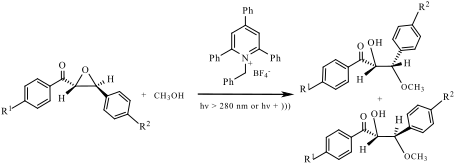
- epoxide ring opening. On the other hand, ultrasound can seriously affect photocatalytic ring opening of α-epoxyketones predominantly because of the efficient mass transfer of the reactants and the excited state of NBTPT. The higher yields and shorter reaction times are advantages of this method


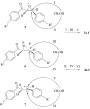


The oxanorbornene approach to 3-hydroxy, 3,4-dihydroxy and 3,4,5-trihydroxy derivatives of 2-aminocyclohexanecarboxylic acid
Beilstein J. Org. Chem. 2006, 2, No. 9, doi:10.1186/1860-5397-2-9

- overcome the directing influence of the carbamate and deliver the epoxide to the opposite face of diene 5. Similarly, whilst the alternative regiochemistry in the epoxide ring opening product could be achieved exploiting neighbouring group participation by the NBoc group to afford the cyclic carbamate 29