Search results
Search for "kinetic resolution" in Full Text gives 105 result(s) in Beilstein Journal of Organic Chemistry.
Enantioselective total synthesis of putative dihydrorosefuran, a monoterpene with an unique 2,5-dihydrofuran structure
Beilstein J. Org. Chem. 2022, 18, 1264–1269, doi:10.3762/bjoc.18.132
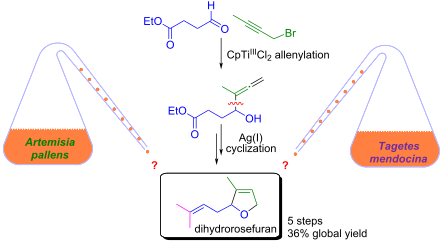
- stereoselective kinetic resolution of allenol 3 via lipase AK-catalyzed acetylation [15]. In this way, unaltered, (−)-hydroxyallene 3 could be separated from (+)-acetyl derivative 9 through standard column chromatography (Scheme 3). Enantiomeric excesses of (−)-3 and (+)-9 were determined by chiral HPLC analyses


The asymmetric Henry reaction as synthetic tool for the preparation of the drugs linezolid and rivaroxaban
Beilstein J. Org. Chem. 2022, 18, 438–445, doi:10.3762/bjoc.18.46
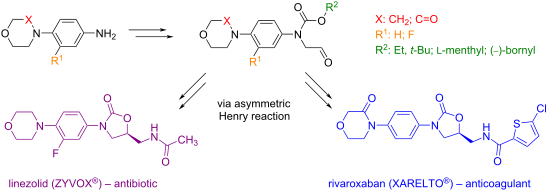
- material were practically the same as the one of the starting material in all cases. Further, the separation via kinetic resolution in the final reaction step was also examined. The course of the re-esterification was stopped at a conversion of ca 50% and the de values were determined. Unfortunately, no


New advances in asymmetric organocatalysis
Beilstein J. Org. Chem. 2022, 18, 240–242, doi:10.3762/bjoc.18.28
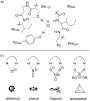
- Waser employed an isothiourea catalyst for esterification-mediated kinetic resolution of paracyclophane derivatives with planar chirality [19]. Parida and Pan showed that a Michael reaction coupled with an acyl transfer reaction between α-nitroketones and 4-arylidenepyrrolidine-2,3-diones can produce a
Synthesis and late stage modifications of Cyl derivatives
Beilstein J. Org. Chem. 2022, 18, 174–181, doi:10.3762/bjoc.18.19
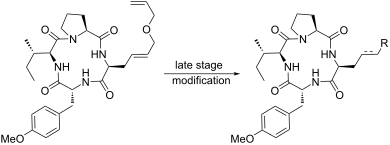
- degree of variability for the generation of small libraries, in our case of Cyl-1 derivatives. Chiral allylic alcohols are easily accessible, either via kinetic resolution of racemic alcohols [46][47], asymmetric catalysis [48], or from chiral pool materials, such as threitol 1 [49]. Using the last



Recent advances in the asymmetric phosphoric acid-catalyzed synthesis of axially chiral compounds
Beilstein J. Org. Chem. 2021, 17, 2729–2764, doi:10.3762/bjoc.17.185
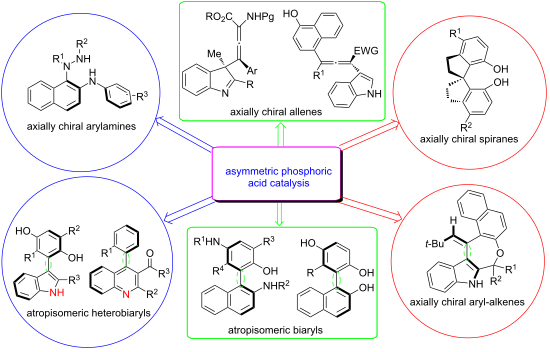
- axial chiral compounds has been paid much attention [6], and great progress has been made in recent years. For example, many remarkable activities have been undertaken to develop strategies such as dynamic kinetic resolution, atroposelective coupling, cycloaddition, and chirality conversion for the
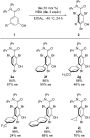
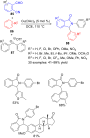
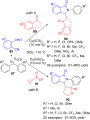
- (kinetic resolution) in the presence of chiral phosphoric acid CPA 3. In this work, various EWG- and EDG-containing substrates were incorporated, and chiral biaryls 10 were obtained with good to excellent selectivities of 81–93% ee by desymmetrization and 63–96% ee by kinetic resolution. The subsequent
- asymmetric addition reaction of racemic naphthylindole 42 with azodicarboxylate 43 under chiral phosphoric acid catalysis. In the presence of CPA 2, 42 and 43 reacted and underwent dynamic kinetic resolution to afford naphthylindoles 44 with axial chirality in moderate to good yields (50–98%) and high










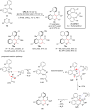


Synthetic strategies toward 1,3-oxathiolane nucleoside analogues
Beilstein J. Org. Chem. 2021, 17, 2680–2715, doi:10.3762/bjoc.17.182
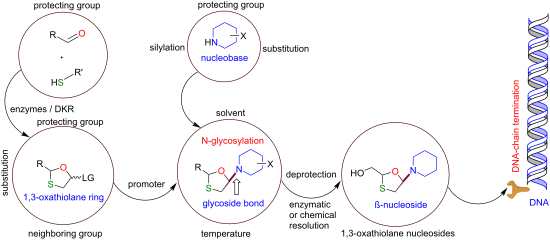
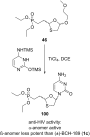
- nucleoside analogues. The enantiomerically pure 1,3-oxathiolane core has been an important building block in precursors that result in a defined stereochemistry of the resultant nucleoside product after N-glycosylation. Dynamic kinetic resolution (DKR) is a processes that interconverts a racemic mixture into
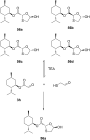
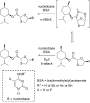
- -oxathiolane with Trichosporon laibachii lipase and a kinetic resolution. The synthesis of enantiopure ((R)-5-acetoxy-1,3-oxathiolan-2-yl)methyl benzoate (71) was carried out from the substrates 3a, 1,4-dithiane-2,5-diol (3q), and phenyl acetate via dynamic covalent kinetic resolution. This was a one-pot
- achieved. In 2014, Zhang et al. [64] reported an optimized asymmetric synthesis of 1,3-oxathiolan-5-ones 77 and 78 via dynamic covalent kinetic resolution using hemithioacetal chemistry coupled with a lipase-catalyzed cyclization (Scheme 25). Methyl thioglycolate (3j) was used in the reaction with aldehyde








α-Ketol and α-iminol rearrangements in synthetic organic and biosynthetic reactions
Beilstein J. Org. Chem. 2021, 17, 2570–2584, doi:10.3762/bjoc.17.172
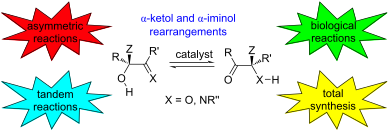
- transferred between the oxygen atoms after the alkyl migration, making it especially useful in synthetic strategies using these protected intermediates. Additionally, the reaction was found to be useful in the kinetic resolution of a racemic mixture of chiral substrates possessing both alkyl and aryl α
- . The catalyst is also capable of kinetic resolution of a mixture of enantiomeric substrates. Al* = 18. BF3-promoted diastereospecific rearrangement of α-ketol 21 to difluoroalkoxyborane 22. In the presence of a gold catalyst and water in 1,4-dioxane, 1-alkynylbutanol derivatives undergo tandem




Halides as versatile anions in asymmetric anion-binding organocatalysis
Beilstein J. Org. Chem. 2021, 17, 2270–2286, doi:10.3762/bjoc.17.145
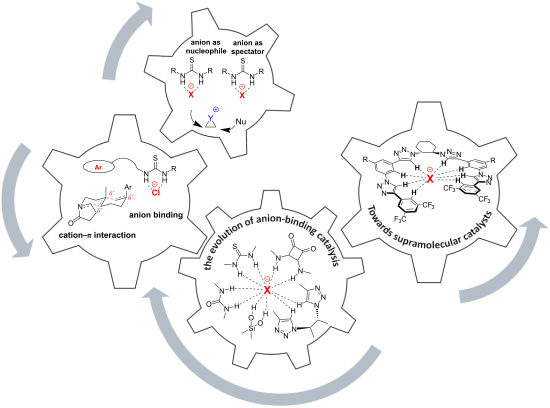
- maintain due to the conformational lability of the seleniranium ion [52][53][54], this initial problem can be exploited through the addition of an anion-binding catalyst. In this way, the configurational scrambling is used for a dynamic kinetic resolution during the intramolecular nucleophilic opening of



Chiral isothiourea-catalyzed kinetic resolution of 4-hydroxy[2.2]paracyclophane
Beilstein J. Org. Chem. 2021, 17, 800–804, doi:10.3762/bjoc.17.68
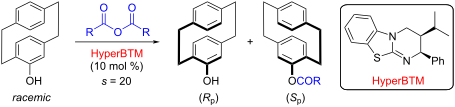
- David Weinzierl Mario Waser Institute of Organic Chemistry, Johannes Kepler University Linz, Altenbergerstrasse 69, 4040 Linz, Austria 10.3762/bjoc.17.68 Abstract We herein report a method for the kinetic resolution of racemic 4-hydroxy[2.2]paracyclophane by means of a chiral isothiourea
- -catalyzed acylation with isobutyric anhydride. This protocol allows for a reasonable synthetically useful s-factor of 20 and provides a novel entry to obtain this interesting planar chiral motive in an enantioenriched manner. Keywords: acylation; kinetic resolution; nucleophilic catalysis; paracyclophanes
- transformation into diastereomers by esterification with chiral acid chlorides [19][20] as well as the kinetic resolution (KR) of racemic esters of 2 via an enzymatic hydrolysis [25][26][27] were very successfully used to access enantioenriched 2. Recently, Akiyama and co-workers reported the kinetic resolution


A review of asymmetric synthetic organic electrochemistry and electrocatalysis: concepts, applications, recent developments and future directions
Beilstein J. Org. Chem. 2019, 15, 2710–2746, doi:10.3762/bjoc.15.264
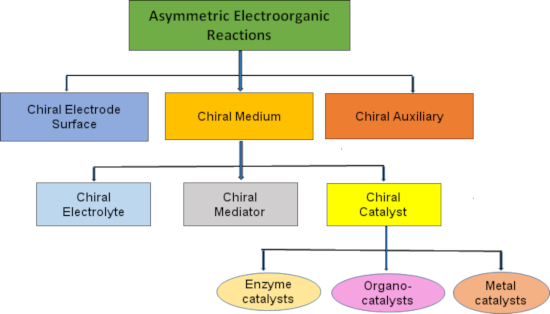
- ) in the kinetic resolution of primary amines 60 via their electrocatalytic oxidation to the corresponding ketones 62, and remaining amines (R)-60 were obtained with very high enantioselectivity. The controlled potential electrolysis was carried out in a divided cell in the presence of a base and a
- catalytic amount of 61 (Scheme 24) [59]. A similar strategy using N-oxalyl radicals as chiral mediators has also been explored for the enantioselective electrocatalytic oxidation of secondary alcohols [60]. Tanaka and co-workers subsequently published another article on the kinetic resolution of sec
- electrochemical asymmetric oxidation of 1,2-diols 74 and amino alcohols 77 in presence of a Br- mediator using Cu(OTf)2 and (R,R)-Ph-BOX 76 as the catalytic system (Scheme 29). The method enabled an asymmetric synthesis of α-hydroxycycloalkanones 75 and α-amino esters 78 along with the kinetic resolution of






Synthesis of acremines A, B and F and studies on the bisacremines
Beilstein J. Org. Chem. 2019, 15, 2271–2276, doi:10.3762/bjoc.15.219

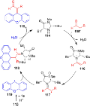
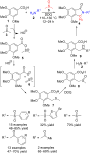
- isolated from fungi of the genus Acremonium. Here, we present the asymmetric total synthesis of acremine F which hinges on a modestly enantioselective dihydroxylation and a subsequent kinetic resolution via a highly selective asymmetric reduction. Chemoselective oxidation of acremine F gave access to
- . The use of a chiral oxazaborolidine catalyst led to kinetic resolution and increased the optical purity of 17 to 95% ee. Deprotection of the diol moiety followed by Stille cross coupling with vinyl stannane 18 finally gave 5 in excellent yield (Scheme 2). Since acremine F (5) can be expected to be the
- modestly enantioselective oxidation and a highly enantioselective reduction with kinetic resolution to access the acremine framework. The route proved to be scalable and delivered 300 mg of the natural product. Acremine F could further be converted into acremines A (1) and B (2) by a selective oxidation


1,2,3-Triazolium macrocycles in supramolecular chemistry
Beilstein J. Org. Chem. 2019, 15, 2142–2155, doi:10.3762/bjoc.15.211
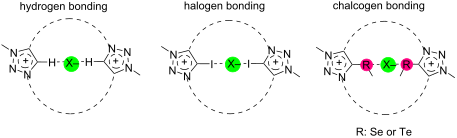
- kinetic resolution of epoxides with CO2 remains a big challenge. Recently, Ema and co-workers described a chiral binaphthyl strapped Zn(II) porphyrin with triazolium halide units as a bifunctional catalyst for the kinetic resolution of epoxides with CO2 [63]. The condensation of click-reaction-derived
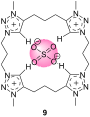
- compound 8. Chemical structures of compound 9. Chemical structures of compound 10, 11 and 12. Chemical structure of compound 13. Chemical structure of compound 15 including the sigma-connected TCNQ dimer. Chemical structure of compound 16 for the kinetic resolution of epoxides. Chemical structure of




N-(1-Phenylethyl)aziridine-2-carboxylate esters in the synthesis of biologically relevant compounds
Beilstein J. Org. Chem. 2019, 15, 1722–1757, doi:10.3762/bjoc.15.168

- both pairs of ethyl esters [26]. When a mixture of tert-butyl esters (2R,1'S)-5d and (2S,1'S)-5d was subjected to kinetic resolution in the presence of potassium tert-butoxide in tetrahydrofuran (2R,1'S)-5d was produced with low 40% de [27]. The absolute configuration at C2 in esters 5 was established


Multicomponent reactions (MCRs): a useful access to the synthesis of benzo-fused γ-lactams
Beilstein J. Org. Chem. 2019, 15, 1065–1085, doi:10.3762/bjoc.15.104
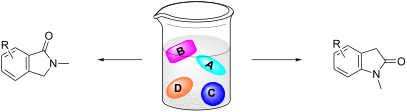
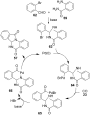
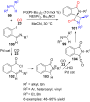
- excesses, which result, according to the authors, from a dynamic kinetic resolution of the initially formed Ugi adduct. Indeed, the plausible mechanism for the reaction implies the condensation of amine 2 and aldehyde 33 to form iminium salt intermediate 47 (Scheme 14). Next, addition of isocyanate 42
- rearrangement that would lead to isoindolinone 46 through the bridged intermediate 51. Therefore, this mechanistic path shows that the enantioselectivity of the reaction is a consequence of a dynamic kinetic resolution of enamine 50. Cyanide can also be used, instead of isocyanide, in an analogous three










Synthesis of acylglycerol derivatives by mechanochemistry
Beilstein J. Org. Chem. 2019, 15, 811–817, doi:10.3762/bjoc.15.78
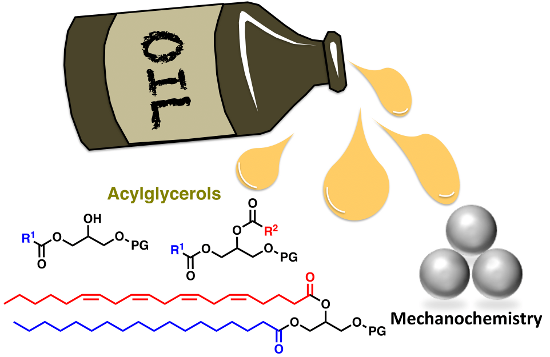
- ). However, purification of 4a by column chromatography on SiO2 favored acyl migration in 4a, thereby dropping the yield of 4a by increasing the amount of the isomeric sn-2,3-protected monoacylglycerol 4a’ (Figure 2) [42]. Typically, cobalt complex (S,S)-cat has been used for kinetic resolution of racemic


Sigmatropic rearrangements of cyclopropenylcarbinol derivatives. Access to diversely substituted alkylidenecyclopropanes
Beilstein J. Org. Chem. 2019, 15, 333–350, doi:10.3762/bjoc.15.29
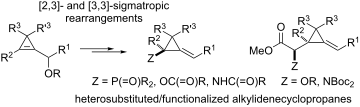
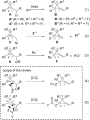
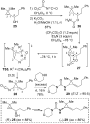
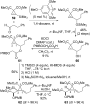
- the corresponding secondary cyclopropenylcarbinol (S)-1f (ee = 99%), which in turn is readily available by applying the Sharpless kinetic resolution procedure to (±)-1f [31], was also investigated. The resulting geometric isomers (Z)-3f and (E)-3f, which were separated by flash chromatography, were







Synthesis of nonracemic hydroxyglutamic acids
Beilstein J. Org. Chem. 2019, 15, 236–255, doi:10.3762/bjoc.15.22
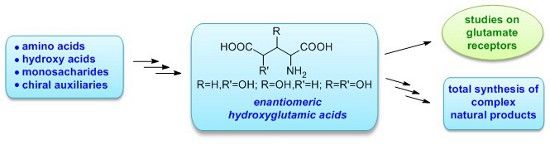
- and characterization of four enantiomers 2 (Figure 3) came from the Japanese sources [45][46][47][48]. For identification purposes (2S*,3R*)-2 and (2S*,3S*)-2 were resolved by chiral reversed-phase TLC [26]. Kinetic resolution of dibenzyl (2S*,3R*)-N-Boc-3-hydroxyglutamate was achieved in the presence
- (Scheme 11) [60]. Sharpless epoxidation of the allylic alcohol 48 gave a 46:11:33 mixture of (S)-48, (3R,4S)-49 and (2R,3R)-50. While (S)-48 is a product of kinetic resolution, the formation of (2R,3R)-50 results from the intramolecular opening of the oxirane ring in (3R,4S)-49. After chromatographic


Asymmetric synthesis of a high added value chiral amine using immobilized ω-transaminases
Beilstein J. Org. Chem. 2019, 15, 60–66, doi:10.3762/bjoc.15.6
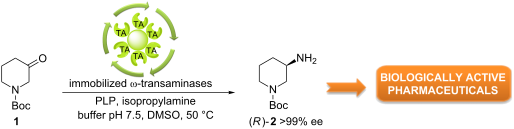
- are easily regenerated in situ without the need for another enzyme. In principle, enantiomerically pure chiral amines can be prepared following two approaches: through kinetic resolution starting from racemic amines or by asymmetric synthesis starting from suitable substrates, e.g., the corresponding
- carbonyl compounds. In a kinetic resolution, a maximum yield of 50% of the product can be obtained. Moreover, high quantities of the co-product might complicate the product separation and the recovery of the chiral amine. Thus, the asymmetric synthesis is generally preferable because a theoretically 100
- commercial free form or isolated from bacterial sources, both in kinetic resolution starting from the corresponding racemic amine and in asymmetric synthesis starting from the corresponding ketone. The first method, although it proceeds with high enantioselectivity, is a kinetic resolution and as a


Copper-catalyzed asymmetric methylation of fluoroalkylated pyruvates with dimethylzinc
Beilstein J. Org. Chem. 2018, 14, 576–582, doi:10.3762/bjoc.14.44
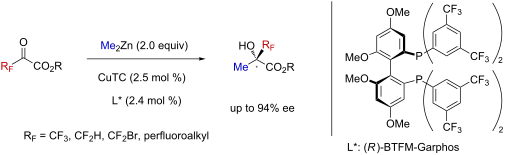
- , reaction 1) [31]. Kinetic resolution of racemic α-trifluoromethylated tertiary alcohols 2a by an enzyme is also reported to give the corresponding alcohols 2a in high enantioselectivity (Scheme 1, reaction 2) [32]. However, there has been no report for catalytic asymmetric methylation of trifluoropyruvate



Investigations towards the stereoselective organocatalyzed Michael addition of dimethyl malonate to a racemic nitroalkene: possible route to the 4-methylpregabalin core structure
Beilstein J. Org. Chem. 2018, 14, 553–559, doi:10.3762/bjoc.14.42
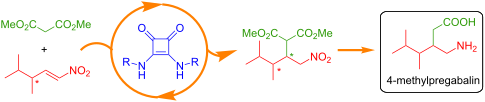
- medicines and can be obtained by organocatalytic Michael additions. We show here the stereoselective synthesis of 4-methylpregabalin stereoisomers using a Michael addition of dimethyl malonate to a racemic nitroalkene. The key step of the synthesis operates as a kinetic resolution with a chiral squaramide
- catalyst. Furthermore, specific organocatalysts can provide respective stereoisomers of the key Michael adduct in up to 99:1 er. Keywords: kinetic resolution; Michael addition; organocatalysis; pregabalin; squaramide; Introduction Asymmetric organocatalysis has considerably broadened possibilities for
- ][21]. Other green chemistry concepts such as reusable media [22], immobilized catalysts [23], or flow set-ups have also been used with success for the synthesis of GABA derivatives [24]. Pregabalin is currently manufactured using enzymatic kinetic resolution [25], but an organocatalytic procedure


Selective enzymatic esterification of lignin model compounds in the ball mill
Beilstein J. Org. Chem. 2017, 13, 1788–1795, doi:10.3762/bjoc.13.173
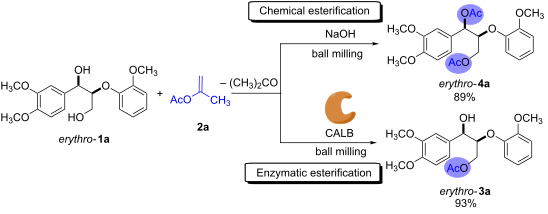
- diameter) [9], demonstrated to efficiently mediate the enzymatic kinetic resolution of secondary alcohols under solvent-free conditions in both mixer and planetary ball mills (Scheme 1b) [10]. Interestingly, this latter lipase (a commercial preparation known as Novozyme 345, hereinafter referred as CALB



Chiral phase-transfer catalysis in the asymmetric α-heterofunctionalization of prochiral nucleophiles
Beilstein J. Org. Chem. 2017, 13, 1753–1769, doi:10.3762/bjoc.13.170
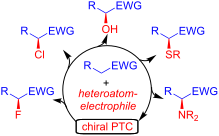
- conditions (for selected other uses of oxaziridines in asymmetric α-hydroxylation reactions please see [123][124]). Interestingly, this transformation is accompanied by a kinetic resolution of the employed oxaziridine with s-factors up to 45 [116]. One potentially useful simple reagent to carry out oxygen


Mechanochemical enzymatic resolution of N-benzylated-β3-amino esters
Beilstein J. Org. Chem. 2017, 13, 1728–1734, doi:10.3762/bjoc.13.167

- ][18][19][20][21][22] including strategies based on organocatalysis [23][24][25][26] and kinetic resolution using enzymes such as Candida antarctica lipase B, which was shown to be efficient in the resolution of racemic β-amino acids under various conditions [27][28][29][30]. Among recent developments
- applications on a large scale [45][46]. Very recently, Hernández, Frings, and Bolm developed a method to carry out the kinetic resolution of secondary alcohols through selective acylation using Candida antarctica lipase B, under solvent-free ball-milling conditions [47][48]. Inspired by this ground-breaking


The chemistry and biology of mycolactones
Beilstein J. Org. Chem. 2017, 13, 1596–1660, doi:10.3762/bjoc.13.159









Bifunctional organocatalysts for the asymmetric synthesis of axially chiral benzamides
Beilstein J. Org. Chem. 2017, 13, 1518–1523, doi:10.3762/bjoc.13.151

- transition state. Several successful results and a recent trend in organocatalytic atroposelective reactions, including enantioselective formation of chiral axes [17][18][19][20][21][22][23][24], dynamic kinetic resolution [25][26][27][28][29][30][31][32][33][34][35][36][37][38][39][40][41], kinetic
- resolution [42][43][44][45][46][47], desymmetrization [48][49][50][51][52][53][54], de novo annulation [55][56][57][58][59][60][61], and point-to-axial chirality transfer [58][59] (for reviews, see references [31][62][63]), motivated us to expand on the utility of this class of small-molecule catalysts. We