Search results
Search for "light" in Full Text gives 1413 result(s) in Beilstein Journal of Organic Chemistry. Showing first 200.
Structural reassignment of compound 968, an allosteric glutaminase inhibitor
Beilstein J. Org. Chem. 2026, 22, 455–460, doi:10.3762/bjoc.22.33
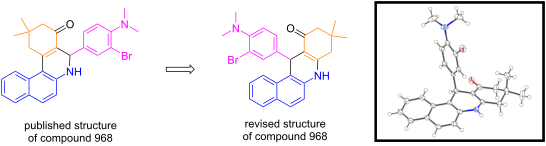
- ethanol to yield the title compound as a light gray powder (4.05 g, 72%). 1H NMR (400 MHz, DMSO-d6) δ 9.72 (s, 1H), 7.91 (d, J = 8.7 Hz, 2H), 7.76 (t, J = 6.9 Hz, 2H), 7.41 (t, J = 7.3 Hz, 1H), 7.35 (d, J = 1.8 Hz, 1H), 7.29 (m, 2H), 7.71 (dd, J = 8.3, 1.8 Hz, 1H), 6.90 (d, J = 8.2 Hz, 1H), 5.70 (s, 1H


Concept-driven strategies in target-oriented synthesis
Beilstein J. Org. Chem. 2026, 22, 451–454, doi:10.3762/bjoc.22.32
- pages will spark interest and deepen understanding in the fascinating world of target-oriented synthesis. In light of the current scientific landscape, perhaps it is fitting to reflect on the impact of artificial intelligence and innovations in machine-assisted synthetic design as we conclude this


Arene activation via π-bond localization: concepts and opportunities
Beilstein J. Org. Chem. 2026, 22, 257–273, doi:10.3762/bjoc.22.19
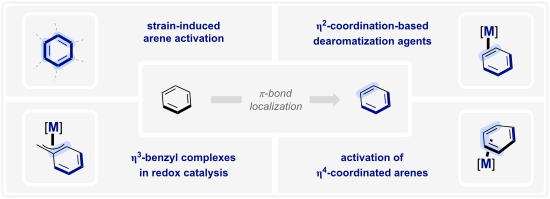
- applications One of the earliest demonstrations of the unusual reactivity of small-ring-annelated arenes is found in benzocyclopropene, which undergoes facile dearomatization [29]. For example, upon exposure to iodine and UV-light, it transforms into 1,6-diiodocycloheptatriene, highlighting the pronounced
- enriching the repertoire of arene functionalization beyond the established cross-coupling and C–H activation canon. Alternatively, merging arene activation with additional concepts, such as photoredox catalysis offers an exciting opportunity to address thermodynamic constraints and to harness light-driven




Configuration–packing synergy enabling integrated crystalline-state RTP and amorphous-state TADF
Beilstein J. Org. Chem. 2026, 22, 224–236, doi:10.3762/bjoc.22.16
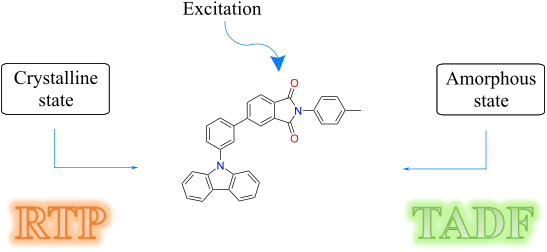
- phosphorescence; thermally activated delayed fluorescence; Introduction Organic light-emitting materials have attracted significant attention due to their remarkable potential across a wide array of applications [1][2][3], such as in display technologies [4], information security and data storage [5], time
- , making it a suitable candidate for use in advanced optoelectronic devices, such as organic light-emitting diodes (OLEDs), where efficient triplet-state management and delayed fluorescence are highly desired. In different solvents, the UV–vis absorption maxima and band profiles of the compound remain
- conventions, the ΔEST was estimated by calculating the difference between the onset energies of the fluorescence and phosphorescence bands. This energy difference was determined using Equation 1: where E is the energy, h is Planck's constant, c is the speed of light, and λ is the wavelength corresponding to


Synthesis of diaryl phosphates using phytic acid as a phosphorus source
Beilstein J. Org. Chem. 2026, 22, 213–223, doi:10.3762/bjoc.22.15
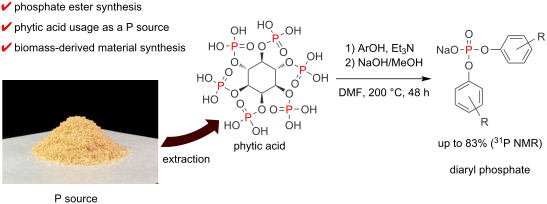
- its light-brown appearance was identical to that of the product synthesized from commercial phytic acid. High-performance liquid chromatography (HPLC) analysis results indicated that the purity of 2a derived from the extracted phytic acid was greater than 95% (Supporting Information File 1, Figure S4




Screwing the helical chirality through terminal peri-functionalization
Beilstein J. Org. Chem. 2026, 22, 205–212, doi:10.3762/bjoc.22.14
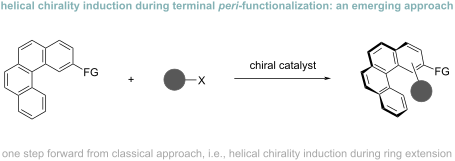
- circularly polarized organic light emitting diodes (OLEDs), circularly polarized luminescence (CPL), and photonic devices, etc., due to their strong circular dichroism and circularly polarized luminescence [15][16]. Their well-defined three-dimensional chiral environment also makes helicenes useful in


Improved synthesis and physicochemical characterization of the selective serotonin 2A receptor agonist 25CN-NBOH
Beilstein J. Org. Chem. 2026, 22, 175–184, doi:10.3762/bjoc.22.11
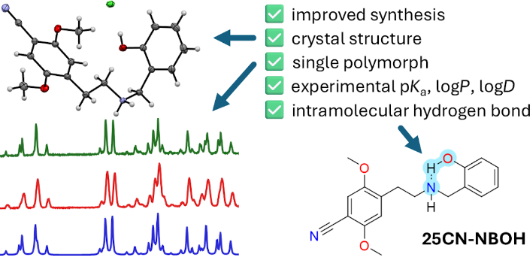
- , respectively, while UV–vis spectra were recorded using the fiber optic probe (10 mm light path) of the inForm diode array spectrometer. The instrument control and data analysis were performed using the inForm software Version 1.1.3.6 (Sirius Analytical, Forest Row, UK). HPLC Samples from distribution


Design and synthesis of an axially chiral platinum(II) complex and its CPL properties in PMMA matrix
Beilstein J. Org. Chem. 2026, 22, 143–150, doi:10.3762/bjoc.22.7
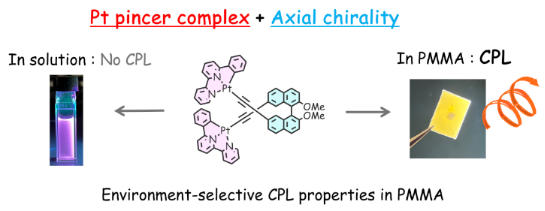
- Luminescent materials based on metal complexes have been extensively studied due to their high phosphorescence efficiency, making them promising candidates for applications in organic light-emitting diodes (OLEDs) [1][2][3][4][5], sensors [6][7][8][9], and bioimaging materials [10][11]. Among these materials
- spectrofluoropolarimeter at room temperature, at a scattering angle of 0° upon excitation with unpolarized, monochromated incident light. Absolute PLQYs of solutions and powder samples were determined using a JASCO FP-8550 spectrometer with an integrating sphere (JASCO ILF-533, diameter 96 mm) at an excitation wavelength
- of 300 nm. Fluorescence lifetimes were measured for solutions and powder samples with a HORIBA DeltaFlex spectrometer with a 370 nm LED light source for excitation. For the lifetime measurements of solution, a conventional 1 cm quartz cell was used. Optical rotation values were measured with a JASCO


Symmetrical D–π–A–π–D indanone dyes: a new design for nonlinear optics and cyanide detection
Beilstein J. Org. Chem. 2026, 22, 131–142, doi:10.3762/bjoc.22.6
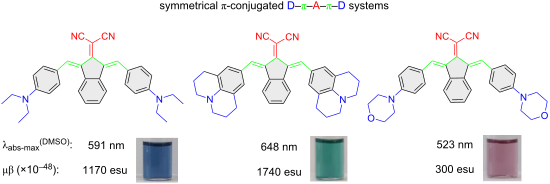
- attention due to their widespread use in materials chemistry. This type of dye is of particular interest in the fields of organic electronics, photonics, and optoelectronics etc., used in areas such as dye-sensitized solar cells (DSSC), organic light-emitting diodes (OLED), nonlinear optics (NLO), and
- under ambient light. In addition, interaction mechanisms of dyes with cyanide were studied using the 1H NMR titration method, and it was determined that they interacted through an addition mechanism. Photophysical properties and interaction mechanisms of the compounds were also supported through density
- groups is disrupted. These results strongly suggest the addition of cyanide to the vinyl bridge. Furthermore, the color of dyes 2a–c, blue, green, and pink, respectively, under ambient light changed to yellow when interacting with cyanide. The interaction mechanism was determined by 1H NMR, and the


Highly electrophilic, gem- and spiro-activated trichloromethylnitrocyclopropanes: synthesis and structure
Beilstein J. Org. Chem. 2026, 22, 123–130, doi:10.3762/bjoc.22.5
- . Visualization was performed under UV light (λ 254 nm). Reagents were obtained from commercial suppliers and used without further purification unless otherwise noted. X-ray crystallography. X-ray diffraction analysis of the structure 2, 3, 9a, and 9b was performed on a Rigaku 'SuperNova, Single source at offset


Advances in Zr-mediated radical transformations and applications to total synthesis
Beilstein J. Org. Chem. 2026, 22, 71–87, doi:10.3762/bjoc.22.3
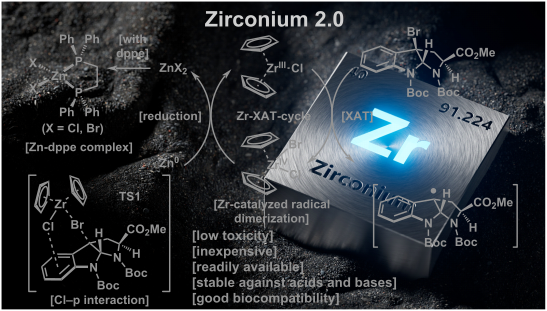
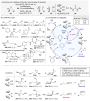
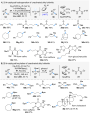
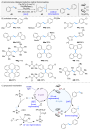
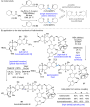
- a halogen‑atom transfer (XAT) mechanism, they initiated the development of monofluoroalkyl group functionalization. Upon visible-light irradiation in the presence of an Ir photocatalyst and dibutylzirconocene, α-fluorocarbonyl compounds 45 underwent XAT with low-valent zirconium species to generate








Sustainable electrochemical synthesis of aliphatic nitro-NNO-azoxy compounds employing ammonium dinitramide and their in vitro evaluation as potential nitric oxide donors and fungicides
Beilstein J. Org. Chem. 2025, 21, 2739–2754, doi:10.3762/bjoc.21.211
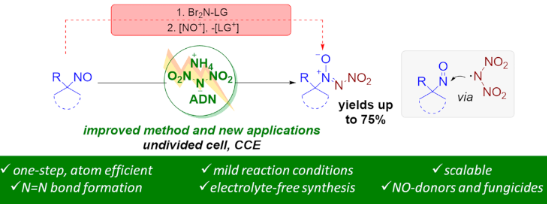
- applications in organic synthesis as precursors for free radicals in selective transformations [5][6][7][8][9][10][11] and polymerization initiators [12], energetic materials [13][14][15], NO donors [16][17], and organic light-emitting diodes (OLEDs) [18]. Despite the wide diversity of their applications





Tandem hydrothiocyanation/cyclization of CF3-iminopropargyl alcohols with NaSCN in the presence of AcOH
Beilstein J. Org. Chem. 2025, 21, 2694–2702, doi:10.3762/bjoc.21.207
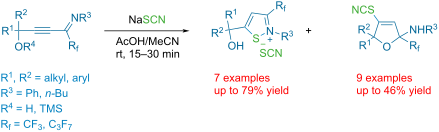
- light of the above examples and as part of our ongoing research into the chemistry of functionalized propargyl alcohols [25][26], we decided to use CF3-substituted iminopropargyl alcohols as a starting material for hydrothiocyanation reactions, since the alkynyl imine fragment can undergo a series of

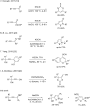


Recent advancements in the synthesis of Veratrum alkaloids
Beilstein J. Org. Chem. 2025, 21, 2657–2693, doi:10.3762/bjoc.21.206
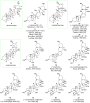
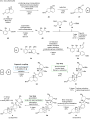
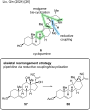
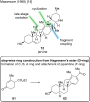
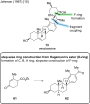
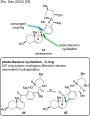
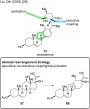
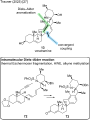
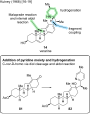
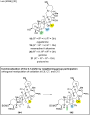
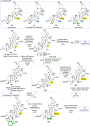
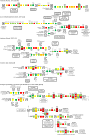
- visual comparison, we decided to implement flow charts with colored boxes and reaction classifications as suggested by Schwan and Christmann [10]. In their publication, reaction steps are ranked by a color scheme resembling a traffic light, depending on their strategic value in the synthesis: two shades
- the semisynthesis of Liu/Qin [26] 15 years later. The only non-green transformations displayed at the start were a protecting group installation (red) and a condensation (yellow), which was needed for the C–H activation (light green). All other transformations connect either C–C or C–heteroatom bonds













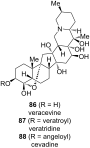


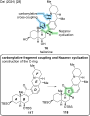

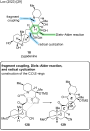
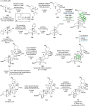
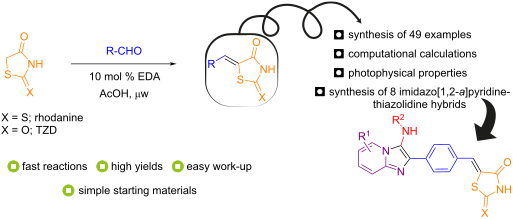
Thiazolidinones: novel insights from microwave synthesis, computational studies, and potentially bioactive hybrids
Beilstein J. Org. Chem. 2025, 21, 2618–2636, doi:10.3762/bjoc.21.203
- experimental spectrum. In blue, suppressed or absent carbon atoms bound to hydrogen atoms. a) Visual impressions of the solvatochromic study in various solvents (10−5 M) after excitation with a natural light. b) UV–vis absorption spectra of 3n in different solvents (10−5 M) at room temperature. c) Normalized
- ) Visual impressions of the aqueous solution at various pH after excitation with a natural light. b) UV–vis absorption spectra. c) Normalized emission spectra. Molecular fragments associated with intramolecular charge transfer states. Frontier molecular orbitals of compounds 3n and 4n in three different






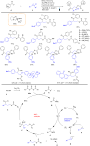
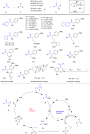
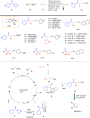
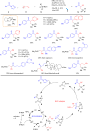
Visible-light-driven NHC and organophotoredox dual catalysis for the synthesis of carbonyl compounds
Beilstein J. Org. Chem. 2025, 21, 2584–2603, doi:10.3762/bjoc.21.200
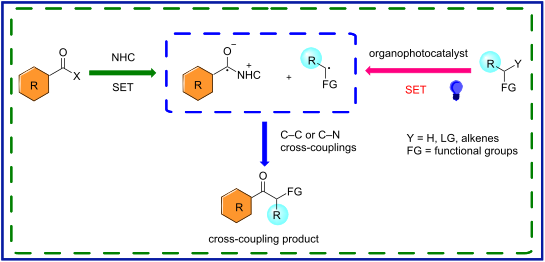
- Vasudevan Dhayalan Department of Chemistry, National Institute of Technology Puducherry, Karaikal-609609, Puducherry, India 10.3762/bjoc.21.200 Abstract Over the past two decades, organocatalyzed visible-light-mediated radical chemistry has significantly influenced modern synthetic organic
- ; NHC; organic photocatalyst; radicals; visible-light; Introduction Over the last ten years, NHC-catalyzed visible-light-promoted radical chemistry has been extensively developed for the cost-effective and practical synthesis of bioactive intermediates, pharmaceuticals, drugs, and natural products [1
- ]. The use of visible light as an energy source has significantly expanded the scope of organic molecule activation and its application in organic synthesis or medicinal chemistry [12], thereby driving the fast development of various photocatalytic transformations. Among these advances, dual catalysis




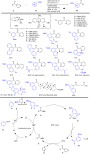

Ni-promoted reductive cyclization cascade enables a total synthesis of (+)-aglacin B
Beilstein J. Org. Chem. 2025, 21, 2548–2552, doi:10.3762/bjoc.21.197
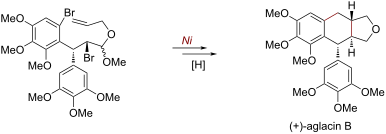
- (2) and C (3), featuring a visible light-catalyzed radical cation cascade for the formation of the C8–C8′ and C2–C7′ bonds [6]. Subsequently, they improved the reaction conditions to achieve the racemic synthesis of aglacins A (1) and E (4) as well [7]. In 2021, the Gao group described the total


Synthesis and characterization of a isothiouronium-calix[4]arene derivative: self-assembly and anticancer activity
Beilstein J. Org. Chem. 2025, 21, 2535–2541, doi:10.3762/bjoc.21.195
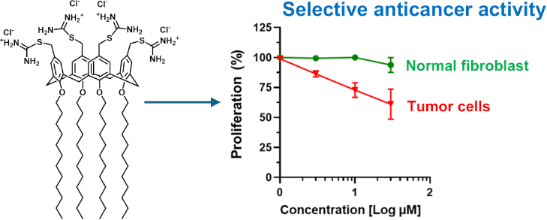
- chains at the lower rim. The resulting amphiphilic calix[4]arene derivative 3 spontaneously self-assembled into nanoscale aggregates in aqueous medium, as demonstrated by dynamic light scattering analysis. The cytotoxicity of compound 3 towards cancer cells was assessed using human renal carcinoma cells
- ][26]. A variety of calixarene-based nanoconstructs have been reported, including nanosystems with light-triggered anticancer activity [27], potential anticancer vaccine candidates [28], and nanocarriers for anticancer drug delivery [29][30][31][32][33]. Numerous bioactive groups have been introduced
- anticancer activity. The synthesis and structural characterization of compound 3 were carried out, and its self-assembly behavior in aqueous medium was investigated using dynamic light scattering (DLS) and electrophoretic light scattering (ELS). The anticancer potential of compound 3 was assessed in human


Effect of a photoswitchable rotaxane on membrane permeabilization across lipid compositions
Beilstein J. Org. Chem. 2025, 21, 2498–2512, doi:10.3762/bjoc.21.192
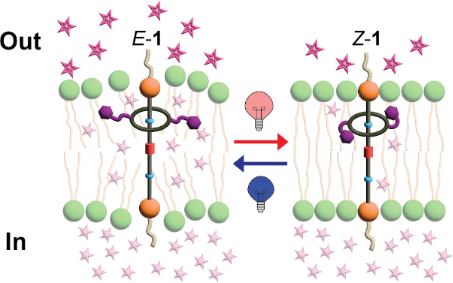
- first minutes of rotaxane insertion. Likewise, azobenzene photoswitching did not induce permeabilization in the more rigid and thicker EYPC/Chol 6:4 bilayers, which showed minimal release (5%). Furthermore, we discovered that when the unthreaded axle is irradiated with light, an unknown, irreversible
- photochemical process occurs, which triggers the release from only the vesicles containing EYPC. These findings underscore the significance of both the physical and chemical properties of the bilayer in enabling effective light-triggered cargo release through rotaxane activation. Keywords: lipid membrane
- bacteria or malignant cells like cancer) [5][6], or to influence membrane protein function and thereby control cellular behavior [7][8]. One promising approach is the development of light-activated molecules that can modulate membrane properties upon irradiation, enabling remote activation with high




Assembly strategy for thieno[3,2-b]thiophenes via a disulfide intermediate derived from 3-nitrothiophene-2,5-dicarboxylate
Beilstein J. Org. Chem. 2025, 21, 2489–2497, doi:10.3762/bjoc.21.191
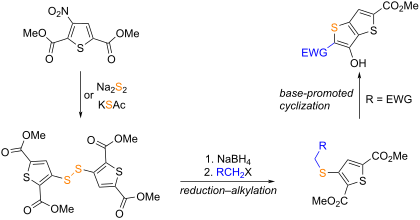
- , the use of TT frameworks for semiconductors has led to significant progress in organic field-effect transistors (OFETs), organic photovoltaics, organic light-emitting diodes, and chemical sensors [1][2][3]. For instance, TT-containing copolymers have shown high hole mobility, strong absorption in the
- notable DNA intercalation and antiproliferative effects [16][17], while TT–BODIPY derivatives were shown to efficiently generate singlet oxygen and demonstrate light-induced cytotoxicity, highlighting their promise as photodynamic therapeutic agents [18]. Near-infrared TT–DPP-based dyes have also been



Synthesis of the tetracyclic skeleton of Aspidosperma alkaloids via PET-initiated cationic radical-derived interrupted [2 + 2]/retro-Mannich reaction
Beilstein J. Org. Chem. 2025, 21, 2470–2478, doi:10.3762/bjoc.21.189
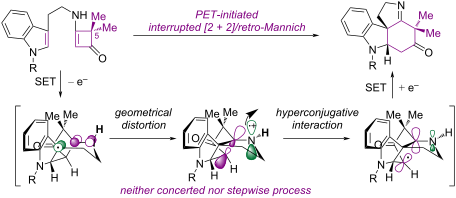
- catalysts that could promote the proposed PET reaction of 9a on the basis of our previous results [15]. The reaction was performed in MeCN in the presence of photocatalysts under blue light-emitting diode (LED) irradiation at 30 °C. The results are listed in Table 1. Catalysts I [28], II [29], and III [30
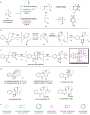
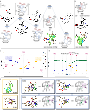
- concerted nor stepwise. These findings shed light on the mechanistic innovation of a PET-initiated radical-derived reaction that was driven by the ring-strain release. Synthetic plan. a) General model of cyclobutenone bond cleavage; b) our previously reported method; c) plan for indole Aspidosperma alkaloid


Transformation of the cyclohexane ring to the cyclopentane fragment of biologically active compounds
Beilstein J. Org. Chem. 2025, 21, 2416–2446, doi:10.3762/bjoc.21.185
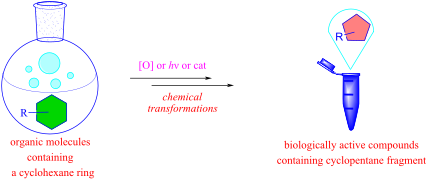
- simple building blocks [72]. The main feature of light-induced transformations is the involvement of electronically excited states that occur during photon absorption, leading to the formation of reactive intermediates causing significant changes in chemical compound reactivity. As a result, light energy
- compounds [78][79][80][81][82]. The work of Davis, Derksen and co-workers [83] presents interesting results on the use of UV light to study the reactivity of bicyclic divinyl ketones and the dependence of photochemical reaction products on wavelength. Under anhydrous conditions, irradiation of divinyl
- ketone 154 with UV-C (200–280 nm) light yielded approximately equal amounts of products 155 and 156 (1.25:1 after 85% conversion). In the presence of water (CH3CN/H2O 10:1), a crystalline cyclooctene compound 157 was obtained by irradiation of 154. However, compound 156 was not detected. When irradiating


Rotaxanes with integrated photoswitches: design principles, functional behavior, and emerging applications
Beilstein J. Org. Chem. 2025, 21, 2345–2366, doi:10.3762/bjoc.21.179
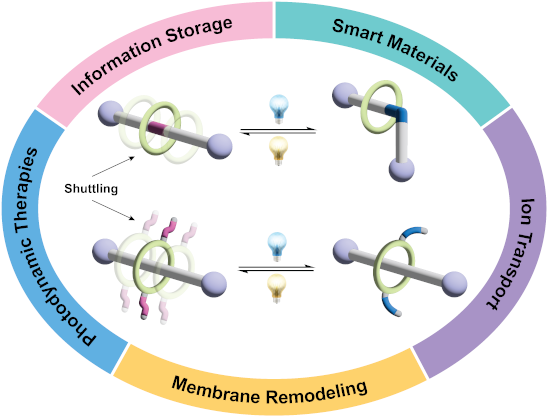
- for precise control over their structural, dynamic, and functional properties. By harnessing light as a non-invasive stimulus with high spatial and temporal resolution, these photoswitches allow for the modulation of the rotaxanes’ intra- and intermolecular interactions, optoelectronic properties, and
- resulting influence on rotaxane operation. Due to their architectural versatility and precise light control, photoswitchable rotaxanes hold promise for a broad range of applications, including light-responsive molecular machines, smart materials, and biofunctional systems. However, emerging applications
- increasingly require rethinking and developing new structural designs that incorporate more efficient and advanced photoswitches to fully realize their potential. Keywords: macrocycle; photoisomerization; photoswitches; rotaxanes; shuttling; Introduction Harnessing light energy to control intra- and





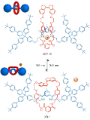
Recent advances in Norrish–Yang cyclization and dicarbonyl photoredox reactions for natural product synthesis
Beilstein J. Org. Chem. 2025, 21, 2315–2333, doi:10.3762/bjoc.21.177
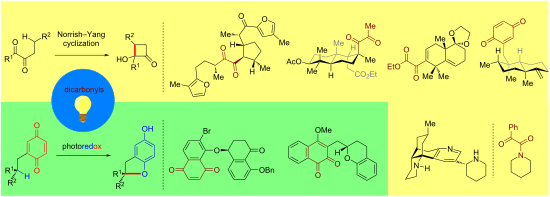
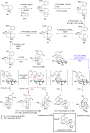
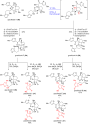
- separable regioisomers: gracilisoid F (54) in 42% yield and gracilisoid H (56) in 40% yield, respectively (Scheme 8). Here, light triggered a regiodivergent Norrish–Yang cyclization, while the acidic nature of silica gel sufficiently promoted an α-hydroxy ketone rearrangement. This type of rearrangement was







Insoluble methylene-bridged glycoluril dimers as sequestrants for dyes
Beilstein J. Org. Chem. 2025, 21, 2302–2314, doi:10.3762/bjoc.21.176
- toxic, mutagenic, or carcinogenic and their presence, even in trace amounts, can cause issues with the kidneys, liver, brain, and central nervous system. Moreover, dyes can obstruct light penetration, affecting the photosynthetic processes in water bodies and disrupting the balance of aquatic ecosystems
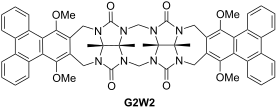
- methyl substituents (H2). Fortunately, the X-ray crystal structures of G2W1 and G2W3 reported below shed further light on their poor performance as solid state sequestrants. X-ray crystal structure of G2W1 and G2W3 Eventually, we were able to grow single crystals of G2W3 (CCDC 2466611) and solve their