Search results
Search for "luminescence" in Full Text gives 133 result(s) in Beilstein Journal of Organic Chemistry.
Perspectives on push–pull chromophores derived from click-type [2 + 2] cycloaddition–retroelectrocyclization reactions of electron-rich alkynes and electron-deficient alkenes
Beilstein J. Org. Chem. 2024, 20, 125–154, doi:10.3762/bjoc.20.13
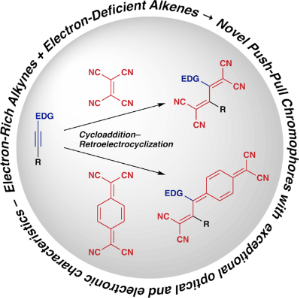
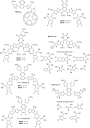
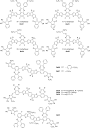
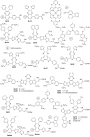
- particular, Diederich et al. conducted a theoretical investigation on the photophysical properties of 1,1,2,4,4-pentacyanobuta-1,3-diene (PCBD) (63) [134]. Compound 63 and the TCBD 64 demonstrated no discernible luminescence at room temperature and 77 K (Figure 4). Transient absorption spectral measurements
- -emission (AIE)-active aggregates exhibit emissive behavior in hexane, with an emission peak at 679 nm and a shoulder at 717 nm along with a fluorescence quantum yield of 8.5%. This luminescence phenomenon can be aptly considered to be AIE, considering the pronounced constraints imposed on molecular
- processes. Analogously, the TCBDs 66 and 67, consisting of pyrene and perylene moieties, respectively, have been reported to exhibit luminescence in the NIR region in their powdered forms, with the maxima at 810 nm and 890 nm for 66 and 67, respectively, despite their nonemissive behavior in dichloromethane


Aromatic systems with two and three pyridine-2,6-dicarbazolyl-3,5-dicarbonitrile fragments as electron-transporting organic semiconductors exhibiting long-lived emissions
Beilstein J. Org. Chem. 2023, 19, 1867–1880, doi:10.3762/bjoc.19.139
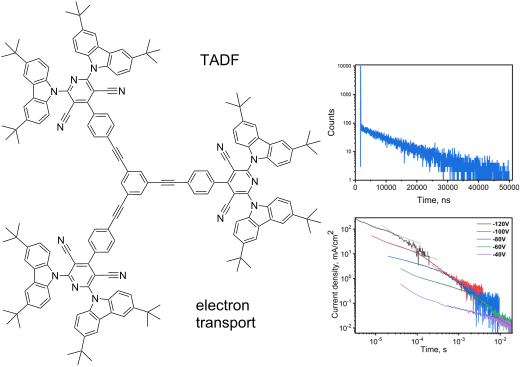
- -dicarbazolyl-3,5-dicarbonitrile. The compounds are synthesized by Sonogashira coupling reactions and characterized by steady-state and time-resolved luminescence spectroscopy. The compounds show efficient intramolecular charge transfer (ICT) from the donor to the acceptor. The photoluminescence (PL) spectra of
- steady-state luminescence spectroscopy. Meanwhile, time-resolved spectroscopy at different temperatures was used to investigate the nature of long-lived emissions of 6–9 as it was previously done for the reference compound 2,6-bis(3,6-di-tert-butyl-9H-carbazol-9-yl)-4-(4-fluorophenyl)pyridine-3,5
- nm, further allowing us to analyze the luminescence dynamics in detail. To determine photoluminescence quantum yields (PLQY), a dedicated integrated sphere with an inner diameter of 120 mm was used in conjunction with the Edinburgh Instruments FLS980 spectrometer. This specialized setup enabled


Thienothiophene-based organic light-emitting diode: synthesis, photophysical properties and application
Beilstein J. Org. Chem. 2023, 19, 1849–1857, doi:10.3762/bjoc.19.137
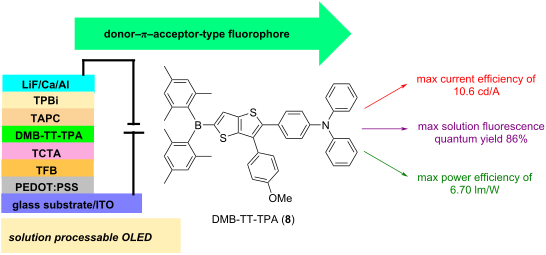
- method, i.e., solution processing, was used in this study. In the previous study, the OLED of DMB-TT-TPA (8) was explained to demonstrate performance with the turn-on voltage, external quantum efficiency (EQE), and highest luminescence efficiency of 4.6 V, 0.15% and 0.40 cd/A, respectively, using a
- an external quantum efficiency (EQE) of 4.61%, along with a green emitting luminescence at 512 nm (Table 2). According to the CIE color space chromaticity diagram, the device was located at the coordinates of 0.16 and 0.51. The obtained EL results are in good agreement with the fluorescence
- a maximum luminescence efficiency of 752 cd/m2, a maximum external quantum efficiency of 4.61%, a maximum power efficiency of 6.70 lm/W, and a maximum current efficiency of 10.6 cd/A on 2.9 V turn on voltage with CIE coordinates of 0.16 and 0.51 at λEL = 512 nm. The OLED, optical and thermal


Trifluoromethylated hydrazones and acylhydrazones as potent nitrogen-containing fluorinated building blocks
Beilstein J. Org. Chem. 2023, 19, 1741–1754, doi:10.3762/bjoc.19.127
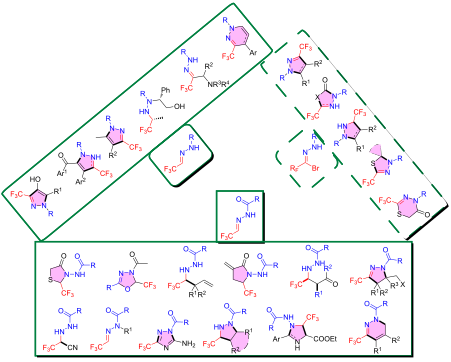
- pharmacological activities [86][87]. Acylhydrazones can exist in either E or Z forms in solution, and they can exhibit good optical properties for applications as photoswitches, in luminescence sensing, and as metallo-assemblies [88][89]. In organic synthesis, acylhydrazones have served as stable imine


Quinoxaline derivatives as attractive electron-transporting materials
Beilstein J. Org. Chem. 2023, 19, 1694–1712, doi:10.3762/bjoc.19.124
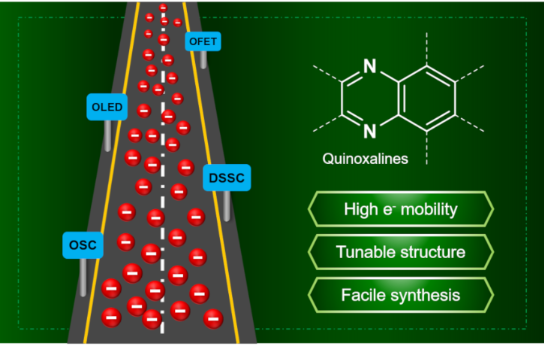
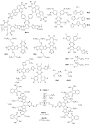
- , including solvatochromism and AIE enhancement. These characteristics enable tunable emission and enhanced luminescence efficiency. The potential application of tripodal derivatives in white OLEDs indicates the versatility of quinoxaline-based materials in achieving diverse emission colors [67]. Figure 7




A deep-red fluorophore based on naphthothiadiazole as emitter with hybridized local and charge transfer and ambipolar transporting properties for electroluminescent devices
Beilstein J. Org. Chem. 2023, 19, 1664–1676, doi:10.3762/bjoc.19.122
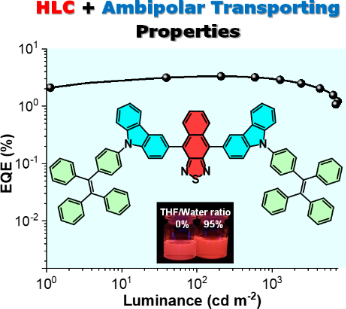
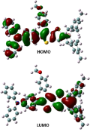
- orbital (HOMO) was delocalized over the Nz core and the attached carbazole moieties. There was an overlap between the HOMO and LUMO orbitals over the Nz fragment, which is likely to promote the LE component and consequently gives rise to a faster radiative decay and thus a higher luminescence efficiency
- luminescence efficiency, while a significant spatial separation between hole and particle wavefunctions considered for CT component promoting RISC process along high-lying excitation state for enhancing an exciton utilization efficiency (EUE). The photophysical properties of TPECNz were studied in solution
- performed using either a Bruker LC-Quadrupole-Time-of Flight tandem mass spectrometer or a Bruker Autoflex MALDI-TOF mass spectrometer. UV–vis spectra were recorded using a Perkin Elmer Lambda 1050 UV–vis–NIR spectrometer. Luminescence emission spectra and lifetimes were analyzed using an Edinburgh


Organic thermally activated delayed fluorescence material with strained benzoguanidine donor
Beilstein J. Org. Chem. 2023, 19, 1289–1298, doi:10.3762/bjoc.19.95
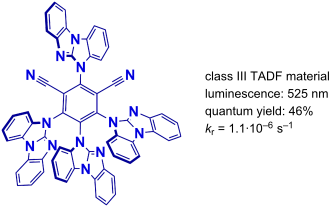
- benzoguanidine donor and compare it with the benchmark carbazole-based material (4CzIPN). Extended π-conjugation in 4BGIPN material results in yellow-green luminescence at 512 nm with a fast radiative rate of 5.5 × 10⁻⁵ s−1 and a photoluminescence quantum yield of 46% in methylcyclohexane solution. Such a
- exhibits a featureless yellow CT-type luminescence with λmax = 525 nm that is 44 and 25 nm red-shifted compared to 4CzIPN (λmax = 481 and 500 nm in Zeonex and MCH, respectively) [12]. The solution photoluminescent quantum yield (PLQY) of 4BGIPN is 46% under inert atmosphere and decreases down to 18% in
- aerated MCH solution. The reduction in quantum yield on exposure to oxygen is due to quenching of the triplet excited states indicating a TADF luminescence mechanism. PLQY in Zeonex films is 39% in air, which is lower than the PLQY of 87% reported for 4CzIPN [17]. The two-component excited state lifetime


New one-pot synthesis of 4-arylpyrazolo[3,4-b]pyridin-6-ones based on 5-aminopyrazoles and azlactones
Beilstein J. Org. Chem. 2023, 19, 1155–1160, doi:10.3762/bjoc.19.83
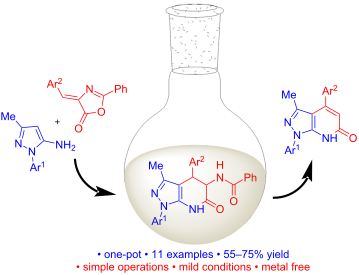
- –i, 9a, and 10a, a band with a maximum at 260–265 nm is observed, which has a shoulder at 300–305 nm. These signals seem to correspond to π–π* and n–π* transitions. In the luminescence spectra of compounds 4a–i, 9a, and 10a, there is one broadened band with an emission maximum at 409–440 nm (Figure 2


Photoredox catalysis harvesting multiple photon or electrochemical energies
Beilstein J. Org. Chem. 2023, 19, 1055–1145, doi:10.3762/bjoc.19.81
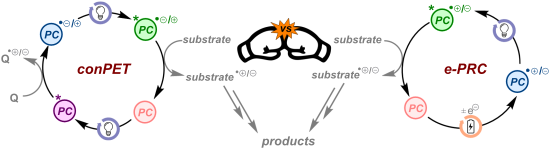
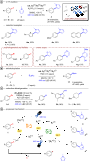
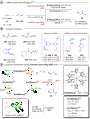
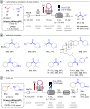
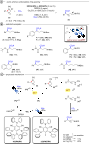
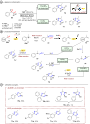
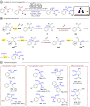
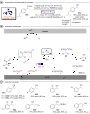
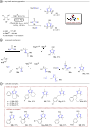
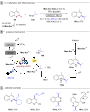
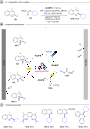
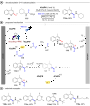
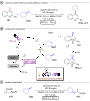
- SCE for N-(diphenylmethylene)-1-phenylmethanamine) [78]. Spectroscopic investigations later revealed that the change in absorption and luminescence of deaerated solutions of [Ir1]+ and Et3N were neither related to i) the formation of [Ir1]0 via a single-excitation reductive quenching photocatalytic

























The effect of dark states on the intersystem crossing and thermally activated delayed fluorescence of naphthalimide-phenothiazine dyads
Beilstein J. Org. Chem. 2023, 19, 1028–1046, doi:10.3762/bjoc.19.79
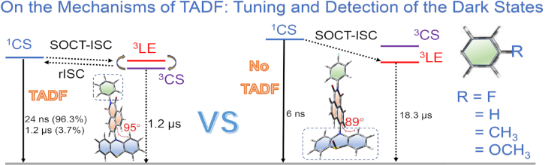
- emitters [32][33]. However, the most popular optical spectroscopic methods previously used in this area, such as the very often used transient photoluminescence spectral measurement or the luminescence lifetime measurement, are unable to detect the dark states of the TADF emitters, i.e., the 3LE and 3CS
- Supporting Information File 1), the fluorescence intensity is less dependent on the atmosphere. Moreover, we suggest that the reduced luminescence of the oxidized molecules in air may be caused by the quenching effect of oxygen to the S1 state. According to this experimental phenomenon, we preliminarily
- time, in this process, the triplet features of 3LE start to appear (460 nm). Since the relaxed CS state and CR evolve within 7.92 ns, this is in agreement with the TADF luminescence studies (ca. 8 ns, Figure 4a), thus the decay of the 1CS state in aerated solution takes ca. 7.92 ns. Then, the system


Construction of hexabenzocoronene-based chiral nanographenes
Beilstein J. Org. Chem. 2023, 19, 736–751, doi:10.3762/bjoc.19.54
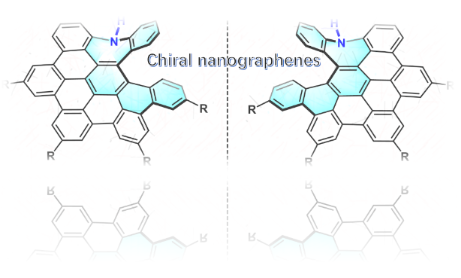
- to the molecules which cannot be superimposed on their own mirror image. Nanomaterials with chiroptical properties have shown potential applications in different fields such as optical devices, polarization-based information encryption, circularly polarized luminescence (CPL) lasers, or biosensing
- compound at 200 °C for 5 h, which gives a lower limit to the barrier of racemization of ΔG > 38.3 kcal mol−1 at 473 K. The circularly polarized luminescence (CPL) of these structures were also evaluated with the luminescence dissymmetry factors (glum) values of 4 × 10⁻⁴ for compound 11 and 7 × 10⁻⁴ for
- , respectively by DFT calculation. The enantiopure isomers of the π-extended helicenes were evaluated as excellent circularly polarized luminescence (CPL) emitters with a glum of 7.44 × 10⁻³ for 37, which is around 10-fold higher than 35. Chiral “HBC-dimers” and “HBC trimers” The combination of two or more HBCs




Phenanthridine–pyrene conjugates as fluorescent probes for DNA/RNA and an inactive mutant of dipeptidyl peptidase enzyme
Beilstein J. Org. Chem. 2023, 19, 550–565, doi:10.3762/bjoc.19.40
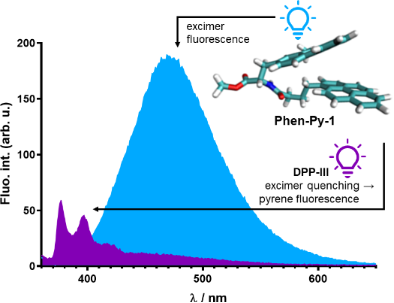
- luminescence (CPL). The exciplex (excited heterodimer) formed intramolecularly proved to be conformationally rigid and consequently was not sensitive to solvent or temperature [8]. Further, pyrenoimidazole-fused phenanthridines have been reported recently, developed as fluorescence emitters for optoelectronic




Naphthalimide-phenothiazine dyads: effect of conformational flexibility and matching of the energy of the charge-transfer state and the localized triplet excited state on the thermally activated delayed fluorescence
Beilstein J. Org. Chem. 2022, 18, 1435–1453, doi:10.3762/bjoc.18.149
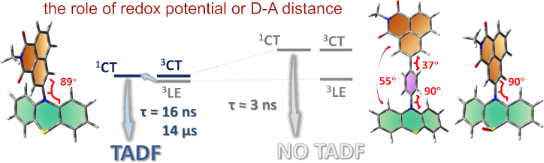
- can be controlled. The singlet oxygen quantum yield (ΦΔ) of NI-PTZ is moderate in n-hexane (HEX, ΦΔ = 19%). TADF was observed for the dyads, the biexponential luminescence lifetime are 16.0 ns (99.9%)/14.4 μs (0.1%) for the dyad and 7.2 ns (99.6%)/2.0 μs (0.4%) for the triad. Triplet state was
- lifetime is 16.0 ns (99.9%)/14.4 μs (0.1%) in deaerated n-hexane (Figure 4a). In aerated solution, the luminescence lifetime is reduced to 7.6 ns (99.8%)/0.19 μs (0.2%) (Figure 4d). These are footprints for TADF. Similar features were reported for an analogous NI-PTZ dyad [20]. NI-PTZ2 displays similar
- the PTZ moiety (for NI-PTZ-O) or by using a longer linker (NI-Ph-PTZ and NI-PhMe2-PTZ), leads to a normal fluorescence decay. Specifically, the luminescence lifetimes of NI-PTZ-O and NI-Ph-PTZ are 3.1 ns (99%)/22.1 ns (1%) and 1.2 ns (77%)/4.5 ns (23%), respectively (Figure 4c and 4f). The
Ionic multiresonant thermally activated delayed fluorescence emitters for light emitting electrochemical cells
Beilstein J. Org. Chem. 2022, 18, 1311–1321, doi:10.3762/bjoc.18.136
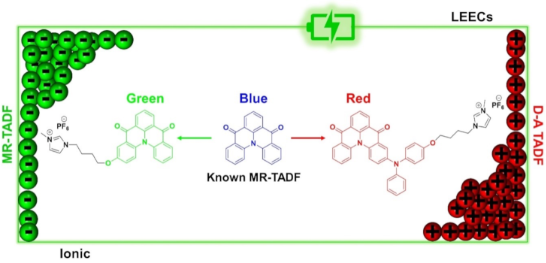
- new ionic TADF emitters were designed and synthesized for LEECs application using a known MR-TADF emitter DiKTa. Our MR-TADF green emitter, DiKTa-OBuIm exhibited efficient green luminescence and TADF in 1 wt % mCP film (λPL = 499 nm, FWHM = 66 nm, ΦPL = 71%, τd = 317 μs, kRISC = 2.85 × 10³ s−1). This



Thermally activated delayed fluorescence (TADF) emitters: sensing and boosting spin-flipping by aggregation
Beilstein J. Org. Chem. 2022, 18, 1177–1187, doi:10.3762/bjoc.18.122
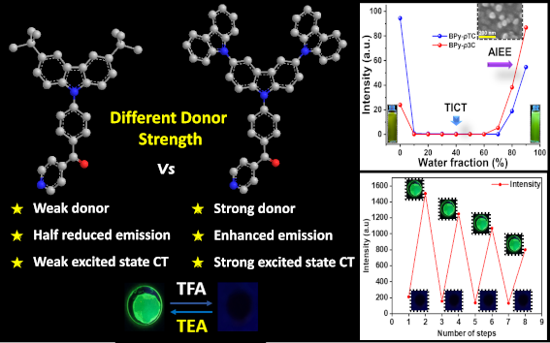
- thermally activated delayed fluorescence (TADF) characteristics are emerging due to the potential applications in optoelectronic devices, time-resolved luminescence imaging, and solid-phase sensing. Herein, we synthesized two (4-bromobenzoyl)pyridine (BPy)-based donor–acceptor (D–A) compounds with varying


Electrochemical and spectroscopic properties of twisted dibenzo[g,p]chrysene derivatives
Beilstein J. Org. Chem. 2022, 18, 963–971, doi:10.3762/bjoc.18.96
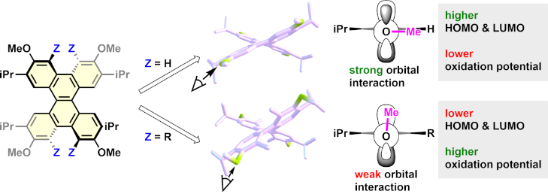
- twisting results in a slight increase in the HOMO and a slight lowering of the LUMO. The twisting effect is much smaller than the conjugation effect of the MeO group. Absorption spectra of all the substituted DBC derivatives also showed a red-shift as compared to that for DBC-H. Concerning the luminescence
- HOMO to LUMO and HOMO-1 to LUMO+1 (see Tables S1–S6 in Supporting Information File 1). The trend for the order of optical band gap is roughly consistent with that of the HOMO–LUMO gap obtained from DFT calculation [52]. In the photoluminescence spectra, the luminescence of DBC-Br was very weak. On the


Post-synthesis from Lewis acid–base interaction: an alternative way to generate light and harvest triplet excitons
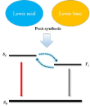
Beilstein J. Org. Chem. 2022, 18, 825–836, doi:10.3762/bjoc.18.83
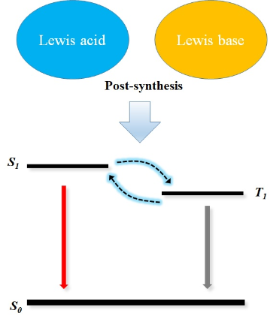
- ) [6][7]. In 2012, Adachi et al. first reported purely organic thermally activated delayed fluorescent (TADF) materials, which achieved nearly 100% exciton utilization via reverse intersystem crossing (RISC) [8]. Meanwhile, novel materials based on new luminescence mechanisms such as hybridized local
- multiple molecules [13]. The exciplex contains new excited states through charge transfer between a donor molecule and an acceptor molecule. This provides a simple way to create new luminescence processes through the intermolecular interactions of existing molecules [14]. It has been reported that new
- emitters can be realized by adding a Lewis acid to a fluorescent conjugated compound [15][16]. Lewis acids are common complexing agents [17] and are frequently used to dope conjugated polymers to enhance their conductivity while the luminescence is completely quenched [18][19]. In contrast, in the presence


Thiophene/selenophene-based S-shaped double helicenes: regioselective synthesis and structures
Beilstein J. Org. Chem. 2022, 18, 809–817, doi:10.3762/bjoc.18.81
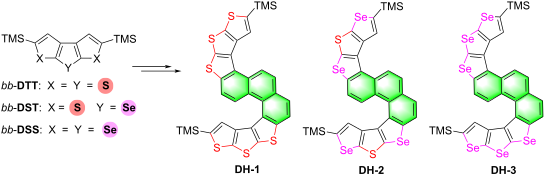
- carbohelicenes has led to the synthesis of double, triple, quadruple, quintuple, and sextuple molecules, the chiro-optical properties of these molecules, such as their circular dichroism (CD) and circularly polarized luminescence (CPL), have also been widely studied [1][2][3][4][5][6][7][8]. The development of


Effect of a twin-emitter design strategy on a previously reported thermally activated delayed fluorescence organic light-emitting diode
Beilstein J. Org. Chem. 2021, 17, 2894–2905, doi:10.3762/bjoc.17.197
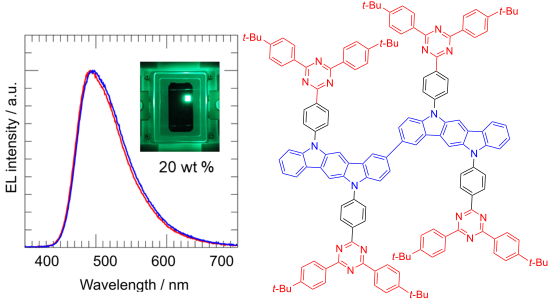
- luminescence in an OLED is achieved through the radiative decay of electrically generated excitons, high-efficiency devices must be able to harvest both the 25% singlet and 75% triplet excitons to produce light [3]. Distinct from phosphorescent compounds, TADF molecules harvest triplet excitons by converting
- luminescence spectroscopy was used to measure a for solution processed films of 20 wt % DICzTRZ in CzSi. The data were then analyzed via optical simulation to yield and anisotropy factor of 0.53, which disappointingly implies that the emitter presents a strongly vertical orientation (Figure 6); the


Design, synthesis and photophysical properties of novel star-shaped truxene-based heterocycles utilizing ring-closing metathesis, Clauson–Kaas, Van Leusen and Ullmann-type reactions as key tools
Beilstein J. Org. Chem. 2021, 17, 1374–1384, doi:10.3762/bjoc.17.96
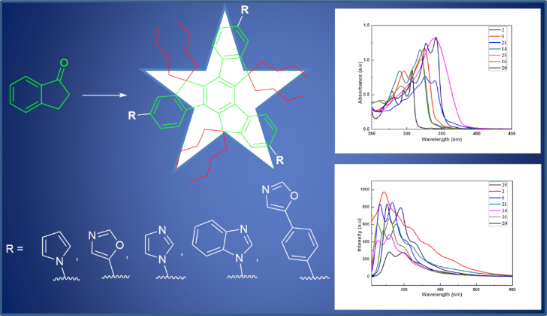
- macrocycles [31][32]. Moreover, polypyrrolic systems are of extensive interest in numerous areas namely optics, medicine, and supramolecular chemistry in addition to the materials sciences and technology. Fascinatingly, in luminescence as well as fluorescence-based sensors, pyrrole derivatives play a vital


A chromatography-free and aqueous waste-free process for thioamide preparation with Lawesson’s reagent
Beilstein J. Org. Chem. 2021, 17, 805–812, doi:10.3762/bjoc.17.69

- incomparable chelating ability towards selected transition metals, and the corresponding complexes were applied in various areas such as chemical-sensor materials, tunable redox-potential complexes, polymer hybrid luminescence materials, building blocks for multinuclear complexes, and as catalysts for cross


Circularly polarized luminescent systems fabricated by Tröger's base derivatives through two different strategies
Beilstein J. Org. Chem. 2021, 17, 52–57, doi:10.3762/bjoc.17.6
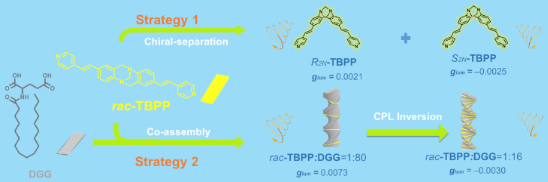
- luminescence with glum values of +0.0021, and −0.0025, respectively. The second way to fabricate the rac-TBPP-based CPL-active material is to co-gel the fluorescent rac-TBPP with a chiral ᴅ-glutamic acid gelator DGG by co-assembly strategy. At the molar ratio of rac-TBPP/DGG = 1:80, the glum value of the co
- -gel was about three times higher than the glum values of R2N-TBPP and S2N-TBPP enantiomers. Interestingly, the CPL handedness of the rac-TBPP/DGG co-gel could be adjusted effectively by changing their stoichiometric ratios. Keywords: circularly polarized luminescence; chiral resolution; co-gelation
- and applied in practice [4][5][6]. Among them, the fluorescent materials emitting circularly polarized luminescence (CPL) have attracted intensive interest owing to their wide applications in various researching fields including 3D displays, chiroptical materials, and so on [7][8][9][10]. Circular


Synthesis, crystal structures and properties of carbazole-based [6]helicenes fused with an azine ring
Beilstein J. Org. Chem. 2021, 17, 11–21, doi:10.3762/bjoc.17.2
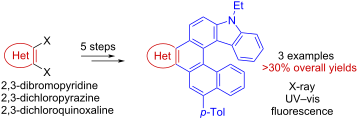
- have led to promising applications of helicenes. The latter have been studied with respect to conductivity [12][13][14][15], nonlinear optics [16][17], circularly polarized luminescence [18][19][20][21][22][23][24], organocatalysis [25][26][27][28][29], conformational analysis [30], chirality sensing



Selected peptide-based fluorescent probes for biological applications
Beilstein J. Org. Chem. 2020, 16, 2971–2982, doi:10.3762/bjoc.16.247

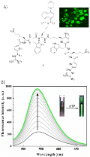
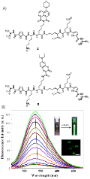
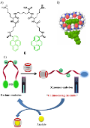
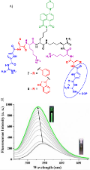
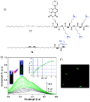
- liposomes (molar ratio 12/13 = 1:9, total monomer concentration = 10.0 μM, 25 °C) in 10.0 mM DMSO/TBS (v/v = 1:4, pH 7.4). The insets show the normalized fluorescence intensity at 515 nm vs the concentration of LPS (0–3.6 μM) and the fluorescence turn-on; C) confocal luminescence image for E. coli DH5α




Naphthalonitriles featuring efficient emission in solution and in the solid state
Beilstein J. Org. Chem. 2020, 16, 2960–2970, doi:10.3762/bjoc.16.246
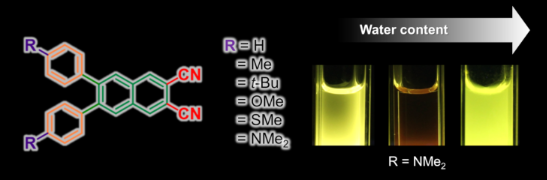
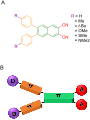
- -containing substituents such as NMe2 possess more electron-donating ability than the S-based moieties such as SMe. Moreover, it was found that NMe2 showed higher luminescence quantum yields (ΦF) in comparison to SMe, indicating that N-substituted groups could enhance the fluorescence intensity. Therefore
- strategies to overcome ACQ. Up to date, various AIE materials with efficient luminescence have been synthesized for diverse applications [28][29][30][31][32]. The discovery of AIE and especially aggregation-induced emission enhancement fluorogens (AIEEgens) further incentivized the synthesis and analysis of
- that H, Me, t-Bu, OMe, SMe and NMe2 represent excellent candidates as DSEgens. The combination of luminescence in both solutions and aggregated state enables future applications, such as data encryption, anti-counterfeiting [43] and non-invasive imaging for 3D tumor spheroids, considering that AIEgens