


Search results
Search for "phosphine ligands" in Full Text gives 79 result(s) in Beilstein Journal of Organic Chemistry.
An efficient Pd–NHC catalyst system in situ generated from Na2PdCl4 and PEG-functionalized imidazolium salts for Mizoroki–Heck reactions in water
Beilstein J. Org. Chem. 2017, 13, 1735–1744, doi:10.3762/bjoc.13.168

- modifying traditional palladium–phosphine catalysts by grafting various hydrophilic substituents on phosphine ligands [18][19][20][21][22][23][24][25][26][27]. However, most of these phosphine ligands are air sensitive and required tedious work to preparation. In addition, the easy dissociation of common P
- –Pd bonds under aqueous reaction conditions often restricted the reuse of the catalyst and led to undesired residues. Therefore, in recent years, efforts have been turned to the development of water-soluble non-phosphine ligands [28][29][30][31][32][33][34]. In this context, N-heterocyclic carbenes


Direct catalytic arylation of heteroarenes with meso-bromophenyl-substituted porphyrins
Beilstein J. Org. Chem. 2017, 13, 1524–1532, doi:10.3762/bjoc.13.152
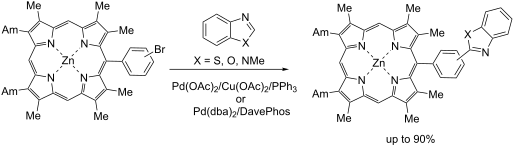
- without any additional ligand was shown to be advantageous over catalytic systems with phosphine ligands. Osuka also used this approach for β-arylation of porphyrins. In this ligandless reaction the Pd(0) species from palladium acetate could be provided by the traces of amine present in DMA, and the


Unpredictable cycloisomerization of 1,11-dien-6-ynes by a common cobalt catalyst
Beilstein J. Org. Chem. 2017, 13, 639–643, doi:10.3762/bjoc.13.62
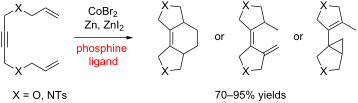
- catalytic system with other phosphine ligands, such as dppm, dppf, or BINAP, did not catalyze cycloisomerization of 1 into any products. In order to explain the formation of products 2–5 we proposed a possible mechanism (Scheme 3) in accordance with the generally accepted concepts [15][18]. The crucial step




Transition-metal-catalyzed synthesis of phenols and aryl thiols
Beilstein J. Org. Chem. 2017, 13, 589–611, doi:10.3762/bjoc.13.58

- synthesized a series of novel imidazole-based phosphine ligands, and their effciency was carefully screened [23]. Among these ligands, the one with two isopropyl groups located at the phenyl ring (L3) was effective in converting aryl chlorides and bromides to the corresponding phenols in moderate to excellent
- structural motifs. Hydroxylation of aryl halides using biphenylphosphine as ligand. Hydroxylation of aryl halides using tert-butylphosphine as ligand. Hydroxylation of aryl halides using imidazole typed phosphine ligands. [Pd(cod)(CH2SiMe3)2] catalyzed hydroxylation of aryl halides. Pd/PANI catalyzed


Pd- and Cu-catalyzed approaches in the syntheses of new cholane aminoanthraquinone pincer-like ligands
Beilstein J. Org. Chem. 2017, 13, 564–570, doi:10.3762/bjoc.13.55

- , the addition of an equimolar amount of iPrOH to the mixture of 3a and 6a under the same conditions led to the two-fold decrease in yield of 5c. The replacement of BINAP with other phosphine ligands (t-Bu3P, dppf, PPF-NMe2) gave a very low turnover of Pd catalyst (up to 8 cycles). The increase in


Decarboxylative and dehydrative coupling of dienoic acids and pentadienyl alcohols to form 1,3,6,8-tetraenes
Beilstein J. Org. Chem. 2017, 13, 384–392, doi:10.3762/bjoc.13.41
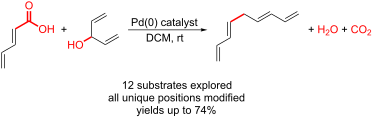
- , it was determined that phosphine ligands were necessary (Table 1, entry 11), either as ligands or as participants in the reaction as discussed later. The typical catalyst used, Pd(PPh3)4, worked well, however, it was found that a more ideal ratio of palladium metal to ligand was 1:1 or 1:2, with


Highly bulky and stable geometry-constrained iminopyridines: Synthesis, structure and application in Pd-catalyzed Suzuki coupling of aryl chlorides
Beilstein J. Org. Chem. 2017, 13, 213–221, doi:10.3762/bjoc.13.24
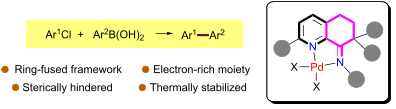
- aryl or alkyl halides include phosphine ligands independently developed by, for example, Buchwald [13][14][15], Hartwig [16][17], Fu [18][19][20], Kwong [21][22][23], Tang [24][25][26][27] and Lundgren [28], and N-heterocyclic carbene ligands due to the inherent strong sigma-donating property [29


Experimental and theoretical investigations on the high-electron donor character of pyrido-annelated N-heterocyclic carbenes
Beilstein J. Org. Chem. 2016, 12, 1884–1896, doi:10.3762/bjoc.12.178
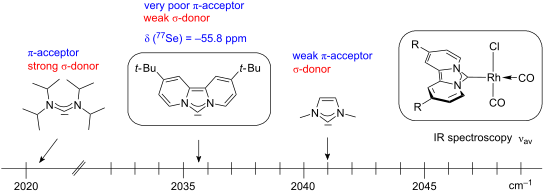
- complexes with phosphine ligands [58][59]. Consequently, the signal at 186.3 ppm can be assigned to the trans-CO ligand and that at 183.2 ppm to the cis-CO ligand (relative to NHC). Thus, it is the cis-CO ligand that undergoes a fast CO exchange. The same dynamic behavior is observed for complex 13C2b


Flow carbonylation of sterically hindered ortho-substituted iodoarenes
Beilstein J. Org. Chem. 2016, 12, 1503–1511, doi:10.3762/bjoc.12.147
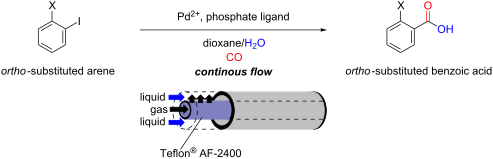
- ]. Five different phosphine ligands were subsequently tested, three of which were monodentate with a variable cone angle (6–8; 145–256°) [35][36] and the other two bidendate phosphine ligands namely 1,4-bis(diphenylphosphino)butane (DPPB, 9; βn = 98°) and Xantphos (10; 104 and 133°) with differing bite
- of X-ray structure; C) ball and stick representation of X-ray structure showing the tolyl group only; D) topside view of X-ray structure [18]. Reverse “tube-in-tube” reactor. Phosphine ligands used for the ortho-carbonylation reaction. X-ray structure of substrate 33. Comparison of plug flow reactor


A cross-metathesis approach to novel pantothenamide derivatives
Beilstein J. Org. Chem. 2016, 12, 963–968, doi:10.3762/bjoc.12.95

- after dissociation from the metal complex, phosphine ligands can attack the carbine [23]. Thus a phosphine-free catalyst was desirable, and the Hoveyda–Grubbs’ 2nd generation catalyst (4) was chosen. As predicted, the yields increased (Table 1) when catalyst 4 was used for the reaction of 9 with


Copper-mediated arylation with arylboronic acids: Facile and modular synthesis of triarylmethanes
Beilstein J. Org. Chem. 2016, 12, 496–504, doi:10.3762/bjoc.12.49
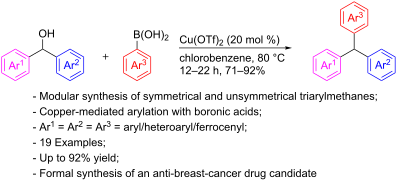
- report a copper(II) triflate-catalyzed modular synthesis of triarylmethanes by employing diarylmethanols 9 and arylboronic acids 10. It is advantageous to employ a base metal catalyst such as copper(II) triflate instead of palladium [55][56] or nickel (Ni) [57] catalysts and to avoid the use of phosphine
- ligands as it is less expensive and more readily facilitates purification. Results and Discussion We selected the copper-mediated cross-coupling reaction of diphenylmethanol (9a) with phenylboronic acid (10a) for the synthesis of triphenylmethane (11a) to optimize the reaction conditions and catalyst


Regioselective palladium-catalyzed ring-opening reactions of C1-substituted oxabicyclo[2,2,1]hepta-2,5-diene-2,3-dicarboxylates
Beilstein J. Org. Chem. 2016, 12, 239–244, doi:10.3762/bjoc.12.25
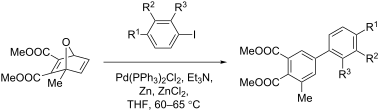
- on their oxidation state and the presence or absence of phosphine ligands (Table 1, entries 1–4). The catalyst lacking a phosphine ligand gave a low yield and the reaction proceeded very slowly (9%, 65 h, Table 1, entry 1). The addition of phosphine exogenously greatly increased the speed and the


N-Methylphthalimide-substituted benzimidazolium salts and PEPPSI Pd–NHC complexes: synthesis, characterization and catalytic activity in carbon–carbon bond-forming reactions
Beilstein J. Org. Chem. 2016, 12, 81–88, doi:10.3762/bjoc.12.9
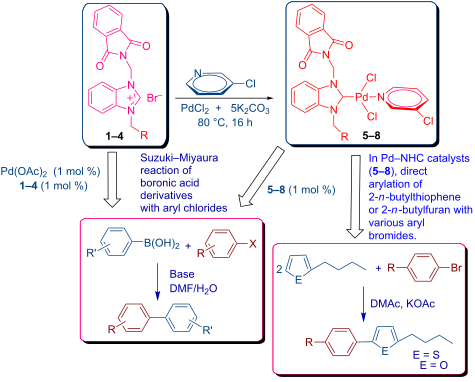
- ][10][11]. This is because NHC complexes are easily obtained by deprotonating imidazolium or benzimidazolium salts and most are relatively stable in air and moisture. They are weak π-acceptors and strong σ-donors and can form strong M–C bonds with transition metal ions compared to trivalent phosphine
- ligands [12][13]. As catalysts, palladium N-heterocyclic carbene (Pd–NHC) complexes display remarkable activities in coupling reactions [5][14][15][16][17]. Among various Pd–NHC complexes such as [Pd(NHC)(dmba)Cl] (dmba = N,N-dimethylbenzylamine) and [Pd(NHC)(Im)Cl2] (Im = imidazole) [18][19], [PEPPSI Pd


Olefin metathesis in air
Beilstein J. Org. Chem. 2015, 11, 2038–2056, doi:10.3762/bjoc.11.221
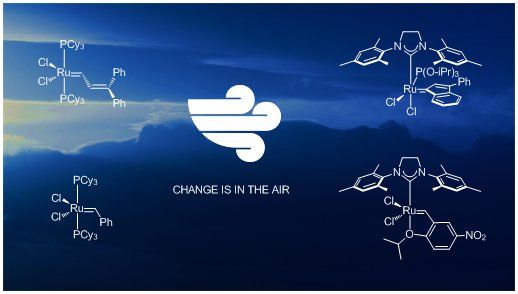
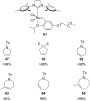
- of the catalyst 6 (Scheme 2), which then was capable of polymerizing unstrained cyclic olefins and to perform reactions with acyclic olefins [37]. Subsequent variations showed that larger and more basic phosphine ligands led to improved activity, and that an order of activity could be established as




Chiral Cu(II)-catalyzed enantioselective β-borylation of α,β-unsaturated nitriles in water
Beilstein J. Org. Chem. 2015, 11, 2007–2011, doi:10.3762/bjoc.11.217
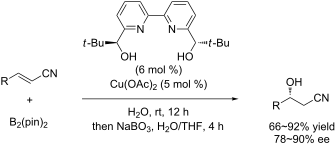
- ]. Enantioselective boron conjugate addition to α,β-unsaturated nitriles provides one of the most efficient routes to chiral β-boryl nitriles. Several straightforward methods have been developed that rely on chiral Cu(I) complexes with air-sensitive phosphine ligands [11][12][13][14][15]. In contrast, Cu(II)-based
- oxidation with high enantioselectivity. In contrast to well-documented Cu(I) catalytic systems in organic solvents, Cu(II) catalysis in water does not require the use of air-sensitive phosphine ligands or strong bases. Notably, neither the chemical nor physical properties of the α,β-unsaturated nitriles had


Hexacoordinate Ru-based olefin metathesis catalysts with pH-responsive N-heterocyclic carbene (NHC) and N-donor ligands for ROMP reactions in non-aqueous, aqueous and emulsion conditions
Beilstein J. Org. Chem. 2015, 11, 1960–1972, doi:10.3762/bjoc.11.212
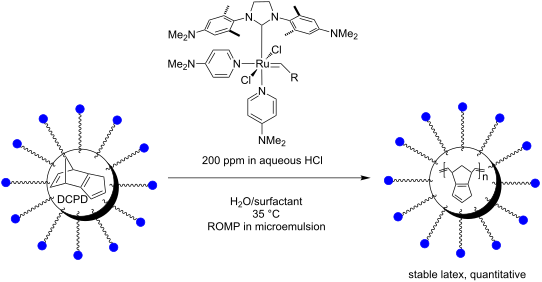
- hydrophilic phosphine ligands [22][23][24][25], NHC ligands [26][27][28][29], N-donor ligands [30], alkylidene moieties [31][32][33] or combinations of these structural features [34][35][36][37]. Another recent development in homogeneous catalysis, and olefin metathesis in particular, have become switchable


New aryloxybenzylidene ruthenium chelates – synthesis, reactivity and catalytic performance in ROMP
Beilstein J. Org. Chem. 2015, 11, 1910–1916, doi:10.3762/bjoc.11.206
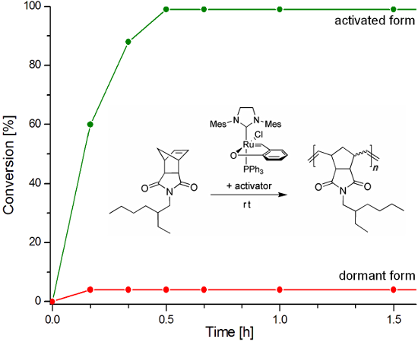
- not correlate with decreasing σ-donor ability of the phosphine ligands (represented by Hammet constant) [12][13]. The highest activity was indeed observed for complex 9 containing the weakest σ-donor and potentially most easily dissociating ligand P(C6H4CF3-4)3. However, the lowest activity was found
- nucleophilicity of the phosphine ligands. A strong electronic influence of the substituent in the ring of the phenoxybenzylidene ligand, in para position towards the oxygen atom, on the catalytic activity of the active form of the complexes was found. The presence of an electron-donating tert-butyl substituent


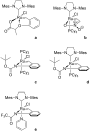


Synthesis and structures of ruthenium–NHC complexes and their catalysis in hydrogen transfer reaction
Beilstein J. Org. Chem. 2015, 11, 1786–1795, doi:10.3762/bjoc.11.194
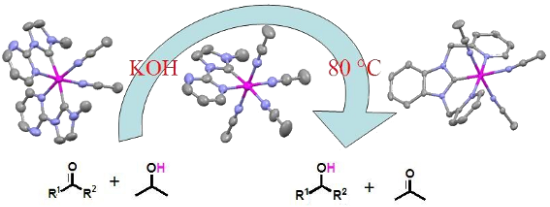
- carbenes (NHCs) have been recognized as a class of strong donating ligands which can stabilize various metal complexes of catalytic importance. Transition metal complexes bearing NHCs are more stable to air, moisture, heat, and tolerant toward oxidation compared to phosphine ligands [1][2][3][4][5][6][7


A comprehensive study of olefin metathesis catalyzed by Ru-based catalysts
Beilstein J. Org. Chem. 2015, 11, 1767–1780, doi:10.3762/bjoc.11.192
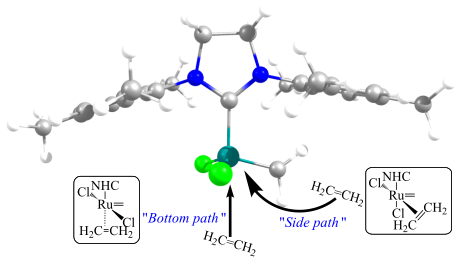
- species is also discussed, with either pyridine or phosphine ligands to dissociate. Keywords: cis; density functional theory (DFT); N-heterocyclic carbene; olefin metathesis; ruthenium; Introduction Organic synthesis is based on reactions that drive the formation of carbon–carbon bonds [1]. Olefin


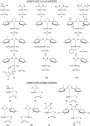


Ruthenium indenylidene “1st generation” olefin metathesis catalysts containing triisopropyl phosphite
Beilstein J. Org. Chem. 2015, 11, 1520–1527, doi:10.3762/bjoc.11.166
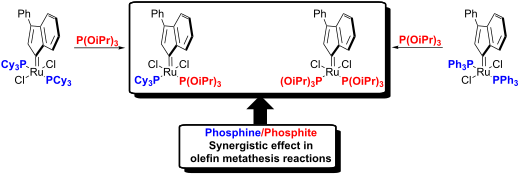
- G-II [26]. Because of the recent interest in “1st generation” complexes [9][38][39][40], previous findings concerning “2nd generation” complexes [25][26][27][28][29][30][31][32][33] and the desire to further reduce catalyst cost, the aim of this contribution is to replace the phosphine ligands in


Selected synthetic strategies to cyclophanes
Beilstein J. Org. Chem. 2015, 11, 1274–1331, doi:10.3762/bjoc.11.142
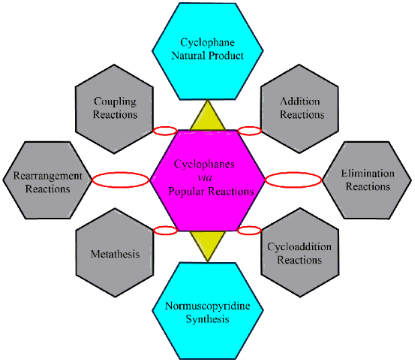
- carried out at room temperature to generate dioxa[7]paracyclophane 276 with a moderate ee value. The effect of biaryl bis(phosphine) ligands was examined, and it revealed the use of (S)-H8-BINAP afforded the cyclophane 276 with a good yield and optimum ee value. Similarly, they also reported the synthesis


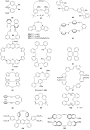


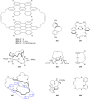


Hydrogenation of unactivated enamines to tertiary amines: rhodium complexes of fluorinated phosphines give marked improvements in catalytic activity
Beilstein J. Org. Chem. 2015, 11, 622–627, doi:10.3762/bjoc.11.70

- probably more often migratory insertions are rate-determining and accelerated by electron-rich phosphine ligands. Prior to embarking on a quest for highly active Rh catalysts for enantioselective enamine hydrogenation, we investigated if more commonly encountered enamine substrates are also reduced much

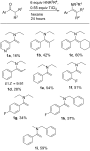


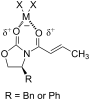
Diastereoselective and enantioselective conjugate addition reactions utilizing α,β-unsaturated amides and lactams
Beilstein J. Org. Chem. 2015, 11, 530–562, doi:10.3762/bjoc.11.60

- enantioselectivities than phosphine ligands in rhodium-catalyzed asymmetric reactions [152][153]. Scheme 16 shows the rhodium-catalyzed asymmetric 1,4-arylation that was developed by Lin and co-workers and the subsequent transformation to the GABAB receptor agonist, (R)-(−)-baclofen. Much of the work that has been




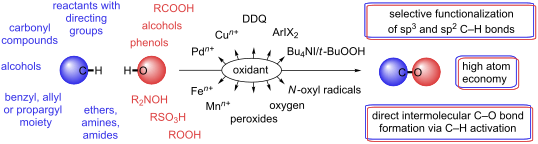
Cross-dehydrogenative coupling for the intermolecular C–O bond formation
Beilstein J. Org. Chem. 2015, 11, 92–146, doi:10.3762/bjoc.11.13
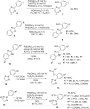
- equivalent amount of alcohol. 2.2 Oxidative systems based on noble metals and oxygen The oxidative coupling of benzyl alcohols with aliphatic alcohols in the presence of Pd(II) salt/Ag(I) salt/base/oxygen system was proposed [96][97]. In the study [97], phosphine ligands were additionally employed. It is









A novel 4-aminoantipyrine-Pd(II) complex catalyzes Suzuki–Miyaura cross-coupling reactions of aryl halides
Beilstein J. Org. Chem. 2014, 10, 2821–2826, doi:10.3762/bjoc.10.299

- without the necessity of phosphine ligands, and was also found to be active for the cross-coupling of aryl iodides and bromides with substituted phenylboronic acids. The SM cross-coupling reaction can be carried out in EtOH, in the presence of air, with low catalyst loadings, and heating at reflux





