


Search results
Search for "proton transfer" in Full Text gives 170 result(s) in Beilstein Journal of Organic Chemistry.
Synthesis of fluorinated acid-functionalized, electron-rich nickel porphyrins
Beilstein J. Org. Chem. 2024, 20, 2954–2958, doi:10.3762/bjoc.20.248
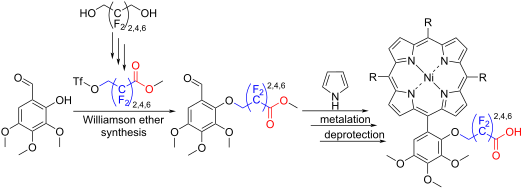
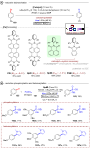
- electrocatalytic hydrogen evolution reactions, a proton source is needed [11]. In this context, trifluoroacetic acid is very frequently chosen as the proton source, because it is a strong acid but just not strong enough to destroy (demetallate) the Ni porphyrin [10]. Covalent attachment of acids facilitates proton
- transfer and increases the efficiency [12]. Three conditions should be met for the target porphyrins of this study. 1. The acid covalently bound to the porphyrin should have an acid strength similar to trifluoroacetic acid. 2. The length of the tether with which the acid group is bound should be sufficient


Computational design for enantioselective CO2 capture: asymmetric frustrated Lewis pairs in epoxide transformations
Beilstein J. Org. Chem. 2024, 20, 2668–2681, doi:10.3762/bjoc.20.224
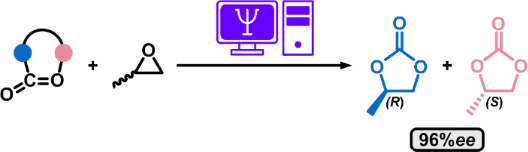
- H2 over CO2 becomes crucial for effective CO2 reduction [7]. Additionally, the strength of the interaction between the catalyst and the resulting system after hydride transfer presents a limitation. The formation of a robust LA–oxygen interaction may impede proton transfer to the basic oxygen atom


Asymmetric organocatalytic synthesis of chiral homoallylic amines
Beilstein J. Org. Chem. 2024, 20, 2349–2377, doi:10.3762/bjoc.20.201
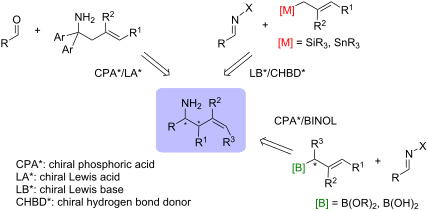
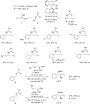
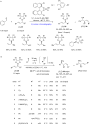
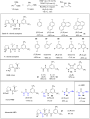
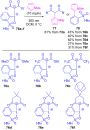
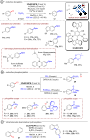
- of the analogous nucleophilic addition of cyanide was reported by Chen and Qiao [38] in 2023 (Figure 4). The calculations revealed that ΔG profile for the reaction pathway via 76, in which the imine molecule is activated by the direct chiral proton transfer from the COBI ion and then later attacked








The Groebke–Blackburn–Bienaymé reaction in its maturity: innovation and improvements since its 21st birthday (2019–2023)
Beilstein J. Org. Chem. 2024, 20, 1839–1879, doi:10.3762/bjoc.20.162
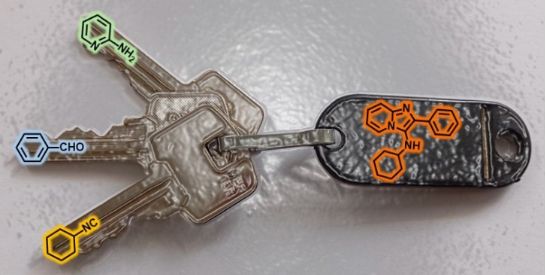
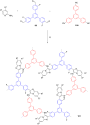
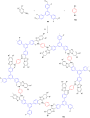
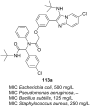
- . Sashidhara et al. reported no conversion, while Liu et al. reported a 58% yield of the GBB product, postulating the ability of ethylene glycol to function as an activator (through hydrogen bonding) and a facilitator of proton transfer. After this discovery, ethylene glycol has never been employed in GBB






Benzylic C(sp3)–H fluorination
Beilstein J. Org. Chem. 2024, 20, 1527–1547, doi:10.3762/bjoc.20.137

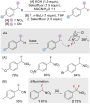
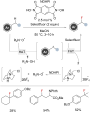
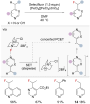
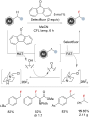
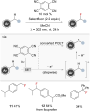
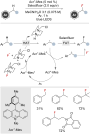
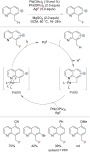
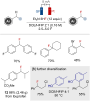
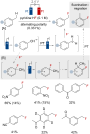
- in the concerted transfer of an electron and a proton from the benzylic substrate resulting in the benzylic radical II – pathway [A] [67]. This radical can also be accessed via sequential oxidative single-electron-transfer (SET) and proton-transfer (PT) steps (pathway [B]), or concerted proton
- of a host of functional groups [68]. This approach can also be applied for nucleophilic fluorination of benzylic substrates. This occurs via sequential electron-transfer and proton-transfer steps, as outlined in Figure 35 [87]. Single-electron oxidation of benzylic substrate I at the anode generates
- radical cation II. The acidity of benzylic protons is augmented after oxidation of the adjacent π-system, facilitating rapid proton transfer at this position, resulting in benzylic radical III [13][88]. Single-electron oxidation of the resulting benzylic radical is facile and expected to occur readily



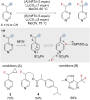

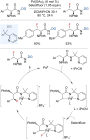


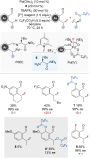


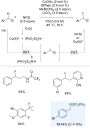












Generation of alkyl and acyl radicals by visible-light photoredox catalysis: direct activation of C–O bonds in organic transformations
Beilstein J. Org. Chem. 2024, 20, 1348–1375, doi:10.3762/bjoc.20.119
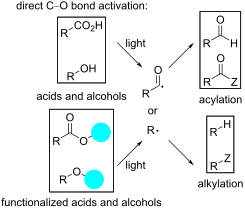
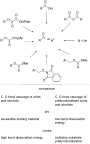
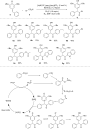
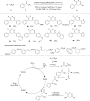
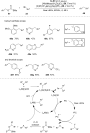
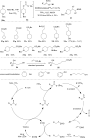
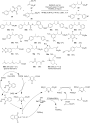
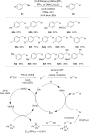
- the thiyl radical by [Ir(II)] generates a thiolate anion and [Ir(III)]. Finally, the thiolate anion is converted to the aryl thiol via proton transfer to complete the catalytic cycle. In 2021, MacMillan and co-workers [55] introduced a cross-coupling reaction of alcohols with aryl halides through






Ligand effects, solvent cooperation, and large kinetic solvent deuterium isotope effects in gold(I)-catalyzed intramolecular alkene hydroamination
Beilstein J. Org. Chem. 2024, 20, 479–496, doi:10.3762/bjoc.20.43
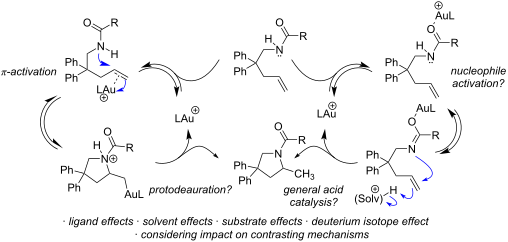
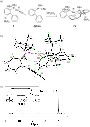
- ]. Protic additives are widely accepted to “facilitate proton transfer,” but they can also influence the aggregation of charged intermediates. Most mechanistic discussions incorporate protodeauration of alkylgold intermediates and consider a continuum from rate or enantio-determining nucleophilic attack
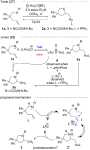
- /protodeauration paradigm for gold catalysis, we propose the data is also consistent with a mechanism involving gold-mediated tautomerization to release a proton, and concerted nucleophilic attack/proton transfer to the alkene (Scheme 2). Substrate effects: Substrate trends in 5-exo-trig alkene hydroamination may
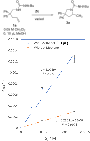
- deviating from classic π-activation. Solvent effects that subtly impact solubility and proton transfer processes are likely to mask the impact of individual mechanistic steps involving gold and are not adequate to distinguish between the contrasting mechanisms under consideration here (Scheme 1 vs Scheme 2






Mechanisms for radical reactions initiating from N-hydroxyphthalimide esters
Beilstein J. Org. Chem. 2024, 20, 346–378, doi:10.3762/bjoc.20.35
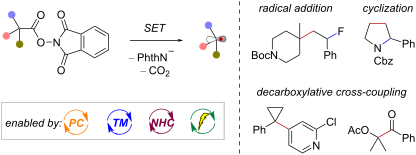
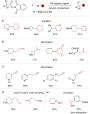
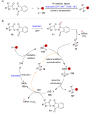
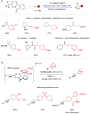
- hydrogen atom transfer (HAT) or sequential electron transfer and proton transfer (ET/PT) steps. Alternatively, redox-neutral transformations can be envisioned using catalytic reductants, which can enable a complementary scope of downstream functionalizations (Scheme 2B). In this perspective, we present an
- CO2. Radical 12 undergoes intermolecular addition to the olefin acceptor 13 to form radical intermediate 14. Finally, under reductive conditions radical 14 can undergo hydrogen atom transfer (HAT) or sequential electron transfer and proton transfer (ET/PT) to form the conjugate addition product 15
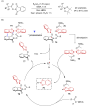
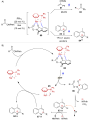
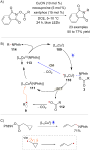
- ester (complex 68). This process delivers substrate radical 9 and nicotinyl radical 69 following proton transfer to the phthalimidyl anion. Then, addition of 9 to α,β-unsaturated ester 70 yields radical intermediate 71. At this stage, HAT mediated by another equivalent of BuNAH delivers product 72, with








Substitution reactions in the acenaphthene analog of quino[7,8-h]quinoline and an unusual synthesis of the corresponding acenaphthylenes by tele-elimination
Beilstein J. Org. Chem. 2024, 20, 243–253, doi:10.3762/bjoc.20.24
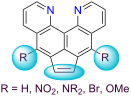
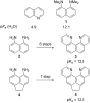
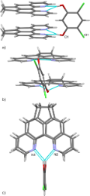
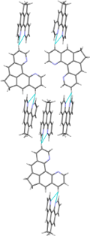
- 3.353 Å). Interestingly, as the acidity of the neighboring component in the crystal structure and the degree of proton transfer from it to the nitrogen atoms of quinoquinoline 5 decrease, the internitrogen distance regularly increases (N…N, Å): 2.709 (HCl), 2.808 (4,6-dichlororesorcinol), 2.813–2.835





Photochromic derivatives of indigo: historical overview of development, challenges and applications
Beilstein J. Org. Chem. 2024, 20, 228–242, doi:10.3762/bjoc.20.23
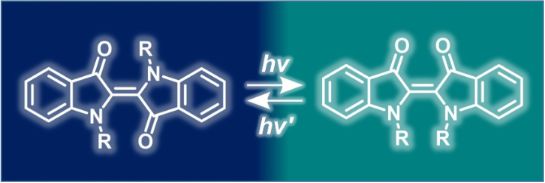
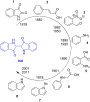
- , indigo exists in a planar E-form, which is more stable than the overcrowded and non-planar Z-form (Figure 6a) [23]. Irradiation of E-indigo, however, does not result in the photoisomerization into the Z-form due to the rapid proton transfer occurring in the excited state (ESPT) from the N atom towards
- the O atom (Figure 6b). Moreover, the data of the first systematic computational ab initio study of the molecular mechanism of the photostability of indigo [36] support these findings and additionally point out that the single proton transfer (SPT) is more favorable than the double proton transfer
- compounds [66]. It was shown that despite the prerequisites for the occurrence of the excited-state proton transfer, monoarylated indigos underwent E–Z photoisomerization upon red-light irradiation at 625 nm. Remarkably, the thermal half-life of the Z-isomer of compound 20b was sensitive to the presence of





Chiral phosphoric acid-catalyzed transfer hydrogenation of 3,3-difluoro-3H-indoles
Beilstein J. Org. Chem. 2024, 20, 205–211, doi:10.3762/bjoc.20.20
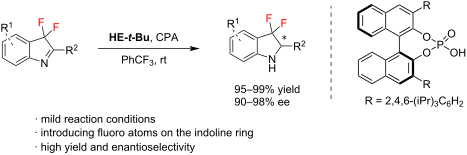
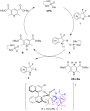
- . The CPA catalyst is regenerated from salt B through proton transfer. We deduced that the steric repulsion between the bulky 2,4,6-triisopropylphenyl-substitutents in the chiral phosphoric acid CPA-6 and the carboxylic ester group of the Hantzsch ester hydrogen donor contribute to the high


Using the phospha-Michael reaction for making phosphonium phenolate zwitterions
Beilstein J. Org. Chem. 2024, 20, 41–51, doi:10.3762/bjoc.20.6
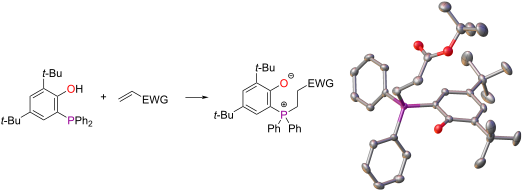
- and exhibit a negative solvatochromism. An analysis of the kinetics of the zwitterion formation was performed for three Michael acceptors (acrylonitrile, methyl acrylate, and acrylamide) in two different solvents (chloroform and methanol). The results revealed the proton transfer step necessary to
- stabilize the initially formed carbanion as the rate-determining step. A preorganization of the carbonyl bearing Michael acceptors allowed for reasonable fast direct proton transfer from the phenol in aprotic solvents. In contrast, acrylonitrile, not capable of forming a similar preorganization, is hardly
- product of interest 2a. Compound 2a was identified by a combination of NMR spectroscopic methods and single-crystal X-ray structure analysis (vide infra) as the zwitterionic phospha-Michael adduct of 1 and acrylonitrile, formally stabilized by proton transfer from the phenol group to the initially formed


Recent advancements in iodide/phosphine-mediated photoredox radical reactions
Beilstein J. Org. Chem. 2023, 19, 1785–1803, doi:10.3762/bjoc.19.131
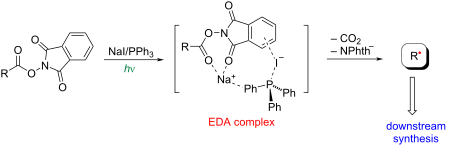
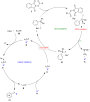
- facilitated by the process of photoexcited radical decarboxylation. On the other hand, the copper catalytic cycle involved the capture of alkyl radicals by the copper complex B, the activation of heteroatom-containing substrates 30 by a base-mediated proton transfer, and the subsequent reductive elimination




Unprecedented synthesis of a 14-membered hexaazamacrocycle
Beilstein J. Org. Chem. 2023, 19, 1728–1740, doi:10.3762/bjoc.19.126
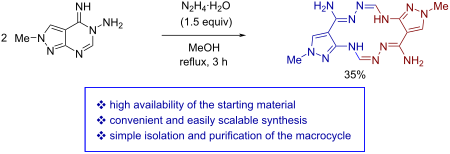
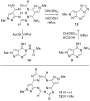
- the most electrophilic C2 carbon of the pyrimidine ring in 8 to give intermediate A. Cleavage of the C2–N3 bond in the latter followed by proton transfer in the formed zwitterion B affords bis-amidrazone C. Next, two molecules of bis-amidrazone C react with each other forming adduct D, which either


Exploring the role of halogen bonding in iodonium ylides: insights into unexpected reactivity and reaction control
Beilstein J. Org. Chem. 2023, 19, 1171–1190, doi:10.3762/bjoc.19.86
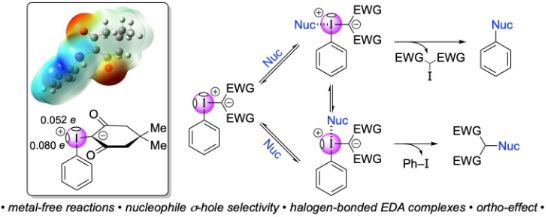
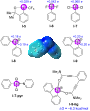
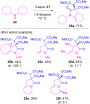
- proposed that electron donor–acceptor (EDA) complex 36 was initially formed between 32 and a sacrificial equivalent of 31, and that 36 underwent a SET to give radical anion 37 and radical cation 38 (Figure 8). While one equivalent of the ylide orchestrated a series of proton transfer (PT) and SET events








Photoredox catalysis harvesting multiple photon or electrochemical energies
Beilstein J. Org. Chem. 2023, 19, 1055–1145, doi:10.3762/bjoc.19.81
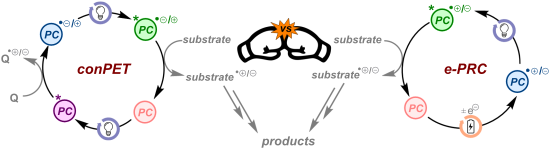
- ). Nucleophilic addition of the amine to the acyl radical and amine-assisted intermolecular proton transfer [84] generates the α-hydroxy radical 24 from which formation of the amide 25 proceeds either via i) oxidation by [Ir2]+ and deprotonation or ii) radical chain propagation [85]. Electron-deficient, electron







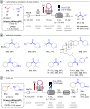
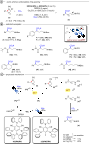
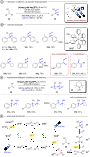
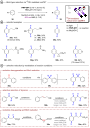


















Synthesis of imidazo[4,5-e][1,3]thiazino[2,3-c][1,2,4]triazines via a base-induced rearrangement of functionalized imidazo[4,5-e]thiazolo[2,3-c][1,2,4]triazines
Beilstein J. Org. Chem. 2023, 19, 1047–1054, doi:10.3762/bjoc.19.80
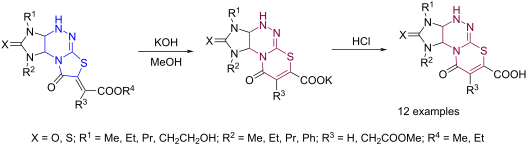
- in the thiazine ring leads to the cleavage of the triazine C–N bond. Further proton transfer gives product 9. The structures of the synthesized compounds 3a,b,j and 5a–k,m were confirmed by IR, 1H and 13C NMR spectroscopy, and high-resolution mass spectrometry. the potassium salts 3c–i,k,m were



Photoredox catalysis enabling decarboxylative radical cyclization of γ,γ-dimethylallyltryptophan (DMAT) derivatives: formal synthesis of 6,7-secoagroclavine
Beilstein J. Org. Chem. 2023, 19, 918–927, doi:10.3762/bjoc.19.70
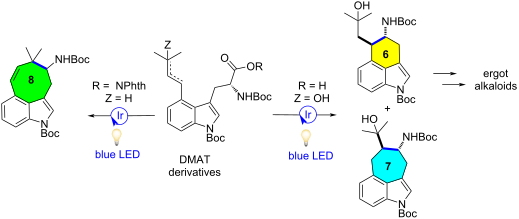
- position via a sequential electron transfer–proton transfer (ET/PT) [52][53][54][55][56][57][58][59]. With our ongoing interest of establishing new methods for the asymmetric synthesis of nonproteinogenic tryptophan derivatives as well as their associated indole alkaloid natural products [60][61][62][63
- proton transfer from the oxidized indole radical cation [75], generated by SET from the activated photocatalyst. The α-amino radical generated by reductive decarboxylation of a DMAT derivative with a redox-active ester (−1.26 V to −1.37 V vs a saturated calomel electrode) would enable turnover of the
- a tentative mechanism (Figure 2). First, the radical cation I was generated via the oxidation of indole 5 by the excited Ir-based photocatalyst, followed by sequential regioselective proton transfer on the benzylic dimethylallyl unit C–H bond of the C4 side-chain, thereby generating II. Here, the


Eschenmoser coupling reactions starting from primary thioamides. When do they work and when not?
Beilstein J. Org. Chem. 2023, 19, 808–819, doi:10.3762/bjoc.19.61
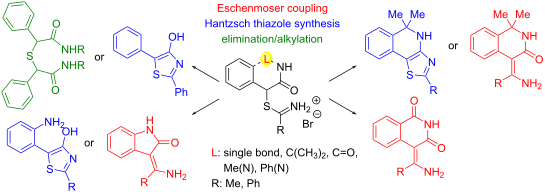
- where triethylamine behaves as a much stronger base. A much weaker base – solid KHCO3 – is probably still strong enough to generate free imidothioates 6a,b''' which undergo parallel base-catalyzed elimination (minor route to nitriles) and intramolecular proton-transfer between the carbon and nitrogen to
- leaving aniline moiety, prefers cyclization to give 13 (Scheme 6). Another key factor for successful ECR concerns the acidity of C–H in particular α-thioiminium salts 6a,b, 10a,b, 12a, 15 (pKaC) or the ease of proton transfer between the carbon and nitrogen in imidothioate followed by formation of the
- ) level of theory. Quantum calculations (Figure 2) have shown that the reaction pathway that involves an intramolecular proton transfer between the α-carbon and imine nitrogen through TS1 is much more favorable for imidothioate derived from 4-bromoisoquinoline-1,3(2H,4H)-dione (3) and 3-bromooxindole (1


Synthesis of substituted 8H-benzo[h]pyrano[2,3-f]quinazolin-8-ones via photochemical 6π-electrocyclization of pyrimidines containing an allomaltol fragment
Beilstein J. Org. Chem. 2023, 19, 778–788, doi:10.3762/bjoc.19.58
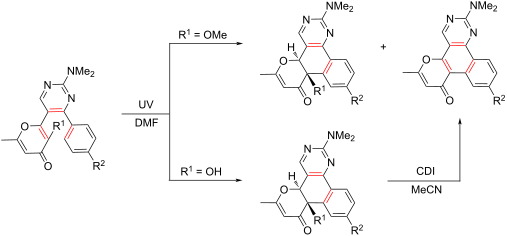
- pyranone ring leading to the formation of α-hydroxy-1,2-diketones. This phototransformation is initiated by an excited state intramolecular proton transfer (ESIPT) process. In most cases the resulting α-hydroxy-1,2-diketones are unstable and their further reactions open access to various original products


Photocatalytic sequential C–H functionalization expediting acetoxymalonylation of imidazo heterocycles
Beilstein J. Org. Chem. 2023, 19, 666–673, doi:10.3762/bjoc.19.48
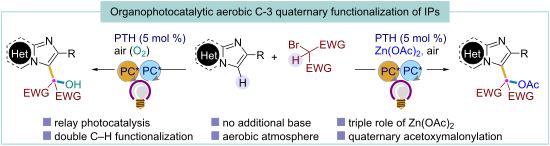
- moieties in several bioactive pharmaceuticals and natural products [1][2][3][4]. Moreover, due to their susceptibility towards 'exited-state intramolecular proton transfer' phenomena, IPs are also effective in optoelectronics and materials sciences [5][6]. C-3-functionalized imidazo[1,2-a]pyridines are




An accelerated Rauhut–Currier dimerization enabled the synthesis of (±)-incarvilleatone and anticancer studies
Beilstein J. Org. Chem. 2023, 19, 204–211, doi:10.3762/bjoc.19.19
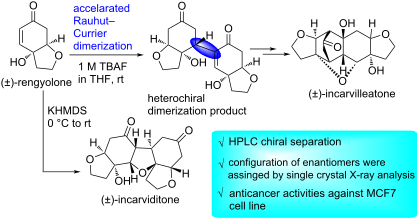
- intermediate A tetrahydrofuran intermediate B with cis-fused ring systems is formed as seen in the existing literature [7]. A proton transfer of enolate moiety B yields another enolate C followed by the β-alkoxy elimination [17] of intermediate C to form intermediate D. The intermediate D on protonation leads


Characterization of a new fusicoccane-type diterpene synthase and an associated P450 enzyme
Beilstein J. Org. Chem. 2022, 18, 1396–1402, doi:10.3762/bjoc.18.144
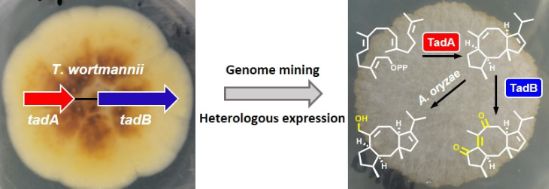
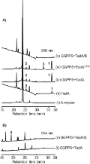
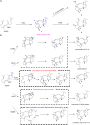
- employs an intramolecular proton transfer. We recently showed that a water-mediated concerted deprotonation–protonation is required for the MgMS-mediated cyclization [20]. In order to probe the mechanism underlying the cyclization of 1, we used His6-tagged TadA to carry out in vitro enzymatic reactions


From amines to (form)amides: a simple and successful mechanochemical approach
Beilstein J. Org. Chem. 2022, 18, 1210–1216, doi:10.3762/bjoc.18.126
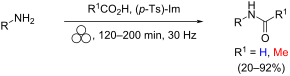
- pointed out the importance of working in the presence of an excess of acid and a stoichiometric amount of imidazole. The better results recorded in the presence of imidazole may be due to different factors. It is known that imidazole can efficiently promote those processes involving proton transfer under
Thermally activated delayed fluorescence (TADF) emitters: sensing and boosting spin-flipping by aggregation
Beilstein J. Org. Chem. 2022, 18, 1177–1187, doi:10.3762/bjoc.18.122
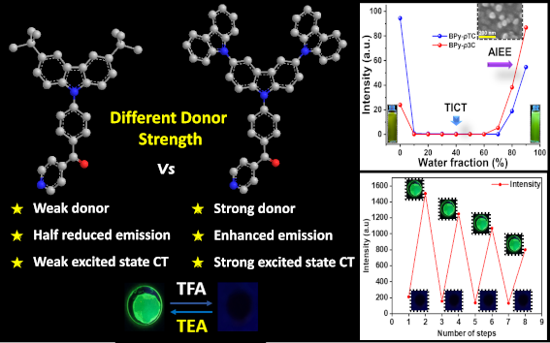
- developed mainly by focusing on photophysical processes, such as photoinduced electron transfer (PET), excited-state intramolecular proton transfer (ESIPT), fluorescence resonance energy transfer (FRET), etc. [21][22][24][25]. Several literature reports have also demonstrated the switching of fluorescence





