Search results
Search for "safe" in Full Text gives 202 result(s) in Beilstein Journal of Organic Chemistry. Showing first 200.
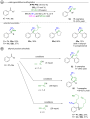
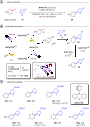
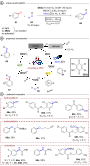
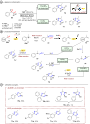
Selectfluor and alcohol-mediated synthesis of bicyclic oxyfluorination compounds by Wagner–Meerwein rearrangement
Beilstein J. Org. Chem. 2024, 20, 1462–1467, doi:10.3762/bjoc.20.129
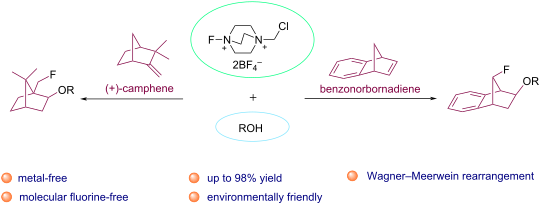
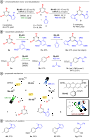
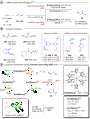
- study, benzonorbornadiene (1a) and the chiral natural product (+)-camphene (1b) were used as bicyclic alkenes. Safe, easily soluble, easy to use, stable solid, reactive and commercial available selectfluor [18][27][28] was selected for electrophilic fluorination source. Water and various alcohols were
- . An environmentally friendly approach was pursued by using safe, easily soluble, easy to use, stable, solid and reactive selectfluor as an electrophilic fluorination reagent, and water and various alcohols as a nucleophile source. Besides being novel, the presented oxyfluorination protocol provides
- distinct advantageous such as (i) the methodology does not require the presence of any metal moities, (ii) enables the synthesis of corresponding oxyfluorinated analogues with high yields and selectivity, (iii) allows derivatization of natural chiral molecules, (iv) uses a safe solvent in mild reaction


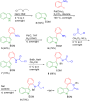
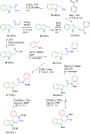
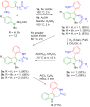
The Ugi4CR as effective tool to access promising anticancer isatin-based α-acetamide carboxamide oxindole hybrids
Beilstein J. Org. Chem. 2024, 20, 1213–1220, doi:10.3762/bjoc.20.104
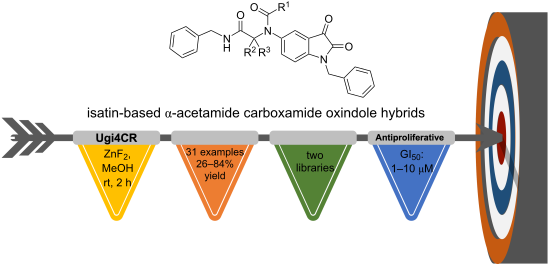
- urgent need to find novel, effective and safe drugs for cancer therapy. Recently, focusing on the design of more potent anticancer drug candidates using more sustainable synthetic processes, we report a new Ugi four-component reaction approach for easy access to Ugi-derived isatin-peptoids in moderate to





Carbonylative synthesis and functionalization of indoles
Beilstein J. Org. Chem. 2024, 20, 973–1000, doi:10.3762/bjoc.20.87
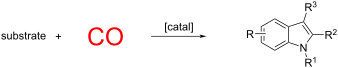
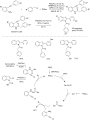
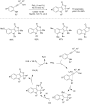
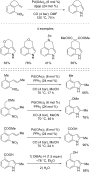
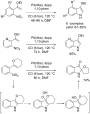
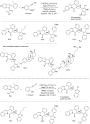
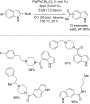
- yields in CH3CN under 10–20 bar of CO at 140 °C within 15–30 min and with carbon dioxide as the side-product (Scheme 18). Carbon monoxide is a cheap gas but its use requires safe and controlled environments and systems because it is highly toxic to human. In addition, reactions in which carbon monoxide
- hexaketocyclohexane octahydrate as the CO source again. This cyclic hexaketone is a non-toxic stable solid and therefore, it is simple and safe to use unlike of carbon monoxide. It was used as reagent to obtain indol-α-ketoesters by the Cu-catalyzed direct double-carbonylation of indoles and alcohols [76]. The












Innovative synthesis of drug-like molecules using tetrazole as core building blocks
Beilstein J. Org. Chem. 2024, 20, 950–958, doi:10.3762/bjoc.20.85
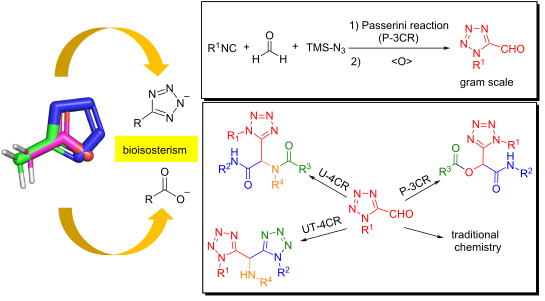
- . Trimethylsilyl azide is considered as a safe replacement of metal azides. We started the solvent optimization with MeOH and H2O as solvent system at room temperature, however, it did not yield any product even after 3 days (Table 1, entry 1). The use of DMF to improve the solubility of the paraformaldehyde solid




Possible bi-stable structures of pyrenebutanoic acid-linked protein molecules adsorbed on graphene: theoretical study
Beilstein J. Org. Chem. 2024, 20, 570–577, doi:10.3762/bjoc.20.49
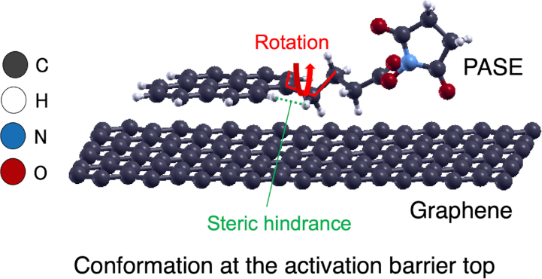
- , for example, the adiabatic potential energy surface, defined as the Born–Oppenheimer surface, is invariant for substitution between isotopes of carbon. This is an example of the weak perturbation. In substitutions where the mass effect can be regarded as the predominant effect, it is safe to assume


Green and sustainable approaches for the Friedel–Crafts reaction between aldehydes and indoles
Beilstein J. Org. Chem. 2024, 20, 379–426, doi:10.3762/bjoc.20.36




N-Sulfenylsuccinimide/phthalimide: an alternative sulfenylating reagent in organic transformations
Beilstein J. Org. Chem. 2023, 19, 1471–1502, doi:10.3762/bjoc.19.106
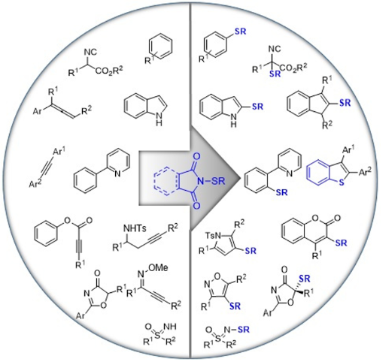
- field of organic synthesis. These compounds are readily accessible, safe, and more stable than toxic, unstable, and foul-smelling thiols. These electrophilic sulfur sources have deserved particular interest for the C–S bond formation via the reaction with various nucleophiles. Their preparation is




Non-noble metal-catalyzed cross-dehydrogenation coupling (CDC) involving ether α-C(sp3)–H to construct C–C bonds
Beilstein J. Org. Chem. 2023, 19, 1259–1288, doi:10.3762/bjoc.19.94
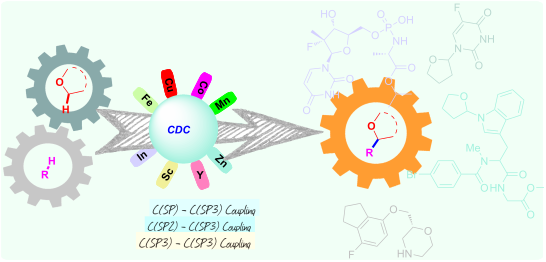
- method allows the efficient alkylation of aromatic rings, can directly afford pharmaceutically significant heterocycles, and the raw materials and iron catalysts are safe and readily available. In 2017, Xu, Loh, and co-workers, demonstrated an iron-catalyzed hydroalkylation reaction of α,β-unsaturated
- application of this method still limited by sustainability, safety, and cost factors. Therefore, further development to shorten the reaction time, improve the reaction efficiency, and reduce energy consumption in an environmentally friendly, practical, and safe method for CDC will be a continuous process [131






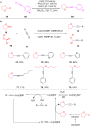


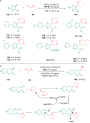


Selective and scalable oxygenation of heteroatoms using the elements of nature: air, water, and light
Beilstein J. Org. Chem. 2023, 19, 1146–1154, doi:10.3762/bjoc.19.82
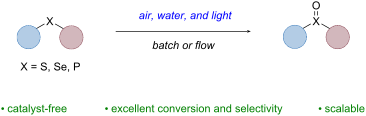
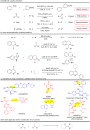
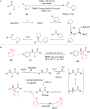
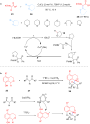
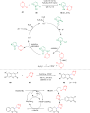
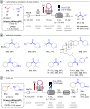
- of water (Table 1, entries 1 and 2), the addition of oxygen (entries 1, 5, and 6) and light in the UV-A region (entries 8 and 9) turned out to be crucial (see Supporting Information File 1, Table S2). Additives With the ultimate goal in mind to develop a safe and scalable protocol in continuous flow
- short reaction times. Additionally, benign additives can further enhance the reaction rate. Finally, the protocol was transferred to a continuous-flow setup, making the method scalable and drastically more safe, and thus appealing for implementation in commercial production processes. Study of additives

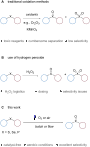




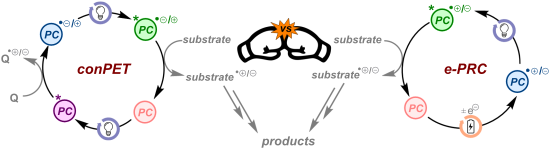
Photoredox catalysis harvesting multiple photon or electrochemical energies
Beilstein J. Org. Chem. 2023, 19, 1055–1145, doi:10.3762/bjoc.19.81







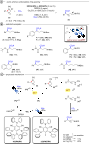
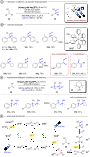


















Cyclodextrins as building blocks for new materials
Beilstein J. Org. Chem. 2023, 19, 889–891, doi:10.3762/bjoc.19.66
- fact that CDs are nontoxic to humans and to the environment and used to develop greener synthetic routes and strategies, CD-based materials are considered safe and environmentally friendly [18]. This includes, among other characteristics, that they are edible, biodegradable, ecological, and
C3-Alkylation of furfural derivatives by continuous flow homogeneous catalysis
Beilstein J. Org. Chem. 2023, 19, 582–592, doi:10.3762/bjoc.19.43
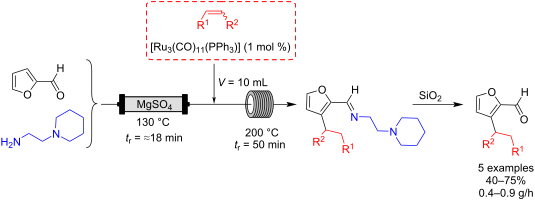
- , not only a unique control of reaction parameters, such as improved mass and heat transfer, but also reduced safety risks and increased reproducibility of the results [29][35][36]. These features should therefore allow us to scale up our directed C3-functionalizations of furfurylimines under safe


Investigation of cationic ring-opening polymerization of 2-oxazolines in the “green” solvent dihydrolevoglucosenone
Beilstein J. Org. Chem. 2023, 19, 217–230, doi:10.3762/bjoc.19.21
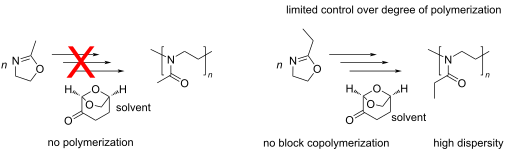
- bio-based solvent obtained from cellulose [36][37], commercially known as CyreneTM, and has been introduced as a new "green" solvent marketed specifically as an alternative to solvents such as DMF or NMP, which are particularly interesting for CROP of POx. It is reported that DLG is safe to handle


Insight into oral amphiphilic cyclodextrin nanoparticles for colorectal cancer: comprehensive mathematical model of drug release kinetic studies and antitumoral efficacy in 3D spheroid colon tumors
Beilstein J. Org. Chem. 2023, 19, 139–157, doi:10.3762/bjoc.19.14
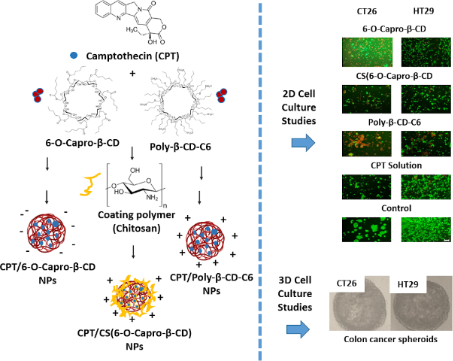
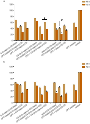
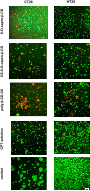
- in cancer-related deaths. With the current treatment possibilities, a definitive, safe, and effective treatment approach for CRC has not been presented yet. However, new drug delivery systems show promise in this field. Amphiphilic cyclodextrin-based nanocarriers are innovative and interesting



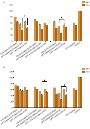

New triazole-substituted triterpene derivatives exhibiting anti-RSV activity: synthesis, biological evaluation, and molecular modeling
Beilstein J. Org. Chem. 2022, 18, 1524–1531, doi:10.3762/bjoc.18.161
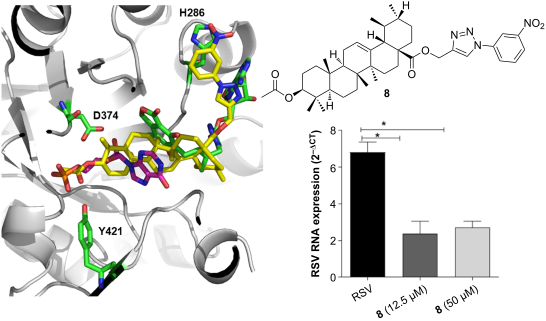
- , selective, and potent anti-HIV activity, however, it failed in phase IIb clinical trials due to viral resistance [28][29][30][31]. Even so, this class of natural products has great antiviral potential and its chemical modification could lead to new, efficient, and safe therapeutic resources. In this


A one-pot electrochemical synthesis of 2-aminothiazoles from active methylene ketones and thioureas mediated by NH4I
Beilstein J. Org. Chem. 2022, 18, 1249–1255, doi:10.3762/bjoc.18.130
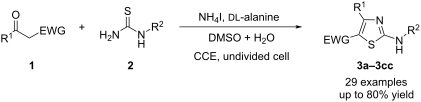
- . Organic electrosynthesis has been recognized as a green, modern, and safe technique, since electrons can be used as an alternative for oxidants or reductants [30][31][32][33][34][35][36][37][38]. During our continuous interests in halide-mediated indirect electrolysis [39][40][41][42], we have achieved




Electro-conversion of cumene into acetophenone using boron-doped diamond electrodes
Beilstein J. Org. Chem. 2022, 18, 1154–1158, doi:10.3762/bjoc.18.119

- , where the BDD’s wide potential window enables the direct anodic oxidation of cumene into the cumyl cation. Since electricity is directly employed as the oxidizing and reducing reagents, the present protocol is easy to use, suitable for scale-up, and inherently safe. Keywords: aromatic alkyl; boron


A versatile way for the synthesis of monomethylamines by reduction of N-substituted carbonylimidazoles with the NaBH4/I2 system
Beilstein J. Org. Chem. 2022, 18, 1032–1039, doi:10.3762/bjoc.18.104

- materials including amines, carboxylic acids and isocyanates under mild and safe reaction conditions. Results and Discussion Initially, N-phenethyl-1H-imidazole-1-carboxamide (1b) was chosen as a model substrate to react with 3.0 equiv of NaBH4 and 1.0 equiv of I2 in THF at reflux temperature, as expected


Automated grindstone chemistry: a simple and facile way for PEG-assisted stoichiometry-controlled halogenation of phenols and anilines using N-halosuccinimides
Beilstein J. Org. Chem. 2022, 18, 999–1008, doi:10.3762/bjoc.18.100
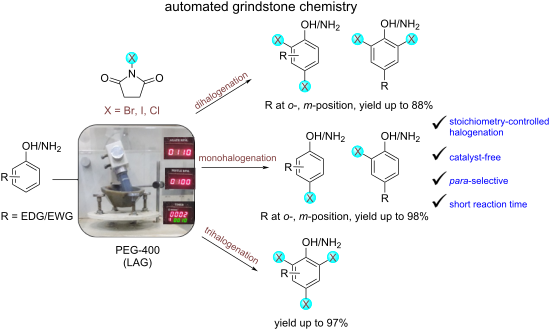
- (X = Br, Cl) suffers from low atom economy (<50%), formation of corrosive byproducts (e.g., HBr) [15][16], which cause serious environmental issues. To mitigate the problem, several mild and operationally safe halogenating agents have been successfully introduced to replace X2 [17][18][19][20][21][22




Synthesis of odorants in flow and their applications in perfumery
Beilstein J. Org. Chem. 2022, 18, 754–768, doi:10.3762/bjoc.18.76
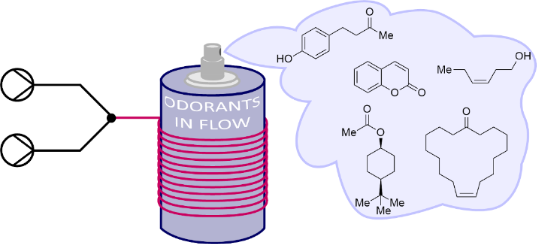
- safe two-step synthesis of 56 from cyclohexanone. In the first step, a solution of cyclohexanone in dodecane is mixed in a Q-piece with hydrogen peroxide, nitric acid, and formic acid and subsequently pumped at room temperature through a PTFE tube reactor with a residence time of 93 min. The resulting


Rapid gas–liquid reaction in flow. Continuous synthesis and production of cyclohexene oxide
Beilstein J. Org. Chem. 2022, 18, 660–668, doi:10.3762/bjoc.18.67
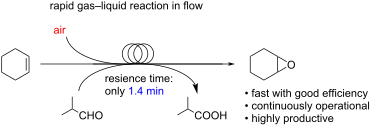
- for safe, low-cost, and environmentally benign operations. Initially, we decided to maintain the key flow conditions such as the flow rate since it severely affects the fluidic interaction inside a flow reactor and thus the reaction efficiency of this type of gas–liquid reaction. Thus, the flow rate


Synthesis of sulfur karrikin bioisosteres as potential neuroprotectives
Beilstein J. Org. Chem. 2022, 18, 549–554, doi:10.3762/bjoc.18.57
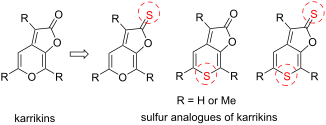
- unknown, that could have untapped potential in medicine. The study of the relationship between the components of plant-derived smoke and MAO and/or AChE can lead to safe and efficient drugs and drug scaffolds from a yet unexploited resource. One very important bioactive constituent of smoke of burning


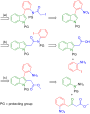
Ready access to 7,8-dihydroindolo[2,3-d][1]benzazepine-6(5H)-one scaffold and analogues via early-stage Fischer ring-closure reaction
Beilstein J. Org. Chem. 2022, 18, 143–151, doi:10.3762/bjoc.18.15
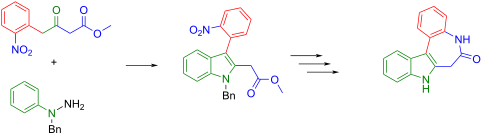
- was observed by TLC. However, the acid chloride reacted very sluggishly with (CH3)3SiCHN2, which is a safe alternative to the highly explosive diazomethane [34]. Another attempt to synthesize the open-chain precursor from indole and 2-bromo-N-(2-bromophenyl)acetamide by regioselective palladium






Host–guest interaction and properties of cucurbit[8]uril with chloramphenicol
Beilstein J. Org. Chem. 2021, 17, 2832–2839, doi:10.3762/bjoc.17.194
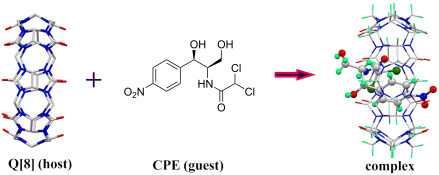
- cucurbit[n]urils can be used as non-toxic and safe drug carriers [29][30][31], among which cucurbit[8]uril (Q[8]) [32] has a large cavity. Q[8] interacts with a variety of small drug molecules such as chrysin, oroxin A and B, baicalein, etc., which can enhance the solubility, stability, antioxidant and


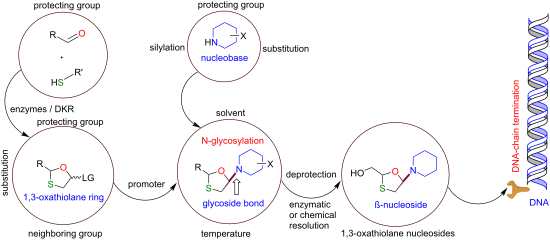
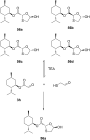
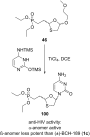
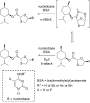
Synthetic strategies toward 1,3-oxathiolane nucleoside analogues
Beilstein J. Org. Chem. 2021, 17, 2680–2715, doi:10.3762/bjoc.17.182