


Search results
Search for "Horner–Wadsworth–Emmons" in Full Text gives 82 result(s) in Beilstein Journal of Organic Chemistry.
Synthesis of the furo[2,3-b]chromene ring system of hyperaspindols A and B
Beilstein J. Org. Chem. 2015, 11, 265–270, doi:10.3762/bjoc.11.29
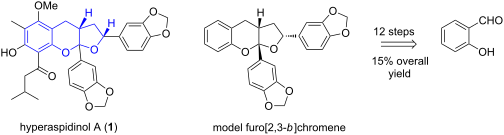
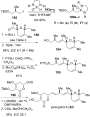
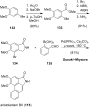
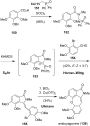
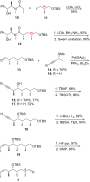
- methylenedioxyphenyl groups in ketone 8 would be added by sequential addition of aryllithiates to both the carbonyl and aldehyde groups, derived from the terminal alkene, of a homoallylic carboxylic acid derivative 9. Our route to ketone 8 began from salicylaldehyde (10) which underwent a Horner–Wadsworth–Emmons


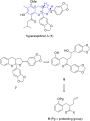


Palladium-catalysed cyclisation of alkenols: Synthesis of oxaheterocycles as core intermediates of natural compounds
Beilstein J. Org. Chem. 2014, 10, 2077–2086, doi:10.3762/bjoc.10.216
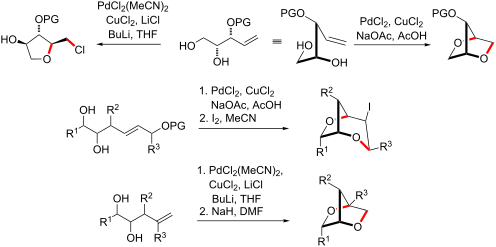
- groups of the previously prepared diol 33, followed by OsO4 dihydroxylation of the C–C double bond provided the corresponding diol in good yield. The resulting vicinal diol was then cleaved by sodium periodate to the corresponding aldehyde, which was immediately subjected to a Horner–Wadsworth–Emmons
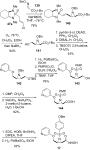
- –Wadsworth–Emmons olefination of aldehyde 15 furnished the corresponding separable mixture of Z and E alkenes 16 and 17. In the case of utilising stabilised phosphorane ylides, the Wittig reaction provided only Z alkenes 18 and 19. Following acidic hydrolysis provided α-O-benzyl substrates 20–23 in good
- preparation of substrates 20–23 having a symmetrically disubstituted C–C double bond is depicted in Scheme 2. The synthesis started from known threose 15 [31] followed by a common synthetic sequence comprising the olefination reaction and the hydrolysis of the acetonide protecting group. Thus, Horner

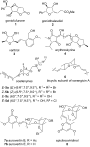


Application of cyclic phosphonamide reagents in the total synthesis of natural products and biologically active molecules
Beilstein J. Org. Chem. 2014, 10, 1848–1877, doi:10.3762/bjoc.10.195
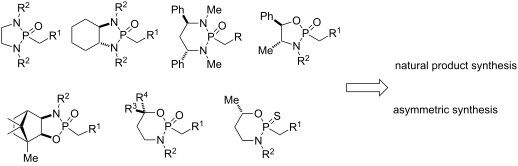
- ‘typical’ Wittig and Horner–Wadsworth–Emmons reagents were screened. In addition, cyclic phosphonamides were utilized as olefination reagents (Table 1). Employing phosphonamides 24e and 77 in the olefination of 72 favored the formation of the desired E-isomer of 73a, however the mixture of isomers was


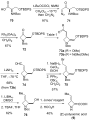


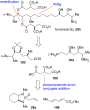


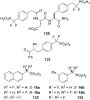






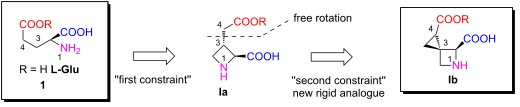
Stereocontrolled synthesis of 5-azaspiro[2.3]hexane derivatives as conformationally “frozen” analogues of L-glutamic acid
Beilstein J. Org. Chem. 2014, 10, 1114–1120, doi:10.3762/bjoc.10.110
- optimized by replacing step c) CH2N2 (diazomethane) with TMSCHN2 (trimethylsilyl diazomethane). This intermediate was transformed into intermediate 17 by a Horner–Wadsworth–Emmons reaction [23][24], thereby obtaining 17 as the single E-isomer in 68% yield after purification by flash chromatography (Scheme 3


Structure elucidation of female-specific volatiles released by the parasitoid wasp Trichogramma turkestanica (Hymenoptera: Trichogrammatidae)
Beilstein J. Org. Chem. 2014, 10, 767–773, doi:10.3762/bjoc.10.72
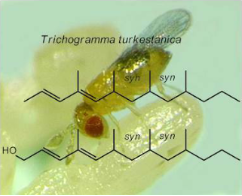
- investigations. In analogy to the structure of A, compound B was assigned to be (2E,4E,6S,8S,10S)-4,6,8,10-tetramethyltrideca-2,4-dien-1-ol (23) or its enantiomer. According to the procedure described by Markiewicz et al. [23], racemic 23 was prepared by vinylogous Horner–Wadsworth–Emmons reaction of the



Asymmetric total synthesis of a putative sex pheromone component from the parasitoid wasp Trichogramma turkestanica
Beilstein J. Org. Chem. 2014, 10, 761–766, doi:10.3762/bjoc.10.71
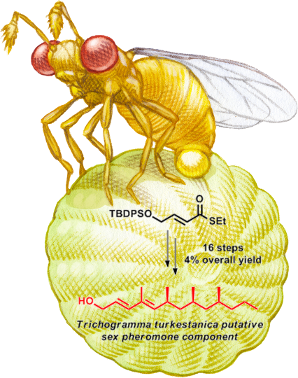
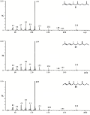
- )-4,6,8,10-tetramethyltrideca-2E,4E-dien-1-ol (2), is reported as a contribution to this identification. Catalytic asymmetric conjugate addition of methylmagnesium bromide and stereoselective Horner–Wadsworth–Emmons olefinations are used as the key steps, and 2 was obtained in 16 steps with an overall yield
- substituents have been constructed [20]. Starting from 3, the first conjugate addition using (R,SFe)-L1 afforded 4, as expected in high yield and excellent enantiomeric excess (Scheme 1). Reduction with DIBALH, followed by Horner–Wadsworth–Emmons olefination and again asymmetric conjugate addition gave 6 in 77
- Markiewicz, comprising a vinylogous Horner–Wadsworth–Emmons olefination, offered in principle a very efficient procedure to obtain dienoate 13 (Scheme 3), and would leave only a single step in the synthesis of 2 [25]. Therefore, reagent 12 was prepared in two steps. After quantitative conversion of 10 into


Synthesis of complex intermediates for the study of a dehydratase from borrelidin biosynthesis
Beilstein J. Org. Chem. 2014, 10, 634–640, doi:10.3762/bjoc.10.55
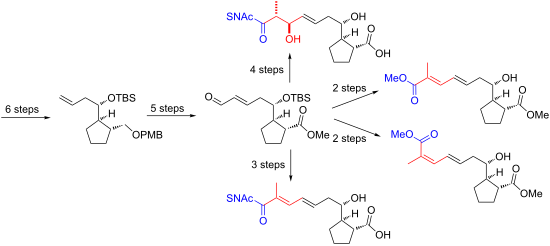
- should be accessible from aldehyde 11 through a Horner–Wadsworth–Emmons reaction and the Still–Gennari olefination as well as by a Wittig olefination with stabilised phosphoranes, respectively. The aldehyde 11 should be accessible from the known molecule 13 via 12 [15]. Synthesis of the common precursor
- target SNAc thioester 6a in a total yield of 12% over 14 steps. Alternative attempts to synthesize 9a and 9b by Horner–Wadsworth–Emmons olefination and Still–Gennari olefination with the respective phosphonates gave no reaction product at all (Horner–Wadsworth–Emmons olefination) or only the (E,E)-diene
- assay mixture, the latter will be transformed into their corresponding methyl esters by saponification and following methylation with trimethylsilyldiazomethane. The fully protected E-isomer 10a was obtained in 18% yield by a Horner–Wadsworth–Emmons reaction with phosphonate 25 or, alternatively, in 64


Isocyanide-based multicomponent reactions towards cyclic constrained peptidomimetics
Beilstein J. Org. Chem. 2014, 10, 544–598, doi:10.3762/bjoc.10.50



Deoxygenative gem-difluoroolefination of carbonyl compounds with (chlorodifluoromethyl)trimethylsilane and triphenylphosphine
Beilstein J. Org. Chem. 2014, 10, 344–351, doi:10.3762/bjoc.10.32
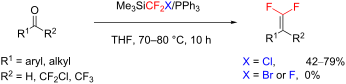
- -difluoroolefination of carbonyl compounds [17][18]. Among these methods, the latter one has been studied with several named reactions, for example Wittig, Horner–Wadsworth–Emmons, and Julia–Kocienski reactions. In the Wittig gem-difluoroolefination, the reaction is believed to proceed via an undetected


Recent applications of the divinylcyclopropane–cycloheptadiene rearrangement in organic synthesis
Beilstein J. Org. Chem. 2014, 10, 163–193, doi:10.3762/bjoc.10.14
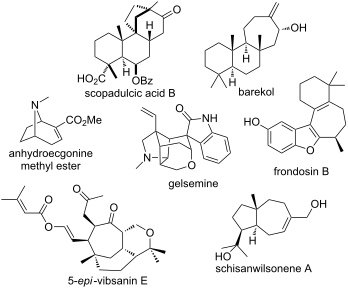
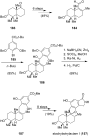
- (88, see Scheme 11) and tremulenediol A (89), isolated from a fungal pathogen [84]. Horner–Wadsworth–Emmons olefination of the starting ketone 80 [85] provided an E/Z-mixture of α,β-unsaturated ester 81. Deprotonation followed by an acidic quench resulted in deconjugation to give β,γ-unsaturated ester
- oxindole was crucial for the stereochemical control of the spiro-indolinone system in 138, it was removed in the next step using radical conditions. Horner–Wadsworth–Emmons olefination on the carbonyl moiety followed by protection of the oxindole gave intermediate 139. Conjugate addition of methylamine and




Synthesis of five- and six-membered cyclic organic peroxides: Key transformations into peroxide ring-retaining products
Beilstein J. Org. Chem. 2014, 10, 34–114, doi:10.3762/bjoc.10.6




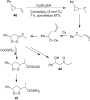


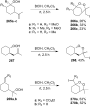


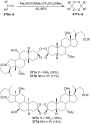


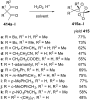


Garner’s aldehyde as a versatile intermediate in the synthesis of enantiopure natural products
Beilstein J. Org. Chem. 2013, 9, 2641–2659, doi:10.3762/bjoc.9.300
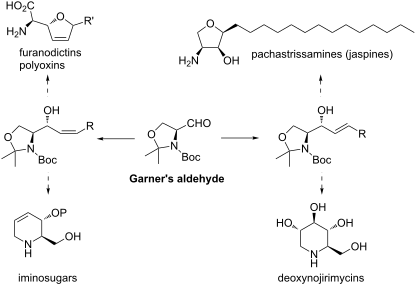
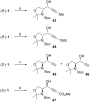
- –Wadsworth–Emmons [98][99][100] reactions are most commonly used for the introduction of a double bond to Garner’s aldehyde 1. Two things need to be considered before performing the olefination reactions: 1) epimerization of the stereocenter in the aldehyde (i.e. basicity vs nucleophilicity of the
- reactive compared to their non-stabilized counterparts, they tend to epimerize the existing chiral center of 1 a lot less, if at all (pKaH value of 69 in DMSO is 8.5 compared to the pKa value of Ph3(Me)PBr, which is 22.5) [109]. Another method to prepare α,β-unsaturated esters is the Horner–Wadsworth
- conjugate addition [93], and a recent synthesis of lucentamycin A was achieved using this strategy [94]. Epoxidation of A leads to a highly functional intermediate C, which has been used in the synthesis of manzacidin B [95]. Among the plethora of olefination reactions, the Wittig [96][97] and Horner





Synthesis of the spiroketal core of integramycin
Beilstein J. Org. Chem. 2013, 9, 2446–2450, doi:10.3762/bjoc.9.282
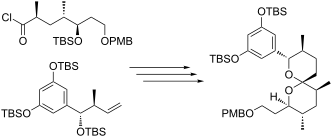
- PMB-protected 3-hydroxypropanal via Horner–Wadsworth-Emmons olefination, reduction to the allylic alcohol and Sharples epoxidation [8] (Scheme 2). Subsequent Cu-catalyzed epoxide-opening using methylmagnesium bromide [9] produced an inseparable mixture of 1,2- and 1,3-diol products, which upon


Cyclopamine analogs bearing exocyclic methylenes are highly potent and acid-stable inhibitors of hedgehog signaling
Beilstein J. Org. Chem. 2013, 9, 2328–2335, doi:10.3762/bjoc.9.267
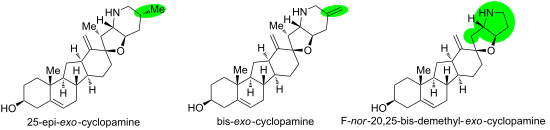
- became accessible. Partial reduction to the lactol (DIBAl-H, THF, −78 °C to −65 °C, 88%) and Horner–Wadsworth–Emmons reaction by using previously reported dimethyl {3-[(4-methoxybenzyl)oxy]-2-oxopropyl}phosphonate [32], (Ba(OH)2, THF/H2O, 80 °C, 50%) led to 15 which, in turn, was methylenated by
- %) and the benzenesulfonylamine (sodium naphthalenide, DME, −78 °C, 95%) gave 20-demethyl-bis-exo-cyclopamine 19 in 7% overall yield starting from 14. Starting from azido lactone 14 (see Scheme 2) a partial reduction to the lactol (DIBAl-H, THF, −78 °C to −65 °C, 88%) and the Horner–Wadsworth–Emmons


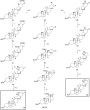

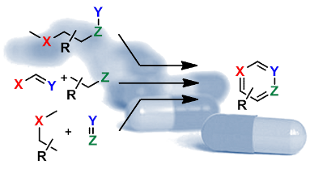
An overview of the synthetic routes to the best selling drugs containing 6-membered heterocycles
Beilstein J. Org. Chem. 2013, 9, 2265–2319, doi:10.3762/bjoc.9.265


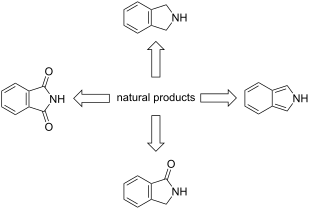
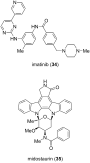
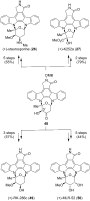
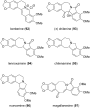
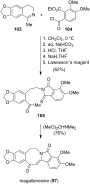
The chemistry of isoindole natural products
Beilstein J. Org. Chem. 2013, 9, 2048–2078, doi:10.3762/bjoc.9.243
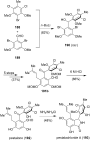
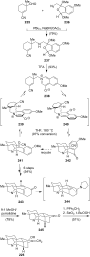
- olefination. Installation of the phosphonate and desilylation gave 76, which, after oxidation, reacted in the presence of sodium 2,2,2-trifluoroethanol (NaOTFE) in 2,2,2-trifluoroethanol (TFE) via an intramolecular Horner–Wadsworth–Emmons reaction to 77. Cytochalasin L-696,474 (78) was obtained from 77 via
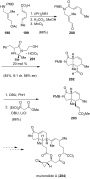
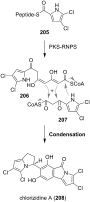
- sequence. The asymmetric intramolecular Diels–Alder reaction was then catalyzed by Kristensens’ catalyst (201) to give 202. A base-promoted epimerization of the aldehyde and a Horner–Wadsworth–Emmons reaction furnished 203, the most advanced intermediate reported so far. Just recently, the group of
















Continuous flow photocyclization of stilbenes – scalable synthesis of functionalized phenanthrenes and helicenes
Beilstein J. Org. Chem. 2013, 9, 1883–1890, doi:10.3762/bjoc.9.221
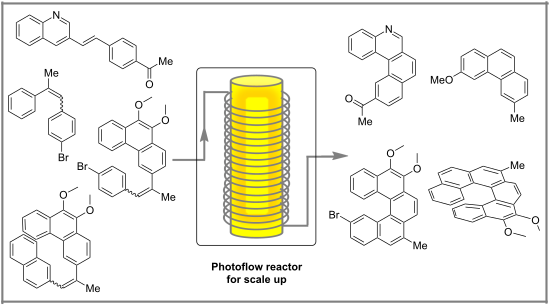
- [27] as a powerful intermediate for the two-step synthesis of functionalisable helically chiral products. As shown in Scheme 2, Wittig or Horner–Wadsworth–Emmons reactions gave the corresponding olefins 1o–r in good yields, which were subjected to photocyclization in flow using the optimised




Bioinspired total synthesis of katsumadain A by organocatalytic enantioselective 1,4-conjugate addition
Beilstein J. Org. Chem. 2013, 9, 1601–1606, doi:10.3762/bjoc.9.182
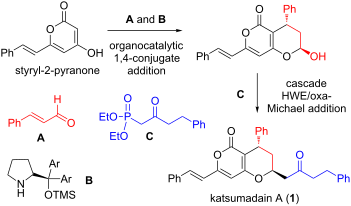
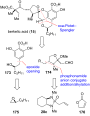
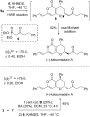
- neuraminidase (NA) inhibitor, was synthesized by using a bioinspired, organocatalytic enantioselective 1,4-conjugate addition of styryl-2-pyranone with cinnamaldehyde, followed by a tandem Horner–Wadsworth–Emmons/oxa Michael addition. Keywords: bioinspired synthesis; catalysis; katsumadain A; natural product
- strategy was designed as a fallback, in which katsumadain A could be accessed from the lactol 5a and phosphonate 6 via a tandem Horner–Wadsworth–Emmons (HWE)/oxa-Michael addition reaction [16]. In turn, 5a could be derived from 3 and cinnamaldehyde (7) by an organocatalytic enantioselective 1,4-conjugate
- moieties (Ar1 and Ar2), which paves the way to access katsumadain A and its analogues for further biomedical studies. Having achieved the bicyclic core of katsumadain A in an efficient and enantioselective manner, we then moved towards its total synthesis through the proposed tandem Horner–Wadsworth–Emmons


Some aspects of radical chemistry in the assembly of complex molecular architectures
Beilstein J. Org. Chem. 2013, 9, 557–576, doi:10.3762/bjoc.9.61

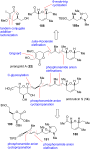
- the ready formation of bicyclic compound 72 [33]. The use of a phosphonate-containing alkene allows the assembly of numerous polycyclic structures by combining the radical addition of a ketone-bearing xanthate with an intramolecular Horner–Wadsworth–Emmons condensation. This strategy is highlighted in
- such reagents have been studied. The first is ketophosphonyl xanthate 101, where the intermolecular radical addition on one side of the ketone can be followed by a Horner–Wadsworth–Emmons (HWE) condensation on the other side [46]. In the transformation depicted in Scheme 21, compound 103, obtained by













Efficient synthesis of β’-amino-α,β-unsaturated ketones
Beilstein J. Org. Chem. 2013, 9, 486–495, doi:10.3762/bjoc.9.52

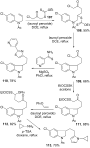
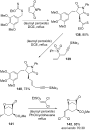
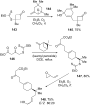
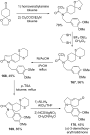
- –Emmons reaction as a key step for generating the β'-amino-α,β-enones, permits access to a range of substrates under mild conditions and in moderate to high yield. Keywords: β’-amino-α,β-unsaturated ketones; Horner–Wadsworth–Emmons reaction; stereoselective synthesis; Introduction Compounds
- did not allow the use of a wide range of functional groups and sometimes gave bad overall yields, we devised a general and simple method to easily access a variety of β’-amino-α,β-unsaturated ketones by a more convenient route using the Horner–Wadsworth–Emmons reaction [19][20] as the key step, as
- (Scheme 6, Table 1). Over the years, many examples of base-promoted Horner–Wadsworth–Emmons (HWE) reactions have been reported in the literature, and various combinations of bases and solvents (K2CO3/CH3CN[23], DBU/THF[25], NaH/THF[29], Et3N/LiCl/CH3CN[30] or Ba(OH)2/(THF/H2O)[31]) have been used. We


A new synthetic protocol for coumarin amino acid
Beilstein J. Org. Chem. 2013, 9, 254–259, doi:10.3762/bjoc.9.30
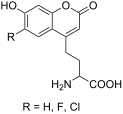
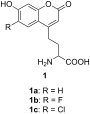
- used directly in the next step without purification. Compound 4 was first treated with sodium hydride or other bases and then reacted with formaldehyde to form terminal alkene 5 through a Horner–Wadsworth–Emmons reaction [12] (two-step overall yields are 27%, 53% and 55% for 3a to 5a, 3b to 5b and 3c
- will further improve the fluorescent property of the coumarin amino acids, or add new chemical handles to the coumarin ring for some specific investigations. The Horner–Wadsworth–Emmons reaction was applied to install the terminal alkene at the 4-position. Compared with the Wittig reaction, the Horner
- –Wadsworth–Emmons reaction has a significant advantage: The resulting phosphate byproduct can be readily separated, whereas the byproduct triphenylphosphine oxide generated in the Wittig reaction is difficult to remove [17]. The effect of the base used in the Horner–Wadsworth–Emmons reaction on the reaction



Highly selective synthesis of (E)-alkenyl-(pentafluorosulfanyl)benzenes through Horner–Wadsworth–Emmons reaction
Beilstein J. Org. Chem. 2012, 8, 1185–1190, doi:10.3762/bjoc.8.131
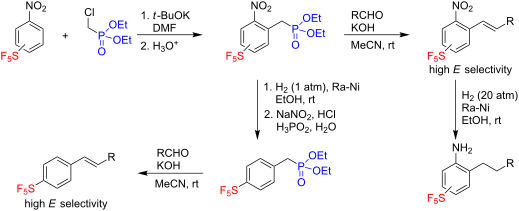
- substitution reaction of meta- and para-nitro-(pentafluorosulfanyl)benzenes and diethyl chloromethylphosphonate, undergo Horner–Wadsworth–Emmons reaction with aldehydes in the presence of potassium hydroxide in acetonitrile at ambient temperature to give (E)-2-nitro-1-alkenyl-(pentafluorosulfanyl)benzenes in
- good yields and high stereoselectivities. Follow-up transformations of the primary products provided (E)-1-alkenyl-(pentafluorosulfanyl)benzenes and 2-(2-arylethyl)-(pentafluorosulfanyl)anilines. Keywords: Horner–Wadsworth–Emmons reaction; pentafluorosulfanyl group; phosphonates; sulfurpentafluoride
- ][21][22]. Alkenyl substituted SF5-benzenes or SF5-containing stilbene derivatives are not known and would represent basic synthetic intermediates towards more elaborate structures. We envisioned a synthetic route towards these compounds through Horner–Wadsworth–Emmons (HWE) reaction of phosphonates 3


Novel fatty acid methyl esters from the actinomycete Micromonospora aurantiaca
Beilstein J. Org. Chem. 2011, 7, 1697–1712, doi:10.3762/bjoc.7.200
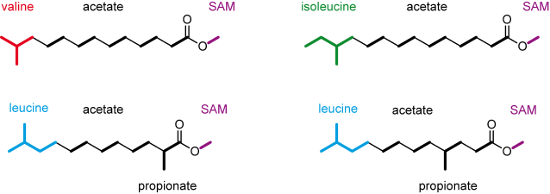
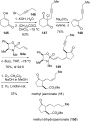
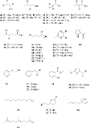
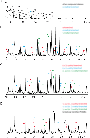
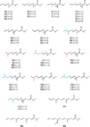
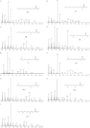
- methyl 4,11-dimethyldodecanoate (110) from 24 by its reduction to the aldehyde 123a, Horner–Wadsworth–Emmons olefination to 124a, and catalytic hydrogenation (Scheme 3). The synthetic material was identical to the natural compound 110. A related group of compounds (Figure 3D, blue) proved to have very
- DIBAH to the aldehyde 123c, Horner–Wadsworth–Emmons olefination to 124c, and final catalytic hydrogenation afforded 112. The product exhibited the same mass spectrum and retention index (I = 1441) as the natural FAME. The slight deviations between the calculated and measured retention indices for
- , accounting for a γ-cleavage in unbranched FAMEs, suggested the presence of a methyl group in a γ-position, which leads to a γ-fragmentation with m/z = 115. A synthesis of methyl 4-methyldodecanoate (90) was performed starting from 10 (Scheme 3). Reduction to the aldehyde 123d and subsequent Horner–Wadsworth



Efficient syntheses of 25,26-dihydrodictyostatin and 25,26-dihydro-6-epi-dictyostatin, two potent new microtubule-stabilizing agents
Beilstein J. Org. Chem. 2011, 7, 1372–1378, doi:10.3762/bjoc.7.161

- make 1a [29]. For high convergence, the analogs were dissected strategically into three complete fragments called top (8, C18–C26), middle (7, C10–C17), and bottom (6a,b, C1–C9), respectively. The top 8 and middle 7 fragments were first combined through an established Horner–Wadsworth–Emmons (HWE
- –Wadsworth–Emmons reaction sequence and an esterification. A late stage Nozaki–Hiyama–Kishi reaction was then used to form the 22-membered macrolide. The stereoselectivity of this reaction depended on the configurations of the nearby stereocenter at C6. Keywords: anticancer agents; dictyostatin
- human cancer cell lines. Two highly active analogs of dictyostatin, 25,26-dihydrodictyostatin and 25,26-dihydro-6-epi-dictyostatin, were prepared by a new streamlined total synthesis route. Three complete carbon fragments were prepared to achieve maximum convergency. These were coupled by a Horner




A two step synthesis of a key unit B precursor of cryptophycins by asymmetric hydrogenation
Beilstein J. Org. Chem. 2011, 7, 243–245, doi:10.3762/bjoc.7.32
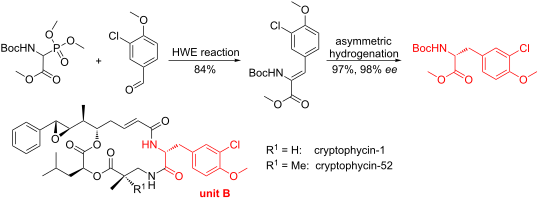
- developed synthesis 3-chloro-4-methoxybenzaldehyde is reacted with rac-Boc-α-phosphonoglycine trimethyl ester (9) [13][14] to yield olefin 10 in a completely Z-selective Horner–Wadsworth–Emmons (HWE) reaction (Scheme 3). Asymmetric hydrogenation using the commercially available [(COD)Rh-(R,R)-Et-DuPhos]BF4





