


Search results
Search for "acetaldehyde" in Full Text gives 77 result(s) in Beilstein Journal of Organic Chemistry.
A new approach for the synthesis of bisindoles through AgOTf as catalyst
- Jorge Beltrá,
- M. Concepción Gimeno and
- Raquel P. Herrera
Beilstein J. Org. Chem. 2014, 10, 2206–2214, doi:10.3762/bjoc.10.228

- acetaldehyde by evaporation (bp 20 °C) and the consequent poorer yield of the final product, instead of 1 equivalent of aldehyde (0.5 mmol) 2 equivalents (1 mmol) were used. The result was 90% of yield compared with 67% for 1 equivalent of acetaldehyde, confirming our concern. It is worth mentioning that this
- clean crude product was obtained since acetaldehyde is also evaporated, and the final product was purified by a simple column chromatography. Moreover, we were able to obtain single crystals for compounds 6ad and 6al for the first time in the literature (Figure 2) [50]. Although the mechanism is not

Graphical Abstract

Figure 1: Bisindolyl based important targets: 1 [21], 2 [22] and 3 [23].

Scheme 1: Test reaction using diverse Ag(I) species.

Scheme 2: Synthesis of biologically active vibrindole A.
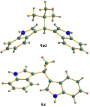
Figure 2: Crystal structures for compounds 6ad and 6al.
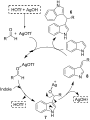
Scheme 3: Mechanism of the synthesis of bisindoles through AgOTf catalyst.
Proton transfers in the Strecker reaction revealed by DFT calculations
- Shinichi Yamabe,
- Guixiang Zeng,
- Wei Guan and
- Shigeyoshi Sakaki
Beilstein J. Org. Chem. 2014, 10, 1765–1774, doi:10.3762/bjoc.10.184

- Shinichi Yamabe Guixiang Zeng Wei Guan Shigeyoshi Sakaki Fukui Institute for Fundamental Chemistry, Kyoto University, Takano-Nishihiraki-cho 34-4, Sakyo-ku, Kyoto 606-8103, JAPAN. Phone: +81-075-711-7907 10.3762/bjoc.10.184 Abstract The Strecker reaction of acetaldehyde, NH3, and HCN to afford
- Strecker reported a reaction that affords alanine from acetaldehyde, ammonia and hydrogen cyanide [1]. The original form of Strecker amino acid synthesis is shown in Scheme 1(a). In this reaction, the aldehyde reacts with hydrogen cyanide to form an aminonitrile, which undergoes hydrolysis to afford
- complex 1. The reaction begins with the addition of NH3 to the carbonyl carbon of acetaldehyde to form a Mulliken charge-transfer complex 2. This complex was firstly proposed here. In 2, the C–O bond is elongated to1.345 Å, which has an alkoxide character and the complex is not stable in the gas phase

Graphical Abstract

Scheme 1: The general form of the Strecker reaction. The reaction (b) is taken from [2].

Scheme 2: The first asymmetric Strecker reaction [4].

Scheme 3: The first asymmetric synthesis of α-aminonitirles via a chiral catalyst [5].

Scheme 4: A reaction model composed of Me-CH=O, HCN, NH3 and (H2O)10 for geometry optimizations to trace elem...

Scheme 5: Possible pathways for the formation of aminonitrile from acetaldehyde.

Figure 1: Geometries of transition states along the reaction from acetaldehyde (1) to the aminonitrile 8. Dis...

Figure 2: Energy changes along elementary processes from acetaldehyde to aminonitrile. Bold numbers are defin...

Scheme 6: A short-cut path by the nucleophilic displacement and the concomitant proton transfer. “The first b...

Scheme 7: A contrast of the nucleophilic addition.

Figure 3: Two transition states (A and B) of the nucleophilic addition of (S)-α-phenylethylamine to acetaldeh...

Scheme 8: Elementary processes of the acid-catalyzed hydrolysis of 2-amino-propanonitrile.

Figure 4: Energy changes along elementary processes from 2-amino nitrile 8 to 2-amino acid 16. Brown-color li...

Figure 5: Geometries of transition states along the most favorable route from 2-aminonitrile 8 to 2-amino aci...

Scheme 9: Summary of the present computational work expressed by minimal models.
The Ugi four-component reaction as a concise modular synthetic tool for photo-induced electron transfer donor-anthraquinone dyads
- Sarah Bay,
- Gamall Makhloufi,
- Christoph Janiak and
- Thomas J. J. Müller
Beilstein J. Org. Chem. 2014, 10, 1006–1016, doi:10.3762/bjoc.10.100
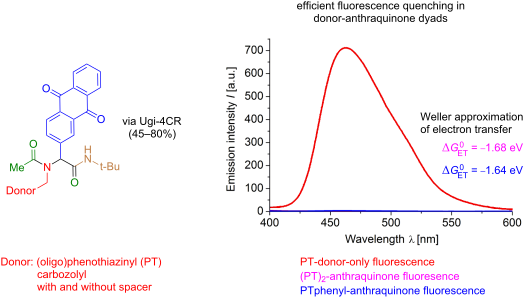
- -only systems 10 were also prepared by Ugi 4CR from the amino derivatives 4 and acetaldehyde (9), in moderate to good yield, with acetic acid (6) and tert-butyl isocyanide (7) as the corresponding acid and isonitrile components (Scheme 2). The appearance of single signal sets in the 1H and 13C NMR

Graphical Abstract

Figure 1: Phenothiazine–anthraquinone dyad 1, donor-only (2) and acceptor-only (3) models assembled by Ugi 4C...

Scheme 1: Ugi 4CR synthesis of donor–anthraquinone dyads 8.

Scheme 2: Ugi 4CR synthesis of donor-only reference systems 10.

Figure 2: Molecular structure of S(O)-1 (left) (30% ellipsoids, except for the CH3CH2 end of the hexyl group,...

Figure 3: Cyclic voltammogram of dyad 8c (recorded in CH2Cl2, T = 298 K, c (8c) = 0.1 mol·L−1, Pt working ele...
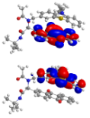
Figure 4: DFT-computed (B3LYP, 6-311G*) frontier molecular orbitals HOMO (bottom) and LUMO (top) of the pheno...

Figure 5: Normalized absorption spectra of the phenothiazine–anthraquinone dyad 8c (recorded in CH2Cl2, c (8c...
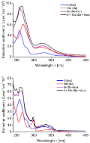
Figure 6: Absorption spectra of Do–anthraquinone dyads 8c (top) and 8e (bottom) with the corresponding refere...

Figure 7: Normalized absorption and emission spectra of Ugi-donor compounds 2 and 10 (recorded in CH2Cl2, T =...
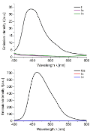
Figure 8: Emission spectra of donor-only system 2 phenothiazine–anthraquinone dyads 8a,b (top), and the donor...
A novel family of (1-aminoalkyl)(trifluoromethyl)- and -(difluoromethyl)phosphinic acids – analogues of α-amino acids
- Natalia V. Pavlenko,
- Tatiana I. Oos,
- Yurii L. Yagupolskii,
- Igor I. Gerus,
- Uwe Doeller and
- Lothar Willms
Beilstein J. Org. Chem. 2014, 10, 722–731, doi:10.3762/bjoc.10.66
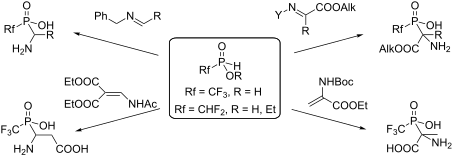
- benzaldehyde provided acid 13b in 28% yield and the main product of this reaction was an adduct of acid 1 with benzaldehyde which was isolated from the reaction mixture as ammonium salt 15 in 60% yield. Reaction with acetaldehyde was less successful and generated aminophosphinic acid 13c in low yield (<10

Graphical Abstract

Scheme 1: Synthesis of (trifluoromethyl)phosphinic acid (1) and ethyl and isopropyl esters 2–4. Reagents and ...

Scheme 2: Three-component Kabachnik–Fields reaction of CF3(H)P(O)(OiPr) (2) with formaldehyde and dibenzylami...

Scheme 3: Three-component synthesis of CF3 containing α-aminophosphinic acids 14a,b. Reagents and conditions:...

Scheme 4: Interaction of the acid 1 with tert-butyl benzylidenecarbamate (21). Reagents and conditions: i) an...

Scheme 5: Interaction of the acids 1 and 6 with ethyl 2-[(tert-butoxycarbonyl)imino]acetate (22). Reagents an...

Scheme 6: Transformation of the ester 24 into the appropriate free acid 25. Reagents and conditions: i) two f...

Scheme 7: Reaction of the acids (1) and (6) with methyl 2-imino-3-methylbutanoate (26). Reagents and conditio...

Scheme 8: Interaction of the acid 1 with ethyl 2-(tert-butoxycarbonylamino)acrylate (29). Reagents and condit...

Scheme 9: Interaction of a mixture of the esters 3 and 4 with 2-acetamidoacrylic acid (33). Reagents and cond...

Scheme 10: Interaction of a mixture of the acid 1 with diethyl acetaminomethylenemalonate (38). Reagents and c...
Isocyanide-based multicomponent reactions towards cyclic constrained peptidomimetics
- Gijs Koopmanschap,
- Eelco Ruijter and
- Romano V.A. Orru
Beilstein J. Org. Chem. 2014, 10, 544–598, doi:10.3762/bjoc.10.50

- ]. In 2009, the group of Dömling reported an Ugi-approach towards the synthesis of Bacillamide C (Scheme 42) [109]. (R)-Bacillamide C is a natural product with algicidal and antibacterial properties [97]. It was shown that a stereoselective reaction between Schöllkopf’s isocyanide, acetaldehyde

Graphical Abstract

Scheme 1: The proposed mechanism of the Passerini reaction.

Scheme 2: The PADAM-strategy to α-hydroxy-β-amino amide derivatives 7. An additional oxidation provides α-ket...

Scheme 3: The general accepted Ugi-mechanism.

Scheme 4: Three commonly applied Ugi/cyclization approaches. a) UDC-process, b) UAC-sequence, c) UDAC-combina...

Scheme 5: Ugi reaction that involves the condensation of Armstrong’s convertible isocyanide.

Scheme 6: Mechanism of the U-4C-3CR towards bicyclic β-lactams.

Scheme 7: The Ugi 4C-3CR towards oxabicyclo β-lactams.

Scheme 8: Ugi MCR between an enantiopure monoterpene based β-amino acid, aldehyde and isocyanide resulting in...

Scheme 9: General MCR for β-lactams in water.

Scheme 10: a) Ugi reaction for β-lactam-linked peptidomimetics. b) Varying the β-amino acid resulted in β-lact...

Scheme 11: Ugi-4CR followed by a Pd-catalyzed Sn2 cyclization.

Scheme 12: Ugi-3CR of dipeptide mimics from 2-substituted pyrrolines.

Scheme 13: Joullié–Ugi reaction towards 2,5-disubstituted pyrrolidines.

Scheme 14: Further elaboration of the Ugi-scaffold towards bicyclic systems.

Scheme 15: Dihydroxyproline derivatives from an Ugi reaction.

Scheme 16: Diastereoselective Ugi reaction described by Banfi and co-workers.

Scheme 17: Similar Ugi reaction as in Scheme 16 but with different acids and two chiral isocyanides.

Scheme 18: Highly diastereoselective synthesis of pyrrolidine-dipeptoids via a MAO-N/MCR-procedure.

Scheme 19: MAO-N/MCR-approach towards the hepatitis C drug telaprevir.

Scheme 20: Enantioselective MAO-U-3CR procedure starting from chiral pyrroline 64.

Scheme 21: Synthesis of γ-lactams via an UDC-sequence.

Scheme 22: Utilizing bifunctional groups to provide bicyclic γ-lactam-ketopiperazines.

Scheme 23: The Ugi reaction provided both γ- as δ-lactams depending on which inputs were used.

Scheme 24: The sequential Ugi/RCM with olefinic substrates provided bicyclic lactams.

Scheme 25: a) The structural and dipole similarities of the triazole unit with the amide bond. b) The copper-c...

Scheme 26: The Ugi/Click sequence provided triazole based peptidomimetics.

Scheme 27: The Ugi/Click reaction as described by Nanajdenko.

Scheme 28: The Ugi/Click-approach by Pramitha and Bahulayan.

Scheme 29: The Ugi/Click-combination by Niu et al.

Scheme 30: Triazole linked peptidomimetics obtained from two separate MCRs and a sequential Click reaction.

Scheme 31: Copper-free synthesis of triazoles via two MCRs in one-pot.

Scheme 32: The sequential Ugi/Paal–Knorr reaction to afford pyrazoles.

Scheme 33: An intramolecular Paal–Knorr condensation provided under basic conditions pyrazolones.

Scheme 34: Similar cyclization performed under acidic conditions provided pyrazolones without the trifluoroace...

Scheme 35: The Ugi-4CR towards 2,4-disubstituted thiazoles.

Scheme 36: Solid phase approach towards thiazoles.

Scheme 37: Reaction mechanism of formation of thiazole peptidomimetics containing an additional β-lactam moiet...

Scheme 38: The synthesis of the trisubstituted thiazoles could be either performed via an Ugi reaction with pr...

Scheme 39: Performing the Ugi reaction with DMB-protected isocyanide gave access to either oxazoles or thiazol...

Scheme 40: Ugi/cyclization-approach towards 2,5-disubstituted thiazoles. The Ugi reaction was performed with d...

Scheme 41: Further derivatization of the thiazole scaffold.

Scheme 42: Three-step procedure towards the natural product bacillamide C.

Scheme 43: Ugi-4CR to oxazoles reported by Zhu and co-workers.

Scheme 44: Ugi-based synthesis of oxazole-containing peptidomimetics.

Scheme 45: TMNS3 based Ugi reaction for peptidomimics containing a tetrazole.

Scheme 46: Catalytic cycle of the enantioselective Passerini reaction towards tetrazole-based peptidomimetics.

Scheme 47: Tetrazole-based peptidomimetics via an Ugi reaction and a subsequent sigmatropic rearrangement.

Scheme 48: Resin-bound Ugi-approach towards tetrazole-based peptidomimetics.

Scheme 49: Ugi/cyclization approach towards γ/δ/ε-lactam tetrazoles.

Scheme 50: Ugi-3CR to pipecolic acid-based peptidomimetics.

Scheme 51: Staudinger–Aza-Wittig/Ugi-approach towards pipecolic acid peptidomimetics.

Figure 1: The three structural isomers of diketopiperazines. The 2,5-DKP isomer is most common.

Scheme 52: UDC-approach to obtain 2,5-DKPs, either using Armstrong’s isocyanide or via ethylglyoxalate.

Scheme 53: a) Ugi reaction in water gave either 2,5-DKP structures or spiro compounds. b) The Ugi reaction in ...

Scheme 54: Solid-phase approach towards diketopiperazines.

Scheme 55: UDAC-approach towards DKPs.

Scheme 56: The intermediate amide is activated as leaving group by acid and microwave assisted organic synthes...

Scheme 57: UDC-procedure towards active oxytocin inhibitors.

Scheme 58: An improved stereoselective MCR-approach towards the oxytocin inhibitor.

Scheme 59: The less common Ugi reaction towards DKPs, involving a Sn2-substitution.

Figure 2: Spatial similarities between a natural β-turn conformation and a DKP based β-turn mimetic [158].

Scheme 60: Ugi-based syntheses of bicyclic DKPs. The amine component is derived from a coupling between (R)-N-...

Scheme 61: Ugi-based synthesis of β-turn and γ-turn mimetics.

Figure 3: Isocyanide substituted 3,4-dihydropyridin-2-ones, dihydropyridines and the Freidinger lactams. Bio-...

Scheme 62: The mechanism of the 4-CR towards 3,4-dihydropyridine-2-ones 212.

Scheme 63: a) Multiple MCR-approach to provide DHP-peptidomimetic in two-steps. b) A one-pot 6-CR providing th...

Scheme 64: The MCR–alkylation–MCR procedure to obtain either tetrapeptoids or depsipeptides.

Scheme 65: U-3CR/cyclization employing semicarbazone as imine component gave triazine based peptidomimetics.

Scheme 66: 4CR towards triazinane-diones.

Scheme 67: The MCR–alkylation–IMCR-sequence described by our group towards triazinane dione-based peptidomimet...

Scheme 68: Ugi-4CR approaches followed by a cyclization to thiomorpholin-ones (a) and pyrrolidines (b).

Scheme 69: UDC-approach for benzodiazepinones.

Scheme 70: Ugi/Mitsunobu sequence to BDPs.

Scheme 71: A UDAC-approach to BDPs with convertible isocyanides. The corresponding amide is cleaved by microwa...

Scheme 72: microwave assisted post condensation Ugi reaction.

Scheme 73: Benzodiazepinones synthesized via the post-condensation Ugi/ Staudinger–Aza-Wittig cyclization.

Scheme 74: Two Ugi/cyclization approaches utilizing chiral carboxylic acids. Reaction (a) provided the product...

Scheme 75: The mechanism of the Gewald-3CR includes three base-catalysed steps involving first a Knoevnagel–Co...

Scheme 76: Two structural 1,4-thienodiazepine-2,5-dione isomers by U-4CR/cyclization.

Scheme 77: Tetrazole-based diazepinones by UDC-procedure.

Scheme 78: Tetrazole-based BDPs via a sequential Ugi/hydrolysis/coupling.

Scheme 79: MCR synthesis of three different tricyclic BPDs.

Scheme 80: Two similar approaches both involving an Ugi reaction and a Mitsunobu cyclization.

Scheme 81: Mitsunobu–Ugi-approach towards dihydro-1,4-benzoxazepines.

Scheme 82: Ugi reaction towards hetero-aryl fused 5-oxo-1,4-oxazepines.

Scheme 83: a) Ugi/RCM-approach towards nine-membered peptidomimetics b) Sequential peptide-coupling, deprotect...

Scheme 84: Ugi-based synthesis towards cyclic RGD-pentapeptides.

Scheme 85: Ugi/MCR-approach towards 12–15 membered macrocycles.

Scheme 86: Stereoselective Ugi/RCM approach towards 16-membered macrocycles.

Scheme 87: Passerini/RCM-sequence to 22-membered macrocycles.

Scheme 88: UDAC-approach towards 12–18-membered depsipeptides.

Figure 4: Enopeptin A with its more active derivative ADEP-4.

Scheme 89: a) The Joullié–Ugi-approach towards ADEP-4 derivatives b) Ugi-approach for the α,α-dimethylated der...

Scheme 90: Ugi–Click-strategy for 15-membered macrocyclic glyco-peptidomimetics.

Scheme 91: Ugi/Click combinations provided macrocycles containing both a triazole and an oxazole moiety.

Scheme 92: a) A solution-phase procedure towards macrocycles. b) Alternative solid-phase synthesis as was repo...

Scheme 93: Ugi/cyclization towards cyclophane based macrocycles.

Scheme 94: PADAM-strategy towards eurystatin A.

Scheme 95: PADAM-approach for cyclotheanamide.

Scheme 96: A triple MCR-approach affording RGD-pentapeptoids.

Scheme 97: Ugi-MiBs-approach towards peptoid macrocycles.

Scheme 98: Passerini-based MiB approaches towards macrocycles 345 and 346.

Scheme 99: Macrocyclic peptide formation by the use of amphoteric aziridine-based aldehydes.
Concise, stereodivergent and highly stereoselective synthesis of cis- and trans-2-substituted 3-hydroxypiperidines – development of a phosphite-driven cyclodehydration
- Peter H. Huy,
- Julia C. Westphal and
- Ari M. P. Koskinen
Beilstein J. Org. Chem. 2014, 10, 369–383, doi:10.3762/bjoc.10.35
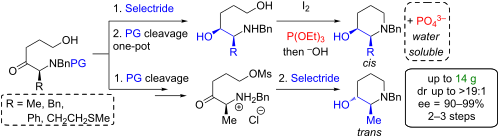
- phenylglycine derived carbamate 7c. Indeed, if the excess of Selectride was quenched with acetaldehyde after reduction of 7a, the oxazolidine 10a was obtained (under the basic reaction conditions) as the major product. The outcome of the Cbz-cleavage strongly depended on the activity of the commercial Pd/C

Graphical Abstract

Figure 1: Natural products and other bioactive piperidine derivatives of type B.

Figure 2: Retrosynthetic analysis of piperidines B (X = OH or leaving group, PG = protecting group).

Scheme 1: Synthesis of the protected amino acids 2. (a) KOH for 1b. b) PG–X = Cbz–Cl (1a–c), Boc2O (1d).

Scheme 2: Synthesis of hydroxy ketones 7 (R = Me (a), Bn (b), Ph (c) and EtSMe (d); PG = Cbz (a–c), Boc (d)).

Scheme 3: Synthesis of amides 5e and 5f and ketone 7e.

Scheme 4: Synthesis of amino alcohols syn-9a–d and oxazolidinone 10a. (for 7a–c conditions A: H2 (1 atm), Pd/...

Scheme 5: Competition between the Michaelis–Arbuzow process and the desired cyclodehydration of amino alcohol...

Scheme 6: Initial synthesis of the trans-piperidinol 11a in diminished enantiopurity. aThe amino alcohol 9a o...

Scheme 7: Synthesis of trans-piperidinol 11a in excellent ee.

Scheme 8: Synthesis of L-733,060·HCl.
Total synthesis of (+)-grandiamide D, dasyclamide and gigantamide A from a Baylis–Hillman adduct: A unified biomimetic approach
- Andivelu Ilangovan and
- Shanmugasundar Saravanakumar
Beilstein J. Org. Chem. 2014, 10, 127–133, doi:10.3762/bjoc.10.9
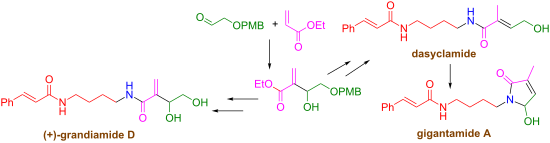
- -methoxybenzyloxy)acetaldehyde was expected to provide a tetra-functionalized Baylis–Hillman adduct (+)-16 from which grandiamide D can be obtained. A rearrangement of this common intermediate should be able to provide dasyclamide, which on oxidation, should give gigantamide A. Results and Discussion The synthetic
- entire pathway leading to the synthesis of (±)-grandiamide D is portrayed in Scheme 3. The reaction between ethyl bromoacetate (12) and p-methoxybenzyl alcohol in the presence of NaH (Scheme 3) furnished the desired ester 13 which on reduction with DIBAL-H provided 2-((4-methoxybenzyl)oxy)acetaldehyde
- (+)-grandiamide D (5). We assumed that the asymmetric Baylis–Hillman reaction [15] would be an ideal way to introduce chirality. Reaction between acryloyl sultam 19, and 2-((4-methoxybenzyl)oxy)acetaldehyde (14) in DMF [12], afforded cyclic product 20, which was then treated as such with TEA in ethanol to afford

Graphical Abstract

Figure 1: Bisamides as building blocks for flavaglins.

Figure 2: (+)-Grandiamide D, gigantamide A and dasyclamide.

Scheme 1: Retrosynthetic analysis: A unified synthetic approach for the synthesis of grandiamide D, dasyclami...

Scheme 2: Preparation of N-(4-aminobutyl)cinnamamide.

Scheme 3: Synthesis of (±)-grandiamide D.

Scheme 4: Asymmetric synthesis of natural (+)-grandiamide D.

Scheme 5: Various approaches for the synthesis of (E)-N-(4-cinnamamidobutyl)-4-((4-methoxybenzyl)oxy)-2-methy...

Scheme 6: Synthesis of dasyclamide.
Efficient synthesis of dihydropyrimidinones via a three-component Biginelli-type reaction of urea, alkylaldehyde and arylaldehyde
- Haijun Qu,
- Xuejian Li,
- Fan Mo and
- Xufeng Lin
Beilstein J. Org. Chem. 2013, 9, 2846–2851, doi:10.3762/bjoc.9.320
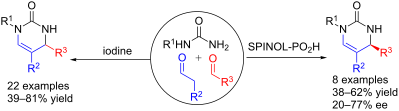
- condensation of imine 5 with substituted acetaldehyde 2. This could then undergo an iodine-catalytic intramolecular cyclisation to afford the final dihydropyrimidinone 4. Based on the observations above, a preliminary investigation on the catalytic asymmetric version was performed. Recently, our group has

Graphical Abstract

Figure 1: X-ray crystal structure of 4a.

Scheme 1: Possible mechanism.

Figure 2: Scope of the enantioselective reaction. Reaction conditions: 5a (10 mol %, 0.02 mmol), 1 (0.2 mmol)...
An overview of the synthetic routes to the best selling drugs containing 6-membered heterocycles
- Marcus Baumann and
- Ian R. Baxendale
Beilstein J. Org. Chem. 2013, 9, 2265–2319, doi:10.3762/bjoc.9.265
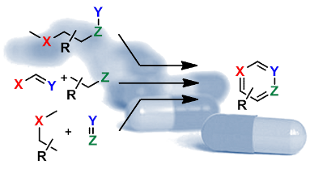
- via a condensation between acetaldehyde and ammonia, nitric acid mediated oxidation then converts this to nicotinic acid (1.12) [24]. Although the initial pyridine formation is high yielding, this process is not without environmental issues due to the large excess of nitric acid and high temperatures
- flow process at their main plant in Visp, Switzerland. An alternative process is based on the availability of 3-picoline (1.15) which is generated as a major side product in the synthesis of pyridine prepared from formaldehyde, acetaldehyde and ammonia in a gas phase reaction (Scheme 3) [25]. The 3
- rosiglitazone (1.40) with its structure only differing in the substitution pattern of the parent pyridine ring. Its synthesis begins with the hydroxymethylation of 2-methyl-5-ethylpyridine (1.11), a commodity chemical obtained from the condensation of acetaldehyde with ammonium acetate (Scheme 12) [43]. At

Graphical Abstract

Scheme 1: Scaled industrial processes for the synthesis of simple pyridines.

Scheme 2: Synthesis of nicotinic acid from 2-methyl-5-ethylpyridine (1.11).

Scheme 3: Synthesis of 3-picoline and nicotinic acid.

Scheme 4: Synthesis of 3-picoline from 2-methylglutarodinitrile 1.19.

Scheme 5: Picoline-based synthesis of clarinex (no yields reported).

Scheme 6: Mode of action of proton-pump inhibitors and structures of the API’s.

Scheme 7: Hantzsch-like route towards the pyridine rings in common proton pump inhibitors.

Figure 1: Structures of rosiglitazone (1.40) and pioglitazone (1.41).

Scheme 8: Synthesis of rosiglitazone.

Scheme 9: Syntheses of 2-pyridones.

Scheme 10: Synthesis and mechanism of 2-pyrone from malic acid.

Scheme 11: Polymer-assisted synthesis of rosiglitazone.

Scheme 12: Synthesis of pioglitazone.

Scheme 13: Meerwein arylation reaction towards pioglitazone.

Scheme 14: Route towards pioglitazone utilising tyrosine.

Scheme 15: Route towards pioglitazone via Darzens ester formation.

Scheme 16: Syntheses of the thiazolidinedione moiety.

Scheme 17: Synthesis of etoricoxib utilising Negishi and Stille cross-coupling reactions.

Scheme 18: Synthesis of etoricoxib via vinamidinium condensation.

Figure 2: Structures of nalidixic acid, levofloxacin and moxifloxacin.

Scheme 19: Synthesis of moxifloxacin.

Scheme 20: Synthesis of (S,S)-2,8-diazabicyclo[4.3.0]nonane 1.105.

Scheme 21: Synthesis of levofloxacin.

Scheme 22: Alternative approach to the levofloxacin core 1.125.

Figure 3: Structures of nifedipine, amlodipine and clevidipine.

Scheme 23: Mg3N2-mediated synthesis of nifedipine.

Scheme 24: Synthesis of rac-amlodipine as besylate salt.

Scheme 25: Aza Diels–Alder approach towards amlodipine.

Scheme 26: Routes towards clevidipine.

Figure 4: Examples of piperidine containing drugs.

Figure 5: Discovery of tiagabine based on early leads.

Scheme 27: Synthetic sequences to tiagabine.

Figure 6: Structures of solifenacin (2.57) and muscarine (2.58).

Scheme 28: Enantioselective synthesis of solifenacin.

Figure 7: Structures of DPP-4 inhibitors of the gliptin-type.

Scheme 29: Formation of inactive diketopiperazines from cis-rotameric precursors.

Figure 8: Co-crystal structure of carmegliptin bound in the human DPP-4 active site (PDB 3kwf).

Scheme 30: Improved route to carmegliptin.

Figure 9: Structures of lamivudine and zidovudine.

Scheme 31: Typical routes accessing uracil, thymine and cytosine.

Scheme 32: Coupling between pyrimidones and riboses via the Vorbrüggen nucleosidation.

Scheme 33: Synthesis of lamivudine.

Scheme 34: Synthesis of raltegravir.

Scheme 35: Mechanistic studies on the formation of 3.22.

Figure 10: Structures of selected pyrimidine containing drugs.

Scheme 36: General preparation of pyrimidines and dihydropyrimidones.

Scheme 37: Synthesis of imatinib.

Scheme 38: Flow synthesis of imatinib.

Scheme 39: Syntheses of erlotinib.

Scheme 40: Synthesis of erlotinib proceeding via Dimroth rearrangement.

Scheme 41: Synthesis of lapatinib.

Scheme 42: Synthesis of rosuvastatin.

Scheme 43: Alternative preparation of the key aldehyde towards rosuvastatin.

Figure 11: Structure comparison between nicotinic acetylcholine receptor agonists.

Scheme 44: Syntheses of varenicline and its key building block 4.5.

Scheme 45: Synthetic access to eszopiclone and brimonidine via quinoxaline intermediates.

Figure 12: Bortezomib bound in an active site of the yeast 20S proteasome ([114], pdb 2F16).

Scheme 46: Asymmetric synthesis of bortezomib.

Figure 13: Structures of some prominent piperazine containing drugs.

Figure 14: Structural comparison between the core of aplaviroc (4.35) and a type-1 β-turn (4.36).

Scheme 47: Examplary synthesis of an aplaviroc analogue via the Ugi-MCR.

Scheme 48: Syntheses of azelastine (5.1).

Figure 15: Structures of captopril, enalapril and cilazapril.

Scheme 49: Synthesis of cilazapril.

Figure 16: Structures of lamotrigine, ceftriaxone and azapropazone.

Scheme 50: Synthesis of lamotrigine.

Scheme 51: Alternative synthesis of lamotrigine (no yields reported).

Figure 17: Structural comparison between imiquimod and the related adenosine nucleoside.

Scheme 52: Conventional synthesis of imiquimod (no yields reported).

Scheme 53: Synthesis of imiquimod.

Scheme 54: Synthesis of imiquimod via tetrazole formation (not all yields reported).

Figure 18: Structures of various anti HIV-medications.

Scheme 55: Synthesis of abacavir.

Figure 19: Structures of diazepam compared to modern replacements.

Scheme 56: Synthesis of ocinaplon.

Scheme 57: Access to zaleplon and indiplon.

Scheme 58: Different routes towards the required N-methylpyrazole 6.65 of sildenafil.

Scheme 59: Polymer-supported reagents in the synthesis of key aminopyrazole 6.72.

Scheme 60: Early synthetic route to sildenafil.

Scheme 61: Convergent preparations of sildenafil.

Figure 20: Comparison of the structures of sildenafil, tadalafil and vardenafil.

Scheme 62: Short route to imidazotriazinones.

Scheme 63: Alternative route towards vardenafils core imidazotriazinone (6.95).

Scheme 64: Bayer’s approach to the vardenafil core.

Scheme 65: Large scale synthesis of vardenafil.

Scheme 66: Mode of action of temozolomide (6.105) as methylating agent.

Scheme 67: Different routes to temozolomide.

Scheme 68: Safer route towards temozolomide.

Figure 21: Some unreported heterocyclic scaffolds in top market drugs.
Flow synthesis of phenylserine using threonine aldolase immobilized on Eupergit support
- Jagdish D. Tibhe,
- Hui Fu,
- Timothy Noël,
- Qi Wang,
- Jan Meuldijk and
- Volker Hessel
Beilstein J. Org. Chem. 2013, 9, 2168–2179, doi:10.3762/bjoc.9.254
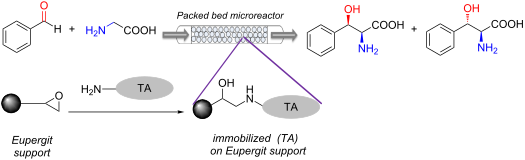
- and aliphatic aldehydes [37][38][39]. The same enzyme can also catalyze the reverse reaction, i.e. the cleavage of threonine into glycine and acetaldehyde [40][41][42]. Fesko et al. conducted kinetic and thermodynamic studies using the phenylserine synthesis from glycine and benzaldehyde as a model

Graphical Abstract

Scheme 1: Phenylserine synthesis.

Figure 1: Activity loss of TA immobilized by two different methods and as a free enzyme at 80 °C. Reproduced ...

Figure 2: Degree of immobilization versus incubation time.

Figure 3: Batch reaction using free enzyme. Reaction conditions: Reaction volume (10 mL), TA (2.7 mg, specifi...

Figure 4: Product inhibition study.

Figure 5: Effect of temperature on product yield. Reaction conditions: Reaction volume (0.250 mL), TA (1.1 mg...

Figure 6: Effect of flow rates on yield for immobilized enzymes in a packed bed microreactor (70 °C). Reactio...

Figure 7: Effect of residence time on yield for free enzymes in a Teflon tube microreactor at 70 °C. Reaction...

Figure 8: Long term enzyme stability at 70 °C. Reaction conditions: Reaction volume (0.250 mL), TA (1.1 mg, s...

Scheme 2: Synthesis of chiral α-aminoalcohol by telescoping aldolase reaction with decarboxylation.

Figure 9: Direct immobilization.

Figure 10: Indirect immobilization.

Figure 11: Flow reaction set-up using free enzyme.

Figure 12: Experimental setup for packed be microreactor.

Figure 13: Analysis of the four isomers of phenylserine on a chiral column.
The chemistry of amine radical cations produced by visible light photoredox catalysis
- Jie Hu,
- Jiang Wang,
- Theresa H. Nguyen and
- Nan Zheng
Beilstein J. Org. Chem. 2013, 9, 1977–2001, doi:10.3762/bjoc.9.234
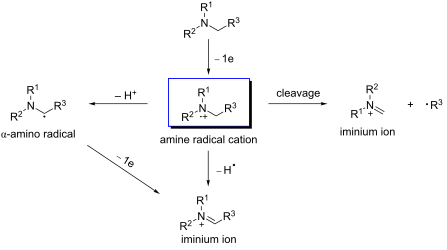
- provided some early studies to establish the conversion of amine radical cations to iminium ions. In 1980, Giannotti and Whitten reported that irradiation of triethylamine with three ruthenium polypyridyl complexes using visible light in the presence of water yielded acetaldehyde, presumably formed by the
- ion 12 that is hydrolyzed to acetaldehyde. Although the authors were not able to detect amine radical cation 12 spectroscopically, they were able to use ESR (electron spin resonance) techniques to detect Ru(I) and α-amino radical 11 with the aid of a spin trap, nitrosodurene. In 2010, Stephenson and

Graphical Abstract

Scheme 1: Amine radical cations’ mode of reactivity.

Scheme 2: Reductive quenching of photoexcited Ru complexes by Et3N.

Scheme 3: Photoredox aza-Henry reaction.

Scheme 4: Formation of iminium ions using BrCCl3 as stoichiometric oxidant.

Scheme 5: Oxidative functionalization of N-aryltetrahydroisoquinolines using Eosin Y.

Scheme 6: Synthetic and mechanistic studies of Eosin Y-catalyzed aza-Henry reaction.

Scheme 7: Oxidative functionalization of N-aryltetrahydroisoquinolines using RB and GO.

Scheme 8: Merging Ru-based photoredox catalysis and Lewis base catalysis for the Mannich reaction.

Scheme 9: Merging Au-based photoredox catalysis and Lewis base catalysis for the Mannich reaction.

Scheme 10: Merging Ru-based photoredox catalysis and Cu-catalyzed alkynylation reaction.

Scheme 11: Merging Ru-based photoredox catalysis and NHC catalysis.

Scheme 12: 1,3-Dipolar cycloaddition of photogenically formed azomethine ylides.

Scheme 13: Plausible mechanism for photoredox 1,3-dipolar cycloaddition.

Scheme 14: Photoredox-catalyzed cascade reaction for the synthesis of fused isoxazolidines.

Scheme 15: Plausible mechanism for the photoredox-catalyzed cascade reaction.

Scheme 16: Photoredox-catalyzed α-arylation of glycine derivatives.

Scheme 17: Photoredox-catalyzed α-arylation of amides.

Scheme 18: Intramolecular interception of iminium ions by sulfonamides.

Scheme 19: Intramolecular interception of iminium ions by alcohols and sulfonamides.

Scheme 20: Intermolecular interception of iminium ions by phosphites.

Scheme 21: Photoredox-catalyzed oxidative phosphonylation by Eosin Y.
Scheme 22: Conjugated addition of α-amino radicals to Michael acceptors.

Scheme 23: Conjugated addition of α-amino radicals to Michael acceptors assisted by a Brønsted acid.

Scheme 24: Conjugated addition of α-amino radicals derived from anilines to Michael acceptors.

Scheme 25: Oxygen switch between two pathways involving α-amino radicals.

Scheme 26: Interception of α-amino radicals by azodicarboxylates.

Scheme 27: α-Arylation of amines.

Scheme 28: Plausible mechanism for α-arylation of amines.

Scheme 29: Photoinduced C–C bond cleavage of tertiary amines.

Scheme 30: Photoredox cleavage of C–C bonds of 1,2-diamines.

Scheme 31: Proposed mechanism photoredox cleavage of C–C bonds.

Scheme 32: Intermolecular [3 + 2] annulation of cyclopropylamines with olefins.

Scheme 33: Proposed mechanism for intermolecular [3 + 2] annulation.

Scheme 34: Photoinduced clevage of N–N bonds of aromatic hydrazines and hydrazides.
Thermochemistry and photochemistry of spiroketals derived from indan-2-one: Stepwise processes versus coarctate fragmentations
- Götz Bucher,
- Gernot Heitmann and
- Rainer Herges
Beilstein J. Org. Chem. 2013, 9, 1668–1676, doi:10.3762/bjoc.9.191
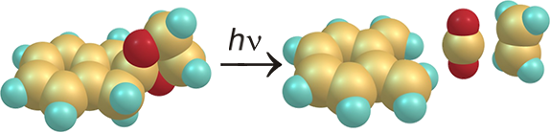
- as 1:27. Figure 4 shows an infrared spectrum of the pyrolysis products. The organic products include formaldehyde (FA), acetaldehyde (AA), ethene (ET), o-xylylene (XY), benzocyclobutene (BC), styrene (ST), and indan-2-one (IN). Some peaks could not be assigned. The assignment of the pyrolysis
- facile decay mechanism for 1. The primarily formed benzyl-dialkoxymethyl biradical 4 should undergo a very facile ring-opening reaction to yield an ester biradical 7, which can either cleave into ethylene, carbon dioxide and o-xylylene (XY), or eliminate acetaldehyde (AA) to yield an acyl-benzyl
- ), ca. 40 °C (2), and ca. 60 °C (3). The argon used was of 99.999% purity. In pyrolysis experiments, the length of the pyrolysis zone was ca. 5 cm. Reference IR spectra of benzocyclobutene, styrene, indan-2-one, acetaldehyde, formaldehyde, ethene and propene in Ar matrices were independently measured

Graphical Abstract

Figure 1: Formal, topological approach to derive coarctate reactions from pericyclic reactions; p, q: number ...

Figure 2: Stereochemistry of coarctate reactions derived from a Hückel (top) and a Möbius band (bottom). The ...

Scheme 1: Coarctate fragmentation of the spiroozonide derived from methylenecyclopropane.

Scheme 2: Photochemically and thermally allowed coarctate fragmentations of spiroketals.

Scheme 3: Precursors used in this study.

Figure 3: Difference infrared spectrum, showing the changes in the IR spectrum after photolysis (λexc = 254 n...

Figure 4: Infrared spectrum obtained upon FVP of 1 at T = 1143 K and trapping the pyrolysate in solid argon a...

Figure 5: Infrared spectrum obtained upon FVP of 2 at T = 963 K and trapping the pyrolysate in solid argon at ...

Figure 6: Infrared spectrum obtained upon FVP of 3 at T = 1043 K and trapping the pyrolysate in solid argon a...

Scheme 4: Possible fragmentation pathways in the FVP of 1.

Scheme 5: Possible fragmentation pathways in the FVP of 2.

Scheme 6: Possible fragmentation pathways in the FVP of 3.
Metal-free aerobic oxidations mediated by N-hydroxyphthalimide. A concise review
- Lucio Melone and
- Carlo Punta
Beilstein J. Org. Chem. 2013, 9, 1296–1310, doi:10.3762/bjoc.9.146
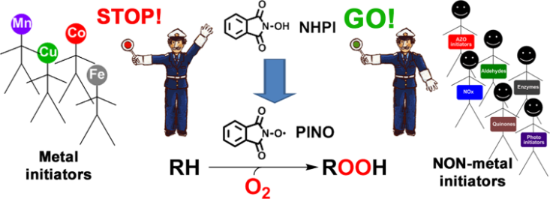
- catalytic amounts as initiators of free-radical chains. The use of aldehydes for the activation of NHPI in an aerobic co-oxidative process was first reported by Einhorn and co-workers in 1997 [51]. The combination of stoichiometric amounts of acetaldehyde with catalytic quantities of NHPI promoted the
- amount of acetaldehyde to 10% mol ratio with respect to the alkyl aromatic [58][59] (Scheme 21). Thus, while the NHPI/AQ catalytic system was particularly effective in converting alkylaromatics to the corresponding carbonyl derivatives, this approach represents a valuable alternative when hydroperoxides
- are the desired products. Even if the presence of a polar solvent is crucial to maintain the polar catalyst in solution, it was possible to conduct the aerobic oxidation of cumene at 70 °C in the presence of 1% NHPI, 2% of acetaldehyde, and with a volume ratio cumene/CH3CN of 5/2, achieving the

Graphical Abstract

Scheme 1: Catalytic role of NHPI in the selective oxidation of organic substrates.

Scheme 2: Radical addition of aldehydes and analogues to alkenes.

Scheme 3: NHPI/AIBN-promoted aerobic oxidation of 2,6-diisopropylnaphthalene.

Scheme 4: NHPI/AIBN-promoted aerobic oxidation of CHB.

Scheme 5: NMBHA/MeOAMVN promoted aerobic oxidation of PUFA.

Scheme 6: Alkene dioxygenation by means of N-aryl hydroxamic acid and O2.

Scheme 7: NHPI-catalyzed reaction of adamantane under NO atmosphere.

Scheme 8: Nitration of alkanes and alkyl side-chains of aromatics.

Scheme 9: Radical mechanism for the nitration of alkanes catalyzed by NHPI.

Scheme 10: Benzyl alcohols from alkylbenzenes.

Scheme 11: Catalytic cycle of laccase-NHDs mediator oxidizing system.

Figure 1: Mediators of laccase.

Scheme 12: DADCAQ/NHPI-mediated aerobic oxidation mechanism.

Scheme 13: DADCAQ/TCNHPI mediated aerobic oxidation of ethylbenzene.

Scheme 14: NHPI/xanthone/TMAC mediated aerobic oxidation of ethylbenzene.

Scheme 15: NHPI/AQ-mediated aerobic oxidation of α-isophorone.

Scheme 16: NHPI/AQ-mediated oxidation of cellulose fibers by NaClO/NaBr system.

Scheme 17: NHPI/AQ mediated aerobic oxidation of cellulose fibers.

Scheme 18: Molecule-induced homolysis by peracids.

Scheme 19: Molecule-induced homolysis of NHPI/m- chloroperbenzoic acid system.

Scheme 20: Proposed mechanism for the NHPI/CH3CHO/O2-mediated epoxidation.

Scheme 21: NHPI/CH3CHO-mediated aerobic oxidation of alkyl aromatics.

Scheme 22: Light-induced generation of PINO from N-alkoxyphthalimides.

Scheme 23: Visible-light/g-C3N4 induced metal-free oxidation of allylic substrates.

Scheme 24: NHPI/o-phenanthroline-mediated organocatalytic system.

Scheme 25: NHPI/DMG-mediated organocatalytic system.

Scheme 26: NHPI catalyzed oxidative cleavage of C=C bonds.

Scheme 27: Synthesis of hydrazine derivatives.
Isotopically labeled sulfur compounds and synthetic selenium and tellurium analogues to study sulfur metabolism in marine bacteria
- Nelson L. Brock,
- Christian A. Citron,
- Claudia Zell,
- Martine Berger,
- Irene Wagner-Döbler,
- Jörn Petersen,
- Thorsten Brinkhoff,
- Meinhard Simon and
- Jeroen S. Dickschat
Beilstein J. Org. Chem. 2013, 9, 942–950, doi:10.3762/bjoc.9.108
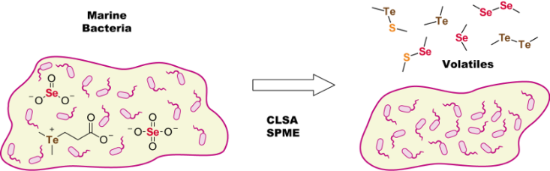
- ][15] followed by its conversion into its CoA-thioester by DmdB and oxidation by the FAD-dependent dehydrogenase DmdC. The addition of water to 3-(methylthio)acryloyl-CoA by the enoyl-CoA hydratase DmdD results in a hemithioacetal, which collapses under release of acetaldehyde, carbon dioxide and MeSH

Graphical Abstract

Figure 1: Roseobacter clade metabolites.

Scheme 1: Degradation of DMSP via (A) demethylation pathway and (B) cleavage pathways. FH4: tetrahydrofolate.

Scheme 2: Sulfate reduction pathway and incorporation of sulfur into the amino acid pool. PAP: adenosine 3’,5...

Figure 2: Volatiles from P. gallaeciensis DSM 17395 and R. pomeroyi DSS-3. Feeding of [2H6]DMSP results in de...

Figure 3: Chromatograms of headspace extracts from P. gallaeciensis DSM 17395 after feeding of DMTeP by the u...

Figure 4: Chromatograms of headspace extracts obtained after feeding of [2H6]DMSP by the use of SPME from (A) ...

Figure 5: Chromatograms of headspace extracts from (A) R. pomeroyi DSS-3 wild type, (B) R. pomeroyi DSS-3 dmdA...

Scheme 3: Synthesis of 34S-labeled thiosulfate and sulfate.
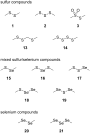
Figure 6: Volatiles from P. gallaeciensis after feeding of selenate and selenite.
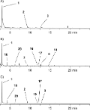
Figure 7: Chromatograms of headspace extracts from P. gallaeciensis grown on (A) 50% MB2216, (B) 50% MB2216 +...

Figure 8: Additional sulfur volatiles.
Flow photochemistry: Old light through new windows
- Jonathan P. Knowles,
- Luke D. Elliott and
- Kevin I. Booker-Milburn
Beilstein J. Org. Chem. 2012, 8, 2025–2052, doi:10.3762/bjoc.8.229
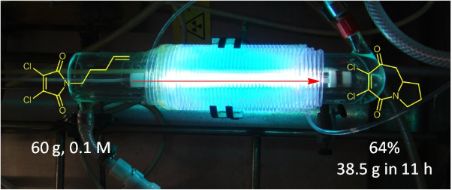
- acetaldehyde) and reductive (imine to amine) activity of the photocatalyst [48]. The reaction was also applied to the alkylation of aniline and piperidine. Use of a microsystem conferred a number of advantages over the same reaction under batch conditions: dialkylation could be suppressed as monoalkylated

Graphical Abstract

Figure 1: An immersion-well batch reactor with 125 W medium pressure Hg lamp.

Figure 2: Transmission profile of a 0.05 M solution, ε = 200 M−1 cm−1.

Figure 3: Schematic of a typical microflow photochemical reactor (above) and detail of a triple-channel micro...

Figure 4: Schematic of a typical macroflow photochemical reactor (above) and images of the FEP photochemical ...

Scheme 1: [2 + 2] photocycloadditions of enones with enol derivatives.

Scheme 2: Competing reactions in an intramolecular [2 + 2] photocycloaddition.

Scheme 3: Diastereocontrolled cycloaddition of a cyclic enone with cyclopentene.

Scheme 4: Comparison of yields and reaction times for a batch reactor with a microflow system.

Scheme 5: Intramolecular [2 + 2] photocycloaddition.

Scheme 6: Paterno–Büchi reaction of benzophenone with an allylic alcohol.

Scheme 7: Photooxygenation of cyclopentadiene.

Scheme 8: Preparation of the anthelmintic ascaridole 23.

Scheme 9: Production of rose oxide 27 from (−)-β-citronellol (24).

Scheme 10: Photocatalytic alkylation of benzylamine.

Scheme 11: Photocatalytic reduction of 4-nitroacetophenone.

Scheme 12: Conversion of L-lysine to L-pipecolinic acid.

Scheme 13: Photocatalytic hydrodehalogenation.

Scheme 14: Photocatalytic aza-Henry reactions.

Scheme 15: Photocatalytic α-alkylation of aliphatic ketones.

Scheme 16: Decarboxylative photochemical additions.

Scheme 17: Photochemical addition of isopropanol to furanones.

Scheme 18: Photochemical addition of methanol to limonene.

Scheme 19: Light-promoted reduction of flavone.

Scheme 20: Photoreduction of benzophenone with benzhydrol.

Scheme 21: Barton reaction in a microflow system.

Scheme 22: Microflow synthesis of vitamin D3.

Scheme 23: photochemical chlorination of cyclohexane.

Scheme 24: photochemical cyanation of pyrene.

Scheme 25: Intermolecular [2 + 2] cycloaddition of maleimide (76) and intramolecular [2 + 2] cycloaddition of ...

Scheme 26: Intramolecular [5 + 2] cycloaddition of maleimide under flow conditions.

Scheme 27: Intramolecular [5 + 2] cycloaddition as a key step in the synthesis of (±)-neostenine.

Scheme 28: In situ generation of a thioaldehyde by photolysis of a phenacyl sulfide.

Scheme 29: Photodimerisation of maleic anhydride.

Scheme 30: [2 + 2] cycloaddition of a chiral enone with ethylene.

Scheme 31: Intramolecular [2 + 2] cycloaddition of a cyclopentenone.

Scheme 32: Photochemical Wolff rearrangement and cyclisation to β-lactams.

Scheme 33: Photochemical rearrangement of aryl azides.

Scheme 34: Rearrangement of quinoline N-oxides to quinolones.

Scheme 35: Photochemical rearrangement of cyclobutenones.

Scheme 36: Photoisomerisation en route to a vitamin-D derivative.

Scheme 37: Schematic of the Seeberger photooxygenation apparatus and sensitised photooxygenation of citronello...

Scheme 38: Sensitised photooxygenation of dihydroartemisinic acid.

Scheme 39: Photochemical preparation of CpRu(MeCN)3PF6.

Scheme 40: In situ photochemical generation and reaction of a [CpRu]+ catalyst.

Scheme 41: Intermolecular alkene–alkyne coupling with photogenerated catalyst.

Scheme 42: PET deoxygenation of nucleosides.

Scheme 43: Photochemical defluorination of DABFT.

Scheme 44: Aromatic azide reduction by visible-light-mediated photocatalysis.

Scheme 45: Examples of visible-light-mediated reactions.

Scheme 46: Visible-light-mediated formation of iminium ions.

Scheme 47: Examples of visible-light-mediated photocatalytic reactions.

Scheme 48: Anhydride formation from a visible-light-mediated process.

Scheme 49: Light-mediated conjugate addition of glycosyl bromide 141 to acrolein.

Scheme 50: Visible-light-mediated photocyclisation to [5]helicene.
N-Heterocyclic carbene-catalyzed direct cross-aza-benzoin reaction: Efficient synthesis of α-amino-β-keto esters
- Takuya Uno,
- Yusuke Kobayashi and
- Yoshiji Takemoto
Beilstein J. Org. Chem. 2012, 8, 1499–1504, doi:10.3762/bjoc.8.169
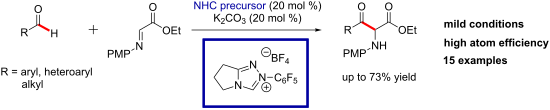
- electrophilicity relative to aromatic aldehydes [40][46][47][50]. To our delight, this methodology was found to be also suitable for the enolizable aliphatic aldehydes. Under the optimal reaction conditions (Table 1, entry 5), acetaldehyde and other primary alkyl aldehydes bearing functional groups such as ether

Graphical Abstract

Figure 1: Synthetic methods for α-amino-β-keto esters.

Figure 2: Structures of several NHC precatalysts.

Scheme 1: Scope of aliphatic aldehydes.

Scheme 2: Cross-over experiments.

Scheme 3: Proposed reaction mechanism.
Photoreactions of cyclic sulfite esters: Evidence for diradical intermediates
- Rick C. White,
- Benny E. Arney Jr. and
- Heiko Ihmels
Beilstein J. Org. Chem. 2012, 8, 1208–1212, doi:10.3762/bjoc.8.134

- irradiation of the cyclic sulfite 8 for 3 h in acetonitrile gave phenyl acetaldehyde (3a), bibenzyl (4) and toluene (7) in Scheme 2; however, in contrast to the results of the photoreaction of the cyclic carbonate ester 1a under similar conditions, the oxirane 2a was not detected as a reaction product. The
- biradical BR2 with a conformation that is unfavorable for oxirane formation, but enables efficient hydrogen migration to result in aldehyde 3a. Theoretical calculations have confirmed that acetaldehyde derivatives may be formed upon rearrangement of the 1,3-oxyethandiyl [20][21] and that a subsequent
- a Büchi 510K and are uncorrected. Phenyl benzyl ketone, diphenyl acetaldehyde, diphenylmethane, benzil, phenyl acetaldehyde, and bibenzyl were obtained commercially (Aldrich) and used as received. Styrene glycol sulfite was prepared by adding thionyl chloride (2.5 g, 21 mmol) in diethyl ether (50 mL

Graphical Abstract

Scheme 1: Photolysis of cyclic carbonate esters 1a and 1b in acetonitrile.

Scheme 2: Photoreactivity of styrene glycol sulfite (8).

Scheme 3: Photochemical pathway for photoextrusion of SO2 from cyclic sulfites.

Scheme 4: Photoreactivity of meso-hydrobenzoin sulfite (9).
Identification and isolation of insecticidal oxazoles from Pseudomonas spp.
- Florian Grundmann,
- Veronika Dill,
- Andrea Dowling,
- Aunchalee Thanwisai,
- Edna Bode,
- Narisara Chantratita,
- Richard ffrench-Constant and
- Helge B. Bode
Beilstein J. Org. Chem. 2012, 8, 749–752, doi:10.3762/bjoc.8.85
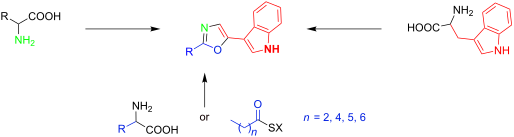
- nitrogen labeling also occurs when 14N-tryptamine, leucine or phenylalanine is fed indicates an efficient transaminase activity in both strains, as one would indeed expect for a bacterial strain living on proteinogenic substrates such as insects. Indole acetaldehyde was also fed in 13C-labeled medium, but

Graphical Abstract
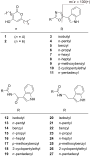
Figure 1: Structures of pseudopyronines A (1) and B (2) and natural oxazoles (3–8) as well as synthetic oxazo...

Figure 2: MS data from strain PB22.5, which was cultivated in [U-13C] and [U-15N] medium background and LB me...

Figure 3: All incorporated biosynthetic precursors of the oxazoles are shown in color. The nitrogen shown in ...
Stereoselective, nitro-Mannich/lactamisation cascades for the direct synthesis of heavily decorated 5-nitropiperidin-2-ones and related heterocycles
- Pavol Jakubec,
- Dane M. Cockfield,
- Madeleine Helliwell,
- James Raftery and
- Darren J. Dixon
Beilstein J. Org. Chem. 2012, 8, 567–578, doi:10.3762/bjoc.8.64
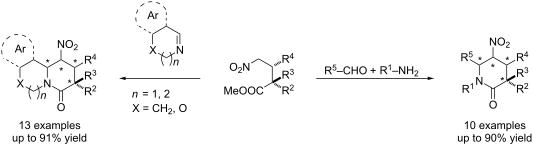
- reaction. Thus acetaldehyde (3b), anisaldehyde (3c) and glyoxylic acid (3d) were chosen as representative aliphatic, aromatic and functionalised aldehydes, respectively, and reacted with Michael adducts 6a and 6d under the conditions described above with allylamine. High diastereoselectivities were

Graphical Abstract

Figure 1: Biologically active natural products and drugs containing the piperidine ring.

Scheme 1: A general strategy to 5-nitropiperidin-2-ones and related heterocycles.

Scheme 2: The synthesis of Michael adduct model substrates for the nitro-Mannich/lactamisation cascade.

Scheme 3: Nitro-Mannich/lactamisation cascade with in situ formed imines.

Figure 2: Cyclic imines employed in nitro-Mannich/lactamisation cascade.

Scheme 4: Nitro-Mannich/lactamisation cascade of diastereomeric Michael adducts 6a, 6a’’ with cyclic imine 5a....

Scheme 5: Nitro-Mannich/lactamisation cascade with cyclic imines. aDiastereomeric ratio in a crude reaction m...

Scheme 6: Possible explanations for the observed high stereoselectivities in the nitro-Mannich/lactamisation ...

Scheme 7: Thermodynamically-driven epimerisation of 5-nitropiperidin-2-ones 2m and 2m’.

Figure 3: Thermodynamically driven epimerisation of 5-nitropiperidin-2-ones 2m and 2m’; identical diastereome...

Scheme 8: One-pot three/four-component enantioselective Michael addition/nitro-Mannich/lactamisation cascade.

Scheme 9: Protodenitration of 5-nitropiperidin-2-ones.

Scheme 10: Various reductions of denitrated heterocycles.
Efficient, highly diastereoselective MS 4 Å-promoted one-pot, three-component synthesis of 2,6-disubstituted-4-tosyloxytetrahydropyrans via Prins cyclization
- Naseem Ahmed and
- Naveen Kumar Konduru
Beilstein J. Org. Chem. 2012, 8, 177–185, doi:10.3762/bjoc.8.19
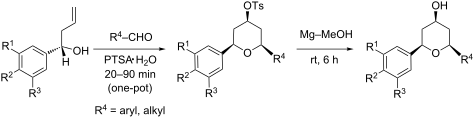
- ). We further extended our method to aliphatic aldehydes (e.g., acetaldehyde) and hetero aromatic aldehydes (e.g., pyrrole aldehyde, furfural). Under optimal reaction conditions they reacted smoothly with homoallylic alcohols to afford the corresponding tetrahydropyran derivatives which show almost the

Graphical Abstract

Figure 1: Tetrahydropyran ring containing natural products.

Scheme 1: Plausible side products mechanism.

Scheme 2: Plausible reaction mechanism via Prins cyclization.

Figure 2: Schematic NOE diagram of compound 3b.

Scheme 3: Deprotection of the hydroxy group.
Coupled chemo(enzymatic) reactions in continuous flow
- Ruslan Yuryev,
- Simon Strompen and
- Andreas Liese
Beilstein J. Org. Chem. 2011, 7, 1449–1467, doi:10.3762/bjoc.7.169
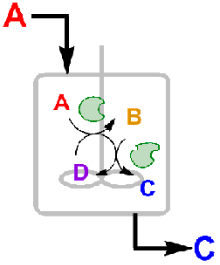
- formate decarboxylase (BFD) catalyzing the (S)-selective aldol condensation of benzaldehyde (33) and acetaldehyde (32) with formation of (S)-2-hydroxy-1-phenyl-propanone (34) (Scheme 11). In the second vessel the intermediate (S)-34 was asymmetrically reduced by recLb-alcohol dehydrogenase (ADH) and the
Graphical Abstract

Figure 1: Metabolic pathways in a living cell as an example of efficient coupled-reaction processes. A: Subst...

Figure 2: Four generations of biotransformations. I: Single-reaction processes; II: Single-reaction processes...

Scheme 1: Production of L-leucine (3) in a continuously operating enzyme membrane reactor (EMR). E1: L-Leucin...

Scheme 2: Production of D-mandelic acid (5) in a continuously operating enzyme membrane reactor. E1: D-(−)-Ma...

Scheme 3: Simultaneous synthesis of gluconic acid (9) and glutamic acid (8) in a continuously operated membra...

Scheme 4: Production of L-tert-leucine (11) in a continuously operated enzyme membrane reactor equipped with ...

Scheme 5: Continuous oxidation of lactose (12) to lactobionic acid (13) in a dynamic membrane-aerated reactor...

Scheme 6: Production of N-acetylneuraminic acid (17) in a continuously operated enzyme membrane reactor. E1: ...

Scheme 7: Chemo-enzymatic epoxidation of 1-methylcyclohexene (18) in a packed-bed reactor (PBR) containing No...

Scheme 8: Continuous production of (R)-1-phenylethyl propionate (24) by dynamic kinetic resolution of (rac)-1...

Scheme 9: Synthesis of D-xylulose (28) from D,L-serine (26) and D,L-glyceraldehyde (25) in a continuously ope...

Scheme 10: Continuous production of L-alanine (31) from fumarate (29) in a two-stage enzyme membrane reactor. ...

Scheme 11: Continuous synthesis of 1-phenyl-(1S,2S)-propanediol (35) in a cascade of two enzyme membrane react...

Scheme 12: Production of a dipeptide 39 in a cascade of two continuously operated membrane reactors. E1: Carbo...

Scheme 13: Continuous production of GDP-mannose (43) from mannose 1-phosphate (40) in a cascade of two enzyme ...

Scheme 14: Continuous solvent-free chemo-enzymatic synthesis of ethyl (S)-3-(benzylamino)butanoate (48) in a s...

Scheme 15: Continuous chemo-enzymatic synthesis of grossamide (52) in a cascade of packed-bed reactors. E: Per...

Scheme 16: Chemo-enzymatic synthesis of 2-aminophenoxazin-3-one (56) in a cascade of continuously operating pa...

Scheme 17: Continuous conversion of 3-phospho-D-glycerate (57) into D-ribulose 1,5-bisphosphate (58) in a casc...

Scheme 18: Continuous hydrolysis of 4-cyanopyridine (59) to isonicotinic acid (61) in a cascade of two packed-...

Scheme 19: Continuous fermentative production of ethanol (64) from hardwood lignocellulose (62) in a stirred-t...

Scheme 20: Production of hydrogen by anaerobic fermentation of glucose (7) using Clostridium acetobutylicum ce...

Scheme 21: Continuous production of (2R,5R)-hexanediol (67) in an enzyme membrane reactor containing whole cel...

Scheme 22: Synthesis of L-phenylalanine (69) in a continuously stirred tank reactor equipped with a hollow-fib...

Scheme 23: Continuous epoxidation of 1,7-octadiene (70) to (R)-7-epoxyoctene (72) by a strain of Pseudomonas o...

Scheme 24: Oxidation of styrene (73) to (S)-styrene oxide (74) in a continuously operated biofilm tube reactor...

Scheme 25: Reduction of estrone (75) to β-estradiol (76) by Saccharomyces cerevisiae in a cascade of two stirr...
Directed ortho,ortho'-dimetalation of hydrobenzoin: Rapid access to hydrobenzoin derivatives useful for asymmetric synthesis
- Inhee Cho,
- Labros Meimetis,
- Lee Belding,
- Michael J. Katz,
- Travis Dudding and
- Robert Britton
Beilstein J. Org. Chem. 2011, 7, 1315–1322, doi:10.3762/bjoc.7.154
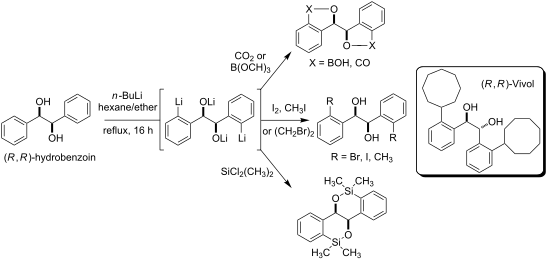
- , Figure 3) was also produced, but was readily separable from the desired product by flash chromatography. Unfortunately, reaction of the tetralithio intermediate 8 with carbonyl electrophiles (e.g., acetone, acetaldehyde, diethyl carbonate, valeraldehyde, cyclohexanal, crotonaldehyde, formaldehyde, DMF

Graphical Abstract

Figure 1: Chiral diols useful for asymmetric synthesis and the tetralithio intermediate 8.

Scheme 1: Directed ortho,ortho'-dimetalation of (R,R)-hydrobenzoin (3).

Figure 2: Percentage of (R,R)-hydrobenzoin (3) (○), monodeuterohydrobenzoin (13) (■), and dideuterohydrobenzo...

Figure 3: Percentage of methylhydrobenzoin (14) (■), and dimethylhydrobenzoin (15) (Δ) as determined by 1H NM...

Scheme 2: Formation of the tetralithio intermediate 8 and the X-ray crystal structure of the bis(siloxane) 19....

Scheme 3: Reaction of the tetralithio intermediate 8 with various electrophiles.

Scheme 4: Reactions of the diiodohydrobenzoin 12 and X-ray crystal structure of the dihydrosilepin 31.

Scheme 5: Cross coupling reactions of the bis(benzoxaborol) 20 and a short formal synthesis of (R,R)-Vivol (4...
An overview of the key routes to the best selling 5-membered ring heterocyclic pharmaceuticals
- Marcus Baumann,
- Ian R. Baxendale,
- Steven V. Ley and
- Nikzad Nikbin
Beilstein J. Org. Chem. 2011, 7, 442–495, doi:10.3762/bjoc.7.57
- performed on a cyclohexenone derivative prior to the Fischer indole synthesis (Scheme 27) [38]. The required imidazole 187 itself can be prepared via a variety of methods. For example, a process involving acetaldehyde, glyoxal and ammonium carbonate furnishes the desired compound in an excellent 95% yield

Graphical Abstract
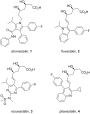
Figure 1: Structures of atorvastatin and other commercial statins.

Figure 2: Structure of compactin.

Scheme 1: Synthesis of pentasubstituted pyrroles.

Scheme 2: [3 + 2] Cycloaddition to prepare 5-isopropylpyrroles.

Scheme 3: Regiospecific [3 + 2] cycloaddition to prepare the pyrrole scaffold.

Scheme 4: Formation of the pyrrole core of atorvastatin via [3 + 2] cycloaddition.

Scheme 5: Formation of pyrrole 33 via the Paal–Knorr reaction.

Scheme 6: Convergent synthesis towards atorvastatin.

Figure 3: Binding pocket of sunitinib in the TRK KIT.

Scheme 7: Synthesis of sunitinib.

Scheme 8: Alternative synthesis of sunitinib.

Scheme 9: Key steps in the syntheses of sumatriptan and zolmitriptan.

Scheme 10: Introduction of the N,N-dimethylaminoethyl side chain.

Scheme 11: Japp–Klingemann reaction in the synthesis of sumatriptan.

Scheme 12: Synthesis of the intermediate sulfonyl chlorides 62 and 63.

Scheme 13: Alternative introduction of the sulfonamide.

Scheme 14: Negishi-type coupling to benzylic sulfonamides.

Scheme 15: Heck reaction used to introduce the sulfonamide side chain of naratriptan.

Scheme 16: Synthesis of the oxazolinone appendage of zolmitriptan.

Scheme 17: Grandberg indole synthesis used in the preparation of rizatriptan.

Scheme 18: Improved synthesis of rizatriptan.

Scheme 19: Larock-type synthesis of rizatriptan.

Scheme 20: Synthesis of eletriptan.

Scheme 21: Heck coupling for the indole system in eletriptan.

Scheme 22: Attempted Fischer indole synthesis of elatriptan.

Scheme 23: Successful Fischer indole synthesis for eletriptan.
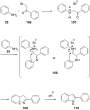
Scheme 24: Mechanistic rationale for the Bischler–Möhlau reaction.

Scheme 25: Bischler-type indole synthesis used in the fluvastatin sodium synthesis.

Scheme 26: Palladium-mediated synthesis of ondansetron.

Scheme 27: Fischer indole synthesis of ondansetron.

Scheme 28: Optimised Pictet–Spengler reaction towards tadalafil.

Figure 4: Structures of carvedilol 136 and propranolol 137.

Scheme 29: Synthesis of the carbazole core of carvedilol.

Scheme 30: Alternative syntheses of 4-hydroxy-9H-carbazole.

Scheme 31: Convergent synthesis of etodolac.

Scheme 32: Alternative synthesis of etodolac.

Figure 5: Structures of imidazole-containing drugs.

Scheme 33: Synthesis of functionalised imidazoles towards losartan.

Scheme 34: Direct synthesis of the chlorinated imidazole in losartan.

Scheme 35: Synthesis of trisubstituted imidazoles.

Scheme 36: Preparation of the imidazole ring in olmesartan.

Scheme 37: Synthesis of ondansetron.

Scheme 38: Alternative route to ondansetron and its analogues.

Scheme 39: Proton pump inhibitors and synthesis of esomeprazole.

Scheme 40: Synthesis of benzimidazole core pantoprazole.

Figure 6: Structure of rabeprazole 194.

Scheme 41: Synthesis of candesartan.

Scheme 42: Alternative access to the candesartan key intermediate 216.

Scheme 43: .Medicinal chemistry route to telmisartan.

Scheme 44: Improved synthesis of telmisartan.

Scheme 45: Synthesis of zolpidem.

Scheme 46: Copper-catalysed 3-component coupling towards zolpidem.

Figure 7: Structure of celecoxib.

Scheme 47: Preparation of celecoxib.

Scheme 48: Alternative synthesis of celecoxib.

Scheme 49: Regioselective access to celecoxib.

Scheme 50: Synthesis of pazopanib.

Scheme 51: Syntheses of anastrozole, rizatriptan and letrozole.

Scheme 52: Regioselective synthesis of anastrozole.

Scheme 53: Triazine-mediated triazole formation towards anastrozole.

Scheme 54: Alternative routes to 1,2,4-triazoles.

Scheme 55: Initial synthetic route to sitagliptin.

Figure 8: Binding of sitagliptin within DPP-IV.

Scheme 56: The process route to sitagliptin key intermediate 280.

Scheme 57: Synthesis of maraviroc.

Scheme 58: Synthesis of alprazolam.

Scheme 59: The use of N-nitrosoamidine derivatives in the preparation of fused benzodiazepines.

Figure 9: Structures of itraconazole, ravuconazole and voriconazole.

Scheme 60: Synthesis of itraconazole.

Scheme 61: Synthesis of rufinamide.

Scheme 62: Representative tetrazole formation in valsartan.

Figure 10: Structure of tetrazole containing olmesartan, candesartan and irbesartan.

Scheme 63: Early stage introduction of the tetrazole in losartan.

Scheme 64: Synthesis of cilostazol.

Figure 11: Structure of cefdinir.

Scheme 65: Semi-synthesis of cefdinir.

Scheme 66: Thiazole syntheses towards ritonavir.

Scheme 67: Synthesis towards pramipexole.

Scheme 68: Alternative route to pramipexole.

Scheme 69: Synthesis of famotidine.

Scheme 70: Efficient synthesis of the hyperuricemic febuxostat.

Scheme 71: Synthesis of ziprasidone.

Figure 12: Structure of mometasone.

Scheme 72: Industrial access to 2-furoic acid present in mometasone.

Scheme 73: Synthesis of ranitidine from furfuryl alcohol.

Scheme 74: Synthesis of nitrofurantoin.

Scheme 75: Synthesis of benzofuran.

Scheme 76: Synthesis of amiodarone.

Scheme 77: Synthesis of raloxifene.

Scheme 78: Alternative access to the benzo[b]thiophene core of raloxifene.

Scheme 79: Gewald reaction in the synthesis of olanzapine.

Scheme 80: Alternative synthesis of olanzapine.
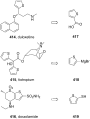
Figure 13: Access to simple thiophene-containing drugs.

Scheme 81: Synthesis of clopidogrel.

Scheme 82: Pictet–Spengler reaction in the preparation of tetrahydrothieno[3,2-c]pyridine (422).

Scheme 83: Alternative synthesis of key intermediate 422.

Figure 14: Co-crystal structures of timolol (left) and carazolol (right) in the β-adrenergic receptor.

Scheme 84: Synthesis of timolol.

Scheme 85: Synthesis of tizanidine 440.

Scheme 86: Synthesis of leflunomide.

Scheme 87: Synthesis of sulfamethoxazole.

Scheme 88: Synthesis of risperidone.

Figure 15: Relative abundance of selected transformations.

Figure 16: The abundance of heterocycles within top 200 drugs (5-membered rings).
The preparation of 3-substituted-1,5-dibromopentanes as precursors to heteracyclohexanes
- Bryan Ringstrand,
- Martin Oltmanns,
- Jeffrey A. Batt,
- Aleksandra Jankowiak,
- Richard P. Denicola and
- Piotr Kaszynski
Beilstein J. Org. Chem. 2011, 7, 386–393, doi:10.3762/bjoc.7.49
- -4-pentylcyclohexyl)acetaldehyde (9) [49]. The aldehyde was reduced with NaBH4 and subsequently brominated with PBr3 to give 1-bromo-2-(trans-4-pentylcyclohexyl)ethane (10) in overall yield of 42% (Scheme 9). Bromide 10 has been reported in the literature, but experimental details are lacking [50][51

Graphical Abstract

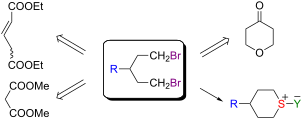
Figure 1: Methods for synthesis of dibromides I and their use for preparation of 6-membered heterocycles.

Scheme 1: General methods for preparation of diols VII.

Scheme 2: General methods for preparation of tetrahydropyrans VIII.

Figure 2: Structures of 1,5-dibromomopentanes 1a–1d.

Scheme 3: Preparation of dibromides 1.

Scheme 4: Preparation of diol 2a.

Scheme 5: Preparation of diol 2b.

Scheme 6: Preparation of tetrahydropyrans 3a–3c.

Scheme 7: Preparation of tetrahydropyran 3d.

Scheme 8: Preparation of methylenetetrahydropyrans 6.

Scheme 9: Preparation of bromides 8 and 10.
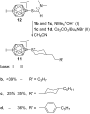
Scheme 10: Preparation of sulfonium derivatives 11.
Molecular rearrangements of superelectrophiles
- Douglas A. Klumpp
Beilstein J. Org. Chem. 2011, 7, 346–363, doi:10.3762/bjoc.7.45
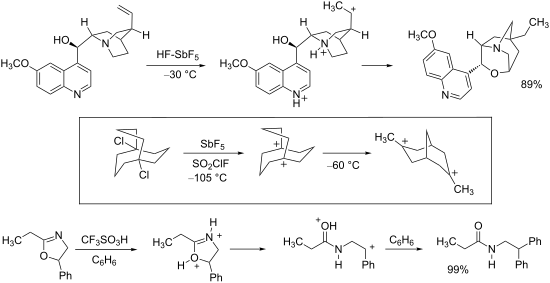
- thought to be involved. In superacidic media, substrates such as ethylene glycol (159) are diprotonated and form the bis-oxonium ions, i.e., 160 as a stable species at −80 °C. When the solution is warmed to 25 °C, protonated acetaldehyde (162) is formed (Scheme 32). The conversion may occur by one of

Graphical Abstract

Scheme 1: Superelectrophilic activation of the acetyl cation.

Scheme 2: Ring opening of diprotonated 2-oxazolines.

Scheme 3: AlCl3-promoted ring opening of isoxaolidine 16.

Scheme 4: Ring-opening reactions of cyclopropyl derivatives.

Scheme 5: Condensations of ninhydrin (28) with benzene.

Scheme 6: Rearrangement of 29 to 30.

Scheme 7: Superacid promoted ring opening of succinic anhydride (33).

Scheme 8: Reaction of phthalic acid (36) in FSO3H-SbF5.

Scheme 9: Ring expansion of superelectrophile 42.

Scheme 10: Reaction of camphor (44) in superacid.

Scheme 11: Isomerization of 2-cyclohexen-1-one (48).

Scheme 12: Isomerization of 2-decalone (51).

Scheme 13: Rearrangement of the acyl-dication 58.

Scheme 14: Reaction of dialkylketone 64.

Scheme 15: Ozonolysis in superacid.

Scheme 16: Rearrangement of 1-hydroxy-2-methylcyclohexane carboxylic acid (79) in superacid.

Scheme 17: Isomerization of the 1,5-manxyl dication 87.

Scheme 18: Energetics of isomerization.

Scheme 19: Rearrangement of dication 90.

Scheme 20: Superacid promoted rearrangement of pivaldehyde (92).

Scheme 21: Rearrangement of a superelectrophilic carboxonium ion 100.

Scheme 22: Proposed mechanism for the Wallach rearrangement.

Scheme 23: Wallach rearrangement of azoxypyridines 108 and 109.

Scheme 24: Proposed mechanism of the benzidine rearrangement.

Scheme 25: Superacid-promoted reaction of quinine (122).

Scheme 26: Superacid-promoted reaction of vindoline derivative 130.

Scheme 27: Charge migration by hydride shift and acid–base chemistry.

Scheme 28: Reactions of 1-hydroxycyclohexanecarboxylic acid (137).

Scheme 29: Reaction of alcohol 143 with benzene in superacid.

Scheme 30: Reaction of alcohol 148 in superacid with benzene.

Scheme 31: Mechanism of aza-polycyclic aromatic compound formation.

Scheme 32: Superacid-promoted reaction of ethylene glycol (159).

Scheme 33: Reactions of 1,3-propanediol (165) and 2-methoxyethanol (169).

Scheme 34: Rearrangement of superelelctrophilic acyl dication 173.



