


Search results
Search for "allylic alcohol" in Full Text gives 120 result(s) in Beilstein Journal of Organic Chemistry.
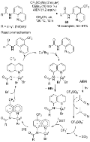
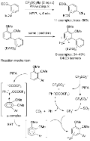
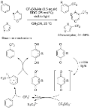
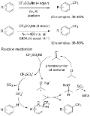
CF3SO2X (X = Na, Cl) as reagents for trifluoromethylation, trifluoromethylsulfenyl-, -sulfinyl- and -sulfonylation. Part 1: Use of CF3SO2Na
Beilstein J. Org. Chem. 2017, 13, 2764–2799, doi:10.3762/bjoc.13.272






















Homologated amino acids with three vicinal fluorines positioned along the backbone: development of a stereoselective synthesis
Beilstein J. Org. Chem. 2017, 13, 2316–2325, doi:10.3762/bjoc.13.228

- fluoride, then deoxyfluorination). We therefore sought to apply O’Hagan’s method to the target 6b (Scheme 3, boxed). Accordingly, the enantiopure allylic alcohol 27 [35] was extended through a cross-metathesis reaction to deliver the disubstituted alkene 30 (Scheme 3). Compound 30 became the substrate for


Mechanically induced oxidation of alcohols to aldehydes and ketones in ambient air: Revisiting TEMPO-assisted oxidations
Beilstein J. Org. Chem. 2017, 13, 2049–2055, doi:10.3762/bjoc.13.202
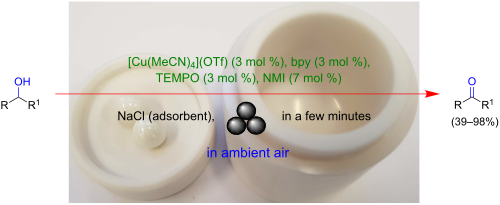
- oxidative procedure was also applied to allylic alcohol derivatives. Cinnamyl alcohol (1m) was transformed into the corresponding α,β-unsaturated aldehyde in an excellent yield (96%) and with the stereochemical retention of the double bond. Encouraged by these promising results, we attempted to oxidise


Pd(OAc)2/Ph3P-catalyzed dimerization of isoprene and synthesis of monoterpenic heterocycles
Beilstein J. Org. Chem. 2017, 13, 1807–1815, doi:10.3762/bjoc.13.175
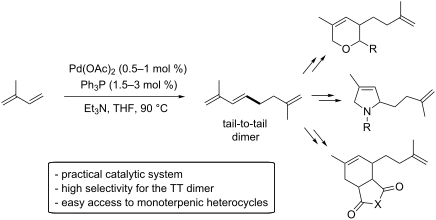
- the tail-to-tail linkage [15][29]. Moreover, the naturally occurring head-to-tail 2-HT dimers, myrcene and ocimene, can be obtained in allylic alcohol when employing Pd(NO3)2/Ph3P/KOPh as catalytic system [30]. The head-to-head 2-HH dimer could also be prepared as major isomer under catalysis with the


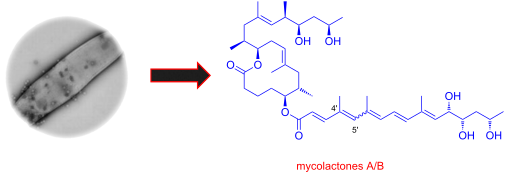
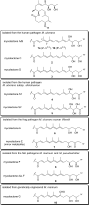
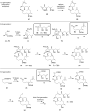
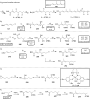
The chemistry and biology of mycolactones
Beilstein J. Org. Chem. 2017, 13, 1596–1660, doi:10.3762/bjoc.13.159








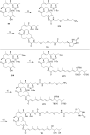

Base-promoted isomerization of CF3-containing allylic alcohols to the corresponding saturated ketones under metal-free conditions
Beilstein J. Org. Chem. 2017, 13, 1507–1512, doi:10.3762/bjoc.13.149

- the alkoxide 3F-Oa. In the case of 1Fb, the phenyl group worked nicely for increase of the energetic preference of 3F-Cb to 3F-Ob of about 7.9 kcal/mol. For the allylic alcohol 2Fb (R = Ph), although the ΔΔE value was small, the carbanionic species 4F-Cb was calculated to be more (or at least almost
- excess amount of CsF, the resultant product (E)-2Fb was further converted in situ to the corresponding saturated ketone (E)-5b (R = Ph). Confirmation of this process was performed by the action of DBU, resulting in 95% conversion of the starting allylic alcohol (E)-2Fb [14]. Quite recently [15], the same
- shown in Table 2, we at first checked a type of bases suitable for this isomerization in THF under reflux for 3 h. Although Et3N was appropriate in the case of isomerization of propargylic alcohols 1F [1], this was not the case for the allylic alcohol (E)-6a, forming the desired 7a only in a trace


Total synthesis of elansolids B1 and B2
Beilstein J. Org. Chem. 2017, 13, 1280–1287, doi:10.3762/bjoc.13.124
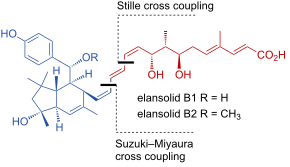
- intramolecular Diels–Alder (IMDA) cycloaddition as key step to construct the tetrahydroindane unit (Scheme 1) [7]. An enone, derived from allylic alcohol 8 served as precursor to yield tetrahydroindane 9 with excellent diastereocontrol at −25 °C. The major drawback of our first total synthesis of elansolid B1 (2


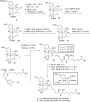
Phosphazene-catalyzed desymmetrization of cyclohexadienones by dithiane addition
Beilstein J. Org. Chem. 2017, 13, 762–767, doi:10.3762/bjoc.13.75

- nucleophile. Mild reaction conditions allow the formation of diversely functionalized fused bicyclic lactones. The products participate in facially selective additions from the convex surface, leading to allylic alcohol derivatives. Keywords: conjugate addition; cyclohexadienones; dearomatization
- for general concern about the feasibility of easily reaching the target substructure. In order to minimize the observed side reactions, we sought to apply the deprotection conditions to allylic alcohol 3. However, both the use of NBS and HgCl2/HgO were unsuccessful. We further investigated the removal


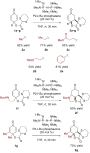


Studies directed toward the exploitation of vicinal diols in the synthesis of (+)-nebivolol intermediates
Beilstein J. Org. Chem. 2017, 13, 571–578, doi:10.3762/bjoc.13.56

- 1, method 1). For this purpose, the necessary epoxide 6 could be obtained from the parent E-allylic alcohol through Sharpless asymmetric epoxidation (SAE) [11]. However, the corresponding parent Z-allylic alcohol appears to be not suitable to provide 7 under SAE conditions [20]. This has eliminated
- the resulting crude aldehyde with Ph3P=CHCO2Et provided (E)-α,β-unsaturated ester 12 (80% over two steps). A further DIBAL-H (2.5 equiv, 0 °C) reduction of 12 delivered (E)-allylic alcohol 13 (90%) which was then dihydroxylated under Upjohn conditions to obtain triol (±)-14 (92%). With access to


Revaluation of biomass-derived furfuryl alcohol derivatives for the synthesis of carbocyclic nucleoside phosphonate analogues
Beilstein J. Org. Chem. 2017, 13, 251–256, doi:10.3762/bjoc.13.28
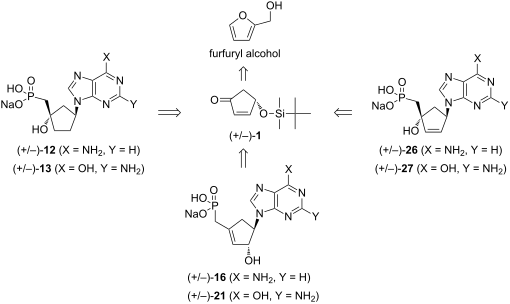
- observations are in agreement with a 1,3-allylic transposition under acidic conditions. Additionally, in order to confirm the stereochemistry of the allylic alcohol in position 3’, a NOESY correlation experiment was accomplished with compound (+/−)-16 (Figure 3). We have observed a correlation between proton




First DMAP-mediated direct conversion of Morita–Baylis–Hillman alcohols into γ-ketoallylphosphonates: Synthesis of γ-aminoallylphosphonates
Beilstein J. Org. Chem. 2016, 12, 2906–2915, doi:10.3762/bjoc.12.290

- , entries 1–5), as well as five-membered cyclic MBH alcohol 1f (Table 2, entry 6). A putative reaction pathway could start from a first β-conjugate addition of DMAP onto the allylic alcohol 1a (i), followed by the elimination of the hydroxide ion that would afford the intermediate I (ii). Similarly, a


Synthesis of polyhydroxylated decalins via two consecutive one-pot reactions: 1,4-addition/aldol reaction followed by RCM/syn-dihydroxylation
Beilstein J. Org. Chem. 2016, 12, 2602–2608, doi:10.3762/bjoc.12.255
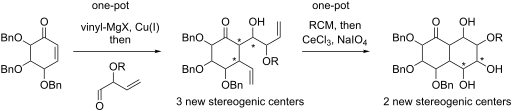
- most likely unstable, we decided to deprotect 20 directly before the planned one-pot procedure and use it without purification. In order to obtain (R)-10, we decided to inverse the configuration at the free hydroxy group in allylic alcohol 19 by Mitsunobu reaction. Despite the fact that the use of


Et3B-mediated and palladium-catalyzed direct allylation of β-dicarbonyl compounds with Morita–Baylis–Hillman alcohols
Beilstein J. Org. Chem. 2016, 12, 2402–2409, doi:10.3762/bjoc.12.234

- further used as synthetic intermediates in numerous synthetic routes to heterocyclic compounds and molecules of biological interest [41][42]. Results and Discussion We first investigated the allylation of diethyl malonate (2a) with the allylic alcohol 1a in DMF in the presence of Pd(OAc)2 (10 mol %), PPh3
- malonate (2a), the malonate derivative 2b (pKa = 13) [29] similarly reacted with the allylic alcohol 1a in the presence of the catalytic system Pd(0)/Et3B to exclusively give the mono-allylated product 3a in 65% yield, whereas the same reaction with ethyl 3-cyano-3-oxopropanoate (2c, pKa = 10.7) [43] whose
- added successively the 1,3-dicarbonyl compound 2 (1.1 mmol), NaH (1 mmol) and an Et3B solution 1.0 M (2 to 3 mmol) in THF. The mixture was stirred for 5 to 10 min at room temperature, then the MBH allylic alcohol 1a or 1b (1 mmol) was added. The mixture was stirred and heated at 80 °C for 3 to 6 h


p-Nitrophenyl carbonate promoted ring-opening reactions of DBU and DBN affording lactam carbamates
Beilstein J. Org. Chem. 2016, 12, 2086–2092, doi:10.3762/bjoc.12.197
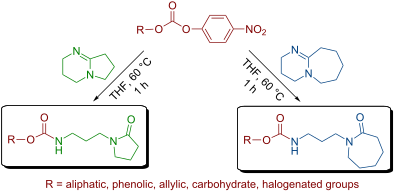
- . To evaluate the substrate feasibility, one phenol, an allylic alcohol and three sugar alcohols were subjected to the reaction. The 3,4-dimethylphenyl p-nitrophenyl carbonate (9a) and geranyl carbonate 10a gave the corresponding γ-lactams 9b and 10b in 62% and 46% yields, respectively. Similarly, the


Selective bromochlorination of a homoallylic alcohol for the total synthesis of (−)-anverene
Beilstein J. Org. Chem. 2016, 12, 1361–1365, doi:10.3762/bjoc.12.129

- unsaturated ester was then reduced with DiBAl–H to allylic alcohol 10, which was isolated as an unchanged 8:1 mixture of regioisomeric bromochlorides, strongly suggesting that no stereochemical or regiochemical isomerization had taken place over the previous three steps from 6. When 10 was subjected to
- two enantiomers (or pseudoenantiomers) of a substrate allylic alcohol. Tetrahalide 11 was then oxidized to the corresponding aldehyde. Installation of the vinyl bromide was found to be difficult using traditional methods. Takai olefination [14] with CHBr3 and CrBr2 resulted in significant de


NeoPHOX – a structurally tunable ligand system for asymmetric catalysis
Beilstein J. Org. Chem. 2016, 12, 1185–1195, doi:10.3762/bjoc.12.114
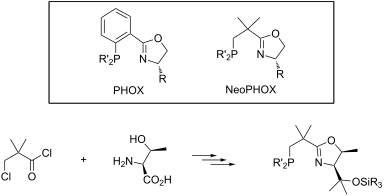
- various test substrates were much lower than those induced by the tert-butyloxazoline analog with the exception of the result obtained with the allylic alcohol S2 (Table 1). Surprisingly, the presence of two geminal phenyl substituents at C(5) had a negative impact on the enantioselectivity, as shown by


Synthesis of a deuterated probe for the confocal Raman microscopy imaging of squalenoyl nanomedicines
Beilstein J. Org. Chem. 2016, 12, 1127–1135, doi:10.3762/bjoc.12.109

- (along with N2 and the trisyl anion) which upon condensation with squalenaldehyde 10 furnished the desired allylic alcohol 16 in 59% yield. Reduction of the hydroxy group of 16 was straightforwardly achieved in 47% yield by treatment with a large excess of thionyl chloride followed by LiAlD4 reduction
- . We next turned to the elaboration of the isopropylidene-d6 moiety. In the event, the Shapiro reaction using trisylhydrazide 14 delivered the expected allylic alcohol 21 in 70% yield. The latter afforded the deuterated ketal 22 in 52% yield, upon sequential treatment with thionyl chloride and LiAlD4
- using the van Tamelen sequence (i. 1 equiv NBS, THF, H2O; ii. K2CO3, MeOH; iii. H3IO6, Et2O) afforded the aldehyde 26 in 16% overall yield. Uneventfully, the Shapiro reaction with trisylhydrazone 14 produced the allylic alcohol 27. Thionyl chloride treatment followed by LiAlD4 reduction delivered


Efficient syntheses of climate relevant isoprene nitrates and (1R,5S)-(−)-myrtenol nitrate
Beilstein J. Org. Chem. 2016, 12, 1081–1095, doi:10.3762/bjoc.12.103

- a non-conjugated ‘isolated’ C=C bond, typical of an allylic alcohol, i.e., rac-17 (Scheme 4). Intrigued by the possibility it was the C=C bond of rac-17 that was contributing, in a negative sense, to a poor reaction outcome a ‘compare and contrast study’ using paired-up alcohols, i.e., 34 (4-hydroxy
- efficient separation of (E)-13 and (Z)-14 was not possible without recourse to analytical HPLC [9]. Nevertheless we considered it important to validate our proposed ‘halide for nitrate’ substitution by undertaking a ‘test’ reaction using silver nitrate and the allylic bromide/allylic alcohol mixture (E)-45
- -methoxybenzyloxy)-3-methylbut-2-enyl nitrate (68% yield) as stable, colourless oils. Mild oxidative cleavage of the PMB groups using DDQ in wet DCM generated the desired 1° allylic alcohol (E)-3-methyl-4-hydroxybut-2-enyl nitrate ((E)-11) and (Z)-3-methyl-4-hydroxybut-2-enyl nitrate ((Z)-12) in 62% and 53% yields


Regiodefined synthesis of brominated hydroxyanthraquinones related to proisocrinins
Beilstein J. Org. Chem. 2016, 12, 531–536, doi:10.3762/bjoc.12.52
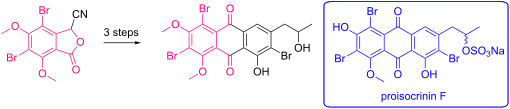
- lactol 34 with methylmagnesium bromide afforded diol 35 in 72% yield. Selective oxidation of the allylic alcohol group in 35 with MnO2, followed by acetylation of the secondary hydroxy group with acetyl chloride, triethylamine and DMAP furnished cyclohexenone 36 (Scheme 5). The Hauser annulation of


Study on the synthesis of the cyclopenta[f]indole core of raputindole A
Beilstein J. Org. Chem. 2016, 12, 334–342, doi:10.3762/bjoc.12.36

- %) was synthesized by Sonogashira coupling of N-TIPS-6-iodoindoline (39) and 42. Conversion of 43 to the (Z)-allylic alcohol 44 by modified (K2CO3) Lindlar hydrogenation (47%) followed. Treatment of 44 with SnCl4 in DCM afforded cyclopenta[f]indoline 45, albeit in the rather disappointing yield of 11%. A
- moderate in both cases (33% and 29%), but already better than in the case of the SnCl4-induced cyclization of (Z)-allylic alcohol 44 (Scheme 6). We only isolated the cyclopentanones, formed from the corresponding cyclopentenyl acetates. Presumably, the propargylacetate first undergoes a [3,3]-sigmatropic




Synthesis of Xenia diterpenoids and related metabolites isolated from marine organisms
Beilstein J. Org. Chem. 2015, 11, 2521–2539, doi:10.3762/bjoc.11.273
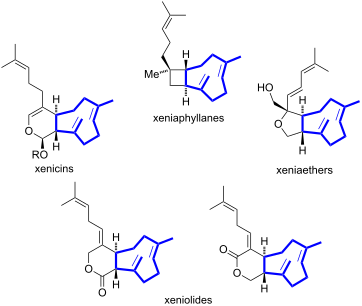
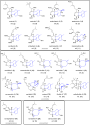
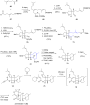
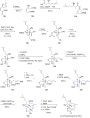
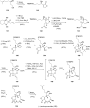
- coraxeniolide A (10) [12], starting from chiral (−)-Hajos–Parrish diketone (58) [39]. Based on Pfander's seminal work, the first total synthesis of a xenicane diterpenoid was then accomplished by Leumann in 2000 (Scheme 6) [40]. Starting from enantiopure (−)-Hajos–Parrish diketone (58), allylic alcohol 59 was
- allylic alcohol which was converted to the corresponding para-methoxybenzyl ether 90 using Bundle's reagent [51]. In the key step of the synthesis, the nine-membered carbocyclic ring was constructed via a ring-closing metathesis reaction. Under optimized conditions, Hoveyda–Grubbs second generation
- global reduction of the carbonyl functionalities afforded allylic alcohol 109. The precursor for the key reaction was obtained by formation of the methoxymethyl (MOM) ether from primary alcohol 109 and subsequent conversion of the allylic alcohol to stannane 110. The following 2,3-Wittig–Still







Beyond catalyst deactivation: cross-metathesis involving olefins containing N-heteroaromatics
Beilstein J. Org. Chem. 2015, 11, 2223–2241, doi:10.3762/bjoc.11.241
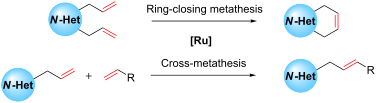
- , biologically relevant conditions were selected (rt, t-BuOH/H2O) and CM involving allyl sulfides that contain functional groups commonly found in DNA-intercalators and N-heteroaromatics were investigated. When a quinoline was present on the allylic sulfide, allylic alcohol was found to be the unique suitable
- partner among the tested olefins. In addition, 20 equiv of allylic alcohol were required and the CM product was obtained in a moderate 53% yield. Cross-metathesis of 81 with amide 83 or alkene 85 gave no conversion (Scheme 32). In the presence of a quinoxaline moiety on the allyl sulfide, the CM reaction
- with allylic alcohol delivered 88 in a low 31% yield and when an alkene containing a phenanthroline was used, no reaction occurred. By the light of the previously reported observations, these results could be imputed to the deactivation of the ruthenium catalyst caused by N-heteroaromatics (Scheme 33


Recent applications of ring-rearrangement metathesis in organic synthesis
Beilstein J. Org. Chem. 2015, 11, 1833–1864, doi:10.3762/bjoc.11.199
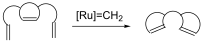
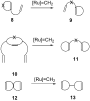
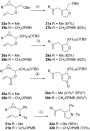
- prepared from the corresponding allylic alcohol 63 by esterification with the anhydride 64 derived from cyclobutene. Later, the ester 65, on treatment with the catalyst 1 under toluene reflux conditions followed by treatment with the catalyst 2 furnished the macrolide-butenolides 66 in 42–48% yields via










Preparation of conjugated dienoates with Bestmann ylide: Towards the synthesis of zampanolide and dactylolide using a facile linchpin approach
Beilstein J. Org. Chem. 2015, 11, 1815–1822, doi:10.3762/bjoc.11.197

- oct-2-en-1-ol (9b) with cinnamaldehyde (10a) was efficient and high yielding (Table 1, entry 3). Use of a Z-allylic alcohol 9c, likewise produced excellent amounts of the product dienoate (Table 1, entry 4), although a longer reaction time was required to achieve this. The Z-geometry of the allylic
- alcohol was retained, as expected. After this, the secondary allylic alcohol 9d was investigated and a reasonable yield of the product was obtained when the reaction was carried out in THF (Table 1, entry 5). A comparative reaction in toluene was also performed and found to deliver a better yield of the


Novel carbocationic rearrangements of 1-styrylpropargyl alcohols
Beilstein J. Org. Chem. 2015, 11, 1017–1022, doi:10.3762/bjoc.11.114
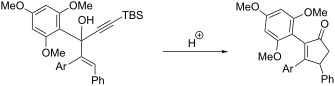
- molybdenum(VI)-catalyzed etherification of allylic alcohol with a gold(I)-catalyzed intramolecular cyclization process [5][6]. During the optimization process of this synthesis, we examined several catalysts to transform allylic alcohol 1 into ether 2, including Re2O7, which is described to efficiently





