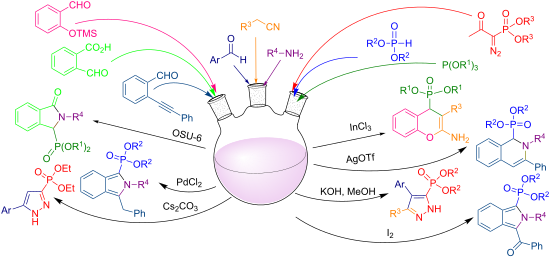
Search for "aqueous medium" in Full Text gives 109 result(s) in Beilstein Journal of Organic Chemistry.
Beilstein J. Org. Chem. 2018, 14, 2745–2770, doi:10.3762/bjoc.14.253
Graphical Abstract
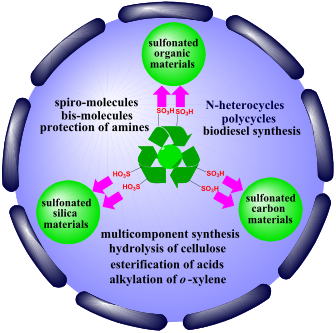
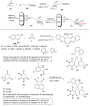
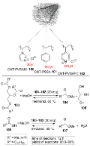
Figure 1: Different types of sulfonated materials as acid catalysts.
Scheme 1: Synthetic route of 3-methyl-1-sulfo-1H-imidazolium metal chloride ILs and their catalytic applicati...
Scheme 2: Synthetic route of 1,3-disulfo-1H-imidazolium transition metal chloride ILs and their catalytic app...
Scheme 3: Synthetic route of 1,3-disulfoimidazolium carboxylate ILs and their catalytic applications in the s...
Scheme 4: Synthetic route of [BiPy](HSO3)2Cl2 and [Dsim]HSO4 ILs and their catalytic applications for the syn...
Scheme 5: The catalytic applications of (C4(DABCO-SO3H)2·4Cl) IL for the synthesis of spiro-isatin derivative...
Scheme 6: The catalytic applications of (C4(DABCO-SO3H)2·4Cl) IL for the synthesis of bis 2-amino-4H-pyran de...
Scheme 7: The synthetic route of N,N-disulfo-1,1,3,3-tetramethylguanidinium carboxylate ILs and their catalyt...
Scheme 8: The catalytic application of 1-methyl-3-sulfo-1H-imidazolium tetrachloroferrate IL in the synthesis...
Scheme 9: The synthetic route of 3-sulfo-1H-imidazolopyrimidinium hydrogen sulfate IL and its catalytic appli...
Scheme 10: The results for the synthesis of bis(indolyl)methanes and di(bis(indolyl)methyl)benzenes in the pre...
Scheme 11: The catalytic applications of 1-(1-sulfoalkyl)-3-methylimidazolium chloride acidic ILs for the hydr...
Scheme 12: The synthetic route of immobilized 1,4-diazabicyclo[2.2.2]octanesulfonic acid chloride on SiO2 and ...
Scheme 13: The catalytic application of a silica-bonded sulfoimidazolium chloride for the synthesis of 12-aryl...
Scheme 14: The synthetic route of the SBA-15-Ph-SO3H and its catalytic applications for the synthesis of 2H-in...
Scheme 15: The synthetic route for heteropolyanion-based ionic liquids immobilized on mesoporous silica SBA-15...
Scheme 16: Some mechanism aspects of SSA catalyst for the protection of amine derivatives.
Scheme 17: The synthetic route for MWCNT-SO3H and its catalytic application for the synthesis of N-substituted...
Scheme 18: The sulfonic acid-functionalized polymers (P-SO3H) covalently grafted on multi-walled carbon nanotu...
Scheme 19: The transesterification reaction in the presence of S-MWCNTs.
Scheme 20: The synthetic route for the new hypercrosslinked supermicroporous polymer via the Friedel–Crafts al...
Scheme 21: The synthetic route for a new microporous copolymer via the Friedel–Crafts alkylation reaction of t...
Scheme 22: The synthetic route for sulfonated polynaphthalene and its catalytic application for the amidoalkyl...
Scheme 23: The synthetic route of the acidic carbon material and its catalytic application in the etherificatio...
Scheme 24: The synthetic route of the acidic carbon materials and their catalytic applications for the esterif...
Scheme 25: The sulfonated MWCNTs.
Scheme 26: The sulfonated nanoscaled diamond powder for the dehydration of D-xylose into furfural.
Scheme 27: The synthetic route and catalytic application of the GR-SO3H.
Beilstein J. Org. Chem. 2018, 14, 2163–2185, doi:10.3762/bjoc.14.190
Graphical Abstract
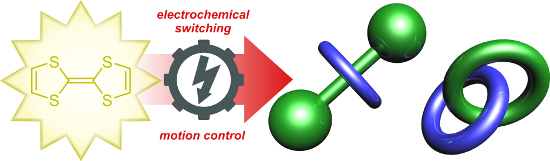
Figure 1: The two one-electron oxidation reactions of tetrathiafulvalene (TTF, 1) and the corresponding prope...
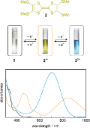
Figure 2: UV–vis spectra and photographs of TTF 2 in its three stable oxidation states (black line = 2, orang...
Figure 3: Structure and conformations of two TTF dimers in solution, the mixed-valence and the radical-cation...
Figure 4: (a) The isomerism problem of TTF. (b)–(d) Major synthetic breakthroughs for the construction of TTF...
Figure 5: (a) Host–guest equilibrium between π-electron-poor cyclophane 3 and different TTFs with their corre...
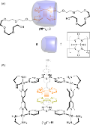
Figure 6: TTF complexes with different host molecules.
Figure 7: Stable TTF (a) radical-cation and (b) mixed-valence dimers in confined molecular spaces.
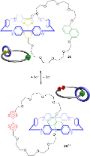
Figure 8: A “three-pole supramolecular switch”: Controlled by its oxidation state, TTF (1) jumps back and for...
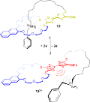
Figure 9: Redox-controlled closing and opening motion of the artificial molecular lasso 12.
Figure 10: Graphical illustration how a non-degenerate TTF-based shuttle works under electrochemical operation....
Figure 11: The first TTF-based rotaxane 13.
Figure 12: A redox-switchable bistable molecular shuttle 14.
Figure 13: The redox-switchable cyclodextrin-based rotaxane 15.
Figure 14: The redox-switchable non-ionic rotaxane 16 with a pyromellitic diimide macrocycle.
Figure 15: The redox-switchable TTF rotaxane 17 based on a crown/ammonium binding motif.
Figure 16: Structure and operation of the electro- and photochemically switchable rotaxane 18 which acts as po...
Figure 17: (a) The redox-switchable rotaxane 19 with a donor–acceptor pair which is stable in five different s...
Figure 18: Schematic representation of a molecular electronic memory based on a bistable TTF-based rotaxane. (...
Figure 19: Schematic representation of bending motion of a microcantilever beam with gold surface induced by o...
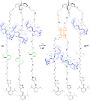
Figure 20: TTF-dimer interactions in a redox-switchable tripodal [4]rotaxane 22.
Figure 21: (a) A molecular friction clutch 23 which can be operated by electrochemical stimuli. (b) Schematic ...
Figure 22: Fusion between rotaxane and catenane: a [3]rotacatenane 24 which can stabilize TTF dimers.
Figure 23: The first TTF-based catenane 25.
Figure 24: Electrochemically controlled circumrotation of the bistable catenane 26.
Figure 25: A tristable switch based on the redox-active [2]catenane 27 with three different stations.
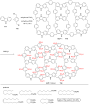
Figure 26: Structure of catenane-functionalized MOF NU-1000 [108] with structural representation of subcomponents. ...
Figure 27: (a) [3]Catenanes 29 and 30 which can stabilize mixed-valence or radical-cation dimers of TTF. (b) S...
Beilstein J. Org. Chem. 2018, 14, 1901–1907, doi:10.3762/bjoc.14.164
Graphical Abstract
Scheme 1: Catalysts synthesized and screened in this study.
Scheme 2: Synthetic routes for organocatalysts 1–4.
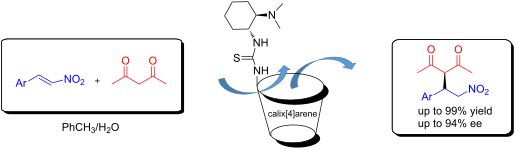
Figure 1: Asymmetric Michael addition of acetylacetone with different nitroolefins catalyzed by organocatalys...
Scheme 3: Possible proposed reaction mechanism.
Beilstein J. Org. Chem. 2018, 14, 1859–1870, doi:10.3762/bjoc.14.160
Graphical Abstract
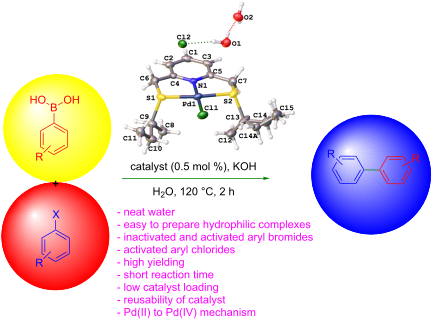
Figure 1: Examples of reported SCS palladium(II) pincer complexes 1–13.
Figure 2: a) Reported SNS palladium(II) pincer complexes 14–16 as catalysts for Suzuki–Miyaura cross coupling ...
Scheme 1: Synthesis of pincer ligands 19a–d and complexes 17a–d.
Figure 3: Molecular structure of 17d. Selected bond distances (Å) and bond angles (°); S(1)–Pd(1)–Cl(1) 93.27...
Scheme 2: Proposed mechanism of the Suzuki–Miyaura coupling reaction using pincer complex 17d.
Figure 4: Energy profile for the oxidative addition reaction involving 4-bromoanisole and Pd(II) catalyst pre...
Scheme 3: Investigation on the reusability of the catalyst.
Figure 5: Reusability of pincer complex 17d as a catalyst for the Suzuki–Miyaura cross coupling reaction.
Scheme 4: Suzuki–Miyaura coupling reaction catalysed by the SN-bidentate complex 20a.
Beilstein J. Org. Chem. 2018, 14, 1498–1507, doi:10.3762/bjoc.14.127
Graphical Abstract
Scheme 1: Structures of: a) calixarene Ca-OP; b) alkyl diazides A1–A4.
Scheme 2: Structures of p-nitroaniline derivatives 1–5 and dyes 6–10.
Figure 1: FTIR spectra of Ca-OP (red), A2 (green) and CaNS2 (blue).
Figure 2: a) 13C{1H} CP-MAS NMR spectra of CaNSs; b) signal attributions.
Figure 3: Selection of SEM micrographs for materials for CaNS1 (a), CaNS2 (b), CaNS3 (c) and CaNS4 (d).
Beilstein J. Org. Chem. 2018, 14, 697–703, doi:10.3762/bjoc.14.58
Graphical Abstract
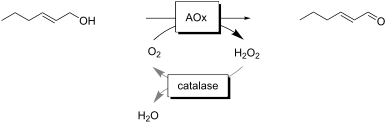
Scheme 1: Enzymatic reaction schemes for the selective oxidation of trans-hex-2-enol. A: Alcohol dehydrogenas...
Figure 1: Michaelis–Menten kinetics of the PeAAOx-catalysed oxidation of trans-hex-2-enol. Conditions: 50 mM ...
Figure 2: The influence of the residence time on the conversion of trans-hex-2-enol (red squares) to trans-2-...
Figure 3: Increasing the PeAAOx turnover numbers (TN) by increasing the residence time. Conditions: 6 mL flow...
Beilstein J. Org. Chem. 2018, 14, 603–617, doi:10.3762/bjoc.14.47
Graphical Abstract
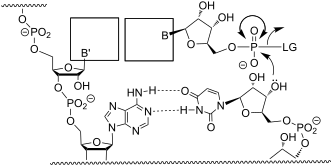
Figure 1: Enzyme-free template-directed extension of an RNA primer by one nucleotide. B = nucleobase, LG = le...
Figure 2: Oligomerization of the 2-methylimidazolide of guanosine-5'-monophosphate on a poly(C) template.
Figure 3: Structures of backbone linkages produced in enzyme-free primer extension reactions: the phosphorami...
Figure 4: System used for studying the template effect with all 64 possible triplets at the extension site (B...
Figure 5: Interactions attracting the incoming nucleotide to the extension site. Besides base pairing via hyd...
Figure 6: Three possible fates of activated nucleotides in aqueous buffer that result from hydrolysis, primer...
Figure 7: Steps and equilibria considered in our quantitative model of chemical primer extension [34]. The model ...
Figure 8: Binding equilibrium between mononucleotides and hairpins representing primer–template duplexes, as ...
Figure 9: Template-directed primer extension on an RNA template performed with OAt-GMP at 1.8 mM (orange), 3....
Figure 10: Copying of four nucleotides on an immobilized RNA duplex, as reported by Deck et al. [32].
Figure 11: Extension cycle of aminoterminal primer with N-protected nucleotides on solid support, as described...
Figure 12: Formation of a highly reactive methylimidazolium bisphosphate from methylimidazolides of nucleotide...
Figure 13: 31P NMR spectrum (161.9 MHz) of crude MeIm-GMP in D2O. The resonance of the imidazolium bisphosphat...
Figure 14: Imidazolium bisphosphate as intermediate in the primer extension reaction, as described by Szostak ...
Figure 15: Proposed steps of enzyme-free primer extension with in situ activation, using the "general condensa...
Beilstein J. Org. Chem. 2018, 14, 506–514, doi:10.3762/bjoc.14.36
Graphical Abstract
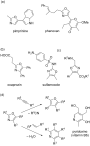
Figure 1: Examples of naturally occurring oxazoles (a); some drugs containing oxazole as the active moiety (b...
Scheme 1: Synthesis of oxazoles 4 by addition of acyl chlorides to azirines 2, as described by Hassner et al. ...
Scheme 2: Preparation of 2-functionalized oxazoles 7 from 2-(chloromethyl)oxazoles 6 and their application to...
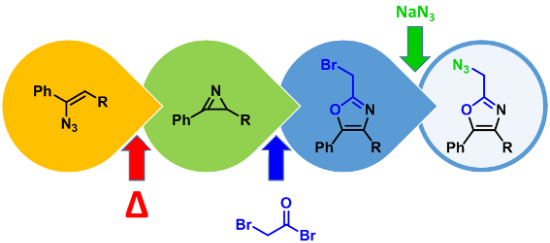
Scheme 3: Integrated continuous-flow synthesis of 2-(azidomethyl)oxazoles 7.
Scheme 4: Side products generated during the reaction of azirine 2a with bromoacyl bromide at room temperatur...
Figure 2: HPLC monitoring of the formation of 2-(azidomethyl)oxazole 7a.
Figure 3: Continuous sequential thermolysis of vinyl azides 1 and ring expansion of azirines 2 with bromoacet...
Figure 4: Continuous-flow three-step sequential synthesis of 2-(azidomethyl)oxazoles 7a–c from vinyl azides 1a...
Beilstein J. Org. Chem. 2018, 14, 436–469, doi:10.3762/bjoc.14.32
Graphical Abstract
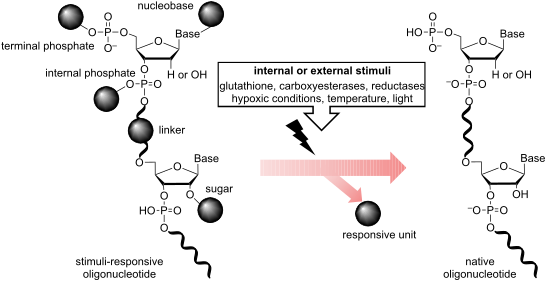
Scheme 1: Demasking under reducing agents of ON prodrugs modified as phosphotriesters with A) benzyl groups [13] ...
Scheme 2: A) Synthesis via phosphoramidite chemistry and B) demasking under the reducing environment of 2’-O-...
Scheme 3: Synthesis via phosphoramidite chemistry of various 2’-O-alkyldithiomethyl (RSSM)-modified RNAs bear...
Scheme 4: A) siRNA conjugates to cholesterol [19] and B) PNA conjugates to a triphenylphosphonium [20] through a disu...
Scheme 5: Synthesis via phosphoramidite chemistry and deprotection mediated by nitroreductase/NADH of hypoxia...
Scheme 6: Synthesis via phosphoramidite chemistry and conversion mediated by nitroreductase/NADH of hypoxia-a...
Scheme 7: Incorporation of O6-(4-nitrobenzyl)-2’-deoxyguanosine into an ON prone to form a G-quadruplex struc...
Scheme 8: Synthesis and mechanism for the demasking of ON prodrugs from A) S-acylthioethyl phosphotriester [29] a...
Figure 1: Oligothymidylates bearing A) 2,2-bis(ethoxycarbonyl)-3-(pivaloyloxy)propyl- and B) 2-cyano-2(2-phen...
Figure 2: Oligothymidylates containing esterase and thermo-labile (4-acetylthio-2,2-dimethyl-3-oxobutyl) phos...
Scheme 9: Phosphoramidites and the corresponding RNA prodrugs protected as A) t-Bu-SATE, B) OH-SATE and C) A-...
Scheme 10: Mechanism of the hydrolysis of 2’-O-acyloxymethyl ONs mediated by carboxyesterases [46]. The hydrolysis...
Scheme 11: Synthesis of partially 2’-O-PivOM-modified RNAs [49] and 2’-O-PiBuOM-modified RNAs [53] using their corresp...
Figure 3: A) 2’-O-amino and guanidino-containing acetal ester phosphoramidites and B) 2’-O-(amino acid) aceta...
Scheme 12: Prodrugs of tricyclo-ONs functionalized with A) ethyl (tcee-T) and B) hexadecyl (tchd-T) ester func...
Scheme 13: Demasking mechanism of fma thiophosphate triesters in CpG ODN upon heat action [58].
Scheme 14: Thermolytic cleavage of the hydroxy-alkylated thiophosphate and phosphato-/thiophosphato-alkylated ...
Scheme 15: Synthesis via phosphoramidite chemistry and thermolytic cleavage of alkylated (diisopropyl, diethyl...
Scheme 16: Synthesis of thermosensitive prodrugs of ODNs containing fma thiophosphate triesters combined to po...
Scheme 17: Caging of deoxycytidine in methylphosphonate ONs by using the thermolabile phenylsulfonylcarbamoyl ...
Figure 4: Biotinylated 1-(5-(aminomethyl)-2-nitrophenyl)ethyl phosphoramidite used to cage the 5’-end of a si...
Scheme 18: Introduction and cleavage of 1-(4,5-dimethoxy-2-nitrophenyl)ethyl (DMNPE) [74] and cyclododecyl-DMNPE (...
Scheme 19: Post-synthetic introduction of a thioether-enol phosphodiester (TEEP) linkage into a DNAzyme by the...
Scheme 20: A) NPP dT and dG phosphoramidites [91,92] and B) NPOM U and G phosphoramidites [83] used to introduce photocag...
Scheme 21: Introduction of the photocaged 3-NPOM nucleobase into phosphorothioate antisense and morpholino ant...
Scheme 22: Control of the activity of an antisense ODN using a photocaged hairpin [82]. Formation of the hairpin s...
Scheme 23: Control of alternative splicing using phosphorothioate (PS) 2’-OMe-photocaged ONs resulting from th...
Scheme 24: A) Light activation of a photocaged DNAzyme incorporating 3-NPOM thymidine in its catalytic site [87]; ...
Scheme 25: Incorporation of 3-(6-nitropiperonyloxymethyl) (NPOM) thymidine and 4-nitropiperonylethyl (NPE) deo...
Scheme 26: Synthesis of a photocaged DNA decoy from a 3-NPOM thymidine phosphoramidite and release of the NPOM...
Scheme 27: Synthesis of a caged DNA decoy hairpin containing a 7-nitroindole nucleotide and release of the mod...
Figure 5: Caged-2’-adenosines used by MacMillan et al [93,94] (X = O) and Piccirilli et al [95] (X = S) to study RNA mec...
Scheme 28: Synthesis of circular ODNs containing a photolabile linker as described by Tang et al. [101,104].
Scheme 29: Control of RNA digestion with RNase H using light activation of a photocaged hairpin [97].
Scheme 30: Photocontrol of RNA degradation using caged circular antisense ODNs containing a photoresponsive li...
Scheme 31: Control of RNA translation using an “RNA bandage” consisting of two short 2’-OMe ONs linked togethe...
Scheme 32: Control of alternative splicing using photocaged ONs resulting from the incorporation of an o-nitro...
Scheme 33: A) Light deactivation of a photocaged DNAzyme incorporating one photocleavable spacer in its cataly...
Scheme 34: Solid-phase synthesis of a caged vit E-siRNA conjugate and its release upon UV irradiation [106].
Scheme 35: Synthesis of a siRNA conjugated to a nanoparticle (NP) via a cyclooctene heterolinker from a siRNA-...
Beilstein J. Org. Chem. 2018, 14, 155–181, doi:10.3762/bjoc.14.11
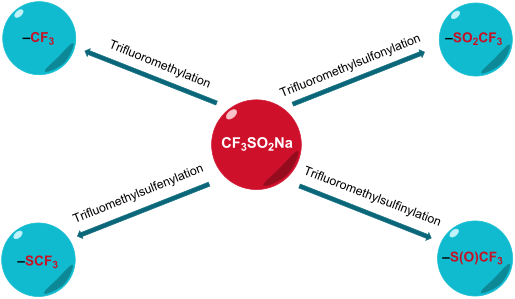
Graphical Abstract
Figure 1: Selected examples of pharmaceutical and agrochemical compounds containing the trifluoromethyl group....
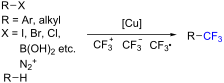
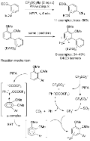
Scheme 1: Introduction of a diamine into copper-catalyzed trifluoromethylation of aryl iodides.
Scheme 2: Addition of a Lewis acid into copper-catalyzed trifluoromethylation of aryl iodides and the propose...
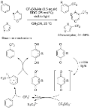
Scheme 3: Trifluoromethylation of heteroaromatic compounds using S-(trifluoromethyl)diphenylsulfonium salts a...
Scheme 4: The preparation of a new trifluoromethylation reagent and its application in trifluoromethylation o...
Scheme 5: Trifluoromethylation of aryl iodides using CF3CO2Na as a trifluoromethyl source.
Scheme 6: Trifluoromethylation of aryl iodides using MTFA as a trifluoromethyl source.
Scheme 7: Trifluoromethylation of aryl iodides using CF3CO2K as a trifluoromethyl source.
Scheme 8: Trifluoromethylation of aryl iodides and heteroaryl bromides using [Cu(phen)(O2CCF3)] as a trifluor...
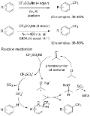
Scheme 9: Trifluoromethylation of aryl iodides with DFPB and the proposed mechanism.
Scheme 10: Trifluoromethylation of aryl iodides using TCDA as a trifluoromethyl source. Reaction conditions: [...
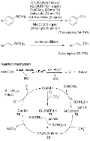
Scheme 11: The mechanism of trifluoromethylation using Cu(II)(O2CCF2SO2F)2 as a trifluoromethyl source.
Scheme 12: Trifluoromethylation of benzyl bromide reported by Shibata’s group.
Scheme 13: Trifluoromethylation of allylic halides and propargylic halides reported by the group of Nishibayas...
Scheme 14: Trifluoromethylation of propargylic halides reported by the group of Nishibayashi.
Scheme 15: Trifluoromethylation of alkyl halides reported by Nishibayashi’s group.
Scheme 16: Trifluoromethylation of pinacol esters reported by the group of Gooßen.
Scheme 17: Trifluoromethylation of primary and secondary alkylboronic acids reported by the group of Fu.
Scheme 18: Trifluoromethylation of boronic acid derivatives reported by the group of Liu.
Scheme 19: Trifluoromethylation of organotrifluoroborates reported by the group of Huang.
Scheme 20: Trifluoromethylation of aryl- and vinylboronic acids reported by the group of Shibata.
Scheme 21: Trifluoromethylation of arylboronic acids via the merger of photoredox and Cu catalysis.
Scheme 22: Trifluoromethylation of arylboronic acids reported by Sanford’s group. Isolated yield. aYields dete...
Scheme 23: Trifluoromethylation of arylboronic acids and vinylboronic acids reported by the group of Beller. Y...
Scheme 24: Copper-mediated Sandmeyer type trifluoromethylation using Umemoto’s reagent as a trifluoromethylati...
Scheme 25: Copper-mediated Sandmeyer type trifluoromethylation using TMSCF3 as a trifluoromethylation reagent ...
Scheme 26: One-pot Sandmeyer trifluoromethylation reported by the group of Gooßen.
Scheme 27: Copper-catalyzed trifluoromethylation of arenediazonium salts in aqueous media.
Scheme 28: Copper-mediated Sandmeyer trifluoromethylation using Langlois’ reagent as a trifluoromethyl source ...
Scheme 29: Trifluoromethylation of terminal alkenes reported by the group of Liu.
Scheme 30: Trifluoromethylation of terminal alkenes reported by the group of Wang.
Scheme 31: Trifluoromethylation of tetrahydroisoquinoline derivatives reported by Li and the proposed mechanis...
Scheme 32: Trifluoromethylation of phenol derivatives reported by the group of Hamashima.
Scheme 33: Trifluoromethylation of hydrazones reported by the group of Baudoin and the proposed mechanism.
Scheme 34: Trifluoromethylation of benzamides reported by the group of Tan.
Scheme 35: Trifluoromethylation of heteroarenes and electron-deficient arenes reported by the group of Qing an...
Scheme 36: Trifluoromethylation of N-aryl acrylamides using CF3SO2Na as a trifluoromethyl source.
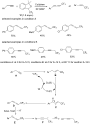
Scheme 37: Trifluoromethylation of aryl(heteroaryl)enol acetates using CF3SO2Na as the source of CF3 and the p...
Scheme 38: Trifluoromethylation of imidazoheterocycles using CF3SO2Na as a trifluoromethyl source and the prop...
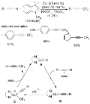
Scheme 39: Copper-mediated trifluoromethylation of terminal alkynes using TMSCF3 as a trifluoromethyl source a...
Scheme 40: Improved copper-mediated trifluoromethylation of terminal alkynes reported by the group of Qing.
Scheme 41: Copper-catalyzed trifluoromethylation of terminal alkynes reported by the group of Qing.
Scheme 42: Copper-catalyzed trifluoromethylation of terminal alkynes using Togni’s reagent and the proposed me...
Scheme 43: Copper-catalyzed trifluoromethylation of terminal alkynes using Umemoto’s reagent reported by the g...
Scheme 44: Copper-catalyzed trifluoromethylation of 3-arylprop-1-ynes reported by Xiao and Lin and the propose...
Beilstein J. Org. Chem. 2017, 13, 2764–2799, doi:10.3762/bjoc.13.272
Graphical Abstract
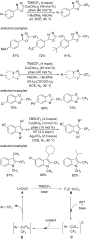
Scheme 1: Trifluoromethylation of enol acetates by Langlois.
Scheme 2: Trifluoromethylation of (het)aryl enol acetates.
Scheme 3: Mechanism for the trifluoromethylation of enol acetates.
Scheme 4: Oxidative trifluoromethylation of unactivated olefins and mechanistic pathway.
Scheme 5: Oxidative trifluoromethylation of acetylenic substrates.
Scheme 6: Metal free trifluoromethylation of styrenes.
Scheme 7: Synthesis of α-trifluoromethylated ketones by oxytrifluoromethylation of heteroatom-functionalised ...
Scheme 8: Catalysed photoredox trifluoromethylation of vinyl azides.
Scheme 9: Oxidative difunctionalisation of alkenyl MIDA boronates.
Scheme 10: Synthesis of β-trifluoromethyl ketones from cyclopropanols.
Scheme 11: Aryltrifluoromethylation of allylic alcohols.
Scheme 12: Cascade multicomponent synthesis of nitrogen heterocycles via azotrifluoromethylation of alkenes.
Scheme 13: Photocatalytic azotrifluoromethylation of alkenes with aryldiazonium salts and CF3SO2Na.
Scheme 14: Copper-promoted intramolecular aminotrifluoromethylation of alkenes with CF3SO2Na.
Scheme 15: Oxytrifluoromethylation of alkenes with CF3SO2Na and hydroxamic acid.
Scheme 16: Manganese-catalysed oxytrifluoromethylation of styrene derivatives.
Scheme 17: Oxytrifluoromethylation of alkenes with NMP/O2 and CF3SO2Na.
Scheme 18: Intramolecular oxytrifluoromethylation of alkenes.
Scheme 19: Hydrotrifluoromethylation of styrenyl alkenes and unactivated aliphatic alkenes.
Scheme 20: Hydrotrifluoromethylation of electron-deficient alkenes.
Scheme 21: Hydrotrifluoromethylation of alkenes by iridium photoredox catalysis.
Scheme 22: Iodo- and bromotrifluoromethylation of alkenes by CF3SO2Na/I2O5 or CF3SO2Na / NaBrO3.
Scheme 23: N-methyl-9-mesityl acridinium and visible-light-induced chloro-, bromo- and SCF3 trifluoromethylati...
Scheme 24: Carbotrifluoromethylation of N-arylacrylamides with CF3SO2Na / TBHP by Lipshutz.
Scheme 25: Carbotrifluoromethylation of N-arylacrylamides with CF3SO2Na/TBHP reported by Lei.
Scheme 26: Carbotrifluoromethylation of N-arylacrylamides with CF3SO2Na/(NH4)2S2O8.
Scheme 27: Metal-free carbotrifluoromethylation of N-arylacrylamides with CF3SO2Na/K2S2O8 reported by Wang.
Scheme 28: Metal-free carbotrifluoromethylation of N-arylacrylamides with CF3SO2Na/PIDA reported by Fu.
Scheme 29: Metal-free cascade trifluoromethylation/cyclisation of N-arylmethacrylamides (a) and enynes (b) wit...
Scheme 30: Trifluoromethylation/cyclisation of N-arylcinnamamides: Synthesis of 3,4-disubstituted dihydroquino...
Scheme 31: Trifluoromethylation/cyclisation of aromatic-containing unsaturated ketones.
Scheme 32: Chemo- and regioselective cascade trifluoromethylation/heteroaryl ipso-migration of unactivated alk...
Scheme 33: Copper-mediated 1,2-bis(trifluoromethylation) of alkenes.
Scheme 34: Trifluoromethylation of aromatics with CF3SO2Na reported by Langlois.
Scheme 35: Baran’s oxidative C–H trifluoromethylation of heterocycles.
Scheme 36: Trifluoromethylation of acetanilides and anilines.
Scheme 37: Trifluoromethylation of heterocycles in water.
Scheme 38: Trifluoromethylation of coumarins in a continuous-flow reactor.
Scheme 39: Oxidative trifluoromethylation of coumarins, quinolines and pyrimidinones.
Scheme 40: Oxidative trifluoromethylation of pyrimidinones and pyridinones.
Scheme 41: Phosphovanadomolybdic acid-catalysed direct C−H trifluoromethylation.
Scheme 42: Oxidative trifluoromethylation of imidazopyridines and imidazoheterocycles.
Scheme 43: Oxidative trifluoromethylation of imidazoheterocycles and imidazoles in ionic liquid/water.
Scheme 44: Oxidative trifluoromethylation of 8-aminoquinolines.
Scheme 45: Oxidative trifluoromethylation of various 8-aminoquinolines using the supported catalyst CS@Cu(OAc)2...
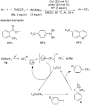
Scheme 46: Oxidative trifluoromethylation of the naphthylamide 70.
Scheme 47: Oxidative trifluoromethylation of various arenes in the presence of CF3SO2Na and sodium persulfate.
Scheme 48: Trifluoromethylation of electron-rich arenes and unsymmetrical biaryls with CF3SO2Na in the presenc...
Figure 1: Trifluoromethylated coumarin and flavone.
Scheme 49: Metal-free trifluoromethylation catalysed by a photoredox organocatalyst.
Scheme 50: Quinone-mediated trifluoromethylation of arenes and heteroarenes.
Scheme 51: Metal- and oxidant-free photochemical trifluoromethylation of arenes.
Scheme 52: Copper-mediated trifluoromethylation of arenediazonium tetrafluoroborates.
Scheme 53: Oxidative trifluoromethylation of aryl- and heteroarylboronic acids.
Scheme 54: Oxidative trifluoromethylation of aryl- and vinylboronic acids.
Scheme 55: Oxidative trifluoromethylation of unsaturated potassium organotrifluoroborates.
Scheme 56: Oxidative trifluoromethylation of (hetero)aryl- and vinyltrifluoroborates.
Scheme 57: Copper−catalysed decarboxylative trifluoromethylation of cinnamic acids.
Scheme 58: Iron-mediated decarboxylative trifluoromethylation of α,β-unsaturated carboxylic acids.
Scheme 59: Cu/Ag-catalysed decarboxylative trifluoromethylation of cinnamic acids.
Scheme 60: I2O5-Promoted decarboxylative trifluoromethylation of cinnamic acids.
Scheme 61: Silver(I)-catalysed denitrative trifluoromethylation of β-nitrostyrenes.
Scheme 62: Copper-catalysed direct trifluoromethylation of styrene derivatives.
Scheme 63: Transition-metal-free synthesis of β-trifluoromethylated enamines.
Scheme 64: I2O5-mediated iodotrifluoromethylation of alkynes.
Scheme 65: Silver-catalysed tandem trifluoromethylation/cyclisation of aryl isonitriles.
Scheme 66: Photoredox trifluoromethylation of 2-isocyanobiphenyls.
Scheme 67: Trifluoromethylation of potassium alkynyltrifluoroborates with CF3SO2Na.
Scheme 68: N-trifluoromethylation of nitrosoarenes with CF3SO2Na (SQ: semiquinone).
Scheme 69: Trifluoromethylation of disulfides with CF3SO2Na.
Scheme 70: Trifluoromethylation of thiols with CF3SO2Na/I2O5.
Scheme 71: Electrophilic trifluoromethylsulfenylation by means of CF3SO2Na/(EtO)2P(O)H/CuCl/DMSO.
Scheme 72: Electrophilic trifluoromethylsulfenylation by means of CF3SO2Na/(EtO)2P(O)H/TMSCl.
Scheme 73: Electrophilic trifluoromethylsulfenylation by means of CF3SO2Na/PPh3/N-chlorophthalimide.
Scheme 74: Electrophilic trifluoromethylsulfenylation by means of CF3SO2Na/PCl3.
Scheme 75: Electrophilic trifluoromethylsulfenylation by means of CF3SO2Na/PCl3.
Scheme 76: Trifluoromethylsulfenylation of aryl iodides with in situ generated CuSCF3 (DMI: 1,3-dimethyl-2-imi...
Scheme 77: Pioneering trifluoromethylsulfinylation of N, O, and C-nucleophiles.
Scheme 78: Trifluoromethylsulfinylation of (1R,2S)-ephedrine (Im: imidazole; DIEA: N,N-diisopropylethylamine).
Scheme 79: Trifluoromethylsulfinylation of substituted benzenes with CF3SO2Na/CF3SO3H.
Scheme 80: Trifluoromethylsulfinylation of indoles with CF3SO2Na/P(O)Cl3.
Scheme 81: Trifluoromethylsulfinylation of indoles with CF3SO2Na/PCl3.
Scheme 82: Formation of triflones from benzyl bromides (DMA: dimethylacetamide).
Scheme 83: Formation of α-trifluoromethylsulfonyl ketones, esters, and amides.
Scheme 84: Allylic trifluoromethanesulfonylation of aromatic allylic alcohols.
Scheme 85: Copper-catalysed couplings of aryl iodonium salts with CF3SO2Na.
Scheme 86: Palladium-catalysed trifluoromethanesulfonylation of aryl triflates and chlorides with CF3SO2Na.
Scheme 87: Copper-catalysed coupling of arenediazonium tetrafluoroborates with CF3SO2Na.
Scheme 88: Synthesis of phenyltriflone via coupling of benzyne with CF3SO2Na.
Scheme 89: Synthesis of 1-trifluoromethanesulfonylcyclopentenes from 1-alkynyl-λ3-bromanes and CF3SO2Na.
Scheme 90: One-pot synthesis of functionalised vinyl triflones.
Scheme 91: Regioselective synthesis of vinyltriflones from styrenes.
Scheme 92: Trifluoromethanesulfonylation of alkynyl(phenyl) iodonium tosylates by CF3SO2Na.
Scheme 93: Synthesis of thio- and selenotrifluoromethanesulfonates.
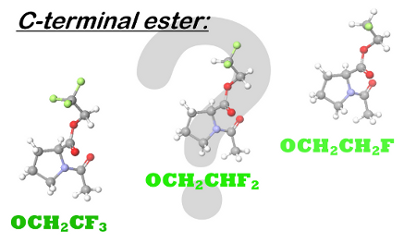
Beilstein J. Org. Chem. 2017, 13, 2442–2457, doi:10.3762/bjoc.13.241
Graphical Abstract
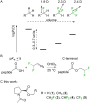
Figure 1: A. Dependence of the lipophilicity (logP) on the number of fluorine atoms in a partially fluorinate...
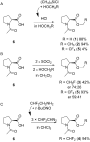
Scheme 1: Synthesis of the model compounds.
Figure 2: Kinetics of the C-terminal ester hydrolysis.
Figure 3: Partitioning of the esters 1–5 between octan-1-ol and water. Insert: comparison with the other part...
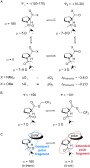
Scheme 2: Amide isomerism in the N-acetylprolyl fragment.
Figure 4: Enhancement of the trans/cis thermodynamic preferences in the ester models as a function of the sol...
Scheme 3: A. Four-state conformational equilibrium model used by Siebler et al. [72] for explanations of the elev...
Scheme 4: Elevation of the trans/cis ratio in derivatives of N-acyl proline may result from the enhanced n→π*...
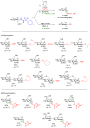
Scheme 5: Synthesis of the model peptides.
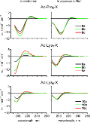
Figure 5: Mean residue molar circular dichroism (Δε) of peptides 8–10 in methanol (left) and aqueous phosphat...
Figure 6: Conformational analysis of the peptides by 1H DOSY NMR (D2O, 298 K). The theoretical values were ca...
Figure 7: Hydrolysis of the C-terminal 2,2-difluoroethyl esters of the oligopeptides in buffered deuterium ox...
Beilstein J. Org. Chem. 2017, 13, 1717–1727, doi:10.3762/bjoc.13.166
Graphical Abstract
Scheme 1: Synthesis of (E)-pterostilbene (19) catalyzed by PVP-Pd NPs.
Figure 1: Reuse experiments of PdNPs in the coupling reaction between 4-bromoacetophenone (1a) and styrene (2a...
Beilstein J. Org. Chem. 2017, 13, 1239–1279, doi:10.3762/bjoc.13.123
Graphical Abstract
Scheme 1: Solution-state conformations of D-glucose.
Scheme 2: Enzymatic synthesis of oligosaccharides.
Scheme 3: Enzymatic synthesis of a phosphorylated glycoprotein containing a mannose-6-phosphate (M6P)-termina...
Scheme 4: A) Selected GTs-mediated syntheses of oligosaccharides and other biologically active glycosides. B)...
Scheme 5: Enzymatic synthesis of nucleosides.
Scheme 6: Fischer glycosylation strategies.
Scheme 7: The basis of remote activation (adapted from [37]).
Scheme 8: Classic remote activation employing a MOP donor to access α-anomeric alcohols, carboxylates, and ph...
Figure 1: Synthesis of monoprotected glycosides from a (3-bromo-2-pyridyloxy) β-D-glycopyranosyl donor under ...
Scheme 9: Plausible mechanism for the synthesis of α-galactosides. TBDPS = tert-butyldiphenylsilyl.
Scheme 10: Synthesis of the 6-O-monoprotected galactopyranoside donor for remote activation.
Scheme 11: UDP-galactopyranose mutase-catalyzed isomerization of UDP-Galp to UDP-Galf.
Scheme 12: Synthesis of the 1-thioimidoyl galactofuranosyl donor.
Scheme 13: Glycosylation of MeOH using a self-activating donor in the absence of an external activator. a) Syn...
Scheme 14: The classical Lewis acid-catalyzed glycosylation.
Figure 2: Unprotected glycosyl donors used for the Lewis acid-catalyzed protecting group-free glycosylation r...
Scheme 15: Four-step synthesis of the phenyl β-galactothiopyranosyl donor.
Scheme 16: Protecting-group-free C3′-regioselective glycosylation of sucrose with α–F Glc.
Scheme 17: Synthesis of the α-fluoroglucosyl donor.
Figure 3: Protecting-group-free glycosyl donors and acceptors used in the Au(III)-catalyzed glycosylation.
Scheme 18: Synthesis of the mannosyl donor used in the study [62].
Scheme 19: The Pd-catalyzed stereoretentive glycosylation of arenes using anomeric stannane donors.
Scheme 20: Preparation of the protecting-group-free α and β-stannanes from advanced intermediates for stereoch...
Figure 4: Selective anomeric activating agents providing donors for direct activation of the anomeric carbon.
Scheme 21: One-step access to sugar oxazolines or 1,6-anhydrosugars.
Scheme 22: Enzymatic synthesis of a chitoheptaose using a mutant chitinase.
Scheme 23: One-pot access to glycosyl azides [73], dithiocarbamates [74], and aryl thiols using DMC activation and sub...
Scheme 24: Plausible reaction mechanism.
Scheme 25: Protecting-group-free synthesis of anomeric thiols from unprotected 2-deoxy-2-N-acetyl sugars.
Scheme 26: Protein conjugation of TTL221-PentK with a hyaluronan hexasaccharide thiol.
Scheme 27: Proposed mechanism.
Scheme 28: Direct two-step one-pot access to glycoconjugates through the in situ formation of the glycosyl azi...
Scheme 29: DMC as a phosphate-activating moiety for the synthesis of diphosphates. aβ-1,4-galactose transferas...
Figure 5: Triazinylmorpholinium salts as selective anomeric activating agents.
Scheme 30: One-step synthesis of DBT glycosides from unprotected sugars in aqueous medium.
Scheme 31: Postulated mechanism for the stereoselective formation of α-glycosides.
Scheme 32: DMT-donor synthesis used for metal-catalyzed glycosylation of simple alcohols.
Figure 6: Protecting group-free synthesis of glycosyl sulfonohydrazides (GSH).
Figure 7: The use of GSHs to access 1-O-phosphoryl and alkyl glycosides. A) Glycosylation of aliphatic alcoho...
Scheme 33: A) Proposed mechanism of glycosylation. B) Proposed mechanism for stereoselective azidation of the ...
Scheme 34: Mounting GlcNAc onto a sepharose solid support through a GSH donor.
Scheme 35: Lawesson’s reagent for the formation of 1,2-trans glycosides.
Scheme 36: Protecting-group-free protein conjugation via an in situ-formed thiol glycoside [98].
Scheme 37: pH-Specific glycosylation to functionalize SAMs on gold.
Figure 8: Protecting-group-free availability of phenolic glycosides under Mitsunobu conditions. DEAD = diethy...
Scheme 38: Accessing hydroxyazobenzenes under Mitsunobu conditions for the study of photoswitchable labels. DE...
Scheme 39: Stereoselective protecting-group-free glycosylation of D-glucose to provide the β-glucosyl benzoic ...
Figure 9: Direct synthesis of pyranosyl nucleosides from unactivated and unprotected ribose using optimized M...
Figure 10: Direct synthesis of furanosyl nucleosides from 5-O-monoprotected ribose in a one-pot glycosylation–...
Figure 11: Synthesis of ribofuranosides using a monoprotected ribosyl donor via an anhydrose intermediate.
Figure 12: C5′-modified nucleosides available under our conditions.
Scheme 40: Plausible reaction mechanism for the formation of the anhydrose.
Figure 13: Direct glycosylation of several aliphatic alcohols using catalytic Ti(Ot-Bu)4 in the presence of D-...
Figure 14: Access to glycosides using catalytic PPh3 and CBr4.
Figure 15: Access to ribofuranosyl glycosides as the major product under catalytic conditions. aLiOCl4 (2.0 eq...
Beilstein J. Org. Chem. 2017, 13, 620–624, doi:10.3762/bjoc.13.60
Beilstein J. Org. Chem. 2017, 13, 543–551, doi:10.3762/bjoc.13.52
Graphical Abstract
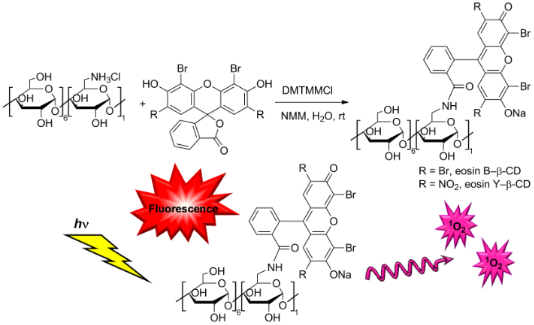
Figure 1: Reaction scheme for the synthesis of eosin Y (2) and eosin B (4).
Figure 2: Reaction scheme for the synthesis of eosin-appended β-CDs, 2–β-CD and 4–β-CD (NMM: N-methylmorpholi...
Figure 3: TLC analysis of the composition of the crude coupling reaction mixtures.
Figure 4: 1H NMR spectrum of 2–β-CD with partial assignment (DMSO-d6, 600 MHz, 298 K).
Figure 5: Size distributions of 1 mM aqueous solutions of conjugates 4–β-CD (a) and 2–β-CD (b) at 25.0 °C (pH...
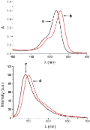
Figure 6: Normalized absorption spectra of aqueous solutions of (a) eosin Y (2) and (b) conjugate 2–β-CD and ...
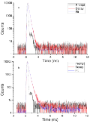
Figure 7: Time-resolved fluorescence observed for aqueous solutions of (a) eosin Y (2) and (b) the 2–β-CD con...
Figure 8: 1O2 luminescence detected upon 528 nm light excitation of D2O solutions of (a) eosin Y (2) and (b) 2...
Beilstein J. Org. Chem. 2016, 12, 2644–2662, doi:10.3762/bjoc.12.261
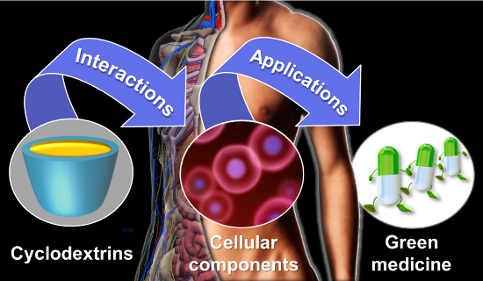
Graphical Abstract
Scheme 1: Structure and conventional representation of native CDs.
Scheme 2: Proposed mechanism for morphological changes in erythrocytes induced by methylated CDs.
Scheme 3: Proposed mechanism for the conformational change of egg white lysozyme with temperature elevating i...
Scheme 4: Sugar hydrophobicity scale according to Janado and Yano and correlation with the binding constant v...
Scheme 5: Principle of chemically switched DNA intercalators based on anthryl(alkylamino)-β-CD/1-adamantanol ...
Scheme 6: Normal (left) and diseased artery (right).
Scheme 7: Kinetics of [DiC10] insertion into the viral envelope without (left) or with γ-CD (right). Note tha...
Beilstein J. Org. Chem. 2016, 12, 2588–2601, doi:10.3762/bjoc.12.254
Graphical Abstract
Scheme 1: Enzymatic synthesis of 2-deoxy-β-D-ribofuranosides 1b–5b of the heterocyclic bases 1a–5a. Regents a...
Scheme 2: Phosphorolysis of nucleosides 1b–5b and related pyrimidine nucleosides (2’-deoxyuridine, thymidine,...
Figure 1: Phosphorolysis of a number of 2’-deoxy-β-D-ribofuranosides of uracil and thymine, and their 6-aza d...
Figure 2: Phosphorolysis of 2′-deoxyuridine and thymidine, their 4- and 2-thio derivatives and 6-aza-2-thioth...
Figure 3: Supposed monoanionic forms of 4-thiouracil and 2-thiouracil in aqueous medium [48,49].
Figure 4: Phosphorolysis of 6-aza-2-thiothymidine (5b), 4-thiothymidine (11a) and 4-thio-2′-deoxyuridine (1b)...
Figure 5: Structures of 2-thiopyrimidine(9–12) and 5-azacytidine (13 and 14) nucleosides.
Figure 6: Energy minimized structures of N3-(β-D-ribofuranosyl)adenine (left) and 5-aza-2′-deoxycytidine (rig...
Figure 7: Structures of 6-azapyrimidines 15–18 tested for E. coli UP and TP.
Figure 8: Geometry optimized structures (PM3 method) of 5-tert-butyl-6-azauracil (15) and 5-phenyl-6-azauraci...
Figure 9: The UV spectra of 4-thio-2′-deoxyuridine (1b).
Figure 10: The UV spectra of 6-aza-2-thiothymidine (5b).
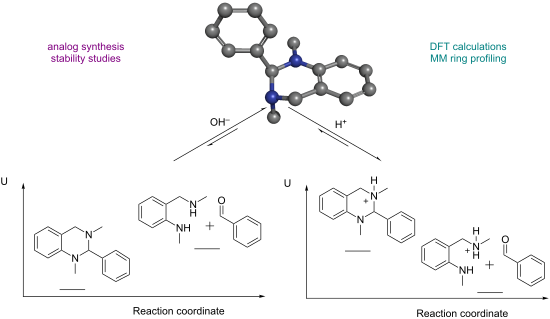
Beilstein J. Org. Chem. 2016, 12, 2280–2292, doi:10.3762/bjoc.12.221
Graphical Abstract
Figure 1: Compounds described in the literature containing an aminal core for various applications. The amina...
Scheme 1: Synthetic approaches for the formation of the tetrahydroquinazoline moiety. Dashed lines indicate b...
Scheme 2: Oxidation and reduction reactions of tetrahydroquinazolines. Dashed lines indicate both cyclized or...
Figure 2: Hydrolysis of the aminal core of tetrahydroquinazolines 1 into the corresponding diamines 2 and ald...
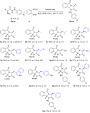
Scheme 3: Reagents and conditions: (i) MeI, DIPEA, DMAc, 40 °C, 24 h; (ii) R1-NH2 or MeNH3Cl and Et3N, DMF, 4...
Scheme 4: Reagents and conditions: (a) (i) MeNH3Cl, Et3N, DMF, 70 °C, 3 h; (ii) AcOH, 70 °C, 4 h; (iii) n-PrB...
Figure 3: pH-Stability test of the aminal core toward hydrolysis in dependency of different substitution patt...
Figure 4: Kinetic analysis of hydrolysis of reference compound 8a in dependency of different pH values and ca...
Figure 5: Differences in energy along the reaction coordinate using the functional B3LYP-D3 for the hydrolysi...
Figure 6: Reaction equilibrium between tetrahydroquinazoline 1, the corresponding diamine 2 and aldehyde 3 in...
Figure 7: Minimum energy conformers in their neutral form with (a) an axial orientation of the phenyl system ...
Beilstein J. Org. Chem. 2016, 12, 1812–1825, doi:10.3762/bjoc.12.171
Graphical Abstract
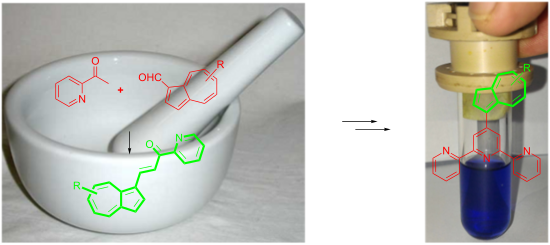
Scheme 1: Synthesis of 4′-azulenyl substituted terpyridines.
Figure 1: Molecular structure and numbering scheme of 4′-(1-azulenyl)-2,2′:6′,2″-terpyridine (4a, left) and 4...
Figure 2: Packing diagram for 4a showing the π–π stacking and CH–π interactions between the pyridine rings an...
Figure 3: Packing diagram for 4b showing the π–π stacking between the pyridine rings. Hydrogen atoms are omit...
Figure 4: Absorption spectra of the azulene-containing terpyridine, 4a and 4b in CH2Cl2 solution at room temp...
Figure 5: Emission spectra of the azulene-containing terpyridine, 4a and 4b in CH2Cl2 solution (2.59 × 10⁻⁵ M...
Figure 6: Selected Kohn–Sham orbitals and orbital energies for 4a and 4b, obtained with three different funct...
Figure 7: DPV-traces (with baseline correction) of 0.5 mM solutions of 4a (solid) and 4b (dash) in DMF, with ...
Figure 8: Absorption spectra of a 4.26 mM solution of 4a in methanol upon titration with an aqueous HgCl2 sol...
Figure 9: Absorption spectra of a 4.26 mM solution of 4a in methanol upon titration with CdCl2 aqueous soluti...
Beilstein J. Org. Chem. 2016, 12, 1269–1301, doi:10.3762/bjoc.12.121
Graphical Abstract
Scheme 1: The Biginelli condensation.
Scheme 2: The Biginelli reaction of β-ketophosphonates catalyzed by ytterbium triflate.
Scheme 3: Trimethylchlorosilane-mediated Biginelli reaction of diethyl (3,3,3-trifluoropropyl-2-oxo)phosphona...
Scheme 4: Biginelli reaction of dialkyl (3,3,3-trifluoropropyl-2-oxo)phosphonate with trialkyl orthoformates ...
Scheme 5: p-Toluenesulfonic acid-promoted Biginelli reaction of β-ketophosphonates, aryl aldehydes and urea.
Scheme 6: General Kabachnik–Fields reaction for the synthesis of α-aminophosphonates.
Scheme 7: Phthalocyanine–AlCl catalyzed Kabachnik–Fields reaction of N-Boc-piperidin-4-one with diethyl phosp...
Scheme 8: Kabachnik–Fields reaction of isatin with diethyl phosphite and benzylamine.
Scheme 9: Magnetic Fe3O4 nanoparticle-supported phosphotungstic acid-catalyzed Kabachnik–Fields reaction of i...
Scheme 10: The Mg(ClO4)2-catalyzed Kabachnik–Fields reaction of 1-tosylpiperidine-4-one.
Scheme 11: An asymmetric version of the Kabachnik–Fields reaction for the synthesis of α-amino-3-piperidinylph...
Scheme 12: A classical Kabachnik–Fields reaction followed by an intramolecular ring-closing reaction for the s...
Scheme 13: Synthesis of (S)-piperidin-2-phosphonic acid through an asymmetric Kabachnik–Fields reaction.
Scheme 14: A modified diastereoselective Kabachnik–Fields reaction for the synthesis of isoindolin-1-one-3-pho...
Scheme 15: A microwave-assisted Kabachnik–Fields reaction toward isoindolin-1-ones.
Scheme 16: The synthesis of 3-arylmethyleneisoindolin-1-ones through a Horner–Wadsworth–Emmons reaction of Kab...
Scheme 17: An efficient one-pot method for the synthesis of ethyl (2-alkyl- and 2-aryl-3-oxoisoindolin-1-yl)ph...
Scheme 18: FeCl3 and PdCl2 co-catalyzed three-component reaction of 2-alkynylbenzaldehydes, anilines, and diet...
Scheme 19: Three-component reaction of 6-methyl-3-formylchromone (75) with hydrazine derivatives or hydroxylam...
Scheme 20: Three-component reaction of 6-methyl-3-formylchromone (75) with thiourea, guanidinium carbonate or ...
Scheme 21: Three-component reaction of 6-methyl-3-formylchromone (75) with 1,4-bi-nucleophiles in the presence...
Scheme 22: One-pot three-component reaction of 2-alkynylbenzaldehydes, amines, and diethyl phosphonate.
Scheme 23: Lewis acid–surfactant combined catalysts for the one-pot three-component reaction of 2-alkynylbenza...
Scheme 24: Lewis acid catalyzed cyclization of different Kabachnik–Fields adducts.
Scheme 25: Three-component synthesis of N-arylisoquinolone-1-phosphonates 119.
Scheme 26: CuI-catalyzed three-component tandem reaction of 2-(2-formylphenyl)ethanones with aromatic amines a...
Scheme 27: Synthesis of 1,5-benzodiazepin-2-ylphosphonates via ytterbium chloride-catalyzed three-component re...
Scheme 28: FeCl3-catalyzed four-component reaction for the synthesis of 1,5-benzodiazepin-2-ylphosphonates.
Scheme 29: Synthesis of indole bisphosphonates through a modified Kabachnik–Fields reaction.
Scheme 30: Synthesis of heterocyclic bisphosphonates via Kabachnik–Fields reaction of triethyl orthoformate.
Scheme 31: A domino Knoevenagel/phospha-Michael process for the synthesis of 2-oxoindolin-3-ylphosphonates.
Scheme 32: Intramolecular cyclization of phospha-Michael adducts to give dihydropyridinylphosphonates.
Scheme 33: Synthesis of fused phosphonylpyrans via intramolecular cyclization of phospha-Michael adducts.
Scheme 34: InCl3-catalyzed three-component synthesis of (2-amino-3-cyano-4H-chromen-4-yl)phosphonates.
Scheme 35: Synthesis of phosphonodihydropyrans via a domino Knoevenagel/hetero-Diels–Alder process.
Scheme 36: Multicomponent synthesis of phosphonodihydrothiopyrans via a domino Knoevenagel/hetero-Diels–Alder ...
Scheme 37: One-pot four-component synthesis of 1,2-dihydroisoquinolin-1-ylphosphonates under multicatalytic co...
Scheme 38: CuI-catalyzed four-component reactions of methyleneaziridines towards alkylphosphonates.
Scheme 39: Ruthenium–porphyrin complex-catalyzed three-component synthesis of aziridinylphosphonates and its p...
Scheme 40: Copper(I)-catalyzed three-component reaction towards 1,2,3-triazolyl-5-phosphonates.
Scheme 41: Three-component reaction of acylphosphonates, isocyanides and dialkyl acetylenedicarboxylate to aff...
Scheme 42: Synthesis of (4-imino-3,4-dihydroquinazolin-2-yl)phosphonates via an isocyanide-based three-compone...
Scheme 43: Silver-catalyzed three-component synthesis of (2-imidazolin-4-yl)phosphonates.
Scheme 44: Three-component synthesis of phosphonylpyrazoles.
Scheme 45: One-pot three-component synthesis of 3-carbo-5-phosphonylpyrazoles.
Scheme 46: A one-pot two-step method for the synthesis of phosphonylpyrazoles.
Scheme 47: A one-pot method for the synthesis of (5-vinylpyrazolyl)phosphonates.
Scheme 48: Synthesis of 1H-pyrrol-2-ylphosphonates via the [3 + 2] cycloaddition of phosphonate azomethine yli...
Scheme 49: Three-component synthesis of 1H-pyrrol-2-ylphosphonates.
Scheme 50: The classical Reissert reaction.
Scheme 51: One-pot three-component synthesis of N-phosphorylated isoquinolines.
Scheme 52: One-pot three-component synthesis of 1-acyl-1,2-dihydroquinoline-2-phosphonates and 2-acyl-1,2-dihy...
Scheme 53: Three-component reaction of pyridine derivatives with ethyl propiolate and dialkyl phosphonates.
Scheme 54: Three-component reactions for the phosphorylation of benzothiazole and isoquinoline.
Scheme 55: Three-component synthesis of diphenyl [2-(aminocarbonyl)- or [2-(aminothioxomethyl)-1,2-dihydroisoq...
Scheme 56: Three-component stereoselective synthesis of 1,2-dihydroquinolin-2-ylphosphonates and 1,2-dihydrois...
Scheme 57: Diphosphorylation of diazaheterocyclic compounds via a tandem 1,4–1,2 addition of dimethyl trimethy...
Scheme 58: Multicomponent reaction of alkanedials, acetamide and acetyl chloride in the presence of PCl3 and a...
Scheme 59: An oxidative domino three-component synthesis of polyfunctionalized pyridines.
Scheme 60: A sequential one-pot three-component synthesis of polysubstituted pyrroles.
Scheme 61: Three-component decarboxylative coupling of proline with aldehydes and dialkyl phosphites for the s...
Scheme 62: Three-component domino aza-Wittig/phospha-Mannich sequence for the phosphorylation of isatin deriva...
Scheme 63: Stereoselective synthesis of phosphorylated trans-1,5-benzodiazepines via a one-pot three-component...
Scheme 64: One-pot three-component synthesis of phosphorylated 2,6-dioxohexahydropyrimidines.
Beilstein J. Org. Chem. 2016, 12, 1000–1039, doi:10.3762/bjoc.12.98
Graphical Abstract
Figure 1: 3-Hydroxyoxindole-containing natural products and biologically active molecules.
Scheme 1: Chiral CNN pincer Pd(II) complex 1 catalyzed asymmetric allylation of isatins.
Scheme 2: Asymmetric allylation of ketimine catalyzed by the chiral CNN pincer Pd(II) complex 2.
Scheme 3: Pd/L1 complex-catalyzed asymmetric allylation of 3-O-Boc-oxindoles.
Scheme 4: Cu(OTf)2-catalyzed asymmetric direct addition of acetonitrile to isatins.
Scheme 5: Chiral tridentate Schiff base/Cu complex catalyzed asymmetric Friedel–Crafts alkylation of isatins ...
Scheme 6: Guanidine/CuI-catalyzed asymmetric alkynylation of isatins with terminal alkynes.
Scheme 7: Asymmetric intramolecular direct hydroarylation of α-ketoamides.
Scheme 8: Plausible catalytic cycle for the direct hydroarylation of α-ketoamides.
Scheme 9: Ir-catalyzed asymmetric arylation of isatins with arylboronic acids.
Scheme 10: Enantioselective decarboxylative addition of β-ketoacids to isatins.
Scheme 11: Ruthenium-catalyzed hydrohydroxyalkylation of olefins and 3-hydroxy-2-oxindoles.
Scheme 12: Proposed catalytic mechanism and stereochemical model.
Scheme 13: In-catalyzed allylation of isatins with stannylated reagents.
Scheme 14: Modified protocol for the synthesis of allylated 3-hydroxyoxindoles.
Scheme 15: Hg-catalyzed asymmetric allylation of isatins with allyltrimethylsilanes.
Scheme 16: Enantioselective additions of organoborons to isatins.
Scheme 17: Asymmetric aldol reaction of isatins with cyclohexanone.
Scheme 18: Enantioselective aldol reactions of aliphatic aldehydes with isatin derivatives and the plausible t...
Scheme 19: Enantioselective aldol reaction of isatins and 2,2-dimethyl-1,3-dioxan-5-one.
Scheme 20: Asymmetric aldol reactions between ketones and isatins.
Scheme 21: Phenylalanine lithium salt-catalyzed asymmetric synthesis of 3-alkyl-3-hydroxyoxindoles.
Scheme 22: Aldolization between isatins and dihydroxyacetone derivatives.
Scheme 23: One-pot asymmetric synthesis of convolutamydine A.
Scheme 24: Asymmetric aldol reactions of cyclohexanone and acetone with isatins.
Scheme 25: Aldol reactions of acetone with isatins.
Scheme 26: Aldol reactions of ketones with isatins.
Scheme 27: Enantioselective allylation of isatins.
Scheme 28: Asymmetric aldol reaction of trifluoromethyl α-fluorinated β-keto gem-diols with isatins.
Scheme 29: Plausible mechanism proposed for the asymmetric aldol reaction.
Scheme 30: Asymmetric aldol reaction of 1,1-dimethoxyacetone with isatins.
Scheme 31: Enantioselective Friedel-Crafts reaction of phenols with isatins.
Scheme 32: Enantioselective addition of 1-naphthols with isatins.
Scheme 33: Enantioselective aldol reaction between 3-acetyl-2H-chromen-2-ones and isatins.
Scheme 34: Stereoselective Mukaiyama–aldol reaction of fluorinated silyl enol ethers with isatins.
Scheme 35: Asymmetric vinylogous Mukaiyama–aldol reaction between 2-(trimethylsilyloxy)furan and isatins.
Scheme 36: β-ICD-catalyzed MBH reactions of isatins with maleimides.
Scheme 37: β-ICD-catalyzed MBH reactions of 7-azaisatins with maleimides and activated alkenes.
Scheme 38: Enantioselective aldol reaction of isatins with ketones.
Scheme 39: Direct asymmetric vinylogous aldol reactions of allyl ketones with isatins.
Scheme 40: Enantioselective aldol reactions of ketones with isatins.
Scheme 41: The MBH reaction of isatins with α,β-unsaturated γ-butyrolactam.
Scheme 42: Reactions of tert-butyl hydrazones with isatins followed by oxidation.
Scheme 43: Aldol reactions of isatin derivatives with ketones.
Scheme 44: Enantioselective decarboxylative cyanomethylation of isatins.
Scheme 45: Catalytic kinetic resolution of 3-hydroxy-3-substituted oxindoles.
Scheme 46: Lewis acid catalyzed Friedel–Crafts alkylation of 3-hydroxy-2-oxindoles with electron-rich phenols.
Scheme 47: Lewis acid catalyzed arylation of 3-hydroxyoxindoles with aromatics.
Scheme 48: Synthetic application of 3-arylated disubstituted oxindoles in the construction of core structures ...
Scheme 49: CPA-catalyzed dearomatization and arylation of 3-indolyl-3-hydroxyoxindoles with tryptamines and 3-...
Scheme 50: CPA-catalyzed enantioselective decarboxylative alkylation of β-keto acids with 3-hydroxy-3-indolylo...
Scheme 51: BINOL-derived imidodiphosphoric acid-catalyzed enantioselective Friedel–Crafts reactions of indoles...
Scheme 52: CPA-catalyzed enantioselective allylation of 3-indolylmethanols.
Scheme 53: 3-Indolylmethanol-based substitution and cycloaddition reactions.
Scheme 54: CPA-catalyzed asymmetric [3 + 3] cycloaddtion reactions of 3-indolylmethanols with azomethine ylide...
Scheme 55: CPA-catalyzed three-component cascade Michael/Pictet–Spengler reactions of 3-indolylmethanols and a...
Scheme 56: Acid-promoted chemodivergent and stereoselective synthesis of diverse indole derivatives.
Scheme 57: CPA-catalyzed asymmetric formal [3 + 2] cycloadditions.
Scheme 58: CPA-catalyzed enantioselective cascade reactions for the synthesis of C7-functionlized indoles.
Scheme 59: Lewis acid-promoted Prins cyclization of 3-allyl-3-hydroxyoxindoles with aldehydes.
Scheme 60: Ga(OTf)3-catalyzed reactions of allenols and phenols.
Scheme 61: I2-catalyzed construction of pyrrolo[2.3.4-kl]acridines from enaminones and 3-indolyl-3-hydroxyoxin...
Scheme 62: CPA-catalyzed asymmetric aza-ene reaction of 3-indolylmethanols with cyclic enaminones.
Scheme 63: Asymmetric α-alkylation of aldehydes with 3-indolyl-3-hydroxyoxindoles.
Scheme 64: Organocatalytic asymmetric α-alkylation of enolizable aldehydes with 3-indolyl-3-hydroxyoxindoles a...
Beilstein J. Org. Chem. 2016, 12, 549–563, doi:10.3762/bjoc.12.54
Graphical Abstract
Figure 1: Molecular structure of S4TdR. H atoms are also labeled in the Figure.
Figure 2: Comparison between UV–vis absorption spectra (detailed view: 280–380 nm) obtained for 1 × 10⁻⁵ M aq...
Figure 3: Cyclic voltammetry of aqueous solutions containing S4TdR (black solid line) in presence of increasi...
Figure 4: (A) Plot of cathodic potential values and (B) of the corresponding current intensity, obtained for S...
Figure 5: Comparison between detailed views (frequency range: 4000–600 cm−1) of the FTIR–ATR spectra obtained...
Figure 6: Modified Benesi–Hildebrand plot of [H]/[G]/Δδ versus [H]/[G] in the presence of S4TdR at an initial...
Beilstein J. Org. Chem. 2016, 12, 444–461, doi:10.3762/bjoc.12.47
Graphical Abstract
Scheme 1: Breslow’s proposal on the mechanism of the benzoin condensation.
Scheme 2: Imidazolium carbene-catalysed homo-benzoin condensation.
Scheme 3: Homo-benzoin condensation in aqueous medium.
Scheme 4: Homobenzoin condensation catalysed by bis(benzimidazolium) salt 8.
Scheme 5: List of assorted chiral NHC-catalysts used for asymmetric homobenzoin condensation.
Scheme 6: A rigid bicyclic triazole precatalyst 15 in an efficient enantioselective benzoin reaction.
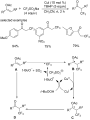
Scheme 7: Inoue’s report of cross-benzoin reactions.
Scheme 8: Cross-benzoin reactions catalysed by thiazolium salt 17.
Scheme 9: Catalyst-controlled divergence in cross-benzoin reactions.
Scheme 10: Chemoselective cross-benzoin reactions catalysed by a bulky NHC.
Scheme 11: Selective intermolecular cross-benzoin condensation reactions of aromatic and aliphatic aldehydes.
Scheme 12: Chemoselective cross-benzoin reaction of aliphatic and aromatic aldehydes.
Scheme 13: Cross-benzoin reactions of trifluoromethyl ketones developed by Enders.
Scheme 14: Cross-benzoin reactions of aldehydes and α-ketoesters.
Scheme 15: Enantioselective cross-benzoin reactions of aliphatic aldehydes and α-ketoesters.
Scheme 16: Dynamic kinetic resolution of β-halo-α-ketoesters via cross-benzoin reaction.
Scheme 17: Enantioselective benzoin reaction of aldehydes and alkynones.
Scheme 18: Aza-benzoin reaction of aldehydes and acylimines.
Scheme 19: NHC-catalysed diastereoselective synthesis of cis-2-amino 3-hydroxyindanones.
Scheme 20: Cross-aza-benzoin reactions of aldehydes with aromatic imines.
Scheme 21: Enantioselective cross aza-benzoin reaction of aliphatic aldehydes with N-Boc-imines.
Scheme 22: Chemoselective cross aza-benzoin reaction of aldehydes with N-PMP-imino esters.
Scheme 23: NHC-catalysed coupling reaction of acylsilanes with imines.
Scheme 24: Thiazolium salt-mediated enantioselective cross-aza-benzoin reaction.
Scheme 25: Aza-benzoin reaction of enals with activated ketimines.
Scheme 26: Isatin derived ketimines as electrophiles in cross aza-benzoin reaction with enals.
Scheme 27: Aza-benzoin reaction of aldehydes and phosphinoylimines catalysed by the BAC-carbene.
Scheme 28: Nitrosoarenes as the electrophilic component in benzoin-initiated cascade reaction.
Scheme 29: One-pot synthesis of hydroxamic esters via aza-benzoin reaction.
Scheme 30: Cookson and Lane’s report of intramolecular benzoin condensation.
Scheme 31: Intramolecular cross-benzoin condensation between aldehyde and ketone moieties.
Scheme 32: Intramolecular crossed aldehyde-ketone benzoin reactions.
Scheme 33: Enantioselective intramolecular crossed aldehyde-ketone benzoin reaction.
Scheme 34: Chromanone synthesis via enantioselective intramolecular cross-benzoin reaction.
Scheme 35: Intramolecular cross-benzoin reaction of chalcones.
Scheme 36: Synthesis of bicyclic tertiary alcohols by intramolecular benzoin reaction.
Scheme 37: A multicatalytic Michael–benzoin cascade process for cyclopentanone synthesis.
Scheme 38: Enamine-NHC dual-catalytic, Michael–benzoin cascade reaction.
Scheme 39: Iminium-cross-benzoin cascade reaction of enals and β-oxo sulfones.
Scheme 40: Intramolecular benzoin condensation of carbohydrate-derived dialdehydes.
Scheme 41: Enantioselective intramolecular benzoin reactions of N-tethered keto-aldehydes.
Scheme 42: Asymmetric cross-benzoin reactions promoted by camphor-derived catalysts.
Scheme 43: NHC-Brønsted base co-catalysis in a benzoin–Michael–Michael cascade.
Scheme 44: Divergent catalytic dimerization of 2-formylcinnamates.
Scheme 45: One-pot, multicatalytic asymmetric synthesis of tetrahydrocarbazole derivatives.
Scheme 46: NHC-chiral secondary amine co-catalysis for the synthesis of complex spirocyclic scaffolds.
Beilstein J. Org. Chem. 2016, 12, 110–116, doi:10.3762/bjoc.12.12
Graphical Abstract
Scheme 1: Oxidation of SF5-anisole and phenol. 19F NMR yields are shown (isolated yields in parentheses).
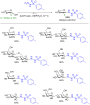
Scheme 2: Proposed mechanism for the formation of 3 and 4 from SF5 aromatics 1 and 2.
Scheme 3: Oxidation of anisole 10 and phenol 11. 19F NMR yields are given.
Scheme 4: Synthesis of para-benzoquinone 12 and oxidation to maleic acid 4. 19F NMR yields are shown, in pare...
Scheme 5: Catalytic hydrogenation and Diels–Alder reaction of benzoquinone 12.
Figure 1: Optimized geometries of transition states of Diels–Alder reaction of cyclopentadiene with 12. Selec...
Scheme 6: Decomposition of 3 in water.
Scheme 7: Formation of acids 5, 18 and 19 from lactone 3.
Scheme 8: Synthesis of maleic anhydride 20 and Diels–Alder adducts 21.
Scheme 9: Reaction of maleic acid 4 with diazomethane.
Scheme 10: Decarboxylation of maleic acid 4 to acrylic acid 23 in DMSO and the preparation of deuterium labell...