Search results
Search for "bathochromic shift" in Full Text gives 114 result(s) in Beilstein Journal of Organic Chemistry.
Click chemistry towards thermally reversible photochromic 4,5-bisthiazolyl-1,2,3-triazoles
Beilstein J. Org. Chem. 2019, 15, 2161–2169, doi:10.3762/bjoc.15.213

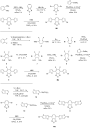
- (R = OMe, 570 nm) and 6c (R = CN, 570 nm) in hexane (Scheme 3) [36]. In triazoles, while the introduction of electron-donating methoxy groups had little effect on the absorption maximum wavelengths, the introduction of electron-withdrawing cyano groups induced a large bathochromic shift. This



An overview of the cycloaddition chemistry of fulvenes and emerging applications
Beilstein J. Org. Chem. 2019, 15, 2113–2132, doi:10.3762/bjoc.15.209

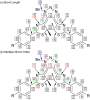
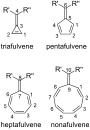
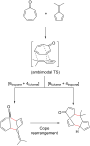
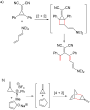
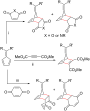
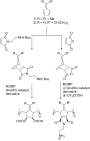
- , this can result in a bathochromic shift [2][42]. Consideration of frontier molecular orbital theory allows the electronic nature and general reactivity patterns of fulvenes to be interpreted. Fulvene cycloadditions The multiple cycloaddition pathways observed for fulvenes provides access to a diverse







Fluorinated azobenzenes as supramolecular halogen-bonding building blocks
Beilstein J. Org. Chem. 2019, 15, 2013–2019, doi:10.3762/bjoc.15.197

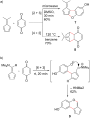
- significantly strengthened in solution. However, the bathochromic shift of the π→π* band leads to a partial overlap with the n→π* band, making it slightly more difficult to address. The introduction of iodine substituents is furthermore accompanied with a diminishing thermal half-life. A series of three
- , which is very desirable for application in supramolecular systems [12][13][35]. Tetra- and octafluorinated A1 and A2 show clear spectral separation of the n→π* bands, whereas the extended π-system of iodoethynyl A3 lead to a bathochromic shift of the π→π* band by 24 nm, now partially overlapping with
- iodoethynyl group, as trade-off, photophysical properties are changing. The bathochromic shift of the π→π* band leads to an overlap with the n→π* excitation, making it more difficult to address, together with a diminishing thermal half-life. Both effects can be qualitatively reproduced and understood with the


Functional panchromatic BODIPY dyes with near-infrared absorption: design, synthesis, characterization and use in dye-sensitized solar cells
Beilstein J. Org. Chem. 2019, 15, 1758–1768, doi:10.3762/bjoc.15.169
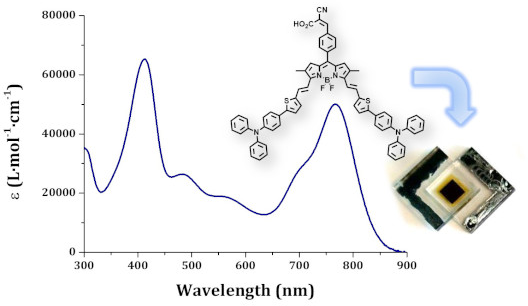
- spacer [14][21][23][24]. Introduction of such units on those positions is known to lead to a larger bathochromic shift of the S0→S1 absorption band than the same substitution on its 2nd and 6th positions [25]. A thiophene-triphenylamine unit was selected among the reported electron-donating units, due to
- Table 1 and Figure 5a). This suggests no self-aggregation of the alkylated dye occurs on the oxide surface, which can be explained by the presence of the co-adsorbent CDCA, and of the multiple alkyl chain substitution of the TPA units. On the other hand, a bathochromic shift of the absorption profile of




Synthesis, photophysical and electrochemical properties of pyridine, pyrazine and triazine-based (D–π–)2A fluorescent dyes
Beilstein J. Org. Chem. 2019, 15, 1712–1721, doi:10.3762/bjoc.15.167
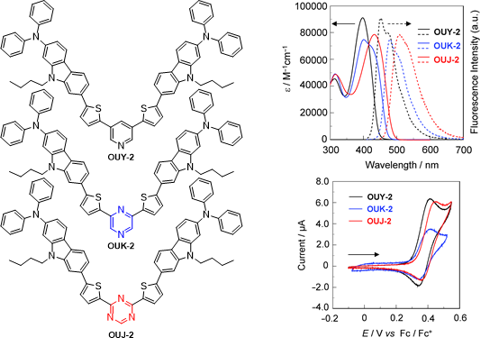
- , the three dyes showed a bathochromic shift of the fluorescence band with increasing solvent polarity from toluene to DMF (i.e., positive fluorescence solvatochromism). Thus, the Stokes shift (SS) values of the three dyes increase with increasing solvent polarity. Compared with OUY-2, OUK-2 and OUJ-2
- -2, 592 nm for OUK-2, and 557 nm for OUJ-2, which showed a significant bathochromic shift by 97 nm, 112 nm, and 48 nm, respectively, compared with those in toluene. The solid-state Φf value is below 0.02 for OUY-2 and OUK-2 and 0.09 for OUJ-2, which are much lower than those in toluene. It is well
- electron-withdrawing ability of the azine ring lowers the LUMO energy level of the (D–π–)2A fluorescent dyes. Consequently, the fact revealed that the bathochromic shift of the ICT-based photoabsorption band in the order of OUY-2 < OUK-2 < OUJ-2 is attributed to the stabilization of the LUMO energy level




Synthesis, enantioseparation and photophysical properties of planar-chiral pillar[5]arene derivatives bearing fluorophore fragments
Beilstein J. Org. Chem. 2019, 15, 1601–1611, doi:10.3762/bjoc.15.164
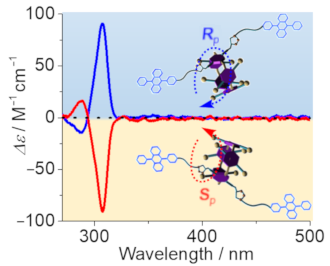
- at the ground state. Similar results were observed for P5A-Py except for a slight bathochromic shift of the absorption compared with Py-6. The fluorescence spectrum of P5A-DPA is very similar to that of DPA-6 (Figure 1b). P5A-DPA showed an intense fluorescence in the visible light region, peaked at
- further investigated by dynamic light scattering (DLS) analyses, and revealed the formation of nanoparticles with 615 nm in average diameter after the addition of 50% water (Figure 4d). Increasing the amount of water to 70% or 90% led to a bathochromic shift of the UV–vis absorption and a raise of the



Diaminoterephthalate–α-lipoic acid conjugates with fluorinated residues
Beilstein J. Org. Chem. 2019, 15, 981–991, doi:10.3762/bjoc.15.96
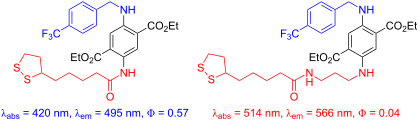
- the first title compound 3 in 71% yield. Due to the electron-withdrawing amide group, the chromophore is relatively electron deficient (absorption at 420 nm and emission at 495 nm). In order to achieve a bathochromic shift of absorption and emission bands, the DAT and ALA moieties should be
- primary amine 8 was coupled with ALA in the presence of COMU–DIPEA to furnish the second title compound 7 in 68% yield. Indeed, a bathochromic shift of the spectral data was observed (absorption at 514 nm and emission at 566 nm). Spectroscopy. Being typical push–pull aromatic systems, all DAT derivatives
- NH2 and NHBoc group is the most electron-deficient one with absorption and emission wavelength at 408 nm and 487 nm, respectively (Stokes shift ca. 80 nm). A bathochromic shift of 16 nm of both, absorption and emission wavelengths, is achieved by introduction of a benzyl residue at one nitrogen atom


Coordination chemistry and photoswitching of dinuclear macrocyclic cadmium-, nickel-, and zinc complexes containing azobenzene carboxylato co-ligands
Beilstein J. Org. Chem. 2019, 15, 840–851, doi:10.3762/bjoc.15.81
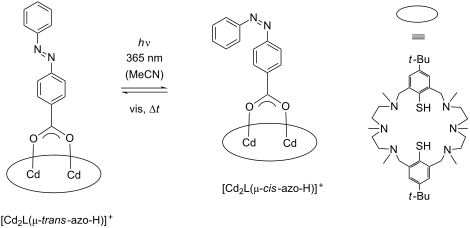
- −) frequencies are significantly red-shifted by 78–103 cm−1 to lower wavenumbers. A bathochromic shift of 14–32 cm−1 is also clearly observed for the νs(RCO2–) frequencies. Notice that Δ = νas(RCO2−) − νs(RCO2−) is invariably larger than 180 cm−1, a clear indication that the co-ligand is in the bridging mode [7







Synthesis and fluorescent properties of N(9)-alkylated 2-amino-6-triazolylpurines and 7-deazapurines
Beilstein J. Org. Chem. 2019, 15, 474–489, doi:10.3762/bjoc.15.41

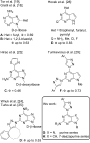
- development does not allow yet to introduce arylamino moieties at C(2) due to the diminished nucleophilicity of anilines. The 7-deazapurine derivatives were characterized with a somewhat larger Stokes shift and bathochromic shift of the lowest energy absorption band in comparison to purine derivatives, but





N-Arylphenothiazines as strong donors for photoredox catalysis – pushing the frontiers of nucleophilic addition of alcohols to alkenes
Beilstein J. Org. Chem. 2019, 15, 52–59, doi:10.3762/bjoc.15.5
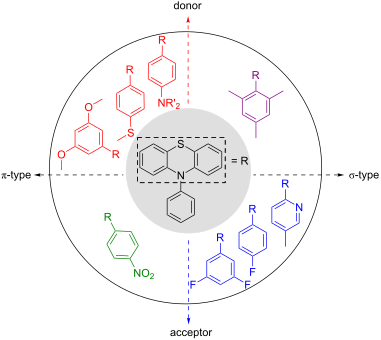
- of the π-donating dimethylamino substituent in 2 induces a hypsochromic shift of the absorption maximum by 7 nm to 313 nm, while the mesityl group present in 5 as a σ-donor causes a bathochromic shift of about 8 nm. The detailed structure of the alkyl group attached to the amino part in the



Bioinspired cobalt cubanes with tunable redox potentials for photocatalytic water oxidation and CO2 reduction
Beilstein J. Org. Chem. 2018, 14, 2331–2339, doi:10.3762/bjoc.14.208

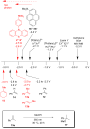
- charge-transfer transitions from μ-O atoms to the Co centers, which leads to a modest bathochromic shift from 355 (R = H) to 365 nm, however, with a remarkably enhanced intensity. In addition, the highest energy band between 220–260 nm is believed to be of ligand origin, most probably originating from


Synthesis of new p-tert-butylcalix[4]arene-based polyammonium triazolyl amphiphiles and their binding with nucleoside phosphates
Beilstein J. Org. Chem. 2018, 14, 1980–1993, doi:10.3762/bjoc.14.173
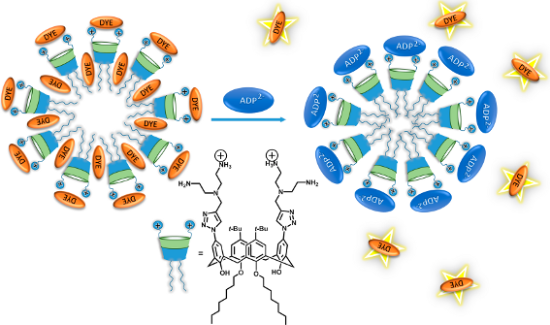
- sensing purposes. Thereby, premicellar concentrations of calixarenes 10a,b (6 and 4 µM, respectively) and 12a,b (4 and 2 µM, respectively) were selected to design a receptor system based on the principle of competitive EY displacement by the guests. At these concentrations, a bathochromic shift
- packaging density of aggregates and their general lipophilicity. To reveal this, absorbance spectra of the 10b–EY system in the presence of ADP and ATP were recorded (Figure 5a and b). The addition of small amounts of nucleotides leads to a bathochromic shift of the EY adsorption due to a deeper penetration


Synthesis of 9-arylalkynyl- and 9-aryl-substituted benzo[b]quinolizinium derivatives by Palladium-mediated cross-coupling reactions
Beilstein J. Org. Chem. 2018, 14, 1871–1884, doi:10.3762/bjoc.14.161
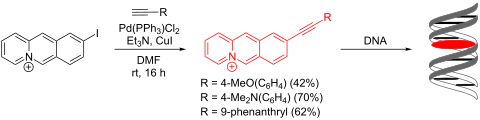
- derivatives 2a–d with ct DNA and G4-DNA 22AG [d(AG3T2AG3T2AG3T2AG3)] were investigated with photometric and fluorimetric titrations (Figures 6–9, Table 3). In general, a hypochromic effect and a bathochromic shift were observed by the addition of DNA. For example, the addition of ct DNA and G4-DNA 22AG to


First thia-Diels–Alder reactions of thiochalcones with 1,4-quinones
Beilstein J. Org. Chem. 2018, 14, 1834–1839, doi:10.3762/bjoc.14.156
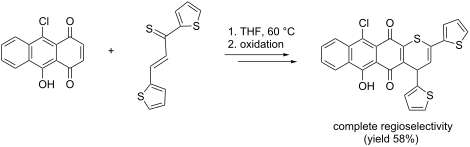
- X-ray crystallography (Figure 1). Remarkably, the presence of OH and Cl substituents in products 4i–l results in a bathochromic shift of UV–vis absorptions. The crystal structure of 4k is that of the regioisomer proposed on the basis of reactivity considerations. Since the space group is


Enhanced quantum yields by sterically demanding aryl-substituted β-diketonate ancillary ligands
Beilstein J. Org. Chem. 2018, 14, 664–671, doi:10.3762/bjoc.14.54
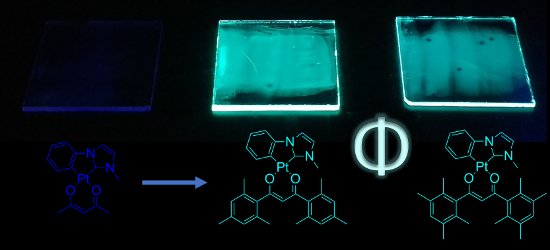
- platinum (Figure 7). The observed red shift in emission color is also in agreement with the results of the DFT calculations (Supporting Information File 1, Table S4) of the predicted emission wavelength, according to a previously published procedure [60]. The bathochromic shift in emission color of


Recent advances on organic blue thermally activated delayed fluorescence (TADF) emitters for organic light-emitting diodes (OLEDs)
Beilstein J. Org. Chem. 2018, 14, 282–308, doi:10.3762/bjoc.14.18

- B1 and B2, respectively, indicating the substantial contribution of the triplet excitons to the luminescence. Interestingly, compared to B2, the introduction of two additional methyl groups in the phenyl part (B3) resulted in a clear bathochromic shift of the EL, OLEDs emitting a green light peaking




Halogen-containing thiazole orange analogues – new fluorogenic DNA stains
Beilstein J. Org. Chem. 2017, 13, 2902–2914, doi:10.3762/bjoc.13.283
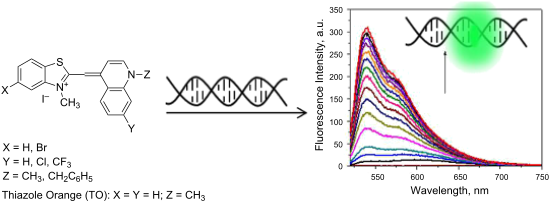
- quinoline moiety of the chromophore leads to a bathochromic shift of the longest wavelength absorption maximum in all new compounds when compared to TO. The presence of a benzyl substituent in compounds 5a–d doesn’t have significant effect on the maxima position, slightly shifting the transition further
- towards lower energies when compared to TO-7Cl (in the case of 5a the red shift is 4 nm and can be attributed solely to this effect). The bathochromic shift is more pronounced in 5b and 5d, which bear the stronger electron-withdrawing CF3 group, when compared to the chloro-substituted analogues. It is
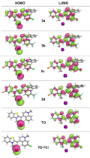
- ), oscillator strength (f) and frontier orbital energy levels are provided in Table 2. The calculated λmax for the dyes are in the following order: TO (452 nm) < TO-7Cl (460 nm) = 5a (460 nm) < 5c (468 nm) < 5b (468 nm) < 5d (481 nm). The bathochromic shift of the longest wavelength maximum upon substitution in




Binding abilities of a chiral calix[4]resorcinarene: a polarimetric investigation on a complex case of study
Beilstein J. Org. Chem. 2017, 13, 2698–2709, doi:10.3762/bjoc.13.268

- typical intense and large band for the O–H stretching centred at 3304 cm−1, accompanied by two tiny additional signals at 3534 and 3476 cm−1. After attachment of the proline units, the spectrum of CAP shows a significant decrease in intensity and a bathochromic shift to 3169 cm−1 of the O–H band; moreover




Structure–property relationships and third-order nonlinearities in diketopyrrolopyrrole based D–π–A–π–D molecules
Beilstein J. Org. Chem. 2017, 13, 2374–2384, doi:10.3762/bjoc.13.235

- to the first absorption bands. The positions of the emission maxima copy trends seen in the absorption spectra. Increasing the donating ability of the attached peripheral R1-substituents results in a slight bathochromic shift, whereas extension of the π-system by acetylene linkers has an opposite




Synthesis and application of trifluoroethoxy-substituted phthalocyanines and subphthalocyanines
Beilstein J. Org. Chem. 2017, 13, 2273–2296, doi:10.3762/bjoc.13.224
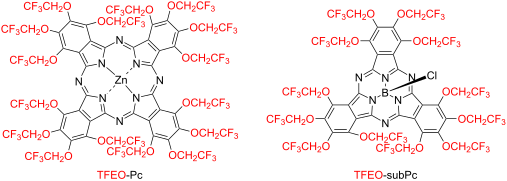
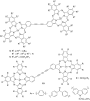
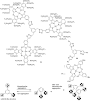
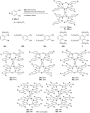
- iron phthalocyanine (TFEO-FePc) were compared with non-fluorinated alkoxy-substituted phthalocyanines [52]. A slightly bathochromic shift of the Q band was observed for TFEO-Pcs relative to non-fluorinated alkoxylated phthalocyanines. Although the melting points of non-fluorinated alkoxylated








p-tert-Butylthiacalix[4]arenes functionalized by N-(4’-nitrophenyl)acetamide and N,N-diethylacetamide fragments: synthesis and binding of anionic guests
Beilstein J. Org. Chem. 2017, 13, 1940–1949, doi:10.3762/bjoc.13.188

- presence of a 200-fold excess of n-Bu4NX in chloroform. The most significant changes in the absorption spectra of p-tert-butylthiacalix[4]arenes in the presence of n-Bu4NX involved the observed bathochromic shift of the absorption band in the 300–370 nm region representing the interaction of the
- , the changes are observed only in the interaction with F− and H2PO4− anions. A strong hypochromic effect on the absorption band maximum in both cases and a weak bathochromic shift of the absorption band in the interaction of the macrocycle 5 with F− anions were observed (see Supporting Information File
- 1, Figure S17). Interaction of thiacalix[4]arene 6 with the F−, CH3CO2−, H2PO4− anions have a complicated character in the spectra. There is a bathochromic shift and a hypochromic effect on the maximum of the absorption band at 305 nm. In addition, a new absorption maximum appears in the region of


New electroactive asymmetrical chalcones and therefrom derived 2-amino- / 2-(1H-pyrrol-1-yl)pyrimidines, containing an N-[ω-(4-methoxyphenoxy)alkyl]carbazole fragment: synthesis, optical and electrochemical properties
Beilstein J. Org. Chem. 2017, 13, 1583–1595, doi:10.3762/bjoc.13.158

- chromophores 7a,b. An additional absorption maximum was found in the longwave region of the spectra recorded for chloroform and dimethyl sulfoxide solutions of these compounds (Figure 3). The replacement of diethyl ether by chloroform causes a bathochromic shift of the longwave absorption band. Further
- solvents; the results are shown in Figure 5. The replacement of such a nonpolar solvent as toluene by some more polar solvent, chloroform, has resulted in the insignificant bathochromic shift of a longwave absorption maximum in the case of 2-amino-4,6-di(4-bromophenyl)pyrimidine (λmaxabs = 340 nm for the


Direct catalytic arylation of heteroarenes with meso-bromophenyl-substituted porphyrins
Beilstein J. Org. Chem. 2017, 13, 1524–1532, doi:10.3762/bjoc.13.152
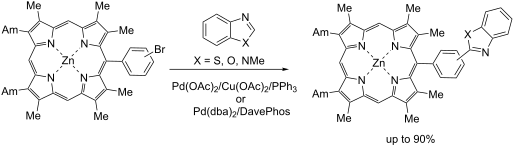
- ), 412 (lgε 4.68)). There is no significant difference in the spectra of diarylated derivative 13 and monoarylated derivatives 14 and 15, one may note a slight bathochromic shift of the Soret band and higher extinction values for compound 13. The spectra of fluorescence are quite identical and are


Interactions between shape-persistent macromolecules as probed by AFM
Beilstein J. Org. Chem. 2017, 13, 938–951, doi:10.3762/bjoc.13.95
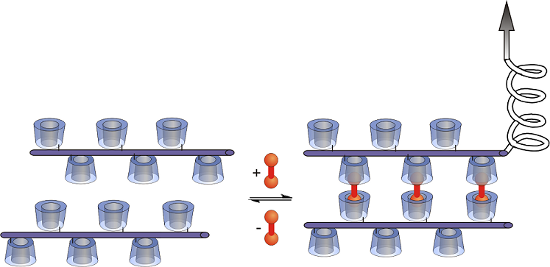
- characteristic bathochromic shift could be observed both in the absorption and emission spectra of polymer 8 (Figure 3) showing the presence of the extended polyconjugated π-system. Quantitative information about the molecular weight distribution of 8 was obtained by MALDI–TOF measurements using an ionic liquid






Molecular-level architectural design using benzothiadiazole-based polymers for photovoltaic applications
Beilstein J. Org. Chem. 2017, 13, 863–873, doi:10.3762/bjoc.13.87

- and higher charge carrier mobility due to its rigid and coplanar fused structure. Also, some thienothiophene-based polymers show a noticeable bathochromic shift in their absorption spectra in comparison with thiophene-substituted polymers [32][33][34]. Herein, keeping all these criteria in mind, we
- energy region due to π–π* transitions. A bathochromic shift in the λmax of all thin film spectra of the polymers was observed, as compared to the solution spectra. This is due to the enhanced interchain stacking and ordered structural organization of the polymers in the thin film. The intensity of the
- polymer backbone was further explored by introducing the thienothiophene motif, a fused aromatic π-bridge in polymer P3, resulting in better stacking between aromatic units as compared to polymer P1. A bathochromic shift in the absorption spectra along with a higher hole mobility in the resulting polymer