


Search results
Search for "carbohydrates" in Full Text gives 202 result(s) in Beilstein Journal of Organic Chemistry. Showing first 200.
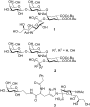
Stereo- and regioselective hydroboration of 1-exo-methylene pyranoses: discovery of aryltriazolylmethyl C-galactopyranosides as selective galectin-1 inhibitors
Beilstein J. Org. Chem. 2019, 15, 1046–1060, doi:10.3762/bjoc.15.102
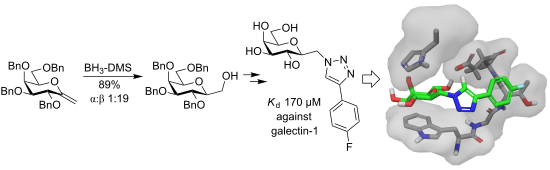
- /bjoc.15.102 Abstract Galectins are carbohydrate recognition proteins that bind carbohydrates containing galactose and are involved in cell signaling and cellular interactions, involving them in several diseases. We present the synthesis of (aryltriazolyl)methyl galactopyranoside galectin inhibitors
- ; galectin-1; hydroboration; inhibition; selective; triazole; Introduction Galectins are defined by a typically about 130 amino acid carbohydrate recognition domain (CRD) that binds to carbohydrates with at least one β-galactose subunit within a binding pocket large enough to accommodate a tetrasaccharide



Catalytic asymmetric oxo-Diels–Alder reactions with chiral atropisomeric biphenyl diols
Beilstein J. Org. Chem. 2019, 15, 955–962, doi:10.3762/bjoc.15.92
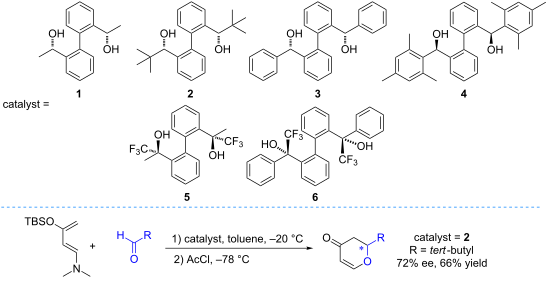
- stereogenic centers in a one-step [4 + 2] cycloaddition or cyclization reaction [6][7][8] and it has become hugely popular in preparing vital intermediates for the syntheses of key structural subunits of natural products with biological activities (e.g., carbohydrates, antibiotics, toxins etc.) [9][10


Design and synthesis of multivalent α-1,2-trimannose-linked bioerodible microparticles for applications in immune response studies of Leishmania major infection
Beilstein J. Org. Chem. 2019, 15, 623–632, doi:10.3762/bjoc.15.58
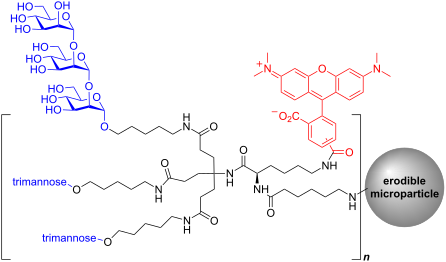
- recognition by pathogen-recognition receptors during L. major-induced leishmaniasis. Keywords: adjuvant; carbohydrates; L. major; microparticle; PAMP; Introduction Recognition of parasite cell surface molecules by host immune cells initiates the first step in the immune response [1][2]. The host’s immune
- manuscript and analyzed the data. CR, TG, KR, DK, AT, AC, CP, BN and NP all assisted with data interpretation and the final manuscript preparation. CP and NP supervised the collaboration. Funding Grinnage-Pulley, T., Petersen, CA, Narasimhan, B., Pohl, N, “Role of pathogen-derived capping carbohydrates in


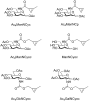
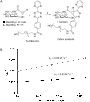
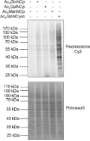
Cyclopropene derivatives of aminosugars for metabolic glycoengineering
Beilstein J. Org. Chem. 2019, 15, 584–601, doi:10.3762/bjoc.15.54
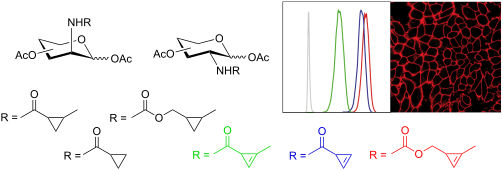
- , distinct cell-surface staining after MGE. We further found that the amide-linked Cp-modified glucosamine derivative but not the Cyoc-modified glucosamine is metabolically converted to the corresponding sialic acid. Keywords: bioorthogonal chemistry; carbohydrates; cyclopropenes; inverse electron-demand
- Diels–Alder reaction; metabolic engineering; Introduction Carbohydrates are an important class of biological molecules involved in many fundamental biological processes [1]. An important tool to visualize glycoconjugates in vitro and in vivo is metabolic glycoengineering (MGE) [2][3][4]. In this




First synthesis of cryptands with sucrose scaffold
Beilstein J. Org. Chem. 2019, 15, 210–217, doi:10.3762/bjoc.15.20
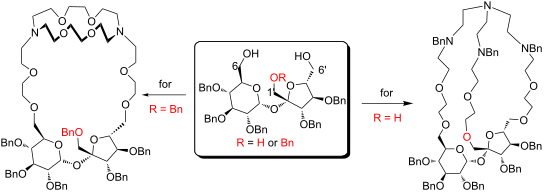
- ring, functional groups etc. Carbohydrates are especially useful platforms for macrocycles being able to recognize enantiomers. Special attention is directed to native and modified cyclodextrins, cyclic oligosaccharides, which have found wide application in many aspects of chemistry and industry [3][4


Lectins of Mycobacterium tuberculosis – rarely studied proteins
Beilstein J. Org. Chem. 2019, 15, 1–15, doi:10.3762/bjoc.15.1
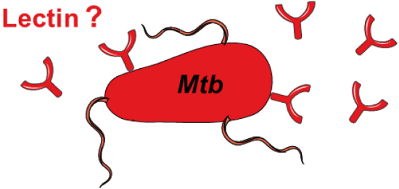
- ). In this paper we review previous studies on the carbohydrate-binding characteristics of mycobacteria and related Mtb proteins, discussing their potential relevance to Mtb infection and pathogenesis. Keywords: adhesion; carbohydrates; fimbriae; lectins; Mycobacterium tuberculosis; pili; Introduction
- invasion of host cells is a complex process, which is initiated by interactions between host and bacterial cell surface structures. As shown in previous studies, host cells can bind to mycobacterial cell wall carbohydrates via a class of surface-localized or secreted proteins known as lectins, and these
- '-dimycolate (TDM) and its precursor trehalose 6-monomycolate (TMM) [55]. Mycobacteria therefore possess α-D-mannopyranosides, α-D-arabinofuranosides, α-D-glucopyranosides, α-D-galactofuranosides, and their associated oligomeric forms as surface-exposed carbohydrates accessible to extracellular protein


Pathoblockers or antivirulence drugs as a new option for the treatment of bacterial infections
Beilstein J. Org. Chem. 2018, 14, 2607–2617, doi:10.3762/bjoc.14.239
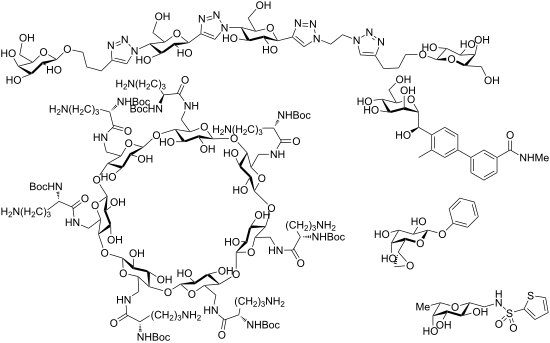
- Matthew B. Calvert Varsha R. Jumde Alexander Titz Chemical Biology of Carbohydrates, Helmholtz Institute for Pharmaceutical Research Saarland (HIPS), Helmholtz Centre for Infection Research (HZI), D-66123 Saarbrücken, Germany Deutsches Zentrum für Infektionsforschung (DZIF), Standort Hannover




Semi-synthesis and insecticidal activity of spinetoram J and its D-forosamine replacement analogues
Beilstein J. Org. Chem. 2018, 14, 2321–2330, doi:10.3762/bjoc.14.207
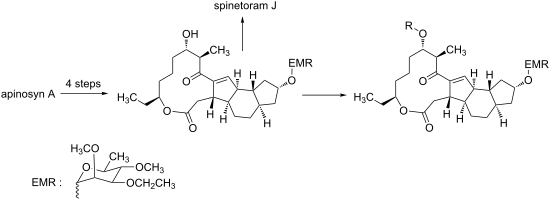
- ether bond at the C17 position under acidic conditions. Synthesis of spinetoram J analogues All carbohydrates and alcohols were activated by CNCCl3 with DBU as catalyst initially to afford glycoside donors, and then the 17-pseudoaglycone of spinetoram J was glycosylated with donors in the presence of




Synthesis of 1,4-imino-L-lyxitols modified at C-5 and their evaluation as inhibitors of GH38 α-mannosidases
Beilstein J. Org. Chem. 2018, 14, 2156–2162, doi:10.3762/bjoc.14.189
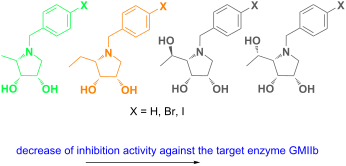
- ; inhibitors; pyrrolidines; synthesis; Introduction Carbohydrates as chiral templates for a construction of bioactive compounds are of steady interest in medicinal chemistry [1][2][3]. The polyfunctional nature of carbohydrate units offers many possibilities for the design of a wide variety of new compounds


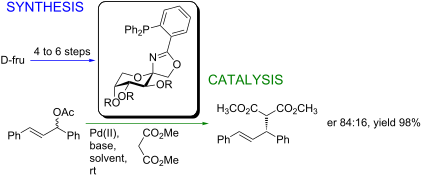
D-Fructose-based spiro-fused PHOX ligands: synthesis and application in enantioselective allylic alkylation
Beilstein J. Org. Chem. 2018, 14, 2082–2089, doi:10.3762/bjoc.14.182
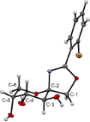
- the Ritter reaction with ether-protected carbohydrates is β as well, 10j was benzylated and 10b was obtained (Scheme 4). This proves the structure of 10b as well. The ratio of the anomers produced by the Ritter reaction depends on the substitution pattern of the pyranoside used and varies from only β




Diazirine-functionalized mannosides for photoaffinity labeling: trouble with FimH
Beilstein J. Org. Chem. 2018, 14, 1890–1900, doi:10.3762/bjoc.14.163

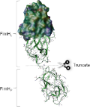
- ; Introduction The investigation of the interactions between proteins and their ligands, such as lectins and carbohydrates, is of fundamental importance for the understanding of many biological processes. Several different methodologies are used for the elucidation of ligand–protein interactions. In addition to




A hemicryptophane with a triple-stranded helical structure
Beilstein J. Org. Chem. 2018, 14, 1885–1889, doi:10.3762/bjoc.14.162
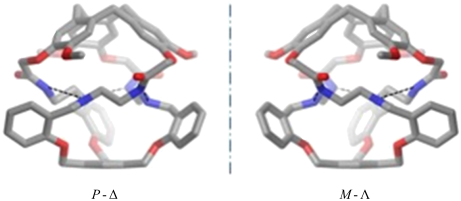
- part). They display recognition properties toward neurotransmitters and carbohydrates, and can act as molecular switches and supramolecular catalysts [11]. Their C3 symmetry makes them promising candidates to build molecular cages displaying a triple helical arrangement of the linkers. Furthermore, we


Anomeric modification of carbohydrates using the Mitsunobu reaction
Beilstein J. Org. Chem. 2018, 14, 1619–1636, doi:10.3762/bjoc.14.138
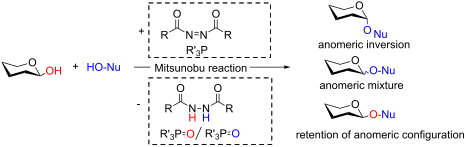
- this is important to explain and predict the stereoselectivity of anomeric modifications under Mitsunobu conditions. Though the Mitsunobu reaction is often not the first choice for the anomeric modification of carbohydrates, this review shows the high value of the reaction in many different
- circumstances. Keywords: anomeric stereoselectivity; carbohydrates; glycoside synthesis; Mitsunobu reaction; Introduction Fifty years ago, Oyo Mitsunobu reported a preparation of esters from alcohols and carboxylic acids supported by two auxiliary reagents, diethyl azodicarboxylate (DEAD) and
- anomeric modification of carbohydrates. The reaction proceeds under mild, neutral conditions that are compatible with a wide range of functional groups. In the case where a stereogenic center is involved, the reaction takes place with stereochemical inversion [6]. The reaction partners are mostly primary


Glycosylation reactions mediated by hypervalent iodine: application to the synthesis of nucleosides and carbohydrates
Beilstein J. Org. Chem. 2018, 14, 1595–1618, doi:10.3762/bjoc.14.137
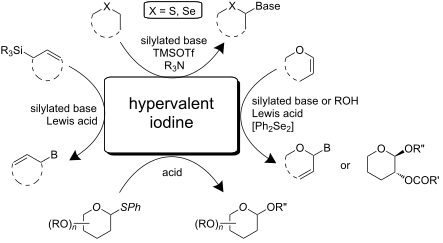
- , similar deformylation by action of hypervalent iodine has also been demonstrated: the β-fragmentation reaction of an anomeric alkoxy radical of carbohydrates was mediated by a hypervalent iodine reagent [73]. The reaction results in the formation of carbohydrates with a reduction of one carbon. From the
- yields for the one-pot process are comparable or superior to those obtained with the two-step procedure (Scheme 18). Synthesis of disaccharides Classically, carbohydrates have been considered primarily an energy source for life – as in the cases of glucose, fructose and their oligosaccharides, e.g


Synthetic avenues towards a tetrasaccharide related to Streptococcus pneumonia of serotype 6A
Beilstein J. Org. Chem. 2018, 14, 1095–1102, doi:10.3762/bjoc.14.95

- oligosaccharide synthesis. We have synthesized the aforesaid tetrasaccharide (SPn 6A) based on both stepwise and sequential one-pot glycosylation reactions using easily accessible common building blocks; eventually similar overall yields were obtained in both cases. Keywords: carbohydrates; glycosylation


A stereoselective and flexible synthesis to access both enantiomers of N-acetylgalactosamine and peracetylated N-acetylidosamine
Beilstein J. Org. Chem. 2018, 14, 856–860, doi:10.3762/bjoc.14.71

- : asymmetric synthesis; carbohydrates; N-acetylgalactosamine; N-acetylidosamine; Introduction N-Acetylgalactosamine (GalNAc, Figure 1) and N-acetylidosamine (IdoNAc) belong to the group of 2-amino-2-deoxysugars, which can be found in a wide range of organisms as building blocks of, e.g., glycosaminoglycans


Synthesis of a sucrose-based macrocycle with unsymmetrical monosaccharides "arms"
Beilstein J. Org. Chem. 2018, 14, 634–641, doi:10.3762/bjoc.14.50

- ; Introduction Chiral macrocyclic compounds play an important role in supramolecular and biological systems [1][2]. Many of them serve as convenient receptors for cations [3], anions [4], ion pairs [5], neutral molecules [6] etc. Binaphthols [7][8][9], amino acids [10], chiral diamines [11][12], carbohydrates


Carbohydrate inhibitors of cholera toxin
Beilstein J. Org. Chem. 2018, 14, 484–498, doi:10.3762/bjoc.14.34
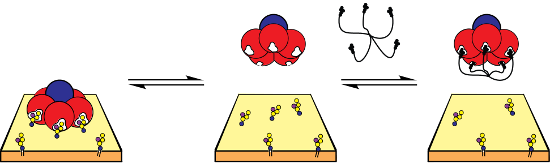
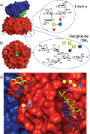
- released by Vibrio cholera in the host’s intestine. The toxin enters intestinal epithelial cells after binding to specific carbohydrates on the cell surface. Over recent years, considerable effort has been invested in developing inhibitors of toxin adhesion that mimic the carbohydrate ligand, with







Recent applications of click chemistry for the functionalization of gold nanoparticles and their conversion to glyco-gold nanoparticles
Beilstein J. Org. Chem. 2018, 14, 11–24, doi:10.3762/bjoc.14.2
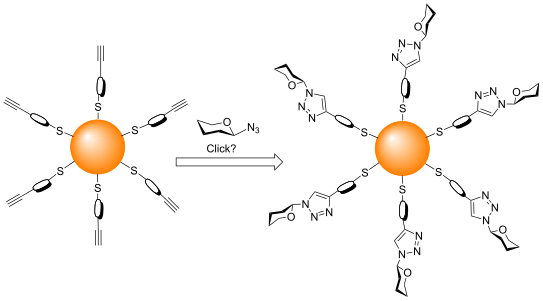
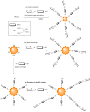
- combination of a gold nanoparticle core and an outer-shell comprising multivalent presentation of carbohydrates. The combination of the distinctive physicochemical properties of the gold core and the biological function/activity of the carbohydrates makes glyco-gold nanoparticles a valuable tool in
- glycoscience. In this review we present recent advances made in the use of one type of click chemistry, namely the azide–alkyne Huisgen cycloaddition, for the functionalization of gold nanoparticles and their conversion to glyco-gold nanoparticles. Keywords: azide–alkyne Huisgen cycloaddition; carbohydrates
- 21st century [1]. Gold nanoparticles (AuNPs) are one of the most significant and stable classes of metal NPs [2] and have potential applications in optics [3], biology [4] and catalysis [5]. Carbohydrates are one of the classes of molecules that are essential for life. Although they are involved in



An efficient synthesis of 1,6-anhydro-N-acetylmuramic acid from N-acetylglucosamine
Beilstein J. Org. Chem. 2017, 13, 2631–2636, doi:10.3762/bjoc.13.261

- Matthew B. Calvert Christoph Mayer Alexander Titz Chemical Biology of Carbohydrates, Helmholtz Institute for Pharmaceutical Research Saarland (HIPS), D-66123 Saarbrücken, Germany Deutsches Zentrum für Infektionsforschung (DZIF), Standort Hannover-Braunschweig, Germany Interfaculty Institute of


What contributes to an effective mannose recognition domain?
Beilstein J. Org. Chem. 2017, 13, 2584–2595, doi:10.3762/bjoc.13.255
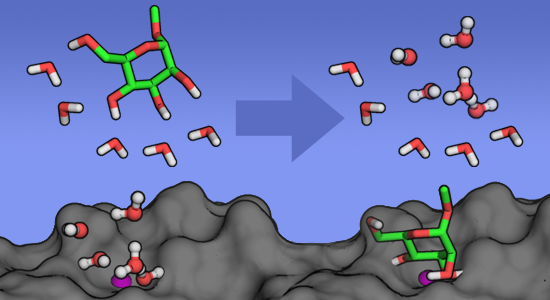
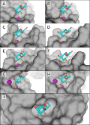
- generally weak interactions of carbohydrates that bind on the solvent exposed surface of proteins, as compared to those of the majority of marketed drugs that most frequently bind to protein cavities. Additionally, buried and less solvent exposed ligands show slower exchange rates, characterized by a high
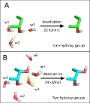
- overall desolvation penalty is slightly reduced resulting in an overall desolvation cost of ΔG = 34 kJ/mol for both hydroxy groups (Figure 4B). Since carbohydrates in general exhibit a number of adjacent hydroxy groups, their desolvation penalties are difficult to assess but it is most likely that each





An efficient synthesis of a C12-higher sugar aminoalditol
Beilstein J. Org. Chem. 2017, 13, 2146–2152, doi:10.3762/bjoc.13.213

- : higher carbon sugars; reductive amination; sucrose; Introduction Carbohydrates, because of their availability in a variety of optical pure forms, are particularly useful in planning and executing the synthesis of chiral macrocyclic compounds [1][2][3][4][5]. In this context, polyhydroxylated derivatives


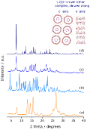
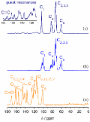
Solid-state studies and antioxidant properties of the γ-cyclodextrin·fisetin inclusion compound
Beilstein J. Org. Chem. 2017, 13, 2138–2145, doi:10.3762/bjoc.13.212

- , the step associated with the decomposition of fisetin (which should be visible after 310 °C) is missing. Such effect may arise from the thermal protection properties of the cyclodextrin, since these cyclic carbohydrates are known to act as flame retardants [39]. The same effect is also observed in the




Preactivation-based chemoselective glycosylations: A powerful strategy for oligosaccharide assembly
Beilstein J. Org. Chem. 2017, 13, 2094–2114, doi:10.3762/bjoc.13.207
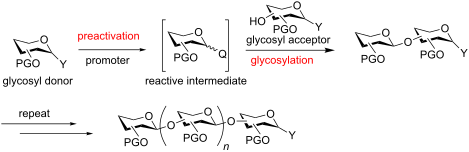
- ; Review Introduction Carbohydrates are widely present in nature and many of them are involved in important physiological and pathological events, such as anticoagulation, inflammation and pathogen infection [1][2]. In order to explore their biological functions, oligosaccharides with high purity are


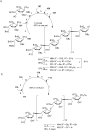





Intramolecular glycosylation
Beilstein J. Org. Chem. 2017, 13, 2028–2048, doi:10.3762/bjoc.13.201
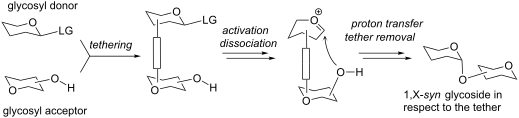
- glycosylation reactions wherein the facial stereoselectivity is achieved by tethering of the glycosyl donor and acceptor counterparts. Keywords: carbohydrates; glycosylation; intramolecular reactions; oligosaccharides; Introduction With recent advances in glycomics [1][2], we now know that half of the
- branching patterns, can indicate the presence and progression of a disease [5][6][7][8][9]. With a better understanding of functions of carbohydrates, the quest for reliable synthetic methods has launched, thus elevating the priority for improving our synthetic competences. The development of new methods





