Search results
Search for "epoxides" in Full Text gives 169 result(s) in Beilstein Journal of Organic Chemistry.
The charge-assisted hydrogen-bonded organic framework (CAHOF) self-assembled from the conjugated acid of tetrakis(4-aminophenyl)methane and 2,6-naphthalenedisulfonate as a new class of recyclable Brønsted acid catalysts
Beilstein J. Org. Chem. 2020, 16, 1124–1134, doi:10.3762/bjoc.16.99
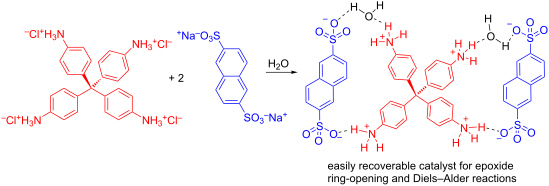
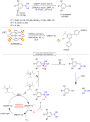
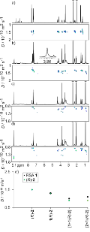
- , including the ring opening of epoxides by water and alcohols. A Diels–Alder reaction between cyclopentadiene and methyl vinyl ketone was also catalyzed by F-1 in heptane. Depending on the polarity of the solvent mixture, the CAHOF F-1 could function as a purely heterogeneous catalyst or partly dissociate
- catalyst for the Brønsted acid-catalyzed ring opening reactions of epoxides with alcohols and water, with the latter reaction occurring in a three-phase medium. In addition, a Diels–Alder reaction was promoted by F-1 in heptane. Results and Discussion Mixing together aqueous solutions of two equivalents of
- opening. Other epoxides were also studied as substrates for the three-phase ring-opening with water (Table 2, runs 6–9). Propylene oxide and butylene oxide were good substrates for the reaction (Table 2, runs 6 and 7), but hex-1-ene oxide was almost unreactive (Table 2, runs 8 and 9), indicating that some




Recent applications of porphyrins as photocatalysts in organic synthesis: batch and continuous flow approaches
Beilstein J. Org. Chem. 2020, 16, 917–955, doi:10.3762/bjoc.16.83
- photoinduced cycloaddition of carbon dioxide with epoxides [56]. The synthesis of a 3D supramolecular framework, [{Mn(TCPP)0.5(H2O)}·2H2O]n, where Mn(TCPP) is Mn(II) meso-tetrakis(4-carboxyphenyl)porphyrin, was derived from MnCl2·6H2O and TCPP. The cycloaddition product, a cyclic carbonate, was obtained from
- different epoxides, whose conversion was proportional to the substrate size, using MOF1 and tetra-n-butylammonium bromide (TBAB) as photocatalyst and co-catalyst, respectively (Scheme 25). A successful gram-scale protocol was developed opening up perspectives for using these materials in CO2 reuse
- acids using Pt or Pd porphyrins. Photocatalytic reduction of various nitroaromatics using a Ni-MOF. Photoinduced cycloadditions of CO2 with epoxides by MOF1. TPP-photocatalyzed generation of 1O2 and its application in organic synthesis. Adapted from [67][68][69]. Pericyclic reactions involving singlet






Synthesis of disparlure and monachalure enantiomers from 2,3-butanediacetals
Beilstein J. Org. Chem. 2020, 16, 616–620, doi:10.3762/bjoc.16.57
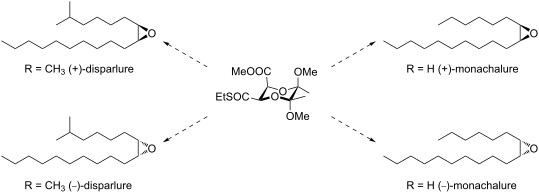
- unsymmetrically substituted cis-epoxides. The procedure was applied for the preparation of both enantiomers of disparlure and monachalure, the components of the sex pheromones of the gypsy moth (Lymantria dispar) and the nun moth (Lymantria monacha) using methyl (2S,3R,5R,6R)-3-ethylsulfanylcarbonyl-5,6-dimethoxy
- -5,6-dimethyl-1,4-dioxane-2-carboxylate as the starting material. Keywords: 2,3-butanediacetal; cis-epoxide; (−)-disparlure; (+)-disparlure; (−)-monachalure; (+)-monachalure; Introduction Compounds containing chiral epoxides display a wide range of biological activities and a number of them are
- recently developed by Mori and co-workers [6][7]. (2E)-trans-4,5-Epoxy-2-decenal is present in mammalian blood and may be used by predators to track their prey [8][9]. A classical example of cis-epoxides with semiochemical activity is the chemical communication system of the gypsy moth (Lymantria dispar


A systematic review on silica-, carbon-, and magnetic materials-supported copper species as efficient heterogeneous nanocatalysts in “click” reactions
Beilstein J. Org. Chem. 2020, 16, 551–586, doi:10.3762/bjoc.16.52
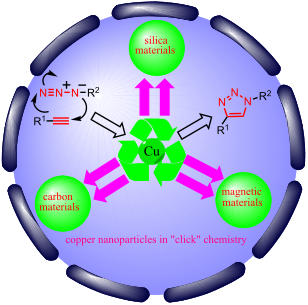
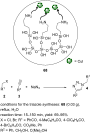
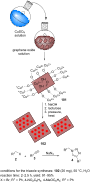
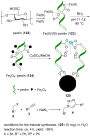
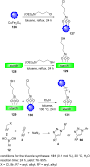
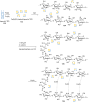
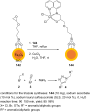
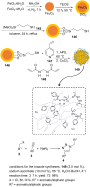
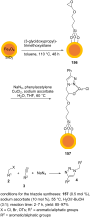
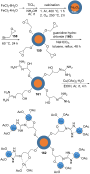
- -functionalized silica 46 was added to the mixture, and this was heated to reflux to generate the catalyst 48. Several organic halides or epoxides, nonactivated alkynes, and sodium azide were reacted in an aqueous medium to provide triazoles or β-hydroxytriazoles using 1.0 mol % catalyst loading at 25 °C
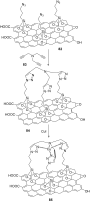
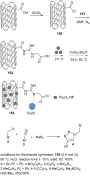
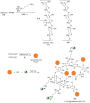
- reflux conditions for one day. The resulting powder was filtered off, washed with methanol, and dried. Finally, excess copper was removed by the Soxhlet extraction method (Scheme 9). The 1,3-dipolar reaction of organic alkynes, organic bromides (or aryldiazonium salts or epoxides), and sodium azide
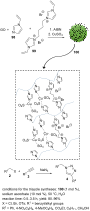
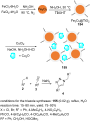
- , washed with THF and dichloromethane, and dried. Different organic halides (benzyl bromides, benzyl chloride, allyl bromide, aliphatic epoxides, and aromatic epoxides) were treated with sodium azide and phenylacetylene in the presence of a catalytic amount of the copper catalyst 121 in water at 70 °C
















KOt-Bu-promoted selective ring-opening N-alkylation of 2-oxazolines to access 2-aminoethyl acetates and N-substituted thiazolidinones
Beilstein J. Org. Chem. 2020, 16, 492–501, doi:10.3762/bjoc.16.44
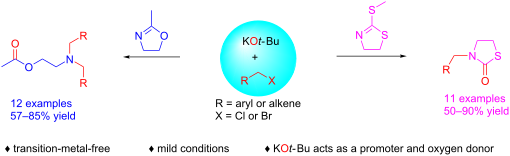
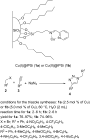
- epoxides as substrates via alternative synthetic procedures [6]. However, under acidic conditions, oxazolines transform into β-substituted carboxamides through nucleophilic ring opening with SN2 attack at the C5 position of the ring [7][8]. Recently, Guo’s group developed an efficient method for the


Photophysics and photochemistry of NIR absorbers derived from cyanines: key to new technologies based on chemistry 4.0
Beilstein J. Org. Chem. 2020, 16, 415–444, doi:10.3762/bjoc.16.40
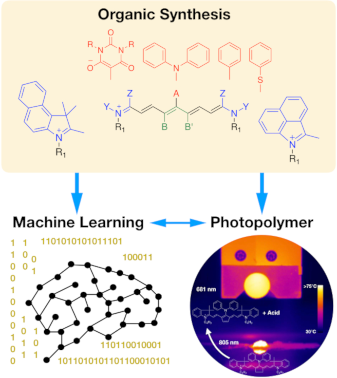
- that inhibits cationic polymerization of epoxides [5]. Though conjugate acids are formed according to the routes shown in Scheme 6, cationic photopolymerization only succeeded with aziridines [5]. The different reaction mechanism occurring with such monomers explains these different observations [92
- photoproducts were formed and cationic photopolymerization even of epoxides succeeded with good conversions vide infra. Additional absorbers fitting in this scheme comprise at the meso-position alternative substituents such as Phenyl or Chlorine (see Table 1 for comparison). Surprisingly, this reaction has not
- the sensitizer 48 and the iodonium cation 88 (used as PF6−-salt) to photopolymerize aziridines. The photoproducts formed according to Scheme 6 do not significantly inhibit chain growth of such monomers while no polymerization occurred with epoxides. Again, the strong nucleophilic properties of the


A review of asymmetric synthetic organic electrochemistry and electrocatalysis: concepts, applications, recent developments and future directions
Beilstein J. Org. Chem. 2019, 15, 2710–2746, doi:10.3762/bjoc.15.264
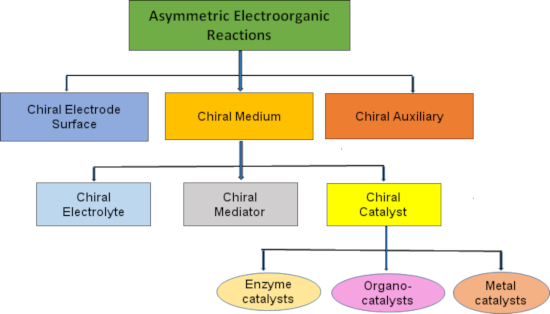
- towards asymmetric electroepoxidation of olefins 71 in a biphasic CH2Cl2/aqueous NaCl system (Scheme 28). The constant current epoxidation of 71 in an undivided cell resulted in chiral epoxides 73 in good yields and moderate enantioselectivities [66]. In 2008, Onomura and co-workers described the
- oxidant required for this process was initially generated through anodic oxidation of aqueous Na2CO3 in an undivided cell under constant current electrolysis. A catalytic amount of chiral iminium salt 103 and olefinic substrate 71' were added to the same reaction mixture, and chiral epoxides 73' were
- potentiostatic electrolysis, styrene derivatives 143 could be transformed into their asymmetric epoxides 144 via direct electrochemical regeneration of FADH2. The authors claimed that this method is superior with respect to substitution of the complex native regeneration cycle, which consists of three enzymes






Recent advances in transition-metal-catalyzed incorporation of fluorine-containing groups
Beilstein J. Org. Chem. 2019, 15, 2213–2270, doi:10.3762/bjoc.15.218
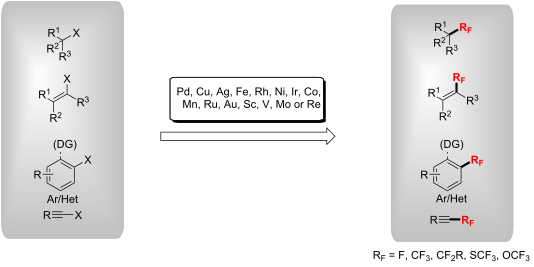
- developed independently by the groups of Buchwald [111] and Wang [112] (Scheme 54). Under similar mild conditions using Togni's reagent II, the desired allyl–CF3 products were obtained and the methods well tolerated a variety of functional groups (e.g., esters, epoxides, amides, alcohols, or aldehydes











1,2,3-Triazolium macrocycles in supramolecular chemistry
Beilstein J. Org. Chem. 2019, 15, 2142–2155, doi:10.3762/bjoc.15.211
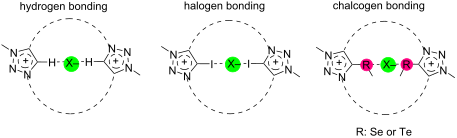
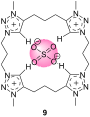
- nanoreactor because there is an acceleration of the dimerization by two orders of magnitude and the turnover of the catalyst was demonstrated. The synthesis of cyclic carbonates from epoxides and CO2 is an efficient method for CO2 fixation. The development of an effective chiral catalyst for the efficient
- kinetic resolution of epoxides with CO2 remains a big challenge. Recently, Ema and co-workers described a chiral binaphthyl strapped Zn(II) porphyrin with triazolium halide units as a bifunctional catalyst for the kinetic resolution of epoxides with CO2 [63]. The condensation of click-reaction-derived
- binaphthyl system and the Lewis acidic metal center facilitated the enantioselective synthesis of cyclic carbonates from epoxides. Various catalyst was screened by changing the linker length (n = 4 to 8) and nucleophilic counter anion (X = I, Cl, Br), and 16c was found to be the best catalyst for the




A review of the total syntheses of triptolide
Beilstein J. Org. Chem. 2019, 15, 1984–1995, doi:10.3762/bjoc.15.194
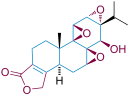
- development of total synthesis strategies. Structurally, it has nine chiral centers, three successive epoxides and a butenolide. Since the pioneering works of Berchtold, Tahara and their co-workers [45][63][64][65], several racemic and/or asymmetric total syntheses of triptolide and its relatives have been
- -catalyzed lactonization, and iii) construction of the epoxides by a newly developed methodology. The synthesis commenced from the alkylation of tetralone 22 with 3-(2-iodoethyl)dihydrofuran-2(3H)-one (23) to give diastereomeric lactones that subsequently reacted with dimethylamine to afford a 1:1 mixture of
- conversion of 89 to vinyl triflate 90, followed by reduction and palladium-catalyzed carbonylation–lactone formation to give key intermediate 8 [75][76][77]. After that, the three successive epoxides were installed by known procedures with some modification. The highlights were the introduction of the second


Complexation of chiral amines by resorcin[4]arene sulfonic acids in polar media – circular dichroism and diffusion studies of chirality transfer and solvent dependence
Beilstein J. Org. Chem. 2019, 15, 1913–1924, doi:10.3762/bjoc.15.187
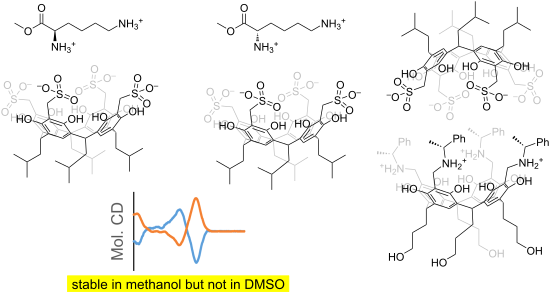
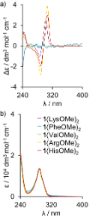
- aromatic analytes afford strongly induced circular dichroism (ICD) signals in the near-UV and visible regions [18]. Endo-functionalized molecular tubes, first reported by the Glass group [19], were used by the Jiang group for molecular recognition and chiroptical sensing of epoxides in water. The absolute




Reaction of oxiranes with cyclodextrins under high-energy ball-milling conditions
Beilstein J. Org. Chem. 2019, 15, 1448–1459, doi:10.3762/bjoc.15.145
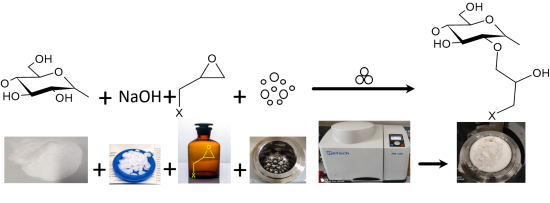
- especially useful when the crystalline complex formation with the guest is undesirable. The aggregation properties, by the ready-to-associate secondary rim, are considerably affected by these substituents. One of the most important reactions of CDs occurs with oxiranes (epoxides) under basic conditions to
- factors, but also by the lack of uniformity and the site-by-site variability of prepared CDPs, which have hampered the extensive CDP use. Mechanochemistry has proven to be a useful green tool in the hands of synthetic chemists [25][26][27][28]. The reaction of epoxides with cyclodextrins under green and
- optimisation. Results and Discussion Reaction of epoxides with CDs The reactions of oxiranes, particularly propylene oxide, with CDs in solution have been extensively studied and the products are synthesised on the ton-scale by various companies [6][30][31][32]. The reaction is based on the activation of


Synthesis of aryl cyclopropyl sulfides through copper-promoted S-cyclopropylation of thiophenols using cyclopropylboronic acid
Beilstein J. Org. Chem. 2019, 15, 1162–1171, doi:10.3762/bjoc.15.113
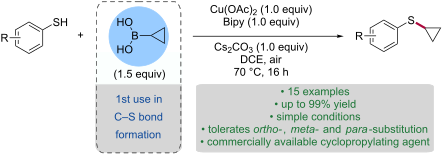
- chloride to give the corresponding β-thioaryl ketone 4 [10]. Reacting 2 with epoxides results in the formation of the 1-(β-hydroxy)cyclopropyl aryl sulfides 5 [10] while reaction with formaldehydes [11] or aldehydes [12] affords 1-(arylthio)cyclopropylcarbinyl alcohols 6. Treating 6 with Burgess reagent or


Electrophilic oligodeoxynucleotide synthesis using dM-Dmoc for amino protection
Beilstein J. Org. Chem. 2019, 15, 1116–1128, doi:10.3762/bjoc.15.108
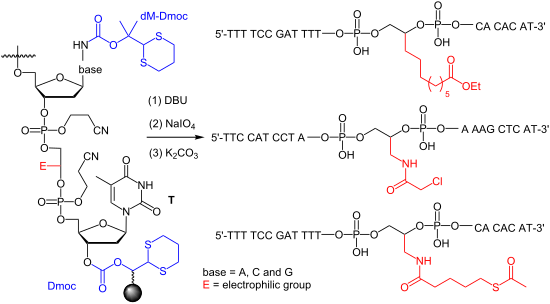
- protected with the 2-cyanoethyl group. These protecting groups and the linker have to be cleaved under strongly basic and nucleophilic conditions. As a result, many sensitive groups including acetal, hemiacetal, vinyl ethers, enol ethers, aldehydes, esters, activated esters, thioesters, aziridines, epoxides





Easy, efficient and versatile one-pot synthesis of Janus-type-substituted fullerenols
Beilstein J. Org. Chem. 2019, 15, 901–905, doi:10.3762/bjoc.15.87
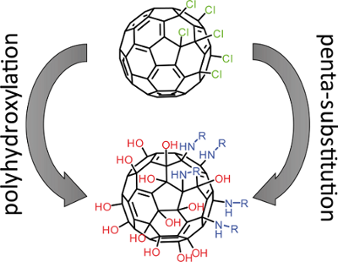
- the characterization of Janus-type fullerenol amphiphiles more than one method is needed to perfectly identify the compounds. Polyhydroxylation reaction of the fullerene can lead to a mixture of several oxygen moieties like hydroxy groups, diols, ketones, hemiketals, epoxides and ethers. The general


Synthesis of acylglycerol derivatives by mechanochemistry
Beilstein J. Org. Chem. 2019, 15, 811–817, doi:10.3762/bjoc.15.78
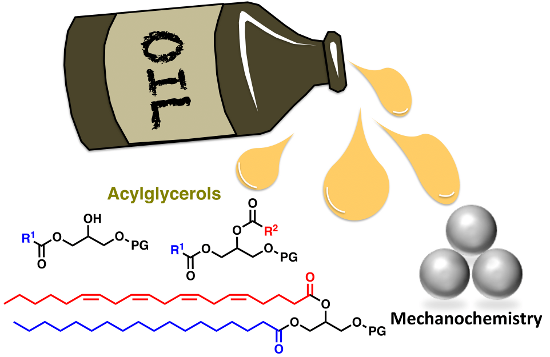
- epoxides, for which the maximum theoretical yield of the reaction is 50%. Here, however, the yield of the sn-1,3-protected monoacylglycerol was high, and consequently we expected the enantiomeric excess of the product to be low. This, assumption was confirmed by analysis of the sample by high-performance


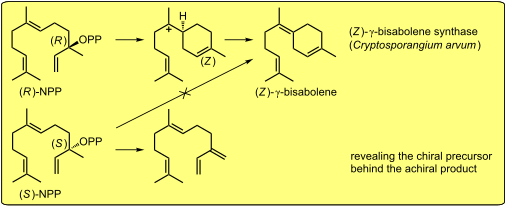
Stereochemical investigations on the biosynthesis of achiral (Z)-γ-bisabolene in Cryptosporangium arvum
Beilstein J. Org. Chem. 2019, 15, 789–794, doi:10.3762/bjoc.15.75
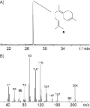
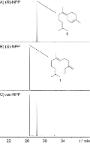
- analysis of the preceeding epoxides, Figure S5, Supporting Information File 1) were purified by preparative HPLC on a chiral stationary phase to >99% ee for both samples (Figure S6, Supporting Information File 1), before converting them into the NPPs. For comparison, also racemic NPP was synthesised by a
- , labelling experiments for NMR assignment, synthetic procedures for the NPPs, Mosher ester analysis of epoxides, and chiral GC analysis of nerolidols. Supporting Information File 260: Experimental part. Acknowledgements This work was funded by the Deutsche Forschungsgemeinschaft (DI1536/7-1). We thank



Olefin metathesis in multiblock copolymer synthesis
Beilstein J. Org. Chem. 2019, 15, 218–235, doi:10.3762/bjoc.15.21

- (cyclohexene carbonate)s was carried out by the β-diiminate (BDI) zinc-catalyzed block copolymerization of functionalized epoxides and CO2 with a norbornenyl-containing initiator (Scheme 5) [68]. The subsequent “grafting through” by ROMP of norbornene resulted in the synthesis of multiblock copolymer brushes






Copolymerization of epoxides with cyclic anhydrides catalyzed by dinuclear cobalt complexes
Beilstein J. Org. Chem. 2018, 14, 2779–2788, doi:10.3762/bjoc.14.255
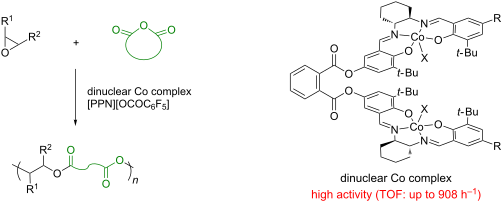
- Yo Hiranoi Koji Nakano Department of Organic and Polymer Materials Chemistry, Tokyo University of Agriculture and Technology, 2-24-16 Naka-cho, Koganei, Tokyo 184-8588, Japan 10.3762/bjoc.14.255 Abstract The alternating copolymerization of epoxides with cyclic anhydrides (CAs) is a highly diverse
- turnover frequencies ever reported. A variety of epoxides and CAs were also found to be copolymerized successfully by the dinuclear cobalt complex with a high catalytic activity. Keywords: cobalt; copolymerization; cyclic anhydrides; epoxides; polyesters; Introduction Aliphatic polyesters have received
- alternating copolymerization of epoxides with cyclic anhydrides (CAs) is a promising alternative for polyester synthesis [11][12]. A broad range of epoxides and CAs are readily available and can be copolymerized through this method. Therefore, the polymer architectures and properties can be easily controlled


Synthesis of cis-hydrindan-2,4-diones bearing an all-carbon quaternary center by a Danheiser annulation
Beilstein J. Org. Chem. 2018, 14, 2597–2601, doi:10.3762/bjoc.14.237

- corresponding carbonyl group (Scheme 4) was carried out by a two-step procedure involving epoxidation of the vinylsilane 5, followed by a rearrangement of the diastereomeric mixture of epoxides 7 induced by formic acid [34][35]. The resulting ketone 8 was obtained as a 3.5:1 mixture of epimers at C3. The


Learning from B12 enzymes: biomimetic and bioinspired catalysts for eco-friendly organic synthesis
Beilstein J. Org. Chem. 2018, 14, 2553–2567, doi:10.3762/bjoc.14.232
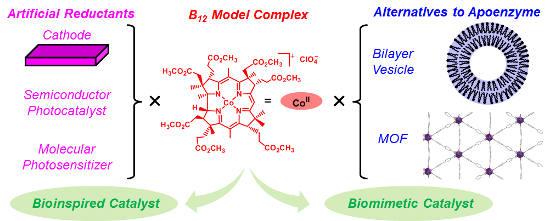
- using various electrophiles such as alkyl halides [13], vinyl halides [14][15][16], aryl halides [17][18] and epoxides [19][20] in homogeneous solutions (Figure 1b). 1-2. Design of biomimetic and bioinspired B12 catalytic systems Schematic representations of B12 enzymes and enzyme-involving systems are


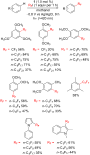
One-pot synthesis of epoxides from benzyl alcohols and aldehydes
Beilstein J. Org. Chem. 2018, 14, 2308–2312, doi:10.3762/bjoc.14.205

- Edwin Alfonzo Jesse W. L. Mendoza Aaron B. Beeler Department of Chemistry, Boston University, Boston, Massachusetts 02215, United States 10.3762/bjoc.14.205 Abstract A one-pot synthesis of epoxides from commercially available benzyl alcohols and aldehydes is described. The reaction proceeds
- through in situ generation of sulfonium salts from benzyl alcohols and their subsequent deprotonation for use in Corey–Chaykovsky epoxidation of aldehydes. The generality of the method is exemplified by the synthesis of 34 epoxides that were made from an array of electronically and sterically varied
- alcohols and aldehydes. Keywords: Corey–Chaykovsky; epoxide; heterocycle; one-pot; ylide; Introduction Epoxides have historically served as strategic functional groups in target-oriented synthesis [1][2][3][4]. Common examples of their utility include stereospecific ring opening [5][6][7], rearrangements


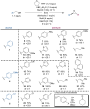

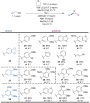
Selective formation of a zwitterion adduct and bicarbonate salt in the efficient CO2 fixation by N-benzyl cyclic guanidine under dry and wet conditions
Beilstein J. Org. Chem. 2018, 14, 2204–2211, doi:10.3762/bjoc.14.194

- fixation of CO2 such as cycloaddition of CO2 to various epoxides and synthesis of carbonate derivatives from CO2 and alcohols [6][7][8][9][10][11][12][13]. However, these kinds of catalysts often need high temperatures and pressure to completely achieve the CO2 fixation [6]. On the other hand, amidine and
- guanidine derivatives are well known as efficient catalysts for the cycloaddition of CO2 to epoxides at ambient temperature [7][14][15][16][17][18]. Previously, we reported that hydroiodides of amidine derivatives worked as significantly efficient catalysts for the cycloaddition of CO2 to epoxides under
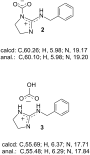
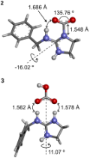
- carbon dioxide without a water molecule. It is expected that the zwitterion adducts of guanidine derivatives and CO2 are not only efficient catalysts for cycloaddition of CO2 to epoxides but also a thermal latent curing agent for epoxy resin. Herein, we achieved selective formation of the zwitterionic






Functionalization of graphene: does the organic chemistry matter?
Beilstein J. Org. Chem. 2018, 14, 2018–2026, doi:10.3762/bjoc.14.177

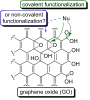
- epoxides’ opening by nucleophiles can therefore act as a competing side reaction in many coupling processes with the inclusion of graphene-family materials [9][16]. In other words, opening graphene-family material’s epoxides should be taken into account even when the crosslinker-based amidation or
- esterification approach is performed. The mechanism of opening graphene-family material’s epoxides is presented in Figure 4. This conversion involves a nucleophilic attack on the sp3 carbon, thus leading to the desired product. This functionalization route is simple, as it does not require coupling reagents
- . Strong nucleophiles (e.g., primary amines or thiols) react with epoxides more rapidly than do weak nucleophiles (e.g., like primary alcohols). This functionalization approach based on the epoxides’ opening enables the introduction of the reactive groups to the surfaces of graphene-family materials. The


Chiral bisoxazoline ligands designed to stabilize bimetallic complexes
Beilstein J. Org. Chem. 2018, 14, 2002–2011, doi:10.3762/bjoc.14.175

- -epoxides [16]. Trost et al. disclosed the synthesis of dinuclear zinc complexes 3 and their application to enantioselective Aldol reactions [17][18] and a host of other asymmetric transformations [18]. Other notable contributions in this area were provided by the groups of Martell [19][20], Maruoka [21][22