


Search results
Search for "evolution" in Full Text gives 333 result(s) in Beilstein Journal of Organic Chemistry. Showing first 200.
Optimizing reaction conditions for the light-driven hydrogen evolution in a loop photoreactor
Beilstein J. Org. Chem. 2024, 20, 74–91, doi:10.3762/bjoc.20.9
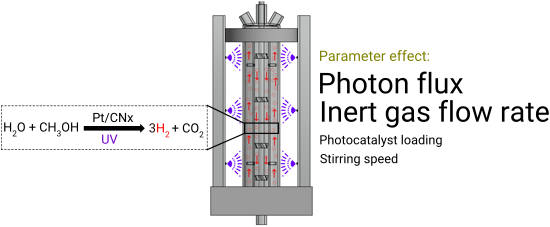
- evolution using a Pt-loaded polymeric carbon nitride photocatalyst under 365 nm irradiation in the presence of sacrificial reducing agents. The fluid flow pattern of the developed photoreactor was characterized experimentally and the photon flux incident to the loop photoreactor was measured by chemical
- generation rate. Linear relationships were found between hydrogen evolution rate and photon flux as well as inert gas flow rate. Photocatalyst loading and stirring speed also showed linear correlations, but could not be correctly described by DOE analysis. Instead, linear single parameter correlations could
- be applied. Notably, the loop photoreactor demonstrated an external photon efficiency up to 17 times higher than reported in literature studies, while scaling the reactor size by a factor of 10. Keywords: loop photoreactor; parametric study; photocatalytic hydrogen evolution; polymeric carbon


Identification of the p-coumaric acid biosynthetic gene cluster in Kutzneria albida: insights into the diazotization-dependent deamination pathway
Beilstein J. Org. Chem. 2024, 20, 1–11, doi:10.3762/bjoc.20.1
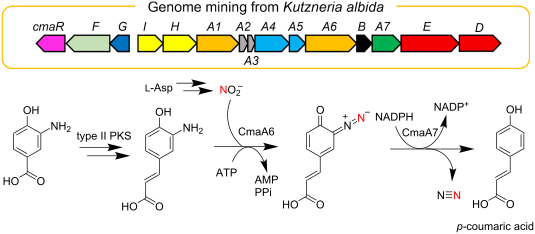
- diazo group-containing compounds through directed evolution. Finally, this study is important because of the success of genome mining for BGCs in a rare actinomycete, K. albida. Although 47 BGCs were indicated in the K. albida genome by the antiSMASH analysis, only aculeximycin was reported as a natural


1-Butyl-3-methylimidazolium tetrafluoroborate as suitable solvent for BF3: the case of alkyne hydration. Chemistry vs electrochemistry
Beilstein J. Org. Chem. 2023, 19, 1966–1981, doi:10.3762/bjoc.19.147
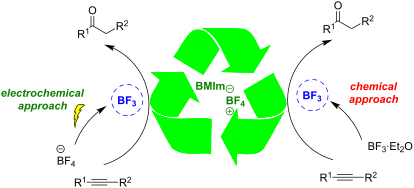
- diethyl ether traces and then analysed by NMR to check for BMIm-F presence, whereas the fluoride ion could originate from IL decomposition in the presence of water or from the evolution of electrogenerated F2. However, the 19F NMR spectrum showed no detectable peak around −122 ppm, reported in the


Studying specificity in protein–glycosaminoglycan recognition with umbrella sampling
Beilstein J. Org. Chem. 2023, 19, 1933–1946, doi:10.3762/bjoc.19.144
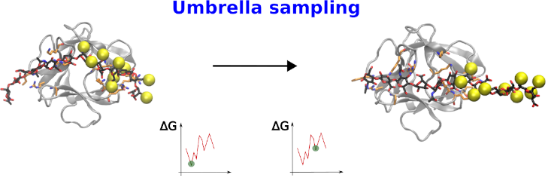
- 1, Figure S4). During the relaxation, again, only a minor decrease in RMSD was observed suggesting that a slightly more favorable pose was achieved. In terms of the energy evolution during pulling away, it started around −140 kcal/mol and then it increased up to the 30th window where it stabilized




Beyond n-dopants for organic semiconductors: use of bibenzo[d]imidazoles in UV-promoted dehalogenation reactions of organic halides
Beilstein J. Org. Chem. 2023, 19, 1912–1922, doi:10.3762/bjoc.19.142
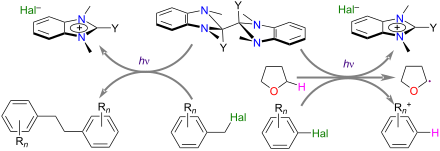
- (Figure 4a) show significant spectral evolution within the first 1 ps following photoexcitation at 350 nm in MeCN. The (negative) bleach feature at 450 nm and photoinduced absorption (PIA) peaking at 775 nm transform into a broad PIA spanning the visible wavelengths with a notable isosbestic point at 600
- nm. There is a secondary evolution occurring with a time constant of approximately 60 ps resulting in a long-lived feature existing beyond the 5 ns window of the ultrafast experiment. In toluene (Figure 4b), the spectral features at early times are different; however, the kinetics at 654 nm are the
- -DMBI)2 with a broad PIA spanning the visible wavelengths, which may suggest that the initial evolution observed in the (N-DMBI)2 occurs within our instrument response. In toluene, the signal amplitude at 5 ns for (Cyc-DMBI)2 is significantly smaller than that of the (N-DMBI)2 and 96% of the signal


N-Boc-α-diazo glutarimide as efficient reagent for assembling N-heterocycle-glutarimide diads via Rh(II)-catalyzed N–H insertion reaction
Beilstein J. Org. Chem. 2023, 19, 1841–1848, doi:10.3762/bjoc.19.136
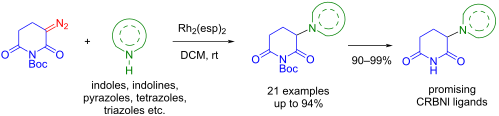
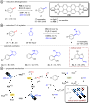
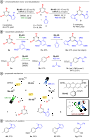
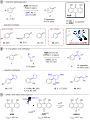
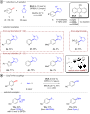
- and efficiency in various XH insertion reactions [27][28][29]. In many cases (e.g., indoles, indazoles, benzotriazoles, tetrazoles, Scheme 3) the reaction progressed expeditiously (as indicated by gas evolution upon adding diazo reagent to the mixture of NH-substrate and catalyst) and was completed in




Selectivity control towards CO versus H2 for photo-driven CO2 reduction with a novel Co(II) catalyst
Beilstein J. Org. Chem. 2023, 19, 1766–1775, doi:10.3762/bjoc.19.129
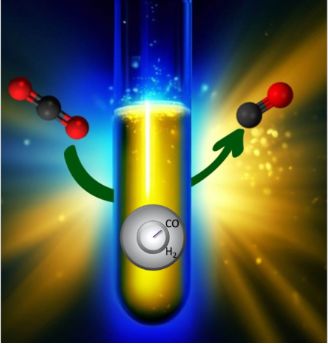
- concentration of this greenhouse gas by upcycling. Selectivity towards CO2-reduction products is highly desirable, although it can be challenging to achieve since the metal-hydrides formation is sometimes favored and leads to H2 evolution. In this work, we designed a cobalt-based catalyst, and we present herein
- (versus NHE), respectively [3]. However, the molecular hydrogen evolution might compete, as it occurs at a more favorable reduction potential, lowering the selectivity of the catalytic system. While the addition of a proton source is beneficial to lower the overpotential, a metal-hydride (M–H
- also serve as a reductant [47]. The reduced species PS− can be oxidized back to PS by a molecule of 1, which could detach a −NCS anion and offer a vacant site to coordinate a proton (then following an H2 evolution path) or a molecule of CO2 [46]. The adduct with CO2 is further reduced (by PS− or BI


Quinoxaline derivatives as attractive electron-transporting materials
Beilstein J. Org. Chem. 2023, 19, 1694–1712, doi:10.3762/bjoc.19.124
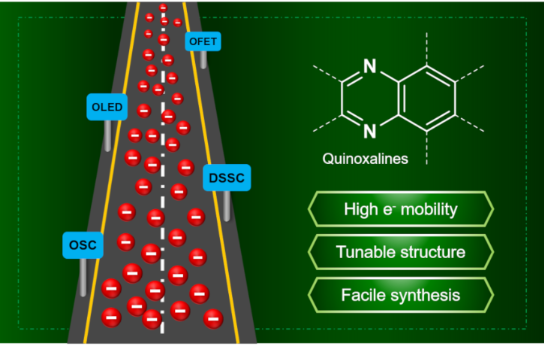
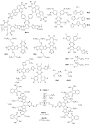
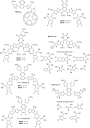
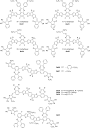
- compound with the donor polymer PM6 to create BHJ nanoparticles and employed it in the hydrogen evolution reaction. This approach substantially reduced trap density, increasing the hydrogen evolution rate by 2–3 times compared to conventional inorganic/organic hybrid photocatalysts [30]. Computational


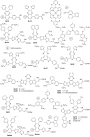


Benzoimidazolium-derived dimeric and hydride n-dopants for organic electron-transport materials: impact of substitution on structures, electrochemistry, and reactivity
Beilstein J. Org. Chem. 2023, 19, 1651–1663, doi:10.3762/bjoc.19.121
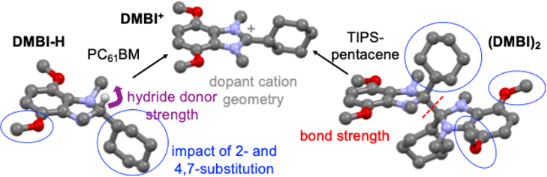
- not react significantly with VII in solution at room temperature, while the reactions of 12 derivatives and VI are very rapid) [9][14][50][61]. Figure 8a compares the evolution of the absorbance at 1030 nm, corresponding to a VI•– absorption maximum, when doping excess VI with 1H derivatives in
- strongly bound dimers. Figure 8b compares the evolution of one of the distinctive VII •– absorptions when doping VII with excess 12 derivatives in chlorobenzene at 293 K in the absence of light, air, and water. In the case of the Y = 4-dimethylaminophenyl dimers 1b2 and 1g2, the VII•– absorption grows in
- reduction peak, while the reduction peak of the cation is seen in the voltammograms of both 1gH and 1g2 following scanning of the irreversible oxidation peaks. Acceptors used to examine reactivity of DMBI-H and (DMBI)2 derivatives. a) Temporal evolution of the absorbance at 1030 nm, corresponding to an


A series of perylene diimide cathode interlayer materials for green solvent processing in conventional organic photovoltaics
Beilstein J. Org. Chem. 2023, 19, 1620–1629, doi:10.3762/bjoc.19.119
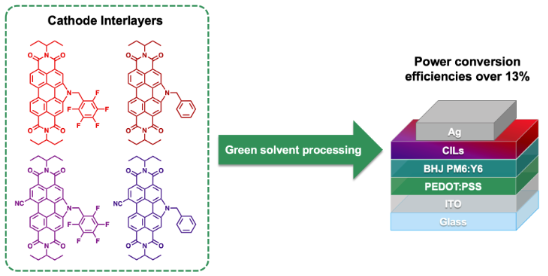
- the CILs PDIN-FB, PDIN-B, CN-PDIN-FB, and CN-PDIN-B. Evolution of the dimer tPDI2N-R [23] as an NFA to PDIN-B/PDIN-FB monomers to serve as CILs, where the addition of nitrile functional group on the monomeric PDIN-B/PDIN-FB materials serve to stabilize FMOs. a) Structures of PDIN-FB, PDIN-B, CN-PDIN


Radical chemistry in polymer science: an overview and recent advances
Beilstein J. Org. Chem. 2023, 19, 1580–1603, doi:10.3762/bjoc.19.116
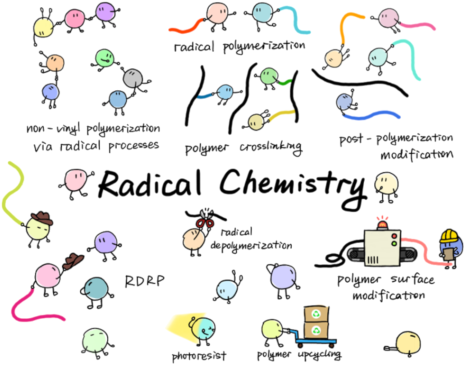
- and in-depth dialogs between the organic and polymer communities. Therefore, future opportunities for polymer science evolution lie in the collaboration of radical chemists in both communities. Used abbreviations in the text and their explanations are collected in Table 2. Oxidation of catechol and




Unraveling the role of prenyl side-chain interactions in stabilizing the secondary carbocation in the biosynthesis of variexenol B
Beilstein J. Org. Chem. 2023, 19, 1503–1510, doi:10.3762/bjoc.19.107
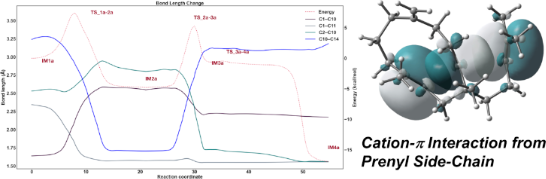
- at the mPW1PW91/6-31+G(d,p)//M06-2X/6-31+G(d,p) level) relative to IM1 are shown in parentheses. (A) A representative example of the evolution of key bond lengths in the conversion of path a. (B) Key representative orbitals of TS_2a–3a computed by DFT calculations. Proposed biosynthetic pathway for



Functions of enzyme domains in 2-methylisoborneol biosynthesis and enzymatic synthesis of non-natural analogs
Beilstein J. Org. Chem. 2023, 19, 1452–1459, doi:10.3762/bjoc.19.104
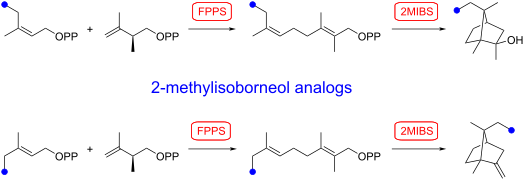
- for sodorifen [38] – potentially allow for an evolution towards a natural biosynthetic pathway for C12 monoterpenoids. Experimental General synthetic methods Chemicals were purchased from Sigma-Aldrich Chemie GmbH (Steinheim, Germany), Carbolution Chemicals GmbH (St. Ingbert, Germany), or Carl Roth


Radical ligand transfer: a general strategy for radical functionalization
Beilstein J. Org. Chem. 2023, 19, 1225–1233, doi:10.3762/bjoc.19.90
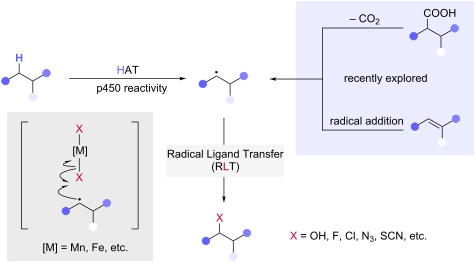
- decarboxylation. Here, we provide an overview of the evolution of RLT catalysis from initial studies to recent advances and provide a conceptual framework we hope will inspire and enable future work using this versatile elementary step. Keywords: catalysis; cooperative catalysis; earth abundant elements


Enabling artificial photosynthesis systems with molecular recycling: A review of photo- and electrochemical methods for regenerating organic sacrificial electron donors
Beilstein J. Org. Chem. 2023, 19, 1198–1215, doi:10.3762/bjoc.19.88
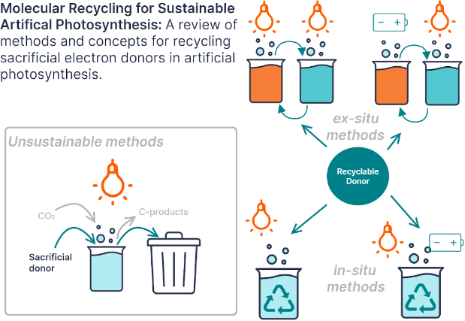
- discharge and charge the donor-containing organic phase (Figure 2A) [34]. The first solution contained an organic lithium salt and a hydrogen-evolution catalyst which could generate hydrogen via a light-driven or dark process. The second solution contained an organic chloride salt and a water oxidation
- photocatalyst which re-reduced DcMFc and evolved oxygen. The same reaction scheme was used but in a modified H-cell (Figure 2B) [35]. Both catalysts were confined at the ITIES in two separate chambers and the redox mediator diffused between the two cells via the organic phase. The protons for hydrogen evolution
- been chosen from literature on redox flow batteries and decoupled hydrogen evolution, as well as photocatalysis. The oxidation and reduction potentials have been collected from various references and were converted to the potential scale vs SCE. Unless otherwise stated, the potentials were recorded in


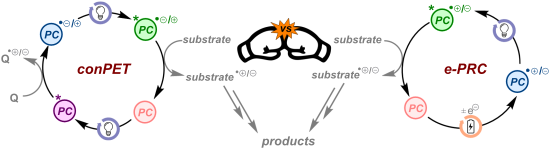
Photoredox catalysis harvesting multiple photon or electrochemical energies
Beilstein J. Org. Chem. 2023, 19, 1055–1145, doi:10.3762/bjoc.19.81
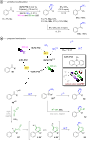
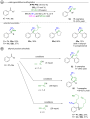
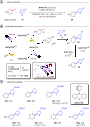
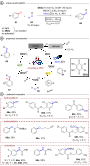
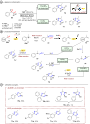
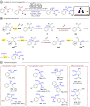
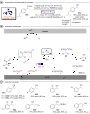
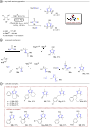
- driving force (evolution of CO2). Triethylphosphite P(OEt)3 and bis(pinacolato)diboron B2pin2 were successfully applied as trapping reagents for redox-neutral photo-Arbuzov and borylation reactions with good to excellent yields (Figure 11D). Additionally, the authors were able to perform the net-reductive





















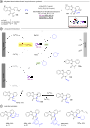


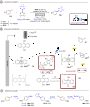
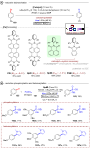


The effect of dark states on the intersystem crossing and thermally activated delayed fluorescence of naphthalimide-phenothiazine dyads
Beilstein J. Org. Chem. 2023, 19, 1028–1046, doi:10.3762/bjoc.19.79
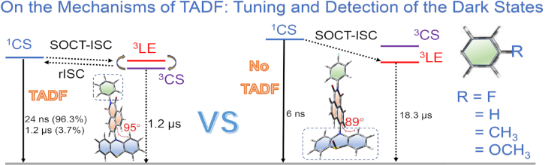
- (Figure 7). Taking the NI-PTZ-F as an example, the transient absorption spectra measured in HEX and the evolution associated difference spectra (EADS), obtained by global fitting based on sequential kinetic model, are presented (Figure 7a and 7b). The first transient species (black line in Figure 7b) is
- relaxation of the 1NI* state and the evolution towards a CS state. Then, within about 599 fs, the system evolves to the third spectrum, which shows a sharp absorption band centered at 433 nm and 522 nm, corresponding to the absorption of NI−• and PTZ+•, thus being a CS state. Then, within 12.84 ps, another


Phenanthridine–pyrene conjugates as fluorescent probes for DNA/RNA and an inactive mutant of dipeptidyl peptidase enzyme
Beilstein J. Org. Chem. 2023, 19, 550–565, doi:10.3762/bjoc.19.40
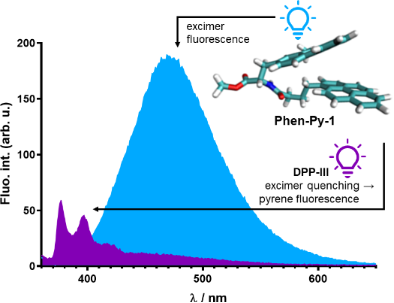
- inspecting the evolution of distances between the centers of mass among aromatic units (Figure S22, Supporting Information File 1), which are found around 5.5 Å for both conjugates under acidic conditions, at the same time exceeding 8 Å (Phen-Py-1) and 6 Å (Phen-Py-2) under neutral conditions. All of this




Computational studies of Brønsted acid-catalyzed transannular cycloadditions of cycloalkenone hydrazones
Beilstein J. Org. Chem. 2023, 19, 477–486, doi:10.3762/bjoc.19.37
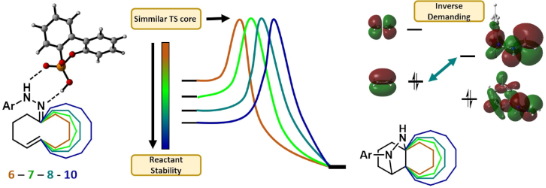
- by the tethers, the entropy effects caused by them has also been studied. The analysis of the evolution of the electron localization function along the reaction revealed the highly concerted character of the reaction. Keywords: DFT; distortion model; hydrazones; transannular cycloadditions
- we found, in both cases, values lower than 0.4, typical for nonpolar processes. To assess the concertedness of the reaction we carried out an analysis of the electron localization function (ELF) [31][32]. The ELF analysis applied to an IRC represents the evolution of the electron density (electron
- formation occurs during the other reacting basin’s evolution. During the process, N12 loses its lone pair which is involved in the C5–N12 bond formation, and after the cyclization reaction, in a second stage, the lone pair is recovered after the proton (H13) is abstracted by the phosphoric acid. As expected




Combining the best of both worlds: radical-based divergent total synthesis
Beilstein J. Org. Chem. 2023, 19, 1–26, doi:10.3762/bjoc.19.1
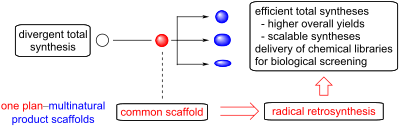
- complex natural structures and the practicality of delivering highly diverged lead compounds for biological screening, is the constant aim of the organic chemistry community. Delivering natural lead compounds became easier during the last two decades, with the evolution of green chemistry and the concepts
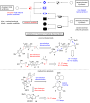
- chemical libraries with natural scaffolds for biological screening. The evidenced increase of divergent radical syntheses in the last few years indicates that this approach is here to change the way chemists will practice total synthesis in the future. Evolution of radical chemistry for organic synthesis



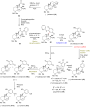


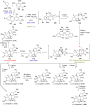

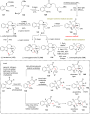


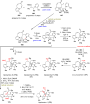

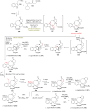

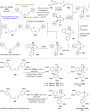

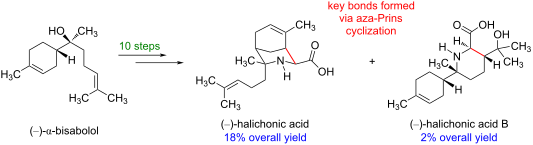
Synthesis of (−)-halichonic acid and (−)-halichonic acid B
Beilstein J. Org. Chem. 2022, 18, 1629–1635, doi:10.3762/bjoc.18.174
- evolution (likely H2) occurred. However, no reduction of the amide was observed, even after stirring at room temperature for 24 hours. In an effort to “salvage” the reaction by reducing the amide to the corresponding N-benzylamine (which could potentially be oxidized to the corresponding imine with IBX [18


Sinensiols H–J, three new lignan derivatives from Selaginella sinensis (Desv.) Spring
Beilstein J. Org. Chem. 2022, 18, 1410–1415, doi:10.3762/bjoc.18.146
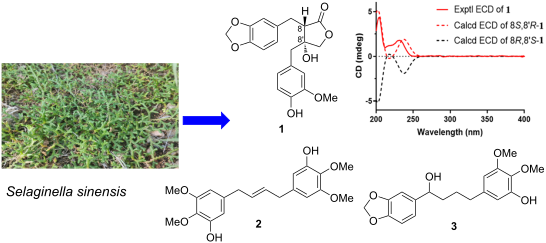
- lineage that had arisen about 400 million years ago, it is important for studying the evolution of land plants [1][2]. This genus includes approximately 750 species worldwide, some of which are used in traditional medicines for the treatment of various diseases including diabetes, gastritis, hepatitis


On drug discovery against infectious diseases and academic medicinal chemistry contributions
Beilstein J. Org. Chem. 2022, 18, 1355–1378, doi:10.3762/bjoc.18.141

- ]. A survey of the evolution of commercially available chemical libraries is also of real interest [97]. It turns out that a low lipophilicity, a higher fraction of sp3 carbons [98] in the structures as well as a minimum of 20 compounds per scaffold are currently favored. A high sp3 proportion along
- the discovery of a new drug is to start with an old drug.” A really interesting paper from Genentech/Roche describing the evolution of their approaches between 2009 and 2020 to discover leads is actually pointing out that publicly available data remained their main source of inspiration followed by







Cyclodextrin-based Schiff base pro-fragrances: Synthesis and release studies
Beilstein J. Org. Chem. 2022, 18, 1346–1354, doi:10.3762/bjoc.18.140
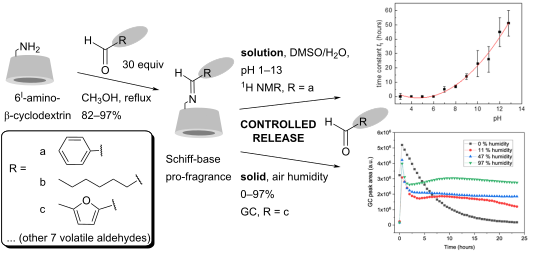
- . Time constants t1 and t2 correspond to the fast and slow components of the double-exponential decay function. The red line is the corresponding fit of the experimental data by Equation 1. pH behavior of the time constant t1 of the fast component in the time evolution of the NMR signal of the imine
- group of the compound 3d. Error bars correspond to the regression error; red line corresponds to the polynomial fit of the experimental data. Time evolution of the headspace concentration of heptanal (2h) after successive extractions from the gaseous phase above (A): heptanal (2h) in aqueous phosphate
- buffers and (B): heptanylimino-β-CD (3h) in aqueous phosphate buffers. Sampling intervals in the corresponding regions: I – 4 min (A) or 5 min (B), II – 10 min, III – 60 min. Time evolution of the headspace concentration of benzaldehyde (2d) after successive extractions from the gaseous phase above (A
A Streptomyces P450 enzyme dimerizes isoflavones from plants
Beilstein J. Org. Chem. 2022, 18, 1107–1115, doi:10.3762/bjoc.18.113
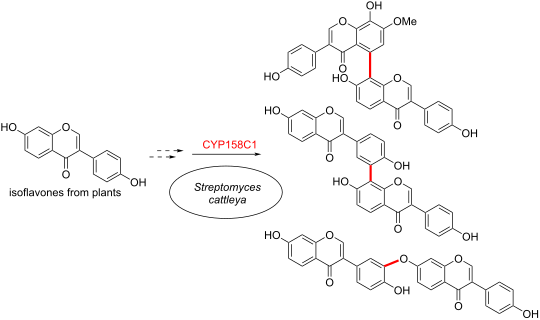
- of polyphenols in plants is mostly catalyzed by laccases, the dimerization of (iso)flavones by a P450 in Streptomyces may represent a convergent evolution in enzyme chemistry between plants and bacteria. Conclusion In conclusion, we have characterized three novel isoflavone dimers from S. cattleya





