Search results
Search for "indoles" in Full Text gives 239 result(s) in Beilstein Journal of Organic Chemistry. Showing first 200.
Aromatic C–H bond functionalization through organocatalyzed asymmetric intermolecular aza-Friedel–Crafts reaction: a recent update
Beilstein J. Org. Chem. 2023, 19, 956–981, doi:10.3762/bjoc.19.72

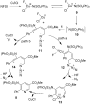
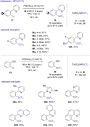
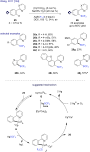
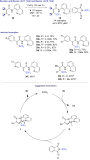
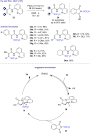
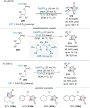
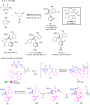
- aza-Friedel–Crafts process between indoles 4 and cyclic N-sulfonyl ketimines 5. The authors employed the BINOL-based chiral phosphoric acid P2 bearing two imidazoline moieties at the ortho-positions as the catalyst which activates both reactants through H-bonding where the NH group of the nucleophile
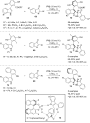
- than with indoles (Scheme 3) [26]. In 2018, Kim and co-workers developed an aza-Friedel–Crafts protocol involving pyrroles 9 as the π-nucleophile in combination with cyclic N-sulfimines 12. The chiral phosphoric acid P4 was used to catalyze the introduction of a pyrrole-substituted aza-quaternary
- for the functionalization of the C3–H bond in indoles 9 in the presence of BINOL-derived chiral phosphoric acid P6 as the catalytic agent. They utilized trifluoromethyl ester-substituted N-unprotected imine 15 as the potential electrophile to install an aza-quaternary stereocenter in the C3 position




Clauson–Kaas pyrrole synthesis using diverse catalysts: a transition from conventional to greener approach
Beilstein J. Org. Chem. 2023, 19, 928–955, doi:10.3762/bjoc.19.71
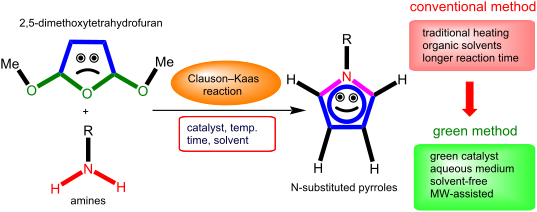
- solvent at 100 °C (Scheme 6). Finally, compounds 13 were used to prepare various arylpyrrolo- and pyrazolopyrrolizinones for diverse biological activity. In 2007, Török and co-workers [60] reported a convenient one-pot synthesis of N-sulfonyl-substituted pyrroles, indoles, and carbazole via a modified




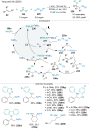
Photoredox catalysis enabling decarboxylative radical cyclization of γ,γ-dimethylallyltryptophan (DMAT) derivatives: formal synthesis of 6,7-secoagroclavine
Beilstein J. Org. Chem. 2023, 19, 918–927, doi:10.3762/bjoc.19.70
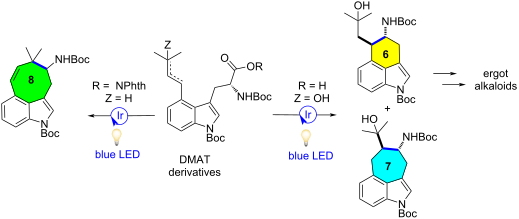
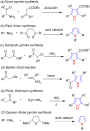
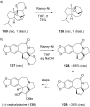
- -dimethylallyltryptophan (DMAT) derivatives containing unactivated alkene moieties has been developed, providing green and efficient access to various six-, seven-, and eight-membered ring 3,4-fused tricyclic indoles. This type of cyclization, which was hitherto very difficult to comprehend in ergot biosynthesis and to
- in CH2Cl2 at room temperature using our integrated photoreactor enabled efficient cyclization to give a decarboxylated compound with the correct mass (m/z 426.2) after 16 h. While we were delighted to find that the proposed radical–radical coupling in the synthesis of extracyclic fused indoles was
- functionalized 3,4-fused tricyclic indoles with medium-sized rings (seven and eight), which have been largely neglected in previous studies, can be synthesized by this new protocol. Notably, the reaction has been successfully applied in the formal synthesis of (±)-6,7-secoagroclavine, a key intermediate for a


Strategies in the synthesis of dibenzo[b,f]heteropines
Beilstein J. Org. Chem. 2023, 19, 700–718, doi:10.3762/bjoc.19.51
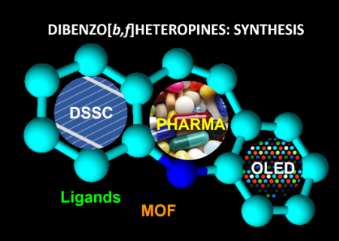
- )malonates 24. Ring expansion via C–H functionalisation. The synthesis of fluorinated 5H-dibenzo[b,f]azepine 38 from isatin (32). The synthesis of substituted dibenzo[b,f]azepines 43 from indoles 39. Retrosynthetic pathways to dibenzo[b,f]azepines via Buchwald–Hartwig amination. Synthesis of dibenzo[b,f


Direct C2–H alkylation of indoles driven by the photochemical activity of halogen-bonded complexes
Beilstein J. Org. Chem. 2023, 19, 575–581, doi:10.3762/bjoc.19.42
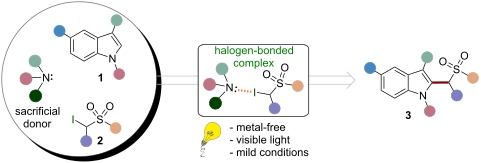
- and Technology Alliance (BRTA), Paseo de Miramón 194, 20014, Donostia San Sebastián, Spain Basque Fdn Sci, Ikerbasque, 48013 Bilbao, Spain 10.3762/bjoc.19.42 Abstract A light-driven metal-free protocol for the synthesis of sulfone-containing indoles under mild conditions is reported. Specifically
- ). Mechanistic investigations are reported. These studies provide convincing evidences for the photochemical formation of reactive open-shell species. Keywords: alkylation; EDA complex; halogens; indoles; photochemistry; Findings Direct replacement of carbon–hydrogen (C–H) bonds with new carbon–carbon (C–C
- to photochemically generate electrophilic radicals that can drive the functionalization of suitable electron-rich substrates [23]. Exploiting this strategy, here we report a novel metal-free methodology for the direct homolytic aromatic substitution (HAS) reaction of indoles 1 with α-iodosulfones 2


Transition-metal-catalyzed domino reactions of strained bicyclic alkenes
Beilstein J. Org. Chem. 2023, 19, 487–540, doi:10.3762/bjoc.19.38
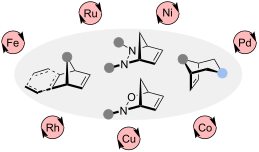
- derivatives 85. The reaction was amenable for both electron-rich and deficient indoles. When the reaction was attempted on electron-deficient oxabicyclic alkene derivatives, it was observed the reaction did not undergo dehydration to give the 2-naphthyl product, rather the ring-opened 1,2-hydroxy adduct. When



















Transition-metal-catalyzed C–H bond activation as a sustainable strategy for the synthesis of fluorinated molecules: an overview
Beilstein J. Org. Chem. 2023, 19, 448–473, doi:10.3762/bjoc.19.35
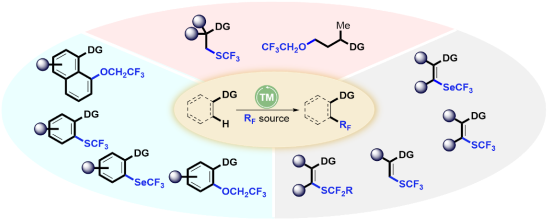
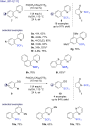
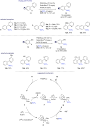
- , the group of Li disclosed the Cp*Rh(III)-catalyzed regioselective trifluoromethylthiolation of N-substituted indoles with (substituted) pyridines or pyrimidine as the directing groups (Scheme 10) [123]. The selective trifluoromethylthiolation of indoles at the C2 position was achieved in the presence
- of N-(trifluoromethylthio)saccharine (VI, Shen’s reagent) as both oxidant and electrophilic source (18 examples, up to 91% yield). Indoles bearing various electron-donating and electron-withdrawing groups as well as halogens at the C5-position and at the C6-position were functionalized in high yields











Group 13 exchange and transborylation in catalysis
Beilstein J. Org. Chem. 2023, 19, 325–348, doi:10.3762/bjoc.19.28
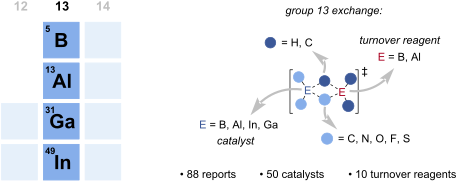
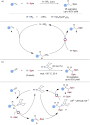
- ‒H borylation, with an initial B‒Y/B‒H transborylation activating the precatalyst [62][63][64][65]. Zhang showed that benzoic acid decomposed HBpin to BH3 in situ to catalyse the C2‒H borylation of indoles (Scheme 4b) [66][67]. Gellrich reported the bis(pentafluorophenyl)borane-catalysed dimerisation
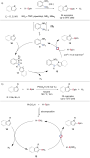
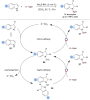
- . Alkoxide-promoted hydroboration of heterocycles and the proposed mechanism. Borane-catalysed reduction of indoles and the proposed mechanism. H-B-9-BBN-catalysed hydrocyanation of enones and the proposed mechanism. Borane-catalysed hydroboration of nitriles and the proposed mechanism. Myrtanylborane










1,4-Dithianes: attractive C2-building blocks for the synthesis of complex molecular architectures
Beilstein J. Org. Chem. 2023, 19, 115–132, doi:10.3762/bjoc.19.12
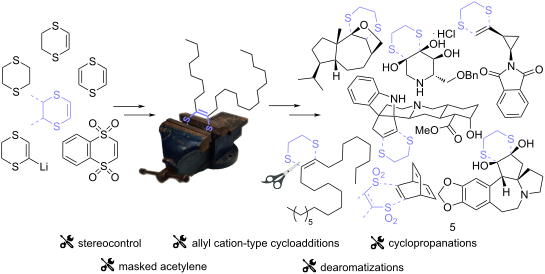
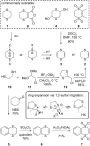
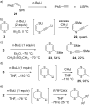
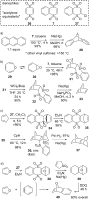
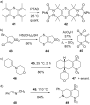
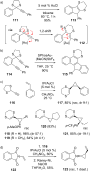
- equivalent of a simple allyl cation in (3 + 2) cycloadditions. More recently, our group was able to extend the scope of dihydrodithiin-mediated cycloadditions to indole substrates [30]. Indoles are formal styrene analogs, with very different electronic properties and reactivity profiles, and initially gave
- very poor results with dihydrodithiinmethanol, with incomplete conversion to complex mixtures of diverse addition products. However, we found that the reactions of allyl alcohol 90 with indoles become very reliable and quite general when a large excess of a very strong Brønsted acid is used (Scheme 15a
- ][91][92][93][94][95][96][97][98][99][100]. Cycloadditions of 1,4-dithiane-fused allyl cations derived from dihydrodithiin-methanol 90 [101][102][103][104][105][106][107]. Dearomative [3 + 2] cycloadditions of unprotected indoles with 1,4-dithiane-fused allyl alcohol 90 [30]. Comparison of reactivity











Catalytic aza-Nazarov cyclization reactions to access α-methylene-γ-lactam heterocycles
Beilstein J. Org. Chem. 2023, 19, 66–77, doi:10.3762/bjoc.19.6

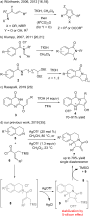
- syntheses of C-aryl luotonins and vasicinones (Scheme 1c) [23][24]. Moreover, an aza-Nazarov cyclization was utilized for the construction of a variety of heterocyclic frameworks such as aminopyrroles [25][26], N-hydroxyoxindoles [27], indolizines [28], pyrido[1,2-a]indoles [29][30], indoles [31][32], and



Electrochemical Friedel–Crafts-type amidomethylation of arenes by a novel electrochemical oxidation system using a quasi-divided cell and trialkylammonium tetrafluoroborate
Beilstein J. Org. Chem. 2022, 18, 1040–1046, doi:10.3762/bjoc.18.105
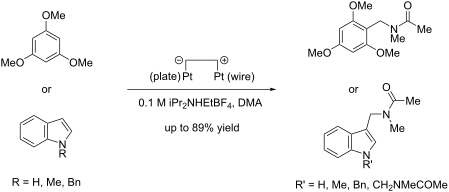
- 1,3,5-trimethoxybenzene or indoles in DMA containing 0.1 M iPr2NHEtBF4 using an undivided cell equipped with a Pt plate cathode and a Pt wire anode (a quasi-divided cell) resulted in selective formation of N-acyliminium ions of DMA at the anode, which reacted with arenes to give the corresponding
- -trimethoxybenzene and indoles (this work in Scheme 1). To the best of our knowledge, this is the first example of the use of trialkylammonium salts, such as iPr2NHEtBF4, in electroorganic synthesis, especially with the electrochemical oxidation system as a supporting electrolyte as well as a proton source for the
- with diamidomethylation products, and it was difficult to analyze them exactly. Although N-acetylindole was also ineffective, several indoles were found to be applicable to the present amidomethylation reaction and the results are summarized in Scheme 2. When N-methylindole (4a) was electrolyzed using


Morita–Baylis–Hillman reaction of 3-formyl-9H-pyrido[3,4-b]indoles and fluorescence studies of the products
Beilstein J. Org. Chem. 2022, 18, 926–934, doi:10.3762/bjoc.18.92
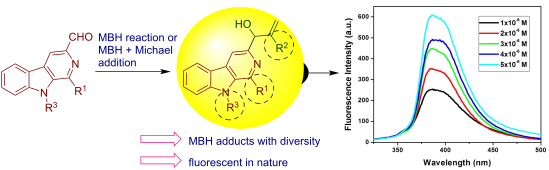
- . Additionally, the scope of the reaction was further extended and the effect of substituents at the N-9 position on the reactivity of 3-formyl-1-aryl-9H-pyrido[3,4-b]indoles was also investigated. Furthermore, fluorescence properties of these β-carboline conjugates were also studied and they were found to


Copper-catalyzed multicomponent reactions for the efficient synthesis of diverse spirotetrahydrocarbazoles
Beilstein J. Org. Chem. 2022, 18, 796–808, doi:10.3762/bjoc.18.80
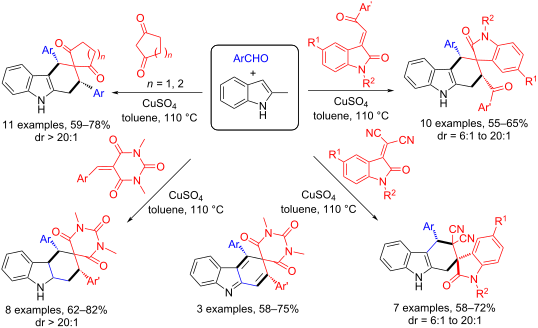
- ][11][12][13][14][15]. Among many well-designed strategies for the synthesis of tetrahydrocarbazoles, the direct assembly of the tetrahydrocyclohexenyl ring with readily available functionalized indoles as precursors has proven to be one of the most efficient synthetic protocols [16][17][18][19][20][21
- indoles without electron-withdrawing activating groups could be employed in the Levy reaction, which will greatly develop the potential synthetic applications of the Levy-type reaction. Herein, we wish to report a Levy-type reaction by using readily available 2-methylindole to replace ethyl indole-2
- ring were all transformed smoothly into the corresponding desired products 6a–g with good to excellent yields. Though 3,3'-(p-tolylmethylene)bisindoles have been previously prepared by acid-catalyzed reaction of aromatic aldehydes and various indoles. Here we also provided an alternative synthetic





Regioselectivity of the SEAr-based cyclizations and SEAr-terminated annulations of 3,5-unsubstituted, 4-substituted indoles
Beilstein J. Org. Chem. 2022, 18, 293–302, doi:10.3762/bjoc.18.33
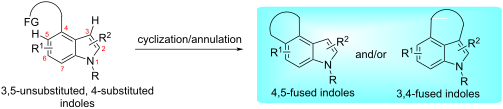
- approaches toward such compounds have been developed. Among these, cyclization and annulation of 3,5-unsubstituted, 4-substituted indoles involving an electrophilic aromatic substitution (SEAr) as the ring closure are particularly attractive, because they avoid the use of 3,4- or 4,5-difunctionalized indoles
- as starting materials. However, since 3,5-unsubstituted, 4-substituted indoles have two potential ring-closure sites (indole C3 and C5 positions), such reactions in principle can furnish either or both of the indole 3,4- and 4,5-fused ring systems. This Commentary will briefly highlight the issue by
- summarizing recent relevant literature reports. Keywords: annulation; cyclization; fused indoles; regioselectivity; SEAr; Introduction Over the decades, countless cyclization and annulation reactions of substituted arenes/heteroarenes involving an electrophilic aromatic substitution (SEAr) reaction as the


Ready access to 7,8-dihydroindolo[2,3-d][1]benzazepine-6(5H)-one scaffold and analogues via early-stage Fischer ring-closure reaction
Beilstein J. Org. Chem. 2022, 18, 143–151, doi:10.3762/bjoc.18.15
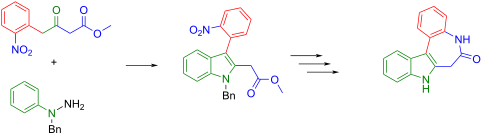
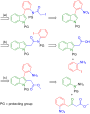
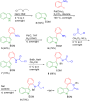
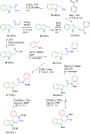
- , this method is not viable for N-benzylated indoles, where reduction in liquid ammonia with sodium is usually used as a standard protocol instead, even though successful reports are rare [41]. Other methods involve strongly basic and oxidative conditions [42], which are not tolerated by the CH2 group in






Chemoselective N-acylation of indoles using thioesters as acyl source
Beilstein J. Org. Chem. 2022, 18, 89–94, doi:10.3762/bjoc.18.9

- Tianri Du Xiangmu Wei Honghong Xu Xin Zhang Ruiru Fang Zheng Yuan Zhi Liang Yahui Li Key Laboratory of Agri-Food Safety of Anhui Province, School of Resources and Environment, Anhui Agricultural University, Hefei 230036, China 10.3762/bjoc.18.9 Abstract The selective acylation of indoles often
- requires sensitive and reactive acyl chloride derivatives. Here, we report a mild, efficient, functional group tolerant, and highly chemoselective N-acylation of indoles using thioesters as a stable acyl source. A series of indoleamides have been obtained with moderate to good yields. In addition
- cannabinoid (hCB1) receptor [3] (Figure 1). Indole has multiple reactive sites, and chemoselective N- or C-functionalization of indoles is a challenging and important task [4][5]. Acylation of indoles frequently takes place at the C3 position because of the relatively strong electron cloud density. As N


Recent advances and perspectives in ruthenium-catalyzed cyanation reactions
Beilstein J. Org. Chem. 2022, 18, 37–52, doi:10.3762/bjoc.18.4
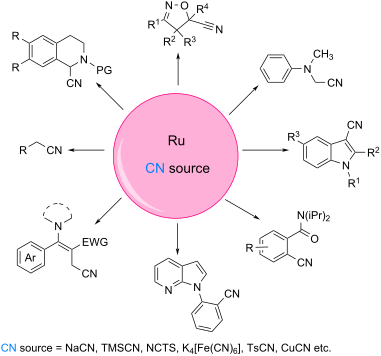
- essential for promoting this reaction (Scheme 12). Both electron-rich and electron-deficient indoles afforded the desired products in good yields. The major advantages of this method include high regioselectivity, mild reaction conditions, and reusability of the catalyst. Two years later, in 2014, Ackermann
- heteroarenes such as thiophenes, benzofurans, furans, and indoles were found suitable substrates and afforded the desired products with high chemo- and site-selectivity. A possible mechanism for the reaction was also described. The first step of the catalytic cycle involves the formation of a cationic complex
- mechanism for the ruthenium-catalyzed aerobic oxidative cyanation. RuCl3-catalyzed oxidative cyanation of tertiary amines using acetone cyanohydrin as the cyanating agent. Cyanation of indoles using K4[Fe(CN)6] as cyano source and Ru(III)-exchanged NaY zeolite (RuY) as catalyst. Cyanation of arenes and


Unsaturated fatty acids and a prenylated tryptophan derivative from a rare actinomycete of the genus Couchioplanes
Beilstein J. Org. Chem. 2021, 17, 2939–2949, doi:10.3762/bjoc.17.203
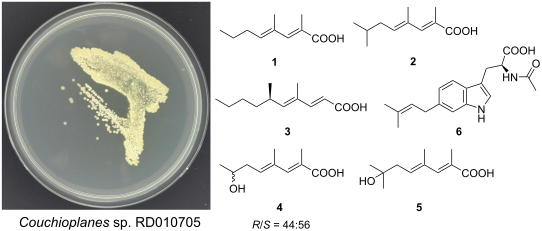
- necessary for their biosynthesis. Prenylated indoles are widely distributed among bacteria, fungi and plants, and all seven positions are subject of prenylation except for the bridgehead carbons [34]. Compound 6 is the acetylated derivative of 6-(3,3-dimethylallyl)-ʟ-tryptophan from Streptomyces sp. SN-593


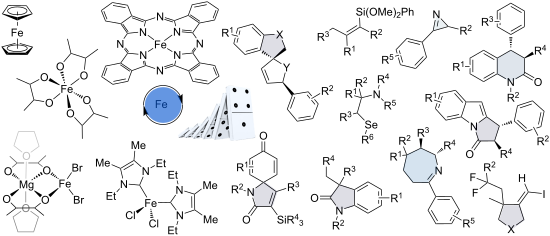
Iron-catalyzed domino coupling reactions of π-systems
Beilstein J. Org. Chem. 2021, 17, 2848–2893, doi:10.3762/bjoc.17.196
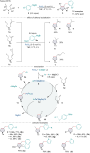
- methodology was extended to the carbosilylation of olefins with carbon nucleophiles 108 including indoles, pyrroles, and 1,3-dicarbonyls. The scope of the reaction was broad and could tolerate a variety of functional groups; however, electron-deficient alkenes afforded the products in slightly diminished
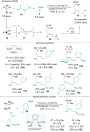
- sterically demanding alkyl groups. Overall, when the protocol was applied towards the synthesis of pyrrolo[1,2-a]indoles 135, product yields were slightly diminished; however, the scope was equally as broad and tolerated most functional groups. Sterically demanding peresters were shown to react poorly with













Recent advances in the asymmetric phosphoric acid-catalyzed synthesis of axially chiral compounds
Beilstein J. Org. Chem. 2021, 17, 2729–2764, doi:10.3762/bjoc.17.185
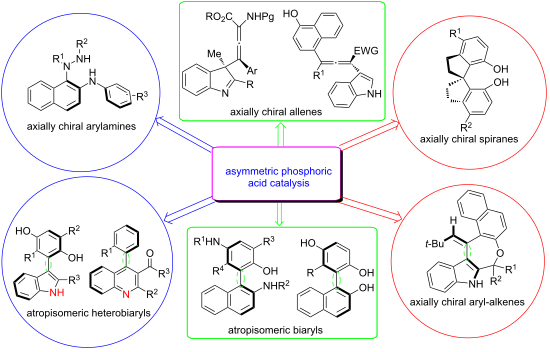
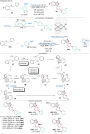
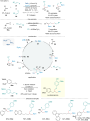
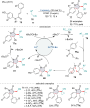
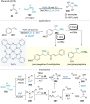
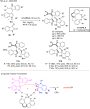
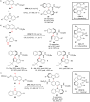
- 2019, Li and co-workers developed a synthetic strategy for the atroposelective construction of phenylindole 20 by the chiral phosphoric acid-catalyzed cross-coupling of quinones 18 and indoles 19. In this reaction, the chiral phosphoric acid (R)-CPA 6 acts as a bifunctional catalyst to activate indoles
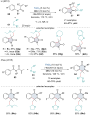
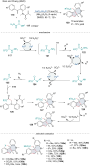
- -workers showed that azo groups enable the organocatalytic asymmetric arylation of indoles. The nucleophilic aromatic substitution between the azobenzene derivative 24 and indoles 25 was carried out in the presence of 2.5 mol % chiral phosphoric acid (CPA 8, Scheme 9a), leading to the intermediate I-4
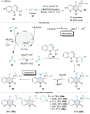
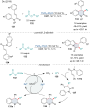
- the reaction of 2-substituted indoles with azobenzenes proceeded smoothly in the presence of the chiral phosphoric acid catalyst (R)-CPA 9. At a catalyst loading of 0.2 mol %, the intermediate I-5 was simultaneously cyclized to I-6, followed by β-H elimination and chirality transfer to afford another












Recent advances in organocatalytic asymmetric aza-Michael reactions of amines and amides
Beilstein J. Org. Chem. 2021, 17, 2585–2610, doi:10.3762/bjoc.17.173
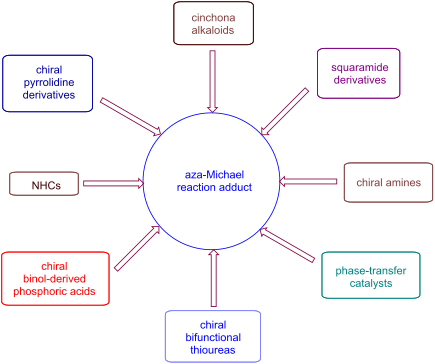
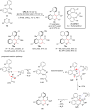
- of prolinol silyl ether (cat. 120) and benzoic acid (A1) catalysts to bring about reaction between 3-formyl-substituted indoles or pyrroles 118 and diverse electrophiles, including carbonyls, imines and other Michael acceptors (Scheme 5) [69]. The reaction with secondary amines occurred via the


α-Ketol and α-iminol rearrangements in synthetic organic and biosynthetic reactions
Beilstein J. Org. Chem. 2021, 17, 2570–2584, doi:10.3762/bjoc.17.172
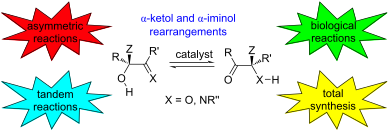
- found with Pd(OAc)2/bpy as the catalyst, N-methylacetamide as the solvent, and a temperature of 80 °C. Variously substituted indoles as well as esters of 118 (R = aryl, alkyl, vinyl) were generally well tolerated, but oxa- (X = O) and azo- (X = NR) cyclobutanes met with limited success. Alternative




Silica gel and microwave-promoted synthesis of dihydropyrrolizines and tetrahydroindolizines from enaminones
Beilstein J. Org. Chem. 2021, 17, 2543–2552, doi:10.3762/bjoc.17.170
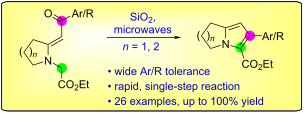
- (vinylogous cyanamides) has also been described [53]. A similar base-induced cyclization of N-(alkoxycarbonylmethyl)-7-formylindoles to give pyrrolo[3,2,1-hi]indoles is also of interest [54]. Acid-induced cyclization akin to ours, and also assuming an in situ E to Z isomerization under the reaction conditions





Visible-light-mediated copper photocatalysis for organic syntheses
Beilstein J. Org. Chem. 2021, 17, 2520–2542, doi:10.3762/bjoc.17.169
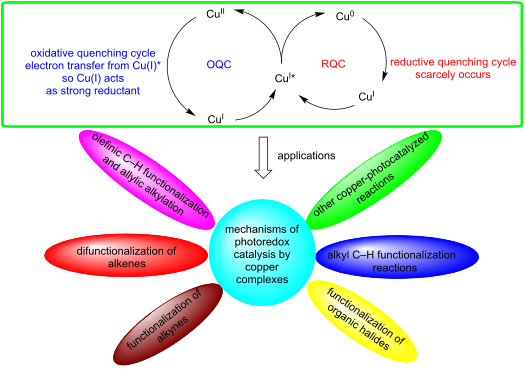
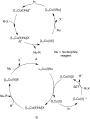
- ] discovered the asymmetric cross-coupling of racemic tertiary alkyl halides 43 with carbazoles or indoles 44 in the CuI/chiral phosphine system. Under irradiation conditions, excitation of the copper–nucleophile complex A results in the excited state species B that engages in the electron transfer with the
- undergoes radical addition with the N-substituted maleimide (Scheme 25). In 2017, Wu and co-workers [94] reported the α-amino C−H functionalization of aromatic amines 51 with nucleophiles, including arynes or aromatic olefins 52, indoles, acyclic β-ketoester 53, and β-diketone 54 (Scheme 26). Mechanistic






Recent advances in the tandem annulation of 1,3-enynes to functionalized pyridine and pyrrole derivatives
Beilstein J. Org. Chem. 2021, 17, 2462–2476, doi:10.3762/bjoc.17.163
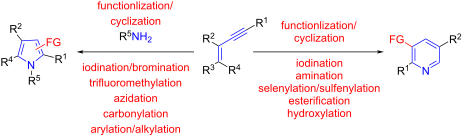
- powerful nitrogen source for the synthesis of various N-heterocycles, such as isoquinolines, quinolines, pyridines, pyrroles, indoles, azoles, and azepines [40][41][42][43][44][45]. 1,3-Enyne, as a powerful Michael acceptor, is a wonderful synthon for the synthesis of N-heterocycles via tandem addition and