Search results
Search for "overall yield" in Full Text gives 525 result(s) in Beilstein Journal of Organic Chemistry. Showing first 200.
New triazinephosphonate dopants for Nafion proton exchange membranes (PEM)
Beilstein J. Org. Chem. 2024, 20, 1623–1634, doi:10.3762/bjoc.20.145
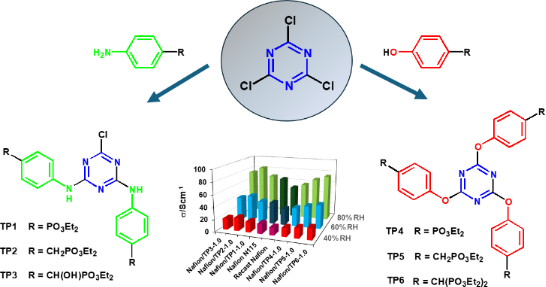
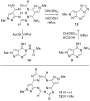
- ]methylphosphonate (10). The following hydrogenolysis under H2/Pd/C conditions in ethanol, afforded the desired diethyl (4-hydroxyphenyl)methylphosphonate (7), in an overall yield of 80%. The synthesis of diethyl [hydroxy(4-hydroxyphenyl)methyl]phosphonate (11) [55] started with the reaction of 4-hydroxybenzaldehyde




Challenge N- versus O-six-membered annulation: FeCl3-catalyzed synthesis of heterocyclic N,O-aminals
Beilstein J. Org. Chem. 2024, 20, 1412–1420, doi:10.3762/bjoc.20.123
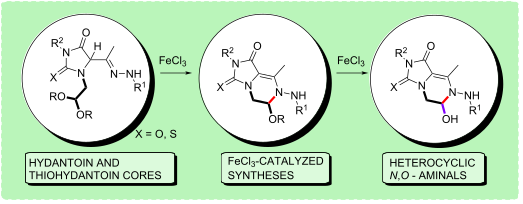
- (entries 1–7, Table 1). Similarly to what was observed by Yu and co-workers for the intramolecular cyclization of alkynyl aldehyde acetals [28][29], it was found that the use of FeCl3 provided the better result in terms of overall yield (entry 3, Table 1). Moreover, the choice of iron(III) seemed to have


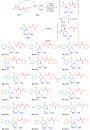
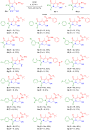


Computation-guided scaffold exploration of 2E,6E-1,10-trans/cis-eunicellanes
Beilstein J. Org. Chem. 2024, 20, 1320–1326, doi:10.3762/bjoc.20.115

- derivatives (16 and 17), in a ratio of 3:1 in 82% overall yield, with a phenylselenyl groups at C6 were obtained when 2 was reacted with PhSeBr in acetonitrile overnight (Figure 4 and Figures S24–S36 in Supporting Information File 1). A similar reaction with PhSCl was also tested but yielded only several


Light on the sustainable preparation of aryl-cored dibromides
Beilstein J. Org. Chem. 2024, 20, 1076–1087, doi:10.3762/bjoc.20.95
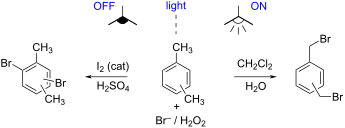
- developed method was finally successfully scaled up to 10 g scale, giving 3a in excellent isolated yield (87%), with only small amounts of polybrominated byproducts as contaminants (<2%). The pure product was obtained through (unoptimised) crystallisation from toluene, giving 3a in 80% overall yield, and



Enantioselective synthesis of β-aryl-γ-lactam derivatives via Heck–Matsuda desymmetrization of N-protected 2,5-dihydro-1H-pyrroles
Beilstein J. Org. Chem. 2024, 20, 940–949, doi:10.3762/bjoc.20.84
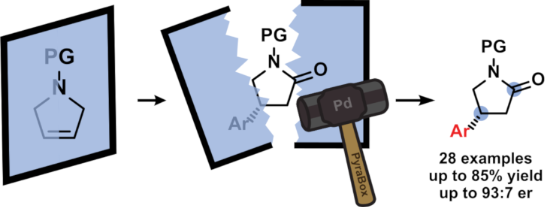
- previous works [18], the oxidation step is practical and high-yielding, and the overall yield can be reported based on the isolated lactams. By evaluating the electronics of the diazonium salt, we observed that the electron-donating p-OMe substituent performed better (4aa, 68% yield) when compared to
- 93:7. The methodology was shown to be robust, allowing the use of different protecting groups at the nitrogen of the 4-pyrroline substrate. We also report straightforward synthetic routes to obtain (R)-rolipram (5b, 61% overall yield, 3 steps, 82:18 er) and (R)-baclofen hydrochloride (6, 49% overall
- yield, 4 steps, 90:10 er) using the Heck–Matsuda reaction as a key step for constructing the stereogenic center. N,N-Ligands evaluated in this work. Rationalization of the enantioselectivity obtained in the Heck–Matsuda reaction of protected 2,5-dihydro-1H-pyrrole with aryldiazonium salts catalyzed by




Direct synthesis of acyl fluorides from carboxylic acids using benzothiazolium reagents
Beilstein J. Org. Chem. 2024, 20, 921–930, doi:10.3762/bjoc.20.82
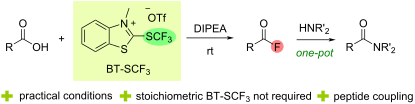
- product resulting from addition of 1 to thiocarbonyl difluoride. After a further 30 minutes at rt, 19F NMR analysis of the crude mixture indeed indicated the formation of 2a in an overall yield of 74%, implying both pathways are feasible and that sub-stoichiometric amounts of BT-SCF3 relative to the



Three-component N-alkenylation of azoles with alkynes and iodine(III) electrophile: synthesis of multisubstituted N-vinylazoles
Beilstein J. Org. Chem. 2024, 20, 891–897, doi:10.3762/bjoc.20.79
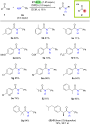
- reaction using alkyne 3a and BXT (1). 4-Bromo and 4-methylpyrazoles afforded the desired products 4ba and 4ca in 92% and 38% yields, respectively. 3-Phenylpyrazole underwent competitive alkenylation at the N1 and N2 positions, affording the N2-alkenylated product 4da and its N1-regioisomer in 84% overall
- yield in a ratio of 7:3. Indazole and its 4-bromo and 6-methoxycarbonyl analogues afforded the expected N1-alkenylated products 4ea–4ga in 43–68% yields. 1,2,3-Triazole and benzotriazole both smoothly participated in the reaction to give their respective products 4ha and 4ia in 60% and 81% yields



(Bio)isosteres of ortho- and meta-substituted benzenes
Beilstein J. Org. Chem. 2024, 20, 859–890, doi:10.3762/bjoc.20.78
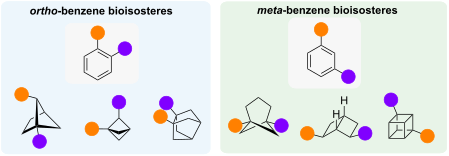
- [1.1.1]propellanes (Scheme 13B) [27]. These new syntheses increased the overall yield of the [3.1.1]propellane synthesis from Gassman’s original 6% to 23% (Uchiyama) and up to 35% (Anderson) in 5 steps. Iodine-substituted 1,5-BCHeps 134a–g were shown to be accessible from [3.1.1]propellane via

















Substrate specificity of a ketosynthase domain involved in bacillaene biosynthesis
Beilstein J. Org. Chem. 2024, 20, 734–740, doi:10.3762/bjoc.20.67
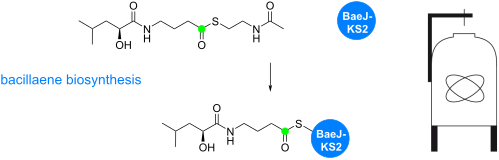
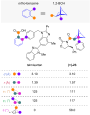
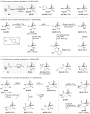
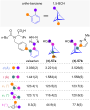
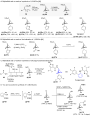
- SNAC ester (S)-11, with a yield of 32% over 5 steps starting from 13C-labelled 3. Analogous reactions were performed to obtain (R)-11 from ᴅ-leucine ((R)-6) with a comparable overall yield of 35% from labelled 3. BaeJ-KS2 activity assay The substrate specificities of ketosynthases in trans-AT PKSs hold


Chemoenzymatic synthesis of macrocyclic peptides and polyketides via thioesterase-catalyzed macrocyclization
Beilstein J. Org. Chem. 2024, 20, 721–733, doi:10.3762/bjoc.20.66
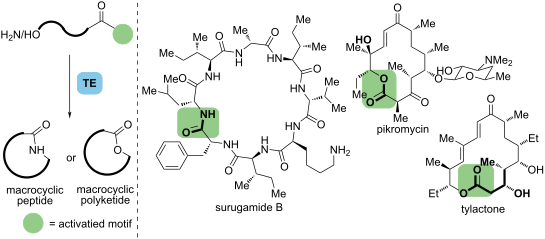
- sequential NRPS genes. However, none of them contain the thioesterase domain, which is essential for late-stage cyclization [59]. In 2018, Wakimoto, Kuranaga and co-workers reported the first total synthesis of surugamide B (16) in 34% overall yield through the general SPPS process and the macrocyclization
- the resin before the SPPS, as well as a leaving group in further enzymatic cyclization (17c). Utilizing this approach, the overall yield of surugamide B (82.8%) was greater than the SNAC-based peptides with the same sequence used in the previous study (30%, Scheme 5a). In addition to investigating the
- overall yield. According to the biosynthetic approach, these macrolides are produced by the type I PKS system, including thioesterase (TE)-catalyzed cyclization of the linear hexa- and heptaketide intermediates, post-PKS oxidation, and glycosylation [67]. Cane and co-workers reported that Pik TE, the TE


Regioselective quinazoline C2 modifications through the azide–tetrazole tautomeric equilibrium
Beilstein J. Org. Chem. 2024, 20, 675–683, doi:10.3762/bjoc.20.61
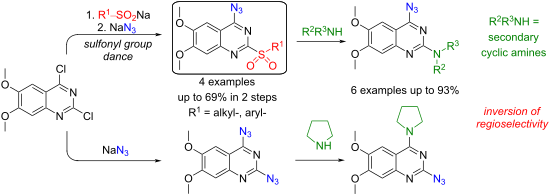
- product. Compounds 12 did not tolerate aqueous conditions or high temperatures and have also been observed to degrade under direct sunlight. Next, a stepwise one-pot approach was investigated to increase the overall yield (Scheme 6). The reaction in anhydrous DMF yielded a mixture of the desired product


Synthesis of π-conjugated polycyclic compounds by late-stage extrusion of chalcogen fragments
Beilstein J. Org. Chem. 2024, 20, 287–305, doi:10.3762/bjoc.20.30
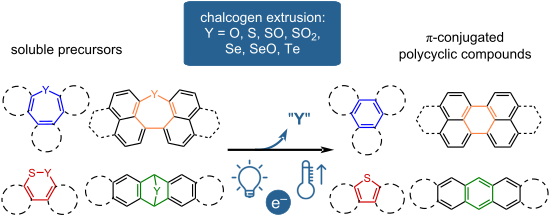
- of devices and in situ generation of the active material by late stage S-extrusion. Nevertheless, the synthetic route towards dinaphthothiepine bisimides initially reported suffered from several drawbacks: it had limited efficiency (1.2% overall yield over 8 steps for the synthesis of thiepine 3a
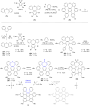
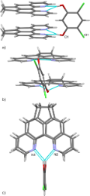
- -substituted soluble precursors 3a–f owing to increased modularity (Scheme 5) [62]. To this aim, acenaphthene was selected as key building block and it underwent two successive regioselective halogenations to give bromochloroacenaphthene 8 in 64% overall yield. The latter was next converted into the
- temperature required for the imide formation, as high temperature (>130 °C) induced undesired thermally-activated S-extrusion as side-reaction. According to this new synthetic route, compound 3a carrying octyl substituents was obtained on a gram-scale in 7 steps from acenaphthene, in 14% overall yield. The




Substitution reactions in the acenaphthene analog of quino[7,8-h]quinoline and an unusual synthesis of the corresponding acenaphthylenes by tele-elimination
Beilstein J. Org. Chem. 2024, 20, 243–253, doi:10.3762/bjoc.20.24
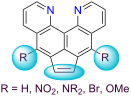
- positions 5 and 8 already at room temperature (Scheme 3). The overall yield of the main product 10 turned out to be high, but the substance contained a hard-to-separate impurity in an amount of up to 12%, to which, judged by the high-field position of the signals in the corresponding proton spectrum, was





Optimizations of lipid II synthesis: an essential glycolipid precursor in bacterial cell wall synthesis and a validated antibiotic target
Beilstein J. Org. Chem. 2024, 20, 220–227, doi:10.3762/bjoc.20.22
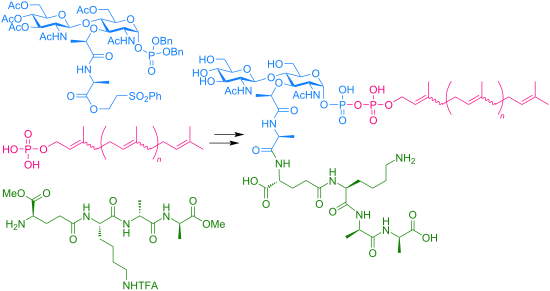
- -phosphite intermediate was then oxidized with hydrogen peroxide to yield dibenzyl α-phosphate 6, achieving an overall yield of 89% for these two steps. Removal of the 2-(phenylsulfonyl)ethanol protecting group in compound 6 was successfully achieved through treatment with 1,8-diazabicyclo[5.4.0]undec-7-ene
- mixture underwent a cross-coupling reaction with prenyl monophosphates [46] in DMF/THF over a four-day period, yielding fully protected versions of lipid II and its analogues. Subsequent global deprotection reactions, using aqueous NaOH, led to the formation of lipid II (11), with an overall yield of 16


Metal-catalyzed coupling/carbonylative cyclizations for accessing dibenzodiazepinones: an expedient route to clozapine and other drugs
Beilstein J. Org. Chem. 2024, 20, 193–204, doi:10.3762/bjoc.20.19
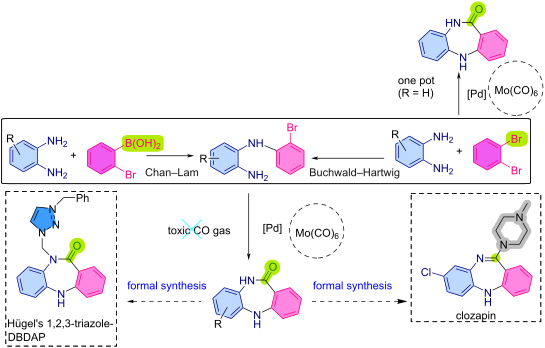
- due to the energetically favorable dissociation of Mo(CO)n into Mo(CO)n−1 which was proven to be a highly exothermic reaction in the presence of metal catalysts especially after the dissociation of the first CO group [23]. It should be noted that the best overall yield for the synthesis of 4a using


Synthesis of the 3’-O-sulfated TF antigen with a TEG-N3 linker for glycodendrimersomes preparation to study lectin binding
Beilstein J. Org. Chem. 2024, 20, 173–180, doi:10.3762/bjoc.20.17
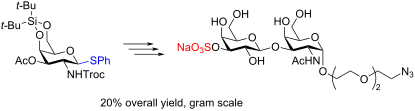
- TEG-N3 spacer attached is described. The synthesis of the TF antigen comprises seven steps, from a known N-Troc-protected galactosamine donor, with an overall yield of 31%. Both the spacer (85%) and the galactose moiety (79%) were introduced using thioglycoside donors in NIS/AgOTf-promoted
- following acetylation without purification of the intermediate, why the synthesis is high-yielding (20% overall yield) and easily scalable (9 g of protected disaccharide 7 and 1 gram of target 2 were synthesized). Experimental General methods All reactions containing air- and moisture-sensitive reagents


N-Boc-α-diazo glutarimide as efficient reagent for assembling N-heterocycle-glutarimide diads via Rh(II)-catalyzed N–H insertion reaction
Beilstein J. Org. Chem. 2023, 19, 1841–1848, doi:10.3762/bjoc.19.136
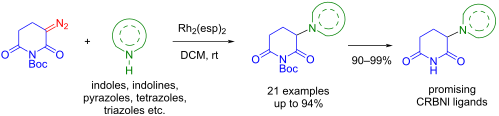
- the Rh2(esp)2 in both electronic and steric factors (see Supporting Information File 1). When Rh2(OAc)4 (1 mol %) was used, a 1.7:1 ratio of 6a/9a insertion products was observed, which is not much different from the result obtained with Rh2(esp)2. However, the overall yield of insertion products




Unprecedented synthesis of a 14-membered hexaazamacrocycle
Beilstein J. Org. Chem. 2023, 19, 1728–1740, doi:10.3762/bjoc.19.126
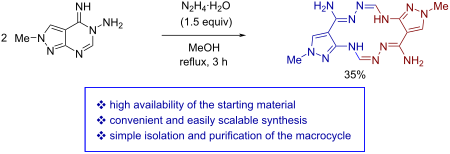
- yield to 25%. Reducing the amount of hydrazine hydrate to 3 equivalents (EtOH, reflux, 2 h) had a similar effect and gave an 85:15 mixture of 5 and 6 in an overall yield of 22%. In refluxing MeOH (3 equiv of N2H4∙H2O, 2 h), a mixture of 5 and 6 in a ratio of 89:11 was obtained in 31% overall yield. In


Radical chemistry in polymer science: an overview and recent advances
Beilstein J. Org. Chem. 2023, 19, 1580–1603, doi:10.3762/bjoc.19.116
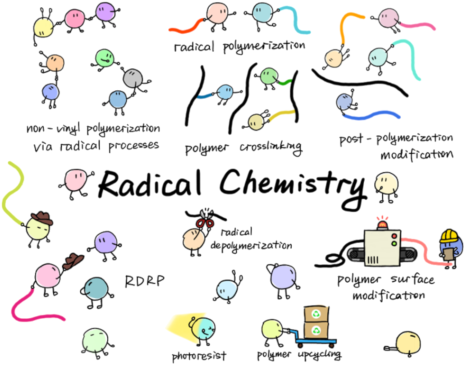
- polymerization. The use of a solvent can lower the viscosity of the polymerization system, leading to better mass and heat transfer. Good heat transfer can reduce the Trommsdorff–Norrish effect [22]. Meanwhile, the inhibited termination reactions cause a significant increase in the overall yield




Morpholine-mediated defluorinative cycloaddition of gem-difluoroalkenes and organic azides
Beilstein J. Org. Chem. 2023, 19, 1545–1554, doi:10.3762/bjoc.19.111
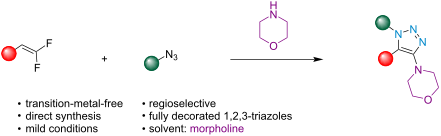
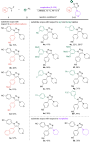
- -difluoroalkenes and the co-elution of the aniline byproducts during column chromatography with the desired products affected the overall yield of the reaction. For a complete optimization list with all conditions that were screened, see Supporting Information File 1. With the optimized conditions in hand, we




Synthesis of 5-arylidenerhodanines in L-proline-based deep eutectic solvent
Beilstein J. Org. Chem. 2023, 19, 1537–1544, doi:10.3762/bjoc.19.110

- concentration. HMF was then directly used in the Knoevenagel condensation with rhodanine in Pro/Gly yielding product 3j in 72% yield. The overall yield for this two-step process was 36%. As some of the products have already been described in the literature, we compared our results with the reported conditions


Synthesis of ether lipids: natural compounds and analogues
Beilstein J. Org. Chem. 2023, 19, 1299–1369, doi:10.3762/bjoc.19.96






Linker, loading, and reaction scale influence automated glycan assembly
Beilstein J. Org. Chem. 2023, 19, 1015–1020, doi:10.3762/bjoc.19.77
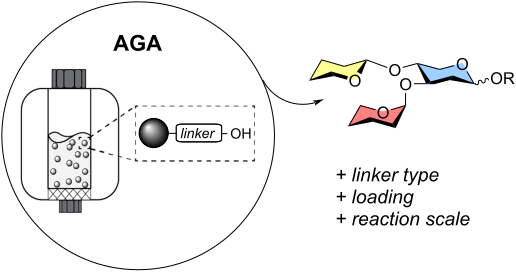
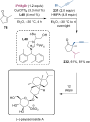
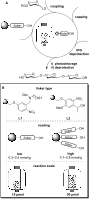
- scale [19], and linkers [20][21] affect the overall yield of solid phase peptide synthesis (SPPS). In the past decades, several supports and linkers have been developed and commercialized for SPPS, enabling a wide range of applications. Solid supports are available with different linker loadings, with
- to the glycan structure, with minimal variations such as presence or absence of a linker playing an important role in the post-AGA process. In some cases, performing post-AGA manipulations on resin dramatically improved the overall yield of the process. Future efforts need to focus on the development

Asymmetric tandem conjugate addition and reaction with carbocations on acylimidazole Michael acceptors
Beilstein J. Org. Chem. 2023, 19, 881–888, doi:10.3762/bjoc.19.65

- explain why at lower onium salt amount and shorter reaction times the diastereoselectivities are higher but at the expense of the overall yield. With the optimized reaction conditions in our hands, we next explored the scope of the domino reaction. Structurally diverse onium compounds 2 were tested to




Enolates ambushed – asymmetric tandem conjugate addition and subsequent enolate trapping with conventional and less traditional electrophiles
Beilstein J. Org. Chem. 2023, 19, 593–634, doi:10.3762/bjoc.19.44
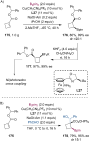
- -catalyzed conjugate addition and subsequent trapping of the zinc enolate by acylation or aldol reaction with an overall yield of 71–78% and good stereoselectivity (Scheme 57) [105][106][107]. Recently, Poock and Kalesse demonstrated the first total synthesis of halioxepine, a meridoterpene isolated from the
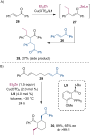
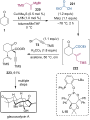
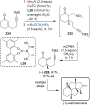
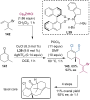
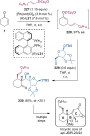
- contains six contiguous stereogenic centers out of which four are all-carbon quaternary stereocenters. The authors have achieved the stereoselective synthesis of waihoensene for the first time with a 3.8% overall yield (15 steps) (Scheme 59). The construction of the triquinane core included a Cu-catalyzed
- by the trapping of the metal enolate with Vilsmeier–Haack reagent. This way, the β-chloroaldehyde 143 was isolated in 69% yield and 92% ee. Further transformation of this compound resulted in the taxol core in only 4 steps with 11% overall yield while retaining the correct stereochemistry introduced