Search results
Search for "photophysical" in Full Text gives 270 result(s) in Beilstein Journal of Organic Chemistry. Showing first 200.
Mechanistic investigations of polyaza[7]helicene in photoredox and energy transfer catalysis
Beilstein J. Org. Chem. 2024, 20, 1236–1245, doi:10.3762/bjoc.20.106
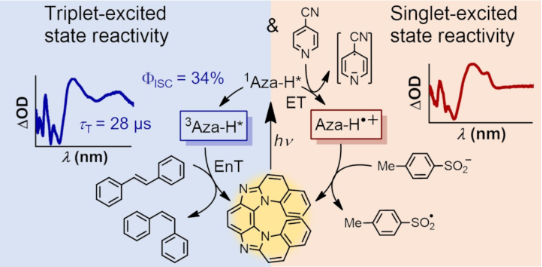
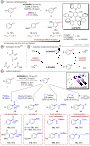
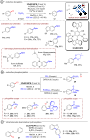
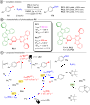
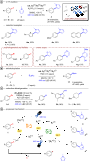
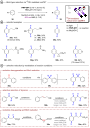
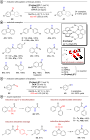
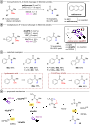
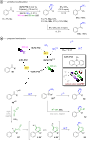
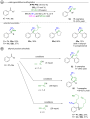
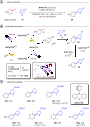
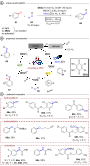
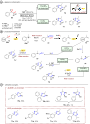
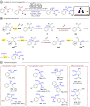
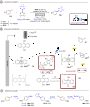
- photocatalyst (PC•+/PC = +1.12 V vs SCE) is then regenerated by an electron transfer from sodium p-toluenesulfinate (TsNa) (Ts•/Ts− = +0.70 V vs SCE) closing the photocatalytic cycle [45]. Unlike other prominent photocatalysts, little to nothing is known about the reactivity, the photophysical properties or the




Introduction of peripheral nitrogen atoms to cyclo-meta-phenylenes
Beilstein J. Org. Chem. 2024, 20, 1207–1212, doi:10.3762/bjoc.20.103
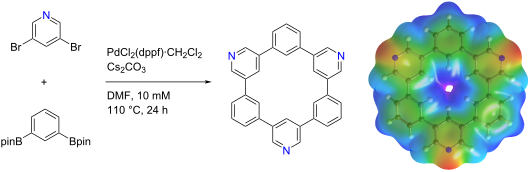
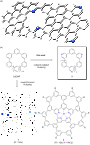
- achieved with one-pot Suzuki–Miyaura coupling to arrange phenylene rings and pyridinylene rings in an alternating fashion. Analyses with UV–vis spectroscopy showed changes in the photophysical properties with nitrogen doping, and X-ray crystallographic analyses experimentally revealed the presence of
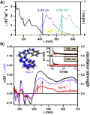
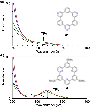
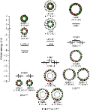
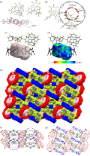
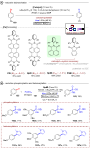
- dopants. Photophysical properties of 3a and 3b. (a) UV–vis spectrum of 3a in CHCl3. (b) UV–vis spectrum of 3b in CHCl3. For reference, the spectra of [6]CMP and [8]CMP from the literature are also shown in gray [15]. Crystal structures of 3a and 3b. (a) Molecular structures. Biaryl dihedral angles (ω) are



Novel route to enhance the thermo-optical performance of bicyclic diene photoswitches for solar thermal batteries
Beilstein J. Org. Chem. 2024, 20, 1053–1068, doi:10.3762/bjoc.20.93
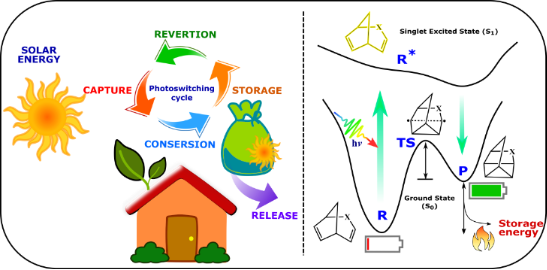
- we report our attempt to enhance both the thermochemical and photophysical properties in a single-bridged bicyclic diene (BBD)-based photoswitch by elongating the unsaturated bridge with different heteroatomic units. To elucidate the best elongation unit, the energy storage capacity and the TBR
- barriers were accounted using the DLPNO-CCSD(T) and (8,8)-CASPT2 methods, respectively. The photophysical properties including the absorption onset, excitation wavelengths, and the absorption intensities were extensively investigated with the time-dependent calculations. The result provides information on
- , the improvement of both the thermochemical and photophysical properties of a photoswitching couple is a challenging task. The bicyclooctadiene/tetracyclooctane (BOD/TCO) couple structurally resembles the NBD/QC pair but has an extended saturated bridge due to the additional methylene (-CH2-) unit. An


Structure–property relationships in dicyanopyrazinoquinoxalines and their hydrogen-bonding-capable dihydropyrazinoquinoxalinedione derivatives
Beilstein J. Org. Chem. 2024, 20, 1037–1052, doi:10.3762/bjoc.20.92
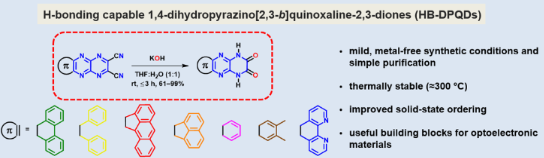
- and 1b–7b in DMSO.a Supporting Information Supporting Information File 6: General experimental methods, 1H and 13C NMR, and HRMS spectra of the compounds as well as photophysical, computational and X-ray data. Acknowledgements This work is based on Tural N. Akhmedov’s doctoral thesis (“Design




Synthesis and properties of 6-alkynyl-5-aryluracils
Beilstein J. Org. Chem. 2024, 20, 898–911, doi:10.3762/bjoc.20.80
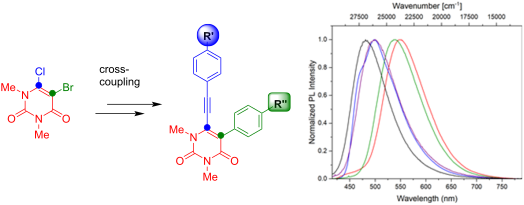
- synthesized by other methods and the single Suzuki reaction on uracil is well studied [42][69][70][71]. Physical properties The photophysical properties of selected derivatives were investigated by steady-state absorption and photoluminescence spectroscopy. The influence of the substitution pattern on the
- photophysical properties is displayed in Figure 4. Corresponding photophysical data and quantum yields are described in Table 2. The analysis of the absorption spectra revealed that the spectra can be divided into a short-wave and long-wave region. In the long wavelength region (350–500 nm) all measured
- gives first insights into the optical properties. It was observed that the photophysical properties could be partially modulated by the chosen substituents. Experimental General information Nuclear magnetic resonance spectra (1H/13C/19F NMR) were recorded on a Bruker AVANCE 300 III, 250II, or 500. The





Synthesis of new representatives of A3B-type carboranylporphyrins based on meso-tetra(pentafluorophenyl)porphyrin transformations
Beilstein J. Org. Chem. 2024, 20, 767–776, doi:10.3762/bjoc.20.70
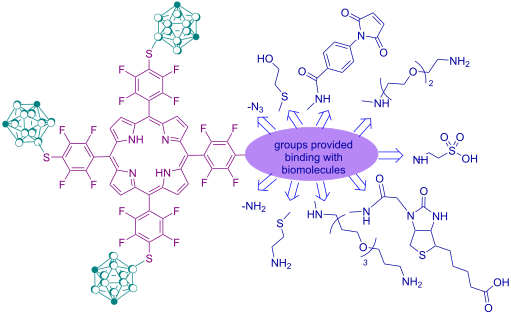
- aromatic substitution; Introduction Porphyrins are available macroheterocyclic compounds which play an important role in diverse areas of scientific research owing to their unique photophysical, electrochemical, and optical properties [1]. They have been widely studied in biomedical applications, as



Switchable molecular tweezers: design and applications
Beilstein J. Org. Chem. 2024, 20, 504–539, doi:10.3762/bjoc.20.45





Enhanced host–guest interaction between [10]cycloparaphenylene ([10]CPP) and [5]CPP by cationic charges
Beilstein J. Org. Chem. 2024, 20, 436–444, doi:10.3762/bjoc.20.38
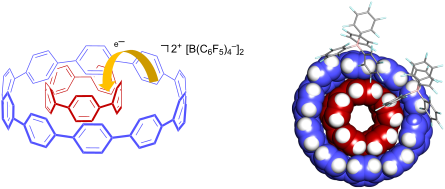
- , [10]CPP⊃[5]CPP2+. While the same host–guest complex consisted of neutral CPPs, [10]CPP⊃[5]CPP, was already reported, the cationic complex showed an about 20 times higher association constant in (CDCl2)2 at 25 °C (103 mol L−1). Electrochemical and photophysical analyses and theoretical calculations
- new CPP analogs [4][5][6][7][8] and unveiling their unique physical properties, such as size-dependent photophysical [9][10][11][12][13][14][15] and redox properties [16][17][18][19][20][21]. The other, and one of the most exciting, functions of CPPs derived from the ring structure is their host
- photophysical and electrochemical analyses and DFT calculations. Therefore, this CT is most likely the origin of the increased Ka value. We also discuss the charged double-layer structure, as determined by X-ray crystallographic analysis. Results and Discussion The size-complementary interaction between CPP2




Mono or double Pd-catalyzed C–H bond functionalization for the annulative π-extension of 1,8-dibromonaphthalene: a one pot access to fluoranthene derivatives
Beilstein J. Org. Chem. 2024, 20, 427–435, doi:10.3762/bjoc.20.37
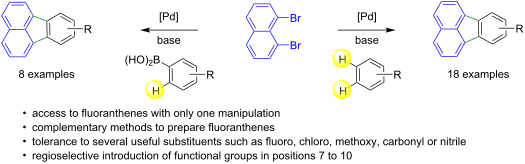
- ; palladium; Introduction Substituted polyaromatics such as fluoranthenes (Figure 1) are widely used in materials chemistry due to their physical properties, and the introduction of a suitable functional group on the appropriate positions of fluoranthenes either allows their photophysical properties to be


Photochromic derivatives of indigo: historical overview of development, challenges and applications
Beilstein J. Org. Chem. 2024, 20, 228–242, doi:10.3762/bjoc.20.23
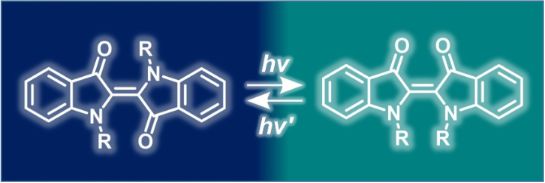
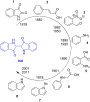
- derivatives, outline the structural peculiarities, photophysical and photochemical properties of indigo and proceed with the detailed discussion of the photochromic indigo derivatives. Finally, we highlight the photochromism of the structural isomers of indigo (isoindigo and indirubin) and provide an overview
- towards indigo and its derivatives have been recently reviewed in detail by Hecht and Huang [9]. Strucutre and photophysical properties of indigo Indigo dye is blue crystalline powder, which starts to melt at above 390 °C and sublimes in vacuum at above 170 °C [2]. In 1980, it was discovered that indigo
- interest and, therefore, has been investigated comprehensively. To understand the photochemical and photophysical properties of indigo, a great number of theoretical and experimental studies [25][26][27][28][29][30][31][32][33][34][35] have been performed so far, which allowed to characterize excited state





Perspectives on push–pull chromophores derived from click-type [2 + 2] cycloaddition–retroelectrocyclization reactions of electron-rich alkynes and electron-deficient alkenes
Beilstein J. Org. Chem. 2024, 20, 125–154, doi:10.3762/bjoc.20.13
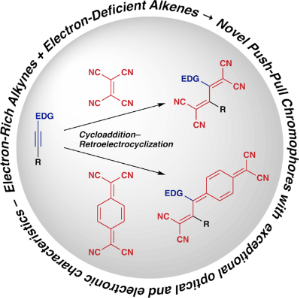
- particular, Diederich et al. conducted a theoretical investigation on the photophysical properties of 1,1,2,4,4-pentacyanobuta-1,3-diene (PCBD) (63) [134]. Compound 63 and the TCBD 64 demonstrated no discernible luminescence at room temperature and 77 K (Figure 4). Transient absorption spectral measurements
- . Concurrently, the excited electron was extensively delocalized over the entire pentacyanobutadiene moiety. The researchers postulated the following description for the photophysical properties of 64: a nonradiative deactivation process occurred via a CI, which was similar to that observed in the case of 63
- TCBD, donor–acceptor conjugated systems have been systematically developed by coupling the TCBD motif with an electron donor, resulting in the experimental observation of photoinduced electron- and energy-transfer events. In 2014, comprehensive investigations on the photophysical properties of


Biphenylene-containing polycyclic conjugated compounds
Beilstein J. Org. Chem. 2023, 19, 1895–1911, doi:10.3762/bjoc.19.141
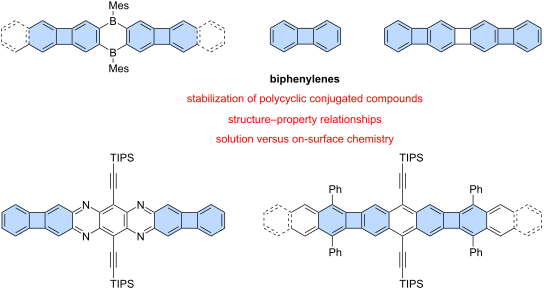
- 616 nm. Based on the photophysical properties of compounds 54a and 54b, which were synthesized in the previous study (Scheme 11), it is evident that the addition of the second biphenylene-fused pyrazine group to the structure leads to a substantial red shift towards the NIR region. This observation
- not be separated by physical methods, it was not possible to study their photophysical properties separately. Nonetheless, comparison of the properties of POAs 73 and 84 has provided essential data. Closely resembling compound 73, the red color of POA 84 is attributed to an extensively broad



Aromatic systems with two and three pyridine-2,6-dicarbazolyl-3,5-dicarbonitrile fragments as electron-transporting organic semiconductors exhibiting long-lived emissions
Beilstein J. Org. Chem. 2023, 19, 1867–1880, doi:10.3762/bjoc.19.139
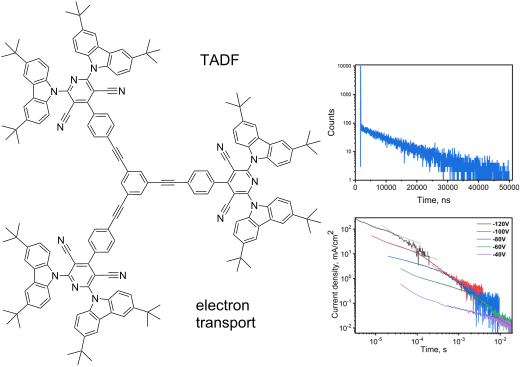
- compounds. In general, polyaromatic π-systems with pyridine-3,5-dicarbonitrile fragments demonstrate promising potential for use in organic electronic devices, such as OLEDs. Keywords: charge transport; intramolecular charge transfer; photophysical properties; pyridine-3,5-dicarbonitrile; Introduction The
- of pyridine-3,5-dicarbonitrile-derived electron-acceptor and acridine electron–donor moieties. The films of molecular mixtures of these emitters with the hosts exhibited excellent photophysical properties [6]. They showed PLQY of up to 91%, tiny singlet–triplet energy gaps of 0.01 eV, and ultrashort
- compounds 6–9 were confirmed by the spectral data and elemental analyses. Remarkably, despite a highly hindered structure, compound 9 exhibits good solubility in non-polar solvents. Photophysical properties The electronic structures of compounds 6–9 in the ground and excited states were investigated by


Thienothiophene-based organic light-emitting diode: synthesis, photophysical properties and application
Beilstein J. Org. Chem. 2023, 19, 1849–1857, doi:10.3762/bjoc.19.137
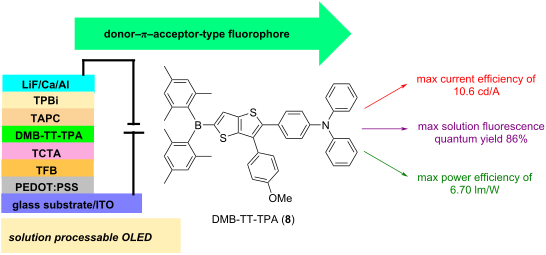
- pull–push fluorophore, DMB-TT-TPA (8), having TPA and DMB units as donor and acceptor units that were linked through a 4-MeOPh-substituted TT core as a π-spacer. The photophysical properties of the fluorophore were investigated by spectroscopic methods. Moreover, DMB-TT-TPA (8) was fabricated as an
- emitter for an organic light-emitting diode through a solution process. DMB-TT-TPA (8) displayed excellent performance in both device application and photophysical properties, i.e., a maximum solution fluorescence quantum yield of 86% in THF, maximum solid-state fluorescence quantum yield of 41%, maximum
- lithiation of 7 and following reaction with dimesitylboron fluoride in 85% yield (Scheme 1). Photophysical properties The UV–vis absorption and fluorescence spectra of DMB-TT-TPA (8) were recorded in THF (Figure 1 and Table 1) [38]. It showed maximum absorption and emission wavelengths of 411 and 520 nm


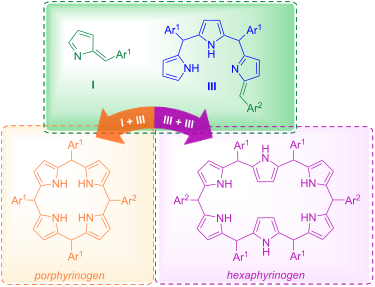
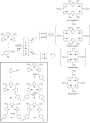
Substituent-controlled construction of A4B2-hexaphyrins and A3B-porphyrins: a mechanistic evaluation
Beilstein J. Org. Chem. 2023, 19, 1832–1840, doi:10.3762/bjoc.19.135
- of Their Photophysical Properties” written by Seda Cinar, Hacettepe University, Graduate School of Science and Engineering, Beytepe Campus, 06800, Ankara, Turkey. Funding SC thanks The Scientific and Technological Research Council of Turkey (TUBITAK) for doctoral scholarship (2211-C Domestic Ph.D



Charge carrier transport in perylene-based and pyrene-based columnar liquid crystals
Beilstein J. Org. Chem. 2023, 19, 1755–1765, doi:10.3762/bjoc.19.128
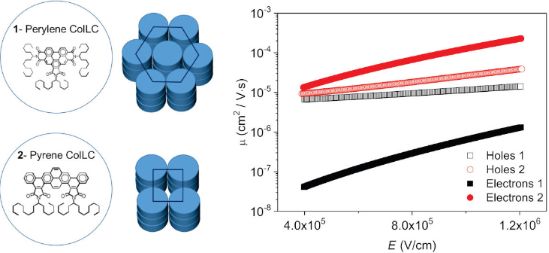
- molecular π-stacking inside the columns. The pyrene crystallizes bellow 166 °C, preserving the close-packed columnar rectangular structure of the mesophase. Photophysical analysis and numerical calculations assisted the interpretation of positive and negative charge carrier mobilities obtained from fitting
- from strong π–π interactions [7][21][22][23][24]. In this work, we investigated a perylene and a pyrene-based columnar liquid crystal in hole-only and electron-only devices to compare their charge carriying properties. The molecular organization and photophysical performances are coherent with the


A deep-red fluorophore based on naphthothiadiazole as emitter with hybridized local and charge transfer and ambipolar transporting properties for electroluminescent devices
Beilstein J. Org. Chem. 2023, 19, 1664–1676, doi:10.3762/bjoc.19.122
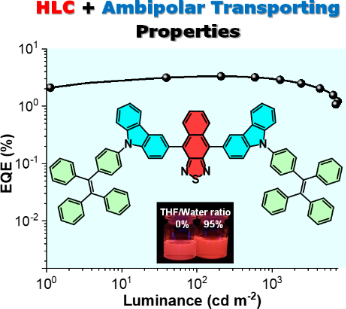
- luminescence efficiency, while a significant spatial separation between hole and particle wavefunctions considered for CT component promoting RISC process along high-lying excitation state for enhancing an exciton utilization efficiency (EUE). The photophysical properties of TPECNz were studied in solution


Tying a knot between crown ethers and porphyrins
Beilstein J. Org. Chem. 2023, 19, 1630–1650, doi:10.3762/bjoc.19.120
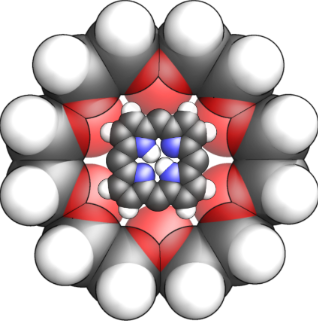
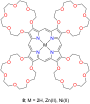
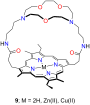
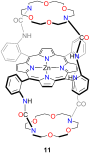
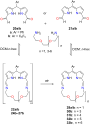
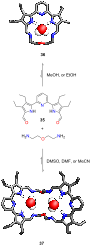
- supramolecular architectures [45], e.g., catenanes [73], rotaxanes [74], and catalytic systems [75]. Pelegrino and co-workers reported on crowned porphyrinoids demonstrating interesting photophysical properties [71]. The crown ether part was also demonstrated to play a role of a linker between two porphyrin









Organic thermally activated delayed fluorescence material with strained benzoguanidine donor
Beilstein J. Org. Chem. 2023, 19, 1289–1298, doi:10.3762/bjoc.19.95
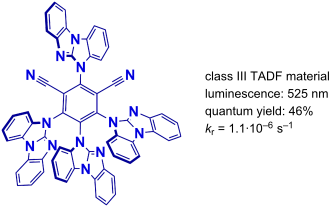
- directly related with the overlap integral between HOMO and LUMO orbitals and influences the energy differences between first singlet and triplet excited states [14]. Therefore, we expect a marked difference in the photophysical properties for 4BGIPN, vide infra. Analysis of the intermolecular interactions
- and LUMO energy levels indicates the potential suitability of 4BGIPN material for application not only as emitter in the emitting layer but also as an electron transport layer in the fabrication of OLEDs. Photophysical properties and theoretical considerations UV–vis and photoluminescence (PL) spectra
- particular isomer that could show superior photophysical TADF characteristics important for fabricating TADF OLED devices with improved operating stability. Experimental General considerations All reactions were performed under a N2 atmosphere. Solvents were dried as required. Sodium hydride was washed from


Unravelling a trichloroacetic acid-catalyzed cascade access to benzo[f]chromeno[2,3-h]quinoxalinoporphyrins
Beilstein J. Org. Chem. 2023, 19, 1216–1224, doi:10.3762/bjoc.19.89
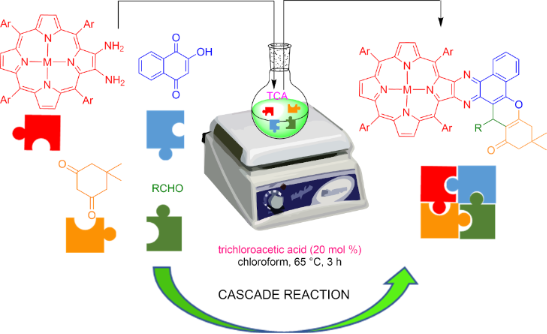
- spectroscopy. The preliminary photophysical results revealed a significant red-shift in their absorption and emission spectra as compared to the meso-tetrakis(4-methylphenyl)porphyrins due to the extended π-conjugation. Keywords: bathochromic shift; benzo[f]chromeno[2,3-h]quinoxalinoporphyrins; catalysis
- copper(II) porphyrins 3–8. Finally, the structures of all newly synthesized benzo[f]chromeno[2,3-h]quinoxalinoporphyrins 3–16 and benzo[f]quinoxalinoporphyrin 17 were assigned on the basis of IR, 1H and 13C NMR, and HRMS data analysis. Photophysical characteristics The UV–vis spectra of the newly
- , copper(II) benzo[f]quinoxalinoporphyrin 17 for the mechanistic studies. On photophysical evaluation, the newly synthesized porphyrins displayed significant red-shifted absorption and emission as compared to simple meso-tetraarylporphyrins due to the extended π-electronic conjugation. Hence, the present


New one-pot synthesis of 4-arylpyrazolo[3,4-b]pyridin-6-ones based on 5-aminopyrazoles and azlactones
Beilstein J. Org. Chem. 2023, 19, 1155–1160, doi:10.3762/bjoc.19.83
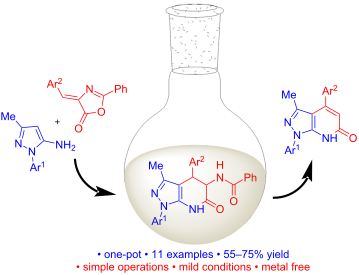
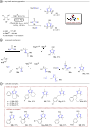
- -aminopyrazoles 1, 5, 6 and azlactones 2a–i, followed by heating the resulting intermediate in DMSO in the presence of t-BuOK. Photophysical properties of the obtained compounds were studied. Biologically active 4-arylpyrazolo[3,4-b]pyridin-6-ones. Normalized absorption and fluorescence spectra of solutions of


Photoredox catalysis harvesting multiple photon or electrochemical energies
Beilstein J. Org. Chem. 2023, 19, 1055–1145, doi:10.3762/bjoc.19.81
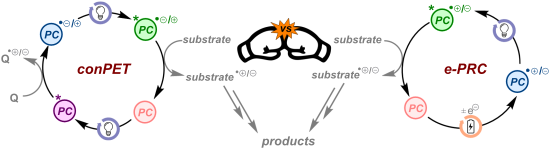
- cyclized product 5a was obtained – albeit only in 28% yield – corroborating a radical mechanism. PDI catalysts have since found applications in other chemical transformations, their photophysical properties have been investigated further [40], and new variants [41] including heterogeneous versions have
- rule is classically applied only for photophysical phenomena stating that emission events generally occur only from the lowest excited state of a certain multiplicity due to very fast relaxation via internal conversion (IC) and vibronic relaxation [67][68][69], it can also be adapted to photochemical

























The effect of dark states on the intersystem crossing and thermally activated delayed fluorescence of naphthalimide-phenothiazine dyads
Beilstein J. Org. Chem. 2023, 19, 1028–1046, doi:10.3762/bjoc.19.79
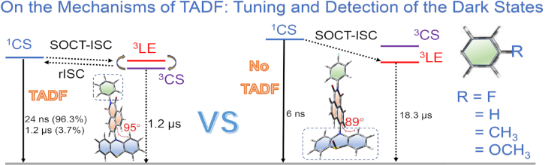
- –acceptor dyads were prepared to study the thermally activated delayed fluorescence (TADF) properties of the dyads, from a point of view of detection of the various transient species. The photophysical properties of the dyads were tuned by changing the electron-donating and the electron-withdrawing
- intersystem crossing (rISC) is slow, without coupling with an approximate 3LE state. These studies are useful for an in-depth understanding of the photophysical mechanisms of the TADF emitters, as well as for molecular structure design of new electron donor–acceptor TADF emitters. Keywords: charge-transfer
- may also enhance the rISC in OLED devices, in which the electron–hole recombination produces mainly the triplet state (the theoretical probability is 75%, by following the spin statistic rule) [1]. Compared to the application studies, the investigation of the photophysical mechanism of TADF emitters


Construction of hexabenzocoronene-based chiral nanographenes
Beilstein J. Org. Chem. 2023, 19, 736–751, doi:10.3762/bjoc.19.54
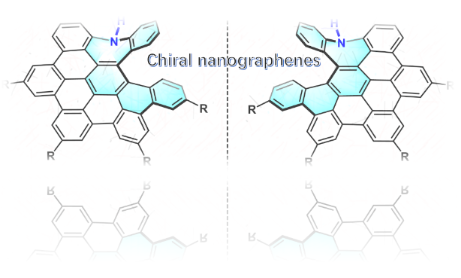
- this [7]helicene family by introducing different linkers such as nitrogen, sulfur, sulfone, ketone, methylene, and derivatives of ketone [44]. Due to the varied nature of the different linkers, the photophysical and semiconductor properties can be effectively tuned. Feng and co-workers reported a
- benzannulation of diacetylene 42 in an 85% yield. The final NG 44 formed by treating compound 43 with DDQ/TfOH at 0 °C and the overall structure exhibits interesting photophysical and antiaromatic properties [45]. During the final Scholl reaction, an monoiodide structure 101 was also isolated (Scheme 11). In the
- exploit three-dimensional aesthetic structures. The continuously developed novel structures contented our interests and curiosity. To further tune the optoelectronic or photophysical properties of nanographenes for real applications, heteroatom doping was found to be an effective strategy. The




CuAAC-inspired synthesis of 1,2,3-triazole-bridged porphyrin conjugates: an overview
Beilstein J. Org. Chem. 2023, 19, 349–379, doi:10.3762/bjoc.19.29
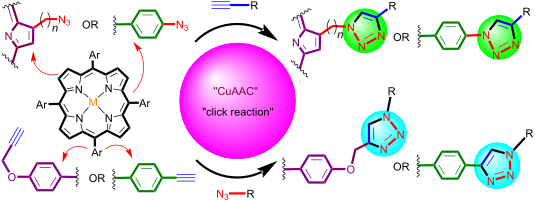
- connect two diverse moieties in a single framework. Therefore, this review focuses on the synthesis and photophysical studies of β- and meso-substituted and 1,2,3-triazole-fused porphyrin conjugates. All of the porphyrin conjugates discussed here are synthesized via a copper(I)-catalyzed Huisgen 1,3
- includes a brief synthetic procedure with reaction conditions, product yields, and photophysical and other properties of the end products. Review Overview of CuAAC click reactions on porphyrins The CuAAC-inspired click reaction is particularly useful for the coupling of two different moieties comprising
- , keeping the biological and optical properties of coumarin and porphyrin in mind, in 2015 we reported the synthesis and photophysical studies of β-triazole-bridged porphyrin-coumarin conjugates 11–15 [22] and β-triazolomethyl-linked porphyrin-coumarin dyads 16–20 [23] by using a click reaction approach