Search results
Search for "protecting groups" in Full Text gives 336 result(s) in Beilstein Journal of Organic Chemistry. Showing first 200.
Photoredox catalysis enabling decarboxylative radical cyclization of γ,γ-dimethylallyltryptophan (DMAT) derivatives: formal synthesis of 6,7-secoagroclavine
Beilstein J. Org. Chem. 2023, 19, 918–927, doi:10.3762/bjoc.19.70
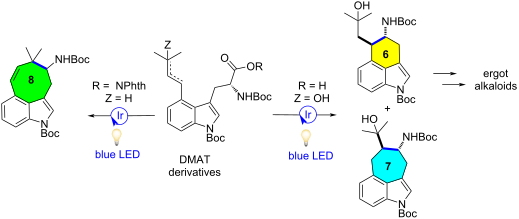
- Information File 1, Figure S1) due to the protecting groups complicates the analysis of the reaction products. However, the olefinic signals were a pair of two doublets representing two vicinal vinylic protons [6.48 (d, J = 8.0 Hz, 1H), 6.29 (d, J = 8.0 Hz, 1H), 5.31 (d, J = 8.0 Hz, 1H), and 5.28 (d, J = 8.0


Enolates ambushed – asymmetric tandem conjugate addition and subsequent enolate trapping with conventional and less traditional electrophiles
Beilstein J. Org. Chem. 2023, 19, 593–634, doi:10.3762/bjoc.19.44
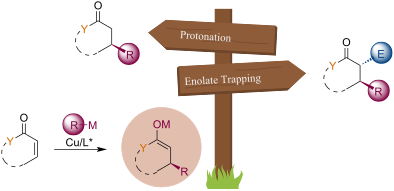
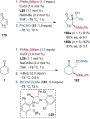
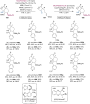
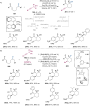
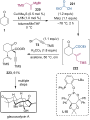
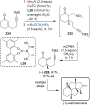
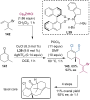
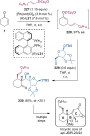
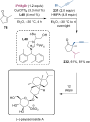
- several imines bearing various N-protecting groups [48]. We have argued that this protecting group could influence the enolate addition. Indeed, an effect of the nitrogen protecting group was observed. Interestingly, small sulfonyl-based protecting groups led to the (R,R,S)-diastereoisomer of the product









Asymmetric synthesis of a stereopentade fragment toward latrunculins
Beilstein J. Org. Chem. 2023, 19, 428–433, doi:10.3762/bjoc.19.32
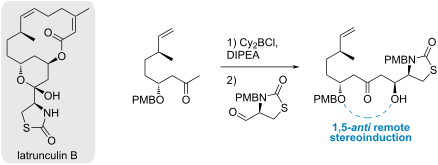
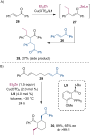
- by the PMB and other aromatic groups, while being disfavoured by silyl protecting groups. Alternatively, an (R)-configuration of C-15 could result from a polar Felkin–Anh model controlled by aldehyde 8 through chair-transition state B [14][15][16]. To determine the configuration of C-15, we initially
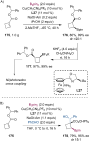
- –Tishchenko method [31][32], in presence of SmI2 and an aldehyde (Scheme 4). para-Nitrobenzaldehyde was used [33] to introduce a labile para-nitrobenzoate on the product, planning an easy deprotection of the alcohol. This would also pave the way to an orthogonal manipulation of protecting groups on the




1,4-Dithianes: attractive C2-building blocks for the synthesis of complex molecular architectures
Beilstein J. Org. Chem. 2023, 19, 115–132, doi:10.3762/bjoc.19.12
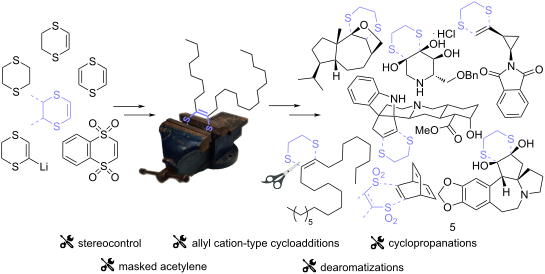
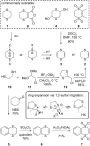
- 1,3-Dithianes are text book examples of versatile organic synthesis building blocks. They are familiar carbonyl protecting groups, but are more commonly known as ‘umpolung’ reagents, or acyl anion equivalents [1][2][3][4][5][6]. This is because they can be readily metalated and alkylated, allowing the
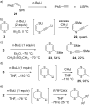
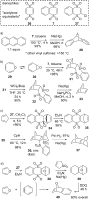
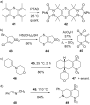
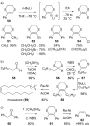
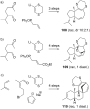
- (101), without the need for any protecting groups (Scheme 15b). Our group has also investigated non-cyclic analogs of 5,6-dihydro-1,4-dithiin-2-ylmethanol (90), such as the dimethylthio-substituted allyl alcohol 105 (Scheme 16) [103]. Surprisingly, we have found that these allyl alcohols totally lack











Total synthesis of grayanane natural products
Beilstein J. Org. Chem. 2022, 18, 1707–1719, doi:10.3762/bjoc.18.181
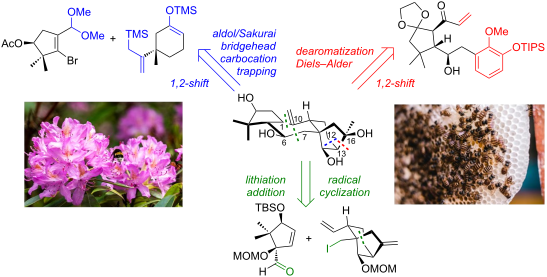
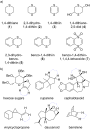
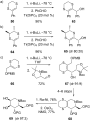
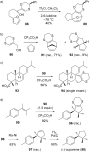
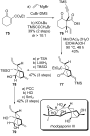
- protecting groups followed by hydrolysis of the acetyl protecting groups, affording the desired product with spectral data identical to reported natural samples. Shirahama’s synthesis was an illustrative example that rings A, B and the bicycle CD of grayananes could all be obtained by SmI2-promoted steps





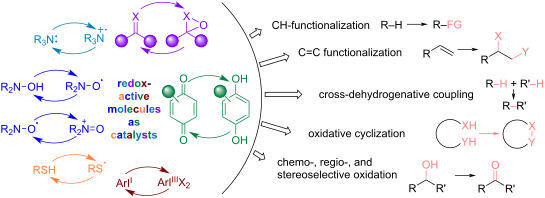
Redox-active molecules as organocatalysts for selective oxidative transformations – an unperceived organocatalysis field
Beilstein J. Org. Chem. 2022, 18, 1672–1695, doi:10.3762/bjoc.18.179
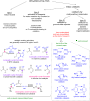
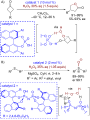
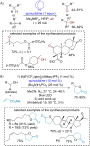
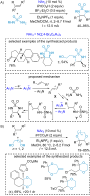
- conditions the oxidative ABNO-catalyzed α-cyanation of amines was realized with no need for N-protecting groups [105] (Scheme 16B). The key reactive species proposed in these electrochemical reactions are the oxoammonium cations formed from the amine-N-oxyl catalyst at the anode. The oxoammonium cation











A new route for the synthesis of 1-deazaguanine and 1-deazahypoxanthine
Beilstein J. Org. Chem. 2022, 18, 1617–1624, doi:10.3762/bjoc.18.172
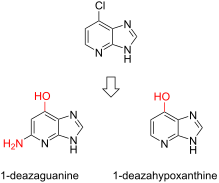
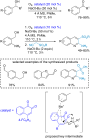
- -1-deazapurine [16], the key reactions are copper-catalyzed benzyl ether formation and site-specific nitration. The application of protecting groups was necessary for reasons of solubility and to improve selectivity. The obtained heterocycles may serve as core compound for further structural


Preparation of β-cyclodextrin-based dimers with selectively methylated rims and their use for solubilization of tetracene
Beilstein J. Org. Chem. 2022, 18, 1596–1606, doi:10.3762/bjoc.18.170
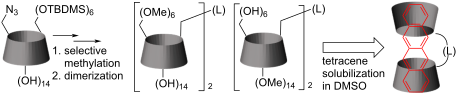
- functionalizing these molecules, for example, by inserting some protecting groups. Substituted heptacenes demonstrate remarkable stability and exceptional electric properties. Nevertheless, studying the properties of unsubstituted acenes is also essential. We guessed that some increase in solubility of acene


Solid-phase total synthesis and structural confirmation of antimicrobial longicatenamide A
Beilstein J. Org. Chem. 2022, 18, 1560–1566, doi:10.3762/bjoc.18.166
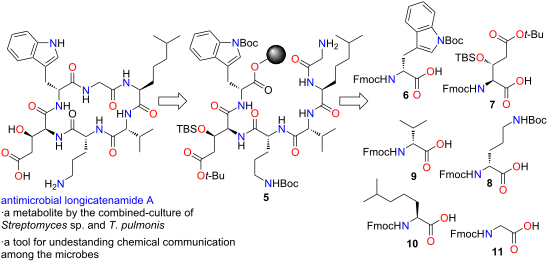
- synthesis. Third, the peptide chain was cyclized in the solution phase, followed by simultaneous cleavage of all protecting groups to afford longicatenamide A. Chromatographic analysis corroborated the chemical structure of longicatenamide A. Furthermore, the antimicrobial activity of synthesized
- chemical communication. The retrosynthesis of peptide 1 is displayed in Scheme 1. First, the cyclic peptide 1 was linearized by retrosynthesis, and acid-labile protecting groups were attached onto the reactive side chain. The biomimetic synthesis of cyclic peptides often enables efficient synthesis [12][13
- 29. Then, five rounds of DIC/Oxyma-mediated amidation [22] and Nα-deprotection with piperidine led to resin-bound peptide 5. Treatment of 5 with TFA/CH2Cl2 1:99 released 30 into the solution without unmasking the acid-labile protecting groups of the side chains. Subsequently, peptide 30 was cyclized



1,4,6,10-Tetraazaadamantanes (TAADs) with N-amino groups: synthesis and formation of boron chelates and host–guest complexes
Beilstein J. Org. Chem. 2022, 18, 1424–1434, doi:10.3762/bjoc.18.148
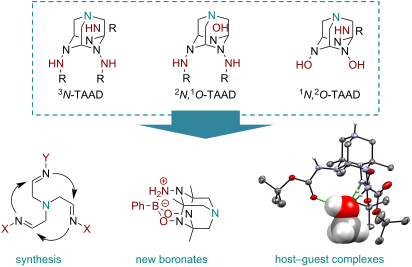
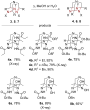
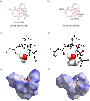
- carbazates. In the synthesis of product 3a the intermediate α-chlorohydrazone 9a was not isolated. The preparation of mixed oxime-hydrazones 5 and 7 was more challenging as it required a modular synthetic approach and the use of protecting groups. The developed synthetic route starting from benzylamine is






Preparation of an advanced intermediate for the synthesis of leustroducsins and phoslactomycins by heterocycloaddition
Beilstein J. Org. Chem. 2022, 18, 1385–1395, doi:10.3762/bjoc.18.143
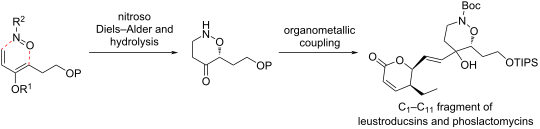
- diastereomers. Therefore, we decided to oxidize the acetal in 23 to the corresponding lactone (Scheme 9). The acetal was first hydrolyzed to the hemiacetal 24 in quantitative yield. Oxidation of 24 proved delicate due to the lability of the tertiary allylic alcohol, and the presence of acid-sensitive protecting
- groups. Several conditions were tested: silver oxide on celite [33] failed to give any conversion. PCC with sodium acetate [34] gave only traces of the target lactone 25. However, the use of the Jones’ reagent gave reproducible yields of 25, together with the deprotected alcohol 26. Under optimized


Synthesis of C6-modified mannose 1-phosphates and evaluation of derived sugar nucleotides against GDP-mannose dehydrogenase
Beilstein J. Org. Chem. 2022, 18, 1379–1384, doi:10.3762/bjoc.18.142
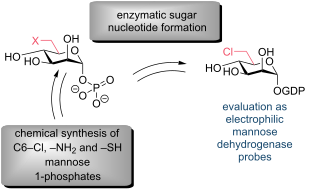
- diffuse intermolecular C–H···O contacts involving the phosphate and acetyl oxygen atoms. Deprotection of 16 was completed in two steps, first using hydrogenolysis with Adam’s catalyst (PtO2), followed by removal of the acetate protecting groups with Et3N/H2O/MeOH, and furnished the target glycosyl 1


A versatile way for the synthesis of monomethylamines by reduction of N-substituted carbonylimidazoles with the NaBH4/I2 system
Beilstein J. Org. Chem. 2022, 18, 1032–1039, doi:10.3762/bjoc.18.104

- particularly suitable for peptide chemistry since protecting groups are often required in peptide synthesis [52][53]. These multistep reaction methods are conducive to avoid overmethylation products. Although procedures for the synthesis of monomethylamines have been developed over the past years, the starting


First series of N-alkylamino peptoid homooligomers: solution phase synthesis and conformational investigation
Beilstein J. Org. Chem. 2022, 18, 845–854, doi:10.3762/bjoc.18.85
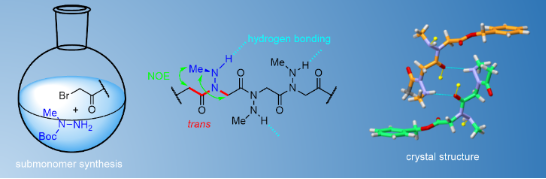
- acylation conditions in solution (Scheme 1) allowed us to reach the pentamer length with good yields for each substitution–acylation submonomer cycle (from 56 to 76% yield, Supporting Information File 1, Scheme S1). All compounds were acetylated at the N-terminus followed by removal of the Boc protecting
- groups to obtain peptoids 1–5 with high purity at the scale of several hundred milligrams (Table 1). Synthesis details are provided in Supporting Information File 1, along with analysis data. The main limitation of this synthetic route is the somewhat delicate purification of the products after the


Copper-catalyzed multicomponent reactions for the efficient synthesis of diverse spirotetrahydrocarbazoles
Beilstein J. Org. Chem. 2022, 18, 796–808, doi:10.3762/bjoc.18.80
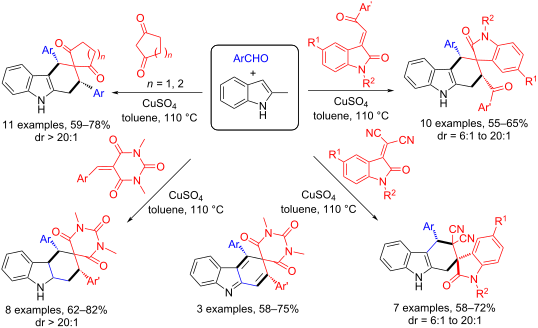
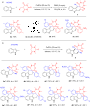
- , substrates with a differently substituted indole ring or with different protecting groups on the indole N-1 position (2f, 2g). All substrates reacted smoothly to give the corresponding products in moderate to good yields and with high stereoselectivity. It should be pointed out that the minor products 2a’–e





Tosylhydrazine-promoted self-conjugate reduction–Michael/aldol reaction of 3-phenacylideneoxindoles towards dispirocyclopentanebisoxindole derivatives
Beilstein J. Org. Chem. 2022, 18, 469–478, doi:10.3762/bjoc.18.49
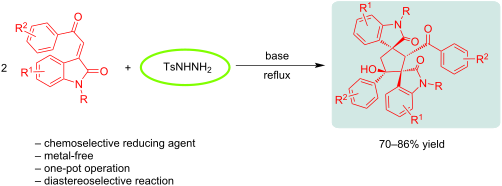
- , 3o, 3q, 3s, 3t and 3x) gave a good yield of the corresponding product, respectively. Here also, the halo-substituted aryl ring on 1 can be further used for transition-metal-catalyzed cross coupling reactions, thus providing a very good application. Then the effect of N-protecting groups on the


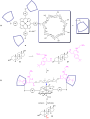
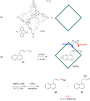
Site-selective reactions mediated by molecular containers
Beilstein J. Org. Chem. 2022, 18, 309–324, doi:10.3762/bjoc.18.35
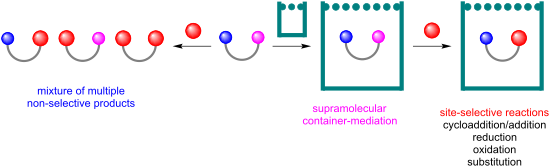
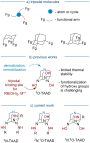
- rather hard to just reduce only one site in the presence of the others. Protecting groups are widely used to prevent reaction of one or more functional groups and let others to react [55][56][57]. Generally, protecting groups are covalently connected to the targeted groups, which requires
- prefunctionalization and deprotection synthetic procedures. Based on the logical concept of protecting groups, noncovalent interactions can be considered, because they can be built up in situ and are weak enough to let the substrate dissociate from the “protecting template” easily, omitting the complicated
- prefunctionalization and deprotection processes. Moreover, functional groups that are not suitable for being functionalized with protecting groups can also be incorporated into the noncovalent protective systems. Actually, the molecular container has been applied to work as a noncovalent protective module. In this

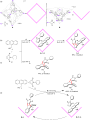





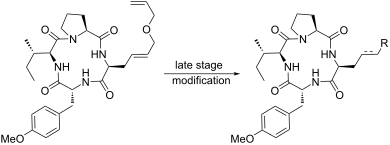
Synthesis and late stage modifications of Cyl derivatives
Beilstein J. Org. Chem. 2022, 18, 174–181, doi:10.3762/bjoc.18.19
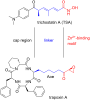
- chirality transfer. With this positive results in hand, we incorporated 5 into the desired tetrapeptide 8. So far, we carried out peptide Claisen rearrangements only with small dipeptides, but never used longer peptide chains, such as tetrapeptides. We knew from previous work that the protecting groups on



Asymmetric organocatalytic Michael addition of cyclopentane-1,2-dione to alkylidene oxindole
Beilstein J. Org. Chem. 2022, 18, 167–173, doi:10.3762/bjoc.18.18
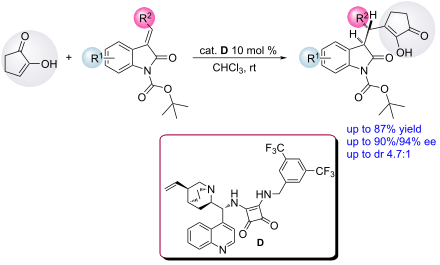
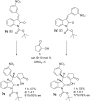
- because of the longer time needed. Next, we screened different protecting groups for the oxindole. Previously, Boc-protected oxindole 2a gave us the product in 75% yield, in dr 2.6:1 and in ee 90%/94% (Scheme 1, 3a). With a Cbz-protecting group the enantioselectivity decreased to 82%/88% (Scheme 1, 3b
- -protecting groups. Reaction conditions: 0.2 M solution of 1 (1 equiv), 2 (1 equiv), of catalyst D (0.1 equiv), chloroform, at room temperature; isolated yields after column chromatography; ee determined by chiral HPLC. Scope of the reaction (the relative configuration of the major diastereoisomer is depicted


Peptide stapling by late-stage Suzuki–Miyaura cross-coupling
Beilstein J. Org. Chem. 2022, 18, 1–12, doi:10.3762/bjoc.18.1
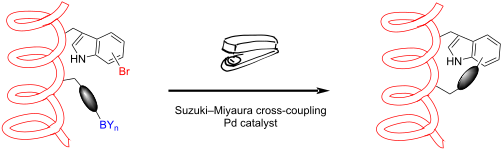
- , 1 h. In panel C), amino acids in R1 and R2 are with protecting groups and R2 is resin-bound (Rink amide resin); R3 = 4-phenylboronic acid or (4-ethylphenyl)boronic acid (P2–P5). Supporting Information Supporting Information File 6: Details on the amino acid and peptide synthesis, analytical data of


Stepwise PEG synthesis featuring deprotection and coupling in one pot
Beilstein J. Org. Chem. 2021, 17, 2976–2982, doi:10.3762/bjoc.17.207

- under basic conditions. (2) The protecting group is stable under the basic Williamson ether formation conditions. For this reason, we screened several potentially useful protecting groups against these two criteria using compounds 3a–l (Scheme 2). For criterion (1), we subjected the compounds into basic
- protecting groups in compounds 3a–l meet the criterion (1). For criterion (2), we conducted the Williamson ether formation reaction between compounds 4 and 1 to form compound 5 using KHMDS as the base in the presence of compounds 3a–l. Compound 4 (1 equiv) in THF was deprotonated with KHMDS (1.2 equiv). The
- compounds 3a–l against criteria (1) and (2), we concluded that the protecting groups in compounds 3a–g and 3i–l can be used as the base-labile protection group for the new PEG synthesis method featuring PEG elongation in one-pot. Among the groups studied, the phenethyl group (i.e., -(CH2)2Ph) is one of the


DABCO-promoted photocatalytic C–H functionalization of aldehydes
Beilstein J. Org. Chem. 2021, 17, 2959–2967, doi:10.3762/bjoc.17.205
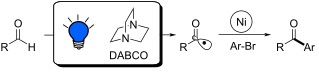
- differences are discussed. Keywords: C–H functionalization; DABCO; HAT; photocatalysis; Introduction The functionalization of inert C–H bonds is a goal pursued by chemists from decades, due to its ubiquity in organic molecules. This strategy also dismisses tiresome protecting groups and functional group




A photochemical C=C cleavage process: toward access to backbone N-formyl peptides
Beilstein J. Org. Chem. 2021, 17, 2932–2938, doi:10.3762/bjoc.17.202
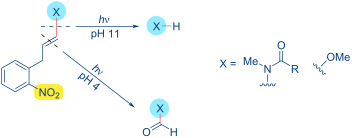
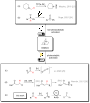
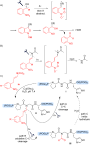
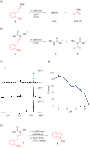
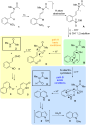
- a rich history that dates back decades [1][2][3][4][5]. Photochemical pathways allow access to diverse and interesting target structures [6][7][8][9][10], though photocleavage of C–X bonds for use as photoremovable protecting groups [11][12] has been the major thrust of the development of 2



Total synthesis of the O-antigen repeating unit of Providencia stuartii O49 serotype through linear and one-pot assemblies
Beilstein J. Org. Chem. 2021, 17, 2915–2921, doi:10.3762/bjoc.17.199
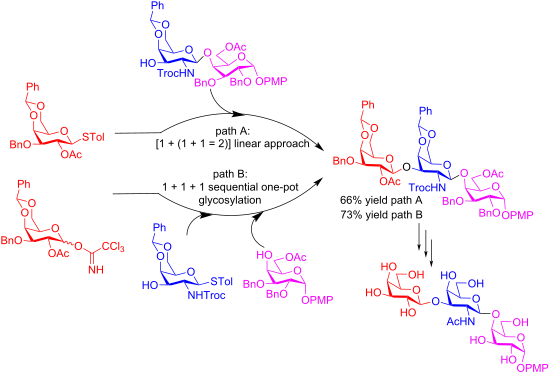
- 73%. The structure of the trisaccharide was confirmed by comparison of its NMR and HRMS spectral data with that of the previously synthesized product by the linear strategy. With the protected trisaccharide 2 in hand, it remained to carry out the N-acetylation and the removal of the protecting groups


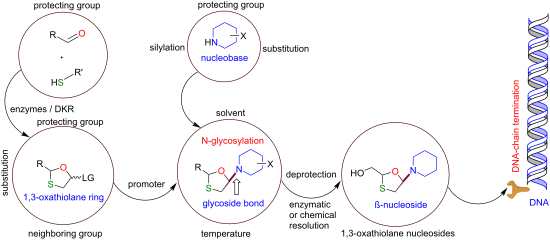
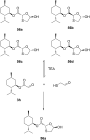
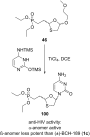
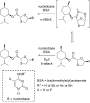
Synthetic strategies toward 1,3-oxathiolane nucleoside analogues
Beilstein J. Org. Chem. 2021, 17, 2680–2715, doi:10.3762/bjoc.17.182