Search results
Search for "structural features" in Full Text gives 232 result(s) in Beilstein Journal of Organic Chemistry. Showing first 200.
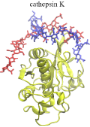
Studying specificity in protein–glycosaminoglycan recognition with umbrella sampling
Beilstein J. Org. Chem. 2023, 19, 1933–1946, doi:10.3762/bjoc.19.144
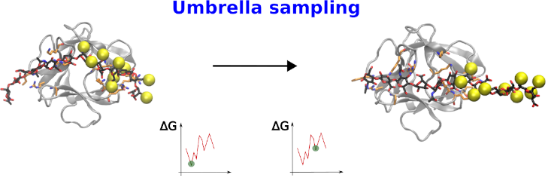
- functions results principally from their unique physicochemical and structural features, including high negative charge, high viscosity and lubrication propensities, unbranched polysaccharide structures, low compressibility as well as the ability to attract and imbibe large amounts of water [17]. Unlike




GlAIcomics: a deep neural network classifier for spectroscopy-augmented mass spectrometric glycans data
Beilstein J. Org. Chem. 2023, 19, 1825–1831, doi:10.3762/bjoc.19.134
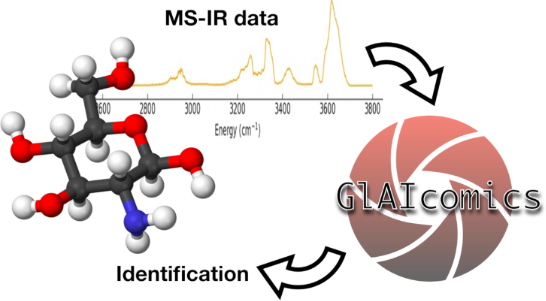
- proposed to identify the presence of structural features in oligosaccharides based on their gas-phase IR spectra [11]. To the best of our knowledge, machine learning classification studies have not been reported to identify saccharides using MS–IR carbohydrate analysis. Here, we report a study of a


Application of N-heterocyclic carbene–Cu(I) complexes as catalysts in organic synthesis: a review
Beilstein J. Org. Chem. 2023, 19, 1408–1442, doi:10.3762/bjoc.19.102
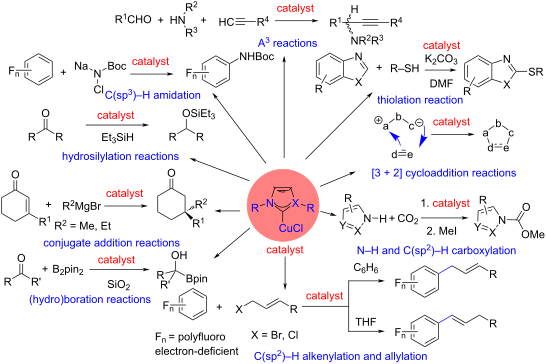
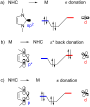
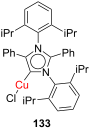
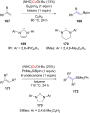
- caused by its structural features. NHCs constitute a well-established class of new ligands in organometallic chemistry. Although initially NHCs were regarded as pure σ-donor ligands, later experimental and theoretical studies established the presence of a significant back donation from the d-orbital of










First synthesis of acylated nitrocyclopropanes
Beilstein J. Org. Chem. 2023, 19, 892–900, doi:10.3762/bjoc.19.67
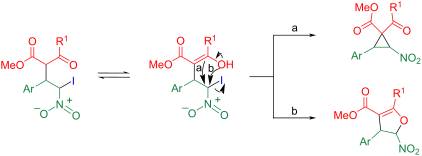
- ). These structural features enable the construction of a five-membered ring upon treatment with alkenes [9], diazo compounds (reaction g) [10], and nitriles [11]. Several approaches are available for the synthesis of cyclopropanedicarboxylates 1a, which consist of three steps: 1) conjugate addition, 2


Nucleophile-induced ring contraction in pyrrolo[2,1-c][1,4]benzothiazines: access to pyrrolo[2,1-b][1,3]benzothiazoles
Beilstein J. Org. Chem. 2023, 19, 646–657, doi:10.3762/bjoc.19.46
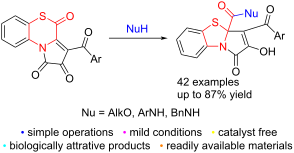
- , recently, we have reported a new class of FPDs, aroylpyrrolobenzothiazinetriones (APBTTs) 1 (Figure 2) [37][38], whose structural features allowed us to assume a possibility of the development of a new approach to PBTAs via a nucleophile-induced ring contraction in the 1,4-benzothiazine moiety of compounds




Asymmetric synthesis of a stereopentade fragment toward latrunculins
Beilstein J. Org. Chem. 2023, 19, 428–433, doi:10.3762/bjoc.19.32
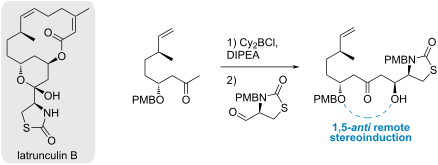
- demonstrated thanks to the synthesis of analogues, which hardly superseded the natural product properties, highlighting the importance of the macrocycle and of the lactol ring for this biological activity (3 is inactive) [6][7]. Considering the structural features of these toxins and their valuable biological




Inclusion complexes of the steroid hormones 17β-estradiol and progesterone with β- and γ-cyclodextrin hosts: syntheses, X-ray structures, thermal analyses and API solubility enhancements
Beilstein J. Org. Chem. 2022, 18, 1749–1762, doi:10.3762/bjoc.18.184
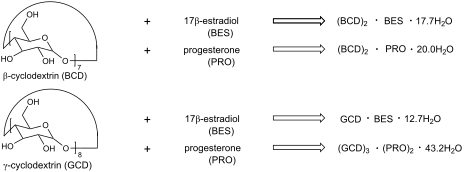
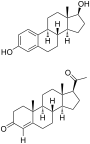
- innovative study of their crystal isostructurality within the series and with published complexes. SCXRD was employed to deduce structural features of the complexes at the molecular level, while the occurrence of severe guest disorder prompted the non-routine application of a method for yielding complex
- are isostructural, all of the salient structural features illustrated above and below for the γ-CD·PRO crystal are common to the γ-CD·BES crystal, which was not amenable to single crystal X-ray analysis. Solubility analysis Solubility determinations for the four native CD inclusion complexes (β-CD·BES



Synthetic study toward the diterpenoid aberrarone
Beilstein J. Org. Chem. 2022, 18, 1625–1628, doi:10.3762/bjoc.18.173
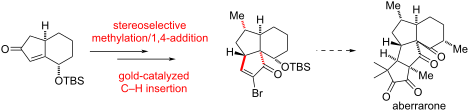
- natural products have been popular synthetic targets mainly due to their intriguing structural features. For example, several total syntheses of 3–6 have been reported [8][9][10][11][12][13][14][15][16][17][18][19][20][21][22][23][24][25][26][27][28][29]. Previously, two synthetic studies of aberrarone
- . Impressed by the structural features and biological profiles, our group embarked a project on the total synthesis of this natural product. Herein, we report our stereoselective synthesis of its 6-5-5 tricyclic skeleton. Our retrosynthetic analysis is shown in Scheme 1. For the formation of the D ring with


On drug discovery against infectious diseases and academic medicinal chemistry contributions
Beilstein J. Org. Chem. 2022, 18, 1355–1378, doi:10.3762/bjoc.18.141
- , which somehow echoes with the last quote above, should be mentioned here: “There is a common misconception that “novel” compounds or concepts will lead to dramatically different structural features. It is unlikely that the drug of the future will be built from radically other structural classes than
- today’s drugs. […] the majority of the compounds will be built from the structural features known already today, yet they may occupy white areas on the map of chemical space”. The future will see if this statement is fully true but as explained above, active singletons in a chemical library appear to be







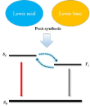
Post-synthesis from Lewis acid–base interaction: an alternative way to generate light and harvest triplet excitons
Beilstein J. Org. Chem. 2022, 18, 825–836, doi:10.3762/bjoc.18.83
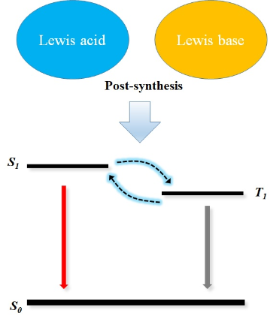
- photophysical changes, have some common structural characteristics. For instance, heterocyclic units containing a nitrogen atom such as pyridine and thiazole, are one of the key structural features either in small molecules or polymers. Thus, the introduction of nitrogen with lone pairs of electrons in


Heteroleptic metallosupramolecular aggregates/complexation for supramolecular catalysis
Beilstein J. Org. Chem. 2022, 18, 597–630, doi:10.3762/bjoc.18.62
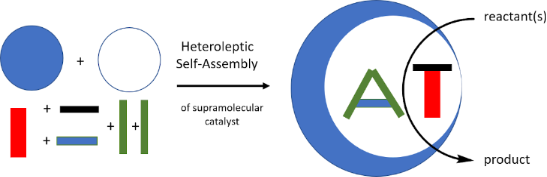
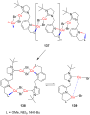
- from supramolecular protocols in catalysis [9]. Metal–ligand-based 2D and 3D self-assembled architectures have been extensively studied over the past decades [15][16][17][18][19][20][21]. While in the early years, the focus has been on the exploration of structural features, more recent advancements






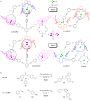


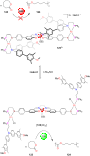

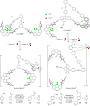


Amamistatins isolated from Nocardia altamirensis
Beilstein J. Org. Chem. 2022, 18, 360–367, doi:10.3762/bjoc.18.40
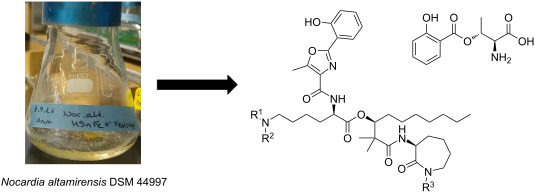
- structural features of these molecules. Amamistatin B (5) exhibits three bidentate ligand groups and can thus form an octahedral complex with ferric iron. The removal of one of these groups (e.g., the hydroxamate function at the ε terminus of the lysine residue) already leads to a considerable loss of iron


DABCO-promoted photocatalytic C–H functionalization of aldehydes
Beilstein J. Org. Chem. 2021, 17, 2959–2967, doi:10.3762/bjoc.17.205
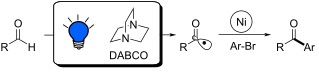
- , increased accessibility and with structural features that may lead to different reactivities and/or selectivities that are still to be explored. The different electrochemical behaviour of DABCO may also lead to alternative photocatalysts for its activation, such as organic dyes that may not be suitable for




Strategies for the synthesis of brevipolides
Beilstein J. Org. Chem. 2021, 17, 2399–2416, doi:10.3762/bjoc.17.157
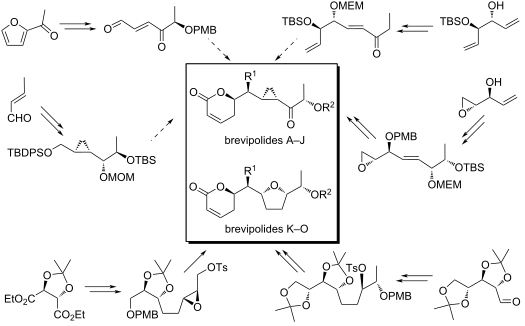
- -dihydro-α-pyrone derivatives, bearing either a distinctive cyclopropane or furan ring and named brevipolides A–O (1–15), have been isolated from the invasive plant Hyptis brevipes Poit. Their fascinating structural features, and the potent biological activities, including cytotoxicity against an array of
- immunodeficiency virus (HIV). The newly discovered brevipolides with interesting structural features in conjunction with promising biological activities have prompted the researchers to conduct synthetic studies. To date, there are six reported works in the literature for the syntheses of brevipolides, with the
- correlation with biological activity. This analysis attributed two detected [M − H]− signals to dihydrobrevipolides C and F. Nevertheless, further structural identification was not performed. Conclusion The characteristic structural features of 5,6-dihydro-α-pyrone derivatives isolated from Hyptis brevipes


Chemical approaches to discover the full potential of peptide nucleic acids in biomedical applications
Beilstein J. Org. Chem. 2021, 17, 1641–1688, doi:10.3762/bjoc.17.116
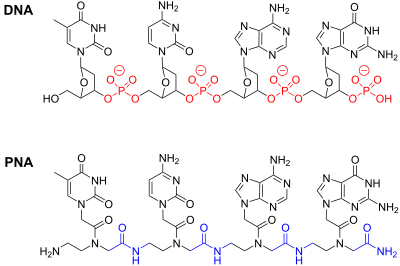
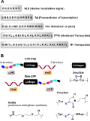
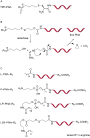
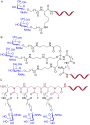
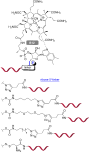
- and diagnostics, and attempts to develop new PNA therapeutics. The discussion starts with a brief review of PNA’s binding modes and structural features, followed by the most impactful chemical modifications, PNA enabled assays and diagnostics, and discussion of the current state of development of PNA
- applications. We start with a brief review of PNA’s binding modes and structural features, continue to the most impactful chemical modifications, PNA enabled assays and diagnostics, and finish with discussion of the current state of development of PNA therapeutics. The common theme that emerges is that despite
- nucleobase stacking pattern similar to that of the A-form RNA [43]. Another crystal structure of a partially self-complementary PNA–PNA duplex revealed PNA’s ability to combine the P-form Watson–Crick duplex with higher order structural features, such as reversed Hoogsteen base pairing, interstrand







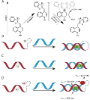


Beyond ribose and phosphate: Selected nucleic acid modifications for structure–function investigations and therapeutic applications
Beilstein J. Org. Chem. 2021, 17, 908–931, doi:10.3762/bjoc.17.76
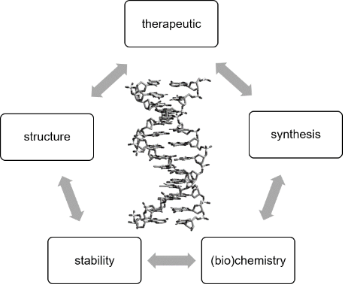
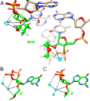
- nuclease-resistant probes for studying RNA–protein interactions [70]. To better elucidate the structural features of 3'-NP DNA responsible for this enhanced selective binding and stability, the Egli group determined the crystal structure of the fully modified 3'-NP DNA duplex with the sequence 5'-d




19F NMR as a tool in chemical biology
Beilstein J. Org. Chem. 2021, 17, 293–318, doi:10.3762/bjoc.17.28
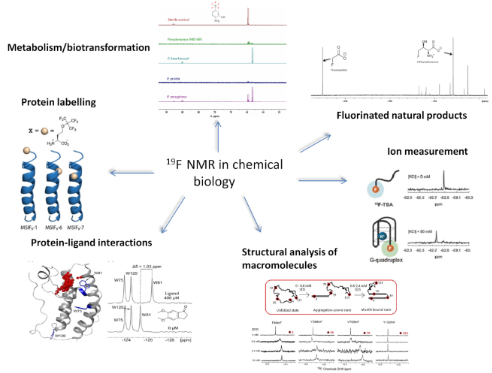
- [80]. Previous studies have shown that in the monomeric state the two helical domains of Myc display unstable structural features, similar to those of small IDPs, existing rather as a highly flexible pair of transient α-helices [81]. Based on this, Konrat and co-workers explored a combination of 19F


Progress in the total synthesis of inthomycins
Beilstein J. Org. Chem. 2021, 17, 58–82, doi:10.3762/bjoc.17.7
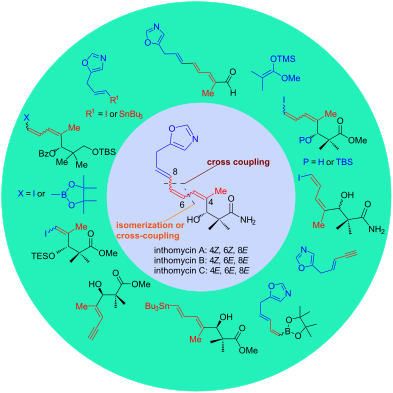
- reports on the various synthetic efforts for both the formal and total synthesis of racemic and enantiopure inthomycins A–C (1–3). These compounds have three key structural features: an oxazole ring, a triene system, and an amide moiety with a chiral, hydroxylated carbon at the β-position. These




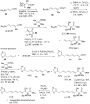


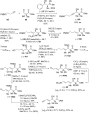


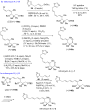

Recent progress in the synthesis of homotropane alkaloids adaline, euphococcinine and N-methyleuphococcinine
Beilstein J. Org. Chem. 2021, 17, 28–41, doi:10.3762/bjoc.17.4
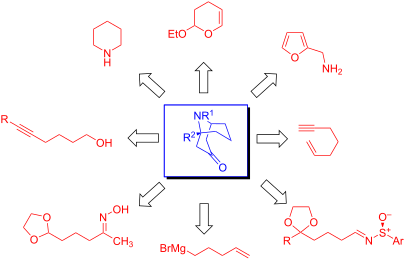
- ] (Figure 2). The small amount of these homotropane alkaloids isolated from ladybirds (e.g., for (−)-adaline, 35 mg from 800 specimens) emphasizes the desirability of practical syntheses for further biological studies [17]. Besides, the attractive structural features of (−)-adaline (1) and its relatives


Semiautomated glycoproteomics data analysis workflow for maximized glycopeptide identification and reliable quantification
Beilstein J. Org. Chem. 2020, 16, 3038–3051, doi:10.3762/bjoc.16.253
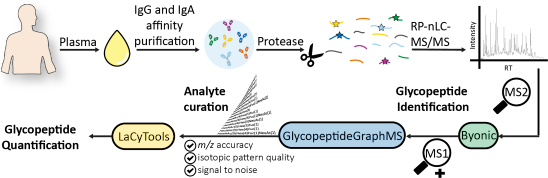
- mannose, Hex/H, 162.0528 Da), N-Acetylhexosamines (N-acetylglucosamine or N-acetylgalactosamine, HexNAc/N, 203.0794 Da), fucose (Fuc/F, 145.0579 Da), and sialic acid (N-acetylneuraminic acid, NeuAc/S, 291.0954 Da). The combinatorial possibilities of these building blocks and the variety of structural
- features, such as the linkage position and anomeric configuration, make protein glycosylation a highly complex posttranslational modification (PTM). Glycoproteomics has become important for many life science disciplines, in particular for biomedical and biopharmaceutical research [3][4][5]. Glycopeptide



All-carbon [3 + 2] cycloaddition in natural product synthesis
Beilstein J. Org. Chem. 2020, 16, 3015–3031, doi:10.3762/bjoc.16.251
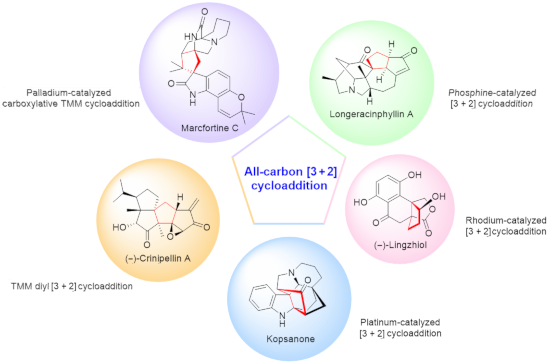
- Abstract Many natural products possess interesting medicinal properties that arise from their intriguing chemical structures. The highly-substituted carbocycle is one of the most common structural features in many structurally complicated natural products. However, the construction of highly-substituted
- (inclusive). Keywords: all-carbon; cyclization; [3 + 2] cycloaddition; natural product synthesis; stereocenters; Introduction The highly-substituted, stereo-congested, five-membered carbocycle containing contiguous stereocenters is one of the most common structural features in many structurally complicated







Selective recognition of ATP by multivalent nano-assemblies of bisimidazolium amphiphiles through “turn-on” fluorescence response
Beilstein J. Org. Chem. 2020, 16, 2728–2738, doi:10.3762/bjoc.16.223
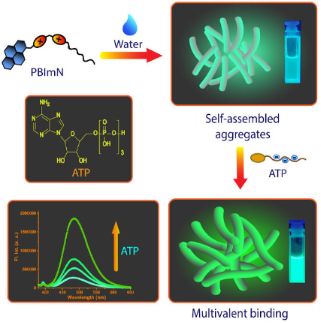
- electrostatic and (C–H)···O− hydrogen bonds involving the acidic proton at the 2-position of the imidazolium moiety to bind to ATP and other phosphate analytes [46]. A number of cyclophanes and tweezers [53][54][55][56] have been reported possessing the following common structural features: a) the presence of


A consensus-based and readable extension of Linear Code for Reaction Rules (LiCoRR)
Beilstein J. Org. Chem. 2020, 16, 2645–2662, doi:10.3762/bjoc.16.215
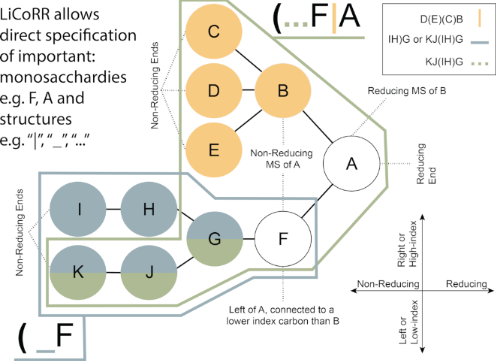
- . Uncertainty operators have been developed to facilitate searching substrings for specific structural features of a glycan implied by the substrings. The substring specifications for the substrate, product and adjustments can include any combination of characters included in the glycan codes in addition to


Synthesis and characterization of S,N-heterotetracenes
Beilstein J. Org. Chem. 2020, 16, 2636–2644, doi:10.3762/bjoc.16.214

- –property relationships showing the influence of the number and sequence of pyrrole rings. The highly planar π-conjugated systems revealed interesting structural features such as nearly complete bond length equalization and S–S and S–π dipolar interactions in the solid state. Due to tunable optoelectronic


Comparative ligand structural analytics illustrated on variably glycosylated MUC1 antigen–antibody binding
Beilstein J. Org. Chem. 2020, 16, 2540–2550, doi:10.3762/bjoc.16.206
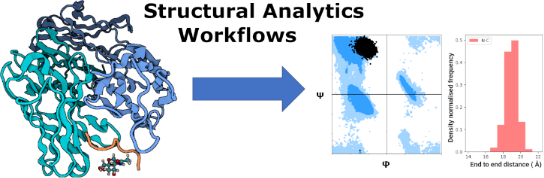
- forward previously that glycosylation alters the conformational equilibrium of the antigen. Conclusion We have shown how an informatics approach can be used to rapidly obtain key indicators of structural features for understanding the molecular level behavior of a system. We illustrated this informatics