


Search results
Search for "[3 2]‐cycloaddition" in Full Text gives 145 result(s) in Beilstein Journal of Organic Chemistry.
Applications of organocatalysed visible-light photoredox reactions for medicinal chemistry
Beilstein J. Org. Chem. 2018, 14, 2035–2064, doi:10.3762/bjoc.14.179
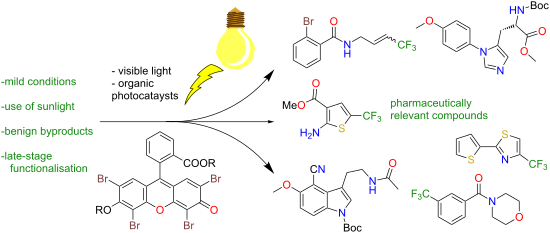
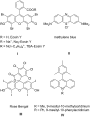
- the [3 + 2]-cycloaddition of electron-poor alkynes and 2H-azirines [60]. The reaction is performed under blue LED irradiation and using acridinium salts as a photocatalyst (Scheme 15). With respect to 2H-azirine the scope of the reaction is demonstrated to be relatively broad, with aromatics




Synthesis of new tricyclic 5,6-dihydro-4H-benzo[b][1,2,4]triazolo[1,5-d][1,4]diazepine derivatives by [3+ + 2]-cycloaddition/rearrangement reactions
Beilstein J. Org. Chem. 2018, 14, 1826–1833, doi:10.3762/bjoc.14.155
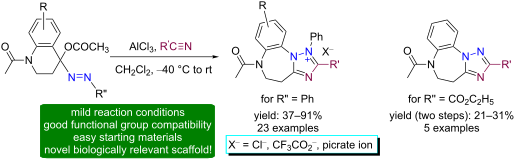
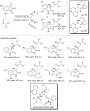
- ][1,4]diazepinium salts 10 and the related neutral, free bases 13 were synthesized from 4-acetoxy-1-acetyl-4-phenylazo-1,2,3,4-tetrahydroquinolines 8 and nitriles 9 in the presence of aluminium chloride by the [3+ + 2]-cycloaddition reaction of the in situ generated azocarbenium intermediates 14
- ][26][27][28][29][30]. Over the past years, we have been engaged in the synthesis of novel 1,2,4-triazolo heterocycles annulated to benzoazepine or heteroazepine derivatives by a tandem [3+ + 2]-cycloaddition/rearrangement between 1-aza-2-azoniaallenium ions with nitriles [31][32][33][34]. In the [3
- , we wish to describe the synthesis of unprecedented tricyclic heterocycles, i.e., 5,6-dihydro-4H-benzo[b][1,2,4]triazolo[1,5-d][1,4]diazepinium salts 10 and the related neutral free base derivatives 13 via the cationic [3+ + 2]-cycloaddition/rearrangement reactions using the bicyclic 4-acetoxy-4-azo




Hypervalent organoiodine compounds: from reagents to valuable building blocks in synthesis
Beilstein J. Org. Chem. 2018, 14, 1508–1528, doi:10.3762/bjoc.14.128
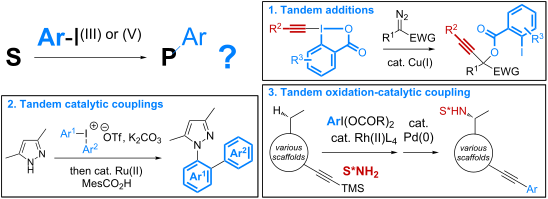
- mechanism that first involves the formation of a 2’-iodobiphenyl-2-azide promoted by the copper complex. The latter then catalyzes an intermolecular [3 + 2] cycloaddition with the alkyne. Finally, the copper-triazole moiety inserts intramolecularly into the second Ar–I bond, allowing a ring closure after






[3 + 2]-Cycloaddition reaction of sydnones with alkynes
Beilstein J. Org. Chem. 2018, 14, 1317–1348, doi:10.3762/bjoc.14.113
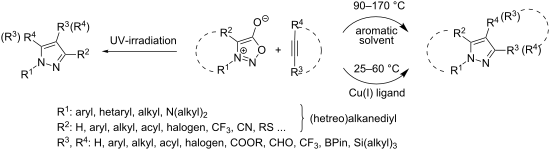
- Veronika Hladikova Jiri Vana Jiri Hanusek Institute of Organic Chemistry and Technology, University of Pardubice, Studentská 573, 532 10 Pardubice, Czech Republic 10.3762/bjoc.14.113 Abstract This review covers all known examples of [3 + 2]-cycloaddition between sydnones and both terminal as well
- regioselectivity. Keywords: alkynes; Cu(I) catalysis; [3 + 2]-cycloaddition; mechanism; regioselectivity; sydnones; Review Introduction Since Huisgen’s discovery of the [3 + 2]-cycloaddition between 3-substituted sydnones and both terminal as well as internal alkynes [1][2] many researchers have tried to utilize
- bicyclic intermediate via a concerted [3 + 2]-cycloaddition followed by its very fast decomposition (extrusion of CO2) via a retro-Diels–Alder [4 + 2]-cycloaddition. The almost spontaneous extrusion of CO2 is caused by an energetically favorable aromatization occurring in this step leading to the formation


Mechanochemistry of nucleosides, nucleotides and related materials
Beilstein J. Org. Chem. 2018, 14, 955–970, doi:10.3762/bjoc.14.81
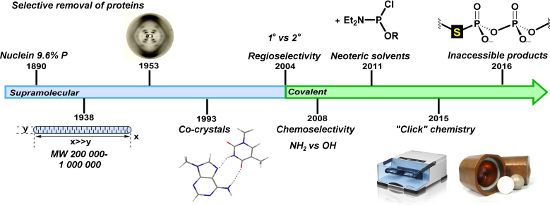
- (Scheme 5) [42]. In the absence of light, azobenzene derivatives were isolated as the pure E-isomers. In their original report, Sharpless and co-workers described the use of copper turnings to promote a regioselective azide–alkyne [3 + 2]-cycloaddition ("click") reaction over 24 hours [43]. High-speed


Addition of dithi(ol)anylium tetrafluoroborates to α,β-unsaturated ketones
Beilstein J. Org. Chem. 2018, 14, 515–522, doi:10.3762/bjoc.14.37

- -dithioacetals [4] are of particular interest as attractive nucleophiles for the addition to halonium ions [5][6], acyl chlorides [7] and other electrophiles [8][9][10] and are broadly used as precursors for [2 + 2]-cycloaddition [11][12], (aza)-Diels–Alder reaction [13][14], and [3 + 2]-cycloaddition reactions


Dialkyl dicyanofumarates and dicyanomaleates as versatile building blocks for synthetic organic chemistry and mechanistic studies
Beilstein J. Org. Chem. 2017, 13, 2235–2251, doi:10.3762/bjoc.13.221
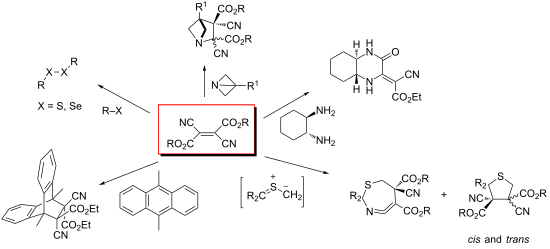
- mechanisms. The in situ generated sterically crowded thiocarbonyl S-methanide 16b in dry THF undergoes a [3 + 2]-cycloaddition with both E- and Z-1b forming mixtures of diastereoisomeric thiolanes 19b [19] (Scheme 9). However, in all studied cases, the configuration of the starting dipolarophile was
- - and Z-1b, and depending on the substitution pattern of the aziridine ring, the formation of the pyrrolidine derivative 34 occurred either with complete stereoselectivity or mixtures of isomeric products were obtained. The [3 + 2]-cycloaddition of the azomethine ylide E,Z-32a, formed via conrotatory
- . Stepwise [3 + 2]-cycloadditions of dimethyl dicyanofumarate (E-1b) and dimethyl dicyanomaleate (Z-1b) with the in situ generated azomethine ylides 32. [3 + 2]-Cycloaddition of diazomethane with dimethyl dicyanofumarate (E-1b) leading to 1H-pyrazole derivative 36. Reversible Diels–Alder reaction of fulvenes


Conjugated nitrosoalkenes as Michael acceptors in carbon–carbon bond forming reactions: a review and perspective
Beilstein J. Org. Chem. 2017, 13, 2214–2234, doi:10.3762/bjoc.13.220
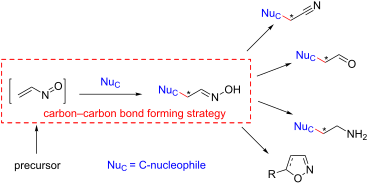
- . Unfortunately, the reaction is complicated by a concurrent [3 + 2]-cycloaddition of diazo compounds 96 to nitrosoalkenes leading to N-nitrosopyrazoles 98 via intermediates 99. A substantial improvement of this isoxazoline ring-forming strategy was recently introduced by Li et al. [85], who achieved the


A novel application of 2-silylated 1,3-dithiolanes for the synthesis of aryl/hetaryl-substituted ethenes and dibenzofulvenes
Beilstein J. Org. Chem. 2017, 13, 1900–1906, doi:10.3762/bjoc.13.185
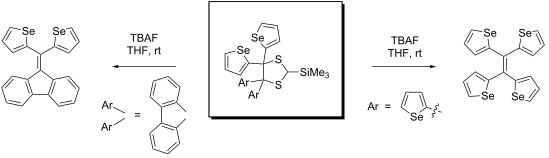
- applied [14]. Another approach, which opens access to diverse ethenes, is the ‘two-fold extrusion reaction’, which comprises the [3 + 2]-cycloaddition of a diazo compound with a thiocarbonyl dipolarophile and subsequent elimination of N2 followed by sulfur extrusion [15][16][17]. In our continuing studies
- unsuccessful. The results obtained with thiofluorenone (1c) prompted us to prepare other 2-trimethylsilylated 1,3-dithiolanes of type 6, available via [3 + 2]-cycloaddition of the in situ generated (at ca. −45 °C) silylated thiocarbonyl S-methanide 10 with thioketones 1a,c,d,h and i. The obtained products of
- -trimethylsilyl-4,4,5,5-tetraaryl-1,3-dithiolanes, readily available by treatment of hetaryl thioketones with trimethylsilyl diazomethane (TMS-CHN2), are superior substrates for the preparation of tetraarylethenes. Another group of 2-trimethylsilylated 1,3-dithiolanes, obtained through the [3 + 2]-cycloaddition


Ultrasound-promoted organocatalytic enamine–azide [3 + 2] cycloaddition reactions for the synthesis of ((arylselanyl)phenyl-1H-1,2,3-triazol-4-yl)ketones
Beilstein J. Org. Chem. 2017, 13, 694–702, doi:10.3762/bjoc.13.68
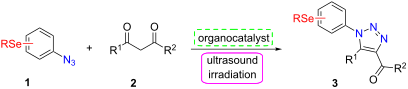
- other methods mostly provide the products in times above 60 minutes [33][34][36]. Conclusion In summary, we have described the use of sonochemistry in the organocatalytic enamine–azide [3 + 2] cycloaddition between 1,3-diketones and aryl azidophenyl selenides. These sonochemical promoted reactions were
- Biotechnology of Natural and Synthetic Products, Universidade de Caxias do Sul, Caxias do Sul, RS, Brazil Departamento de Quimica Organica, Universidad de Cordoba, Campus de Rabanales, Cordoba, Spain 10.3762/bjoc.13.68 Abstract The use of sonochemistry is described in the organocatalytic enamine–azide [3 + 2
- ] cycloaddition between 1,3-diketones and aryl azidophenyl selenides. These sonochemically promoted reactions were found to be amenable to a range of 1,3-diketones or aryl azidophenyl selenides, providing an efficient access to new ((arylselanyl)phenyl-1H-1,2,3-triazol-4-yl)ketones in good to excellent yields and


Dimerization reactions of aryl selenophen-2-yl-substituted thiocarbonyl S-methanides as diradical processes: a computational study
Beilstein J. Org. Chem. 2017, 13, 410–416, doi:10.3762/bjoc.13.44

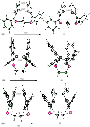
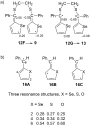
- case of similar thiocarbonyl S-isopropanides, the intermediate zwitterions, formed in the course of the attempted [3 + 2]-cycloaddition with electron-deficient ethenes, undergo 1,3-electrocyclization yielding mixtures of stereoisomeric cyclopropanes in addition to the expected 5-membered thiolanes


The reductive decyanation reaction: an overview and recent developments
Beilstein J. Org. Chem. 2017, 13, 267–284, doi:10.3762/bjoc.13.30
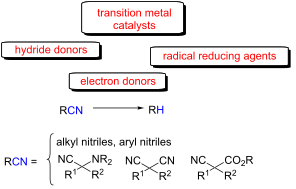
- cyano group activates the [3 + 2] cycloaddition of azomethine ylides and is then removed to yield 5-unsubstituted pyrrolidines [74]. These substructures appear in several biologically active natural products and drugs [75]. A range of decyanation conditions were screened such as NaBH4 in THF or MeOH


Multicomponent synthesis of spiropyrrolidine analogues derived from vinylindole/indazole by a 1,3-dipolar cycloaddition reaction
Beilstein J. Org. Chem. 2016, 12, 2893–2897, doi:10.3762/bjoc.12.288
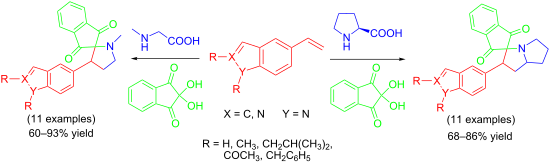
- stereospecific cyclic adducts. Keywords: L-proline; ninhydrin; sarcosine; spiropyrrolidine; 5-vinylindazole; 5-vinylindole; Introduction The [3 + 2] cycloaddition between azomethine ylides and olefins/acetylene as dipolarophiles is an important reaction to access a number of novel heterocyclic spiro scaffolds


Combined experimental and theoretical studies of regio- and stereoselectivity in reactions of β-isoxazolyl- and β-imidazolyl enamines with nitrile oxides
Beilstein J. Org. Chem. 2016, 12, 2390–2401, doi:10.3762/bjoc.12.233

- -5-substituted isoxazoles that are otherwise difficult to obtain. Keywords: β-azolyl enamine; [3 + 2]-cycloaddition; isoxazole; isoxazoline; nitrile oxide; Introduction The biological activity and technically useful properties of isoxazoles have made them the focus of both medicinal and materials




Stereoselective synthesis of fused tetrahydroquinazolines through one-pot double [3 + 2] dipolar cycloadditions followed by [5 + 1] annulation
Beilstein J. Org. Chem. 2016, 12, 2204–2210, doi:10.3762/bjoc.12.211
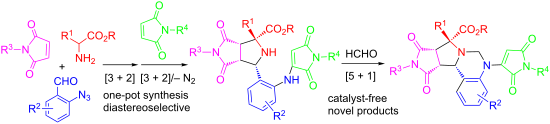
- , NH 03435, USA 10.3762/bjoc.12.211 Abstract The one-pot [3 + 2] cycloaddition of an azomethine ylide with a maleimide followed by another [3 + 2] cycloaddition of an azide with the second maleimide gives a 1,5-diamino intermediate which is used for a sequential aminomethylation reaction with
- formaldehyde through [5 + 1] annulation to afford a novel polycyclic scaffold bearing tetrahydroquinazoline, pyrrolidine, pyrrolidinedione, and N-substituted maleimide in stereoselective fashion. Keywords: [5 + 1] annulation; [3 + 2] cycloaddition; one-pot reactions; stereoselective synthesis
- new sequence initiated with a three-component [3 + 2] cycloaddition for preparing polycyclic scaffold 1 bearing tetrahydroquinazoline, pyrrolidine, pyrrolidinedione, and N-substituted maleimide rings. Those heterocyclic fragments could be found in bioactive compounds such as bromodomain, thrombin


Development of chiral metal amides as highly reactive catalysts for asymmetric [3 + 2] cycloadditions
Beilstein J. Org. Chem. 2016, 12, 1447–1452, doi:10.3762/bjoc.12.140

- . Compared with the chiral CuOTf/Et3N system, the CuHMDS system showed higher reactivity, and the desired reactions proceeded in high yields and high selectivities with catalyst loadings as low as 0.01 mol %. Keywords: [3 + 2] cycloaddition; asymmetric reaction; catalytic reaction; low catalyst loading
- , relatively high catalyst loadings (0.5–25 mol %) are required to achieve high yield and selectivities [15][45]. First, we investigated the catalytic asymmetric [3 + 2] cycloaddition of Schiff base 1a, prepared from glycine methyl ester and benzaldehyde, with N-phenylmaleimide (2a) in the presence of CuN
- revealed that the reaction proceeded with 0.01 mol % loading of chiral CuHMDS catalyst without significant loss of selectivity (Table 1, entry 11). We then examined the substrate scope of the [3 + 2] cycloaddition with respect to the Schiff base (Table 2). The Schiff bases prepared from tolualdehydes were


Synthesis of ferrocenyl-substituted 1,3-dithiolanes via [3 + 2]-cycloadditions of ferrocenyl hetaryl thioketones with thiocarbonyl S-methanides
Beilstein J. Org. Chem. 2016, 12, 1421–1427, doi:10.3762/bjoc.12.136

- 1,5-diradical as a key intermediate. The complete change of the reaction mechanism toward the concerted [3 + 2]-cycloaddition was observed in the reaction of a sterically crowded cycloaliphatic thiocarbonyl ylide with ferrocenyl methyl thioketone. Keywords: [3 + 2]-cycloadditions; 1,3-dithiolanes
- Hz. After chromatographic purification, the 13C NMR spectrum confirmed the 5-CH2-type of the 1,3-dithiolane 6m, as the corresponding CH2 absorption was found at 52.5 ppm (Scheme 3). Based on our earlier interpretation of the reaction mechanism leading to 1,3-dithiolanes via [3 + 2]-cycloaddition of
- key-intermediates in the reaction. On the other hand, the formation of 1,3-dithiolanes of type 5 in reactions with cycloaliphatic thiocarbonyl S-methanides competes with the concerted [3 + 2]-cycloaddition leading to the sterically less crowded 1,3-dithiolanes 6 (Scheme 2). These results demonstrate


Synergistic chiral iminium and palladium catalysis: Highly regio- and enantioselective [3 + 2] annulation reaction of 2-vinylcyclopropanes with enals
Beilstein J. Org. Chem. 2016, 12, 1340–1347, doi:10.3762/bjoc.12.127
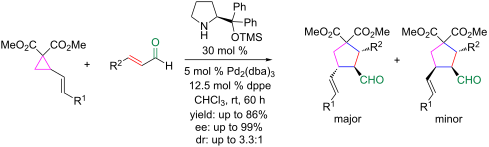
- enals and a transition metal promoting to open the 2-vinylcyclopropanes for highly regio- and enantioselective [3 + 2] cycloaddition reaction of 2-vinylcyclopropanes with α,β-unsaturated aldehydes has been developed. Keywords: [3 + 2] annulation; enals; synergistic catalysis; vinylcyclopropanes
- ; Introduction The power of “donor–acceptor” (D–A) cyclopropanes as versatile 1,3-dipolar components is fuelled by its capacity of serving a complementary approach to a wide array of 5-membered ring structures, which are difficult or impossible to access by classic [3 + 2] cycloaddition reactions [1][2][3][4][5
- due to the minimization of the A[1][3] interaction. Therefore, it is observed 3a’ produced from corresponding 8a’ as the major diastereomer whereas 3a” as minor one. Conclusion We have developed a cooperative catalytic strategy for highly regio- and enantioselective [3 + 2] cycloaddition reactions of


Copper-catalyzed [3 + 2] cycloaddition of (phenylethynyl)di-p-tolylstibane with organic azides
Beilstein J. Org. Chem. 2016, 12, 1309–1313, doi:10.3762/bjoc.12.123

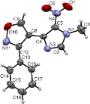
- clarity. Two independent molecules exist in the asymmetric unit, one of them is shown. Copper-catalyzed [3 + 2] cycloaddition of 1 with organic azides 2. Reaction conditions: 1 (0.5 mmol), 2a (0.5 mmol), Cu cat. (0.025 mmol). Isolated yield are shown. Possible mechanism. Reaction of 3a with HCl, I2 and
- University, 1314-1 Shido, Sanuki, Kagawa 769-2193, Japan Faculty of Pharmaceutical Sciences, Hokuriku University, Ho-3 Kanagawa-machi, Kanazawa 920-1181, Japan 10.3762/bjoc.12.123 Abstract Trisubstituted 5-stibano-1H-1,2,3-triazoles were synthesized in moderate to excellent yields by the Cu-catalyzed [3 + 2
- ] cycloaddition of a ethynylstibane with organic azides in the presence of CuBr (5 mol %) under aerobic conditions. The reaction of 5-stibanotriazole with HCl, I2, and NOBF4 afforded 1-benzyl-4-phenyltriazole, 1-benzyl-5-iodo-4-phenyltriazole, and a pentavalent organoantimony compound, respectively. Keywords


Multicomponent reactions: A simple and efficient route to heterocyclic phosphonates
Beilstein J. Org. Chem. 2016, 12, 1269–1301, doi:10.3762/bjoc.12.121
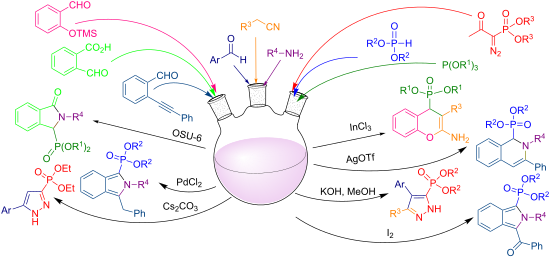
- prepare phosponylpyrazoles 217 in the presence of KOH in MeOH in 73–95% yields (Scheme 44) [82]. Based on their explanation, the treatment of dimethyldiazomethylphosphonate 213 with a nucleophilic base generates diazo compound 215. The subsequent [3 + 2] cycloaddition reaction of 215 with Knoevenagel
- shift, aromatized to vinylpyrazoles 234. Recently, the [3 + 2] cycloaddition of phosphonate azomethine ylides 235 with ynones 236 to give substituted 1H-pyrrol-2-ylphosphonates 237 has been described by Yu et al. (Scheme 48) [86]. The desired 1H-pyrrol-2-ylphosphonate 241 could also be obtained through
- via the [3 + 2] cycloaddition of phosphonate azomethine ylides with ynones. Three-component synthesis of 1H-pyrrol-2-ylphosphonates. The classical Reissert reaction. One-pot three-component synthesis of N-phosphorylated isoquinolines. One-pot three-component synthesis of 1-acyl-1,2-dihydroquinoline-2


Chiral cyclopentadienylruthenium sulfoxide catalysts for asymmetric redox bicycloisomerization
Beilstein J. Org. Chem. 2016, 12, 1136–1152, doi:10.3762/bjoc.12.110
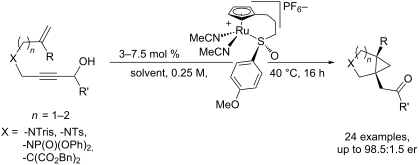
- (CpRu) complexes containing tethered chiral sulfoxides were synthesized via an oxidative [3 + 2] cycloaddition reaction between an alkyne and an allylruthenium complex. Sulfoxide complex 1 containing a p-anisole moiety on its sulfoxide proved to be the most efficient and selective catalyst for the




Catalytic asymmetric synthesis of biologically important 3-hydroxyoxindoles: an update
Beilstein J. Org. Chem. 2016, 12, 1000–1039, doi:10.3762/bjoc.12.98
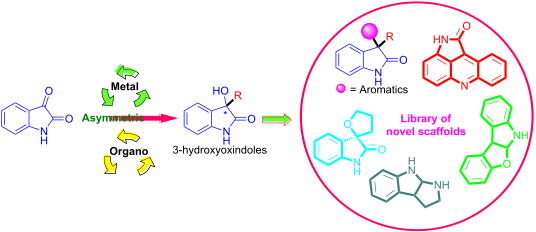
- -workers also established a CPA (cat. 38)-catalyzed asymmetrc [3 + 2] cycloaddition of 3-indolylmethanols with 3-methyl-2-vinylindoles, affording spiro[cyclopenta[b]indole-1,3’-oxindole] scaffolds in moderate to good yields (72–99% yield) and with excellent diastereoselectivities (>95:5 dr) and




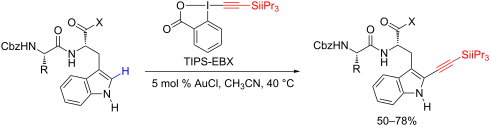
Gold-catalyzed direct alkynylation of tryptophan in peptides using TIPS-EBX
Beilstein J. Org. Chem. 2016, 12, 745–749, doi:10.3762/bjoc.12.74
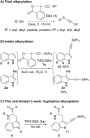
- blocks in synthetic organic chemistry. Recently, they have attracted also strong interest for applications in materials science and chemical biology [1]. One of the most important transformations of alkynes is the copper-catalyzed [3 + 2] cycloaddition with azides, which can be performed under mild



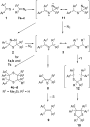
Diradical reaction mechanisms in [3 + 2]-cycloadditions of hetaryl thioketones with alkyl- or trimethylsilyl-substituted diazomethanes
Beilstein J. Org. Chem. 2016, 12, 716–724, doi:10.3762/bjoc.12.71

- products of the [3 + 2]-cycloaddition of the diazo dipole onto the C=S bond. The latter decompose only at higher temperature (ca. −40 °C) to generate thiocarbonyl S-isopropanide. In the absence of the starting thioketone, the corresponding thiiranes and/or ethene derivatives, formed from them via
- -thiadiazolines of type 2 can be obtained at low temperature and subsequently used as precursors of new thiocarbonyl ylides. The latter may be potentially useful for the [3 + 2]-cycloaddition reactions with diverse dipolarophiles leading to five-membered S-heterocycles, such as di- and tetrahydrothiophenes, 1,3
- diradical mechanism postulated for the formal [3 + 2]-cycloaddition of aryl/hetaryl thioketones 1 with the in situ generated thiocarbonyl S-methanides [28]. The missing formation of dimers from thiocarbonyl ylides 3 derived from hetaryl thioketones can be explained by steric hindrance resulting from the


Enantioselective [3 + 2] annulation of α-substituted allenoates with β,γ-unsaturated N-sulfonylimines catalyzed by a bifunctional dipeptide phosphine
Beilstein J. Org. Chem. 2016, 12, 343–348, doi:10.3762/bjoc.12.37
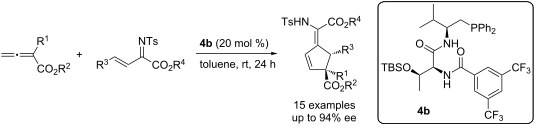
- phosphine catalyst furnishes the final [3 + 2] annulation product 5. Conclusion In conclusion, we have described the first enantioselective [3 + 2] cycloaddition of α-substituted allenoates with β,γ-unsaturated N-sulfonylimines, catalyzed by amino acid-derived bifunctional phosphines. The [3 + 2] annulation





