


Search results
Search for "Michael addition" in Full Text gives 328 result(s) in Beilstein Journal of Organic Chemistry. Showing first 200.
First synthesis of acylated nitrocyclopropanes
Beilstein J. Org. Chem. 2023, 19, 892–900, doi:10.3762/bjoc.19.67
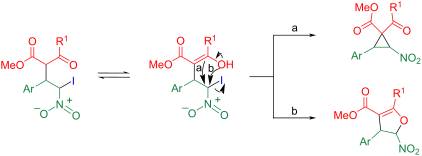
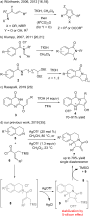
- ). A plausible mechanism for formation of cyclopropane 1 and dihydrofuran 8. Tin(II)-mediated ring expansion of nitrocyclopropane 1e. Michael addition of 1,3-dicarbonyl compounds 3b–g to nitrostyrene 2a. Comparison of the 1H NMR data of ring protons for compounds 1a, 1b’, and product 8b. Cyclization of


Synthesis of substituted 8H-benzo[h]pyrano[2,3-f]quinazolin-8-ones via photochemical 6π-electrocyclization of pyrimidines containing an allomaltol fragment
Beilstein J. Org. Chem. 2023, 19, 778–788, doi:10.3762/bjoc.19.58
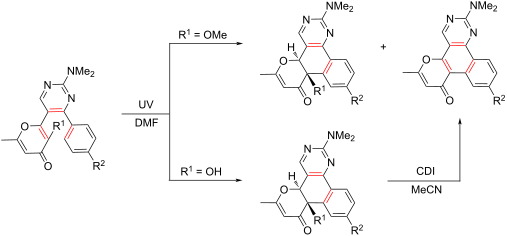
- for the formation of pyrimidines 9 is presented in Scheme 3. At first, intermediate A is formed by Michael addition of cyanamide to enaminone 13. Further elimination of dimethylamine leads to cyanoenaminone B. Next, interaction of the cyano group with dimethylamine results in the formation of


Strategies in the synthesis of dibenzo[b,f]heteropines
Beilstein J. Org. Chem. 2023, 19, 700–718, doi:10.3762/bjoc.19.51
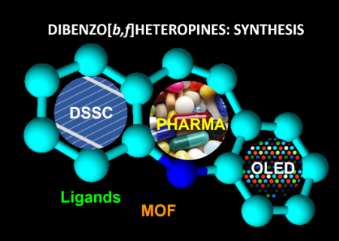
- , prepared by benzylic bromination of the methyl substituents of 132 and 133 (Scheme 29). 5 1,4-Michael addition Narita et al. [72] reported their total synthesis of bauhinoxepine J (139), a quinone dihydrobenzoxepine derivative, by means of a base-promoted intramolecular etherification (Scheme 30). 6


Synthesis of medium and large phostams, phostones, and phostines
Beilstein J. Org. Chem. 2023, 19, 687–699, doi:10.3762/bjoc.19.50
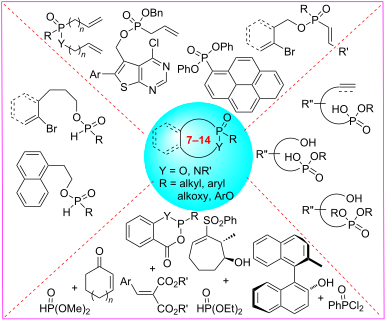
- yields with moderate to good diastereoselectivities via Michael addition and nucleophilic addition–elimination (Scheme 17) [39]. The synthesis is a [5 + 2] annulation fashion. The reactions of 2-phenyl/alkoxy-4H-benzo[d][1,3,2]dioxaphosphinin-4-ones 82 and dialkyl 2-benzylidenemalonates 78 produced
- '-carboxylates 83 in 5–10% yield as byproducts. The major products 84 were generated via Michael addition and the nucleophilic addition–elimination of the carbanion of the generated enolate moiety, while the oxyanion of the enolate moiety attacked the phosphorus to form the byproducts 83 (Scheme 18) [40][41
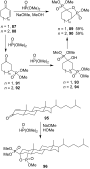
- ]. 2.2 Synthesis via [6 + 1] and [7 + 1] annulations The reactions of cyclohex-2-enone (87) and cyclohept-2-enone (88) with dimethyl phosphonate yielded dimethyl bicyclic phostone-phosphonates 89 and 90 under basic conditions in 59% yield via Michael addition, the nucleophilic hydrophosphonylation, and




Enolates ambushed – asymmetric tandem conjugate addition and subsequent enolate trapping with conventional and less traditional electrophiles
Beilstein J. Org. Chem. 2023, 19, 593–634, doi:10.3762/bjoc.19.44
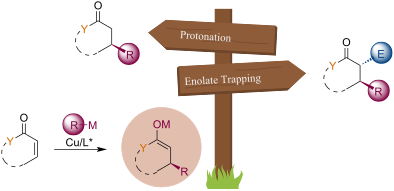
- , and Mannich-type reactions, Michael addition, nucleophilic substitutions, cyclopropanations, and reactions with carbocations. The field of asymmetric conjugate addition with its extension into enolate trapping reactions began to develop approximately in 1996. In this review article, we analyze more
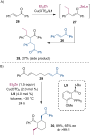
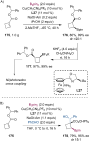
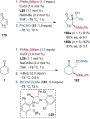
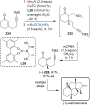
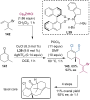
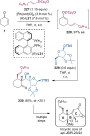
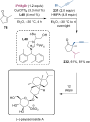
- of 93:7 using ligand L25. Recently, Chegondi and co-workers have demonstrated an enantioselective Cu-catalyzed tandem borylation/Michael addition reaction of aryl enones 167 and 170 to cyclohexadienones in an intramolecular fashion (Scheme 43A) [84]. The 1,4-conjugate borylation is followed by a
- alcohols without a significant change in yield or selectivity. Interestingly, in the absence of the base, the reaction led to fused dioxane derivatives (Scheme 43B). This can be explained by a borylation/oxidation/oxa-Michael tandem sequence instead of the C-Michael addition. The role of the base was









A new oxidatively stable ligand for the chiral functionalization of amino acids in Ni(II)–Schiff base complexes
Beilstein J. Org. Chem. 2023, 19, 566–574, doi:10.3762/bjoc.19.41
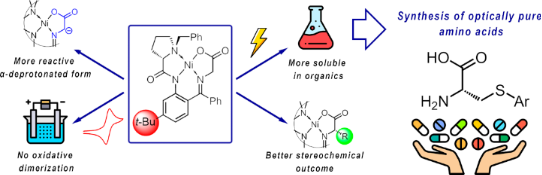
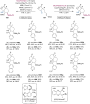
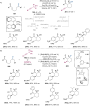
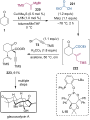
- (RCysNi)L7 formed in the Michael addition reaction was confirmed using the NOESY spectrum. It is illustrated in Figure 1 for (oBrCysNi)L7 complex as the representative example. A correlation between the signal of the H-2 proton at the α-amino acid stereocenter with the signal of the ortho-protons of the



An accelerated Rauhut–Currier dimerization enabled the synthesis of (±)-incarvilleatone and anticancer studies
Beilstein J. Org. Chem. 2023, 19, 204–211, doi:10.3762/bjoc.19.19
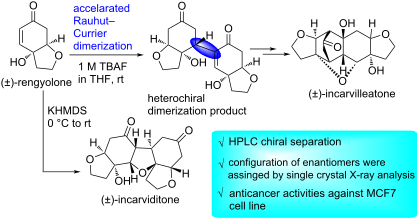
- outlined in Scheme 4. We proposed that (±)-rengyolone (3) undergoes a hydroxy-directed intermolecular conjugate addition [11][12][13][14][15] with another equivalent of (±)-rengyolone (3) (enone system) to highly selectively afford intermediate A. Via a rapid intramolecular Michael addition of enolate
- to the dihydroxy RC product (±)-4. Synthesis of dihydroxy product (±)-4 was carried out at gram-scale utilizing the key accelerated RC dimerization. In order to synthesize (±)-incarvilleatone (1) first, we needed to perform an oxa-Michael addition reaction. For this, we screened various bases [11][12


Identification and determination of the absolute configuration of amorph-4-en-10β-ol, a cadinol-type sesquiterpene from the scent glands of the African reed frog Hyperolius cinnamomeoventris
Beilstein J. Org. Chem. 2023, 19, 167–175, doi:10.3762/bjoc.19.16
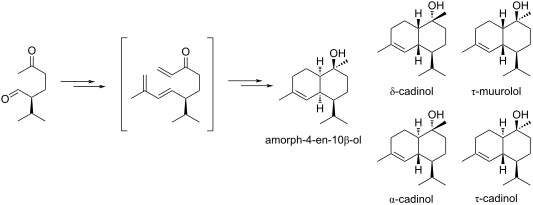
- in a Michael addition with methyl acrylate, affording aldehyde 4 (Scheme 1). Instead of the original Wittig reaction [13], a Horner–Wadsworth–Emmons reaction using diethyl (2-methylallyl)phosphonate and BuLi led to a higher yield and formation of the pure (E)-isomer 5. The required phosphonate was
- , such a synthetic approach would shorten the synthesis from eight to four steps and allow access to both enantiomers of the compounds 12–14. The synthesis started with an enantioselective Michael addition of aldehyde 1 to methyl vinyl ketone (15) catalyzed by (S)-Jørgensen’s organocatalyst S-16, to


Catalytic aza-Nazarov cyclization reactions to access α-methylene-γ-lactam heterocycles
Beilstein J. Org. Chem. 2023, 19, 66–77, doi:10.3762/bjoc.19.6

- reaction. This type of olefin E–Z isomerization is likely to take place after the N-acyliminium formation, possibly via a Michael/retro-Michael addition sequence between the chloride (Cl−) anion and the electron-deficient olefin of the N-acyliminium intermediate at 80 °C (Scheme 9c). In conclusion, these



Synthetic study toward tridachiapyrone B
Beilstein J. Org. Chem. 2022, 18, 1741–1748, doi:10.3762/bjoc.18.183
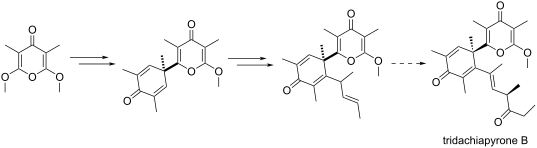
- significant amount (ca. 75% yield), probably by oxidation of the enol form of 9 [32]. The sensitive aldehyde was thus used without purification to investigate the Robinson-type annulation and a protocol was identified allowing the preparation of cyclohexenone 12 in 40% yield (2-step). Accordingly, the Michael
- addition of ethyl vinyl ketone (EVK), promoted by K2CO3 in a biphasic media (PhMe/H2O), was followed by basic treatment (LiOH) of the keto aldehyde. Since compound 12 bears the desired quaternary carbon of this family of natural products, it was pleasing to reach this milestone, keeping in mind that the


Inline purification in continuous flow synthesis – opportunities and challenges
Beilstein J. Org. Chem. 2022, 18, 1720–1740, doi:10.3762/bjoc.18.182
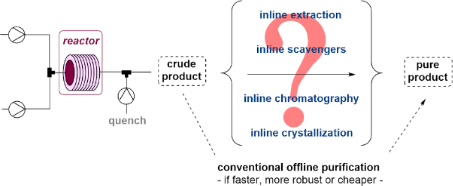
- decatungstate) [128]. Organic solvent inline nanofiltration is an interesting green approach for solvent recovery that also concentrates, and thus improves the purity of the target compounds. However, this technology is so far only applied in selected examples, such as a Michael addition [129], with continuous




A novel spirocyclic scaffold accessed via tandem Claisen rearrangement/intramolecular oxa-Michael addition
Beilstein J. Org. Chem. 2022, 18, 1649–1655, doi:10.3762/bjoc.18.177
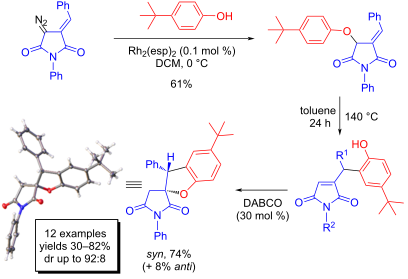
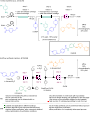
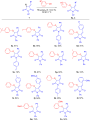
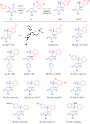
- insertion of carbenes derived from diazo arylidene succinimides (DAS) into the O–H bond of phenols is described. The initial adducts underwent a thermally promoted Claisen rearrangement followed by DABCO-catalyzed intramolecular 5-exo-trig oxa-Michael addition. Keywords: Claisen rearrangement; diazo
- arylidene succinimides; intramolecular oxa-Michael addition; rhodium(II) carbene O–H insertion; spirocycles; Introduction Spirocycles undoubtedly occupy a special place in drug design [1] and, in general, spirocyclic compounds intended for the interrogation of biological targets have been associated with
- ) would again have a reactive phenolic hydroxy group which could potentially be involved in post-condensational transformations such as intramolecular oxa-Michael addition (Scheme 1). Herein, we report our findings obtained in the course of investigating the viability of this strategy. Results and



Formal total synthesis of macarpine via a Au(I)-catalyzed 6-endo-dig cycloisomerization strategy
Beilstein J. Org. Chem. 2022, 18, 1589–1595, doi:10.3762/bjoc.18.169
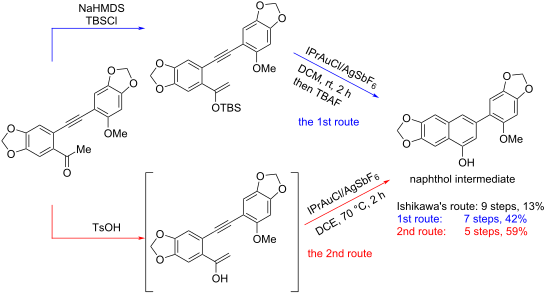
- ]. In 2010, Echavarren and co-worker completed the formal total synthesis via a Au(I)-catalyzed cyclization (Scheme 2c) [13]. In 2018, Pabbaraja and co-workers disclosed the synthesis of macarpine by constructing ring C through the domino Michael addition/SNAr reaction of nitromethane to an ynone


Simple synthesis of multi-halogenated alkenes from 2-bromo-2-chloro-1,1,1-trifluoroethane (halothane)
Beilstein J. Org. Chem. 2022, 18, 1567–1574, doi:10.3762/bjoc.18.167
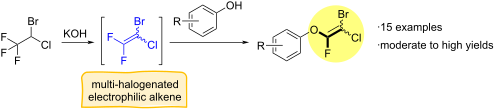
- , respectively), which are susceptible to basic conditions, were tolerated in the reaction, but ortho substituents hindered the reaction to some extent (Table 2, entries 9 and 10). 2-Hydroxychalcone (3l), which has an electrophilic enone structure, was also tolerated. The Michael addition product was not


A facile approach to spiro[dihydrofuran-2,3'-oxindoles] via formal [4 + 1] annulation reaction of fused 1H-pyrrole-2,3-diones with diazooxindoles
Beilstein J. Org. Chem. 2022, 18, 1532–1538, doi:10.3762/bjoc.18.162
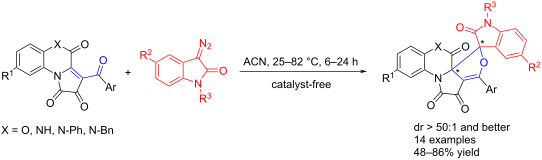
- the presence of 1.1 equiv of TEA. In this case, the base-promoted deprotonation of 3-bromooxindole (4) affords a highly nucleophilic intermediate, which undergoes Michael addition to FPD 1i, followed by intramolecular SN2 attack [39][40][41][42][43] by the oxygen of the aroyl group (Scheme 5) to give


Oxa-Michael-initiated cascade reactions of levoglucosenone
Beilstein J. Org. Chem. 2022, 18, 1457–1462, doi:10.3762/bjoc.18.151
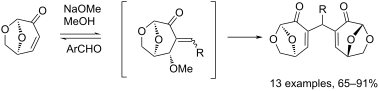
- bridged α,β-unsaturated ketones; however, these reactions do not involve initiation by an oxa-Michael addition [23][24]. The reaction between 1 and aromatic ketones under basic conditions is analogous to the well-known aldol/Michael cascade reaction observed between aldehydes and enolates giving di- and


Synthesis of tryptophan-dehydrobutyrine diketopiperazine and biological activity of hangtaimycin and its co-metabolites
Beilstein J. Org. Chem. 2022, 18, 1159–1165, doi:10.3762/bjoc.18.120
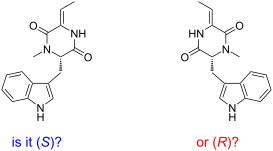
- /mL), a MIC of 128 mg/mL was achieved (Figure 3C). We also investigated whether the reported inhibition of glutathione S-transferase [11] is a result of a Michael addition of glutathione to TDD. However, no reaction occurred between glutathione and TDD in DMF/H2O (1:1) under prolonged stirring at room


Electrogenerated base-promoted cyclopropanation using alkyl 2-chloroacetates
Beilstein J. Org. Chem. 2022, 18, 1116–1122, doi:10.3762/bjoc.18.114
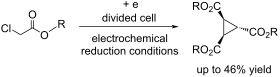
- , together with the signal of the desired products 6, 10, and 12. The formation of trialkyl propane-1,2,3-carboxylate might be through the Michael addition of the electrogenerated base (E in Scheme 2) to C or the electrochemical reduction of 2. Conclusion A new electrochemical transformation of alkyl 2


Molecular diversity of the base-promoted reaction of phenacylmalononitriles with dialkyl but-2-ynedioates
Beilstein J. Org. Chem. 2022, 18, 991–998, doi:10.3762/bjoc.18.99

- base to catalyze the C–C bond formation via a Michael addition of active methylene groups [31]. Therefore, in the presence of TBAB, the bromide assisted with the deprotonation of the phenacylmalononitrile to give a carbanion intermediate A. Secondly, the nucleophilic addition of carbanion A to electron


Morita–Baylis–Hillman reaction of 3-formyl-9H-pyrido[3,4-b]indoles and fluorescence studies of the products
Beilstein J. Org. Chem. 2022, 18, 926–934, doi:10.3762/bjoc.18.92
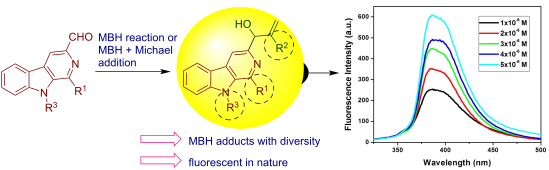
- and substituents was also studied during investigation of fluorescence properties of these derivatives. Keywords: β-carboline; DABCO; fluorescence; MBH reaction; Michael addition; structure–fluorescence activity relationship; Introduction Among the polycyclic alkaloids based on indole, the tricyclic
- , it was observed that the MBH reaction of 6b with acrylonitrile A resulted in the formation of product 8bA which evidenced that 6b underwent Morita–Baylis–Hillman reaction at the electrophilic carbonyl center as well as Michael addition reaction at the nucleophilic nitrogen center (N-9). Similar
- . This difference in the fluorescence intensity values of compound 7 and 8 may be attributed to the addition of a substituent at N-9 position of the β-carboline ring after Michael addition reaction (CH2CH2CN or CH2CH2CO2Me). Conclusion In conclusion, we have successfully explored 3-formyl-1-aryl-9H


Synthetic strategies for the preparation of γ-phostams: 1,2-azaphospholidine 2-oxides and 1,2-azaphospholine 2-oxides
Beilstein J. Org. Chem. 2022, 18, 889–915, doi:10.3762/bjoc.18.90
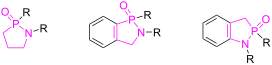
- 1-substituted 2-ethoxy-1,2-azaphospholidine-4-carboxylate 2-oxides 203 were synthesized in 70% and 39% yields, respectively, from ethyl 2-((chloro(ethoxy)phosphoryl)methyl)acrylate (202) and benzyl- and adamantylmethylamines via aza-Michael addition and intramolecular nucleophilic substitution. The
- synthetic method showed very limited substrate scope. Only less bulky primary amines underwent the first aza-Michael addition and then intramolecular nucleophilic substitution. However, aromatic amines, aniline, 2,3-dihydro-1H-inden-4-amine, and the bulky aliphatic primary amine adamantylamine did not
- -phenyl-3-phenylamino-2,3,3a,9a-tetrahydro-4H-1,2-azaphospholo[5,4-b]chromen-4-one (215) in 44% yield through the Michael addition and subsequent intramolecular aminolysis (Scheme 34) [15]. The products are potential anti-inflammatory agents. In 2013, to develop potent anti-inflammatory agents, Abdou and







Tri(n-butyl)phosphine-promoted domino reaction for the efficient construction of spiro[cyclohexane-1,3'-indolines] and spiro[indoline-3,2'-furan-3',3''-indolines]
Beilstein J. Org. Chem. 2022, 18, 669–679, doi:10.3762/bjoc.18.68
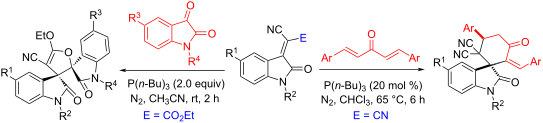
- this work. Firstly, the nucleophilic addition of tributylphosphine to the bis-chalcone gives the active zwitterionic species (A). Secondly, the Michael addition of the zwitterionic species (A) to isatylidene malononitrile at the C3-position of the oxindole scaffold results in adduct (B). Thirdly, the


Heteroleptic metallosupramolecular aggregates/complexation for supramolecular catalysis
Beilstein J. Org. Chem. 2022, 18, 597–630, doi:10.3762/bjoc.18.62
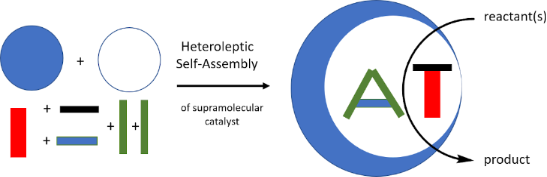
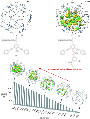
- enantiopure tetrahedral Pt12 cage has been previously studied for catalytic Michael addition reactions, but no enantioselectivity was detected because the chiral building blocks were located at peripheral positions thus not sufficiently breaking symmetry within the cavity [73]. Therefore, it was envisioned
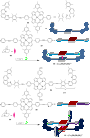
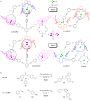
- defined time). We thus started with the rotor [Cu2(83)(91)]2+ in the presence of ligand 92 as well as organocatalyst N-methylpyrrolidine (89) and the substrates 95 and 96 for a Michael addition (Figure 21). No formation of product 97 was observed, because the complex between the catalyst 89 and the zinc











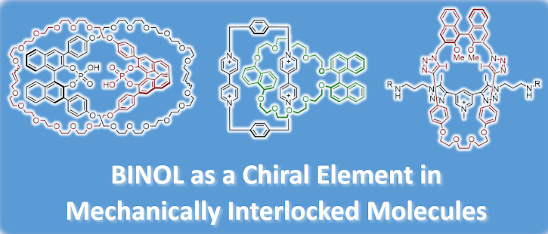
BINOL as a chiral element in mechanically interlocked molecules
Beilstein J. Org. Chem. 2022, 18, 508–523, doi:10.3762/bjoc.18.53
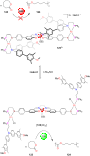
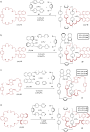
- ) and in the substitution pattern of the macrocycle (R = H or iPr in the 3,5-positions of the phenylene linkers, for 56 or 57; see Figure 14). These heterobifunctional chiral catalysts were studied for the asymmetric Michael addition of malonic acid diethyl ester (59) to cinnamaldehydes 58. While the
- then deprotonated by the amine to generate the enolate nucleophile. After the Michael addition, the anionic intermediate is protonated by the ammonium group to liberate the product. Although this cooperative catalysis is facilitated by the mechanical bond, the racemic background reaction only has a
- the enantioselective Michael addition with different rotaxane catalysts (S)-56a/56b/57a/57b and their non-interlocked counterparts. Synthesis of Beer´s [2]rotaxanes 64a/b for anion recognition. Association constants of different anions (used as the Bu4N+ salts) to the [2]rotaxanes (S)-64a/b and the




Tosylhydrazine-promoted self-conjugate reduction–Michael/aldol reaction of 3-phenacylideneoxindoles towards dispirocyclopentanebisoxindole derivatives
Beilstein J. Org. Chem. 2022, 18, 469–478, doi:10.3762/bjoc.18.49
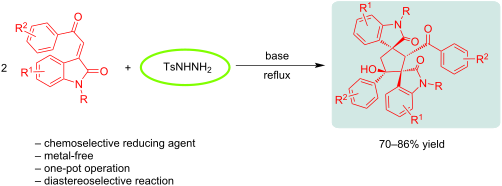
- Michael addition with another molecule of 3-phenacylidieneoxindole to yield intermediate B. Finally, an intramolecular aldol condensation takes place between the carbanion and the carbonyl group of intermediate B towards the formation of the dispirocyclopentanebisoxindole derivative. To support the
- cyclization of two molecules of 3-phenacylideneoxindoles. In this reaction tosylhydrazine serves as reducing agent to reduce one molecule of 3-phenacylideneoxindole to 3-phenacylindolinone which, under base-catalyzed conditions, involves a sequential Michael addition/intramolecular aldol condensation with





