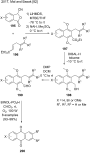
Search for "Suzuki" in Full Text gives 363 result(s) in Beilstein Journal of Organic Chemistry. Showing first 200.
Beilstein J. Org. Chem. 2022, 18, 1–12, doi:10.3762/bjoc.18.1
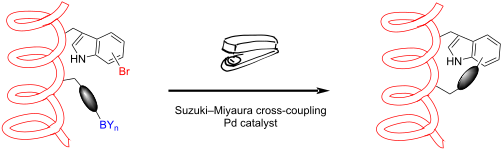
Graphical Abstract
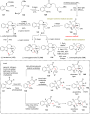
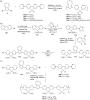
Scheme 1: Synthesis of SMC stapled axin CBD peptides. Reaction conditions: (a) Pd2(dba)3, sSPhos, KF, DME/EtO...
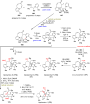
Scheme 2: Overview of the different cross-linkages obtained by intramolecular SMC. A) General structure of SM...
Figure 1: Analysis of the secondary structure by circular dichroism: CD spectra of both isomers of stapled pe...
Figure 2: In vitro binding affinities to β-catenin determined by competitive fluorescence polarisation assays....
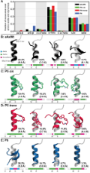
Figure 3: Cleavage sites of Proteinase K digestion indicated by a red arrow.
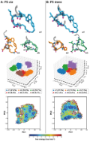
Figure 4: Principal component analysis (PCA) of the macrocycle’s non-hydrogen atoms in the two isomers of P5....
Figure 5: Molecular modelling of the conformational preferences of the SMC stapled peptides P5 (with cis or t...
Beilstein J. Org. Chem. 2021, 17, 2894–2905, doi:10.3762/bjoc.17.197
Graphical Abstract
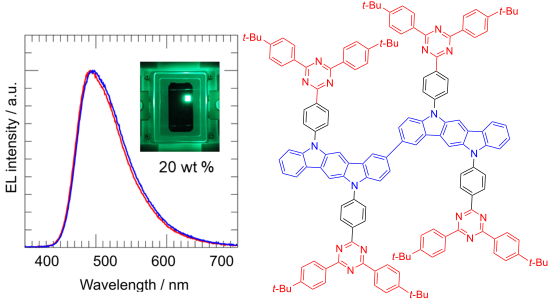
Figure 1: Molecular structures of emitters.
Figure 2: a) Molecular structure and b) optimized DFT-calculated geometry of DICzTRZ. Hydrogen atoms are omit...
Figure 3: HOMO, HOMO–1 (H–1), LUMO, and LUMO+1 (L+1) electron density distributions (isovalue: 0.02) and ener...
Figure 4: a) Cyclic voltammetry (CV) and differential pulse voltammetry (DPV) of DICzTRZ in DCM (scan rate = ...
Figure 5: a) Prompt and b) delayed time-resolved decay in spin-coated 20 wt % CzSi film of DICzTRZ (λexc = 37...
Figure 6: Angle-resolved photoluminescence measurement of a solution-processed film of 20 wt % DICzTRZ in CzS...
Figure 7: Device characteristics of 20 and 30 wt % DICzTRZ-based OLEDs, which are represented by red and blue...
Figure 8: Device efficiency simulation of the fabricated OLEDs depicting the variation in EQE with varied PL ...
Beilstein J. Org. Chem. 2021, 17, 2668–2679, doi:10.3762/bjoc.17.181
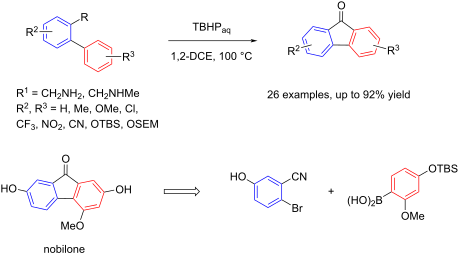
Graphical Abstract
Scheme 1: Selected fluorenone-type natural products.
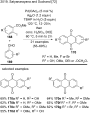
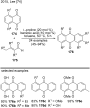
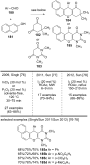
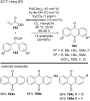
Scheme 2: Overview of published cyclization methodologies for the synthesis of fluorenones starting from func...
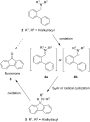
Scheme 3: Preliminary considerations for the oxidative cyclization of 2-(aminomethyl)biphenyls to fluorenones....
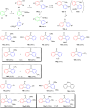
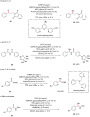
Scheme 4: Substrate scope and yields for oxidative cyclizations of N-methyl-2-(aminomethyl)biphenyls 9a–d bea...
Scheme 5: Substrate scope for the oxidative cyclization of 2-(aminomethyl)biphenyls. Conditions: a) Boc2O, NEt...
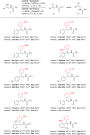
Scheme 6: Substrate scope for the oxidative cyclization of 2-(aminomethyl)biphenyls with main focus on protec...
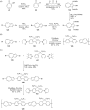
Scheme 7: Total synthesis of nobilone (1d). Conditions: a) TBS-Cl, imidazole, DMF, 50 °C, 18 h; b) n-BuLi, B(...
Scheme 8: Proposed mechanism for the oxidative cyclization of amines 2a and 2b to fluorenone (3).
Beilstein J. Org. Chem. 2021, 17, 2657–2662, doi:10.3762/bjoc.17.179
Graphical Abstract
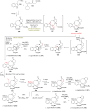
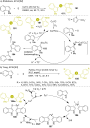
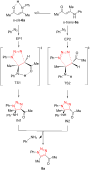
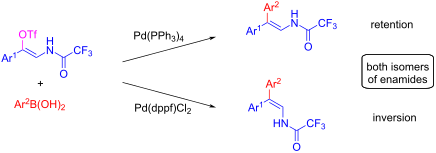
Scheme 1: A: Synthesis of (Z)-β-enamido triflates and subsequent stereoselective cross-coupling reactions. B:...
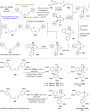
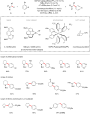
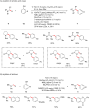
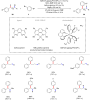
Scheme 2: Substrate scope of the Suzuki coupling leading to enamides 2 and 3. aRatio determined by 19F NMR; b...
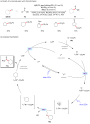
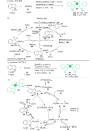
Scheme 3: Proposed mechanisms for the formed Suzuki coupling retention products 2 and inversion products 3.
Beilstein J. Org. Chem. 2021, 17, 2543–2552, doi:10.3762/bjoc.17.170
Graphical Abstract
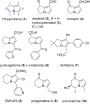
Figure 1: Examples of 2,3-dihydro-1H-pyrrolizines (1–7) and 5,6,7,8-tetrahydroindolizines (8–10).
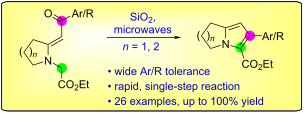
Scheme 1: Previous [18] and proposed routes to 2,3-dihydro-1H-pyrrolizines from enaminones. Reagents and conditio...
Scheme 2: Synthesis of pyrrolizine 19a from lactam 16 via enaminone 15a. Reagents and conditions: (i) NaH, TH...
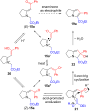
Scheme 3: Proposed mechanism for the formation of pyrrolizidine 19a from enaminone (E)-15a.
Scheme 4: Synthesis of tetrahydroindolizines 26a–c from lactam 23 via enaminones 25a–c. Reagents and conditio...
Scheme 5: Further functionalization of dihydropyrrolizine 19a. Reagents and conditions: (i) NBS, DMF, 0 °C, 1...
Beilstein J. Org. Chem. 2021, 17, 2450–2461, doi:10.3762/bjoc.17.162
Graphical Abstract
Figure 1: Some important tetrahydroacridines used as drugs.
Scheme 1: Synthesis of 2.
Scheme 2: Synthesis of compounds 4a–g.
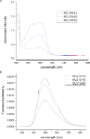
Figure 2: UV–vis absorption spectra of 4a–d at room temperature in dilute dichloromethane solutions (c = 1 × ...
Figure 3: Fluorescence spectra of 4a–d at room temperature in dilute dichloromethane solutions (c = 1 × 10⁻⁵ ...
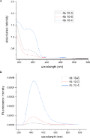
Figure 4: A) Absorbance and B) emission spectra for the standard quinine sulfate (SQ).
Figure 5: A) Absorbance and B) fluorescence spectra for 4b.
Figure 6: A) Plot of fluorescence intensities against their absorbances for quinine sulfate (SQ) and B) plot ...
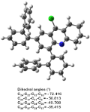
Figure 7: Selected dihedral angles (°) for compounds 4a–d.
Figure 8: Selected dihedral angles (°) for compound 4f.
Figure 9: Calculated energy levels for compounds 4a–d and their spatial distribution of the HOMO–LUMO frontie...
Figure 10: Visualization of MEP for compounds 4a–d calculated by B3LYP method with 6-31G(d) basis set.
Figure 11: Cyclic voltammogram for 4c in 0.1 M (n-Bu)4NBF4/acetonitrile at a scan rate of 50 mV/s.
Beilstein J. Org. Chem. 2021, 17, 2340–2347, doi:10.3762/bjoc.17.152
Graphical Abstract
Figure 1: Biologically active phenanthridines.
Figure 2: Synthetic routes to phenanthridines via iminyl radicals.
Scheme 1: Previous unexpected synthesis of the phenanthridine framework.
Scheme 2: Synthesis of biaryl benzaldehydes.
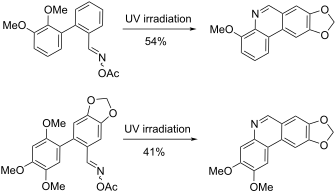
Scheme 3: Synthesis of biaryl oximes.
Scheme 4: Synthesis of phenanthridines. Reagents and conditions (i) UV irradiation (450 W medium pressure Hg ...
Figure 3: Two possible mechanistic routes and intermediates in the synthesis of phenanthridines.
Scheme 5: Synthesis of trisphaeridine. Reagents and conditions (i) cat. Pd(PPh3)4, aq Na2CO3, DME, reflux, Ar...
Beilstein J. Org. Chem. 2021, 17, 2209–2259, doi:10.3762/bjoc.17.143
Graphical Abstract
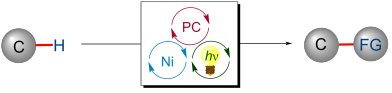
Scheme 1: Nickel-catalyzed cross-coupling versus C‒H activation.
Figure 1: Oxidative and reductive quenching cycles of a photocatalyst. [PC] = photocatalyst, A = acceptor, D ...
Scheme 2: Photoredox nickel-catalyzed C(sp3)–H arylation of dimethylaniline (1a).
Scheme 3: Photoredox nickel-catalyzed arylation of α-amino, α-oxy and benzylic C(sp3)‒H bonds with aryl bromi...
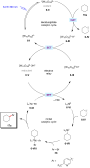
Figure 2: Proposed catalytic cycle for the photoredox-mediated HAT and nickel catalysis enabled C(sp3)‒H aryl...
Scheme 4: Photoredox arylation of α-amino C(sp3)‒H bonds with aryl iodides.
Figure 3: Proposed mechanism for photoredox nickel-catalyzed α-amino C‒H arylation with aryl iodides.
Scheme 5: Nickel-catalyzed α-oxy C(sp3)−H arylation of cyclic and acyclic ethers.
Figure 4: Proposed catalytic cycle for the C(sp3)−H arylation of cyclic and acyclic ethers.
Scheme 6: Photochemical nickel-catalyzed C–H arylation of ethers.
Figure 5: Proposed catalytic cycle for the nickel-catalyzed arylation of ethers with aryl bromides.
Scheme 7: Nickel-catalyzed α-amino C(sp3)‒H arylation with aryl tosylates.
Scheme 8: Arylation of α-amino C(sp3)‒H bonds by in situ generated aryl tosylates from phenols.
Scheme 9: Formylation of aryl chlorides through redox-neutral 2-functionalization of 1,3-dioxolane (13).
Scheme 10: Photochemical C(sp3)–H arylation via a dual polyoxometalate HAT and nickel catalytic manifold.
Figure 6: Proposed mechanism for C(sp3)–H arylation through dual polyoxometalate HAT and nickel catalytic man...
Scheme 11: Photochemical nickel-catalyzed α-hydroxy C‒H arylation.
Scheme 12: Photochemical synthesis of fluoxetine (21).
Scheme 13: Photochemical nickel-catalyzed allylic C(sp3)‒H arylation with aryl bromides.
Figure 7: Proposed mechanism for the photochemical nickel-catalyzed allylic C(sp3)‒H arylation with aryl brom...
Scheme 14: Photochemical C(sp3)‒H arylation by the synergy of ketone HAT catalysis and nickel catalysis.
Figure 8: Proposed mechanism for photochemical C(sp3)‒H arylation by the synergy of ketone HAT catalysis and ...
Scheme 15: Benzophenone- and nickel-catalyzed photoredox benzylic C–H arylation.
Scheme 16: Benzaldehyde- and nickel-catalyzed photoredox C(sp3)–H arylation.
Scheme 17: Photoredox and nickel-catalyzed enantioselective benzylic C–H arylation.
Figure 9: Proposed mechanism for the photoredox and nickel-catalyzed enantioselective benzylic C–H arylation.
Scheme 18: Photoredox nickel-catalyzed α-(sp3)‒H arylation of secondary benzamides with aryl bromides.
Scheme 19: Enantioselective sp3 α-arylation of benzamides.
Scheme 20: Nickel-catalyzed decarboxylative vinylation/C‒H arylation of cyclic oxalates.
Figure 10: Proposed mechanism for the nickel-catalyzed decarboxylative vinylation/C‒H arylation of cyclic oxal...
Scheme 21: C(sp3)−H arylation of bioactive molecules using mpg-CN photocatalysis and nickel catalysis.
Figure 11: Proposed mechanism for the mpg-CN/nickel photocatalytic C(sp3)–H arylation.
Scheme 22: Nickel-catalyzed synthesis of 1,1-diarylalkanes from alkyl bromides and aryl bromides.
Figure 12: Proposed mechanism for photoredox nickel-catalyzed C(sp3)–H alkylation via polarity-matched HAT.
Scheme 23: Photoredox nickel-catalyzed C(sp3)‒H alkylation via polarity-matched HAT.
Scheme 24: Benzaldehyde- and nickel-catalyzed photoredox C(sp3)‒H alkylation of ethers.
Scheme 25: Benzaldehyde- and nickel-catalyzed photoredox C(sp3)‒H alkylation of amides and thioethers.
Scheme 26: Photoredox and nickel-catalyzed C(sp3)‒H alkylation of benzamides with alkyl bromides.
Scheme 27: CzIPN and nickel-catalyzed C(sp3)‒H alkylation of ethers with alkyl bromides.
Figure 13: Proposed mechanism for the CzIPN and nickel-catalyzed C(sp3)‒H alkylation of ethers.
Scheme 28: Nickel/photoredox-catalyzed methylation of (hetero)aryl chlorides and acid chlorides using trimethy...
Figure 14: Proposed catalytic cycle for the nickel/photoredox-catalyzed methylation of (hetero)aryl chlorides ...
Scheme 29: Photochemical nickel-catalyzed C(sp3)–H methylations.
Scheme 30: Photoredox nickel catalysis-enabled alkylation of unactivated C(sp3)–H bonds with alkyl bromides.
Scheme 31: Photochemical C(sp3)–H alkenylation with alkenyl tosylates.
Scheme 32: Photoredox nickel-catalyzed hydroalkylation of internal alkynes.
Figure 15: Proposed mechanism for the photoredox nickel-catalyzed hydroalkylation of internal alkynes.
Scheme 33: Photoredox nickel-catalyzed hydroalkylation of activated alkynes with C(sp3)−H bonds.
Scheme 34: Allylation of unactivated C(sp3)−H bonds with allylic chlorides.
Scheme 35: Photochemical nickel-catalyzed α-amino C(sp3)–H allylation of secondary amides with trifluoromethyl...
Scheme 36: Photoredox δ C(sp3)‒H allylation of secondary amides with trifluoromethylated alkenes.
Scheme 37: Photoredox nickel-catalyzed acylation of α-amino C(sp3)‒H bonds of N-arylamines.
Figure 16: Proposed mechanism for the photoredox nickel-catalyzed acylation of α-amino C(sp3)–H bonds of N-ary...
Scheme 38: Photocatalytic α‑acylation of ethers with acid chlorides.
Figure 17: Proposed mechanism for the photocatalytic α‑acylation of ethers with acid chlorides.
Scheme 39: Photoredox and nickel-catalyzed C(sp3)‒H esterification with chloroformates.
Scheme 40: Photoredox nickel-catalyzed dehydrogenative coupling of benzylic and aldehydic C–H bonds.
Figure 18: Proposed reaction pathway for the photoredox nickel-catalyzed dehydrogenative coupling of benzylic ...
Scheme 41: Photoredox nickel-catalyzed enantioselective acylation of α-amino C(sp3)–H bonds with carboxylic ac...
Scheme 42: Nickel-catalyzed C(sp3)‒H acylation with N-acylsuccinimides.
Figure 19: Proposed mechanism for the nickel-catalyzed C(sp3)–H acylation with N-acylsuccinimides.
Scheme 43: Nickel-catalyzed benzylic C–H functionalization with acid chlorides 45.
Scheme 44: Photoredox nickel-catalyzed benzylic C–H acylation with N-acylsuccinimides 84.
Scheme 45: Photoredox nickel-catalyzed acylation of indoles 86 with α-oxoacids 87.
Scheme 46: Nickel-catalyzed aldehyde C–H functionalization.
Figure 20: Proposed catalytic cycle for the photoredox nickel-catalyzed aldehyde C–H functionalization.
Scheme 47: Photoredox carboxylation of methylbenzenes with CO2.
Figure 21: Proposed mechanism for the photoredox carboxylation of methylbenzenes with CO2.
Scheme 48: Decatungstate photo-HAT and nickel catalysis enabled alkene difunctionalization.
Figure 22: Proposed catalytic cycle for the decatungstate photo-HAT and nickel catalysis enabled alkene difunc...
Scheme 49: Diaryl ketone HAT catalysis and nickel catalysis enabled dicarbofunctionalization of alkenes.
Figure 23: Proposed catalytic mechanism for the diaryl ketone HAT catalysis and nickel catalysis enabled dicar...
Scheme 50: Overview of photoredox nickel-catalyzed C–H functionalizations.
Beilstein J. Org. Chem. 2021, 17, 2164–2185, doi:10.3762/bjoc.17.139
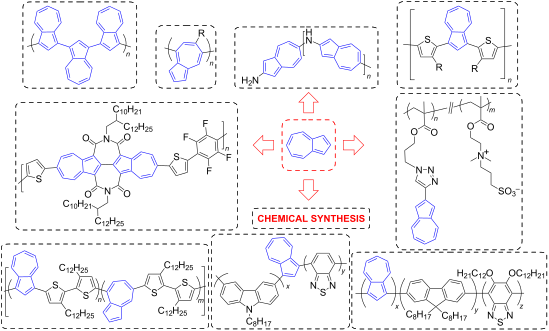
Graphical Abstract
Figure 1: Chemical structure, numbering scheme, and resonance form of azulene.
Scheme 1: Synthesis of polyazulene-iodine (PAz-I2) and polyazulene-bromine (PAz-Br2) complexes.
Scheme 2: Synthesis of ‘true polyazulene’ 3 or 3’ by cationic polymerization.
Scheme 3: Synthesis of 1,3-polyazulene 5 by Yamamoto protocol.
Scheme 4: Synthesis of 4,7-dibromo-6-(n-alkyl)azulenes 12–14.
Scheme 5: Synthesis of (A) 4,7-diethynyl-6-(n-dodecyl)azulene (16) and (B) 4,7-polyazulene 17 containing an e...
Scheme 6: Synthesis of directly connected 4,7-polyazulenes 18–20.
Scheme 7: Synthesis of (A) tert-butyl N-(6-bromoazulen-2-yl)carbamate (27), (B) dimeric aminoazulene 29, and ...
Figure 2: Iminium zwitterionic resonance forms of poly[2(6)-aminoazulene] 31.
Scheme 8: Synthesis of poly{1,3-bis[2-(3-alkylthienyl)]azulene} 33–38.
Scheme 9: Synthesis of polymer ruthenium complexes 40–43.
Scheme 10: Synthesis of 4,7-polyazulenes 45 containing a thienyl linker.
Scheme 11: Synthesis of azulene-bithiophene 48 and azulene-benzothiadiazole 52 copolymers. Conditions: (a): (i...
Scheme 12: Synthesis of azulene-benzodithiophene copolymer 54 and azulene-bithiophene copolymer 56.
Scheme 13: Synthesis of (A) 5,5’-bis(trimethylstannyl)-3,3’-didodecyl-2,2’-bithiophene (60) and (B) azulene-bi...
Scheme 14: Synthesis of 1,3-bisborylated azulene 67.
Scheme 15: Synthesis of D–A-type azulene-DPP copolymers 69, 71, and 72. Conditions: (a) Pd(PPh3)4, K2CO3, Aliq...
Scheme 16: Synthesis of the key precursor TBAzDI 79.
Scheme 17: Synthesis of TBAzDI-based polymers 81 and 83. Conditions: (a) P(o-tol)3, Pd2(dba)3, PivOH, Cs2CO3, ...
Scheme 18: Synthesis of (A) 1,3-dibromo-2-arylazulene 92–98 and (B) 2-arylazulene-thiophene copolymers 99–101.
Scheme 19: Synthesis of (A) poly[2,7-(9,9-dialkylfluorenyl)-alt-(1’,3’-azulenyl)] 106–109, (B) 1,3-bis(7-bromo...
Scheme 20: Synthesis of azulene-fluorene copolymers 117–121 containing varying ratios of 1,3- and 4,7-connecte...
Scheme 21: Synthesis of (A) 2,6-dibromoazulene (125), (B) azulene-fluorene copolymer 126, and (C) azulene-fluo...
Scheme 22: Synthesis of 2-arylazulene-fluorene copolymers 131–134.
Scheme 23: Synthesis of azulene-fluorene-benzothiadiazole terpolymers 136–138.
Scheme 24: Synthesis of azulene-carbazole-benzothiadiazole-conjugated polymers 140–144.
Scheme 25: Synthesis of (A) azulene-2-yl methacrylate (146) and (B) the triazole-containing azulene methacryla...
Scheme 26: Synthesis of (A) azulene methacrylate polymer 151 and (B) triazole-containing azulene methacrylate ...
Scheme 27: Synthesis of azulene methyl methacrylate polymers 154, 155 (A and B) and azulene-sulfobetaine metha...
Beilstein J. Org. Chem. 2021, 17, 2102–2122, doi:10.3762/bjoc.17.137
Graphical Abstract
Scheme 1: Synthesis of 2,2’-bis(indole)borinic ester 3.
Scheme 2: Synthesis of 2,2’-bisindole NHC·boranes by an SEAr mechanism.
Scheme 3: Syntheses of indolyl amines through Buchwald–Hartwig cross coupling.
Scheme 4: Synthesis of 3,3’-bis(indolyl) ethers.
Scheme 5: C–H silylation of indoles.
Scheme 6: n-BuLi-mediated syntheses of bis(indol-3-yl)silanes.
Scheme 7: Acid-catalyzed syntheses of bis(indol-3-yl)silanes and mechanisms.
Scheme 8: B(C6F5)3 and Al(C6F5)3-catalyzed syntheses of bis(indol-3-yl)silanes reported by Han.
Scheme 9: Base-mediated syntheses of bis and tris(indol-2-yl)phosphines.
Scheme 10: Synthesis of bis(indol-2-yl)sulfides using SL2-type reagents.
Scheme 11: Synthesis of 2,3’- and 2,2’-bis(indolyl)sulfides using disulfides as substrates.
Scheme 12: Synthesis of diindol-2-ylsulfide (84) from 2-iodoindole (92) and thiourea.
Scheme 13: Synthesis of bis(indol-3-yl)sulfides using N-silylated 3-bromoindole 93.
Scheme 14: Fischer indole synthesis of bis(indol-3-yl)sulfides using thio diketones.
Scheme 15: Oxidative synthesis of bis(indol-3-yl)sulfides using indoles and elemental sulfur.
Scheme 16: Synthesis of bis(indol-3-yl)sulfides using sulfoxides as sulfur source.
Scheme 17: Syntheses of bis(indol-2-yl)selanes.
Scheme 18: Syntheses of bis(indol-3-yl)selanes.
Scheme 19: Synthesis of bis(indol-2-yl)tellane 147.
Scheme 20: Synthesis of tris(indolyl)borane 154.
Scheme 21: Synthesis of bis(indol-4-yl)amines 159.
Scheme 22: Synthesis of bis(indol-5-yl)amines.
Scheme 23: Synthesis of 6,5’/6,6’-bis(indolyl)amines.
Scheme 24: Synthesis of potent HIV-inhibitors 6,6’-bis(indolyl) ethers.
Scheme 25: Synthesis of bis(indol-7-yl) ether.
Scheme 26: Synthesis of di(indol-5-yl)sulfide (183).
Scheme 27: Syntheses of 2,2’-diformyl-7,7’-bis(indolyl)selenides.
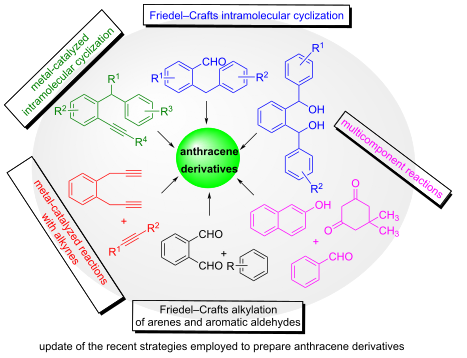
Beilstein J. Org. Chem. 2021, 17, 2028–2050, doi:10.3762/bjoc.17.131
Graphical Abstract
Figure 1: Examples of anthracene derivatives and their applications.
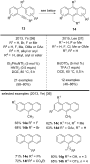
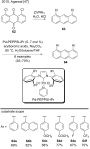
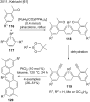
Scheme 1: Rhodium-catalyzed oxidative coupling reactions of arylboronic acids with internal alkynes.
Scheme 2: Rhodium-catalyzed oxidative benzannulation reactions of 1-adamantoyl-1-naphthylamines with internal...
Scheme 3: Gold/bismuth-catalyzed cyclization of o-alkynyldiarylmethanes.
Scheme 4: [2 + 2 + 2] Cyclotrimerization reactions with alkynes/nitriles in the presence of nickel and cobalt...
Scheme 5: Cobalt-catalyzed [2 + 2 + 2] cyclotrimerization reactions with bis(trimethylsilyl)acetylene (23).
Scheme 6: [2 + 2 + 2] Alkyne-cyclotrimerization reactions catalyzed by a CoCl2·6H2O/Zn reagent.
Scheme 7: Pd(II)-catalyzed sp3 C–H alkenylation of diphenyl carboxylic acids with acrylates.
Scheme 8: Pd(II)-catalyzed sp3 C–H arylation with o-tolualdehydes and aryl iodides.
Scheme 9: Alkylation of arenes with aromatic aldehydes in the presence of acetyl bromide and ZnBr2/SiO2.
Scheme 10: BF3·H2O-catalyzed hydroxyalkylation of arenes with aromatic dialdehyde 44.
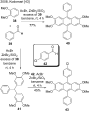
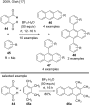
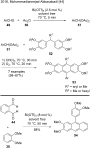
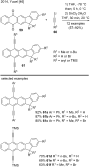
Scheme 11: Bi(OTf)3-promoted Friedel–Crafts alkylation of triarylmethanes and aromatic acylals and of arenes a...
Scheme 12: Reduction of anthraquinones by using Zn/pyridine or Zn/NaOH reductive methods.
Scheme 13: Two-step route to novel substituted Indenoanthracenes.
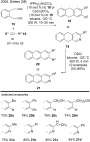
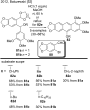
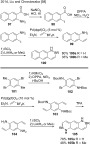
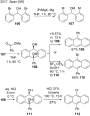
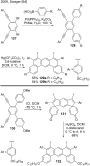
Scheme 14: Synthesis of 1,8-diarylanthracenes through Suzuki–Miyaura coupling reaction in the presence of Pd-P...
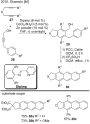
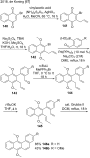
Scheme 15: Synthesis of five new substituted anthracenes by using LAH as reducing agent.
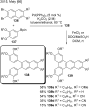
Scheme 16: One-pot procedure to synthesize substituted 9,10-dicyanoanthracenes.
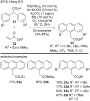
Scheme 17: Reduction of bromoanthraquinones with NaBH4 in alkaline medium.
Scheme 18: In(III)-catalyzed reductive-dehydration intramolecular cycloaromatization of 2-benzylic aromatic al...
Scheme 19: Acid-catalyzed cyclization of new O-protected ortho-acetal diarylmethanols.
Scheme 20: Lewis acid-mediated regioselective cyclization of asymmetric diarylmethine dipivalates and diarylme...
Scheme 21: BF3·OEt2/CF3SO3H-mediated cyclodehydration reactions of 2-(arylmethyl)benzaldehydes and 2-(arylmeth...
Scheme 22: Synthesis of 2,3,6,7-anthracenetetracarbonitrile (90) by double Wittig reaction followed by deprote...
Scheme 23: Homo-elongation protocol for the synthesis of substituted acene diesters/dinitriles.
Scheme 24: Synthesis of two new parental BN anthracenes via borylative cyclization.
Scheme 25: Synthesis of substituted anthracenes from a bifunctional organomagnesium alkoxide.
Scheme 26: Palladium-catalyzed tandem C–H activation/bis-cyclization of propargylic carbonates.
Scheme 27: Ruthenium-catalyzed C–H arylation of acetophenone derivatives with arenediboronates.
Scheme 28: Pd-catalyzed intramolecular cyclization of (Z,Z)-p-styrylstilbene derivatives.
Scheme 29: AuCl-catalyzed double cyclization of diiodoethynylterphenyl compounds.
Scheme 30: Iodonium-induced electrophilic cyclization of terphenyl derivatives.
Scheme 31: Oxidative photocyclization of 1,3-distyrylbenzene derivatives.
Scheme 32: Oxidative cyclization of 2,3-diphenylnaphthalenes.
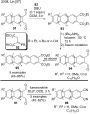
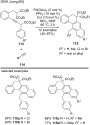
Scheme 33: Suzuki-Miyaura/isomerization/ring closing metathesis strategy to synthesize benz[a]anthracenes.
Scheme 34: Green synthesis of oxa-aza-benzo[a]anthracene and oxa-aza-phenanthrene derivatives.
Scheme 35: Triple benzannulation of substituted naphtalene via a 1,3,6-naphthotriyne synthetic equivalent.
Scheme 36: Zinc iodide-catalyzed Diels–Alder reactions with 1,3-dienes and aroyl propiolates followed by intra...
Scheme 37: H3PO4-promoted intramolecular cyclization of substituted benzoic acids.
Scheme 38: Palladium-catalyzed intermolecular direct acylation of aromatic aldehydes and o-iodoesters.
Scheme 39: Cycloaddition/oxidative aromatization of quinone and β-enamino esters.
Scheme 40: ʟ-Proline-catalyzed [4 + 2] cycloaddition reaction of naphthoquinones and α,β-unsaturated aldehydes....
Scheme 41: Iridium-catalyzed [2 + 2 + 2] cycloaddition of a 1,2-bis(propiolyl)benzene derivative with alkynes.
Scheme 42: Synthesis of several anthraquinone derivatives by using InCl3 and molecular iodine.
Scheme 43: Indium-catalyzed multicomponent reactions employing 2-hydroxy-1,4-naphthoquinone (186), β-naphthol (...
Scheme 44: Synthesis of substituted anthraquinones catalyzed by an AlCl3/MeSO3H system.
Scheme 45: Palladium(II)-catalyzed/visible light-mediated synthesis of anthraquinones.
Scheme 46: [4 + 2] Anionic annulation reaction for the synthesis of substituted anthraquinones.
Beilstein J. Org. Chem. 2021, 17, 1600–1628, doi:10.3762/bjoc.17.114
Graphical Abstract
Figure 1: Some significant triazole derivatives [8,23-27].
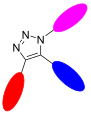
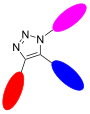
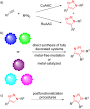
Scheme 1: A general comparison between synthetic routes for disubstituted 1,2,3-triazole derivatives and full...
Scheme 2: Synthesis of formyltriazoles 3 from the treatment of α-bromoacroleins 1 with azides 2.
Scheme 3: A probable mechanism for the synthesis of formyltriazoles 5 from the treatment of α-bromoacroleins 1...
Scheme 4: Synthesis of 1,4,5-trisubstituted 1,2,3-triazoles 8 from the reaction of aryl azides 7 with enamino...
Scheme 5: Proposed mechanism for the synthesis of 1,4,5-trisubstituted 1,2,3-triazoles from the reaction of a...
Scheme 6: Synthesis of 1,4,5-trisubstituted 1,2,3-triazoles 11 from the reaction of primary amines 10 with 1,...
Scheme 7: The proposed mechanism for the synthesis of 1,4,5-trisubstituted 1,2,3-triazoles 11 from the reacti...
Scheme 8: Synthesis of fully decorated 1,2,3-triazoles 19 containing a sulfur-based side chain.
Scheme 9: Mechanism for the formation of fully decorated 1,2,3-triazoles 19 containing a sulfur-based side ch...
Scheme 10: Synthesis of fully decorated 1,2,3-triazole compounds 25 through the regioselective addition and cy...
Scheme 11: A reasonable mechanism for the synthesis of fully decorated 1,2,3-triazole compounds 25 through the...
Scheme 12: Synthesis of 1,4,5-trisubstituted glycosyl-containing 1,2,3-triazole derivatives 30 from the reacti...
Scheme 13: Synthesis of 1,4,5-trisubstituted 1,2,3-triazoles 34 via intramolecular cyclization reaction of ket...
Scheme 14: Synthesis of fully decorated 1,2,3-triazoles 38 from the reaction of aldehydes 35, amines 36, and α...
Scheme 15: A reasonable mechanism for the synthesis of fully decorated 1,2,3-triazoles 38 from the reaction of...
Scheme 16: Synthesis of functionally rich double C- and N-vinylated 1,2,3-triazoles 45 and 47.
Scheme 17: Synthesis of disubstituted 4-chloro-, 4-bromo-, and 4-iodo-1,2,3-triazoles 50.
Scheme 18: a) A general route for SPAAC in polymer chemistry and b) synthesis of a novel pH-sensitive polymeri...
Scheme 19: Synthesis of 5-allenyl-1,2,3-triazoles 60 by the treatment of alkynes 57, azides 58, and propargyli...
Scheme 20: A reasonable mechanism for the synthesis of 5-allenyl-1,2,3-triazoles 60 by the treatment of alkyne...
Scheme 21: Synthesis of 5‐alkynyl-1,2,3-triazoles 69.
Scheme 22: A reasonable mechanism for the synthesis of 5‐alkynyl-1,2,3-triazoles 69.
Scheme 23: Synthesis of sulfur-cycle-fused 1,2,3-triazoles 75 and 77.
Scheme 24: A reasonable mechanism for the synthesis of sulfur-cycle-fused 1,2,3‐triazoles 75 and 77.
Scheme 25: Synthesis of 5-selanyltriazoles 85 from the reaction of ethynylstibanes 82, organic azides 83, and ...
Scheme 26: A mechanism for the synthesis of 5-selanyltriazoles 85 from the reaction of ethynylstibanes 82, org...
Scheme 27: Synthesis of trisubstituted triazoles containing an Sb substituent at position C5 in 93 and 5-unsub...
Scheme 28: Synthesis of asymmetric triazole disulfides 98 from disulfide-containing tert-butyltosyl disulfide 97...
Scheme 29: A mechanism for the synthesis of asymmetric triazole disulfides 98 from disulfide-containing tert-bu...
Scheme 30: Synthesis of triazole-fused sultams 104.
Scheme 31: Synthesis of 1,2,3-triazole-fused tricyclic heterocycles 106.
Scheme 32: A reasonable mechanism for the synthesis of 1,2,3-triazole-fused tricyclic heterocycles 106.
Scheme 33: Synthesis of 5-aryl-substituted 1,2,3-triazole derivatives 112.
Scheme 34: A reasonable mechanism for the synthesis of 5-aryl-substituted 1,2,3-triazole derivatives 112.
Scheme 35: Synthesis of 1,4,5-trisubstituted 1,2,3-triazole-5-carboxamides 119.
Scheme 36: A probable mechanism for the synthesis of 1,4,5-trisubstituted 1,2,3-triazole-5-carboxamides 119.
Scheme 37: Synthesis of fully decorated triazoles 125 via the Pd/C-catalyzed arylation of disubstituted triazo...
Scheme 38: Synthesis of triazolo[1,5-a]indolones 131.
Scheme 39: Synthesis of unsymmetrically substituted triazole-fused enediyne systems 135 and 5-aryl-4-ethynyltr...
Scheme 40: Synthesis of Pd/Cu-BNP 139 and application of 139 in the synthesis of polycyclic triazoles 142.
Scheme 41: A probable mechanism for the synthesis of polycyclic triazoles 142.
Scheme 42: Synthesis of highly functionalized 1,2,3-triazole-fused 5-, 6-, and 7-membered rings 152–154.
Scheme 43: A probable mechanism for the synthesis of highly functionalized 1,2,3-triazole-fused 5-, 6-, and 7-...
Scheme 44: Synthesis of fully functionalized 1,2,3-triazolo-fused chromenes 162, 164, and 166 via the intramol...
Scheme 45: Ru-catalyzed synthesis of fully decorated triazoles 172.
Scheme 46: Synthesis of 4-cyano-1,2,3-triazoles 175.
Scheme 47: Synthesis of functionalized triazoles from the reaction of 1-alkyltriazenes 176 and azides 177 and ...
Scheme 48: Mechanism for the synthesis of functionalized triazoles from the reaction of 1-alkyltriazenes 176 a...
Beilstein J. Org. Chem. 2021, 17, 1533–1564, doi:10.3762/bjoc.17.111
Graphical Abstract
Scheme 1: Representatives of isomeric bisoxindoles.
Scheme 2: Isoindigo-based OSCs with the best efficiency.
Scheme 3: Monoisoindigos with preferred 6,6'-substitution.
Scheme 4: Possibility of aromatic–quinoid structural transition.
Scheme 5: Isoindigo structures with incorporated acceptor nitrogen heterocycles.
Scheme 6: Monoisoindigos bearing pyrenyl substituents.
Scheme 7: p-Alkoxyphenylene-embedded thienylisoindigo with different acceptor anchor units.
Scheme 8: Nonfullerene OSC based on perylene diimide-derived isoindigo.
Scheme 9: Isoindigo as an additive in all-polymer OSCs.
Scheme 10: Bisisoindigos with different linker structures.
Scheme 11: Nonthiophene oligomeric monoisoindigos for OSCs.
Scheme 12: The simplest examples of polymers with a monothienylisoindigo monomeric unit.
Scheme 13: Monothienylisoindigos bearing π-extended electron-donor backbones.
Scheme 14: Role of fluorination and the molecular weight on OSC efficiency on the base of the bithiopheneisoin...
Scheme 15: Trithiopheneisoindigo polymers with variation in the substituent structure.
Scheme 16: Polymeric thienyl-linked bisisoindigos for OSCs.
Scheme 17: Isoindigo bearing the thieno[3,2-b]thiophene structural motif as donor component of OSCs.
Scheme 18: Thienylisoindigos with incorporated aromatic unit.
Scheme 19: One-component nonfullerene OSCs on the base of isoindigo.
Scheme 20: Isoindigo-based nonthiophene aza aromatic polymers as acceptor components of OSCs.
Scheme 21: Polymers with isoindigo substituent as side-chain photon trap.
Scheme 22: Isoindigo derivatives for OFET technology with the best mobility.
Scheme 23: Monoisoindigos as low-molecular-weight semiconductors.
Scheme 24: Polymeric bithiopheneisoindigos for OFET creation.
Scheme 25: Fluorination as a tool to improve isoindigo-based OFET devices.
Scheme 26: Diversely DPP–isoindigo-conjugated polymers for OFETs.
Scheme 27: Isoindigoid homopolymers with differing rigidity.
Scheme 28: Isoindigo-based materials with extended π-conjugation.
Scheme 29: Poly(isoindigothiophene) compounds as sensors for ammonia.
Scheme 30: Sensor devices based on poly(isoindigoaryl) compounds.
Scheme 31: Isoindigo polymers for miscellaneous applications.
Scheme 32: Mono-, rod-like, and polymeric isoindigos as agents for photoacoustic and photothermal cancer thera...
Beilstein J. Org. Chem. 2021, 17, 1481–1489, doi:10.3762/bjoc.17.104
Graphical Abstract
Figure 1: Parent structure of 2,4-disubstituted tetralins (1) and selected medicinally useful derivatives 2–4....
Scheme 1: Reported strategies for the synthesis of tetralin-2-ol ring systems.
Scheme 2: Designed cascade reactions to 4-substituted tetralin-2-ols.
Scheme 3: The documented synthesis of 2-(2-vinylphenyl)acetaldehyde (13a).
Scheme 4: Modified synthesis of 2-(2-vinylphenyl)acetaldehydes 13a–g and 1-vinyl-2-naphthaldehyde (13h).
Scheme 5: Lewis acid-catalyzed Prins/Friedel–Crafts reaction of 13a with veratrole.
Figure 2: The speculated stereostructures of compound cis-14aa and trans-14aa.
Scheme 6: Use of different nucleophiles for the cascade reaction with 13a. Reaction conditions: a mixture of ...
Scheme 7: Reaction of aldehydes 13b–h with veratrole or furan. Reaction conditions: a mixture of 13b–h (1.40 ...
Scheme 8: Synthesis of 5-aryltetrahydro-5H-benzo[7]annulen-7-ols 20a, b.
Scheme 9: Conversion of 2-hydroxy-4-(2-furyl)tetralin (14af) into PAT analogue 22.
Figure 3: Crystal structure of the tosylate 21. The displacement ellipsoids are drawn at the 30% probability ...
Beilstein J. Org. Chem. 2021, 17, 1392–1439, doi:10.3762/bjoc.17.98
Graphical Abstract
Figure 1: Double-headed nucleosides. B1 and B2 = nucleobases or heterocyclic/carbocyclic moieties; L = linker....
Scheme 1: Synthesis of 2′-(pyrimidin-1-yl)methyl- or 2′-(purin-9-yl)methyl-substituted double-headed nucleosi...
Scheme 2: Synthesis of double-headed nucleoside 7 having two cytosine moieties.
Scheme 3: Synthesis of double-headed nucleoside 2′-deoxy-2′-C-(2-(thymine-1-yl)ethyl)-uridine (11).
Scheme 4: Double-headed nucleosides 14 and 15 obtained by click reaction.
Scheme 5: Synthesis of the double-headed nucleoside 19.
Scheme 6: Synthesis of the double-headed nucleosides 24 and 25.
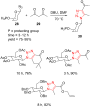
Scheme 7: Synthesis of double-headed nucleosides 28 and 29.
Scheme 8: Synthesis of double-headed nucleoside 33.
Scheme 9: Synthesis of double-headed nucleoside 37.
Scheme 10: Synthesis of the double-headed nucleoside 1-(5′-O-(4,4′-dimethoxytrityl)-2′-C-((4-(pyren-1-yl)-1,2,...
Scheme 11: Synthesis of triazole-containing double-headed ribonucleosides 46a–c and 50a–e.
Scheme 12: Synthesis of double-headed nucleosides 54a–g.
Scheme 13: Synthesis of double-headed nucleosides 59 and 60.
Scheme 14: Synthesis of the double-headed nucleosides 63 and 64.
Scheme 15: Synthesis of double-headed nucleosides 66a–c.
Scheme 16: Synthesis of benzoxazole-containing double-headed nucleosides 69 and 71 from 5′-amino-5′-deoxynucle...
Scheme 17: Synthesis of 4′-C-((N6-benzoyladenin-9-yl)methyl)thymidine (75) and 4′-C-((thymin-1-yl)methyl)thymi...
Scheme 18: Synthesis of double-headed nucleosides 5′-(adenine-9-yl)-5′-deoxythymidine (79) and 5′-(adenine-9-y...
Scheme 19: Synthesis of double-headed nucleosides 85–87 via reversed nucleosides methodology.
Scheme 20: Double-headed nucleosides 91 and 92 derived from ω-terminal-acetylenic sugar derivatives 90a,b.
Scheme 21: Synthesis of double-headed nucleosides 96a–g.
Scheme 22: Synthesis of double-headed nucleosides 100 and 103.
Scheme 23: Double-headed nucleosides 104 and 105 with a triazole motif.
Scheme 24: Synthesis of the double-headed nucleosides 107 and 108.
Scheme 25: Synthesis of double-headed nucleoside 110 with additional nucleobase in 5′-(S)-C-position joined th...
Scheme 26: Synthesis of double-headed nucleosides 111–113 with additional nucleobases in the 5′-(S)-C-position...
Scheme 27: Synthesis of double-headed nucleoside 114 by click reaction.
Scheme 28: Synthesis of double-headed nucleosides 118 with an additional nucleobase at the 5′-(S)-C-position.
Scheme 29: Synthesis of bicyclic double-headed nucleoside 122.
Scheme 30: Synthesis of double-headed nucleosides 125a–c derived from 2′-amino-LNA.
Scheme 31: Double-headed nucleoside 127 obtained by click reaction.
Scheme 32: Synthesis of double-headed nucleoside 130.
Scheme 33: Double-headed nucleosides 132a–d and 134a–d synthesized by Sonogashira cross coupling reaction.
Scheme 34: Synthesis of double-headed nucleosides 137 and 138 via Suzuki coupling.
Scheme 35: Synthesis of double-headed nucleosides 140 and 141 via Sonogashira cross coupling reaction.
Scheme 36: Synthesis of double-headed nucleoside 143.
Scheme 37: Synthesis of the double-headed nucleoside 146.
Scheme 38: Synthesis of 5-C-alkynyl-functionalized double-headed nucleosides 151a–d.
Scheme 39: Synthesis of 5-C-triazolyl-functionalized double-headed nucleosides 154a, b.
Scheme 40: Synthesis of double-headed nucleosides 157a–c.
Scheme 41: Synthesis of double-headed nucleoside 159, phosphoramidite 160 and the corresponding nucleotide mon...
Scheme 42: Synthesis of double-headed nucleoside 163, phosphoramidite 164 and the corresponding nucleotide mon...
Scheme 43: Synthesis of double-headed nucleoside 167, phosphoramidite 168, and the corresponding nucleotide mo...
Scheme 44: Synthesis of double-headed nucleoside 171, phosphoramidite 172, and the corresponding nucleotide mo...
Scheme 45: Synthesis of double-headed nucleoside 175, phosphoramidite 176, and the corresponding nucleotide mo...
Scheme 46: Synthesis of double-headed nucleoside 178.
Scheme 47: Synthesis of the double-headed nucleosides 181 and 183.
Scheme 48: Alternative synthesis of the double-headed nucleoside 183.
Scheme 49: Synthesis of double-headed nucleoside 188 through thermal [2 + 3] sydnone–alkyne cycloaddition reac...
Scheme 50: Synthesis of the double-headed nucleosides 190 and 191.
Scheme 51: Synthesis of 1-((5S)-2,3,4-tri-O-acetyl-5-(2,6-dichloropurin-9-yl)-β-ᴅ-xylopyranosyl)uracil (195).
Scheme 52: Synthesis of hexopyranosyl double-headed pyrimidine homonucleosides 200a–c.
Figure 2: 3′-C-Ethynyl-β-ᴅ-allopyranonucleoside derivatives 201a–f.
Scheme 53: Synthesis of 3′-C-(1,4-disubstituted-1,2,3-triazolyl)-double-headed pyranonucleosides 203–207.
Scheme 54: Synthesis of 3′-C-(1,4-disubstituted-1,2,3-triazolyl)-double-headed pyranonucleosides 208 and 209.
Scheme 55: Synthesis of 3′-C-(1,4-disubstituted-1,2,3-triazolyl)-double-headed pyranonucleoside 210.
Scheme 56: Synthesis of double-headed acyclic nucleosides (2S,3R)-1,4-bis(thymine-1-yl)butane-2,3-diol (213a) ...
Scheme 57: Synthesis of double-headed acyclic nucleosides (2R,3S)-1,4-bis(thymine-1-yl)butane-2,3-diol (213c) ...
Scheme 58: Synthesis of double-headed acetylated 1,3,4-oxadiazino[6,5-b]indolium-substituted C-nucleosides 218b...
Scheme 59: Synthesis of double-headed acyclic nucleoside 222.
Scheme 60: Synthesis of functionalized 1,2-bis(1,2,4-triazol-3-yl)ethane-1,2-diols 223a–f.
Scheme 61: Synthesis of acyclic double-headed 1,2,4-triazino[5,6-b]indole C-nucleosides 226–231.
Scheme 62: Synthesis of double-headed 1,3,4-thiadiazoline, 1,3,4-oxadiazoline, and 1,2,4-triazoline acyclo C-n...
Scheme 63: Synthesis of double-headed acyclo C-nucleosides 240–242.
Scheme 64: Synthesis of double-headed acyclo C-nucleoside 246.
Scheme 65: Synthesis of acyclo double-headed nucleoside 250.
Scheme 66: Synthesis of acyclo double-headed nucleoside 253.
Scheme 67: Synthesis of acyclo double-headed nucleosides 259a–d.
Scheme 68: Synthesis of acyclo double-headed nucleoside 261.
Beilstein J. Org. Chem. 2021, 17, 1374–1384, doi:10.3762/bjoc.17.96
Graphical Abstract
Scheme 1: Retrosynthetic pathways to the pyrrole-based C3-symmetric truxene derivative 6.
Scheme 2: Synthesis of tripyrrolotruxene 6 via cyclotrimerization and RCM as crucial steps.
Scheme 3: Synthesis of star-shaped molecule 6 utilizing the Clauson–Kaas pyrrole strategy.
Scheme 4: Synthesis of truxene derivative 6 involving Ullmann-type cross-coupling reaction.
Scheme 5: Synthesis of imidazole and benzimidazole containing truxene derivatives 14 and 16.
Scheme 6: Construction of truxene-based di- and trioxazole derivatives 21 and 20.
Scheme 7: Synthesis of benzene-bridged rings containing trioxazolotruxene system 25.
Figure 1: Normalized absorption (left); fluorescence spectra (right) of the synthesized truxene derivatives (...
Beilstein J. Org. Chem. 2021, 17, 1001–1040, doi:10.3762/bjoc.17.82
Graphical Abstract
Figure 1: Tautomeric forms of biguanide.
Figure 2: Illustrations of neutral, monoprotonated, and diprotonated structures biguanide.
Figure 3: The main approaches for the synthesis of biguanides. The core structure is obtained via the additio...
Scheme 1: The three main preparations of biguanides from cyanoguanidine.
Scheme 2: Synthesis of butylbiguanide using CuCl2 [16].
Scheme 3: Synthesis of biguanides by the direct fusion of cyanoguanidine and amine hydrochlorides [17,18].
Scheme 4: Synthesis of ethylbiguanide and phenylbiguanide as reported by Smolka and Friedreich [14].
Scheme 5: Synthesis of arylbiguanides through the reaction of cyanoguanidine with anilines in water [19].
Scheme 6: Synthesis of aryl- and alkylbiguanides by adaptations of Cohn’s procedure [20,21].
Scheme 7: Microwave-assisted synthesis of N1-aryl and -dialkylbiguanides [22,23].
Scheme 8: Synthesis of aryl- and alkylbiguanides by trimethylsilyl activation [24,26].
Scheme 9: Synthesis of phenformin analogs by TMSOTf activation [27].
Scheme 10: Synthesis of N1-(1,2,4-triazolyl)biguanides [28].
Scheme 11: Synthesis of 2-guanidinobenzazoles by addition of ortho-substituted anilines to cyanoguanidine [30,32] and...
Scheme 12: Synthesis of 2,4-diaminoquinazolines by the addition of 2-cyanoaniline to cyanoguanidine and from 3...
Scheme 13: Reactions of anthranilic acid and 2-mercaptobenzoic acid with cyanoguanidine [24,36,37].
Scheme 14: Synthesis of disubstituted biguanides with Cu(II) salts [38].
Scheme 15: Synthesis of an N1,N2,N5-trisubstituted biguanide by fusion of an amine hydrochloride and 2-cyano-1...
Scheme 16: Synthesis of N1,N5-disubstituted biguanides by the addition of anilines to cyanoguanidine derivativ...
Scheme 17: Microwave-assisted additions of piperazine and aniline hydrochloride to substituted cyanoguanidines ...
Scheme 18: Synthesis of N1,N5-alkyl-substituted biguanides by TMSOTf activation [27].
Scheme 19: Additions of oxoamines hydrochlorides to dimethylcyanoguanidine [49].
Scheme 20: Unexpected cyclization of pyridylcyanoguanidines under acidic conditions [50].
Scheme 21: Example of industrial synthesis of chlorhexidine [51].
Scheme 22: Synthesis of symmetrical N1,N5-diarylbiguanides from sodium dicyanamide [52,53].
Scheme 23: Synthesis of symmetrical N1,N5-dialkylbiguanides from sodium dicyanamide [54-56].
Scheme 24: Stepwise synthesis of unsymmetrical N1,N5-trisubstituted biguanides from sodium dicyanamide [57].
Scheme 25: Examples for the synthesis of unsymmetrical biguanides [58].
Scheme 26: Examples for the synthesis of an 1,3-diaminobenzoquinazoline derivative by the SEAr cyclization of ...
Scheme 27: Major isomers formed by the SEAr cyclization of symmetric biguanides derived from 2- and 3-aminophe...
Scheme 28: Lewis acid-catalyzed synthesis of 8H-pyrrolo[3,2-g]quinazoline-2,4-diamine [63].
Scheme 29: Synthesis of [1,2,4]oxadiazoles by the addition of hydroxylamine to dicyanamide [49,64].
Scheme 30: Principle of “bisamidine transfer” and analogy between the reactions with N-amidinopyrazole and N-a...
Scheme 31: Representative syntheses of N-amidino-amidinopyrazole hydrochloride [68,69].
Scheme 32: First examples of biguanide syntheses using N-amidino-amidinopyrazole [66].
Scheme 33: Example of “biguanidylation” of a hydrazide substrate [70].
Scheme 34: Example for the synthesis of biguanides using S-methylguanylisothiouronium iodide as “bisamidine tr...
Scheme 35: Synthesis of N-substituted N1-cyano-S-methylisothiourea precursors.
Scheme 36: Addition routes on N1-cyano-S-methylisothioureas.
Scheme 37: Synthesis of an hydroxybiguanidine from N1-cyano-S-methylisothiourea [77].
Scheme 38: Synthesis of an N1,N2,N3,N4,N5-pentaarylbiguanide from the corresponding triarylguanidine and carbo...
Scheme 39: Reactions of N,N,N’,N’-tetramethylguanidine (TMG) with carbodiimides to synthesize hexasubstituted ...
Scheme 40: Microwave-assisted addition of N,N,N’,N’-tetramethylguanidine to carbodiimides [80].
Scheme 41: Synthesis of N1-aryl heptasubstituted biguanides via a one-pot biguanide formation–copper-catalyzed ...
Scheme 42: Formation of 1,2-dihydro-1,3,5-triazine derivatives by the reaction of guanidine with excess carbod...
Scheme 43: Plausible mechanism for the spontaneous cyclization of triguanides [82].
Scheme 44: a) Formation of mono- and disubstituted (iso)melamine derivatives by the reaction of biguanides and...
Scheme 45: Reactions of 2-aminopyrimidine with carbodiimides to synthesize 2-guanidinopyrimidines as “biguanid...
Scheme 46: Non-catalyzed alternatives for the addition of 2-aminopyrimidine derivatives to carbodiimides. A) h...
Scheme 47: Addition of guanidinomagnesium halides to substituted cyanamides [90].
Scheme 48: Microwave-assisted synthesis of [11C]metformin by the reaction of 11C-labelled dimethylcyanamide an...
Scheme 49: Formation of 4-amino-6-dimethylamino[1,3,5]triazin-2-ol through the reaction of Boc-guanidine and d...
Scheme 50: Formation of 1,3,5-triazine derivatives via the addition of guanidines to substituted cyanamides [92].
Scheme 51: Synthesis of biguanide by the reaction of O-alkylisourea and guanidine [93].
Scheme 52: Aromatic nucleophilic substitution of guanidine on 2-O-ethyl-1,3,5-triazine [95].
Scheme 53: Synthesis of N1,N2-disubstituted biguanides by the reaction of guanidine and thioureas in the prese...
Scheme 54: Cyclization reactions involving condensations of guanidine(-like) structures with thioureas [97,98].
Scheme 55: Condensations of guanidine-like structures with thioureas [99,100].
Scheme 56: Condensations of guanidines with S-methylisothioureas [101,102].
Scheme 57: Addition of 2-amino-1,3-diazaaromatics to S-alkylisothioureas [103,104].
Scheme 58: Addition of guanidines to 2-(methylsulfonyl)pyrimidines [105].
Scheme 59: An example of a cyclodesulfurization reaction to a fused 3,5-diamino-1,2,4-triazole [106].
Scheme 60: Ring-opening reactions of 1,3-diaryl-2,4-bis(arylimino)-1,3-diazetidines [107].
Scheme 61: Formation of 3,5-diamino-1,2,4-triazole derivatives via addition of hydrazines to 1,3-diazetidine-2...
Scheme 62: Formation of a biguanide via the addition of aniline to 1,2,4-thiadiazol-3,5-diamines, ring opening...
Figure 4: Substitution pattern of biguanides accessible by synthetic pathways a–h.
Beilstein J. Org. Chem. 2021, 17, 819–865, doi:10.3762/bjoc.17.71
Graphical Abstract
Figure 1: Marketed drugs with acridine moiety.
Scheme 1: Synthesis of 4-arylacridinediones.
Scheme 2: Proposed mechanism for acridinedione synthesis.
Scheme 3: Synthesis of tetrahydrodibenzoacridinones.
Scheme 4: Synthesis of naphthoacridines.
Scheme 5: Plausible mechanism for naphthoacridines.
Figure 2: Benzoazepines based potent molecules.
Scheme 6: Synthesis of azepinone.
Scheme 7: Proposed mechanism for azepinone formation.
Scheme 8: Synthesis of benzoazulenen-1-one derivatives.
Scheme 9: Proposed mechanism for benzoazulene-1-one synthesis.
Figure 3: Indole-containing pharmacologically active molecules.
Scheme 10: Synthesis of functionalized indoles.
Scheme 11: Plausible mechanism for the synthesis of functionalized indoles.
Scheme 12: Synthesis of spirooxindoles.
Scheme 13: Synthesis of substituted spirooxindoles.
Scheme 14: Plausible mechanism for the synthesis of substituted spirooxindoles.
Scheme 15: Synthesis of pyrrolidinyl spirooxindoles.
Scheme 16: Proposed mechanism for pyrrolidinyl spirooxindoles.
Figure 4: Pyran-containing biologically active molecules.
Scheme 17: Synthesis of functionalized benzopyrans.
Scheme 18: Plausible mechanism for synthesis of benzopyran.
Scheme 19: Synthesis of indoline-spiro-fused pyran derivatives.
Scheme 20: Proposed mechanism for indoline-spiro-fused pyran.
Scheme 21: Synthesis of substituted naphthopyrans.
Figure 5: Marketed drugs with pyrrole ring.
Scheme 22: Synthesis of tetra-substituted pyrroles.
Scheme 23: Mechanism for silica-supported PPA-SiO2-catalyzed pyrrole synthesis.
Scheme 24: Synthesis of pyrrolo[1,10]-phenanthrolines.
Scheme 25: Proposed mechanism for pyrrolo[1,10]-phenanthrolines.
Figure 6: Marketed drugs and molecules containing pyrimidine and pyrimidinones skeletons.
Scheme 26: MWA-MCR pyrimidinone synthesis.
Scheme 27: Two proposed mechanisms for pyrimidinone synthesis.
Scheme 28: MWA multicomponent synthesis of dihydropyrimidinones.
Scheme 29: Proposed mechanism for dihydropyrimidinones.
Figure 7: Biologically active fused pyrimidines.
Scheme 30: MWA- MCR for the synthesis of pyrrolo[2,3-d]pyrimidines.
Scheme 31: Proposed mechanism for pyrrolo[2,3-d]pyrimidines.
Scheme 32: Synthesis of substituted pyrrolo[2,3-d]pyrimidine-2,4-diones.
Scheme 33: Probable pathway for pyrrolo[2,3-d]pyrimidine-2,4-diones.
Scheme 34: Synthesis of pyridopyrimidines.
Scheme 35: Plausible mechanism for the synthesis of pyridopyrimidines.
Scheme 36: Synthesis of dihydropyridopyrimidine and dihydropyrazolopyridine.
Scheme 37: Proposed mechanism for the formation of dihydropyridopyrimidine.
Scheme 38: Synthesis of thiopyrano[4,3-d]pyrimidines.
Scheme 39: Plausible mechanism for the synthesis of thiopyrano[4,3-d]pyrimidines.
Scheme 40: Synthesis of decorated imidazopyrimidines.
Scheme 41: Proposed mechanism for imidazopyrimidine synthesis.
Figure 8: Pharmacologically active molecules containing purine bases.
Scheme 42: Synthesis of aza-adenines.
Scheme 43: Synthesis of 5-aza-7-deazapurines.
Scheme 44: Proposed mechanism for deazapurines synthesis.
Figure 9: Biologically active molecules containing pyridine moiety.
Scheme 45: Synthesis of steroidal pyridines.
Scheme 46: Proposed mechanism for steroidal pyridine.
Scheme 47: Synthesis of N-alkylated 2-pyridones.
Scheme 48: Two possible mechanisms for pyridone synthesis.
Scheme 49: Synthesis of pyridone derivatives.
Scheme 50: Postulated mechanism for synthesis of pyridone.
Figure 10: Biologically active fused pyridines.
Scheme 51: Benzimidazole-imidazo[1,2-a]pyridines synthesis.
Scheme 52: Mechanism for the synthesis of benzimidazole-imidazo[1,2-a]pyridines.
Scheme 53: Synthesis of pyrazolo[3,4-b]pyridine-5-spirocycloalkanedione derivatives.
Scheme 54: Proposed mechanism for spiro-pyridines.
Scheme 55: Functionalized macrocyclane-fused pyrazolo[3,4-b]pyridine derivatives.
Scheme 56: Mechanism postulated for macrocyclane-fused pyrazolo[3,4-b]pyridine.
Scheme 57: Generation of pyrazolo[3,4-b]pyridines.
Scheme 58: Proposed mechanism for the synthesis of pyrazolo[3,4-b]pyridines.
Scheme 59: Proposed mechanism for the synthesis of azepinoindole.
Figure 11: Pharmaceutically important molecules with quinoline moiety.
Scheme 60: Povarov-mediated quinoline synthesis.
Scheme 61: Proposed mechanism for Povarov reaction.
Scheme 62: Synthesis of pyrazoloquinoline.
Scheme 63: Plausible mechanism for pyrazoloquinoline synthesis.
Figure 12: Quinazolinones as pharmacologically significant scaffolds.
Scheme 64: Four-component reaction for dihydroquinazolinone.
Scheme 65: Proposed mechanism for dihydroquinazolinones.
Scheme 66: Synthesis purine quinazolinone and PI3K-δ inhibitor.
Scheme 67: Synthesis of fused benzothiazolo/benzoimidazoloquinazolinones.
Scheme 68: Proposed mechanism for fused benzothiazolo/benzoimidazoloquinazolinones.
Scheme 69: On-water reaction for synthesis of thiazoloquinazolinone.
Scheme 70: Proposed mechanism for the thiazoloquinazolinone synthesis.
Scheme 71: β-Cyclodextrin-mediated synthesis of indoloquinazolinediones.
Scheme 72: Proposed mechanism for synthesis of indoloquinazolinediones.
Figure 13: Triazoles-containing marketted drugs and pharmacologically active molecules.
Scheme 73: Cu(I) DAPTA-catalyzed 1,2,3-triazole formation.
Scheme 74: Mechanism for Cu(I) DAPTA-catalyzed triazole formation.
Scheme 75: Synthesis of β-hydroxy-1,2,3-triazole.
Scheme 76: Proposed mechanism for synthesis of β-hydroxy-1,2,3-triazoles.
Scheme 77: Synthesis of bis-1,2,4-triazoles.
Scheme 78: Proposed mechanism for bis-1,2,4-triazoles synthesis.
Figure 14: Thiazole containing drugs.
Scheme 79: Synthesis of a substituted thiazole ring.
Scheme 80: Synthesis of pyrazolothiazoles.
Figure 15: Chromene containing drugs.
Scheme 81: Magnetic nanocatalyst-mediated aminochromene synthesis.
Scheme 82: Proposed mechanism for the synthesis of chromenes.
Beilstein J. Org. Chem. 2021, 17, 771–799, doi:10.3762/bjoc.17.67
Graphical Abstract
Scheme 1: The electron transfer process in EDA complexes.
Scheme 2: Synthesis of benzo[b]phosphorus oxide 3 initiated by an EDA complex.
Scheme 3: Mechanism of the synthesis of quinoxaline derivative 7.
Scheme 4: Synthesis of imidazole derivative 10 initiated by an EDA complex.
Scheme 5: Synthesis of sulfamoylation product 12 initiated by an EDA complex.
Scheme 6: Mechanism of the synthesis of sulfamoylation product 12.
Scheme 7: Synthesis of indole derivative 22 initiated by an EDA complex.
Scheme 8: Synthesis of perfluoroalkylated pyrimidines 26 initiated by an EDA complex.
Scheme 9: Synthesis of phenanthridine derivative 29 initiated by an EDA complex.
Scheme 10: Synthesis of cis-tetrahydroquinoline derivative 32 initiated by an EDA complex.
Scheme 11: Mechanism of the synthesis of cis-tetrahydroquinoline derivative 32.
Scheme 12: Synthesis of phenanthridine derivative 38 initiated by an EDA complex.
Scheme 13: Synthesis of spiropyrroline derivative 40 initiated by an EDA complex.
Scheme 14: Synthesis of benzothiazole derivative 43 initiated by an EDA complex.
Scheme 15: Synthesis of perfluoroalkyl-s-triazine derivative 45 initiated by an EDA complex.
Scheme 16: Synthesis of indoline derivative 47 initiated by an EDA complex.
Scheme 17: Mechanism of the synthesis of spirocyclic indoline derivative 47.
Scheme 18: Synthesis of cyclobutane product 50 initiated by an EDA complex.
Scheme 19: Mechanism of the synthesis of spirocyclic indoline derivative 50.
Scheme 20: Synthesis of 1,3-oxazolidine compound 59 initiated by an EDA complex.
Scheme 21: Synthesis of trifluoromethylated product 61 initiated by an EDA complex.
Scheme 22: Synthesis of indole alkylation product 64 initiated by an EDA complex.
Scheme 23: Synthesis of perfluoroalkylation product 67 initiated by an EDA complex.
Scheme 24: Synthesis of hydrotrifluoromethylated product 70 initiated by an EDA complex.
Scheme 25: Synthesis of β-trifluoromethylated alkyne product 71 initiated by an EDA complex.
Scheme 26: Mechanism of the synthesis of 2-phenylthiophene derivative 74.
Scheme 27: Synthesis of allylated product 80 initiated by an EDA complex.
Scheme 28: Synthesis of trifluoromethyl-substituted alkynyl product 84 initiated by an EDA complex.
Scheme 29: Synthesis of dearomatized fluoroalkylation product 86 initiated by an EDA complex.
Scheme 30: Mechanism of the synthesis of dearomatized fluoroalkylation product 86.
Scheme 31: Synthesis of C(sp3)–H allylation product 91 initiated by an EDA complex.
Scheme 32: Synthesis of perfluoroalkylation product 93 initiated by an EDA complex.
Scheme 33: Synthesis of spirocyclic indolene derivative 95 initiated by an EDA complex.
Scheme 34: Synthesis of perfluoroalkylation product 97 initiated by an EDA complex.
Scheme 35: Synthesis of alkylated indole derivative 100 initiated by an EDA complex.
Scheme 36: Mechanism of the synthesis of alkylated indole derivative 100.
Scheme 37: Synthesis of arylated oxidized indole derivative 108 initiated by an EDA complex.
Scheme 38: Synthesis of 4-ketoaldehyde derivative 111 initiated by an EDA complex.
Scheme 39: Mechanism of the synthesis of 4-ketoaldehyde derivative 111.
Scheme 40: Synthesis of perfluoroalkylated olefin 118 initiated by an EDA complex.
Scheme 41: Synthesis of alkylation product 121 initiated by an EDA complex.
Scheme 42: Synthesis of acylation product 123 initiated by an EDA complex.
Scheme 43: Mechanism of the synthesis of acylation product 123.
Scheme 44: Synthesis of trifluoromethylation product 126 initiated by an EDA complex.
Scheme 45: Synthesis of unnatural α-amino acid 129 initiated by an EDA complex.
Scheme 46: Synthesis of thioether derivative 132 initiated by an EDA complex.
Scheme 47: Synthesis of S-aryl dithiocarbamate product 135 initiated by an EDA complex.
Scheme 48: Mechanism of the synthesis of S-aryl dithiocarbamate product 135.
Scheme 49: Synthesis of thioether product 141 initiated by an EDA complex.
Scheme 50: Mechanism of the synthesis of borate product 144.
Scheme 51: Synthesis of boronation product 148 initiated by an EDA complex.
Scheme 52: Synthesis of boration product 151 initiated by an EDA complex.
Scheme 53: Synthesis of boronic acid ester derivative 154 initiated by an EDA complex.
Scheme 54: Synthesis of β-azide product 157 initiated by an EDA complex.
Scheme 55: Decarboxylation reaction initiated by an EDA complex.
Scheme 56: Synthesis of amidated product 162 initiated by an EDA complex.
Scheme 57: Synthesis of diethyl phenylphosphonate 165 initiated by an EDA complex.
Scheme 58: Mechanism of the synthesis of diethyl phenylphosphonate derivative 165.
Scheme 59: Synthesis of (Z)-2-iodovinyl phenyl ether 168 initiated by an EDA complex.
Scheme 60: Mechanism of the synthesis of (Z)-2-iodovinyl phenyl ether derivative 168.
Scheme 61: Dehalogenation reaction initiated by an EDA complex.
Beilstein J. Org. Chem. 2021, 17, 730–736, doi:10.3762/bjoc.17.62
Graphical Abstract
Figure 1: Natural products possessing the pyrrolo[2,3-c]quinoline skeleton.
Scheme 1: Total synthesis of marinoquinolines and the failure of the introduction of a tetrahydroquinoline mo...
Scheme 2: Retrosynthetic analysis of the pyrrolo[2,3-c]quinoline ring construction.
Scheme 3: Synthesis of N-substituted 4-aminopyrrolo[3,2-c]quinoline 18.
Scheme 4: Synthesis of the tetrahydroquinoline moiety through cycloamination.
Scheme 5: Synthesis of trigonoine B (1).
Beilstein J. Org. Chem. 2021, 17, 630–670, doi:10.3762/bjoc.17.55
Beilstein J. Org. Chem. 2021, 17, 396–403, doi:10.3762/bjoc.17.35
Graphical Abstract
Scheme 1: Conventional methods for the synthesis of helicenes.
Scheme 2: Brønsted acid-catalyzed cycloaromatization of biaryls bearing an acetal moiety.
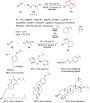
Scheme 3: Two strategies for the helicene synthesis via Suzuki–Miyaura coupling/cycloaromatization sequence.
Scheme 4: Synthesis of (a) [5]helicene and (b) [6]helicene.
Scheme 5: Synthesis of helicenes with double helical structures.
Scheme 6: Synthesis of hetero[4]-, [5]-, and [6]helicenes.
Beilstein J. Org. Chem. 2021, 17, 245–272, doi:10.3762/bjoc.17.25
Graphical Abstract
Scheme 1: Synthesis of 1,1-difluoro-2,3-dimethylcyclopropane (2).
Scheme 2: Cyclopropanation via dehydrohalogenation of chlorodifluoromethane.
Scheme 3: Difluorocyclopropanation of methylstyrene 7 using dibromodifluoromethane and zinc.
Scheme 4: Synthesis of difluorocyclopropanes from the reaction of dibromodifluoromethane and triphenylphosphi...
Scheme 5: Generation of difluorocarbene in a catalytic two-phase system and its addition to tetramethylethyle...
Scheme 6: The reaction of methylstyrene 7 with chlorodifluoromethane (11) in the presence of a tetraarylarson...
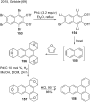
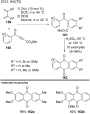
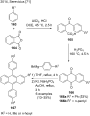
Scheme 7: Pyrolysis of sodium chlorodifluoroacetate (12) in refluxing diglyme in the presence of alkene 13.
Scheme 8: Synthesis of boron-substituted gem-difluorocyclopropanes 16.
Scheme 9: Addition of sodium bromodifluoroacetate (17) to alkenes.
Scheme 10: Addition of sodium bromodifluoroacetate (17) to silyloxy-substituted cyclopropanes 20.
Scheme 11: Synthesis of difluorinated nucleosides.
Scheme 12: Addition of butyl acrylate (26) to difluorocarbene generated from TFDA (25).
Scheme 13: Addition of difluorocarbene to propargyl esters 27 and conversion of the difluorocyclopropenes 28 t...
Scheme 14: The generation of difluorocyclopropanes using MDFA 30.
Scheme 15: gem-Difluorocyclopropanation of styrene (32) using difluorocarbene generated from TMSCF3 (31) under...
Scheme 16: Synthesis of a gem-difluorocyclopropane derivative using HFPO (41) as a source of difluorocarbene.
Scheme 17: Cyclopropanation of (Z)-2-butene in the presence of difluorodiazirine (44).
Scheme 18: The cyclopropanation of 1-octene (46) using Seyferth's reagent (45) as a source of difluorocarbene.
Scheme 19: Alternative approaches for the difluorocarbene synthesis from trimethyl(trifluoromethyl)tin (48).
Scheme 20: Difluorocyclopropanation of cyclohexene (49).
Scheme 21: Synthesis of difluorocyclopropane derivative 53 using bis(trifluoromethyl)cadmium (51) as the diflu...
Scheme 22: Addition of difluorocarbene generated from tris(trifluoromethyl)bismuth (54).
Scheme 23: Addition of a stable (trifluoromethyl)zinc reagent to styrenes.
Scheme 24: The preparation of 2,2-difluorocyclopropanecarboxylic acids of type 58.
Scheme 25: Difluorocyclopropanation via Michael cyclization.
Scheme 26: Difluorocyclopropanation using N-acylimidazolidinone 60.
Scheme 27: Difluorocyclopropanation through the cyclization of phenylacetonitrile (61) and 1,2-dibromo-1,1-dif...
Scheme 28: gem-Difluoroolefins 64 for the synthesis of functionalized cyclopropanes 65.
Scheme 29: Preparation of aminocyclopropanes 70.
Scheme 30: Synthesis of fluorinated methylenecyclopropane 74 via selenoxide elimination.
Scheme 31: Reductive dehalogenation of (1R,3R)-75.
Scheme 32: Synthesis of chiral monoacetates by lipase catalysis.
Scheme 33: Transformation of (±)-trans-81 using Rhodococcus sp. AJ270.
Scheme 34: Transformation of (±)-trans-83 using Rhodococcus sp. AJ270.
Scheme 35: Hydrogenation of difluorocyclopropenes through enantioselective hydrocupration.
Scheme 36: Enantioselective transfer hydrogenation of difluorocyclopropenes with a Ru-based catalyst.
Scheme 37: The thermal transformation of trans-1,2-dichloro-3,3-difluorocyclopropane (84).
Scheme 38: cis–trans-Epimerization of 1,1-difluoro-2,3-dimethylcyclopropane.
Scheme 39: 2,2-Difluorotrimethylene diradical intermediate.
Scheme 40: Ring opening of stereoisomers 88 and 89.
Scheme 41: [1,3]-Rearrangement of alkenylcyclopropanes 90–92.
Scheme 42: Thermolytic rearrangement of 2,2-difluoro-1-vinylcyclopropane (90).
Scheme 43: Thermal rearrangement for ethyl 3-(2,2-difluoro)-3-phenylcyclopropyl)acrylates 93 and 95.
Scheme 44: Possible pathways of the ring opening of 1,1-difluoro-2-vinylcyclopropane.
Scheme 45: Equilibrium between 1,1-difluoro-2-methylenecyclopropane (96) and (difluoromethylene)cyclopropane 97...
Scheme 46: Ring opening of substituted 1,1-difluoro-2,2-dimethyl-3-methylenecyclopropane 98.
Scheme 47: 1,1-Difluorospiropentane rearrangement.
Scheme 48: Acetolysis of (2,2-difluorocyclopropyl)methyl tosylate (104) and (1,1-difluoro-2-methylcyclopropyl)...
Scheme 49: Ring opening of gem-difluorocyclopropyl ketones 106 and 108 by thiolate nucleophiles.
Scheme 50: Hydrolysis of gem-difluorocyclopropyl acetals 110.
Scheme 51: Ring-opening reaction of 2,2-difluorocyclopropyl ketones 113 in the presence of ionic liquid as a s...
Scheme 52: Ring opening of gem-difluorocyclopropyl ketones 113a by MgI2-initiated reaction with diarylimines 1...
Scheme 53: Ring-opening reaction of gem-difluorocyclopropylstannanes 117.
Scheme 54: Preparation of 1-fluorovinyl vinyl ketone 123 and the synthesis of 2-fluorocyclopentenone 124. TBAT...
Scheme 55: Iodine atom-transfer ring opening of 1,1-difluoro-2-(1-iodoalkyl)cyclopropanes 125a–c.
Scheme 56: Ring opening of bromomethyl gem-difluorocyclopropanes 130 and formation of gem-difluoromethylene-co...
Scheme 57: Ring-opening aerobic oxidation reaction of gem-difluorocyclopropanes 132.
Scheme 58: Dibrominative ring-opening functionalization of gem-difluorocyclopropanes 134.
Scheme 59: The selective formation of (E,E)- and (E,Z)-fluorodienals 136 and 137 from difluorocyclopropyl acet...
Scheme 60: Proposed mechanism for the reaction of difluoro(methylene)cyclopropane 139 with Br2.
Scheme 61: Thermal rearrangement of F2MCP 139 and iodine by CuI catalysis.
Scheme 62: Synthesis of 2-fluoropyrroles 142.
Scheme 63: Ring opening of gem-difluorocyclopropyl ketones 143 mediated by BX3.
Scheme 64: Lewis acid-promoted ring-opening reaction of 2,2-difluorocyclopropanecarbonyl chloride (148).
Scheme 65: Ring-opening reaction of the gem-difluorocyclopropyl ketone 106 by methanolic KOH.
Scheme 66: Hydrogenolysis of 1,1-difluoro-3-methyl-2-phenylcyclopropane (151).
Scheme 67: Synthesis of monofluoroalkenes 157.
Scheme 68: The stereoselective Ag-catalyzed defluorinative ring-opening diarylation of 1-trimethylsiloxy-2,2-d...
Scheme 69: Synthesis of 2-fluorinated allylic compounds 162.
Scheme 70: Pd-catalyzed cross-coupling reactions of gem-difluorinated cyclopropanes 161.
Scheme 71: The (Z)-selective Pd-catalyzed ring-opening sulfonylation of 2-(2,2-difluorocyclopropyl)naphthalene...
Figure 1: Structures of zosuquidar hydrochloride and PF-06700841.
Scheme 72: Synthesis of methylene-gem-difluorocyclopropane analogs of nucleosides.
Figure 2: Anthracene-difluorocyclopropane hybrid derivatives.
Figure 3: Further examples of difluorcyclopropanes in modern drug discovery.
Beilstein J. Org. Chem. 2021, 17, 224–228, doi:10.3762/bjoc.17.22
Graphical Abstract
Scheme 1: Biphenyl-derived mycotoxins.
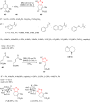
Scheme 2: Synthesis of arylboronates 6. Conditions: a) TBSCl, DMAP, imidazole, DMF, 50 °C, 4 h (96%); b) NBS,...
Scheme 3: Synthesis of aryl bromides 9. Conditions: f) BBr3, −78 °C to rt, 18 h (71%); g) R = TBS: TBSCl, DMA...
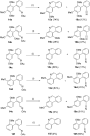
Scheme 4: Final steps in the synthesis of biaryl 1. Conditions: h) Pd(OAc)2, SPhos, Cs2CO3, dioxane/H2O 7:1, ...
Beilstein J. Org. Chem. 2021, 17, 58–82, doi:10.3762/bjoc.17.7
Graphical Abstract
Figure 1: The inthomycins A–C (1–3) and structurally closely related compounds.
Figure 2: Syntheses of inthomycins A–C (1–3).
Scheme 1: The first total synthesis of racemic inthomycin A (rac)-1 by Whiting.
Scheme 2: Moloney’s synthesis of the phenyl analogue of inthomycin C ((rac)-3).
Scheme 3: Moloney’s synthesis of phenyl analogues of inthomycins A (rac-1) and B (rac-2).
Scheme 4: The first total synthesis of inthomycin B (+)-2 by R. J. K. Taylor.
Scheme 5: R. J. K. Taylor’s total synthesis of racemic inthomycin A (rac)-1.
Scheme 6: The first total synthesis of inthomycin C ((+)-3) by R. J. K. Taylor.
Scheme 7: The first total synthesis of naturally occurring inthomycin C ((–)-3) by Ryu et al.
Scheme 8: Preparation of E,E-iododiene (+)-84 and Z,E- iododiene 85a.
Scheme 9: Hatakeyama’s total synthesis of inthomycin A (+)-1 and inthomycin B (+)-2.
Scheme 10: Hatakeyama’s total synthesis of inthomycin C ((–)-3).
Scheme 11: Maulide’s formal synthesis of racemic inthomycin C ((rac)-3).
Scheme 12: Hale’s synthesis of dienylstannane (+)-69 and enyne (+)-82b intermediates.
Scheme 13: Hale’s total synthesis of inthomycin C ((+)-3).
Scheme 14: Hale and Hatakeyama’s resynthesis of (3R)-inthomycin C (−)-3 Mosher esters.
Scheme 15: Reddy’s formal syntheses of inthomycin C (+)-3 and inthomycin C ((−)-3).
Scheme 16: Synthesis of the cross-metathesis precursors (rac)-118 and 121.
Scheme 17: Donohoe’s total synthesis of inthomycin C ((−)-3).
Scheme 18: Synthesis of dienylboronic ester (E,E)-128.
Scheme 19: Synthesis of the alkenyl iodides (Z)- and (E)-130.
Scheme 20: Burton’s total synthesis of inthomycin B ((+)-2).
Scheme 21: Burton’s total synthesis of inthomycin C ((−)-3).
Scheme 22: Burton’s total synthesis of inthomycin A ((+)-1).
Scheme 23: Synthesis of common intermediate (Z)-(+)-143a.
Scheme 24: Synthesis of (Z)-and (E)-selective fragments (+)-145a–c.
Scheme 25: Kim’s total synthesis of inthomycins A (+)-1 and B (+)-2.
Scheme 26: Completion of total synthesis of inthomycin C ((–)-3) by Kim.