


Search results
Search for "alkynylation" in Full Text gives 84 result(s) in Beilstein Journal of Organic Chemistry.
Recent advances in the gold-catalyzed additions to C–C multiple bonds
- He Huang,
- Yu Zhou and
- Hong Liu
Beilstein J. Org. Chem. 2011, 7, 897–936, doi:10.3762/bjoc.7.103
- . A gold-catalyzed direct alkynylation of indole and pyrrole heterocycles 204 with a benziodoxolone-based hypervalent iodine reagent 203 has been developed [91]. The functional group tolerance was greatly increased when compared with direct alkynylation of indoles reported previously. Kar et al

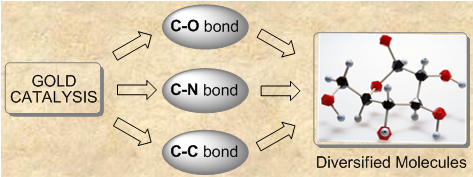
Graphical Abstract

Scheme 1: Gold-catalyzed addition of alcohols.
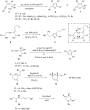
Scheme 2: Gold-catalyzed cycloaddition of alcohols.

Scheme 3: Ionic liquids as the solvent in gold-catalyzed cycloaddition.

Scheme 4: Gold-catalyzed cycloaddition of diynes.

Scheme 5: Gold(I) chloride catalyzed cycloisomerization of 2-alkynyl-1,5-diols.

Scheme 6: Gold-catalyzed cycloaddition of glycols and dihydroxy compounds.

Scheme 7: Gold-catalyzed ring-opening of cyclopropenes.

Scheme 8: Gold-catalyzed intermolecular hydroalkoxylation of alkynes. PR3 = 41–45.

Scheme 9: Gold-catalyzed intramolecular 6-endo-dig cyclization of β-hydroxy-α,α-difluoroynones.

Scheme 10: Gold-catalyzed intermolecular hydroalkoxylation of non-activated olefins.

Scheme 11: Preparation of unsymmetrical ethers from alcohols.

Scheme 12: Expedient synthesis of dihydrofuran-3-ones.

Scheme 13: Catalytic approach to functionalized divinyl ketones.
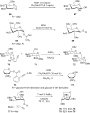
Scheme 14: Gold-catalyzed glycosylation.

Scheme 15: Gold-catalyzed cycloaddition of aldehydes and ketones.

Scheme 16: Gold-catalyzed annulations of 2-(ynol)aryl aldehydes and o-alkynyl benzaldehydes.

Scheme 17: Gold-catalyzed addition of carboxylates.

Scheme 18: Dual-catalyzed rearrangement reaction of allenoates.

Scheme 19: Meyer–Schuster rearrangement of propargylic alcohols.

Scheme 20: Propargylic alcohol rearrangements.

Scheme 21: Gold-catalyzed synthesis of imines and amine alkylation.

Scheme 22: Hydroamination of allenes and allenamides.

Scheme 23: Gold-catalyzed inter- and intramolecular amination of alkynes and alkenes.

Scheme 24: Gold-catalyzed cycloisomerization of O-propioloyl oximes and β-allenylhydrazones.

Scheme 25: Intra- and intermolecular amination with ureas.

Scheme 26: Gold-catalyzed cyclization of ortho-alkynyl-N-sulfonylanilines and but-3-yn-1-amines.

Scheme 27: Gold-catalyzed piperidine ring synthesis.

Scheme 28: Ring expansion of alkylnyl cyclopropanes.

Scheme 29: Gold-catalyzed annulations of N-propargyl-β-enaminones and azomethine imines.
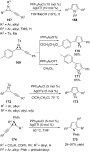
Scheme 30: Gold(I)-catalyzed cycloisomerization of aziridines.

Scheme 31: AuCl3/AgSbF6-catalyzed intramolecular amination of 2-(tosylamino)phenylprop-1-en-3-ols.

Scheme 32: Gold-catalyzed cyclization via a 7-endo-dig pathway.

Scheme 33: Gold-catalyzed synthesis of fused xanthines.

Scheme 34: Gold-catalyzed synthesis of amides and isoquinolines.

Scheme 35: Gold-catalyzed oxidative cross-coupling reactions of propargylic acetates.

Scheme 36: Gold-catalyzed nucleophilic addition to allenamides.

Scheme 37: Gold-catalyzed direct carbon–carbon bond coupling reactions.

Scheme 38: Gold-catalyzed C−H functionalization of indole/pyrrole heterocycles and non-activated arenes.

Scheme 39: Gold-catalyzed cycloisomerization of cyclic compounds.

Scheme 40: Gold-catalyzed cycloaddition of 1-aryl-1-allen-6-enes and propargyl acetates.

Scheme 41: Gold(I)-catalyzed cycloaddition with ligand-controlled regiochemistry.

Scheme 42: Gold(I)-catalyzed cycloaddition of dienes and enynes.

Scheme 43: Gold-catalyzed intramolecular cycloaddition of 3-alkoxy-1,5-enynes and 2,2-dipropargylmalonates.

Scheme 44: Gold-catalyzed intramolecular cycloaddition of 1,5-allenynes.

Scheme 45: Gold(I)-catalyzed cycloaddition of indoles.

Scheme 46: Gold-catalyzed annulation reactions.

Scheme 47: Gold–carbenoid induced cleavage of a sp3-hybridized C−H bond.

Scheme 48: Furan- and indole-based cascade reactions.

Scheme 49: Tandem process using aromatic alkynes.

Scheme 50: Gold-catalyzed cycloaddition of 1,3-dien-5-ynes.

Scheme 51: Gold-catalyzed cascade cyclization of diynes, propargylic esters, and 1,3-enynyl ketones.

Scheme 52: Tandem reaction of β-phenoxyimino ketones and alkynyl oxime ethers.

Scheme 53: Gold-catalyzed tandem cyclization of enynes, 2-(tosylamino)phenylprop-1-yn-3-ols, and allenoates.

Scheme 54: Cyclization of 2,4-dien-6-yne carboxylic acids.
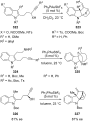
Scheme 55: Gold(I)-catalyzed tandem cyclization approach to tetracyclic indolines.
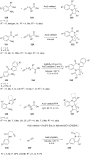
Scheme 56: Gold-catalyzed tandem reactions of alkynes.
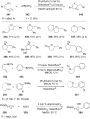
Scheme 57: Aminoarylation and oxyarylation of alkenes.

Scheme 58: Cycloaddition of 2-ethynylnitrobenzene with various alkenes.

Scheme 59: Gold-catalyzed tandem reactions of allenoates and alkynes.

Scheme 60: Gold-catalyzed asymmetric synthesis of 2,3-dihydropyrroles.

Scheme 61: Chiral [NHC–Au(I)]-catalyzed cyclization of enyne.
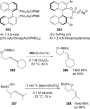
Scheme 62: Gold-catalyzed hydroaminations and hydroalkoxylations.

Scheme 63: Gold(I)-catalyzed asymmetric hydroalkoxylation of 1,3-dihydroxymethyl-2-alkynylbenzene chromium com...

Scheme 64: Gold-catalyzed synthesis of julolidine derivatives.

Scheme 65: Gold-catalyzed the synthesis of chiral fused heterocycles.

Scheme 66: Gold-catalyzed asymmetric reactions with 3,5-(t-Bu)2-4-MeO-MeOBIPHEP.

Scheme 67: Gold-catalyzed cyclization of o-(alkynyl) styrenes.

Scheme 68: Asymmetric gold(I)-catalyzed redox-neutral domino reactions of enynes.

Scheme 69: Gold(I)-catalyzed enantioselective polyene cyclization reaction.

Scheme 70: Gold(I)-catalyzed enantioselective synthesis of benzopyrans.

Scheme 71: Gold(I)-catalyzed enantioselective ring expansion of allenylcyclopropanols.
One-pot gold-catalyzed synthesis of 3-silylethynyl indoles from unprotected o-alkynylanilines
- Jonathan P. Brand,
- Clara Chevalley and
- Jérôme Waser
Beilstein J. Org. Chem. 2011, 7, 565–569, doi:10.3762/bjoc.7.65
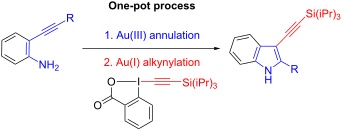
- -pot procedure with the Au(I)-catalyzed C3-selective direct alkynylation of indoles using the benziodoxolone reagent TIPS-EBX to give a mild, easy and straightforward entry to 2-substituted-3-alkynylindoles. The reaction can be applied to unprotected anilines, was tolerant to functional groups and easy
- to carry out (RT, and requires neither an inert atmosphere nor special solvents). Keywords: alkynylation; direct functionalization; gold; hypervalent iodine; indoles; Introduction Indoles are widespread in both natural products and synthetic drugs [1][2] and as a result, their synthesis and
- alkynylation with bromoacetylenes [29]. New methods are needed to expand the scope of this transformation and Au catalysis appears especially promising, due to its broad functional groups tolerance, which could allow the direct use of unprotected anilines. Recently, the direct alkynylation of preformed

Graphical Abstract

Scheme 1: Domino cyclization–substitution reactions of 2-alkynylanilines.

Scheme 2: Gold-catalyzed direct alkynylation of indoles with TIPS-EBX (1).

Scheme 3: One-pot alkynylaniline cyclization/direct alkynylation.

Scheme 4: Synthesis of 2-alkynylanilines 2.

Scheme 5: Domino cyclization–alkynylation of aniline 2a.

Scheme 6: Scope of the reaction.
C–C (alkynylation) vs C–O (ether) bond formation under Pd/C–Cu catalysis: synthesis and pharmacological evaluation of 4-alkynylthieno[2,3-d]pyrimidines
- Dhilli Rao Gorja,
- K. Shiva Kumar,
- K. Mukkanti and
- Manojit Pal
Beilstein J. Org. Chem. 2011, 7, 338–345, doi:10.3762/bjoc.7.44
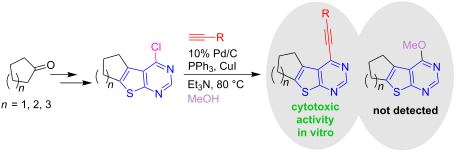
- -alkynylthieno[2,3- d]pyrimidines were prepared via alkynylation of 4-chlorothieno[2,3-d]pyrimidines in good to excellent yields. Some of the compounds synthesized were tested for cytotoxic activity in vitro. Keywords: catalysis; C–C bond; copper; palladium; thieno[2,3-d]pyrimidine; Introduction Alkynyl
- halopyrimidines with terminal alkynes [1][2][3] (for a review see [8]). While alkynylation of the thiophene ring of thienopyrimidines under Sonogashira conditions [9] has previously been reported [6], a similar coupling reaction on the pyrimidine ring of thieno[2,3-d]pyrimidines is uncommon in the literature [10
- ]. The use of Pd/C–CuI–PPh3 as a less expensive catalyst system for efficient Sonogashira coupling has been explored earlier. Due to our continuing interest in Pd/C-mediated alkynylation of aryl and heteroaryl halides we decided to investigate the Pd/C-based methodology for the synthesis of our target

Graphical Abstract

Figure 1: Diversity-based thieno[2,3-d]pyrimidine scaffold [7].

Scheme 1: Pd/C-mediated synthesis of 4-alkynyl-substituted thieno[2,3-d]pyrimidines.

Scheme 2: Preparation of 4-chloro-6,7,8,9-tetrahydro-5H-cyclohepta[4,5]thieno[2,3-d]pyrimidine 1d.

Scheme 3: Reactivity of 4-chlorothieno[2,3-d]pyrimidines 1 towards terminal alkynes and MeOH under Pd/C–Cu ca...

Scheme 4: Plausible mechanism of Pd/C-mediated alkynylation of 4-chlorothieno[2,3-d]pyrimidines 1.

Figure 2: Possible interactions of compounds 3f and 3g with TS enzyme.
A review of new developments in the Friedel–Crafts alkylation – From green chemistry to asymmetric catalysis
- Magnus Rueping and
- Boris J. Nachtsheim
Beilstein J. Org. Chem. 2010, 6, No. 6, doi:10.3762/bjoc.6.6
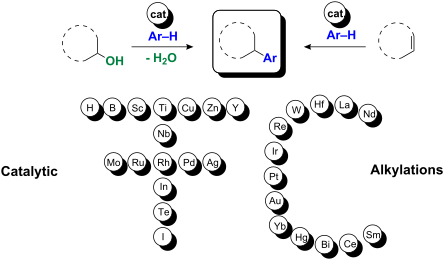
- review. A related cationic Ru-vinylidene complex was used for an efficient alkynylation of pyridines with (alkyn-1-yl)trimethylsilane [98]. Based on these preliminary results, various catalytic propargylations of arenes have been developed, employing catalysts such as Mo/chloranil [16

Graphical Abstract

Scheme 1: AlCl3-mediated reaction between amyl chloride and benzene as developed by Friedel and Crafts.

Figure 1: Most often used metal salts for catalytic FC alkylations and hydroarylations of arenes.

Figure 2: 1,1-diarylalkanes with biological activity.

Scheme 2: Alkylating reagents and side products produced.

Scheme 3: Initially reported TeCl4-mediated FC alkylation of 1-penylethanol with toluene.

Scheme 4: Sc(OTf)3-catalyzed FC benzylation of arenes.

Scheme 5: Reductive FC alkylation of arenes with arenecarbaldehydes.

Scheme 6: Iron(III)-catalyzed FC benzylation of arenes and heteroarenes.

Scheme 7: A gold(III)-catalyzed route to beclobrate.

Scheme 8: Catalytic FC-type alkylations of 1,3-dicarbonyl compounds.

Scheme 9: Iron(III)-catalyzed synthesis of phenprocoumon.

Scheme 10: Bi(OTf)3-catalyzed FC alkylation of benzyl alcohols developed by Rueping et al.

Scheme 11: (A) Bi(OTf)3-catalyzed intramolecular FC alkylation as an efficient route to substituted fulvenes. ...

Scheme 12: FC-type glycosylation of 1,2-dimethylindole and trimethoxybenzene.

Scheme 13: FC alkylation with highly reactive ferrocenyl- and benzyl alcohols. The reaction proceeds even with...

Scheme 14: Reductive FC alkylation of arenes with benzaldehyde and acetophenone catalyzed by the Ir-carbene co...

Scheme 15: Formal synthesis of 1,1-diarylalkanes from benzyl alcohols and styrenes.

Scheme 16: (A) Mo-catalyzed hydroarylation of styrenes and cyclohexenes. (B) Hydroalkylation–cyclization casca...

Scheme 17: Bi(III)-catalyzed hydroarylation of styrenes with arenes and heteroarenes.

Scheme 18: BiCl3-catalyzed ene/FC alkylation reaction cascade – A fast access to highly arylated dihydroindene...

Scheme 19: Au(I)/Ag(I)-catalyzed hydroarylation of indoles with styrenes, aliphatic and cyclic alkenes.

Scheme 20: First transition-metal-catalyzed ortho-hydroarylation developed by Beller et al.

Scheme 21: (A) Ti(IV)-mediated rearrangement of an N-benzylated aniline to the corresponding ortho-alkylated a...

Scheme 22: Dibenzylation of aniline gives potentially useful amine-based ligands in a one-step procedure.

Scheme 23: FC-type alkylations with allyl alcohols as alkylating reagents – linear vs. branched product format...

Scheme 24: (A) First catalytic FC allylation and cinnamylation using allyl alcohols and its derivatives. (B) E...

Scheme 25: FC allylation/cyclization reaction yielding substituted chromanes.

Scheme 26: Synthesis of (all-rac)-α-tocopherol utilizing Lewis- and strong Brønsted-acids.

Scheme 27: Au(III)-catalyzed cinnamylation of arenes.

Scheme 28: “Exhaustive” allylation of benzene-1,3,5-triol.

Scheme 29: Palladium-catalyzed allylation of indole.

Scheme 30: Pd-catalyzed synthesis of pyrroloindoles from L-tryptophane.

Scheme 31: Ru(IV)-catalyzed allylation of indole and pyrroles with unique regioselectivity.

Scheme 32: Silver(I)-catalyzed intramolecular FC-type allylation of arenes and heteroarenes.

Scheme 33: FC-type alkylations of arenes using propargyl alcohols.

Scheme 34: (A) Propargylation of arenes with stoichiometric amounts of the Ru-allenylidene complex 86. (B) Fir...

Scheme 35: Diruthenium-catalyzed formation of chromenes and 1H-naphtho[2,1-b]pyrans.

Scheme 36: Rhenium(V)-catalyzed FC propargylations as a first step in the total synthesis of podophyllotoxin, ...

Scheme 37: Scandium-catalyzed arylation of 3-sulfanyl- and 3-selanylpropargyl alcohols.

Scheme 38: Synthesis of 1,3-diarylpropynes via direct coupling of propargyl trichloracetimidates and arenes.

Scheme 39: Diastereoselective substitutions of benzyl alcohols.

Scheme 40: (A) First diastereoselective FC alkylations developed by Bach et al. (B) anti-Selective FC alkylati...

Scheme 41: Diastereoselective AuCl3-catalyzed FC alkylation.

Scheme 42: Bi(OTf)3-catalyzed alkylation of α-chiral benzyl acetates with silyl enol ethers.

Scheme 43: Bi(OTf)3-catalyzed diastereoselective substitution of propargyl acetates.

Scheme 44: Nucelophilic substitution of enantioenriched ferrocenyl alcohols.

Scheme 45: First catalytic enantioselective propargylation of arenes.
Diastereoselective functionalisation of benzo-annulated bicyclic sultams: Application for the synthesis of cis-2,4-diarylpyrrolidines
- Susan Kelleher,
- Pierre-Yves Quesne and
- Paul Evans
Beilstein J. Org. Chem. 2009, 5, No. 69, doi:10.3762/bjoc.5.69

- above proving inefficient, palladium chemistry was subsequently considered. The vinyl bromide 24a was reported to participate in Sonagashira alkynylation chemistry; however, yields of the resultant enyne were low [20]. Therefore, we decided to investigate Suzuki–Miyaura cross-coupling reaction as a

Graphical Abstract

Scheme 1: The diastereoselective intramolecular Heck-hydrogenation and double reduction sequence as a means o...

Scheme 2: The synthesis of 5a and 5b by an intramolecular Heck cyclisation reaction.

Scheme 3: Diastereoselective epoxidation of 5a and 5b.

Figure 1: X-ray structure of 7a; including a view along the S=O···C–O axis (Diamond representations) [O2···C9...

Scheme 4: cis-Selective dibromination of 5a (NOE indicated by arrows).

Figure 2: X-ray crystal structure of 13a (Diamond representation).

Scheme 5: Dibromination studies of 5b.

Figure 3: X-ray crystal structures of 18b and 19b (Diamond representations).

Scheme 6: Possible explanation for the products formed in the dibromination of 5a and 5b.

Scheme 7: Lithiation–CO2 quench approach for the synthesis of 26 from vinyl bromide 24a.

Figure 4: X-ray structure of 26 (Diamond representation).

Scheme 8: Suzuki–Miyaura cross-coupling of 24a and the diastereoselective hydrogenation of the resultant styr...

Figure 5: X-ray crystal structure of 31 (Diamond representation).

Scheme 9: Attempted sulfonamide double reduction of compounds 31–34.
Pd/C-mediated synthesis of α-pyrone fused with a five-membered nitrogen heteroaryl ring: A new route to pyrano[4,3-c]pyrazol-4(1H)-ones
- Dhilli Rao Gorja,
- Venkateswara Rao Batchu,
- Ashok Ettam and
- Manojit Pal
Beilstein J. Org. Chem. 2009, 5, No. 64, doi:10.3762/bjoc.5.64

- Industrial Estate, Bollaram, Jinnaram Mandal, Medak District, Andra Pradesh 502 325, India present address: Institute of Life Sciences, University of Hyderabad Campus, Gachibowli, Hyderabad 500 046, Andhra Pradesh, India 10.3762/bjoc.5.64 Abstract Pd/C-mediated alkynylation of 5-iodo-pyrazole-4-carboxylic

Graphical Abstract

Figure 1: Polycyclic azaheteroaromatics (A) and pyrano[4,3-c]pyrazol-4(1H)-ones (B).

Scheme 1: Pd/C-mediated synthesis of 6-substituted pyrano[4,3-c]pyrazol-4(1H)-ones 3.

Scheme 2: Preparation of 5-iodo-1-methyl-1H-pyrazole-4-carboxylic acid (1).

Scheme 3: Mechanism of ring closure of intermediate alkyne Z.
Regioselective alkynylation followed by Suzuki coupling of 2,4-dichloroquinoline: Synthesis of 2-alkynyl- 4-arylquinolines
- Ellanki A. Reddy,
- Aminul Islam,
- K. Mukkanti,
- Venkanna Bandameedi,
- Dipal R. Bhowmik and
- Manojit Pal
Beilstein J. Org. Chem. 2009, 5, No. 32, doi:10.3762/bjoc.5.32

- ) 10.3762/bjoc.5.32 Abstract A two step synthesis of 2-alkynyl-4-arylquinolines has been accomplished via Pd/C-mediated regioselective C-2 alkynylation of 2,4-dichloroquinoline in water followed by Suzuki coupling at C-4 of the resulting 4-chloro derivative. Keywords: alkyne; boronic acid; catalysis; 2,4
- . (a) arylation at C-4 followed by alkynylation at C-2 or (b) alkynylation at C-2 followed by arylation at C-4. Methodologies based on strategy ‘a’ have been reported earlier. For example, Sonogashira coupling of a terminal alkyne with 2-chloro-4-aryl substituted quinoline [3] in the presence of (PPh3
- biological significance we have reported Pd/C-mediated regioselective C-2 alkynylation of 2,4-dichloroquinoline in water [6]. However, only one example of regioselective C-2 alkynylation was reported and no detailed study has been carried out previously. Herein we report the preparation of a series of 2

Graphical Abstract

Figure 1: 2-Alkynyl-4-aryl pyridine and its benzo derivative.

Scheme 1: Sequential synthesis of 2-alkynyl-4-arylquinolines from 2,4-dichloroquinoline under palladium catal...

Scheme 2: The reaction mechanism of stepwise C–C bond forming reactions.
A short stereoselective synthesis of (+)-(6R,2′S)-cryptocaryalactone via ring- closing metathesis
- Palakodety Radha Krishna,
- Krishnarao Lopinti and
- K. L. N. Reddy
Beilstein J. Org. Chem. 2009, 5, No. 14, doi:10.3762/bjoc.5.14
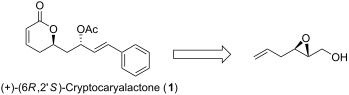
- short stereoselective synthesis of (+)-(6R,2′S)-cryptocaryalactone was successfully completed. Key steps included the application of Carreira’s asymmetric alkynylation reaction to form a propargylic alcohol and subsequently lactone formation using the powerful ring-closing metathesis reaction. Keywords
- : Carreira asymmetric alkynylation; Cryptocarya bourdilloni GAMB (Lauraceae); ring-closing metathesis; Sharpless asymmetric epoxidation; Introduction Natural products play an important role in the development of drugs and mankind has always taken advantage of nature as pharmacy: approximately 40% of the
- itself could be realised from the acryloylation of the corresponding homoallylic alcohol which in turn can be synthesized from 7. Chiral propargyl alcohol 7 was obtained by the Carreira asymmetric alkynylation reaction of the corresponding aldehyde, which was synthesized from the corresponding primary

Graphical Abstract

Figure 1: Some natural products containing styryl lactones.

Figure 2: Retrosynthetic approach.

Scheme 1: Synthesis of chiral propargyl secondary hydroxyl group.

Scheme 2: Determination of the stereochemistry of the 1,3-anti diols.

Scheme 3: Synthesis of cryptocaryalactone by RCM.
Recent progress on the total synthesis of acetogenins from Annonaceae
- Nianguang Li,
- Zhihao Shi,
- Yuping Tang,
- Jianwei Chen and
- Xiang Li
Beilstein J. Org. Chem. 2008, 4, No. 48, doi:10.3762/bjoc.4.48
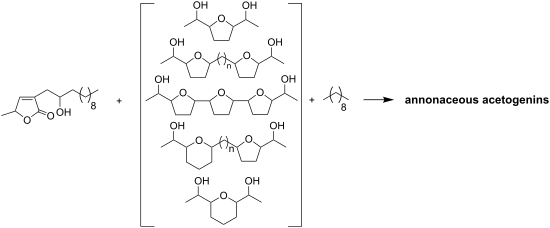
- constructed with excellent stereoselectivity by asymmetric alkynylation of α-tetrahydrofuranic aldehyde 114 with 1,6-heptadiyne (115). Then Sonogashira coupling of 116 and the iodide 117 followed by hydrogenation and deprotection provided murisolin (111). The spectroscopic data of synthetic 111 (1H NMR, 13C

Graphical Abstract

Scheme 1: Total synthesis of longifolicin by Marshall’s group.

Scheme 2: Total synthesis of corossoline by Tanaka’s group.

Scheme 3: Total synthesis of corossoline by Wu’s group.

Scheme 4: Total synthesis of pseudo-annonacin A by Hanessian’s group.

Scheme 5: Total synthesis of tonkinecin by Wu’s group.

Scheme 6: Total synthesis of gigantetrocin A by Shi’s group.

Scheme 7: Total synthesis of annonacin by Wu’s group.

Scheme 8: Total synthesis of solamin by Kitahara’s group.

Scheme 9: Total synthesis of solamin by Mioskowski’s group.

Scheme 10: Total synthesis of cis-solamin by Makabe’s group.

Scheme 11: Total synthesis of cis-solamin by Brown’s group.

Scheme 12: The formal synthesis of (+)-cis-solamin by Donohoe’s group.

Scheme 13: Total synthesis of cis-solamin by Stark’s group.

Scheme 14: Total synthesis of mosin B by Tanaka’s group.

Scheme 15: Total synthesis of longicin by Hanessian’s group.

Scheme 16: Total synthesis of murisolin and 16,19-cis-murisolin by Tanaka’s group.

Scheme 17: Synthesis of a stereoisomer library of (+)-murisolin by Curran’s group.

Scheme 18: Total synthesis of murisolin by Makabe’s group.

Scheme 19: Total synthesis of reticulatain-1 by Makabe’s group.

Scheme 20: Total synthesis of muricatetrocin C by Ley’s group.

Scheme 21: Total synthesis of (4R,12S,15S,16S,19R,20R,34S)-muricatetrocin (146) and (4R,12R,15S,16S,19R,20R,34S...

Scheme 22: Total synthesis of parviflorin by Hoye’s group.

Scheme 23: Total synthesis of parviflorin by Trost’s group.

Scheme 24: Total synthesis of trilobacin by Sinha’s group.

Scheme 25: Total synthesis of 15-epi-annonin I 181b by Scharf’s group.

Scheme 26: Total synthesis of squamocin A and squamocin D by Scharf’s group.

Scheme 27: Total synthesis of asiminocin by Marshall’s group.

Scheme 28: Total synthesis of asiminecin by Marshall’s group.

Scheme 29: Total synthesis of (+)-(30S)-bullanin by Marshall’s group.

Scheme 30: Total synthesis of uvaricin by the group of Sinha and Keinan.

Scheme 31: Formal synthesis of uvaricin by Burke’s group.

Scheme 32: Total synthesis of trilobin by Marshall’s group.

Scheme 33: Total synthesis of trilobin by the group of Sinha and Keinan.

Scheme 34: Total synthesis of asimilobin by the group of Wang and Shi.

Scheme 35: Total synthesis of squamotacin by the group of Sinha and Keinan.

Scheme 36: Total synthesis of asimicin by Marshall’s group.

Scheme 37: Total synthesis of asimicin by the group of Sinha and Keinan.

Scheme 38: Total synthesis of asimicin by Roush’s group.

Scheme 39: Total synthesis of asimicin by Marshall’s group.

Scheme 40: Total synthesis of 10-hydroxyasimicin by Ley’s group.

Scheme 41: Total synthesis of asimin by Marshall’s group.

Scheme 42: Total synthesis of bullatacin by the group of Sinha and Keinan.

Scheme 43: Total synthesis of bullatacin by Roush’s group.

Scheme 44: Total synthesis of bullatacin by Pagenkopf’s group.

Scheme 45: Total synthesis of rollidecins C and D by the group of Sinha and Keinan.

Scheme 46: Total synthesis of 30(S)-hydroxybullatacin by Marshall’s group.

Scheme 47: Total synthesis of uvarigrandin A and 5(R)-uvarigrandin A by Marshall’s group.

Scheme 48: Total synthesis of membranacin by Brown’s group.

Scheme 49: Total synthesis of membranacin by Lee’s group.

Scheme 50: Total synthesis of rolliniastatin 1 and rollimembrin by Lee’s group.

Scheme 51: Total synthesis of longimicin D by the group of Maezaki and Tanaka.

Scheme 52: Total synthesis of the structure proposed for mucoxin by Borhan’s group.

Scheme 53: Modular synthesis of adjacent bis-THF annonaceous acetogenins by Marshall’s group.

Scheme 54: Total synthesis of 4-deoxygigantecin by Tanaka’s group.

Scheme 55: Total synthesis of squamostatins D by Marshall’s group.

Scheme 56: Total synthesis of gigantecin by Crimmins’s group.

Scheme 57: Total synthesis of gigantecin by Hoye’s group.

Scheme 58: Total synthesis of cis-sylvaticin by Donohoe’s group.

Scheme 59: Total synthesis of 17(S),18(S)-goniocin by Sinha’s group.

Scheme 60: Total synthesis of goniocin and cyclogoniodenin T by the group of Sinha and Keinan.

Scheme 61: Total synthesis of jimenezin by Takahashi’s group.

Scheme 62: Total synthesis of jimenezin by Lee’s group.

Scheme 63: Total synthesis of jimenezin by Hoffmann’s group.

Scheme 64: Total synthesis of muconin by Jacobsen’s group.

Scheme 65: Total synthesis of (+)-muconin by Kitahara’s group.

Scheme 66: Total synthesis of muconin by Takahashi’s group.

Scheme 67: Total synthesis of muconin by the group of Yoshimitsu and Nagaoka.

Scheme 68: Total synthesis of mucocin by the group of Sinha and Keinan.

Scheme 69: Total synthesis of mucocin by Takahashi’s group.

Scheme 70: Total synthesis of (−)-mucocin by Koert’s group.

Scheme 71: Total synthesis of mucocin by the group of Takahashi and Nakata.

Scheme 72: Total synthesis of mucocin by Evans’s group.

Scheme 73: Total synthesis of mucocin by Mootoo’s group.

Scheme 74: Total synthesis of (−)-mucocin by Crimmins’s group.

Scheme 75: Total synthesis of pyranicin by the group of Takahashi and Nakata.

Scheme 76: Total synthesis of pyranicin by Rein’s group.

Scheme 77: Total synthesis of proposed pyragonicin by the group of Takahashi and Nakata.

Scheme 78: Total synthesis of pyragonicin by Rein’s group.

Scheme 79: Total synthesis of pyragonicin by Takahashi’s group.

Scheme 80: Total synthesis of squamostanal A by Figadère’s group.

Scheme 81: Total synthesis of diepomuricanin by Tanaka’s group.

Scheme 82: Total synthesis of (−)-muricatacin [(R,R)-373a] and its enantiomer (+)-muricatacin [(S,S)-373b] by ...

Scheme 83: Total synthesis of epi-muricatacin (+)-(S,R)-373c and (−)-(R,S)-373d by Scharf’s group.

Scheme 84: Total synthesis of (−)-muricatacin 373a and 5-epi-(−)-muricatacin 373d by Uang’s group.

Scheme 85: Total synthesis of four stereoisomers of muricatacin by Yoon’s group.

Scheme 86: Total synthesis of (+)-muricatacin by Figadère’s group.

Scheme 87: Total synthesis of (+)-epi-muricatacin and (−)-muricatacin by Couladouros’s group.

Scheme 88: Total synthesis of muricatacin by Trost’s group.

Scheme 89: Total synthesis of (−)-(4R,5R)-muricatacin by Heck and Mioskowski’s group.

Scheme 90: Total synthesis of muricatacin (−)-373a by the group of Carda and Marco.

Scheme 91: Total synthesis of (−)- and (+)-muricatacin by Popsavin’s group.

Scheme 92: Total synthesis of (−)-muricatacin by the group of Bernard and Piras.

Scheme 93: Total synthesis of (−)-muricatacin by the group of Yoshimitsu and Nagaoka.

Scheme 94: Total synthesis of (−)-muricatacin by Quinn’s group.

Scheme 95: Total synthesis of montecristin by Brückner’s group.

Scheme 96: Total synthesis of (−)-acaterin by the group of Franck and Figadère.

Scheme 97: Total synthesis of (−)-acaterin by Singh’s group.

Scheme 98: Total synthesis of (−)-acaterin by Kumar’s group.

Scheme 99: Total synthesis of rollicosin by Quinn’s group.

Scheme 100: Total synthesis of Rollicosin by Makabe’s group.

Scheme 101: Total synthesis of squamostolide by Makabe’s group.

Scheme 102: Total synthesis of tonkinelin by Makabe’s group.



