


Search results
Search for "allyl" in Full Text gives 528 result(s) in Beilstein Journal of Organic Chemistry. Showing first 200.
Photoredox catalysis enabling decarboxylative radical cyclization of γ,γ-dimethylallyltryptophan (DMAT) derivatives: formal synthesis of 6,7-secoagroclavine
Beilstein J. Org. Chem. 2023, 19, 918–927, doi:10.3762/bjoc.19.70
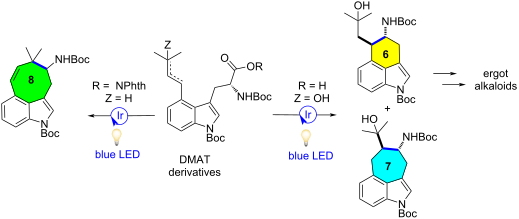
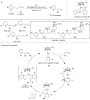
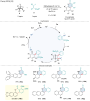
- ]. Although not yet completely clarified, some previous studies on the detailed mode of closure of the C ring in ergot alkaloids from DMAT have been shown to involve, before decarboxylative cyclization, oxidation on the C4-prenyl chain to give the stable rearranged allyl alcohol and/or the relatively unstable


Pyridine C(sp2)–H bond functionalization under transition-metal and rare earth metal catalysis
Beilstein J. Org. Chem. 2023, 19, 820–863, doi:10.3762/bjoc.19.62
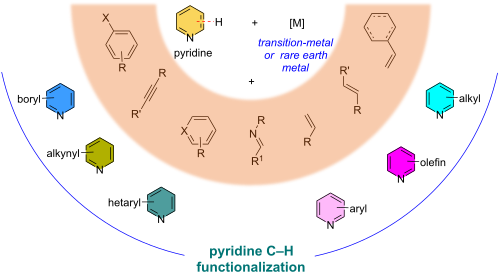
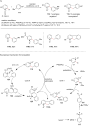
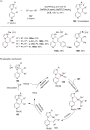
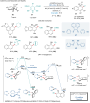
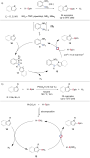
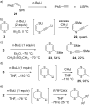
- DFT calculation, a plausible mechanism (Scheme 10b) has been proposed. Initially, a reversible ligand-to-ligand H-transfer process occurs for C–H activation between the intermediates 46 and 47. Next, isomerization of the η1-allyl complex 47 forms the η3-allylic nickel complex 48, which on reductive
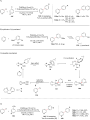
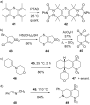
- . Subsequently, insertion of alkene 68 provides the cyclic Pd(II) intermediate 72 which undergoes β-hydride elimination to produce the desired product 69. In the same year, Ramana and Goriya [75] proposed an unexpected C-6 (C-2)-propenylation reaction of pyridine in the presence of allyl bromide (73) and a Ru
- catalyst using 2-arylpyridines (Scheme 15). Earlier reports described the propenylation took place on the ortho-position of the phenyl ring [76][77], whereas this group achieved the propenylation of the pyridine moiety. The authors screened different allyl halides and Ru complexes as catalysts. With the
















Strategies in the synthesis of dibenzo[b,f]heteropines
Beilstein J. Org. Chem. 2023, 19, 700–718, doi:10.3762/bjoc.19.51
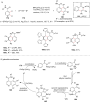
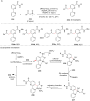
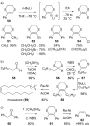
- first reported synthesis of imipramine (3) by Schindler and Häfliger [76] proceeded by alkylation of 2a by alkyl halides. Selected N-alkylations of 1a and 2a are included in Scheme 33. N-Allylation of 1a or 2a with allyl bromide (143) can be achieved by a base-promoted substitution reaction (Scheme 33A
- ) [77][78]. The allyl moiety in 144 allows for facile further functionalization. Amidation of the dihydrodibenzo[b,f]azepine (2a) derivatives with acyl halides 145 allowed for the introduction of variable length amide linkers by Kastrinsky et al. [3] (Scheme 33B). An industrial synthesis of opipramol (5


Synthesis of medium and large phostams, phostones, and phostines
Beilstein J. Org. Chem. 2023, 19, 687–699, doi:10.3762/bjoc.19.50
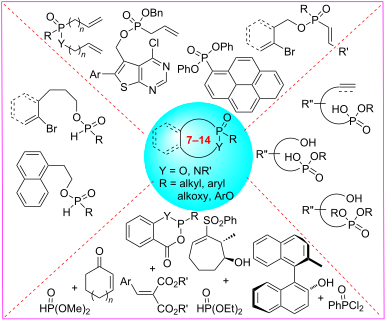
- bond formation through RCM reaction: Ring-closing metathesis (RCM) is an efficient strategy for the construction of common to large cyclic compounds via the formation of a C=C bond [26], which can be further reduced to a C–C bond. To prepare phostam-derived antitumor agents, ethyl N-allyl-N-(but-3-en-1
- -yl(4-phenoxyphenyl)phosphoryl)glycinate (1) and ethyl N-allyl-N-((4-ethoxyphenyl)(pent-4-en-1-yl)phosphoryl)glycinate (2) were prepared and cyclized into ethyl 2-(2-oxido-2-(4-phenoxyphenyl)-3,4,7-trihydro-1,2-azaphosphepin-1-yl)acetate (3) and ethyl 2-(2-(4-ethoxyphenyl)-2-oxido-3,5,8-trihydro-1,2
- synthesis of 1,2-oxaphosphaheterocycle 2-oxides. tert-Butyl 2-(bis(allyloxy)phosphoryl)pent-4-enoate (11) generated tert-butyl 2-(allyloxy)-3,4,7-trihydro-1,2-oxaphosphepine-3-carboxylate 2-oxide (12) in excellent 94% yield in the presence of the Grubbs catalyst in DCM. After further allylation with allyl




Enolates ambushed – asymmetric tandem conjugate addition and subsequent enolate trapping with conventional and less traditional electrophiles
Beilstein J. Org. Chem. 2023, 19, 593–634, doi:10.3762/bjoc.19.44
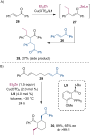
- ) [34]. Encouraged by this, they have also attempted an intramolecular tandem conjugate addition/Michael reaction sequence, which has resulted in the expected cyclization product 30 in a diastereopure form (Scheme 7B). Zinc enolates readily react with allyl iodides 31 or the structurally similar Stork
- enolate-trapping tandem sequence using various vinylsilanes 33 (Scheme 8B), allyl halides 35, and benzyl bromide (37) (Scheme 8C) [36]. Although the asymmetric conjugate addition step routinely provided excellent selectivity (93–96% ee), only a moderate to good diastereomeric ratio was achieved
- reagents required the presence of 1,3-dimethyltetrahydropyrimidine-2(1H)-one (DMPU) (Scheme 21). Reactive alkylating reagents such as iodomethane, benzyl bromide, allyl iodide, propargyl bromide, or bromoacetate reacted well and afforded the products 80 in good yields. In an attempt to expand the available









Access to cyclopropanes with geminal trifluoromethyl and difluoromethylphosphonate groups
Beilstein J. Org. Chem. 2023, 19, 541–549, doi:10.3762/bjoc.19.39
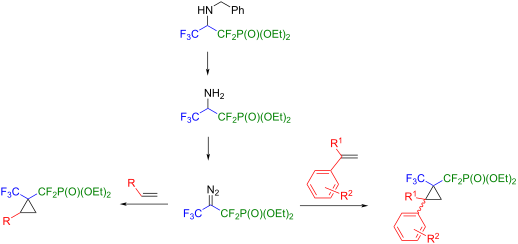
- the reaction with tert-butyl-N-allyl carbamate 7g (1:6) while the reaction with allylcyclohexane resulted with the lowest yield (7f, 28%), probably due to the steric hindrance of the reagents. In the case of N-Boc-allylamine, improved diastereoselectivity might result from the coordination of the



Transition-metal-catalyzed domino reactions of strained bicyclic alkenes
Beilstein J. Org. Chem. 2023, 19, 487–540, doi:10.3762/bjoc.19.38
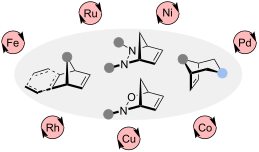
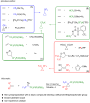
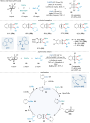
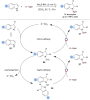
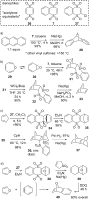
- into the C–O bond of the oxabicyclic alkene 30a to afford the σ-allyl intermediate 38 which can isomerize to the more stable π-allyl intermediate 39. Addition of the α-amino radical to the Ni(II) center generates the Ni(III) complex 41. Reductive elimination, followed by protodemetalation, leads to the
- state, followed by coordination to the alkyne generates intermediate 109. Migratory insertion of the alkyne results in the ruthenacycle 110. Subsequent reductive elimination generates putative allyl vinyl ether 111 and regenerates the active ruthenium complex. The allyl vinyl ether intermediate
- alkene of the azabicycle producing 154. A C–N bond cleavage occurs creating π-allylrhodium 155. Subsequently, the phenol oxygen then adds to the π–allyl species in a cis fashion, furnishing 156 which is proposed to be the enantiodetermining step. The carbonyl–rhodium species 156 inserts into the alkene



















Asymmetric synthesis of a stereopentade fragment toward latrunculins
Beilstein J. Org. Chem. 2023, 19, 428–433, doi:10.3762/bjoc.19.32
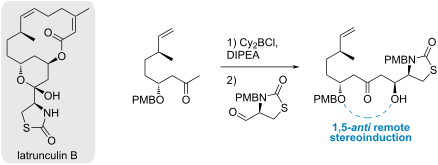
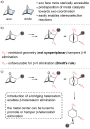
- formed by the oxidation of an allyl moiety introduced by the asymmetric allylation of an aldehyde derived from (+)-β-citronellene. At this stage, we can speculate that the stereocontrol of this reaction could either follow a polar Felkin–Anh model [14][15][16] based on chiral aldehyde partner 8 [17], or
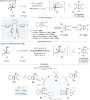
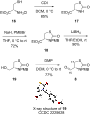
- 11 in 78% yield (Scheme 1). Due to easier purification, this alcohol was preferred to the aldehyde in our synthetic route, allowing a key stereoselective Krische allylation [21][22] to be envisaged. Applying reported conditions for this allylation – in presence of allyl acetate (10 equiv), [Ir(COD)Cl




Group 13 exchange and transborylation in catalysis
Beilstein J. Org. Chem. 2023, 19, 325–348, doi:10.3762/bjoc.19.28
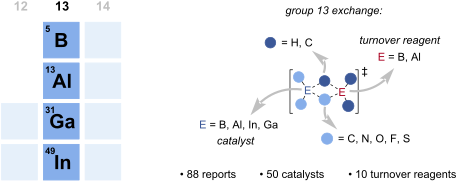
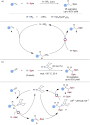
- ) methoxide (102) underwent Ga‒O/B‒C exchange with allyl-Bpin 103 to give MeOBpin and an allylic gallium(I) species 104, which reacted with the oxocarbenium 103 to give the allylic ether 105 and regenerate the GaI catalyst 99 (Scheme 25). Using allenylBpin, the selective propargylation of acetals was also










Germacrene B – a central intermediate in sesquiterpene biosynthesis
Beilstein J. Org. Chem. 2023, 19, 186–203, doi:10.3762/bjoc.19.18

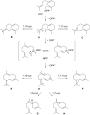
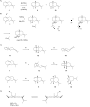
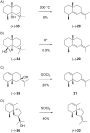
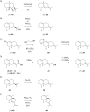
- this multistep process is initiated by the abstraction of diphosphate to produce an allyl cation that subsequently undergoes typical cation reactions such as cyclisations by intramolecular attack of an olefin to the cationic centre, Wagner–Meerwein rearrangements, hydride or proton shifts. The process








1,4-Dithianes: attractive C2-building blocks for the synthesis of complex molecular architectures
Beilstein J. Org. Chem. 2023, 19, 115–132, doi:10.3762/bjoc.19.12
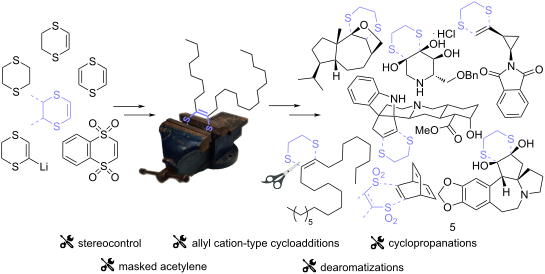
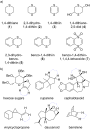
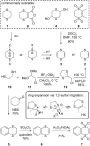
- give difficulties (Scheme 11a) [42]. The reactivity of the oxy-electrophiles can be enhanced by adding a Lewis acid catalyst such as titanium(IV) isopropoxide [59]. In this way, also epoxides can be smoothly reacted with lithiated dithiins, and both allyl and homoallyl alcohols can thus be prepared in
- this approach in a number of elegant stereocontrolled syntheses of polyhydroxy compounds and (derivatives of) natural carbohydrates, centering around Palumbo’s versatile building block 66 (Scheme 11c) [62][63][64][65][66][67][68][69][70][71][72][73][74][75][76][77][78][79][80]. The PMB-protected allyl
- -fused dihydrodithiin ring is first hydrodesulfurized and then dehydroxylated in a stereospecific and stereoselective manner [62]. The dihydrodithiin building block 66 thus acts as a synthetic equivalent of an allyl alcohol anion and serves as a versatile synthon for de novo carbohydrate synthesis [63











Catalytic aza-Nazarov cyclization reactions to access α-methylene-γ-lactam heterocycles
Beilstein J. Org. Chem. 2023, 19, 66–77, doi:10.3762/bjoc.19.6

- -Nazarov cyclization of the allyl-substituted imine substrate afforded α-methylene-γ-lactam product 19m in 56% yield. In our previous study, the relative stereochemistry of a tricyclic aza-Nazarov product obtained from a 3,4-dihydroisoquinoline derivative was secured by single-crystal X-ray analysis [35



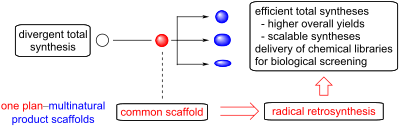
Combining the best of both worlds: radical-based divergent total synthesis
Beilstein J. Org. Chem. 2023, 19, 1–26, doi:10.3762/bjoc.19.1
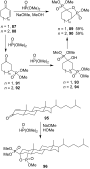
- a semipinacol rearrangement leading to 95, followed by subsequent cyclization to natural products guignardone A (96) and C (97). This process involved 1,2-allyl migration and C–O bond formation through a semipinacol rearrangement and a cyclodehydration cascade reaction (Scheme 8). Following the same



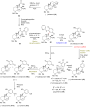


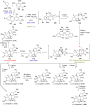

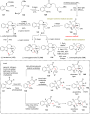


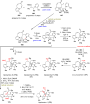

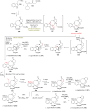

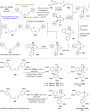

Synthetic study toward tridachiapyrone B
Beilstein J. Org. Chem. 2022, 18, 1741–1748, doi:10.3762/bjoc.18.183
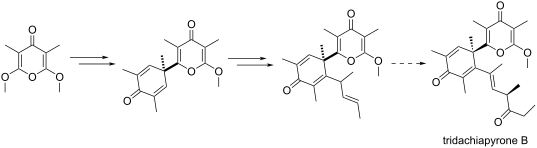
- carbanions of 1,3-dithiane [27], allyl [27], and methyldienylbenzene groups [31] to compound 2 were demonstrated, this result amounts to the first grafting of an aromatic nucleophile to the motif. The construction of the vicinal quaternary carbon of 6b was next investigated by methylation of the highly
- allyltitanocene reagents to carbonyl compounds was described by Sato which were prepared from the corresponding allyl carbonates exposed to the combination of [Cp2TiCl2]/n-BuLi [40]. Pleasingly, conducting the coupling of carbonate 20 to 5 in conditions inspired from Carreira’s study (Scheme 7b) led to the


Redox-active molecules as organocatalysts for selective oxidative transformations – an unperceived organocatalysis field
Beilstein J. Org. Chem. 2022, 18, 1672–1695, doi:10.3762/bjoc.18.179
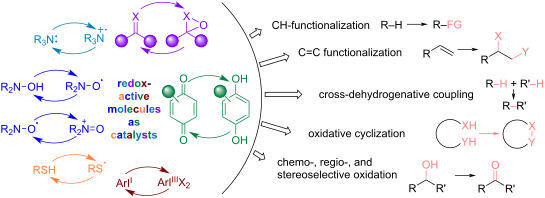
- addition (if X = H) or proton cleavage in the case of X = OH. Amine mediators are also suitable for the generation of radical species from CH-acidic substrates, such as β-dicarbonyl compounds. This reactivity was used in the dehydrogenative annulation of N-allyl amides with β-dicarbonyl compounds with the











Simple synthesis of multi-halogenated alkenes from 2-bromo-2-chloro-1,1,1-trifluoroethane (halothane)
Beilstein J. Org. Chem. 2022, 18, 1567–1574, doi:10.3762/bjoc.18.167
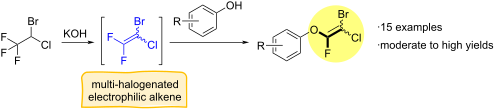
- incompatibility with electron-withdrawing substituents can be attributed to lower nucleophilicity of the phenoxide ion and structural instability of the product, which could lead to unexpected reactions of 2h and 2i during the reaction or purification process. Phenols with allyl or vinyl substituents (3j and 3k


Modular synthesis of 2-furyl carbinols from 3-benzyldimethylsilylfurfural platforms relying on oxygen-assisted C–Si bond functionalization
Beilstein J. Org. Chem. 2022, 18, 1256–1263, doi:10.3762/bjoc.18.131
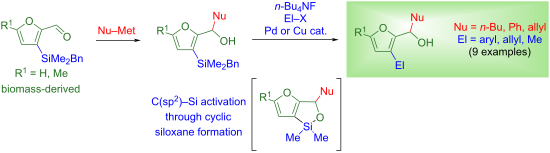
- reagents [22][23] to these substrates was uneventful and allowed for the preparation of 2-furylalkyl (see 3a–c, 4c), -aryl (see 5c, 6c), and -allyl carbinols (see 7c) having furan rings with various triorganosilyl substituents at C3 in a synthetically useful yield and on an appropriate scale (Scheme 2
- [25], afforded only the addition product 3b without any detectable formation of product 9, expected from 1,4-silyl migration/electrophilic substitution of 8 (Scheme 4, top). Conversely, treatment of alcohol 3a with t-BuOCu in the presence of allyl chloride, according to conditions developed by Takeda
- -methylfuryl carbinols. As such, products 23 and 24, arising from phenyl- and allyl-substituted substrates 6c and 7c, respectively, were isolated in 56% and 65% yield, respectively. Somewhat lower yields were noted with butyl- and phenyl-substituted carbinols 3c and 5c, respectively, bearing C5-unsubstituted


A one-pot electrochemical synthesis of 2-aminothiazoles from active methylene ketones and thioureas mediated by NH4I
Beilstein J. Org. Chem. 2022, 18, 1249–1255, doi:10.3762/bjoc.18.130
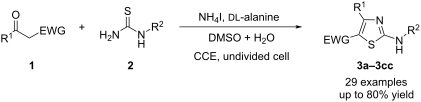
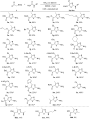
- reacted smoothly with thiourea 2a under the optimized conditions, giving the corresponding products in 30–80% yields (3a–d). In addition, allyl and benzyl acetoacetate were also suitable substrates to give the desired 2-aminothiazoles 3e and 3f in 78% and 52% yields, respectively. β-ketoesters containing




Electrogenerated base-promoted cyclopropanation using alkyl 2-chloroacetates
Beilstein J. Org. Chem. 2022, 18, 1116–1122, doi:10.3762/bjoc.18.114
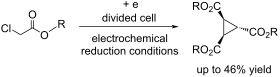
- with the vinyl group did not occur (Table 3, entry 7), but the reaction of compound 15 with the allyl group formed 16 in 34% yield (Table 3, entry 8). Finally, benzyl 2-chloroacetate (17) produced the corresponding compound 18 in 31% yield (Table 3, entry 9). The current electrolysis reaction can be


Electrochemical hydrogenation of enones using a proton-exchange membrane reactor: selectivity and utility
Beilstein J. Org. Chem. 2022, 18, 1055–1061, doi:10.3762/bjoc.18.107
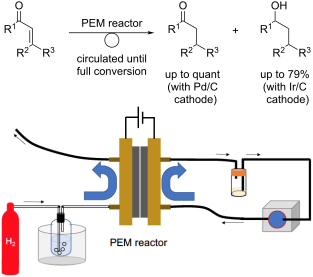
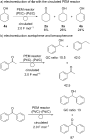
- reactor; Introduction Catalytic hydrogenation of α,β-enones is a significant transformation in organic synthesis [1]. Hydrogenation of enones can give ketones, allyl alcohols, and saturated alcohols, and the control of the chemoselectivity is important. Therefore, there have been numerous studies on the





Molecular diversity of the base-promoted reaction of phenacylmalononitriles with dialkyl but-2-ynedioates
Beilstein J. Org. Chem. 2022, 18, 991–998, doi:10.3762/bjoc.18.99

- be seen that the C–C double bond is connected to two methoxycarbonyl groups. Though one hydroxy group exists on the reactive allyl position and benzyl position, it still is present in the molecule and did not give the cyclopentadiene by further elimination of water. In order to obtain the


Understanding the competing pathways leading to hydropyrene and isoelisabethatriene
Beilstein J. Org. Chem. 2022, 18, 972–978, doi:10.3762/bjoc.18.97
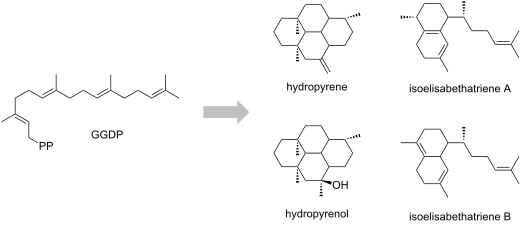
- -phase calculations commenced with geranylgeranyl cation (A and A’) in a fully extended form. HP pathway The HP gas-phase pathway commences with a C1–C10 cyclization, which yields cation B, which is more stable than A by −11.4 kcal/mol. A subsequent 1,3-hydride transfer results in an allyl cation (C
- yields cation B’, which is more stable than A’ by −15.7 kcal/mol. A subsequent 1,3-hydride transfer results in an allyl cation (C’, −32.1 kcal/mol relative to A’), with a barrier of 5.4 kcal/mol. Cation C’ collapses into D’ via a barrierless 1,6-ring closure (ΔGr of −35.9 kcal/mol relative to A’). D’ can


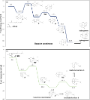

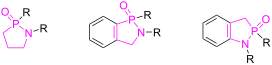
Synthetic strategies for the preparation of γ-phostams: 1,2-azaphospholidine 2-oxides and 1,2-azaphospholine 2-oxides
Beilstein J. Org. Chem. 2022, 18, 889–915, doi:10.3762/bjoc.18.90
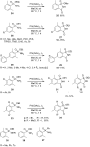
- group and the nature of its terminal substituents (aromatic phenyl and aliphatic isopropyl) are the crucial factors impacting the diastereoselectivity. Generally, the substrates with bulky R and aromatic phenyl terminal substituent in their allyl groups gave rise to the desired 1,5-dihydro-1,2
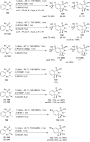
- intramolecular nucleophilic dearomatization and protonation or electrophilic alkylation reactions, affording the corresponding dihydronaphthylene-fused γ-phosphinolactams 135–142. Methanol was used as the electrophile for protonation, while methyl iodide and allyl bromide were used as electrophiles for







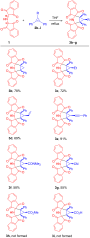
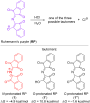
Synthesis of bis-spirocyclic derivatives of 3-azabicyclo[3.1.0]hexane via cyclopropene cycloadditions to the stable azomethine ylide derived from Ruhemann's purple
Beilstein J. Org. Chem. 2022, 18, 769–780, doi:10.3762/bjoc.18.77
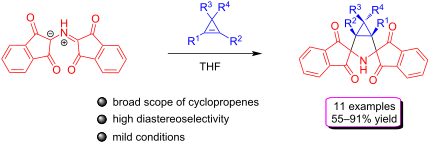
- excellent chemical trap for detecting parent cyclopropene. Having carried out the experiment with ylide 1 as a trap in a similar fashion, we found that PRP (1) is unreactive towards parent cyclopropene (2p) under these conditions. Cyclopropene 2p, generated in situ from allyl chloride [41] and driven into a






A trustworthy mechanochemical route to isocyanides
Beilstein J. Org. Chem. 2022, 18, 732–737, doi:10.3762/bjoc.18.73
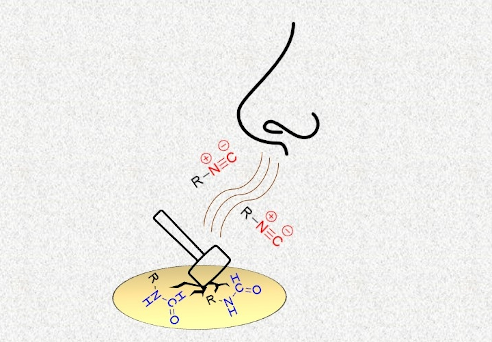
- straightforward procedure. Keywords: green chemistry; isocyanide; isonitriles; mechanochemistry; Introduction Isocyanides were first discovered more than a century ago by Lieke in Göttingen after having handled allyl iodide and potassium cyanide to synthesize crotonic acid. This attempt, instead, brought to the





