Search results
Search for "cascade reaction" in Full Text gives 146 result(s) in Beilstein Journal of Organic Chemistry.
Terpenes
Beilstein J. Org. Chem. 2019, 15, 2966–2967, doi:10.3762/bjoc.15.292
- generate a highly reactive cationic intermediate that can be subject to a cascade reaction through typical carbocation chemistry, including cyclisation reactions, hydride migrations and Wagner–Meerwein rearrangements [1][2]. The cascade is usually terminated by deprotonation or attack of water. The
Vicinal difunctionalization of alkenes by four-component radical cascade reaction of xanthogenates, alkenes, CO, and sulfonyl oxime ethers
Beilstein J. Org. Chem. 2019, 15, 1822–1828, doi:10.3762/bjoc.15.176

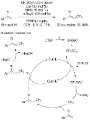
- together with 1.5 equivalents of 3a led to a higher conversion (ca. 90%), affording acceptable yield and selectivity (Table 1, entry 5). With optimized reaction conditions in hand (Table 1, entry 5), we then examined the generality of this four-component radical cascade reaction using xanthates 1, olefins
- functionalized keto-aldehydes [22], aminoalcohols [30], triazoles [31], just to name a few. A reaction mechanism is finally proposed for the four-component cascade reaction, which is depicted in Figure 2 [22][23][24][32][33][34]. Initially, α-carbonyl radical A [8] was generated by the reaction of the
- radical which sustains the radical chain. Since radical B can also add to sulfonyl oxime ether 3a, we used high CO pressure conditions to encourage the radical carbonylation to form acyl radical C. Conclusion In summary, we demonstrated that a four-component radical cascade reaction, between xanthogenates


Borylation and rearrangement of alkynyloxiranes: a stereospecific route to substituted α-enynes
Beilstein J. Org. Chem. 2019, 15, 1416–1424, doi:10.3762/bjoc.15.141

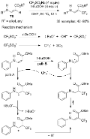
- -enynes through lithiation, borylation and rearrangement of cis or trans-alkynyloxiranes. This cascade reaction is stereospecific, probably due to the stereocontrolled group transfer from boron to the adjacent oxiranyl carbon in an oxiranylborate complex intermediate, followed by an internal bora-Wittig


SO2F2-mediated transformation of 2'-hydroxyacetophenones to benzo-oxetes
Beilstein J. Org. Chem. 2019, 15, 976–980, doi:10.3762/bjoc.15.95
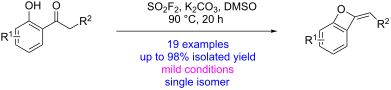
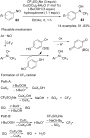
- protocol for the transformation of 2'-hydroxyacetophenones to benzo-oxetes. This SO2F2-mediated cascade reaction showed exceptional functional group tolerance and a broad substrate scope which, to the best of our knowledge, is the first example of employing cheap and abundant 2'-hydroxyacetophenones as


Stereochemical investigations on the biosynthesis of achiral (Z)-γ-bisabolene in Cryptosporangium arvum
Beilstein J. Org. Chem. 2019, 15, 789–794, doi:10.3762/bjoc.15.75
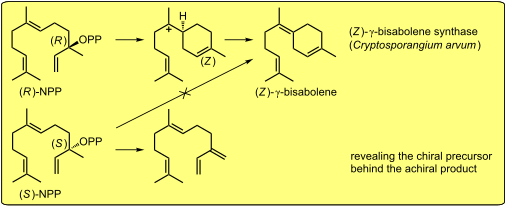
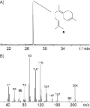
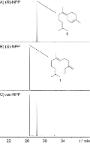
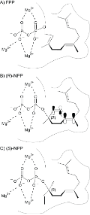
- products, showing that both enantiomers of NPP were converted with similar efficiency. These results clearly rule out (S)-NPP, but rationalise (R)-NPP as an intermediate in the cyclisation mechanism of BbS, and are in favour of the (S)-bisabolyl cation (A) to be deprotonated to 5 within the cascade
- reaction (Scheme 1, path A) [24][25][26], although the stereochemical link between NPP and A could not be demonstrated experimentally in this study. The formation of (R)-NPP from FPP as a 1,3-syn-allylic rearrangement can be rationalised in a binding mode of FPP, in which OPP is located on a defined face



Low-budget 3D-printed equipment for continuous flow reactions
Beilstein J. Org. Chem. 2019, 15, 558–566, doi:10.3762/bjoc.15.50
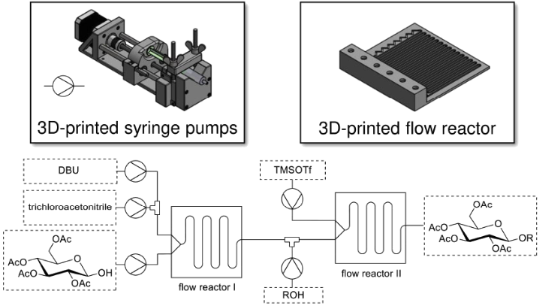
- step reaction arrangement starting from pyranose 4 was set up. Scheme 4 shows this setup of a suitable cascade reaction in which DBU, trichloroacetonitrile and pyranose 4 were pumped through the first flow reactor (R1) followed by the addition of the alcohol and TMSOTf through the second reactor. Table


Oxidative radical ring-opening/cyclization of cyclopropane derivatives
Beilstein J. Org. Chem. 2019, 15, 256–278, doi:10.3762/bjoc.15.23
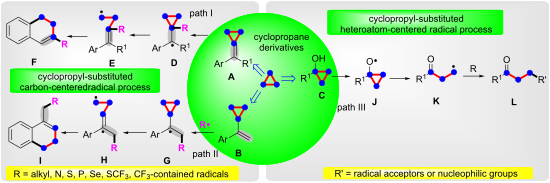
- photoredox catalysis oxidative radical ring-opening and cyclization of cyclopropyl olefins 83 with bromides 84 for the synthesis of partially saturated naphthalenes 85 in moderate to excellent yields (Scheme 19) [97]. It was the first example for alkylation, ring-opening and cyclization cascade reaction of


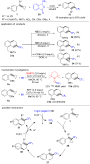


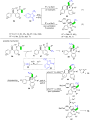


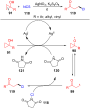


Applications of organocatalysed visible-light photoredox reactions for medicinal chemistry
Beilstein J. Org. Chem. 2018, 14, 2035–2064, doi:10.3762/bjoc.14.179
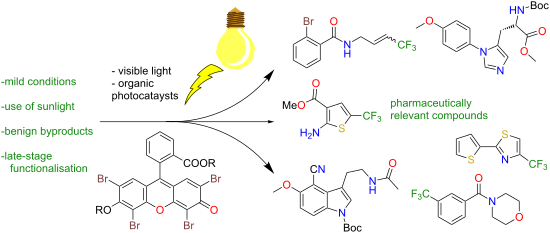
- ways and 20c is a precursor to an API. Another method for benzothiopene construction is seen in Kumar and co-workers’ report describing a dehydrogenative oxytrifluoromethylation cascade reaction of 1,6-enynes, catalysed by phenanthrene-9,10-dione (PQ) (Ered*(cat/cat•−) +1.6 V vs SCE) using visible




Cationic cobalt-catalyzed [1,3]-rearrangement of N-alkoxycarbonyloxyanilines
Beilstein J. Org. Chem. 2018, 14, 1972–1979, doi:10.3762/bjoc.14.172

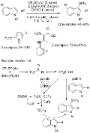
- -catalysed cascade reaction involving rearrangement via N–O bond cleavage [14]. While divalent copper acetate and copper chloride did not show any catalytic activities (Table 1, entries 1 and 2), more Lewis acidic copper complexes, such as [Cu(MeCN)4](PF6)2 and [Cu(OTf)]2·toluene, afforded the corresponding


Hypervalent organoiodine compounds: from reagents to valuable building blocks in synthesis
Beilstein J. Org. Chem. 2018, 14, 1508–1528, doi:10.3762/bjoc.14.128
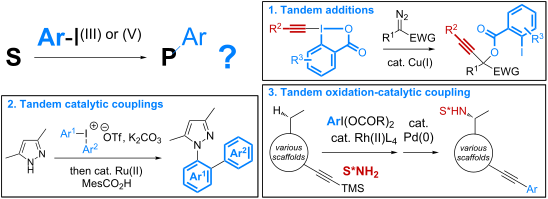
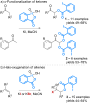
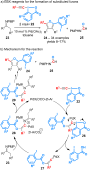
- catalyzed cascade reaction to afford alkylidenefluorenes 49 (Scheme 17) [57]. In terms of mechanism, a Pd(0)/Cu(I)-catalyzed Sonogashira coupling reaction from the iodonium salt 48 delivers a 2-alkynyl-2’-iodoarene 50 that, then, cyclizes to 51 via insertion of the Pd(0) species into the iodoarene moiety






Atom-economical group-transfer reactions with hypervalent iodine compounds
Beilstein J. Org. Chem. 2018, 14, 1263–1280, doi:10.3762/bjoc.14.108
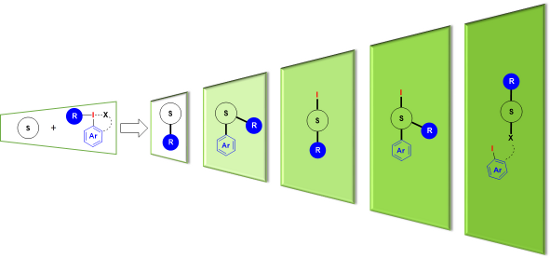
- easy to recycle [3][4][16][17]. On the other hand, the additional incorporation of the former iodoarene waste into the reaction product via a cascade reaction does not only improve the overall AE of a chemical reaction but also directly leads to highly functionalized target molecules. A rough estimate






Nanoreactors for green catalysis
Beilstein J. Org. Chem. 2018, 14, 716–733, doi:10.3762/bjoc.14.61
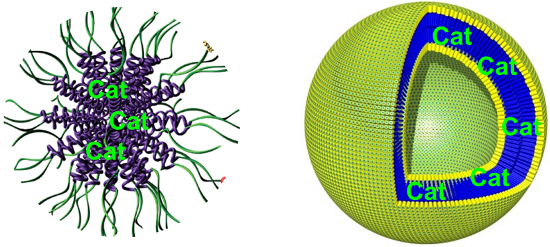
- , namely: (polymer) vesicles, micelles, dendrimers and nanogels. The ability and efficiency of catalytic nanoreactors to carry out organic reactions in water, to perform cascade reaction and their ability to be recycled will be discussed. Keywords: catalysis; dendrimers; green chemistry; nanogels
- reference [67]. Suzuki−Miyaura couplings with, or without, ppm Pd. Conditions: ArI 0.5 mmol 3a, Ar’B(OH)2 (0.75–1.00 mmol, 1.5–2.0 equiv) 3b, *with 200 ppm of Pd(OAc)2. Adapted from reference [70]. Copyright 2016 American Chemical Society. Cascade reaction with GOx and Myo. Adapted from reference [82


Latest development in the synthesis of ursodeoxycholic acid (UDCA): a critical review
Beilstein J. Org. Chem. 2018, 14, 470–483, doi:10.3762/bjoc.14.33
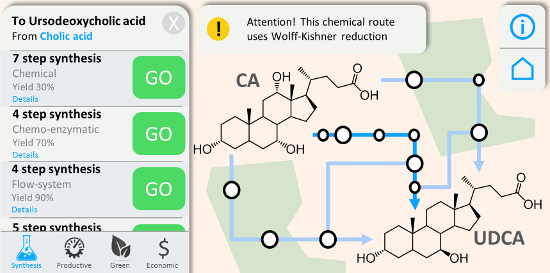
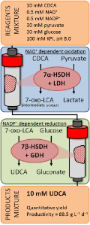
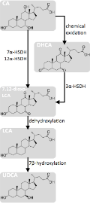
- dehydratase. The dehydrated product is then reduced through a 3-step-cascade reaction (catalysed by 3 different enzymes) giving the final dehydroxylated product. 7-OH epimerization: shift the equilibrium Chemical epimerization of CDCA into UDCA The second step of UDCA synthesis from CA, is the epimerization
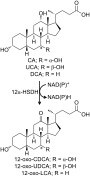
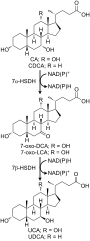
- formate is cheap and, because of the gaseous nature of CO2 as product, the equilibrium of the reaction is entropically favoured. Pedrini et al. in 2006 [33] reported the successful epimerization of CDCA to UDCA using a redox-neutral cascade reaction, with two NAD+-dependent dehydrogenases. In this way the
- Fusarium merismoides VKM F-2310. The possibility to access that kind of chemical and chemo-enzymatic reactions pave the way for the design of other unexplored routes for the production of UDCA (example in Figure 8). In addition, other reported enzymes can eventually play a role in the cascade reaction



Synthetic mRNA capping
Beilstein J. Org. Chem. 2017, 13, 2819–2832, doi:10.3762/bjoc.13.274
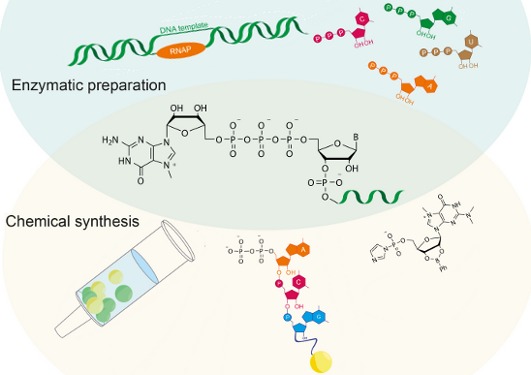
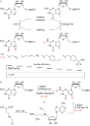
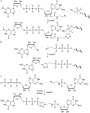
- double labeling of the mRNA cap with alkyne moieties could also be achieved based on a recently reported enzymatic cascade reaction [99]. In this system a Se-propargyl-modified AdoMet analogue (SeAdoYn [100]) was prepared enzymatically from the respective methionine analogue and ATP by a methionine



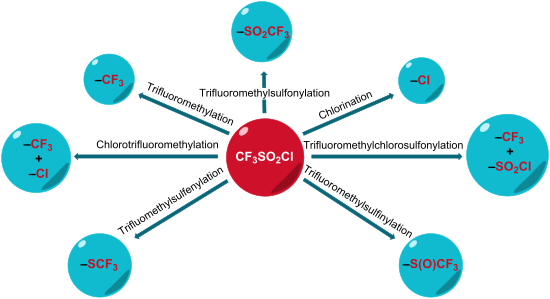
CF3SO2X (X = Na, Cl) as reagents for trifluoromethylation, trifluoromethylsulfenyl-, -sulfinyl- and -sulfonylation and chlorination. Part 2: Use of CF3SO2Cl
Beilstein J. Org. Chem. 2017, 13, 2800–2818, doi:10.3762/bjoc.13.273
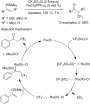
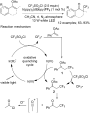
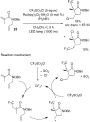
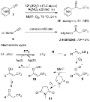
- was obtained predominantly: the α-aryl-β-trifluoromethyl amide 6. This compound was determined to be issued from a trifluoromethylation/1,4-aryl shift/desulfonylation cascade reaction (Scheme 7). This reaction could be performed on various N-aryl,N-tosylacrylamides with moderate to good yields. The
- species 7 then underwent an aryl migration/desulfonylation cascade reaction to furnish intermediate 8. In the case of an aryl substituted substrate, this nitrogen radical being stabilised, it directly performed an hydrogen abstraction on acetonitrile to lead to the corresponding α-aryl-β-trifluoromethyl
- compound, albeit in low yield and with poor regio- and diastereoselectivity (Scheme 19). Interestingly, the authors proposed a mechanism involving a chain propagation pathway, in contrast to the work of Jung and Han. A similar cascade reaction was also performed on diethyl 2-allyl-2-(3-methylbut-2-en-1-yl








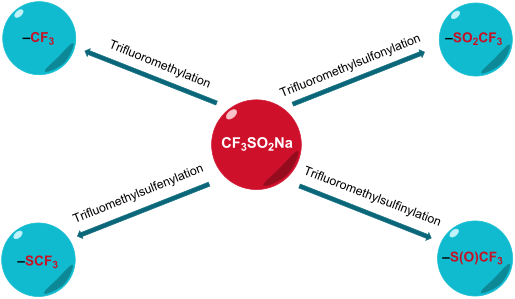
CF3SO2X (X = Na, Cl) as reagents for trifluoromethylation, trifluoromethylsulfenyl-, -sulfinyl- and -sulfonylation. Part 1: Use of CF3SO2Na
Beilstein J. Org. Chem. 2017, 13, 2764–2799, doi:10.3762/bjoc.13.272
- (Scheme 11) [30]. Amino- and azotrifluoromethylation of alkenes: Alkene trifluoromethylation was applied to the construction of indole, pyrazole and pyridazinone moieties via a multicomponent cascade reaction developed by Antonchick and Matcha in 2014 [31]. The method was based on the reaction between
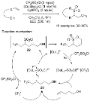
- and co-workers reported the use of CF3SO2Na in combination with iodide pentoxide in a similar way to their iodotrifluoromethylation of alkenes (see earlier in the text) [42] (Scheme 29a) [51]. Interestingly, this cascade reaction was also applied to enynes for the synthesis of pyrrolidines 52 (Scheme




















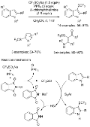


A novel synthetic approach to hydroimidazo[1,5-b]pyridazines by the recyclization of itaconimides and HPLC–HRMS monitoring of the reaction pathway
Beilstein J. Org. Chem. 2017, 13, 2561–2568, doi:10.3762/bjoc.13.252
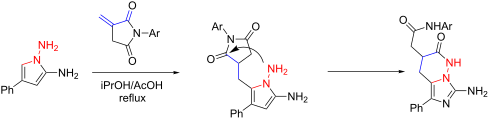
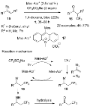
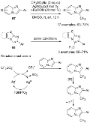
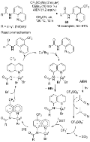
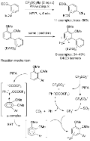
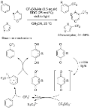
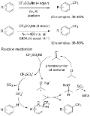
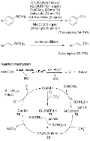
- -addition by the activated C=C double bond and subsequent intramolecular recyclization of the intermediate with the amino group involved. Keywords: cascade reaction; diaminoimidazoles; HPLC–HRESIMS; imidazo[1,5-b]pyridazines; itaconimides; Introduction Among the numerous bicyclic fused imidazole
- the HPLC–HRESIMS monitoring of the reaction confirm its selectivity. Conclusion In summary, a new regioselective and chemoselective cascade reaction of N-arylitaconimides with 1,2-diamino-4-phenylimidazole as 1,3-C,N-dinucleophile was developed to synthesize tetrahydroimidazo[1,5-b]pyridazines. The


Sustainable synthesis of 3-substituted phthalides via a catalytic one-pot cascade strategy from 2-formylbenzoic acid with β-keto acids in glycerol
Beilstein J. Org. Chem. 2017, 13, 1425–1429, doi:10.3762/bjoc.13.139

- phthalides in good to excellent yields. Conclusion: A concise and efficient synthesis strategy of 3-substituted phthalides from 2-formylbenzoic acid and β-keto acids via a catalytic one-pot cascade reaction in glycerol has been accomplished. Keywords: β-keto acid; decarboxylation; glycerol; one-pot cascade
- functional group compatibility and ingenious construction of molecular architectures [11][12][13][14]. Consequently, an efficient synthesis of 3-substituted phthalides via a one-pot cascade reaction is still in high demand. An analogous approach was described involving a catalytic sequence of the aldol
- reaction; phthalide; Introduction The phthalides, also known as isobenzofuran-1(3H)-ones, are an important class of heterocycles which are of continued interest for chemists [1][2]. 3-Substituted phthalides, which are recognized as versatile building blocks found in a large number of bioactive compounds


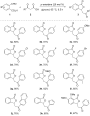

Synthesis of alkynyl-substituted camphor derivatives and their use in the preparation of paclitaxel-related compounds
Beilstein J. Org. Chem. 2017, 13, 1230–1238, doi:10.3762/bjoc.13.122
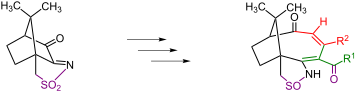
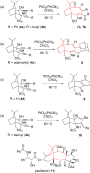
- intermediate in the sulphur-reduction step of the cascade reaction, and the isolated product thus supports our mechanistic considerations. Platinum(II) catalysis applied to camphor-derived dialkynes with two different substituents can thus not only give valuable insight in the mechanism of such




Synthesis of D-manno-heptulose via a cascade aldol/hemiketalization reaction
Beilstein J. Org. Chem. 2017, 13, 795–799, doi:10.3762/bjoc.13.79

- aldol/hemiketalization reaction of a C4 aldehyde with a C3 ketone provides the differentially protected ketoheptose building block, which can be further reacted to furnish target D-manno-heptulose. Keywords: aldol reaction; cascade reaction; D-manno-heptulose; higher-carbon sugar; ketoheptose
- -selective coupling intermediate 12 underwent in situ cyclization to provide hemiketal 13 as the major product in about 50–60% yield (35% overall yield from compound 11). Notably, trace amounts of a stereoisomer and a minor highly polar unknown byproduct were also observed in this cascade reaction. The


N-Propargylamines: versatile building blocks in the construction of thiazole cores
Beilstein J. Org. Chem. 2017, 13, 625–638, doi:10.3762/bjoc.13.61
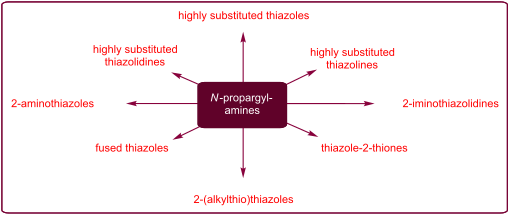
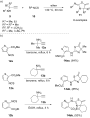
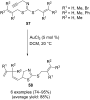
- thiazole-2-thiones 3 through the thermal cyclocondensation of N-propargylamines 1 with carbon disulfide as developed by Batty and Weedon [75]. (a) One-pot synthesis of 2-benzylthiazolo[3,2-a]benzimidazoles 6 through a base-catalyzed cascade reaction of internal N-propargylamines 4 and CS2. (b) Synthesis of




Development of a continuous process for α-thio-β-chloroacrylamide synthesis with enhanced control of a cascade transformation
Beilstein J. Org. Chem. 2016, 12, 2511–2522, doi:10.3762/bjoc.12.246
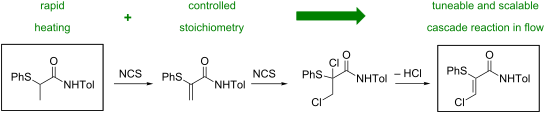
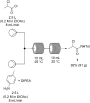
- continuous flow process, however, succinimide precipitation would cause blockage of the system. Attempts at transferring the cascade reaction to a continuous platform began with direct adaptation of the existing batch process (Table 2). The solubility of NCS in toluene was found to be variable and often
- stoichiometry afforded by a continuous platform and offers the possibility to isolate selected intermediates in the cascade reaction using a continuous process, more effectively than in batch and with greater flexibility. Optimization of the cascade process using flow chemistry In all the aforementioned cases
- . Interestingly, during development studies on the conversion of α-thioamide 2 to α-thio-β-chloroacrylamide Z-3 in acetonitrile, by flow or in batch, a new component of the cascade reaction was observed, which was identified as the (E)-α-thio-β-chloroacrylamide E-3. An important feature of the experiments




Diastereoselective synthesis of 3,4-dihydro-2H-pyran-4-carboxamides through an unusual regiospecific quasi-hydrolysis of a cyano group
Beilstein J. Org. Chem. 2016, 12, 2093–2098, doi:10.3762/bjoc.12.198

- diastereoselective cascade reaction [23]. The crucial stage of the described transformation is the formation of a pyran-4-carboxamide intermediate. A trace amount of it was isolated accidentally and we could not repeat this procedure and characterize the compound by spectra. Results and Discussion In continuation of


Towards the total synthesis of keramaphidin B
Beilstein J. Org. Chem. 2016, 12, 1096–1100, doi:10.3762/bjoc.12.104
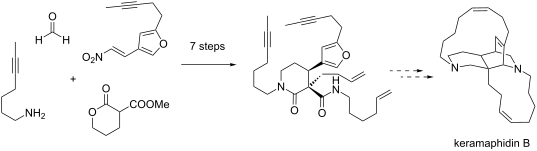
- turn be synthesised by an aminolysis/oxidation/olefination sequence of the terminal alcohol 6, following traceless nitro group removal. 5-Nitropiperidin-2-one 6 in turn could be accessed by a nitro-Mannich lactamisation cascade reaction between Michael adduct 7, formaldehyde and a suitable primary



Catalytic asymmetric synthesis of biologically important 3-hydroxyoxindoles: an update
Beilstein J. Org. Chem. 2016, 12, 1000–1039, doi:10.3762/bjoc.12.98
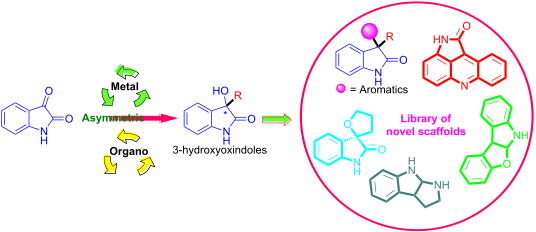
- . Differently, treatment of 3-indolylmethanols with Nazarov reagents with TfOH in MeCN led to the generation of indoles through a cascade reaction in an (E/Z)-selective mode. These unusual reactions may serve as stereoselective and chemodivergent methods for accessing indole-containing scaffolds. Shi and co
- diastereoselectivities (all >95:5 dr) and enantioselectivities (up to >99% ee, Scheme 58) [75]. Mechanistic studies showed that this cascade reaction proceeded via a vinylogous Michael addition/Friedel–Crafts process involving a dual H-bonding activation of substrates. In 2015, Wang and co-workers reported Lewis acid