Search results
Search for "correlation" in Full Text gives 644 result(s) in Beilstein Journal of Organic Chemistry. Showing first 200.
Monitoring carbohydrate 3D structure quality with the Privateer database
Beilstein J. Org. Chem. 2024, 20, 931–939, doi:10.3762/bjoc.20.83
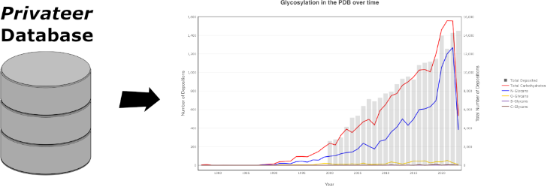
- helpful to have this information easily accessible as Privateer cannot calculate the real space correlation coefficient without experimental data; therefore, programmatic access to further validation metrics could be streamlined, knowing the information is not present. Also at the top level of the
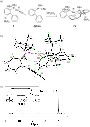
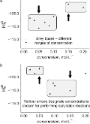
- model of the sugar. Also in the first section of the visual validation report is a plot of the B-factor (temperature factor) versus the real space correlation coefficient (RSCC) (Figure 2). A well-refined, well-built model would be expected to have a B-factor that increases somewhat linearly as the RSCC
- conformational landscape of pyranose sugars. A well-modelled ᴅ-sugar would be expected to be in the lowest-energy conformation and have a theta angle close to 0° and would be indicated by a blue point; deviations from the ideal conformation are highlighted with a red cross. Right: Real space correlation


Synthesis and properties of 6-alkynyl-5-aryluracils
Beilstein J. Org. Chem. 2024, 20, 898–911, doi:10.3762/bjoc.20.80
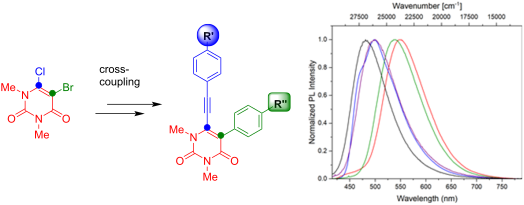
- analyzed chemical shifts δ are referenced to the residual solvent signals of the deuterated solvents CDCl3 (δ = 7.26 ppm/77.16 ppm). Multiplicities due to spin–spin correlation are reported as follows: s = singlet, d = doublet, dd = double doublet, m = multiplet; they are further described by their





Confirmation of the stereochemistry of spiroviolene
Beilstein J. Org. Chem. 2024, 20, 852–858, doi:10.3762/bjoc.20.77
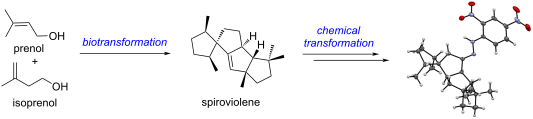
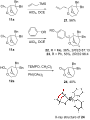
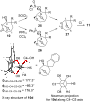
- synthetic intermediate of 2 to spiroviolene. By taking advantage of the DFT transition state analysis of the hydroboration reaction of a key intermediate, as well as NOE correlation analysis of the resultant product, Snyder and co-workers have reassigned the right structure of spiroviolene to 1. However


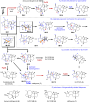


Skeletal rearrangement of 6,8-dioxabicyclo[3.2.1]octan-4-ols promoted by thionyl chloride or Appel conditions
Beilstein J. Org. Chem. 2024, 20, 823–829, doi:10.3762/bjoc.20.74
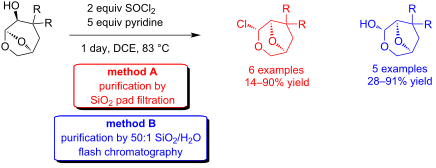
- ppm in 14. The methine had a correlation to a resonance at δC 55.1 ppm in the 2D HSQC spectra consistent with an attached chloride. In the 1H NMR spectra for the hemiacetals 12a,c–f, an upfield shift for the anomeric centre of ≈1.1 ppm was observed relative to the chlorides. There was also evidence of


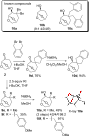


Discovery and biosynthesis of bacterial drimane-type sesquiterpenoids from Streptomyces clavuligerus
Beilstein J. Org. Chem. 2024, 20, 815–822, doi:10.3762/bjoc.20.73
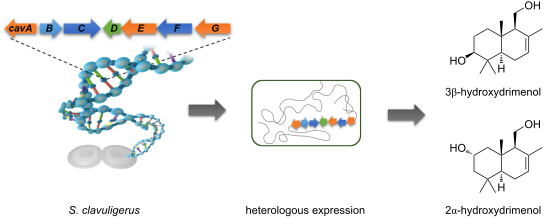
- differences in 13C NMR (ΔδC = 3.3) (Figures S19–S25, Supporting Information File 1) [43]. Moreover, the key correlation observed between H5 and H7 in the ROESY spectrum provides additional support for the β-configuration of this hydroxy group (Figure S26 and Table S7 in Supporting Information File 1). These


Advancements in hydrochlorination of alkenes
Beilstein J. Org. Chem. 2024, 20, 787–814, doi:10.3762/bjoc.20.72
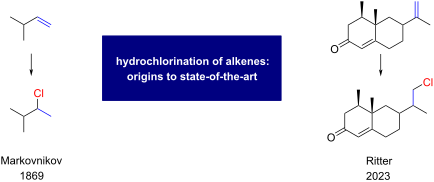
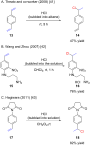
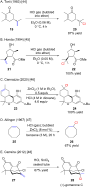
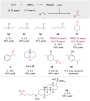
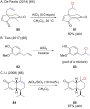
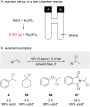
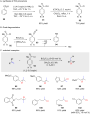
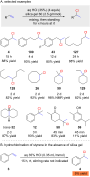
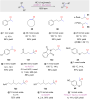
- thermally treated alumina and SOCl2 (2 equiv) as an ideal HCl precursor, affording the product 62 in a 94% yield with 100% conversion in only 18 minutes of reaction time (Table 4, entry 3). During their investigations, they discovered a correlation between the efficiency of the hydrochlorination reaction










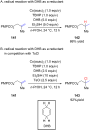


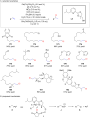
SOMOphilic alkyne vs radical-polar crossover approaches: The full story of the azido-alkynylation of alkenes
Beilstein J. Org. Chem. 2024, 20, 701–713, doi:10.3762/bjoc.20.64
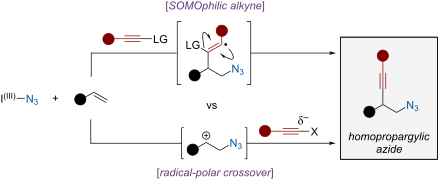
- except for 4ClDPAIPN which afforded 10% of yield of 4a (Table 2, entries 6–10). No correlation between the different redox potentials of the photocatalysts and the yield of the reaction could be established. Ru(bpy)3Cl2·6H2O was selected as the optimal catalyst since it afforded the highest yield and


Possible bi-stable structures of pyrenebutanoic acid-linked protein molecules adsorbed on graphene: theoretical study
Beilstein J. Org. Chem. 2024, 20, 570–577, doi:10.3762/bjoc.20.49
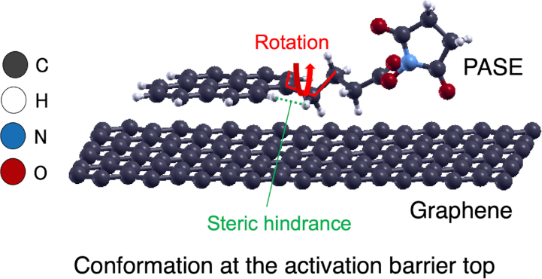
- the DFT calculation realized by the PWscf code of Quantum ESPRESSO [30][31][32], the DFT-D3 correlation [33] together with PBEsol functional [34] for the exchange-correlation functional described van der Waals interaction between graphene and pyrene fragment in PASE. Ultrasoft pseudopotentials [35


A new analog of dihydroxybenzoic acid from Saccharopolyspora sp. KR21-0001
Beilstein J. Org. Chem. 2024, 20, 497–503, doi:10.3762/bjoc.20.44
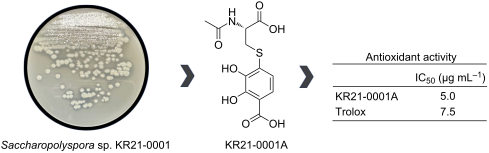
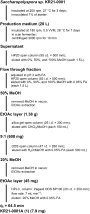
- carbon, and one methyl carbon. A spin system H-6 (δH 6.85)/H-7 (δH 7.33) with an ortho-coupling constant (8.5 Hz) was observed using homonuclear correlation spectrometry (COSY). The heteronuclear multiple bond correlation (HMBC) cross-peaks from H-6 to C-2 (δC 112.4) and C-4 (δC 145.2), and from H-7 to C



Ligand effects, solvent cooperation, and large kinetic solvent deuterium isotope effects in gold(I)-catalyzed intramolecular alkene hydroamination
Beilstein J. Org. Chem. 2024, 20, 479–496, doi:10.3762/bjoc.20.43
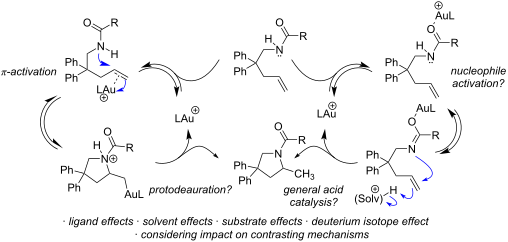
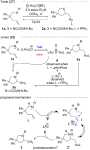
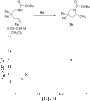
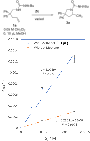
- correlation of faster rate with more electron-withdrawing ligand. Experiments with other substrates display consistent results (further discussion below, Table 6, catalyst 4a reacts faster than 4c in the reaction of carbamate 1b → 3b). Solvent effect For a screen of solvent effect on the rate of 1a
- (Table 2, entries 1 and 2; 4–22-fold increase in rate compared to CD2Cl2). We were unable to find any clear correlation between rate and a variety of solvent parameters; the success of mixed solvents suggests many factors are at play. Throughout our studies, we used CH2Cl2 and CD2Cl2 interchangeably






Pseudallenes A and B, new sulfur-containing ovalicin sesquiterpenoid derivatives with antimicrobial activity from the deep-sea cold seep sediment-derived fungus Pseudallescheria boydii CS-793
Beilstein J. Org. Chem. 2024, 20, 470–478, doi:10.3762/bjoc.20.42
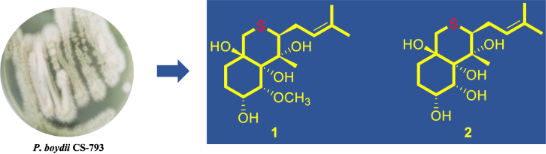
- the HMBC correlation from H-14 to C-8, as well as the molecular formula combined with chemical shifts (δC 35.9, CH2-14, and δC 45.8, CH-8) [12]. Furthermore, HMBC correlations from the protons of methoxy to C-2 attached the methoxy group to C-2. The relative configuration of compound 1 was determined


Green and sustainable approaches for the Friedel–Crafts reaction between aldehydes and indoles
Beilstein J. Org. Chem. 2024, 20, 379–426, doi:10.3762/bjoc.20.36
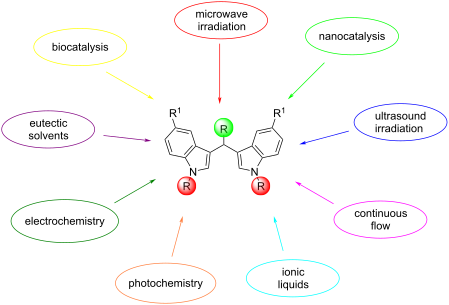
- prostate cancer. The same apoptotic function can be observed in colon and pancreatic cancer, since BIMs (specifically DIM-C-pPhOCH3 (5)) can act as a Nur77 (Nuclear Receptor 4A1) antagonist, which modulates the life cycle of cells [6]. The correlation between lower lung cancer risk and the consumption of




Photochromic derivatives of indigo: historical overview of development, challenges and applications
Beilstein J. Org. Chem. 2024, 20, 228–242, doi:10.3762/bjoc.20.23
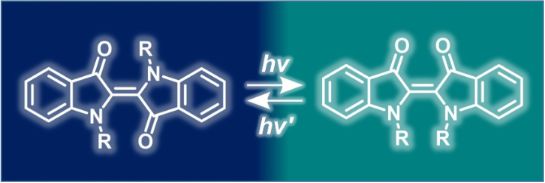
- angles for N,N'-dimethylindigo in the E- and Z-forms were 30.7° and 27.4°, respectively. Importantly, the twisting angle of the E-isomer is not always smaller than the one of the Z-isomer. Interestingly, no correlation between the positions of the absorption maxima of both E- and Z-isomers of the dyes 9a





Comparison of glycosyl donors: a supramer approach
Beilstein J. Org. Chem. 2024, 20, 181–192, doi:10.3762/bjoc.20.18
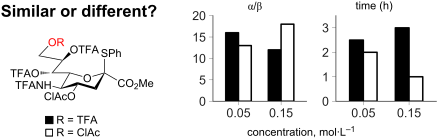
- reactivity pattern. However, analysis of the results obtained (Figure 1b and Table S1 in Supporting Information File 1) clearly suggests that, again, there is no universal correlation between reaction time and stereoselectivity. Although at high concentration (0.15 mol·L−1) an increase in the reaction time



Synthesis of the 3’-O-sulfated TF antigen with a TEG-N3 linker for glycodendrimersomes preparation to study lectin binding
Beilstein J. Org. Chem. 2024, 20, 173–180, doi:10.3762/bjoc.20.17
- doublet, t = triplet, q = quartet, dd = doublet of doublets, dt = doublet of triplets, m = multiplet), coupling constant in Hz, integration. Assignments were aided by homonuclear 1H,1H (COSY, TOCSY) and 1H,13C heteronuclear (HSQC, HMBC) two-dimensional correlation spectroscopies. 13C chemical shifts were


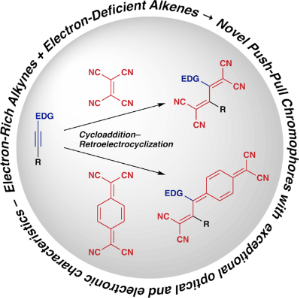
Perspectives on push–pull chromophores derived from click-type [2 + 2] cycloaddition–retroelectrocyclization reactions of electron-rich alkynes and electron-deficient alkenes
Beilstein J. Org. Chem. 2024, 20, 125–154, doi:10.3762/bjoc.20.13


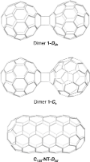
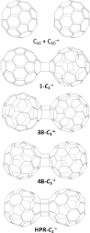
Electron-beam-promoted fullerene dimerization in nanotubes: insights from DFT computations
Beilstein J. Org. Chem. 2024, 20, 92–100, doi:10.3762/bjoc.20.10
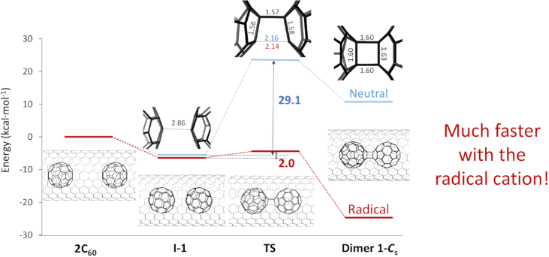
- calculations. The fullerene dimerization mechanism inside a SWCNT was also studied by density functional theory applied to periodic systems through VASP code [31]. The exchange-correlation functional used was PBE with the zero damping DFT-D3 method of Grimme et al. [16]. Inner electrons were replaced by PAW




Optimizing reaction conditions for the light-driven hydrogen evolution in a loop photoreactor
Beilstein J. Org. Chem. 2024, 20, 74–91, doi:10.3762/bjoc.20.9
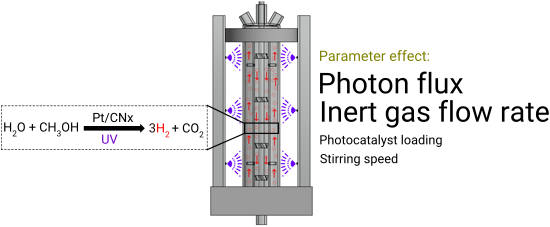
- . Systematic studies on varying photon fluxes showed an almost linear increase of the hydrogen evolution rate with lower photon fluxes (see Figure 12b). Generally, three regimes can be differentiated for the correlation of the reaction rate with the photon flux [37][38][39][40][41][42]. At low photon fluxes
- photon flux density, c0 is the photocatalyst concentration, and kr is the recombination rate. The linear correlation between reaction rate and photon flux visible in Figure 12b indicates that the system is still in regime 1 and the hydrogen generation rate is limited by the available photon flux, even


Using the phospha-Michael reaction for making phosphonium phenolate zwitterions
Beilstein J. Org. Chem. 2024, 20, 41–51, doi:10.3762/bjoc.20.6
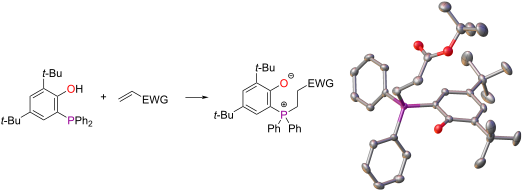
- constant (kMeOH = 2.1 mM−1 s−1) as 2b, the product of the poor Michael acceptor acrylamide in CHCl3. The results show no correlation of the rate constant with the electrophilicity parameter of the Michael acceptors. The low rate constant for the acrylonitrile reaction in chloroform suggests that the


Studying specificity in protein–glycosaminoglycan recognition with umbrella sampling
Beilstein J. Org. Chem. 2023, 19, 1933–1946, doi:10.3762/bjoc.19.144
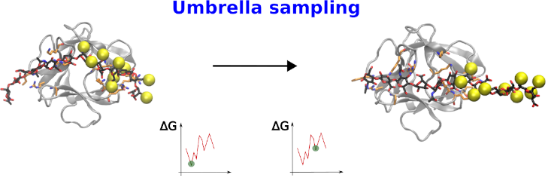
- with regard to the starting pose (Figure 4). However, the sulfated part of the GAG overlaps with its initial position. Additionally, the correlation between the ligand’s RMSD and MM/GBSA per frame was analyzed (Table 1). In all cases positive correlations between analyzed values was observed. However
- , in some cases this correlation was below 0.5. This is in agreement with the data described above, which showed that despite a significantly different binding pose, sometimes the GAG maintained a relatively strong binding to the protein. This is particularly true for ligand 3 of acidic fibroblast
- number of contacts differ for pulling out and pulling in processes (Table 3). For the dissociation, as expected the number of native contacts and H-bonds correlate very well with the MM/GBSA energies (Pearson correlation coefficients obtained for all frames of the trajectories are 0.81 and 0.76




Biphenylene-containing polycyclic conjugated compounds
Beilstein J. Org. Chem. 2023, 19, 1895–1911, doi:10.3762/bjoc.19.141
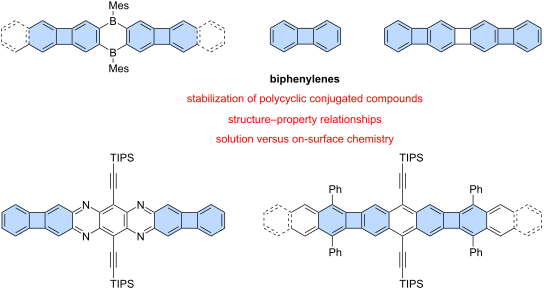
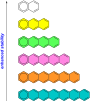
- chemistry but also by on-surface chemistry. All these results, which are open for further development, confirm that biphenylene structures are very important synthetic units and will be used as tools for the synthesis of more complex structures in the future. The correlation between stability and Clar's



Aromatic systems with two and three pyridine-2,6-dicarbazolyl-3,5-dicarbonitrile fragments as electron-transporting organic semiconductors exhibiting long-lived emissions
Beilstein J. Org. Chem. 2023, 19, 1867–1880, doi:10.3762/bjoc.19.139
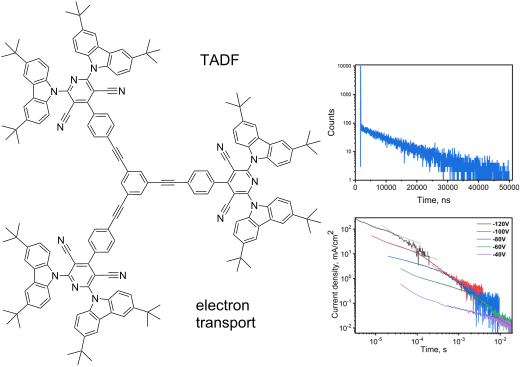
- observed during the 1st and 2nd DSC heating and cooling scans. However, glass transitions were detected for all the studied compounds. The glass transition temperatures (Tg) fall in the range between 63 and 93 °C (Figure 5b). A correlation between the glass transition temperature and the molecular weight


Active-metal template clipping synthesis of novel [2]rotaxanes
Beilstein J. Org. Chem. 2023, 19, 1776–1784, doi:10.3762/bjoc.19.130
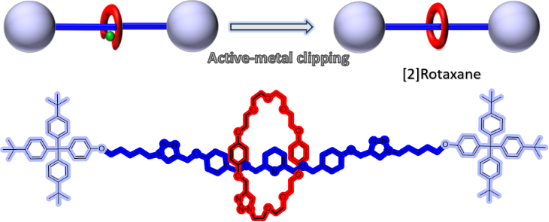
- (Supporting Information File 1, Figure S23). Surprisingly, no correlation between signals corresponding to the axle and macrocycle have been observed. This result could be explained by rapid movement of the macrocycle along the axle with no preferred position. However, formation of the rotaxane could be


Unprecedented synthesis of a 14-membered hexaazamacrocycle
Beilstein J. Org. Chem. 2023, 19, 1728–1740, doi:10.3762/bjoc.19.126
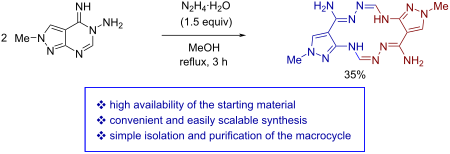
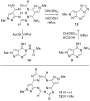
- rearrangement that is known to proceed in 3-substituted 4-iminopyrimidine systems [40][45][46][47]. Our analysis of 1H, 13C NMR, and 2D NMR spectra (DMSO-d6 solution) of the prepared product confirmed its structure as compound 8. For example, the 1H,13C-HMBC spectrum showed correlation of the NH2 protons with
- decoupling, DEPT-135 experiments as well as HMQC, HMBC, and NOESY correlation techniques were used to aid in the assignment of 1H and 13C NMR signals. Elemental analyses (CHN) were performed using a Thermo Finnigan Flash EA1112 apparatus. High-resolution mass spectra (HRMS) were obtained using a Bruker


Effects of the aldehyde-derived ring substituent on the properties of two new bioinspired trimethoxybenzoylhydrazones: methyl vs nitro groups
Beilstein J. Org. Chem. 2023, 19, 1713–1727, doi:10.3762/bjoc.19.125
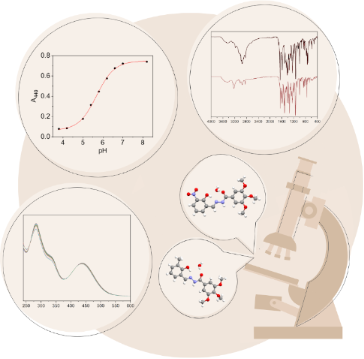
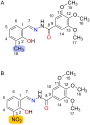
- [58]. Potential electrostatic maps and electron density surfaces were calculated with DFT method from the CIF files using TONTO, also implemented in Crystal Explorer [58]. Computational methods All calculations were done with the Gaussian 16 package [59] using the B3LYP exchange and correlation