


Search results
Search for "electron-withdrawing effect" in Full Text gives 88 result(s) in Beilstein Journal of Organic Chemistry.
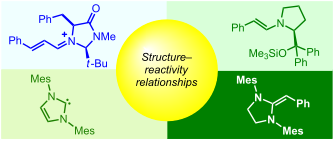
A quantitative approach to nucleophilic organocatalysis
- Herbert Mayr,
- Sami Lakhdar,
- Biplab Maji and
- Armin R. Ofial
Beilstein J. Org. Chem. 2012, 8, 1458–1478, doi:10.3762/bjoc.8.166
- nucleophilicities of the imidazolidinone derived enamines, which are in line with the larger 13C NMR chemical shifts of C-2 in 32d (101.9 ppm) and 32e (102.9 ppm) compared to that of C-2 in 32a (97.4 ppm), are not only due to the electron-withdrawing effect of the additional heteroatoms in the heterocyclic rings
- their deoxy analogues 61 and 45b, respectively. Obviously, the transition state is more affected by the destabilization of the cationic adduct due to the inductive electron-withdrawing effect than by the +M-effect of the methoxy group, which raises the HOMO of the reactants. Replacement of the sulfur

Graphical Abstract

Figure 1: Second-order rate constants for reactions of electrophiles with nucleophiles.

Figure 2: Mechanism of amine-catalyzed conjugate additions of nucleophiles [23-28].

Figure 3: Kinetics of the reactions of the iminium ion 3a with the silylated ketene acetal 7a [35].

Figure 4: Laser flash photolytic generation of iminium ions 3a.
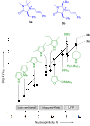
Figure 5: Correlations of the reactivities of the iminium ions 3a and 3b toward nucleophiles with the corresp...
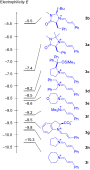
Figure 6: Comparison of the electrophilicities of cinnamaldehyde-derived iminium ions 3a–3i.

Figure 7: Nucleophiles used in iminium activated reactions [35,42,44-52].
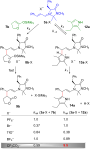
Figure 8: Counterion effects in electrophilic reactions of iminium ions 3a-X (at 20 °C, silyl ketene acetal 7b...

Figure 9: Comparison of calculated and experimental rate constants of electrophilic aromatic substitutions wi...

Figure 10: Aza-Michael additions of the imidazoles 15 with the iminium ion 3a [58].

Figure 11: Plots of log k2 for the reactions of enamides 17a–17e with the benzhydrylium ions 18a–d in CH3CN at...
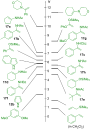
Figure 12: Comparison of the nucleophilicities of enamides 17 with those of several other C nucleophiles (solv...

Figure 13: Experimental and calculated rate constants k2 for the reactions of 17b and 17g with 3a and 3b in th...

Figure 14: Comparison between experimental and calculated (Equation 1) cyclopropanation rate constants [64].

Figure 15: Electrostatic activation of iminium activated cyclopropanations with sulfur ylides.
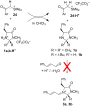
Figure 16: Sulfur ylides inhibit the formation of iminium ions.

Figure 17: Enamine activation [65].

Figure 18: Electrophilicity parameters E for classes of compounds that have been used as electrophilic substra...

Figure 19: Quantification of the nucleophilic reactivities of the enamines 32a–e in acetonitrile (20 °C) [83]; a d...

Figure 20: Proposed transition states for the stereogenic step in proline-catalyzed reactions.

Figure 21: Kinetic evidence for the anchimeric assistance of the electrophilic attack by the carboxylate group....

Figure 22: Differentiation of nucleophilicity and Lewis basicity (in acetonitrile at 20 °C): Rate (left) and e...

Figure 23: NHCs 41, 42, and 43 are moderately active nucleophiles and exceptionally strong Lewis bases (methyl...

Figure 24: Nucleophilic reactivities of the deoxy Breslow intermediates 45 in THF at 20 °C [107].

Figure 25: Comparison of the proton affinities (PA, from [107]) of the diaminoethylenes 47a–c with the methyl catio...

Figure 26: Berkessel’s synthesis of a Breslow intermediate (51, keto tautomer) from carbene 43 [112].

Figure 27: Synthesis of O-methylated Breslow intermediates [114].
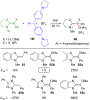
Figure 28: Relative reactivities of deoxy- and O-methylated Breslow intermediates [114].
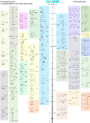
Figure 29: Reactivity scales for electrophiles and nucleophiles relevant for organocatalytic reactions (refere...
Low-generation dendrimers with a calixarene core and based on a chiral C2-symmetric pyrrolidine as iminosugar mimics
- Marco Marradi,
- Stefano Cicchi,
- Francesco Sansone,
- Alessandro Casnati and
- Andrea Goti
Beilstein J. Org. Chem. 2012, 8, 951–957, doi:10.3762/bjoc.8.107
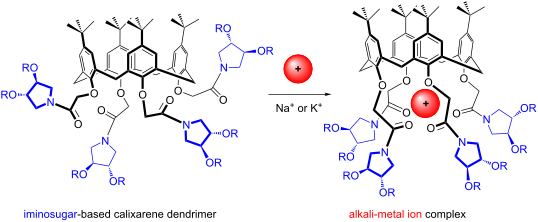
- deshielding effect on the aromatic protons of about 0.3 ppm with respect to the free calixarene (as indicated by the asterisks) as a consequence of the electron-withdrawing effect of the metal ion coordinated to the phenolic oxygen. Quite remarkable is the up-field shift exerted by the OCH2CON protons (empty

Graphical Abstract

Figure 1: First (2) and second (3) generation of dendrimers based on chiral C2-symmetric pyrrolidine 1 and ha...

Scheme 1: Use of the key intermediate (3S,4S)-1-benzyl-3,4-dihydroxypyrrolidine (6) [31] for the synthesis of pyr...

Scheme 2: Synthesis of calixarene-based dendrimers 2 and 3. Reagents and conditions: DIPEA, CH2Cl2, 30 °C, 5 ...

Figure 2: Expansion (about 7 to 3 ppm) of the 1H NMR spectra of (A) the free ligand 2, (B) the sodium picrate...

Figure 3: Schematic of the inclusion of alkali-metal ions (sodium and potassium) in the polar cavity defined ...
Discovery of practical production processes for arylsulfur pentafluorides and their higher homologues, bis- and tris(sulfur pentafluorides): Beginning of a new era of “super-trifluoromethyl” arene chemistry and its industry
- Teruo Umemoto,
- Lloyd M. Garrick and
- Norimichi Saito
Beilstein J. Org. Chem. 2012, 8, 461–471, doi:10.3762/bjoc.8.53

- nuclei are deactivated by the electron-withdrawing effect of the halogen atoms. It was also found that when PhSF4Cl (2a) was treated with a 70:30 w/w mixture of HF–pyridine at 55 °C, it gave PhSF5 (3a) in 63% isolated yield (Scheme 7). The HF–pyridine reagent is a nonvolatile and easily handled chemical

Graphical Abstract

Scheme 1: Preparation of ArSF4Cl 2.

Scheme 2: Preparation of Ar(SF4Cl)n from Ar(SH)n (n = 2, 3).

Scheme 3: Reaction mechanism for the formation of ArSF4Cl.

Scheme 4: Reaction mechanism for the formation of trans and cis-ArSF4Cl.

Scheme 5: Preparation of ArSF5 with ZnF2.

Scheme 6: Preparation of PhSF5 with anhydrous HF.

Scheme 7: Preparation of 3a with HF–pyridine.

Scheme 8: Preparation of polyfluorinated ArSF5.

Scheme 9: Preparation of aryl bis- and tris(sulfur pentafluorides), Ar(SF5)n (n = 2,3).
Fluorescent hexaaryl- and hexa-heteroaryl[3]radialenes: Synthesis, structures, and properties
- Antonio Avellaneda,
- Courtney A. Hollis,
- Xin He and
- Christopher J. Sumby
Beilstein J. Org. Chem. 2012, 8, 71–80, doi:10.3762/bjoc.8.7
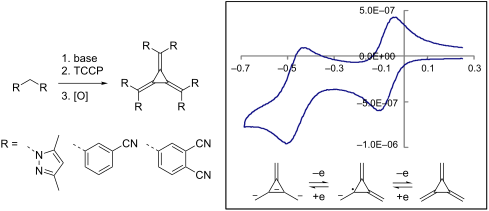
- difficult to reduce. Conversely, compound 3 is very easy to reduce. This is shown by its reduction potentials of −0.06 and −0.45 V, respectively, and is attributed to the combined electron-withdrawing effect of the twelve nitrile substituents. While compound 3 is considerably more electron deficient than

Graphical Abstract

Figure 1: The structures of a) the parent [3]-, [4]-, [5]-, and [6]dendralenes and b) the corresponding radia...

Scheme 1: Synthesis of (a) hexakis(3-cyanophenyl)[3]radialene (2) and (b) hexakis(3,4-dicyanophenyl)[3]radial...

Figure 2: A perspective view of the asymmetric unit of 3.

Figure 3: (a) UV–visible (bold line) and fluorescence (dashed line) spectra of 1, 2, hexa(2-pyridyl)[3]radial...
Asymmetric synthesis of quaternary aryl amino acid derivatives via a three-component aryne coupling reaction
- Elizabeth P. Jones,
- Peter Jones,
- Andrew J. P. White and
- Anthony G. M. Barrett
Beilstein J. Org. Chem. 2011, 7, 1570–1576, doi:10.3762/bjoc.7.185
- exposure to 0.5 M HCl, epimerization of the isopropyl group at C-3 occurs in near quantitative yield, giving adduct 13 (Scheme 10). The electron-withdrawing effect of the carbonyl moiety must increase the acidity of the C-3 proton to such an extent that the acidic media simply epimerizes at this center to

Graphical Abstract

Scheme 1: 3-Component coupling reactions of arynes. E+ = electrophile.

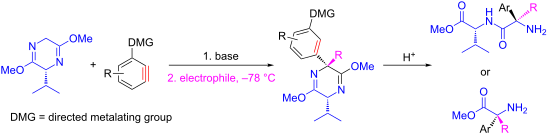
Scheme 2: Aryne mediated α-arylation of amino acids. DMG = directed metallation group. BHT = 2,6-di-tert-buty...

Scheme 3: Proposed mechanism of α-arylation.

Scheme 4: Proposed extension of the methodology to synthesize quaternary adducts.

Scheme 5: Formation of α-methyl, α-aryl Schöllkopf adduct.

Figure 1: NOESY correlation observed for 6a.
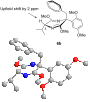
Figure 2: X-ray crystal structure of 6b.

Figure 3: Transition state analysis to explain the lack of diastereoselectivity at C-2.

Scheme 6: Formation of quaternary adducts.

Scheme 7: Hydrolysis of quaternary adducts.

Scheme 8: Hydrolysis to amino acids.

Scheme 9: Hydrolysis of analogue 6j.

Scheme 10: Epimerization at C-3 of 6g.
Functionalization of heterocyclic compounds using polyfunctional magnesium and zinc reagents
- Paul Knochel,
- Matthias A. Schade,
- Sebastian Bernhardt,
- Georg Manolikakes,
- Albrecht Metzger,
- Fabian M. Piller,
- Christoph J. Rohbogner and
- Marc Mosrin
Beilstein J. Org. Chem. 2011, 7, 1261–1277, doi:10.3762/bjoc.7.147
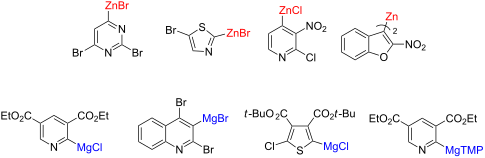
- regioselectivity is explained by the polar and electron-poor nature of the tosyloxy group, which leads to a strong electron-withdrawing effect and accelerates the insertion of zinc into the neighboring C–I bond. The presence of LiCl amplifies this effect through coordination to the tosyloxy group and to the ortho

Graphical Abstract

Scheme 1: Preparation of polyfunctional heteroarylzinc reagents.

Scheme 2: LiCl-mediated insertion of zinc dust to aryl and heteroaryl iodides.

Scheme 3: Selective insertions of Zn in the presence of LiCl.

Scheme 4: Chemoselective insertion of zinc in the presence of LiCl.

Scheme 5: Preparation and reactions of benzylic zinc reagents.

Scheme 6: Ni-catalyzed cross-coupling of benzylic zinc reagent 34 with ethyl 2-chloronicotinate.

Scheme 7: In situ generation of arylzinc reagents using Mg in the presence of LiCl and ZnCl2.

Scheme 8: Zincation of heterocycles with TMP2Zn (42).

Scheme 9: Preparation of highly functionalized zincated heterocycles using TMP2Zn·2MgCl2·2LiCl (42).

Scheme 10: Microwave-accelerated zincation of heterocycles using TMP2Zn·2MgCl2·2LiCl (42).

Scheme 11: The I/Mg-exchange as a metal-metathesis reaction.

Scheme 12: Regioselective Br/Mg-exchange of dibromoquinolines 65 and 68.

Scheme 13: Improved reagents for the regioselective Br/Mg-exchange on bromoquinolines.

Scheme 14: Synthesis of ellipticine (83) using an I/Mg-exchange reaction.

Scheme 15: An oxidative amination leading to the biologically active adenine, purvalanol A (84).

Scheme 16: Preparation of polyfunctional arylmagnesium reagents using Mg in the presence of LiCl.

Scheme 17: Preparation of polyfunctional magnesium reagents starting from organic chlorides.

Scheme 18: Selective multiple magnesiation of the pyrimidine ring.

Scheme 19: Synthesis of a p38 kinase inhibitor 119 and of a sPLA2 inhibitor 123.

Scheme 20: Synthesis of highly substituted indoles of type 128.

Scheme 21: Efficient magnesiations of polyfunctional aromatics and heterocycles using TMP2Mg·2LiCl (129).

Scheme 22: Negishi cross-coupling in the presence of substrates bearing an NH- or an OH-group.

Scheme 23: Negishi cross-coupling in the presence of a serine moiety.

Scheme 24: Radical catalysis for the performance of very fast Kumada reactions.

Scheme 25: MgCl2-mediated addition of functionalized aromatic, heteroaromatic, alkyl and benzylic organozincs ...
Lithium phosphonate umpolung catalysts: Do fluoro substituents increase the catalytic activity?
- Anca Gliga,
- Bernd Goldfuss and
- Jörg M. Neudörfl
Beilstein J. Org. Chem. 2011, 7, 1189–1197, doi:10.3762/bjoc.7.138

- observed for a benzylic fencholate, when the benzylic positions were occupied by CF3-groups (92% versus 19% yield, Scheme 2) [26]. This increased reactivity is thought to arise from a favored formation of the carbanionic d1-synthon intermediate, due to the electron withdrawing effect of the CF3 groups. A
- constant was detected for phosphonate 13. Thereby an additional electron withdrawing effect of the phenoxy group causes the further increase in the 1J(P–H) coupling constant. All synthesized phosphonates were identified by 31P NMR, especially characteristic are the phosphorus–hydrogen and phosphorus–fluoro

Graphical Abstract

Scheme 1: Proposed catalytic cycle of the lithium phosphonate catalyzed cross benzoin coupling [18].

Scheme 2: Phosphonate as precatalysts in benzoin coupling [18,26].

Scheme 3: Synthesis of diols 1–4, 6–7; diol 5 is commercially available.

Figure 1: X-ray crystal structure of 6. (M)-(S,S) and (P)-(R,R) pair of enantiomers; intermolecular O1–O2 dis...

Figure 2: X-ray crystal structure of 7. (M)-(S,S) and (P)-(R,R) pair of enantiomers; intermolecular O1–O2 dis...

Scheme 4: Synthesis of phosphonates 9–15.

Figure 3: 31P NMR of phosphonate 14 (a) and 15 (b).
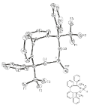
Figure 4: X-ray crystal structure of 15. (M)-(R,S) diastereomer; ellipsoids correspond to 50% probability lev...

Scheme 5: Lithium phosphonate catalysts in cross benzoin coupling.

Figure 5: Phosphonate precatalysts 9–15 in cross benzoin coupling.
Redox-active tetrathiafulvalene and dithiolene compounds derived from allylic 1,4-diol rearrangement products of disubstituted 1,3-dithiole derivatives
- Filipe Vilela,
- Peter J. Skabara,
- Christopher R. Mason,
- Thomas D. J. Westgate,
- Asun Luquin,
- Simon J. Coles and
- Michael B. Hursthouse
Beilstein J. Org. Chem. 2010, 6, 1002–1014, doi:10.3762/bjoc.6.113

- redox processes are collated in Table 1. In compounds 3 and 27 an irreversible single electron oxidation wave is seen at +1170 mV and +900 mV, respectively. Further oxidation processes of these materials do not occur within the electrochemical window of the solvent. The electron withdrawing effect of

Graphical Abstract

Figure 1: Chemical structures of compounds 1–3.

Scheme 1: Acid-catalysed behaviour of 4,5-bis(2-arylhydroxymethyl)-1,3-dithiole-2-thiones 2.

Scheme 2: The proposed mechanism for the formation of 3.

Scheme 3: The proposed mechanism for the decomposition of 13 in the presence of perchloric acid.

Figure 2: Generalised structure of diol 17.

Scheme 4: Reagents and conditions: (i) LDA (1 equiv), 2,4-dimethoxybenzaldehyde (1 equiv), then repeat, −78 °...

Scheme 5: Reagents and conditions: (i) ethylenediamine, AcOH, MeOH; (ii) P(OEt)3, 120 °C, 3 h.

Figure 3: Molecular structure and numbering scheme of compound 22 with Hs omitted.

Scheme 6: Reagents and conditions: (i) P(OEt)3, reflux; (ii) Hg(OAc)2, CH2Cl2/AcOH; (iii) NaOEt, THF, reflux,...

Figure 4: Molecular structure of 28 with the tetrabutylammonium cation omitted.

Figure 5: Packing diagram of 28 identifying close intermolecular contacts.

Figure 6: UV–visible spectra of 3, 25, 27 and 28 in CH2Cl2 solution.

Figure 7: Cyclic voltammograms of compounds 3, 25, 27, and 28. Glassy carbon working electrode, using Pt wire...
Conjugated polymers containing diketopyrrolopyrrole units in the main chain
- Bernd Tieke,
- A. Raman Rabindranath,
- Kai Zhang and
- Yu Zhu
Beilstein J. Org. Chem. 2010, 6, 830–845, doi:10.3762/bjoc.6.92
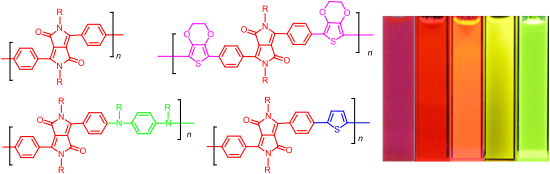
- fastness, deep colour, luminescence with large Stokes-shifts, and a brilliant red colour enabling technical applications in colouring of fibers, plastics and surface coatings such as prints or inks. The electron-withdrawing effect of the lactam units causes the chromophore to have a high electron affinity

Graphical Abstract

Figure 1: Structure of 3,6-diphenyl-substituted 2,5-diketopyrrolo[3,4-c]pyrrole (DPP).

Scheme 1: Synthesis of DPP monomers.

Figure 2: Plot of current density and light intensity versus voltage of polymer light-emitting diode containi...

Scheme 2: Pd-catalyzed coupling reactions for preparation of DPP-containing polymers.
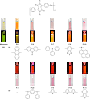
Figure 3: Optical properties of some diphenylDPP-based conjugated polymers.
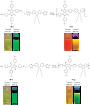
Figure 4: Optical properties of copolymers P-21 and P-22 based on two isomeric diphenylDPP monomer units (fro...

Figure 5: Absorption spectroelectrochemical plots of P-25 and P-26 as thin films on ITO glass. Scan rate: 100...

Scheme 3: Thiophenyl-DPP-based polymers.
Molecular recognition of organic ammonium ions in solution using synthetic receptors
- Andreas Späth and
- Burkhard König
Beilstein J. Org. Chem. 2010, 6, No. 32, doi:10.3762/bjoc.6.32

Graphical Abstract

Figure 1: Biologically important amines and quaternary ammonium salts: histamine (1), dopamine (2) and acetyl...

Figure 2: Crown ether 18-crown-6.

Figure 3: Conformations of 18-crown-6 (4) in solvents of different polarity.

Figure 4: Binding topologies of the ammonium ion depending on the crown ring size.
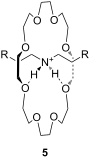
Figure 5: A “pseudorotaxane” structure consisting of 24-crown-8 and a secondary ammonium ion (5); R = Ph.

Figure 6: Typical examples of azacrown ethers, cryptands and related aza macrocycles.

Figure 7: Binding of ammonium to azacrown ethers and cryptands [111-113].

Figure 8: A 19-crown-6-ether with decalino blocking groups (11) and a thiazole-dibenzo-18-crown-6-ether (12).

Figure 9: 1,3-Bis(6-oxopyridazin-1-yl)propane derivatives 13 and 14 by Campayo et al.

Figure 10: Fluorescent azacrown-PET-sensors based on coumarin.

Figure 11: Two different pyridino-cryptands (17 and 18) compared to a pyridino-crown (19); chiral ammonium ion...

Figure 12: Pyridino-18-crown-6 ligand (21), a similar acridino-18-crown-6 ligand (22) and a structurally relat...

Figure 13: Ciral pyridine-azacrown ether receptors 24.

Figure 14: Chiral 15-crown-5 receptors 26 and an analogue 18-crown-6 ligand 27 derived from amino alcohols.

Figure 15: C2-symmetric chiral 18-crown-6 amino alcohol derivatives 28 and related macrocycles.

Figure 16: Macrocycles with diamide-diester groups (30).

Figure 17: C2-symmetric chiral aza-18-crown-6 ethers (31) with phenethylamine residues.

Figure 18: Chiral C-pivot p-methoxy-phenoxy-lariat ethers.

Figure 19: Chiral lariat crown ether 34.

Figure 20: Sucrose-based chiral crown ether receptors 36.
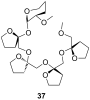
Figure 21: Permethylated fructooligosaccharide 37 showing induced-fit chiral recognition.

Figure 22: Biphenanthryl-18-crown-6 derivative 38.

Figure 23: Chiral lariat crown ethers derived from binol by Fuji et al.

Figure 24: Chiral phenolic crown ether 41 with “aryl chiral barriers” and guest amines.
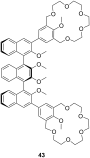
Figure 25: Chiral bis-crown receptor 43 with a meso-ternaphthalene backbone.

Figure 26: Chromogenic pH-dependent bis-crown chemosensor 44 for diamines.

Figure 27: Triamine guests for binding to receptor 44.

Figure 28: Chiral bis-crown phenolphthalein chemosensors 46.

Figure 29: Crown ether amino acid 47.

Figure 30: Luminescent receptor 48 for bis-alkylammonium guests.

Figure 31: Luminescent CEAA (49a), a bis-CEAA receptor for amino acids (49b) and the structure of lysine bindi...

Figure 32: Luminescent CEAA tripeptide for binding small peptides.

Figure 33: Bis crown ether 51a self assembles co-operatively with C60-ammonium ion 51b.

Figure 34: Triptycene-based macrotricyclic dibenzo-[24]-crown-8 ether host 52 and guests.

Figure 35: Copper imido diacetic acid azacrown receptor 53a and the suggested His-Lys binding motif; a copper ...

Figure 36: Urea (54) and thiourea (55) benzo crown receptor for transport and extraction of amino acids.

Figure 37: Crown pyryliums ion receptors 56 for amino acids.

Figure 38: Ditopic sulfonamide bridged crown ether receptor 57.

Figure 39: Luminescent peptide receptor 58.

Figure 40: Luminescent receptor 59 for the detection of D-glucosamine hydrochloride in water/ethanol and lumin...

Figure 41: Guanidinium azacrown receptor 61 for simple amino acids and ditopic receptor 62 with crown ether an...

Figure 42: Chiral bicyclic guanidinium azacrown receptor 63 and similar receptor 64 for the enantioselective t...

Figure 43: Receptors for zwitterionic species based on luminescent CEAAs.

Figure 44: 1,10-Azacrown ethers with sugar podand arms and the anticancer agent busulfan.

Figure 45: Benzo-18-crown-6 modified β-cyclodextrin 69 and β-cyclodextrin functionalized with diaza-18-crown-6...

Figure 46: Receptors for colorimetric detection of primary and secondary ammonium ions.

Figure 47: Porphyrine-crown-receptors 72.

Figure 48: Porphyrin-crown ether conjugate 73 and fullerene-ammonium ion guest 74.

Figure 49: Calix[4]arene (75a), homooxocalix[4]arene (75b) and resorcin[4]arene (75c) compared (R = H, alkyl c...

Figure 50: Calix[4]arene and ammonium ion guest (R = H, alkyl, OAcyl etc.), possible binding sites; A: co-ordi...

Figure 51: Typical guests for studies with calixarenes and related molecules.
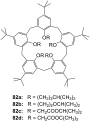
Figure 52: Lower rim modified p-tert-butylcalix[5]arenes 82.

Figure 53: The first example of a water soluble calixarene.

Figure 54: Sulfonated water soluble calix[n]arenes that bind ammonium ions.
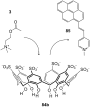
Figure 55: Displacement assay for acetylcholine (3) with a sulfonato-calix[6]arene (84b).

Figure 56: Amino acid inclusion in p-sulfonatocalix[4]arene (84a).

Figure 57: Calixarene receptor family 86 with upper and lower rim functionalization.

Figure 58: Calix[6]arenes 87 with one carboxylic acid functionality.
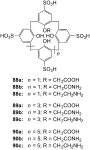
Figure 59: Sulfonated calix[n]arenes with mono-substitution at the lower rim systematically studied on their r...

Figure 60: Cyclotetrachromotropylene host (91) and its binding to lysine (81c).

Figure 61: Calixarenes 92 and 93 with phosphonic acids groups.

Figure 62: Calix[4]arene tetraphosphonic acid (94a) and a double bridged analogue (94b).
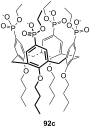
Figure 63: Calix[4]arene tetraphosphonic acid ester (92c) for surface recognition experiments.

Figure 64: Calixarene receptors 95 with α-aminophosphonate groups.

Figure 65: A bridged homocalix[3]arene 95 and a distally bridged homocalix[4]crown 96.

Figure 66: Homocalix[3]arene ammonium ion receptor 97a and the Reichardt’s dye (97b) for colorimetric assays.

Figure 67: Chromogenic diazo-bridged calix[4]arene 98.

Figure 68: Calixarene receptor 99 by Huang et al.
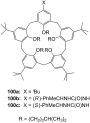
Figure 69: Calixarenes 100 reported by Parisi et al.

Figure 70: Guest molecules for inclusion in calixarenes 100: DAP × 2 HCl (101a), APA (101b) and Lys-OMe × 2 HC...

Figure 71: Different N-linked peptido-calixarenes open and with glycol chain bridges.

Figure 72: (S)-1,1′-Bi-2-naphthol calixarene derivative 104 published by Kubo et al.

Figure 73: A chiral ammonium-ion receptor 105 based on the calix[4]arene skeleton.

Figure 74: R-/S-phenylalaninol functionalized calix[6]arenes 106a and 106b.

Figure 75: Capped homocalix[3]arene ammonium ion receptor 107.

Figure 76: Two C3 symmetric capped calix[6]arenes 108 and 109.

Figure 77: Phosphorous-containing rigidified calix[6]arene 110.

Figure 78: Calix[6]azacryptand 111.

Figure 79: Further substituted calix[6]azacryptands 112.

Figure 80: Resorcin[4]arene (75c) and the cavitands (113).

Figure 81: Tetrasulfonatomethylcalix[4]resorcinarene (114).
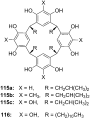
Figure 82: Resorcin[4]arenes (115a/b) and pyrogallo[4]arenes (115c, 116).
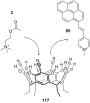
Figure 83: Displacement assay for acetylcholine (3) with tetracyanoresorcin[4]arene (117).

Figure 84: Tetramethoxy resorcinarene mono-crown-5 (118).

Figure 85: Components of a resorcinarene based displacement assay for ammonium ions.

Figure 86: Chiral basket resorcin[4]arenas 121.

Figure 87: Resorcinarenes with deeper cavitand structure (122).

Figure 88: Resorcinarene with partially open deeper cavitand structure (123).
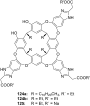
Figure 89: Water-stabilized deep cavitands with partially structure (124, 125).
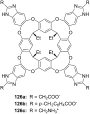
Figure 90: Charged cavitands 126 for tetralkylammonium ions.

Figure 91: Ditopic calix[4]arene receptor 127 capped with glycol chains.

Figure 92: A calix[5]arene dimer for diammonium salt recognition.

Figure 93: Calixarene parts 92c and 129 for the formation molecular capsules.
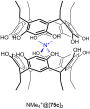
Figure 94: Encapsulation of a quaternary ammonium cation by two resorcin[4]arene molecules (NMe4+@[75c]2 × Cl−...

Figure 95: Encapsulation of a quaternary ammonium cation by six resorcin[4]arene molecules (NMe3D+@[130]6 × Cl−...

Figure 96: Structure and schematic of cucurbit[6]uril (CB[6], 131a).
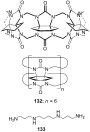
Figure 97: Cyclohexanocucurbit[6]uril (CB′[6], 132) and the guest molecule spermine (133).

Figure 98: α,α,δ,δ-Tetramethylcucurbit[6]uril (134).

Figure 99: Structure of the cucurbituril-phthalhydrazide analogue 135.

Figure 100: Organic cavities for the displacement assay for amine differentiation.

Figure 101: Displacement assay methodology for diammonium- and related guests involving cucurbiturils and some ...

Figure 102: Nor-seco-Cucurbituril (±)-bis-ns-CB[6] (140) and guest molecules.

Figure 103: The cucurbit[6]uril based complexes 141 for chiral discrimination.
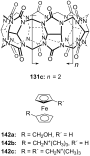
Figure 104: Cucurbit[7]uril (131c) and its ferrocene guests (142) opposed.

Figure 105: Cucurbit[7]uril (131c) guest inclusion and representative guests.

Figure 106: Cucurbit[7]uril (131c) binding to succinylcholine (145) and different bis-ammonium and bis-phosphon...

Figure 107: Paraquat-cucurbit[8]uril complex 149.
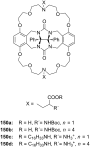
Figure 108: Gluconuril-based ammonium receptors 150.
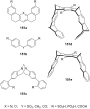
Figure 109: Examples of clefts (151a), tweezers (151b, 151c, 151d) and clips (151e).

Figure 110: Kemp’s triacid (152a), on example of Rebek’s receptors (152b) and guests.

Figure 111: Amino acid receptor (154) by Rebek et al.

Figure 112: Hexagonal lattice designed hosts by Bell et al.

Figure 113: Bell’s amidinium receptor (156) and the amidinium ion (157).
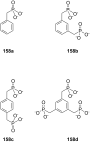
Figure 114: Aromatic phosphonic acids.

Figure 115: Xylene phosphonates 159 and 160a/b for recognition of amines and amino alcohols.
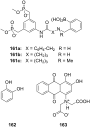
Figure 116: Bisphosphonate recognition motif 161 for a colorimetric assay with alizarin complexone (163) for ca...

Figure 117: Bisphosphonate/phosphate clip 164 and bisphosphonate cleft 165.

Figure 118: N-Methylpyrazine 166a, N-methylnicotinamide iodide (166b) and NAD+ (166c).

Figure 119: Bisphosphate cavitands.
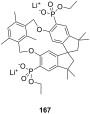
Figure 120: Bisphosphonate 167 of Schrader and Finocchiaro.
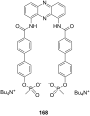
Figure 121: Tweezer 168 for noradrenaline (80b).

Figure 122: Different tripods and heparin (170).
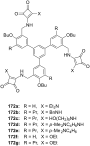
Figure 123: Squaramide based receptors 172.
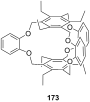
Figure 124: Cage like NH4+ receptor 173 of Kim et al.

Figure 125: Ammonium receptors 174 of Chin et al.

Figure 126: 2-Oxazolin-based ammonium receptors 175a–d and 176 by Ahn et al.

Figure 127: Racemic guest molecules 177.

Figure 128: Tripods based on a imidazole containing macrocycle (178) and the guest molecules employed in the st...

Figure 129: Ammonium ion receptor 180.

Figure 130: Tetraoxa[3.3.3.3]paracyclophanes 181 and a cyclophanic tetraester (182).

Figure 131: Peptidic bridged paraquat-cyclophane.
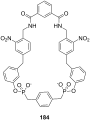
Figure 132: Shape-selective noradrenaline host.

Figure 133: Receptor 185 for binding of noradrenaline on surface layers from Schrader et al.

Figure 134: Tetraphosphonate receptor for binding of noradrenaline.

Figure 135: Tetraphosphonate 187 of Schrader and Finocchiaro.

Figure 136: Zinc-Porphyrin ammonium-ion receptors 188 and 189 of Mizutani et al.
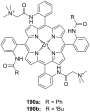
Figure 137: Zinc porphyrin receptor 190.

Figure 138: Zinc porphyrin receptors 191 capable of amino acid binding.

Figure 139: Zinc-porphyrins with amino acid side chains for stereoinduction.

Figure 140: Bis-zinc-bis-porphyrin based on Tröger’s base 193.

Figure 141: BINAP-zinc-prophyrin derivative 194 and it’s guests.

Figure 142: Bisaryl-linked-zinc-porphyrin receptors.
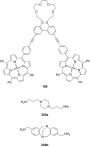
Figure 143: Bis-zinc-porphyrin 199 for diamine recognition and guests.

Figure 144: Bis-zinc-porphyrin crown ether 201.

Figure 145: Bis-zinc-porphyrin 202 for stereodiscrimination (L = large substituent; S = small substituent).

Figure 146: Bis-zinc-porphyrin[3]rotaxane and its copper complex and guests.

Figure 147: Dien-bipyridyl ligand 206 for co-ordination of two metal atoms.

Figure 148: The ligand and corresponding tetradentate co-complex 207 serving as enantioselective receptor for a...

Figure 149: Bis(oxazoline)–copper(II) complex 208 for the recognition of amino acids in aqueous solution.

Figure 150: Zinc-salen-complexes 209 for the recognition tertiary amines.

Figure 151: Bis(oxazoline)–copper(II) 211 for the recognition of amino acids in aqueous solution.

Figure 152: Zn(II)-complex of a C2 terpyridine crown ether.

Figure 153: Displacement assay and receptor for aspartate over glutamate.

Figure 154: Chiral complex 214 for a colorimetric displacement assay for amino acids.

Figure 155: Metal complex receptor 215 with tripeptide side arms.

Figure 156: A sandwich complex 216 and its displaceable dye 217.

Figure 157: Lanthanide complexes 218–220 for amino acid recognition.
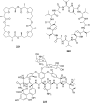
Figure 158: Nonactin (221), valinomycin (222) and vancomycin (223).

Figure 159: Monesin (224a) and a chiral analogue for enantiodiscrimination of ammonium guests (224b).

Figure 160: Chiral podands (226) compared to pentaglyme-dimethylether (225) and 18-crown-6 (4).

Figure 161: Lasalocid A (228).

Figure 162: Lasalocid derivatives (230) of Sessler et al.

Figure 163: The Coporphyrin I tetraanion (231).

Figure 164: Linear and cyclic peptides for ammonium ion recognition.

Figure 165: Cyclic and bicyclic depsipeptides for ammonium ion recognition.
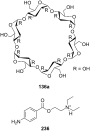
Figure 166: α-Cyclodextrin (136a) and novocaine (236).
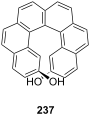
Figure 167: Helical diol receptor 237 by Reetz and Sostmann.

Figure 168: Ammonium binding spherand by Cram et al. (238a) and the cyclic[6]metaphenylacetylene 238b in compar...

Figure 169: Receptor for peptide backbone and ammonium binding (239).

Figure 170: Anion sensor principle with 3-hydroxy-2-naphthanilide of Jiang et al.

Figure 171: 7-bromo-3-hydroxy-N-(2-hydroxyphenyl)naphthalene 2-carboxamide (241) and its amine binding.

Figure 172: Naturally occurring catechins with affinity to quaternary ammonium ions.

Figure 173: Spiropyran (244) and merocyanine form (244a) of the amino acid receptors of Fuji et al.

Figure 174: Coumarin aldehyde (245) and its iminium species with amino acid bound (245a) by Glass et al.
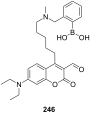
Figure 175: Coumarin aldehyde appended with boronic acid.

Figure 176: Quinolone aldehyde dimers by Glass et al.

Figure 177: Chromogenic ammonium ion receptors with trifluoroacetophenone recognition motifs.

Figure 178: Chromogenic ammonium ion receptor with trifluoroacetophenone recognition motif bound on different m...
Comparison of zwitterionic N-alkylaminomethanesulfonic acids to related compounds in the Good buffer series
- Robert D. Long,
- Newton P. Hilliard Jr,
- Suneel A. Chhatre,
- Tatiana V. Timofeeva,
- Andrey A. Yakovenko,
- Daniel K. Dei and
- Enoch A. Mensah
Beilstein J. Org. Chem. 2010, 6, No. 31, doi:10.3762/bjoc.6.31

- ) in water are reported to be 1.01, 5.75, and 9.06, respectively [4]. The rapid decrease in pKa in the series is likely due to inductive electron-withdrawing effect of the sulfonic acid group acting through fewer bonds as the carbon chain length is decreased. While an inductive effect is the most

Graphical Abstract

Figure 1: Examples of some currently available Good buffers (and their reported pKa values) for the low end o...

Figure 2: Aminomethanesulfonic acids in this study and their proposed acronyms.

Figure 3: Possible ionization states of 1.

Scheme 1: Routes reported previously for the synthesis of Good buffers.

Scheme 2: Synthetic routes investigated.

Figure 4: Crystal structure of HEPMS 2 with displacement ellipsoids at the 30% probability level.

Figure 5: Hydrogen bonded molecular ribbon in solid phase 2 along [101].
The subtle balance of weak supramolecular interactions: The hierarchy of halogen and hydrogen bonds in haloanilinium and halopyridinium salts
- Kari Raatikainen,
- Massimo Cametti and
- Kari Rissanen
Beilstein J. Org. Chem. 2010, 6, No. 4, doi:10.3762/bjoc.6.4
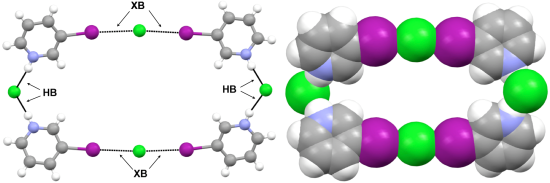
- and an ethanol solvent molecule (Figure 5a). The electron withdrawing effect of N-benzylpyridinium cation gives rise to short halogen bonds, where the R = 0.83 and R = 0.85 for I1···Cl1 and I15···Cl2, respectively (Table 4). The short halogen bond distances are consistent with the linearity of C–I1
- asymmetric unit contains four molecules of 3-iodopyridinium chloride and one molecule solvent ethanol (Figure 6a). As in 3-IPyBnCl (9), the electron withdrawing effect of pyridinium cation in 10 gives rise to four short C–I···Cl− halogen bonds, from which the shortest, in I15···Cl1, R = 0.83, is the same as

Graphical Abstract

Scheme 1: The chemical structures of the salts 1–13.

Figure 1: X-ray structure of 4-IPhNH3Cl (1) with numbering for selected atoms (a) and the packing scheme view...

Figure 2: Interaction contacts in 4-IPhNH3Cl (1; a), 4-BrPhNH3Cl (2; b), 4-ClPhNH3Cl (3; c) and 4-FPhNH3Cl (4...

Figure 3: X-ray structure of 4-IPhNH3Br (5) with selected numbering scheme (a) and the packing scheme viewed ...

Figure 4: X-ray structure of 4-IPhNH3H2PO4 (6) with selected numbering scheme of the asymmetric unit and the ...

Figure 5: X-ray structure of 3-IPyBnCl (9) with the selected numbering scheme of the asymmetric unit (a) and ...

Figure 6: X-ray structure of 3-IPyHCl (10) with the selected numbering scheme of the asymmetric unit (a) and ...

Figure 7: X-ray structure of 3-IPyH-5-NIPA (13) with selected numbering scheme of the asymmetric unit (a). A ...
Trifluoromethyl ethers – synthesis and properties of an unusual substituent
- Frédéric R. Leroux,
- Baptiste Manteau,
- Jean-Pierre Vors and
- Sergiy Pazenok
Beilstein J. Org. Chem. 2008, 4, No. 13, doi:10.3762/bjoc.4.13

- at the ortho and para position. This means the inductive electron-withdrawing effect compromises the attack of the electrophile, but is counterbalanced, to some extent, by the capacity of the ether oxygen to act through resonance as an electron donor. This antagonistic behavior is well known for

Graphical Abstract

Figure 1: OCF3-bearing pesticides.

Scheme 1: Preparation of trifluoromethyl ethers via a chlorination/fluorination sequence.

Scheme 2: Preparation of trifluoromethyl ethers via an in situ chlorination/fluorination sequence.

Scheme 3: Preparation of trifluoromethyl ethers via chlorothionoformates.

Scheme 4: Preparation of trifluoromethyl ethers via fluoroformates.

Scheme 5: Oxidative desulfurization-fluorination toward trifluoromethyl ethers.

Scheme 6: Mechanism of the oxidative desulfurization-fluorination.

Scheme 7: Umemoto's O-(trifluoromethyl)dibenzofuranium salts 4 as CF3-transfer agents.

Scheme 8: Togni's approach using hypervalent iodine compounds as CF3-transfer agents.

Scheme 9: TAS OCF3 as a nucleophilic OCF3-transfer agent.

Figure 2: Mesomeric structures of the OCF3-group.

Figure 3: Structures of 6 and 7.

Figure 4: Conformational preference of the trifluoromethoxy group on aryl rings.

Scheme 10: Nitration of trifluoromethoxy benzene.

Scheme 11: Synthesis and Nitration of N-Acetyl-(trifluoromethoxy)anilines.

Scheme 12: Bromine/lithium exchange of bromo(trifluoromethoxy)benzenes.

Scheme 13: Metalation of (trifluoromethoxy)benzene.

Scheme 14: Metalation of (trifluoromethoxy)naphthalenes.

Scheme 15: Competition between -CF3- and -OCF3 in Metalation reactions.

Scheme 16: Competition between -F- and -OCF3 in Metalation reactions.
Scheme 17: Metalation of trifluoromethoxyanisoles.

Figure 5: Direction of π-polarization depending on the substituent as described by Schlosser et al. [57].

Scheme 18: Metalation of Bromo(trifluoromethoxy)benzenes.

Scheme 19: Aryne formation from bromo(trifluoromethoxy)phenyllithiums and subsequent Diels-Alder cycloaddition...

Scheme 20: Metalation of (trifluoromethoxy)anilines.



