Search for "high yield" in Full Text gives 612 result(s) in Beilstein Journal of Organic Chemistry. Showing first 200.
Beilstein J. Org. Chem. 2024, 20, 1256–1269, doi:10.3762/bjoc.20.108
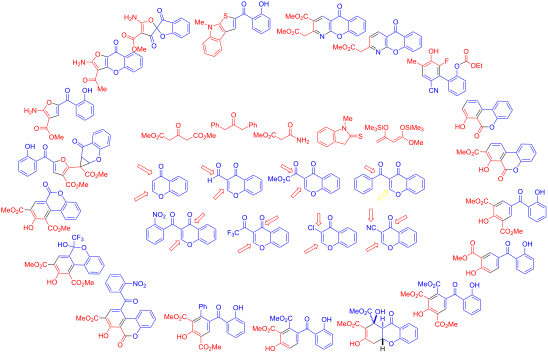
Graphical Abstract
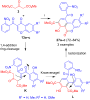
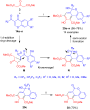
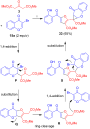
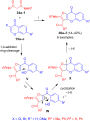
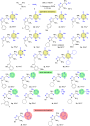
Scheme 1: Structures of carbonyl compounds 1, 2, 3, and 4, dianion 7, phosphorane 8 and synthesis of 1,3-bis(...
Scheme 2: Structures of chromones with different substituents located at carbon C-3 and atom numbering scheme...
Scheme 3: Synthesis of 17. Conditions: i, DBU (1.3 equiv), THF, 20 °C, 12 h.
Scheme 4: Synthesis of 18a–ac. Conditions: i, 1) 9a–j, Me3SiOTf (1.3 equiv), 20 °C, 1 h; 2) 6a–h (1.3 equiv),...
Scheme 5: Synthesis of 19a–d. Conditions: i, DBU (1.3 equiv), THF, 20 °C, 12 h.
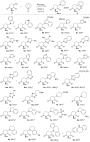
Scheme 6: Synthesis of 20a–ag. Conditions: i, 1) 10a–i, Me3SiOTf (0.3 equiv), 20 °C, 10 min; 2) 6a–h (1.3 equ...
Scheme 7: Synthesis of 21a–g. Conditions: i, DBU (1.3 equiv), dioxane, 20 °C, 12 h.
Scheme 8: Synthesis of 22a,b. Conditions: i, DBU (1.3 equiv), dioxane, 20 °C, 12 h.
Scheme 9: Synthesis of 23a–j. Conditions: i, 1) 11a–c, Me3SiOTf (0.3 equiv), 20 °C, 1 h; 2) 6a–h (1.3 equiv),...
Scheme 10: Synthesis of 24a–w. Conditions: i, 1) 13a–c, Me3SiOTf (0.3 equiv), 20 °C, 1 h; 2) 6a–r (1.3 equiv),...
Scheme 11: Synthesis of 25a–f. Conditions: i, DBU (1.3 equiv), dioxane, 20 °C, 12 h.
Scheme 12: Synthesis of 26a–e. Conditions: i, DBU (1.3 equiv), dioxane, 20 °C, 12 h.
Scheme 13: Synthesis of 27a–c. Conditions: i, DBU (1.3 equiv), dioxane, 20 °C, 12 h.
Scheme 14: Synthesis of 28a–c. Conditions: i, DBU (1.3 equiv), dioxane, 20 °C, 12 h.
Scheme 15: Synthesis of 29a–n and 30. Conditions: i, DBU (1.3 equiv), dioxane, 20 °C, 12 h; ii, 1) KOH, MeOH; ...
Scheme 16: Synthesis of 32a,b. Conditions: i, 1) 31, Me3SiOTf (2.0 equiv), 20 °C, 1 h; 2) 6a,b (3.0 equiv), CH2...
Scheme 17: Synthesis of 33. Conditions: i, DBU (1.3 equiv), THF, 20 °C, 12 h.
Scheme 18: Synthesis of 35a–x. Conditions: i, DBU (1.3 equiv), 1,4-dioxane, 20 °C, 12 h.
Scheme 19: Synthesis of 36a–f. Conditions: i, 1) DBU (1.3 equiv), 1,4-dioxane, 20 °C, 12 h; 2) I2 (2 equiv), D...
Scheme 20: Synthesis of 37a,b. Conditions: i, 1) DBU (1.3 equiv), 1,4-dioxane, 20 °C, 12 h; 2) I2 (2 equiv), D...
Scheme 21: Synthesis of 39a–i. Conditions: i, method A: DBU (1.3 equiv), 1,4-dioxane, 20 °C; method B: K2CO3 (...
Scheme 22: Synthesis of 40. Conditions: i, piperidine, MeOH, CHCl3, reflux, 3 h.
Scheme 23: Synthesis of 41a–am. Conditions: i, Me3SiOTf, CH2Cl2, 20 °C, 12 h, then: HCl (10%); ii, NEt3, EtOH ...
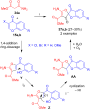
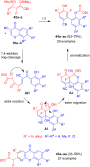
Scheme 24: Synthesis of 43a–aa and 44a–ac. Conditions: i, Me3SiOTf, CH2Cl2, 20 °C, 12 h, then: HCl (10%); ii, ...
Beilstein J. Org. Chem. 2024, 20, 1111–1166, doi:10.3762/bjoc.20.98
Graphical Abstract
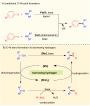
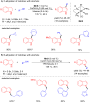
Scheme 1: General scheme of the borrowing hydrogen (BH) or hydrogen auto-transfer (HA) methodology.
Scheme 2: General scheme for C–N bond formation. A) Traditional cross-couplings with alkyl or aryl halides. B...
Figure 1: Manganese pre-catalysts used for the N-alkylation of amines with alcohols.
Scheme 3: Manganese(I)-pincer complex Mn1 used for the N-alkylation of amines with alcohols and methanol.
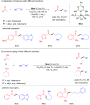
Scheme 4: N-Methylation of amines with methanol using Mn2.
Scheme 5: C–N-Bond formation with amines and methanol using PN3P-Mn complex Mn3 reported by Sortais et al. [36]. a...
Scheme 6: Base-assisted synthesis of amines and imines with Mn4. Reaction assisted by A) t-BuOK and B) t-BuON...
Scheme 7: Coupling of alcohols and hydrazine via the HB approach reported by Milstein et al. [38]. aReaction time...
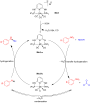
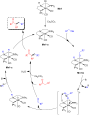
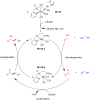
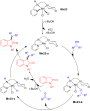
Scheme 8: Proposed mechanism for the coupling of alcohols and hydrazine catalyzed by Mn5.
Scheme 9: Phosphine-free manganese catalyst for N-alkylation of amines with alcohols reported by Balaraman an...
Scheme 10: N-Alkylation of sulfonamides with alcohols.
Scheme 11: Mn–NHC catalyst Mn6 applied for the N-alkylation of amines with alcohols. a3 mol % of Mn6 were used....
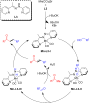
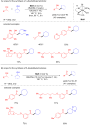
Scheme 12: N-Alkylation of amines with primary and secondary alcohols. a80 °C, b100 °C.
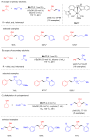
Scheme 13: Manganese(III)-porphyrin catalyst for synthesis of tertiary amines.
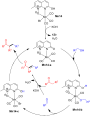
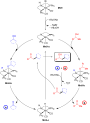
Scheme 14: Proposed mechanism for the alcohol dehydrogenation with Mn(III)-porphyrin complex Mn7.
Scheme 15: N-Methylation of nitroarenes with methanol using catalyst Mn3.
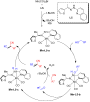
Scheme 16: Mechanism of manganese-catalyzed methylation of nitroarenes using Mn3 as the catalyst.
Scheme 17: Bidentate manganese complex Mn8 applied for the N-alkylation of primary anilines with alcohols. aOn...
Scheme 18: N-Alkylation of amines with alcohols in the presence of manganese salts and triphenylphosphine as t...
Scheme 19: N-Alkylation of diazo compounds with alcohols using catalyst Mn9.
Scheme 20: Proposed mechanism for the amination of alcohols with diazo compounds catalyzed by catalyst Mn9.
Scheme 21: Mn1 complex-catalyzed synthesis of polyethyleneimine from ethylene glycol and ethylenediamine.
Scheme 22: Bis-triazolylidene-manganese complex Mn10 for the N-alkylation of amines with alcohols.
Figure 2: Manganese complexes applied for C-alkylation reactions of ketones with alcohols.
Scheme 23: General scheme for the C–C bond formation with alcohols and ketones.
Scheme 24: Mn1 complex-catalyzed α-alkylation of ketones with primary alcohols.
Scheme 25: Mechanism for the Mn1-catalyzed alkylation of ketones with alcohols.
Scheme 26: Phosphine-free in situ-generated manganese catalyst for the α-alkylation of ketones with primary al...
Scheme 27: Plausible mechanism for the Mn-catalyzed α-alkylation of ketones with alcohols.
Scheme 28: α-Alkylation of esters, ketones, and amides using alcohols catalyzed by Mn11.
Scheme 29: Mono- and dialkylation of methylene ketones with primary alcohols using the Mn(acac)2/1,10-phenanth...
Scheme 30: Methylation of ketones with methanol and deuterated methanol.
Scheme 31: Methylation of ketones and esters with methanol. a50 mol % of t-BuOK were used, bCD3OD was used ins...
Scheme 32: Alkylation of ketones and secondary alcohols with primary alcohols using Mn4.
Scheme 33: Bidentate manganese-NHC complex Mn6 applied for the synthesis of alkylated ketones using alcohols.
Scheme 34: Mn1-catalyzed synthesis of substituted cycloalkanes by coupling diols and secondary alcohols or ket...
Scheme 35: Proposed mechanism for the synthesis of cycloalkanes via BH method.
Scheme 36: Synthesis of various cycloalkanes from methyl ketones and diols catalyze by Mn13. aReaction time wa...
Scheme 37: N,N-Amine–manganese complex (Mn13)-catalyzed alkylation of ketones with alcohols.
Scheme 38: Naphthyridine‑N‑oxide manganese complex Mn14 applied for the alkylation of ketones with alcohols. a...
Scheme 39: Proposed mechanism of the naphthyridine‑N‑oxide manganese complex (Mn14)-catalyzed alkylation of ke...
Scheme 40: α-Methylation of ketones and indoles with methanol using Mn15.
Scheme 41: α-Alkylation of ketones with primary alcohols using Mn16. aNMR yield.
Figure 3: Manganese complexes used for coupling of secondary and primary alcohols.
Scheme 42: Alkylation of secondary alcohols with primary alcohols catalyzed by phosphine-free catalyst Mn17. a...
Scheme 43: PNN-Manganese complex Mn18 for the alkylation of secondary alcohols with primary alcohols.
Scheme 44: Mechanism for the Mn-pincer catalyzed C-alkylation of secondary alcohols with primary alcohols.
Scheme 45: Upgrading of ethanol with methanol for isobutanol production.
Scheme 46: Mn-Pincer catalyst Mn19 applied for the β-methylation of alcohols with methanol. a2.0 mol % of Mn19...
Scheme 47: Functionalized ketones from primary and secondary alcohols catalyzed by Mn20. aMn20 (5 mol %), NaOH...
Scheme 48: Synthesis of γ-disubstituted alcohols and β-disubstituted ketones through Mn9-catalyzed coupling of...
Scheme 49: Proposed mechanism for the Mn9-catalyzed synthesis of γ-disubstituted alcohols and β-disubstituted ...
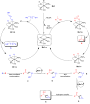
Scheme 50: Dehydrogenative coupling of ethylene glycol and primary alcohols catalyzed by Mn4.
Scheme 51: Mn18-cataylzed C-alkylation of unactivated esters and amides with alcohols.
Scheme 52: Alkylation of amides and esters using Mn21.
Scheme 53: α-Alkylation of nitriles with primary alcohols using in situ-generated manganese catalyst.
Scheme 54: Proposed mechanism for the α-alkylation of nitriles with primary alcohols.
Scheme 55: Mn9-catalyzed α-alkylation of nitriles with primary alcohols. a1,4-Dioxane was used as solvent, 24 ...
Figure 4: Manganese complexes used for alkylation of heterocyclic compounds.
Scheme 56: Aminomethylation of aromatic compounds with secondary amines and methanol catalyzed by Mn22.
Scheme 57: Regioselective alkylation of indolines with alcohols catalyzed by Mn9. aMn9 (4 mol %), 48 h.
Scheme 58: Proposed mechanism for the C- and N-alkylation of indolines with alcohols.
Scheme 59: C-Alkylation of methyl N-heteroarenes with primary alcohols catalyzed by Mn1. aTime was 60 h.
Scheme 60: C-Alkylation of oxindoles with secondary alcohols.
Scheme 61: Plausible mechanism for the Mn23-catalyzed C-alkylation of oxindoles with secondary alcohols.
Scheme 62: Synthesis of C-3-alkylated products by coupling alcohols with indoles and aminoalcohols.
Scheme 63: C3-Alkylation of indoles using Mn1.
Scheme 64: C-Methylation of indoles with Mn15 and methanol.
Scheme 65: α-Alkylation of 2-oxindoles with primary and secondary alcohols catalyzed by Mn25. aReaction carrie...
Scheme 66: Dehydrogenative alkylation of indolines with Mn1. aMn1 (5.0 mol %) was used.
Scheme 67: Synthesis of bis(indolyl)methane derivatives from indoles and alcohols catalyzed by Mn26. aMn26 (5....
Scheme 68: One-pot synthesis of pyrimidines via BH.
Scheme 69: Synthesis of pyrroles from alcohols and aminoalcohols using Mn4.
Scheme 70: Synthesis of pyrroles via multicomponent reaction catalyzed by Mn12.
Scheme 71: Friedländer quinoline synthesis using an in situ-generated phosphine-free manganese catalyst.
Scheme 72: Quinoline synthesis using bis-N-heterocyclic carbene-manganese catalyst Mn6.
Scheme 73: Quinoline synthesis using manganese(III)-porphyrin catalyst Mn7.
Scheme 74: Manganese-catalyzed tetrahydroquinoline synthesis via borrowing BH.
Scheme 75: Proposed mechanism for the manganese-catalyzed tetrahydroquinoline synthesis.
Scheme 76: Synthesis of C3-alkylated indoles using Mn24.
Scheme 77: Synthesis of C-3-alkylated indoles using Mn1.
Scheme 78: C–C Bond formation by coupling of alcohols and ylides.
Scheme 79: C-Alkylation of fluorene with alcohols catalyzed by Mn24.
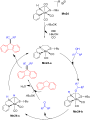
Scheme 80: Proposed mechanism for the C-alkylation of fluorene with alcohols catalyzed by Mn24.
Scheme 81: α-Alkylation of sulfones using Mn-PNN catalyst Mn28.
Beilstein J. Org. Chem. 2024, 20, 1076–1087, doi:10.3762/bjoc.20.95
Graphical Abstract
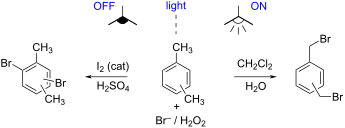
Figure 1: Comparison between the light-initiated radical halogenation of toluene (right), and the Ar-SE bromi...
Figure 2: Toluene halogenation mediated by NBS in absence (left) or exposed to light (right).
Figure 3: Scifinder® reaction hits for the structure “as drawn” (January 2024).
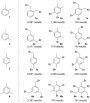
Figure 4: Yields obtained in the preparation of aryl-cored halides.
Beilstein J. Org. Chem. 2024, 20, 1020–1028, doi:10.3762/bjoc.20.90
Graphical Abstract
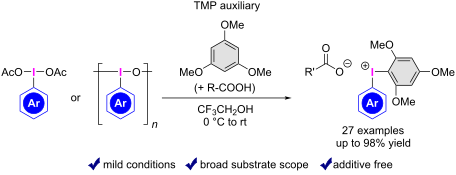
Scheme 1: Synthetic approaches of diaryliodonium(III) trifluoroacetates.
Scheme 2: Synthesis of diaryliodonium(III) carboxylates.
Scheme 3: Scope of dummy ligands.
Scheme 4: Substrate scope of aryl(TMP)iodonium(III) acetates. a) 0.50 mmol scale of 1i. b) 1,3,5-Trimethoxybe...
Scheme 5: Substrate scope of the carboxylic acids and iodosylarenes. a) The reaction was conducted for 4 h. b...
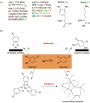
Scheme 6: Representative applications of aryl(TMP)iodonium(III) carboxylates.
Beilstein J. Org. Chem. 2024, 20, 787–814, doi:10.3762/bjoc.20.72
Graphical Abstract
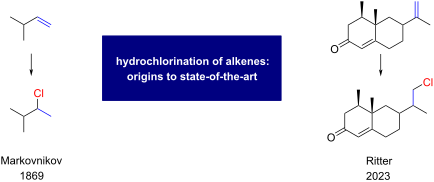
Scheme 1: Classes of hydrochlorination reactions discussed in this review.
Figure 1: Mayr’s nucleophilicity parameters for several alkenes. References for each compound can be consulte...
Figure 2: Hydride affinities relating to the reactivity of the corresponding alkene towards hydrochlorination....
Scheme 2: Distinction of polar hydrochlorination reactions.
Scheme 3: Reactions of styrenes with HCl gas or HCl solutions.
Figure 3: Normal temperature dependence for the hydrochlorination of (Z)-but-2-ene.
Figure 4: Pentane slows down the hydrochlorination of 11.
Scheme 4: Recently reported hydrochlorinations of styrenes with HCl gas or HCl solutions.
Scheme 5: Hydrochlorination reactions with di- and trisubstituted alkenes.
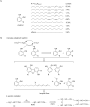
Scheme 6: Hydrochlorination of fatty acids with liquified HCl.
Scheme 7: Hydrochlorination with HCl/DMPU solutions.
Scheme 8: Hydrochlorination with HCl generated from EtOH and AcCl.
Scheme 9: Hydrochlorination with HCl generated from H2O and TMSCl.
Scheme 10: Regioisomeric mixtures of chlorooctanes as a result of hydride shifts.
Scheme 11: Regioisomeric mixtures of products as a result of methyl shifts.
Scheme 12: Applications of the Kropp procedure on a preparative scale.
Scheme 13: Curious example of polar anti-Markovnikov hydrochlorination.
Scheme 14: Unexpected and expected hydrochlorinations with AlCl3.
Figure 5: Ex situ-generated HCl gas and in situ application for the hydrochlorination of activated alkenes (*...
Scheme 15: HCl generated by Grob fragmentation of 92.
Scheme 16: Formation of chlorophosphonium complex 104 and the reaction thereof with H2O.
Scheme 17: Snyder’s hydrochlorination with stoichiometric amounts of complex 104 or 108.
Scheme 18: In situ generation of HCl by mixing of MsOH with CaCl2.
Scheme 19: First hydrochlorination of alkenes using hydrochloric acid.
Scheme 20: Visible-light-promoted hydrochlorination.
Scheme 21: Silica gel-promoted hydrochlorination of alkenes with hydrochloric acid.
Scheme 22: Hydrochlorination with hydrochloric acid promoted by acetic acid or iron trichloride.
Figure 6: Metal hydride hydrogen atom transfer reactions vs cationic reactions; BDE (bond-dissociation energy...
Scheme 23: Carreira’s first report on radical hydrochlorinations of alkenes.
Figure 7: Mechanism for the cobalt hydride hydrogen atom transfer reaction reported by Carreira.
Scheme 24: Radical “hydrogenation” of alkenes; competing chlorination reactions.
Scheme 25: Bogers iron-catalyzed radical hydrochlorination.
Scheme 26: Hydrochlorination instead of hydrogenation product.
Scheme 27: Optimization of the Boger protocol by researchers from Merck [88,89].
Figure 8: Proposed mechanism for anti-Markovnikov hydrochlorination by Nicewicz.
Scheme 28: anti-Markovnikov hydrochlorinations as reported by Nicewicz.
Figure 9: Mechanism for anti-Markovnikov hydrochlorination according to Ritter.
Scheme 29: anti-Markovnikov hydrochlorinations as reported by Nicewicz; rr (regioisomeric ratio) corresponds t...
Scheme 30: anti-Markovnikov hydrochlorinations as reported by Liu.
Beilstein J. Org. Chem. 2024, 20, 701–713, doi:10.3762/bjoc.20.64
Graphical Abstract
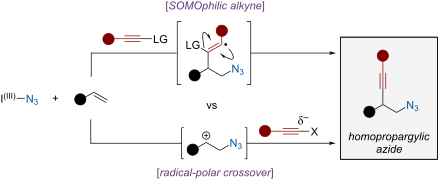
Scheme 1: Overview of homopropargylic azides importance and strategies for azido-alkynylation.
Scheme 2: Screening of nucleophilic alkynes and investigation of the photocatalyst solubility. n.o = not obse...
Scheme 3: Selected scope entries of the azido-alkynylation. The data were already published in ref. [45].
Scheme 4: Unsuccessful examples. The conditions used are the same as in Scheme 3. The yields reported were determined...
Scheme 5: Proposed mechanism.
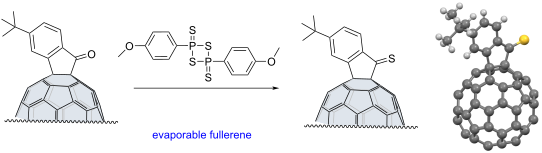
Beilstein J. Org. Chem. 2024, 20, 653–660, doi:10.3762/bjoc.20.58
Graphical Abstract
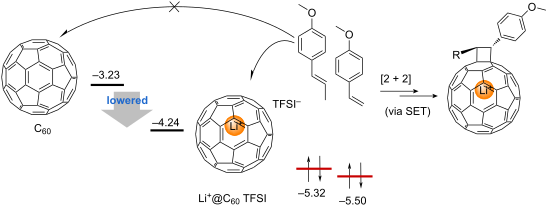
Scheme 1: Reaction mechanisms of thermal and photoinduced [2 + 2] cycloaddition on C60 [19,22,23].
Figure 1: HOMO levels of unsaturated substrates and LUMO levels of fullerenes computed at the B3LYP/6-31G(d) ...
Scheme 2: Thermal [2 + 2] reaction of Li+@C60 TFSI− with substrates 1–4. a100 equiv for the reaction screenin...
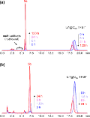
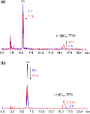
Figure 2: HPLC profiles of themal [2 + 2]reaction of Li+@C60 with substrate 1 (a) and 2 (b) in o-dichlorobenz...
Figure 3: HPLC profiles of 5a (a) and 5b (b) before and after photoirradiation at room temperature.
Figure 4: 1H-1H 2D-NOESY NMR spectrum (600 MHz, CD2Cl2) of 5a (a) and NOE correlations between two protons. T...
Figure 5: Cyclic voltammograms of 5a, 5b, and Li+@C60 TFSI− with the potentials relative to the ferrocene/fer...
Beilstein J. Org. Chem. 2024, 20, 621–627, doi:10.3762/bjoc.20.54
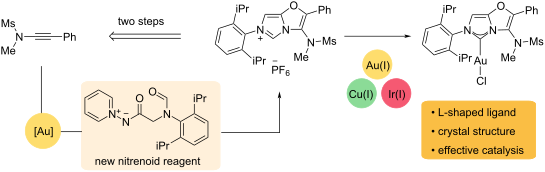
Graphical Abstract
Figure 1: Laterally fused NHC motifs.
Scheme 1: Synthetic studies into the formation of a 3-aminoimdazo[5,1-b]oxazol-6-ium motif based on a gold-ca...
Scheme 2: The synthesis of AImOxAu(I)Cl, AImOxCu(I)Cl, and AImOxIr(CO)2Cl complexes from 6a. The single cryst...
Scheme 3: Use of AImOxAuCl 13 in catalysis. aYields are calculated from the 1H NMR spectra against an interna...
Beilstein J. Org. Chem. 2024, 20, 540–551, doi:10.3762/bjoc.20.46
Graphical Abstract
Scheme 1: Selected known inhibitors 1–3 of acyl-ACP thioesterases (belonging to the protein family of FATs) a...
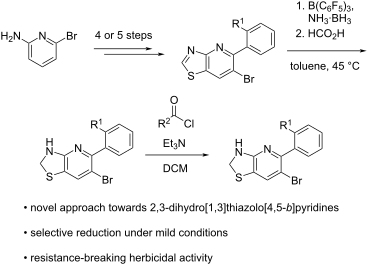
Scheme 2: Preparation of 2,3-dihydro[1,3]thiazolo[4,5-b]pyridines 7a–c and 13a–c via iron-mediated sulfur rem...
Scheme 3: Evaluation of potential side reactions in the borane-mediated preparation of 2,3-dihydro[1,3]thiazo...
Figure 1: Preemergence efficacy of 2,3-dihydro[1,3]thiazolo[4,5-b]pyridine-based FAT inhibitors 7b, 7c, and 1...
Figure 2: Preemergence efficacy of 2,3-dihydro[1,3]thiazolo[4,5-b]pyridine-based FAT inhibitors 7b, 7c, and 1...
Beilstein J. Org. Chem. 2024, 20, 243–253, doi:10.3762/bjoc.20.24
Graphical Abstract
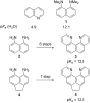
Scheme 1: Comparison of basicity (in water scale) and synthetic availability of quinoline-type azaarenes and ...
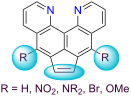
Figure 1: Suggested amination products 6 and two resonance forms of dianion 7.
Figure 2: Targeted dipyridoacenaphthylene 8.
Scheme 2: Formation of complex 9 and its slow hydrolytic degradation into protic salt 5·HCl.
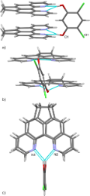
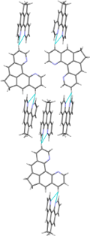
Figure 3: Molecular and crystal structure of salt 5·HCl·2H2O is strongly dominated by severe H-bonding (blue ...
Figure 4: Selected images of the supramolecular organization of two molecules of base 5 held by 4,6-dichloror...
Figure 5: Fragment of the crystal packing of neutral dipyridoacenaphthene 5 showing self-association via mult...
Scheme 3: Dinitration of compound 5 and the initially assumed admixture 11.
Scheme 4: Mononitration of compound 5.
Figure 6: Structure of dinitroacenaphthylene 12.
Scheme 5: Dehydrogenation of compounds 10 and 11.
Scheme 6: Nucleophilic methoxylation of compounds 10(12).
Figure 7: Basicity of key compounds in acetonitrile.
Scheme 7: Electrophilic bromination of compound 5.
Scheme 8: tele-Elimination upon interaction of dibromide 15 with pyrrolidine.
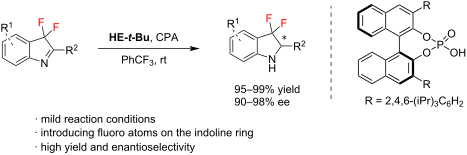
Scheme 9: Interaction of dibromide 15 with anionic bases.
Beilstein J. Org. Chem. 2024, 20, 205–211, doi:10.3762/bjoc.20.20
Graphical Abstract
Figure 1: Structures of bioactive fluorinated indole derivatives.
Scheme 1: Synthesis of chiral indolines via asymmetric reduction.
Scheme 2: Substrate scope of 3,3-difluoro-3H-indoles.
Scheme 3: Experiment at 2 mmol scale.
Figure 2: Proposed mechanism for the transfer hydrogenation reaction.
Beilstein J. Org. Chem. 2024, 20, 125–154, doi:10.3762/bjoc.20.13
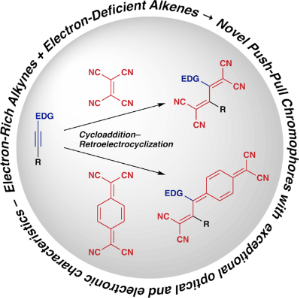
Graphical Abstract
Scheme 1: Pathway of the [2 + 2] CA–RE reaction of an electron-rich alkyne with TCNE or TCNQ. EDG = electron-...
Scheme 2: Reaction pathway for DMA-appended acetylene and TCNEO.
Scheme 3: Pathway of the [2 + 2] CA–RE reaction between 1 and DCFs.
Scheme 4: Sequential double [2 + 2] CA–RE reactions between 1 and TCNE.
Scheme 5: Divergent chemical transformation pathways of TCBD 6.
Scheme 6: Synthesis of 12.
Scheme 7: [2 + 2] CA–RE reaction of 1 with 14. TCE = 1,1,2,2-tetrachloroethane.
Scheme 8: Autocatalytic model proposed by Nielsen et al.
Scheme 9: Synthesis of anthracene-embedded TCBD compound 19.
Scheme 10: Sequence of the [2 + 2] CA–RE reaction between dibenzo-fused cyclooctyne or cyclooctadiyne and TCNE...
Scheme 11: [2 + 2] CA–RE reaction between the CPP derivatives and TCNE. THF = tetrahydrofuran.
Scheme 12: [2 + 2] CA–RE reaction between ethynylfullerenes 31 and TCNE and subsequent thermal rearrangement.
Scheme 13: Pathway of the [2 + 2] CA–RE reaction between TCNE and 34, followed by additional skeletal transfor...
Scheme 14: Synthesis scheme for heterocycle 38 from the reaction between TCNE and 1 in water and a surfactant.
Scheme 15: Synthesis scheme of the CDA product 41.
Scheme 16: Synthesis of rotaxanes 44 and 46 via the [2 + 2] CA–RE reaction.
Scheme 17: Synthesis of a CuI bisphenanthroline-based rotaxane 50.
Figure 1: Structures of the chiral push–pull chromophores 51–56.
Figure 2: Structures of the axially chiral TCBD 57 and DCNQ 58 bearing a C60 core.
Figure 3: Structures of the axially chiral SubPc–TCBD–aniline conjugates 59 and 60 and the subporphyrin–TCBD–...
Figure 4: Structures of 63 and the TCBD 64.
Figure 5: Structures of the fluorophore-containing TCBDs 65–67.
Figure 6: Structures of the fluorophore-containing TCBDs 68–72.
Figure 7: Structures of the urea-containing TCBDs 73–75.
Figure 8: Structures of the fullerene–TCBD and DCNQ conjugates 76–79 and their reference compounds 80–83.
Figure 9: Structures of the ZnPc–TCBD–aniline conjugates 84 and 85.
Figure 10: Structures of the ZnP–PCBD and TCBD conjugates 86–88.
Figure 11: Structures of the porphyrin-based donor–acceptor conjugates (89–104).
Figure 12: Structures of the porphyrin–PTZ or DMA conjugates 105–112.
Figure 13: Structures of the BODIPY–Acceptor–TPA or PTZ conjugates 113–116.
Figure 14: Structures of the corrole–TCBD conjugates 117 and 118.
Figure 15: Structure of the dendritic TCBD 119.
Figure 16: Structures of the TCBDs 120–126.
Figure 17: Structures of the precursor 127 and TCBDs 128–130.
Figure 18: Structures of 131–134 utilized for BHJ OSCs.
Beilstein J. Org. Chem. 2024, 20, 17–24, doi:10.3762/bjoc.20.3
Graphical Abstract
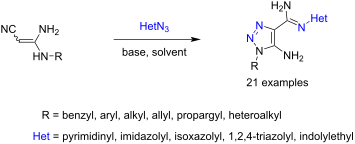
Scheme 1: Synthesis of heteroaryl amidines.
Figure 1: Structures of starting compounds.
Scheme 2: Scope of 3,3-diaminoacrylonitriles 1 and heterocyclic azides 2. Reaction conditions: 1 (0.5 mmol), 2...
Scheme 3: Proposed mechanism for the formation of triazoles 3.
Beilstein J. Org. Chem. 2023, 19, 1841–1848, doi:10.3762/bjoc.19.136
Graphical Abstract
Figure 1: Glutarimide-based immunomodulatory drugs (IMiDs) and CRBN ligands.
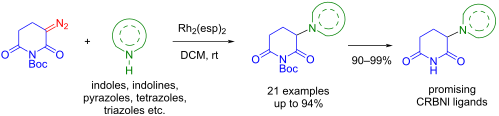
Scheme 1: Main literature approaches towards α-hetaryl glutarimides 1 (routes A and B) and new “diazo” method...
Scheme 2: Preparation of diazo reagent 5.
Scheme 3: Scope of NH insertion reaction of N-Boc-α-diazo glutarimide and various N-heterocycles. aIsolated y...
Figure 2: Examples of α-carbonyl NH-heterocycles for which N–H insertion products could not be obtained.
Scheme 4: Examples of N-deprotection of α-modified glutarimides 1.
Scheme 5: Preparation of NH2-containing derivative 10 via reduction of 6n.
Beilstein J. Org. Chem. 2023, 19, 1580–1603, doi:10.3762/bjoc.19.116
Graphical Abstract
Scheme 1: Oxidation of catechol and subsequent cross-linking. Scheme 1 redrawn from [3].
Scheme 2: (A) Structure of typical urushiol in Chinese lacquer, and (B) schematic process of laccase-catalyze...
Scheme 3: A) Primary amino acid sequence of mfp-1, mfp-3, and mfp-5 (Y: DOPA, K: lysine). B) Scheme showing e...
Scheme 4: Activation–deactivation equilibrium in nitroxide-mediated polymerizations. Bicomponent initiating s...
Scheme 5: Mechanism of a transition metal complex-mediated ATRP. Scheme 5 redrawn from [14].
Scheme 6: Mechanism of RAFT polymerization. Scheme 6 redrawn from [68].
Scheme 7: Degenerative transfer (a) and reversible termination (b) mechanism of OMRP. Scheme 7 redrawn from [70].
Scheme 8: Simplified mechanism of a RITP. Scheme 8 redrawn from [21].
Scheme 9: (A) Structures of π-conjugated conductive polymers. (B) Examples of conductive polymer synthesis vi...
Scheme 10: Possible regiochemical couplings in PATs. Scheme 10 redrawn from [79].
Scheme 11: General thiol-ene photopolymerization process. Scheme 11 redrawn from [81].
Scheme 12: (a) Three generations of Grubbs catalysts. (b) Proposed mechanism for photo-ROMP via a reductive qu...
Scheme 13: Pyrylium and thiopyrylium salts studied by Boydston et al. Scheme 13 redrawn from [91].
Scheme 14: A general illustration of post-polymerization modification by thiol–ene chemistry.
Scheme 15: Introduction of functionalities by nitroxide radical coupling of HO-TEMPO derivatives.
Scheme 16: Chemical reaction process scheme of DCP-induced crosslinking of LDPE. Scheme 16 redrawn from [126].
Scheme 17: A probable mechanism of radical-induced hydrosilylation.
Scheme 18: Polymer surface modification by homolytic dediazonation of diazonium salts.
Scheme 19: Photoinduced polymer surface modification or surface grafting using benzophenone.
Scheme 20: Depolymerization mechanism of common photoresists. (a) A possible mechanism of radiation decomposit...
Scheme 21: Proposed mechanisms of photooxidative depolymerization of polystyrene. (a) Scheme 21a was reprinted with perm...
Beilstein J. Org. Chem. 2023, 19, 1408–1442, doi:10.3762/bjoc.19.102
Graphical Abstract
Scheme 1: In situ generation of imidazolylidene carbene.
Scheme 2: Hg(II) complex of NHC.
Scheme 3: Isolable and bottlable carbene reported by Arduengo [3].
Scheme 4: First air-stable carbene synthesized by Arduengo in 1992 [5].
Figure 1: General structure of an NHC.
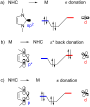
Figure 2: Stabilization of an NHC by donation of the lone pair electrons into the vacant p-orbital (LUMO) at ...
Figure 3: Abnormal NHC reported by Bertrand [8,9].
Figure 4: Cu(d) orbital to σ*C-N(NHC) interactions in NHC–CuX complexes computed at the B3LYP/def2-SVP level ...
Figure 5: Molecular orbital contributions to the NHC–metal bond.
Scheme 5: Synthesis of NHC–Cu(I) complexes by deprotonation of NHC precursors with a base.
Scheme 6: Synthesis of [NHC–CuX] complexes.
Scheme 7: Synthesis of [(ICy)CuX] and [(It-Bu)CuX] complexes.
Scheme 8: Synthesis of iodido-bridged copper–NHC complexes by deprotonation of benzimidazolium salts reported...
Scheme 9: Synthesis of copper complexes by deprotonation of triazolium salts.
Scheme 10: Synthesis of thiazolylidene–Cu(I) complex by deprotonation with KOt-Bu.
Scheme 11: Preparation of NHC–Cu(I) complexes.
Scheme 12: Synthesis of methylmalonic acid-derived anionic [(26a,b)CuCl]Li(THF)2 and zwitterionic (28) heterol...
Scheme 13: Synthesis of diaminocarbene and diamidocarbene (DAC)–Cu(I) complexes.
Scheme 14: Synthesis of the cationic (NHC)2Cu(I) complex 39 from benzimidazolium salts 38 with tetrakis(aceton...
Scheme 15: Synthesis of NHC and ADC (acyclic diamino carbenes) Cu(I) hexamethyldisilazide complexes reported b...
Scheme 16: Synthesis of NHC–copper(I) complexes using an acetylacetonate-functionalized imidazolium zwitterion...
Scheme 17: Synthesis of NHC–Cu(I) complexes through deprotonation of azolium salts with Cu2O.
Scheme 18: Synthesis of NHC–CuBr complex through deprotonation with Cu2O reported by Kolychev [31].
Scheme 19: Synthesis of chiral NHC–CuBr complexes from phenoxyimine-imidazolium salts reported by Douthwaite a...
Scheme 20: Preparation of linear neutral NHC–CuCl complexes through the use of Cu2O. For abbreviations, please...
Scheme 21: Synthesis of abnormal-NHC–copper(I) complexes by Bertrand, Cazin and co-workers [35].
Scheme 22: Microwave-assisted synthesis of thiazolylidene/benzothiazolylidene–CuBr complexes by Bansal and co-...
Scheme 23: Synthesis of NHC–CuX complexes through transmetallation.
Scheme 24: Preparation of six- or seven-membered NHC–Cu(I) complexes through transmetalation from Ag(I) comple...
Scheme 25: Synthesis of 1,2,3-triazolylidene–CuCl complexes through transmetallation of Ag(I) complexes genera...
Scheme 26: Synthesis of NHC–copper complexes having both Cu(I) and Cu(II) units through transmetalation report...
Scheme 27: Synthesis of new [(IPr(CH2)3Si(OiPr)3)CuX] complexes and anchoring on MCM-41.
Scheme 28: Synthesis of bis(trimethylsilyl)phosphide–Cu(I)–NHC complexes through ligand displacement.
Scheme 29: Synthesis of silyl- and stannyl [(NHC)Cu−ER3] complexes.
Scheme 30: Synthesis of amido-, phenolato-, thiophenolato–Cu(NHC) complexes.
Scheme 31: Synthesis of first isolable NHC–Cu–difluoromethyl complexes reported by Sanford et al. [44].
Scheme 32: Synthesis of NHC–Cu(I)–bifluoride complexes reported by Riant, Leyssens and co-workers [45].
Scheme 33: Conjugate addition of Et2Zn to enones catalyzed by an NHC–Cu(I) complex reported by Woodward in 200...
Scheme 34: Hydrosilylation of a carbonyl group.
Scheme 35: NHC–Cu(I)-catalyzed hydrosilylation of ketones reported by Nolan et al. [48,49].
Scheme 36: Application of chiral NHC–CuCl complex 104 for the enantioselective hydrosilylation of ketones.
Scheme 37: Hydrosilylation reactions catalyzed by NHC–Cu(Ot-Bu) complexes.
Scheme 38: NHC–CuCl catalyzed carbonylative silylation of alkyl halides.
Scheme 39: Nucleophilic conjugate addition to an activated C=C bond.
Figure 6: Molecular electrostatic potential maps (MESP) of two NHC–CuX complexes computed at the B3LYP/def2-S...
Scheme 40: Conjugate addition of Grignard reagents to 3-alkyl-substituted cyclohexenones catalyzed by a chiral...
Scheme 41: NHC–copper complex-catalyzed conjugate addition of Grignard reagent to 3-substituted hexenone repor...
Scheme 42: Conjugate addition or organoaluminum reagents to β-substituted cyclic enones.
Scheme 43: Conjugate addition of boronates to acyclic α,β-unsaturated carboxylic esters, ketones, and thioeste...
Scheme 44: NHC–Cu(I)-catalyzed hydroboration of an allene reported by Hoveyda [63].
Scheme 45: Conjugate addition of Et2Zn to cyclohexenone catalyzed by NHC–Cu(I) complex derived from benzimidaz...
Scheme 46: Asymmetric conjugate addition of diethylzinc to 3-nonen-2-one catalyzed by NHC–Cu complexes derived...
Scheme 47: General scheme of a [3 + 2] cycloaddition reaction.
Scheme 48: [3 + 2] Cycloaddition of azides with alkynes catalyzed by NHC–Cu(I) complexes reported by Diez-Gonz...
Scheme 49: Application of NHC–CuCl/N-donor combination to catalyze the [3 + 2] cycloaddition of benzyl azide w...
Scheme 50: [3 + 2] Cycloaddition of azides with acetylenes catalyzed by bis(NHC)–Cu complex 131 and mixed NHC–...
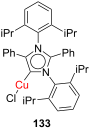
Figure 7: NHC–CuCl complex 133 as catalyst for the [3 + 2] cycloaddition of alkynes with azides at room tempe...
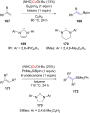
Scheme 51: [3 + 2] Cycloaddition of a bulky azide with an alkynylpyridine using [(NHC)Cu(μ-I)2Cu(NHC)] copper ...
Scheme 52: [3 + 2] Cycloaddition of benzyl azide with phenylacetylene under homogeneous and heterogeneous cata...
Scheme 53: [3 + 2] Cycloaddition of benzyl azide with acetylenes catalyzed by bisthiazolylidene dicopper(I) co...
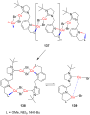
Figure 8: Copper (I)–NHC linear coordination polymer 137 and its conversion into tetranuclear (138) and dinuc...
Scheme 54: An A3 reaction.
Scheme 55: Synthesis of SiO2-immobilized NHC–Cu(I) catalyst 141 and its application in the A3-coupling reactio...
Scheme 56: Preparation of dual-purpose Ru@SiO2–[(NHC)CuCl] catalyst system 142 developed by Bordet, Leitner an...
Scheme 57: Application of the catalyst system Ru@SiO2–[Cu(NHC)] 142 to the one-pot tandem A3 reaction and hydr...
Scheme 58: A3 reaction of phenylacetylene with secondary amines and aldehydes catalyzed by benzothiazolylidene...
Figure 9: Kohn–Sham HOMOs of phenylacetylene and NHC–Cu(I)–phenylacetylene complex computed at the B3LYP/def2...
Figure 10: Energies of the FMOs of phenylacetylene, iminium ion, and NHC–Cu(I)–phenylacetylene complex compute...
Scheme 59: NHC–Cu(I) catalyzed diboration of ketones 147 by reacting with bis(pinacolato)diboron (148) reporte...
Scheme 60: Protoboration of terminal allenes catalyzed by NHC–Cu(I) complexes reported by Hoveyda and co-worke...
Scheme 61: NHC–CuCl-catalyzed borylation of α-alkoxyallenes to give 2-boryl-1,3-butadienes.
Scheme 62: Regioselective hydroborylation of propargylic alcohols and ethers catalyzed by NHC–CuCl complexes 1...
Scheme 63: NHC–CuOt-Bu-catalyzed semihydrogenation and hydroborylation of alkynes.
Scheme 64: Enantioselective NHC–Cu(I)-catalyzed hydroborations of 1,1-disubstituted aryl olefins reported by H...
Scheme 65: Enantioselective NHC–Cu(I)-catalyzed hydroboration of exocyclic 1,1-disubstituted alkenes reported ...
Scheme 66: Markovnikov-selective NHC–CuOH-catalyzed hydroboration of alkenes and alkynes reported by Jones et ...
Scheme 67: Dehydrogenative borylation and silylation of styrenes catalyzed by NHC–CuOt-Bu complexes developed ...
Scheme 68: N–H/C(sp2)–H carboxylation catalyzed by NHC–CuOH complexes.
Scheme 69: C–H Carboxylation of benzoxazole and benzothiazole derivatives with CO2 using a 1,2,3-triazol-5-yli...
Scheme 70: Use of Cu(I) complex derived from diethylene glycol-functionalized imidazo[1,5,a] pyridin-3-ylidene...
Scheme 71: Allylation and alkenylation of polyfluoroarenes and heteroarenes catalyzed by NHC–Cu(I) complexes r...
Scheme 72: Enantioselective C(sp2)–H allylation of (benz)oxazoles and benzothiazoles with γ,γ-disubstituted pr...
Scheme 73: C(sp2)–H arylation of arenes catalyzed by dual NHC–Cu/NHC–Pd catalytic system.
Scheme 74: C(sp2)–H Amidation of (hetero)arenes with N-chlorocarbamates/N-chloro-N-sodiocarbamates catalyzed b...
Scheme 75: NHC–CuI catalyzed thiolation of benzothiazoles and benzoxazoles.
Beilstein J. Org. Chem. 2023, 19, 1386–1398, doi:10.3762/bjoc.19.100
Graphical Abstract
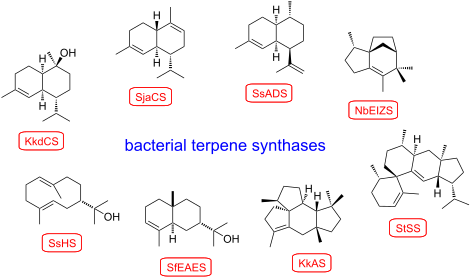
Figure 1: Terpenes produced by characterised terpene synthases.
Figure 2: Phylogenetic tree constructed from the amino acid sequences of 4018 terpene synthase homologs. Blue...
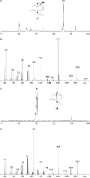
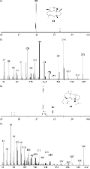
Figure 3: A) Total ion chromatogram of the products obtained from FPP with KkdCS, B) EI mass spectrum of 10, ...
Figure 4: Total ion chromatograms of the products obtained from FPP A) with SlADS and B) with SsADS, C) EI ma...
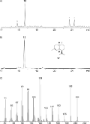
Figure 5: Total ion chromatograms of the products obtained with NbEIZS A) from FPP and B) from GPP, and C) st...
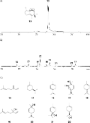
Figure 6: Total ion chromatogram of the products obtained with SfES. Peak numbers refer to compound numbers i...
Scheme 1: A) Cope rearrangement of 24 and 26. B) Cyclisation mechanism from FPP to 23, identifying compound 26...
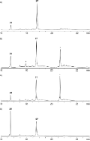
Figure 7: Total ion chromatograms of the products obtained with A) SsHS, B) ScHS, C) SfHS, and D) SmGAS. Peak...
Figure 8: A) Total ion chromatogram of the products obtained from GGPP with KkAS, B) EI mass spectrum of allo...
Beilstein J. Org. Chem. 2023, 19, 881–888, doi:10.3762/bjoc.19.65

Graphical Abstract
Scheme 1: Concept of this work.
Scheme 2: Initial experiments for the trapping of the intermediate enolate Enl-1a with tropylium NTf2.
Scheme 3: The reaction scope.
Figure 1: Comparison of DFT-calculated and experimental ECD of (2R,3R)-4 and (2S,3R)-4.
Figure 2: DFT calculated (ωB97X-D4/def2-TZVPPD//PBEh-3c/def2-mSVP) HOMO energies and NBO charges for represen...
Beilstein J. Org. Chem. 2023, 19, 736–751, doi:10.3762/bjoc.19.54
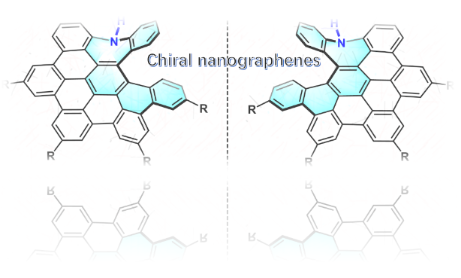
Graphical Abstract
Scheme 1: Construction of HBC by Scholl reaction from hexaphenylbenzene.
Scheme 2: Synthesis of seco-HBC-based chiral nanographenes.
Scheme 3: Synthesis of nitrogen-doped, seco-HBC-based chiral nanographenes.
Scheme 4: Synthesis of π-extended [7]- and [9]helicene containing chiral nanographenes.
Scheme 5: Synthesis of “HBC-dimer”-based chiral nanographenes.
Scheme 6: Synthesis of “HBC-dimer”-based chiral nanographenes.
Scheme 7: Synthesis of axis-based chiral nanographenes.
Scheme 8: Synthesis of “HBC-trimers”-based nanoribbons.
Scheme 9: Synthesis of “HBC-trimers”-based, triangle-shaped chiral nanographenes.
Scheme 10: Synthesis of “HBC-trimers”-based, triangle-shaped chiral nanographenes.
Scheme 11: Synthesis of HBC-based multilayer nanographenes.
Scheme 12: Synthesis of a chiral nanographene constructed by “HBC-tetramers”.
Scheme 13: Synthesis of a triskelion-shaped nanographene constructed by four HBCs.
Scheme 14: Synthesis of a three-dimensional nanographene bearing four HBCs.
Scheme 15: Synthesis of a chiral nanographene constructed by five HBC units.
Scheme 16: Synthesis of a chiral nanographene constructed by seven HBC units.
Beilstein J. Org. Chem. 2023, 19, 719–726, doi:10.3762/bjoc.19.52
Graphical Abstract
Figure 1: Biologically active molecules containing α-arylglycine motifs (highlighted in green and blue).
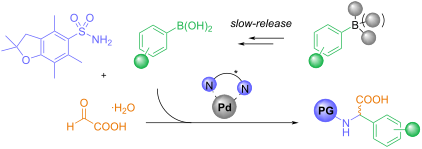
Scheme 1: The Petasis reaction – fundamental reactivities and recent developments.
Scheme 2: Observations from previous studies and mechanistic rationale.
Scheme 3: Initial experiments.
Scheme 4: Reaction scope – aryltrifluoroborates (yields and enantiomeric ratios in parentheses refer to our p...
Scheme 5: Synthesis of both enantiomers of arylglycine building block 18.
Beilstein J. Org. Chem. 2023, 19, 700–718, doi:10.3762/bjoc.19.51
Graphical Abstract
Figure 1: Dibenzo[b,f]azepine (1a), -oxepine (1b) and -thiepine (1c) as examples of dibenzo[b,f]heteropines (1...
Figure 2: Selected pharmaceuticals with the dibenzo[b,f]azepine skeleton.
Figure 3: Examples of 10,11-dihydrodibenzo[b,f]azepine-based ligands.
Figure 4: The dibenzo[b,f]azepine moiety in dyes with properties suitable for the use in organic light emitti...
Figure 5: Selective bioactive natural products (13–18) containing the dibenzo[b,f]oxepine scaffold and Novart...
Scheme 1: Retrosynthetic approach to 5H-dibenzo[b,f]azepine (1a) from nitrotoluene (22).
Scheme 2: Oxidative coupling of o-nitrotoluene (22) and reduction of 2,2'-dinitrobibenzyl (21) to form 2,2'-d...
Scheme 3: Synthesis of 10,11-dihydro-5H-dibenzo[b,f]azepine (2a) via amine condensation.
Scheme 4: Catalytic reduction of 10,11-dihydro-5H-dibenzo[b,f]azepine (2a).
Scheme 5: The Wagner–Meerwein rearrangement of acridin-9-ylmethanol (23) into 5H-dibenzo[b,f]azepine (1a).
Scheme 6: Oxidative ring expansion of 2-(9-xanthenyl)malonates 24.
Scheme 7: Ring expansion via C–H functionalisation.
Scheme 8: The synthesis of fluorinated 5H-dibenzo[b,f]azepine 38 from isatin (32).
Scheme 9: The synthesis of substituted dibenzo[b,f]azepines 43 from indoles 39.
Scheme 10: Retrosynthetic pathways to dibenzo[b,f]azepines via Buchwald–Hartwig amination.
Scheme 11: Synthesis of dibenzo[b,f]oxepine 54 and -azepine 55 derivatives via (i) Heck reaction and (ii) Buch...
Scheme 12: Double Buchwald–Hartwig amination and thioetherification in the synthesis of tricyclic azepines 60 ...
Scheme 13: Double Buchwald–Hartwig amination towards substituted dibenzoazepines 62.
Scheme 14: Double Buchwald–Hartwig amination towards 10,11-dihydro-5H-dibenzo[b,f]azepine derivatives 71.
Scheme 15: One-pot Suzuki coupling–Buchwald–Hartwig amination.
Scheme 16: One-pot Rh/Pd-catalysed synthesis of dihydropyridobenzazepines.
Scheme 17: A retrosynthetic pathway to dibenzo[b,f]azepines via Mizoroki–Heck reaction.
Scheme 18: One-pot domino Pd-catalyzed Mizoroki–Heck–Buchwald–Hartwig synthesis of dibenzo[b,f]azepines.
Scheme 19: Dibenzo[b,f]thiapine and -oxepine synthesis via SNAr (thio)etherification, Wittig methylenation and...
Scheme 20: A retrosynthetic pathway to dibenzo[b,f]oxepines via Ullmann coupling.
Scheme 21: Ullmann-type coupling in dibenzo[b,f]oxepine synthesis.
Scheme 22: Wittig reaction and Ullmann coupling as key steps in dihydrobenz[b,f]oxepine synthesis.
Scheme 23: Pd-catalysed dibenzo[b,f]azepine synthesis via norbornene azepine intermediate 109.
Scheme 24: A simple representation of olefin metathesis resulting in transalkylidenation.
Scheme 25: Ring-closing metathesis as key step in the synthesis of dibenzo[b,f]heteropines.
Scheme 26: Alkyne–aldehyde metathesis in the synthesis of dibenzo[b,f]heteropines.
Scheme 27: Hydroarylation of 9-(2-alkynylphenyl)-9H-carbazole derivatives.
Scheme 28: Oxidative coupling of bisphonium ylide intermediate to give pacharin (13).
Scheme 29: Preparation of 10,11-dihydrodibenzo[b,f]heteropines via intramolecular Wurtz reaction.
Scheme 30: Phenol deprotonation and intramolecular etherification in the synthesis of bauhinoxepine J.
Figure 6: Functionalisation of dibenzo[b,f]azepine.
Scheme 31: Palladium-catalysed N-arylation of dibenzo[b,f]azepine.
Scheme 32: Cu- and Ni-catalysed N-arylation.
Scheme 33: N-Alkylation of dibenzo[b,f]azepine (1a) and dihydrodibenzo[b,f]azepine (2a).
Scheme 34: Preparation of methoxyiminosilbene.
Scheme 35: Synthesis of oxcarbazepine (153) from methoxy iminostilbene 151.
Scheme 36: Ring functionalisation of dihydrodibenzo[b,f]azepine.
Beilstein J. Org. Chem. 2023, 19, 448–473, doi:10.3762/bjoc.19.35
Graphical Abstract
Scheme 1: Transition-metal-catalyzed C–XRF bond formation by C–H bond activation: an overview.
Scheme 2: Cu(OAc)2-promoted mono- and ditrifluoromethylthiolation of benzamide derivatives derived from 8-ami...
Scheme 3: Trifluoromethylthiolation of azacalix[1]arene[3]pyridines using copper salts and a nucleophilic SCF3...
Scheme 4: Working hypothesis for the palladium-catalyzed C–H trifluoromethylthiolation reaction.
Scheme 5: Trifluoromethylthiolation of 2-arylpyridine derivatives and analogs by means of palladium-catalyzed...
Scheme 6: C(sp2)–SCF3 bond formation by Pd-catalyzed C–H bond activation using AgSCF3 and Selectfluor® as rep...
Scheme 7: Palladium-catalyzed ortho-trifluoromethylthiolation of 2-arylpyridine derivatives reported by the g...
Scheme 8: Palladium-catalyzed ortho-trifluoromethylthiolation of 2-arylpyridine and analogs reported by Anbar...
Scheme 9: Mono- and ditrifluoromethylthiolation of benzamide derivatives derived from 8-aminoquinoline using ...
Scheme 10: Regioselective Cp*Rh(III)-catalyzed directed trifluoromethylthiolation reported by the group of Li [123]...
Scheme 11: Cp*Co(III)-catalyzed ortho-trifluoromethylthiolation of 2-phenylpyridine and 2-phenylpyrimidine der...
Scheme 12: Cp*Co(III)-catalyzed ortho-trifluoromethylthiolation of 2-phenylpyridine and 6-phenylpurine derivat...
Scheme 13: Diastereoselective trifluoromethylthiolation of acrylamide derivatives derived from 8-aminoquinolin...
Scheme 14: C(sp3)–SCF3 bond formation on aliphatic amide derivatives derived from 8-aminoquinoline by palladiu...
Scheme 15: Regio- and diastereoselective difluoromethylthiolation of acrylamides under palladium catalysis rep...
Scheme 16: Palladium-catalyzed (ethoxycarbonyl)difluoromethylthiolation reaction of 2-(hetero)aryl and 2-(α-ar...
Scheme 17: Pd(II)-catalyzed trifluoromethylselenolation of benzamides derived from 5-methoxy-8-aminoquinoline ...
Scheme 18: Pd(II)-catalyzed trifluoromethylselenolation of acrylamide derivatives derived from 5-methoxy-8-ami...
Scheme 19: Transition-metal-catalyzed dehydrogenative 2,2,2-trifluoroethoxylation of (hetero)aromatic derivati...
Scheme 20: Pd(II)-catalyzed ortho-2,2,2-trifluoroethoxylation of N-sulfonylbenzamides reported by the group of...
Scheme 21: Pd(II)-catalyzed selective 2,2,2-trifluoroethoxylation and other fluoroalkoxylations of naphthalene...
Scheme 22: Pd(II)-catalyzed selective ortho-2,2,2-trifluoroethoxylation of benzaldehyde derivatives by means o...
Scheme 23: Pd(II)-catalyzed selective ortho-2,2,2-trifluoroethoxylation (and other fluoroalkoxylations) of ben...
Scheme 24: Pd(II)-catalyzed selective 2,2,2-trifluoroethoxylation of aliphatic amides using a bidentate direct...
Beilstein J. Org. Chem. 2023, 19, 399–427, doi:10.3762/bjoc.19.31
Graphical Abstract
Figure 1: Structures of some members of the combretastatin D series, corniculatolides, and isocorniculatolide...
Scheme 1: Biosynthetic pathway proposed by Pettit and co-workers.
Scheme 2: Biosynthetic pathway towards corniculatolides or isocorniculatolides proposed by Ponnapalli and co-...
Scheme 3: Retrosynthetic approaches.
Scheme 4: Attempt of total synthesis of 2 by Boger and co-workers employing the Mitsunobu approach [27].
Scheme 5: Total synthesis of combretastatin D-2 (2) reported by Boger and co-workers employing an intramolecu...
Scheme 6: Formal synthesis of combretastatin D-2 (2) by Deshpande and co-workers using the Mitsunobu conditio...
Scheme 7: Total synthesis of combretastatin D-2 (2) by Rychnovsky and Hwang [36].
Scheme 8: Divergent synthesis of (±)-1 form combretastatin D-2 (2) by Rychnovsky and Hwang [36].
Scheme 9: Enantioselective synthesis of 1 by Rychnovsky and Hwang employing Jacobsen catalyst [41].
Scheme 10: Synthesis of fragment 57 by Couladouros and co-workers [43,45].
Scheme 11: Formal synthesis of compound 2 by Couladouros and co-workers [43,45].
Scheme 12: Synthesis of fragment 66 by Couladouros and co-workers [44,45].
Scheme 13: Synthesis of fragment 70 by Couladouros and co-workers [44,45].
Scheme 14: Synthesis of fragment 77 by Couladouros and co-workers [44,45].
Scheme 15: Synthesis of combretastatins 1 and 2 by Couladouros and co-workers [44,45].
Scheme 16: Formal synthesis of compound 2 by Gangakhedkar and co-workers [48].
Scheme 17: Synthesis of fragment 14 by Cousin and co-workers [50].
Scheme 18: Synthesis of fragment 91 by Cousin and co-workers [50].
Scheme 19: Formal synthesis of compound 2 by Cousin and co-workers [50].
Scheme 20: Synthesis of 2 diolide by Cousin and co-workers [50].
Scheme 21: Synthesis of combretastatin D-4 (4) by Nishiyama and co-workers [54].
Scheme 22: Synthesis of fragment 112 by Pettit and co-workers [55].
Scheme 23: Synthesis of fragment 114 by Pettit and co-workers [55].
Scheme 24: Attempt to the synthesis of compound 2 by Pettit and co-workers [55].
Scheme 25: Synthesis of combretastatin-D2 (2) starting from isovanilin (80) by Pettit and co-workers [55].
Scheme 26: Attempted synthesis of combretastatin-D2 (2) derivatives through an SNAr approach [55].
Scheme 27: Synthesis of combretastatin D-4 (4) by Pettit and co-workers [55].
Scheme 28: Synthesis of combretastatin D-2 (2) by Harras and co-workers [57].
Scheme 29: Synthesis of combretastatin D-4 (4) by Harras and co-workers [57].
Scheme 30: Formal synthesis of combretastatin D-1 (1) by Harras and co-workers [57].
Scheme 31: Synthesis of 11-O-methylcorniculatolide A (5) by Raut and co-workers [69].
Scheme 32: Synthesis of isocorniculatolide A (7) and O-methylated isocorniculatolide A 8 by Raut and co-worker...
Scheme 33: Synthesis of isocorniculatolide B (10) and hydroxyisocorniculatolide B 175 by Kim and co-workers [71].
Scheme 34: Synthesis of compound 9, 178, and 11 by Kim and co-workers [71].
Scheme 35: Synthesis of combretastatin D-2 prodrug salts [55].
Figure 2: ED50 values of the combretastatin D family against murine P388 lymphocytic leukemia cell line (appr...
Figure 3: IC50 of compounds against α-glucosidase [19].
Beilstein J. Org. Chem. 2023, 19, 349–379, doi:10.3762/bjoc.19.29
Graphical Abstract
Figure 1: Alkyne–azide "click reaction".
Figure 2: β- and meso-triazole-linked porphyrin.
Scheme 1: Synthesis of β-triazole-linked porphyrins 3a–c.
Scheme 2: Synthesis of β-triazole-bridged porphyrin-coumarin conjugates 11–20.
Scheme 3: Synthesis of β-triazole-bridged porphyrin-xanthone conjugates 23–27 and xanthone-bridged β-triazolo...
Scheme 4: Synthesis of meso-triazoloporphyrins 32a–c and triazole-bridged diporphyrins 34.
Scheme 5: Synthesis of meso-triazole-linked porphyrin-ferrocene conjugates 37a–d.
Scheme 6: Synthesis of meso-triazole-linked porphyrin conjugates 40a,b and 41a,b.
Scheme 7: Synthesis of meso-triazole-linked glycoporphyrins 43a–c.
Scheme 8: Synthesis of meso-triazole-linked porphyrin-coumarin conjugates 44–48.
Scheme 9: Synthesis of meso-triazole-bridged porphyrin-DNA conjugate 50.
Scheme 10: Synthesis of meso-linked porphyrin-triazole conjugates 53 and 57.
Scheme 11: Synthesis of meso-triazole-linked porphyrin-corrole conjugate 60.
Scheme 12: Synthesis of porphyrin conjugates 64a,b and 67a,b. Reaction conditions: (i) CuSO4, sodium ascorbate...
Scheme 13: Synthesis of meso-triazole-bridged porphyrin-quinolone conjugates 70a–e.
Scheme 14: Synthesis of meso-triazole-linked porphyrin-fluorescein dyad 73.
Scheme 15: Synthesis of meso-triazole-linked porphyrin-carborane conjugates 76a,b.
Scheme 16: Synthesis of meso-triazole-bridged porphyrin-BODIPY conjugates 78 and 80.
Scheme 17: Synthesis of meso-triazole-linked cationic porphyrin conjugates 85 and 87. Reaction conditions: (i)...
Scheme 18: Synthesis of meso-triazole-cobalt-porphyrin diimine-dioxime conjugate 91. Reactions conditions: (i)...
Scheme 19: Synthesis of triazole-linked porphyrin-bearing N-doped graphene hybrid 96.
Scheme 20: Synthesis of meso-triazole-linked porphyrin-fullerene dyads 100a–d and 104a,b.
Scheme 21: Synthesis of meso-triazole-bridged diporphyrin conjugates 107 and 108.
Scheme 22: Synthesis of porphyrin-ruthenium (II) conjugates 112a,b and 116a,b. Reaction conditions: (i) Zn(OAc)...
Scheme 23: Synthesis of meso-triazole-linked porphyrin dyad 119 and triad 121.
Scheme 24: Synthesis of di-triazole-bridged porphyrin-β-CD conjugate 126.
Scheme 25: Synthesis of meso-triazole-bridged porphyrin star trimer 129.
Scheme 26: Synthesis of 1,2,3-triazole-linked porphyrin-β-CD conjugates 131a,b.
Scheme 27: Synthesis of tritriazole-bridged porphyrin-lantern-DNA sequence 134.
Scheme 28: Synthesis of meso-triazole-linked porphyrin-polymer conjugates 137 and 139.
Scheme 29: Synthesis of triazole-linked capped porphyrin 142; Reaction conditions: method A: 10% H2O in THF, C...
Scheme 30: Synthesis of meso-tetratriazole-linked porphyrin-maleimine conjugates 145a–c.
Scheme 31: Synthesis of meso-tetratriazole-linked porphyrin-cholic acid complex 148a,b.
Scheme 32: Synthesis of meso-tetratriazole-linked porphyrin conjugates 151–153.
Scheme 33: Synthesis of meso-tetratrizole-porphyrin-carborane conjugates 155, 156 and 158a–c.
Scheme 34: Synthesis of meso-tetratriazole-porphyrin-cardanol conjugates 160 and 162.
Scheme 35: Synthesis of meso-tetratriazole-linked porphyrin-BODIPY conjugate 164.
Scheme 36: Synthesis of meso-tetratriazole-linked porphyrin-β-CD conjugates 166a,b.
Scheme 37: Synthesis of tetratriazole-bridged meso-arylporphyrins 171a–c and 172a–c.
Scheme 38: Synthesis of octatriazole-bridged porphyrin-β-CD conjugate 174 and porphyrin-adamantane conjugates ...
Beilstein J. Org. Chem. 2023, 19, 294–302, doi:10.3762/bjoc.19.25
Graphical Abstract
Scheme 1: Tosylation of β-CD under continuous flow conditions.
Scheme 2: Continuous flow azidation of Ts-β-CD (2).
Scheme 3: Continuous flow hydrogenation of N3-β-CD (3).
Scheme 4: Semi-continuous flow system for the synthesis of NH2-β-CD 4.