


Search results
Search for "hydrogen bond" in Full Text gives 463 result(s) in Beilstein Journal of Organic Chemistry. Showing first 200.
Switchable molecular tweezers: design and applications
Beilstein J. Org. Chem. 2024, 20, 504–539, doi:10.3762/bjoc.20.45
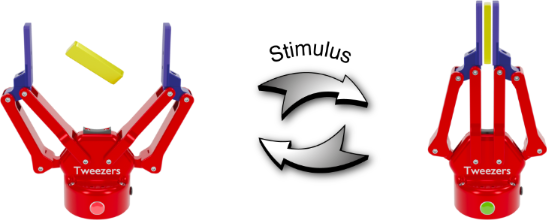
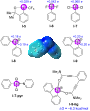
- a parallel direction, as the bulky -OMe groups are located outside the tweezer’s cavity to avoid steric hindrance with each other. When protonated, the pyridinium group acts as a hydrogen-bond donor for the two methoxy groups and triggers the rotation of the respective benzene rings along with the
- -trinitrofluorenone (TNF) with a good association constant of 2100 M−1. Upon protonation of the pyrimidine nitrogen atom the hydrogen bond is disturbed, which should result in a conformational change to an open W-shaped form. Even though an acid-mediated hydrogen bond disruption was expected, no clear experimental
- evidence was reported. Nevertheless, conformational changes were obtained from two other stimuli: (i) alkylation of phenolic OH groups [25] that leads to the disappearance of the hydrogen bonds and a more stable W-shaped conformation; (ii) addition of F− anion [26] as a competitive hydrogen-bond acceptor




Green and sustainable approaches for the Friedel–Crafts reaction between aldehydes and indoles
Beilstein J. Org. Chem. 2024, 20, 379–426, doi:10.3762/bjoc.20.36




Mechanisms for radical reactions initiating from N-hydroxyphthalimide esters
Beilstein J. Org. Chem. 2024, 20, 346–378, doi:10.3762/bjoc.20.35
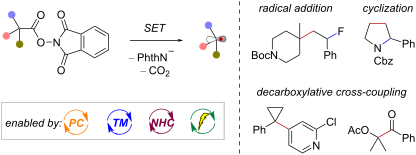
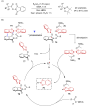
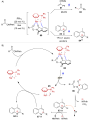
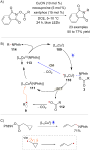
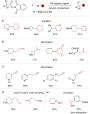
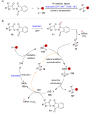
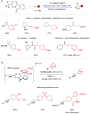
- (Scheme 6A). Stern–Volmer analysis revealed that quenching of the photocatalyst’s excited state by the NHPI ester occurred only in presence of a hydrogen bond donor such as water (H2O) or methanol (MeOH). This supported the hypothesis that activation of NHPI esters towards photoinduced electron transfer








Elucidating the glycan-binding specificity and structure of Cucumis melo agglutinin, a new R-type lectin
Beilstein J. Org. Chem. 2024, 20, 306–320, doi:10.3762/bjoc.20.31
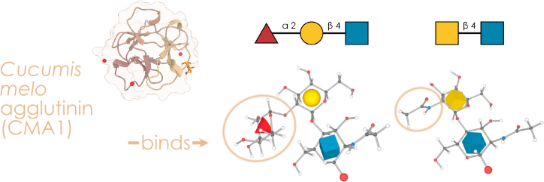
- would lead to steric clashes and loss of strong hydrogen bonding. In the LacNAc-complexed structure (PDB ID 8R8A) [29], the GlcNAc residue did not seem to engage in extensive interactions, with only a hydrogen bond between the N-acetyl moiety and the main chain oxygen of Gly24 and hydrophobic



Additive-controlled chemoselective inter-/intramolecular hydroamination via electrochemical PCET process
Beilstein J. Org. Chem. 2024, 20, 264–271, doi:10.3762/bjoc.20.27
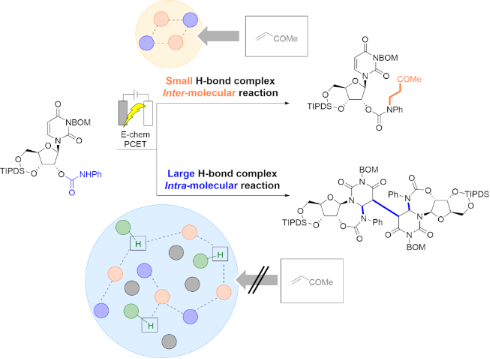
- hydroamination reaction products via a proton-coupled electron transfer (PCET) mechanism. Cyclic voltammetry (CV) analysis indicated that the chemoselectivity was derived from the size of the hydrogen bond complex, which consisted of the carbamate substrate and phosphate base, and could be controlled using
- ; Introduction Proton-coupled electron transfer (PCET) enables the generation of various radical species under ambient conditions (Figure 1, top) [1]. In PCET processes, hydrogen bond formation between weak bases and acidic X–H bonds (X = N, O, C) is a key step, which is followed by concerted proton- and
- presence of methyl vinyl ketone (MVK) as a radical acceptor (Table 1). Tetrabutylammonium dibutyl phosphate (phosphate base), which operates as a PCET initiator through hydrogen bond formation with the N–H bond of amide/carbamate [11], was used as an additive. As a result, N-alkylated product 3 was


Substitution reactions in the acenaphthene analog of quino[7,8-h]quinoline and an unusual synthesis of the corresponding acenaphthylenes by tele-elimination
Beilstein J. Org. Chem. 2024, 20, 243–253, doi:10.3762/bjoc.20.24
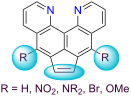
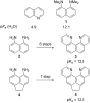
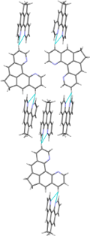
- studied for the first time. In addition to the pronounced tendency of the title compound to form associates with an intramolecular hydrogen bond of the NHN type (new examples with the participation of pyridine rings, including self-associates are shown) and its inertness to amination reactions of the
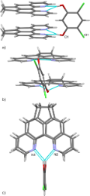
- 5Н+PicO−, in the cationic part of which a similar intramolecular NHN hydrogen bond is realized [15]. To understand the structure of the resulting complex, we tried to grow its crystals from acetonitrile by co-evaporating solutions of quinoline 5 and chloranil at room temperature. Interestingly, in
- (Supporting Information File 1, Figure S13). This is a rather low value for chelate-type cations, but at the same time, it is quite logical, as molecule 14 contains a short CH=CH bridge, which increases the internitrogen distance and stretches (that is, weakens) the intramolecular hydrogen bond. For





Using the phospha-Michael reaction for making phosphonium phenolate zwitterions
Beilstein J. Org. Chem. 2024, 20, 41–51, doi:10.3762/bjoc.20.6
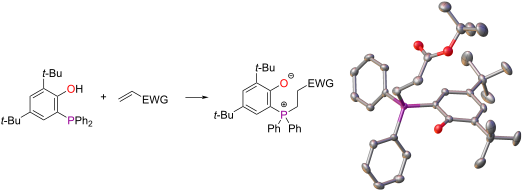
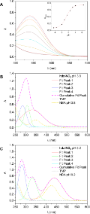
- Figure 3). The blue shift is more pronounced for those zwitterions not bearing any hydrogen-bond-donating functional groups. Accordingly, it is plausible to explain the blue-shifted absorption maxima of 2b and 2h in chloroform by a more polar environment of the chromophore caused by the hydrogen-bond
- primary adduct A (see Scheme 2) is too short-lived that an intramolecular hydrogen transfer toward 2a (C, in Scheme 2) is occurring [48]. Instead, in case of acrylonitrile another hydrogen bond donor, which is the solvent methanol [49], is necessary to trap intermediate A forming the ion pair D. Finally
- for the conversion of acrylamide, which is probably disturbed when the hydrogen bond donor solvent methanol is interacting with the amide group and/or the hydroxy group. Conclusion The conjugate addition of 2,4-di-tert-butyl-6-(diphenylphosphino)phenol to Michael acceptor molecules allows for a facile


Anion–π catalysis on carbon allotropes
Beilstein J. Org. Chem. 2023, 19, 1881–1894, doi:10.3762/bjoc.19.140
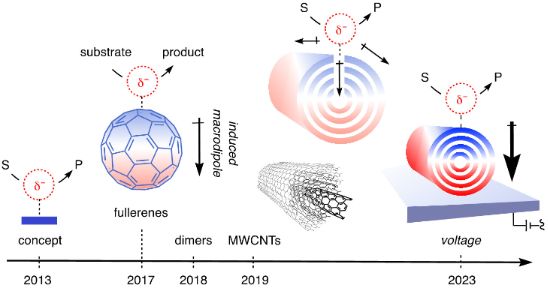
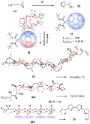
- control 12, a secondary Bingel amide in 13 caused a drop to A/D13/12 = 1.6. Similarly, low A/D14/12 = 1.5 for an ester in 14 supported that removal of the hydrogen-bond donor in 5 rather than steric constraints account for the decrease in anion–π catalysis. Elongation of the tether in the ester series 14




Active-metal template clipping synthesis of novel [2]rotaxanes
Beilstein J. Org. Chem. 2023, 19, 1776–1784, doi:10.3762/bjoc.19.130
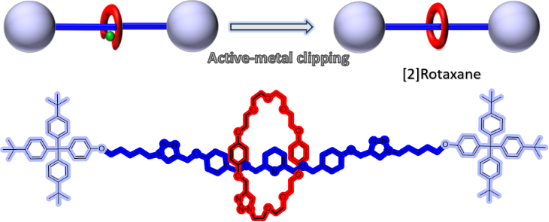
- active-metal template strategies [12][13][14][15][16][17][18][19][20][21][22][23]. Other known methods are shrinking [24][25], swelling [26] or hydrogen-bond-mediated transition state stabilization [27][28][29], the latter resembling active-metal template synthesis. Regardless of the method used, the


Trifluoromethylated hydrazones and acylhydrazones as potent nitrogen-containing fluorinated building blocks
Beilstein J. Org. Chem. 2023, 19, 1741–1754, doi:10.3762/bjoc.19.127
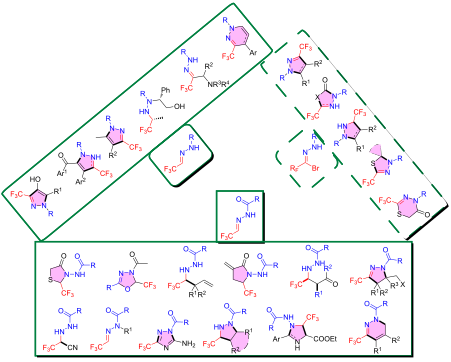
- indispensable role in drug discovery and design since the hydrogen atom can act as lipophilic hydrogen-bond donor and act as a bioisostere for the alcohol moiety [81][82][83]. Thus, many effective difluoromethylation strategies have been developed in recent years. Difluoroacetohydrazonoyl bromides were chosen


Effects of the aldehyde-derived ring substituent on the properties of two new bioinspired trimethoxybenzoylhydrazones: methyl vs nitro groups
Beilstein J. Org. Chem. 2023, 19, 1713–1727, doi:10.3762/bjoc.19.125
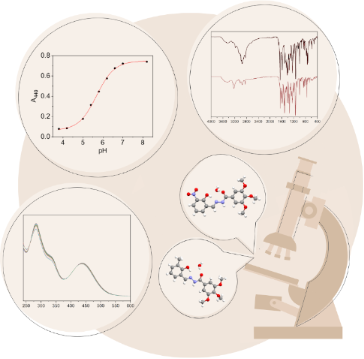
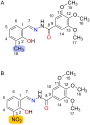
- the structures (Figure 2A) shows that spatial arrangements are nearly the same and even the crystallization water molecules were allocated in nearby sites, interacting as H-acceptors in a hydrogen bond with the respective N2H groups. In spite of these similarities, the compounds were indexed in
- Supporting Information File 1), but the presence of the hydrogen bond influences the contiguous aromatic system, as can be inferred by the characteristic elongation of the C1–C2 bond, which is 1.405(2) Å in hdz-CH3 and 1.411(3) Å in hdz-NO2 [40][41][42]. The effect is also noticed through the HOMA (harmonic





Complexes of resorcin[4]arene with secondary amines: synthesis, solvent influence on “in-out” structure, and theoretical calculations of non-covalent interactions
Beilstein J. Org. Chem. 2023, 19, 1525–1536, doi:10.3762/bjoc.19.109
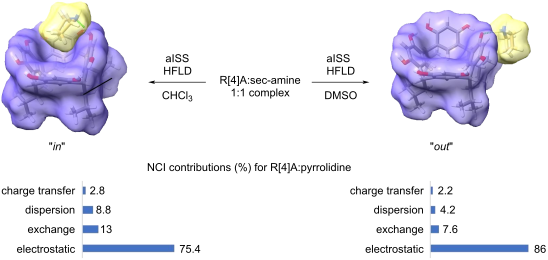
- exchange and dispersion interactions in CHCl3 in relation to DMSO are the driving forces behind the placement of sec-amine molecules into the R[4]A cavity and the formation of “in” type complexes. Keywords: complexes; DFT calculations; hydrogen bond; resorcin[4]arene; supramolecular chemistry
- transferred from the hydroxy group of R[4]A to the amine molecule, forming a hydrogen bond between the proton of the positively charged amino group and the oxygen anion in the R[4]A molecule (ArO−···H+NHR2). For sec-amine molecules such as morpholine and N-methylpiperazine, an “out” complex is formed by
- hydrogen bonding between the proton of the hydroxy group of R[4]A and the nitrogen atom of the amine molecule (ArOH···NHR2). In CHCl3, the amine molecule partially resides within the R[4]A cavity and the formed complex is stabilized by a hydrogen bond between the hydroxy group of R[4]A and the nitrogen




Exploring the role of halogen bonding in iodonium ylides: insights into unexpected reactivity and reaction control
Beilstein J. Org. Chem. 2023, 19, 1171–1190, doi:10.3762/bjoc.19.86
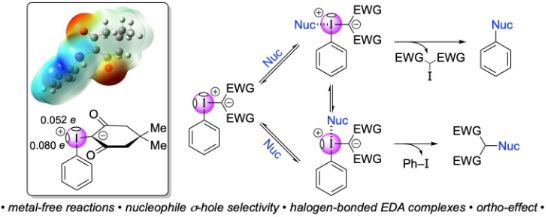
- numerous similar attributes, halogen bonding has also proven to be a viable alternative in methodologies that rely on hydrogen bond initiation. For example, both halogen- and hydrogen bonding can be used in supramolecular chemistry as the binding mechanism in photoresponsive receptors [73][74][75][76][77








Aromatic C–H bond functionalization through organocatalyzed asymmetric intermolecular aza-Friedel–Crafts reaction: a recent update
Beilstein J. Org. Chem. 2023, 19, 956–981, doi:10.3762/bjoc.19.72

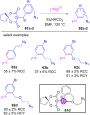
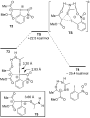
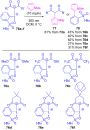
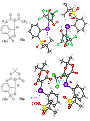
- in 83 and the enantioregulation was achieved by BINOL-derived chiral phosphoric acid P22. An amine functionality was crucial in the isoxazole ring to enhance the nucleophilicity of the adjacent carbon atom. In addition, the amine hydrogen forms an H-bond with the catalyst along with another hydrogen
- bond formed between the imine nitrogen of 49 and the catalyst’s OH group (see transition state 84). These dual H-bonding interactions were assisted by a π–π interaction between the arene rings of both the electrophile and nucleophile that helped in the formation of a stereodefined transition state. The




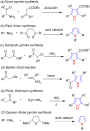
Clauson–Kaas pyrrole synthesis using diverse catalysts: a transition from conventional to greener approach
Beilstein J. Org. Chem. 2023, 19, 928–955, doi:10.3762/bjoc.19.71
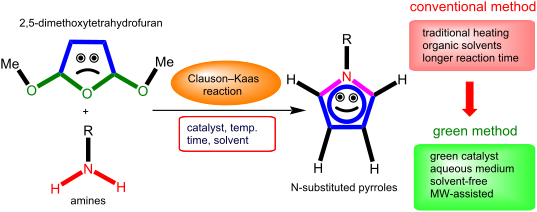
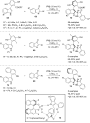
- amines 52 with 2,5-DMTHF (2) under a L-(+)-tartaric acid-choline chloride based deep eutectic solvent as green medium (Scheme 25a). Deep eutectic solvents (DESs) are mainly synthesized by mixing quaternary ammonium salts and hydrogen-bond donors. In this study, various combinations of salts and hydrogen
- bond donating groups were investigated. Among these, the DES prepared by mixing quaternary ammonium salts choline chloride (ChCl) and the hydrogen-bond donor L-(+)-tartaric acid gives the best result. Moreover, L-(+)-tartaric acid–ChCl acts as both solvent and catalyst for pyrrole synthesis. This




Mechanochemical solid state synthesis of copper(I)/NHC complexes with K3PO4
Beilstein J. Org. Chem. 2023, 19, 440–447, doi:10.3762/bjoc.19.34
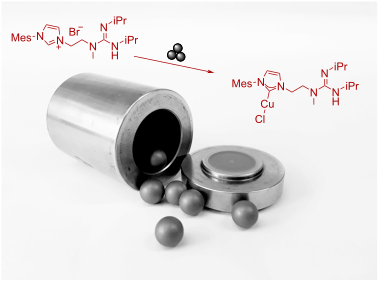
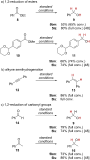
- inactive complexes (see Supporting Information File 1 for details). This also supports the notion that during catalytic ester hydrogenation, the guanidinium moiety acts as a hydrogen bond donor to the esters [48]. The formation of a CO2 adduct hinders the ability to form hydrogen bonds. Furthermore


Dipeptide analogues of fluorinated aminophosphonic acid sodium salts as moderate competitive inhibitors of cathepsin C
Beilstein J. Org. Chem. 2023, 19, 434–439, doi:10.3762/bjoc.19.33
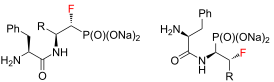
- as potential inhibitors of cathepsins. The phosphorus atom by default should mimic the tetrahedral intermediate, but this role may also be played by the hydroxy group present in hydroxyphosphonates, which mimic the carbonyl carbon in the peptide bond by forming a hydrogen bond with the amino group of


Asymmetric synthesis of a stereopentade fragment toward latrunculins
Beilstein J. Org. Chem. 2023, 19, 428–433, doi:10.3762/bjoc.19.32
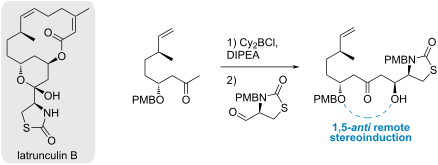
- -induction of the aldol stereocenter by β-alkoxy ketone 9, leading to an (S)-configuration [18][19][20]. This control is supposed to follow a boat transition state A stabilized by a formyl hydrogen bond [30]. It is known to be dependent on the nature of the β-alkoxy substituent, being particularly favoured




Catalytic aza-Nazarov cyclization reactions to access α-methylene-γ-lactam heterocycles
Beilstein J. Org. Chem. 2023, 19, 66–77, doi:10.3762/bjoc.19.6

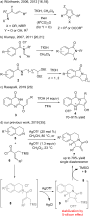
- -unsaturated acyl chlorides to afford substituted α-methylene-γ-lactam heterocycles. The reactions proceed effectively in the presence of catalytic (20 mol %) amounts of AgOTf as an anion exchange agent or hydrogen-bond donors such as squaramides and thioureas as anion-binding organocatalysts. The aza-Nazarov
- isolated in 54% yield (Table 1, entry 8). The exchange of chloride with the non-coordinating BF4− anion, driven by the precipitation of NaCl, is proposed to be responsible for this positive result. Next, we turned our attention to the use of hydrogen-bond donors as anion-binding catalysts [57][58]. To this
- ). Finally, we investigated the activity of the achiral thiophosphoric triamide 13 as a triple hydrogen-bond donor [67]. With the use of 1.2 equiv of 13 at 23 °C, product 7b was isolated in 25% yield (Table 1, entry 16). Overall, while AgOTf still appeared to be the best reagent to be used in catalytic



Combining the best of both worlds: radical-based divergent total synthesis
Beilstein J. Org. Chem. 2023, 19, 1–26, doi:10.3762/bjoc.19.1
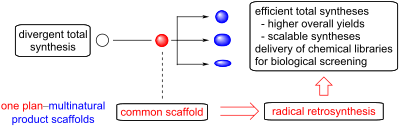
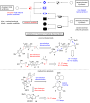
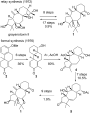
- protected tryptamine starting materials. The utilization of a chiral phosphate base is essential for the formation of a hydrogen bond between phosphate and tryptamines, allowing the decrease of the oxidation potential. This concept was used for the synthesis of pyrroloindoline natural products (Scheme 17











Total synthesis of grayanane natural products
Beilstein J. Org. Chem. 2022, 18, 1707–1719, doi:10.3762/bjoc.18.181
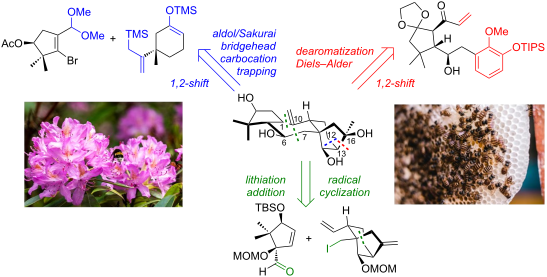
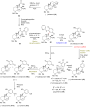
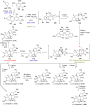
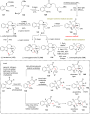
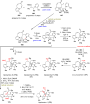
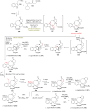
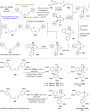
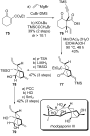
- optimization showed that chiral squaramide 47 developed by Jacobsen’s group significantly accelerated the Mukaiyama reaction compared to TMSOTf or TiCl4 thanks to chiral hydrogen bond-donor effect [35]. After Sakurai cyclization promoted by EtAlCl2, the desired product 48 was obtained with the required





Redox-active molecules as organocatalysts for selective oxidative transformations – an unperceived organocatalysis field
Beilstein J. Org. Chem. 2022, 18, 1672–1695, doi:10.3762/bjoc.18.179
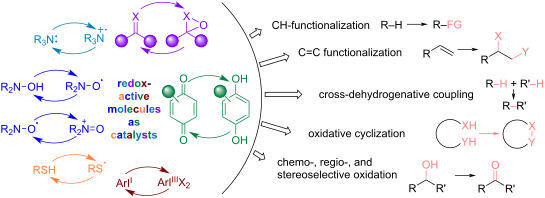
- coupling, or deprotonation followed by the functionalization of α- and β-positions of the starting aldehyde. NHC-catalyzed photochemical processes [64] and oxidative cyclizations with heterocycle formation [65] were reviewed previously. Acidic molecules or hydrogen-bond donors are used as organocatalysts
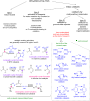
- oxaziridinium organocatalysis was developed recently [138]. The advantage of this method is the compatibility with secondary alcohol groups, which are not oxidized and can be used as a directing moiety. The use of HFIP as a strong hydrogen bond donor solvent protecting alcohols from oxidation was considered as



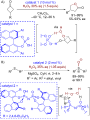


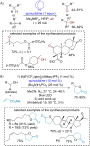


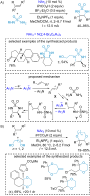


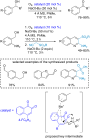


Preparation of β-cyclodextrin-based dimers with selectively methylated rims and their use for solubilization of tetracene
Beilstein J. Org. Chem. 2022, 18, 1596–1606, doi:10.3762/bjoc.18.170
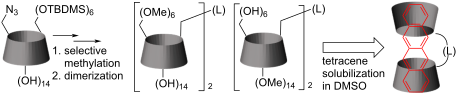
- 13 (β-CD) has also shown poor solubilizing activity. We suggest that the presence of hydroxy groups on the secondary rim of CD allows the hydrogen bond formation between two molecules, creating a capsule (tail-to-tail interaction, Figure 6a). It seems the generation of such capsules in solution


Experimental and theoretical studies on the synthesis of 1,4,5-trisubstituted pyrrolidine-2,3-diones
Beilstein J. Org. Chem. 2022, 18, 1140–1153, doi:10.3762/bjoc.18.118
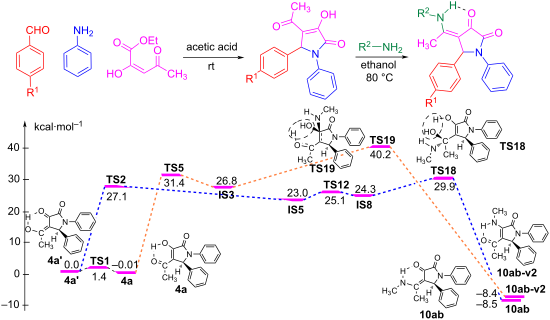
- -Trisubstituted pyrrolidine-2,3-dione derivatives were prepared from the above mentioned 2-pyrrolidinone derivatives and aliphatic amines, which exist in enamine form and are stabilized by an intramolecular hydrogen bond. A possible reaction mechanism between 3-pyrroline-2-one and aliphatic amine (CH3NH2) was
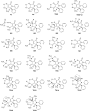
- 4a–c in DMSO [46], a hydrogen-bond accepting solvent (Scheme 3). To clarify further this statement, DFT calculations were performed at the B3LYP/6-311++G(2d,2p)//B3LYP/6-31+G(d,p) level of theory as given in Table 2 and Table 3. The theoretical results show that structure 4a is more stable than 4a
- ···O intramolecular hydrogen bond (distance ca. 1.7–1.8 Å) (cf. Figures 4–6). The isomerization of 4a/4a’ is extremely fast due to the high rate constant of about 1012 s−1 at 298 K, calculated by the transitional state theory method and quantum tunneling effect [47]. It is thus impossible to


First series of N-alkylamino peptoid homooligomers: solution phase synthesis and conformational investigation
Beilstein J. Org. Chem. 2022, 18, 845–854, doi:10.3762/bjoc.18.85
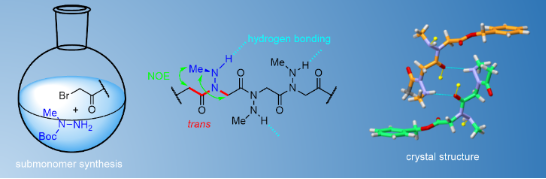
- , is consistent with intramolecular hydrogen bond interaction, which is accompanied by a reduction of the exchange rate of the NH proton. In DMSO, we observe reduced NH linewidths, consistent with the fact that this solvent has strong hydrogen bonding and solvation abilities which reduce significantly
- Information File 1). The lowest energy was found for χ1 = 124°, an angle value slightly higher than those found in the crystallographic structure of compound 2 (111 and 116° for conformation B, Table 2). This difference may be a result of the 6-membered intramolecular hydrogen bond formed in the monomer model
- geometry by the N-methylamino side chain, the presence of a hydrogen bond NH donor group is a key element in controlling the main-chain conformation and side chains orientation. It should be noted that to date, the presence of D–H donor groups on the side chains has been little exploited to control the





