


Search results
Search for "imide" in Full Text gives 94 result(s) in Beilstein Journal of Organic Chemistry.
Metal–ligand multiple bonds as frustrated Lewis pairs for C–H functionalization
Beilstein J. Org. Chem. 2012, 8, 1554–1563, doi:10.3762/bjoc.8.177
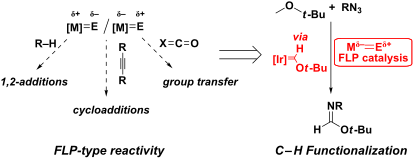
- ) [27]. Similar reactions have been observed for nucleophilic imido complexes, in which imines can be formed by an oxo/imide metathesis at zirconium(IV). As with the Schrock neopentylidene, the reaction proceeds through a four-membered metallacycle, which eliminates the organic product through a [2 + 2
- ] cycloreversion (Scheme 4) [28]. Other early metal imides may demonstrate similar reactivity, as seen in a reaction reported by Schrock for a tantalum(V) imide [29]. The reactions described above represent only a few of the many metal–ligand cooperative reactions of nucleophilic, multiply bonded species with
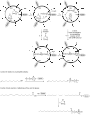
- for linear or terminally bound species, e.g., nitride, carbyne, linear imide, oxo, or borylene; n = 2 for bent or trigonal species, e.g., carbene, silylene, bent imide, amide, or boryl). Quenching of M═E FLPs by dimerization: (a) generic Mδ+═Eδ− case, and (b) Bergman's arylimido zirconium(IV) [25




Parallel and four-step synthesis of natural-product-inspired scaffolds through modular assembly and divergent cyclization
Beilstein J. Org. Chem. 2012, 8, 930–940, doi:10.3762/bjoc.8.105
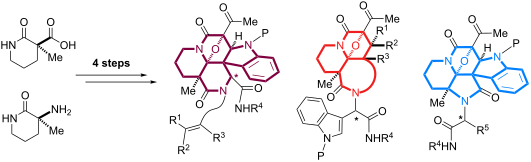
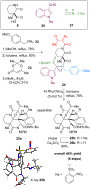
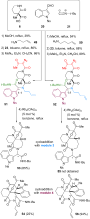
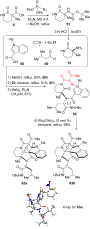
- by reaction with an acetylketene [26] would produce a tetraketide-like precursor 10 composed of five modules. Since two methylene groups in module 2 in the tetraketide-like moiety 10 are masked as an imide group and a quaternary center, respectively, the remaining methylene in module 1 would be
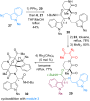
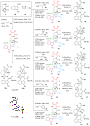
- . Installation of a β-keto imide followed by diazotransfer reaction produced 29. Upon the treatment of 29 with Rh2(OAc)4 catalyst (5 mol %), the cycloaddition occurred in a highly site-selective manner at module 3 to form 30 in 77% yield. Cycloaddition with the other site (module 4) is likely to be hindered by


Synthesis and characterization of a novel carboxyl group containing (co)polyimide with sulfur in the polymer backbone
Beilstein J. Org. Chem. 2012, 8, 776–786, doi:10.3762/bjoc.8.88

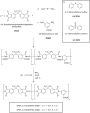
- -DABA 4:1 and 6FDA-3,3′-DDS/6FDA-DABA 4:1, respectively, are shown. Polyimides in general, exhibit characteristic vibration bands, i.e., the asymmetric C=O stretching vibration, the symmetric C=O stretching vibration, the C–N stretching vibration, and the imide-five-ring deformation vibration. As shown
- in Figure 3, the characteristic bands of 6FDA-4,4′-SDA/6FDA-DABA 4:1 are, as expected, located at 1785.79 cm−1 (asymmetric C=O stretching vibration), 1722.15 cm−1 (symmetric C=O stretching vibration), 1367.31 cm−1 (C–N stretching vibration) and 719.33 cm−1 (imide-five-ring deformation vibration



Facile isomerization of silyl enol ethers catalyzed by triflic imide and its application to one-pot isomerization–(2 + 2) cycloaddition
Beilstein J. Org. Chem. 2012, 8, 658–661, doi:10.3762/bjoc.8.73

- , Japan 10.3762/bjoc.8.73 Abstract A triflic imide (Tf2NH) catalyzed isomerization of kinetically favourable silyl enol ethers into thermodynamically stable ones was developed. We also demonstrated a one-pot catalytic reaction consisting of (2 + 2) cycloaddition and isomerization. In the reaction
- sequence, Tf2NH catalyzes both of the reactions. Keywords: isomerization; one-pot reaction; organocatalysis; silyl enol ethers; triflic imide; Introduction Silyl enol ethers, which are isolable equivalents of metal enolates, are useful and important intermediates in synthetic chemistry [1][2][3]. They
- on triflic imide (Tf2NH)-catalyzed reactions [8], we accidentally found that the isomerization of kinetically favourable silyl enol ethers into thermodynamically stable ones occurs smoothly in the presence of Tf2NH. When the TBS enol ether 1a was treated with a catalytic amount of Tf2NH (1.0 mol


Synthesis of (−)-julocrotine and a diversity oriented Ugi-approach to analogues and probes
Beilstein J. Org. Chem. 2011, 7, 1504–1507, doi:10.3762/bjoc.7.175
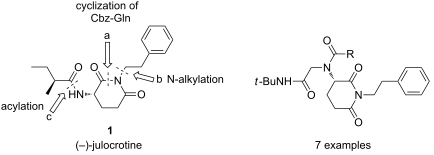
- % yield in optically pure form [16]. To alkylate the imide-moiety, glutarimide 3 was reacted with phenylethyl bromide in the presence of potassium carbonate at room temperature. The desired compound 4 was obtained in 98% isolated yield, but analysis revealed racemization. Indeed, the equilibration at the


Photoinduced electron-transfer chemistry of the bielectrophoric N-phthaloyl derivatives of the amino acids tyrosine, histidine and tryptophan
Beilstein J. Org. Chem. 2011, 7, 518–524, doi:10.3762/bjoc.7.60
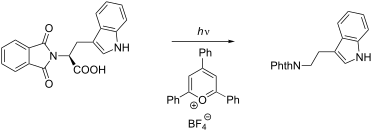
- photoinduced electron-transfer (PET) reactions. N-Alkylated phthalimides typically absorb in the 295 nm region with extinction coefficients around 103. The quantum yields for intersystem crossing ФISC significantly change with the substitution on the imide nitrogen, e.g., ФISC = 0.5 for N-isobutylphthalimide


An overview of the key routes to the best selling 5-membered ring heterocyclic pharmaceuticals
Beilstein J. Org. Chem. 2011, 7, 442–495, doi:10.3762/bjoc.7.57
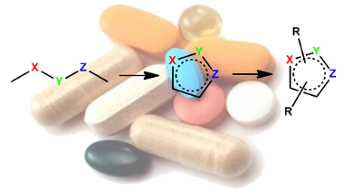
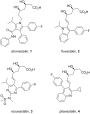
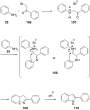
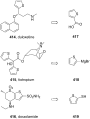
- pyrazole [74]. However, preparation of the alkyne intermediates involves a number of steps and often requires extensive column chromatography, which makes it an unattractive method for synthesis on a larger scale (Scheme 48). A novel 1,3-dipolar cycloaddition between a nitrile imide 244 and an







Brønsted acid-promoted azide–olefin [3 + 2] cycloadditions for the preparation of contiguous aminopolyols: The importance of disiloxane ring size to a diastereoselective, bidirectional approach to zwittermicin A
Beilstein J. Org. Chem. 2010, 6, 1206–1210, doi:10.3762/bjoc.6.138

- benzyl azide with α,β-unsaturated imides. Using a strong Brønsted acid (triflic acid) to activate the electron deficient imide π-bond, high diastereoselection was observed provided that a 1,1,3,3-tetraisopropoxydisiloxanylidene group (TIPDS) is used to restrict the conformation of the central 1,3-anti
- aminohydroxylations [6][7][8]. Triflic acid-promoted reaction of an alkyl azide with an α,β-unsaturated imide delivers a formal anti-aminohydroxylation product. We wondered whether azide–olefin functionalization could be used to prepare the complex aminopolyol core of zwittermicin A [9][10][11][12]. We were
- arise from the acid-promoted fragmentation of 2,3-anti / 2’,3’-anti bis(triazoline) 3 (Scheme 1). Compound 3 would be assembled in a sequential substrate-controlled intermolecular cycloaddition between imide 4 and benzyl azide. We envisioned that the facial discrimination could be provided by a large


Miniemulsion polymerization as a versatile tool for the synthesis of functionalized polymers
Beilstein J. Org. Chem. 2010, 6, 1132–1148, doi:10.3762/bjoc.6.130
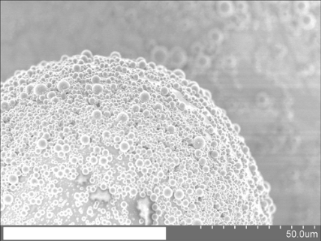
- locus is hydrophobic and spills out the water into the continuous phase. The ionic liquid 1-ethyl-3-methylimidazolium bis(trifluoromethylsulfonyl)imide was used both as continuous phase and as stabilizer due to its amphiphilic properties. The approach is interesting for synthesizing polymers, which





Aromatic and heterocyclic perfluoroalkyl sulfides. Methods of preparation
Beilstein J. Org. Chem. 2010, 6, 880–921, doi:10.3762/bjoc.6.88
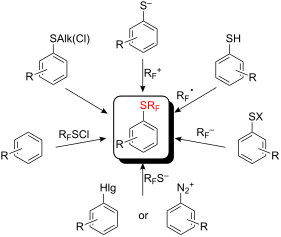
- NO2, CF3 or COCl in the aromatic ring of trichlorothioanisole does not influence the fluorination and the reaction is not hindered by bulky ortho-substituents e.g., phthalic acid imide [53] or N-substituted anilines [54]. Other reactive substituents, for example 3-SCCl3 or 4-COCl are also fluorinated


Kinetic studies and predictions on the hydrolysis and aminolysis of esters of 2-S-phosphorylacetates
Beilstein J. Org. Chem. 2010, 6, 732–741, doi:10.3762/bjoc.6.87
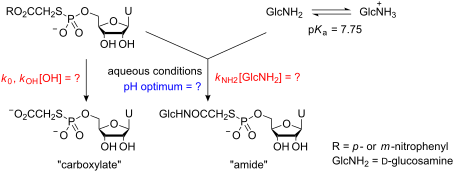
- %); νmax (KBr disk)/cm−1 3220 (OH), 1690 (CO imide), 1270 (PO), 620 (PS); δH (500 MHz; D2O) 7.99 (1H, d, J 8.0, 6-CH), 5.82 (1H, d, J 5.4, 1′-CH), 5.79 (1H, d, J 8.1, 5-CH), 4.24 (1H, t, J 5.1, 2′-CH), 4.20 (1H, t, J 4.5, 3′-CH), 4.08–4.12 (1 H, m, 4′-CH), 3.82–3.93 (2 H, m, 5′-CH); δP (160 MHz, D2O) 44.2


Enantioselective synthesis of tricyclic amino acid derivatives based on a rigid 4-azatricyclo[5.2.1.02,6]decane skeleton
Beilstein J. Org. Chem. 2009, 5, No. 81, doi:10.3762/bjoc.5.81

- racemic form starting from inexpensive endo-carbic anhydride (10, Scheme 1). Conversion of the succinyl anhydride moiety in 10 into the pyrrolidine ring in 11 was accomplished in three steps and 74% yield by imide formation, reduction [24], and N-protection. Hydroboration/oxidation of the alkene function




Mitomycins syntheses: a recent update
Beilstein J. Org. Chem. 2009, 5, No. 33, doi:10.3762/bjoc.5.33

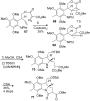
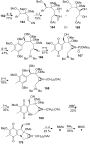
- compound 40 are conjugated with the ketone through the aromatic ring. Thus, the lactam behaves as an imide whose carbonyls express ketone-like reactivity. Moreover, the upper carbonyl is deactivated by conjugation with a methoxy group in the ortho position of the benzene ring, and by the steric crowding by
- of a titanocyclopropane developed by Kulinkovich [116], Cha’s approach to mitomycins involves the intramolecular addition of the same dialkoxytitanacyclopropane to an imide [117]. In contrast to the Kulinkovich’s cyclopropane synthesis, the imide proved to be resistant to cyclopropanation and the






Synthesis of rigidified flavin–guanidinium ion conjugates and investigation of their photocatalytic properties
Beilstein J. Org. Chem. 2009, 5, No. 26, doi:10.3762/bjoc.5.26

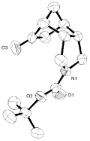
- flavin heteroarenes are observed. The structure of compound 1 in the solid state (Figure 2) shows an almost identical orientation of the flavin group to that of the acid 6. The acyl guanidinium ion group is almost planar and in a parallel orientation relative to the Kemp’s acid imide group. 2-D NMR
- effectively transferred in 1 and 2 to the relative flavin–guanidinium ion orientation, which is due to the flexible ethane linker between imide and flavin. Derivatives with a more constrained conformation of the flavin chromophore and the substrate binding sites may lead to chemical photocatalysts with better




Total synthesis of the indolizidine alkaloid tashiromine
Beilstein J. Org. Chem. 2008, 4, No. 8, doi:10.1186/1860-5397-4-8
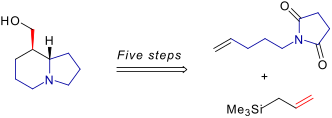
- -mediated reductive imide-olefin cyclisation [10]. Our own approach [14] utilises an intramolecular addition of an allylsilane to an N-acyliminium ion to deliver the [4.3.0]-azabicyclic (indolizidine) skeleton 2 (Scheme 1), wherein the pendant vinyl group acts as a handle to install the hydroxymethyl
- allylsilanes. Specifically, cross-metathesis of N-pentenylsuccinimide 5 with allyltrimethylsilane (6) [39] followed by chemoselective partial reduction of the imide would give the cyclisation precursor 3 in short order. Further, the use of chiral allylsilanes as cross-metathesis partners would potentially


A convenient allylsilane- N-acyliminium route toward indolizidine and quinolizidine alkaloids
Beilstein J. Org. Chem. 2007, 3, No. 32, doi:10.1186/1860-5397-3-32
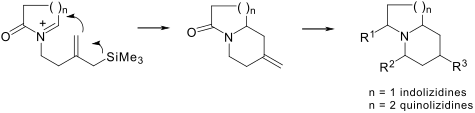
- carried out as shown in Scheme 2. Reaction of (R)-2 with succinic anhydride and then with acetyl chloride in refluxing toluene gave imide 3, then, 3 was reduced into ethoxylactam 4. In the next step, 4 was treated with two equivalents of the cerium reagent derived from trimethylsilymethylmagnesium
- ' procedure from ethyl crotonate and respectively (R)- and (S)-N-benzyl-α-methylbenzylamine. [17] Reaction of 23a with succinic anhydride and then with acetyl chloride gave imide 24a, it was then reduced into ethoxylactam 25a. Compound 25a was treated with the cerium reagent derived from
- hydroxyalkylallylsilane 32 is accomplished in 40% yield following Trost's procedure. [48] Reaction of glutarimide with alcohol 32 under Mitsunobu reaction conditions afforded imide 33 in 67% yield. Reduction of 33 was carried out with an excess of sodium borohydride in methanol at 0°C to give 34 as a mixture of two


A hydrogen- bonded channel structure formed by a complex of uracil and melamine
Beilstein J. Org. Chem. 2007, 3, No. 17, doi:10.1186/1860-5397-3-17
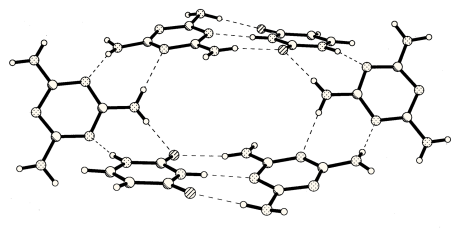
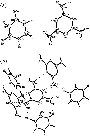
- channel structure with 4,4'-bipyridyl. [5] Although hydrogen bonding aspects of cyanuric acid have been studied in detail, similar structures formed by uracil possessing two imide groups has not been studied adequately, except for its hydrogen bonding with adenine in RNA. [6] In RNA, uracil forms cyclic




Study of thioglycosylation in ionic liquids
Beilstein J. Org. Chem. 2006, 2, No. 12, doi:10.1186/1860-5397-2-12
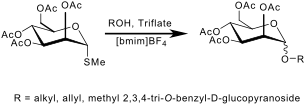
- product yields. A more hydrophobic ionic liquid, 1-butyl-1-methylpyrrolidinium bis(trifluormethylsulfonyl)imide was applied for the thioglycosylation of several substrates, and the experimental data indicated that there was little reaction, indicating that 1-butyl-1-methylpyrrolidinium bis
- (trifluormethylsulfonyl)imide is not a good alternative ionic liquid solvent for this protocol. In the synthesis of 3c, water was deliberately added to the reaction mixture before the addition of methyl triflate. The experimental data Table 2 indicated that the obtained yield of 3c remained the same until one molar


One-pot synthesis of novel 1H-pyrimido[4,5-c][1,2]diazepines and pyrazolo[3,4-d]pyrimidines
Beilstein J. Org. Chem. 2006, 2, No. 5, doi:10.1186/1860-5397-2-5

- (KBr) band at 3389 cm-1 (NH, stretch) and 1522 cm-1 (NH, bending) revealed that the compound has an NH group. Other absorption bands at 1697 and 1607 cm-1 indicated the presence of cyclic imide system. In the mass spectrum the strong molecular ion peak MS m/z at 390 (M+) suggested that the products
- were formed by water loss from the two substrates. The 13C NMR showed that the product contained one aliphatic CH2 and one aliphatic CH besides other expected moieties. No C=O group (other than the cyclic imide system) was indicated either from the IR or 13C NMR spectrum. Interestingly, when mesityl
- cyclic imide system. Thus no C=O group (other than the cyclic imide system) was indicated either from IR or 13C NMR spectrum. The 1H NMR spectra showed the absence of C-5 proton of the uracil moiety which supported the involvement of a cyclisation process. The absence of NH/OH group could be explained





