Search results
Search for "network" in Full Text gives 338 result(s) in Beilstein Journal of Organic Chemistry. Showing first 200.
Halides as versatile anions in asymmetric anion-binding organocatalysis
Beilstein J. Org. Chem. 2021, 17, 2270–2286, doi:10.3762/bjoc.17.145
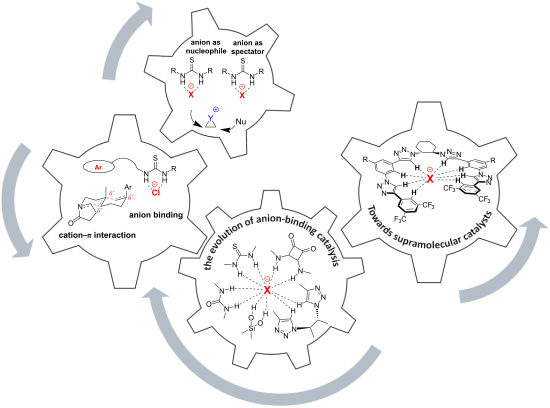
- reported a family of chiral helical tetratriazoles 82 as a new class of anion-binding catalysts, which can be considered as supramolecular anion-binding catalysts (Scheme 18) [22]. Not only is the increased H-bonding network in multidentate 82 beneficial for giving a firm control over both regio- and



An initiator- and catalyst-free hydrogel coating process for 3D printed medical-grade poly(ε-caprolactone)
Beilstein J. Org. Chem. 2021, 17, 2095–2101, doi:10.3762/bjoc.17.136
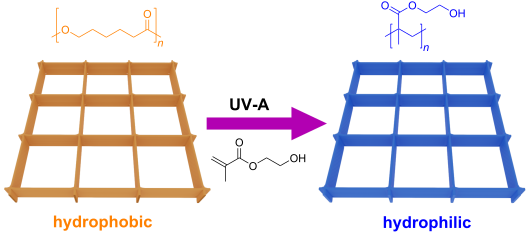
- ]. Interestingly, PCL frames made with MEW were used to build up soft network composites [41][42][43] with outstanding mechanical properties, also with weak matrices of interest for tissue engineering applications [44]. Conclusion SIPGP is an interesting complementary technique to modify the surface of MEW printed


Towards new NIR dyes for free radical photopolymerization processes
Beilstein J. Org. Chem. 2021, 17, 2067–2076, doi:10.3762/bjoc.17.133

- filled samples can be potentially used for composite materials and/or adhesives. Both photochemical and photothermal NIR approaches were proposed to initiate polymerization, e.g., for free-radical processes, interpenetrating polymer network (IPN) synthesis, or photopolyaddition reactions [3][4][6][7][8




Progress and challenges in the synthesis of sequence controlled polysaccharides
Beilstein J. Org. Chem. 2021, 17, 1981–2025, doi:10.3762/bjoc.17.129
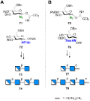
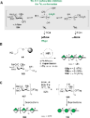
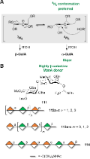
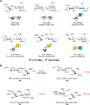
- suggested that XGs are not essential for the creation of the cellulose network [96]. The complexity and diversity of XGs hinder isolation from natural sources and complicates their description. A significant effort was put towards the development of enzymes for selective introduction of the side chains [97










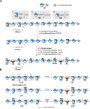


A systems-based framework to computationally describe putative transcription factors and signaling pathways regulating glycan biosynthesis
Beilstein J. Org. Chem. 2021, 17, 1712–1724, doi:10.3762/bjoc.17.119
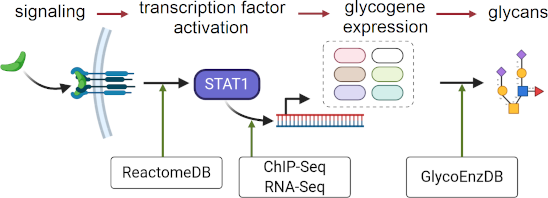
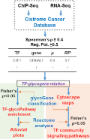
- Cytoscape as a network. These data were filtered based on RP and ρ thresholds defined previously. A binding potential (BP) score was computed by taking the product of RP and ρ for each TF–glycogene relationship. TF–glycogene relationships for each cancer type were separated into subnetworks. The Prefuse




Electron-rich triarylphosphines as nucleophilic catalysts for oxa-Michael reactions
Beilstein J. Org. Chem. 2021, 17, 1689–1697, doi:10.3762/bjoc.17.117
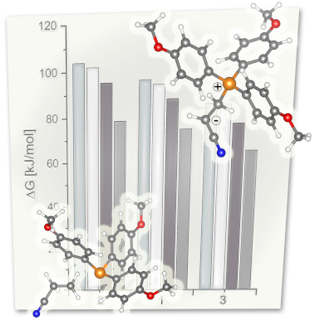
- acceptors, Michael donors and catalysts used in this study; pKa (respectively pKa of the conjugated acid in case of phosphines) calculated using the pKa prediction platform (neural network result for solvent H2O) available at pka.luo-group.com [20]; below: Conversion of the oxa-Michael reaction of


Photoinduced post-modification of graphitic carbon nitride-embedded hydrogels: synthesis of 'hydrophobic hydrogels' and pore substructuring
Beilstein J. Org. Chem. 2021, 17, 1323–1334, doi:10.3762/bjoc.17.92
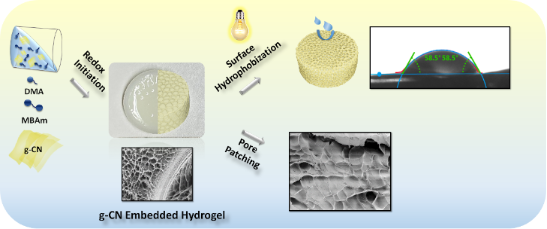
- . Post-modifications of hydrogels propose an attractive platform so that a variety of fresh functions, which are not arising from initial monomers, could be accessible on a parental network. Photoinduced post-modification of hydrogels by embedding semiconductor nanosheets would be of high interest and
- novelty. Here, a metal-free semiconductor graphitic carbon nitride (g-CN)-embedded hydrogel as an initial network was synthesized via redox-couple initiation under dark conditions. Post-photomodification of so-formed hydrogel, thanks to the photoactivity of the embedded g-CN nanosheets, was exemplified in
- two scenarios. The synthesis of ‘hydrophobic hydrogel’ is reported and its application in delayed cation delivery was investigated. Furthermore, pores of the initial hydrogel were modified by the formation of a secondary polymer network. Such a facile and straightforward synthetic protocol to


A comprehensive review of flow chemistry techniques tailored to the flavours and fragrances industries
Beilstein J. Org. Chem. 2021, 17, 1181–1312, doi:10.3762/bjoc.17.90
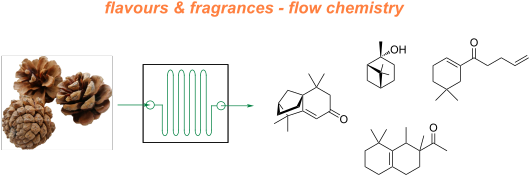
- reagent incorporation into a mixture of monomers which are co-polymerised to create a network of micro- and mesoporous channels that fill the entirety of the tube/column. In a coated wall reactor, the reagent is immobilised onto the inner surface of the reactor. Finally, packed bed reactor columns are
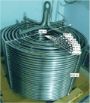
- ). Packed-bed reactors have also been exploited to facilitate enantioselective nitroaldol processes. In 2013, Shibasaki and Kumagai made use of an entangling network of multiwalled carbon nanotubes (MWNT) to trap a Nd/Na bimetallic catalyst, which was shown to be an efficient combination for nitroaldol










Structural effects of meso-halogenation on porphyrins
Beilstein J. Org. Chem. 2021, 17, 1149–1170, doi:10.3762/bjoc.17.88
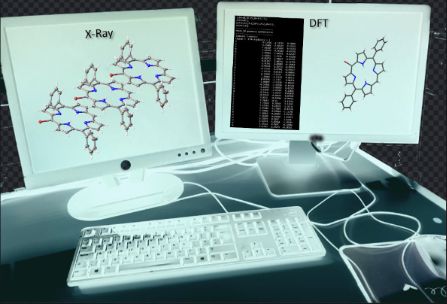
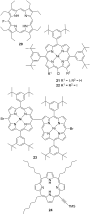
- porphyrin together extending the network to be an alkyl···porphyrin···alkyl···porphyrin type system. In the next three compounds 13, 13A, and 14 the main structure only differs by the steric demand due to one meso aryl unit (3,4,5- trimethoxyphenyl (13 and 13A), 2,4,6-trimethoxyphenyl (14)) on one side [24
- forms a repeating pattern of face-to-edge interactions with only minimal interference from the axial ligand (Supporting Information File 1, Figure S39A) and a hydrogen-bonded network between the methoxy moieties (Supporting Information File 1, Figure S39B). Both features are expressed throughout the
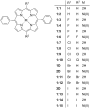
- arrangement with a 3.704(4) Å separation (Figure 20A) whilst a lateral alignment where the bromine atoms are pointing towards the tolyl groups in a linear network is observed (Figure 20B). The two other motifs seen are the bromine pyrrole interactions which is reciprocated in a head-to-head alignment (Figure




Nitroalkene reduction in deep eutectic solvents promoted by BH3NH3
Beilstein J. Org. Chem. 2021, 17, 1041–1047, doi:10.3762/bjoc.17.83
- -EID project Marie Skłodowska-Curie Actions Innovative Training Network–TECHNOTRAIN H2020-MSCA-ITN-2018 Grant Agreement 812944. http://www.technotrain-ITN.eu.



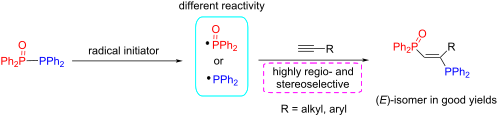
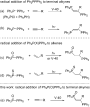
Highly regio- and stereoselective phosphinylphosphination of terminal alkynes with tetraphenyldiphosphine monoxide under radical conditions
Beilstein J. Org. Chem. 2021, 17, 866–872, doi:10.3762/bjoc.17.72
- Nanotechnology Network.



Simulating the enzymes of ganglioside biosynthesis with Glycologue
Beilstein J. Org. Chem. 2021, 17, 739–748, doi:10.3762/bjoc.17.64
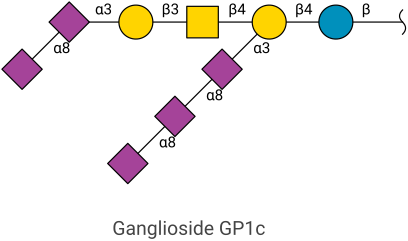
- those of the central nervous system, where they function in intercellular recognition and communication. We describe an in silico method for determining the metabolic pathways leading to the most common gangliosides, based on the known enzymes of their biosynthesis. A network of 41 glycolipids is
- ganglioside biosynthesis, and altered ganglioside status in cancer, and the effects on network structure are predicted. The simulator is available at the Glycologue website, https://glycologue.org/. Keywords: gangliosides; Glycologue; glycosyltransferases; neuropathy; Svennerholm nomenclature; Introduction
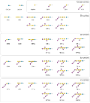
- ], this alternative activity of the enzyme has been included in the model (Table 2). After 11 iterations of the method, the simulator produces 41 unique structures shown in Figure 3, in 49 reactions, with the network shown in Figure 4. Networks and knockouts The structures shown in Figure 3 are divided




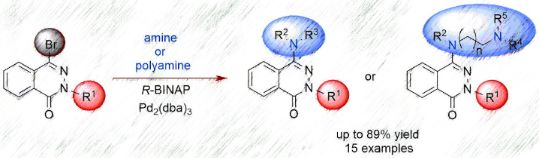
Amino- and polyaminophthalazin-1(2H)-ones: synthesis, coordination properties, and biological activity
Beilstein J. Org. Chem. 2021, 17, 558–568, doi:10.3762/bjoc.17.50
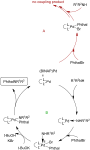
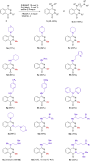
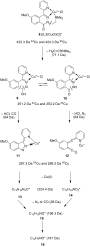
- angles equal to 27.61 and 28.71°, respectively, and moreover, the methyl groups of the methoxy substituents are directed opposite and towards to the pyridin-2-yl substituents, respectively. The crystal structure of complex 17 is stabilized with a 3D intermolecular hydrogen bond network (Figure S1a






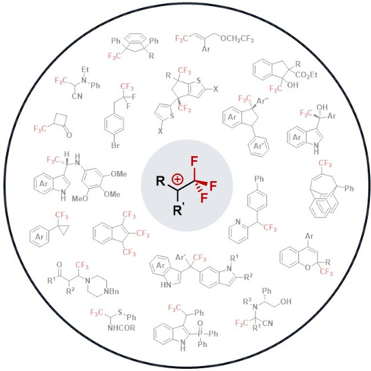
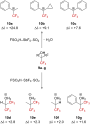
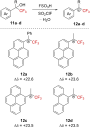
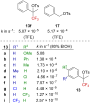
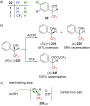
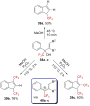
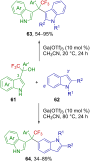
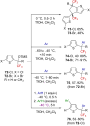
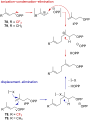
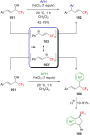
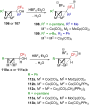
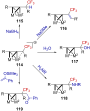
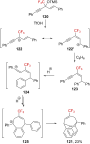
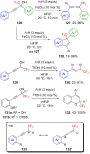
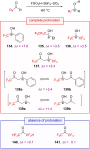
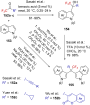
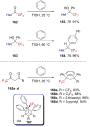
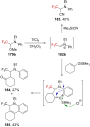
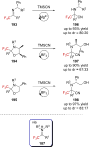
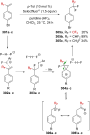
CF3-substituted carbocations: underexploited intermediates with great potential in modern synthetic chemistry
Beilstein J. Org. Chem. 2021, 17, 343–378, doi:10.3762/bjoc.17.32
































Multiswitchable photoacid–hydroxyflavylium–polyelectrolyte nano-assemblies
Beilstein J. Org. Chem. 2021, 17, 166–185, doi:10.3762/bjoc.17.17
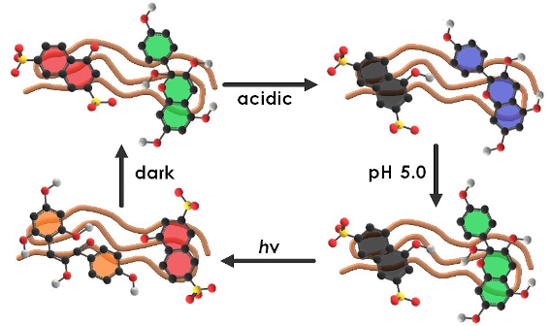
- building blocks for the ternary electrostatic self-assembly, forming well-defined supramolecular assemblies with tunable sizes of 50 to 500 nm. Due to the network of possible chemical reactions for the anthocyanidin and the excited-state dissociation of the photoacid upon irradiation, different ways to
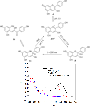
- , systems which respond to more than one external trigger have become of great interest [68][69][70][71][72][73]. Hydroxyflavylium cations can exhibit a network of different chemical reactions enabling these molecules to perform as a molecular level optical memory [74][75][76][77][78]. The network of
- step when excited by light irradiation. Due to the network of possible reactions of Flavy, self-assembly can be accessed and triggered in a number of ways. While this study focused on the first proof of concept and the relation of molecular and nanoscale switching, a deeper understanding of the




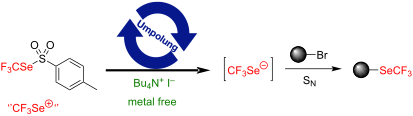
Metal-free nucleophilic trifluoromethylselenolation via an iodide-mediated umpolung reactivity of trifluoromethylselenotoluenesulfonate
Beilstein J. Org. Chem. 2020, 16, 3032–3037, doi:10.3762/bjoc.16.252
- grateful to the CNRS and the French Ministry of Research for financial support. The French Fluorine Network is also acknowledged for its support.


Controlled decomposition of SF6 by electrochemical reduction
Beilstein J. Org. Chem. 2020, 16, 2948–2953, doi:10.3762/bjoc.16.244
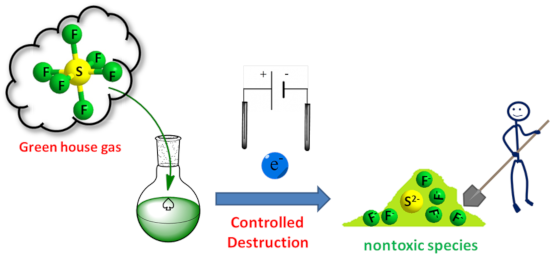
- potential of −2.3 V/SRE; (left). 19F NMR expansion of the final mixture. Funding S.B. thanks the French Ministry of Research for a Ph.D. grant. The Rhodia-Solvay company is gratefully acknowledged for the gift of sulfur hexafluoride. The French Fluorine Network (GIS Fluor) is acknowledged for financial


Using multiple self-sorting for switching functions in discrete multicomponent systems
Beilstein J. Org. Chem. 2020, 16, 2831–2853, doi:10.3762/bjoc.16.233
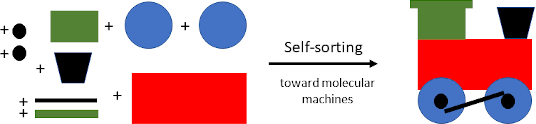
- reactions in a double self-sorting protocol [60]. The operation of the network required the addition and removal of zinc(II) ions which triggered three distinct events in parallel: i) a mutually dependent self-sorting of different nanorotors and reshuffling of the components, ii) a switching between vastly









Dirhamnolipid ester – formation of reverse wormlike micelles in a binary (primerless) system
Beilstein J. Org. Chem. 2020, 16, 2820–2830, doi:10.3762/bjoc.16.232
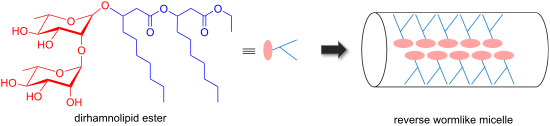
- is typical for wormlike micelle systems, the normalized Cole–Cole plot of G''/G''max against G'/G''max was obtained as a semicircle centered at G'/G''max = 1. The formation of network structures was also verified by polarized light microscopy. The sample was birefringent at ambient temperature and
- polarity. An unusual behavior was observed when the dirhamnolipid esters were added to toluene. The more polar short chain length dirhamnolipid esters and 7 form a gel-like texture in toluene, indicating the formation of a network structure of the surfactant molecules. With increasing chain length of the
- can be explained with an inhomogeneous breakup of the three-dimensional structure. In the beginning, the network collapses into big chunks, while the surrounding material is still rigid. A further increase in the temperature leads to a dominating viscous behavior until the whole sample becomes fluid


Optical detection of di- and triphosphate anions with mixed monolayer-protected gold nanoparticles containing zinc(II)–dipicolylamine complexes
Beilstein J. Org. Chem. 2020, 16, 2687–2700, doi:10.3762/bjoc.16.219
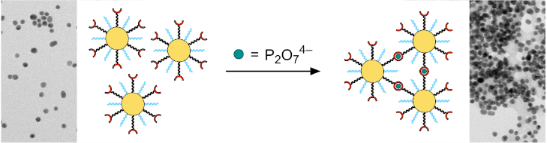
- longer wavelength. A network of a lighter material also appeared in these images, which could indicate the presence of insoluble zinc(II) diphosphate (Figure 7b). The TEM images of a solution of NP(R)-1 to which Zn(NO3)2 and sodium diphosphate were sequentially added indeed featured similar structures


A consensus-based and readable extension of Linear Code for Reaction Rules (LiCoRR)
Beilstein J. Org. Chem. 2020, 16, 2645–2662, doi:10.3762/bjoc.16.215
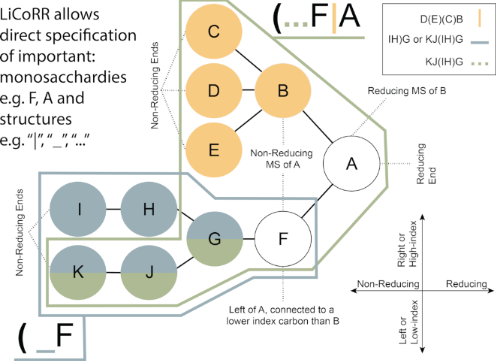
- α-2,6-linked sialic acid (NNa6) whose linkage position is unknown. Here, the “ | ” is used to separate the fragment(s) and core structure components (UR6). In the interest of demonstrating the reach of single letter LC monosaccharides (Table 4), we provide a monosaccharide network suggesting
- monosaccharide listed by SNFG (Figure 2D). Figure 2D shows some of these non-trivial paths (e.g., beyond GlcNac; G → GN or G[2N]) from Table 4 monosaccharides, to all listed SFNG monosaccharides via modifications from Table 5. We further provide a full network (Table S6, Supporting Information File 1) to
- Rules Linear Code was first used to represent reaction rules in 2009. A reaction network, specifying glycans with condensed IUPAC and Linear Code, was trained on mass spectrometry abundance to learn biosynthetic enzyme activities [10]. Their reaction rules table contained four features: enzyme, reactant


NMR Spectroscopy of supramolecular chemistry on protein surfaces
Beilstein J. Org. Chem. 2020, 16, 2505–2522, doi:10.3762/bjoc.16.203




Dawn of a new era in industrial photochemistry: the scale-up of micro- and mesostructured photoreactors
Beilstein J. Org. Chem. 2020, 16, 2484–2504, doi:10.3762/bjoc.16.202
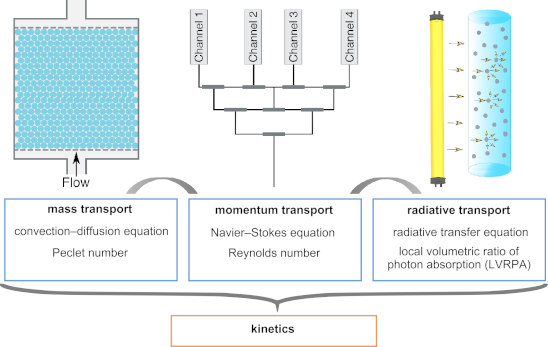
- NETmix reactor with a monolithic reactor packed with translucent cellulose acetate monolithic structures. The front glass of the slab, the network of the channels, and the chambers imprinted in the back stainless steel slab of the NETmix reactor were coated with a thin-film photocatalyst (TiO2-P25) by




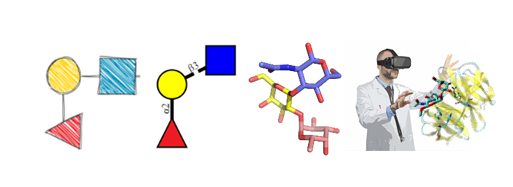
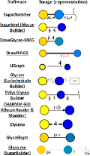
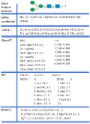
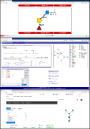
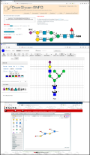
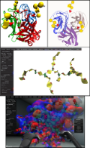
Computational tools for drawing, building and displaying carbohydrates: a visual guide
Beilstein J. Org. Chem. 2020, 16, 2448–2468, doi:10.3762/bjoc.16.199







A proposed sustainability index for synthesis plans based on input provenance and output fate: application to academic and industrial synthesis plans for vanillin as a case study
Beilstein J. Org. Chem. 2020, 16, 2346–2362, doi:10.3762/bjoc.16.196
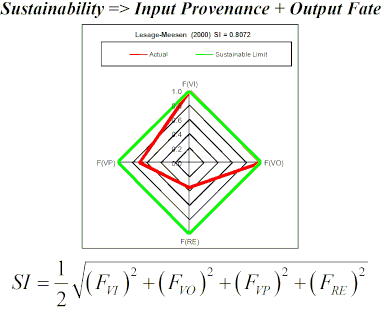
- Sustainability of vanillin plans The exercise of partitioning input materials according to their provenance and output materials according to their fate is extremely challenging because it requires a completely transparent knowledge and access to the entire network supply and end-of-life chains that constitute
- complete macroscopic knowledge and connectivity of all elements pertaining to the network of all chemical processes involved in a given synthesis plan. At this time reliable estimates of these rates are not readily available to the average practicing chemist or chemical engineer in established open-access