Search results
Search for "prediction" in Full Text gives 164 result(s) in Beilstein Journal of Organic Chemistry.
Regioselectivity of glycosylation reactions of galactose acceptors: an experimental and theoretical study
Beilstein J. Org. Chem. 2019, 15, 2982–2989, doi:10.3762/bjoc.15.294

- coefficients (Table 2). Nevertheless, the change in selectivity predicted for the benzylated diol analogs of 1α/1β did not match the experimental trend. Similar results were observed with the M06-2X functional (Table 2). The calculations gave a good prediction of the higher OH-3 group’s reactivity, but an
- accurate prediction of the trends in selectivity could not be achieved. We have tried to explain the reduced regioselectivity of the β-anomers through hydrogen bonding interactions of the OH-3 and OH-4 groups of the model acceptors. Doutheau and co-workers proposed that such a reduced regioselectivity


Bacterial terpene biosynthesis: challenges and opportunities for pathway engineering
Beilstein J. Org. Chem. 2019, 15, 2889–2906, doi:10.3762/bjoc.15.283
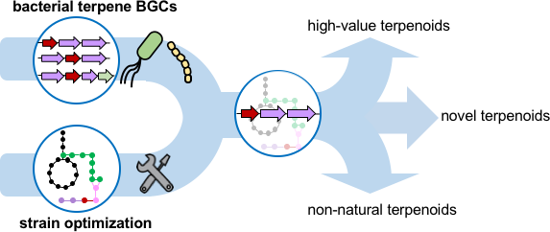
- -derived terpene-modifying enzymes. In addition, the fact that several CYPs have been shown to have relaxed substrate specificity, act on several intermediates, or catalyze multiple reactions, further complicates the in silico prediction. (Bio)synthetic production of complex terpenoids Heterologous
- /surrogate redox partners or fusing CYPs with redox partners [80][136][141][150][151]. One common observation is that CYP activity is not able to match the high flux of isoprenoids, leaving a significant portion of terpenes unmodified. Solutions to this problem, such as in silico redox partner prediction




Palladium-catalyzed synthesis and nucleotide pyrophosphatase inhibition of benzo[4,5]furo[3,2-b]indoles
Beilstein J. Org. Chem. 2019, 15, 2830–2839, doi:10.3762/bjoc.15.276

- in protein data bank (PDB). For the prediction of the 3D homology prototype, the reported structure of mouse ENPP1 with PDB ID 4B56, was used as standard pattern [43]. Molecular Operating Environment (2014. 0901) was used for this purpose. The modeled crystal structures manifested 80% for ENPP1 and


Experimental and computational electrochemistry of quinazolinespirohexadienone molecular switches – differential electrochromic vs photochromic behavior
Beilstein J. Org. Chem. 2019, 15, 2473–2485, doi:10.3762/bjoc.15.240
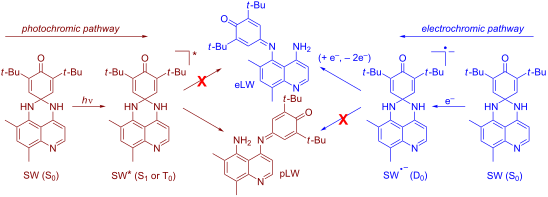
- ] were in very good agreement with those determined experimentally (Table 1). The mean absolute deviation between computational prediction and experimental measurement of Eored for all SW and LW structures in Table 1 is just 21 mV (27 mV root mean squared deviation), not far from the 14 mV mean standard
- that the N–C bond which breaks upon forming the LW product would possess a smaller bond order. The BO calculations for intermediate states T0 and D0 indeed support this prediction. Table 2 summarizes the results of BO calculations for both bonds in these states. Since geometry plays a critical role in




Genome mining in Trichoderma viride J1-030: discovery and identification of novel sesquiterpene synthase and its products
Beilstein J. Org. Chem. 2019, 15, 2052–2058, doi:10.3762/bjoc.15.202
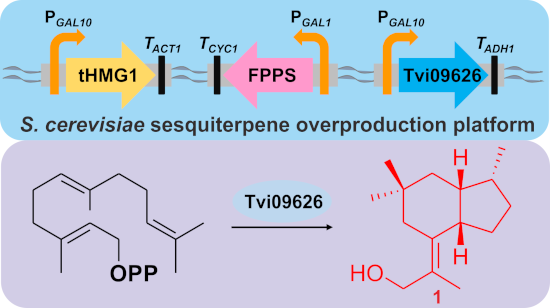
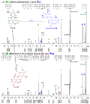
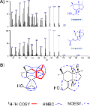
- the combination of genome mining and heterologous expression of predicted terpene synthases for detecting unknown terpenoids from rarely studied fungi. Results and Discussion Prediction and analysis of terpene synthase genes in T. viride J1-030 Through genome sequencing of T. viride J1-030 and
- prediction of the potential terpene synthases in J1-030 genome, gene Tvi09626 was selected and the following bioinformatics analysis of the function of this unidentified terpene synthase was performed. A protein blast search against the NCBI database was performed with Tvi09626, revealing sequence identities



Synthesis and anion binding properties of phthalimide-containing corona[6]arenes
Beilstein J. Org. Chem. 2019, 15, 1976–1983, doi:10.3762/bjoc.15.193
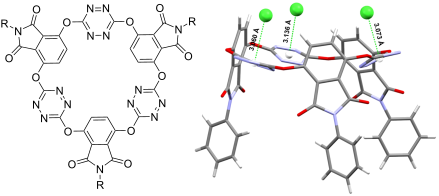
- . Upon complexation with a halide, the planar aromatic ring adopted a heavily pinched boat conformation, a result consistent with theoretical prediction [49]. We also examined the host–guest interaction in solution phase employing NMR and UV–vis spectroscopy and fluorescence technology. Unfortunately


Host–guest interactions between p-sulfonatocalix[4]arene and p-sulfonatothiacalix[4]arene and group IA, IIA and f-block metal cations: a DFT/SMD study
Beilstein J. Org. Chem. 2019, 15, 1321–1330, doi:10.3762/bjoc.15.131
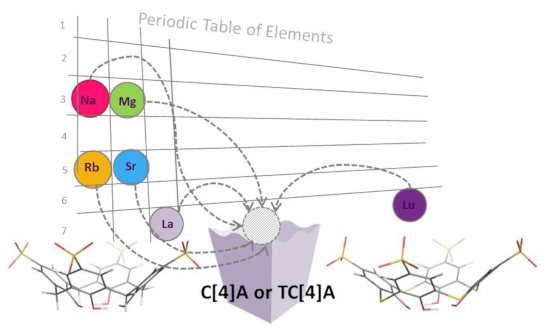
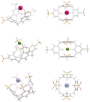
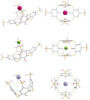
- by the negative Gibbs free energy values (ΔG1 and ΔG78). The combination of implicit/explicit solvent treatment seems useful in the modeling of the p-sulfonatocalix[4]arene (and thiacalix[4]arene) complexes with metal cations and in the prediction of the thermodynamic parameters of the complex





Genomics-inspired discovery of massiliachelin, an agrochelin epimer from Massilia sp. NR 4-1
Beilstein J. Org. Chem. 2019, 15, 1298–1303, doi:10.3762/bjoc.15.128
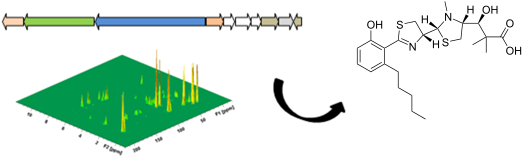
- [23]. An analysis of the analogous enzymes in micacocidin [13], yersiniabactin [16], and enantio-pyochelin [24] biosynthesis confirmed that the presence or absence of this feature allows a reliable prediction of the stereochemistry in this position (Table S1, Supporting Information File 1). In every
- single case, the domain-based configurational prediction matched the experimental assignment [24][25][26][27][28]. By applying this method to the MicC homolog from Massilia sp. NR 4-1, the presence of a D-thiazoline ring in 1 can be deduced. Moreover, the thiazolidine ring in 1 must have the


Computational characterization of enzyme-bound thiamin diphosphate reveals a surprisingly stable tricyclic state: implications for catalysis
Beilstein J. Org. Chem. 2019, 15, 145–159, doi:10.3762/bjoc.15.15
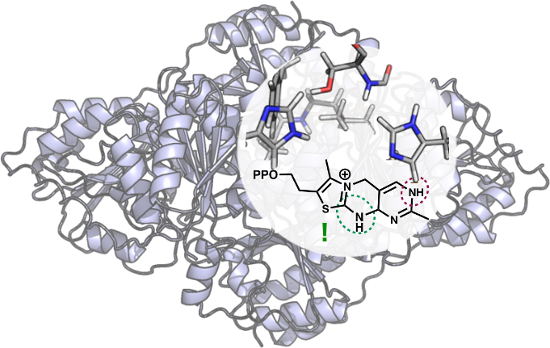
- , albeit more indirect, comes from an inhibition study using omeprazole, which was predicted to possibly interact with ThDP-dependent enzymes. The prediction was based on the similarity of omeprazole to the tricyclic form of thiamin. This was confirmed experimentally when omeprazole was subsequently shown




Lectins of Mycobacterium tuberculosis – rarely studied proteins
Beilstein J. Org. Chem. 2019, 15, 1–15, doi:10.3762/bjoc.15.1

- mannose-specific C-type lectins from Caenorhabditis elegans, Mus musculus, and Homo sapiens (see Figure 5 for partial secondary structure prediction and alignment with the human C-type mannose receptor 2) [77][78], and is predicted to be localized to the outer membrane [93]. While Rv2075c orthologues have
- have been found in glycosyltransferases as well as in bacterial hydrolases [95]. The Mtb gene product of Rv1419 shows 41% amino acid sequence similarity to R-type lectins and encodes the Mtb protein sMTL-13 (see Figure 5 for secondary structure prediction and alignment with the ricin B-like lectin from


Ring-opening metathesis of some strained bicyclic systems; stereocontrolled access to diolefinated saturated heterocycles with multiple stereogenic centers
Beilstein J. Org. Chem. 2018, 14, 2698–2707, doi:10.3762/bjoc.14.247
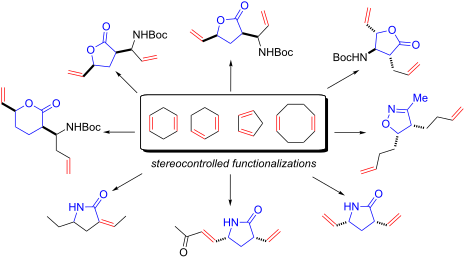
- different results in view of the used Ru-based catalyst, which allowed us to conclude that all these transformations are highly substrate and catalyst dependent, the nature of the structure of the cyclic starting material determining the outcome of the transformations. It is well known that the prediction


Learning from B12 enzymes: biomimetic and bioinspired catalysts for eco-friendly organic synthesis
Beilstein J. Org. Chem. 2018, 14, 2553–2567, doi:10.3762/bjoc.14.232
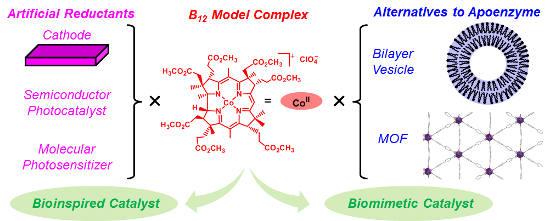
- liquid layer could be recycled for further reactions. More interestingly, the catalytic ability of 1 increased nearly four times the reaction using DMF as solvent. This was consistent with the Hughes–Ingold prediction of solvent polarity effects on reaction rates [111]. We also developed a visible-light


Determining the predominant tautomeric structure of iodine-based group-transfer reagents by 17O NMR spectroscopy
Beilstein J. Org. Chem. 2018, 14, 2289–2294, doi:10.3762/bjoc.14.203
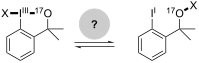
- estimate of ±10 ppm. While 5a/b indeed has been shown to exist as the thioperoxide 5b (vide infra), a crystallographic study on 6a/b is required to corroborate our prediction as 6a. To further gauge the utility of this approach, the activation of Togni reagent 4a was studied, in particular its protonation



The phenyl vinyl ether–methanol complex: a model system for quantum chemistry benchmarking
Beilstein J. Org. Chem. 2018, 14, 1642–1654, doi:10.3762/bjoc.14.140
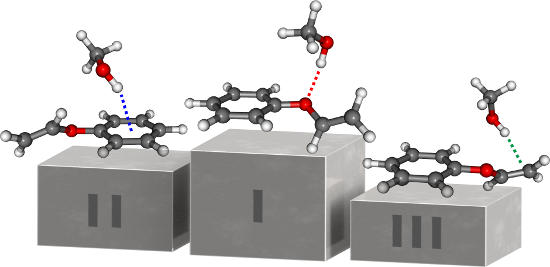
- -docking motifs via the phenyl and vinyl moieties, with an additional less populated OH∙∙∙P(phenyl)-bound isomer detected only by microwave spectroscopy. The correct prediction of the energetic order of the isomers using quantum-chemical calculations turns out to be challenging and succeeds with a
- and the respective role of different intermolecular forces such as electrostatic, dispersion and induction forces is needed. Thus, experimental examination as well as the precise prediction of a preferred molecular docking site for different molecules is of crucial importance. Despite the remarkable
- prediction, LCCSD(T0)-F12/CBS[T:Q] calculations were carried out on top of the DFT-optimized geometries. The results are presented in Table 1, with and without zero-point vibrational energy (ZPVE) corrections. The coupled cluster results show a clear energetic preference for the OH–O and OH–O’ isomers


Phosphoramidite building blocks with protected nitroxides for the synthesis of spin-labeled DNA and RNA
Beilstein J. Org. Chem. 2018, 14, 1563–1569, doi:10.3762/bjoc.14.133
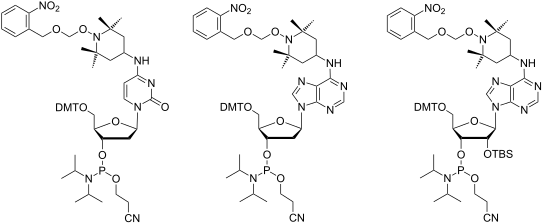
- of the duplex while DNA 18mers 23c and 25c should also form the monomeric hairpin structures. This prediction can be verified by native gel electrophoresis (Supporting Information File 1, Figure S19). Electrophoresis also shows the 12mer RNA 26c to form mainly duplexes while high amounts of monomers



Steric “attraction”: not by dispersion alone
Beilstein J. Org. Chem. 2018, 14, 1482–1490, doi:10.3762/bjoc.14.125
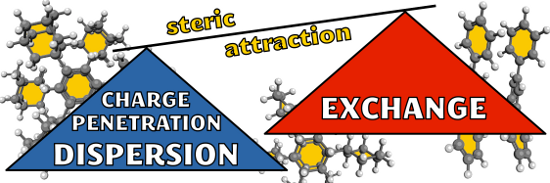
- recognized in aliphatic systems compared to London dispersion, and are therefore likely to have implications for the development of force fields and methods for crystal structure prediction. Keywords: charge penetration; dispersion; hydrocarbon; non-covalent interactions; steric attraction; Introduction In
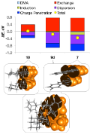
- ) and other methods for the modeling and crystal structure prediction of hydrocarbons. In the case of π-conjugated complexes or assemblies, neglecting ECpen would flatten the potential energy surface dramatically. As shown in Figure 5, the penetration energy contribution strongly discriminates even



[3 + 2]-Cycloaddition reaction of sydnones with alkynes
Beilstein J. Org. Chem. 2018, 14, 1317–1348, doi:10.3762/bjoc.14.113
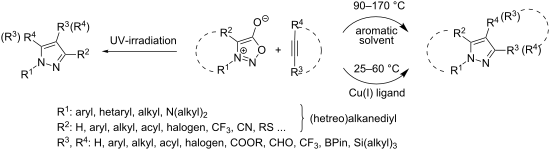
- (εHOMO = −8.6 eV and εLUMO = 0.3 eV) and predicted that the εLUMO for structurally related sydnones containing an electron-withdrawing –COO– motif should be even much lower suggesting a LUMO-controlled reaction (type III). Such a prediction seems to be correct for reaction of 4-(substituted phenyl


Are dispersion corrections accurate outside equilibrium? A case study on benzene
Beilstein J. Org. Chem. 2018, 14, 1181–1191, doi:10.3762/bjoc.14.99
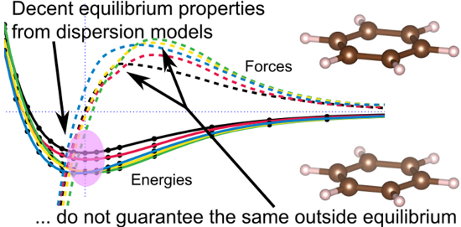
- a dispersion correction. The latest variants of these approaches have been highly successful in predicting key properties of a wide range of molecules and materials, such as binding energies and molecular/material structures [4][5][15]. Methods are increasingly converging towards accurate prediction
- in prediction of the relative energies of the various local minima, U0(T), U0(P) and U0(SP), for the T, parallel (P) and slipped-parallel (SP) configurations, respectively. We thus show the energy differences, ΔU(P/SP) = U0(P/SP) − U0(T), between the local minima for the parallel and slipped-parallel


Local energy decomposition analysis of hydrogen-bonded dimers within a domain-based pair natural orbital coupled cluster study
Beilstein J. Org. Chem. 2018, 14, 919–929, doi:10.3762/bjoc.14.79
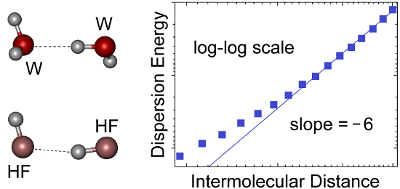
- literature is 2.912 ± 0.005 Å [68]. The re(O···O) distance calculated in this work at the RI-MP2/aug-cc-pVTZ level (2.908 Å) is very close to the CCSD(T) prediction. The effect of excitations beyond CCSD(T) has been shown to be negligible by means of CCSDTQ calculations [69]. For the HF dimer, the re(F···F


Terahertz spectroscopy of 2,4,6-trinitrotoluene molecular solids from first principles
Beilstein J. Org. Chem. 2018, 14, 381–388, doi:10.3762/bjoc.14.26
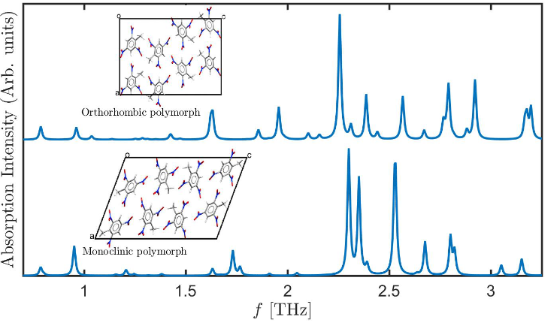
- former dominating below ca. 1.5 THz. We also find that intramolecular contributions primarily involve the nitro and methyl groups. Finally, we present a prediction for the terahertz spectrum of 1,3,5-trinitrobenzene, showing that a modest chemical change leads to a markedly different terahertz spectrum
- many-body dispersion terms for this system, allowing us to present a prediction for the terahertz spectrum of 1,3,5-TNB and showing that a modest chemical modification may result in a markedly different terahertz spectrum. Structures of: (a) orthorhombic TNT, (b) monoclinic TNT, (c) orthorhombic TNB


A permutation approach to the assignment of the configuration to diastereomeric tetrads by comparison of experimental and ab initio calculated differences in NMR data
Beilstein J. Org. Chem. 2017, 13, 2478–2485, doi:10.3762/bjoc.13.245

- configuration, while any swapped configuration should obtain an adequately lower score. The score gap between the best permutation and a second runner-up conveys the confidence in the assignment. The entire process begins with DFT prediction of isotropic shieldings by one of the established literature


Are boat transition states likely to occur in Cope rearrangements? A DFT study of the biogenesis of germacranes
Beilstein J. Org. Chem. 2017, 13, 1969–1976, doi:10.3762/bjoc.13.192
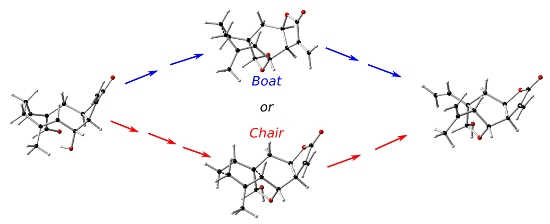
- considered when a prediction of the configuration of an elemane is determined before a Cope rearrangement. Finally, we studied the role the γ-lactone ring plays in the transformation of germacranes into elemanes. Takeda et al. carried out a series of experiments, which proved that γ-lactone rings prevent the



Biomimetic molecular design tools that learn, evolve, and adapt
Beilstein J. Org. Chem. 2017, 13, 1288–1302, doi:10.3762/bjoc.13.125
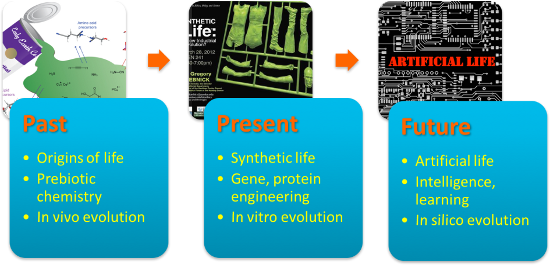
- parameters, often by trial and error. It has been shown that Bayesian statistics can be used to find the optimal values of α and β to generate models with the best prediction performance. Detailed discussion is beyond the scope of this paper but are available elsewhere [21][22][23]. Deep learning Very
- targets [25]. Table 1 summarizes the prediction performance of deep neural networks (DNN) and (shallow) Bayesian regularized neural networks (BNN) for very large sets of organic drug-like molecules screened against fifteen protein targets [25]. Good predictions have low RMS errors (RMSE) or standard error
- of prediction (SEP) values. Table 1 clearly shows that, on average deep and shallow neural networks have broadly similar prediction performance. Conspicuously, the very significant advantages of regularized machine learning methods can be further enhanced when processes to identify the most important





Automating multistep flow synthesis: approach and challenges in integrating chemistry, machines and logic
Beilstein J. Org. Chem. 2017, 13, 960–987, doi:10.3762/bjoc.13.97
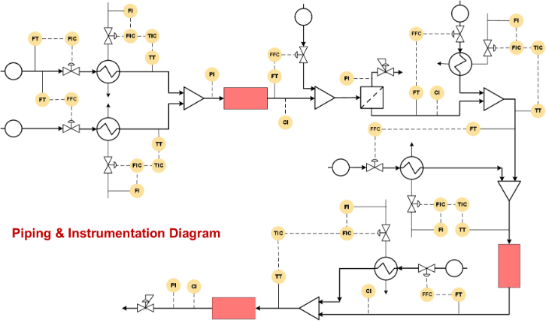
- ) and outlet of the reactor [44]. In such cases, reaction engineering models are useful for the prediction of the temperature profile inside the reactor and to investigate if any hot spot is occurring inside the reactor. Reizman and Jensen demonstrated the use of the automated platform for estimating




How and why kinetics, thermodynamics, and chemistry induce the logic of biological evolution
Beilstein J. Org. Chem. 2017, 13, 665–674, doi:10.3762/bjoc.13.66
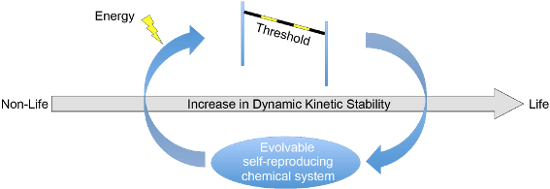
- particular path followed during the process. These complex systems can reach bifurcation points from which the system can evolve along different paths [10] rendering any prediction of evolutionary paths impossible. Evolutionary possibilities invariably depend on earlier choices. Additionally, the boundaries