


Search results
Search for "pyrazole" in Full Text gives 144 result(s) in Beilstein Journal of Organic Chemistry.
Recent advances on the transition-metal-catalyzed synthesis of imidazopyridines: an updated coverage
- Gagandeep Kour Reen,
- Ashok Kumar and
- Pratibha Sharma
Beilstein J. Org. Chem. 2019, 15, 1612–1704, doi:10.3762/bjoc.15.165
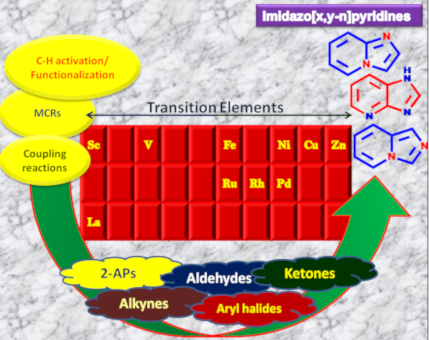

Graphical Abstract

Figure 1: Various drugs having IP nucleus.

Figure 2: Participation percentage of various TMs for the syntheses of IPs.

Scheme 1: CuI–NaHSO4·SiO2-catalyzed synthesis of imidazo[1,2-a]pyridines.

Scheme 2: Experimental examination of reaction conditions.

Scheme 3: One-pot tandem reaction for the synthesis of 2-haloimidazopyridines.

Scheme 4: Mechanistic scheme for the synthesis of 2-haloimidazopyridine.

Scheme 5: Copper-MOF-catalyzed three-component reaction (3-CR) for imidazo[1,2-a]pyridines.

Scheme 6: Mechanism for copper-MOF-driven synthesis.

Scheme 7: Heterogeneous synthesis via titania-supported CuCl2.

Scheme 8: Mechanism involving oxidative C–H functionalization.

Scheme 9: Heterogeneous synthesis of IPs.

Scheme 10: One-pot regiospecific synthesis of imidazo[1,2-a]pyridines.

Scheme 11: Vinyl azide as an unprecedented substrate for imidazo[1,2-a]pyridines.

Scheme 12: Radical pathway.

Scheme 13: Cu(I)-catalyzed transannulation approach for imidazo[1,5-a]pyridines.

Scheme 14: Plausible radical pathway for the synthesis of imidazo[1,5-a]pyridines.

Scheme 15: A solvent-free domino reaction for imidazo[1,2-a]pyridines.

Scheme 16: Cu-NPs-mediated synthesis of imidazo[1,2-a]pyridines.

Scheme 17: CuI-catalyzed synthesis of isoxazolylimidazo[1,2-a]pyridines.

Scheme 18: Functionalization of 4-bromo derivative via Sonogashira coupling reaction.

Scheme 19: A plausible reaction pathway.

Scheme 20: Cu(I)-catalyzed intramolecular oxidative C–H amidation reaction.

Scheme 21: One-pot synthetic reaction for imidazo[1,2-a]pyridine.

Scheme 22: Plausible reaction mechanism.

Scheme 23: Cu(OAc)2-promoted synthesis of imidazo[1,2-a]pyridines.

Scheme 24: Mechanism for aminomethylation/cycloisomerization of propiolates with imines.

Scheme 25: Three-component synthesis of imidazo[1,2-a]pyridines.

Figure 3: Scope of pyridin-2(1H)-ones and acetophenones.

Scheme 26: CuO NPS-promoted A3 coupling reaction.

Scheme 27: Cu(II)-catalyzed C–N bond formation reaction.

Scheme 28: Mechanism involving Chan–Lam/Ullmann coupling.

Scheme 29: Synthesis of formyl-substituted imidazo[1,2-a]pyridines.

Scheme 30: A tandem sp3 C–H amination reaction.

Scheme 31: Probable mechanistic approach.

Scheme 32: Dual catalytic system for imidazo[1,2-a]pyridines.

Scheme 33: Tentative mechanism.

Scheme 34: CuO/CuAl2O4/ᴅ-glucose-promoted 3-CCR.

Scheme 35: A tandem CuOx/OMS-2-based synthetic strategy.

Figure 4: Biomimetic catalytic oxidation in the presence of electron-transfer mediators (ETMs).

Scheme 36: Control experiment.

Scheme 37: Copper-catalyzed C(sp3)–H aminatin reaction.

Scheme 38: Reaction of secondary amines.

Scheme 39: Probable mechanistic pathway.

Scheme 40: Coupling reaction of α-azidoketones.

Scheme 41: Probable pathway.

Scheme 42: Probable mechanism with free energy calculations.

Scheme 43: MCR for cyanated IP synthesis.

Scheme 44: Substrate scope for the reaction.

Scheme 45: Reaction mechanism.

Scheme 46: Probable mechanistic pathway for Cu/ZnAl2O4-catalyzed reaction.

Scheme 47: Copper-catalyzed double oxidative C–H amination reaction.

Scheme 48: Application towards different coupling reactions.

Scheme 49: Reaction mechanism.

Scheme 50: Condensation–cyclization approach for the synthesis of 1,3-diarylated imidazo[1,5-a]pyridines.

Scheme 51: Optimized reaction conditions.

Scheme 52: One-pot 2-CR.

Scheme 53: One-pot 3-CR without the isolation of chalcone.

Scheme 54: Copper–Pybox-catalyzed cyclization reaction.

Scheme 55: Mechanistic pathway catalyzed by Cu–Pybox complex.

Scheme 56: Cu(II)-promoted C(sp3)-H amination reaction.

Scheme 57: Wider substrate applicability for the reaction.

Scheme 58: Plausible reaction mechanism.

Scheme 59: CuI assisted C–N cross-coupling reaction.

Scheme 60: Probable reaction mechanism involving sp3 C–H amination.

Scheme 61: One-pot MCR-catalyzed by CoFe2O4/CNT-Cu.

Scheme 62: Mechanistic pathway.

Scheme 63: Synthetic scheme for 3-nitroimidazo[1,2-a]pyridines.

Scheme 64: Plausible mechanism for CuBr-catalyzed reaction.

Scheme 65: Regioselective synthesis of halo-substituted imidazo[1,2-a]pyridines.

Scheme 66: Synthesis of 2-phenylimidazo[1,2-a]pyridines.

Scheme 67: Synthesis of diarylated compounds.

Scheme 68: CuBr2-mediated one-pot two-component oxidative coupling reaction.

Scheme 69: Decarboxylative cyclization route to synthesize 1,3-diarylimidazo[1,5-a]pyridines.

Scheme 70: Mechanistic pathway.

Scheme 71: C–H functionalization reaction of enamines to produce diversified heterocycles.

Scheme 72: A plausible mechanism.

Scheme 73: CuI-promoted aerobic oxidative cyclization reaction of ketoxime acetates and pyridines.

Scheme 74: CuI-catalyzed pathway for the formation of imidazo[1,2-a]pyridine.

Scheme 75: Mechanistic pathway.

Scheme 76: Mechanistic rationale for the synthesis of products.

Scheme 77: Copper-catalyzed synthesis of vinyloxy-IP.

Scheme 78: Regioselective product formation with propiolates.

Scheme 79: Proposed mechanism for vinyloxy-IP formation.

Scheme 80: Regioselective synthesis of 3-hetero-substituted imidazo[1,2-a]pyridines with different reaction su...

Scheme 81: Mechanistic pathway.

Scheme 82: CuI-mediated synthesis of 3-formylimidazo[1,2-a]pyridines.

Scheme 83: Radical pathway for 3-formylated IP synthesis.

Scheme 84: Pd-catalyzed urea-cyclization reaction for IPs.

Scheme 85: Pd-catalyzed one-pot-tandem amination and intramolecular amidation reaction.

Figure 5: Scope of aniline nucleophiles.

Scheme 86: Pd–Cu-catalyzed Sonogashira coupling reaction.

Scheme 87: One-pot amide coupling reaction for the synthesis of imidazo[4,5-b]pyridines.

Scheme 88: Urea cyclization reaction for the synthesis of two series of pyridines.

Scheme 89: Amidation reaction for the synthesis of imidazo[4,5-b]pyridines.

Figure 6: Amide scope.

Scheme 90: Pd NPs-catalyzed 3-component reaction for the synthesis of 2,3-diarylated IPs.

Scheme 91: Plausible mechanistic pathway for Pd NPs-catalyzed MCR.

Scheme 92: Synthesis of chromenoannulated imidazo[1,2-a]pyridines.

Scheme 93: Mechanism for the synthesis of chromeno-annulated IPs.

Scheme 94: Zinc oxide NRs-catalyzed synthesis of imidazo[1,2-a]azines/diazines.

Scheme 95: Zinc oxide-catalyzed isocyanide based GBB reaction.

Scheme 96: Reaction pathway for ZnO-catalyzed GBB reaction.

Scheme 97: Mechanistic pathway.

Scheme 98: ZnO NRs-catalyzed MCR for the synthesis of imidazo[1,2-a]azines.

Scheme 99: Ugi type GBB three-component reaction.

Scheme 100: Magnetic NPs-catalyzed synthesis of imidazo[1,2-a]pyridines.

Scheme 101: Regioselective synthesis of 2-alkoxyimidazo[1,2-a]pyridines catalyzed by Fe-SBA-15.

Scheme 102: Plausible mechanistic pathway for the synthesis of 2-alkoxyimidazopyridine.

Scheme 103: Iron-catalyzed synthetic approach.

Scheme 104: Iron-catalyzed aminooxygenation reaction.

Scheme 105: Mechanistic pathway.

Scheme 106: Rh(III)-catalyzed double C–H activation of 2-substituted imidazoles and alkynes.

Scheme 107: Plausible reaction mechanism.

Scheme 108: Rh(III)-catalyzed non-aromatic C(sp2)–H bond activation–functionalization for the synthesis of imid...

Scheme 109: Reactivity and selectivity of different substrates.

Scheme 110: Rh-catalyzed direct C–H alkynylation by Li et al.

Scheme 111: Suggested radical mechanism.

Scheme 112: Scandium(III)triflate-catalyzed one-pot reaction and its mechanism for the synthesis of benzimidazo...

Scheme 113: RuCl3-assisted Ugi-type Groebke–Blackburn condensation reaction.

Scheme 114: C-3 aroylation via Ru-catalyzed two-component reaction.

Scheme 115: Regioselective synthetic mechanism.

Scheme 116: La(III)-catalyzed one-pot GBB reaction.

Scheme 117: Mechanistic approach for the synthesis of imidazo[1,2-a]pyridines.

Scheme 118: Synthesis of imidazo[1,2-a]pyridine using LaMnO3 NPs under neat conditions.

Scheme 119: Mechanistic approach.

Scheme 120: One-pot 3-CR for regioselective synthesis of 2-alkoxy-3-arylimidazo[1,2-a]pyridines.

Scheme 121: Formation of two possible products under optimization of the catalysts.

Scheme 122: Mechanistic strategy for NiFe2O4-catalyzed reaction.

Scheme 123: Two-component reaction for synthesizing imidazodipyridiniums.

Scheme 124: Mechanistic scheme for the synthesis of imidazodipyridiniums.

Scheme 125: CuI-catalyzed arylation of imidazo[1,2-a]pyridines.

Scheme 126: Mechanism for arylation reaction.

Scheme 127: Cupric acetate-catalyzed double carbonylation approach.

Scheme 128: Radical mechanism for double carbonylation of IP.

Scheme 129: C–S bond formation reaction catalyzed by cupric acetate.

Scheme 130: Cupric acetate-catalyzed C-3 formylation approach.

Scheme 131: Control experiments for signifying the role of DMSO and oxygen.

Scheme 132: Mechanism pathway.

Scheme 133: Copper bromide-catalyzed CDC reaction.

Scheme 134: Extension of the substrate scope.

Scheme 135: Plausible radical pathway.

Scheme 136: Transannulation reaction for the synthesis of imidazo[1,5-a]pyridines.

Scheme 137: Plausible reaction pathway for denitrogenative transannulation.

Scheme 138: Cupric acetate-catalyzed C-3 carbonylation reaction.

Scheme 139: Plausible mechanism for regioselective C-3 carbonylation.

Scheme 140: Alkynylation reaction at C-2 of 3H-imidazo[4,5-b]pyridines.

Scheme 141: Two-way mechanism for C-2 alkynylation of 3H-imidazo[4,5-b]pyridines.

Scheme 142: Palladium-catalyzed SCCR approach.

Scheme 143: Palladium-catalyzed Suzuki coupling reaction.

Scheme 144: Reaction mechanism.

Scheme 145: A phosphine free palladium-catalyzed synthesis of C-3 arylated imidazopyridines.

Scheme 146: Palladium-mediated Buchwald–Hartwig cross-coupling reaction.

Figure 7: Structure of the ligands optimized.

Scheme 147: Palladium acetate-catalyzed direct arylation of imidazo[1,2-a]pyridines.

Scheme 148: Palladium acetate-catalyzed mechanistic pathway.

Scheme 149: Palladium acetate-catalyzed regioselective arylation reported by Liu and Zhan.

Scheme 150: Mechanism for selective C-3 arylation of IP.

Scheme 151: Pd(II)-catalyzed alkenylation reaction with styrenes.

Scheme 152: Pd(II)-catalyzed alkenylation reaction with acrylates.

Scheme 153: A two way mechanism.

Scheme 154: Double C–H activation reaction catalyzed by Pd(OAc)2.

Scheme 155: Probable mechanism.

Scheme 156: Palladium-catalyzed decarboxylative coupling.

Scheme 157: Mechanistic cycle for decarboxylative arylation reaction.

Scheme 158: Ligand-free approach for arylation of imidazo[1,2-a]pyridine-3-carboxylic acids.

Scheme 159: Mechanism for ligandless arylation reaction.

Scheme 160: NHC-Pd(II) complex assisted arylation reaction.

Scheme 161: C-3 arylation of imidazo[1,2-a]pyridines with aryl bromides catalyzed by Pd(OAc)2.

Scheme 162: Pd(II)-catalyzed C-3 arylations with aryl tosylates and mesylates.

Scheme 163: CDC reaction for the synthesis of imidazo[1,2-a]pyridines.

Scheme 164: Plausible reaction mechanism for Pd(OAc)2-catalyzed synthesis of imidazo[1,2-a]pyridines.

Scheme 165: Pd-catalyzed C–H amination reaction.

Scheme 166: Mechanism for C–H amination reaction.

Scheme 167: One-pot synthesis for 3,6-di- or 2,3,6-tri(hetero)arylimidazo[1,2-a]pyridines.

Scheme 168: C–H/C–H cross-coupling reaction of IPs and azoles catalyzed by Pd(II).

Scheme 169: Mechanistic cycle.

Scheme 170: Rh-catalyzed C–H arylation reaction.

Scheme 171: Mechanistic pathway for C–H arylation of imidazo[1,2-a]pyridine.

Scheme 172: Rh(III)-catalyzed double C–H activation of 2-phenylimidazo[1,2-a]pyridines and alkynes.

Scheme 173: Rh(III)-catalyzed mechanistic pathway.

Scheme 174: Rh(III)-mediated oxidative coupling reaction.

Scheme 175: Reactions showing functionalization of the product obtained by the group of Kotla.

Scheme 176: Mechanism for Rh(III)-catalyzed oxidative coupling reaction.

Scheme 177: Rh(III)-catalyzed C–H activation reaction.

Scheme 178: Mechanistic cycle.

Scheme 179: Annulation reactions of 2-arylimidazo[1,2-a]pyridines and alkynes.

Scheme 180: Two-way reaction mechanism for annulations reaction.

Scheme 181: [RuCl2(p-cymene)]2-catalyzed C–C bond formation reaction.

Scheme 182: Reported reaction mechanism.

Scheme 183: Fe(III) catalyzed C-3 formylation approach.

Scheme 184: SET mechanism-catalyzed by Fe(III).

Scheme 185: Ni(dpp)Cl2-catalyzed KTC coupling.

Scheme 186: Pd-catalyzed SM coupling.

Scheme 187: Vanadium-catalyzed coupling of IP and NMO.

Scheme 188: Mechanistic cycle.

Scheme 189: Selective C3/C5–H bond functionalizations by mono and bimetallic systems.

Scheme 190: rGO-Ni@Pd-catalyzed C–H bond arylation of imidazo[1,2-a]pyridine.

Scheme 191: Mechanistic pathway for heterogeneously catalyzed arylation reaction.

Scheme 192: Zinc triflate-catalyzed coupling reaction of substituted propargyl alcohols.
One-pot activation–alkynylation–cyclization synthesis of 1,5-diacyl-5-hydroxypyrazolines in a consecutive three-component fashion
- Christina Görgen,
- Katharina Boden,
- Guido J. Reiss,
- Walter Frank and
- Thomas J. J. Müller
Beilstein J. Org. Chem. 2019, 15, 1360–1370, doi:10.3762/bjoc.15.136
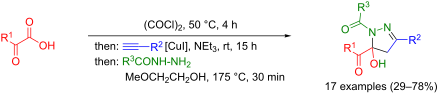
- , starting from phenylglyoxylic acid (1a), phenylacetylene (2a), and Boc-hydrazide (4a) through the formation of 1,4-diphenylbut-3-yne-1,2-dione (3a), with subsequent N-deacylation as the consequence of basic work-up (Scheme 2), furnished 5-benzoyl-3-phenyl-1H-pyrazole (6a) in 41% isolated yield. In addition
- to spectroscopic assignment the structure of 6a has now been corroborated by an X-ray structure analysis showing infinite chains of molecules 6a formed by intermolecular hydrogen bonding between the pyrazole N1 and the carbonyl O1 (Figure 3) [53]. The first assumption was that the tentative
- additionally corroborated by X-ray structure analysis showing that the assignment of intermediate 5a was not a fully unsaturated pyrazole (Figure 4) [53]. Therefore, we set out to optimize the one-pot synthesis of 1,5-diacyl-5-hydroxypyrazolines by choosing the model reaction of phenylglyoxylic acid (1a

Graphical Abstract

Figure 1: Selected anticancer active 3,5-diaryl-1-acylpyrazoline (left) and xanthine oxygenase inhibitors (ce...

Figure 2: Selected 1-acyl-5-hydroxypyrazolines with analgesic (left, center) and antibacterial activity (cent...

Scheme 1: Glyoxylation–alkynylation (GA) and activation–alkynylation (AA) synthesis of alkynediones in a one-...

Scheme 2: Consecutive three-component synthesis to give 5-benzoyl-3-phenyl-1H-pyrazole (6a) after alkaline de...

Figure 3: ORTEP plot of 5-benzoyl-3-phenyl-1H-pyrazole (6a) (thermal ellipsoids at 30% probability); the dire...

Scheme 3: Cyclization of 1,4-diphenylbut-3-yne-1,2-dione (3a) and Boc-hydrazine (4a) to give intermediate 5a.

Figure 4: Ellipsoid plot of 1-Boc-5-benzoyl-5-hydroxypyrazoline 5a.

Scheme 4: Model reaction for optimizing the activation–alkynylation–cyclization synthesis of 1,5-diacyl-5-hyd...

Scheme 5: One-pot activation–alkynylation–cyclization synthesis of 1,5-diacyl-5-hydroxypyrazolines 5.

Figure 5: ORTEP plot and dimer of compound 5r (thermal ellipsoids at 30% probability).
Synthesis of 2H-furo[2,3-c]pyrazole ring systems through silver(I) ion-mediated ring-closure reaction
- Vaida Milišiūnaitė,
- Rūta Paulavičiūtė,
- Eglė Arbačiauskienė,
- Vytas Martynaitis,
- Wolfgang Holzer and
- Algirdas Šačkus
Beilstein J. Org. Chem. 2019, 15, 679–684, doi:10.3762/bjoc.15.62

- g. 59, Kaunas LT-51423, Lithuania Department of Pharmaceutical Chemistry, University of Vienna, Althanstrasse 14, Vienna 1090, Austria 10.3762/bjoc.15.62 Abstract Fused pyrazole ring systems are common structural motifs of numerous pharmaceutically important compounds. Nevertheless, access to
- derivatives of the aromatic 2H-furo[2,3-c]pyrazole ring system is still quite limited, and their chemistry and functional properties remain largely underexplored. The current study investigates routes to construct this system from easily accessible starting materials using metal-catalyzed reactions. A simple
- and efficient procedure to access the 2H-furo[2,3-c]pyrazole ring system was developed by employing the silver(I) ion-mediated ring-closure reaction of 4-alkynyl-3-hydroxy-1-phenyl-1H-pyrazoles as a key step. The required intermediate hydroxyalkynyl substrates for this reaction were prepared by a Pd

Graphical Abstract

Scheme 1: Preparation of hydroxyalkynyl substrates from 1-phenyl-1H-pyrazol-3-ol (1).

Scheme 2: Cyclization of hydroxyalkynyl substrates to 2,5-disubstituted 2H-furo[2,3-c]pyrazoles.

Figure 1: a) ORTEP diagram of the asymmetric unit consisting of two independent molecules 4d(A) and 4d(B); b)...
Mn-mediated sequential three-component domino Knoevenagel/cyclization/Michael addition/oxidative cyclization reaction towards annulated imidazo[1,2-a]pyridines
- Olga A. Storozhenko,
- Alexey A. Festa,
- Delphine R. Bella Ndoutoume,
- Alexander V. Aksenov,
- Alexey V. Varlamov and
- Leonid G. Voskressensky
Beilstein J. Org. Chem. 2018, 14, 3078–3087, doi:10.3762/bjoc.14.287
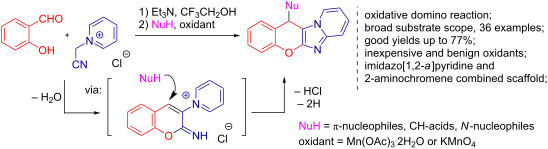
- oxidative conditions has been developed. The employment of Mn(OAc)3·2H2O or KMnO4 as stoichiometric oxidants allowed the use of a wide range of nucleophiles, such as nitromethane, (aza)indoles, pyrroles, phenols, pyrazole, indazole and diethyl malonate. The formation of the target compounds presumably
- only one isomer, but the yields of the corresponding products 11c and 11d were low. Employed as N-nucleophiles, pyrazole and benzopyrazole successfully formed products 12 and 13, correspondingly, with moderate yields. The possibility to employ CH-acids as nucleophiles was finally demonstrated on

Graphical Abstract
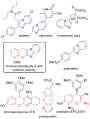
Figure 1: Biologically relevant imidazo[1,2-a]pyridines and chromenes.
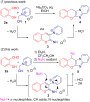
Scheme 1: Domino formation of imidazopyridines and current work.

Scheme 2: Scope of the reaction between N-(cyanomethyl)pyridinium chloride, o-hydroxybenzaldehydes, and nitro...

Scheme 3: Scope of the reaction of o-hydroxybenzaldehydes with N-(cyanomethyl)pyridinium chloride and indoles...
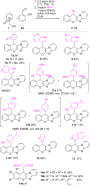
Scheme 4: Scope of the nucleophiles in the reaction of o-hydroxyarylaldehydes with N-(cyanomethyl)pyridinium ...
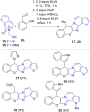
Scheme 5: N-(Cyanomethyl)thieno[2,3-c]pyridinium chloride (15) and 6-(cyanomethyl)-1-methyl-1H-pyrrolo[2,3-c]...

Figure 2: General view of the molecule 7b in the crystal state (CCDC 1849215). Anisotropic displacement param...

Scheme 6: The presumed mechanism for the formation of target chromenoimidazopyridines (reaction 1) and additi...
Molecular iodine-catalyzed one-pot multicomponent synthesis of 5-amino-4-(arylselanyl)-1H-pyrazoles
- Camila S. Pires,
- Daniela H. de Oliveira,
- Maria R. B. Pontel,
- Jean C. Kazmierczak,
- Roberta Cargnelutti,
- Diego Alves,
- Raquel G. Jacob and
- Ricardo F. Schumacher
Beilstein J. Org. Chem. 2018, 14, 2789–2798, doi:10.3762/bjoc.14.256
- -(phenylselanyl)-1H-pyrazol-5-amine was submitted to an oxidative dehydrogenative coupling to produce a diazo compound confirmed by X-ray analysis. Keywords: diaryl diselenide; diazo compound; 1H-pyrazole; molecular iodine; multicomponent reaction; Introduction Selenium-containing compounds are of great
- the 3-methyl-5-methylsulfanyl-4-phenylselanyl-1H-pyrazole [10]. Our research group described the multicomponent synthesis of 3,5-dimethyl-4-arylselanyl-1H-pyrazoles catalyzed by copper iodide using DMSO as solvent [4]. More recently, Zora and co-workers reported the one-pot preparation of 4
- -phenylselanyl-1H-pyrazoles through reaction of α,β-alkynic hydrazones with phenylselenyl chloride [11]. In this context, pyrazoles are one of the most important N-heterocycles found in natural products including formycin, pyrazofurin and withasomnine, for example. Still, pyrazole unities are present in several

Graphical Abstract

Scheme 1: Synthesis of selanyl-pyrazoles and their derivatives previously described.

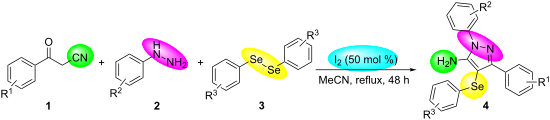
Scheme 2: Multicomponent reaction proposed in this work.

Scheme 3: Direct selanylation reaction of 5-amino-pyrazole 5a with diphenyl diselenide (3a) under the optimiz...

Scheme 4: Proposed reaction mechanism.

Scheme 5: Synthesis of diazo pyrazole derivative 6.

Figure 1: Molecular structure of compound 6. The hydrogen atoms are omitted for clarity [27].
Microwave-assisted synthesis of biologically relevant steroidal 17-exo-pyrazol-5'-ones from a norpregnene precursor by a side-chain elongation/heterocyclization sequence
- Gergő Mótyán,
- László Mérai,
- Márton Attila Kiss,
- Zsuzsanna Schelz,
- Izabella Sinka,
- István Zupkó and
- Éva Frank
Beilstein J. Org. Chem. 2018, 14, 2589–2596, doi:10.3762/bjoc.14.236
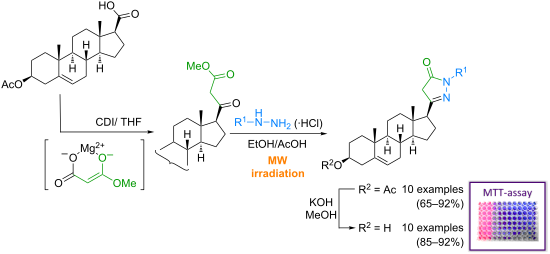
- action of these derivatives. Amongst steroidal 17-exo-heterocycles, those containing a pyrazole heteroaromatic ring are of special relevance with respect to the above-mentioned bioactivities [6][7][8][9]. Interestingly, so far only a few examples of compounds in which a pyrazolone moiety is attached to
- eight tautomeric forms [28], their N(1')-substituted derivatives, lacking a functionality on pyrazole C-4, can only exist in three equilibrating tautomers (OH, CH and NH) [18][29]. Therefore, further heterocyclizations of 4 were performed with monosubstituted hydrazine derivatives. The reaction with

Graphical Abstract

Scheme 1: Multistep synthesis of steroidal β-ketoesters 4 and 4' from pregnenolone acetate (1) and pregnadien...

Scheme 2: Cyclization of compound 4 with hydrazine hydrate (5a), phenylhydrazine (5b) and methylhydrazine (5c...

Figure 1: 1H NMR spectra of compound 7f in CDCl3 (top; # solvent signal) and in DMSO-d6 (bottom; # solvent si...
Hydroarylations by cobalt-catalyzed C–H activation
- Rajagopal Santhoshkumar and
- Chien-Hong Cheng
Beilstein J. Org. Chem. 2018, 14, 2266–2288, doi:10.3762/bjoc.14.202
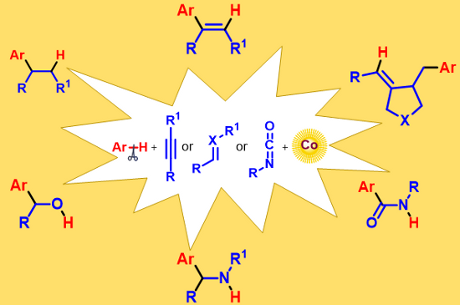
- developed a hydroarylation of alkynes with different arenes including phenylpyridines, pyrazole, and 6-arylpurines 17 using 5 mol % Cp*Co(CO)I2, 10 mol % AgSbF6, and 0.5 equiv PivOH in DCE (Scheme 13) [57]. The reaction proceeded efficiently with various alkynes to give alkenes 18, however, the reaction was
- *(C6H6)][B(C6F5)4]2 and LiOAc gave alcohol products 62 with high diastereoselectivity at ambient reaction conditions. The unique nature of cobalt was well presented by its superior reactivity and diastereoselectivity and it outmatched the rhodium catalyst. Different pyrazole derivatives with a wide range

Graphical Abstract

Scheme 1: Cobalt-catalyzed C–H carbonylation.

Scheme 2: Hydroarylation by C–H activation.

Scheme 3: Pathways for cobalt-catalyzed hydroarylations.

Scheme 4: Co-catalyzed hydroarylation of alkynes with azobenzenes.

Scheme 5: Co-catalyzed hydroarylation of alkynes with 2-arylpyridines.

Scheme 6: Co-catalyzed addition of azoles to alkynes.

Scheme 7: Co-catalyzed addition of indoles to alkynes.

Scheme 8: Co-catalyzed hydroarylation of alkynes with imines.

Scheme 9: A plausible pathway for Co-catalyzed hydroarylation of alkynes.

Scheme 10: Co-catalyzed anti-selective C–H addition to alkynes.

Scheme 11: Co(III)-catalyzed hydroarylation of alkynes with indoles.

Scheme 12: Co(III)-catalyzed branch-selective hydroarylation of alkynes.

Scheme 13: Co(III)-catalyzed hydroarylation of terminal alkynes with arenes.

Scheme 14: Co(III)-catalyzed hydroarylation of alkynes with amides.

Scheme 15: Co(III)-catalyzed C–H alkenylation of arenes.

Scheme 16: Co-catalyzed alkylation of substituted benzamides with alkenes.

Scheme 17: Co-catalyzed switchable hydroarylation of styrenes with 2-aryl pyridines.
Scheme 18: Co-catalyzed linear-selective hydroarylation of alkenes with imines.

Scheme 19: Co-catalyzed linearly-selective hydroarylation of alkenes with N–H imines.

Scheme 20: Co-catalyzed branched-selective hydroarylation of alkenes with imines.

Scheme 21: Mechanism of Co-catalyzed hydroarylation of alkenes.

Scheme 22: Co-catalyzed intramolecular hydroarylation of indoles.

Scheme 23: Co-catalyzed asymmetric hydroarylation of alkenes with indoles.

Scheme 24: Co-catalyzed hydroarylation of alkenes with heteroarenes.

Scheme 25: Co(III)-catalyzed hydroarylation of activated alkenes with 2-phenyl pyridines.

Scheme 26: Co(III)-catalyzed C–H alkylation of arenes.

Scheme 27: Co(III)-catalyzed C2-alkylation of indoles.

Scheme 28: Co(III)-catalyzed switchable hydroarylation of alkyl alkenes with indoles.
Scheme 29: Co(III)-catalyzed C2-allylation of indoles.

Scheme 30: Co(III)-catalyzed ortho C–H alkylation of arenes with maleimides.

Scheme 31: Co(III)-catalyzed hydroarylation of maleimides with arenes.
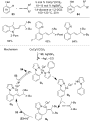
Scheme 32: Co(III)-catalyzed hydroarylation of allenes with arenes.

Scheme 33: Co-catalyzed hydroarylative cyclization of enynes with carbonyl compounds.

Scheme 34: Mechanism for the Co-catalyzed hydroarylative cyclization of enynes with carbonyl compounds.

Scheme 35: Co-catalyzed addition of 2-arylpyridines to aromatic aldimines.

Scheme 36: Co-catalyzed addition of 2-arylpyridines to aziridines.

Scheme 37: Co(III)-catalyzed hydroarylation of imines with arenes.

Scheme 38: Co(III)-catalyzed addition of arenes to ketenimines.

Scheme 39: Co(III)-catalyzed three-component coupling.

Scheme 40: Co(III)-catalyzed hydroarylation of aldehydes.

Scheme 41: Co(III)-catalyzed addition of arenes to isocyanates.
Applications of organocatalysed visible-light photoredox reactions for medicinal chemistry
- Michael K. Bogdos,
- Emmanuel Pinard and
- John A. Murphy
Beilstein J. Org. Chem. 2018, 14, 2035–2064, doi:10.3762/bjoc.14.179
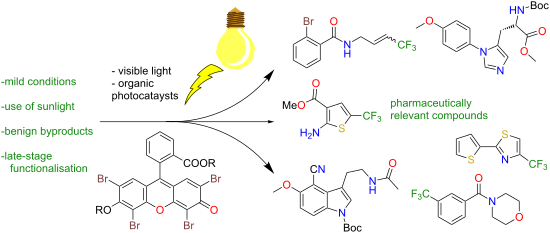
- carbamates, urea and non-basic heterocycles (Scheme 11) [54]. The scope covers a multitude of electron-poor and electron-rich arenes which can be reacted with carbamates, urea, pyrazole and triazole derivatives to furnish aminated products. The authors address the various reactivities observed with respect

Graphical Abstract

Figure 1: Depiction of the energy levels of a typical organic molecule and the photophysical processes it can...

Figure 2: General catalytic cycle of a photocatalyst in a photoredox organocatalysed reaction. [cat] – photoc...
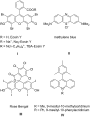
Figure 3: Structures and names of the most common photocatalysts encountered in the reviewed literature.

Figure 4: General example of a reductive quenching catalytic cycle. [cat] – photocatalyst, [cat]* – photocata...

Figure 5: General example of an oxidative quenching catalytic cycle. [cat] – photocatalyst, [cat]* – photocat...

Scheme 1: Oxidative coupling of aldehydes and amines to amides using acridinium salt photocatalysis.

Figure 6: Biologically active molecules containing a benzamide linkage.

Scheme 2: The photocatalytic reduction of amino acids to produce the corresponding free or protected amines.

Scheme 3: The organocatalysed photoredox base-mediated oxidation of thiols to disulfides.

Scheme 4: C-Terminal modification of peptides and proteins using organophotoredox catalysis.

Scheme 5: The reduction and aryl coupling of aryl halides using a doubly excited photocatalyst (PDI).

Figure 7: Mechanism for the coupling of aryl halides using PDI, which is excited sequentially by two photons.

Scheme 6: The arylation of five-membered heteroarenes using arenediazonium salts under organophotoredox condi...

Scheme 7: The C–H (hetero)arylation of five-membered heterocycles under Eosin Y photocatalysis.

Scheme 8: The C–H sulfurisation of imidazoheterocycles using Eosin B-catalyzed photochemical methods.

Scheme 9: The introduction of the thiocyanate group using Eosin Y photocatalysis.

Scheme 10: Sulfonamidation of pyrroles using oxygen as the terminal oxidant.

Scheme 11: DDQ-catalysed C–H amination of arenes and heteroarenes.

Scheme 12: Photoredox-promoted radical Michael addition reactions of allylic or benzylic carbons.

Figure 8: Proposed mechanistic rationale for the observed chemoselectivities.

Scheme 13: The photocatalytic manipulation of C–H bonds adjacent to amine groups.

Scheme 14: The perylene-catalysed organophotoredox tandem difluoromethylation–acetamidation of styrene-type al...

Figure 9: Examples of biologically active molecules containing highly functionalised five membered heterocycl...

Scheme 15: The [3 + 2]-cycloaddition leading to the formation of pyrroles, through the reaction of 2H-azirines...

Figure 10: Proposed intermediate that determines the regioselectivity of the reaction.

Figure 11: Comparison of possible pathways of reaction and various intermediates involved.

Scheme 16: The acridinium salt-catalysed formation of oxazoles from aldehydes and 2H-azirines.

Scheme 17: The synthesis of oxazolines and thiazolines from amides and thioamides using organocatalysed photor...

Figure 12: Biologically active molecules on the market containing 1,3,4-oxadiazole moieties.

Scheme 18: The synthesis of 1,3,4-oxadiazoles from aldehyde semicarbazones using Eosin Y organophotocatalysis.

Scheme 19: The dimerization of primary thioamides to 1,2,4-thiadiazoles catalysed by the presence of Eosin Y a...

Scheme 20: The radical cycloaddition of o-methylthioarenediazonium salts and substituted alkynes towards the f...

Scheme 21: The dehydrogenative cascade reaction for the synthesis of 5,6-benzofused heterocyclic systems.

Figure 13: Trifluoromethylated version of compounds which have known biological activities.

Scheme 22: Eosin Y-catalysed photoredox formation of 3-substituted benzimidazoles.

Scheme 23: Oxidation of dihydropyrimidines by atmospheric oxygen using photoredox catalysis.

Scheme 24: Photoredox-organocatalysed transformation of 2-substituted phenolic imines to benzoxazoles.

Scheme 25: Visible light-driven oxidative annulation of arylamidines.

Scheme 26: Methylene blue-photocatalysed direct C–H trifluoromethylation of heterocycles.

Scheme 27: Photoredox hydrotrifluoromethylation of terminal alkenes and alkynes.

Scheme 28: Trifluoromethylation and perfluoroalkylation of aromatics and heteroaromatics.

Scheme 29: The cooperative asymmetric and photoredox catalysis towards the functionalisation of α-amino sp3 C–...

Scheme 30: Organophotoredox-catalysed direct C–H amidation of aromatics.

Scheme 31: Direct C–H alkylation of heterocycles using BF3K salts. CFL – compact fluorescent lamp.

Figure 14: The modification of camptothecin, demonstrating the use of the Molander protocol in LSF.

Scheme 32: Direct C–H amination of aromatics using acridinium salts.

Scheme 33: Photoredox-catalysed nucleophilic aromatic substitution of nucleophiles onto methoxybenzene derivat...

Scheme 34: The direct C–H cyanation of aromatics with a focus on its use for LSF.
Chiral bisoxazoline ligands designed to stabilize bimetallic complexes
- Deepankar Das,
- Rudrajit Mal,
- Nisha Mittal,
- Zhengbo Zhu,
- Thomas J. Emge and
- Daniel Seidel
Beilstein J. Org. Chem. 2018, 14, 2002–2011, doi:10.3762/bjoc.14.175

- , Florida 32611, USA 10.3762/bjoc.14.175 Abstract Chiral bisoxazoline ligands containing naphthyridine, pyridazine, pyrazole, and phenol bridging units were prepared and shown to form bimetallic complexes with various metal salts. X-ray crystal structures of bis-nickel naphthyridine-bridged, bis-zinc
- pyridazine-bridged, and bis-nickel as well as bis-palladium pyrazole-bridged complexes were obtained. Keywords: bimetallic complexes; bisoxazolines; chiral ligands; heterocycles; Introduction Metal-centered asymmetric catalysis most commonly relies on monometallic complexes of various chiral ligands, among
- available. This led to the selection of naphthyridine, pyridazine, pyrazole, and phenol building blocks. We opted to connect these linkers to oxazolines via amide bonds. The reasoning for this was twofold. Firstly, this should provide ligands with significantly improved stabilities over for instance imine

Graphical Abstract

Figure 1: Examples of chiral bimetallic complexes utilized in asymmetric catalysis.

Figure 2: Previously reported bisoxazoline ligands capable of stabilizing bimetallic complexes.

Scheme 1: Synthesis of naphthyridine–bisoxazoline ligand 16-H2.
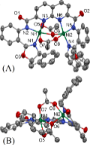
Figure 3: Thermal ellipsoid plot (50% probability) of the molecular structure of 16·Ni2(OAc)2. Hydrogen and s...

Scheme 2: Synthesis of naphthyridine–bisoxazoline ligand 22-H2.

Scheme 3: Synthesis of pyrazole–bisoxazoline ligand 25-H3.
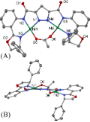
Figure 4: Thermal ellipsoid plot (50% probability) of the molecular structure of 25·Ni2(OAc). Hydrogen and so...

Scheme 4: Synthesis of pyrazole–bisoxazoline ligand 30-H3.
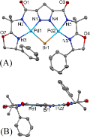
Figure 5: Thermal ellipsoid plot (50% probability) of the molecular structure of 30·Pd2Br. Hydrogen and solva...

Scheme 5: Synthesis of pyridazine–bisoxazoline ligand 32-H2.
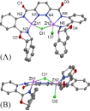
Figure 6: Thermal ellipsoid plot (50% probability) of the molecular structure of 32·Zn2Cl2. Hydrogen and solv...

Scheme 6: Synthesis of phenol–bisoxazoline ligand 34-H3.
Assessing the possibilities of designing a unified multistep continuous flow synthesis platform
- Mrityunjay K. Sharma,
- Roopashri B. Acharya,
- Chinmay A. Shukla and
- Amol A. Kulkarni
Beilstein J. Org. Chem. 2018, 14, 1917–1936, doi:10.3762/bjoc.14.166
- dissolved in a THF and hydrazine was dissolved in a mixture of solvents such as methanol, acetone, and water. The nitrile was pumped using pump P1 and hydrazine was pumped through P2 into the tubular reactor TR1 maintained at a temperature of 130 °C at residence time of 60 minutes to obtain the pyrazole
- . The impurities of the pyrazole were removed by passing it to the continuous countercurrent extraction E1. Here a solvent exchange process takes place between toluene and water. The pyrazole was then concentrated using automated rotary evaporator RE1. The concentrated product was diluted with DMSO
- using pump P13. Aromatic nucleophilic substitution: The nucleophilic substitution reaction takes place between the pyrazole and N-ethylmorpholine. Pyrazole of step 1 in the extractor was pumped through P13 and N-ethylmorpholine through P3 into the reactor TR2 to form the arylated product of the pyrazole

Graphical Abstract

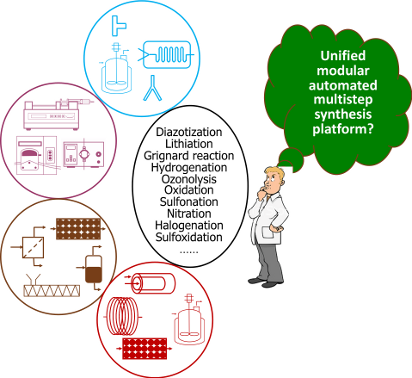
Figure 1: Key features of different approaches for unified multistep synthesis platform.

Figure 2: Schematic representation of a unified platform for the flow synthesis (P1–P14 pumps, PBR packed bed...
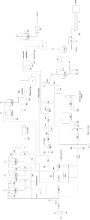
Figure 3: Layout of a unified synthesis platform (including all the component) for multiple drug molecules (a...
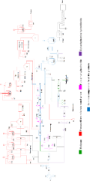
Figure 4: Layout for synthesis of 4 molecules on a single platform (approach 2).

Scheme 1: The overall process for the synthesis of diphenhydramine hydrochloride.
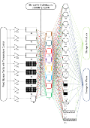
Figure 5: Approach 3 for a unified platform for multistep synthesis. M1–M9 = mixers, R1–R4 = tubular reactors...
Hypervalent organoiodine compounds: from reagents to valuable building blocks in synthesis
- Gwendal Grelier,
- Benjamin Darses and
- Philippe Dauban
Beilstein J. Org. Chem. 2018, 14, 1508–1528, doi:10.3762/bjoc.14.128
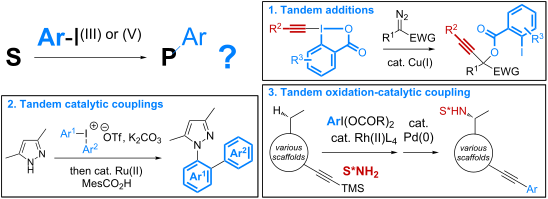
- of aryl iodide. The latter is then used for a sequential ruthenium-catalyzed ortho-C–H functionalization directed by the pyrazole group (Scheme 37) [76]. Starting from non-symmetrical diaryl-λ3-iodanes, the electron-poorest or more sterically hindered aromatic group is first transferred to the 3,5
- -dimethylpyrazole. The reaction has been extended to 1,2,3-triazoles, benzotriazole, and pyrazole. In the latter case, the use of (styryl)(aryl)-λ3-iodanes has also proved to be possible, with the styryl moiety being selectively transferred in the first step. The following step of C–H activation then gives access

Graphical Abstract

Scheme 1: Strategies to address the issue of sustainability with polyvalent organoiodine reagents.
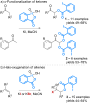
Scheme 2: Functionalization of ketones and alkenes with IBX.

Scheme 3: Functionalization of pyrroles with DMP.

Scheme 4: Catalytic benzoyloxy-trifluoromethylation reported by Szabó.

Scheme 5: Catalytic benzoyloxy-trifluoromethylation reported by Mideoka.

Scheme 6: Catalytic 1,4-benzoyloxy-trifluoromethylation of dienes.

Scheme 7: Catalytic benzoyloxy-trifluoromethylation of allylamines.

Scheme 8: Catalytic benzoyloxy-trifluoromethylation of enynes.

Scheme 9: Catalytic benzoyloxy-trifluoromethylation of allenes.
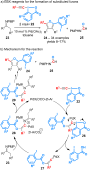
Scheme 10: Alkynylation of N-(aryl)imines with EBX for the formation of furans.

Scheme 11: Catalytic benzoyloxy-alkynylation of diazo compounds.

Scheme 12: Catalytic asymmetric benzoyloxy-alkynylation of diazo compounds.

Scheme 13: Catalytic 1,2-benzoyloxy-azidation of alkenes.

Scheme 14: Catalytic 1,2-benzoyloxy-azidation of enamides.

Scheme 15: Catalytic 1,2-benzoyloxy-iodination of alkenes.

Scheme 16: Seminal study with cyclic diaryl-λ3-iodane.

Scheme 17: Synthesis of alkylidenefluorenes from cyclic diaryl-λ3-iodanes.

Scheme 18: Synthesis of alkyne-substituted alkylidenefluorenes.

Scheme 19: Synthesis of phenanthrenes from cyclic diaryl-λ3-iodanes.

Scheme 20: Synthesis of dibenzocarbazoles from cyclic diaryl-λ3-iodanes.

Scheme 21: Synthesis of triazolophenantridines from cyclic diaryl-λ3-iodanes.

Scheme 22: Synthesis of functionalized benzoxazoles from cyclic diaryl-λ3-iodanes.

Scheme 23: Sequential difunctionalization of cyclic diaryl-λ3-iodanes.

Scheme 24: Double Suzuki–Miyaura coupling reaction of cyclic diaryl-λ3-iodanes.

Scheme 25: Synthesis of a δ-carboline from cyclic diaryl-λ3-iodane.

Scheme 26: Synthesis of N-(aryl)carbazoles from cyclic diaryl-λ3-iodanes.

Scheme 27: Synthesis of carbazoles from cyclic diaryl-λ3-iodanes.

Scheme 28: Synthesis of carbazoles and acridines from cyclic diaryl-λ3-iodanes.

Scheme 29: Synthesis of dibenzothiophenes from cyclic diaryl-λ3-iodanes.

Scheme 30: Synthesis of various sulfur heterocycles from cyclic diaryl-λ3-iodanes.

Scheme 31: Synthesis of dibenzothioheterocycles from cyclic diaryl-λ3-iodanes.

Scheme 32: Synthesis of dibenzosulfides and dibenzoselenides from cyclic diaryl-λ3-iodanes.

Scheme 33: Synthesis of dibenzosulfones from cyclic diaryl-λ3-iodanes.

Scheme 34: Seminal study with linear diaryl-λ3-iodanes.

Scheme 35: N-Arylation of benzotriazole with symmetrical diaryl-λ3-iodanes.

Scheme 36: Tandem catalytic C–H/N–H arylation of indoles with diaryl-λ3-iodanes.

Scheme 37: Tandem N-arylation/C(sp2)–H arylation with diaryl-λ3-iodanes.

Scheme 38: Catalytic intermolecular diarylation of anilines with diaryl-λ3-iodanes.

Scheme 39: Catalytic synthesis of diarylsulfides with diaryl-λ3-iodanes.

Scheme 40: α-Arylation of enolates using [bis(trifluoroacetoxy)iodo]arenes.

Scheme 41: Mechanism of the α-arylation using [bis(trifluoroacetoxy)iodo]arene.

Scheme 42: Catalytic nitrene additions mediated by [bis(acyloxy)iodo]arenes.

Scheme 43: Tandem of C(sp3)–H amination/sila-Sonogashira–Hagihara coupling.

Scheme 44: Tandem reaction using a λ3-iodane as an oxidant, a substrate and a coupling partner.

Scheme 45: Synthesis of 1,2-diarylated acrylamidines with ArI(OAc)2.
[3 + 2]-Cycloaddition reaction of sydnones with alkynes
- Veronika Hladíková,
- Jiří Váňa and
- Jiří Hanusek
Beilstein J. Org. Chem. 2018, 14, 1317–1348, doi:10.3762/bjoc.14.113
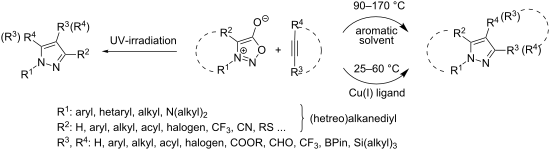
- = COOEt); di-tert-butyl, R3 = COOt-Bu etc.) act as the most common dipolarophiles because of their high reactivity. Moreover, one or both carboxylate groups in position 3 and 4 in the final pyrazole are easily removable using a hydrolysis/decarboxylation protocol [5][16] thus giving pyrazole-4-carboxylic
- acids – potent xanthine oxidoreductase inhibitors [40] or even 3,4-unsubstituted pyrazoles [16]. Both pyrazole carboxylic groups can be also modified to hydrazides and oxazole rings [26] or a new condensed pyridazine ring [27]. Less reactive dipolarophiles such as dibenzoylacetylenes (1,4-diphenylbut-2
- (Scheme 3). It was also observed, that formation of isomeric pyrazole-4,5-dicarboxylates (B) can sometimes accompany the production of pyrazole-3,4-dicarboxylates (A) under thermal conditions [33] although their formation is not photoinduced (cf. next chapter) because the reaction also takes place in the

Graphical Abstract

Scheme 1: Thermal reaction of sydnones with symmetrical alkynes.

Scheme 2: Reaction of sydnones with strained cycloalkynes.

Scheme 3: Reaction of sydnones with didehydrobenzenes.

Scheme 4: Formation of isomeric pyrazole dicarboxylates.

Scheme 5: Mechanism of thermal cycloaddition between sydnones and alkynes.

Scheme 6: Mechanism of photochemical reaction of sydnones with symmetrical alkynes.

Scheme 7: HOMO–LUMO diagram for thermal [3 + 2]-cycloaddition of sydnones with alkynes.

Scheme 8: Synthetic strategy leading to 1,2-disubstituted pyrazoles.

Scheme 9: Unsuccessful reaction with phenylpropiolic acid.

Scheme 10: Synthetic strategy leading to 1,4,5-trisubstituted pyrazoles.

Scheme 11: Reaction of sydnones carrying in position 4- six-membered 2-N-heterocyclic ring.

Scheme 12: Strain-promoted sydnone alkyne cycloaddition (SPSAC).

Scheme 13: Synthesis of a key intermediate of niraparib.

Scheme 14: Reaction of sydnones with 1,3-/1,4-benzdiyne equivalents.

Scheme 15: Reaction of sydnones with heterocyclic strained cycloalkynes.

Scheme 16: Mono-copper catalyzed cycloaddition reaction.

Scheme 17: Di-copper catalyzed cycloaddition reaction.
An unusual thionyl chloride-promoted C−C bond formation to obtain 4,4'-bipyrazolones
- Gernot A. Eller,
- Gytė Vilkauskaitė,
- Algirdas Šačkus,
- Vytas Martynaitis,
- Ashenafi Damtew Mamuye,
- Vittorio Pace and
- Wolfgang Holzer
Beilstein J. Org. Chem. 2018, 14, 1287–1292, doi:10.3762/bjoc.14.110
- , therein several drug molecules, agrochemicals, dyestuffs, compounds for optoelectronic purposes, complexing ligands and more contain a pyrazole nucleus [1][2][3][4][5][6][7][8]. Condensed pyrazoles are of special interest, as a commonly used example the phosphodiesterase 5 (PDE5) inhibitor sildenafil
- (Viagra®) can be mentioned [1]. In a series of former publications we described the synthesis of condensed pyrazole systems using various 4,5-disubstituted pyrazole derivatives as precursors for the annellation reaction [9][10][11][12][13][14][15][16]. Amongst these precursors 5-chloropyrazoles carrying C
- -substituents at the pyrazole C4 position, like 5-chloropyrazole-4-carbaldehydes or 4-esters, turned out to be particularly useful due to the easy conversion of the chloro substituent into other functional groups or its nature as a good leaving group in ring-closure reactions. In this respect we were interested

Graphical Abstract

Scheme 1: Envisaged approach for the synthesis of 5-chloropyrazole-4-carboxylates 2.

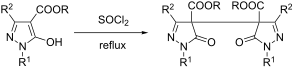
Scheme 2: Synthesis of bipyrazolone 3a.

Figure 1: Signal of the OCH2 ester protons of reaction product 3a (500 MHz, CDCl3).

Figure 2: ORTEP-plot of the crystal structure of compound 3a drawn with 50% displacement ellipsoids [(4S,4'S)-...

Figure 3: Arrangement (4R,4'R)- and (4S,4'S)-3a enantiomers in the crystal unit drawn with 50% displacement e...

Scheme 3: Synthesis of compounds 3a–i.

Scheme 4: Reaction of different 5-hydroxypyrazoles with thionyl chloride.

Scheme 5: Reaction of 1a with sulfuryl chloride.

Scheme 6: Possible reaction mechanism for the transformation 1 → 3.

Scheme 7: Preparation of bipyrazoles 10.
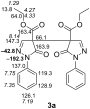
Figure 4: 1H NMR (italics), 13C NMR (normal letters) and 15N NMR (in bold) chemical shifts of 3a (in CDCl3).
An overview of recent advances in duplex DNA recognition by small molecules
- Sayantan Bhaduri,
- Nihar Ranjan and
- Dev P. Arya
Beilstein J. Org. Chem. 2018, 14, 1051–1086, doi:10.3762/bjoc.14.93
- structure–activity relationship. It has been observed that the number and position of pyrrole rings are crucial for antileukemic activity. The presence of pyrrole rings close to the alkylating BAM moiety is responsible for better cytotoxic activity both in vitro and in vivo, whereas a pyrazole ring in close

Graphical Abstract

Figure 1: A figure showing the hydrogen bonding patterns observed in (a) duplex (b) triplex and (c) quadruple...
Figure 2: (a) Portions of MATα1–MATα2 are shown contacting the minor groove of the DNA substrate. Key arginin...

Figure 3: Chemical structures of naturally occurring and synthetic hybrid minor groove binders.
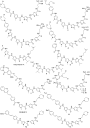
Figure 4: Synthetic structural analogs of distamycin A by replacing one or more pyrrole rings with other hete...

Figure 5: Pictorial representation of the binding model of pyrrole–imidazole (Py/Im) polyamides based on the ...

Figure 6: Chemical structures of synthetic “hairpin” pyrrole–imidazole (Py/Im) conjugates.

Figure 7: (a) Minor groove complex formation between DNA duplex and 8-ring cyclic Py/Im polyamide (conjugate ...

Figure 8: Telomere-targeting tandem hairpin Py/Im polyamides 23 and 24 capable of recognizing >10 base pairs; ...

Figure 9: Representative examples of recently developed DNA minor groove binders.

Figure 10: Chemical structures of bisbenzamidazoles Hoechst 33258 and 33342 and their synthetic structural ana...

Figure 11: Chemical structures of bisamidines such as diminazene, DAPI, pentamidine and their synthetic struct...

Figure 12: Representative examples of recently developed bisamidine derivatives.

Figure 13: Chemical structures of chromomycin, mithramycin and their synthetic structural analogs 91 and 92.

Figure 14: Chemical structures of well-known naturally occurring DNA binding intercalators.

Figure 15: Naturally occurring indolocarbazole rebeccamycin and its synthetic analogs.

Figure 16: Representative examples of naturally occurring and synthetic derivatives of DNA intercalating agent...

Figure 17: Several recent synthetic varieties of DNA intercalators.

Figure 18: Aminoglycoside (neomycin)–Hoechst 33258/intercalator conjugates.

Figure 19: Chemical structures of triazole linked neomycin dimers and neomycin–bisbenzimidazole conjugates.
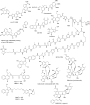
Figure 20: Representative examples of naturally occurring and synthetic analogs of DNA binding alkylating agen...

Figure 21: Chemical structures of naturally occurring and synthetic analogs of pyrrolobenzodiazepines.
Sequential Ugi reaction/base-induced ring closing/IAAC protocol toward triazolobenzodiazepine-fused diketopiperazines and hydantoins
- Robby Vroemans,
- Fante Bamba,
- Jonas Winters,
- Joice Thomas,
- Jeroen Jacobs,
- Luc Van Meervelt,
- Jubi John and
- Wim Dehaen
Beilstein J. Org. Chem. 2018, 14, 626–633, doi:10.3762/bjoc.14.49

- inseparable mixture of diastereomers. Various attempts were made with other azidobenzaldehydes (5-azido-3-methyl-1-phenyl-1H-pyrazole-4-carbaldehyde, 2-azidoquinoline-3-carbaldehyde and 2-azido-5-nitrobenzaldehyde) and isocyanides (2-morpholinoethyl isocyanide) towards the synthesis of diketopiperazine-fused
- -methyl-1-phenyl-1H-pyrazole-4-carbaldehyde). The success in the synthesis of diketopiperazine-fused triazolobenzodiazepine prompted us to examine the possibility of making the sequential synthetic route in ‘one-pot’ starting from the Ugi 4-CR (Scheme 4). Thus we initiated the reaction sequence from the

Graphical Abstract

Figure 1: Triazolobenzodiazepine drugs.

Scheme 1: Retrosynthetic analysis towards 2,5-diketopiperazine fused triazolobenzodiazepine.

Scheme 2: Ugi 4-CR reaction.

Scheme 3: Synthesis of diketopiperazine-fused triazolobenzodiazepine 7a.
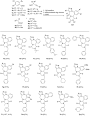
Figure 2: Generality in the synthesis of diketopiperazine-fused triazolobenzodiazepine 7. Reaction conditions...

Scheme 4: ‘One-pot’ synthesis of diketopiperazine-fused triazolobenzodiazepines 7a and 7b.

Scheme 5: Synthesis of hydantoin-fused triazolobenzodiazepine 10. Reaction conditions: 1. 2-azidobenzaldehyde ...
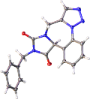
Figure 3: X-ray crystal structure of hydantoin-fused triazolobenzodiazepine 10a. (Displacement ellipsoids are...

Scheme 6: Mechanism of formation of diketopiperazine and hydantoin-fused triazolobenzodiazepines.
5-Aminopyrazole as precursor in design and synthesis of fused pyrazoloazines
- Ranjana Aggarwal and
- Suresh Kumar
Beilstein J. Org. Chem. 2018, 14, 203–242, doi:10.3762/bjoc.14.15
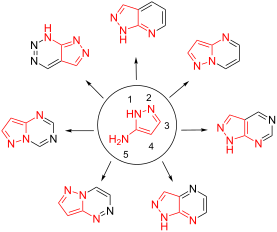
- substituted pyrazoloazines by a broad range of organic reactions by means of 5-aminopyrazole as a precursor. Keywords: 5-aminopyrazoles; fused pyrazole derivatives; pyrazolopyridines; pyrazolopyrimidines; pyrazolotriazines; Review Pyrazole and its derivatives are known to exhibit significant biological and
- pyrazole is one of the most widely studied nitrogen-containing heterocyclic nuclei. Fused pyrazole derivatives are composed of the pyrazole nucleus attached to other heterocyclic moieties which enable them to exhibit improved pharmacological activities compared to the isolated fragments. These compounds
- are currently used in several marketed drugs like cartazolate (1), zaleplon (2), sildenafil (3), allopurinol (4), indiplon (5), etazolate (6) etc. (Figure 1). Fused pyrazole derivatives, especially pyrazoloazines have been reported to mimic purine bases, present in DNA and RNA, due to close structural

Graphical Abstract

Figure 1: Selected examples of drugs with fused pyrazole rings.

Figure 2: Typical structures of some fused pyrazoloazines from 5-aminopyrazoles.

Scheme 1: Regiospecific synthesis of 4 and 6-trifluoromethyl-1H-pyrazolo[3,4-b]pyridines.

Scheme 2: Synthesis of pyrazolo[3,4-b]pyridine-6-carboxylates.

Scheme 3: Synthesis of 1,4,6-triaryl-1H-pyrazolo[3,4-b]pyridines with ionic liquid .

Scheme 4: Synthesis of coumarin-based isomeric tetracyclic pyrazolo[3,4-b]pyridines.

Scheme 5: Synthesis of 6-substituted pyrazolo[3,4-b]pyridines under Heck conditions.

Scheme 6: Microwave-assisted palladium-catalyzed synthesis of pyrazolo[3,4-b]pyridines.

Scheme 7: Acid-catalyzed synthesis of pyrazolo[3,4-b]pyridines via enaminones.

Scheme 8: Synthesis of pyrazolo[3,4-b]pyridines via aza-Diels–Alder reaction.

Scheme 9: Synthesis of macrocyclane fused pyrazolo[3,4-b]pyridine derivatives.

Scheme 10: Three-component synthesis of 4,7-dihydro-1H-pyrazolo[3,4-b]pyridine derivatives.

Scheme 11: Ultrasonicated synthesis of spiro[indoline-3,4'-pyrazolo[3,4-b]pyridine]-2,6'(1'H)-diones.

Scheme 12: Synthesis of spiro[indoline-3,4'-pyrazolo[3,4-b]pyridine] derivatives under conventional heating co...

Scheme 13: Nanoparticle-catalyzed synthesis of pyrazolo[3,4-b]pyridine-spiroindolinones.

Scheme 14: Microwave-assisted multicomponent synthesis of spiropyrazolo[3,4-b]pyridines.

Scheme 15: Unexpected synthesis of naphthoic acid-substituted pyrazolo[3,4-b]pyridines.

Scheme 16: Multicomponent synthesis of variously substituted pyrazolo[3,4-b]pyridine derivatives.

Scheme 17: Three-component synthesis of 4,7-dihydropyrazolo[3,4-b]pyridines and pyrazolo[3,4-b]pyridines.

Scheme 18: Synthesis of pyrazolo[3,4-b]pyridine-5-spirocycloalkanediones.

Scheme 19: Ultrasound-mediated three-component synthesis of pyrazolo[3,4-b]pyridines.

Scheme 20: Multicomponent synthesis of 4-aryl-3-methyl-1-phenyl-4,6,8,9-tetrahydropyrazolo [3,4-b]thiopyrano[4...

Scheme 21: Synthesis of 2,3-dihydrochromeno[4,3-d]pyrazolo[3,4-b]pyridine-1,6-diones.

Scheme 22: FeCl3-catalyzed synthesis of o-hydroxyphenylpyrazolo[3,4-b]pyridine derivatives.

Scheme 23: Ionic liquid-mediated synthesis of pyrazolo[3,4-b]pyridines.

Scheme 24: Microwave-assisted synthesis of pyrazolo[3,4-b]pyridines.

Scheme 25: Multicomponent synthesis of pyrazolo[3,4-b]pyridine-5-carbonitriles.

Scheme 26: Unusual domino synthesis of 4,7-dihydropyrazolo[3,4-b]pyridine-5-nitriles.

Scheme 27: Synthesis of 4,5,6,7-tetrahydro-4H-pyrazolo[3,4-b]pyridines under conventional heating and ultrasou...

Scheme 28: L-Proline-catalyzed synthesis of of pyrazolo[3,4-b]pyridine.

Scheme 29: Microwave-assisted synthesis of 5-aminoarylpyrazolo[3,4-b]pyridines.

Scheme 30: Microwave-assisted multi-component synthesis of pyrazolo[3,4-e]indolizines.

Scheme 31: Synthesis of fluoropropynyl and fluoroalkyl substituted pyrazolo[1,5-a]pyrimidine.

Scheme 32: Acid-catalyzed synthesis of pyrazolo[1,5-a]pyrimidine derivatives.

Scheme 33: Chemoselective and regiospecific synthesis of 2-(3-methylpyrazol-1’-yl)-5-methylpyrazolo[1,5-a]pyri...

Scheme 34: Regioselective synthesis of 7-trifluoromethylpyrazolo[1,5-a]pyrimidines.

Scheme 35: Microwave-assisted synthesis of 7-trifluoromethylpyrazolo[1,5-a]pyrimidine carboxylates.

Scheme 36: Microwave and ultrasound-assisted synthesis of 7-trifluoromethylpyrazolo[1,5-a]pyrimidines.

Scheme 37: Base-catalyzed unprecedented synthesis of pyrazolo[1,5-a]pyrimidines via C–C bond cleavage.

Scheme 38: Synthesis of aminobenzothiazole/piperazine linked pyrazolo[1,5-a]pyrimidines.

Scheme 39: Synthesis of aminoalkylpyrazolo[1,5-a]pyrimidine-7-amines.

Scheme 40: Synthesis of pyrazolo[1,5-a]pyrimidines from condensation of 5-aminopyrazole 126 and ethyl acetoace...

Scheme 41: Synthesis of 7-aminopyrazolo[1,5-a]pyrimidines.

Scheme 42: Unexpected synthesis of 7-aminopyrazolo[1,5-a]pyrimidines under solvent free and solvent-mediated c...

Scheme 43: Synthesis of N-(4-aminophenyl)-7-aryloxypyrazolo[1,5-a]pyrimidin-5-amines.

Scheme 44: Base-catalyzed synthesis of 5,7-diarylpyrazolo[1,5-a]pyrimidines.

Scheme 45: Synthesis of 6,7-dihydropyrazolo[1,5-a]pyrimidines in PEG-400.

Scheme 46: Synthesis of 7-heteroarylpyrazolo[1,5-a]pyrimidine-3-carboxamides.

Scheme 47: Synthesis of 7-heteroarylpyrazolo[1,5-a]pyrimidine derivatives under conventional heating and micro...

Scheme 48: Synthesis of N-aroylpyrazolo[1,5-a]pyrimidine-5-amines.

Scheme 49: Regioselective synthesis of ethyl pyrazolo[1,5-a]pyrimidine-7-carboxylate.

Scheme 50: Sodium methoxide-catalyzed synthesis of 3-cyano-6,7-diarylpyrazolo[1,5-a]pyrimidines.

Scheme 51: Synthesis of various pyrazolo[3,4-d]pyrimidine derivatives.

Scheme 52: Synthesis of hydrazinopyrazolo[3,4-d]pyrimidine derivatives.

Scheme 53: Synthesis of N-arylidinepyrazolo[3,4-d]pyrimidin-5-amines.

Scheme 54: Synthesis of pyrazolo[3,4-d]pyrimidinyl-4-amines.

Scheme 55: Iodine-catalyzed synthesis of pyrazolo[3,4-d]pyrimidinones.

Scheme 56: Synthesis of ethyl 6-amino-2H-pyrazolo[3,4-d]pyrimidine-4-carboxylate.

Scheme 57: Synthesis of 4-substituted-(3,6-dihydropyran-4-yl)-1H-pyrazolo[3,4-d]pyrimidines.

Scheme 58: Synthesis of 1-(2,4-dichlorophenyl)pyrazolo[3,4-d]pyrimidin-4-yl carboxamides.

Scheme 59: Synthesis of 5-(1,3,4-thidiazol-2-yl)pyrazolo[3,4-d]pyrimidine.

Scheme 60: One pot POCl3-catalyzed synthesis of 1-arylpyrazolo[3,4-d]pyrimidin-4-ones.

Scheme 61: Synthesis of 4-amino-N1,C3-dialkylpyrazolo[3,4-d]pyrimidines under Suzuki conditions.

Scheme 62: Microwave-assisted synthesis of pyrazolo[3,4-b]pyrazines.

Scheme 63: Synthesis and derivatization of pyrazolo[3,4-b]pyrazine-5-carbonitriles.

Scheme 64: Synthesis of 2-thioxo-pyrazolo[1,5-a][1,3,5]triazin-4-ones.

Scheme 65: Synthesis of 2,3-dihydropyrazolo[1,5-a][1,3,5]triazin-4(1H)-one.

Scheme 66: Synthesis of pyrazolo[1,5-a][1,3,5]triazine-8-carboxylic acid ethyl ester.

Scheme 67: Microwave-assisted synthesis of 4,7-dihetarylpyrazolo[1,5-a][1,3,5]triazines.

Scheme 68: Alternative synthetic route to 4,7-diheteroarylpyrazolo[1,5-a][1,3,5]triazines.

Scheme 69: Synthesis of 4-aryl-2-ethylthio-7-methylpyrazolo[1,5-a][1,3,5]triazines.

Scheme 70: Microwave-assisted synthesis of 4-aminopyrazolo[1,5-a][1,3,5]triazine.

Scheme 71: Synthesis of pyrazolo[3,4-d][1,2,3]triazines from pyrazol-5-yl diazonium salts.

Scheme 72: Synthesis of 2,5-dihydropyrazolo[3,4-e][1,2,4]triazines.

Scheme 73: Synthesis of pyrazolo[5,1-c][1,2,4]triazines via diazopyrazolylenaminones.

Scheme 74: Synthesis of pyrazolo[5,1-c][1,2,4]triazines in presence of sodium acetate.

Scheme 75: Synthesis of various 7-diazopyrazolo[5,1-c][1,2,4]triazine derivatives.

Scheme 76: One pot synthesis of pyrazolo[5,1-c][1,2,4]triazines.

Scheme 77: Synthesis of 4-amino-3,7,8-trinitropyrazolo-[5,1-c][1,2,4]triazines.

Scheme 78: Synthesis of tricyclic pyrazolo[5,1-c][1,2,4]triazines by azocoupling reaction.
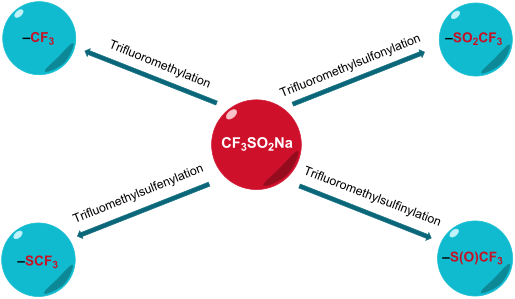
CF3SO2X (X = Na, Cl) as reagents for trifluoromethylation, trifluoromethylsulfenyl-, -sulfinyl- and -sulfonylation. Part 1: Use of CF3SO2Na
- Hélène Guyon,
- Hélène Chachignon and
- Dominique Cahard
Beilstein J. Org. Chem. 2017, 13, 2764–2799, doi:10.3762/bjoc.13.272
- (Scheme 11) [30]. Amino- and azotrifluoromethylation of alkenes: Alkene trifluoromethylation was applied to the construction of indole, pyrazole and pyridazinone moieties via a multicomponent cascade reaction developed by Antonchick and Matcha in 2014 [31]. The method was based on the reaction between

Graphical Abstract

Scheme 1: Trifluoromethylation of enol acetates by Langlois.

Scheme 2: Trifluoromethylation of (het)aryl enol acetates.

Scheme 3: Mechanism for the trifluoromethylation of enol acetates.

Scheme 4: Oxidative trifluoromethylation of unactivated olefins and mechanistic pathway.
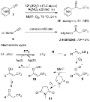
Scheme 5: Oxidative trifluoromethylation of acetylenic substrates.

Scheme 6: Metal free trifluoromethylation of styrenes.

Scheme 7: Synthesis of α-trifluoromethylated ketones by oxytrifluoromethylation of heteroatom-functionalised ...
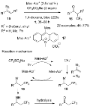
Scheme 8: Catalysed photoredox trifluoromethylation of vinyl azides.

Scheme 9: Oxidative difunctionalisation of alkenyl MIDA boronates.

Scheme 10: Synthesis of β-trifluoromethyl ketones from cyclopropanols.

Scheme 11: Aryltrifluoromethylation of allylic alcohols.

Scheme 12: Cascade multicomponent synthesis of nitrogen heterocycles via azotrifluoromethylation of alkenes.

Scheme 13: Photocatalytic azotrifluoromethylation of alkenes with aryldiazonium salts and CF3SO2Na.

Scheme 14: Copper-promoted intramolecular aminotrifluoromethylation of alkenes with CF3SO2Na.

Scheme 15: Oxytrifluoromethylation of alkenes with CF3SO2Na and hydroxamic acid.

Scheme 16: Manganese-catalysed oxytrifluoromethylation of styrene derivatives.

Scheme 17: Oxytrifluoromethylation of alkenes with NMP/O2 and CF3SO2Na.

Scheme 18: Intramolecular oxytrifluoromethylation of alkenes.

Scheme 19: Hydrotrifluoromethylation of styrenyl alkenes and unactivated aliphatic alkenes.

Scheme 20: Hydrotrifluoromethylation of electron-deficient alkenes.

Scheme 21: Hydrotrifluoromethylation of alkenes by iridium photoredox catalysis.

Scheme 22: Iodo- and bromotrifluoromethylation of alkenes by CF3SO2Na/I2O5 or CF3SO2Na / NaBrO3.

Scheme 23: N-methyl-9-mesityl acridinium and visible-light-induced chloro-, bromo- and SCF3 trifluoromethylati...

Scheme 24: Carbotrifluoromethylation of N-arylacrylamides with CF3SO2Na / TBHP by Lipshutz.

Scheme 25: Carbotrifluoromethylation of N-arylacrylamides with CF3SO2Na/TBHP reported by Lei.

Scheme 26: Carbotrifluoromethylation of N-arylacrylamides with CF3SO2Na/(NH4)2S2O8.

Scheme 27: Metal-free carbotrifluoromethylation of N-arylacrylamides with CF3SO2Na/K2S2O8 reported by Wang.

Scheme 28: Metal-free carbotrifluoromethylation of N-arylacrylamides with CF3SO2Na/PIDA reported by Fu.

Scheme 29: Metal-free cascade trifluoromethylation/cyclisation of N-arylmethacrylamides (a) and enynes (b) wit...

Scheme 30: Trifluoromethylation/cyclisation of N-arylcinnamamides: Synthesis of 3,4-disubstituted dihydroquino...

Scheme 31: Trifluoromethylation/cyclisation of aromatic-containing unsaturated ketones.

Scheme 32: Chemo- and regioselective cascade trifluoromethylation/heteroaryl ipso-migration of unactivated alk...

Scheme 33: Copper-mediated 1,2-bis(trifluoromethylation) of alkenes.

Scheme 34: Trifluoromethylation of aromatics with CF3SO2Na reported by Langlois.

Scheme 35: Baran’s oxidative C–H trifluoromethylation of heterocycles.

Scheme 36: Trifluoromethylation of acetanilides and anilines.

Scheme 37: Trifluoromethylation of heterocycles in water.

Scheme 38: Trifluoromethylation of coumarins in a continuous-flow reactor.

Scheme 39: Oxidative trifluoromethylation of coumarins, quinolines and pyrimidinones.

Scheme 40: Oxidative trifluoromethylation of pyrimidinones and pyridinones.

Scheme 41: Phosphovanadomolybdic acid-catalysed direct C−H trifluoromethylation.
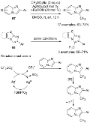
Scheme 42: Oxidative trifluoromethylation of imidazopyridines and imidazoheterocycles.

Scheme 43: Oxidative trifluoromethylation of imidazoheterocycles and imidazoles in ionic liquid/water.
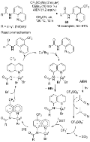
Scheme 44: Oxidative trifluoromethylation of 8-aminoquinolines.

Scheme 45: Oxidative trifluoromethylation of various 8-aminoquinolines using the supported catalyst CS@Cu(OAc)2...

Scheme 46: Oxidative trifluoromethylation of the naphthylamide 70.

Scheme 47: Oxidative trifluoromethylation of various arenes in the presence of CF3SO2Na and sodium persulfate.
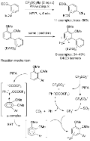
Scheme 48: Trifluoromethylation of electron-rich arenes and unsymmetrical biaryls with CF3SO2Na in the presenc...

Figure 1: Trifluoromethylated coumarin and flavone.

Scheme 49: Metal-free trifluoromethylation catalysed by a photoredox organocatalyst.
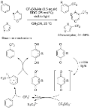
Scheme 50: Quinone-mediated trifluoromethylation of arenes and heteroarenes.
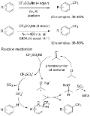
Scheme 51: Metal- and oxidant-free photochemical trifluoromethylation of arenes.

Scheme 52: Copper-mediated trifluoromethylation of arenediazonium tetrafluoroborates.

Scheme 53: Oxidative trifluoromethylation of aryl- and heteroarylboronic acids.
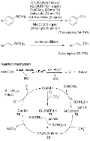
Scheme 54: Oxidative trifluoromethylation of aryl- and vinylboronic acids.

Scheme 55: Oxidative trifluoromethylation of unsaturated potassium organotrifluoroborates.

Scheme 56: Oxidative trifluoromethylation of (hetero)aryl- and vinyltrifluoroborates.

Scheme 57: Copper−catalysed decarboxylative trifluoromethylation of cinnamic acids.

Scheme 58: Iron-mediated decarboxylative trifluoromethylation of α,β-unsaturated carboxylic acids.

Scheme 59: Cu/Ag-catalysed decarboxylative trifluoromethylation of cinnamic acids.

Scheme 60: I2O5-Promoted decarboxylative trifluoromethylation of cinnamic acids.

Scheme 61: Silver(I)-catalysed denitrative trifluoromethylation of β-nitrostyrenes.
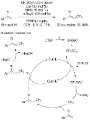
Scheme 62: Copper-catalysed direct trifluoromethylation of styrene derivatives.
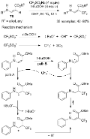
Scheme 63: Transition-metal-free synthesis of β-trifluoromethylated enamines.

Scheme 64: I2O5-mediated iodotrifluoromethylation of alkynes.

Scheme 65: Silver-catalysed tandem trifluoromethylation/cyclisation of aryl isonitriles.

Scheme 66: Photoredox trifluoromethylation of 2-isocyanobiphenyls.

Scheme 67: Trifluoromethylation of potassium alkynyltrifluoroborates with CF3SO2Na.
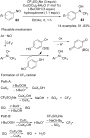
Scheme 68: N-trifluoromethylation of nitrosoarenes with CF3SO2Na (SQ: semiquinone).

Scheme 69: Trifluoromethylation of disulfides with CF3SO2Na.

Scheme 70: Trifluoromethylation of thiols with CF3SO2Na/I2O5.
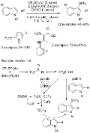
Scheme 71: Electrophilic trifluoromethylsulfenylation by means of CF3SO2Na/(EtO)2P(O)H/CuCl/DMSO.

Scheme 72: Electrophilic trifluoromethylsulfenylation by means of CF3SO2Na/(EtO)2P(O)H/TMSCl.
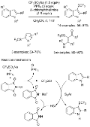
Scheme 73: Electrophilic trifluoromethylsulfenylation by means of CF3SO2Na/PPh3/N-chlorophthalimide.

Scheme 74: Electrophilic trifluoromethylsulfenylation by means of CF3SO2Na/PCl3.

Scheme 75: Electrophilic trifluoromethylsulfenylation by means of CF3SO2Na/PCl3.

Scheme 76: Trifluoromethylsulfenylation of aryl iodides with in situ generated CuSCF3 (DMI: 1,3-dimethyl-2-imi...

Scheme 77: Pioneering trifluoromethylsulfinylation of N, O, and C-nucleophiles.

Scheme 78: Trifluoromethylsulfinylation of (1R,2S)-ephedrine (Im: imidazole; DIEA: N,N-diisopropylethylamine).

Scheme 79: Trifluoromethylsulfinylation of substituted benzenes with CF3SO2Na/CF3SO3H.

Scheme 80: Trifluoromethylsulfinylation of indoles with CF3SO2Na/P(O)Cl3.

Scheme 81: Trifluoromethylsulfinylation of indoles with CF3SO2Na/PCl3.

Scheme 82: Formation of triflones from benzyl bromides (DMA: dimethylacetamide).

Scheme 83: Formation of α-trifluoromethylsulfonyl ketones, esters, and amides.

Scheme 84: Allylic trifluoromethanesulfonylation of aromatic allylic alcohols.

Scheme 85: Copper-catalysed couplings of aryl iodonium salts with CF3SO2Na.

Scheme 86: Palladium-catalysed trifluoromethanesulfonylation of aryl triflates and chlorides with CF3SO2Na.

Scheme 87: Copper-catalysed coupling of arenediazonium tetrafluoroborates with CF3SO2Na.

Scheme 88: Synthesis of phenyltriflone via coupling of benzyne with CF3SO2Na.

Scheme 89: Synthesis of 1-trifluoromethanesulfonylcyclopentenes from 1-alkynyl-λ3-bromanes and CF3SO2Na.

Scheme 90: One-pot synthesis of functionalised vinyl triflones.

Scheme 91: Regioselective synthesis of vinyltriflones from styrenes.

Scheme 92: Trifluoromethanesulfonylation of alkynyl(phenyl) iodonium tosylates by CF3SO2Na.

Scheme 93: Synthesis of thio- and selenotrifluoromethanesulfonates.
Synthesis, effect of substituents on the regiochemistry and equilibrium studies of tetrazolo[1,5-a]pyrimidine/2-azidopyrimidines
- Elisandra Scapin,
- Paulo R. S. Salbego,
- Caroline R. Bender,
- Alexandre R. Meyer,
- Anderson B. Pagliari,
- Tainára Orlando,
- Geórgia C. Zimmer,
- Clarissa P. Frizzo,
- Helio G. Bonacorso,
- Nilo Zanatta and
- Marcos A. P. Martins
Beilstein J. Org. Chem. 2017, 13, 2396–2407, doi:10.3762/bjoc.13.237

- efficient and regioselective synthesis of pyrazolo[1,5-a]pyrimidines and aryl[heteroaryl]pyrazolo[1,5-a]pyrimidines in acetic acid under reflux. The regioselectivity was attributed to the high nucleophilicity of the amino group in 3-amino-5-methyl-1H-pyrazole and the high electrophilicity of the β-carbon

Graphical Abstract

Figure 1: Hydrogen coupling constants (3JH-H) of (a) H6–H7 for 3a and (b) H5–H6 for 5h.

Figure 2: LUMO coefficients for (a) β-enaminones 1a,h, and their (b) conjugated acids.
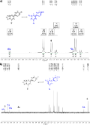
Figure 3:
(a) 1H and (b) 13C NMR spectra demonstrating the 3d![[Graphic 9]](/bjoc/content/inline/1860-5397-13-237-i9.svg?max-width=637&scale=1.18182) 4d equilibrium in DMSO-d6 at 25 °C.
4d equilibrium in DMSO-d6 at 25 °C.

Figure 4: ORTEP® [45] plot of 7a with thermal ellipsoids drawn at 50% probability level.

Figure 5: Tetrazolo[1,5-a]pyrimidine observed in solution (CDCl3 and DMSO-d6) and 2-azidopyrimidine observed ...

Figure 6: ORTEP® [45] plot of 8i with thermal ellipsoids drawn at 50% probability level.

Figure 7: Representation of the possible equilibrium existing between 6i, 7i, and 8i.
Dialkyl dicyanofumarates and dicyanomaleates as versatile building blocks for synthetic organic chemistry and mechanistic studies
- Grzegorz Mlostoń and
- Heinz Heimgartner
Beilstein J. Org. Chem. 2017, 13, 2235–2251, doi:10.3762/bjoc.13.221
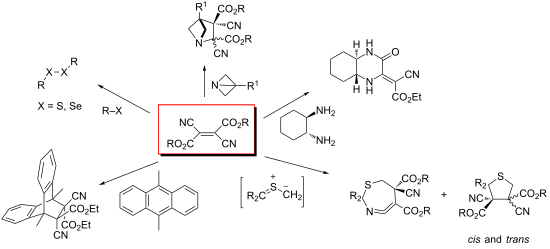
- this series the experimental results were confirmed by computational methods. In the reaction of diazomethane with E-1b in THF at room temperature 4,5-dihydro-3H-pyrazole 35 was detected as the initial [3 + 2]-cycloadduct by 1H NMR spectroscopy [29] (Scheme 11). Fast tautomerization led to the
- corresponding 1H-pyrazole 36. The cycloaddition occurred with preservation of the configuration of the dipolarophile. In the presence of excess diazomethane the five-membered cycloadducts 35 and 36 were converted into a complex mixture of products. In a very recent study, we demonstrated that the reactions of
- . Stepwise [3 + 2]-cycloadditions of dimethyl dicyanofumarate (E-1b) and dimethyl dicyanomaleate (Z-1b) with the in situ generated azomethine ylides 32. [3 + 2]-Cycloaddition of diazomethane with dimethyl dicyanofumarate (E-1b) leading to 1H-pyrazole derivative 36. Reversible Diels–Alder reaction of fulvenes

Graphical Abstract

Figure 1: Dialkyl dicyanofumarates E-1 and dicyanomaleates Z-1.

Scheme 1: Methods for the synthesis of dialkyl dicyanofumarates E-1 from alkyl cyanoacetates 2.

Scheme 2: Methods for the synthesis of dialkyl dicyanofumarates E-1 from alkyl bromoacetates 3.

Scheme 3: Reaction of dimethyl dicyanofumarate (E-1b) with dimethoxycarbene [(MeO)2C:] generated in situ from...

Scheme 4: Cyclopropanation of diethyl dicyanofumarate (E-1a) through reaction with the thiophene derived sulf...

Scheme 5: Cyclopropanation of dimethyl dicyanofumarate (E-1b) through a stepwise reaction with the in situ ge...

Scheme 6: The [2 + 2]-cycloadditions of dimethyl dicyanofumarate (E-1b) with electron-rich ethylenes 20 and 22...

Scheme 7: The [2 + 2]-cycloaddition of isomeric dimethyl dicyanofumarate (E-1b) and dicyanomaleate (Z-1b) wit...

Scheme 8: Non-concerted [2 + 2]-cycloaddition between E-1b and bicyclo[2.1.0]pentene (27).

Scheme 9: Stepwise [3 + 2]-cycloadditions of some thiocarbonyl S-methanides with dialkyl dicyanofumarates E-1...

Scheme 10: Stepwise [3 + 2]-cycloadditions of dimethyl dicyanofumarate (E-1b) and dimethyl dicyanomaleate (Z-1b...

Scheme 11: [3 + 2]-Cycloaddition of diazomethane with dimethyl dicyanofumarate (E-1b) leading to 1H-pyrazole d...

Scheme 12: Reversible Diels–Alder reaction of fulvenes 36 with diethyl dicyanofumarate (E-1a).

Scheme 13: [4 + 2]-Cycloaddition of 9,10-dimethylanthracene (39b) and E-1a.

Scheme 14: Stepwise [4 + 2]-cycloaddition of dimethyl dicyanofumarate (E-1b) with electron-rich 1,1-dimethoxy-...

Scheme 15: Formal [4 + 2]-cycloaddition of 3,4-di(α-styryl)furan (47) with dimethyl dicyanofumarate (E-1b).

Scheme 16: Acid-catalyzed Michael addition of enolizable ketones of type 49 to E-1.

Scheme 17: Reaction of diethyl dicyanofumarate (E-1a) with ammonia NH3.

Scheme 18: Reaction of dialkyl dicyanofumarates E-1 with primary and secondary amines.

Scheme 19: Reaction of dialkyl dicyanofumarates E-1 with 1-azabicyclo[1.1.0]butanes 55.

Scheme 20: Formation of pyrazole derivatives in the reaction of hydrazines with E-1.

Scheme 21: Formation of 5-aminopyrazole-3,4-dicarboxylate 65 via heterocyclization reactions.

Scheme 22: Reactions of aryl- and hetarylcarbohydrazides 67 with E-1a.

Scheme 23: Multistep reaction leading to perhydroquinoxaline derivative 73.

Scheme 24: Synthesis of ethyl 7-aminopteridin-6-carboxylates 75 via a domino reaction.

Scheme 25: Synthesis of morhpolin-2-ones 80 from E-1 and β-aminoalcohols 78 through an initial aza-Michael add...

Scheme 26: Reaction of 3-amino-5-arylpyrazoles 81 with dialkyl dicyanofumarates E-1 via competitive nucleophil...

Scheme 27: Heterocyclization reaction of thiosemicarbazone 86 with E-1a.

Scheme 28: Formation of diethyl 4-cyano-5-oxotetrahydro-4H-chromene-3,4-dicarboxylate (90) from E-1a via heter...

Scheme 29: Reaction of dialkyl dicyanofumarates E-1 with cysteamine (92).

Scheme 30: Formation of disulfides through reaction of thiols with E-1a.

Scheme 31: Formation of CT salts of E-1 with Mn2+ and Cr2+ metallocenes through one-electron transfer.

Scheme 32: Oxidation of diethyl dicyanofumarate (E-1a) with H2O2 to give oxirane 101.

Scheme 33: The aziridination of E-1b through nitrene addition.
New tricks of well-known aminoazoles in isocyanide-based multicomponent reactions and antibacterial activity of the compounds synthesized
- Maryna V. Murlykina,
- Maryna N. Kornet,
- Sergey M. Desenko,
- Svetlana V. Shishkina,
- Oleg V. Shishkin,
- Aleksander A. Brazhko,
- Vladimir I. Musatov,
- Erik V. Van der Eycken and
- Valentin A. Chebanov
Beilstein J. Org. Chem. 2017, 13, 1050–1063, doi:10.3762/bjoc.13.104
- , Zhukovsky str., 66, 69600, Zaporizhzhya, Ukraine Faculty of Chemistry, V. N. Karazin Kharkiv National University, Svobody sq., 4, 61077, Kharkiv, Ukraine 10.3762/bjoc.13.104 Abstract The well-known aminoazoles, 3-amino-5-methylisoxazole and 5-amino-N-aryl-1H-pyrazole-4-carboxamides, were studied as an
- -aryl-1H-pyrazole-4-carboxamides; antibacterial activity; Groebke–Blackburn–Bienaymé reaction; isocyanide Ugi reaction; Introduction An intensive progress in pharmaceutical and medicinal chemistry, as well as in the generation and improvement of medicinal technologies has led to defeating a wide scope
- (anxiolytic) [27]. The activity of different imidazoheterocycles was also studied against migraine [30], gastric [31][32], heart [34][35][36], viral diseases [37][38][39][40][41] and an array of neurological syndromes [52]. The imidazo[1,2-b]pyrazole core shows also a pharmacological potential. Among others

Graphical Abstract

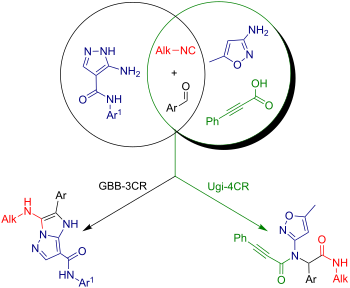
Scheme 1: Aminoazoles in GBB-3CR and Ugi-4CR.

Scheme 2: Reactivity of 5-amino-N-aryl-1H-pyrazole-4-carboxamide and 3-amino-5-methylisoxazole in GBB-3CR and...

Figure 1: Alternative structures A and B for compounds 4 and 6.
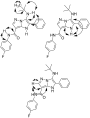
Figure 2: Selected data of HSQC and HMBC experiments for compound 4a.

Figure 3: Molecular structure of 3-(tert-butylamino)-2-(4-chlorophenyl)-N-(4-fluorophenyl)-1H-imidazo[1,2-b]p...

Figure 4: Selected data of NOE and HSQC experiments for compound 9d.

Figure 5: Molecular structure of N-(2-(tert-butylamino)-1-(4-chlorophenyl)-2-oxoethyl)-N-(5-methylisoxazol-3-...
Automating multistep flow synthesis: approach and challenges in integrating chemistry, machines and logic
- Chinmay A. Shukla and
- Amol A. Kulkarni
Beilstein J. Org. Chem. 2017, 13, 960–987, doi:10.3762/bjoc.13.97

Graphical Abstract

Figure 1: A number of experiments for various optimization algorithms [46].

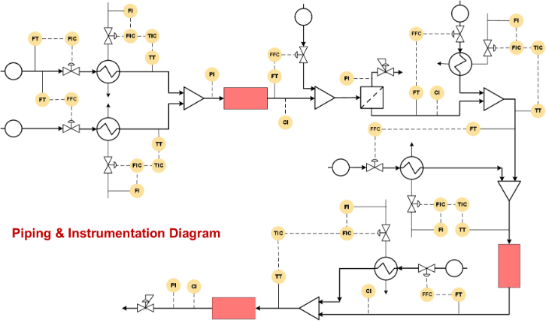
Figure 2: Symbols used for block and P&ID diagrams.

Scheme 1: Multistep synthesis of olanzapine (Hartwig et al. [10])

Figure 3: (A) Block diagram representation of the process shown in Scheme 1, (B) piping and instrumentation diagram o...

Scheme 2: Multistep flow synthesis for tamoxifen (Murray et al. [11]).

Figure 4: (A) Block diagram representation of the process shown in Scheme 2, (B) piping and instrumentation diagram o...

Figure 5: (A) Block diagram representation of the process shown in Scheme 3, (B) piping and instrumentation diagram o...

Scheme 3: Multistep flow synthesis of rufinamide (Zhang et al. [14]).

Figure 6: (A) Block diagram representation of the process shown in Scheme 4, (B) piping and instrumentation diagram o...

Scheme 4: Multistep synthesis for (±)-Oxomaritidine (Baxendale et al. [9]).

Figure 7: (A) Block diagram representation of the process shown in Scheme 5, (B) piping and instrumentation diagram o...

Scheme 5: Multistep synthesis for ibuprofen (Snead and Jamison [60]).

Scheme 6: Multistep synthesis for cinnarizine and buclizine derivatives (Borukhova et al. [23])
Figure 8: (A) Block diagram representation of the process shown in Scheme 6, (B) piping and instrumentation diagram o...

Scheme 7: Multistep synthesis for (S)-rolipram (Tsubogo et al. [4])

Figure 9: (A) Block diagram representation of the process shown in Scheme 7 (colours for each reactor shows different...

Figure 10: (A) Block diagram representation of the process shown in Scheme 8, (B) piping and instrumentation diagram o...

Scheme 8: Multistep synthesis for amitriptyline (Kupracz and Kirschning [7]).
Synthesis of tetrasubstituted pyrazoles containing pyridinyl substituents
- Josef Jansa,
- Ramona Schmidt,
- Ashenafi Damtew Mamuye,
- Laura Castoldi,
- Alexander Roller,
- Vittorio Pace and
- Wolfgang Holzer
Beilstein J. Org. Chem. 2017, 13, 895–902, doi:10.3762/bjoc.13.90

- corresponding 1,3,5-trisubstituted pyrazoles. Iodination at the 4-position of the pyrazole nucleus by treatment with I2/HIO3 gives the appropriate 4-iodopyrazoles which served as starting materials for different cross-coupling reactions. Finally, Negishi cross-coupling employing organozinc halides and Pd
- condensation product was confirmed by crystal structure analysis. Keywords: Negishi coupling; NMR (1H; 13C; 15N); pyrazole; pyridine; X-ray structure analysis; Introduction The pyrazole nucleus is a frequently occurring motif in many pharmaceuticals [1][2] and biologically active compounds [3][4
- out to be superior to the reaction of compounds 2 with N-iodosuccinimide. Species 3a–d served as educts for the investigations concerning further functionalization at pyrazole C-4. Carboxylation of 4-iodopyrazoles 3a–d The lithium–iodine exchange proceeded quickly and quantitatively in case of 3,5-di

Graphical Abstract

Scheme 1: Envisaged general approach for the synthesis of the title compounds.

Scheme 2: Synthesis of 4-iodopyrazoles of type 3.

Scheme 3: Lithium–halogen exchange and subsequent carboxylation with iodopyrazoles 3a–d.

Scheme 4: Attempted cross-coupling reactions with 4-halopyrazoles 5 and 3a.

Scheme 5: Negishi couplings with 4-iodopyrazoles 3a,b.

Scheme 6: Formation of pyrazoloquinolizin-6-ium iodide 12 upon reaction of 3a with (phenylethynyl)zinc bromid...

Scheme 7: Prototropic tautomerism of compound 1a.

Figure 1: 1H NMR (in italics), 13C NMR and 15N NMR (in bold) chemical shifts of compound 9a (in CDCl3).
Derivatives of the triaminoguanidinium ion, 5. Acylation of triaminoguanidines leading to symmetrical tris(acylamino)guanidines and mesoionic 1,2,4-triazolium-3-aminides
- Jan Szabo,
- Julian Greiner and
- Gerhard Maas
Beilstein J. Org. Chem. 2017, 13, 579–588, doi:10.3762/bjoc.13.57
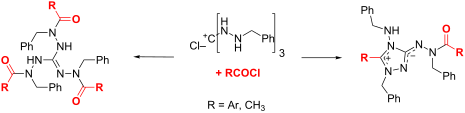
- , triaminoguanidinium salts or the neutral triaminoguanidine have been reacted with carbonyl compounds. Reactions with aldehydes [3][4][5][6][7] or ketones [8][9][10] yielded the corresponding tris(iminyl)guanidines; cyclocondensation of pentane-2,4-dione at one hydrazinyl branch of TAG-Cl afforded a pyrazole which

Graphical Abstract

Scheme 1: Reactions of aminoguanidines with carboxylic acids and acid chlorides. The structural formulae show...

Scheme 2: Threefold N-acylation of triaminoguanidinium chloride (1) with acyl chloride 2b.

Scheme 3: Reaction of 1,2,3-tris(benzylamino)guanidinium salts 4 and 5 with acyl chlorides to give 1,2,3-tris...
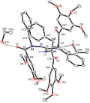
Figure 1: Molecular structure of 6b·2C2H5OH in the solid state, with numbering of atoms (ORTEP plot). Selecte...

Scheme 4: Protonation and methylation of 1,2,4-triazolium-3-aminides 7b,c.

Scheme 5: Catalytic hydrogenation/debenzylation of betaines 7.

Figure 2: Left: molecular structure of 8b in the solid state (OLEX2 plot). Right: crystal structure viewed al...

Figure 3: Left: solid-state structure of 9b·H2O (ORTEP plot). Right: centrosymmetric hydrogen-bonded dimer of...

Figure 4: Solid-state structure of mesoionic compound 7a (ORTEP plot); thermal displacement ellipsoids are dr...

Figure 5: UV–vis spectra of 7a–d in chloroform (c = 0.04 mmol L−1); λmax [nm] (ε [L mol−1 cm−1]): 7a: 350 (47...
A new paradigm for designing ring construction strategies for green organic synthesis: implications for the discovery of multicomponent reactions to build molecules containing a single ring
- John Andraos
Beilstein J. Org. Chem. 2016, 12, 2420–2442, doi:10.3762/bjoc.12.236
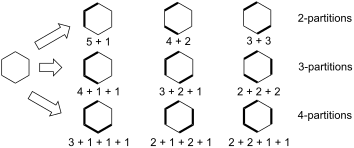
- , pyrazole, and the Biginelli adduct as target ring systems with a view to discover new and greener strategies for their construction using multicomponent reactions. The application of the method is also extended to various heterocycles found in many natural products and pharmaceuticals. Keywords: atom
- pyrazole ring and compare them to what has been done in the literature. Finally, we apply all possible 3-partitions to the 6-membered Biginelli adduct to identify new assemblages for this structure that have potentially high probabilities of intrinsic greenness that exceed the material performance of the
- nucleophilic centre before bonding can take place. Such additional corrective operations reduce the overall material efficiencies of syntheses of odd-membered rings compared to even-membered rings. This point will be made more evident when we examine literature multicomponent syntheses of pyrazole, a five

Graphical Abstract

Figure 1: Possible two-component couplings for various monocyclic rings frequently encountered in organic mol...

Figure 2: Possible three-component couplings for various monocyclic rings frequently encountered in organic m...

Figure 3: Possible four-component couplings for various monocyclic rings frequently encountered in organic mo...
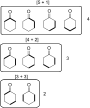
Figure 4: Permutations of two-component coupling patterns for synthesizing the cyclohexanone ring. Synthesis ...
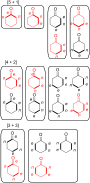
Figure 5: Permutations of two-component coupling patterns for synthesizing the cyclohexanone ring overlayed w...
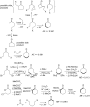
Scheme 1: Conjectured syntheses of cyclohexanone via [5 + 1] strategies.

Scheme 2: Conjectured syntheses of cyclohexanone via [4 + 2] strategies.

Scheme 3: Conjectured syntheses of cyclohexanone via [3 + 3] strategies.

Figure 6: Permutations of three-component coupling patterns for synthesizing the cyclohexanone ring. Synthesi...

Figure 7: Permutations of three-component coupling patterns for synthesizing the pyrazole ring via [2 + 2 + 1...

Scheme 4: Literature method for constructing the pyrazole ring via the A4 [2 + 2 + 1] strategy.
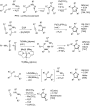
Scheme 5: Literature methods for constructing the pyrazole ring via the A5 [2 + 2 + 1] strategy.

Scheme 6: Literature methods for constructing the pyrazole ring via the A1 [2 + 2 + 1] strategy.

Scheme 7: Literature methods for constructing the pyrazole ring via the B4 [3 + 1 + 1] strategy.

Figure 8: Intrinsic green performance of documented pyrazole syntheses according to [2 + 2 + 1] and [3 + 1 + ...

Scheme 8: Conjectured reactions for constructing the pyrazole ring via the A2 and A3 [2 + 2 + 1] strategies.

Scheme 9: Conjectured reactions for constructing the pyrazole ring via the B1, B2, B3, and B4 [3 + 1 + 1] str...

Figure 9: Permutations of three-component coupling patterns for synthesizing the Biginelli ring adduct. Synth...
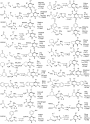
Scheme 10: Reported syntheses of the Biginelli adduct via the traditional [3 + 2 + 1] mapping strategy.
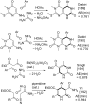
Scheme 11: Reported syntheses of the Biginelli adduct via new [3 + 2 + 1] mapping strategies.

Scheme 12: Reported syntheses of the Biginelli adduct via a new [2 + 2 + 1 + 1] mapping strategy.

Scheme 13: Conjectured syntheses of the Biginelli adduct via new [2 + 2 + 2] mapping strategies.

Scheme 14: Conjectured syntheses of the Biginelli adduct via new [3 + 2 + 1] mapping strategies.

Figure 10: Intrinsic green performance of documented Biginelli adduct syntheses according to [3 + 2 + 1] three...

Figure 11: Intrinsic green performance of newly conjectured Biginelli adduct syntheses according to [4 + 1 + 1...
Combined experimental and theoretical studies of regio- and stereoselectivity in reactions of β-isoxazolyl- and β-imidazolyl enamines with nitrile oxides
- Ilya V. Efimov,
- Marsel Z. Shafikov,
- Nikolai A. Beliaev,
- Natalia N. Volkova,
- Tetyana V. Beryozkina,
- Wim Dehaen,
- Zhijin Fan,
- Viktoria V. Grishko,
- Gert Lubec,
- Pavel A. Slepukhin and
- Vasiliy A. Bakulev
Beilstein J. Org. Chem. 2016, 12, 2390–2401, doi:10.3762/bjoc.12.233

- in the literature in comparison with monocyclic and fused derivatives [1][6]. Recently isoxazoles conjugated to pyrazole A [12], imidazole B [13] and tetrazole C [4] rings were found as promising candidates for anticancer and antidiabetic drugs and for the treatment of cognitive disorder (Figure 1

Graphical Abstract

Figure 1: Biologically active isoxazoles conjugated to other azole rings.

Scheme 1: Reactions of azolyl enamines with nitrile oxides.

Figure 2: Structures of starting enamines 1 and hydroxamoyl chlorides 2.

Scheme 2: Synthesis of 4-azolylisoxazoles 4a–p from enamines 1a–e and hydroxamoyl chlorides 2a–h. Reaction co...
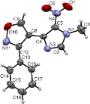
Figure 3: Imidazolylisoxazole 4a according to XRD data in the thermal ellipsoids of the 50% probability level....

Figure 4: Isoxazolylisoxazole 4p according to XRD data with thermal ellipsoids of 50% probability level.

Scheme 3: Plausible mechanisms for reaction of hydroxamoyl chlorides 2 with imidazolyl enamines 1a,b.

Figure 5: Geometries of enamine 1a appropriate to the calculated minima on the PES, and their relative free e...

Scheme 4: Calculated pathways for the formation of experimentally observed 3a, regioisomer 7 and isoxazoline 8...

Figure 6: Structures of the localized transition states. Lengths of the forming bonds are given in Å.

Figure 7: Summary of the calculated pathways of the cycloaddition reaction between enamine 1a and benzonitril...

Figure 8: Isosurface plots of the HOMO of enamine 1a_1 (bottom) and the LUMO of nitrile oxide 6 (top) in the ...



