


Search results
Search for "Cu-catalyzed" in Full Text gives 133 result(s) in Beilstein Journal of Organic Chemistry.
Pyridine-promoted dediazoniation of aryldiazonium tetrafluoroborates: Application to the synthesis of SF5-substituted phenylboronic esters and iodobenzenes
Beilstein J. Org. Chem. 2015, 11, 1494–1502, doi:10.3762/bjoc.11.162

- compounds are accessed mainly by the reactions of arylmagnesium or aryllithium species with trialkylboronates [43][44], Pd- or Cu-catalyzed borylations of aryl halides using B2pin2, H-Bpin [45][46][47][48][49][50] or R2N-BH2 [51], direct borylations via aromatic C–H bond activations [52][53][54][55][56][57


Orthogonal dual-modification of proteins for the engineering of multivalent protein scaffolds
Beilstein J. Org. Chem. 2015, 11, 784–791, doi:10.3762/bjoc.11.88
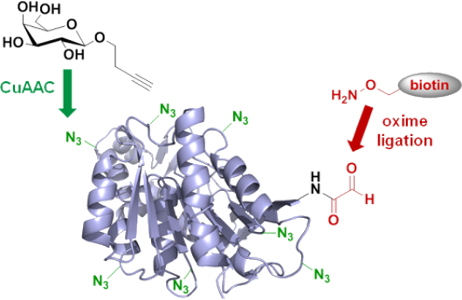
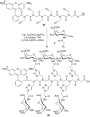
- engineer multivalent glycoprotein conjugates, we have used the incorporation of non-canonical amino acids (NCAA) [13] by supplementation based incorporation (SPI) [14][15][16][17] in auxotroph expression systems followed by the chemoselective Cu-catalyzed azide–alkyne cycloaddition (CuAAC) to attach


An unusually stable chlorophosphite: What makes BIFOP–Cl so robust against hydrolysis?
Beilstein J. Org. Chem. 2015, 11, 313–322, doi:10.3762/bjoc.11.36
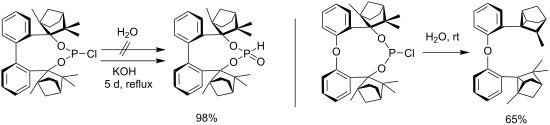
- intramolecular palladium-catalyzed alkyl–aryl cross-coupling reaction [13] and in Pd-catalyzed allylic substitutions [14]. Several of the highly sterically hindered BIFOP derivatives were employed as ligands in Cu-catalyzed 1,4-additions [15]. Similar chelating fencholates [16][17][18][19][20][21][22] (Scheme 1


Conjugates of methylated cyclodextrin derivatives and hydroxyethyl starch (HES): Synthesis, cytotoxicity and inclusion of anaesthetic actives
Beilstein J. Org. Chem. 2014, 10, 3087–3096, doi:10.3762/bjoc.10.325
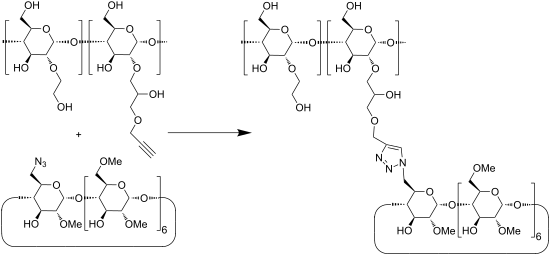
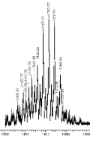
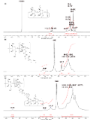
- ] and its Cu+-catalyzed version, called click reaction [31][32], is of special interest because this coupling proceeds rapidly and specific in aqueous media and tolerates many functional groups. Mono-6-azido-6-deoxy-β-CD was already coupled by the click reaction to propargylated dextrane by Nielsen et
- propargyl ether leading to a highly water soluble polymer 3 with DSHES(propargyl) = 0.55. Coupling of the CD azides 1a and 1b to the propargylated HES was performed by Cu+-catalyzed [2 + 3] cycloaddition, the so-called click reaction, leading to the corresponding triazol groups (Scheme 3). The standard




Copper-promoted hydration and annulation of 2-fluorophenylacetylene derivatives: from alkynes to benzo[b]furans and benzo[b]thiophenes
Beilstein J. Org. Chem. 2014, 10, 2886–2891, doi:10.3762/bjoc.10.305

- nucleophilic annulation process (Scheme 1b) [24]. But this method involves a two-step process and the usage of two different metal salts may complicate further processing. The direct design of a Pd or Cu-catalyzed one-pot synthesis of benzo[b]thiophenes from 2-bromoalkynylbenzenes and a thiol derivative has


A simple copper-catalyzed two-step one-pot synthesis of indolo[1,2-a]quinazoline
Beilstein J. Org. Chem. 2014, 10, 2441–2447, doi:10.3762/bjoc.10.254

- in a good yield (Table 2, entry 15). Halogen-substituted (F, Cl) substrates 3 also provided the desired products with moderate yields (Table 2, entries 16 and 17). Conclusion In conclusion, we have developed a simple and efficient Cu-catalyzed methodology for the synthesis of indolo[1,2-a]quinazoline


Expeditive synthesis of trithiotriazine-cored glycoclusters and inhibition of Pseudomonas aeruginosa biofilm formation
Beilstein J. Org. Chem. 2014, 10, 1981–1990, doi:10.3762/bjoc.10.206
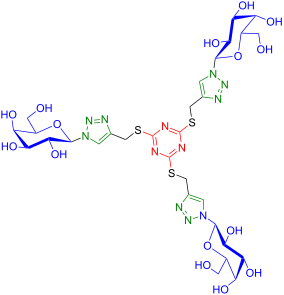
- -triazine (2) as a key precursor [37]. The glycosyl units were incorporated via Cu(I)-catalyzed Huisgen cycloaddition with protected or unprotected glycosyl azides. We first investigated the Cu-catalyzed azide–alkyne cycloaddition (CuAAC) of acetyl protected β-D-galactopyranosyl azide 3 [38], to tris


One-pot stereoselective synthesis of α,β-differentiated diamino esters via the sequence of aminochlorination, aziridination and intermolecular SN2 reaction
Beilstein J. Org. Chem. 2014, 10, 1802–1807, doi:10.3762/bjoc.10.189

- directly from cinnamate esters using N,N-dichloro-p-toluenesulfonamide and benzylamine as nitrogen sources. The key transformations include a Cu-catalyzed aminohalogenation and aziridination, followed by an intermolecular SN2 nucleophilic ring opening by benzylamine. The reactions feature a wide scope of
- , the reaction could be conducted in a one-pot model, under operationally convenient conditions [36][37][38][39] through Cu-catalyzed aminohalogenation, aziridination and intermolecular SN2 nucleophilic ring opening without isolation of haloamine intermediate (Scheme 1). Results and Discussion According
- results, a proposed reaction mechanism for this one-pot reaction is illustrated in Scheme 4, which contains the sequence of aminochlorination, aziridination and followed by the SN2 nucleophilic ring-opening. The first step is the Cu-catalyzed aminochlorination reaction of methyl cinnamate 1a resulting in


Triazol-substituted titanocenes by strain-driven 1,3-dipolar cycloadditions
Beilstein J. Org. Chem. 2014, 10, 1630–1637, doi:10.3762/bjoc.10.169

- -containing substrates for our strategy, i.e., azide-functionalized titanocenes, have been reported in the literature. One aspect of our study is to establish if such complexes are stable and readily available in high yield. It should be noted that only a single example of a Cu-catalyzed 1,3-dipolar


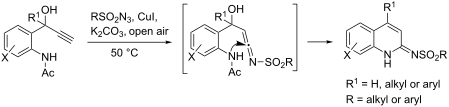
Tandem Cu-catalyzed ketenimine formation and intramolecular nucleophile capture: Synthesis of 1,2-dihydro-2-iminoquinolines from 1-(o-acetamidophenyl)propargyl alcohols
Beilstein J. Org. Chem. 2014, 10, 1255–1260, doi:10.3762/bjoc.10.125


Rapid pseudo five-component synthesis of intensively blue luminescent 2,5-di(hetero)arylfurans via a Sonogashira–Glaser cyclization sequence
Beilstein J. Org. Chem. 2014, 10, 672–679, doi:10.3762/bjoc.10.60
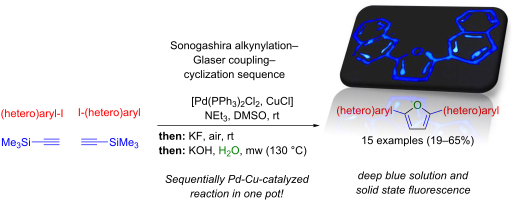
- approach are clearly the extended reaction times (3–6 d) and the removal of the catalyst after the coupling step. Recently, we became particularly interested in sequentially Pd-catalyzed processes [35] starting from (hetero)aryl iodides [36]. In particular, the Pd–Cu-catalyzed Sonogashira–Glaser sequence




Practical synthesis of aryl-2-methyl-3-butyn-2-ols from aryl bromides via conventional and decarboxylative copper-free Sonogashira coupling reactions
Beilstein J. Org. Chem. 2014, 10, 384–393, doi:10.3762/bjoc.10.36

- obtained in a one-pot protocol with a considerable reduction of synthetic and purification steps with respect to traditional procedures [51][52][62]. Instead, when looking to the preparation of terminal alkynes from propiolic acid derivatives, the Cu-catalyzed protodecarboxylation of alkynoic acids [67][68
- pharmaceutical intermediate [71] and a promising anti-Alzheimer [72], we found that the Pd/Cu-catalyzed Sonogashira coupling reaction of 3-bromoaniline (1a) with 4 is the actual industrial process for the synthesis of 2a in high yield [73][74][75] (Scheme 1). However, when the reaction is performed at industrial


3-Pyridinols and 5-pyrimidinols: Tailor-made for use in synergistic radical-trapping co-antioxidant systems
Beilstein J. Org. Chem. 2013, 9, 2781–2792, doi:10.3762/bjoc.9.313
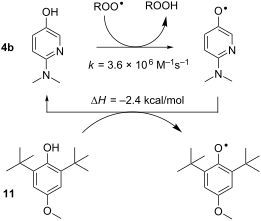
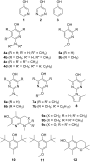
- antioxidants (10–12). Results and Discussion Synthesis. The preparation of compounds 4a, 4b and 5–8 involved installation of the aryl alcohol moiety as the final step via a Cu-catalyzed benzyloxylation/hydrogenolysis sequence on the corresponding pyri(mi)dyl halides, whereas the preparation of 4c, 4d and 9




Recent advances in transition metal-catalyzed Csp2-monofluoro-, difluoro-, perfluoromethylation and trifluoromethylthiolation
Beilstein J. Org. Chem. 2013, 9, 2476–2536, doi:10.3762/bjoc.9.287
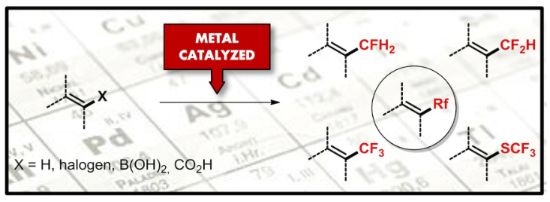
- monofluoromethylation was described by J. Hu. Aryl iodides were submitted to a Cu-catalyzed (CuTC = copper thiophene-2-carboxylate) debenzoylative fluoroalkylation with 2-PySO2CHFCOR followed by desulfonylation (Scheme 2) [49]. It has been shown that the (2-pyridyl)sulfonyl moiety is important for the Cu-catalysis. 2
- trifluoromethylations and the recent results of the Cu-catalyzed reaction described above, that of difluoromethylation has been more slowly developed. This is probably due to the lack of thermal stability of CuCHF2 [42]. To the best of our knowledge, the direct cross-coupling of CuCHF2 with aromatic halides has not
- readily available nucleophilic trifluoromethyl source after decarboxylation at high temperature in the presence of stoichiometric amounts of copper salts [78][79]. In 2011, Y. M. Li et al. showed that the Cu-catalyzed C–CF3 bond formation of iodoarenes could be achieved by using a sodium salt of


Microwave-assisted synthesis of 5,6-dihydroindolo[1,2-a]quinoxaline derivatives through copper-catalyzed intramolecular N-arylation
Beilstein J. Org. Chem. 2013, 9, 2463–2469, doi:10.3762/bjoc.9.285
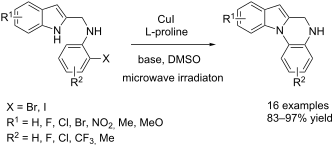
- relevant examples of 5,6-dihydroindolo[1,2-a]quinoxaline derivatives. Reagents and conditions: (a) CF3COOH, anhydrous dichloromethane, reflux; (b) NaBH4, MeOH. Optimization of the reaction conditions for the Cu-catalyzed synthesis of 5,6-dihydroindolo[1,2-a]quinoxaline (2a).a Synthesis of 5,6-dihydroindolo


Synthesis of the spiroketal core of integramycin
Beilstein J. Org. Chem. 2013, 9, 2446–2450, doi:10.3762/bjoc.9.282
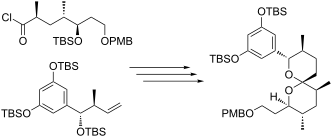
- PMB-protected 3-hydroxypropanal via Horner–Wadsworth-Emmons olefination, reduction to the allylic alcohol and Sharples epoxidation [8] (Scheme 2). Subsequent Cu-catalyzed epoxide-opening using methylmagnesium bromide [9] produced an inseparable mixture of 1,2- and 1,3-diol products, which upon


Cu-catalyzed trifluoromethylation of aryl iodides with trifluoromethylzinc reagent prepared in situ from trifluoromethyl iodide
Beilstein J. Org. Chem. 2013, 9, 2404–2409, doi:10.3762/bjoc.9.277
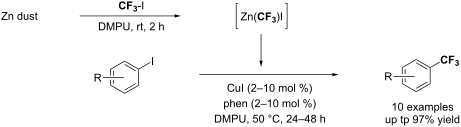
- ®), Bicalutamide (Casodex®), Aprepitant (Emend®), and Nilutamide (Nilandron®). Results and Discussion The preparation of the trifluoromethylzinc reagent Zn(CF3)I was initially examined in the context of the in situ Cu-catalyzed trifluoromethylation of aryl iodide 1 under various conditions. The results of the


The chemistry of amine radical cations produced by visible light photoredox catalysis
Beilstein J. Org. Chem. 2013, 9, 1977–2001, doi:10.3762/bjoc.9.234
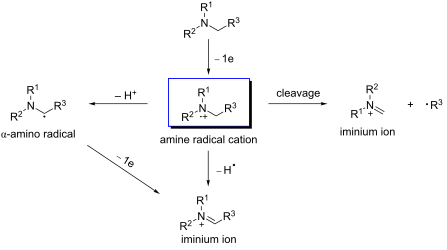
- reaction. Merging Au-based photoredox catalysis and Lewis base catalysis for the Mannich reaction. Merging Ru-based photoredox catalysis and Cu-catalyzed alkynylation reaction. Merging Ru-based photoredox catalysis and NHC catalysis. 1,3-Dipolar cycloaddition of photogenically formed azomethine ylides




Copper-catalyzed aerobic aliphatic C–H oxygenation with hydroperoxides
Beilstein J. Org. Chem. 2013, 9, 1217–1225, doi:10.3762/bjoc.9.138

- Pei Chui Too Ya Lin Tnay Shunsuke Chiba Division of Chemistry and Biological Chemistry, School of Physical and Mathematical Sciences, Nanyang Technological University, Singapore 637371, Singapore. Fax: +65-67911961; Tel: +65-65138013 10.3762/bjoc.9.138 Abstract We report herein Cu-catalyzed
- oxidative sp3 C–H functionalization with predictable chemo- and regioselectivity [1][2][3][4]. To achieve this goal, we have recently utilized 1,5-H-radical shift [5][6] with iminyl radical species (N-radicals) generated under Cu-catalyzed aerobic reaction conditions, in which the resulting carbon-centered
- radicals (C-radicals) could be trapped by molecular oxygen to form new C–O bonds. For instance, the Cu-catalyzed aerobic reaction of N-alkylamidines afforded aminidyl radicals (N-radicals) by single-electron oxidation and deprotonation of the amidine moiety, which was followed by 1,5-H-radical shift to


Efficient Cu-catalyzed base-free C–S coupling under conventional and microwave heating. A simple access to S-heterocycles and sulfides
Beilstein J. Org. Chem. 2013, 9, 467–475, doi:10.3762/bjoc.9.50

- ), this Cu-catalyzed C–S coupling reaction being highly chemoselective for aryl iodides. In comparison with the already reported procedure for the preparation of S-aryl thioacetates by Pd catalysis [51][56], the methodology herein described has the advantages of using a lower-cost copper salt and a stable
- . Electron-donor and electron-acceptor substituents are tolerated, and polysubstitution can also be successfully accomplished. Experimental Representative experimental procedures for the Cu-catalyzed base-free C–S coupling Method A: The reactions were carried out in a 10 mL two-necked Schlenk tube, equipped


Tandem aldehyde–alkyne–amine coupling/cycloisomerization: A new synthesis of coumarins
Beilstein J. Org. Chem. 2013, 9, 180–184, doi:10.3762/bjoc.9.21

- Maddi Sridhar Reddy Nuligonda Thirupathi Madala Haribabu Medicinal & Process Chemistry Division, CSIR-Central Drug Research Institute, Lucknow-226 001, India, Fax: +91-(522)-2623405, Tel: +91–(522)–2612 411, Extn: 4379 10.3762/bjoc.9.21 Abstract Cu-catalyzed A3 coupling of ethoxyacetylene
- biological and pharmaceutical applications. In continuation of our interest in the cycloisomerization of alkynols and alkynamines for the synthesis of various heterocycles [17][18][19][20][21][22], we herein report the synthesis of coumarins from salicylaldehydes by a Cu-catalyzed exclusive 6-endo-dig


Peptoids and polyamines going sweet: Modular synthesis of glycosylated peptoids and polyamines using click chemistry
Beilstein J. Org. Chem. 2013, 9, 56–63, doi:10.3762/bjoc.9.7
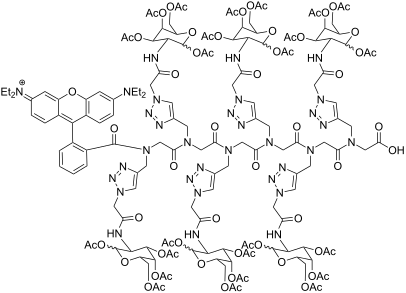
- fast methods for the decoration of biomimetic molecules with sugars is of fundamental importance. The glycosylation of peptoids and polyamines as examples of such biomimetic molecules is reported here. The method uses Cu-catalyzed azide alkyne cycloaddition to promote the reaction of azidosugars with


Rh(III)-catalyzed directed C–H bond amidation of ferrocenes with isocyanates
Beilstein J. Org. Chem. 2012, 8, 1844–1848, doi:10.3762/bjoc.8.212
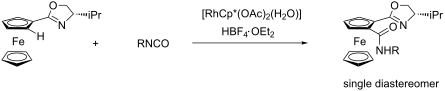
- reported to date, and there is only one report of enantioselective C–H activation of ferrocenes [6][7][8][9]. Schmalz et al. reported the first catalytic C–H activation of ferrocenes using a Cu-catalyzed intramolecular carbene insertion into a Cp–H bond [6]. Further, they showed that the reaction could be


Screening of ligands for the Ullmann synthesis of electron-rich diaryl ethers
Beilstein J. Org. Chem. 2012, 8, 1105–1111, doi:10.3762/bjoc.8.122

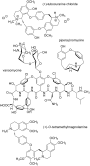
- tetramethylmagnolamine [6], and the antifungal diamine piperazinomycin [7] (Figure 1). A straightforward method for the formation of diaryl ethers is the Cu-catalyzed coupling of aryl halides with phenols, first reported by Fritz Ullmann in 1903 [8][9]. However, the classical protocol suffers from considerable
- Cu-catalyzed reaction in recent years [14]. It is known that certain additives, such as N,N- and N,O-chelating ligands, accelerate the Ullmann diaryl ether synthesis and permit a considerable reduction of the reaction temperature [15][16][17]. Successful approaches towards a mild coupling were, e.g
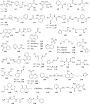
- 8-hydroxyquinoline (L47) (Table 2 and Figure 3). These ligands have been reported to be effective in the Cu-catalyzed diaryl ether synthesis before [21][27][28][29]. A disadvantage of ligands with free amino or hydroxy groups, such as L44, is that they themselves can act as substrates in the Ullmann


Synthesis of 2-amino-3-arylpropan-1-ols and 1-(2,3-diaminopropyl)-1,2,3-triazoles and evaluation of their antimalarial activity
Beilstein J. Org. Chem. 2011, 7, 1745–1752, doi:10.3762/bjoc.7.205
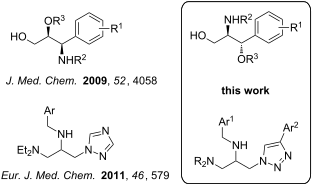
- substrates to perform “click chemistry” [34] incorporate an azide group and an aziridine ring in their structure, for example in 2-(azidomethyl)aziridines, thus providing a direct access to 2-[(1,2,3-triazol-1-yl)methyl]aziridines through Cu-catalyzed reaction with alkynes [35]. In this work, nonactivated N





