Search results
Search for "binding site" in Full Text gives 186 result(s) in Beilstein Journal of Organic Chemistry.
Aminosugar-based immunomodulator lipid A: synthetic approaches
Beilstein J. Org. Chem. 2018, 14, 25–53, doi:10.3762/bjoc.14.3
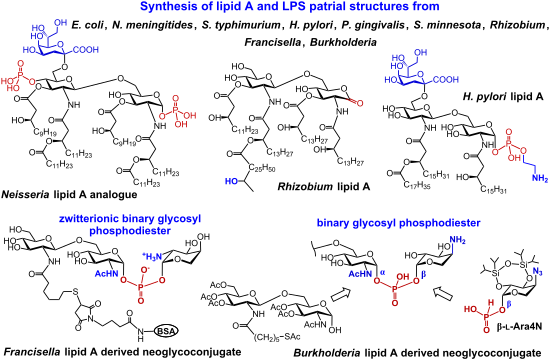
- ). Application of natural or synthetic TLR4 antagonists represents one of the most effective approaches for down-regulation of the TLR4-mediated signaling. So far, several lipid A variants which can block the LPS-binding site on human (h)MD-2 have been identified: tetraacylated lipid IVa [47] and a non
- for tracking ligand–receptor interactions was exploited. However, the hydrophobic character and the large size of most fluorescent labels which could potentially compete with lipid A for the LPS binding site at the TLR4 complex, posed an additional challenge. The only optional hydroxyl group which






Position-dependent impact of hexafluoroleucine and trifluoroisoleucine on protease digestion
Beilstein J. Org. Chem. 2017, 13, 2869–2882, doi:10.3762/bjoc.13.279
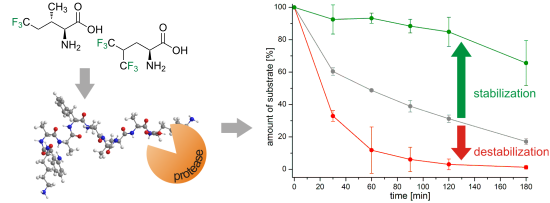
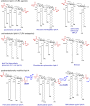
- amino acid residues of the binding site, thus making P1’-HfLeuFA a better substrate than the non-fluorinated Leu peptide. Several such interactions are possible, as described in our previous work [39][40][64]. The S2’ subsite of α-chymotrypsin exhibits a hydrophobic character and thus prefers to
- , respectively, which means that the cleavage site was shifted towards the C-terminus by one residue. This cleavage pattern was also detected for α-chymotrypsin before, and indicates that HfLeu is well accepted by pepsin in its S1 binding site. Furthermore, we identified a second cleavage site for P2-HfLeuFA at
- , but also valine, leucine, isoleucine [56][73]. Its binding site extends over eight subsites (S5 to S1, and S1’ to S3’) [74]. The fact that in this study larger and more hydrophobic amino acids [44][45] were introduced may explain why degradation of most of the variants during the first 120 min of


What contributes to an effective mannose recognition domain?
Beilstein J. Org. Chem. 2017, 13, 2584–2595, doi:10.3762/bjoc.13.255
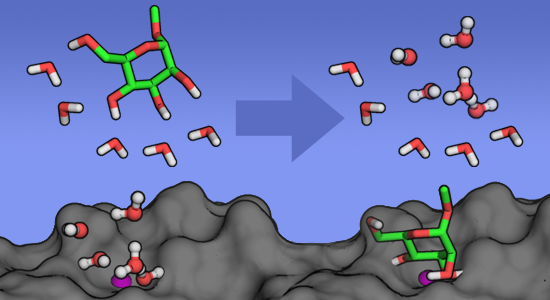
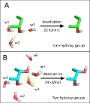
- mammalian mannose-binding sites are in general flat and solvent exposed, the half-lives of carbohydrate–lectin complexes are rather short since water molecules can easily access and displace the ligand from the binding site. In contrast, the bacterial lectin FimH benefits from a deep mannose-binding site
- binding site pre-organization, are more difficult to assess and accordingly have been highlighted in this review. Mannose-binding CLECs are involved in various pathways of the human innate immune response, including the blood dendritic cell antigen 2 (BDCA-2, also known as CD303) [18], langerin (CD207
- the binding site hosts a second calcium ion (G and H), advantageous interactions between O–C2 and O–C3 can also occur. Additional contributions from H-bonds formed in the buried binding pockets further improve affinity. In contrast, the calcium-free, buried binding site of the bacterial lectin FimH (I





Conformational impact of structural modifications in 2-fluorocyclohexanone
Beilstein J. Org. Chem. 2017, 13, 1781–1787, doi:10.3762/bjoc.13.172

- transition state) or in the ligand assessment to an enzyme binding site. Thus, the replacement of the endocyclic oxygen in 3-fluorodihydro-2H-pyran-4(3H)-one, as well as of the carbonyl oxygen, with other groups, can shift the conformational equilibrium of the resulting molecule towards the equatorial or the


The chemistry and biology of mycolactones
Beilstein J. Org. Chem. 2017, 13, 1596–1660, doi:10.3762/bjoc.13.159
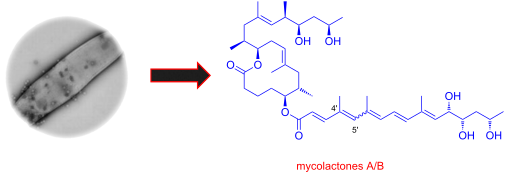
- independent study by Demangel and co-workers, who confirmed by global proteome analysis via stable-isotope labeling with amino acids in cell culture (SILAC) [101] in T cells that mycolactone A/B is a broad-spectrum Sec61 inhibitor [102]. The mycolactone binding site on Sec61 appears to be located near a









Glycoscience@Synchrotron: Synchrotron radiation applied to structural glycoscience
Beilstein J. Org. Chem. 2017, 13, 1145–1167, doi:10.3762/bjoc.13.114
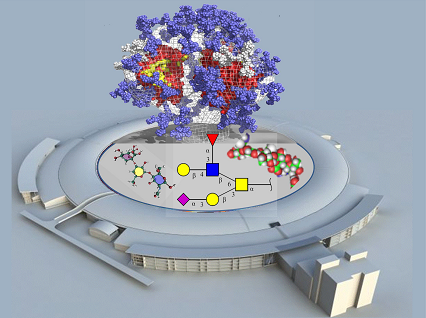
- of high-resolution three-dimensional structures of carbohydrate–antibody complexes [45] provides a way to classify the different types of bindings. Antibodies that recognize a terminal carbohydrate motif present a cavity-like binding feature, while a groove-like binding site is found in antibodies






G-Protein coupled receptors: answers from simulations
Beilstein J. Org. Chem. 2017, 13, 1071–1078, doi:10.3762/bjoc.13.106
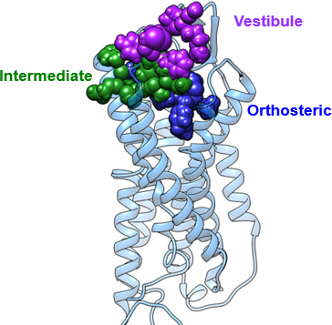
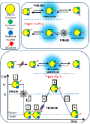
- . Remarkably, the ligands span a wide range of efficacies; in 10 cases, they act as agonists, in 11 as antagonist and twice as partial agonists. One key to this success is that the simulations were able to identify the most stable binding site of several alternatives in each case. Multiple binding sites We
- -adrenergic receptor [31], ligands can occupy more than one binding site along the binding path. In the case of vasopressin, a cyclic peptide hormone, the simulations revealed three different sites, the conventional orthosteric one that activates the ligand, an “intermediate” and a “vestibule” site


Opportunities and challenges for the sustainable production of structurally complex diterpenoids in recombinant microbial systems
Beilstein J. Org. Chem. 2017, 13, 845–854, doi:10.3762/bjoc.13.85
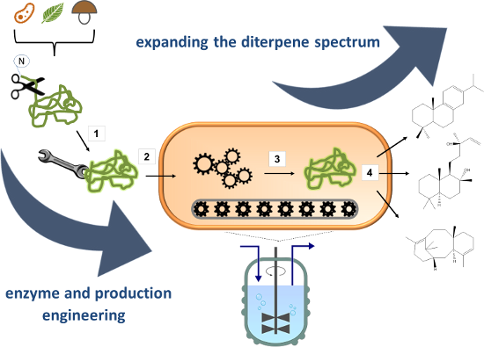
- sphaeroides. With an increasing number of integrated recombinant enzymes balanced (over)expression gains importance in order to sustain optimal carbon flux in the production host from cultivation medium feed to the desired product. In this respect, determining the optimal strength of the ribosomal binding
- site (RBS) may be as crucial as the correct arrangement of the genetic elements on designed operons [85][86][87]. To this end, the lycopene reporter system represents a valuable tool in determining balanced expression of terpene centered heterologous pathways in E. coli [88][89]. Furthermore, a


Polyketide stereocontrol: a study in chemical biology
Beilstein J. Org. Chem. 2017, 13, 348–371, doi:10.3762/bjoc.13.39
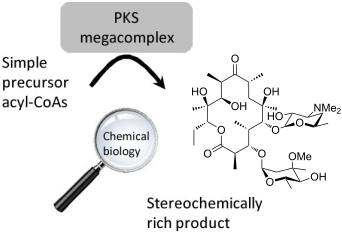
- site-directed inactivation of the NADPH-binding site. The tandem assay strategy was also used to try to identify residues potentially participating in the epimerization reaction [88]. This is an intriguing question, as comparative sequence analysis [57][90] fails to reveal any residues which are




Posttranslational isoprenylation of tryptophan in bacteria
Beilstein J. Org. Chem. 2017, 13, 338–346, doi:10.3762/bjoc.13.37
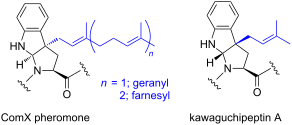
- functions as a binding site for the extension substrate, GPP or FPP. In contrast to FARM, the amino acid residues corresponding to SARM in ComQ are quite different from those in the typical FPP and GGPP synthases (Figure 4B). Since only the second aspartate is preserved in the corresponding region of ComQ




Spectral and DFT studies of anion bound organic receptors: Time dependent studies and logic gate applications
Beilstein J. Org. Chem. 2017, 13, 222–238, doi:10.3762/bjoc.13.25
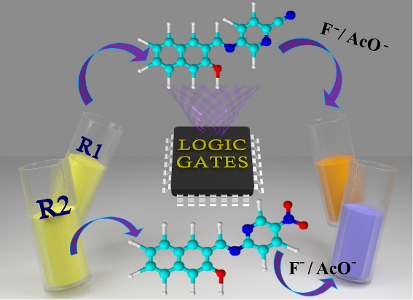
- ][24][25][26]. The choice of the appropriate detection technique is highly essential as it directly dictates the efficacy of the sensor. Anion binding through colorimetric probes comprising of a binding site and a signaling unit works in a coordinative way yielding an optical output visible to the
- output, the signaling unit has been linked to a conjugated system possessing a hydroxy functionality which acts as binding site for anions. UV–vis, 1H NMR titration studies along with DFT studies of the receptors R1 and R2 would help to arrive at the binding mechanism. The presence of heteroatoms in the
- aromatic ring and possess hydrogen-bond donor functionality, namely a hydroxy group in the naphthyl part, which can act as an active binding site for anions. Additionally, both receptors R1 and R2 encompass an electron-withdrawing substituent, a CN group (R1) or a NO2 functionality (R2), in the para


Interactions between photoacidic 3-hydroxynaphtho[1,2-b]quinolizinium and cucurbit[7]uril: Influence on acidity in the ground and excited state
Beilstein J. Org. Chem. 2017, 13, 203–212, doi:10.3762/bjoc.13.23
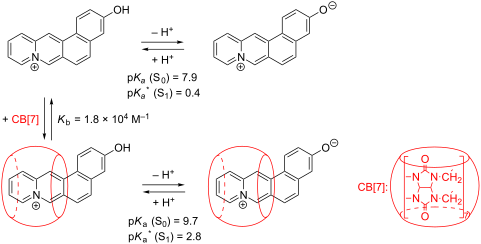
- derivative 7 (Kb = 3 × 10⁴ M−1) [36]. Although a comparison of binding constants from different studies has to be done carefully due to the different experimental conditions, it appears that linear acene-type quinolizinium derivatives fit better into the binding site of CB[7] with highly favorable energetic
- that can thread nicely into the binding site. Notably, the structurally resembling alkaloids berberine (8a) and palmatine (8b), that contain an angularly annelated quinolizinium unit, also bind to CB[7]. But whereas palmatine (8b) has essentially the same binding constant as 2 (Kb = 4.3 × 10⁴ M−1, in
- increase of the pKa and pKa* values originates from the interaction of the acidic functionality with the carbonyl groups at the outer rim of the host molecule [34][55] and – as shown for cationic ligands – from the stabilization of the positive charge by the accommodation in the binding site [29


Synthesis of spiro[isoindole-1,5’-isoxazolidin]-3(2H)-ones as potential inhibitors of the MDM2-p53 interaction
Beilstein J. Org. Chem. 2016, 12, 2793–2807, doi:10.3762/bjoc.12.278
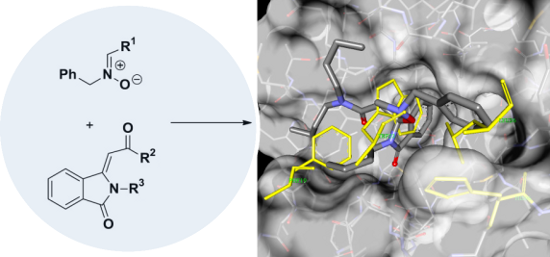
- -ethynylbenzamides 1 [35]. The rationale of our choice is based on molecular docking data. Using the published structure of the MDM2–p53 binding site, we have employed computational methods and focused library synthesis based on the isoindolinone template, to develop compounds with inhibitory activity. These studies
- docked into the MDM2 binding site. The docking protocol starts with the redocking of the MI63 analogue in the binding site to determine the lowest RMSD relative to the crystallographic pose. The ligand was successfully redocked with a RMSD of 0.59 Å. Determination of the single binding mode of spiro
- -isoxazolidin isoindolinone scaffold in the receptor/ligand complex was difficult because of the open and lipophilic nature of the p53 binding site on MDM2. Therefore, prediction of the possible binding mode was based on two energy types, i.e., the lowest binding energy of the largest cluster and the


Computational methods in drug discovery
Beilstein J. Org. Chem. 2016, 12, 2694–2718, doi:10.3762/bjoc.12.267
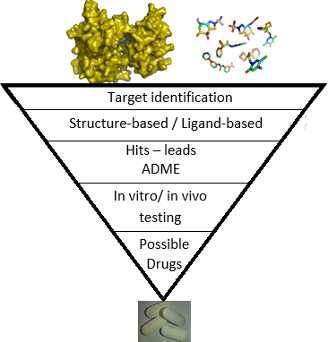
- -based binding site identification servers is 3V [89]. Even though for some cases the largest pocket or cleft of a protein is its binding pocket, it is not necessarily true for all target proteins. Energy-based methods have been developed to address this issue and have shown more success than geometry
- phosphate probe which are used to identify the binding sites for drug-like molecules and phosphorylated ligands (such as ATP) respectively [92]. The best ligand binding site identified in HIV-1 protease by SiteHound is shown in Figure 4. This ligand binding site is the known inhibitor binding site in HIV-1
- reliable scoring functions are critical components of docking algorithms. Once a target protein structure is known and a potential drug binding site has been identified, small molecules that bind to this site need to be determined. In drug discovery, docking algorithms are used to find the best fit between



Interactions between cyclodextrins and cellular components: Towards greener medical applications?
Beilstein J. Org. Chem. 2016, 12, 2644–2662, doi:10.3762/bjoc.12.261
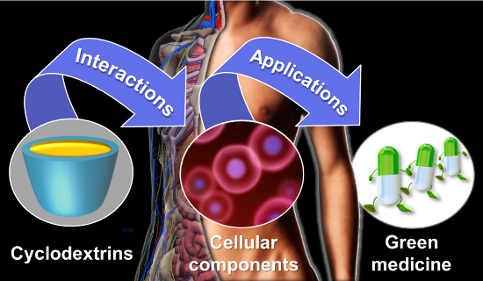
- sweet-taste profile. In this context, Thordarson et al. studied the interaction of α-CD with thaumatin [93]. The 1D and 2D NMR experiments revealed that α-CD binds to aromatic residues of thaumatin with a binding constant of 8.5 M−1. As the active binding site of the thaumatin protein is known, the
- authors have synthesized a heptapeptide (Lys-Thr-Gly-Asp-Arg-Gly-Phe) that mimics this binding site of thaumatin. The results show that α-CD binds to the C-terminal solvent accessible phenylalanine residue with a binding constant of 8.8 M−1. As the α-CD may interact with the active binding site on


Enzymatic synthesis and phosphorolysis of 4(2)-thioxo- and 6(5)-azapyrimidine nucleosides by E. coli nucleoside phosphorylases
Beilstein J. Org. Chem. 2016, 12, 2588–2601, doi:10.3762/bjoc.12.254

- ) and the role of some amino acid residues of the catalytic site was characterized by the single-site mutagenesis [41]. It was suggested that the uracil binding site includes Gln166, the carboxamide group of which forms two strong hydrogen bonds 3N(H)···(O=)C(R)-NH2···(O=)C-2. Moreover, the carbonyl


Amidofluorene-appended lower rim 1,3-diconjugate of calix[4]arene: synthesis, characterization and highly selective sensor for Cu2+
Beilstein J. Org. Chem. 2016, 12, 1749–1757, doi:10.3762/bjoc.12.163

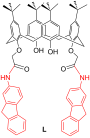
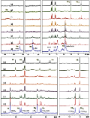
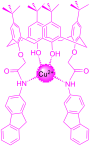
- (Hd, He) and –O–CH2 (Hf) porotons, which are close to the binding site of receptor L were affected and downfield shifted by the complexation of L with Cu2+. A detailed analysis of the 1H NMR spectra reveals the significant changes of almost all the other proton signals in the ligand. For instance, the
- peak of aromatic ring hydrogen atoms (Hc, resonated at 7.35 ppm) was converted to two distinct peaks at 7.20 and 6.95 ppm (Hc1, Hc2). In addition, signals belonging to the fluorene moieties and tert-butyl groups, which are quite far away from binding site, were also affected by complex formation. For



Biosynthesis of oxygen and nitrogen-containing heterocycles in polyketides
Beilstein J. Org. Chem. 2016, 12, 1512–1550, doi:10.3762/bjoc.12.148
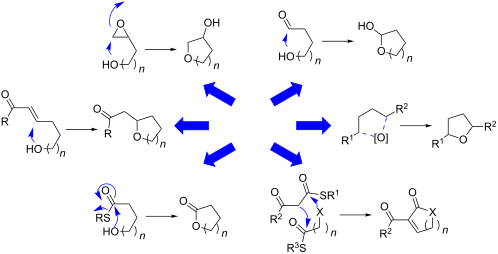
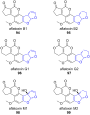
- any cofactors, in spite of its flavin adenine dinucleotide (FAD) binding site [98][99]. The reaction mechanisms and biosynthetic enzymes involved in the rearrangement of versicolorin B (106) to demethylsterigmatocystin (107) have also been discussed controversely. Up to four genes (aflM, aflN, aflX






Beta-hydroxyphosphonate ribonucleoside analogues derived from 4-substituted-1,2,3-triazoles as IMP/GMP mimics: synthesis and biological evaluation
Beilstein J. Org. Chem. 2016, 12, 1476–1486, doi:10.3762/bjoc.12.144
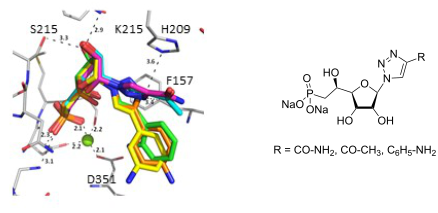
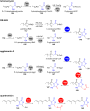
- hydrophilic pocket (Ser251 and Lys215) where the hydroxy groups of the sugar interact and a phosphonate binding site close to the magnesium ion located in the substrate binding site. Thus, as few cytosine-containing analogues were equipotent in terms of cN-II inhibition to their purine counterparts (Figure 1
- moderate inhibition (Figure 5) was observed for these derivatives indicating that they may not bind very tightly to the enzyme binding site. Nevertheless, five compounds 1i, 1h, 1n, 1o and 1q exhibited a more pronounced inhibition at 1 mM (Table 2) with at least 50% of inhibition. The nature, size and
- sticks) and 1q (green sticks) in the substrate binding site of cN-II. We then compared the three analogues bearing an aminophenyl substituent on the triazole ring with all possible orientations (ortho, meta or para) for the amino group (derivatives 1h, 1i and 1j). Interestingly, all of them showed very


Stereodynamic tetrahydrobiisoindole “NU-BIPHEP(O)”s: functionalization, rotational barriers and non-covalent interactions
Beilstein J. Org. Chem. 2016, 12, 1453–1458, doi:10.3762/bjoc.12.141
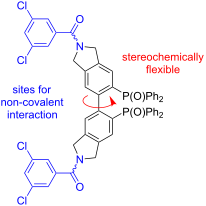
- paper, we describe the application of Doherty’s synthetic strategy for the synthesis of stereodynamic tetrahydrobiisoindole “NU-BIPHEP(O)” compounds bearing secondary amino groups for functionalization. The attachment of a 3,5-dichlorobenzoyl binding site is reported and non-covalent interactions as
- achiral auxiliaries or binding sites. In this study, we chose amide bond formation with 3,5-dichlorobenzoyl chloride (Figure 2B) in connection with our recent report [21] on non-covalent interaction properties of stereodynamic BIPHEP ligands with this binding site that is well known in HPLC stationary


Discovery of an inhibitor of the production of the Pseudomonas aeruginosa virulence factor pyocyanin in wild-type cells
Beilstein J. Org. Chem. 2016, 12, 1428–1433, doi:10.3762/bjoc.12.137
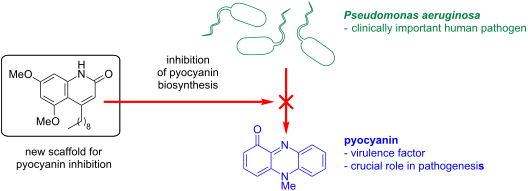
- docking score, it is plausible that compound 4 may bind LasR at the OdDHL binding site, and thus be capable of competitively disrupting OdDHL-dependent activation of LasR and thereby inhibiting pyocyanin production. Conclusion In conclusion, we have reported the discovery of 4, a potent inhibitor of
- . Binding poses of OdDHL and compound 4 in OdDHL binding site. Hydrogen bonds are shown in black dotted lines. a) Crystal structure of OdDHL bound to LasR LBD (PDB 2UV0 [31]). b) Top-scoring pose of compound 4 obtained by docking into LasR LBD. Unexpected synthesis of compound 4. The synthesis of 2 was


Application of Cu(I)-catalyzed azide–alkyne cycloaddition for the design and synthesis of sequence specific probes targeting double-stranded DNA
Beilstein J. Org. Chem. 2016, 12, 1348–1360, doi:10.3762/bjoc.12.128
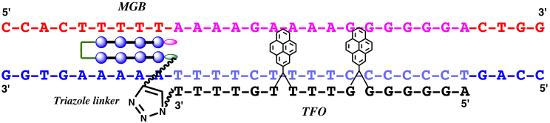
- composition can be varied. Bifunctional linkers for conjugation of oligonucleotides and polyamides using CuACC. The target duplex contains a 29 base pair fragment from HIV proviral DNA [35] and a T4 hairpin is connecting two strands: a 16 base pair polypurine-polypyrimidine tract (TFO-binding site – is
- indicated by a red rectangle), an adjacent overlapping poly(dA:dT) tract (MGB-binding site – by a blue rectangle). Fluo is a fluorescein label. A) Sequence derived from the murine pericentromere repeat fragment with only one target site for the polyamide F1-NH2 [2][3]. The target sequence is underlined. B


Artificial Diels–Alderase based on the transmembrane protein FhuA
Beilstein J. Org. Chem. 2016, 12, 1314–1321, doi:10.3762/bjoc.12.124
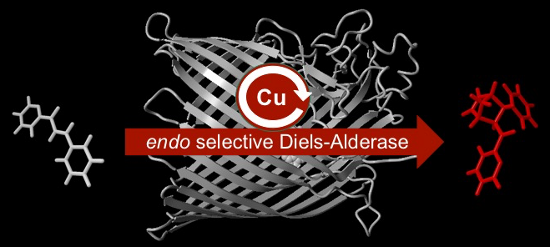
- –Alderases reported so far used soluble proteins, where the binding site of Cu(II) was formed either by site-directed mutagenesis [22][23], by incorporation of a suitable ligand, or copper complex in an apo-protein [24][25][26][27]. Here we report on the use of the robust transmembrane protein Ferric


A modular approach to neutral P,N-ligands: synthesis and coordination chemistry
Beilstein J. Org. Chem. 2016, 12, 846–853, doi:10.3762/bjoc.12.83
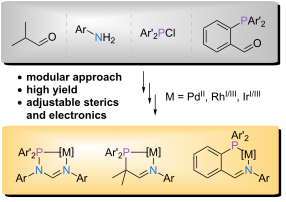
- neutral κ2-P,N-ligands comprising an imine and a phosphine binding site. These ligands were reacted with rhodium, iridium and palladium metal precursors and the structures of the resulting complexes were elucidated by means of X-ray crystallography. We observed that subtle changes of the ligand backbone
- hydrogenations [1][2] and allylic substitutions [3][4] to Heck reactions [5] and conjugate additions to enones [6]. Their popularity arises from the inherent electronic disparity of the phosphorus and the nitrogen donor groups, rendering one binding site a soft π-acceptor featuring a pronounced trans effect and


Muraymycin nucleoside-peptide antibiotics: uridine-derived natural products as lead structures for the development of novel antibacterial agents
Beilstein J. Org. Chem. 2016, 12, 769–795, doi:10.3762/bjoc.12.77
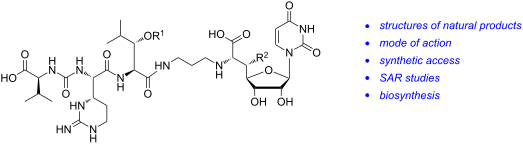
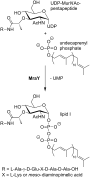
- between F288 and glutamic acid 287 (E287) with the peptide motif arginine-tryptophan-x-x-tryptophan (RWxxW, x represents an arbitrary amino acid) was found. Mutants F288L and E287A showed reduced or no detectable enzyme inhibition, thus indicating a secondary binding site for potential MraY inhibitors