


Search results
Search for "chemical reactions" in Full Text gives 157 result(s) in Beilstein Journal of Organic Chemistry.
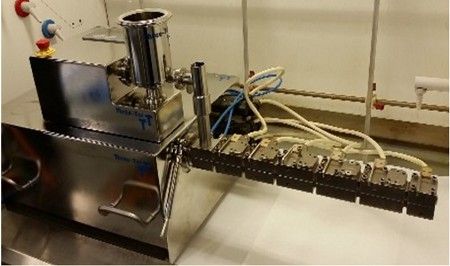
Extrusion – back to the future: Using an established technique to reform automated chemical synthesis
Beilstein J. Org. Chem. 2017, 13, 65–75, doi:10.3762/bjoc.13.9
- of the mixture [39][40][41][42]. These materials are receiving a lot of attention due to their potential applications in metal deposition and as green media in chemical reactions [43]. James et al. have reported the preparation of DESs Reline 200 (choline chloride:urea, 1:2), choline chloride:zinc


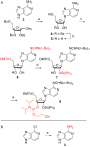
Facile synthesis of a 3-deazaadenosine phosphoramidite for RNA solid-phase synthesis
Beilstein J. Org. Chem. 2016, 12, 2556–2562, doi:10.3762/bjoc.12.250

- nucleobases can be significantly shifted within a well-structured RNA fold [12][13][14][15]. To address RNA phenomena of that kind, comparative atomic mutagenesis is an indispensable means, and with respect to ribozymes, can deliver important insights into the RNA catalyzed chemical reactions and underlying


Sydnone C-4 heteroarylation with an indolizine ring via Chichibabin indolizine synthesis
Beilstein J. Org. Chem. 2016, 12, 2503–2510, doi:10.3762/bjoc.12.245

- interesting chemical reactions of sydnones are their electrophilic substitution at C-4 and their participation in 1,3-dipolar cycloaddition reactions with olefinic and acetylenic dipolarophiles to form pyrazoles and functional transformation at C-4 [20][21][22][23][24][25][26]. Herein we present the synthesis


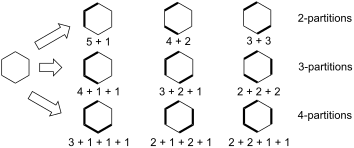
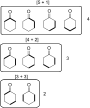
A new paradigm for designing ring construction strategies for green organic synthesis: implications for the discovery of multicomponent reactions to build molecules containing a single ring
Beilstein J. Org. Chem. 2016, 12, 2420–2442, doi:10.3762/bjoc.12.236
- “intrinsic greenness”, were critical in influencing whether or not chemical reactions could achieve a minimum standard of overall greenness, regardless of how much auxiliary material (solvents, etc.) was used. Optimization toward overall greenness was best achieved by first maximizing atom economy and






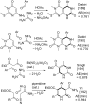


Robust C–C bonded porous networks with chemically designed functionalities for improved CO2 capture from flue gas
Beilstein J. Org. Chem. 2016, 12, 2274–2279, doi:10.3762/bjoc.12.220
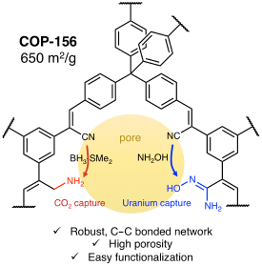
- as nitrogen in imine, Tröger’s base or azo linked networks [8][9][10][11], have led to materials with remarkable gas uptake properties. Compared to C–C bonded networks, C–O or C–N linked structures are less thermally stable or chemically resistant. Furthermore, the chemical reactions involved in the


Synthesis and properties of fluorescent 4′-azulenyl-functionalized 2,2′:6′,2″-terpyridines
Beilstein J. Org. Chem. 2016, 12, 1812–1825, doi:10.3762/bjoc.12.171
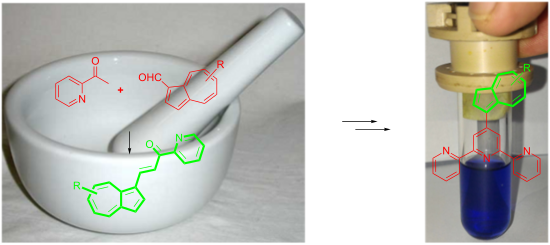
- and instruments All reagents for performing the chemical reactions were used as received. CH2Cl2 for fluorescence measurements was purchased from Merck. Dimethylformamide for cyclic voltammetry measurements was purchased from Sigma-Aldrich and kept over molecular sieves. Column chromatography was


A flow reactor setup for photochemistry of biphasic gas/liquid reactions
Beilstein J. Org. Chem. 2016, 12, 1798–1811, doi:10.3762/bjoc.12.170
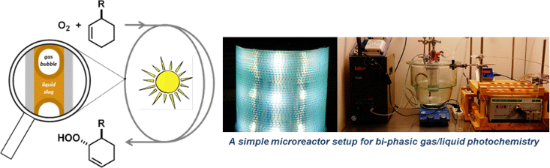
- impacted the art of organic synthesis and manufacture [1][2][3][4][5][6][7]. The efficiency of chemical reactions can be greatly enhanced over common batch processes and new approaches to the optimization of established reaction protocols and the execution of hitherto unfeasible processes can be enabled
- ][9][11][12]. Over the past decade, various reactor types and technical specifications have been developed to address the intricate challenges of many chemical reactions, including the handling of hazardous [13][14] or explosive [15][16] reagents, advanced concentration and temperature gradients [17
- selective oxidations of various organic molecules (Scheme 5). From a conceptual point of view, the combination of two of the most abundant “reagents” on the surface of our planet, oxygen and visible light, with a safe, scalable, and efficient reactor technology for chemical reactions constitutes an approach


TMSBr-mediated solvent- and work-up-free synthesis of α-2-deoxyglycosides from glycals
Beilstein J. Org. Chem. 2016, 12, 1758–1764, doi:10.3762/bjoc.12.164

- the aforementioned methods. Furthermore, organic solvents in laboratories are associated with numerous health hazards [64], and most of them are consumed during chemical reactions, work-up and purification procedures. Especially, dichloromethane, one of the most general solvents for glycosylation


Cyclisation mechanisms in the biosynthesis of ribosomally synthesised and post-translationally modified peptides
Beilstein J. Org. Chem. 2016, 12, 1250–1268, doi:10.3762/bjoc.12.120
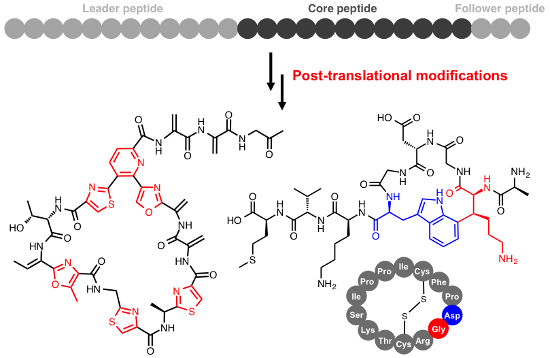
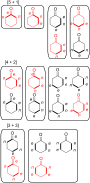
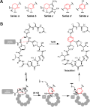
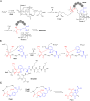
- amount of RiPP chemical diversity is generated from cyclisation reactions, and the current mechanistic understanding of these reactions will be discussed here. These cyclisations involve a diverse array of chemical reactions, including 1,4-nucleophilic additions, [4 + 2] cycloadditions, ATP-dependent





A modular approach to neutral P,N-ligands: synthesis and coordination chemistry
Beilstein J. Org. Chem. 2016, 12, 846–853, doi:10.3762/bjoc.12.83
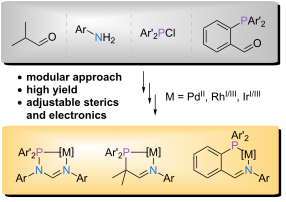
- have a significant influence on the binding geometry und coordination properties of these bidentate P,N-donors. Keywords: P,N-ligands; phosphanylformamidines; phosphine imines; transition metal complexes; Introduction P,N-ligands have been applied in a wide variety of chemical reactions ranging from


Dynamic behavior of rearranging carbocations – implications for terpene biosynthesis
Beilstein J. Org. Chem. 2016, 12, 377–390, doi:10.3762/bjoc.12.41
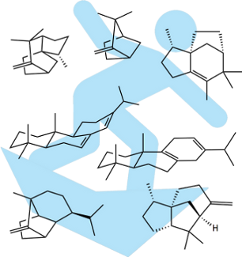
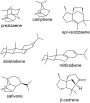
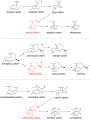
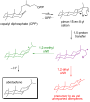
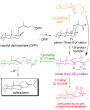
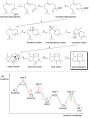
- questions. MD simulations have been employed to answer two different questions about the chemical reactions discussed below: (1) what mechanism(s) is energetically viable? and (2) do (non-statistical) dynamic effects exert control over product distributions? While trajectories can be started from anywhere



Enabling technologies and green processes in cyclodextrin chemistry
Beilstein J. Org. Chem. 2016, 12, 278–294, doi:10.3762/bjoc.12.30
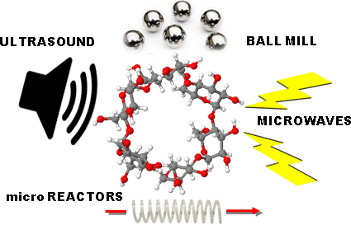
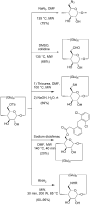
- enantiomeric ratio. Basically, three major types of HSBM chemical reaction can occur in the presence of CDs: Preparation of CD complexes and various chemical reactions on the complexed substructures; Derivatization of naked, natural CD; Reactions of activated CD. While reactions occur between a complexed



Learning from the unexpected in life and DNA self-assembly
Beilstein J. Org. Chem. 2015, 11, 2713–2720, doi:10.3762/bjoc.11.292
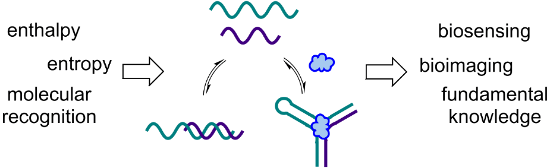
- chemical reactions [4]. In the context of this project, our unexpected observation regarding the impact of dyes on DNA assembly was something that we merely needed to overcome. However, this experience provided us with an improved understanding of the function of structure-switching sensors, which has




The chemical behavior of terminally tert-butylated polyolefins
Beilstein J. Org. Chem. 2015, 11, 1246–1258, doi:10.3762/bjoc.11.139
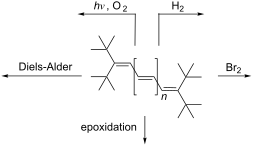
- polyolefins can serve as structural models for “polyacetylene”, their chemical properties should also reflect that of the polymer. Chemical reactions of the higher acyclic polyolefins have scarcely been studied, and we hence decided to carry out typical, textbook olefin reactions of a representative selection


Glycoluril–tetrathiafulvalene molecular clips: on the influence of electronic and spatial properties for binding neutral accepting guests
Beilstein J. Org. Chem. 2015, 11, 1023–1036, doi:10.3762/bjoc.11.115
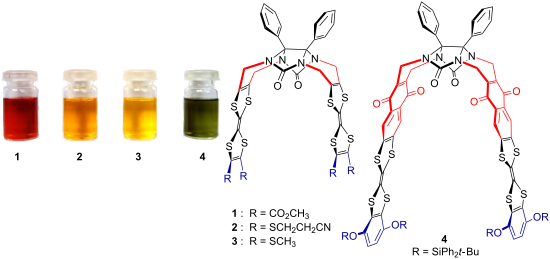
- . The stepwise oxidation of each molecular clip involves an electrochemical mechanism with three one-electron processes and two charge-coupled chemical reactions, a scheme which is supported by electrochemical simulations. The fine-tunable π-donating ability of the TTF units and the cavity size allow to
- by an electrochemical simulation program (DigiElch 7) involving an electrochemical mechanism (Scheme 4) composed by three one-electron processes and two charge-coupled chemical reactions (i.e., formation of mixed-valence and dimerization via a square scheme). Due to the equivalence of the two TTF




Properties of PTFE tape as a semipermeable membrane in fluorous reactions
Beilstein J. Org. Chem. 2015, 11, 980–993, doi:10.3762/bjoc.11.110

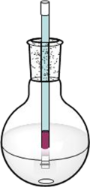
- may be warranted. Conclusion To better understand how PTFE tape functions as a semipermeable membrane, we examined its behavior and compared it to bulk PTFE. We included both simple diffusion processes and chemical reactions to examine the effects of solvents and reagents on the permeability of the





![[Graphic 1]](/bjoc/content/inline/1860-5397-11-110-i3.png?max-width=637&scale=1.18182) ), in the presence of a n...
), in the presence of a n...
Photovoltaic-driven organic electrosynthesis and efforts toward more sustainable oxidation reactions
Beilstein J. Org. Chem. 2015, 11, 280–287, doi:10.3762/bjoc.11.32
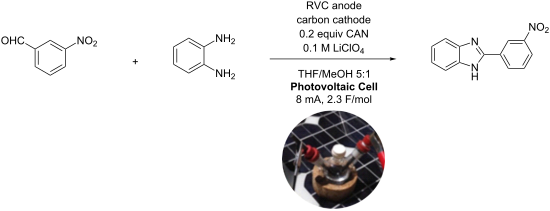
- . Keywords: electrochemistry; sustainable oxidation reactions; visible light; Introduction Organic electrochemistry is an extremely versatile tool for conducting a wide variety of chemical reactions [1][2][3]. This versatility stems from both the gentle, acid/base neutral reaction conditions employed for


Properties of cationic monosubstituted tetraalkylammonium cyclodextrin derivatives – their stability, complexation ability in solution or when deposited on solid anionic surface
Beilstein J. Org. Chem. 2015, 11, 192–199, doi:10.3762/bjoc.11.20
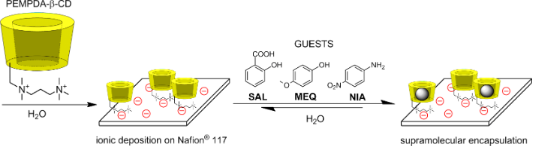
- capillary zone electrophoresis [8][9][10][11][12] and also as catalysts of chemical reactions [13][14][15]. The main goal of our research is to explore the possibility of binding of the monosubstituted cationic CD derivatives to an anionic surface by simple electrostatic interactions. Such an assembly could


First chemoenzymatic stereodivergent synthesis of both enantiomers of promethazine and ethopropazine
Beilstein J. Org. Chem. 2014, 10, 3038–3055, doi:10.3762/bjoc.10.322

- aim of this study was to take advantage of the extraordinary properties of enzyme catalysis and develop a new method based on lipase-mediated kinetic resolution (KR) of 1-(10H-phenothiazin-10-yl)propan-2-ol enantiomers, which combined with convenient chemical reactions could provide a simple and




Lateral ordering of PTCDA on the clean and the oxygen pre-covered Cu(100) surface investigated by scanning tunneling microscopy and low energy electron diffraction
Beilstein J. Org. Chem. 2014, 10, 2055–2064, doi:10.3762/bjoc.10.213
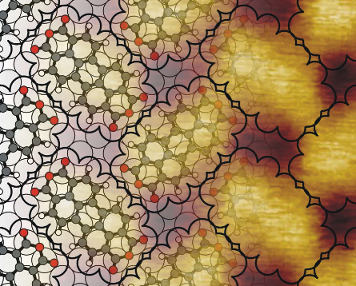
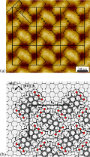
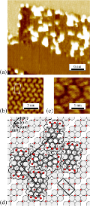
- this elevated temperatures the PTCDA molecules have undergone different kinds of chemical reactions. Therefore no intact desorption can be expected, in agreement with the TPD experiments of Schmidt et al. [8]. A non-dissociative adsorption on Cu(100) is further corroborated by STM images of PTCDA on



Synthesis of a bifunctional cytidine derivative and its conjugation to RNA for in vitro selection of a cytidine deaminase ribozyme
Beilstein J. Org. Chem. 2014, 10, 1906–1913, doi:10.3762/bjoc.10.198
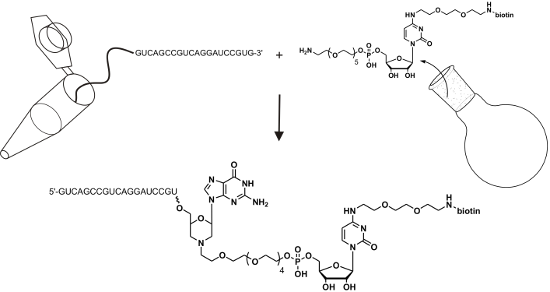
- from aptamers for simple binding of defined ligands, also RNAs for catalysis of chemical reactions have been selected. In the latter case, a key step often is the conjugation of one of the two reactants to the library, requiring suitable strategies for terminal or internal RNA functionalization. With
- peptide bond formation, artificial ribonucleic acids developed by in vitro selection have been shown to catalyze a wide variety of organic chemical reactions [3][4][5]. Moreover, several of these developed ribozymes promote reactions of metabolic relevance in modern life organisms. Impressive examples are


A complete series of 6-deoxy-monosubstituted tetraalkylammonium derivatives of α-, β-, and γ-cyclodextrin with 1, 2, and 3 permanent positive charges
Beilstein J. Org. Chem. 2014, 10, 1390–1396, doi:10.3762/bjoc.10.142

- excellent chiral selectors in capillary zone electrophoresis (CZE) [18][19] and as catalysts of chemical reactions [20][21]. The synthesis of some cationic derivatives of β-CD have already been described in the literature (namely 6I-(N,N,N-trimethylammonio)-6I-deoxy-β-cyclodextrin [21] and 6I-(N,N,N’,N‘,N


Automated solid-phase peptide synthesis to obtain therapeutic peptides
Beilstein J. Org. Chem. 2014, 10, 1197–1212, doi:10.3762/bjoc.10.118

- solutions. The first liquid-handling apparatus performing SPPS of this type was described in 1965 [24]. The improvement of chemical reactions, solid supports, linkers and especially the development of the Fmoc-based SPPS-strategy [31][37] have contributed to simplification and many advancement of following
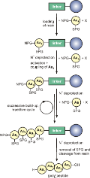
- ), the N-terminus of hPP was protected with Nvoc and after cleavage from resin, selective PEGylation was performed in solution followed by specific Nvoc removal [99]. Conclusion The production of peptides by automated synthesis on solid support provides a great variety of benefits. Chemical reactions




Site-selective covalent functionalization at interior carbon atoms and on the rim of circumtrindene, a C36H12 open geodesic polyarene
Beilstein J. Org. Chem. 2014, 10, 956–968, doi:10.3762/bjoc.10.94
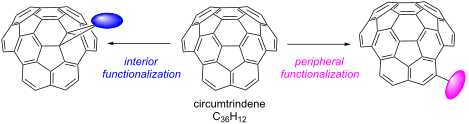
- functionalization of circumtrindene Since the isolation and characterization of the first polycyclic aromatic hydrocarbons in the 1800s, a tremendous range of chemical reactions on such compounds has been developed [41][42]. Most of this chemistry involves chemical modifications on the edge carbons and has been




Tailoring of organic dyes with oxidoreductive compounds to obtain photocyclic radical generator systems exhibiting photocatalytic behavior
Beilstein J. Org. Chem. 2014, 10, 936–947, doi:10.3762/bjoc.10.92
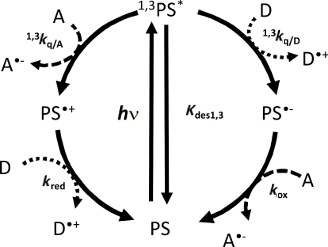
- of the complex kinetics underlying PCIS chemical reactions, allowing a better and simplest selection of chemicals combination. Results and Discussion In order to outline this behavior, the photochemical consumption of the dye (i.e., photolysis) was studied in a typical Type II and a 3-cpt PCIS based


![[Graphic 1]](/bjoc/content/inline/1860-5397-10-92-i10.png?max-width=637&scale=1.18182) ), b) excited state...
), b) excited state...





