Search results
Search for "copper-catalyzed" in Full Text gives 287 result(s) in Beilstein Journal of Organic Chemistry. Showing first 200.
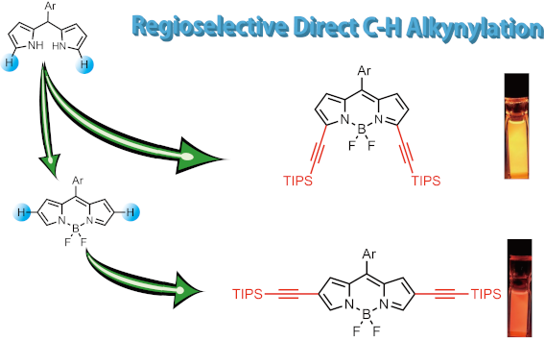
Regioselectively α- and β-alkynylated BODIPY dyes via gold(I)-catalyzed direct C–H functionalization and their photophysical properties
Beilstein J. Org. Chem. 2020, 16, 587–595, doi:10.3762/bjoc.16.53
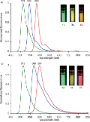
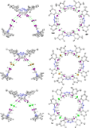
- -tethered BODIPY derivatives serve as a substrate in the copper-catalyzed azide–alkyne cycloaddition (CuAAC) reaction, which is known as “click” reaction, allowing for a biological tissue labelling [35][36]. In addition, ethynyl-substituted BODIPYs yield unique π-conjugated BODIPY-based macrocycles by



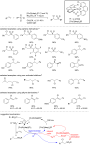
Copper-catalyzed enantioselective conjugate reduction of α,β-unsaturated esters with chiral phenol–carbene ligands
Beilstein J. Org. Chem. 2020, 16, 537–543, doi:10.3762/bjoc.16.50
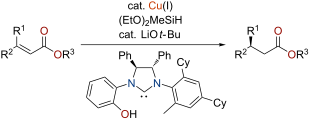
- , Sapporo, Hokkaido 001-0021, Japan 10.3762/bjoc.16.50 Abstract A chiral phenol–NHC ligand enabled the copper-catalyzed enantioselective conjugate reduction of α,β-unsaturated esters. The phenol moiety of the chiral NHC ligand played a critical role in producing the enantiomerically enriched products. The
- ligand on the copper-catalyzed enantioselective conjugate reduction of α,β-unsaturated esters with hydrosilanes, placing a focus on (Z)-isomer substrates, which generally gave slightly lower enantiomeric excess with the chiral bisphosphines compared to the (E)-isomer substrates. Results and Discussion
- ongoing in our laboratory. Experimental A typical procedure for the copper-catalyzed enantioselective conjugate reduction (Table 1, entry 4; Table 2, entry 1): In a glove box, CuCl (1.5 mg, 0.015 mmol), L4⋅HBF4 (9.8 mg, 0.015 mmol), and LiOt-Bu (2.4 mg, 0.03 mmol) were placed in a vial containing a


Copper-catalyzed remote C–H arylation of polycyclic aromatic hydrocarbons (PAHs)
Beilstein J. Org. Chem. 2020, 16, 530–536, doi:10.3762/bjoc.16.49
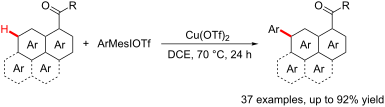
- substituted polycyclic aromatic hydrocarbons (PAHs) is a desired but challenging task. A copper-catalyzed C7–H arylation of 1-naphthamides has been developed by using aryliodonium salts as arylating reagents. This protocol does not need to use precious metal catalysts and tolerates wide variety of functional
- of our ongoing research on direct C–H bond functionalization [20][27][28][29], we herein represent a copper-catalyzed remote C–H arylation of PAHs with aryliodonium salts as arylating reagents (Scheme 1). This protocol is compatible with different PAH substrates including 1-naphthamides, phenanthrene




Controlling alkyne reactivity by means of a copper-catalyzed radical reaction system for the synthesis of functionalized quaternary carbons
Beilstein J. Org. Chem. 2020, 16, 502–508, doi:10.3762/bjoc.16.45
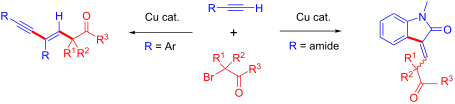
- could suggest new aspects of alkyne transformations in a copper catalyzed alkyl radical reaction system. Substrate scope of 1 and 2. aConducted at 80 °C for 24 h in MeCN with CuBr (10 mol %), 1,10-Phen (20 mol %), Cs2CO3 (4.0 equiv), NaI (2.0 equiv), 1 (3.0 equiv) and 2 (1.0 equiv). Yields were


Recent advances in photocatalyzed reactions using well-defined copper(I) complexes
Beilstein J. Org. Chem. 2020, 16, 451–481, doi:10.3762/bjoc.16.42
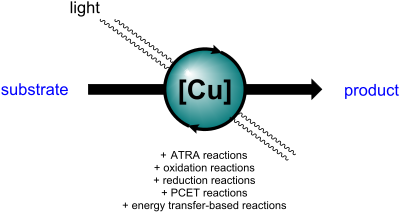
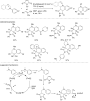
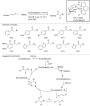
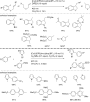
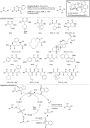
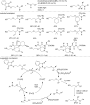
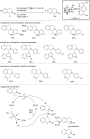
- ) [25]. This copper-catalyzed photocatalytic reduction generated an aryl radical that was trapped with various allylating reagents. First, the phenyl radical generated from the corresponding diphenyliodonium salt was added to various allyl sulfones substituted in the 2-position. The products were
- 2012, Collins and co-workers described a copper-catalyzed photocyclization to synthesize [5]helicene (Scheme 29) [43]. Using the in situ-formed [Cu(I)(dmp)(xantphos)]BF4 (25 mol %) in the presence of iodine and propylene oxide as the oxidant system under visible light irradiation, [5]helicene was














Photophysics and photochemistry of NIR absorbers derived from cyanines: key to new technologies based on chemistry 4.0
Beilstein J. Org. Chem. 2020, 16, 415–444, doi:10.3762/bjoc.16.40


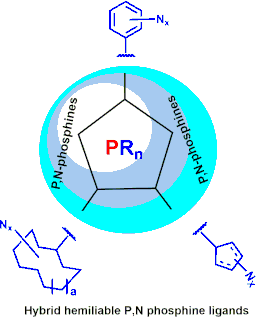
Architecture and synthesis of P,N-heterocyclic phosphine ligands
Beilstein J. Org. Chem. 2020, 16, 362–383, doi:10.3762/bjoc.16.35
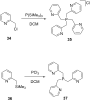
- (diphenylphosphino)-1,1'-binaphthyl (BINAP) with a greater π-density and sterically demanding groups, have been extensively used in catalytic reactions [94]. Wang et al. [95] reported a copper-catalyzed phosphorylation in the synthesis of an oxazolylindolylphosphine as shown in Scheme 18. The intermediate amide 97




Copper-promoted/copper-catalyzed trifluoromethylselenolation reactions
Beilstein J. Org. Chem. 2020, 16, 305–316, doi:10.3762/bjoc.16.30

- -promoted and copper-catalyzed processes for the introduction of SeCF3 groups Copper(I) trifluoromethylselenolate complexes Copper(I) trifluoromethylselenolate was first prepared in 1985 by the group of Yagupolskii [12]. Then, CuSeCF3·DMF was tested in the trifluoromethylselenolation of (hetero)aryl iodides
- , this species is in an equilibrium with the −SeCF3 anion. As proposed by Hor and Weng, Deng and Xiao also suggested that CuSeCF3 was the active species in the mechanism. In 2016, the group of Rueping described a sequential copper-catalyzed selenocyanation of aryldiazonium salts, followed by
- . Trifluoromethylselenolation of diazoacetates and diazonium salts with Me4NSeCF3 by the group of Goossen. Trifluoromethylselenolation with ClSeCF3 by the group of Tlili and Billard. Trifluoromethylselenolation with TsSeCF3 by the group of Tlili and Billard. Copper-catalyzed synthesis of a selenylated analog 30 of Pretomanid



Copper-catalyzed enantioselective conjugate addition of organometallic reagents to challenging Michael acceptors
Beilstein J. Org. Chem. 2020, 16, 212–232, doi:10.3762/bjoc.16.24
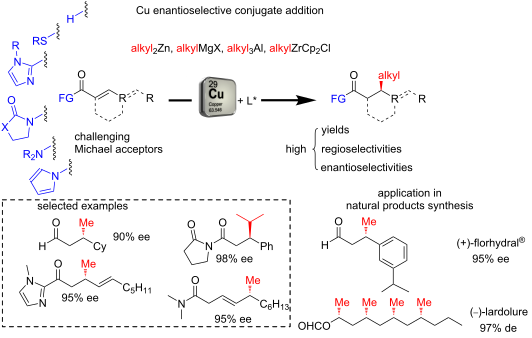
- Delphine Pichon Jennifer Morvan Christophe Crevisy Marc Mauduit Université de Rennes, Ecole Nationale Supérieure de Chimie de Rennes, CNRS, ISCR – UMR 6226, F-35000 Rennes, France 10.3762/bjoc.16.24 Abstract The copper-catalyzed enantioselective conjugate addition (ECA) of organometallic
- -acyloxazolidinones, N-acylpyrrolidinones, amides, and N-acylpyrroles have been scarcely investigated in Cu ECA despite their usefulness for postfunctionalizations. This tutorial review aims to describe the early examples and recent advances in copper-catalyzed asymmetric conjugate additions of dialkylzinc, Grignard
- , or trialkylaluminium reagents toward those challenging substrates and their fruitful application in the total synthesis of natural products. Review Enantioselective conjugate addition to challenging Michael acceptors Copper-catalyzed ECA to α,β-unsaturated aldehydes Nowadays, β-substituted enals




Combination of multicomponent KA2 and Pauson–Khand reactions: short synthesis of spirocyclic pyrrolocyclopentenones
Beilstein J. Org. Chem. 2020, 16, 200–211, doi:10.3762/bjoc.16.23
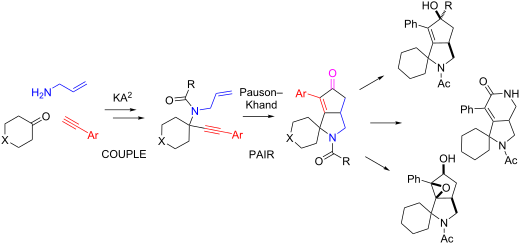
- . Following our interest to DOS as a synthetic strategy for the generation of molecular scaffolds according to a couple/pair approach [45][46][47], we reasoned to combine the copper-catalyzed ketone–amine–alkyne (KA2) multicomponent coupling reaction [48] with the Pauson–Khand cycloaddition as the pairing
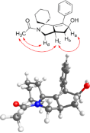
- was achieved, suggesting a role of the aromatic ring in activating the alkyne towards the copper-catalyzed process (Table 1, entries 3 and 4), as previously reported in other works [54]. Use of cyclopentanone, thus varying the ring size of the cyclic ketone, resulted in the conversion to the title




Allylic cross-coupling using aromatic aldehydes as α-alkoxyalkyl anions
Beilstein J. Org. Chem. 2020, 16, 185–189, doi:10.3762/bjoc.16.21

- . The synergistic palladium/copper-catalyzed reaction of aromatic aldehydes, allylic carbonates, and a silylboronate produces the corresponding homoallylic alcohol derivatives. This process involves the catalytic formation of a nucleophilic α-silyloxybenzylcopper(I) species and the subsequent palladium
- ) afforded the linear allylation product 3aa with complete regioselectivity. The symmetric secondary allylic carbonate was converted to the corresponding homoallylic alcohol derivative in 50% yield (3af). To gain understanding into the mechanism of this synergistic palladium/copper-catalyzed allylic cross
- summary, we developed an umpolung strategy for catalytically formed α-alkoxyalkyl anions from aromatic aldehydes for the use in allylic cross-coupling reactions. The synergistic palladium/copper-catalyzed reaction of aromatic aldehydes, allylic carbonates, and a silylboronate delivered the homoallylic


The reaction of arylmethyl isocyanides and arylmethylamines with xanthate esters: a facile and unexpected synthesis of carbamothioates
Beilstein J. Org. Chem. 2020, 16, 159–167, doi:10.3762/bjoc.16.18
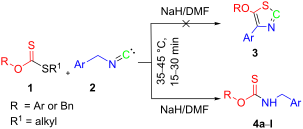
- methods for carbamothioates have been reported. These include reactions of chlorothioformates with amines [14], thiocarbonyl benzotriazoles with alcohols [15], copper-catalyzed reactions of α-substituted stannanes with carbamothioates [16], reactions of isothiocyanates with alcohols [6][17], and reactions


Halogen-bonding-induced diverse aggregation of 4,5-diiodo-1,2,3-triazolium salts with different anions
Beilstein J. Org. Chem. 2020, 16, 78–87, doi:10.3762/bjoc.16.10
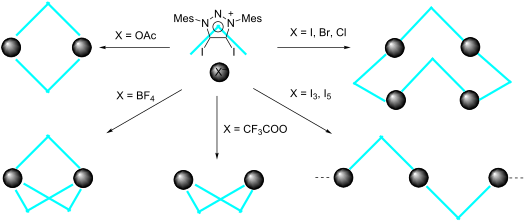
- candidates for XB donors, which is mainly due to the ease of preparation via a copper-catalyzed click reaction between azide and alkyne [38][39]. 1,2,3-Triazoles and 1,2,3-triazolium-based XB activators have been found applications in catalytic reactions [40][41] and anion recognition [42]. Recently, we




Palladium-catalyzed Sonogashira coupling reactions in γ-valerolactone-based ionic liquids
Beilstein J. Org. Chem. 2019, 15, 2907–2913, doi:10.3762/bjoc.15.284
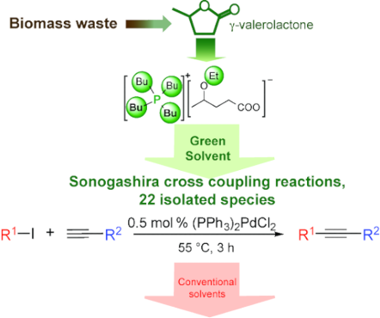
- important transformation. Herein we report a study on the palladium-catalyzed copper- and added base-free Sonogashira coupling reactions to synthesize various acetylenes in γ-valerolactone-based ionic liquids under mild conditions. Results and Discussion We recently demonstrated that copper-catalyzed


Chemical tuning of photoswitchable azobenzenes: a photopharmacological case study using nicotinic transmission
Beilstein J. Org. Chem. 2019, 15, 2812–2821, doi:10.3762/bjoc.15.274
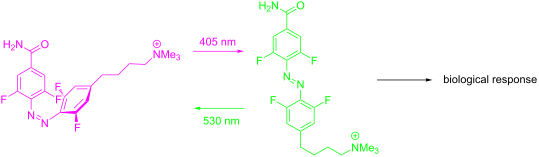
- catalytic hydrogenation to 4 followed by protection with TBDMS to give 5 in 63% yield for three steps. The synthesis of the other half of the photochrome started with bromination of difluorinated aniline to give 6 followed by copper-catalyzed cyanation to 7 in 62% overall yield. Diazonization of 7 with
- nitrosonium tetrafluoroborate gave 8 (54% yield). The two parts of the chromophore were coupled starting by treatment of 5 with n-butyllithium at −78 °C, which was coupled in situ with 8 to AB 9 (17% yield). Copper-catalyzed hydration of 9 gave amide 10, which was treated with TBAF to alcohol 11 in 42




Fluorinated maleimide-substituted porphyrins and chlorins: synthesis and characterization
Beilstein J. Org. Chem. 2019, 15, 2704–2709, doi:10.3762/bjoc.15.263

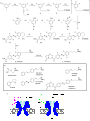
- 1,2,3-triazole heterocycles via the copper-catalyzed azide–alkyne cycloaddition reaction (CuAAC) between alkynes and azides, developed independently by Sharpless [41] and Meldal [42]. In addition to the applications of triazoles as pharmacophores in the potential biologically active molecules, these


Recent advances in transition-metal-catalyzed incorporation of fluorine-containing groups
Beilstein J. Org. Chem. 2019, 15, 2213–2270, doi:10.3762/bjoc.15.218
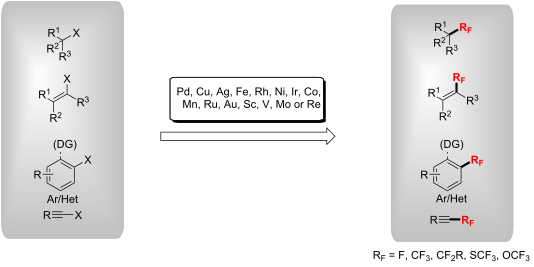
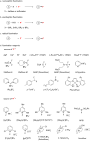
- phase-transfer copper catalyst (Scheme 27). Notably, with 10 mol % of (IPr)CuOTf, full conversion can be accomplished in 10 minutes at 45 °C. Allylic fluorination: In 2013, there is an example of a copper-catalyzed fluorination of internal allylic bromides (Scheme 28). In Liu’s study, this approach was
- (Scheme 31a) [74]. Che and co-workers [75] achieved a similar α-fluorination of β-ketoesters and N-Boc-oxindoles (Scheme 31b). Compared with Du’s method, Che employed both AgClO4 and chiral iron(III)-salan complexes as the catalyst. In 2016, the group of Nishikata [76] described a copper-catalyzed site
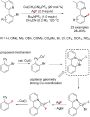
- five and six-membered ring β-ketoesters were converted to the corresponding products in high yields and enantioselectivities (Scheme 56). In 2018, the first example for the copper-catalyzed stereospecific trifluoromethylation of secondary propargyl sulfonates was described by the group of Zhang [116











Attempted synthesis of a meta-metalated calix[4]arene
Beilstein J. Org. Chem. 2019, 15, 1996–2002, doi:10.3762/bjoc.15.195
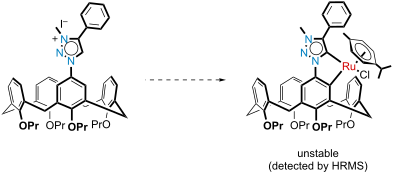
- Ullmann-type coupling to give aryl azide 2, which readily reacted with phenylacetylene in a copper-catalyzed Huisgen 1,3-dipolar cycloaddition to give 1,2,3-triazole 3 (Scheme 1). The formation of the ruthenacycle was then achieved using Albrecht’s method involving regioselective methylation of triazole 3
- our case column chromatography was only used once (to purify the monoazidocalix[4]arene 7), whilst the other procedure needed chromatography at each step. Introduction of the triazole moiety onto the upper rim of the calix[4]arene was then achieved with a copper-catalyzed Huisgen 1,3-dipolar




A metal-free approach for the synthesis of amides/esters with pyridinium salts of phenacyl bromides via oxidative C–C bond cleavage
Beilstein J. Org. Chem. 2019, 15, 1864–1871, doi:10.3762/bjoc.15.182

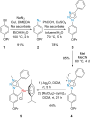
- new C–N bonds in the presence of transition metal catalysts [25][26][27][28][29][30][31][32][33][34]. Tang and Jiao reported copper catalyzed C–C single bond cleavage and C–N bond formation [35]. However, the transition metal catalysts and additives employed in these transformations are toxic and




Recent advances on the transition-metal-catalyzed synthesis of imidazopyridines: an updated coverage
Beilstein J. Org. Chem. 2019, 15, 1612–1704, doi:10.3762/bjoc.15.165
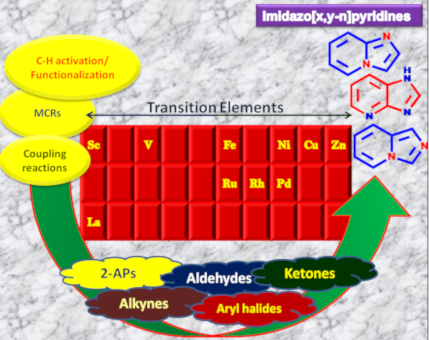
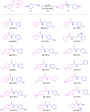
- been given much attention in various research fields, such as the discovery of lead compounds in medicinal chemistry, or combinatorial chemistry [95][96]. Copper-catalyzed synthetic protocols Ghosh and Mishra [97] have successfully reported the synthesis of imidazo[1,2-a]pyridines in a three-component
- process oxygen (air) acts as oxidant which resulted in the oxidation of Cu(II) to Cu(III) and Cu(I) back to Cu(II) (Scheme 28). A copper-catalyzed oxidative cyclization approach has been used for the synthesis of formyl-substituted imidazo[1,2-a]pyridines 89. The remarkable feature of this method was the
- , perhaps because the α,β-unsaturated double bond affected the iodination. Mohan et al. successfully developed an efficient copper-catalyzed aerobic oxidative amination of C(sp3)–H bonds to synthesize imidazo[1,5-a]pyridine derivatives [122]. The reaction was also applicable to amino acid derivatives, as


Synthesis of 9-O-arylated berberines via copper-catalyzed CAr–O coupling reactions
Beilstein J. Org. Chem. 2019, 15, 1575–1580, doi:10.3762/bjoc.15.161

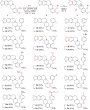
- 9-O-phenylene-bridged berberine dimer (5) was synthesized by copper-catalyzed cross-coupling of tetrahydroberberrubine and aryl iodides, followed by oxidation with I2. Keywords: arylation; berberines; cross-coupling; copper; lipophilicity; structural modification; Introduction Berberine (BBR) is a
- of 5. Conclusion We have presented the synthesis of unprecedented 9-(O)-aryl-substituted BBR through a copper-catalyzed cross coupling of tetrahydroberberrubine with aryl iodides and subsequent oxidation. The substrate scope is generally broad and various aryl groups have been introduced to the BBR



Selenophene-containing heterotriacenes by a C–Se coupling/cyclization reaction
Beilstein J. Org. Chem. 2019, 15, 1379–1393, doi:10.3762/bjoc.15.138

- crucial cyclization steps to the stable and soluble fused systems were achieved by copper-catalyzed C–S and C–Se coupling/cyclization reactions. Structures and packing motifs in the solid state were elucidated by single crystal X-ray analysis and XRD powder measurements. Comparison of the optoelectronic
- different scan rates (right). Synthesis of heterotriacenes DTT 1 and DTS 2 via copper-catalyzed cross-coupling reactions. Synthesis of selenolotriacenes DST 3 and DSS 4. Oxidative polymerization of heterotriacenes 1–4 to corresponding conjugated polymers P1–P4. Bond distances, bond angles, and distances D


One-pot activation–alkynylation–cyclization synthesis of 1,5-diacyl-5-hydroxypyrazolines in a consecutive three-component fashion
Beilstein J. Org. Chem. 2019, 15, 1360–1370, doi:10.3762/bjoc.15.136
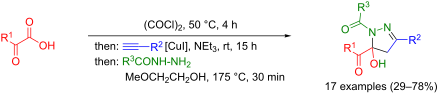
- –alkynylation (GA) [48] and an activation–alkynylation (AA) [49] sequence, which both take advantage of a copper-catalyzed alkynylation of the intermediary formed (hetero)arylglyoxyl chloride (Scheme 1). The alkynediones can be subsequently transformed, still in the same reaction vessel, to quinoxalines [48][50


Synthesis of aryl cyclopropyl sulfides through copper-promoted S-cyclopropylation of thiophenols using cyclopropylboronic acid
Beilstein J. Org. Chem. 2019, 15, 1162–1171, doi:10.3762/bjoc.15.113
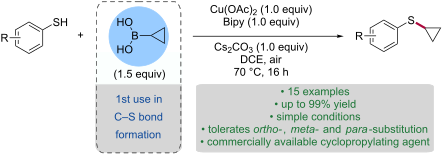
- -cyclopropylation reactions, a transformation which is similar to the Chan [45], Evans [46], Lam [47] arylation reaction of N–H and O–H containing substrates. These seminal reports greatly contributed to the synthesis of cyclopropylated compounds in addition to expanding the scope of copper-catalyzed reactions in
- agent of thiophenols (Scheme 2g). The publication of copper-catalyzed methods by Feng and Xu to S-arylate thiophenols [53] and by Guy to S-arylate alkyl thiols [54] gave us confidence to proceed ahead with our endeavour for which we herein report our results. Results and Discussion We began by testing
- only viable alternative to bipyridine (Table 1, entry 7), with other ligands commonly used in copper-catalyzed reactions such as proline and 2,2,6,6-tetramethyl-3,5-heptanedione giving yields under 15%. Reducing the number of equivalents of boronic acid 25 and sodium carbonate was found to be well


Stereo- and regioselective hydroboration of 1-exo-methylene pyranoses: discovery of aryltriazolylmethyl C-galactopyranosides as selective galectin-1 inhibitors
Beilstein J. Org. Chem. 2019, 15, 1046–1060, doi:10.3762/bjoc.15.102
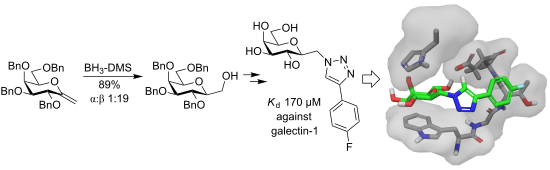
- (aryltriazolyl)methyl galactopyranosyls 10a–n in fair to good yields (42–78% yields) via a copper-catalyzed Huisgen cycloaddition [17][32]. The resulting (aryltriazolyl)methyl galactopyranosyls 10a–n were debenzylated using palladium hydroxide on carbon in a 2:1 cyclohexene and ethanol mixture to give 1a–n in