Search results
Search for "deprotection" in Full Text gives 678 result(s) in Beilstein Journal of Organic Chemistry. Showing first 200.
Solid-phase total synthesis and structural confirmation of antimicrobial longicatenamide A
Beilstein J. Org. Chem. 2022, 18, 1560–1566, doi:10.3762/bjoc.18.166
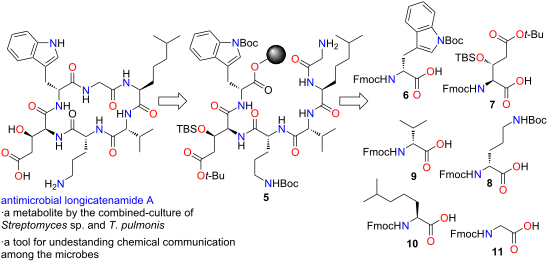
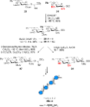
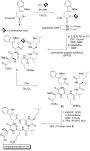
- determined using the modified Mosher’s method [21]. Protection of diol 25 by tert-butyl(dimethyl)silyl (TBS) group followed by selective deprotection of the primary alcohol led to 27. Finally, acid 7 was obtained from alcohol 27 through the same two-step oxidation used to obtain compound 10. Having
- 29. Then, five rounds of DIC/Oxyma-mediated amidation [22] and Nα-deprotection with piperidine led to resin-bound peptide 5. Treatment of 5 with TFA/CH2Cl2 1:99 released 30 into the solution without unmasking the acid-labile protecting groups of the side chains. Subsequently, peptide 30 was cyclized



A study of the DIBAL-promoted selective debenzylation of α-cyclodextrin protected with two different benzyl groups
Beilstein J. Org. Chem. 2022, 18, 1553–1559, doi:10.3762/bjoc.18.165
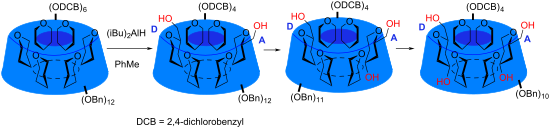
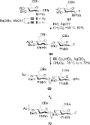
- gives access to 6A-mono- and 6A,D diol (3) in high yields and purity, and by extension of this method further deprotection on the primary [10][11][12] and secondary rim can be made [13][14][15]. The reaction of 2 with DIBAL leads quite rapidly to diol 3 and then much slower to triol 4 and tetrol 5
- . These methods are so useful because virtually any chemical modification at the deprotected sites can be made followed by global deprotection of the O-benzyl groups with hydrogenolysis. Recently, we observed a strong substituent effect when substituted benzyl groups were used in these reactions with


Efficient synthesis of aziridinecyclooctanediol and 3-aminocyclooctanetriol
Beilstein J. Org. Chem. 2022, 18, 1539–1543, doi:10.3762/bjoc.18.163
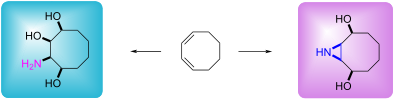
- relative to the proton H-2. For the synthesis of the aminocyclooctanetriol 13, hydrogenation of the azido alcohol 11 gave amine 12 in 95% yield (Scheme 2). Subsequent, benzyl deprotection with BCl3 of 12 resulted in the target compound 13 in 85% yield. The structures of compounds 12 and 13 are completely
- a positive NOE clearly indicates that the protons H-2/H-7 should have a cis configuration relative to the protons H-1/H-8. Finally, benzyl deprotection with BCl3 of 14 afforded the product 16 in 84% yield. The structure of 16 was assigned on the basis of NMR spectroscopy. Conclusion In summary, we


1,4,6,10-Tetraazaadamantanes (TAADs) with N-amino groups: synthesis and formation of boron chelates and host–guest complexes
Beilstein J. Org. Chem. 2022, 18, 1424–1434, doi:10.3762/bjoc.18.148
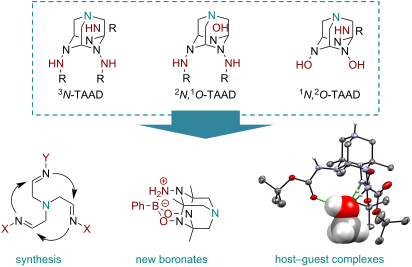
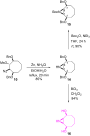
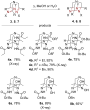
- . Hydrazinium dihydrochloride was isolated in some cases (confirmed by X-ray, mp, and FT-IR data) demonstrating the degradation of the heteroadamantane cage. Deprotection of Cbz derivatives by hydrogenation over Pd–C was more productive. Thus, hydrogenolysis of product 8b delivered the 1N,2O-TAAD derivative 15
- , deprotection reactions were performed at low temperatures to prevent degradation of the aminal fragments. Indeed, treatment of Bn-4c with hydrochloric acid at 0 °C resulted in a substitution of one NNH2 unit with the oxygen atom producing product 22, having a hitherto undescribed 4-oxa-1,6,10-triazaadamantane
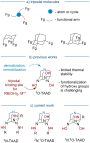
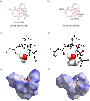
- ) Fragment of 1H NMR spectra of Bn-4c in DMSO-d6 and CD3OD. A general strategy for the assembly of TAAD derivatives. Synthesis of acyclic precursors to 3N-TAADs, 2N,1O-TAADs, and 1N,2O-TAADs. Synthesis of 3N-TAADs, 2N,1O-TAADs, and 1N,2O-TAADs. *Yield based on compound 14. Deprotection of TAAD 8b and






Synthesis of C6-modified mannose 1-phosphates and evaluation of derived sugar nucleotides against GDP-mannose dehydrogenase
Beilstein J. Org. Chem. 2022, 18, 1379–1384, doi:10.3762/bjoc.18.142
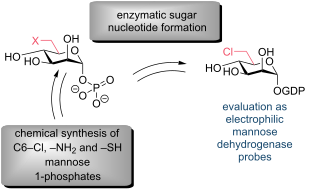
- deprotection with concomitant azide reduction was completed using hydrogen and Pd/C and Pd(OH)2/C catalysts, affording 13 as the disodium salt in 90% yield, after anion exchange chromatography. Synthesis of 6-deoxy-6-thio-ᴅ-mannose 1-phosphate (18) was completed from 14 via C6 substitution with thioacetate and
- diffuse intermolecular C–H···O contacts involving the phosphate and acetyl oxygen atoms. Deprotection of 16 was completed in two steps, first using hydrogenolysis with Adam’s catalyst (PtO2), followed by removal of the acetate protecting groups with Et3N/H2O/MeOH, and furnished the target glycosyl 1


Vicinal ketoesters – key intermediates in the total synthesis of natural products
Beilstein J. Org. Chem. 2022, 18, 1236–1248, doi:10.3762/bjoc.18.129
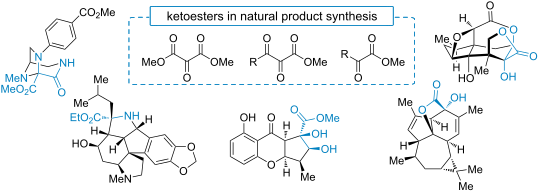
- ]. DMP oxidation of α-hydroxyester 21 and subsequent cycloisomerization led to the desired cyclization product 23 via transition state II in a dr of 5:1. Final deprotection gave preussochromone A (24). (−)-Preussochromone D A similar approach was chosen in the synthesis of the structurally related
- 27. Subsequent oxidation gave α-ketoester 28 which was used in an intramolecular, Lewis acid-mediated aldol reaction, presumably via tridentate complex transition state III, to give diol 29 as a single diastereomer. Inversion of the secondary alcohol and deprotection gave preussochromone D (30
- precursor for an intramolecular Friedel–Crafts cyclization (Scheme 9) [24]. Therefore, phenylacetaldehyde 52 was converted to the alcohol 53, which was esterified with the α-ketoacid 54 to give ketoester 55. Grignard addition to the keto carbonyl and subsequent TBS deprotection delivered the tertiary


Synthesis of protected precursors of chitin oligosaccharides by electrochemical polyglycosylation of thioglycosides
Beilstein J. Org. Chem. 2022, 18, 1133–1139, doi:10.3762/bjoc.18.117
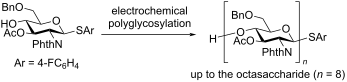
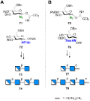
- blocks can reduce the number of steps in the total synthesis. However, it requires manipulation of the anomeric leaving groups and deprotection of the protected hydroxy group at the 4-position prior to glycosylation. Although automated electrochemical assembly, which is a one-pot iterative synthesis of
- examined. By repeating cycles in one pot, the modified method enabled us to prepare longer oligosaccharides up to the octasaccharide. Further optimizations of reaction parameters, such as concentration, size and shape of electrodes for large-scale production of oligosaccharides, and deprotection of


A Streptomyces P450 enzyme dimerizes isoflavones from plants
Beilstein J. Org. Chem. 2022, 18, 1107–1115, doi:10.3762/bjoc.18.113
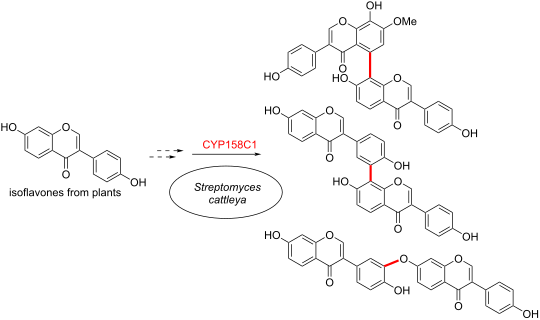
- challenging and often requires prefunctionalization of the substrate monomers, costly metal ligands, or tedious protection–deprotection steps [6][7][8][9]. With the advance of biosynthetic studies on natural products, a number of enzyme classes that are responsible for the dimer formation have been identified


A versatile way for the synthesis of monomethylamines by reduction of N-substituted carbonylimidazoles with the NaBH4/I2 system
Beilstein J. Org. Chem. 2022, 18, 1032–1039, doi:10.3762/bjoc.18.104

- method is to introduce alkyl formate, formacyl, methylene or their equivalents to amines, followed by reduction to give monomethylamines [44][45][46][47][48][49][50][51]. Protection/methylation/deprotection strategies have also been developed for the preparation of monomethylation objects, which are


Synthesis of α-(perfluoroalkylsulfonyl)propiophenones: a new set of reagents for the light-mediated perfluoroalkylation of aromatics
Beilstein J. Org. Chem. 2022, 18, 788–795, doi:10.3762/bjoc.18.79
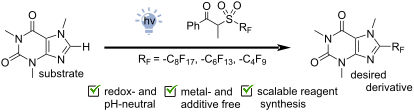
- generated in situ from propiophenone, and second, the deprotection of propiophenone α-thioesters in the presence of perfluoroalkyliodides and subsequent oxidation of the formed perfluorothioether into the sulfone. However, none of these proposed pathways gave yields high enough for the reaction to be


Site-selective reactions mediated by molecular containers
Beilstein J. Org. Chem. 2022, 18, 309–324, doi:10.3762/bjoc.18.35
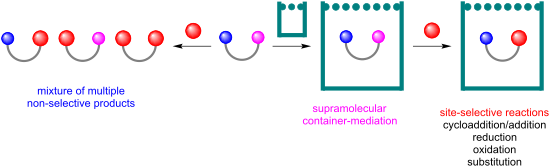
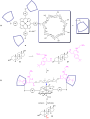
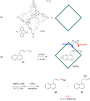
- prefunctionalization and deprotection synthetic procedures. Based on the logical concept of protecting groups, noncovalent interactions can be considered, because they can be built up in situ and are weak enough to let the substrate dissociate from the “protecting template” easily, omitting the complicated
- prefunctionalization and deprotection processes. Moreover, functional groups that are not suitable for being functionalized with protecting groups can also be incorporated into the noncovalent protective systems. Actually, the molecular container has been applied to work as a noncovalent protective module. In this






Recent developments and trends in the iron- and cobalt-catalyzed Sonogashira reactions
Beilstein J. Org. Chem. 2022, 18, 262–285, doi:10.3762/bjoc.18.31
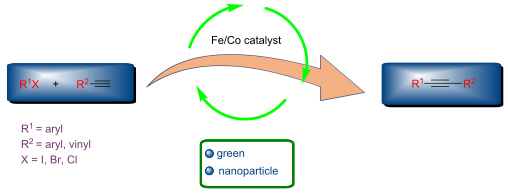
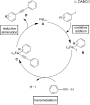
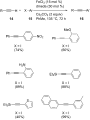
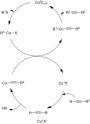
- ligand 2,2’-bipyridyl (Scheme 1). The reaction utilizes KOH as the base, since it provides the suitable deprotection of arylynols 3 during the synthesis of the terminal arylalkynes. The optimized conditions revealed that 10 mol % of Fe catalyst/ligand at 140 °C for 48 h afforded the maximum yields of the







Anomeric 1,2,3-triazole-linked sialic acid derivatives show selective inhibition towards a bacterial neuraminidase over a trypanosome trans-sialidase
Beilstein J. Org. Chem. 2022, 18, 208–216, doi:10.3762/bjoc.18.24
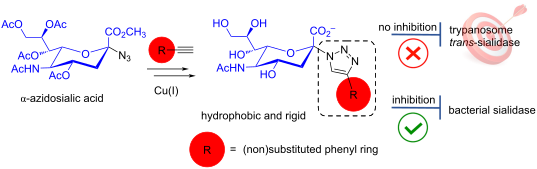
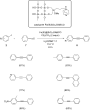
- the deprotection step with CH3OH/triethylamine/H2O 4:1:5 [26], triethylammonium ions were exchanged upon treatment with Amberlite IR 120 (Na+ form) and compounds 3a–h were obtained in excellent yield and purity without further purification. Chemical structures and reported activities of viral (A

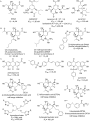


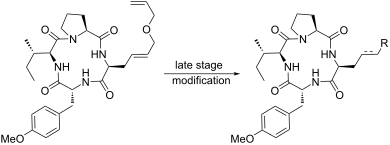
Synthesis and late stage modifications of Cyl derivatives
Beilstein J. Org. Chem. 2022, 18, 174–181, doi:10.3762/bjoc.18.19
- ratio was also very high. Only prolonged reaction times (>18 h) led to epimerization of the rearranged peptide. With rearranged tetrapeptide 9b in hand, esterification with pentafluorophenol (Pfp) gave Pfp ester 10, which should readily cyclize after Boc deprotection (Scheme 4). Treatment with HCl in



Stepwise PEG synthesis featuring deprotection and coupling in one pot
Beilstein J. Org. Chem. 2021, 17, 2976–2982, doi:10.3762/bjoc.17.207

- – deprotection, deprotonation and coupling – in two pots. Here, we report a more convenient approach for PEG synthesis featuring the use of a base-labile protecting group such as the phenethyl group. Using this approach, each elongation of PEG can be achieved in two steps – deprotection and coupling – in only
- one pot. The deprotonation step, and the isolation and purification of the intermediate product after deprotection using existing approaches are no longer needed when the one-pot approach is used. Because the stepwise PEG synthesis usually requires multiple PEG elongation cycles, the new PEG synthesis
- ][26]. Perhaps, the most widely used methods in academia and in industry involve the use of monomers such as compound 1, which contain the acid-labile DMTr protecting group. PEG elongation is achieved by deprotection under acidic conditions, purifying the intermediate, and setting up a separate


A photochemical C=C cleavage process: toward access to backbone N-formyl peptides
Beilstein J. Org. Chem. 2021, 17, 2932–2938, doi:10.3762/bjoc.17.202
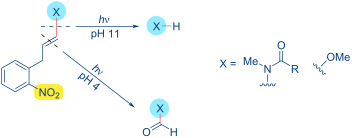
- contrast, photorelease systems based on C–C or C=C bond photocleavage are quite rare [14][15]. We recently reported a vinylogous analogue of this photo-deprotection process, which allowed photocleavage of alkenyl sp2 C–X bonds, rather than benzylic sp3 C–X cleavage [16][17]. We now report that further



First total synthesis of hoshinoamide A
Beilstein J. Org. Chem. 2021, 17, 2924–2931, doi:10.3762/bjoc.17.201
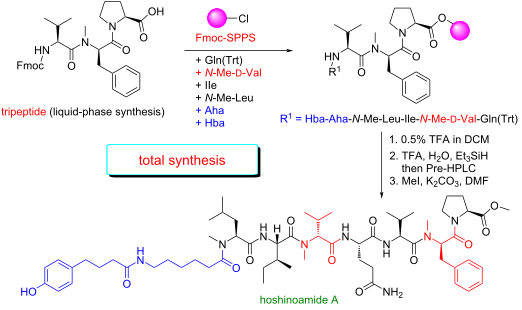
- -OH (4 equiv), HATU/coupling reagent (4 equiv) and DIPEA (8 equiv) in DMF (20 mL). The coupling mixture was filtered and the resin was washed with CH2Cl2 (10 mL × 5) and CH3OH (10 mL × 5). General procedures for deprotection of Fmoc: The loaded resin was treated with a solution of 20 vol % piperidine



The ethoxycarbonyl group as both activating and protective group in N-acyl-Pictet–Spengler reactions using methoxystyrenes. A short approach to racemic 1-benzyltetrahydroisoquinoline alkaloids
Beilstein J. Org. Chem. 2021, 17, 2716–2725, doi:10.3762/bjoc.17.183
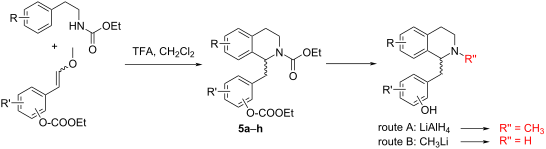
- control) gave the desired racemic N-ethoxycarbonyl-1-benzyltetrahydroisoquinolines 5a–h with intact ethoxycarbonyl protection of the phenolic groups (Table 2). Simultaneous phenol deprotection and reduction of the carbamate group (route A) to an N-methyl group was accomplished by lithium alanate reduction


Synthetic strategies toward 1,3-oxathiolane nucleoside analogues
Beilstein J. Org. Chem. 2021, 17, 2680–2715, doi:10.3762/bjoc.17.182
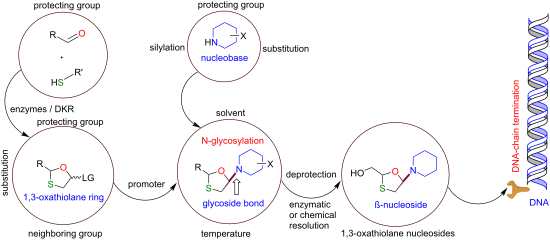
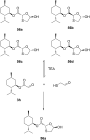
- into a primary alcohol with sodium borohydride affords compound 23. The protection of the hydroxy group of compound 23 was carried out by TBDPSCl in the presence of imidazole and N,N-dimethylformamide (DMF) as solvent, and deprotection of the benzoyl group by ammonolysis provides silylated compound 24
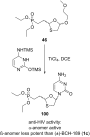
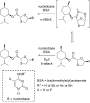
- oxathiolane derivative 4 with silylated cytosine, which afforded 79 as a mixture of the cis- and trans-nucleosides. The process used N-protected cytosine and further chromatographic separation. The deprotection with a methanolic ammonia solution provided racemic (±)-BCH-189 (1c). In vitro studies of (±)-BCH
- ) catalyst to obtain nucleoside derivative 79a, followed by deprotection using methanolic ammonia (Scheme 27). Cousins et al. [49] carried out the coupling of enantiomerically enriched oxathiolane propionate 44 with silylated cytosine in the presence of the Lewis acid trimethylsilyl iodide (TMSI), which gave








Synthesis of highly substituted fluorenones via metal-free TBHP-promoted oxidative cyclization of 2-(aminomethyl)biphenyls. Application to the total synthesis of nobilone
Beilstein J. Org. Chem. 2021, 17, 2668–2679, doi:10.3762/bjoc.17.181
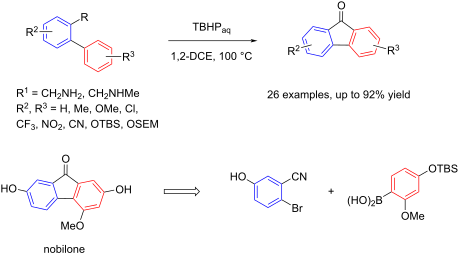
- of biaryl aldehyde intermediates 8, reduction [60] in the case of nitriles 14, or Boc deprotection [61] for 14k, m, o according to standard protocols (Schemes 4–7; for details, see Supporting Information File 1). Although it may seem counterintuitive to first convert aldehydes 8 and nitriles 14 into
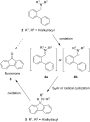
- obtained via TBHP-mediated cyclization of 23 and subsequent TBS-deprotection of intermediate 24 with pyridine and HF·pyridine complex [66] in a total yield of 26% over the two steps. The longest linear sequence was 7 steps, with an overall yield of 5%. Finally, the reaction mechanism of the oxidative





Synthesis of new bile acid-fused tetrazoles using the Schmidt reaction
Beilstein J. Org. Chem. 2021, 17, 2611–2620, doi:10.3762/bjoc.17.174
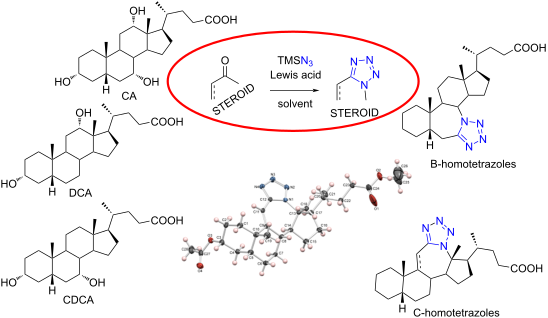
- NaHCO3 solution and water. After drying and evaporation of the solvent in vacuo, crude products were obtained and were purified by column chromatography. General procedure for deprotection In a round-bottom flask, the protected bile acid tetrazole (0.20 mmol) was dissolved in an ethanolic KOH solution


Strategies for the synthesis of brevipolides
Beilstein J. Org. Chem. 2021, 17, 2399–2416, doi:10.3762/bjoc.17.157
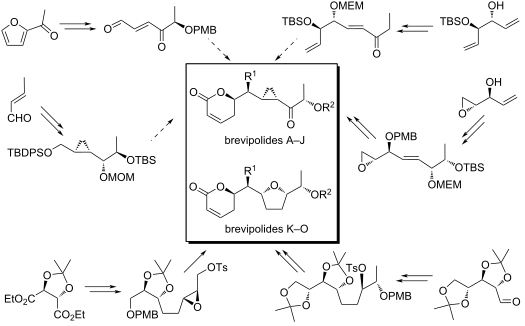
- esterification step. In the retrosynthesis, compound 107 is conceived as the branching intermediate to access both brevipolides M and N (Scheme 13). The 5,6-dihydro-α-pyrone moiety can be derived from alkyne 108 via the sequential deprotection, Lindlar reduction, and oxidation. The propargylic alcohol moiety is


Chemical syntheses and salient features of azulene-containing homo- and copolymers
Beilstein J. Org. Chem. 2021, 17, 2164–2185, doi:10.3762/bjoc.17.139
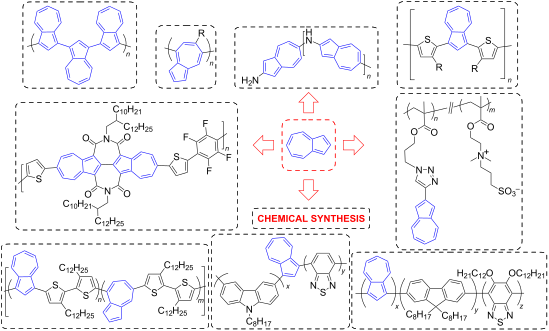
- by using [Pd(allyl)Cl]2 and JackiePhos as a ligand to obtain the polymer 30 in 52% yield. The deprotection of the N-Boc functionality led to the formation of poly[2,6-aminoazulene] 31 in excellent yields (Scheme 7C). The N-Boc-protected polymer 30 possessed good solubility in organic solvents and its





Recent advances in the syntheses of anthracene derivatives
Beilstein J. Org. Chem. 2021, 17, 2028–2050, doi:10.3762/bjoc.17.131
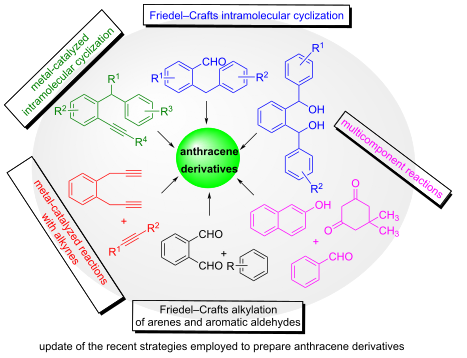
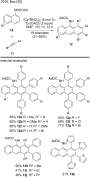
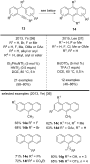
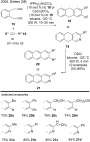
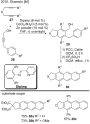
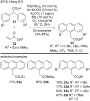
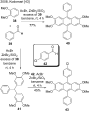
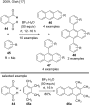
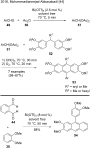
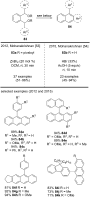
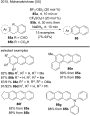
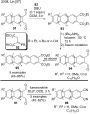
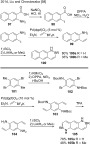
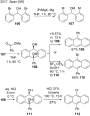
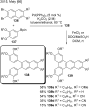
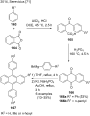
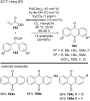
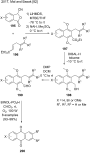
- methodology, they synthesized 2,3,6,7-anthracenetetracarbonitrile (90) in a good yield (84%) by double intermolecular Wittig reaction of the protected benzenetetracarbaldehyde 87 with reagent 88, followed by deprotection and double ring-closing reaction of intermediate 89; they used a mixture of triflic acid
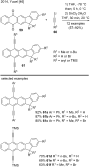
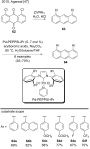
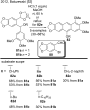
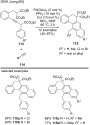
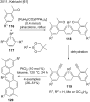
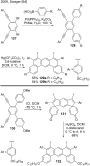
- -anthracenetetracarbonitrile (90) by double Wittig reaction followed by deprotection and intramolecular double ring-closing reaction. Homo-elongation protocol for the synthesis of substituted acene diesters/dinitriles. Synthesis of two new parental BN anthracenes via borylative cyclization. Synthesis of substituted
















Progress and challenges in the synthesis of sequence controlled polysaccharides
Beilstein J. Org. Chem. 2021, 17, 1981–2025, doi:10.3762/bjoc.17.129
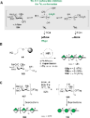
- be quite challenging to prepare. Moreover, problems can occur during the removal of the PGs, since partially deprotected compounds can generate insoluble aggregates [24]. Incomplete deprotection and residual PGs can largely affect the properties of the obtained polymer. Chemical synthesis provides
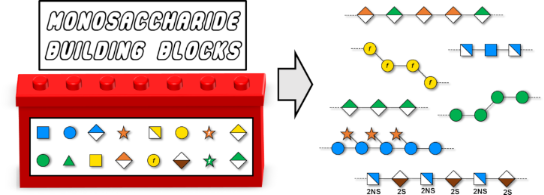
- synthetic steps. In general, BBs are equipped with a reactive anomeric LG to allow for glycosylation and suitable PGs to ensure regio- and stereocontrol [25]. Even though, in most cases, BB preparation follows straightforward protection/deprotection strategies, the low selectivity and yield of certain
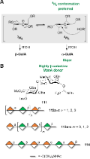
- a solid support following a linear approach (Figure 1D). Cycles of glycosylation and selective deprotection are iteratively performed to access the desired polysaccharide with full control over the length and the monosaccharide sequence [32]. Upon completion of the assembly, the desired product is