


Search results
Search for "enantiomer" in Full Text gives 289 result(s) in Beilstein Journal of Organic Chemistry. Showing first 200.
One-step route to tricyclic fused 1,2,3,4-tetrahydroisoquinoline systems via the Castagnoli–Cushman protocol
Beilstein J. Org. Chem. 2020, 16, 1456–1464, doi:10.3762/bjoc.16.121
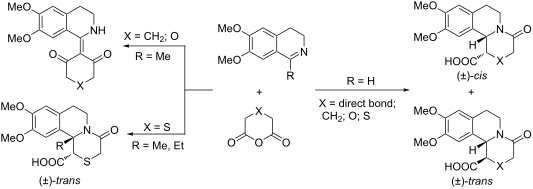
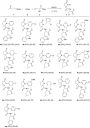
- recrystallization. Compounds comprising a benzo[a]quinolizidine ring system. Representative NOE interactions in cis and trans-21–24 (only one enantiomer is shown). X-ray crystal structure of products 25 and 26. Representative NOE interactions in 28 and 29. Reactions between enolizable anhydrides and imines


Anthelmintic drug discovery: target identification, screening methods and the role of open science
Beilstein J. Org. Chem. 2020, 16, 1203–1224, doi:10.3762/bjoc.16.105
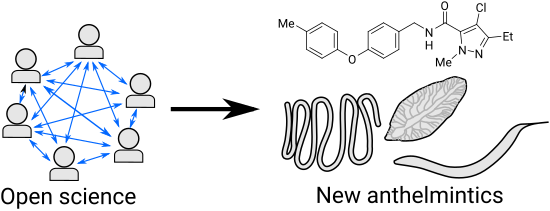
- derivative has been the basis of schistosomiasis treatment for over 30 years [20]. PZQ is currently administered as a racemic mixture (Figure 1), despite the (R)-enantiomer being the biologically active form [41]. As will be discussed later in this review, there has been success in producing the active
- enantiomer would be preferable for several reasons, for example, the inactive enantiomer has been linked to unwanted side-effects and also contributes a very bitter taste. With a view to finding a synthetic route to the active enantiomer, an open website was established, and several groups became involved
- not yet led to the pure enantiomer being widely available, but the setting up of an open science project was the stimulus to the solution of a challenging problem. A Phase III clinical trial testing safety and efficacy of ʟ-praziquantel is currently recruiting (NCT03845140). Conclusion The recent





Fluorinated phenylalanines: synthesis and pharmaceutical applications
Beilstein J. Org. Chem. 2020, 16, 1022–1050, doi:10.3762/bjoc.16.91
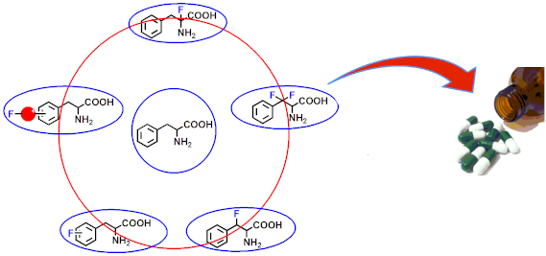
- -catalyzed asymmetric hydrogenation of the α-amidocinnamic acid 63 using the less frequently used ferrocene-based ligand Me-BoPhoz led to the N-acetyl-ʟ-phenylalanine derivative 64 with complete conversion and with 94% ee. The desired enantiomer (S)-65 was obtained as a single isomer (>99% ee) after


One-pot synthesis of dicyclopenta-fused peropyrene via a fourfold alkyne annulation
Beilstein J. Org. Chem. 2020, 16, 791–797, doi:10.3762/bjoc.16.72
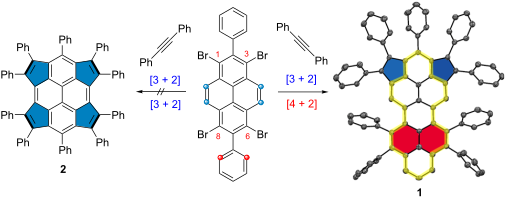
- -fused PAHs in large π-systems. High-resolution MALDI-TOF mass spectrum of 1. Inset: isotopic distribution compared to mass spectrum simulated for C84H50. Single-crystal X-ray structure of 1. (a) Top view and (b) side view of the (P,P) isomer. c) Crystal packing of the enantiomer pairs (P,P and M,M) of 1


Combining enyne metathesis with long-established organic transformations: a powerful strategy for the sustainable synthesis of bioactive molecules
Beilstein J. Org. Chem. 2020, 16, 738–755, doi:10.3762/bjoc.16.68
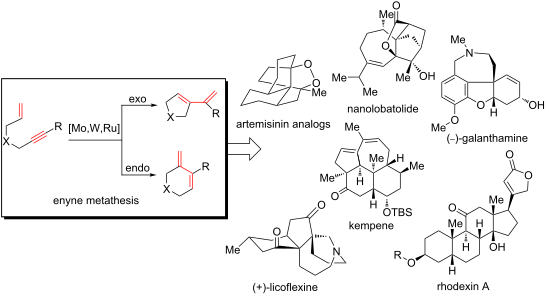
- subsequent Eu(fod)3-catalyzed intermolecular Diels–Alder cycloaddition and epoxidation reactions (Scheme 5) [69]. In this stereoselective synthesis, the last biomimetic step was critical to obtain the proper enantiomer of the tetracyclic core of nanolobatolide. Amphidinolide macrolides Amphidinolides
- synthesis of the (−)-exiguolide enantiomer (25) was reported by Roulland et al. [94]. The method is a mechanistically distinct alternative to the enyne metathesis since it involves a Trost’s Ru-catalyzed enyne cross-coupling reaction associated with a Yamaguchi lactonization, a Grubbs Ru-catalyzed cross




Synthesis of C70-fragment buckybowls bearing alkoxy substituents
Beilstein J. Org. Chem. 2020, 16, 681–690, doi:10.3762/bjoc.16.66
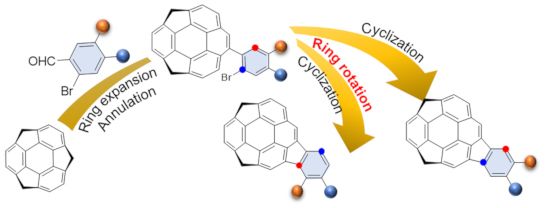
- crystal structure of 5c, two crystallographically independent units were observed (Figure 5a). 5c also contained both of the enantiomers and formed a columnar structure along the b axis with the slipped stack manner, which was composed of only one side of the enantiomer (Figure 5b,c). The columns with the
- ) and c), hydrogen atoms which are not engaged in any interactions and the contribution of the one enantiomer are omitted for clarity. Crystal structure of 5c. a) ORTEP drawing of the crystallographically independent unit with thermal ellipsoid at 50% probability b) Packing structure viewed from the b


Copper-catalyzed enantioselective conjugate reduction of α,β-unsaturated esters with chiral phenol–carbene ligands
Beilstein J. Org. Chem. 2020, 16, 537–543, doi:10.3762/bjoc.16.50
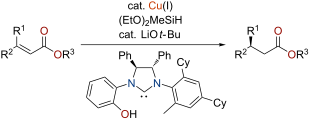
- compounds was examined. Because the separation of the product from silicon-based byproducts was troublesome, the isolated yields were lower than the yields determined by NMR spectroscopy (2a, 52%, Table 2, entry 1). When (E)-1a was used as the substrate, the opposite enantiomer (S)-2a was obtained in >99


[1,3]/[1,4]-Sulfur atom migration in β-hydroxyalkylphosphine sulfides
Beilstein J. Org. Chem. 2020, 16, 88–105, doi:10.3762/bjoc.16.11
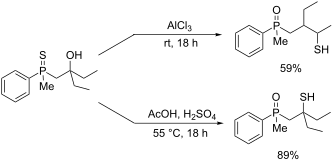
- ]-rearrangement proceeded with additional partial enrichment of one enantiomer. The latter may have occurred through the preferential acylation of one of two diastereoisomers under the reaction conditions where the second chirality center at the phosphorus atom influenced the ratio of the acylation reaction. With


Emission and biosynthesis of volatile terpenoids from the plasmodial slime mold Physarum polycephalum
Beilstein J. Org. Chem. 2019, 15, 2872–2880, doi:10.3762/bjoc.15.281
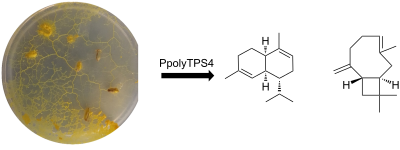
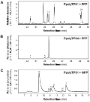
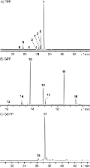
- repeated three times with similar results. 1, linalool; 2, (E)-β-caryophyllene; 3, unidentified sesquiterpene hydrocarbon (compound 3); 4, unidentified putative sesquiterpene aldehyde (compound 4); 5, α-muurolene. B) Structures of known terpenoids. The structure of compound 2 shows the (−)-enantiomer of (E



A chiral self-sorting photoresponsive coordination cage based on overcrowded alkenes
Beilstein J. Org. Chem. 2019, 15, 2767–2773, doi:10.3762/bjoc.15.268
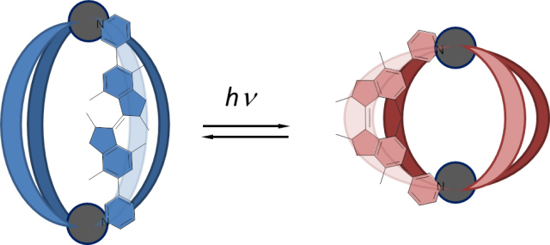
- enantiomeric cages in which the Pd–Pd axis of each cage is located at the 4-fold rotation axis. This means that the cage structure is made up with exclusively (R,R) or (S,S) enantiomer of the ligand and that the elementary cell is built from the racemic pair of cages. DFT calculations were performed to gain
- agreement with the solved X-ray structure (Figure 4). Moreover, the calculations revealed that the homochiral cage Pd2((S,S)-stable E-1)4 (and its enantiomer) are energetically favored by at least 61 kJ mol−1 compared to the other possible diastereomers (Table S1, Supporting Information File 1). Similar


A review of asymmetric synthetic organic electrochemistry and electrocatalysis: concepts, applications, recent developments and future directions
Beilstein J. Org. Chem. 2019, 15, 2710–2746, doi:10.3762/bjoc.15.264
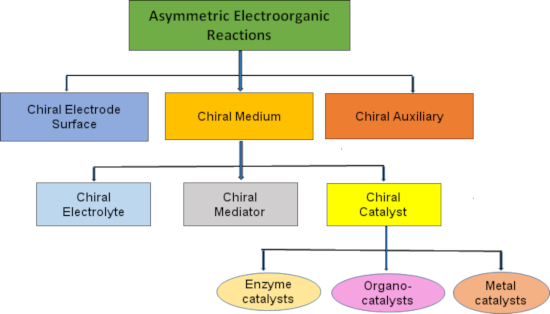
- catalyze the enantioselective hydrogenation of prochiral ketones 18. The prochiral ketones such as acetophenone, 1-tetralone and 1-indanone were reduced to their corresponding alcohols 20a, 20b and 20c, respectively, with moderate optical yields, with formation of (S) as major enantiomer (Scheme 5). After
- -cyclodextrin as the cocatalyst provide 196 in a good yield and excellent stereoselectivity (Scheme 61). In 2011, Hurvois and his group reported a stereoselective electrochemical total synthesis of the tetrahydroisoquinoline alkaloid (−)-crispine A (200) and its natural enantiomer [108]. The initial steps






Synthetic terpenoids in the world of fragrances: Iso E Super® is the showcase
Beilstein J. Org. Chem. 2019, 15, 2590–2602, doi:10.3762/bjoc.15.252
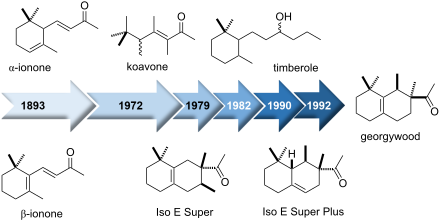
- described structure [28][32]. Synthetic aspects of individual Iso E Super® components The first target-specific synthesis of (−)-Georgywood® (35) utilised the (S)-Corey–Bakshi–Shibata catalyst (36) for the enantioselective Diels–Alder cycloaddition (Scheme 5). The corresponding enantiomer (+)-Georgywood
- ® (35) was also prepared using the corresponding (R)-CBS catalyst (36). In contrast, the enantiomer (+)-Georgywood® (35) was found to possess a relatively weak odour which was described as distinctly unpleasant and acrid-musty by several members of the Corey group [33]. The same approach led to the
- of Iso E Super® (33), Iso E Super Plus® (34) and Georgywood® (35) as a mixture of isomers [15]. First synthetic route to (−)-Georgywood® (35) by Corey and Hong [33]. First synthetic route to the odour-active (+)-enantiomer of Iso E Super Plus® (+)-34 [33]. Analysis of the isomerisation process and


α-Photooxygenation of chiral aldehydes with singlet oxygen
Beilstein J. Org. Chem. 2019, 15, 2076–2084, doi:10.3762/bjoc.15.205

- -hydroxylation of aldehydes [14][15]. Recently, we have reported that organocatalytic photooxygenation of aldehydes affords the desired diols (after in situ reduction) in decent yield with either (R)- or (S)-selectivity depending on a catalysts used [14]. In the presence of prolinamides the (R)-enantiomer
- organocatalysts Reactions with chiral organocatalysts 15–18 reported in Table 1 were performed according to the procedure described above but only 20 mol %, 0.05 mmol of catalyst were used. Reactions catalyzed by diaryl prolinols (S)-18 and (R)-18 yielded anti-6 and syn-6, respectively. Enantiomer S,R (anti-6) 82
- % ee [α]D20 −147.0 (c 0.6, CHCl3). Enantiomer R,R (syn-6) 99% ee, [α]D20 −104.0 (c 0.4, CHCl3). General procedure for α-photooxygenation with phosphate buffer solution To a 10 mL vial a solution of meso-tetraphenylporphyrin (H2TPP, 0.4 mg, 0.63 µmol, 0.25 mol %) in CCl4 (1 mL) and organocatalyst (S)-17



Nanopatterns of arylene–alkynylene squares on graphite: self-sorting and intercalation
Beilstein J. Org. Chem. 2019, 15, 1848–1855, doi:10.3762/bjoc.15.180
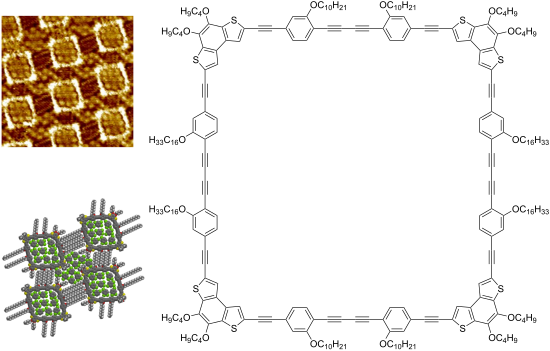
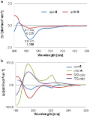
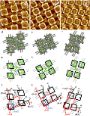
- an ABAB fashion (i.e., narcisstic self-sorting). A side chain interdigitation scheme of OC16H33 (−); OC6H13 (+); OC16H33 (−); OC6H13 (+) is indexed to the packing observed in Figure 2b (and obviously, the enantiomer has also been observed). The lattice constant b for 1b is reduced by (0.6 ± 0.4) nm




N-(1-Phenylethyl)aziridine-2-carboxylate esters in the synthesis of biologically relevant compounds
Beilstein J. Org. Chem. 2019, 15, 1722–1757, doi:10.3762/bjoc.15.168

- )-7 (Scheme 6) which was found to be an effective inhibitor of the mitotic kinesin. The biologically active enantiomer of mexiletine (R)-24 was efficiently synthesized from the alcohol (2R,1'R)-7 (Scheme 7) [45]. When the respective tosylate (2R,1'R)-25 was treated with 2,6-dimethylphenoxide two
- diastereoisomeric amino alcohols (1R/S,2S)-29 after removal of a chiral auxiliary and finally oxidized to a ketone from which (−)-cathinone ((S)-27) was isolated as the hydrochloride salt. Starting from the aldehyde (2R,1'S)-6 its enantiomer was prepared in a similar way. Under optimized conditions the
- )-5a was reacted with 3-bromo-5-methoxy-1H-1,2,4-triazole (128) to give N-protected bicyclic amino ester 129 which was next converted into (S)-(+)-127 in two standard steps (Scheme 33) [17]. Its enantiomer was prepared from (2R,1′S)-5a. Lacosamide ((R)-130) is a derivative of ᴅ-serine and has found


Synthesis, enantioseparation and photophysical properties of planar-chiral pillar[5]arene derivatives bearing fluorophore fragments
Beilstein J. Org. Chem. 2019, 15, 1601–1611, doi:10.3762/bjoc.15.164
- room temperature. In both cases, only the original peak was detected and the peak for the antipodal enantiomer was not detected, indicating that no racemization of the enantiomer of P5A-DPA takes place at room temperature (Figure 3b and c). P5A-Py showed a similar phenomenon (Figure S22a,b and c
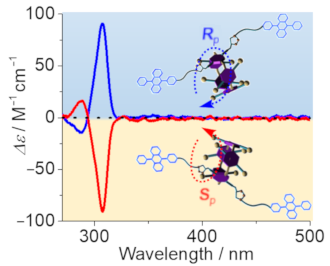
- fractions observed at 270–320 nm are perfect mirror images, thus confirming that the two fractions contain a pair of enantiomers. The positive Cotton effect observed at ca. 310 nm was assigned to the Rp configured enantiomer whereas the negative Cotton effect at ca. 310 nm was assigned to the corresponding



Reaction of oxiranes with cyclodextrins under high-energy ball-milling conditions
Beilstein J. Org. Chem. 2019, 15, 1448–1459, doi:10.3762/bjoc.15.145
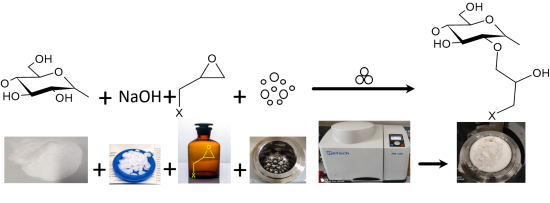
- their high prices. Insoluble CDPs have excellent separation power in both regio- and enantiomer separations, as initially described by Zsadon et al., many decades ago [21][22][23][24]. More widespread use of CDPs in analytical and preparative applications is not only restricted by the aforementioned


Fluorine-containing substituents: metabolism of the α,α-difluoroethyl thioether motif
Beilstein J. Org. Chem. 2019, 15, 1441–1447, doi:10.3762/bjoc.15.144

- we could not determine the absolute stereochemistry of the predominant enantiomer, it was clear from the assay that there was a significant enantiomeric ratio (4:1) of 6 which translates to a 60% enantiomeric excess (ee, see Supporting Information File 1). We note that there have been chemical


Efficient resolution of racemic crown-shaped cyclotriveratrylene derivatives and isolation and characterization of the intermediate saddle isomer
Beilstein J. Org. Chem. 2019, 15, 1339–1346, doi:10.3762/bjoc.15.133
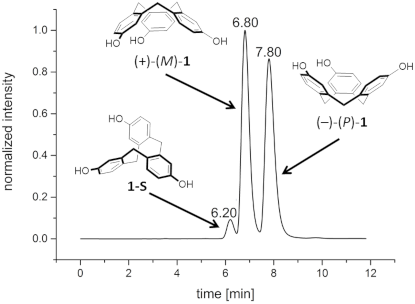
- also recorded and are shown in Figure 1. When we then started to examine the racemization behavior of 1 by heating solutions of (+)-(M)-1 and (−)-(P)-1 (assignment of the absolute configuration of the enantiomer according to the assignment of Collet and Gottarelli [62]) in EtOH to 78 °C and determining
- the ee values after different time intervals to plot the time course of the racemization process we made an interesting observation: the chromatogram changed upon heating as a shoulder appeared at the peak of the first enantiomer (Figure 2). As a possible explanation for this new species we considered
- of (+)-(M)-1 and (−)-(P)-1 measured in CH3CN; black: first eluted enantiomer (+)-(M)-1 (c = 1.06 × 10⁻⁴ M), red: second eluted enantiomer (−)-(P)-1 (c = 1.03 × 10⁻⁴ M) (assignment of the absolute configuration of the enantiomer according to the assignment of Collet and Gottarelli [62]). a


Mechanistic investigations on multiproduct β-himachalene synthase from Cryptosporangium arvum
Beilstein J. Org. Chem. 2019, 15, 1008–1019, doi:10.3762/bjoc.15.99
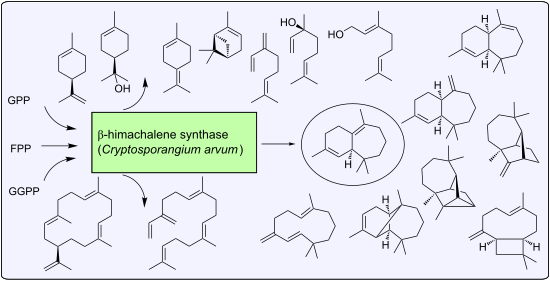
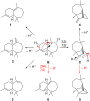
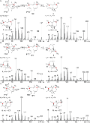
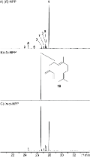
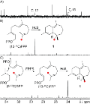
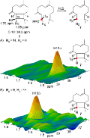
- , Supporting Information File 1). The absolute configuration of 1 was determined as the (+)-enantiomer, unanimously by optical rotary power measurement and an isotopic labelling strategy, which involved conversion of stereoselectively deuterated and at the same position 13C-labelled FPPs by the TS to yield
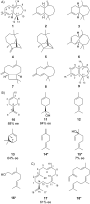
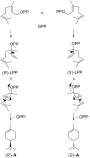
- an enantiomeric mixture of monoterpenes are also known, e g., from Pinus taeda [33]. However, the major enantiomer of each cyclised monoterpene product described herein was found to be derived from (R)-A. Compound 17 was isolated from a large scale incubation of the TS with GGPP and identified by NMR
- as cembrene A. Chiral phase GC analysis showed also in this case a mixture of enantiomers with the major one being (–)-cembrene A (61% ee), the enantiomer of the product obtained from a cembrene A synthase (CAS) from Allokutzneria albata [27], which was used for comparison (Figure S10, Supporting




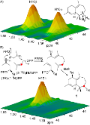

An efficient synthesis of the guaiane sesquiterpene (−)-isoguaiene by domino metathesis
Beilstein J. Org. Chem. 2019, 15, 858–862, doi:10.3762/bjoc.15.83
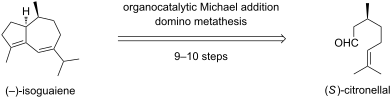
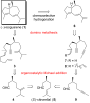
- ; metathesis; Michael addition; organocatalysis; terpenes; Introduction The guaiane sesquiterpene (−)-isoguaiene (1) has been isolated from the liverworts Pellia epiphylla [1] and Dumortiera hirsuta [2] as well as from several Pimpinella species [3][4], while the (+)-enantiomer of 1 has been isolated from the




Synthesis of a novel category of pseudo-peptides using an Ugi three-component reaction of levulinic acid as bifunctional substrate, amines, and amino acid-based isocyanides
Beilstein J. Org. Chem. 2019, 15, 852–857, doi:10.3762/bjoc.15.82
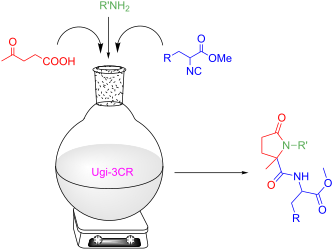
- . cIsolated yield of one of the diastereomers as pure stereoisomer after several recrystallization steps. ORTEP representation of compound (R*,S*)-4a with thermal ellipsoids at 50% probability. Opposite enantiomer is omitted for clarity. The atom numbering does not follow IUPAC nomenclature. Synthesis of




New α- and β-cyclodextrin derivatives with cinchona alkaloids used in asymmetric organocatalytic reactions
Beilstein J. Org. Chem. 2019, 15, 830–839, doi:10.3762/bjoc.15.80

- afforded on one side lower enantiomer excesses (Table 3, entries 18–28), on the other hand, they showed some catalytic activity in the solvent mixture acetonitrile/H2O, which could be promising for future applications of these catalysts in water. The disubstituted CD derivative 11 was not active in this


Diastereo- and enantioselective preparation of cyclopropanol derivatives
Beilstein J. Org. Chem. 2019, 15, 752–760, doi:10.3762/bjoc.15.71
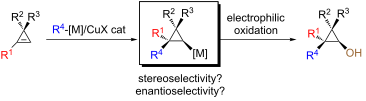
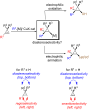
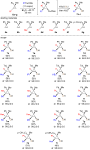
- afford polysubstituted cyclopropanols (or cyclopropylamines) potentially bearing several diastereo- and enantiomerically enriched adjacent stereogenic centers, including quaternary carbon stereocenters, as single diastereo- and enantiomer from a simple precursor, it would certainly provide an additional





New sesquiterpenoids from the South China Sea soft corals Clavularia viridis and Lemnalia flava
Beilstein J. Org. Chem. 2019, 15, 695–702, doi:10.3762/bjoc.15.64
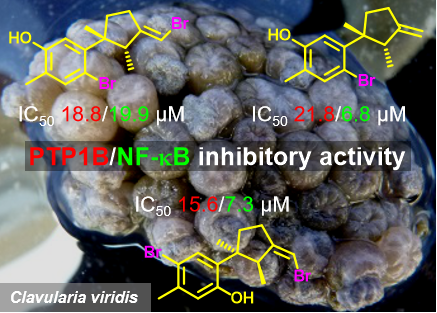
- , CHCl3); [α]D20 −16.0 (c 0.10, MeOH)} were found to be opposite to that of laurenisol (+85.9) [18]. Thus, compound 3 can be assigned as the enantiomer of 3a, named ent-laurenisol. Clalaurenol B (4) was obtained as an optically active colorless oil. The molecular formula, C15H18OBr2, the same as 4a [18
- (c 0.10, MeOH)} for 4 and {[α]D20 +74 (c 0.58, CHCl3)} for 4a, indicating that compound 4 should be the enantiomer of 4a [18]. Compound 6 was isolated as an optically active colorless oil. The molecular formula C15H24O, the same as 7 [14] and 6a [19][20], was established by HR-ESIMS ion peak at m/z





