Search for "heterocyclic compounds" in Full Text gives 262 result(s) in Beilstein Journal of Organic Chemistry. Showing first 200.
Beilstein J. Org. Chem. 2020, 16, 2937–2947, doi:10.3762/bjoc.16.243
Graphical Abstract
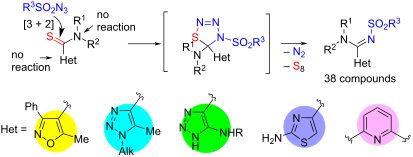
Figure 1: Examples of biological activity and interesting chemical reactivity of N-sulfonyl amidines.
Figure 2: Data on the synthesis of N′-sulfonylazole-4-carboximidamides.
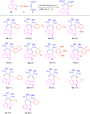
Scheme 1: Synthesis of 1-alkyl-N-phenyl-N'-(sulfonyl)-1H-1,2,3-triazole-4-carboximidamides 3.
Figure 3: Starting compounds.
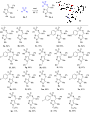
Scheme 2: Scope for the reaction of 1-alkyl-1,2,3-triazole-4-carbothioamides 1a–d with azides 2a–f.
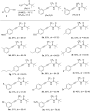
Scheme 3: Scope of the reaction of 5-arylamino-1,2,3-triazole-4-carbothioamides 1i–l with azides 2a,c–f.
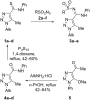
Scheme 4: Synthesis of 2-aminothiazole-4-N-sulfonyl amidines.
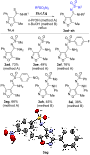
Scheme 5: Synthesis of N-sulfonyl amidines of isoxazolylcarboxylic acid.
Scheme 6: Synthesis of bis(sulfonyl amidines) 3aj–an.
Scheme 7: Plausible mechanism for the reaction of heterocyclic thioamides with sulfonyl azides.
Beilstein J. Org. Chem. 2020, 16, 2929–2936, doi:10.3762/bjoc.16.242
Graphical Abstract
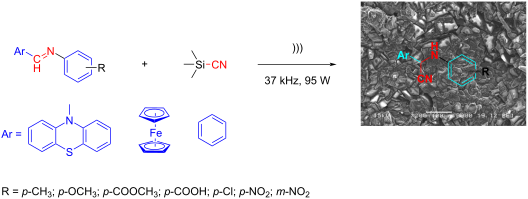
Scheme 1: Synthesis of α-amino-acetonitrile derivatives. Reaction conditions: Aldimine (1 equiv), TMSCN (1 eq...
Figure 1: Crystal structure of 2-phenothiazinyl-2-(p-tolylamino)acetonitrile 2a. a) ORTEP plot and b) crystal...
Figure 2: SEM images recorded at 200× for the raw reaction product 2b obtained through a) ultrasound-assisted...
Figure 3: SEM image recorded at 200× for the raw reaction product 2c obtained through a) ultrasound-assisted ...
Beilstein J. Org. Chem. 2020, 16, 2888–2902, doi:10.3762/bjoc.16.238
Graphical Abstract
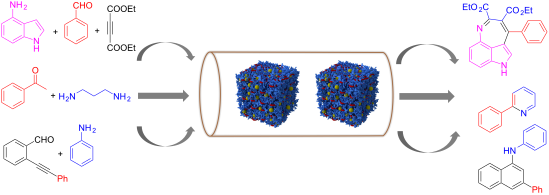
Figure 1: Schematic illustration for the preparation of the catalyst in this work.
Figure 2: FTIR spectra of LS, LS-FAS, and LS-FAS-Cu.
Figure 3: Thermogravimetric weight loss of the obtained materials LS-FAS and LS-FAS-Cu.
Figure 4: FSEM imagine of LS-FAS-Cu in different scale label a) 1 μm, b) 200 nm; FTEM images of LS-FAS-Cu in ...
Figure 5: XPS spectra of LS-FAS-Cu in the regions of C 1s, O 1s, Cu 2p3/2 and Cu LMM (inset).
Scheme 1: Substrate scope of LS-FAS-Cu catalyzed three-component reactions of 4-aminoindoles, alkynes and ald...
Figure 6: Recyclability of LS-FAS-Cu, LS-FM-Cu and Resin-Cu in the reaction between compounds 1a, 2a and 3a.
Beilstein J. Org. Chem. 2020, 16, 2671–2678, doi:10.3762/bjoc.16.217
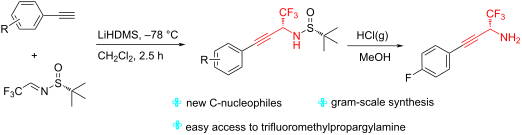
Graphical Abstract
Figure 1: Anti-HIV compound containing a trifluoromethylpropargylamine moiety.
Scheme 1: Literature-known methods (a and b) and the here reported (c) approach for the synthesis of α-triflu...
Scheme 2: Substrate scope study. Reaction conditions: arylethyne 2 (0.39 mmol), imine 1 (0.3 mmol), LiHMDS (0...
Figure 2: ORTEP diagram showing of the minor product of 3a.
Figure 3: Mode of nucleophilic attacks A and B.
Scheme 3: Large-scale application of the reaction.
Scheme 4: Removal of the chiral auxiliary.
Beilstein J. Org. Chem. 2020, 16, 1915–1923, doi:10.3762/bjoc.16.158
Graphical Abstract
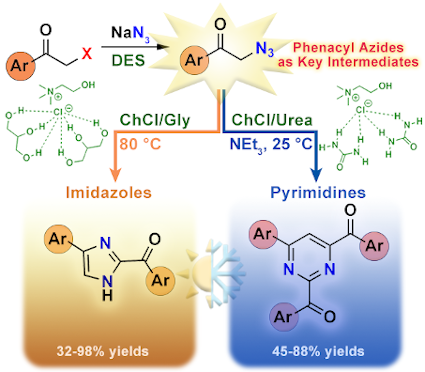
Scheme 1: One-pot synthesis of 2,5-diarylpyrazines (A) (path a) or 2-aroyl-(4 or 5)-aryl-(1H)-imidazoles (B) ...
Scheme 2: Transformation of phenacyl bromide (1a) in ChCl/Gly into phenacyl azide (2a) and 2-benzoyl-(4 or 5)...
Scheme 3: Synthesis of 2-aroyl-(4 or 5)-aryl-(1H)-imidazoles 3. Scope of the reaction. Typical conditions: 1 ...
Scheme 4: Proposed mechanism for the formation of 2-aroyl-(4 or 5)-aryl-(1H)-imidazoles 3/3' from α-phenacyl ...
Scheme 5: Proposed mechanism for the formation of 2-benzoyl-(4 or 5)-phenyl-(1H)-imidazoles 3a/3a' and 2,4-di...
Scheme 6: Scope of the synthesis of 2,4-diaroyl-6-arylpyrimidines 7. Typical conditions: 2 (0.3 mmol), Et3N (...
Beilstein J. Org. Chem. 2020, 16, 1875–1880, doi:10.3762/bjoc.16.155
Graphical Abstract
Scheme 1: Synthesis of chiral phosphoric acid 3.
Scheme 2: Synthesis of methylated chiral phosphoric acid 7.
Scheme 3: Control experiment with catalyst 7.
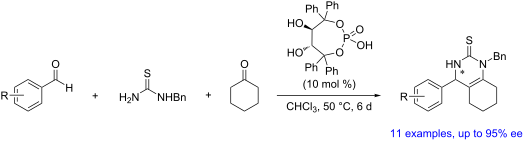
Figure 1: A plausible chiral transition-state structure in the Biginelli-like reaction catalyzed by phosphori...
Beilstein J. Org. Chem. 2020, 16, 1863–1868, doi:10.3762/bjoc.16.153
Graphical Abstract
Figure 1: Phenylmalonic acids.
Scheme 1: Synthesis of diethyl 2-phenylmalonate (4).
Scheme 2: Synthesis of diethyl 2-(perfluorophenyl)malonate (3).
Figure 2: Esters of fluorine-substituted 2-phenylmalonic acids.
Scheme 3: Hydrolysis of diethyl 2-(perfluorophenyl)malonate (3).
Figure 3: Molecular structure of 2-(perfluorophenyl)acetic acid (12).
Scheme 4: Formation of 2-(perfluorophenyl)acetic acid (12).
Beilstein J. Org. Chem. 2020, 16, 1754–1804, doi:10.3762/bjoc.16.147
Graphical Abstract
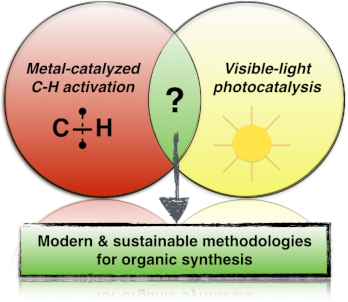
Figure 1: Concept of dual synergistic catalysis.
Figure 2: Classification of catalytic systems involving two catalysts.
Figure 3: General mechanism for the dual nickel/photoredox catalytic system.
Figure 4: General mechanisms for C–H activation catalysis involving different reoxidation strategies.
Figure 5: Indole synthesis via dual C–H activation/photoredox catalysis.
Figure 6: Proposed mechanism for the indole synthesis via dual catalysis.
Figure 7: Oxidative Heck reaction on arenes via the dual catalysis.
Figure 8: Proposed mechanism for the Heck reaction on arenes via dual catalysis.
Figure 9: Oxidative Heck reaction on phenols via the dual catalysis.
Figure 10: Proposed mechanism for the Heck reaction on phenols via dual catalysis.
Figure 11: Carbazole synthesis via dual C–H activation/photoredox catalysis.
Figure 12: Proposed mechanism for the carbazole synthesis via dual catalysis.
Figure 13: Carbonylation of enamides via the dual C–H activation/photoredox catalysis.
Figure 14: Proposed mechanism for carbonylation of enamides via dual catalysis.
Figure 15: Annulation of benzamides via the dual C–H activation/photoredox catalysis.
Figure 16: Proposed mechanism for the annulation of benzamides via dual catalysis.
Figure 17: Synthesis of indoles via the dual C–H activation/photoredox catalysis.
Figure 18: Proposed mechanism for the indole synthesis via dual catalysis.
Figure 19: General concept of dual catalysis merging C–H activation and photoredox catalysis.
Figure 20: The first example of dual catalysis merging C–H activation and photoredox catalysis.
Figure 21: Proposed mechanism for the C–H arylation with diazonium salts via dual catalysis.
Figure 22: Dual catalysis merging C–H activation/photoredox using diaryliodonium salts.
Figure 23: Direct arylation via the dual catalytic system reported by Xu.
Figure 24: Direct arylation via dual catalytic system reported by Balaraman.
Figure 25: Direct arylation via dual catalytic system reported by Guo.
Figure 26: C(sp3)–H bond arylation via the dual Pd/photoredox catalytic system.
Figure 27: Acetanilide derivatives acylation via the dual C–H activation/photoredox catalysis.
Figure 28: Proposed mechanism for the C–H acylation with α-ketoacids via dual catalysis.
Figure 29: Acylation of azobenzenes via the dual catalysis C–H activation/photoredox.
Figure 30: C2-acylation of indoles via the dual C–H activation/photoredox catalysis.
Figure 31: Proposed mechanism for the C2-acylation of indoles with aldehydes via dual catalysis.
Figure 32: C2-acylation of indoles via the dual C–H activation/photoredox catalysis.
Figure 33: Perfluoroalkylation of arenes via the dual C–H activation/photoredox catalysis.
Figure 34: Proposed mechanism for perfluoroalkylation of arenes via dual catalysis.
Figure 35: Sulfonylation of 1-naphthylamides via the dual C–H activation/photoredox catalysis.
Figure 36: Proposed mechanism for sulfonylation of 1-naphthylamides via dual catalysis.
Figure 37: meta-C–H Alkylation of arenes via visible-light metallaphotocatalysis.
Figure 38: Alternative procedure for meta-C–H alkylation of arenes via metallaphotocatalysis.
Figure 39: Proposed mechanism for meta-C–H alkylation of arenes via metallaphotocatalysis.
Figure 40: C–H borylation of arenes via visible-light metallaphotocatalysis.
Figure 41: Proposed mechanism for C–H borylation of arenes via visible-light metallaphotocatalysis.
Figure 42: Undirected C–H aryl–aryl cross coupling via dual gold/photoredox catalysis.
Figure 43: Proposed mechanism for the undirected C–H aryl–aryl cross-coupling via dual catalysis.
Figure 44: Undirected C–H arylation of (hetero)arenes via dual manganese/photoredox catalysis.
Figure 45: Proposed mechanism for the undirected arylation of (hetero)arenes via dual catalysis.
Figure 46: Photoinduced C–H arylation of azoles via copper catalysis.
Figure 47: Photo-induced C–H chalcogenation of azoles via copper catalysis.
Figure 48: Decarboxylative C–H adamantylation of azoles via dual cobalt/photoredox catalysis.
Figure 49: Proposed mechanism for the C–H adamantylation of azoles via dual catalysis.
Figure 50: General mechanisms for the “classical” (left) and Cu-free variant (right) Sonogoshira reaction.
Figure 51: First example of a dual palladium/photoredox catalysis for Sonogashira-type couplings.
Figure 52: Arylation of terminal alkynes with diazonium salts via dual gold/photoredox catalysis.
Figure 53: Proposed mechanism for the arylation of terminal alkynes via dual catalysis.
Figure 54: C–H Alkylation of alcohols promoted by H-atom transfer (HAT).
Figure 55: Proposed mechanism for the C–H alkylation of alcohols promoted by HAT.
Figure 56: C(sp3)–H arylation of latent nucleophiles promoted by H-atom transfer.
Figure 57: Proposed mechanism for the C(sp3)–H arylation of latent nucleophiles promoted by HAT.
Figure 58: Direct α-arylation of alcohols promoted by H-atom transfer.
Figure 59: Proposed mechanism for the direct α-arylation of alcohols promoted by HAT.
Figure 60: C–H arylation of amines via dual Ni/photoredox catalysis.
Figure 61: Proposed mechanism for the C–H arylation of amines via dual Ni/photoredox catalysis.
Figure 62: C–H functionalization of nucleophiles via excited ketone/nickel dual catalysis.
Figure 63: Proposed mechanism for the C–H functionalization enabled by excited ketones.
Figure 64: Selective sp3–sp3 cross-coupling promoted by H-atom transfer.
Figure 65: Proposed mechanism for the selective sp3–sp3 cross-coupling promoted by HAT.
Figure 66: Direct C(sp3)–H acylation of amines via dual Ni/photoredox catalysis.
Figure 67: Proposed mechanism for the C–H acylation of amines via dual Ni/photoredox catalysis.
Figure 68: C–H hydroalkylation of internal alkynes via dual Ni/photoredox catalysis.
Figure 69: Proposed mechanism for the C–H hydroalkylation of internal alkynes.
Figure 70: Alternative procedure for the C–H hydroalkylation of ynones, ynoates, and ynamides.
Figure 71: Allylic C(sp3)–H activation via dual Ni/photoredox catalysis.
Figure 72: Proposed mechanism for the allylic C(sp3)–H activation via dual Ni/photoredox catalysis.
Figure 73: Asymmetric allylation of aldehydes via dual Cr/photoredox catalysis.
Figure 74: Proposed mechanism for the asymmetric allylation of aldehydes via dual catalysis.
Figure 75: Aldehyde C–H functionalization promoted by H-atom transfer.
Figure 76: Proposed mechanism for the C–H functionalization of aldehydes promoted by HAT.
Figure 77: Direct C–H arylation of strong aliphatic bonds promoted by HAT.
Figure 78: Proposed mechanism for the C–H arylation of strong aliphatic bonds promoted by HAT.
Figure 79: Direct C–H trifluoromethylation of strong aliphatic bonds promoted by HAT.
Figure 80: Proposed mechanism for the C–H trifluoromethylation of strong aliphatic bonds.
Beilstein J. Org. Chem. 2020, 16, 1740–1753, doi:10.3762/bjoc.16.146
Graphical Abstract
Figure 1: Representative examples of some commercial drugs and biologically active alkaloids.
Scheme 1: Synthesis of β-carboline-linked 2-nitrochalcones.
Scheme 2: Synthesis of β-carboline-linked benzothiophenone frameworks.
Scheme 3: Comparison of outcome of one-pot vs two-pot approach.
Scheme 4: One-pot synthesis of β-carboline C-1-tethered benzothiophenone derivatives.
Scheme 5: One-pot synthesis of β-carboline C-3-linked benzothiophenone derivatives.
Scheme 6: One-pot synthesis of β-carboline-linked benzothiophene derivative 6C.
Scheme 7: Control experiment in the presence of a radical scavenger.
Figure 2: Proposed reaction mechanism.
Figure 3: Fluorescence spectra of 2aA–nA, 2bB, 2hB, and 6C.
Figure 4: Fluorescence spectra of 4aA–gA, and 4eB.
Beilstein J. Org. Chem. 2020, 16, 1706–1712, doi:10.3762/bjoc.16.142
Graphical Abstract
Scheme 1: Previously reported methods for the synthesis of 1,3,5-triazine-2,4-diamine derivatives.
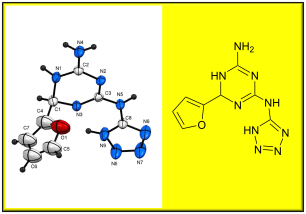
Scheme 2: One-pot synthesis of N2-(tetrazol-5-yl)-6-aryl/heteroaryl-5,6-dihydro-1,3,5-triazine-2,4-diamines 4a...
Figure 1: ORTEP diagram of compound 4i.
Scheme 3: Plausible different routes to account for the formation of products 4.
Beilstein J. Org. Chem. 2020, 16, 1447–1455, doi:10.3762/bjoc.16.120
Graphical Abstract
Figure 1: Selected examples of triazinethione-containing bioactive compounds.
Scheme 1: Strategies for the synthesis of triazinethiones.
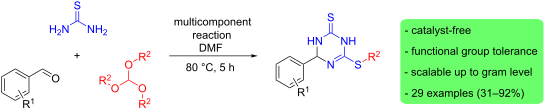
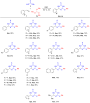
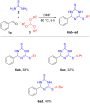
Scheme 2: Aldehyde substrate scope of three-component reaction of aldehydes, thiourea and trimethyl orthoform...
Scheme 3: Orthoformate substrate scope of the three component reaction of benzaldehyde, thiourea, and orthofo...
Scheme 4: Gram-scale synthesis of 6aa.
Figure 2: X-ray structure of 6-(methylthio)-4-phenyl-3,4-dihydro-1,3,5-triazine-2(1H)-thione (6aa) with therm...
Scheme 5: Control experiments for investigation of the mechanism.
Scheme 6: Plausible mechanism.
Beilstein J. Org. Chem. 2020, 16, 1357–1410, doi:10.3762/bjoc.16.116
Graphical Abstract
Figure 1: Examples of biologically active thietane-containing molecules.
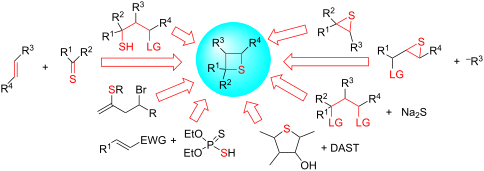
Figure 2: The diverse methods for the synthesis of thietanes.
Scheme 1: Synthesis of 1-(thietan-2-yl)ethan-1-ol (10) from 3,5-dichloropentan-2-ol (9).
Scheme 2: Synthesis of thietanose nucleosides 2,14 from 2,2-bis(bromomethyl)propane-1,3-diol (11).
Scheme 3: Synthesis of methyl 3-vinylthietane-3-carboxylate (19).
Scheme 4: Synthesis of 1,6-thiazaspiro[3.3]heptane (24).
Scheme 5: Synthesis of 6-amino-2-thiaspiro[3.3]heptane hydrochloride (28).
Scheme 6: Synthesis of optically active thietane 31 from vitamin C.
Scheme 7: Synthesis of an optically active thietane nucleoside from diethyl L-tartrate (32).
Scheme 8: Synthesis of thietane-containing spironucleoside 40 from 5-aldo-3-O-benzyl-1,2-O-isopropylidene-α-D...
Scheme 9: Synthesis of optically active 2-methylthietane-containing spironucleoside 43.
Scheme 10: Synthesis of a double-linked thietane-containing spironucleoside 48.
Scheme 11: Synthesis of two diastereomeric thietanose nucleosides via 2,4-di(benzyloxymethyl)thietane (49).
Scheme 12: Synthesis of the thietane-containing PI3k inhibitor candidate 54.
Scheme 13: Synthesis of the spirothietane 57 as the key intermediate to Nuphar sesquiterpene thioalkaloids.
Scheme 14: Synthesis of spirothietane 61 through a direct cyclic thioetherification of 3-mercaptopropan-1-ol.
Scheme 15: Synthesis of thietanes 66 from 1,3-diols 62.
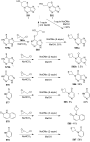
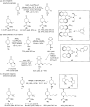
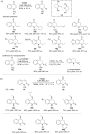
Scheme 16: Synthesis of thietanylbenzimidazolone 75 from (iodomethyl)thiazolobenzimidazole 70.
Scheme 17: Synthesis of 2-oxa-6-thiaspiro[3.3]heptane (80) from bis(chloromethyl)oxetane 76 and thiourea.
Scheme 18: Synthesis of the thietane-containing glycoside, 2-O-p-toluenesulfonyl-4,6-thioanhydro-α-D-gulopyran...
Scheme 19: Synthesis of methyl 4,6-thioanhydro-α-D-glucopyranoside (89).
Scheme 20: Synthesis of thietane-fused α-D-galactopyranoside 93.
Scheme 21: Synthesis of thietane-fused α-D-gulopyranoside 100.
Scheme 22: Synthesis of 3,5-anhydro-3-thiopentofuranosides 104.
Scheme 23: Synthesis of anhydro-thiohexofuranosides 110, 112 and 113 from from 1,2:4,5-di-O-isopropylidene D-f...
Scheme 24: Synthesis of optically active thietanose nucleosides from D- and L-xyloses.
Scheme 25: Synthesis of thietane-fused nucleosides.
Scheme 26: Synthesis of 3,5-anhydro-3-thiopentofuranosides.
Scheme 27: Synthesis of 2-amino-3,5-anhydro-3-thiofuranoside 141.
Scheme 28: Synthesis of thietane-3-ols 145 from (1-chloromethyl)oxiranes 142 and hydrogen sulfide.
Scheme 29: Synthesis of thietane-3-ol 145a from chloromethyloxirane (142a).
Scheme 30: Synthesis of thietane-3-ols 145 from 2-(1-haloalkyl)oxiranes 142 and 147 with ammonium monothiocarb...
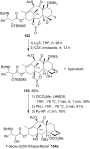
Scheme 31: Synthesis of 7-deoxy-5(20)thiapaclitaxel 154a, a thietane derivative of taxoids.
Scheme 32: Synthesis of 5(20)-thiadocetaxel 158 from 10-deacetylbaccatin III (155).
Scheme 33: Synthesis of thietane derivatives 162 as precursors for deoxythiataxoid synthesis through oxiraneme...
Scheme 34: Synthesis of 7-deoxy 5(20)-thiadocetaxel 154b.
Scheme 35: Mechanism for the formation of the thietane ring in 171 from oxiranes with vicinal leaving groups 1...
Scheme 36: Synthesis of cis-2,3-disubstituted thietane 175 from thiirane-2-methanol 172.
Scheme 37: Synthesis of a bridged thietane 183 from aziridine cyclohexyl tosylate 179 and ammonium tetrathiomo...
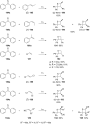
Scheme 38: Synthesis of thietanes via the photochemical [2 + 2] cycloaddition of thiobenzophenone 184a with va...
Scheme 39: Synthesis of spirothietanes through the photo [2 + 2] cycloaddition of cyclic thiocarbonyls with ol...
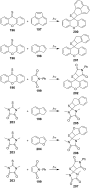
Scheme 40: Photochemical synthesis of spirothietane-thioxanthenes 210 from thioxanthenethione (208) and butatr...
Scheme 41: Synthesis of thietanes 213 from 2,4,6-tri(tert-butyl)thiobenzaldehyde (211) with substituted allene...
Scheme 42: Photochemical synthesis of spirothietanes 216 and 217 from N-methylthiophthalimide (214) with olefi...
Scheme 43: Synthesis of fused thietanes from quadricyclane with thiocarbonyl derivatives 219.
Scheme 44: Synthesis of tricyclic thietanes via the photo [2 + 2] cycloaddition of N-methyldithiosuccinimides ...
Scheme 45: Synthesis of tricyclic thietanes via the photo [2 + 2] cycloaddition of N-methylthiosuccinimide/thi...
Scheme 46: Synthesis of tricyclic thietanes via the photo [2 + 2] cycloaddition of N-alkylmonothiophthalimides...
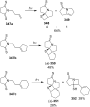
Scheme 47: Synthesis of spirothietanes from dithiosuccinimides 223 with 2,3-dimethyl-2-butene (215a).
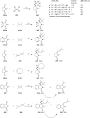
Scheme 48: Synthesis of thietanes 248a,b from diaryl thione 184b and ketene acetals 247a,b.
Scheme 49: Photocycloadditions of acridine-9-thiones 249 and pyridine-4(1H)-thione (250) with 2-methylacrynitr...
Scheme 50: Synthesis of thietanes via the photo [2 + 2] cycloaddition of mono-, di-, and trithiobarbiturates 2...
Scheme 51: Synthesis of spirothietanes via the photo [2 + 2] cycloaddition of 1,1,3-trimethyl-2-thioxo-1,2-dih...
Scheme 52: Synthesis of spirothietanes via the photo [2 + 2] cycloaddition of thiocoumarin 286 with olefins.
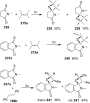
Scheme 53: Photochemical synthesis of thietanes 296–299 from semicyclic and acyclic thioimides 292–295 and 2,3...
Scheme 54: Photochemical synthesis of spirothietane 301 from 1,3,3-trimethylindoline-2-thione (300) and isobut...
Scheme 55: Synthesis of spirobenzoxazolethietanes 303 via the photo [2 + 2] cycloaddition of alkyl and aryl 2-...
Scheme 56: Synthesis of spirothietanes from tetrahydrothioxoisoquinolines 306 and 307 with olefins.
Scheme 57: Synthesis of spirothietanes from 1,3-dihydroisobenzofuran-1-thiones 311 and benzothiophene-1-thione...
Scheme 58: Synthesis of 2-triphenylsilylthietanes from phenyl triphenylsilyl thioketone (316) with electron-po...
Scheme 59: Diastereoselective synthesis of spiropyrrolidinonethietanes 320 via the photo [2 + 2] cycloaddition...
Scheme 60: Synthesis of bicyclic thietane 323 via the photo [2 + 2] cycloaddition of 2,4-dioxo-3,4-dihydropyri...
Scheme 61: Photo-induced synthesis of fused thietane-2-thiones 325 and 326 from silacyclopentadiene 324 and ca...
Scheme 62: Synthesis of highly strained tricyclic thietanes 328 via the intramolecular photo [2 + 2] cycloaddi...
Scheme 63: Synthesis of tri- and pentacyclic thietanes 330 and 332, respectively, through the intramolecular p...
Scheme 64: Synthesis of tricyclic thietanes 334 via the intramolecular photo [2 + 2] cycloaddition of N-vinylt...
Scheme 65: Synthesis of tricyclic thietanes 336 via the intramolecular photo [2 + 2] cycloaddition of N-but-3-...
Scheme 66: Synthesis of tricyclic thietanes via the intramolecular photo [2 + 2] cycloaddition of N-but-3-enyl...
Scheme 67: Synthesis of tetracyclic thietane 344 through the intramolecular photo [2 + 2] cycloaddition of N-[...
Scheme 68: Synthesis of tri- and tetracyclic thietanes 348, 350, and 351, through the intramolecular photo [2 ...
Scheme 69: Synthesis of tetracyclic fused thietane 354 via the photo [2 + 2] cycloaddition of vinyl 2-thioxo-3H...
Scheme 70: Synthesis of highly rigid thietane-fused β-lactams via the intramolecular photo [2 + 2] cycloadditi...
Scheme 71: Asymmetric synthesis of a highly rigid thietane-fused β-lactam 356a via the intramolecular photo [2...
Scheme 72: Diastereoselective synthesis of the thietane-fused β-lactams via the intramolecular photo [2 + 2] c...
Scheme 73: Asymmetric synthesis of thietane-fused β-lactams 356 via the intramolecular photo [2 + 2] cycloaddi...
Scheme 74: Synthesis of the bridged bis(trifluoromethyl)thietane from 2,2,4,4-tetrakis(trifluoromethyl)-1,3-di...
Scheme 75: Synthesis of the bridged-difluorothietane 368 from 2,2,4,4-tetrafluoro-1,3-dithietane (367) and qua...
Scheme 76: Synthesis of bis(trifluoromethyl)thietanes from 2,2,4,4-tetrakis(trifluoromethyl)-1,3-dithietane (3...
Scheme 77: Synthesis of 2,2-dimethylthio-4,4-di(trifluoromethyl)thietane (378) from 2,2,4,4-tetrakis(trifluoro...
Scheme 78: Formation of bis(trifluoromethyl)thioacetone (381) through nucleophilic attack of dithietane 363 by...
Scheme 79: Synthesis of 2,2-bis(trifluoromethyl)thietanes from 2,2,4,4-tetrakis(trifluoromethyl)-1,3-dithietan...
Scheme 80: Synthesis of the bridged bis(trifluoromethyl)thietane 364 from of 2,2,4,4-tetrakis(trifluoromethyl)...
Scheme 81: Synthesis of 2,4-diiminothietanes 390 from alkenimines and 4-methylbenzenesulfonyl isothiocyanate (...
Scheme 82: Synthesis of arylidene 2,4-diiminothietanes 393 starting from phosphonium ylides 391 and isothiocya...
Scheme 83: Synthesis of thietane-2-ylideneacetates 397 through a DABCO-catalyzed formal [2 + 2] cycloaddition ...
Scheme 84: Synthesis of 3-substituted thietanes 400 from (1-chloroalkyl)thiiranes 398.
Scheme 85: Synthesis of N-(thietane-3-yl)azaheterocycles 403 and 404 through reaction of chloromethylthiirane (...
Scheme 86: Synthesis of 3-sulfonamidothietanes 406 from sulfonamides and chloromethylthiirane (398a).
Scheme 87: Synthesis of N-(thietane-3-yl)isatins 408 from chloromethylthiirane (398a) and isatins 407.
Scheme 88: Synthesis of 3-(nitrophenyloxy)thietanes 410 from nitrophenols 409 and chloromethylthiirane (398a).
Scheme 89: Synthesis of N-aryl-N-(thietane-3-yl)cyanamides 412 from N-arylcyanamides 411 and chloromethylthiir...
Scheme 90: Synthesis of 1-(thietane-3-yl)pyrimidin-2,4(1H,3H)-diones 414 from chloromethylthiirane (398a) and ...
Scheme 91: Synthesis of 2,4-diiminothietanes 418 from 2-iminothiiranes 416 and isocyanoalkanes 415.
Scheme 92: Synthesis of 2-vinylthietanes 421 from thiiranes 419 and 3-chloroallyl lithium (420).
Scheme 93: Synthesis of thietanes from thiiranes 419 and trimethyloxosulfonium iodide 424.
Scheme 94: Mechanism for synthesis of thietanes 425 from thiiranes 419 and trimethyloxosulfonium iodide 424.
Scheme 95: Synthesis of functionalized thietanes from thiiranes and dimethylsulfonium acylmethylides.
Scheme 96: Mechanism for the rhodium-catalyzed synthesis of functionalized thietanes 429 from thiiranes 419 an...
Scheme 97: Synthesis of 3-iminothietanes 440 through thermal isomerization from 4,5-dihydro-1,3-oxazole-4-spir...
Scheme 98: Synthesis of thietanes 443 from 3-chloro-2-methylthiolane (441) through ring contraction.
Scheme 99: Synthesis of an optically active thietanose 447 from D-xylose involving a ring contraction.
Scheme 100: Synthesis of optically thietane 447 via the DAST-mediated ring contraction of 448.
Scheme 101: Synthesis of the optically thietane nucleoside 451 via the ring contraction of thiopentose in 450.
Scheme 102: Synthesis of spirothietane 456 from 3,3,5,5-tetramethylthiolane-2,4-dithione (452) and benzyne (453...
Scheme 103: Synthesis of thietanes 461 via photoisomerization of 2H,6H-thiin-3-ones 459.
Scheme 104: Phosphorodithioate-mediated synthesis of 1,4-diarylthietanes 465.
Scheme 105: Mechanism of the phosphorodithioate-mediated synthesis of 1,4-diarylthietanes 465.
Scheme 106: Phosphorodithioate-mediated synthesis of trisubstituted thietanes (±)-470.
Scheme 107: Mechanism on the phosphorodithioate-mediated synthesis of trisubstituted thietanes.
Scheme 108: Phosphorodithioate-mediated synthesis of thietanes (±)-475.
Scheme 109: Phosphorodithioate-mediated synthesis of 1,2-disubstituted thietanes from aldehydes 476 and acrylon...
Scheme 110: Phosphorodithioate-mediated synthesis of 1,2-disubstituted thietanes via a one-pot three-component ...
Scheme 111: Mechanism for the phosphorodithioate-mediated synthesis of 1,2-disubstituted thietanes via three-co...
Scheme 112: Phosphorodithioate-mediated synthesis of substituted 3-nitrothietanes.
Scheme 113: Mechanism on the phosphorodithioate-mediated synthesis of 1,2-disubstituted thietanes (±)-486.
Scheme 114: Asymmetric synthesis of (S)-2-phenylthietane (497).
Scheme 115: Asymmetric synthesis of optically active 2,4-diarylthietanes.
Scheme 116: Synthesis of 3-acetamidothietan-2-one 503 via the intramolecular thioesterification of 3-mercaptoal...
Scheme 117: Synthesis of 4-substituted thietan-2-one via the intramolecular thioesterification of 3-mercaptoalk...
Scheme 118: Synthesis of 4,4-disubstituted thietan-2-one 511 via the intramolecular thioesterification of the 3...
Scheme 119: Synthesis of a spirothietan-2-one 514 via the intramolecular thioesterification of 3-mercaptoalkano...
Scheme 120: Synthesis of thiatetrahydrolipstatin starting from (S)-(−)-epichlorohydrin ((S)-142a).
Scheme 121: Synthesis of 2-phenethyl-4-(propan-2-ylidene)thietane (520) from 5-bromo-6-methyl-1-phenylhept-5-en...
Scheme 122: Synthesis of 2-phenethyl-4-(propan-2-ylidene)thietane (520) directly from S-(5-bromo-6-methyl-1-phe...
Scheme 123: Synthesis of 2-alkylidenethietanes from S-(2-bromoalk-1-en-4-yl)thioacetates.
Scheme 124: Synthesis of 2-alkylidenethietanes from S-(2-bromo/chloroalk-1-en-4-yl)thiols.
Scheme 125: Synthesis of spirothietan-3-ol 548 from enone 545 and ammonium hydrosulfide.
Scheme 126: Asymmetric synthesis of the optically active thietanoside from cis-but-2-ene-1,4-diol (47).
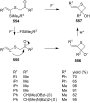
Scheme 127: Synthesis of 2-alkylidenethietan-3-ols 557 via the fluoride-mediated cyclization of thioacylsilanes ...
Scheme 128: Synthesis of 2-iminothietanes via the reaction of propargylbenzene (558) and isothiocyanates 560 in...
Scheme 129: Synthesis of 2-benzylidenethietane 567 via the nickel complex-catalyzed electroreductive cyclizatio...
Scheme 130: Synthesis of 2-iminothietanes 569 via the photo-assisted electrocyclic reaction of N-monosubstitute...
Scheme 131: Synthesis of ethyl 3,4-diiminothietane-2-carboxylates from ethyl thioglycolate (570) and bis(imidoy...
Scheme 132: Synthesis of N-(thietan-3-yl)-α-oxoazaheterocycles from azaheterocyclethiones and chloromethyloxira...
Scheme 133: Synthesis of thietan-3-yl benzoate (590) via the nickel-catalyzed intramolecular reductive thiolati...
Scheme 134: Synthesis of 2,2-bis(trifluoromethyl)thietane from 3,3-bis(trifluoromethyl)-1,2-dithiolane.
Scheme 135: Synthesis of thietanes from enamines and sulfonyl chlorides.
Scheme 136: Synthesis of spirothietane 603 via the [2 + 3] cycloaddition of 2,2,4,4-tetramethylcyclobutane-1,3-...
Scheme 137: Synthesis of thietane (605) from 1-bromo-3-chloropropane and sulfur.
Beilstein J. Org. Chem. 2020, 16, 1006–1021, doi:10.3762/bjoc.16.90
Graphical Abstract
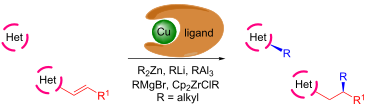
Scheme 1: Copper-catalysed ACA of organometallics to piperidones. A) addition of organozinc reagents; B) addi...
Scheme 2: Copper-catalysed ACA of alkenylalanes to N-substituted-2,3-dehydro-4-piperidones.
Scheme 3: Copper-catalysed asymmetric addition of dialkylzinc reagents to N-acyl-4-methoxypyridinium salts fo...
Scheme 4: Copper-catalysed ACA of organozirconium reagents to N-substituted 2,3-dehydro-4-piperidones and lac...
Scheme 5: Copper-catalysed ACA of Grignard reagents to chromones and coumarins and further derivatisation of ...
Scheme 6: Copper-catalysed ACA of Grignard reagents to N-protected quinolones.
Scheme 7: Copper-catalysed ACAs of organometallics to conjugated unsaturated lactams.
Scheme 8: Copper-catalysed ACA of Et2Zn to 5,6-dihydro-2-pyranone.
Scheme 9: Copper-catalysed ACA of Grignard reagents to pyranone and 5,6-dihydro-2-pyranone.
Scheme 10: Copper-catalysed AAA of an organozirconium reagent to heterocyclic acceptors.
Scheme 11: Copper-catalysed ring opening of an oxygen-bridged substrate with trialkylaluminium reagents.
Scheme 12: Copper-catalysed ring opening of oxabicyclic substrates with organolithium reagents (selected examp...
Scheme 13: Copper-catalysed ring opening of polycyclic meso hydrazines.
Scheme 14: Copper-catalysed ACA of Grignard reagents to alkenyl-substituted aromatic N-heterocycles.
Scheme 15: Copper-catalysed ACA of Grignard reagents to β-substituted alkenylpyridines.
Scheme 16: Copper-catalysed ACA of organozinc reagents to alkylidene Meldrum’s acids.
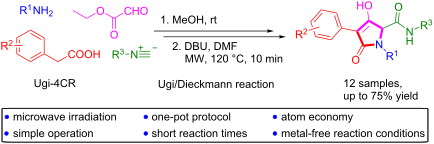
Beilstein J. Org. Chem. 2020, 16, 663–669, doi:10.3762/bjoc.16.63
Graphical Abstract
Figure 1: Structures of natural tetramic acid derivatives with more clinical relevance.
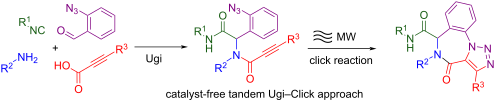
Scheme 1: Synthetic strategy of compound 7a.
Scheme 2: Scope of the Ugi/Dieckmann cyclization reaction route to lead to pyrrolopyridinones 7a–l. aYield of...
Scheme 3: Postulated reaction mechanism.
Beilstein J. Org. Chem. 2020, 16, 515–523, doi:10.3762/bjoc.16.47
Graphical Abstract
Scheme 1: Possible formation of reaction products starting from 1 via seleniranium 2 or thiiranium cations 3.
Scheme 2: Unusual regio- and stereoselective nucleophilic reactions of thiaselenole 1 at two centers of the s...
Scheme 3: Reactions of thiaselenole 1 with С- and S-centered nucleophiles affording new families of linear un...
Scheme 4: The reactions of thiaselenole 1 with the formation of polyfunctionalized 2,3-dihydro-1,4-thiaseleni...
Scheme 5: The synthesis of new 1,3-thiaselenole ensembles by reactions of thiaselenole 1 with mercapto benzaz...
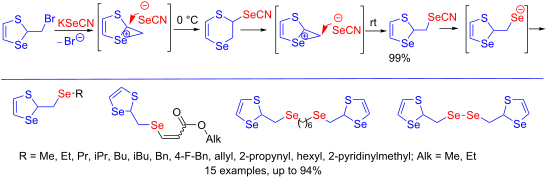
Scheme 6: The formation of product 4 via compound 5 by the reaction of thiaselenole 1 with potassium selenocy...
Figure 1: Monitoring the reaction of thiaselenole 1 with KSeCN by 1H NMR spectroscopy (in accordance with the...
Scheme 7: The reaction pathway for the formation of compounds 4 and 5.
Scheme 8: Synthesis of new ensembles of 1,3-thiaselenol-2-ylmethyl selenides 6a–l (77Se NMR data are included...
Scheme 9: The synthesis of vinyl selenides 7a,b through nucleophilic addition of 1,3-thiaselenol-2-ylmethylse...
Scheme 10: One-pot synthesis of diselenide 8 from thiaselenole 1 (77Se NMR data are included).
Scheme 11: Synthesis of compounds 6a–j from diselenide 8.
Beilstein J. Org. Chem. 2019, 15, 2958–2965, doi:10.3762/bjoc.15.291
Graphical Abstract
Figure 1: Biologically active chromone derivatives.
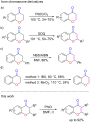
Scheme 1: Methods for the synthesis of chromones via dehydrogenative oxidation of chromanones.
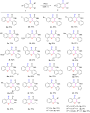
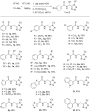
Scheme 2: Substrate scope studies. Reaction conditions: 1 (1.0 mmol), PhIO (2.0 mmol), DMF (6 mL), rt. Isolat...
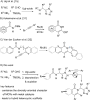
Scheme 3: Control experiments for mechanistic studies.
Scheme 4: Proposed reaction mechanism.
Scheme 5: Application of the reported method to the synthesis of frutinone A.
Beilstein J. Org. Chem. 2019, 15, 2774–2781, doi:10.3762/bjoc.15.269
Graphical Abstract
Scheme 1: Conventional method of synthesis of thiazolidine-2,4-dione derivatives.
Scheme 2: [2 + 2 + 2] Cyclotrimerization of N-methylthiazolidinedione.
Scheme 3: Unexpected product 5b obtained in the attempted NH-protection of thiazolidinedione with (Boc)2O.
Figure 1: Comparison of 13C NMR values of 9 and 5b.
Scheme 4: [2 + 2 + 2] Cyclotrimerization of dipropargylthiazolidinediones with propargyl halides.
Scheme 5: Formation of sultine 13 from compound 8b followed by DA reaction.
Scheme 6: Dipropargylation of 2,4-thiazolidinedione derivatives.
Scheme 7: [2 + 2 + 2] Cycloaddition in the presence of Wilkinson’s catalyst.
Scheme 8: N-Ester derivative 18 hydrolysis to N-acid derivative 22.
Scheme 9: Synthesis of triazolo derivative 24 via click reaction.
Beilstein J. Org. Chem. 2019, 15, 2664–2670, doi:10.3762/bjoc.15.259
Graphical Abstract
Scheme 1: Synthesis of compound 1.
Figure 1: X-ray structure of compound 1 (one of the two enantiomers present in the crystal).
Scheme 2: Possible mechanism for the formation of 1.
Figure 2: A possible mechanism for the trans-position of the methyne hydrogens in the azepine ring: the elect...
Figure 3: Selective formation of a single diastereomer in the 1,3-dipolar cycloaddition reaction.
Scheme 3: Synthesis of nitroxide 6.
Figure 4: X-ray structure of compound 6 (one of the two enantiomers present in the crystal).
Scheme 4: A proposed mechanism for nitroxide 6 synthesis.
Figure 5: A, B) Temperature dependence of the electron spin relaxation times in water/glycerol at X-band freq...
Beilstein J. Org. Chem. 2019, 15, 2447–2457, doi:10.3762/bjoc.15.237
Graphical Abstract
Figure 1: Bioactive molecules containing a tetrazole, pyridone or isoquinolone ring.
Scheme 1: Approaches for the synthesis of tetrazoles and isoquinolones and their interplay as designed in thi...
Scheme 2: Scope of the Ugi-azide-4CR/deprotection/acylation sequence. Ugi-azide-4CR conducted at the 2.0 mmol...
Scheme 3: Influence of substituents R and R2 on the reaction outcome. For compounds 4k–m the overall yield in...
Scheme 4: Influence of the alkyne and R1 substituent on the reaction outcome.
Scheme 5: Scope of acrylic, heterocyclic and ring-fused N-acylaminomethyl tetrazole substrates.
Scheme 6: Proposed reaction mechanism using substrates 1a and 3a.
Beilstein J. Org. Chem. 2019, 15, 2213–2270, doi:10.3762/bjoc.15.218
Graphical Abstract
Scheme 1: The main three strategies of fluorination: nucleophilic, electrophilic and radical fluorination.
Scheme 2: Doyle’s Pd-catalyzed fluorination of allylic chlorides.
Scheme 3: Allylic fluorination of 2- and 3-substituted propenyl esters.
Scheme 4: Regioselective allylic fluorination of cinnamyl phosphorothioate esters.
Scheme 5: Palladium-catalyzed aliphatic C–H fluorination reported by Doyle.
Scheme 6: Pd-catalyzed enantioselective fluorination of α-ketoesters followed by stereoselective reduction to...
Scheme 7: Pd-catalyzed C(sp3)–H fluorination of oxindoles.
Scheme 8: C–H fluorination of 8-methylquinoline derivatives with F− reagents.
Scheme 9: Fluorination of α-cyano acetates reported by van Leeuwen.
Scheme 10: The catalytic enantioselective electrophilic C–H fluorination of α-chloro-β-keto phosphonates.
Scheme 11: Fluorination of unactivated C(sp3)–H bonds directed by the bidentate PIP auxiliary.
Scheme 12: Fluorination of C(sp3)–H bonds at the β-position of carboxylic acids.
Scheme 13: Enantioselective benzylic C–H fluorination with a chiral transient directing group.
Scheme 14: Microwave-heated Pd-catalyzed fluorination of aryl alcohols.
Scheme 15: Fluorination of aryl potassium trifluoroborates.
Scheme 16: C(sp2)–F bond formation using precatalyst [L·Pd]2(cod).
Scheme 17: Pd-catalyzed fluorination of (hetero)aryl triflates and bromides.
Scheme 18: The Pd-catalyzed C–H fluorination of arenes with Selectfluor/NFSI.
Scheme 19: Pd(II)-catalyzed ortho-monofluorination protocol for benzoic acids.
Scheme 20: Pd-catalyzed C(sp2)–H bond fluorination of 2-arylbenzothiazoles.
Scheme 21: Nitrate-promoted fluorination of aromatic and olefinic C(sp2)–H bonds and proposed mechanism.
Scheme 22: Fluorination of oxalyl amide-protected benzylamine derivatives.
Scheme 23: C–H fluorination of benzaldehydes with orthanilic acids as transient directing group.
Scheme 24: Pd(II)-catalyzed aryl C–H fluorination with various directing groups.
Scheme 25: Cu-catalyzed aliphatic, allylic, and benzylic fluorination.
Scheme 26: Cu-catalyzed SN2 fluorination of primary and secondary alkyl bromides.
Scheme 27: Copper-catalyzed fluorination of alkyl triflates.
Scheme 28: Cu-catalyzed fluorination of allylic bromides and chlorides.
Scheme 29: Synthetic strategy for the fluorination of active methylene compounds.
Scheme 30: Fluorination of β-ketoesters using a tartrate-derived bidentate bisoxazoline-Cu(II) complex.
Scheme 31: Highly enantioselective fluorination of β-ketoesters and N-Boc-oxindoles.
Scheme 32: Amide group-assisted site-selective fluorination of α-bromocarbonyl compounds.
Scheme 33: Cu-mediated aryl fluorination reported by Sanford [77].
Scheme 34: Mono- or difluorination reactions of benzoic acid derivatives.
Scheme 35: Cu-catalyzed fluorination of diaryliodonium salts with KF.
Scheme 36: Copper(I)-catalyzed cross-coupling of 2-pyridylaryl bromides.
Scheme 37: AgNO3-catalyzed decarboxylative fluorination of aliphatic carboxylic acids.
Scheme 38: The Mn-catalyzed aliphatic and benzylic C–H fluorination.
Scheme 39: Iron(II)-promoted C–H fluorination of benzylic substrates.
Scheme 40: Ag-catalyzed fluorodecarboxylation of carboxylic acids.
Scheme 41: Vanadium-catalyzed C(sp3)–H fluorination.
Scheme 42: AgNO3-catalyzed radical deboronofluorination of alkylboronates and boronic acids.
Scheme 43: Selective heterobenzylic C–H fluorination with Selectfluor reported by Van Humbeck.
Scheme 44: Fe(II)-catalyzed site-selective fluorination guided by an alkoxyl radical.
Scheme 45: Fluorination of allylic trichloroacetimidates reported by Nguyen et al.
Scheme 46: Iridium-catalyzed fluorination of allylic carbonates with TBAF(t-BuOH)4.
Scheme 47: Iridium-catalyzed asymmetric fluorination of allylic trichloroacetimidates.
Scheme 48: Cobalt-catalyzed α-fluorination of β-ketoesters.
Scheme 49: Nickel-catalyzed α-fluorination of various α-chloro-β-ketoesters.
Scheme 50: Ni(II)-catalyzed enantioselective fluorination of oxindoles and β-ketoesters.
Scheme 51: Scandium(III)-catalyzed asymmetric C–H fluorination of unprotected 3-substituted oxindoles.
Scheme 52: Iron-catalyzed directed C–H fluorination.
Scheme 53: Electrophilic silver-catalyzed Ar–F bond-forming reaction from arylstannanes.
Figure 1: Nucleophilic, electrophilic and radical CF3 sources.
Scheme 54: Cu(I)-catalyzed allylic trifluoromethylation of unactivated terminal olefins.
Scheme 55: Direct copper-catalyzed trifluoromethylation of allylsilanes.
Scheme 56: Cupper-catalyzed enantioselective trifluoromethylation of five and six-membered ring β-ketoesters.
Scheme 57: Cu-catalyzed highly stereoselective trifluoromethylation of secondary propargyl sulfonates.
Scheme 58: Remote C(sp3)–H trifluoromethylation of carboxamides and sulfonamides.
Scheme 59: Trifluoromethylation of allylsilanes with photoredox catalysis.
Scheme 60: Ag-catalyzed decarboxylative trifluoromethylation of aliphatic carboxylic acids in aqueous CH3CN.
Scheme 61: Decarboxylative trifluoromethylation of aliphatic carboxylic acids via combined photoredox and copp...
Scheme 62: Palladium-catalyzed Ar–CF3 bond-forming reaction.
Scheme 63: Palladium-catalyzed trifluoromethylation of arenes with diverse heterocyclic directing groups.
Scheme 64: Pd-catalyzed trifluoromethylation of indoles as reported by Liu.
Scheme 65: Pd-catalyzed trifluoromethylation of vinyl triflates and vinyl nonaflates.
Scheme 66: Pd(II)-catalyzed ortho-trifluoromethylation of aromatic C–H bonds.
Scheme 67: Visible-light-induced Pd(OAc)2-catalyzed ortho-trifluoromethylation of acetanilides with CF3SO2Na.
Scheme 68: CuI-catalyzed trifluoromethylation of aryl- and alkenylboronic acids.
Scheme 69: Cu-catalyzed trifluoromethylation of aryl- and vinylboronic acids.
Scheme 70: Copper-catalyzed trifluoromethylation of α,β-unsaturated carboxylic acids.
Scheme 71: Formation of C(sp2)–CF3 bond catalyzed by copper(I) complex.
Scheme 72: Loh’s Cu(I)-catalyzed trifluoromethylation of enamides and electron-deficient alkenes.
Scheme 73: Copper and iron-catalyzed decarboxylative tri- and difluoromethylation.
Scheme 74: Cu-catalyzed trifluoromethylation of hydrazones developed by Bouyssi.
Scheme 75: Cu(I)-catalyzed trifluoromethylation of terminal alkenes.
Scheme 76: Cu/Ag-catalyzed decarboxylative trifluoromethylation of cinnamic acids.
Scheme 77: Copper-catalyzed direct alkenyl C–H trifluoromethylation.
Scheme 78: Copper(I/II)-catalyzed direct trifluoromethylation of styrene derivatives.
Scheme 79: Regioselective trifluoromethylation of pivalamido arenes and heteroarenes.
Scheme 80: Synthesis of trifluoromethylquinones in the presence of copper(I).
Scheme 81: Oxidative trifluoromethylation of imidazoheterocycles in ionic liquid/water.
Scheme 82: A mild and fast continuous-flow trifluoromethylation of coumarins using a CuI/CF3SO2Na/TBHP system.
Scheme 83: Copper-catalyzed oxidative trifluoromethylation of various 8-aminoquinolines.
Scheme 84: PA-directed copper-catalyzed trifluoromethylation of anilines.
Scheme 85: Trifluoromethylation of potassium vinyltrifluoroborates catalyzed by Fe(II).
Scheme 86: Alkenyl trifluoromethylation catalyzed by Ru(phen)3Cl2 as photocatalyst.
Scheme 87: Ru-catalyzed trifluoromethylation of alkenes by Akita’s group.
Scheme 88: Ir-catalyzed Cvinyl–CF3 bond formation of α,β-unsaturated carboxylic acids.
Scheme 89: Ag(I)-catalyzed denitrative trifluoromethylation of β-nitrostyrenes.
Scheme 90: Photocatalyzed direct trifluoromethylation of aryl and heteroaryl C–H bonds.
Scheme 91: Rhenium (MTO)-catalyzed direct trifluoromethylation of aromatic substrates.
Scheme 92: Trifluoromethylation of unprotected anilines under [Ir(ppy)3] catalyst.
Scheme 93: Oxidative trifluoromethylation of imidazopyridines and imidazoheterocycles.
Scheme 94: Ruthenium-catalyzed trifluoromethylation of (hetero)arenes with trifluoroacetic anhydride.
Scheme 95: Phosphovanadomolybdic acid-catalyzed direct C–H trifluoromethylation.
Scheme 96: Picolinamide-assisted ortho-trifluoromethylation of arylamines.
Scheme 97: A nickel-catalyzed C–H trifluoromethylation of free anilines.
Scheme 98: Cu-mediated trifluoromethylation of terminal alkynes reported by Qing.
Scheme 99: Huang’s C(sp)–H trifluoromethylation using Togni’s reagent.
Scheme 100: Cu-catalyzed methods for trifluoromethylation with Umemoto’s reagent.
Scheme 101: The synthesis of alkynyl-CF3 compounds in the presence of fac-[Ir(ppy)3] under visible-light irradi...
Scheme 102: Pd-catalyzed Heck reaction reported by Reutrakul.
Scheme 103: Difluoromethylation of enamides and ene-carbamates.
Scheme 104: Difluoromethylation of α,β-unsaturated carboxylic acids.
Scheme 105: Copper-catalyzed direct C(sp2)–H difluoroacetylation reported by Pannecoucke and co-workers.
Scheme 106: Difluoroalkylation of aldehyde-derived hydrazones with functionalized difluoromethyl bromides.
Scheme 107: Photoredox-catalyzed C–H difluoroalkylation of aldehyde-derived hydrazones.
Scheme 108: Synergistic ruthenium(II)-catalyzed C–H difluoromethylation reported by Ackermann.
Scheme 109: Visible-light photocatalytic decarboxylation of α,β-unsaturated carboxylic acids.
Scheme 110: Synthesis of difluorinated ketones via S-alkyl dithiocarbamates obtained from acyl chlorides and po...
Scheme 111: Synthesis of aryl and heteroaryl difluoromethylated phosphonates.
Scheme 112: Difluoroalkylation of secondary propargyl sulfonates using Cu as the catalyst.
Scheme 113: Ru(II)-mediated para-selective difluoromethylation of anilides and their derivatives.
Scheme 114: Bulky diamine ligand promoted cross-coupling of difluoroalkyl bromides.
Scheme 115: Copper-catalyzed C3–H difluoroacetylation of quinoxalinones.
Scheme 116: Copper(I) chloride-catalyzed trifluoromethylthiolation of enamines, indoles and β-ketoesters.
Scheme 117: Copper-boxmi-catalyzed asymmetric trifluoromethylthiolation of β-ketoesters.
Scheme 118: Direct Cu-catalyzed trifluoromethylthiolation of boronic acids and alkynes.
Scheme 119: Cu-catalyzed synthesis of α-trifluoromethylthio-substituted ketones.
Scheme 120: Trifluoromethylthiolation reactions promoted by diazotriflone and copper.
Scheme 121: Halide activation of N-(trifluoromethylthio)phthalimide.
Scheme 122: The visible light-promoted trifluoromethylthiolation reported by Glorius.
Scheme 123: Synthesis of α-trifluoromethylthioesters via Goossen’s approach.
Scheme 124: Photoinduced trifluoromethylthiolation of diazonium salts.
Scheme 125: Ag-mediated trifluoromethoxylation of aryl stannanes and arylboronic acids.
Scheme 126: Catalytic (hetero)aryl C–H trifluoromethoxylation under visible light.
Scheme 127: Photoinduced C–H-bond trifluromethoxylation of (hetero)arenes.
Beilstein J. Org. Chem. 2019, 15, 2105–2112, doi:10.3762/bjoc.15.208
Graphical Abstract
Scheme 1: The representative synthesis of thioxanthylium salts.
Figure 1: The generality of diaryl sulfide 1 and benzoyl chloride 2. aThe reaction was carried out with 1a (2...
Figure 2: The UV–vis spectra of thioxanthylium salt (0.1 mM) in CH3CN.
Figure 3: Frontier orbitals of thioxanthylium salts, calculated by DFT at the B3LYP/6-31G(d,p) level of Orca....
Figure 4: UV–vis spectra of thioxanthylium salts 3b and 4b (0.1 mM) in CH3CN.
Figure 5: Structure of thioxanthylium salt 4.
Figure 6: Cyclic voltammograms of thioxanthylium salts 3b and 4b.
Beilstein J. Org. Chem. 2019, 15, 2059–2068, doi:10.3762/bjoc.15.203
Graphical Abstract
Figure 1: Quinoxaline derivatives 1–3.
Scheme 1: Synthesis of THTTA (3).
Scheme 2: Protonation, alkylation and acylation of 3.
Figure 2: The ORTEP view of 3. Torsion angles within the benzene ring are given in red.
Figure 3: The ORTEP view of 6a. Torsion angles within the benzene ring are given in red.
Figure 4: The ORTEP view of 7a (the iodine counter anion has been omitted for clarity). Torsion angles within...
Scheme 3: Charge transfer and delocalization within 3 and its diprotonated (6a) and monomethylated (7a) deriv...
Figure 5: Normalized absorption spectra of 3 in: toluene (black), acetone (blue), ethanol (green), water (red...
Figure 6: Protonation of 3 in ethanol. Two isosbestic points (IBP) are indicated by arrows.
Figure 7: Absorption spectra of 7a (blue) and 8 (red) in ethanol.
Figure 8: Absorption spectra of 10a (black), 10b (red). Solid curves: in toluene, dashed curves: in acetone.
Figure 9: View of the supramolecular array generated by 3 in the solid state. Color coding: nitrogen, blue; c...
Figure 10: View of the supramolecular array generated by 6a in the solid state. Color coding: nitrogen, blue; ...
Figure 11: View of the supramolecular array generated by 7a in the solid state. Color coding: nitrogen, blue; ...
Beilstein J. Org. Chem. 2019, 15, 1552–1562, doi:10.3762/bjoc.15.158
Graphical Abstract
Scheme 1: Oxidation of alkanes with RuO4.
Scheme 2: Mechanisms for RuO4 oxidation of alkanes.
Scheme 3: Oxidation of saturated five-membered (hetero)cyclic compounds.
Scheme 4: Rate-limiting step for the oxidation of cyclopentane (R1), tetrahydrofuran (R2) and tetrahydrothiop...
Figure 1: Optimized (B3LYP-d3bj/Def2SVP/cpcm=MeCN) geometries of transition structures corresponding to the o...
Figure 2: ELF analysis for the oxidation of cyclopentane (R1). Left: evolution of the electron population alo...
Figure 3: ELF analysis for the oxidation of tetrahydrofuran (R2, A) and tetrahydrothiophene (R3, B). Left: ev...
Figure 4: ELF assignment of electrons to the Ru environment. C(Ru) corresponds to a monosynaptic core basin a...
Scheme 5: Rate-limiting step for the oxidation of N-methyl- and N-benzylpyrrolidines R4 and R5, respectively.
Figure 5: Energy profile for the oxidation of R4 and R5. Relative energies, calculated at the B3LYP-d3bj/Def2...
Figure 6: Optimized (B3LYP-d3bj/Def2SVP/cpcm=water) transition structures for the oxidation of R4 and R5.
Beilstein J. Org. Chem. 2019, 15, 1065–1085, doi:10.3762/bjoc.15.104
Graphical Abstract
Figure 1: γ-Lactam-derived structures considered in this review.
Figure 2: Alkaloids containing an isoindolinone moiety.
Figure 3: Alkaloids containing the 2-oxindole ring system.
Figure 4: Drugs and biological active compounds containing an isoindolinone moiety.
Figure 5: Drugs and biologically active compounds bearing a 2-oxindole skeleton.
Scheme 1: Three-component reaction of benzoic acid 1, amides 2 and DMSO (3).
Scheme 2: Copper-catalysed three-component reaction of 2-iodobenzoic acids 10, alkynylcarboxylic acids 11 and...
Scheme 3: Proposed mechanism for the formation of methylene isoindolinones 13.
Scheme 4: Copper-catalysed three-component reaction of 2-iodobenzamide 17, terminal alkyne 18 and pyrrole or ...
Scheme 5: Palladium-catalysed three-component reaction of ethynylbenzamides 21, secondary amines 22 and CO (23...
Scheme 6: Proposed mechanism for the formation of methyleneisoindolinones 24.
Scheme 7: Copper-catalysed three-component reaction of formyl benzoate 29, amines 2 and alkynes 18.
Scheme 8: Copper-catalysed three-component reaction of formylbenzoate 29, amines 2 and ketones 31.
Scheme 9: Non-catalysed (A) and phase-transfer catalysed (B) three-component reactions of formylbenzoic acids ...
Scheme 10: Proposed mechanism for the formation of isoindolinones 36.
Scheme 11: Three-component reaction of formylbenzoic acid 33, amines 2 and fluorinated silyl ethers 39.
Scheme 12: Three-component Ugi reaction of 2-formylbenzoic acid (33), diamines 41 and isocyanides 42.
Scheme 13: Non-catalysed (A, B) and chiral phosphoric acid promoted (C) three-component Ugi reactions of formy...
Scheme 14: Proposed mechanism for the enantioselective formation of isoindolinones 46.
Scheme 15: Three-component reaction of benzoic acids 33 or 54, amines 2 and TMSCN (52).
Scheme 16: Several variations of the three-component reaction of formylbenzoic acids 33, amines 2 and isatoic ...
Scheme 17: Proposed mechanism for the synthesis of isoindoloquinazolinones 57.
Scheme 18: Three-component reaction of isobenzofuranone 61, amines 2 and isatoic anhydrides 56.
Scheme 19: Palladium-catalysed three-component reaction of 2-aminobenzamides 59, 2-bromobenzaldehydes 62 and C...
Scheme 20: Proposed mechanism for the palladium-catalysed synthesis of isoindoloquinazolinones 57.
Scheme 21: Four-component reaction of 2-vinylbenzoic acids 67, aryldioazonium tetrafluoroborates 68, DABCO·(SO2...
Scheme 22: Plausible mechanism for the formation of isoindolinones 71.
Scheme 23: Three-component reaction of trimethylsilylaryltriflates 77, isocyanides 42 and CO2 (78).
Scheme 24: Plausible mechanism for the three-component synthesis of phthalimides 79.
Scheme 25: Copper-catalysed three-component reaction of 2-formylbenzonitriles 85, arenes 86 and diaryliodonium...
Scheme 26: Copper-catalysed three-component reaction of 2-formylbenzonitriles 85, diaryliodonium salts 87 and ...
Scheme 27: Proposed mechanism for the formation of 2,3-diarylisoindolinones 88, 89 and 92.
Scheme 28: Palladium-catalysed three-component reaction of chloroquinolinecarbaldehydes 97 with isocyanides 42...
Scheme 29: Palladium-catalysed three-component reaction of imines 99 with CO (23) and ortho-iodoarylimines 100....
Scheme 30: Palladium-catalysed three-component reaction of amines 2 with CO (23) and aryl iodide 105.
Scheme 31: Three-component reaction of 2-ethynylanilines 109, perfluoroalkyl iodides 110 and carbon monoxide (...
Scheme 32: Ultraviolet-induced three-component reaction of N-(2-iodoaryl)acrylamides 113, DABCO·(SO2)2 (69) an...
Scheme 33: Proposed mechanism for the preparation of oxindoles 115.
Scheme 34: Three-component reaction of acrylamide 113, CO (23) and 1,4-benzodiazepine 121.
Scheme 35: Multicomponent reaction of sulfonylacrylamides 123, aryldiazonium tetrafluoroborates 68 and DABCO·(...
Scheme 36: Proposed mechanism for the preparation of oxindoles 124.
Scheme 37: Three-component reaction of N-arylpropiolamides 128, aryl iodides 129 and boronic acids 130.
Scheme 38: Proposed mechanism for the formation of diarylmethylene- and diarylallylideneoxindoles 131 and 132.
Scheme 39: Three-component reaction of cyclohexa-1,3-dione (136), amines 2 and alkyl acetylenedicarboxylates 1...
Scheme 40: Proposed mechanism for the formation of 2-oxindoles 138.
Beilstein J. Org. Chem. 2019, 15, 1032–1045, doi:10.3762/bjoc.15.101
Graphical Abstract
Figure 1: 2-Aminoimidazole alkaloids from marine sponges.
Figure 2: The Knoevenagel–Michael adduct [24] and expected products.
Scheme 1: The three component condensation of imidazo[1,2-a]pyridine, aldehydes and Meldrum’s acid described ...
Figure 3: Molecular structure of 1-([1,1'-biphenyl]-4-yl)-5-oxo-7-phenyl-6,7-dihydro-5H-pyrrolo[1,2-c]imidazo...
Scheme 2: Two forms of cation 9i.
Figure 4: Molecular structure of 3-(2-amino-4-phenyl-1H-imidazol-5-yl)-3-(p-tolyl)propanoic acid 11b accordin...
Scheme 3: Three forms of the compound 11b in the crystal phase.
Scheme 4: Synthesis of the mixture of compounds 13 and 14.
Figure 5: Molecular structure of aminoimidazo[1,2-c]pyrrole 16a according to X-ray diffraction data. Thermal ...
Scheme 5: Resonance structures of 16a.
Figure 6: 3,3’-Spirooxindole alkaloids.
Figure 7: Molecular structure of aminoimidazo[1,2-c]pyrrole 19a according to X-ray diffraction data. Thermal ...
Scheme 6: Resonance structures of 19a.