Search results
Search for "hydrazine" in Full Text gives 218 result(s) in Beilstein Journal of Organic Chemistry. Showing first 200.
Comparative cell biological study of in vitro antitumor and antimetastatic activity on melanoma cells of GnRH-III-containing conjugates modified with short-chain fatty acids
Beilstein J. Org. Chem. 2018, 14, 2495–2509, doi:10.3762/bjoc.14.226
- of acylated Lys in position 4, the side chain of it was protected either with Dde (1-(4,4-dimethyl-2,6-dioxocyclohex-1-ylidene)ethyl) or with ivDde ((1-(4,4-dimethyl-2,6-dioxocyclohex-1-ylidene)isovaleryl). The previous one can be removed easier with 2% hydrazine in DMF (2 × 15 min) while ivDde needs
- higher hydrazine concentration (4% in DMF) and longer treatment (12 × 5 min) for the complete removal of the protecting group. However, ivDde is more stable in circumstances (2% DBU, 2% piperidine in DMF) used for the Fmoc removal. To avoid the unwanted Dde removal during the synthesis ivDde was applied


A general and atom-efficient continuous-flow approach to prepare amines, amides and imines via reactive N-chloramines
Beilstein J. Org. Chem. 2018, 14, 2220–2228, doi:10.3762/bjoc.14.196
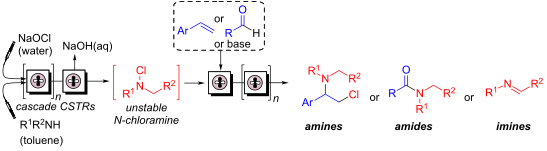
- used as an intermediate in the manufacture of hydrazine using the Raschig process [12][13]. N-Alkyl-N-chloramines are equally unstable, yet have only been prepared in batch via reaction of a primary or secondary amine with Cl2 gas, N-chlorosuccinimide, chloramine-T or hypochlorite salts [14][15


Synthesis of new p-tert-butylcalix[4]arene-based polyammonium triazolyl amphiphiles and their binding with nucleoside phosphates
Beilstein J. Org. Chem. 2018, 14, 1980–1993, doi:10.3762/bjoc.14.173
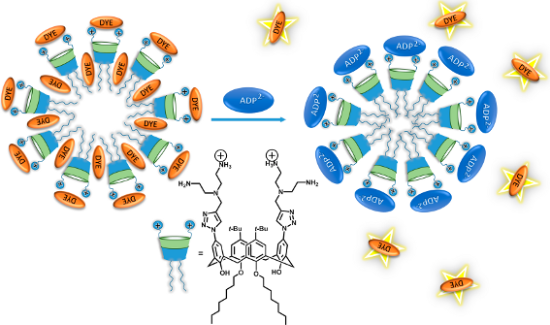
- nitrated according to literature procedures [33][34] affording the di or tetranitro derivatives 2a,b and 6a,b in good yields. The reduction of the nitro groups to the corresponding amines was successfully performed by hydrazine hydrate [35][36]. In this case, Ni on silica/alumina was used as the catalyst


Assessing the possibilities of designing a unified multistep continuous flow synthesis platform
Beilstein J. Org. Chem. 2018, 14, 1917–1936, doi:10.3762/bjoc.14.166
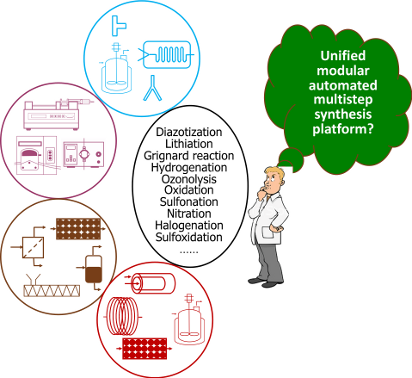
- ) condensation b) aromatic nucleophilic substitution reaction, c) deprotection and d) formation of lactate salt. Details of the same are given below: Condensation: Condensation takes place in a first reactor TR1 between the nitrile and hydrazine at high temperature and under pressure. Here, the nitrile was
- dissolved in a THF and hydrazine was dissolved in a mixture of solvents such as methanol, acetone, and water. The nitrile was pumped using pump P1 and hydrazine was pumped through P2 into the tubular reactor TR1 maintained at a temperature of 130 °C at residence time of 60 minutes to obtain the pyrazole



Synthesis of pyrazolopyrimidinones using a “one-pot” approach under microwave irradiation
Beilstein J. Org. Chem. 2018, 14, 1222–1228, doi:10.3762/bjoc.14.104

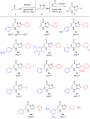
- -ketonitrile in the presence of a hydrazine [1][2][3][4][19][20][21][22][23][24][25][26][27][28][29], with Rao et al. [31] and Bagley et al. [32] reporting microwave-assisted protocols, the former requiring an acid catalyst. In order to conduct a solvent screen we chose β-ketonitrile 1a as a model substrate
- and reacted it with hydrazine, employing a constant temperature of 150 °C and a reaction time of 5 min. Results from the solvent screen can be found in Table 1, with high isolated yields of the product 5-aminopyrazole 2a in all cases. As expected, a significant improvement in reaction time was
- reaction conditions were chosen to match the already developed microwave-assisted synthesis of the 5-aminopyrazoles. A solution of the β-ketonitrile in methanol was treated with hydrazine and heated to 150 °C under microwave irradiation for 5 min. The β-ketoester and acetic acid were then simply added to



Imide arylation with aryl(TMP)iodonium tosylates
Beilstein J. Org. Chem. 2018, 14, 1034–1038, doi:10.3762/bjoc.14.90
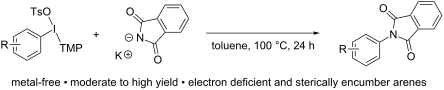
- ” surrogate, and the products depicted in Scheme 2 may be deprotected to yield aniline derivatives. In a specific example, 1a is reacted under modified conditions to yield 2a. In this one-pot procedure, hydrazine in aqueous ethanol is added directly to the reaction mixture and aniline 3 is isolated in 63


Development of novel cyclic NGR peptide–daunomycin conjugates with dual targeting property
Beilstein J. Org. Chem. 2018, 14, 911–918, doi:10.3762/bjoc.14.78
- ); h) daunomycin conjugation (rt, 24 h) in 0.2 M NH4OAc solution (pH 5.0); i) Fmoc-cleavage 4% hydrazine/DMF (rt, 2 h). (A) HT1080 and (B) HT-29 cells. Uptake of conjugate 1 (light green); 2 (red); 3 (light blue); 4 (pink); 5 (green); K (yellow). Empty control with purple color. List of the peptide


Synthesis and in vitro biochemical evaluation of oxime bond-linked daunorubicin–GnRH-III conjugates developed for targeted drug delivery
Beilstein J. Org. Chem. 2018, 14, 756–771, doi:10.3762/bjoc.14.64
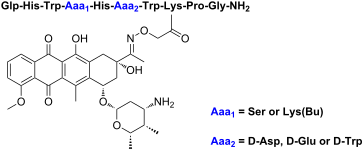
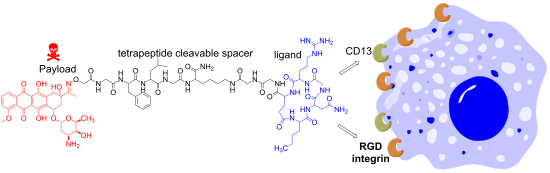
- ester or hydrazine bonds, cathepsin-B labile spacers and oxime bonds [21][22][25]. Due to its structural properties, Dau cannot be attached to the homing device by an ester bond like Dox, because of the absence of the primary hydroxy group in position C-14. However, the C-13 carbonyl group of Dox/Dau
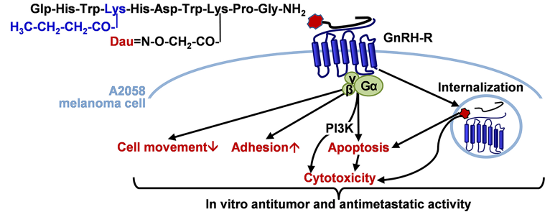
- decapeptide the Dde group of 4Lys was removed with 2% hydrazine in DMF (12 × 5 min) and the peptidyl-resin was washed with DMF (5 × 1 min). Afterwards, the ε-NH2 amino group was butyrylated with 3 equiv butyric anhydride and 3 equiv DIPEA in DMF (2 h). In the next step, 8Lys(Mtt) was deprotected with 2% TFA
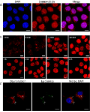
- presence of superagonist triptorelin (125–1000 µM) by flow cytometry. Cells were treated simultaneously with K2 and triptorelin for 100 min. Syntheses of GnRH-III–[(4Lys(Bu)/4Ser, 6Aaa, 8Lys(Dau=Aoa)] bioconjugates. a) (1) 2% hydrazine



Synthesis of a sucrose-based macrocycle with unsymmetrical monosaccharides "arms"
Beilstein J. Org. Chem. 2018, 14, 634–641, doi:10.3762/bjoc.14.50

- , the deprotection of the amine function with hydrazine caused also reduction of the C5–C6 double bond; two peaks at 189 and 191 Da were observed in the MS spectrum of crude post-reaction mixture (for 13b and 13c, respectively). We reasoned, that the all these problems may be overcome by an elongation


Latest development in the synthesis of ursodeoxycholic acid (UDCA): a critical review
Beilstein J. Org. Chem. 2018, 14, 470–483, doi:10.3762/bjoc.14.33
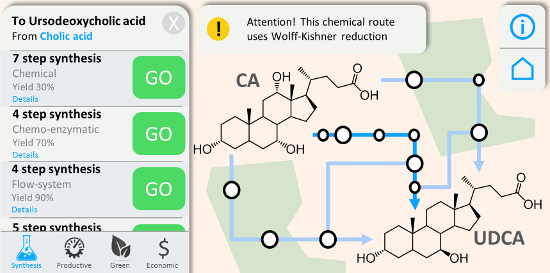
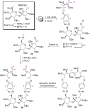
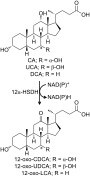
- %. Wolff–Kishner reduction The Wolff–Kishner reaction is widely used by chemists to remove carbonyl moieties yielding unsubstituted alkyl chains. The reaction requires two steps: the hydrazine first reacts with the ketone forming a hydrazone; The addition of a strong base and heat then promote a
- rearrangement with the elimination of N2 yielding the desired alkyl chain (Figure 3). This reaction is applied to the synthesis of UDCA in order to remove the carbonyl group at C12. The use of hydrazine is a disadvantage in terms of safety (explosive risk) and economic costs (it should be used in excess
- relative to substrate). Several modifications of the Wolff–Kishner reaction can be found in literature: i.e., the Huang–Minlon modification, that consists of removing the unreacted hydrazine after the first step by distillation [42]. This results in higher yield and partial recovery of the unreacted



5-Aminopyrazole as precursor in design and synthesis of fused pyrazoloazines
Beilstein J. Org. Chem. 2018, 14, 203–242, doi:10.3762/bjoc.14.15
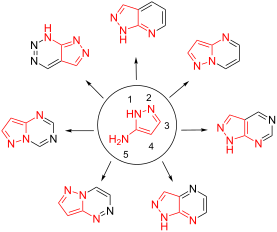
- acetic acid (Scheme 1). In the same report the other regioisomers 6-trifluoromethylpyrazolo[3,4-b]pyridines 20 were obtained under multicomponent solvent-free conditions by the reaction of hydrazine 14, β-ketonitrile 15 and β-diketone 17 as an exclusive product. The structures of both the regioisomers
- shape of compound 93 makes it chiral in nature. It was proposed that there is in situ oxidation of ethanol to ethanal by conc. HNO3 which turned the reaction into a multi-component domino assembly of reactants hydrazine 14, β-ketonitriles 15 and acetaldehyde. Rahmati [75] carried out a reaction of 5
- (147) with 3-oxo-3-arylpropanenitrile 15 under solvent-free grinding conditions. The reaction was proposed to proceed via formation of hydrazine by C–N bond cleavage which under reaction conditions provided 7-aminopyrazolo[1,5-a]pyrimidines 148 on coupling with 3-oxo-3-arylpropanenitrile 15 (Scheme 42


Photocatalytic formation of carbon–sulfur bonds
Beilstein J. Org. Chem. 2018, 14, 54–83, doi:10.3762/bjoc.14.4




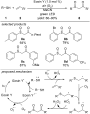
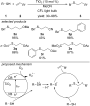


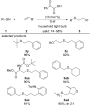

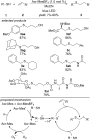


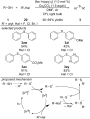

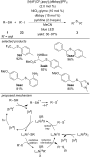
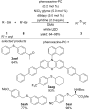
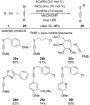
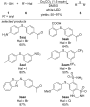
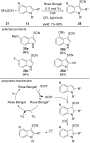
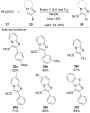

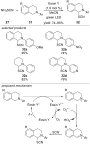


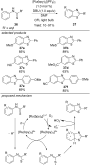
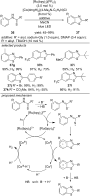


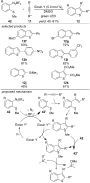

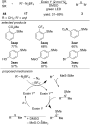






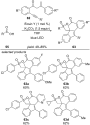

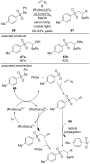

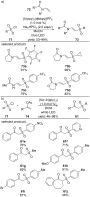

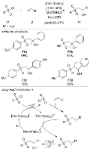
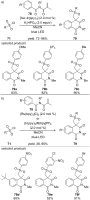
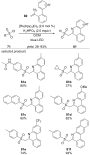


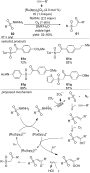

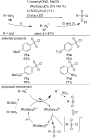

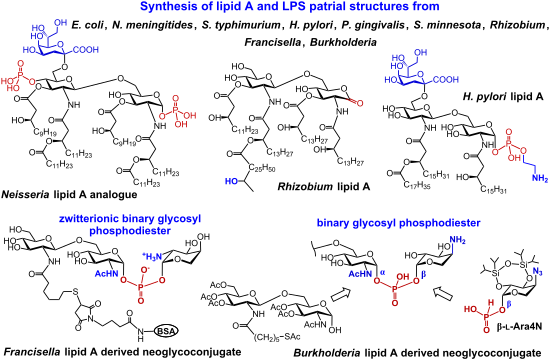
Aminosugar-based immunomodulator lipid A: synthetic approaches
Beilstein J. Org. Chem. 2018, 14, 25–53, doi:10.3762/bjoc.14.3
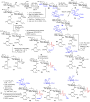
- reductive opening of the benzylidene acetal to give the acceptor monosaccharide 63. NIS/TMSOTf-promoted glycosylation of 63 with glycosyl donor 64 furnished desired β(1→6) disaccharide which was subjected to treatment with hydrazine hydrate to remove the phthalimido group. Subsequent acylation of the


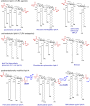




From dipivaloylketene to tetraoxaadamantanes
Beilstein J. Org. Chem. 2018, 14, 1–10, doi:10.3762/bjoc.14.1

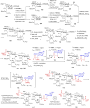
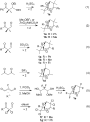
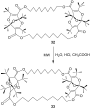
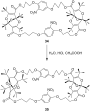
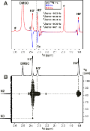
- [29]. It should be noted that both the bisdioxines [19] and the tetraoxaadamantanes [29] exhibit axial chirality as confirmed by 1H NMR spectroscopy with the Eu(hfc)3 chiral shift reagent. Bisdioxine oxime and hydrazine derivatives 26 and 27 (Scheme 8) are formed from 3 at room temperature without the
- ) derived from dipivaloylketene (2). Mechanisms of formation of bisdioxine acid derivatives from dimer 3. Recently reported synthesis of chromenobisdioxines. Formation of tetraoxaadamantanes. Decarboxylative hydrolysis and oxa-Michael-type ring closure. Oxime and hydrazine derivatives of bisdioxines and





Vinylphosphonium and 2-aminovinylphosphonium salts – preparation and applications in organic synthesis
Beilstein J. Org. Chem. 2017, 13, 2710–2738, doi:10.3762/bjoc.13.269

- -propynyltriphenylphosphonium bromide (24) involved propadienylphosphonium bromide (25) – the tautomeric form of the starting phosphonium salt. The same authors carried out a series of nucleophilic additions of amines and hydrazine derivatives to 24 to obtain products with the proposed structure of 2-aminovinylphosphonium


Development of a fluorogenic small substrate for dipeptidyl peptidase-4
Beilstein J. Org. Chem. 2017, 13, 2690–2697, doi:10.3762/bjoc.13.267
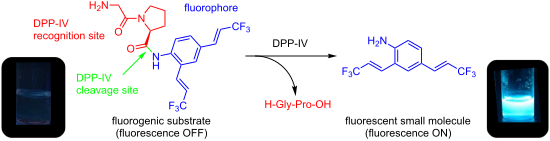
- hydrazine, without disturbing the peptide bond structure, to give H-Gly-Pro-1. DPP-4 activity measurement The fluorescence spectra of 1 and H-Gly-Pro-1 were recorded to confirm their fluorescence profiles; the spectra are shown in Figure 3. As expected, H-Gly-Pro-1 was non-fluorescent because of the
- = 2.2, 6.4 Hz, 3F); MS m/z: M+ 565, 468, 285, 257, 188, 160; HRMS m/z: M+ calcd for C27H21F6N3O4, 565.1436; found, 595.1437. N-(S)-1-(2-Aminoacetyl)-N-(2,4-bis((E)-3,3,3-trifluoroprop-1-en-1-yl)phenyl)pyrrolidine-2-carboxamide (H-Gly-Pro-1): To solution of 7 (0.05 mmol) in ethanol was added hydrazine


Consecutive hydrazino-Ugi-azide reactions: synthesis of acylhydrazines bearing 1,5-disubstituted tetrazoles
Beilstein J. Org. Chem. 2017, 13, 2596–2602, doi:10.3762/bjoc.13.256

- , followed by a hydrazinolysis step and a second hydrazine-Ugi-azide reaction to provide the desired acylhydrazino bis(1,5-disubstituted tetrazoles). Recently we have reported the synthesis of acylhydrazino-peptomers by a similar strategy [31]. The hydrazides 2a–c were prepared by the reaction of esters 1, 4
- and 6 with hydrazine monohydrate, following a known procedure (Scheme 2) [31]. To access the acylhydrazino-tetrazoles, the hydrazides 2a–c were subjected to a multicomponent reaction comprising an aldehyde or ketone 7a–h, trimethylsilyl azide (TMSN3, 8), methyl isocyanoacetate (9) and ZnCl2 (10 mol
- chose hydrazine tetrazole 10j to continue the synthesis, as it was obtained in excellent yield, it shows distinct NMR spectra and offers the possibility of further functionalization after removal of the Boc protecting group. Therefore, compound 10j was subjected to hydrazinolysis with hydrazine


A concise flow synthesis of indole-3-carboxylic ester and its derivatisation to an auxin mimic
Beilstein J. Org. Chem. 2017, 13, 2549–2560, doi:10.3762/bjoc.13.251
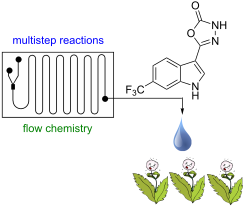
- subjected to heterogeneous hydrogenation conditions to produce the indole product 12 through a reductive cyclisation sequence. From the corresponding ester functionalised indole 12 we anticipated that condensation with hydrazine would furnish the corresponding acyl hydrazine 13 which could be cyclised to
- looked at telescoping the final two steps of the process; substitution of the ethoxy group by hydrazine and then ring formation to the 3H-[1,3,4]oxadiazol-2-one unit [32][33]. In this procedure a 0.95 M THF solution of compound 12 was united with a solution of hydrazine (1.0 M in THF) and directed into a
- heated flow coil to be superheated at 100 °C (Scheme 6). A residence time of 40 min allowed full conversion to the corresponding acyl hydrazine 13 which was directly intercepted with a further input stream containing CDI (1.1 M in THF) and heated at 75 °C for an additional 26 min in a second flow coil


15N-Labelling and structure determination of adamantylated azolo-azines in solution
Beilstein J. Org. Chem. 2017, 13, 2535–2548, doi:10.3762/bjoc.13.250
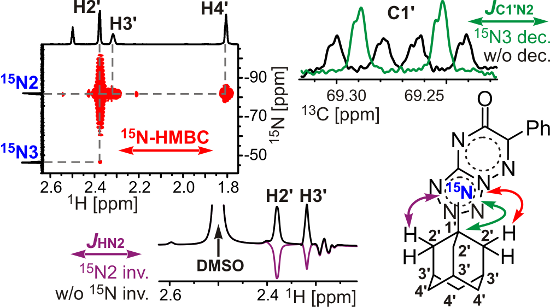
- -amino-1,2,4-triazole 16-15N2 was synthesized by the interaction of 15N2-hydrazine sulphate (98%, 15N) with S-methyl isothiourea sulphate and consecutive cyclization with formic acid (see the Supporting Information File 1). The use of 16-15N2 in a reaction with ethyl 4,4,4-trifluoroacetoacetate (22




Homologated amino acids with three vicinal fluorines positioned along the backbone: development of a stereoselective synthesis
Beilstein J. Org. Chem. 2017, 13, 2316–2325, doi:10.3762/bjoc.13.228

- carboxylic acid (see Supporting Information File 1) in moderate yield. Finally, the pthalimide group was removed with hydrazine to give the target amino acid 6a (Scheme 4). The modest overall yield for this three-step sequence can be partially attributed to the challenge of purifying the penultimate and


Diosgenyl 2-amino-2-deoxy-β-D-galactopyranoside: synthesis, derivatives and antimicrobial activity
Beilstein J. Org. Chem. 2017, 13, 2310–2315, doi:10.3762/bjoc.13.227

- determined by 1H and 13C NMR supported by COSY and HSQC techniques. The β linkage in 3, as well as the 4C1 conformation of the pyranose ring were confirmed by the coupling constant of the anomeric proton (J1,2 = 8.4 Hz). The deprotection of 3 was achieved by using 98% hydrazine hydrate in refluxing ethanol


Dialkyl dicyanofumarates and dicyanomaleates as versatile building blocks for synthetic organic chemistry and mechanistic studies
Beilstein J. Org. Chem. 2017, 13, 2235–2251, doi:10.3762/bjoc.13.221
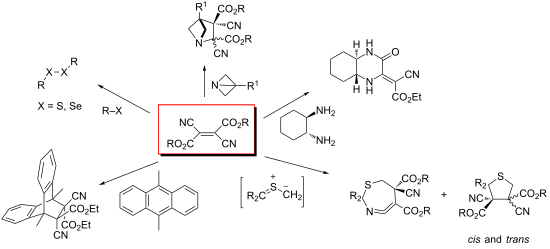
- amines, hydrazine, and carbohydrazides. In some of these reactions, the initially formed adducts, after subsequent elimination of HCN, undergo heterocyclization (see chapter Heterocyclization reactions). The reaction of E-1a with either aqueous ammonia or gaseous NH3 in acetonitrile leads to the enamines
- reactions with E-1b is hydrazine and its derivatives. The parent hydrazine used as the hydrate reacts with E-1 in ethanol at room temperature, and in the case of diisopropyl dicyanofumarate (E-1c), the crystalline enehydrazine was isolated in 82% yield [62]. In addition, the N-benzyl-protected (S)-proline
- products (tandem reactions). These reactions occur through an initial formation of the Michael-type adduct followed by a heterocyclization step upon involvement of either a cyano or an ester group as a second electrophilic center. Hydrazine is a powerful dinucleophile and reacts easily with E-1 in ethanol


Regiodivergent condensation of 5-alkoxycarbonyl-1H-pyrrol-2,3-diones with cyclic ketazinones en route to spirocyclic scaffolds
Beilstein J. Org. Chem. 2017, 13, 2179–2185, doi:10.3762/bjoc.13.218
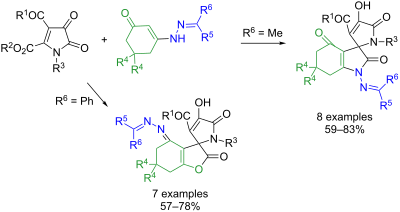
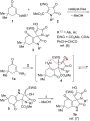
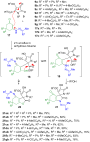
- formation of the indoline ring was unambiguously confirmed by the crystal structure of compound 21ab (CCDC 1546063, Figure 2). It seems that the nucleophilicity of the hydrazine moiety prevailed, and the formation of the thermodynamically more favorable amide bond governed the overall direction of this





Solid-state studies and antioxidant properties of the γ-cyclodextrin·fisetin inclusion compound
Beilstein J. Org. Chem. 2017, 13, 2138–2145, doi:10.3762/bjoc.13.212

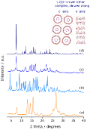
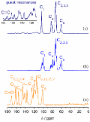
- corresponding hydrazine (pale yellow in color), a reaction which can be monitored by UV–vis spectroscopy. As the kinetics of the reaction varies from sample to sample, the stabilization time for a complete reduction of the DPPH· free radical was determined. For all samples studied, the steady-state




Transition-metal-free synthesis of 3-sulfenylated chromones via KIO3-catalyzed radical C(sp2)–H sulfenylation
Beilstein J. Org. Chem. 2017, 13, 2017–2022, doi:10.3762/bjoc.13.199

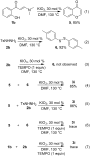
- Discussion Initially, the reaction of enaminone 1a and sulfonyl hydrazine 2a was tentatively subjected to different iodine reagents or catalyst-free conditions. The results indicated that no product was observed in the reaction without catalyst (entry 1, Table 1), and different types of iodine reagents such
- (reaction 1, Scheme 3). In addition, sulfonyl hydrazine 2b gave disulfide 6 under the same conditions (reaction 2, Scheme 3), suggesting that chromone 5 and disulfide 6 might be key intermediates in the domino reactions. Moreover, the same reaction in the presence of TEMPO gave no formation of 6, indicating
- ), further confirming that a radical intermediate was generated during the reaction process. According to the results obtained in the control experiments, the mechanism for this domino reaction is proposed (Scheme 4). As one of the key steps, the reductive coupling of two sulfonyl hydrazine molecules may