Search results
Search for "kinetics" in Full Text gives 382 result(s) in Beilstein Journal of Organic Chemistry. Showing first 200.
[2 + 1] Cycloaddition reactions of fullerene C60 based on diazo compounds
Beilstein J. Org. Chem. 2021, 17, 630–670, doi:10.3762/bjoc.17.55
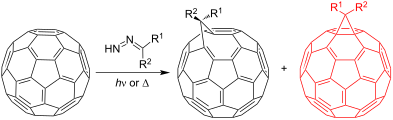
- ones is plausible. In fact, it has been proved convincingly [79] that a series of [5,6]-open fulleroids with stabilizing substituents in the methane bridge are rearranged into [6,6]-closed fullerenes, both by a photochemical process of zero-order kinetics and by a high-energy monomolecular route. The
Valorisation of plastic waste via metal-catalysed depolymerisation
Beilstein J. Org. Chem. 2021, 17, 589–621, doi:10.3762/bjoc.17.53
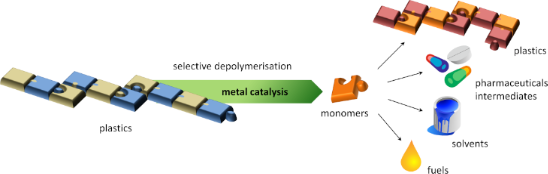
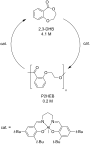
- ]. This justifies for the easier depolymerisation of polyesters and polycarbonates compared to polyolefins [79][80]. By contrast, poor selectivity and slow kinetics of depolymerisation can be circumvented using a catalyst. 2.1 Chemolysis Several catalytic depolymerisation processes of plastics have been
- kinetics, cost of metals, toxicity, difficulty in catalyst reusing and need of downstream processing. Significant efforts have thus been made to develop greener and sustainable catalytic systems featuring high efficiency under mild conditions. The use of sodium carbonate or bicarbonate as ecofriendly
- the conventional PET-insoluble EG system, greatly enhanced the depolymerisation kinetics, resulting in improved conversions (the solubility of PET at T > 130 °C was aniline > NMP > nitrobenzene > DMSO) [202]. For instance, the use of a DMSO/EG 2:1, w/w solvent mixture resulted in an increase of PET










Synthesis and physicochemical evaluation of fluorinated lipopeptide precursors of ligands for microbubble targeting
Beilstein J. Org. Chem. 2021, 17, 511–518, doi:10.3762/bjoc.17.45
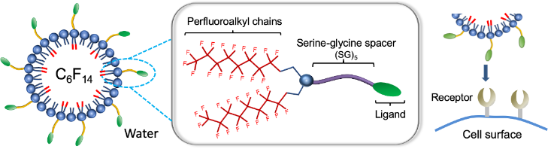
- , reflecting a progressive adsorption at the interface, then reached a plateau, and stabilized at the equilibrium surface pressure (πeq). The adsorption kinetics demonstrate that the F-lipopeptides formed stable monolayers at the interface. The πeq values increased with the degree of fluorination of the F
- ; purity (retention time): >99% (13.9 min). Adsorption kinetics of lipopeptides at the air/water interface. The experiments were conducted in a home-made Teflon adsorption trough (11.9 × 5.0 × 0.3 cm3) filled with HEPES buffer (pH 7.4). The surface pressure π was measured using the Wilhelmy plate method
- preparation and upon time were determined on 5–10 slides using Fiji (an open-source image processing package [45]) and the standard deviations were calculated using Origin9 (OriginLab Corp. Northampton, MA, USA). Adsorption kinetics of perfluoroalkylated lipopeptides 1–3 and the hydrocarbon analog 4 at the


Biochemistry of fluoroprolines: the prospect of making fluorine a bioelement
Beilstein J. Org. Chem. 2021, 17, 439–460, doi:10.3762/bjoc.17.40
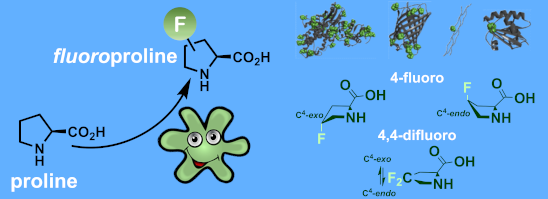
- incorporates them into proteins [16]. The effects of fluoroprolines have been examined in a number of protein structures. These studies demonstrated an altered stability and altered folding kinetics that occurred upon the proline-to-fluoroproline replacement, as reviewed in [17]. Nonetheless, no whole-cell
- preferences should be considered when judging the stability of the folded structures containing fluoroprolines. 2.6 Kinetics of the amide rotation The kinetic stability of the amide conformers generates another important aspect of protein folding. Generally, the amide rotation is considered very slow in
- ten proline positions [117]. The incorporation of R-Flp resulted in an insoluble protein, indicating associated folding issues. In contrast, the protein containing S-Flp produced a well-structured fluorescent protein, exhibiting faster folding kinetics and producing crystals suitable for diffraction


CF3-substituted carbocations: underexploited intermediates with great potential in modern synthetic chemistry
Beilstein J. Org. Chem. 2021, 17, 343–378, doi:10.3762/bjoc.17.32
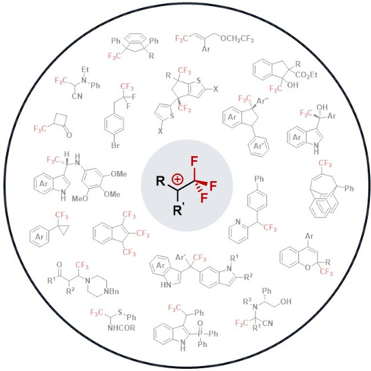
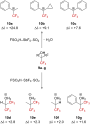
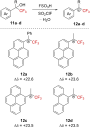
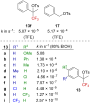
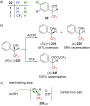
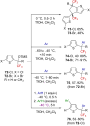
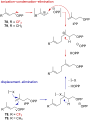
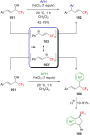
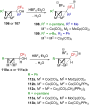
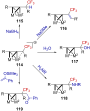
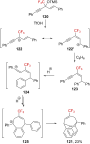
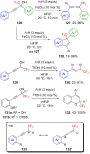
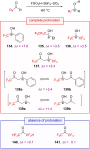
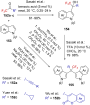
- solvolysis rate for derivatives 13f or 13g and the solvent polarity parameter YOTs [45]. The solvent participation in the solvolysis of these tertiary benzylic tosylates was thus defined as “unimportant” by the authors. Gassman and Harrington successfully measured the solvolysis kinetics of CF3-substituted
































19F NMR as a tool in chemical biology
Beilstein J. Org. Chem. 2021, 17, 293–318, doi:10.3762/bjoc.17.28
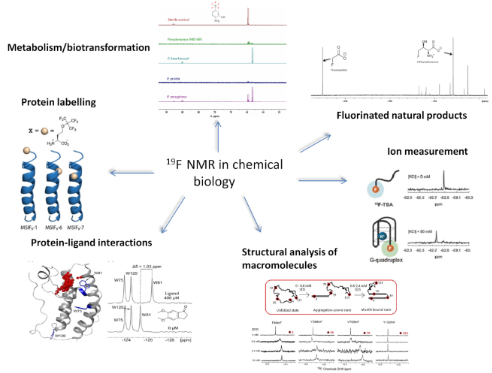
- ). Each independent intermediate was characterized on the basis of its 19F NMR chemical shift and the kinetics by which each species formed or decayed were evaluated in real-time. By combining the 19F NMR data with that provided by complementary analytical techniques, mass spectrometry (electrospray
- investigated in detail [59][76], as well as the kinetics of α-Syn oligomerization and fibril formation both in vitro [60][75] and in vivo [77][78]. In these more recent studies, incorporation of 4-tfmF residues using amber-suppressing codons at various positions was shown to be more advantageous as a 19F


The preparation and properties of 1,1-difluorocyclopropane derivatives
Beilstein J. Org. Chem. 2021, 17, 245–272, doi:10.3762/bjoc.17.25
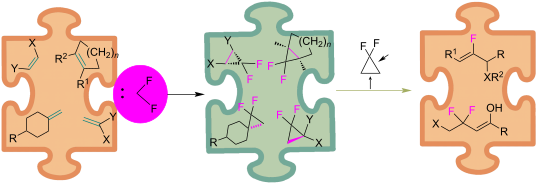
- -difluorocyclopropanes (Scheme 40) [86]. Vinylcyclopropane rearrangements: O’Neal and Benson examined the influence of fluorine substituents on the kinetics of the vinylcyclopropane-to-cyclopentene rearrangement [87]. They noted the effect of an additional strain (approximately 5 kcal/mol per fluorine atom) in raising




Control over size, shape, and photonics of self-assembled organic nanocrystals
Beilstein J. Org. Chem. 2021, 17, 42–51, doi:10.3762/bjoc.17.5
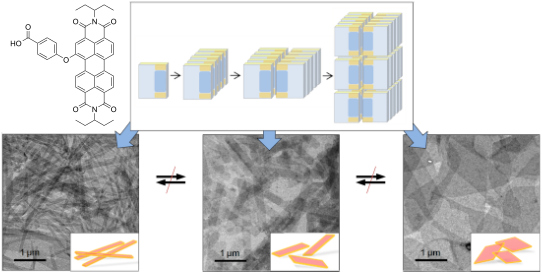
- dependence was observed. The decay kinetics of the 5% THF and 5%→0% THF systems demonstrated power dependence (Figure 5A and Figure S9A, Supporting Information File 1, respectively). In contrast, 10% THF nanocrystals exhibit essentially power-independent kinetics (Figure 5B). Power dependence is indicative
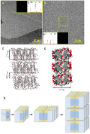
- distance between the carboxylic groups of two PDIs. E) Schematic representation of the assembly structuring. Cryo-TEM images of 1 × 10⁻⁴ M compound 1 in THF/water solutions after one minute of aging. A) 5% THF: monomolecular 1D π-stack fibers and B) 10% THF: crystalline platelets. Transient kinetics at




Changed reactivity of secondary hydroxy groups in C8-modified adenosine – lessons learned from silylation
Beilstein J. Org. Chem. 2020, 16, 2854–2861, doi:10.3762/bjoc.16.234

- additive that decides on preferential 2’-O-silylation. The salt has been suggested to influence reaction kinetics in the way that the silylation reagent TBDMS chloride is changed to the nitrate, which subsequently is consumed faster by nucleophilic attack of the 2’-OH group onto the silica atom as compared


Synthesis of purines and adenines containing the hexafluoroisopropyl group
Beilstein J. Org. Chem. 2020, 16, 2739–2748, doi:10.3762/bjoc.16.224
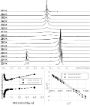
- as a function of the temperature, which enabled an extrapolation of the population differences at an elevated temperature (via the van ‘t Hoff equation). The latter experiments provided information directly on the kinetics of the interconversion between the sites. A series of spectra were then
- acquired at elevated temperature; here, the kinetics of the interconversion between the sites could be derived directly from the linewidth. Figure 3 illustrates the spectra acquired over a range of temperatures using compound 3a as an example. With the rate constants of the interconversion between the



Particle size effect in the mechanically assisted synthesis of β-cyclodextrin mesitylene sulfonate
Beilstein J. Org. Chem. 2020, 16, 2598–2606, doi:10.3762/bjoc.16.211

- of a reaction in the solid state. As such, we recently investigated the influence of the particle size of β-CD in the synthesis of β-CD mesitylene sulfonate (β-CDMts) in the solid state using a vibrating ball-mill. We were particularly interested in the role of the particle size on the kinetics of
- out in the presence of KOH as a base. The data series were confronted with kinetics models to get insight in the way the reactions proceeded. The diversity of possible models suggests that multiple mechanochemical processes can account for the formation of β-CDMts in the solid state. Throughout the
- effects to only focus on the influence of grinding the CDs prior to the mechanically assisted reaction on the kinetics. In this context, we considered the synthesis of mono- and poly-β-CD mesitylene sulfonate (β-CDMts) from β-CD and mesitylenesulfonyl chloride (MtsCl) as a model reaction. MtsCl was found




NMR Spectroscopy of supramolecular chemistry on protein surfaces
Beilstein J. Org. Chem. 2020, 16, 2505–2522, doi:10.3762/bjoc.16.203
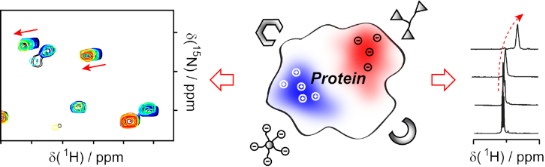
- bound form [84]. The extent of line broadening depends on the kinetics of the exchange between the two forms. If the exchange is slow relative to the NMR time scale, which roughly comprises a millisecond time frame, two separate sets of signals for both components are observed, where the signal
- experiments. While these methods can be useful for investigating supramolecular ligands binding to proteins, there are a few drawbacks one needs to keep in mind. All these methods require medium to weak (µM to mM) binding such that the binding kinetics lies in the intermediate to fast exchange regime because
- . If a signal broadens beyond detection and thus disappears from the spectrum, be it due to aggregation or intermediate exchange kinetics, it is also impossible to trace its trajectory and determine the chemical shift perturbation. In the case of a bifunctional GCP ligand binding to survivin [46], the




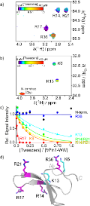
Dawn of a new era in industrial photochemistry: the scale-up of micro- and mesostructured photoreactors
Beilstein J. Org. Chem. 2020, 16, 2484–2504, doi:10.3762/bjoc.16.202
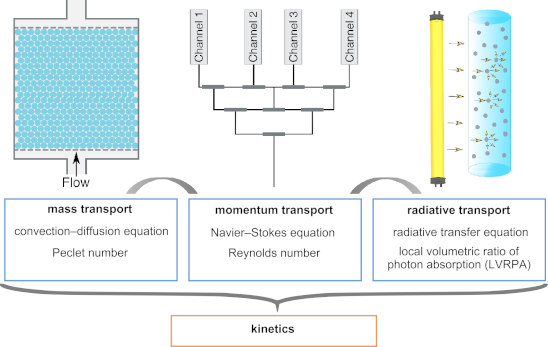
- reactor design. The flow field (momentum transport), mass transport, and light field (radiative transport) need to be coupled to compute the reaction kinetics (Figure 1) [11]. Microstructured chips used in photochemistry have various channel geometries, such as straight line, serpentine, square serpentine
- applications. The lab-on-a-chip concept has enabled researchers to work on intrinsic kinetics. Intrinsic data acquisition is crucial while designing and operating large-scale reactors. Several microreactors, such as a spiral channel microreactor carved on a flat aluminum plate [23], a capillary tube [24], a
- microchannel cast, and cured on polydimethylsiloxane (PDMS) slab [25] or a rectangular slab micromachined on teflon [26] were used to determine the intrinsic kinetics of different photochemical reactions. Such demonstrations suggest that if they are scaled up properly, microreactors could be operated with




Synergy between supported ionic liquid-like phases and immobilized palladium N-heterocyclic carbene–phosphine complexes for the Negishi reaction under flow conditions
Beilstein J. Org. Chem. 2020, 16, 1924–1935, doi:10.3762/bjoc.16.159
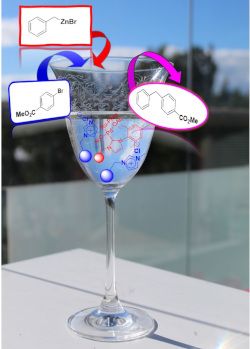
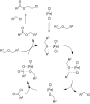
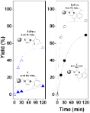
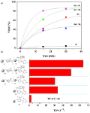
- additional phosphine ligand produced a clear positive effect on the activity, enhancing the catalytic performance of the immobilized NHC–Pd complexes assayed as clearly shown in the kinetics profiles depicted in Figure 1. Both NHC–Pd–RuPhos catalysts showed an activity increase: ca. 10-fold for 8a and ca







Design, synthesis and application of carbazole macrocycles in anion sensors
Beilstein J. Org. Chem. 2020, 16, 1901–1914, doi:10.3762/bjoc.16.157
- transport phenomena and this semicircle was attributed to slow ion transfer kinetics at the ISM interfaces. Potentiometric calibrations in sodium acetate solutions were used to determine the linear ranges (R2 ≥ 0.999), slopes, and detection limits of the sensors (Table 2). Examples of the calibration curves




Polarity effects in 4-fluoro- and 4-(trifluoromethyl)prolines
Beilstein J. Org. Chem. 2020, 16, 1837–1852, doi:10.3762/bjoc.16.151
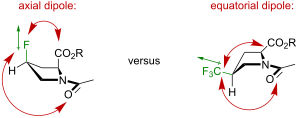
- trifluoromethyl- or a difluoromethylene group. This orientation of the substituents explains the observed trends in the pKa values, lipophilicity, and the kinetics of the amide bond rotation. The study also provides a set of evidences that the transition state of the amide-bond rotation in peptidyl-prolyl favors
- (trifluoromethyl)prolines would be much weaker. The effects of their presence is a polypeptide structure should rather be associated with the increase in the molecular volume and hydrophobicity, and less with the backbone folding. Amide-bond rotation: kinetics Amide-bond rotation is known as an intrinsically slow
- , acid–base transition, and kinetics of the amide-bond rotation. Interestingly it was found that the side-chain conformational preferences translate differently into the energy of the trans/cis amide equilibrium. While in the monofluoroprolines the effect was relatively strong, in the trifluoromethylated


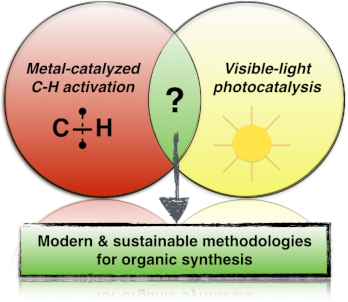
When metal-catalyzed C–H functionalization meets visible-light photocatalysis
Beilstein J. Org. Chem. 2020, 16, 1754–1804, doi:10.3762/bjoc.16.147


One-pot synthesis of isosorbide from cellulose or lignocellulosic biomass: a challenge?
Beilstein J. Org. Chem. 2020, 16, 1713–1721, doi:10.3762/bjoc.16.143
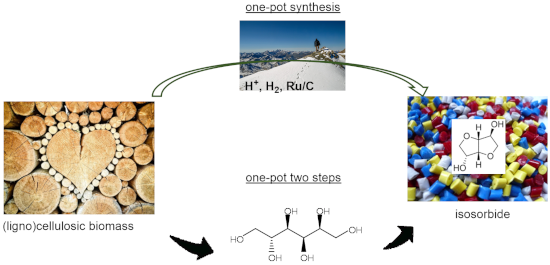
- for the observed unique kinetics, yields and selectivity in these one-pot reactions. In addition, such in-depth fundamental mechanistic and kinetic studies should enable determining the key structural parameters of the catalytic platform that govern its efficiency hence supporting the design of novel


Mechanochemical green synthesis of hyper-crosslinked cyclodextrin polymers
Beilstein J. Org. Chem. 2020, 16, 1554–1563, doi:10.3762/bjoc.16.127
- example, drug-delivery systems [3][4][5]: together with their capability of hosting drugs, they are biocompatible and nontoxic. In the last few years nanosponges were employed to encapsulate and release a wide variety of drugs [6][7], associated with an improvement in bioavailability and release kinetics
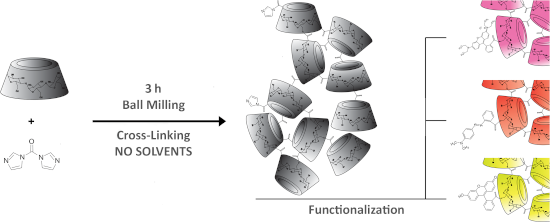
- -carbonyldiimidazole as the crosslinker, for the following reasons: the reaction was usually performed at 90 °C, therefore, the heating of the system related to the ball friction is not only acceptable but also useful for the kinetics of the reaction, and the solvent for solubilizing the reactants was DMF. We herein
- consistent with what was reported in the literature: the first activation of an alcohol by carbonyl imidazole showed faster kinetics than the second one, which needed longer reaction times and/or a higher temperature (from 60 °C to 80 °C) to obtain a significant yield [31][32]. To distinguish between the




Heterogeneous photocatalysis in flow chemical reactors
Beilstein J. Org. Chem. 2020, 16, 1495–1549, doi:10.3762/bjoc.16.125
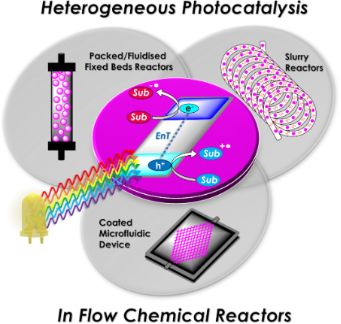
- accessible to the reaction media and the excitation photons, preventing the photocatalyst from being wasted in the bulk material. The immobilisation will generally reduce the reaction kinetics of the homogeneous photocatalyst as it is no longer dispersed in solution, but this can be mitigated through flow














Oxime radicals: generation, properties and application in organic synthesis
Beilstein J. Org. Chem. 2020, 16, 1234–1276, doi:10.3762/bjoc.16.107
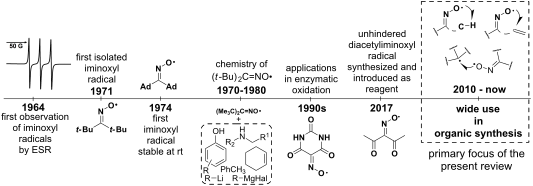
- corresponding to the free iminoxyl radical, which indicates the reversibility of dimerization [53]. During the oxidation of pivalic aldoxime 1e by Ag2O, the formation of nitrile oxide 6e was observed, which then slowly dimerized to the corresponding furoxan 7e. The kinetics of the decomposition of dialkyl
- established that the studied iminoxyl radicals reversibly dimerized in the solution. For sterically unhindered dialkyliminoxyl radicals, the radical–dimer equilibrium was quickly reached, shifted toward the dimer, while a first-order decay kinetics of was observed for the iminoxyl radical. For sterically
- hindered tert-butylmethyliminoxyl and diisopropyliminoxyl radicals, as well as for diaryl and alkylaryliminoxyl radicals, the radical–dimer equilibrium was reached slowly, it was shifted toward the free radical, and a second-order decay kinetics was observed. The first synthesized long-lived iminoxyl




Suzuki–Miyaura cross coupling is not an informative reaction to demonstrate the performance of new solvents
Beilstein J. Org. Chem. 2020, 16, 1001–1005, doi:10.3762/bjoc.16.89
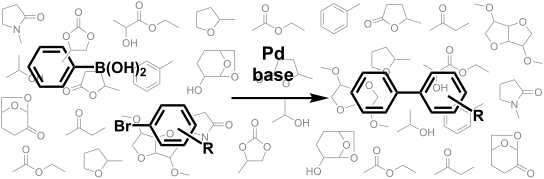
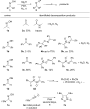
- the key fundamental principles of boron and palladium speciation and the role of the base in the Suzuki–Miyaura reaction. For researchers developing safer solvents, the Mizoroki–Heck reaction is a more suitable cross-coupling methodology to demonstrate solvent performance [28]. The reaction kinetics


Bipyrrole boomerangs via Pd-mediated tandem cyclization–oxygenation. Controlling reaction selectivity and electronic properties
Beilstein J. Org. Chem. 2020, 16, 895–903, doi:10.3762/bjoc.16.81
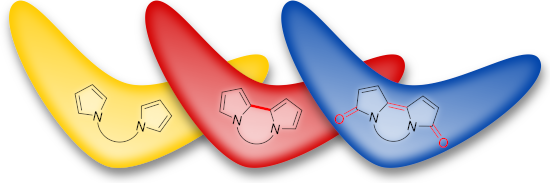
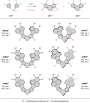
- of cNMI3O could not be separated, presumably because of very rapid racemization. The half-life time of cNDA3O enantiomers (ca. 0.54 min) was too short to record their CD spectra, but was long enough for a kinetics study (Supporting Information File 1, Figures S8 and S9). Enantioenriched samples of




Exploring the scope of DBU-promoted amidations of 7-methoxycarbonylpterin
Beilstein J. Org. Chem. 2020, 16, 509–514, doi:10.3762/bjoc.16.46

- explored this reaction to assess its scope and identify structural features in the amines which significantly affect success, monitored the reaction kinetics using a pseudo-first order kinetics model, and further adapted the reaction conditions to allow for product formation in as little as 5 min, with
- reaction by employing a pseudo-first order kinetics model. Furthermore, we adapted the reaction to allow for reaction times as little as 5 minutes, with yields reaching up to 99%. Results and Discussion The general procedure for the DBU-promoted amidation involved the initial suspension of 7-CMP (1) in a
- the relative reactivity of the various amines, a pseudo-first order kinetics of the amidation reaction was probed. The reaction was followed by 1H NMR spectroscopy at room temperature, following the disappearance of 7-CMP and appearance of the amide product (Figure 3). By monitoring the reaction


Recent advances in photocatalyzed reactions using well-defined copper(I) complexes
Beilstein J. Org. Chem. 2020, 16, 451–481, doi:10.3762/bjoc.16.42
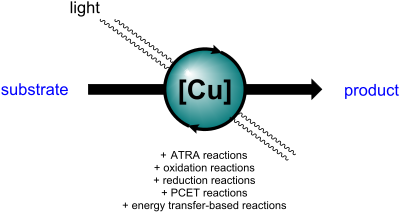
- and propylene oxide as a proton scavenger under flow conditions (0.05 mL/min; residence time = 20 h). The use of flow conditions drastically enhanced the kinetics of the reaction, moving from 120 h reaction time in batch to 20 h using a continuous flow reactor. The reaction allowed the synthesis of a